


Introduction
Spiritual care (SC), care that recognizes people's religiosity and/or spirituality and attends to spiritual needs (Balboni et al., Reference Balboni, Paulk and Balboni2010), has been an integral part of palliative care since its inception (Saunders, Reference Saunders1996, Reference Saunders2001). Leget et al. (Reference Leget, Staps and van de Geer2014) highlights that anyone who works in palliative care will sooner or later encounter spiritual or existential questions. SC takes a person-centered approach and seeks to help people (re)discover hope, resilience, and inner strength in times of illness, injury, transition, and loss (Kelly, Reference Kelly2012). People with advanced illnesses, however, frequently report that their spiritual needs are not attended to by their medical care teams (Balboni et al., Reference Balboni, Paulk and Balboni2010; Puchalski, Reference Puchalski2012).
Many healthcare providers recognize SC as an important dimension of healthcare (Phelps et al., Reference Phelps, Lauderdale and Alcorn2012; Puchalski et al. Reference Puchalski, Vitillo and Hull2014), but may nonetheless feel underprepared to address the spiritual needs of people for whom they provide care (Balboni et al., Reference Balboni, Balboni and Enzinger2013). Meredith et al. (Reference Meredith, Murray and Wilson2012) found that improvements in SC and employee confidence related closely to “the self-perceived ability of individual staff members to provide SC in their everyday encounters with patients and their families.” Leget et al. (Reference Leget, Staps and van de Geer2014), in an attempt to support healthcare professionals to provide SC, offer practical guidelines for providing good care while attending to existential issues in a palliative care context. Balboni et al. (Reference Balboni, Balboni and Enzinger2013) suggest that although patients and healthcare providers view SC as an important component of end-of-life care, systemic lack of training in this area may limit SC's use and effectiveness. When discussing SC in healthcare, Paal et al. (Reference Paal, Helo and Frick2015) argue that healthcare providers must first attend to their own inner beliefs and needs before addressing the spirituality of patients. Further, they point out that SC training (SCT) may help to improve the provision of SC, strengthening Balboni et al.’s (Reference Balboni, Balboni and Enzinger2013) argument.
To support staff and volunteers who address SC issues at end-of-life, our hospice became a pilot site for a caregiver education and spiritual formation program. The education program (EDUC) advertises a nondenominational approach, which claims to respect the spiritual path of every person, regardless of religious affiliation, if any. EDUC also attempts to integrate history, science-depth psychology, and spiritual insight with practical tools and clinically tested best practices. Since 1996, more than 20,000 people around the world have participated in the EDUC with high satisfaction rates. Our organization committed financial and human resources to offer this acclaimed program to staff and volunteers. The program purposes to provide tools to recognize and respond to spiritual pain, thereby stimulating organizational culture change. The two-year program consists of four two-day workshops (approximately eight hours per day), resulting in 64 hours of workshop training. Each workshop focuses on a specific theme: (1) understanding spiritual pain (cultural history and practices for detecting and alleviating spiritual and emotional distress, distinction between religion and spirituality); (2) diagnosing spiritual pain (the four dimensions of psycho-spiritual health and suffering [forgiveness, meaning, relatedness, and hope], spiritual and religious abuse); (3) healing spiritual pain (experience holistic therapies such as guided visualization, coma communication, and working with people in altered states, rituals); and (4) transforming spiritual pain (experience creative healing modalities such as haiku poetry, mandala drawing and music therapy, healthy balance in professional and personal lives). Workshops blend instruction, personal reflection, hands-on experience, multimedia presentations, and religious/spiritual rituals from a variety of cultural traditions. Each two-day workshop is followed by five monthly Circle of Trust (CoT) study group sessions based on the work of Palmer (Reference Palmer2004). The study group process focuses on creating a space in which participants use readings and teachings from the units to listen to themselves and to reflect on their practices with others. Eight local facilitators were trained by the EDUC instructors and provided with study and facilitation guides. Study groups were formed randomly by drawing names of those staff and volunteers people eager to join the CoT. Seven groups consisting of five to nine people each were formed (53 people in total). More than 50 people (staff and volunteers) attended the program between 2014 and 2016.
To evaluate the impact of the EDUC, our team embarked on a quality improvement project. The overall goal of the project was to examine and describe the impact of the EDUC in regard to improving practice and promoting cultural change, as perceived by hospice staff and volunteers. The following questions guided our inquiries: Has the EDUC advanced/expanded practice at our hospice? Has the EDUC promoted cultural change in our organization?
This manuscript summarizes the results of the qualitative analysis for interviews conducted with hospice staff and volunteers following the completion of EDUC. We would argue that although this report, and the recommendations that arise from it, are focused on our hospice, our study may also inform the development and implementation of SCT in other institutions.
This project was considered quality improvement and did not require research ethics board review.
Methods
Study design
To examine the impact of the EDUC on our hospice practice and cultural change, a qualitative case-study approach was adopted to gather feedback from hospice staff and volunteers. A qualitative case-study approach enables investigators to closely examine contemporary data within a specific context (our hospice and its population, in this case) (Kohlbacher, Reference Kohlbacher2006). In addition, the detailed qualitative accounts produced through interviews allowed us to describe the data collected and helped us to examine the complexities of real-life situations arising during and after EDUC completion. To reach our goals, we examined the experience of people who did and did not attend EDUC. This interview-based study was conducted in a medium-sized organization, where an average of 100 casual, part-time and full-time professionals provide care to an average of 900 people annually, supported by an average of 200 volunteers in a mid-sized urban setting in British Columbia, Canada.
A team consisting of a physician, a spiritual health coordinator, a volunteer, a registered nurse (DD) and a researcher/administrator (HD) defined the project's guiding questions and composed the interview questions. The volunteer and HD had attended the EDUC. The spiritual health coordinator attended the last workshop only and had been with our hospice for less than one year when the interview questions were developed.
Recruitment of interview subjects was facilitated through posters across the organization, which invited people who had participated and people who had not attended EDUC to be interviewed. Posters highlighted the objective of the project and the intention of interviewing both groups. Subsequent to the first round of interviews, we observed that most interviewees had attended the SCT offered. Purposive sampling to include more nonparticipants became necessary. Recruitment posters highlighting the objective of the project and the willingness to hear from people that had not attended EDUC supported the second round of interviews. DD and MD (an educator with background in anthropology) posed questions to our interview subjects. Both interviewers were relatively new to the institution at that time (2016/2017: less than one year at our hospice) and had not attended the EDUC. Both interviewers were briefed about the program and the objectives of the project. We chose two new employees to conduct the interviews to avoid any preconception inferred by interviewers during data collection. Both interviewers had previous interview experience.
Rounds of recruitment proceeded until data saturation was reached (after 19 interviews). Data collection was completed over a six-month period between fall 2016 and spring 2017.
Interviews
All interested participants were interviewed. Informed consent was obtained before each interview. Interviews sought to obtain in-depth information regarding the EDUC's impact on self and on practice and potential cultural changes from the EDUC (for interview questions, see Appendix). Interviews averaged 45 minutes in length, were audio-recorded, and subsequently transcribed verbatim. The sources of all quotations presented within this manuscript have been assigned numbers to ensure anonymity.
Data analysis
The authors conducted qualitative data analysis using thematic analysis derived from the methods outlined by Braun and Clarke (Reference Braun and Clarke2006). We chose a data-driven approach to thematic analysis because of the exploratory and descriptive nature of this study. In addition, we chose to provide a thematic description of our entire data set rather than a detailed account for one particular aspect of interview responses. We conducted two levels of thematic analysis: semantic and latent analysis. We first generated codes that identified interesting features of the data. The initial codes were based on the first 10 transcripts developed. We used MS Word to support coding, highlighting quotes and adding comments to each transcript independently. After the first round of coding, we reviewed transcripts, refined codes, and proceeded with the remaining interviews. During the coding process we also started organizing our data into meaningful groups/themes. Themes were determined either because of the number of times and ways in which concepts, experiences, or ideas were raised and/or their perceived importance to the participant in the context of the interviews. We refined themes through an iterative process as we read and reread all transcripts and discussed findings.
Coded qualitative data was compared and subsequently integrated in a second level of interpretive (latent) analysis by the authors. Team members individually identified underlying themes and subthemes, which were then considered by the group until consensus was reached. Findings were reviewed for validity by three interviewees, one that attended EDUC, one that attended one EDUC two-day workshop only, and one that had not attended EDUC.
Results
Table 1 summarizes the descriptive information provided by interview participants.
Summary of descriptive information of interviewees

Semantic analysis
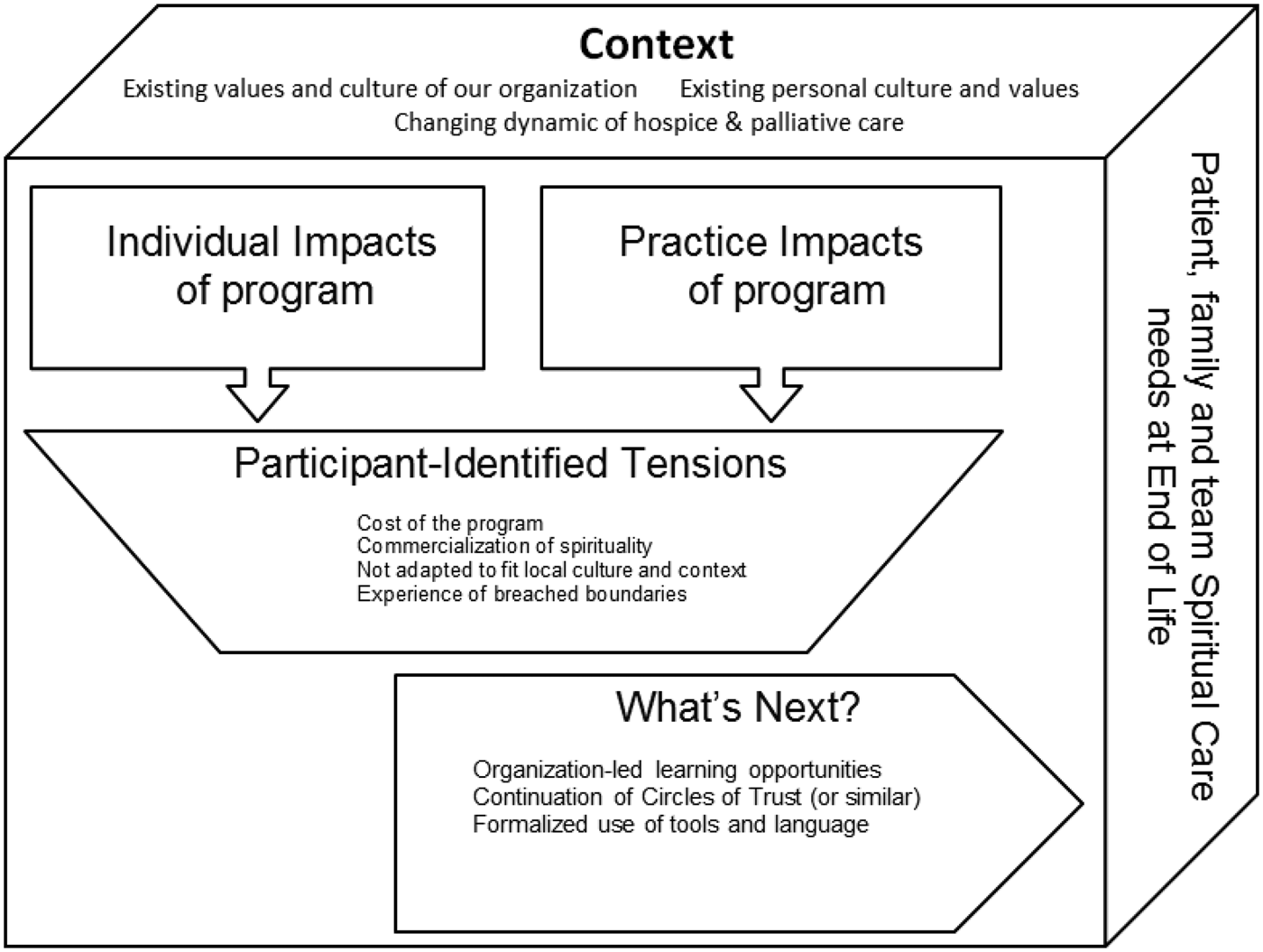
Five overarching themes were identified through semantic analysis (Figure 1): context, individual impacts, practice impacts, tensions, and “what comes next?”
Summary of themes identified through semantic analysis.
Context
The greater context into which EDUC was implemented, and the driving-force behind providing such an education to hospice staff and volunteers, was the value of offering quality patient and family-centered care with patients' needs in mind: “[…] including the patient and their family taking care of all of them at the end of their life and making meaning out of the, if we can, out of their last days of life.” (#11)
The majority of interview participants who worked with our organization over a lengthy period recalled a time when SC education and knowledge exchange was prevalent but informal. Some participants expressed nostalgia for the “old days:” “I do feel like the culture was more so that we had more time to spend with patients and I felt like us nurses were able to focus more on the spirituality kind of aspects of patient care.” (#11)
Several factors attributed by interviewees to the changing culture within the organization fell outside the scope of the EDUC, such as individuals' personal understanding of spirituality vs. religion and the presence or absence of staff members who model and champion SC. On the other hand, the leadership support for the formalization of SC education through the EDUC brought spirituality back to the forefront of care at the organization: “(…) workers feel that commitment from management staff, that they really are important. And that this stuff is important.” (#10)
Individual impacts
Self-awareness
Program participants reported increased attentiveness to their internal emotional experiences. Most experienced this as a positive and beneficial change, while some felt that this shift has led to potential complications in an already complex terrain:
I struggle because of the [EDUC] […]. I don't have the right to, to say what is going to be an appropriate death for another person […] I still realize that strong emotion is something that is difficult for me to, to navigate my way through. (#12)
But I think at home, you know, within my own relationships it has allowed me, I think to be, I wouldn't say comfortable, but a little more open […] to the, the whole issue of other people's spiritual, and my own spiritual pain […] , and acknowledging it. (#10)
The CoT provided an additional opportunity for people to focus on self-awareness, as remarked by one participant: “[The Circles are] a place where we can really talk from the heart.” (#3)
Confidence in managing discomfort and ambiguity
People that attended the program shared a deepened tolerance for the ambiguity and discomfort surrounding death. Many respondents expressed an increase in ease or acceptance of death: I just feel more and more understanding and accepting, (…) there's so much more that I can learn but it doesn't frighten me or make me feel overwhelmed at all anymore.” (#14)
Appreciation of and increased comfort with cultural diversity
Many respondents reported a broadened understanding for the concept of spirituality that included the practices and worldviews of people and cultures with which they were unfamiliar prior to SCT. One respondent stated:
So that, that has been really freeing, so I can look at someone who is Hindu or someone who is Muslim or my own tradition, being Jewish, and looking at some who is a Catholic or a Lutheran or Anglican or whatever, and I can honestly celebrate with them, what their understand of spirituality is. Whereas, before, when you're in a very narrow framework, ‘you cannot understand that’”(#12).
Taking responsibility for self-care
Interviewees reported a shift in the practice and conceptualization of self-care after the EDUC, and its link to diligent care. Many expressed an understanding of the need to tend to self-care as a professional responsibility: “to do a good job you have to look after yourself and you don't want to bring your own baggage into work.” (#12)
Practice impacts
Connection and team-building
The majority of interviewees (15 people) discussed the element of relationship-building that was invited by the program. Many EDUC participants expressed gladness and even gratitude regarding improved communication, an increase in trusting connections (especially through the CoT), and feeling part of a team – although this was complicated by the possibility of increased vulnerability brought by deepened relationships. The following statement is representative:
I think again it can, it probably can enrich some relationships and probably hurt some relationships, right? There's probably a deeper expectation of people stepping forward in a deep and spiritual way and if they're not (…) there could be deeper connections and deeper frustrations.” (#6)
The contribution of the CoT to team-building was highlighted by the majority of people that attended the EDUC. A participant summarized its impact by saying:
The absolute best part and the piece that I would love to see recreated in some way by Hospice was the Circles of Trust. That's what I got the most out of. Because, and it wasn't even so much the questions that they asked or anything like that but it was the coming together of a multidisciplinary team. (#7)
A small number of respondents mentioned that for different reasons (e.g., scheduling, geography), their CoT had not met regularly. Thus, the team-building feature of the groups' work had not been observed by them.
New language, tools, and resources
The development of a shared vocabulary emerged as a major theme within the interviews. Participants acknowledged and appreciated access to, and use of, a common language that aids communication for a broad and diverse team delivering care: “I'm able to listen in a different way, like I've learned to speak French, or at least can understand what someone is saying now. Language is so essential to thought.” (#4)
EDUC participants reported feeling that they gained a broad set of tools and strategies with which to provide patient support. Their expanded roster of strategies and confidence in deploying them has increased participants' capabilities in offering support and comfort: “[I]t's given me kind of a template (…) to start with, like a little script, you can add to it from your own experience.” (#2)
Many interviewees mentioned deep listening and being present as tools (re)learned through the program: “I think we can listen differently now and I think we're more in tune to different things now. But I think we had the foundation, like the basis (…), the program has just helped define a way to get there.” (#13)
Interviewees pointed out the CoT sessions as a place/time “for integrating information in a completely new way. There is an opportunity to digest, think, talk.” (#4)
EDUC participants experienced an increase in self-efficacy, behavior change and skills acquisition that some colleagues, but not all, reported noticing:
(…) I have seen in them a greater appreciation, or maybe not appreciation, but a greater comfort in discussing and bringing forward spiritual care issues. (#18)
The people I know who've been participating in the (…) program were already functioning at a very high level in my opinion and […] I haven't noticed a difference in my relationship with them or in their ability to interact with patients and families. They may feel a big difference but I don't notice it. (#16)
Coping with change
Respondents reported a shift in perspective at hospice – participants reported that although they felt discomfort surrounding changes in workplace's organization, dynamics, and expectations, they now felt empowered and could perceive positive features of this change process. The leadership support in bringing EDUC to hospice played a major role on this shift.
[I]t gave me back my faith I think, in hospice, because, for me, things have been tough. (…) they, the management […] were saying: we have faith in you and we want you all to have this; all, everybody. (#10)
I realized that ultimately we all want the same thing. (…) [I]nstead of me hanging on to the old and trying to (…) do everything I can to hang on to that, how do I let go of that and be part of making something new. (#13)
Tensions
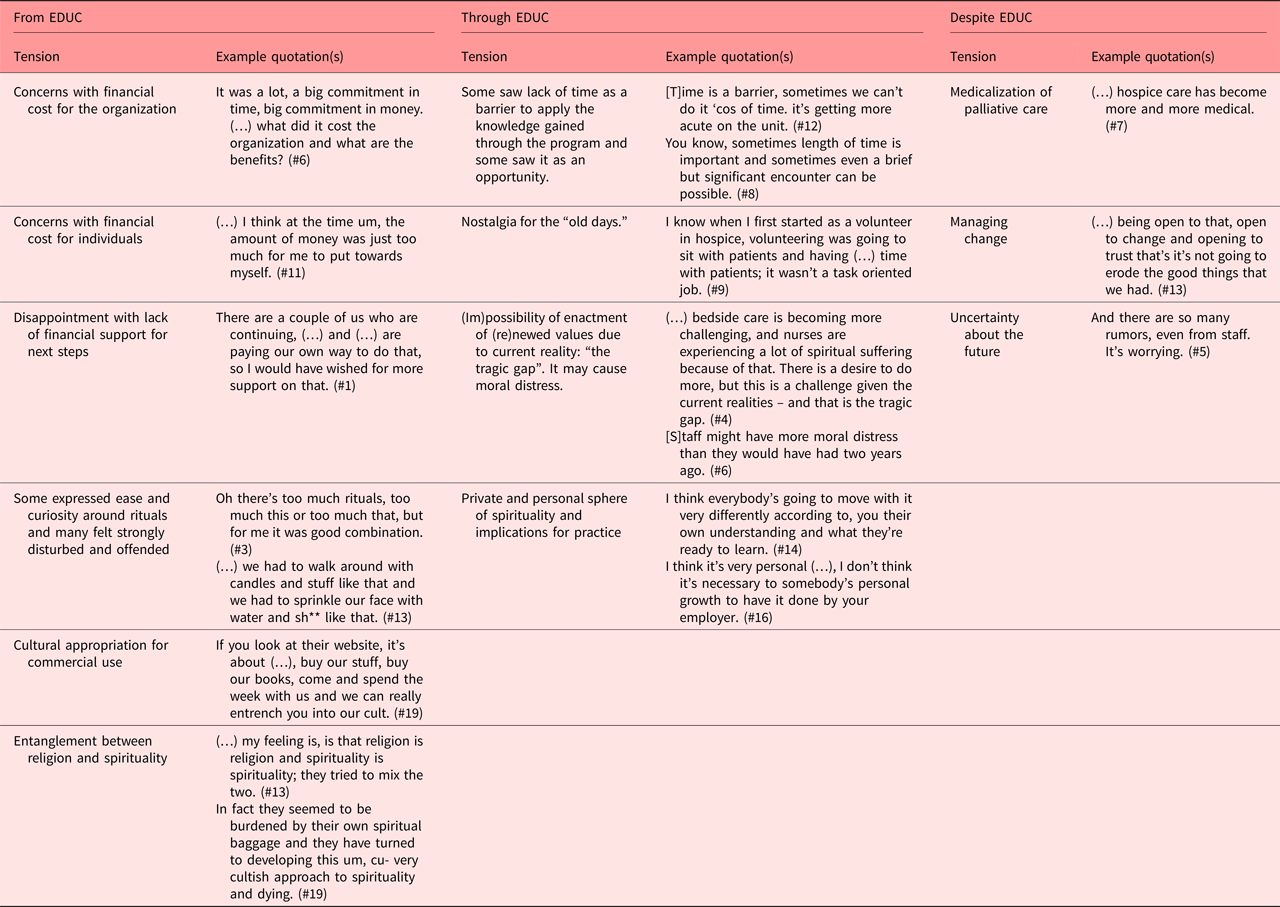
Respondents reported three main areas of tension related to the EDUC: tensions related to issues that came from the EDUC; issues that came through the EDUC; and issues that arose despite the EDUC.
Tensions that emerged from the EDUC included financial and commercial concerns, apprehension about entanglement between religion and spirituality, and contrasting feelings about rituals. Although some found the rituals to be engaging and evocative, some participants felt uncomfortable or offended; two people reported feeling traumatized by the rituals performed during the workshops. Tensions that emerged through the EDUC related to the challenge of employing the program's teachings and enacting the values it renewed from a lack of resources and the implications for practice of the private/personal spheres of spirituality. Nostalgia for the “old days” at hospice resurfaced when current reality was queried. Tensions that emerged despite the EDUC were mostly contextual and pre-existed or co-existed with the EDUC. Table 2 summarizes the tensions that emerged throughout semantic analysis.
Summary of the tensions that emerged through the semantic analysis
What comes next?
Although some people criticized parts of the program or questioned its value, a general agreement obtained that the EDUC had an impact and benefited the organization. The gains made should be maintained and expanded upon. Interviewees expressed curiosity regarding future directions for spirituality-linked education/learning: “It will be interesting to see what, what um the organization is putting in place to sustain (…) that learning.” (#11)
Discussions about the future highlighted different views on personal and organizational responsibility related to keeping the learnings alive:
I think hospice did a lot to sponsor and support this. And now what? What are people willing to do about it? (…) I think in some ways this is going to work if people take responsibility. (#6)
Do we put it in our mission statement? Do we develop official language, and resources? We need to keep talking, keeping it front and center… reading, being mindful. (#4)
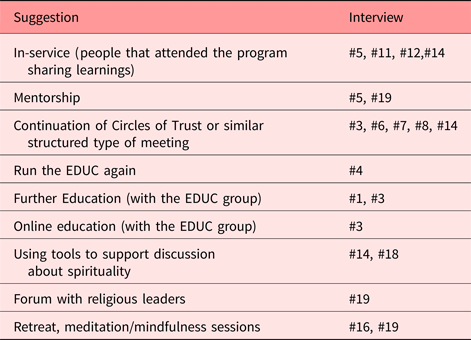
Participants shared suggestions for keeping the learnings alive (see Table 3) but some expressed concern over expectations for short-term change. One interviewee explained:
I just want to say that I feel that they won't necessarily see those results right away, I think it's the type of work that just needs to continually develop and grow with people. and it will happen over time but not necessarily, you know, in the first six months. (#14)
Summary of suggestions for next steps voiced by interviewees
Latent analysis
Three main themes emerged through the latent analysis: reclaiming the spiritual dimension within palliative care; honoring inter-personal boundaries when it comes to belief systems or lack thereof; and the paradox of spirituality and science within the present culture of health care in public systems.
Reclaiming the spiritual dimension of palliative care
One of the major impacts of the EDUC on practice emerged through the latent analysis of interview statements. Respondents shared a range of experiences related to reclaiming the spiritual dimension of palliative care that may have been lost due to the changing dynamics of work and care delivery within palliative care. One person remarked:
It's acknowledging that they are a being, they may be suffering in other ways that I may not have any knowledge of but they may have great existential suffering (…) I'm there to be there in their presence and support them or be there in that time period with that patient. (#9)
Attitudes toward spirituality influenced professional activities such as discussions at rounds (“I have heard in rounds nurses discuss the spiritual elements of a patient's care much more frequently. #18) and charting:
So for example on our charting, when we're getting to know patients and families, there's a questions that talks about spiritual affiliation, or whatever… and I […] describe what people have said give their life meaning or what's important. So again using those kind of spiritual dimensions of hope, meaning, relationship, forgiveness, and using that as a description. (#1)”
Honoring personal and cultural boundaries
A deep tension that emerged through the latent analysis was the need to honor personal and cultural boundaries. Tensions surrounding the rituals used in the EDUC were articulated by a significant number of respondents. People felt varying levels of discomfort, and two of those interviewed even described a sense of terror linked to what they experienced as a breach of boundaries. This discomfort related to rituals and other EDUC elements impacted levels of program involvement (some people reported deliberately missing parts of the workshops, some reported abandoning the program altogether), raised questions around the legitimacy of the program and disrupted the integration of learnings for some of the participants. As one respondent stated:
[T]he attempt to engage one in educational strategies in an, in an area which for me is highly private and personal uh with a, was a kind of brash openness that didn't engage me at all. And there were other kind of ritual type elements that (…) left me quite cold. And I heard that it did the same for others. (#17)
For some respondents, the rituals ruptured personal and cultural boundaries: “I'm not convinced he had permission or even (…) that it was his place to be sharing stuff that doesn't belong to his culture.” (#6) Those that spoke critically of the rituals communicated a sense that consent was not sought by the facilitators and not given by many of the participants, calling into question the legitimacy of the content and the organizers.
Some participants felt vulnerable or unsafe, and experienced program elements as traumatizing: “I went in with a certain agenda, which was to come away from this with skills that would help me um spiritually support my patients wherever their spirituality was; and when I left I felt spirit- spiritually terrorized by this group of people.” (#19)
Paradox of spirituality and science within the culture of healthcare
Another tension that emerged through the latent analysis was the paradox of spirituality and science within the culture of healthcare. Although many respondents voiced approbation for reclaiming the spiritual dimension of SC, “in some ways it's given them confidence to really own it and name it. And they feel less woo-woo and less apologetic and more, more grounded,” #6), many also voiced the difficulties of embracing this spiritual dimension in the practical culture of healthcare: “sometimes if you're trying to make a point at rounds and maybe it's not being quite heard, you know, sometimes I've had reinforcement from the counselor” (#8). The participant quoted elaborated further: “(…) if you followed this course to the letter you would see that this, they're probably not really designed for hospital settings unless it was an extremely, alternative hospital setting” (#8).
The need to measure and identify outcomes, an important feature of healthcare culture, was highlighted as a challenge by some: “I know it's really tempting to want to measure things and, and prove things and that is going to be really hard to do” (#6). On the other hand, one respondent suggested: “[P]rotocol sounds like such a technical word for it but there are ways that we can teach people how to do this” (#18).
Some respondents reported fully living this paradox after attending EDUC:
And I thought: ok I either decide I'm going to be on time and out of there on time, everything done, you know, according to my little plan, or I stay and spend some time with [the patient]. And that's what I chose to do because after in, in taking this program it's like: ok, I know hospice supports this. (#9)
Discussion
We embarked on this quality improvement project with the goal of examining the value (as perceived by hospice staff and volunteers) of the EDUC on improving practice and cultural change at our hospice. The five overarching themes identified through semantic analysis (context, individual impacts, practice impacts, tensions, and “what comes next?”) suggest that the program had a profound and positive impact on individuals and has already contributed to a slight shift in practice patterns in our organization. Some of the ways the EDUC affected our culture could be anticipated (based on the objectives and content of the program), such as the impact on self as well as providing common language, tools and resources. The organizational impact themes that emerged through latent analysis were unanticipated and informative: the reclamation of the spiritual dimension of palliative care; the importance of honoring boundaries; and, the paradox of spirituality and science within the culture of healthcare. Using a program created in an alternate culture and context brought some unexpected challenges, such as the tension between the use of rituals and personal/cultural boundaries. “What comes next?” was the most recurrent question voiced by interviewees, through a variety of vocabulary and phrasing. A systematic and institutional approach to SCT may be the answer.
SCT for healthcare providers has been examined by many as a tool to enhance SC practice (Baldacchino, Reference Baldacchino2015; Zollfrank et al., Reference Zollfrank, Trevino and Cadge2015). Paal et al. (Reference Paal, Helo and Frick2015) highlight that sufficient preparation of healthcare professionals involving self-reflection, theoretical teaching, and practical exercises is critical to SC practice. In a recent review, Paal et al. (Reference Paal, Helo and Frick2015) proposed three groups of SCT objectives: developing trainee's sensitivity towards their own spirituality, clarifying the role of spirituality in healthcare, and preparing trainees for spiritual encounters. Our data suggest that EDUC met these objectives for many participants but not for all.
Literature regarding workplace spirituality (WS) may prove a helpful resource for understanding why the EDUC met the SCT objectives for many participants. Pawar (Reference Pawar2016) defines WS as an “individual's expression or experience of spirituality at workplace” and, more specifically, “employee experiences of meaning and community in workplace.” Pikola et al (Reference Pikola, Rantakokko and Suhonen2016) highlight that although WS has been studied mainly from the individual's perspective, there are also two other levels of WS: group and organizational levels. Different researchers describe separate, but connected elements of WS that support the three levels of WS: meaningful work, value alignment, sense of community (including transcendence of self), as well as personal growth and development (McKee et al., Reference McKee, Driscoll and Kelloway2011; Rego & Pina e Cunha, Reference Rego and Pinha e Cunha2008; Sheep, Reference Sheep2006). Participants of the EDUC reported each of these elements in interviews, although aspects of personal development and sense of community received the most emphasis in our data set (Individual Impacts theme).
Our findings regarding the importance of community are mirrored by Kazemipour and Amin (Reference Kazemipour and Amin2012), who found that WS works referentially: its presence and practice improves teamwork, and teamwork enables experiencing WS. Albuquerque et al. (Reference Albuquerque, Campos Cunha and Dias Martins2014) note that organizational culture is a determining factor in WS, because an organizational support for a sense of community and meaningful work is required in order to develop a strong, supportive work environment. That the organization supported EDUC with financial and human resources may have contributed to the positive impact of the program on team building (Context theme).
The EDUC did not (for all participants) serve the SCT objectives described by Paal et al. (Reference Paal, Helo and Frick2015). A clash between participants' and instructors' beliefs may have contributed to this unsuccessful outcome. The EDUC aims to respect the spiritual path of every person, regardless of any potential religious affiliation. Even so, some participants did not experience the intended sense of inclusiveness (illustrated by the Importance of Honoring Boundaries theme). Best et al. (Reference Best, Buttow and Olver2016) report that conflict between physicians' and patients' beliefs may act as a barrier to provide spiritual care. It is possible that the same phenomenon - conflict between the EDUC instructors' and attendees' beliefs - played an important role in this discord. Considering that more than 20,000 people have attended the EDUC around the world with high satisfaction rates, the dissonance between the experience of some participants and the intent of the program is important to note and requires further investigation.
We argue that the main cause of the discomfort experienced by select participants relates to cultural differences. For some participants, the use and facilitation of rituals was interesting and inspiring; for others, it was experienced as disrespectful or unappealing. Baldacchino (Reference Baldacchino2015) mentions that experiential learning may facilitate the integration of SC theoretical learning into clinical practice, but we argue that experiencing rituals may not be the most beneficial or appropriate SCT method for all learners. The concept of cultural safety can help us understand this challenge. The objective of cultural safety is to acknowledge and mediate the bias(es) that exist within cultures. It requires self-awareness as well as an emphasis on recognizing the implicit imbalances within power relations (Bozorgzad et al., Reference Bozorgzad, Negarandeh and Raiesifar2016). Practicing religious/spiritual rituals from cultural traditions that are different from ones' own tradition may be perceived as unsafe and/or disrespectful and may have contributed to the uneasiness experienced by some participants.
Borrowing concepts from sensitive and trauma-informed practice, we suggest that, to reach Paal et al.’s objectives and to cultivate the sense of community required for success, SCT needs to create emotionally and physically safe environments, foster opportunities for choice (in regards to collaboration and connection), and provide strengths-based and capacity-building approaches to coping and resilience (Schachter et al., Reference Schachter, Stalker and Teram2009). These issues could be systematically addressed by adding a fourth objective to the three groups classified by Paal et al.: building community through sensitive practice.
Conclusion
Although the EDUC may not have been an absolute fit with our organization, it began a process of culture change that continues to unfold. The organizational impact themes identified—the experience of reclaiming a spiritual dimension within the work, the significance of honoring boundaries, and the paradox of spirituality and science within the culture of health care–have all contributed to the understanding of dynamics and culture, education, and support needs within our organization. So, what does come next? Meredith et al. (Reference Meredith, Murray and Wilson2012) postulate that although the opportunity for staff to gather together, reflect on clinical practice, and discuss spiritual matters may nurture one's spirituality and refuel one's capacity to provide personalized care, it appears that these activities do not produce a lasting effect. They recommend hosting gatherings intermittently to enhance the benefits of such opportunities. Many respondents voiced the need/willingness “to keep the learnings alive” including the continuation of the CoT (or similar structured type of training), corroborating Meredith et al.’s recommendation. We would argue that a systematic approach to SCT may provide a clear pathway to keeping related knowledges relevant, meaningful, and in use. We suggest that future training should be tailored to the two different groups we identify in our organization: EDUC participants and people that have not attended EDUC. For EDUC participants interested in deepening their SC education, the continuation of structured meetings related to CoT may prove to be a good approach, perhaps supported by our own spiritual health coordinator. Providing opportunities for EDUC participants to mentor new staff and volunteers may also help to maintain and support the integration of, learnings. In addition, Paal et al.’s second objective (clarifying the role of spirituality in healthcare) may be more thoroughly met if champions empowered by EDUC embrace SC in practice by exploring tools and protocols to formalize SC conversations. For interested learners that have not attended the EDUC, a series of regular and tailored trainings linked to the CoT concept and structure (Palmer, Reference Palmer2004) or other similar community-enhancing elements may mark the way forward. WS and sensitive practice offer strong frameworks for developing training tailored to local cultures. Organizationally, support for the systematic approach would be needed to ratify and embed the changes we have studied in our Hospice's culture. One of the main criticisms of case studies is that data collected cannot necessarily be generalized. We would argue that, although these recommendations are tailored to our hospice, our study may also inform the development and implementation of SCT in other institutions.
Acknowledgments
We thank our colleagues (staff and volunteers) for sharing their thoughts, time, and valuable knowledge. We also thank the anonymous reviewers who provided thoughtful feedback to the earlier versions of this manuscript. Interim results were presented at the 2017 Canadian Hospice Palliative Care Conference in Ottawa, ON, Canada. This project was funded by a Community Grant from Victoria Foundation (Victoria, BC, Canada).
Supplementary material
The supplementary material for this article can be found at https://doi.org/10.1017/S1478951517001134.


 Open access

