


The precise aetiology of eating disorders remains unknown (Reference Halmi, Szmuckler, Dare and TreasureHalmi, 1995; Reference Schmidt, Fairburn and BrownellSchmidt, 2002). Implicated factors include a family history of eating disorder, affective disorder, substance misuse or obesity; a history of exposure to adverse events, including physical and sexual abuse; lack of social support, poor social adjustment and personality traits such as perfectionism, excessive compliance and low self-esteem (Fairburn et al, Reference Fairburn, Welch and Doll1997, Reference Fairburn, Cooper and Doll1999). Many of these factors increase the risk for psychiatric disorder in general, not just for eating disorders, and there has been considerable debate about the specificity of the relationship between a history of sexual abuse and the subsequent development of an eating disorder. Spataro et al (Reference Spataro, Mullen and Burgess2004) in a prospective study demonstrated an association between child sexual abuse validated at the time and a subsequent increase in rates of childhood and adult mental disorders. The picture is further complicated by the fact that general psychiatric morbidity has been shown in one longitudinal cohort study to predict the onset of eating disorders (Reference Patton, Selzer and CoffeyPatton et al, 1999).
An aetiological link has been proposed between sexual abuse and eating disorders (Reference WallerWaller, 1992; Reference Welch and FairburnWelch & Fairburn, 1994). In a comprehensive review of the relationship between sexual abuse and bulimia nervosa, Pope & Hudson (Reference Pope and Hudson1992) concluded that controlled studies did not generally find a significantly higher prevalence of childhood sexual abuse for patients with bulimia compared with control groups. Welch & Fairburn (Reference Welch and Fairburn1994) determined the prevalence rates of reported sexual abuse in women with bulimia nervosa identified from a community sample and in a referred clinical sample. Comparing these women with a psychiatric control population and a matched control group without psychiatric problems, a history of sexual abuse involving physical contact and a history of repeated sexual abuse were both significantly more common among the community group with bulimia nervosa than among the comparison group without psychiatric problems. Since a history of abuse was just as common for the psychiatric comparison group, these authors concluded that although sexual abuse was a risk factor for the development of bulimia nervosa, it did not appear to be specific to this disorder. Other authors (Reference Everill and WallerEverill & Waller, 1995) have argued for a more complex relationship between eating disordered psychopathology and a history of abuse, with considerable variation in sequelae depending on the nature and circumstances of the abuse and individual vulnerability or resilience.
Recent life events appear to trigger bulimia nervosa (Reference Welch, Doll and FairburnWelch et al, 1997) and anorexia nervosa (Reference Schmidt, Tiller and BlanchardSchmidt et al, 1997), but less is known about the role of disruptive life events occurring in childhood in contributing to the later appearance of eating disorders. Regarding early experiences of parenting, Vandereycken (Reference Vandereycken, Fairburn and Brownell2002) pointed out the shortcomings involved in relying on the retrospective recall of patients with psychological problems. He concluded that patients with bulimia nervosa tend to report more troubled childhood experiences than patients with anorexia or control groups without psychiatric problems, and recall their rearing in childhood as characterised by a lack of care, especially by their mothers. However, Romans et al (Reference Romans, Gendall and Martin2001) in an epidemiological study identified early menarche and paternal over-control as risk factors for eating disorders in women who reported experiencing child sexual abuse.
Eating disorder symptoms are not uncommon in women of childbearing age, with up to 4% of women affected if those with extreme concerns about body shape and weight and disrupted eating patterns are included with those meeting the criteria for anorexia or bulimia nervosa (Reference HoekHoek, 1993). Pregnancy itself has an inevitable and complex impact on attitudes to weight and shape and on eating disorder symptoms. For many women, pregnancy is the first time they have experienced major body changes since early adolescence. There is evidence from a number of studies that pregnant women are generally accepting of their larger body size and make few attempts to control it (Reference Davies and WardleDavies & Wardle, 1994). However, in clinical samples of women with eating disorders, many expressed negative feelings about the weight gain and changes in body shape during pregnancy (Reference Fairburn and WelchFairburn & Welch, 1990).
Many of the studies cited above were small samples and/or based on clinical populations. Our study is based on a large, community sample. It was designed to explore which early experiences, recalled during pregnancy, were associated with both lifetime and antenatal eating disorder symptoms. Our hypothesis was that women recalling adverse parenting experiences and those recalling early sexual abuse would have more eating disorder symptoms, both lifetime and antenatally.
METHOD
Procedure and participants
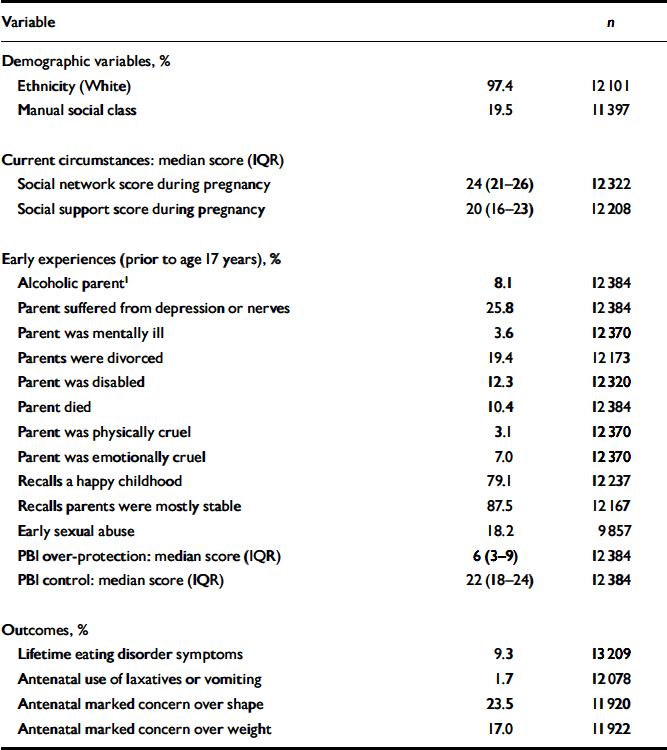
The Avon Longitudinal Study of Parents and Children (ALSPAC), also known as the ‘Children of the Nineties’ project, recruited all women resident in the three health districts in Avon (south-west England) who had an expected delivery date between 1 April 1991 and 31 December 1992. Enrolment followed widespread publicity and contact by midwives, interviewing women at their booking visit. Data were collected at recruitment from 14069 women, but only those who responded to all prenatal questionnaires (and who were aged 18 years or over) are included in this study (n=10641; mean age 28.2 years, range 18–45). Table 1 shows all the variables used in this analysis and the numbers who responded to each section of the questionnaires.
Descriptive statistics: explanatory and outcome variables included in all linear and logistic regression models
| Variable | n | |
|---|---|---|
| Demographic variables, % | ||
| Ethnicity (White) | 97.4 | 12 101 |
| Manual social class | 19.5 | 11 397 |
| Current circumstances: median score (IQR) | ||
| Social network score during pregnancy | 24 (21–26) | 12 322 |
| Social support score during pregnancy | 20 (16–23) | 12 208 |
| Early experiences (prior to age 17 years), % | ||
| Alcoholic parent1 | 8.1 | 12 384 |
| Parent suffered from depression or nerves | 25.8 | 12 384 |
| Parent was mentally ill | 3.6 | 12 370 |
| Parents were divorced | 19.4 | 12 173 |
| Parent was disabled | 12.3 | 12 320 |
| Parent died | 10.4 | 12 384 |
| Parent was physically cruel | 3.1 | 12 370 |
| Parent was emotionally cruel | 7.0 | 12 370 |
| Recalls a happy childhood | 79.1 | 12 237 |
| Recalls parents were mostly stable | 87.5 | 12 167 |
| Early sexual abuse | 18.2 | 9 857 |
| PBI over-protection: median score (IQR) | 6 (3–9) | 12 384 |
| PBI control: median score (IQR) | 22 (18–24) | 12 384 |
| Outcomes, % | ||
| Lifetime eating disorder symptoms | 9.3 | 13 209 |
| Antenatal use of laxatives or vomiting | 1.7 | 12 078 |
| Antenatal marked concern over shape | 23.5 | 11 920 |
| Antenatal marked concern over weight | 17.0 | 11 922 |
Measures
Three postal questionnaires administered during pregnancy provided the data for this paper: Having a Baby, sent at 18 weeks’ gestation, Your Pregnancy, at 32 weeks’ gestation, and About Yourself, which could be completed at any time during pregnancy.
Explanatory variables
Parental mental health and family life
The About Yourself questionnaire contained items on mental health problems (schizophrenia, depression, alcohol misuse) of the respondents’ parents (both natural and non-biological); loss of a parent, or separation from them; early recall of family life as happy or not (defined by a five-point scale) at three ages (0–5 years, 6–11 years and 12–15 years) and whether each parent was stable and predictable. Questions in Your Pregnancy asked whether either parent was physically or emotionally cruel and whether parents had divorced or separated. In addition, respondents completed the Parental Bonding Instrument (Reference Parker, Tupling and BrownParker et al, 1979) about experiences up to the age of 16 years with each parent, from which two scores are derived: parental over-protection and parental control.
Early sexual abuse
Your Pregnancy included one question under ‘your childhood’ about sexual abuse (‘Did it occur? yes/no’), and then at its conclusion a detailed section of questions about early sexual experiences - ‘early’ defined as occurring before the age of 16 years. It was noted that some respondents might not wish to answer and that they could leave these items blank if desired. Questions covered a number of sexual acts (further details are available from the authors upon request), who had been involved, the age at which each act occurred and whether the act was wanted or not. A coding (binary yes/no) of early sexual abuse was given if the woman reported experiencing any unwanted sexual contact before the age of 16 years, excluding non-contact indecent exposure (‘flashing’) but including an abuser masturbating in front of them. Excluding non-contact ‘flashing’ created a variable that correlated more strongly with abuse according to the binary question ‘Did abuse occur?’.
Demographic factors and current circumstances
About Yourself included questions on a number of demographic and current factors, including social class, ethnic origin, age at completion of the questionnaires, social networks and social support (the social support scale developed was specifically for ALSPAC).
Outcomes
Lifetime and pregnancy eating disorder symptoms
About Yourself contained questions about a lifetime history of anorexia nervosa and bulimia (yes/no). Having a Baby asked about self-induced vomiting and laxative use for weight loss. A lifetime eating disorder symptoms score was derived by including a positive response to any of these four questions. Your Pregnancy included questions about the use of laxatives and vomiting to lose weight during pregnancy.
Eating disorder symptoms, marked shape and weight concern
The Your Pregnancy questionnaire included selected items from the Eating Disorder Examination Questionnaire (EDE–Q; Reference Fairburn and BeglinFairburn & Beglin, 1994), covering eating and weight concerns in the previous 28 days, and prior to the pregnancy. Included were five of the nine items comprised by the EDE–Q Shape Concern sub-scale and five of the six EDE–Q Weight Concern items. In a sample of women already identified as having eating problems (Reference Stein, Stein and WaltersStein et al, 1995), it was established that scores from the reduced sub-scales correlated significantly with the full sub-scale scores (weight 0.99, shape 0.98). Each item has a three-point scale and each sub-scale score is the mean of five items (minimum 1.0, maximum 3.0). Based on the distribution of scores, a cut-off point of 2.0 or more was selected to indicate marked shape or weight concern.
Statistical analysis
The aim of the analysis was to examine the influence of early experiences on eating disorder symptoms. Univariate analyses were conducted to identify potential relationships between risk factors and outcomes. Chi-squared tests were used for categorical variables and t-tests for continuous variables. For each outcome, odds ratios are presented for mothers with the risk factor relative to mothers without that particular risk factor. However, many of the explanatory variables are interrelated. In order to examine which factors had an independent influence on eating problems, multivariate analyses were conducted using logistic regression programmes from SAS version 8.2, suitable for estimating influences on binary outcome variables. Multiple logistic regression, including the factors significant in univariate analyses, was used to examine which risk factors had independent effects on eating problems. Of the 10 641 women included in the analysis, complete risk factor data were available for 7806 women, owing partly to the lower response rate (90%) to the detailed sexual abuse questionnaire. The univariate analyses reflect the numbers of women who gave complete information for each relevant item, and the multivariate regression analyses include only women who gave complete information on all relevant items. Best subset models were chosen by backwards elimination and through testing the increases in deviance against a χ2 distribution. All variables in final models met the 5% level of significance (see Table 1 for predictors entered into models). All P values are two-sided.
RESULTS
Response rate for early sexual experiences
Since the numbers in multivariate analyses were reduced because a substantial minority did not complete this section of the Your Pregnancy questionnaire, factors associated with non-response were examined. Manual social class was associated with a lower response rate (18.7% of responders and 23.0% of non-responders were of manual social class; P<0.001). A higher response rate was associated with self-reported sexual abuse (one binary question: 5.1% of responders and 3.2% of non-responders answered ‘yes’ to the sexual abuse question; P<0.001) and recall of a parent having depression (26.7% of responders and 22.6% of non-responders recalled parental depression; P<0.001).
Predictors of eating disorder symptoms
Lifetime eating disorder symptoms
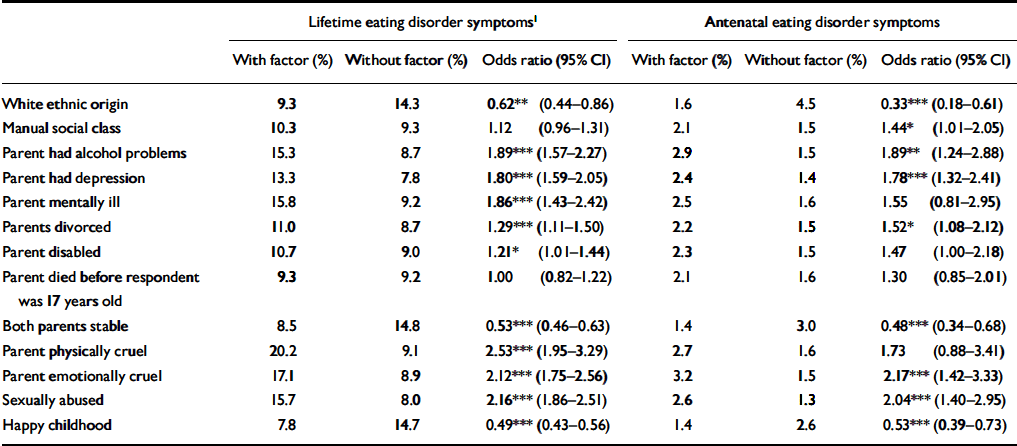
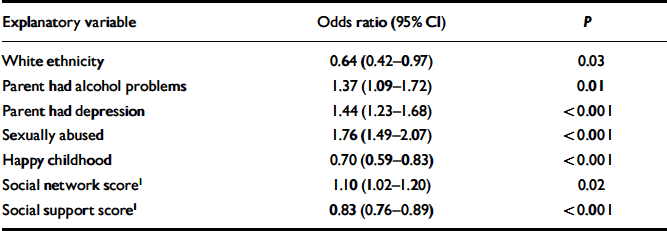
A number of early experiences significantly predicted lifetime eating disorder symptoms (Table 2). They included recall of parental alcohol misuse, depression or other mental health problems. However, the highest odds ratios were for parental cruelty (physical, OR=2.53; emotional, OR=2.12) and experience of sexual abuse (OR=2.16). Conversely, happy memories throughout childhood and recall that parents were stable most of the time were associated with a lower rate of eating disorder symptoms. Parental death and low social class were not related to lifetime eating disorder symptoms. Multivariate analysis indicated that there was an independent effect of parental depression, alcohol problems and recall that childhood was not happy (Table 3). However, the most predictive variable (in terms of its contribution to the χ2 likelihood ratio statistic in the fully adjusted model) was sexual abuse.
Univariate predictors of lifetime and antenatal eating disorder symptoms (vomiting or laxative use during pregnancy)
| Lifetime eating disorder symptoms1 | Antenatal eating disorder symptoms | |||||
|---|---|---|---|---|---|---|
| With factor (%) | Without factor (%) | Odds ratio (95% CI) | With factor (%) | Without factor (%) | Odds ratio (95% CI) | |
| White ethnic origin | 9.3 | 14.3 | 0.62** (0.44–0.86) | 1.6 | 4.5 | 0.33*** (0.18–0.61) |
| Manual social class | 10.3 | 9.3 | 1.12 (0.96–1.31) | 2.1 | 1.5 | 1.44* (1.01–2.05) |
| Parent had alcohol problems | 15.3 | 8.7 | 1.89*** (1.57–2.27) | 2.9 | 1.5 | 1.89** (1.24–2.88) |
| Parent had depression | 13.3 | 7.8 | 1.80*** (1.59–2.05) | 2.4 | 1.4 | 1.78*** (1.32–2.41) |
| Parent mentally ill | 15.8 | 9.2 | 1.86*** (1.43–2.42) | 2.5 | 1.6 | 1.55 (0.81–2.95) |
| Parents divorced | 11.0 | 8.7 | 1.29*** (1.11–1.50) | 2.2 | 1.5 | 1.52* (1.08–2.12) |
| Parent disabled | 10.7 | 9.0 | 1.21* (1.01–1.44) | 2.3 | 1.5 | 1.47 (1.00–2.18) |
| Parent died before respondent was 17 years old | 9.3 | 9.2 | 1.00 (0.82–1.22) | 2.1 | 1.6 | 1.30 (0.85–2.01) |
| Both parents stable | 8.5 | 14.8 | 0.53*** (0.46–0.63) | 1.4 | 3.0 | 0.48*** (0.34–0.68) |
| Parent physically cruel | 20.2 | 9.1 | 2.53*** (1.95–3.29) | 2.7 | 1.6 | 1.73 (0.88–3.41) |
| Parent emotionally cruel | 17.1 | 8.9 | 2.12*** (1.75–2.56) | 3.2 | 1.5 | 2.17*** (1.42–3.33) |
| Sexually abused | 15.7 | 8.0 | 2.16*** (1.86–2.51) | 2.6 | 1.3 | 2.04*** (1.40–2.95) |
| Happy childhood | 7.8 | 14.7 | 0.49*** (0.43–0.56) | 1.4 | 2.6 | 0.53*** (0.39–0.73) |
Independent predictors of lifetime eating disorder symptoms
| Explanatory variable | Odds ratio (95% CI) | P |
|---|---|---|
| White ethnicity | 0.64 (0.42–0.97) | 0.03 |
| Parent had alcohol problems | 1.37 (1.09–1.72) | 0.01 |
| Parent had depression | 1.44 (1.23–1.68) | <0.001 |
| Sexually abused | 1.76 (1.49–2.07) | <0.001 |
| Happy childhood | 0.70 (0.59–0.83) | <0.001 |
| Social network score1 | 1.10 (1.02–1.20) | 0.02 |
| Social support score1 | 0.83 (0.76–0.89) | <0.001 |
Antenatal eating disorder symptoms
Eating disorder symptoms (self-induced vomiting, laxative use to lose weight) during pregnancy were predicted by a similar set of early experiences, including parents with alcohol problems or depression, parents being emotionally or physically cruel, and having been sexually abused (see Table 2). Again, those recalling a happy childhood were significantly less likely to report eating disorder symptoms during pregnancy. The death of a parent was not a significant factor. However, based on multiple regression, fewer factors were relevant. Those independently associated with self-induced vomiting or laxative use in pregnancy were having a parent (in most cases the mother) with depression (OR=1.47, 95% CI 1.06–2.04) and more early life events (for top group relative to bottom group OR=1.96, 95% CI 1.21–3.17). Being of White ethnic origin and having a high social support score were associated with a reduced likelihood: OR=0.31 (95% CI 0.17–0.56) and 0.80 per standard deviation increase (95% CI 0.69–0.92), respectively.
Marked shape and weight concern during pregnancy
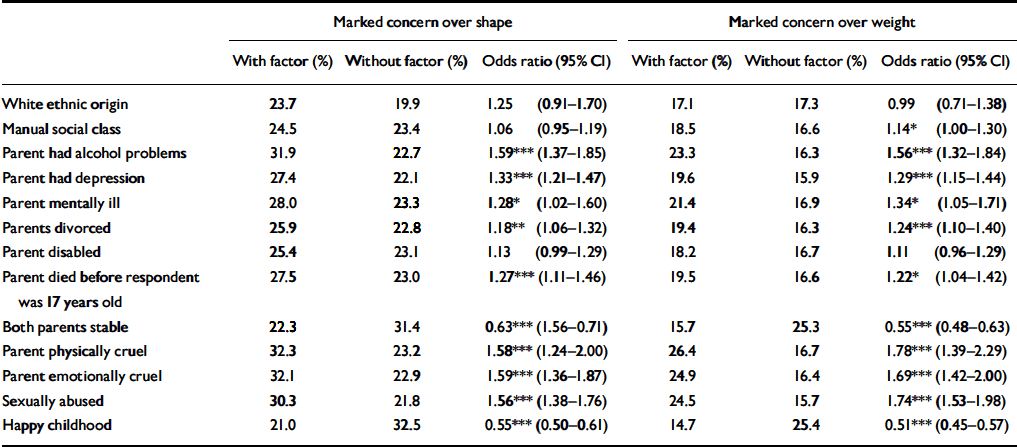
Recall of parental alcohol or mental health problems, parental depression or death, parental cruelty, parental divorce and early sexual abuse were all significant univariate predictors of marked concern over shape and weight during pregnancy, whereas recall of a happy childhood and stable parental behaviour were again predictive of less concern (Table 4).
Univariate predictors of antenatal marked concern over shape and weight
| Marked concern over shape | Marked concern over weight | |||||
|---|---|---|---|---|---|---|
| With factor (%) | Without factor (%) | Odds ratio (95% CI) | With factor (%) | Without factor (%) | Odds ratio (95% CI) | |
| White ethnic origin | 23.7 | 19.9 | 1.25 (0.91–1.70) | 17.1 | 17.3 | 0.99 (0.71–1.38) |
| Manual social class | 24.5 | 23.4 | 1.06 (0.95–1.19) | 18.5 | 16.6 | 1.14* (1.00–1.30) |
| Parent had alcohol problems | 31.9 | 22.7 | 1.59*** (1.37–1.85) | 23.3 | 16.3 | 1.56*** (1.32–1.84) |
| Parent had depression | 27.4 | 22.1 | 1.33*** (1.21–1.47) | 19.6 | 15.9 | 1.29*** (1.15–1.44) |
| Parent mentally ill | 28.0 | 23.3 | 1.28* (1.02–1.60) | 21.4 | 16.9 | 1.34* (1.05–1.71) |
| Parents divorced | 25.9 | 22.8 | 1.18** (1.06–1.32) | 19.4 | 16.3 | 1.24*** (1.10–1.40) |
| Parent disabled | 25.4 | 23.1 | 1.13 (0.99–1.29) | 18.2 | 16.7 | 1.11 (0.96–1.29) |
| Parent died before respondent was 17 years old | 27.5 | 23.0 | 1.27*** (1.11–1.46) | 19.5 | 16.6 | 1.22* (1.04–1.42) |
| Both parents stable | 22.3 | 31.4 | 0.63*** (1.56–0.71) | 15.7 | 25.3 | 0.55*** (0.48–0.63) |
| Parent physically cruel | 32.3 | 23.2 | 1.58*** (1.24–2.00) | 26.4 | 16.7 | 1.78*** (1.39–2.29) |
| Parent emotionally cruel | 32.1 | 22.9 | 1.59*** (1.36–1.87) | 24.9 | 16.4 | 1.69*** (1.42–2.00) |
| Sexually abused | 30.3 | 21.8 | 1.56*** (1.38–1.76) | 24.5 | 15.7 | 1.74*** (1.53–1.98) |
| Happy childhood | 21.0 | 32.5 | 0.55*** (0.50–0.61) | 14.7 | 25.4 | 0.51*** (0.45–0.57) |
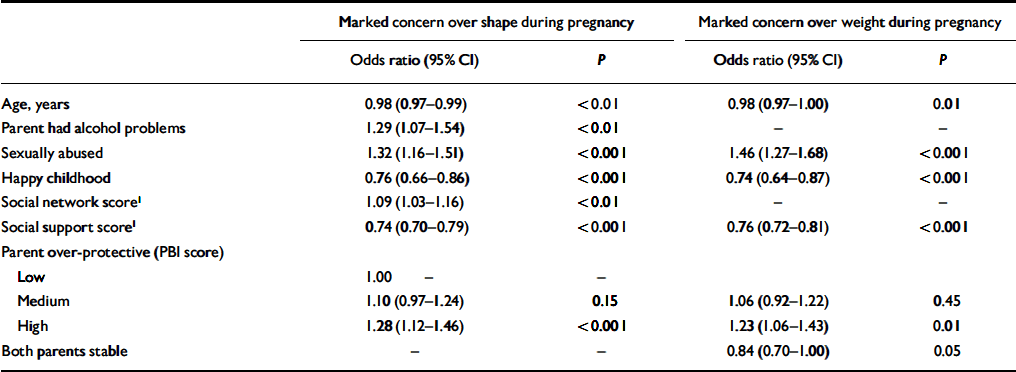
Taking other factors into account, there remained a significant relationship between sexual abuse and concern over shape and weight, but this was not the case for parental mental illness or cruelty (Table 5). Women who reported highly over-protective parenting were more likely to have marked concern over their shape and weight, whereas those reporting a happy childhood or high social support scores were less likely to have such concerns.
Independent predictors of marked concern over shape and weight during pregnancy
| Marked concern over shape during pregnancy | Marked concern over weight during pregnancy | |||
|---|---|---|---|---|
| Odds ratio (95% CI) | P | Odds ratio (95% CI) | P | |
| Age, years | 0.98 (0.97–0.99) | <0.01 | 0.98 (0.97–1.00) | 0.01 |
| Parent had alcohol problems | 1.29 (1.07–1.54) | <0.01 | – | – |
| Sexually abused | 1.32 (1.16–1.51) | <0.001 | 1.46 (1.27–1.68) | <0.001 |
| Happy childhood | 0.76 (0.66–0.86) | <0.001 | 0.74 (0.64–0.87) | <0.001 |
| Social network score1 | 1.09 (1.03–1.16) | <0.01 | – | – |
| Social support score1 | 0.74 (0.70–0.79) | <0.001 | 0.76 (0.72–0.81) | <0.001 |
| Parent over-protective (PBI score) | ||||
| Low | 1.00 – | – | ||
| Medium | 1.10 (0.97–1.24) | 0.15 | 1.06 (0.92–1.22) | 0.45 |
| High | 1.28 (1.12–1.46) | <0.001 | 1.23 (1.06–1.43) | 0.01 |
| Both parents stable | – | – | 0.84 (0.70–1.00) | 0.05 |
DISCUSSION
The multifactorial influences on the development of eating disorder symptoms are substantiated by this large-scale community study. Mental health problems of the women's own parents, physical and emotional cruelty, sexual abuse and recall of an unhappy childhood all predicted lifetime eating disorder symptoms, use of laxatives and vomiting during pregnancy and marked concern about shape and weight during pregnancy. Many of these factors covary and not all had independent effects. However, early sexual abuse remained as a significant independent predictor of lifetime eating disorder symptoms and atypical concern about shape and weight, controlling for other risks. It is noteworthy that a low level of social support was also a significant predictor of weight and shape concerns during pregnancy.
Limitations of the study
Although our study demonstrates that sexual abuse is associated with eating disorder symptoms, independently of a number of well-established factors such as parental alcohol misuse or depression and physical or emotional cruelty, it does not address the question of whether early sexual abuse has a causal relationship with the subsequent development of eating difficulties or of other psychiatric problems. Some eating difficulties might have preceded the abusive experiences. In addition, although the life-time eating disorder symptoms score was derived by asking about a history of anorexia nervosa and bulimia or of self-induced vomiting and laxative use for weight loss, it does not indicate a diagnosis of eating disorder. Similarly, the modified EDE–Q for eating disorder symptoms in pregnancy is not a diagnostic instrument. Any specific risk for eating disorder rather than eating disorder symptoms is not explored in this study.
This study relies on retrospective recall of early family life, eating disorder symptoms and unwanted sexual experiences. The problems associated with retrospective recall of child sexual abuse are well known, and include forgotten or non-disclosed abuse and the reporting and possible construction of abusive experiences to make sense of current distress. It is not clear what bias in recall, if any, is attributable to pregnancy. The precise nature of the sexual abuse, the age at which it occurred, whether it was repeated, whether the child was believed and other important mediators and modifiers of the effect of the abuse are not considered. Other potentially important parental contributions, including genetic ones, to the development of eating disorder symptoms have not been considered. Further, this study cannot answer the question about whether there is a specific association between early sexual abuse and eating problems, taking into account other types of symptom (e.g. depression, anxiety).
Public health and clinical implications
Maternal eating problems in the postnatal period have been shown to pose a particular risk to the developing child by interfering with parenting and child growth (Reference Stein, Woolley and CooperStein, et al, 1994). Thus there are substantial public health implications of addressing early experiences that might be related to weight and shape concern. It has already been established in this same community sample that women with excessive concerns about shape and weight are less likely to plan breast-feeding (Reference Barnes, Stein and SmithBarnes et al, 1997). This suggests that preventive interventions that allow discussion about the impact of early experiences might be an important route for prevention.
Health professionals dealing with pregnant women need to be aware of the high prevalence of eating disorder symptoms and the possible association in some women with a history of adverse experiences in childhood. The majority of women with concerns about weight, shape and eating do not describe a history of abuse and professionals may have reservations about raising the topic, but it may be important to do so with some women, in the context of a supportive relationship with a midwife, health visitor or general practitioner during pregnancy.
Implications for future research
Prospective longitudinal studies are indicated to explore these associations further. Such studies would need to include large numbers and attempt to validate reported abusive experiences and other early influences through interviews and by other means. Interventions designed to improve the outcome for mothers and their children by addressing women's eating disorder symptoms with or without attention to their history, where present, of adverse experiences, will need to be tested.
Clinical Implications and Limitations
CLINICAL IMPLICATIONS
-
▪ Pregnant women with a history of eating disorder symptoms are more likely to have a history of unwanted sexual experiences.
-
▪ Women with marked concern during pregnancy about their weight and shape or who report using laxatives or self-induced vomiting to control their weight are also more likely to have a history of unwanted sexual experiences.
-
▪ Health professionals dealing with pregnant women need to be aware of the prevalence of eating disorder symptoms and the possible association in some women with a history of adverse experiences in childhood.
LIMITATIONS
-
▪ The study relies on retrospective recall of early experiences.
-
▪ Demonstrating a robust association between maternal eating disorder symptoms and a history of sexual abuse does not prove causality.
-
▪ The study does not distinguish risk for eating disorder from risk for eating disorder symptoms.
Acknowledgements
We are grateful to all the mothers who took part and to the midwives for their cooperation and help in recruitment. The ALSPAC study team comprises interviewers, computer technicians, laboratory technicians, clerical workers, research scientists, volunteers and managers who continue to make the study possible. This study could not have been undertaken without the financial support of the Wellcome Trust, the Medical Research Council, the University of Bristol, the Department of Health, the Department of the Environment, and other funders (including British Gas). The ALSPAC study is part of the European Longitudinal Study of Pregnancy and Childhood, initiated by the World Health Organization.




eLetters
No eLetters have been published for this article.