

Recently, organizational citizenship behavior (OCB) has received increasing attention from researchers. A critical review of the literature on OCB (Podsakoff, McKenzie, Paine, & Bacharach, Reference Podsakoff, McKenzie, Paine and Bacharach2000) suggested that the number of studies of OCB has not only increased dramatically in the field of organizational behavior, but has also expanded to a variety of domains and disciplines, such as human resource management and marketing. About 66% of the studies related to OCB have been published since the turn of the 21st century (Podsakoff et al., Reference Podsakoff, Whiting, Podsakoff and Blume2009). These studies have identified the significant role of OCB in both individual and organizational performance (Danish, Munir, Ishaq, & Arshad, Reference Danish, Munir, Ishaq and Arshad2014). For example, Cohen and Vigoda (Reference Cohen and Vigoda2000) discovered that the main organizational benefits resulting from OCB include improved co-worker and managerial productivity, reduced maintenance expenses, superior efficiency in resource use and allocation, and improved organizational attractiveness for high-quality new recruits.
Podsakoff, Whiting, Podsakoff, and Blume (Reference Podsakoff, Whiting, Podsakoff and Blume2009) conducted a meta-analysis of the consequences of OCB and concluded that OCB serves as a significant driver of various individual-level (i.e. performance evaluations, reward allocation decisions, and turnover intentions) and organizational-level consequences (i.e. organizational effectiveness, customer satisfaction, and group- or unit-level turnover). Thus, it is critical to study the factors that may significantly catalyze employees’ OCB (Khan & Rashid, Reference Khan and Rashid2012).
Among the organizational factors that can influence OCB, leadership and organizational cultures have attracted the interest of researchers (Danish et al., Reference Danish, Munir, Ishaq and Arshad2014). Graham (Reference Graham, Hunt, Baglia, Dachler and Schriesheim1988) and Podsakoff et al. (Reference Podsakoff, MacKenzie, Morrman and Fetter1990) posited that leadership style influences subordinates’ OCB. Lian and Tui (Reference Lian and Tui2012) specified that a leader needs to be aware of his or her leadership style in work situations and how it promotes subordinates’ OCB, because an inappropriate leadership style may lead to negative consequences, such as a decline in work performance and absenteeism (Motowidlo, Reference Motowidlo, Borman, Ilgen and Klimoski2003).
Among a variety of specific leadership styles in relation to OCB, transformational leadership is related to a higher level of employee OCB (Goodwin, Wofford, & Whittington, Reference Goodwin, Wofford and Whittington2001; Mackenzie, Podsakoff, & Rich, Reference MacKenzie, Podsakoff and Rich2001; Wang, Law, Hackett, Wang, & Chen, Reference Wang, Law, Hackett, Wang and Chen2005) because it motivates employees by getting them to internalize and prioritize a larger collective cause over individual interests (Lian & Tui, Reference Lian and Tui2012). Meanwhile, Farooqui (Reference Farooqui2012) added that several dimensions of leadership, such as supportive management and leaders’ contingent reward behaviors, exert impacts on OCB. Even though Carmeli, Palmon, and Ziv (Reference Carmeli, Palmon and Ziv2010) investigated “the effects of inclusive leadership on employees’ behaviors, it limited to their involvement in creative tasks in workplace”. However, few studies have been dedicated to the effect of inclusive leadership on OCB. In this study, we argue that when a leader exercises an inclusive style, employees are likely to perform OCB because inclusive leaders create tremendous motivation for employees by focusing on their needs (Hollander, Reference Hollander2009).
According to Podsakoff et al. (Reference Podsakoff, McKenzie, Paine and Bacharach2000), the mechanisms through which leaders’ behaviors influence OCB are unclear, and so they deserve future examination. In the meantime, the literature has documented the relationships between organizational justice, organizational learning culture, leadership (Armagan & Erzen, Reference Armağan and Erzen2015; Zagorsek, Dimovski, & Skerlavaj, Reference Zagorsek, Dimovski and Skerlavaj2009), and OCB (Danish et al., Reference Danish, Munir, Ishaq and Arshad2014). Nevertheless, a review of prior research suggests that few studies have investigated the mediating influence of organizational justice and organizational learning culture on the leadership–employee OCB relationship. For instance, Zehir, Akyuzb, Eren, and Turhan’s study (Reference Zehir, Akyuzb, Eren and Turhan2013) is a welcome example that examined the mediating role of organizational justice between servant leadership and OCB; however, the study did not evaluate the role of organizational learning culture as a mediator. Additionally, the literature on inclusive leadership has only disclosed the mediating roles of individual psychological constructs, such as psychological safety (Carmeli et al., Reference Carmeli, Palmon and Ziv2010) and employees’ organizational affective commitment and creativity (Choi, Tran, & Park, Reference Choi, Tran and Park2015) in the relationship between inclusive leadership and employee positive behavior. Little has been found on the mediating role of contextual factors such as organizational justice and organizational learning culture. To cover the aforementioned theoretical gaps, this study aims to investigate the effect of inclusive leadership on OCB, as well as the mediating roles of organizational justice and organizational learning culture in this relationship, from the perspective of social exchange theory.
Previous studies have explained leaders’ influences on subordinates’ behaviors through social exchange processes characterized by social exchange theory (Graen & Uhl-Bien, Reference Graen and Uhl-Bien1995; Keller & Dansereau, Reference Keller and Dansereau1995). Social exchange theory (Blau, Reference Blau1964) postulates that when receiving favorable treatment from an agent, the receiving party attempts to reciprocate with something equally valuable (Wang, Reference Wang2008). Thus, social exchange theory provides an important theoretical lens on leaders’ behaviors and their contribution to their followers’ desired outcomes; this tenet lends support to the linkage between inclusive leadership and OCB, and the mediating roles of organizational justice and learning culture.
Inclusive leaders’ support and helping behaviors, based on key features such as high availability and openness (Carmeli et al., Reference Carmeli, Palmon and Ziv2010; Nembhard & Edmonson, Reference Nembhard and Edmondson2006), can make employees feel that they are receiving favorable treatment from the organization. Carmeli et al. (Reference Carmeli, Palmon and Ziv2010) investigated the effects of inclusive leadership on employee creativity in the context of the R&D teams of knowledge-intensive organizations. The results of this study show that inclusive leadership promoted psychological safety; this, in turn, increased employee involvement in creative work. Nembhard and Edmonson (Reference Nembhard and Edmondson2006) conducted a study that evaluated the effect of professional status on psychological safety in health care teams, and they found that leader inclusiveness helped cross-disciplinary teams overcome the inhibiting effects of status differences, allowing members to collaborate in process improvement. The authors indicated that a leader’s active and inclusive behavior was the key factor in promoting followers’ engagement in team-based quality improvement work. Increased attention from inclusive leaders to employees’ needs and interests may induce high levels of perceived organizational support among employees. Therefore, employees who receive favorable treatment from leaders and the organization attempt to increase their voluntary commitment within the organization to promote its effective functioning.
We also grounded the mediating roles of organizational justice and learning culture in this theory. Inclusive leader behavior may positively impact organizational justice and organizational learning culture because it facilitates a favorable environment for promoting such conditions (Danish et al., Reference Danish, Munir, Ishaq and Arshad2014). As inclusive leaders consider individuals’ needs and interests carefully, employees are likely to feel that their organization treats them fairly and in accordance with rules, regulations, and ethics. This will provide employees with better motivation for OCB. In addition, such inclusive leaders’ ability to promote individuals’ needs may cultivate employees’ internal and social desires, such as learning and studying (Choi et al., Reference Choi, Tran and Park2015; Nembhard & Edmondson, Reference Nembhard and Edmondson2006). When the organization provides them with such a learning culture to develop their internal interests, employees are more likely to perceive that their organization values what they have done (Joo, Reference Joo2010; Joo & Shim, Reference Joo and Shim2010). This motivates reciprocation toward their leader as well as their organization, which ultimately leads to OCB.
Theoretical background and hypothesis development
Inclusive leadership and organizational citizenship behaviors
The concept of leader inclusiveness was first introduced by Nembhard and Edmondson (Reference Nembhard and Edmondson2006). They proposed “leader inclusiveness, defined as words and deeds by a leader or leaders that indicate an invitation and appreciation for others’ contributions” (p. 947). Later, the construct of inclusive leadership was specifically developed by Carmeli et al. (Reference Carmeli, Palmon and Ziv2010). They defined the inclusive leadership as “leaders who exhibit openness, accessibility, and availability in their interactions with followers” (p. 250).
Since its introduction, this conceptualization has been widely accepted and adopted for use in later studies of inclusive leadership (Choi, Tran, & Kang, Reference Choi, Tran and Kang2017). It has been regarded as a mode of relational leadership that focuses on leaders’ attention to followers’ needs (Hollander, Reference Hollander2009). Hollander (Reference Hollander2009) suggested that inclusive leaders always provide support for their followers. Some exemplary characteristics of inclusive leaders include open communication to invite input from followers, concern about the interests, expectations and feelings of their followers, and being available and willing to provide assistance to their followers (Hollander, Reference Hollander2009). As such, inclusive leadership shares some similarities with servant leadership, in which leaders show a willingness to listen to followers’ ideas, care for followers’ needs, and provide support for followers to complete their tasks (Van Dierendonck, Reference Van Dierendonck2010). However, with a focus on three types of supportive behaviors (Carmeli et al., Reference Carmeli, Palmon and Ziv2010), inclusive leadership is more specific. Inclusive leadership is also in line with other leadership styles such as transformational leadership, by creating motivations for followers (Choi et al., Reference Choi, Tran and Park2015). Yet, inclusive leadership is particularly attentive to followers’ needs (Hollander, Reference Hollander2009), while the emphasis of transformational leadership is more on achieving shared or organizational goals (Kanungo, Reference Kanungo2001). According to Nishii and Mayer (Reference Nishii and Mayer2009), inclusive leaders may promote employees’ skills, autonomy, and responsibility. Nonetheless, as the concept is rather new, empirical research on the outcomes of inclusive leadership is lacking. The available literature has merely documented the impact of inclusive leadership on employee involvement in creative tasks (Carmeli et al., Reference Carmeli, Palmon and Ziv2010), organizational affective commitment and work engagement (Choi et al., Reference Choi, Tran and Park2015), employee well-being and innovative behavior (Choi et al., Reference Choi, Tran and Kang2017), employee voice behavior, and team performance (Qi & Liu, Reference Qi and Liu2017).
OCB refers to meaningful behaviors, which are not restricted to those written in the employment contract, and cooperative behaviors, which are not directly recognized by a formal reward system (Organ, Reference Organ, Staw and Cummings1990). OCB generally includes behaviors that go beyond the call of duty (Danish et al., Reference Danish, Munir, Ishaq and Arshad2014, Konovsky & Pugh, Reference Konovsky and Pugh1994) or the basic requirements of a job (Chang et al., Reference Chang, Tseng and Chen2012). Previous studies have confirmed five dimensions of OCB: conscientiousness, altruism, civic virtue, sportsmanship, and courtesy (Organ, Reference Organ1988). Conscientiousness refers to discretionary behavior that goes beyond minimum-role requirements. Altruism involves helping other organizational members with relevant tasks or problems. Civic virtue indicates a willingness to participate responsibly in the life of the organization. Sportsmanship involves tolerance-related behaviors in less-than-desirable situations to avoid complaints being made. Lastly, courtesy refers to efforts to prevent work-related problems with others (Mackenzie, Podsakoff, & Fetter, Reference MacKenzie, Podsakoff and Fetter1993). Williams and Anderson (Reference Williams and Anderson1991) proposed a conceptualization of OCB with two factors: OCB individual (OCB-I) and OCB organization (OCB-O). OCB-I considers a specific individual to be the target of employees’ behavior, while OCB-O regards the organization as the primary beneficiary. Following Williams and Anderson’s (Reference Williams and Anderson1991) classification, Organ (Reference Organ1997) classified altruism and courtesy as OCB-I, and conscientiousness, sportsmanship, and civic virtue as OCB-O.
Concerning the antecedents of OCB, prior research has shown that tasks, organizational characteristics, and leadership are common predictors of OCB (Podsakoff et al., Reference Podsakoff, McKenzie, Paine and Bacharach2000). Several studies have uncovered the differential influences of these antecedents on OCB-I and OCB-O (Spitzmuller, Dyne, & Ilies, Reference Spitzmuller, Dyne, Ilies, Barling and Cooper2008). With respect to leadership, a recent meta-analysis by Ilies, Nahrgang, and Morgeson (Reference Ilies, Nahrgang and Morgeson2007) shows a strong relationship between leader–member exchange and OCB-I. Likewise, Kamdar and Van Dyne (Reference Kamdar and Van Dyne2007) discovered that when there is a high-quality relationship with the leader, employees tend to reciprocate with OCB-I directed at the leader. However, Aryee, Budhwar, and Chen (Reference Aryee, Budhwar and Chen2002) revealed that when employees trust leaders – one of the key components of social exchange (Blau, Reference Blau1964) – they exhibit both OCB-I and OCB-O. However, perceived organizational support that is triggered by supportive leadership has been found to be more related to OCB-O than to OCB-I (Moorman, Blakely, & Niehoff, Reference Moorman, Blakely and Niehoff1998; Muhammad, Reference Muhammad2014). Empirical studies have concluded that satisfactory interpersonal treatment by leaders activates more OCB-I, whereas high-perceived organizational support impacts OCB-O more than OCB-I.
Inclusive leadership may have a positive impact on employees’ OCB in three ways. First, based on social exchange theory (Blau, Reference Blau1964), the supportive behaviors of inclusive leaders result in the perception among employees that they have received favorable treatment, which motivates them to act reciprocally to the leader and the organization (Wang, Reference Wang2008). Performing OCB is one likely way for employees to reciprocate (Aryee et al., Reference Aryee, Budhwar and Chen2002; Konovsky & Pugh, Reference Konovsky and Pugh1994; Organ, Reference Organ1988). Prior studies have supported the idea that good supervisor support is critical for the development of OCB (Liu, Reference Liu2009). Second, employees may exhibit OCB by observing inclusive leaders’ behaviors. Inclusive leaders with helping behaviors, such as availability to offer assistance to others, can be regarded as credible models by employees; therefore, employees are likely to exhibit such supportive helping behaviors to others. Finally, the supportive behaviors of inclusive leaders contribute to building employees’ trust in leaders (Hollander, Reference Hollander2009). Meanwhile, Podsakoff, MacKenzie, Morrman, and Fetter (Reference Podsakoff, MacKenzie, Morrman and Fetter1990) addressed how “trust in leaders has been found to be relevant to the leader-directed citizenship behavior dimensions of altruism, conscientiousness, sportsmanship, and courtesy”. Based on this reasoning, we propose Hypothesis 1: Inclusive leadership positively influences employees’ organizational citizenship behaviors.
Inclusive leadership and organizational justice
Organizational justice is defined as employees’ perception of the extent to which they are treated fairly and honestly (Elovainio et al., Reference Elovainio, van den Bos, Linna, Kivimaki, Ala-Mursula, Pentti and Vahtera2005). Danish et al. (Reference Danish, Munir, Ishaq and Arshad2014) shared the view that organizational justice refers to the fairness perceptions of individuals in terms of how organizations treat them financially, ethically, and in accordance with rules and regulations. Conceptually, organizational justice includes three main elements: distributive justice, procedural justice, and interactional justice. Distributive justice refers to the perceived fairness of the outcomes that an individual receives from an organization. The fairness of distribution of outcomes is perceived differently based on comparison with others (Alsalem & Alhaiani, Reference Alsalem and Alhaiani2007). Accordingly, individual satisfaction is a function of outcomes. In contrast, procedural justice refers to the perceived fairness of the rules and procedures that regulate a process (Nabatchi, Bingham, & Good, Reference Nabatchi, Bingham and Good2007). The key principles for enhancing perceptions of procedural justice comprise impartiality, voice or opportunity to be heard, and grounds for decisions (Bayles, Reference Bayles1990). Procedural justice views satisfaction as a function of processes and procedures. Specifically, when employees perceive organizational processes and procedures to be fair, they will be more satisfied and likely to exhibit positive attitudes about the organization (Bingham, Reference Bingham1997; Tyler & Lind, Reference Tyler and Lind1992). Interactional justice refers to the perceived fairness of interpersonal treatment received during the enactment of organizational procedures (Bies & Moag, Reference Bies, Moag, Lewicki, Sheppard and Bazerman1986). Examples of interactional justice include actions that display social sensitivity, such as when supervisors treat employees with respect and dignity. Interactional justice consists of two subcategories: informational justice and interpersonal justice (Folger & Cropanzano, Reference Folger and Cropanzano1998). Research has identified that these two subconstructs overlap considerably, but they should be separated because each exerts differential effects on justice perceptions (Colquitt, Reference Colquitt2001; Colquitt, Conlon, Wesson, & Porter, Reference Colquitt, Conlon, Wesson and Porter2001). In the relationship with OCB, interactional justice has been more strongly associated with OCB-I (Masterson, Lewis-McClear, Goldman, & Taylor, Reference Masterson, Lewis-McClear, Goldman and Taylor2000; Colquitt et al., Reference Colquitt, Conlon, Wesson and Porter2001). Conversely, several studies have found a strong linkage between procedural justice perceptions and OCB-O (Colquitt et al., Reference Colquitt, Conlon, Wesson and Porter2001; Masterson et al., Reference Masterson, Lewis-McClear, Goldman and Taylor2000; Organ & Ryan, Reference Organ and Ryan1995). We argue that inclusive leadership positively affects organizational justice for two reasons. First, by being open and accessible to discuss employees’ needs, suggestions, and problems encountered, inclusive leaders may instil in employees the impression that their voices are heard and that they are involved in collective decision making (Bayles, Reference Bayles1990). This means that a high level of procedural justice is perceived among employees (Bayles, Reference Bayles1990). Second, inclusive leadership also helps to enhance interactional justice because the supportive behaviors of inclusive leaders make employees feel that they are treated with respect, and so the perceived interpersonal justice is high (Folger & Cropanzano, Reference Folger and Cropanzano1998). Further, the open behaviors to discuss issues with employees may foster informational justice because employees are more likely to perceive that they are provided with all the necessary information for their work (Folger & Cropanzano, Reference Folger and Cropanzano1998). Hence, we propose Hypothesis 2: Inclusive leadership positively influences perceived organizational justice.
Organizational justice and organizational citizenship behaviors
The literature has documented the positive influence of organizational justice on employees’ OCB (Tepper & Taylor, Reference Tepper and Taylor2003). The studies in this area have suggested that if employees feel that they are given delegated authority and included in administrative decisions, then they are more likely to exhibit and maintain OCB (Bogler & Somech, Reference Bogler and Somech2005; Danish et al., Reference Danish, Munir, Ishaq and Arshad2014). Tepper and Taylor (Reference Tepper and Taylor2003) emphasized that employees perform OCB with greater frequency when they perceive fairness from their supervisors or the organization. We argue that organizational justice is positively related to OCB for three main reasons. The first underlying reason could be that high perceived organizational justice makes employees feel satisfied with the working procedures and the organization, so motivating them to engage in extra-role behaviors (Bingham, Reference Bingham1997). The second reason is that organizational justice engenders employees’ trust in the organization (Aryee et al., Reference Aryee, Budhwar and Chen2002), which is relevant to the civic virtue dimension of citizenship behavior (Robinson, Reference Robinson1996; Robinson & Morrison, Reference Robinson and Morrison1995). Konovsky and Pugh (Reference Konovsky and Pugh1994) posited that procedural justice positively influences employees’ trust in their leaders and the organization, which motivates them to exhibit OCB. Lastly, fairness in the organization gives employees a strong sense of mission, and thus drives them to interact with and help others (Li, Zhu, & Luo Reference Li, Zhu and Luo2010). Thus, we propose: Hypothesis 3: Organizational justice positively influences employees’ organizational citizenship behaviors.
Inclusive leadership and organizational learning culture
An organizational learning culture refers to an organization that is skilled at “creating, acquiring, and transferring knowledge, and modifying its behavior to reflect new knowledge and insights” (Garvin, Reference Garvin1993, p. 80). Confessore and Kops (Reference Confessore and Kops1998) revealed that in a learning organization, teamwork, collaboration, creativity, and knowledge processes have meaning and value. Yang, Watkins, and Marsick (Reference Yang, Watkins and Marsick2004) added that organizational learning culture involves seven action imperatives: continuous learning, inquiry and dialog, team learning, empowerment, an embedded system, system connection, and strategic leadership. Specifically, continuous learning represents an organization’s efforts to create continuous learning opportunities for all of its members. Inquiry and dialog refer to promoting questioning, feedback, and experimentation. Team learning specifies the encouragement of collaboration and team learning. Empowerment indicates processes to create and share a collective vision. An embedded system signifies an organization’s efforts to establish systems to capture and share learning. System connection refers to global thinking and actions to connect the organization to its internal and external environments. Finally, strategic leadership reflects the extent to which leaders’ model and support learning at the individual, team, and organizational levels.
We assume that inclusive leader behaviors may influence organizational learning culture. We reason that a leader’s invitation for employees to offer their input engenders a perception among employees that their leader and organization value new knowledge sharing and discussion. When a leader allows the expression of different views and ideas, challenges old assumptions and beliefs, and stimulates new perspectives, employees enjoy more opportunities to speed up knowledge acquisition and distribution (Zagorsek et al., Reference Zagorsek, Dimovski and Skerlavaj2009). Moreover, a leader’s availability to provide help and to respond to employees’ questions and problems signals the organization’s appreciation and commitment to improving employees’ continuous learning (Ratten, Reference Ratten2008). This is because prompt help and responses from inclusive leaders may provide sufficient opportunities for employees to learn new things and to develop their skills, knowledge, and cognitive thinking (Carmeli et al., Reference Carmeli, Palmon and Ziv2010; Choi et al., Reference Choi, Tran and Park2015). To illustrate, Nishii and Mayer (Reference Nishii and Mayer2009) showed that inclusive leaders are more likely to afford employees opportunities to expand their skills. Lastly, inclusive leaders’ openness and accessibility to interact with employees contribute to fostering a shared vision, which facilitates a learning-oriented organization (Real, Roldan, & Leal, Reference Real, Roldan and Leal2014). Previous studies have indicated that intense open interaction between leaders and employees offers clarity related to organizational goals (Zagorsek et al., Reference Zagorsek, Dimovski and Skerlavaj2009). Hence, we propose Hypothesis 4: Inclusive leadership positively influences organizational learning culture.
Organizational learning culture and organizational citizenship behaviors
We argue that in a learning organization, employees are more likely to perform OCB because of their motivations. First, organizational learning culture, as an environmental characteristic of the organization (Danish et al., Reference Danish, Munir, Ishaq and Arshad2014), affects employee behaviors like OCB. Specifically, an organizational learning culture provides employees with immense prospects to learn through active participation (Armenakis, Harris, & Mossholder, Reference Armenakis, Harris and Mossholder1993) and hence enhances employees’ learning about positive attitudes and behaviors that are not part of their roles (Danish et al., Reference Danish, Munir, Ishaq and Arshad2014). Second, according to LePine and Van Dyne (Reference LePine and Van Dyne2001), developing an organizational system approach and shared values, a characteristic of a learning organization (Watkins & Marsick, Reference Watkins and Marsick1997), encourages employees to help colleagues, especially in difficult circumstances such as overload, stress, and low capability. In highly interdependent jobs that emphasize conformity to standards, cooperative behavior that helps colleagues may be a key source of increasing overall organizational performance (LePine & Van Dyne, Reference LePine and Van Dyne2001). Third, organizational learning culture facilitates better opportunities for reciprocal exchange among employees, promoting employees’ interaction and knowledge sharing (Confessore & Kops, Reference Confessore and Kops1998; Islam et al., Reference Islam, Anwar, Khan, Rasli, Ahmad and Ahmed2012). The intensity of interaction promotes helping behaviors toward others, or OCB-I (Chang, Tseng, & Chen, Reference Chang, Tseng and Chen2012; Podsakoff et al., Reference Podsakoff, McKenzie, Paine and Bacharach2000), because interaction and involvement in knowledge sharing help to strengthen their relationships with others (Li et al., Reference Li, Zhu and Luo2010). Finally, employees of a learning-oriented organization tend to be provided with rich informational resources (Yang et al., Reference Yang, Watkins and Marsick2004). In light of social exchange theory, perceptions of receiving sufficient information resources reduce employees’ uncertainties about work-related issues and thus make them satisfied (Feldman & Bolino, Reference Feldman and Bolino1999), which motivates them to reciprocate with the organization by exhibiting OCB (Bateman & Organ, Reference Bateman and Organ1983). Therefore, we propose Hypothesis 5: Organizational learning culture positively influences employees’ organizational citizenship behaviors.
Organizational justice as a mediator
We argue that inclusive leadership positively influences OCB through organizational justice. The open and supportive behaviors of inclusive leaders improve organizational procedural justice because employees are likely to perceive that their voices are heard and they are included in decision making (Bayles, Reference Bayles1990). In addition, with inclusive leaders, employees tend to feel that they are treated with respect, which indicates a high degree of organizational interactional justice (Folger & Cropanzano, Reference Folger and Cropanzano1998). Thus, inclusive leadership acts as a catalyst for organizational justice. Organizational justice, in turn, may positively influence employees’ OCB due to employees’ enhanced satisfaction with and trust in the organization (Konovsky & Pugh, Reference Konovsky and Pugh1994). Concretely, organizational justice makes employees feel satisfied with the organization, so they are more likely to exhibit extra-role behaviors (Bingham, Reference Bingham1997). It also increases employees’ trust in the organization (Aryee et al., Reference Aryee, Budhwar and Chen2002), which is related to the civic virtue component of employees’ OCB (Robinson & Morrison, Reference Robinson and Morrison1995). Further, procedural justice enhances OCB because it impacts employees’ perception that the organization values them, and thus may prompt them to reciprocate with OCB (Moorman et al., Reference Moorman, Blakely and Niehoff1998). In this vein, Tepper and Taylor (Reference Tepper and Taylor2003) elaborated that employees tend to interpret procedural justice to mean that their organization is concerned with their interests, which engenders an obligation to repay the organization in some fashion, such as by performing OCB. Based on these above connections, we propose Hypothesis 6: Organizational justice mediates the influence of inclusive leadership on employees’ organizational citizenship behaviors.
Organizational learning culture as a mediator
We argue that organizational learning culture mediates the relationship between inclusive leadership and OCB. An inclusive leader’s openness to input from employees promotes continuous learning because employees have ample opportunities to extend their knowledge, expertise, and skills (Carmeli et al., Reference Carmeli, Palmon and Ziv2010; Choi et al., Reference Choi, Tran and Park2015). A leader’s openness, accessibility, and availability to discuss matters with employees also help to foster a shared vision (Real et al., Reference Real, Roldan and Leal2014) because intensified interactions between a leader and employees generate an understanding and clarity of organizational goals (Zagorsek et al., Reference Zagorsek, Dimovski and Skerlavaj2009). This suggests that inclusive leadership catalyzes organizational learning culture. An organizational learning culture constitutes advantageous conditions for employee OCB because peer interaction in knowledge acquisition and distribution aids peer cohesion (Li et al., Reference Li, Zhu and Luo2010). Further, organizational learning culture supplies employees with rich opportunities to master new knowledge (Yang et al., Reference Yang, Watkins and Marsick2004) and thus enhances employees’ feelings of receiving favorable treatment from their organization. Under the lens of social exchange theory, employees are more likely to reciprocate with the organization by performing OCB (Aryee et al., Reference Aryee, Budhwar and Chen2002). Based on the above reasoning, we form Hypothesis 7: Organizational learning culture mediates the influence of inclusive leadership on employees’ organizational citizenship behaviors.
Methodology
Respondents and procedure
Based on a list of the 500 largest enterprises in Vietnam, we initially contacted eight companies in the service industry – specifically, five banks and three hospitality companies –for data collection. Four out of these eight companies showed a willingness to be involved in our study: two banking and two hospitality companies. We purposefully selected these companies based on two main criteria. First, being in the service industry, their employees are more likely to show OCB because OCB has been given more attention in the services industry than in the production industry (Moorman, Reference Moorman1991; Sharif, Yaqub, & Baig, Reference Sharif, Yaqub and Baig2015). Second, through our initial interviews with these companies’ HR executives, we learned that their employees exhibit OCB. In the sample, 64% of the respondents were male, 77% were aged between 25 and 39, 16% were aged below 25, and only 7% were aged above 40. In terms of the highest level of education attained, 73% had earned a bachelor’s degree, while 19% had a postgraduate degree, and 8% had an educational level below a bachelor’s degree. Finally, 42% had been working from 5 to 10 years in their current organization, 36% had an organizational tenure of 2 to 4 years, 18% had an organizational tenure of less than 2 years, and 4% had an organizational tenure of more than 10 years.
We used a questionnaire to collect the data. This questionnaire was initially written in English and then translated to Vietnamese. To ensure meaning compatibility between the translated and the original questionnaire, we used back-translation processes, as suggested by Brislin (Reference Brislin, Triandis and Berry1980), until the translated questionnaire became appropriately representative of the original one. The questionnaire consisted of four closed-ended, multiple-choice questions on the employees’ demographic information and 43 statements to measure the study’s constructs. The questionnaires were distributed in person to employees at their workplaces.
The respondents provided the answers during their lunchbreaks. Out of 400 employees contacted for data collection, 286 provided responses. Of these responses, 18 questionnaires were removed owing to omission errors and incorrect answers. Eventually, 268 responses were used for subsequent data analysis, with an effective response rate of 67% (268/400). Of these 268 generated responses, the majority was from banking companies (150/268) while the remainder was from hospitality companies (118/268).
In addition, we also checked the effect of the company variable by using a one-way analysis of variance (ANOVA) to compare the means of key variables (i.e. age, education background, tenure, and inclusive leadership) among the four companies. The results showed no significant company effect on our data, as none of the variable’s means were statistically different across the companies (p > .05).
Measures
We measured inclusive leadership behavior with the nine items developed by Carmeli et al. (Reference Carmeli, Palmon and Ziv2010). Sample items are “The manager is ready to listen to my requests”, “The manager is available for professional questions I would like to consult with him/her about”, and “The manager is open to hearing new ideas”. The scale reliability reported by a previous study (Carmeli et al., Reference Carmeli, Palmon and Ziv2010) showed a Cronbach’s alpha of .94. Carmeli et al. (Reference Carmeli, Palmon and Ziv2010) found that the scale correlated positively with employee psychological safety and employee involvement in creative work. The scale’s alpha reliability in this study is .906 and is consistent with other previous research (Choi et al., Reference Choi, Tran and Kang2017).
Eleven items adapted from Rahim, Magner Antonioni, and Rahman (Reference Rahim, Magner, Antonioni and Rahman2001) were used to measure organizational justice. Sample items are “The rewards I receive from my organization are in accordance with my level of performance” and “I believe that my rewards accurately reflect my contributions to the organization”. The reliability of that study was reported as adequate, with Cronbach’s alpha of .85 for U.S. managers (Rahim et al., Reference Rahim, Magner, Antonioni and Rahman2001). Rahim et al. found that organizational justice has positive correlations with organizational commitment. The scale’s alpha reliability in this study is .951.
Seven items adapted from the shortened version of the dimensions of the learning organization questionnaire by Yang et al. (Reference Yang, Watkins and Marsick2004) were employed to measure organizational learning culture. The seven items represent each of the seven dimensions of organizational learning culture: continuous learning, inquiry and dialog, team learning, empowerment, embedded system, system connection, and strategic leadership. Prior studies have used this scale and reported adequate reliability (Islam et al., Reference Islam, Anwar, Khan, Rasli, Ahmad and Ahmed2012; Joo, Reference Joo2010; Joo & Shim, Reference Joo and Shim2010). Sample items are “In my organization, people help each other learn” and “My organization encourages people to get answers from across the organization while solving problems”. Naqshbandi and Tabcheh (Reference Naqshbandi and Tabche2018) also used a similar measure and reported the scale reliability with Cronbach’s alpha of .78. The study found that there was a positive mediating role of organizational learning culture in the relationships between empowering leadership and open innovation. The Cronbach’s alpha for our scale was .929.
OCB was measured with 16 items adapted from Lee and Allen (Reference Lee and Allen2002). Sample items are “I assist others with their duties” and “I offer ideas to improve the functioning of the organization”. All of the items were measured on a 7-point Likert-type scale, from 1 (strongly disagree) to 7 (strongly agree). The scale reliability was reported by Lee and Allen (Reference Lee and Allen2002), with Cronbach’s alphas of .83 (OCB-I) and .88 (OCB-O). They found that there was a positive association between job effect and OCB. The Cronbach’s alpha for our scale was .970.
To take into account systematic variations in individual responses, four individual difference variables were included as control variables: gender, age, educational level, and organizational tenure. These four demographic variables were assessed using standard survey questions. It is true that some researchers may treat inclusive leadership and organizational learning literature as team-level variables. However, our study treated both inclusive leadership and organizational learning culture as individual-level variables that are based on individual employees’ perceptions of their leader and organization.
First, our interest in this study lies in the influence of inclusive leadership in fostering a specific behavior and outcome at the individual level, and the impact of an inclusive leader’s behaviors on individuals’ attitudes and behavior toward their organization (i.e. OCB). In this regard, employees’ evaluations of their immediate leader’s or supervisor’s inclusive leadership behavior rather than their leader’s self-rating is more appropriate for our study. It has been found that leaders’ attention and behavior toward followers’ needs in terms of leaders’ openness, accessibility and availability, which are key features of inclusive leadership, can be more accurately evaluated by individual followers who had interactions with the leader (Hollander, Reference Hollander2009). The construct of inclusion is particularly central to our understanding of inclusive leadership. In this respect, Shore et al. (Reference Shore, Randel, Chung, Dean, Ehrhart and Singh2011, p. 1265) pointed out that the definition of inclusion is “the degree to which an employee perceives that he or she is an esteemed member of the work group through experiencing treatment that satisfies his or her needs for belongingness and uniqueness”. This conceptualization of inclusive leadership at the individual level is consistent with past research (Carmeli et al., Reference Carmeli, Palmon and Ziv2010; Choi et al., Reference Choi, Tran and Kang2017). As many leadership studies have found, this is also consistent with the fact that employees working with the same leader are likely to experience similar leadership behavior (Kirkman, Chen, Farh, Chen, & Lowe, Reference Kirkman, Chen, Farh, Chen and Lowe2009; Walumbwa, Hartnell, & Oke, Reference Walumbwa, Hartnell and Oke2010).
Second, it is also possible that some researchers prefer to treat organizational learning culture as the organization-level variable, but we regard the organizational learning culture as an individual-level variable. Our focus in this study is the effect of organizational culture in promoting a specific work and organizational environment for employees, such as creating continuous learning opportunities and supporting all of its members, and how these work environment characteristics have impacts on individual perceptions and attitudes toward the organization. Therefore, estimating an individual’s personnel experience with the organizational learning environment, and the individual’s affective evaluation based on their participation in learning activities provided by the organization, seems more appropriate in estimating the influence of the organizational learning culture on the individual’s behavior toward the organization (i.e. OCB). We found that this approach of organizational learning culture is often used and is consistent with past research (Islam et al., Reference Islam, Anwar, Khan, Rasli, Ahmad and Ahmed2012; Joo, Reference Joo2010; Joo & Shim, Reference Joo and Shim2010; Marsick & Watkins, Reference Marsick and Watkins2003; Naqshbandi & Tabche, Reference Naqshbandi and Tabche2018).
Assessment of common method variance
In accordance with Podsakoff, MacKenzie, Lee, and Podsakoff’s (Reference Podsakoff, MacKenzie, Lee and Podsakoff2003) suggestion that assuring respondents of confidentiality can help reduce respondents’ evaluation apprehension and make them less likely to edit their responses to be socially desirable, we minimized common method bias by assuring respondents of our commitment to confidentiality. We stated this on the cover letter attached to each questionnaire. The common method variance (CMV) was assessed using Harman’s single-factor test for all items. The results suggest that no general factor emerged to account for the majority of the variance. An unrotated factor analysis extracted four distinct factors that accounted for 70.4% of the total variance. The largest factor explained 38.2% of the variance. Thus, CMV did not appear to be a problem in this analysis. In addition, the variance inflation factors (VIF) were calculated to check multicollinearity. VIF values ranged from 1.08 to 1.50, suggesting that there was no serious problem concerning multicollinearity issues (Neter, Wasserman, & Kutner, Reference Neter, Wasserman and Kutner1989).
In addition, we also implemented the marker variable test to evaluate the CMV issue further in our analysis by following the recommendations of Lindell and Whitney (Reference Lindell and Whitney2001) and Williams, Hartman, and Cavazotte (Reference Williams, Hartman and Cavazotte2010). These studies reported that many researchers have used the correlational marker technique even though they use latent variable methods to test their substantive hypotheses (Lindell & Whitney, Reference Lindell and Whitney2001; Williams et al., Reference Williams, Hartman and Cavazotte2010). Our study examines the effects of inclusive leadership (IL), organizational justice (OJ), and organizational learning culture (OLC) on OCB in a cross-sectional study. Thus, first, we suppose that a fourth predictor, educational level, was identified a priori as being theoretically unrelated to our dependent variable (i.e. OCB). Accordingly, it was placed in the correlation analysis between the dependent variable and the other predictors to serve as the MV-marker variable. Thus, we have conducted the hypothetical correlation test among three predictors (IL, OJ, OLC), the marker variable (MV), and the dependent variable (OCB). The data support our model by confirming that three theoretically relevant predictors have statistically significant correlations with the dependent variable, whereas the theoretically irrelevant predictor (marker variable: educational level) has a non-significant correlation with the dependent variable. Moreover, the correlations of the MV-marker variable with the other predictor variables are low. These low correlations with the other predictor variables further support the discriminant validity of the MV-marker variable.
The result shows that the correlations for the three predictors (IL, OJ, OLC) with the dependent variable (OCB) are significant even before the CMV adjustment is applied. We controlled for CMV by using r OCB4 = .106 as the estimate of rs (see more information on application of equations 4 and 5 in Lindell and Whitney, Reference Lindell and Whitney2001, p. 116); the results indicate that the correlations of all three predictors (IL, OJ, OLC) with the dependent variable (OCB) remain statistically significant even when CMV is controlled (IL = .443, p < .01; OJ = .330, p < .01; OLC = .187, p < .01). Moreover, these correlations have practical significance because they account for theoretically meaningful amounts of variance explained. Finally, as expected from the analysis in the previous section, results on the application of the disattenuated partial correlations of all three variables with the dependent variable are slightly higher than the corresponding first-order partial correlations (IL = .495; OJ = .349; OLC = .203). Therefore, we confirm that CMV is not an issue in our data analysis.
Results
Reliability and validity
To test the construct validity, the study conducted an exploratory factor analysis (EFA) on the construct measures. The results of the EFA showed that eight factors emerged with eigenvalues greater than 1, accounting for 69.76% of the variance. The reliability of the constructs was tested using Cronbach’s alpha value analysis. The Cronbach’s alpha values of the constructs ranged from .791 to .893. These results indicated adequate internal consistency associated with most of the measures. We therefore decided that the measures had adequate internal consistency and computed composite scores (i.e. averages of item scores in scale) of each scale for use in further analysis. Confirmatory factor analysis (CFA) was also carried out to ensure discriminant validity. The fit indices, χ2 = 593.721, df = 322, p < .001, χ2/df = 1.844; goodness of fit index (GFI) = 0.906; incremental fit index (IFI) = 0.951; adjusted goodness of fit index (AGFI) = 0.882; normed fit index (NFI) = 0.900; Tucker-Lewis index (TLI) = 0.986; and comparative fit index (CFI) = 0.951 showed that the hypothesized four-factor model had a good fit. Hence, the factors in the measurement model had adequate reliability and validity (Hair, Black, Babin, & Anderson, Reference Hair, Black, Babin and Anderson2010).
Table 1 shows the descriptive statistics of the study constructs. Of the four constructs, inclusive leadership has the highest mean (4.799), while organizational learning culture receives the lowest mean value (3.574). Significant correlations have been found among most of the constructs.
Descriptive Statistics and Correlations for the Study Constructs
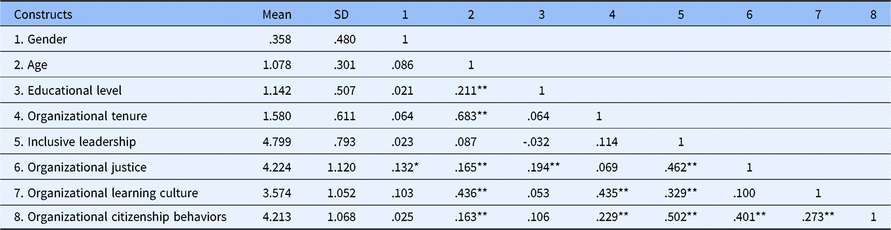
Note: * p < .05; ** p < .01; *** p < .001; gender (0 = women, 1 = men), age (0 = less than 25, 1 = 25–39, 2 = 40–60, 3 = more than 60), educational level (0 = less than bachelor’s, 1 = bachelor’s, 2 = master’s, 3 = PhD), organizational tenure (0 = less than 2 years; 1 = 2–4 years, 2 = 5–10 years, 3 = more than 10 years).
Hypothesis testing
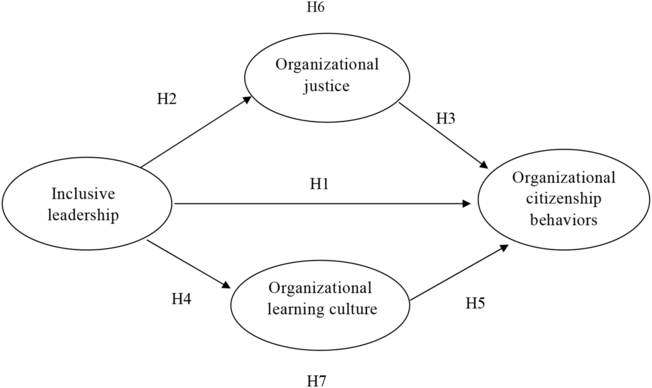
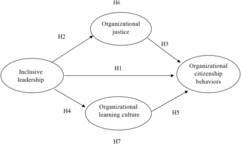
To test the hypotheses proposed, the study used a structural equation modeling (SEM) approach. This was developed by Anderson and Gerbing (Reference Anderson and Gerbing1988) and has been popularly applied in psychology and marketing. The path diagram of the structural model is demonstrated in Figure 1. All the indices, including χ²/df = 1.441, GFI = .906, NFI = .964, RMSEA = .041, TLI = .987, and CFI = .989, suggest that the model fits well (Hu & Bentler, Reference Hu and Bentler1999; Hair et al., Reference Hair, Black, Babin and Anderson2010).
Hypothesis 1, testing the inclusive leadership–OCB relationship, was supported (β = .433, p < .001). Similarly, hypothesis 2, testing the relationship between inclusive leadership and organizational justice, was supported (β = .535; p < .001). Hypothesis 3, testing the positive effect of organizational justice on OCB, was supported (β = .217, p < .001). Hypothesis 4, examining the positive influence of inclusive leadership on organizational learning culture, was also supported (β = .181, p < .05). Finally, hypothesis 5, examining the positive impact of organizational learning culture on OCB, was supported (β = .157, p < .01).
To test the mediating effects, the study used bootstrapping tests with a bootstrap sample of 5,000 through Amos 21.0. The study followed the procedure outlined by Preacher and Hayes (Reference Preacher and Hayes2008) with two separate mediation analyses. Results from Table 2 show that organizational justice significantly mediated the relationship between inclusive leadership and organizational citizenship behavior (β = .123, p < .001, 95% bias-corrected confidence intervals [95% CI] ranged from .041 to .156). Organizational learning culture also mediated the relationship between inclusive leadership and organizational citizenship behavior (β = .033, p < .05, 95% CI [.001, .091]). Based on discussions by Zhao, Lynch, and Chen (Reference Zhao, Lynch and Chen2010) on the types of mediation, the study concluded that both organizational justice and organizational learning culture partially positively mediated the relationship between inclusive leadership and organizational citizenship behavior. Accordingly, H6 and H7 were supported.
Analytical model.
Estimates from the structural model
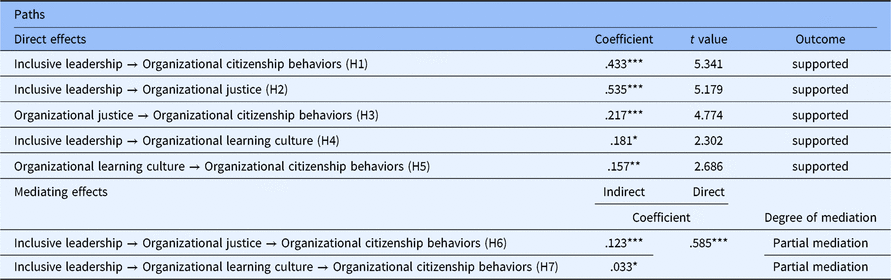
Note: * p < .05; ** p < .01; *** p < .001. χ² = 374.630 (df = 260, p < .000); RMR = .052; GFI = .906; CFI = .989; RMSEA =.041; NFI = .964; IFI =.989; TLI = .987.
Discussion
Our study has three principal contributions. First, it extends the application of the social exchange theory by applying it to understanding key determinants of OCB. Drawing on social exchange theory, the findings of the present study indicate that social exchange theory is one of the most powerful means of explaining how leaders’ behavior contributes to transmitting employees’ values, attitudes, and behaviors to OCB (Konovsky & Pugh, Reference Konovsky and Pugh1994; Treviño, Reference Treviño, Kidwell and Martin2005). The results in the current research add to the existing studies on OCB by identifying the motives and involvement mechanism for engaging in OCB in relation to inclusive leadership through the social exchange process (Bowler & Brass, Reference Bowler and Brass2006; Rioux & Penner, Reference Rioux and Penner2001). This may prompt future studies to focus on a social exchange process to explain the effects of other leadership styles, such as transformational leadership, authentic leadership and ethical leadership, on OCB.
Second, as the first study to examine the effects of inclusive leadership on OCB, our study contributes to enriching the existing literature on both leadership and OCB. We found that inclusive leadership was an effective way to catalyze employee OCB (Carmeli et al., Reference Carmeli, Palmon and Ziv2010). Our findings on the positive relationship between inclusive leadership and employee OCB is also congruent with the results of previous leadership studies that show that supportive leaders’ behavior induces employees’ voluntary behaviors for enhancing organizational effectiveness (Farooqui, Reference Farooqui2012). This may attract scholarly attention to the study of inclusive leadership in relation to other individual and organizational outcomes.
Last, but not least, this study uncovered an underlying mechanism linking leadership and OCB by identifying the significant roles of organizational justice and organizational learning culture for OCB in the relationship. While prior studies accentuated these two constructs as antecedents of OCB (Danish et al., Reference Danish, Munir, Ishaq and Arshad2014) or the consequences of leadership (Zagorsek et al., Reference Zagorsek, Dimovski and Skerlavaj2009), this study found that organizational justice and learning culture positively mediated the relationship between inclusive leadership and OCB. Thus, the study raises the possibility of the mediating mechanism linking other specific leadership styles to employee behaviors.
In addition, our study addressed the idea that both organizational justice and organizational learning culture had positive effects on OCB. This result provided an important resource for understanding country-specific and industry-specific contexts affecting individual behaviors and attitudes toward organizations in Vietnam, which is our research context. Vietnam is strongly influenced by Confucianism (Nguyen, Reference Nguyen2011), in which collectivism, group-orientation and cooperative work styles are highly valued (House, Hanges, Javidan, Dorfman, & Gupta, Reference House, Hanges, Javidan, Dorfman and Gupta2004). This cultural context leads Vietnamese people to pay attention to learning and helping others in the organization (Phuong-Mai, Terlouw, & Pilot, Reference Phuong-Mai, Terlouw and Pilot2005). We also recognized that our study focused on the employees of banking and hospitality companies, which have recently faced intense competition due to the entrance of strong foreign competitors (Nguyen & Nguyen, Reference Nguyen and Nguyen2012). Thus, organizational learning in these companies has been promoted as a key source of organizational survival as well as a driver of employees’ positive behaviors, like OCB, to contribute to the improvement of the organization (Imam, Abbasi, Muneer, & Qadri, Reference Imam, Abbasi, Muneer and Qadri2013).
We assume that inclusive leadership may be present unevenly in the Vietnamese firm context. These country- and industry-specific conditions exert a large role in shaping the distinct relationship between inclusive leadership and OCB (Koopman, Den Hartog, & Konrad, Reference Koopman, Den Hartog and Konrad1999). Our explanation is in line with prior research showing that OCB is enacted differently in different cultural contexts (Farooqui, Reference Farooqui2012). This is also congruent with Podsakoff et al.’s (Reference Podsakoff, McKenzie, Paine and Bacharach2000) viewpoint that cultural contexts affect the strengths of the relationships between OCB and its antecedents. We recommend that future research should conduct an empirical analysis regarding the cross-cultural validity of the influence of inclusive leadership to gain more insights into the relationship between inclusive leadership and OCB outcomes.
Managerial implications
This study has proved the positive effects of inclusive leadership, organizational justice, and organizational learning culture on employee OCB. We suggest that managers should raise awareness among supervisors of the positive effects of inclusive leadership on employee OCB. This leads to the generation of greater supervisor commitment to the application of inclusive leadership at work. Furthermore, managers should provide immediate supervisors with sufficient training on the practices of inclusive leadership so that they can effectively exhibit openness, accessibility and availability to their employees (Carmeli et al., Reference Carmeli, Palmon and Ziv2010). Further, to promote the effectiveness of inclusive leadership, human resource policies and practices such as training, performance assessment and reward systems should be aligned with and lend support to an inclusive leadership style (Choi et al., Reference Choi, Tran and Park2015).
Moreover, in order to promote employees’ OCB, managers should pay attention to building organizational justice practices and enhancing organizational learning culture effectively through proper collaborative processes, such as providing constructive feedback and appropriate mentoring that may motivate employees’ OCB in the workplace (Aryee et al., Reference Aryee, Budhwar and Chen2002; Skarlicki & Latham, Reference Skarlicki and Lathem1996).
Limitations and directions for future research
Although this study has important implications, we should mention the limitations in the research as well. First, as a cross-sectional study, our study is restricted from making causal inferences on the relationship between inclusive leadership and OCB. We have assumed that inclusive leadership enhances OCB. However, it is possible that some aspect of OCB may cause leaders to exhibit more inclusive behaviors toward employees who help the leaders and others in the organization than toward employees who do not. Future studies should conduct longitudinal research or systematic experiments to investigate the causality between inclusive leadership and OCB.
Second, the ratings of all the variables were collected from the same employees, which may result in inflated relationships because of single-source effects. Future researchers are encouraged to collect data from various sources. Third, future research may attempt a replication of our results using different industries and multilevel samples, as our sample was limited to employees of four companies in the service industry in the Vietnamese context. Future research may attempt a replication of our results using larger and more generalized samples. Third, we included two mediators in the relationship between inclusive leadership and OCB (i.e. organizational justice and organizational learning culture), and found a partial mediation effect of both mediators. Therefore, we call for future research to explore the other useful variables that are fully mediating the relationship between inclusive leadership and OCB. For instance, this research explained the relationships between inclusive leadership and OCB, and organizational justice and OCB through employee trust and satisfaction while not directly examining these two variables as mediators. Future research may consider including employee trust and satisfaction as mediating mechanisms.
Finally, our study was limited to providing the differential effects of inclusive leadership on OCB-I and OCB-O. Future research may therefore need to explore why and how a specific leadership type influences different aspects of OCB. In addition, we applied employees’ perceptions of inclusive leadership and organizational learning culture, which seemed more appropriate because our study focused on individuals’ perceptions and behavior toward their leader and the organization as the central predictor of individual-level OCB (Cable & Judge, Reference Cable and Judge1997). However, future studies should consider both team and organizational level treatments, and further investigate the mechanisms and outcomes from multilevel approaches linking the distinct results of each approach, to strengthen the theoretical and empirical implications of the inclusive leadership effect.
Conclusion
Our study contributes to the existing literature by revealing some aspects of inclusive leadership and OCB. The evidence from this study will help managers understand the relationship among inclusive leadership, organizational justice, organizational learning culture, and OCB. Moreover, our study extends the OCB literature by proving the mediating roles played by organizational justice and organizational learning culture. In summary, we believe that the current study will provide researchers with some key aspects to investigate this field of study further.
Financial Support
None.



 Open access

