


Deep vein thrombosis (DVT) is a complication particularly associated with groin injecting in intravenous drug misuse (Reference Roszler, McCarroll and DonovanRoszler et al, 1989; Reference BaldewegBaldeweg, 2000; Reference MacKenzie, Laing and DouglasMacKenzie et al, 2000; Reference McColl, Tait and GreerMcColl et al, 2001). There has been an increase in the numbers of drug misusers admitted to general hospitals in Gloucestershire with DVT, from 3 in 1998 to 20 in 2003. We suspect that this increase may be owing to an increased incidence of groin injecting. The large size of the groin vein makes it easy to locate, and it may be the last vein left when all others are impossible to use. It also has less of an impact on cosmetic appearance than other injection sites, and some users report a quicker/better drug effect. Regular use of the groin site leads to a characteristic ‘dimple’ in the skin over the vein, making location of the site easier for the drug misuser. No survey or study of this type has been conducted in Gloucestershire before. Studies on the increased risk of DVT in the drug misuse population seem to have been mainly published in radiology or medical journals (Reference Roszler, McCarroll and DonovanRoszler et al, 1989; Reference BaldewegBaldeweg, 2000). Studies have focused on the medical outcomes or treatments available (Reference MacKenzie, Laing and DouglasMacKenzie et al, 2000). The issue of prevention of DVT has not generally been considered. When the prevention of drug misuse by injection is discussed in the literature it is most likely to concentrate on the spread of HIV (Reference Williams, Ansell and MilneWilliams et al, 1997) or other blood-borne viral infections.
Method
All patients attending the local supervised drug consumption clinics were surveyed over 1 month. All patients were opiate misusers currently on a replacement regime of methadone or buprenorphine requiring daily attendance. The only exclusion criterion was refusal by the patient. The participants were asked via a questionnaire to list the risks of injecting, particularly into the groin. They were asked which sites they had used to inject and how they had learned their injecting technique. They were also asked to list the symptoms and consequences of DVT and whether they or anyone they knew had ever had a thrombosis. The questionnaire was administered verbally so participants could respond freely and were not prompted to list symptoms.
Results
Of 69 patients, 46 agreed to take part: 37 (80%) male and 9 (20%) female; mean age 31 years 8 months. Twenty-three patients refused to take part, of whom 14 (61%) were male and the mean age was 29 years 7 months. All patients were opiate misusers but only 9 (20%) had never injected drugs. Over half had taught themselves to inject (54%, 21 patients). Among patients who had ever injected, arms (37, 100%) and hands (35, 95%) were the most common injection sites but 43% of patients (16) had injected into their groins and 57% into their necks (21 patients). Use of femoral veins was associated with lack of alternative venous access (14, 88%), easier technique (3, 19%) and improved drug effect (2, 13%); no one claimed that it was for cosmetic reasons. Ten patients (22%) had experienced a venous thrombosis themselves and 35 (76%) knew of someone else who had.
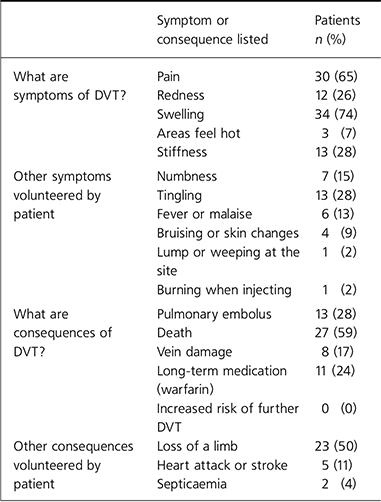
Although 34 (74%) listed thrombosis as a risk of groin injecting, only 30 (65%) knew what a clot or thrombosis actually was. Thirty-four (74%) correctly identified that pain and 30 (65%) that swelling were associated symptoms, but few knew of other symptoms (Table 1). Twenty-seven patients (59%) reported that death could occur as a result of thrombosis and 23 (50%) thought that amputation of a limb was likely. Other consequences were reported by less than 30%.
Patients’ knowledge of deep vein thrombosis (DVT) and its consequences (n=46)
| Symptom or consequence listed | Patients n (%) | |
|---|---|---|
| What are symptoms of DVT? | Pain | 30 (65) |
| Redness | 12 (26) | |
| Swelling | 34 (74) | |
| Areas feel hot | 3 (7) | |
| Stiffness | 13 (28) | |
| Other symptoms volunteered by patient | Numbness | 7 (15) |
| Tingling | 13 (28) | |
| Fever or malaise | 6 (13) | |
| Bruising or skin changes | 4 (9) | |
| Lump or weeping at the site | 1 (2) | |
| Burning when injecting | 1 (2) | |
| What are consequences of DVT? | Pulmonary embolus | 13 (28) |
| Death | 27 (59) | |
| Vein damage | 8 (17) | |
| Long-term medication (warfarin) | 11 (24) | |
| Increased risk of further DVT | 0 (0) | |
| Other consequences volunteered by patient | Loss of a limb | 23 (50) |
| Heart attack or stroke | 5 (11) | |
| Septicaemia | 2 (4) |
Discussion
Femoral veins are frequently used as an injection site by drug misusers in urban Gloucestershire. There appears to be a lack of basic knowledge about the risks and symptoms of DVT among drug misusers, despite increased admissions for treatment of thromboses and the provision of harm reduction leaflets to all drug misusers in our service (Gloucestershire Partnership Trust, 2001).
One of the most interesting findings of this survey was the widely differing level of knowledge between patients interviewed. A small subset of patients had experienced a DVT within the past few months and had been referred to the drug misuse service by the general physicians who had treated them in the local district general hospital. These patients were the best informed about DVT and its symptoms and consequences. It is possible that these patients caused the results of this survey to be skewed, with an over-reporting of the knowledge of DVT. It may also cause an over-reporting of the numbers of drug misusers who have personally experienced a DVT.
The survey did show that over half the patients interviewed had taught themselves to inject drugs, including a groin injecting technique. It is possible that this is one cause of poor injecting technique among drug misusers and would predispose them to the development of venous thrombosis.
The results indicate the need for some new initiatives to address health education in this area for all drug misusers. It is worth considering that this survey only addresses those patients who are actually on substitute medication and attending the supervised clinics. It has therefore missed patients who have not yet reached the stage in their addiction where they wish to access services. The knowledge of DVT of users not in contact with services is likely to be much lower than that reported here, and their risks consequently higher.


 Open access


eLetters
No eLetters have been published for this article.