


1. Introduction
In recent years, the Circular Economy has emerged as a crucial approach to sustainability, focused on waste elimination, prolonged use of products and materials, and the regeneration of natural systems (Ellen MacArthur Foundation, 2024). Design decisions influence lifecycle outcomes, accounting for approximately 70–80% of environmental impacts; thus, designers hold responsibility to eliminate waste and pollution while facilitating continuous material circulation (Reference Lewis, Gertsakis, Grant, Morelli and SweatmanLewis et al., 2017). Here, “designers” refers primarily to industrial/product designers and design engineers involved in early-stage decisions on product architecture, components, and materials.
In Design for Sustainability (DfS), the focus has expanded from enhancements at the product level to encompass product-service systems and broader socio-technical transformations (Reference Ceschin and GaziulusoyCeschin & Gaziulusoy, 2016). A fundamental aspect is Design for Circularity (DfC), which implements circular strategies including lifetime extension, reuse and repurposing, refurbishment and remanufacturing, and end-of-life recycling (Reference den Hollander, Bakker and Hultinkden Hollander et al., 2017; Reference Bocken, de Pauw, Bakker and van der GrintenBocken et al., 2016). Typologies differentiate Design for Product Integrity, which addresses obsolescence at both product and component levels, from Design for Recycling, which focuses on the materials level (Reference den Hollander, Bakker and Hultinkden Hollander et al., 2017). Modular architectures that facilitate upgrading, replacement, or repurposing can extend useful life and postpone disposal; however, industry frequently assumes a singular lifecycle, neglecting further cycles of use (Reference Sumter, Bakker and BalkenendeSumter et al., 2018). Similar barriers appear in fashion (Reference Zhang and HaleZhang & Hale, 2022).
Despite the abundance of strategies and tools available, complexity and usability issues prevent their integration into routine design practices. Numerous methodologies (e.g., life cycle assessment (LCA), eco-design checklists) require substantial data or specialized expertise that surpasses conventional project capacities, resulting in limited adoption (Reference Hetherington, Borrion, Griffiths and McManusHetherington et al., 2014; Reference Vallet, Tyl, Cluzel and LeroyVallet et al., 2016). LCA is frequently regarded as excessively time-intensive for initial phases (Reference Hetherington, Borrion, Griffiths and McManusHetherington et al., 2014), and sustainability frameworks implemented late in development exert minimal influence on fundamental decisions (Reference FaludiFaludi et al., 2020).
Cognitive factors exacerbate these challenges: designing for circularity requires integrating materials, lifecycle stages, stakeholder requirements, and trade-offs, increasing the likelihood of cognitive overload when information exceeds processing capacity (Reference Mayer and MorenoMayer & Moreno, 2003). Designers manage complexity by decomposing problems into manageable sub-problems (Reference Goel and PirolliGoel & Pirolli, 1992).
Against this background, the research question guiding this study is: How can a design method help teams apply circular economy principles through component-level decisions, while supporting system thinking and remaining cognitively manageable in early-stage design? Designers are not the only stakeholders in circular transitions (Reference Ceschin and GaziulusoyCeschin & Gaziulusoy, 2016), but their early decisions on architectures and component strategies can enable (or constrain) downstream circular pathways.
Two deficiencies can be recognized in current practices: insufficient component-level lifecycle consideration in DfS tools and a requirement for guidance that is both exhaustive and inaccessible to designers (Reference Vallet, Tyl, Cluzel and LeroyVallet et al., 2016). This research proposes the Circular Life Cycle Blueprint (CLB), a systematic framework for conceptualizing and assessing various lifecycles for each component. The paper delineates its development, contextualizes it within the literature on design cognition and circular design, and presents an evaluation conducted with professionals. The CLB contributes to practice by providing structured guidance for early-stage component-level innovation, and to theory by linking circular design decision-making with designers’ modular cognition.
2. Literature review
2.1. Design for sustainability and circularity: principles and strategies
DfS involves strategies aimed at reducing environmental and social impacts throughout product life cycles, transitioning from incremental enhancements (such as the use of eco-friendly materials) to innovations at the system and business model levels for sustainability (Reference Ceschin and GaziulusoyCeschin & Gaziulusoy, 2016). DfC focuses on closed-loop systems and multiple lifecycles, addressing the unsustainability of linear “take-make-dispose” models by creating products with end-of-life strategies that reintegrate materials into biological or technical cycles via reuse, refurbishment, or recycling (Reference den Hollander, Bakker and Hultinkden Hollander et al., 2017).
Circular design strategies, commonly referred to as the 7 Rs or extended to the 9 Rs (Reference Potting, Hekkert, Worrell and HanemaaijerPotting et al., 2017), can be categorized into life-extension and material-recovery methodologies. Product longevity underscores durability, repairability, and upgradability to extend the lifespan of products (Reference MesaMesa et al., 2023). Modular upgrades illustrate this principle: products like that allow for component-level replacement, thereby averting obsolescence and facilitating remanufacturing and repair due to the separability and serviceability of parts (Reference Lindkvist and SundinLindkvist Haziri & Sundin, 2020). This component-level modularity facilitates various lifecycles, components may be exchanged, repurposed, or reconstructed, thus maintaining value over time (Reference Sumter, Bakker and BalkenendeSumter et al., 2018).
Design for Material Recovery emphasizes end-of-life optimization through disassembly design, the use of recyclable or biodegradable materials, mono-material selections, and explicit part labeling. Material selection is crucial: employing recycled materials and designing for future recyclability facilitates the closure of loops (Reference FikselFiksel, 2009; Reference Sauerwein, Doubrovski, Balkenende and BakkerSauerwein et al., 2019).
A component-level perspective reveals additional opportunities frequently overlooked by product-level analyses. An assessment of 127 electronic devices revealed that “components reuse” constitutes the most significant area for enhancement, suggesting that although recycling and energy efficiency have progressed, the design for component reuse is still inadequately developed (Reference Bovea and Pérez-BelisBovea & Pérez-Belis, 2018). Literature reflects calls to enhance component reuse and remanufacturing (Reference Shahbazi and JönbrinkShahbazi & Jönbrink, 2020). Modular, separable architectures maintain the intrinsic value of components through physical reuse and emotional engagement, allowing users to upgrade selectively, thereby reducing both deterioration and emotional obsolescence (Reference Alli, Rashid, Sulaiman, Me and KamarudinAlli et al., 2019).
On a similar perspective, circular business models, such as leasing and product-as-a-service, rely on durable and maintainable components for their viability (Reference Bocken, de Pauw, Bakker and van der GrintenBocken et al., 2016); for instance, leasing models for baby strollers illustrate that refurbishment-ready, modular parts are essential for economic feasibility (Reference Sumter, Bakker and BalkenendeSumter et al., 2018).
2.2. Design cognition and cognitive overload in design
Design cognition pertains to the cognitive processes and methodologies employed by designers to define problems, generate ideas, and make decisions, a field of study that emerged from attempts to establish a “science of design” (Reference CrossCross, 2007). Designer mindsets, influenced by previous experiences, values, and biases, affect the solutions considered, impacting sustainability-focused projects (Reference Hamat, Eisenbart, Badke-Schaub and SchoormansHamat et al., 2020; Reference CrillyCrilly, 2019). A prevalent strategy among experts is early problem decomposition: dividing intricate challenges into smaller, manageable sub-problems to accommodate working memory constraints and mitigate paralysis caused by complexity (Reference Goel and PirolliGoel & Pirolli, 1992).
Problems and solutions usually change together during creative progress. This happens through iterative processes where redefining the challenge and coming up with new ideas feed off of each other (Reference Dorst and CrossDorst & Cross, 2001). Collaborative teams that actively participate in collective problem framing are more likely to come up with new ideas (Reference Wiltschnig, Christensen and BallWiltschnig et al., 2013). Therefore, methods that explicitly encourage designers and designer teams to reassess and enhance sustainability requirements as concepts develop facilitate more comprehensive reasoning. In this context, “more comprehensive reasoning” refers to considering sustainability requirements beyond immediate product performance, extending to lifecycle consequences and the feasibility of multiple use and recovery cycles, including implications for maintenance, repair, disassembly, refurbishment, component reuse, and material recovery, and how these may depend on broader product-service and socio-technical arrangements (Reference Ceschin and GaziulusoyCeschin & Gaziulusoy, 2016; Reference den Hollander, Bakker and Hultinkden Hollander et al., 2017; Reference Sumter, Bakker and BalkenendeSumter et al., 2018). Compared with adding other “ilities” as design criteria, the added complexity of sustainability differs in that it often spans multiple lifecycle stages, actors, and long-term trade-offs, while early-stage design decisions must be made under incomplete information and limited project resources (Reference Hetherington, Borrion, Griffiths and McManusHetherington et al., 2014; Reference Vallet, Tyl, Cluzel and LeroyVallet et al., 2016; Reference FaludiFaludi et al., 2020).
According to Reference Mayer and MorenoMayer and Moreno (2003), an overabundance of information, multiple criteria, or complex analytics can induce cognitive overload, when the intended cognitive processing exceeds the learner’s available capacity, thereby hindering creativity and transfer. They propose several evidence-based strategies for managing cognitive load and sustaining “flow,” including segmenting instructional content, providing pre-training on key concepts, using visuals to offload verbal information, and simplifying instructions. In the context of sustainability practice, this suggests that tools ought to provide incremental, timely prompts, utilize targeted questions and visual frameworks as supports, and incorporate brief reflective or evaluative intervals to reinforce learning (Reference Kramarski and FriedmanKramarski & Friedman, 2014; Reference Liao and MacDonaldLiao & MacDonald, 2021). These strategies can be interpreted as scaffolding: structured supports that guide reasoning while designers integrate additional criteria and trade-offs, which can be reduced as familiarity increases (Reference Gould, Bratt, Svensson and BromanGould, 2018). In conclusion, synchronizing support tools with designers’ inherent modular problem-solving capabilities, while incorporating cognitive load management, facilitates a more extensive exploration of sustainable alternatives without compromising depth or overwhelming cognitive capacity. Cognitive overload is thus a salient barrier, alongside persistent limitations in training, awareness, time, and data availability that constrain the uptake of sustainability methods in practice (Reference Vallet, Tyl, Cluzel and LeroyVallet et al., 2016; Reference Hetherington, Borrion, Griffiths and McManusHetherington et al., 2014; Reference FaludiFaludi et al., 2020).
2.3. Integrating design heuristics and tools into practice
Workshop evidence suggests that designers prefer approaches that reduce the need for specialized knowledge and provide prompt, contextually relevant assistance, indicating that tools for designers should offer clear information, avoid technical terms, and align with the pace of concept development (Reference FaludiFaludi et al., 2020).
Usability is enhanced when approaches emphasize heuristics and visual guidance instead of relying exclusively on analytical depth. As an example, a DfC guidelines matrix that links tactical actions (like “design in modular constructions”) with overarching strategies (“enable upgrade, repair, maintenance, refurbishment, etc.”) helped Nordic industry teams choose a strategy and come up with new ideas. The format of the matrix made trade-offs clear (Reference Shahbazi and JönbrinkShahbazi & Jönbrink, 2020). Product Circularity Indicators offer prompt, low-expertise feedback that supports early ideation, but they typically remain at the product or concept level and do not make explicit how individual components move across multiple lifecycles and stakeholders. Similarly, early-stage circularity evaluation approaches support comparing alternative concepts, but do not provide a structured way to map current versus proposed circular lifecycles for each priority component (Reference Saidani, Kim, Cluzel, Leroy and YannouSaidani et al., 2020; Reference Kamp, Shahbazi, McAloone and PigossoKamp et al., 2020).
In addition to content, designers prioritize tools that exhibit logical transparency, interactivity, contextual adaptability, conciseness in communication, collaboration, and ease of sharing (Reference Yargin and CrillyYargın & Crilly, 2015). Effective DfC support must align strategic choices regarding product/service circularity concepts with tactical decisions concerning component-level features to maintain coherence from vision to detail (Reference Bovea and Pérez-BelisBovea & Pérez-Belis, 2018). To prevent cognitive overload, when processing demands surpass capacity, methods should organize guidance into sequential steps or modules, employing prompts, examples, and visual templates to support cognitive processing (Reference Mayer and MorenoMayer & Moreno, 2003).
In conclusion, an effective design-for-circularity method must be thorough in addressing fundamental strategies (e.g., durability, modularity, reuse), cognitively coherent through manageable, sequential tasks with specific structure, and sufficiently straightforward for early integration without significant time or expertise demands. The CLB was developed based on these principles, aiming to harmonize the depth of sustainability content with usability and cognitive accessibility.
3. Methodology
The research employed the following methodology to create the CLB method, advancing through iterative cycles of problem analysis, solution design, and assessment. The primary challenge, insufficient adoption of sustainability tools and the complexity of implementing circular economy principles at the component level, was initially identified, leading to the development of a new design methodology to tackle it. The development process integrated a literature review and benchmarking of sustainability design tools with practical prototyping and evaluation. A review of pertinent academic frameworks and industry guidelines on circular design was conducted, and essential strategies and success factors were extracted, with particular attention to what supports component-level circular thinking in early-stage product development and what hinders adoption in routine practice. In parallel, a benchmarking of existing sustainability design tools was conducted to understand how circular strategies are currently operationalized, what level of detail they support at the component level, and what usability demands they impose in terms of required information, expertise, and effort. The insights from the literature review and the tools benchmarking were consolidated into a systematic approach, originally developed as worksheets, which were then iteratively refined through internal revisions and expert evaluations. The resulting prototype was subsequently pilot-tested with ten design professionals. The CLB is a four-step methodology that directs product design teams from cultivating a circular mindset to integrating component-level strategies, mapping the lifecycle, and conducting a final sustainability assessment. Every step was deliberately crafted to tackle essential elements of circular product design while being user-friendly and cognitively feasible. The following section outlines the developmental stages of this method and elucidates how each stage contributed to the final design.
4. Development
The CLB is a four-step design methodology that facilitates systematic investigation and improvement of product circularity at the component level. The CLB, designed for the Develop phase of product design (from initial concept to embodiment), directs a team from a preliminary product idea through increasingly detailed assessments of how each component can achieve circular economy objectives, culminating in a comprehensive evaluation of the design’s overall sustainability.
-
• Step 1 (Figure 1) – Familiarise Yourself with Concepts of Circularity. The process commences with a concise, collective overview of fundamental circular economy principles (e.g., maintaining the utility of products and materials, minimizing waste) and established strategies (repair, reuse, refurbish, remanufacture, repurpose, recycle, recover). Concise visual aids, such as the technical and biological cycles of products (Ellen MacArthur Foundation, 2024), enhance comprehension and terminology while deliberately restricting theoretical content to prevent cognitive overload.
-
• Step 2 (Figure 1) – Breakdown to Component-Level. Determining the object of the method, the product is disaggregated into principal components or subsystems and contextualized within its business environment (target market, user demographics, business model, anticipated lifespan). Designers also devise initial circular strategies for the product, which can later be used to propose a circular twist for each component. This systematic assessment elucidates essential elements and implicitly advocates for modular architectures (e.g., effortless removal, substitution, or enhancement). By situating components within the business environment and an initial product-level circular strategy, the method frames component decisions as contributors to a broader system of use, service, and recovery rather than isolated material or part optimizations.
Pre-filled example of CLB steps 1 and 2 for a leather backpack, showing circularity concept priming and product and component breakdown with business context

Figure 1 Long description
Panel A: A flowchart illustrating the concepts of circularity. The diagram includes various stages such as renewables, parts manufacture, product manufacturer, service provider, collection, recycling, and biodegradation. Arrows indicate the flow and interaction between these stages, emphasizing the circular nature of the process. Panel B: A breakdown of a leather backpack into its major components and business context. The product is described with a photo and listed components including a cork body, linen front compartment, and polyester bag straps. The business context includes details such as the product sales model, target market, and intended lifespan.
-
• Step 3 (Figure 2) – Circular Life Cycle Blueprint. For every priority component, teams delineate the current lifecycle (materials, manufacturing, distribution, use, end-of-life) and juxtapose it with a proposed circular lifecycle that incorporates specific “circular twists” at each phase (e.g., take-back and remanufacturing, secondary use, material recirculation). Stakeholder swimlanes (users, firms, and third parties such as service providers or recyclers) illustrate system interactions and reverse flows, anchoring concepts in operational reality. Teams can explore alternative circular scenarios by iterating the ‘circular twists’ across lifecycle stages and stakeholder lanes, making differences between options explicit at the component level before integrating them at the product level. This extends the analysis beyond the component itself by making dependencies on actors, responsibilities, and reverse-logistics pathways visible across the product system. Managing one component per blueprint preserves analytical rigor while controlling complexity.
CLB Step 3 worked example for polyester bag straps with removable buckles in the leather backpack project, showing the input, the circular twist, and the resulting proposed circular lifecycle across lifecycle stages and stakeholder lanes

-
• Step 4 (Figure 3) – Checklist of Overall Product Circularity. A succinct checklist assesses whether the integrated product-level concept adheres to essential eco-design and circularity principles, assembly/disassembly, durability and reparability, recovery pathways, material suitability, and service or product-as-a-service viability. Binary responses (Yes/No) facilitate the identification of overlooked opportunities and encourage final adjustments, serving as a brief evaluative exercise following the more comprehensive mapping process.
Pre-filled CLB Step 4 checklist for the leather backpack concept, used to verify overall product circularity and identify overlooked opportunities

Figure 3 Long description
A table titled CHECKLIST OF OVERALL PRODUCT CIRCULARITY with four columns: CIRCULARITY PARAMETER, PROMOTION OF CIRCULARITY, LIFECYCLE STAGE, and EXAMPLE. The table has 10 rows, each evaluating a different circularity parameter. Row 1: Assembly, NO, Production, Modular smartphones like Fairphone are designed for easy assembly and disassembly, allowing users to replace or upgrade parts instead of replacing the entire device. Row 2: Disassembly, YES, End of Life, Dell's laptops are designed with fewer screws and easily detachable parts to facilitate disassembly for recycling or repair. Row 3: Durability, YES, Use stage, Patagonia's Worn Wear program emphasizes the durability of their clothing, offering repair and promoting long-lasting use. Row 4: Maintenance, YES, Use stage/End of Life, Miele's Home Appliance Repair Service designs their products with longevity and repairability in mind. Row 5: Repurpose, YES, End of life, Nike's Reuse-A-Shoe program collects old athletic shoes and recycles them into materials for new products. Row 6: Recyclability, YES, End of life, Coca-Cola's World Without Waste initiative aims to make all its packaging 100 percent recyclable by 2025. Row 7: Shared product use, NO, End of life, Zipcar provides car-sharing services, reducing the need for individual car ownership. Row 8: Low impact materials, NO, Extraction/Production, IKEA's use of sustainably sourced wood and recycled materials in its furniture products. Row 9: Efficient distribution system, YES, Logistics, Amazon's Frustration-Free Packaging initiative reduces packaging waste and uses more sustainable materials. Row 10: Optimize end of life system, YES, End of life, Apple's Daisy robot can disassemble 200 iPhones per hour, recovering valuable materials for recycling.
The CLB aim to balance thoroughness with cognitive feasibility. Segmented, task-oriented steps alleviate cognitive overload; visual mapping alleviates reasoning demands; and incremental pacing reflects designers’ modular problem-solving approach. Highlighting component modularity serves as both a process facilitator (navigating complexity) and a design goal (allowing for varied lifecycle strategies among components). The method operates efficiently in individual or small-team workshops, facilitated by user-friendly worksheets and recognizable terminology, and can be executed for products with a limited number of primary components within a brief session. The CLB implements best practices in circular design by integrating brief priming, structured decomposition, stakeholder-based lifecycle mapping, and iterative verification into a cohesive workflow that connects component-level choices to product-level integration and system interactions.
5. Testing results
Following the creation of the CLB, its efficacy and usability were assessed via pilot testing with design professionals. Participants were recruited via email and took part in an individual session lasting approximately 2 to 3 hours with no facilitation, the product used for each session was determined by the participants. After completing the CLB exercise, participants provided survey ratings across the four domains reported below.
5.1. Participants
The CLB was validated with 10 professionals from design and engineering, including industrial and product designers, researchers and design and mechanical engineers. Figure 4 presents the participant profile. Participants were mostly from Brazil and Singapore; the majority held a Master’s degree (others had Bachelor’s or postgraduate education); and most reported over five years of experience. Prior circular-economy (CE) knowledge was heterogeneous: 10% proficient, 70% with prior knowledge, and 20% with no prior knowledge.
5.2. Measures
Perceptions of the CLB were gathered across four domains reflected in the figures: (1) Understanding and Application, (2) Relevance and Impact, (3) Satisfaction, and (4) Likelihood of Future Use. These domains were selected to mirror the intended goals of the CLB and the practical barriers discussed earlier in the paper. Understanding and Application captures whether the method is cognitively feasible and usable in early-stage design work, including clarity, effort, and time efficiency. Relevance and Impact captures whether participants perceive the CLB as aligned with their workflow and capable of supporting meaningful design outcomes, including product innovation and perceived sustainability improvement. Satisfaction captures the overall experience of using the method, which influences whether teams accept and engage with it. Likelihood of Future Use captures adoption potential, including whether participants would use the CLB again and recommend it to others.
-
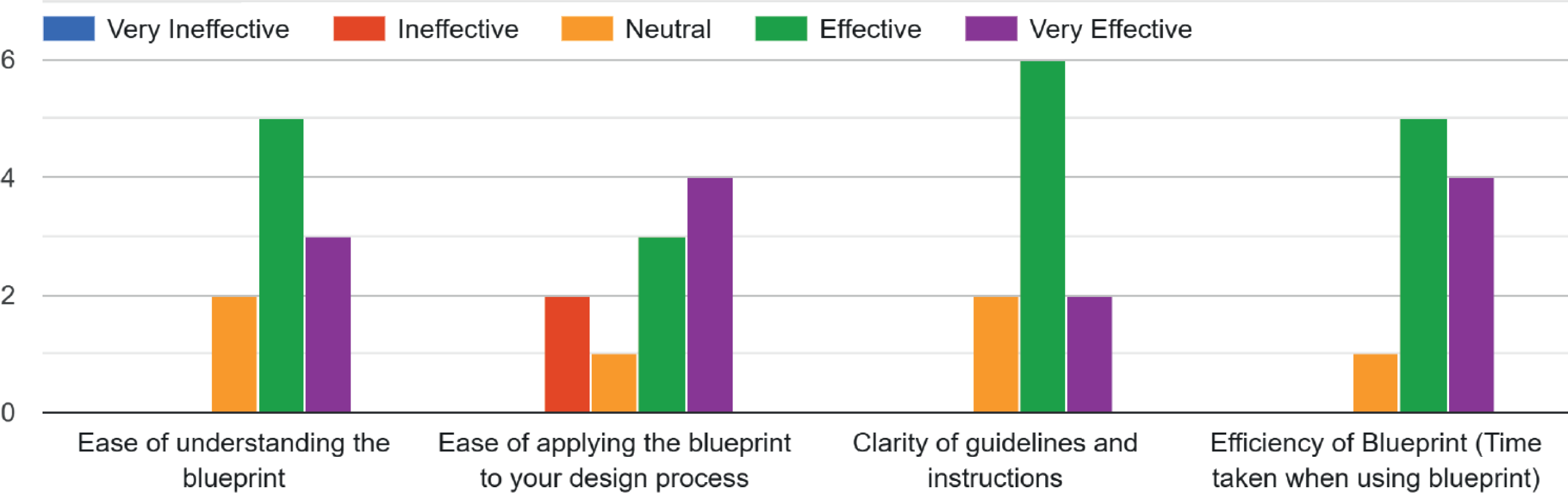
1. Understanding and Application results (Figure 4) were predominantly positive. Ease of understanding and clarity of guidelines were rated Effective or Very Effective by 80% of participants (20% Neutral). Ease of applying the blueprint was rated Effective or Very Effective by 70% (10% Neutral, 20% Ineffective). Efficiency, defined as perceived time taken within the participant’s chosen product case, was rated Effective or Very Effective by 90% (10% Neutral).
Understanding and application

-
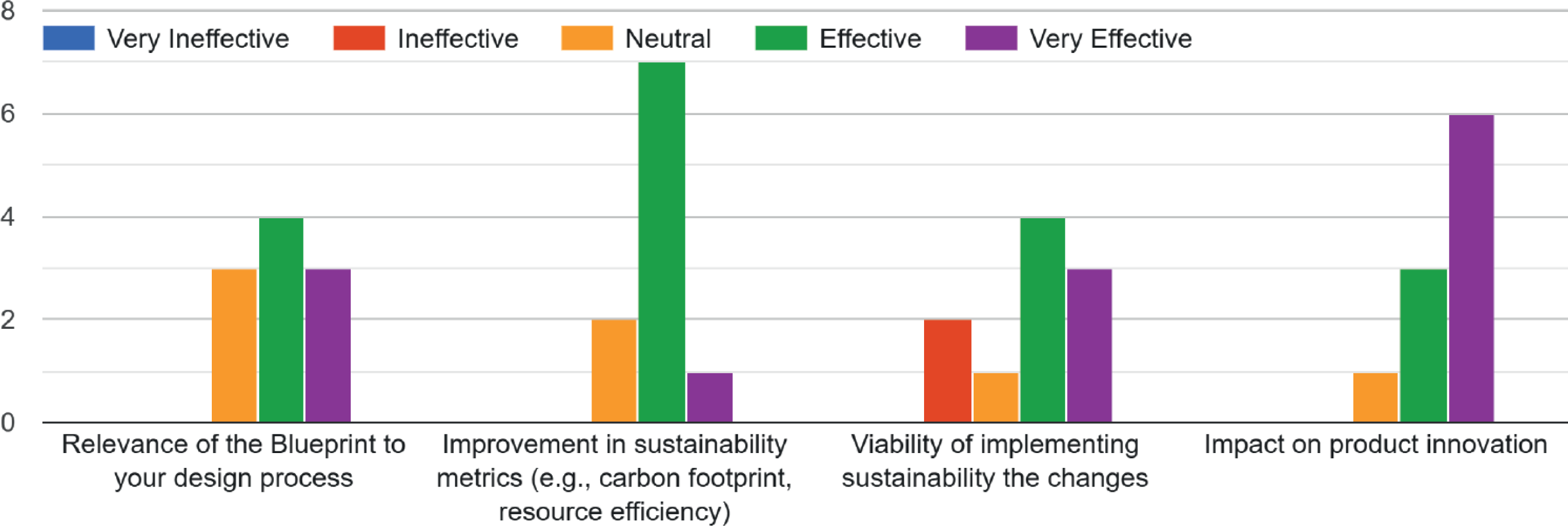
2. Relevance and Impact results (Figure 5) indicated that participants found the CLB relevant to their design processes, with frequent Very Effective ratings for its impact on product innovation. By contrast, perceived improvement in sustainability metrics received a larger share of Neutral responses. Ratings for the viability of implementing changes were mixed, though generally positive.
Relevance and impact

-
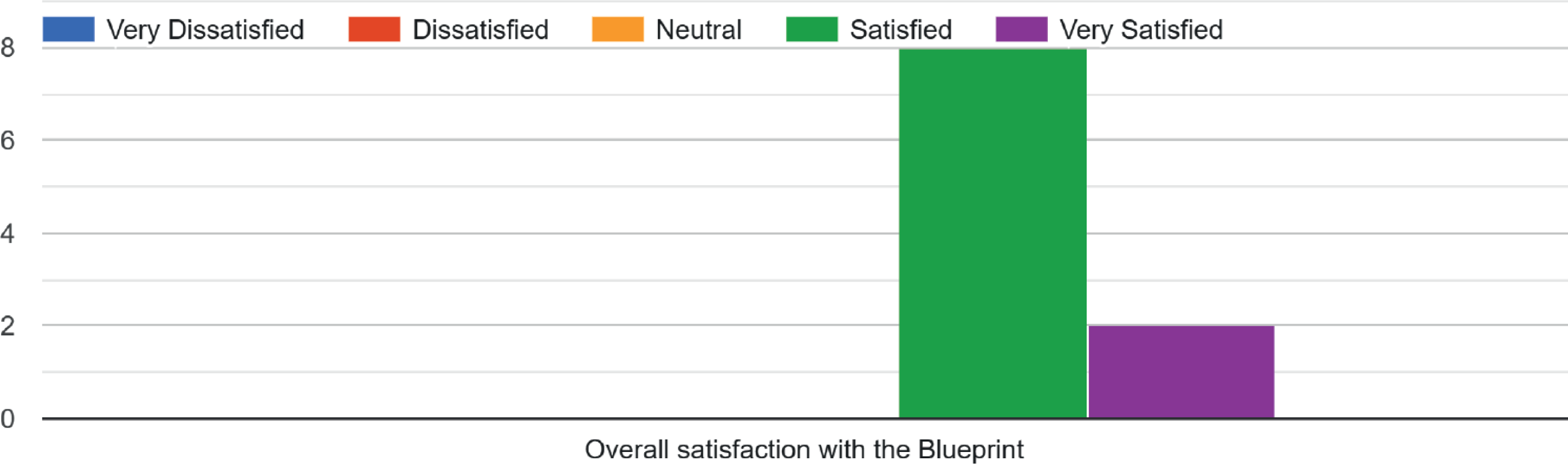
3. Satisfaction results (Figure 6) indicated 100% positive responses: 80% of participants reported being Satisfied and 20% reported being Very Satisfied.
Satisfaction

-
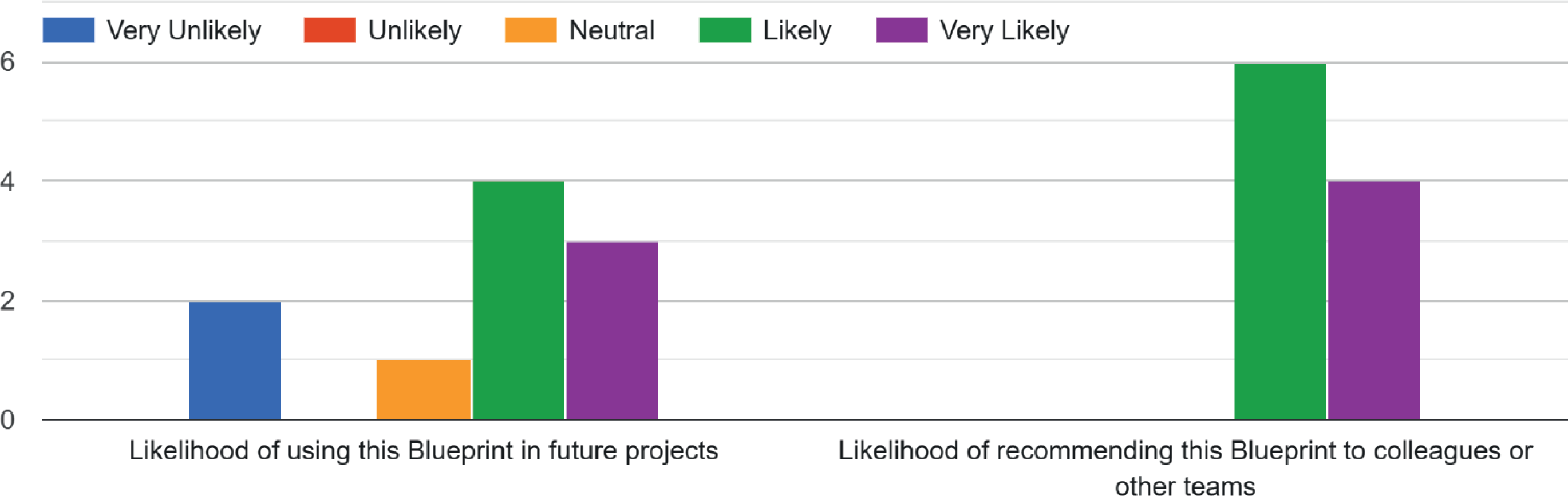
4. Likelihood of Future Use results (Figure 7) were as follows. For using the CLB in future projects, responses were 20% Very Unlikely, 0% Unlikely, 10% Neutral, 40% Likely, and 30% Very Likely. For recommending the CLB to colleagues or other teams, responses were 60% Likely and 40% Very Likely.
Likelihood of future use

5.3. Summary
Across comprehension, application, and efficiency, ratings were predominantly Effective–Very Effective. Participants expressed high satisfaction and strong recommendation intent, with future-use intentions largely positive. Relevance to workflow and perceived stimulus to product innovation were notable strengths, while expectations of quantitative metric improvements were more frequently Neutral in this pilot. The CLB is intended for early concept-to-embodiment work and is most practical when teams prioritize a limited number of primary components per session, using the component blueprint to control complexity. The present validation is a pilot with 10 professionals and relies on self-reported perceptions of understanding, relevance, satisfaction, and intended future use, rather than direct measurement of sustainability outcomes or cognitive load. Further validation is therefore needed across more varied product contexts, including complex assemblies and service-oriented offerings where the product boundary is less concrete.
6. Conclusion
This research aimed to fulfill a significant requirement in sustainable design, a methodology to assist designers in integrating circular economy principles early and efficiently in the product development process, emphasizing the frequently overlooked component level. The CLB created by this project constitutes an addition to the DfS toolkit. It addresses recognized challenges reported in the literature, including the intricacy of current tools, high data or expertise demands, and limited influence when sustainability is introduced late in development (Reference Hetherington, Borrion, Griffiths and McManusHetherington et al., 2014; Reference Vallet, Tyl, Cluzel and LeroyVallet et al., 2016; Reference FaludiFaludi et al., 2020). The blueprint facilitates the transition from initial circular ideation to component-level strategy mapping and final sustainability assessments, connecting circular economy principles with the practical daily operations of design teams and supporting multi-scale thinking from component to product and system levels (Reference Ceschin and GaziulusoyCeschin & Gaziulusoy, 2016).
The blueprint’s significance resides in its ability to convert circular economy principles into concrete design results while remaining cognitively feasible for early-stage work. It links theory to practice by moving from shared concept alignment (Step 1), to structured decomposition and component strategy definition (Step 2), to lifecycle mapping with explicit system interactions and reverse flows (Step 3), and finally to an integrated product-level verification (Step 4). This structure reflects how designers manage complexity through modular problem solving and decomposition (Reference Goel and PirolliGoel & Pirolli, 1992), and it operationalizes cognitive load management by segmenting tasks, guiding attention through prompts and visual mapping, and limiting the amount of information processed at once (Reference Mayer and MorenoMayer & Moreno, 2003). In this way, the CLB does not only propose circular strategies, it supports the reasoning conditions needed to apply them without overwhelming cognitive capacity, which is a persistent barrier alongside training, awareness, time, and resource constraints (Reference Vallet, Tyl, Cluzel and LeroyVallet et al., 2016; Reference Hetherington, Borrion, Griffiths and McManusHetherington et al., 2014).
Future work should broaden validation beyond the initial pilot with 10 professionals and test the method under more varied product and organizational contexts. A logical next step is to assess outcomes in comparative studies, for example comparing teams using the CLB with those using alternative approaches or no structured method, to evaluate differences in the circular strategies generated and the viability of implementation. Further adaptation may also be required for complex products with many components and for service-oriented solutions where the “product” boundary is less concrete.
In summary, the CLB tackles a modern issue at the convergence of design and sustainability by offering a clear framework that enables designers and engineers to develop circular innovation from early phases. The favorable reception in the pilot indicates practical viability, and the method’s structure aligns with both sustainability-support needs at the system level and cognitive principles that influence whether tools can be adopted in routine design practice.
Appendix A
The CLB worksheets and supporting templates used in this study are available via an OSF link: https://osf.io/3jygw/overview?view_only=ae8538d2c1a4437daa3f7168095e6798



 Open access

