

Air pollution is a serious environmental problem around the world. The World Health Organization's (WHO) urban air quality database, which covers 1,600 cities across 91 countries, revealed that only 12% of the people living in cities that report on air quality reside in cities where this complies with WHO air quality guideline levels; this issue is particularly prominent in cities in developing countries (WHO, 2014a). In early 2015, a documentary titled Under the Dome aroused widespread concern and hot discussion in Chinese public spheres because of the portrait it presented of severe air pollution in mainland China. Since the economic reform and opening up of China, rapid industrialisation and urbanisation has accelerated the problem of air pollution in mainland China. For example, official data showed that there were up to 161 days of heavy air pollution in 2014 in Beijing, the capital city of China. This means people who were living in Beijing breathed healthy air on only 56% of the days of the year. On the one hand, the growing air pollution will definitely interfere with a better life for people; on the other hand, the rising GDP, which is among the drivers of pollution, also has a role in promoting national welfare. Both the Chinese government and Chinese people are now facing the conflict between development and preserving nature.
The present study is interested in: (1) how air pollution affects daily mental experience (we focused on two types of wellbeing: subjective wellbeing [SWB] and eudaimonic wellbeing [EWB]) in ordinary Chinese people; (2) whether the above-mentioned effect pushes people to take action for environmental protection; (3) whether the link between air pollution, wellbeing, and pro-environmental behaviour (PEB) has individual differences drivers (we focused on the two individual difference variables of future orientation and place attachment).
Air Pollution and Wellbeing
Exposure to air pollution is undoubtedly a negative experience. Almost all of the previous studies found a significant negative relationship between air pollution and wellbeing. However, it is noteworthy that in these studies, the indicators of wellbeing used were usually life satisfaction (e.g., Ferreira et al., Reference Ferreira, Akay, Brereton, Cuñado, Martinsson, Moro and Ningal2013; Li, Folmer, & Xue, Reference Li, Folmer and Xue2014; Liao, Shaw, & Lin, Reference Liao, Shaw and Lin2014; Luechinger, Reference Luechinger2009, Reference Luechinger2010; MacKerron & Mourato, Reference MacKerron and Mourato2009; Welsch, Reference Welsch2006; Rehdanz & Maddison, Reference Rehdanz and Maddison2008), and the presence of positive mood and the absence of negative mood (e.g., Bullinger, Reference Bullinger1989; Cuñado & de Gracia, Reference Cuñado and de Gracia2013; Yeatts, Cready, Pei, Shen, & Luo, Reference Yeatts, Cready, Pei, Shen and Luo2014; Zeidner & Shechter, Reference Zeidner and Shechter1988), which are basic components of SWB (Diener, Suh, & Oishi, Reference Diener, Suh and Oishi1997; Lucas, Diener, & Suh, Reference Lucas, Diener and Suh1996).
However, there are multiple dimensions of human wellness. Ryan and Deci (Reference Ryan and Deci2001) clearly distinguished between hedonic wellbeing (HWB) and EWB. Rooted in different philosophical views, HWB emphasises the pursuit of pleasure and the satisfaction of desires (Diener & Ryan, Reference Diener and Ryan2009; Kahneman, Diener, & Schwarz, Reference Kahneman, Diener and Schwarz1999), whereas EWB focuses on the meaning and the realisation of potentials (Ryan & Deci, Reference Ryan and Deci2001; Waterman, Reference Waterman1993). In most research, SWB is used as an operational definition of HWB whereas the presence and search for meaning in life, domain meaning, and sense of purpose are used as indicators of EWB (e.g., Baumeister, Vohs, Asker, & Garbinsky, Reference Baumeister, Vohs, Aaker and Garbinsky2013; Ryff, Reference Ryff1989; Tiliouine & Belgoumidi, Reference Tiliouine and Belgoumidi2009).
Unlike the relative clear link between air pollution and SWB, there is little evidence about how air pollution affects EWB. According to the meaning maintenance model (MMM; Heine, Proulx, & Vohs, Reference Heine, Proulx and Vohs2006), exposure to air pollution can be considered a kind of meaning violation, which might induce individuals to reaffirm the meaning of their life to compensate for the threat to their meaning system and, as a result, their EWB would increase. Specifically, at first, the harmful health effects of air pollution will threaten individuals’ worldview-based expectancy. In one's worldview-based expectancy, which is a component of one's meaning frameworks, people should live in a safe and comfortable environment (Markman, Proulx, & Lindberg, Reference Markman, Proulx and Lindberg2012). But there are many high concentrations of small and fine particulate pollution components of air pollution that are particularly associated with high numbers of deaths from heart disease and stroke, as well as respiratory illnesses and cancers (WHO, 2014a). In addition, air pollution may damage cognitive function (e.g., Anderson, Thundiyil, & Stolbach, Reference Anderson, Thundiyil and Stolbach2012; Calderón-Garcidueñas et al., Reference Calderón-Garcidueñas, Mora-Tiscareño, Ontiveros, Gómez-Garza, Barragán-Mejía, Broadway and Engle2008; Fonken et al., Reference Fonken, Xu, Weil, Chen, Sun, Rajagopalan and Nelson2011) and the brain (e.g., Calderón-Garcidueñas et al., Reference Calderón-Garcidueñas, Azzarelli, Acuna, Garcia, Gambling, Osnaya and Rewcastle2002; Calderón-Garcidueñas et al., Reference Calderón-Garcidueñas, Franco-Lira, Torres-Jardón, Henriquez-Roldán, Barragán-Mejía, Valencia-Salazar and Reed2007; Calderón-Garcidueñas et al., Reference Calderón-Garcidueñas, Reed, Maronpot, Henriquez-Roldán, Delgado-Chavez, Calderón-Garcidueñas and Swenberg2004). According to the WHO (2014b), around 7 million premature deaths globally every year are due to outdoor air pollution. In Beijing, the incidence of lung cancer has risen by 43% in the past 10 years, and air pollution is one of the main causes of lung cancer (Xu, Reference Xu2015). Therefore, exposure to air pollution, or living in a place often blanketed in toxic haze, might be a kind of violation of one's worldview-based expectancy. Second, the MMM states that the preservation of meaning is the underlying motivation for all human behaviours (Heine et al., Reference Heine, Proulx and Vohs2006). People whose meaning frameworks are in a threatened domain will resort to reinforcing meaning frameworks in another domain, or to reaffirming the meaning wherever they can, which is referred to as a strategy of fluid compensation (Heine et al., Reference Heine, Proulx and Vohs2006; Van Tongeren & Green, Reference Van Tongeren and Green2010). Consequently, to compensate for the meaning violation brought by air pollution, individuals might reaffirm such thoughts as ‘My life is meaningful’ or ‘I'm full of purpose’, which is the core of EWB. In other words, we expected to find a positive link between air pollution and EWB.
Therefore, we proposed that the effects of air pollution on SWB and on EWB would be in opposite directions, reducing SWB but increasing EWB. In addition, the indicators of air pollution have both objective data of air pollution and one's subjective experience of air pollution. It was expected that the effects on wellbeing would be identical for both objective pollution measures and individuals’ perceptions of air pollution since they are positively related to each other (Day, Reference Day2007). Thus, we proposed the following:
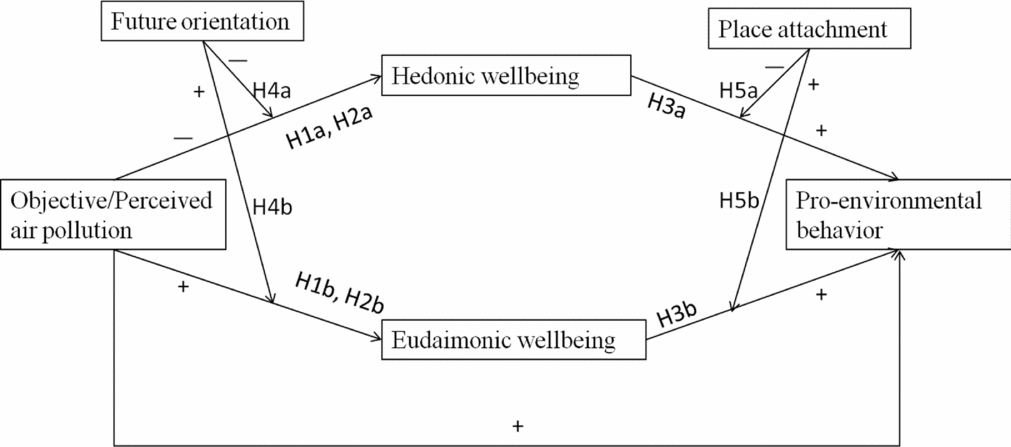
Hypothesis 1a: An objective air pollution index will be negatively associated with SWB.
Hypothesis 1b: An objective air pollution index will be positively associated with EWB.
Hypothesis 2a: Perceived air pollution will be negatively associated with SWB.
Hypothesis 2b: Perceived air pollution will be positively associated with EWB.
Air Pollution, Wellbeing, and Pro-Environmental Behaviours
The second question we wanted to explore was whether the links between air pollution and the two types of wellbeing further induce individuals to do, or be willing to do, something to reduce air pollution. Pro-environmental behaviour (PEB) is defined as the performance of, or shaping human activities to protect the natural environment or prevent deterioration of the environment (Stern, Reference Stern2000). Gaining a detailed understanding of why individuals undertake PEB is important for policy makers and researchers seeking solutions to environmental problems that require behavioural change (Clark, Kotchen, & Moore, Reference Clark, Kotchen and Moore2003). PEB can be divided into private-sphere PEB (e.g., waste recycling, buying/eating green production) and public-sphere PEB (e.g., volunteering, attending public meetings appealing to environmental protection; Hunter, Hatch, & Johnson, Reference Hunter, Hatch and Johnson2004). Some of these require making some degree of personal sacrifice (e.g., contributing time or money, supporting raising taxes, not travelling by car, and so on).
As we proposed earlier, air pollution should reduce SWB while enhancing EWB. SWB concerns pleasure attainment and pain avoidance; for SWB, people calculate utilities, maximise the density of reward, and optimise inputs associated with pleasure versus displeasure (Ryan & Deci, Reference Ryan and Deci2001). People may not be willing to sacrifice personal interests and pleasure to engage in PEB since their pleasure has already been reduced by bad air conditions. In other words, the perception of air pollution would promote more self-sacrificing pro-environmental behaviour, but this effect would be inhibited when concerning the SWB. On the contrary, people who experience a higher sense of meaning and purpose because of the polluted air would be more prone to put in time and be more willing to allocate financial resources towards pollution abatement because these behaviours could further maintain and promote meaning according to the MMM (Heine et al., Reference Heine, Proulx and Vohs2006). Thus, we proposed the following:
Hypothesis 3a: The effect of air pollution on pro-environmental behaviours will be partially mediated (in a negative direction) through SWB.
Hypothesis 3b: The effect of air pollution on PEBs will be partially mediated (in a positive direction) through EWB.
The Potential Moderators: Future Orientation and Place Attachment
The third question we examined were the potential moderators of the proposed mediation model. In the recent literature from environmental psychology, future orientation and place attachment are two individual difference variables which have increasingly interested researchers (Joireman & Liu, Reference Joireman and Liu2014; Lewicka, Reference Lewicka2011). The former is involved in present-future relations in the temporal dimension and the latter is concerned with people-place relations on the space dimension.
The concept of future orientation captures the ‘extent to which individuals consider distant outcomes of their current behaviors and extent to which they are influenced by these potential outcomes’ (Strathman, Gleicher, Boninger, & Edwards, Reference Strathman, Gleicher, Boninger and Edwards1994, p. 743). According to construal level theory (Liberman & Trope, Reference Liberman and Trope1998), individuals high in future orientation prefer long-term outcomes and tend to think more abstractly and centrally on a higher level than who are low in future orientation. On the one hand, SWB is associated with immediate pleasure; individuals with high future orientation would pay less attention to short-term loss. And there is empirical evidence that future orientation can promote individual emotional adjustment that will strengthen SWB (Salmela-Aro & Nurmi, Reference Salmela-Aro and Nurmi1996; Shobe & Page-Adams, Reference Shobe and Page-Adams2001). On the other hand, air pollution will put people at additional risk of serious, long-term health problems (WHO, 2014a); thus, people with high future orientation might be more likely to perceive this long-term threat and have a stronger motive to maintain their meaning frameworks. Consequently, we predicted that future orientation plays a role in the link between air pollution and wellbeing as follows:
Hypothesis 4a: Future orientation will moderate the effect of air pollution on SWB such that the effect is weaker when future orientation is higher.
Hypothesis 4b: Future orientation will moderate the effect of air pollution on EWB such that the effect is stronger when future orientation is higher.
Place attachment is defined as a positive affective bond between an individual and a specific place, the main characteristic of which is the tendency of the individual to maintain closeness to such a place (Hidalgo & Hernandez, Reference Hidalgo and Hernandez2001). Numerous researchers have shown the positive impact of place attachment on PEB. For instance, higher attachment is associated with a greater willingness to advocate hypothetical place-protective behaviours (Stedman, Reference Stedman2002). Vaske and Kobrin (Reference Vaske and Kobrin2001) found that those with a greater sense of emotional place attachment reported engaging in more PEBs. Similarly, Clayton and Opotow (Reference Clayton and Opotow2003) showed that individuals who strongly identified with the natural environment (‘environmental identity’) reported significantly more ecological behaviours than those low in environmental identity, even after attitudes, values, and ideologies were controlled for. Place attachment may improve people's willingness to sacrifice personal interests and pleasure, to engage in PEB and experience a higher sense of meaning and purpose as a means of fighting against further air pollution. In the present study, place attachment was hypothesised to play the role of moderator of the path from wellbeing to PEB. We predicted that those with deep attachment to the place where they are live would be more willing to pay more time and money, or sacrifice more personal interests for environmental protection with respect to SWB decline or EWB promotion:
Hypothesis 5a: Place attachment will moderate the effect of decreased SWB on PEB such that the effect is weaker when place attachment is higher.
Hypothesis 5b: Place attachment will moderate the effect of increased EWB on PEB such that the effect is stronger when place attachment is higher.
The theoretical model guiding the present work is presented in Figure 1.
Conceptual model linking air pollution, wellbeing and PEB.
The Present Research
The main purpose of these studies was a systematic investigation of the specific effects of objective/perceived air pollution on SWB, EWB, PEB, and the potential moderating effects of future orientation and place attachment among individuals residing in Beijing, a city plagued by air pollution.
We conducted two studies in order to test the aforementioned hypotheses. The first study adopted an experience sampling method to explore the relationship between air pollution and two kinds of wellbeing (H1a and H1b). The second study investigated the whole model (H2 to H5) through a cross-sectional design.
STUDY 1
Study 1 focused on how objective air conditions affect momentary SWB and EWB. A 10-day experience sampling method (Csikszentmihalyi & Larson, Reference Csikszentmihalyi and Larson1987) was conducted to examine the relations among a proximal air pollution index, immediate positive and negative affect (which are indicators of SWB), and immediate sense of meaning and purpose (which are indicators of EWB) during everyday life. Data were analysed using hierarchical linear modelling (Bryk & Raudenbush, Reference Bryk and Raudenbush1987).
Method
Participants and Procedure
A total of 55 undergraduates living in Beijing participated and received a payment of ¥50 for their participation. Five participants failed to complete the whole survey, leaving a final sample of 50 participants (5 male, 45 female; mean age of 19.58 years, SD = 1.76). Of the 1,500 experiential surveys submitted, 59 (3.9%) were completed outside the required time window and discarded, leaving a total of 1,441 (96.1%) valid and usable reports, for an average of 28.82 valid reports per participant.
This study was conducted in spring, the most serious air pollution season in Beijing. Participants were blind to the purpose of research and completed an initial questionnaire packet containing several dispositional measures (including global meaning in life, global life satisfaction, and demographic variables). Then, during the next 10 days, they were asked to answer a series of measures (including immediate positive and negative affect, immediate sense of meaning, and immediate sense of purpose) three times a day, signalled randomly within three 2½-hour time blocks (9:00–11:30 am, 15:00–17:30 pm, 18:30–21:00 pm) via short mobile phone messages. Participants were requested to respond within half an hour or the data would be treated as an invalid response. At the same time, the researcher recorded the real-time state of air pollution.
Measures
Real-time state of air pollution
We recorded the Air Quality Index (AQI) of every measurement point as issued by the Beijing Environmental Protection Bureau, which is updated hourly. The higher the index, the more severe the air pollution. The range of the AQI was wide (range: 63–442), but the dependent variables (immediate affects, meaning and purpose) were narrow (range: 1–10). It would cause the minimum regression coefficients for the lower variability scale. To solve this problem, we recoded the AQI score into a new variable named Air Quality Levels (AQL); according to the percentile rank of the full range of the AQI, each 10 percentile rank was recorded as one level (the range of each level was: level 1, 63–73; level 2, 74–97; level 3, 98–104; level 4, 105–122; level 5, 123–141; level 6, 142–176; level 7, 177–216; level 8, 217–222; level 9, 223–274; level 10, 275–442). The meaning of the AQL (range: 1–10) was the same as the AQI, that is, the higher the level, the more severe the air pollution.
Global meaning in life
The Meaning in Life Questionnaire (MLQ; Steger, Frazier, Oishi, & Kaler, Reference Steger, Frazier, Oishi and Kaler2006) consists of two 5-item subscales: the Presence of Meaning in Life (e.g., ‘I am searching for meaning in my life’) and the Search for Meaning in Life (e.g., ‘I understand my life's meaning’). The items were rated on a 7-point scale ranging from 1 (strongly disagree) to 7 (strongly agree). In this study, the Cronbach's alpha for Presence of Meaning was .80, for Search for Meaning it was .73, and for the whole questionnaire it was .76.
Global life satisfaction
The Satisfaction with Life Scale (SWLS; Diener, Emmons, Larsen, & Griffin, Reference Diener, Emmons, Larsen and Griffin1985) was used to measure trait life satisfaction in general. Five items (e.g., ‘In most ways, my life is close to my ideal’) were rated on a 7-point scale ranging from 1 (strongly disagree) to 7 (strongly agree). The Cronbach's alpha for this measure was 0.83.
Experience sampling method (ESM) measures
Immediate affects: We adopted seven items to measure the immediate affect, which provided an indicator of SWB. We adopted four items (happy, cheerful, irritable, and jittery) from the Positive Affectivity and Negative Affectivity Scale (PANAS; Watson, Clark, & Tellegen, Reference Watson, Clark and Tellegen1988), and added three negative affects (worried, sadness, and depression). Participants were asked to rate the items on a 10-point scale from 1 (absolutely untrue) to 10 (absolutely true) according to their feelings at that moment. The Cronbach's alpha was .77 for positive affect and .86 for negative affect.
Immediate meaning and purpose: We adopted the Daily Meaning Scale (DMS; Steger, Kashdan, & Oishi, Reference Steger, Kashdan and Oishi2008) to measure immediate sense of meaning and purpose, which provided an indicator of EWB. The DMS consisted of two items: ‘I feel that my life is meaningful at this moment’ and ‘I feel that my life has purpose at this moment’. Participants were asked to rate the items on a 10-point scale from 1(absolutely untrue) to 10 (absolutely true) according to their feelings at that moment. The Cronbach's alpha was .87.
Results
Table 1 presents descriptive statistics for the study variables. The data were hierarchically arranged as a two-level model, with 1,441 assessments nested within 50 participants. Coefficients representing time-level variables were estimated for each participant (within person at level 1), and then individual differences in these coefficients were estimated (between person at level 2). The level 1 dataset included the AQL, immediate positive and negative affect, and immediate sense of meaning and purpose. The level 2 data set included global life satisfaction and global meaning in life. All models had a random intercept, and slopes were treated as random effects.
Intercorrelations and Descriptive Statistics for Study Variables
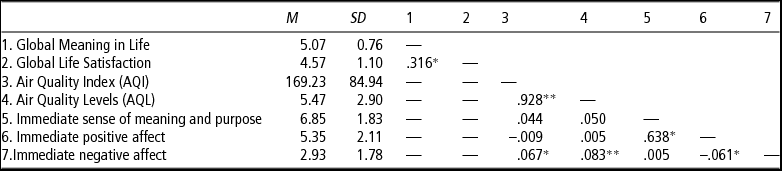
Note: 1 and 2: N = 50; 3–7: N = 1441. Variable ranges: 1 and 2: 1–7; 3–7: 1–10.
*p < .05, **p < .01, ***p < .001.
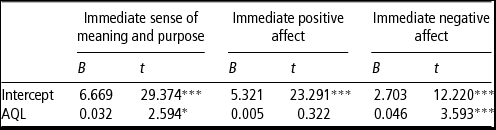
We tested models using the HLM 6.0 program (Raudenbush, Reference Raudenbush2004). In these analyses, we used a random effects model to simultaneously model the effects of the AQL on SWB (H1a) and EWB (H1b). The results are presented in Table 2. The level 1 analyses indicated that the AQL did not predict immediate positive affect (SWB; (b = 0.005, t = 0.332, p = .749), and the variance of the random slopes in level 1 was 0.0045; however, it had a significant positive effect on immediate negative affect (b = 0.046, t = 3.593, p < .001), the variance of the random slopes in level 1 was 0.0033, and there were significant individual differences (χ 2 = 79.900, p < .01). Moreover, in accord with H1b, AQL positively predicted immediate sense of meaning and purpose (EWB; b = 0.032, t = 2.594, p < .05), the variance of the random slopes in level 1 was 0.0026, and there were significant individual differences (χ2 = 73.408, p < .05).
Regression Coefficients Without Including the Second Layer Variables Between Immediate Meaning and Purpose, Positive and Negative Affect Random With Air Quality
Note: Models were based on 1,441 data points.
*p < .05, **p < .01, ***p < .001.
Next, global measures of life satisfaction (SWB) and meaning in life (EWB) were added at level 2 to explain the individual differences found at level 1. The analyses indicated that the two global variables could not moderate the level 1 effect of AQL on immediate meaning and purpose (γ = 0.021, t = 1.168, p = .249; γ = 0.008, t = 0.681, p = .499), residual variances in level 2 was 2.4258. And the two global variables could not moderate the level 1 effect of AQL on negative affect (γ = −0.011, t = −0.900, p = .373; γ = −0.008, t = −0.736, p = .465), residual variances in level 2 was 2.2953.
Discussion
First, the results of Study 1 partially supported H1a. At the level of experience sampling (level 1), the worse the air quality, the more the negative emotion (which was a reverse element of HWB), but that link was not found between air quality and positive emotion. This suggests that nice air quality would not necessarily bring about good emotion, but poor air quality promoted bad feelings. It also implied that the positive affect can come from a variety of sources, but air pollution is indeed one of the triggers of negative affect, and suggests that positive and negative affect are produced by different processes rather than being bipolar opposites on the same affect spectrum (Arthaud-Day, Rode, Mooney, & Near, Reference Arthaud-Day, Rode, Mooney and Near2005). It appears that people's emotions and feelings (especially negative affect) will change as the state of air pollution changes (at least in a highly salient case of air pollution as Beijing).
Moreover, the effects of objective air pollution on the two kinds of wellbeing were different. The worse the air quality was, the higher the sense of meaning and purpose (EWB), which supported H1b. Bad air quality created an uncomfortable feeling and negative affect, and it was also associated with cognition about meaning in life and life goals. The latter is possibly a reaffirmation attempt in order to regain meaning when threatened by a hostile, polluted environment. In this study, air pollution as a predictor was based on official objective measures of air pollution. In other words, objective air quality can have an impact on our psychological experience even when there is not necessarily salient pollution in subjective awareness. Furthermore, we found there were some individual differences in the link between air pollution and the two kinds of wellbeing but they could not be explained by global life satisfaction and meaning in life. We further explored these issues in Study 2.
STUDY 2
The effect of air pollution on wellbeing found in Study 1 is relatively implicit. Participants were blind to the purpose of the research and whether they recognised the air quality as they completed survey measures was unknown. In addition, Study 1 found that air pollution had different effects on SWB and EWB, which suggests that air pollution influenced people's psychological experience. Could this experience further impact behaviour intentions? Are there any individual differences that might moderate the impact? In Study 2, an explicit measure of perceived air pollution was used to further explore its effect not only on wellbeing, but also on PEB intentions. Furthermore, two individual difference variables — future orientation and place attachment — were taken into consideration. Moreover, participants of Study 1 were undergraduates who lived on campus most of the time. In Study 2, we chose residents who lived and worked in Beijing, in order to expand the scope of the research.
Method
Participants
Two hundred and eighty-eight Beijing residents completed a self-report online survey and received ¥10 for the participation. The average age of participants was 37.19 ± 7.93 years (range: 21–66 years) and 46.2% were females. Of the respondents, 6.9% had been living in Beijing less than 1 year and 74.3% had lived in Beijing for over 5 years. They resided across the whole eight districts of Beijing and were in 31 different professions. Their monthly income ranged from ¥2,000 to ¥20,000; 58.8% held a BA degree, 24.7% held a higher degree, and 16.6% held a lower qualification. This information demonstrated that the sample was a good socio-demographic representation of Beijing residents.
Measures
Responses on all items were given using 7-point Likert scales, ranging from 1 (strongly disagree) to 7 (strongly agree).
Perceived air pollution
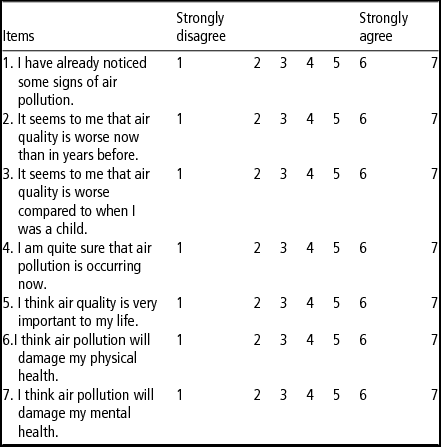
We adapted a seven-item scale from a belief in the Global Warming Index (Heath & Gifford, Reference Heath and Gifford2006), substituting ‘global warming’ for ‘air pollution’ for each item (e.g., ‘I have already noticed some signs of global warming ‘It seems to me that the temperature is warmer now than in years before’, ‘It seems to me that weather patterns have changed compared to when I was a child’ and ‘I am quite sure that global warming is occurring now’; see Appendix A). We also added three items about the perceived importance of air quality, and the damage air pollution causes to physical and mental health. Cronbach's alpha for this measure was .93.
SWB
This was measured by the SWLS (Pavot & Diener, Reference Pavot and Diener1993) and the Chinese version of the PANAS (Watson et al., Reference Watson, Clark and Tellegen1988, adapted by Qiu, Zheng, & Wang, Reference Qiu, Zheng and Wang2008). The SWLS was also used in Study 1, and Cronbach's alpha was .83. The PANAS measure included nine positive emotions (active, enthusiastic, happy, cheerful, proud, glad, energetic, and grateful) and nine negative emotions (ashamed, upset, afraid, nervous, scared, guilty, irritable, jittery, and annoyed). Participants were asked to indicate the degree to which they had experienced each of the moods on a 7-point scale (1 = not at all, 7 = very much). Cronbach's alpha for positive affect was .93 and for negative affect it was .98.
EWB
As indicators of EWB, we used the MLQ in Chinese (Steger et al., Reference Steger, Frazier, Oishi and Kaler2006). Both the Presence of Meaning in Life subscale (α = .83) and the Search for Meaning in Life subscales (α = .85) showed good internal reliability.
PEB
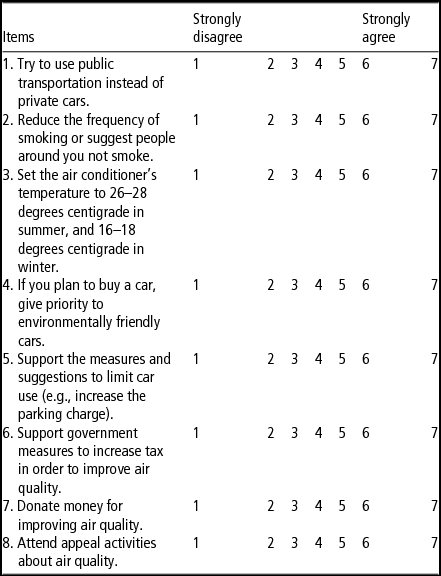
Eight items were created to test respondents’ willingness to take actions to improve air quality (α = .82). These items all centred around issues where respondents felt they had to sacrifice their personal interests for better air quality. According to Hunter's research (2004), we divided PEB into a four-item private-sphere PEB (e.g., ‘I would try to walk, ride bicycles and choose public transportation more often’; α = .79) and a four-item public-sphere PEB (e.g., ‘I would be willing to pay higher taxes to improve air quality’; α = .78). See Appendix B.
Future orientation
Consideration of future consequences (CFC-14 scale): the revised (14-item) consideration of future consequences (CFC) scale (Joireman, Shaffer, Balliet, & Strathman, Reference Joireman, Shaffer, Balliet and Strathman2012) consists of a seven-item Concern with Future Consequences scale (CFC-Future; e.g., ‘I consider how things might be in the future, and try to influence those things with my day-to-day behaviour’) and a seven-item Concern with Immediate Consequences scale (CFC-Immediate; reversed coded; e.g., ‘My behavior is only influenced by the immediate’ [i.e., a matter of days or weeks] outcomes of my actions’). Both the CFC-Future (α = .85) and CFC-Immediate (α = .87) subscales showed good internal reliability.
Place attachment
The eight-item place attachment scale (α = .92), adapted from Williams and Roggenbuck (Reference Williams and Roggenbuck1989) and consisting of place identity (e.g., ‘This city means a lot to me’) and place dependence (e.g., ‘I enjoy living here more than another city’), demonstrated adequate internal consistency with Cronbach's alphas of .87 for place identity and .83 for place dependence. Each subscale has four items.
Socio-Demographic Variables
Participants provided sociodemographic information about gender, age, education, years of residence in Beijing, and income.
Results
Preliminary Analyses
Table 3 presents the descriptive statistics and intercorrelations of study variables. The analyses show a lack of significant correlation of study variables with the socio-demographic variables (ps > .05).
Intercorrelations and Descriptive Statistics for Study 2 Variables
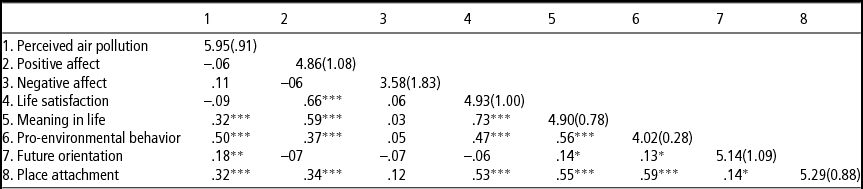
Note: N = 288. Variable ranges: 1–7. The means (SD) are presented on the diagonal.
*p < .05, **p < .01, ***p < .001.
Before performing the analyses, we standardised the continuous variables in order to prevent the potential multicollinearity issue associated with testing moderation hypotheses (Aiken, West, & Reno, Reference Aiken, West and Reno1991).
The components of SWB are frequently strongly correlated with each other (DeNeve & Cooper, Reference DeNeve and Cooper1998) and thus often examined as a single higher-order construct. Following the suggestion of Diener et al. (Reference Diener, Suh and Oishi1997), a total score was calculated by adding the standardised score of life satisfaction to the standardised score of positive affect and minus the standardised score of negative affect for each participant.
Since it was a relatively limited sample size, we tested the proposed moderated mediation framework step by step (Preacher, Rucker, & Hayes, Reference Preacher, Rucker and Hayes2007). First, we tested whether SWB (H3a) or EWB (H3b) mediated the relationship between perceived air pollution and PEB. Second, we tested whether future orientation moderated the path from perceived air pollution to SWB (H4a) or EWB (H4b). Third, we tested whether place attachment moderated the path from SWB (H5a) or EWB (H5b) to PEB. Edwards and Lambert (Reference Edwards and Lambert2007) recommended generating 95% bias-corrected bootstrapped confidence intervals to assess the significance of the conditional indirect effect. We used Hayes's (Reference Hayes2012) PROCESS macro (Model 4 for mediation and Model 21 for moderated mediation) for SPSS to estimate the above-mentioned hypotheses. In addition, we controlled for gender, age, and income when processing all of the analyses by adding these socio-demographic variables as covariables.
Simple Mediation Analysis
To test whether SWB and EWB mediated the effects of perceived air pollution on PEB (H3a and H3b), we applied a parallel multiple mediator model (Preacher & Hayes, Reference Preacher and Hayes2008) through the PROCESS macro (Model 4) for SPSS (Hayes, Reference Hayes2012). The analysis showed that the mediation effect of SWB was not significant. Thus, H3a, which suggested that SWB should mediate the relationship between perceived air pollution and PEB, was not supported. However, EWB partially mediated the relationship of perceived air pollution with PEB: perceived air pollution was still a significant (albeit reduced) predictor of PEB in the mediation model (see Table 4).
Summary of Multiple Mediation Analyses on Perceived Air Pollution and Pro-Environmental Behaviour (5,000 Bootstraps).

Note: SWB = subjective wellbeing, EWB = eudaimonic wellbeing.
***p < .001.
Moderated Mediation Analysis
Although H3a was rejected, H4a and H5a were tested. H4a and H5a posited two moderated mediation effects that the mediation effect of HWB on perceived air pollution and PEB would vary by future orientation and place attachment. To test the moderated mediation effect, we applied a parallel multiple moderated mediation model (Preacher & Hayes, Reference Preacher and Hayes2008) through the PROCESS macro (Model 21) for SPSS (Hayes, Reference Hayes2012). The results showed that both the moderate effects of future orientation (b = −.11, SE = .12, p = .36, 95% CI: -.35–.13) and place attachment (b = .02, SE = .03, p = .88, 95% CI: -.05–.06) were not significant.
Similarly, H4b and H5b posited two moderated mediation effects also, which were that the mediation effect of EWB on perceived air pollution and PEB would vary by future orientation and place attachment. First, H5a, that is, the indirect effect of perceived air pollution on PEB through EWB depended on future orientation, was tested. The analysis showed that the moderation effect of perceived air pollution × future orientation on EWB was significant (b = .11, SE = .05, p = .02, 95% CI: .02 to .19). We used the mean, as well as a standard deviation above and below the mean on future orientation, to represent moderate, high, and low values of future orientation respectively. The point estimates and 95% CIs for the conditional indirect effect can be found in Table 5. As can be seen, the effect of perceived air pollution on EWB was not significant when the level of future orientation was relatively low, but it was significant with the higher level of future orientation. At the same time, the effect of mediation was still significant (.05, 95% CI: .02–.09). Thus, H4b, which suggested that the relationship between perceived air pollution and EWB would be stronger among more future-orientated individuals, was supported.
Conditional Indirect Effects of Perceived Air Pollution on Pro-Environmental Behaviour Through EWB at Levels of Future Orientation and Place Attachment (5,000 Bootstraps)

Note: SWB = subjective wellbeing, EWB = eudaimonic wellbeing.
Next, we performed a similar analysis to test H5b, which suggested that the indirect effect of perceived air pollution on PEB through EWB depended on place attachment. The results showed that the moderation effect of EWB × place attachment on PEB was significant (b = .09, SE = .03, p = .003, 95% CI: .03–.16). The point estimates and 95% CIs for the conditional indirect effect can be seen in Table 5: here, the effects of EWB on PEB increased with the levels of place attachment from relatively low to high. Meanwhile, the effect of mediation was still significant (.03, 95%CI: .01 to .05). Thus, H5b, which suggested that the relationship between EWB and PEB would be stronger among individuals who are more attached to Beijing, was supported.
Discussion
Study 2 partially replicated the results of Study 1 in a relative large sample of working adults who were living in Beijing, through a cross-sectional designed survey. We measured perceived air pollution rather than an objective index of air pollution and found again that individuals felt more meaningful and purposeful when they were aware of worse air quality. However, the negative association between air pollution and SWB, which was widely supported in previous research, was absent here. One possible explanation is that Beijing residents are used to air pollution. Indeed, individuals perceived that air quality was bad, but they had adapted to living their normal lives in an this environment. Meanwhile, SWB, especially life satisfaction, is a measure of general sense of life. Therefore, participants were not necessarily disturbed even when they perceived excessive air pollution. Another important point is that several previous studies found that the effect of air pollution on SWB involved the comparison of people from polluted and non-polluted areas (e.g., Bullinger, Reference Bullinger1989; Ferreira et al., Reference Ferreira, Akay, Brereton, Cuñado, Martinsson, Moro and Ningal2013; Li et al., Reference Li, Folmer and Xue2014; Luechinger, Reference Luechinger2009, Reference Luechinger2010; MacKerron & Mourato, Reference MacKerron and Mourato2009; Rehdanz & Maddison, Reference Rehdanz and Maddison2008; Welsch, Reference Welsch2006; Zeidner & Shechter, Reference Zeidner and Shechter1988). This effect might be reduced here because there was no non-polluted area for comparison in our study.
However, the more important finding of Study 2 was that it furthered the results of Study 1 about the effects of air pollution on wellbeing through to PEB. We found that the perception of air pollution promoted a eudaimonic sense of meaning and purpose that motivated self-sacrifice oriented PEB intentions. Moreover, this link could be more commonly seen among those who were more future-orientated and emotionally attached to Beijing.
GENERAL DISCUSSION
The conflict between economic development and environmental protection has been made salient by increasingly severe air pollution in many cities as a byproduct of economic progress. As the WHO (2011) has stated, air pollution has been one of the serious environmental problems around the world, having a huge health impact on people. About half of the urban population being monitored by the WHO is regularly exposed to air pollution that is at least 2.5 times higher than the recommended levels. Worst of all, in most cities where there is enough data to compare the situation today with previous years, air pollution is getting worse (WHO, 2014a). In the context of continued deterioration of the global climate, the present study focused on Beijing, a Chinese city suffering from serious air pollution, as a typical case to try to answer some universal questions, especially the impact of a polluted environment on psychological experience and behaviour intentions. Through one study based on experience sampling and one cross-sectional survey study, the present work investigated air quality, wellbeing, PEB intention, future orientation, and place attachment among residents in Beijing, which is one of the China's worst air-polluted cities. Results indicated that the poor air quality damaged hedonic wellbeing to some extent, and showed that both real-time objective air pollution and the subjective perception of air pollution promoted EWB, which subsequently induced more PEB. Furthermore, these associations were heightened in individuals who were future orientated and highly emotionally attached to the city where they were lived.
Theoretical and Practical Contributions
The present work contributes theoretical and practical insights to work on air pollution control, and raises a number of intriguing questions for future research.
First, a fundamental question in the study of environment and pollution is how pollution affects human wellbeing (Welsch, Reference Welsch2006). In the past, studies on air pollution and wellbeing generally suggested that poor air quality is a significant and negative predictor of wellbeing (e.g., Levinson, Reference Levinson2012; Welsch, Reference Welsch2002, Reference Welsch2006, Reference Welsch2007, Reference Welsch2009; Zeidner & Shechter, Reference Zeidner and Shechter1988). Self-reported life satisfaction (e.g., Ferreira et al., Reference Ferreira, Akay, Brereton, Cuñado, Martinsson, Moro and Ningal2013; Li et al., Reference Li, Folmer and Xue2014; Liao et al., Reference Liao, Shaw and Lin2014; Luechinger, Reference Luechinger2009, Reference Luechinger2010; MacKerron & Mourato, Reference MacKerron and Mourato2009; Rehdanz & Maddison, Reference Rehdanz and Maddison2008; Welsch, Reference Welsch2006) and positive and negative emotions (e.g., Bullinger, Reference Bullinger1989; Yeatts et al., Reference Yeatts, Cready, Pei, Shen and Luo2014; Zeidner & Shechter, Reference Zeidner and Shechter1988), which are three elements of SWB, were measured as the main indicators of wellbeing in these studies. In other words, the view that air pollution has a negative effect on hedonic wellbeing has been corroborated repeatedly. However, there is less evidence that reveals whether it is the same mode when air quality affects EWB. The present work filled the literature gap by exploring the effect of air quality on both hedonic (or subjective) wellbeing and EWB and found significant effects, but in opposite directions (in Study 1). A perception of air pollution may threaten one's worldview-based expectancy, which is a kind of meaning violation. To cope with the threat, individuals may do something to reinforce their sense of meaning in another domain; for example, thinking about the meaning of life, being motivated to do something valuable to improve the situation, and so on. Therefore, poor air quality may to some extent arouse positive action-oriented mental states. In addition, both objective and subjective measures have been considered here to estimate the impact of air pollution on wellbeing, especially EWB. Furthermore, this process is much more accessible (or prevalent) in individuals who are future orientated than for those are who are immediately orientated; this is because the former concerns long-term consequences and takes on relatively macro and abstract thinking when individuals perceive imminent environmental destruction.
Second, to our knowledge, the current work is the first to show the link between these two types of wellbeing and PEB intentions. Rarely have studies shown how wellbeing, as affected by air pollution, influences people's intentions or behaviour aimed at environment protection. It is common sense that people should do something or want to do something to promote air quality since air pollution has hurt their wellbeing (especially hedonic wellbeing). However, environmental issues entail both a social conflict (private vs. public interests) and a temporal conflict (short- vs. long-term interests; Milfont, Wilson, & Diniz, Reference Milfont, Wilson and Diniz2012). Some PEBs that require making personal sacrifices and giving up immediate profit to gain public and future interests are in conflict with the pursuit of pleasure and the satisfaction of desire, which is emphasised in hedonic wellbeing (Kahneman et al., Reference Kahneman, Diener and Schwarz1999; Diener & Ryan, Reference Diener and Ryan2009). On the contrary, EWB increased by perceived air pollution promoted PEBs (at the cost of personal interests). In other words, the experience and pursuit of life meaning spurred by a harsh climate drove people to pay a higher personal price for reducing air pollution, especially in those who were future orientated and emotionally attached to where they live.
Finally, these findings can advance a theoretical understanding of climate change responses, which is essential for designing interventions to mitigate the problem. Liu and Sibley (Reference Liu and Sibley2012) investigated the attitudes of global youth across 34 societies regarding the importance of climate change and their willingness to make personal sacrifices to protect the environment; they claimed that young people in developed countries are prepared to match their convictions and intentions to sacrifice for the environment with action. Our findings supported the claim to some extent that a vast majority of people in China have come to realise the severity of environmental issues and are willing to work for it. They will be the backbone of environmental protection in the future. Moreover, the present work provided a theoretical model, including a meaningful new mediator (EWB) and moderators (future orientation and place attachment) to interpret the effect of air pollution on PEB action. Therefore, the present work may also carry practical implications for redressing air pollution. We know that future-orientated individuals pursue life meaning and are purposeful when perceiving air pollution, and place-attached individuals are willing to sacrifice one's personal interests to work for cleaner air (perhaps on behalf of their place community). Emphasis on future earnings rather than immediate losses in the context of environmental protection and improving residents’ identity and attachment to a city may be efficient strategies to strengthen the public's environmental awareness and improve PEB.
Limitations and Future Directions
Finally, the limitations of this study should be considered. Although an experience sampling and time-series approach was used in Study 1, due to the correlational nature of the whole research, we could not provide direct evidence of causality. Longitudinal designs, or priming air pollution experience in laboratory experiments, will be necessary to tease apart the directionality of the relations. Another limitation that deserves consideration is that the study relied on self-reports, especially with respect to the PEB measures used, that is, self-reported behavioural intentions. The lack of objective behavioural measures is important, as the discrepancy between self-report and objective measures of environmental behaviour is a well-documented phenomenon (Corral-Verdugo, Reference Corral-Verdugo1997). Although there were some items that measured the willingness to take concrete action (such as to purchase a hybrid car that could reduce one's contribution to air pollution), it would be useful for future research to measure environmentally friendly behaviour using an actual and objective behavioural manifestation.
Several additional future research directions are worth mentioning. One possible direction is to explore whether there are any other individual difference variables; for example, different orientations to happiness (Peterson, Park, & Seligman, Reference Peterson, Park and Seligman2005), or values and worldviews (Chen, Reference Chen2015), to moderate the effect of air pollution on two types of wellbeing in addition to future orientation. Hedonic-orientated individuals may focus more on the loss of their pleasure while eudaimonic-orientated individuals may focus more on pursuit and experience of meaning when they experience poor air quality. Future research could try to further an explanation for different responses to the same environment. Another interesting question is the reaction from PEB to wellbeing. Would engaging or disengaging in environmentally friendly behaviour affect the individual's follow-up wellbeing? For example, would the individuals pursuing meaning be happier after they sacrifice self-interest to protect the environment? And would those who pursue pleasure find more pleasure when they choose to do nothing environmentally friendly at the expense of self interests? Future research may provide the answers.
Conclusions
How to motivate people to take actions to mitigate air pollution is a big challenge for policy makers and environmental organisations. The present work suggests that the real-time objective air pollution index was negatively associated with immediate (state-based) SWB but positively associated with immediate (state-based) EWB. Perceived air pollution could not predict SWB but improved the sense of purpose and meaning in life (i.e., EWB). Furthermore, this association was heightened in individuals who were future orientated. In addition, perceived air pollution increased PEB intention partially through the promotion of EWB, and this effect was stronger in those who were deeply attached to Beijing.
Acknowledgments
The authors gratefully acknowledge the support of the National Social Science Foundation of China (No. 13BSH055)
Appendix A
Measures for Perceived Air Pollution
Appendix B
Measures for Pro-Environmental Behaviours