

Introduction
Globally, biodiversity is in crisis, and the situation is particularly acute in Africa, where conservation and development goals are often in conflict and the pressures resulting from human population growth can be intense (Chapman et al. Reference Chapman, Abernathy, Chapman, Downs, Effiom and Gogarten2022). Healthy ecosystems maintain viable populations of native species and the ecological processes they engender, alongside human use and occupancy (Grumbine Reference Grumbine1994), and are essential for human well-being due to the goods and services they provide (IPBES Reference Brondizio, Settele, Díaz and Ngo2019; Mace et al. Reference Mace, Norris and Fitter2012). Implementing positive change, at local, national or regional scales, requires robust data to inform the decision-making process. Effective monitoring of biodiversity, of which avifaunas are an important component, provides a critical information base on the impacts of environmental and ecosystem change on species’ populations (e.g. Nagy et al. Reference Nagy, Breiner, Anand, Butchart, Flörke and Fluet-Chouinard2022; Stephenson et al. Reference Stephenson, Londoño-Murcia, Borges, Claassens, Frisch-Nwakanma and Ling2022), and helps identify where to target scarce conservation funds most effectively. However, the strength of biodiversity monitoring in a country is strongly positively correlated with its per capita gross domestic product (Moussy et al. Reference Moussy, Burfield, Stephenson, Newton, Butchart and Sutherland2022), so countries in the Global South, including many in Africa where some of the highest levels of biodiversity and the greatest developmental challenges occur, disproportionately lack the data and tools to make informed decisions around land use and sustainable development (Stephenson et al. Reference Stephenson, Bowles-Newark, Regan, Stanwell-Smith, Diagana and Höft2017).
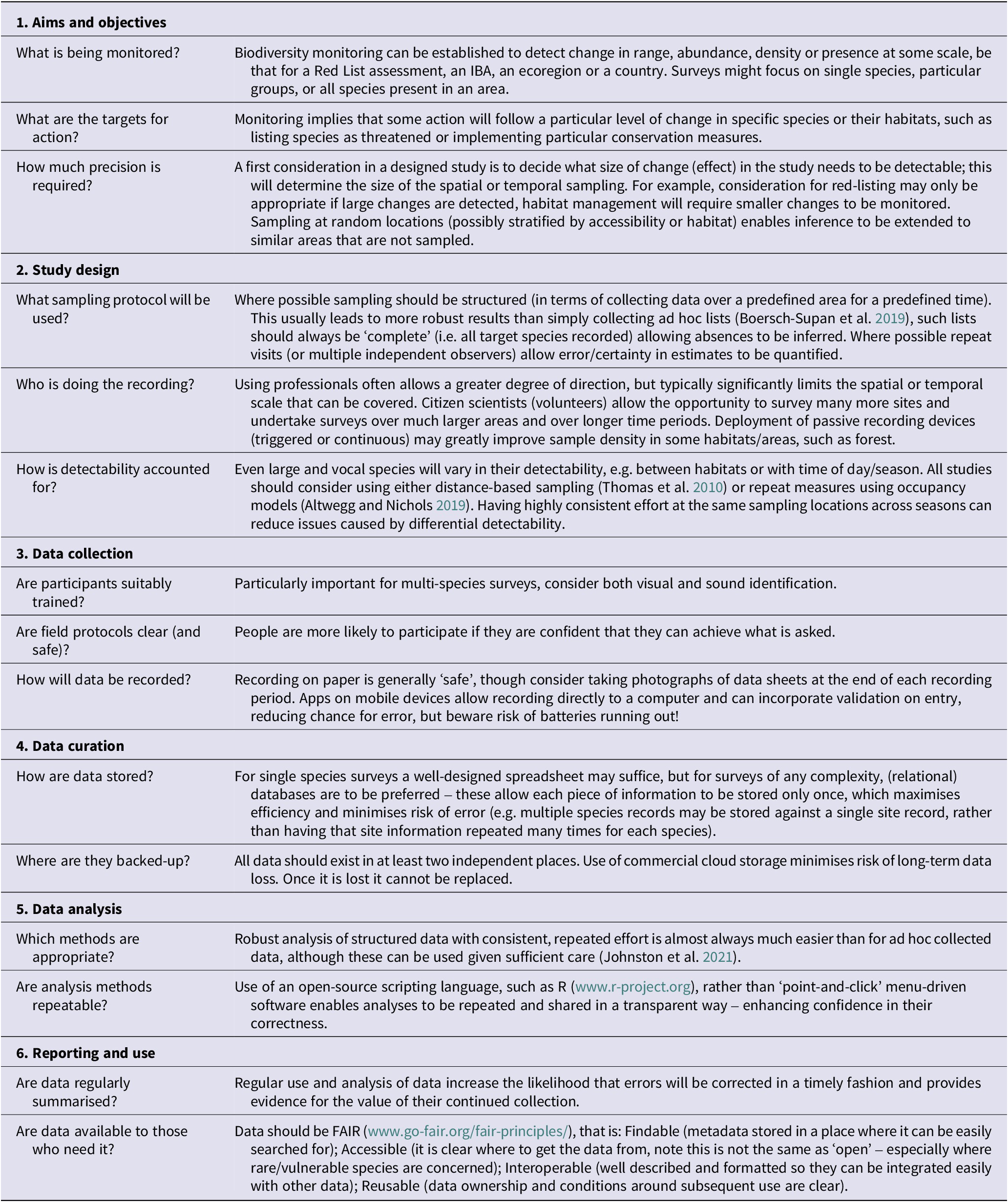
Owing to their ubiquity, position near the top of the food chain, and relative ease of recording, birds are useful indicators of biodiversity, especially at larger scales and in terrestrial environments (Brooks et al. Reference Brooks, Balmford, Burgess, Hansen, Moore and Rahbek2001; Howard et al. Reference Howard, Viskanic, Davenport, Kigenyi, Baltzer and Dickinson1998). However, to be effective, avian monitoring schemes need to be carefully designed, from initial conception and planning through to data use and reporting (see Box 1). Examples of such schemes include: site assessments, e.g. Important Bird and Biodiversity Areas (IBAs) or Ramsar Sites, which require estimation of abundance; species assessments, e.g. International Union for Conservation of Nature (IUCN) Red List evaluation, where some measure of range occupancy may be sufficient; abundance indices in the wider countryside, e.g. Common Bird Monitoring (CBM); Wotton et al. Reference Wotton, Eaton, Sheehan, Munyekenye, Burfield and Butchart2020); impact reviews of land management or urban planning; evaluation of conservation interventions; environmental impact assessment, e.g. Performance Standard 6 of the International Finance Corporation (IFC PS6); reviews of sustainable business practices. A well-developed bird monitoring network (e.g. Gregory et al. Reference Gregory, Vořišek, Noble, Van Strien, Klvaňová and Eaton2008; Hudson et al. Reference M-A.R, Francis, Campbell, Downes, Smith and Pardieck2017; Lee et al. Reference Lee, Altwegg and Barnard2017; Underhill Reference Underhill2016) is likely to combine scientists designing and analysing studies with citizen scientist data collection (Greenwood Reference Greenwood2007; Pocock et al. Reference Pocock, Chandler, Bonney, Thornhill, Albin and August2018). This can require hundreds, or even thousands, of experienced volunteers, something which is not currently possible in most African countries, and different approaches may be needed to those currently used in, for example, the USA and Europe. The application of conservation science methods to monitoring has seen many recent developments (e.g. Lahoz-Montfort and Magrath 2021; Nichols and Williams Reference Nichols and Williams2006; Stem et al. Reference Stem, Margoluis, Salafsky and Brown2005) and these should be incorporated where possible when devising monitoring schemes, even where apparent barriers may operate. One example where this has been achieved is the Southern African Bird Atlas Project (SABAP2), which is the continent’s flagship citizen science project (Lee et al. Reference Lee, Altwegg and Barnard2017; Underhill Reference Underhill2016), which has now extended, with varying degrees of take-up, across 14 African countries under the banner of the African Bird Atlas Project (Brooks et al. Reference Brooks, Rose, Altwegg, Lee, Nel and Ottosson2022).
A general framework for designing robust monitoring projects. For each stage of the design process key questions to be considered are indicated, along with some brief commentary on their importance and relevance
In this study we assess the current state and potential of bird monitoring in Africa, seek options for its development while recognising the very significant limitations in capacity and financing, and provide a conceptual basis for greater integration of such work across the continent. We undertook this study through a questionnaire as well as semi-structured interviews with individuals or organisations considered to be key players in bird monitoring in Africa. These interviews provided snapshots of present activities and opinion which will have been influenced by past activities and data sets, as many of the interviewees were generally long-standing members of the research and conservation communities. For this study, we defined monitoring as periodic surveys of abundance or distribution (in terms of presence/absence) using standardised methods, to measure trends (preferably with associated measures of uncertainty) relevant to conservation targets (Greenwood Reference Greenwood2003). There are many other past published and unpublished studies which were not necessarily designed to be on-going monitoring studies, but which can be repeated to give one-off measures of change, e.g. raptors (Thiollay Reference Thiollay2006, Reference Thiollay2007), vultures (Ogada et al. Reference Ogada, Shaw, Beyers, Buij, Murn and Thiollay2016), and Nubian Bustard Nubotis nuba (Collar and Wacher Reference Collar and Wacher2023). While these and data from the many research studies in Africa (e.g. Dendi et al. Reference Dendi, Luiselli, Eniang, Fakae, Nioking and Akani2018) are extremely valuable sources of information, this paper focuses on regularly repeated monitoring schemes.
Methods
Most respondents were asked to complete a questionnaire in February and March 2021 (see Appendix S1 in Supplementary material) concerning current monitoring activities and barriers to implementing these, but those who had several projects to report or whom we identified as key players in an area were offered an online structured interview lasting approximately one hour based on the same questions but allowing for greater flexibility in responses. These included individuals from NGOs, national biodiversity institutes, academic organisations, international and global conservation organisations, and representatives of multilateral agencies.
A mix of formal and informal approaches was used to elicit responses from the questionnaire. We contacted known networks (e.g. the BirdLife International and Wetlands International African networks), key organisations inside and outside Africa, as well as individuals known to be expert or active in a particular country or taxonomic group. The most recent five-year summary of the International (African) Waterbird Census (IWC) was obtained from Wetlands International, and all the national coordinators who had sent in data during that period were contacted. Requests to fill out the questionnaire were made to all African BirdLife International partners and, where different, African Bird Club country representatives. More informally, a targeted call for information was put out on social media using Twitter (now X) hashtags (#ornithology and #monitoring) and via Facebook. Our aim was to elicit responses from all 54 African countries, as recognised by the United Nations.
Results
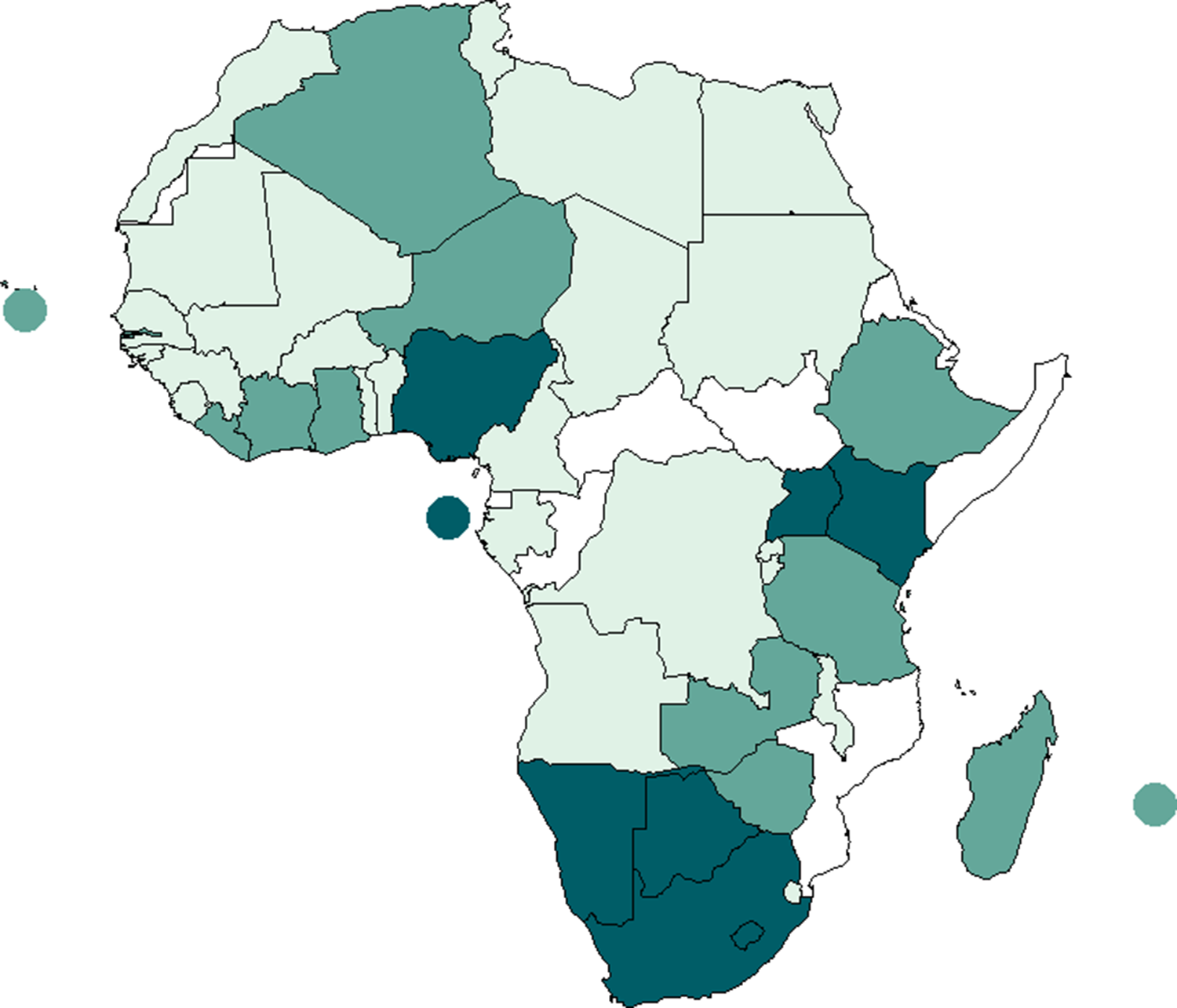
A total of 87 completed forms were received from 47 of 54 African countries; these often included details of multiple projects within the countries. Eleven were classed as multi-country projects, including four that covered the entirety of the continent: the IWC and three citizen science recording schemes (see below). Completed forms were received from Francophone (n = 36 forms), Anglophone (n = 37), and Lusophone countries (n = 7) (Figure 1). No responses were received from Equatorial Guinea, the only Hispanophone country in Africa. The Twitter campaign reached more people (English version: 30,725 impressions, 304 likes, 61 clicks to questionnaire; French: 20,596 impressions, 189 likes, 14 clicks to questionnaire) compared with Facebook (English: 4,235 impressions, 180 likes, 9 clicks to questionnaire; French: 2,563 impressions, 46 likes, 2 clicks to questionnaire).
Map of Africa depicting the relative number of bird species groups that are regularly monitored at one or more sites in each country. No colour – incidental records only; pale green – one species group (e.g. waterbirds or vultures) or all species monitored in <5 sites; mid green – more than one species group monitored or 5–50 individual sites monitored nationally; dark green – national bird monitoring scheme using >50 sites. The island nations of Cabo Verde, São Tomé and Príncipe, and Mauritius are shown as coloured dots due to the scale of the map.
Types of bird monitoring data collected
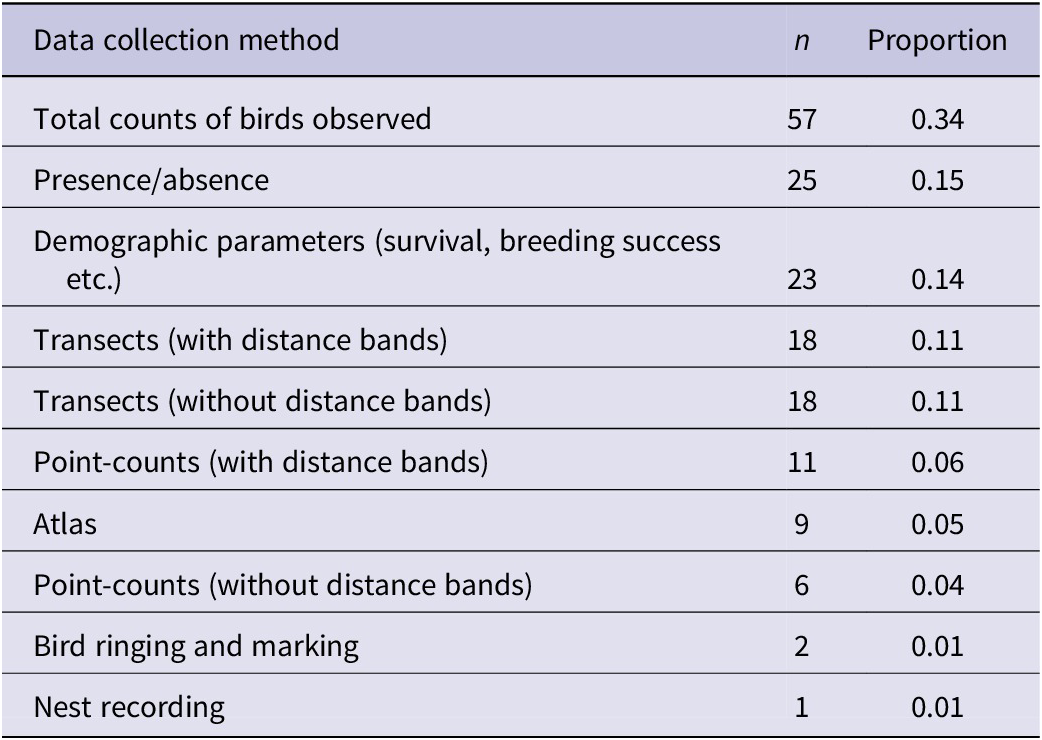
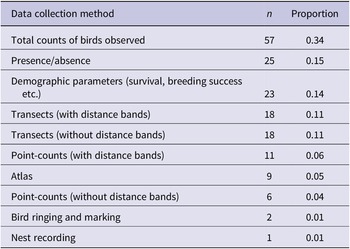
Details of a total of 170 different monitoring projects were submitted, approximately a third of which were total counts of individual birds observed at a site (Table 1), reflecting the widespread uptake of the IWC, but also visual counts of raptors and vultures. Total counts were often assumed to be a census (i.e. complete counts with no error), where issues of detectability were not accounted for. Presence/absence type surveys were the next most common, followed by studies where total counts were undertaken, and breeding success was monitored. These tended to be species-specific and involved studies of breeding waterbirds (9 responses), vultures (7), cranes (2), bustards, ibises, seabirds, and Osprey Pandion haliaetus (all 1 mention).
Response from the questionnaires (n = 87) in relation to the methods used in each monitoring project reported. Some questionnaires reported more than one monitoring project, yielding a total of 170 projects
Multi-species nest record schemes exist in Zimbabwe and Namibia and provide a valuable historical resource for looking at causes behind population change and the impacts of longer-term environmental change (e.g. climate change). However, the amount of new data being added to these is very limited. While many initiatives were country-specific, the four below span the continent and provide a strong basis for future development.
International Waterbird Census (IWC)
The IWC collates coordinated counts of waterbirds and is the most widespread scheme on the continent. It focuses primarily on “January counts” and, although some counts have taken place in July, more consistent monitoring in other months is needed to better understand the movements of intra-African migrants (Dodman Reference Dodman1997). In the 10 years prior to 2021, 50% of African countries participated and counts from over 4,000 sites were received, requiring continual financing, training, and motivation of volunteers. Sites were selected by participants, and it is not always clear exactly what proportions of the different types of wetlands were being surveyed, leading to statistical challenges such as how to address detectability and zero-inflation (this occurs when counts contain an excess of zero counts). Furthermore, substantial numbers of several waterbird species also occur in terrestrial habitats (e.g. some lapwing and stork species) and so are not covered. The Sahel, in particular, has a large number of ephemeral wetlands whose size and location vary with climatic conditions on annual and longer timescales. This makes population estimates based on traditional site-based counts less reliable, and techniques such as using aerial surveys and remote-sensed data to identify the number and size of ephemeral wetlands have the potential to provide more reliable population estimates (Suet et al. Reference Suet, Lozano-Arango, Defos Du Rau, Deschamps, Abdalgader Mohammed and Elbashary Adam2021). Aerial surveys can be effective in certain situations, such as for monitoring cranes in South Africa (Galloway-Griesel et al. Reference Galloway-Griesel, Roxburgh, Smith, McCann, Coverdale and Craigie2023), but they can be financially and logistically challenging to organise (finding suitable aircraft and pilots and requiring specialist training for counters). There are increasing amounts of free remotely sensed data and open-source tools (e.g. QGIS, R, Google Earth Engine) for processing them, facilitating their use to augment and stratify large-scale surveys.
Common Bird Monitoring (CBM)
CBM, i.e. the standardised recording of multiple species on delineated plots, includes repeatedly monitoring a number of sites (both protected and non-protected) using point-counts or transects, with or without recording sightings in distance bands. While recording distance to observations (either precisely or in bands) can improve estimation of abundance (Buckland et al. Reference Buckland, Marsden and Green2008), it is more challenging for inexperienced observers, and around half of schemes (55%) did not incorporate it. Used over large areas of Kenya, Uganda, and Botswana, CBM provides trends in the presence and abundance of commoner species (Wotton et al. Reference Wotton, Eaton, Sheehan, Munyekenye, Burfield and Butchart2020). Sampling approaches vary. Botswana’s scheme took a randomised stratified approach to select survey sites, whereas in Kenya and Uganda considerations such as where volunteers were based or loyalty to historically monitored areas determined which sites were covered.
Vulture and raptor monitoring
Vulture and raptor monitoring takes place in many countries in three main forms: at colonies (where counts often include measures of breeding success), at feeding hotspots such as carcasses, rubbish dumps, and abattoirs, and along roads. The African Raptor Databank provided a platform and brought together a range of current and historical data of African raptors between 2012 and 2020 before it was expanded to the Global Raptor Impact Network (GRIN) (McClure et al. Reference McClure, Anderson, Buij, Dunn, Henderson and McCabe2021a).
Road counts have been widely used (e.g. Daboné et al. Reference Daboné, Ouédraogo, Ouéda, Thompson and Weesie2024; Ogada et al. Reference Ogada, Shaw, Beyers, Buij, Murn and Thiollay2016), the largest of them to date being the Coordinated Avifaunal Road (CAR) counts (e.g. Young and Harrison Reference Young and Harrison2020), in South Africa, but the method is popular elsewhere, including repeat counts (e.g. Ogada et al. Reference Ogada, Shaw, Beyers, Buij, Murn and Thiollay2016; Pomeroy et al. Reference Pomeroy, Shaw, Opige, Kaphu, Ogada and Virani2015). There are opportunities for better coordination, standardisation of road count methods, and training in raptor and vulture identification (e.g. McClure et al. Reference McClure, Carignan and Buij2021b). The range of species counted in different schemes can be expanded. For example, the CAR counts were originally set up to monitor cranes and bustards, but not raptors, largely because raptors were considered difficult to identify in flight by volunteers, highlighting the continent-wide need for volunteers with reliable identification skills. This has changed and six raptor species are now included in the suite of species that are monitored during CAR counts.
Bird atlases
Bird atlases can provide either repeatable snapshots of distribution and relative abundance, between two or more years (typically as a printed book) or, with the advent of online publishing, as a more or less continuous presentation of the state of current knowledge. Of the 54 African countries, 23 have a completed bird atlas project, albeit 18 of them before the year 2000 (Oschadleus Reference Oschadleus2020). The grid scales vary from 1’ × 1′ to 1° × 1° although most are 15’ × 15′ or 30’ × 30′ (Oschadleus Reference Oschadleus2020). Uganda was one of the first to use modelled species distribution maps to infer presence/absence outside areas where surveys have taken place (Carswell et al. Reference Carswell, Pomeroy, Reynolds and Tushabe2005) and the Tanzania Bird Atlas project (http://tanzaniabirdatlas.net/) provides an example of a continuous presentation of results. African–Eurasian migrants have had their own atlas since 2022 (https://migrationatlas.org; Spina et al. Reference Spina, Baillie, Bairlein, Fiedler and Thorup2022) and the IWC counts have provided atlases of, for example, waders (Delany et al. Reference Delany, Scott, Helmink, Dodman, Flink and Stroud2009). The SABAP is the longest-running project and has continuously collected data over some 20 years. Data were gathered within defined grid squares (and in the case of SABAP2 also with GPS accuracy from the linked smartphone app) and both the duration of observations and sequence of first observation of each species were recorded. This allows analyses (e.g. Lee and Nel Reference Lee and Nel2020), based on presence/absence and attributes of the grid or GPS coordinates of the observations, such as land use and human population density. SABAP methods have extended into the African Bird Atlas Project (ABAP) (Brooks et al. Reference Brooks, Rose, Altwegg, Lee, Nel and Ottosson2022), active with varying intensities in Botswana, eSwatini, Ghana, Kenya, Lesotho, Liberia, Malawi, Mozambique, Namibia, Nigeria, Sierra Leone, Uganda, Zambia, and Zimbabwe. SABAP is actively used for the estimation of species distribution and its change, habitat associations, and the overlap of development proposals and habitats likely to support species of conservation concern.
Participation in monitoring
The number of people contributing to each monitoring project was generally low, with 40% (n = 35 responses) of projects indicating fewer than 10 contributors. Just over a third (37%, n = 32 responses) reported tens of participants, and only 13% (n = 11) reported hundreds. The latter were atlas or CBM projects where most or all participants are volunteers, with the occasional exception of projects which involve government staff only. The importance of volunteers on projects, at least equal in abundance to paid staff on 76% of projects, was clear. The pattern of professional and voluntary participation in surveys was similar across Francophone and Anglophone countries.
Data collation, storage, and management
For most projects, data collection was on paper, with data only later entered into a spreadsheet or database. Worryingly, almost half (45%) of projects had no data back-up. Only a few key projects such as SABAP, ABAP, African Raptor Databank, and GRIN have a smartphone app through which data are collected and formally stored in a database. We suspect that the number of records of data storage in databases and back-up on servers is an overestimate, as some organisations, known not to have either, have responded ‘yes’ to both, probably referring to spreadsheets or individual computers. Geographical Information Systems (GIS) were used in 24% of projects and cloud storage in only 14%. Only South Africa and Kenya reported having a national biodiversity database organisation to curate data storage as a core activity.
Cloud data storage is, in principle, usually accessible to all but could be made more affordable with joint initiatives sharing costs between countries or organisations. Storage in the Global Biodiversity Information Facility (GBIF) is a cost-effective way of archiving and securing data and is used by global birding projects, such as eBird and SABAP2. As internet access can be a limiting factor, local storage, preferably in a backed-up structured database to more easily accommodate metadata on associated metrics, such as survey effort, may often be a necessity, but the practice of ensuring that regular back-up copies are made should be universal. Regularly scheduled synchronisation over the internet mitigates the risk of mishaps stemming from different versions; manual back-ups provide a bare minimum to address widespread inadequacies in data storage identified by the questionnaire.
Analysis, reporting use, and data availability
Detailed analysis, including statistical modelling, of the bird data was rare. Routine analysis generally involved the use of spreadsheets to plot simple change graphs. Basic use of data in National Biodiversity Species Action Plans (NBSAPs) was widely reported as occurring, but use of more sophisticated analyses (e.g. statistical modelling in relation to environmental change, species distribution modelling etc.) was rare outside CBM or atlas projects and, as far as we are aware, only routinely undertaken in South Africa, Nigeria, and Kenya. Improved accessibility to continent-wide databases, such as GRIN, would provide a valuable large-scale resource for species distribution modelling (e.g. Sutton et al. Reference Sutton, Benjara, de Roland L-A, Thorstrom and McClure2022, Reference Sutton, Benjara, de Roland L-A, Thorstrom and McClure2023) or the production of species actions plans (e.g. Botha et al. Reference Botha, Andevski, Bowden, Gudka, Safford and Tavares2017), so such coordination should be considered at the outset where resources are likely to permit this. It can also be noted that sharing of resources in large projects can also result in a larger funding pool.
Government and policymakers typically require derived data products that contain high-level but rapidly comprehensible summaries from such analyses to feed into biodiversity reports, and planning and site management plans. In general, the necessary analyses tended to be undertaken by NGOs or university staff and not those in government institutions, often resulting in problems of a lack of long-term funding and, in some cases, capability issues, as analytical expertise lies within the NGOs and not governmental institutions. Indeed, a lack of trained analysts was frequently cited as a major issue, and institutes undertaking analysis require long-term investment in training around analytical methods, which increasingly includes integration of remote-sensed environmental data. Given the vast scale of Africa, the use and appropriate processing of remote-sensed data sets will be essential for producing the derived outputs that policymakers, planners, and conservation organisations require.
Most of the questionnaires returned (76 of 87) reported that the dissemination of information from individual projects was important and is, in principle, available to the public, whether as reports to government, scientific publications in peer-reviewed literature, or in other ways. The majority of questionnaires that reported no dissemination noted their intention to do so in future, often stating that the paper/report had yet to go through peer review. Almost all (83 of 87 questionnaires) stated that their monitoring results were put to use, including in response to international obligations such as the Convention on Biological Diversity Aichi targets (25) or the Ramsar Convention (23). Domestically, 33 questionnaires reported that data from individual projects contributed to national biodiversity reports, and 32 to site management reports.
The questionnaire did not consider the extent of open access to data explicitly. In common with biodiversity databases globally, there are potential conflicts between free access to an open data repository and ownership of data by government or civil organisations (Pearce-Higgins et al. Reference Pearce-Higgins, Baillie, Boughey, Bourn, Foppen and Gillings2018), but making data findable with clear routes for access should only increase their value and utility. Thus, SABAP, and its evolution into ABAP, have made its data available for anyone to download, but this may not be desirable in all cases. The principle of ‘informed consent’ should underlie all data sharing and access activities, particularly when indigenous knowledge is central to its gathering (Oguamanam Reference Oguamanam2020; Reyes-García et al. Reference Reyes-García, Tofighi-Niaki, Austin, Benyei, Danielsen and Fernández-Llamazares2022).
Information on delayed data release was not collected, but, while some data sets will be stipulated as free access after an embargo period, for example EU-funded projects, the vast majority will not. A first step would be for organisations with a common interest in data use to agree a set of principles (e.g. following FAIR principles, that is, being Findable, Accessible, Inter-operable, and Reusable, www.go-fair.org) to determine the type of licence under which data could be shared (e.g. the Creative Commons licences used by GBIF) and when it would be appropriate for data to be shared and when not. This and the data type would determine the storage system. For example, many data sets where sharing is desirable may be most efficiently stored within existing databases, notably GBIF.
Project financing
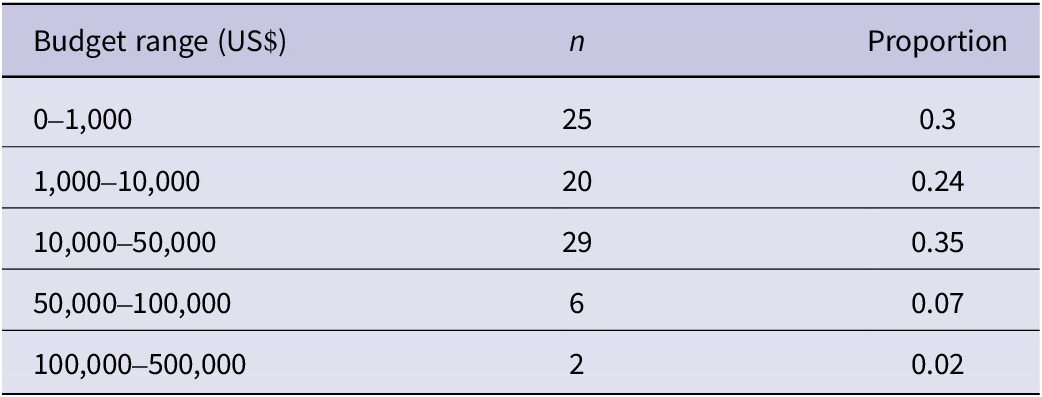
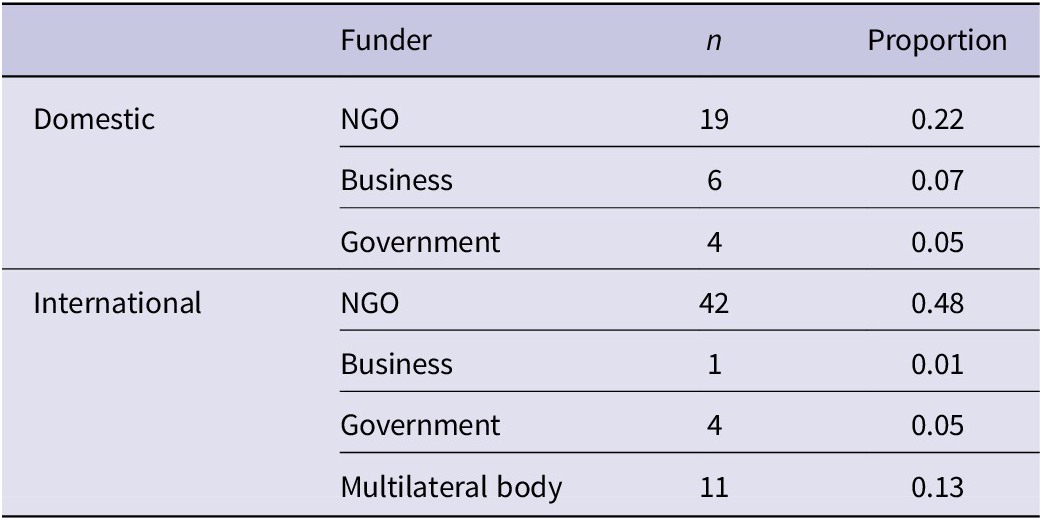
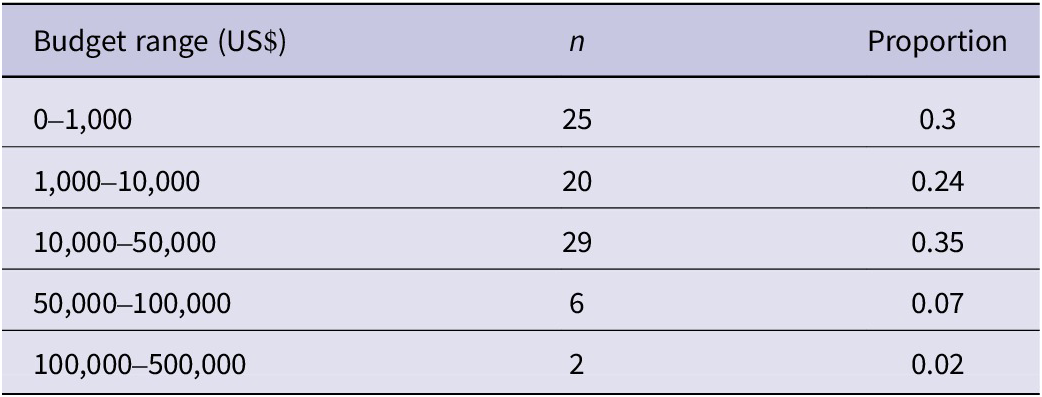
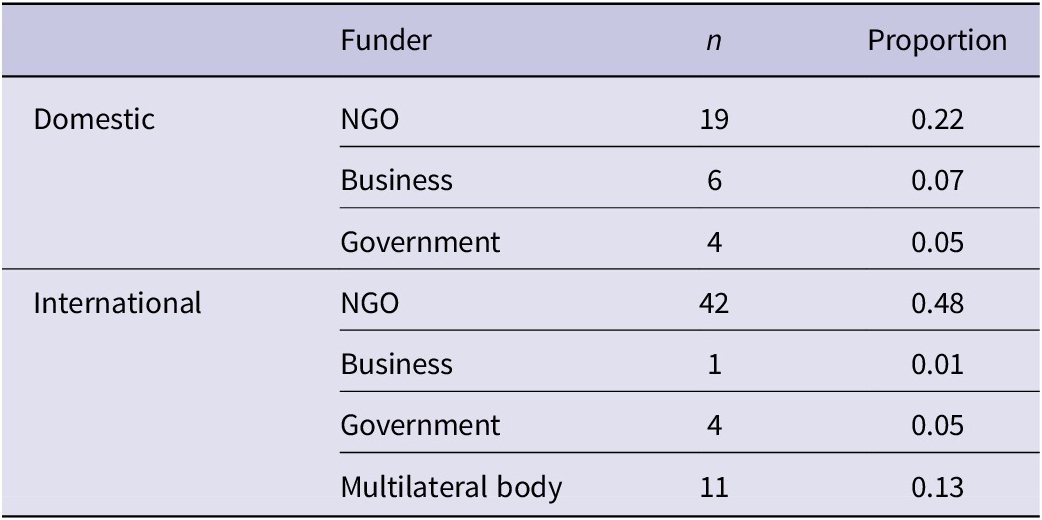
Most projects received relatively limited amounts of money, with approximately half receiving between $4,000 and $10,000 annually (Table 2). Two projects with annual budget estimates over $100,000 were both in East Africa with USA funding, one from a private zoo and one from United States Agency for International Development (USAID). Most projects were funded from outside the country in which they were implemented, and a very small minority of projects had domestic government support (Table 3). In addition to those responding to the questionnaire, interviewees from Kenya and Namibia reported being in receipt of government funding. Where the country of origin of the funding was mentioned, the most frequent was the USA, followed by Germany (German Nature and Biodiversity Conservation Union – NABU– being the most frequently mentioned BirdLife partner), and the UK.
Response from the questionnaire in relation to the size of the annual budget in US$ in each monitoring scheme reported
Source of funds for each monitoring scheme reported via the questionnaire
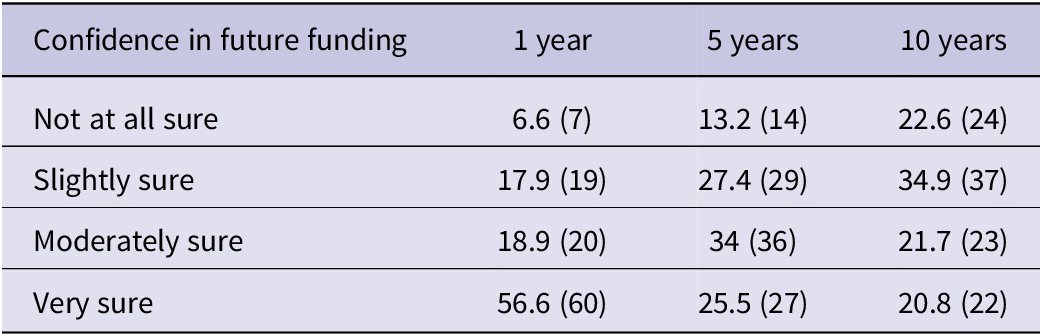
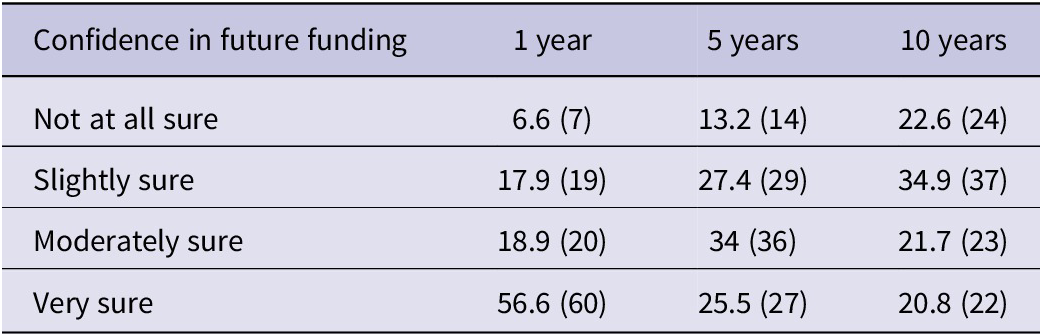
In terms of financing, there was a great deal of confidence in the continuation of monitoring projects over the short term (1 year), with three-quarters of respondents being moderately sure or very sure of funding (Table 4). This level of certainty declined when considering longer time periods (to 60% over 5 years and 44% over 10 years). Money is important but, as one interviewee reported, “no African bird institution breaks even or makes a profit”; they also highlighted the need for innovative solutions, i.e. being able to implement cheap, sustainable, volunteer-driven monitoring schemes which can cover the basic costs of fuel, transport hire, and subsistence. Those projects reporting positively over longer-term (10-year) funding probably reflected the anticipation of funding from past experience, rather than it being contractually secure. Examples include the IWC supported by Wetlands International (including targeted IWC support for the East Atlantic Flyway by the Wadden Sea Flyway Initiative) and locally supported self-sustaining projects (e.g. Kartong Bird Observatory in The Gambia).
Levels of confidence (percentage and number of forms in parentheses) in the availability of future funding for each monitoring project reported via the questionnaire (108 responses)
Barriers to more effective monitoring
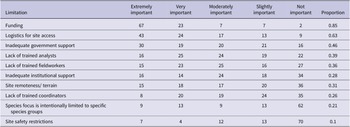
Many barriers in terms of logistics, capability, capacity, and finance were raised against the establishment and continuation of effective biodiversity monitoring (Table 5). Funding was clearly the top challenge, with 90 of the 106 responses reporting it as an issue. This was closely followed by logistical issues, some of which would be related to funding (e.g. lack of vehicles, fuel, and equipment), but may also be due to access to sites because of poor security situations.
Barriers to expanding monitoring schemes as reported by respondents to the questionnaire. Proportion = the proportion of answers that were in the Extremely Important or Very Important categories
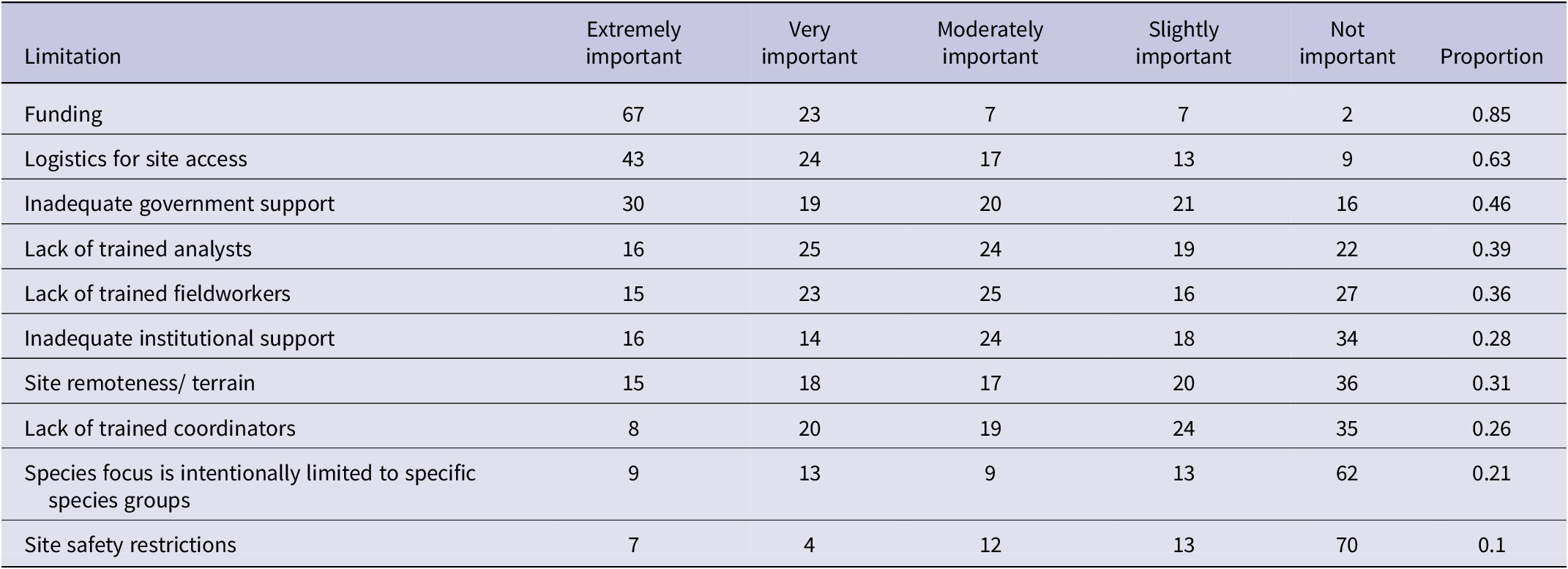
Challenges can come from the top, i.e. for some governments there is a lack of ability to use monitoring data, desire to collect it, or a clear communication of what is needed, leaving civil society (NGOs, universities) to step in and take the lead. More commonly mentioned were basic capability issues, for which such things as bird identification books and binoculars are urgently needed to improve people’s skills. On-going and long-term training investment in field identification skills is necessary due to high rates of volunteer turnover. Moreover, the lack of trained analysts was reported in just over a third of the questionnaires. Donor-funded projects generally have a strong capacity-building focus but tend to be short term in nature; moreover, (tangible) outputs such as training manuals and toolkits, while sometimes necessary outputs from grants, can divert resources away from actual monitoring activity. Without sustained resourcing, such projects are often not implemented sustainably and can quickly become obsolete or irrelevant. Long-term, secure funding would be required to significantly add to both the number of field surveyors and analysis that could be carried out.
Recruitment, management, and retention of volunteers was a consistent issue in the interviews and existing ones were often characterised as “too busy, too tired and too old” as one respondent noted. Security concerns were a particular issue in the Sahel and Horn of Africa regions.
Discussion
Biodiversity in Africa is threatened by increasingly severe climate change and environmental conflicts, the latter resulting from a rapidly growing human population and higher standard of living expectations (Chapman et al. Reference Chapman, Abernathy, Chapman, Downs, Effiom and Gogarten2022), yet even basic information on the scale of the problem is largely lacking over much of the continent (Siddig Reference Siddig2019). Decisions around development and the conservation of biodiversity in Africa need to be well-informed, ensuring that African stakeholders have access to a strong evidence base which is vital to support such decision-making (MacFadyen et al. Reference MacFadyen, Allsopp, Altwegg, Archibald, Botha and Bradshaw2022; Stephenson et al. Reference Stephenson, Bowles-Newark, Regan, Stanwell-Smith, Diagana and Höft2017). The monitoring of bird populations forms a key part of this evidence base in determining priorities for conservation action, both in terms of reversing species declines and highlighting the wider impacts of environmental degradation.
Setting monitoring objectives
The monitoring programmes described by our interviewees have largely been driven and funded by multilateral agreements, global organisations or NGOs outside Africa. Similarly, funding has predominantly been in response to priorities that were either global or external to the country in question. These may align with national priorities, where they exist. The questionnaire responses suggested that the most sustainable and long-term projects tend to be those that are driven by clear policy objectives, either international (e.g. IWC and monitoring of threatened migratory bird species), or in response to clear national priorities set within government agencies (e.g. bird monitoring schemes in Kenya, Uganda, and South Africa). Various models for developing monitoring schemes were suggested during the interviews: (1) a bottom-up approach focused on internal priorities, e.g. globally threatened species at key sites, internationally important assemblages, Key Biodiversity Areas or protected areas; (2) a top-down approach from international reporting obligations, e.g. Convention on Biological Diversity or Convention on the Conservation of Migratory Species, which can also support national objectives (e.g. national biodiversity/state of nature reports); (3) mainstreaming biodiversity data into landscape management (Huntley Reference Huntley2014) and sustainable development goals by, for example, explicitly connecting human health and well-being to biodiversity (the One Health approach; Behravesh et al. Reference Behravesh, Charron, Liew, Becerra, Machalaba and Hayman2024); (4) requiring pre- and post-consent monitoring to be undertaken where major infrastructure projects are being undertaken following IFC PS6.
These latter approaches (3 and 4) are likely to attract longer-term funding opportunities and are already used to some extent, largely in the southern and eastern parts of Africa, to support development aims and identify priority regions and issues, although the transparency of these processes can often be improved. The monitoring required by IFC PS6 directly relates biodiversity conservation to sustainable development, with biological and environmental data being used to identify mitigation and biodiversity offsets, and management objectives should be assessed against concepts such as No Net Loss (zu Ermgassen et al. Reference zu Ermgassen, Baker, Griffiths, Strange, Struebig and Bull2019) and Biodiversity Net Gain (Bull and Brownlie Reference Bull and Brownlie2017). However, much of the data collected to assess the impact of individual development projects are currently confidential and there is an urgent need to make them available to national biodiversity recording systems. These Performance Standards are also not without their critics, however, as economic development needs often conflict with wider conservation goals. It is also essential that any mitigation and offsets proposed are explicitly separated from, and additional to, existing commitments to biodiversity conservation (Maron et al. Reference Maron, Gordon, Mackey, Possingham and Watson2016).
Are field data collection and analytical methods adequate?
This review has shown that many of the bird monitoring schemes operating in Africa are based around a species or groups of species (e.g. waterbirds, vultures), and most of the avifauna is not included. Similarly, in common bird monitoring or atlas schemes, there will be many gaps in terms of scarce, rare or hard to detect species and the spatial coverage may not include the range of all the species. This is a perennial problem but, given that most of the land area of Africa is covered by no, or only one, species-group-focused monitoring scheme (Figure 1), there are major gaps in the coverage of most species which would be impossible to fill. In terms of a global perspective, prioritisation therefore needs to be given to where scarce resources should be spent, e.g. focusing on particularly rare or globally threatened species or species for which a particular range state has significance, but local priorities may differ. In common bird monitoring schemes, a number of methods such as point-counts, transects, timed species counts, and various atlas methods are used. Standardising the methods used would help make common bird monitoring between countries comparable, and ideally a region or continent-wide minimum standard for monitoring would need to be drawn up and widely adopted, which could be achieved through existing fora such as the Pan-African Ornithological Congress.
The primary aim of monitoring schemes should be to document patterns of change over years as a trigger for conservation action. However, in Africa, there is still much work to be done to establish even basic parameters, such as the (seasonal) range limits of many species. Mapping changes in the range of a species provides a relatively crude measure of impact, whereas estimating changes in relative abundance enables, in theory at least, changes to be detected sooner, facilitating identification of key environmental drivers and early conservation interventions. However, doing so requires robust estimates of change that account for imperfect detection (e.g. Edwards et al. Reference Edwards, Smith, Docherty, Gahbauer, Gillespie and Grinde2023; Kéry and Schmid Reference Kéry and Schmidt2004), and larger-scale surveys also need to ensure that sampling is appropriately stratified, both spatially (e.g. by habitat, altitude, and climate region) and temporally (e.g. Nagy et al. Reference Nagy, Breiner, Anand, Butchart, Flörke and Fluet-Chouinard2022). Even counts of large species in open habitats are almost never absolute; acknowledging and quantifying the uncertainty around them (e.g. by making independent repeat counts) leads to more robust measures of change and more informed decision-making as a result.
Power to detect change can be substantially higher in more formal monitoring programmes, but establishing these requires a substantial and reliable volunteer base. In the meantime, the use of checklist apps as a source of records is increasing; these are not a replacement for more formal monitoring schemes, as using such data requires substantial verification effort and development of appropriate analysis (Johnston et al. Reference Johnston, Hochachka, Strimas-Mackey, Ruiz Gutierrez, Robinson and Miller2021; Xie et al. Reference Xie, Zhong, Zhang, Liu, Ding and Triantafyllopoulos2023). However, they can supplement formal monitoring in certain circumstances and where coverage overlaps (Boersch-Supan et al. Reference Boersch-Supan, Trask and Baillie2019). Currently, African bird data from app-based, open access databases, such as eBird and GBIF, are clustered around access points such as major cities and nature reserves or national parks (Freeman and Peterson Reference Freeman and Peterson2019). Securing an affordable app-based system in the long term for the African Bird Atlas and ensuring it has wide appeal (e.g. adding French and Portuguese language support at least, but also support for Arabic and indigenous languages) should be a high priority. Encouraging the recording of easy-to-enter data along with very simple metadata (i.e. time, location, effort, and observer identity) facilitates the collection of multiple counts at the same location, allowing detection to be quantified and accounted for, thereby increasing the power of any analysis to detect change.
New methods and technologies are being developed that can be utilised in monitoring programmes (Lahoz-Montfort and Magrath Reference Lahoz-Monfort and Magrath2021). For example, passive acoustic monitoring can be used in forests, where distance measurement is difficult or impossible, to improve occupancy estimates (Abrahams and Geary Reference Abrahams and Geary2020; Rea et al. Reference Rea, Elliot, Carstens, Leaver, Carstens and Wimberger2023), or in wetlands to detect globally threatened birds (Moskidi et al. Reference Mosikidi, Le Maitre, Steenhuisen, Clark, Lloyd and Le Roux2023). Species occupancy and/or distance sampling can be undertaken with camera traps (Bitani et al. Reference Bitani, Cordier, Smith, Smith and Downs2023; Bessone et al. Reference Bessone, Kühl, Hohmann, Herbinger, N’Goran and Asanzi2020; Gumede et al. Reference Gumede, Smith, Smith, Ngcobo, Sosibo and Maseko2022), which are becoming increasingly affordable as the technology develops.
Capacity needs
Capacity has to be built at all levels, starting from the bottom up, such as with the provision of basic field equipment such as binoculars and field guides, and from the top down, e.g. governments leading on strategic policy requirements and implementation, academic institutions producing trained ecologists (e.g. Cresswell Reference Cresswell2018), and NGOs having the mechanisms to collect and use those data effectively. However, in some countries these institutions may be non-existent or weak, leaving capacity building stalled. Moreover, several interviewees reported that foreign donors can compete for trained project staff, especially in West Africa and the East Atlantic Flyway, leading to under-funding in other areas (e.g. the Asian–East African flyway) where such staff are scarcer, a phenomenon which only highlights the need for urgent expansion of the workforce pool. An example of an excellent working relationship between academics, NGOs, and government is in southern Africa between the FitzPatrick Institute (academic institution), which runs the volunteer scheme, the South African National Biodiversity Institute (SANBI), a government institution, and BirdLife South Africa (an NGO). More support to not only help some governments develop national priorities and policy objectives, but also to value the importance of biodiversity and monitoring alongside areas such as human health, well-being, and development, would be a major achievement (Barnard et al. Reference Barnard, Altwegg, Ebrahim and Underhill2017).
Lack of available analytical expertise was identified as a critical gap, and even producing simple trends for reporting purposes may be a challenge in many countries. Moreover, monitoring data are often collected under difficult conditions and may be quite heterogeneous and thus need sophisticated methods requiring a high degree of statistical training to analyse effectively. It is generally cheaper and more effective to design a better survey than to try and rescue results where data collection was poorly designed, but survey design skills are also largely lacking. Thus, CBM data quality is generally higher, and usually improves over time as observers receive extra training, but this requires on-going training, mentoring, and the availability of relevant support materials (Kepler and Scott Reference Kepler and Scott1981).
Ensuring equitable access to data (and metadata, such as observer identity), recognising the rights of both the data generator and value that can be added through re-use, can also be a challenge, especially for those platforms developed in non-African contexts, where appropriate recognition of data ownership is critical (Reyes-García et al. Reference Reyes-García, Tofighi-Niaki, Austin, Benyei, Danielsen and Fernández-Llamazares2022). The main African-based app, BirdLasser (www.birdlasser.com), used in the SABAP and ABAP projects, has revolutionised data collection in those countries which have a higher level of smartphone usage (Lee and Nel Reference Lee and Nel2020). However, access to smartphones, power or internet may not be available, especially in rural areas in some countries, so paper forms for capturing data may still be required with additional resource needed to integrate these into a largely digital data pipeline.
There is no doubt that centres of excellence work, i.e. A. P. Leventis Ornithological Research Institute (APLORI) (Nigeria), the National Museums of Kenya, and the FitzPatrick Institute (South Africa), are long established and have transformed African ornithology. For example, in the 23 years since the start of the programme, APLORI has trained 146 young West Africans on its Master’s degree course in Ornithology and Conservation Biology (APLORI 2025). Approximately a quarter of these graduates have gone ahead to complete PhDs, while another quarter are currently studying for PhDs. Approximately 90% of APLORI graduates remain active contributors to biodiversity conservation efforts as researchers, lecturers, teachers, government officials, and environmental NGO founders and workers. Since 2015, APLORI has also begun directing efforts towards increasing public awareness and engagement in biodiversity conservation through the Nigerian Bird Atlas Project (NiBAP), a citizen science project that recruits, trains, and organises young Nigerians into bird clubs and bird atlas teams. From just two, largely expatriate-dominated, bird clubs in Nigeria, the NiBAP had, by 2024, founded and established 20 bird clubs with over 1,000 mostly members. From three active bird atlasers in 2015, there are now over 250 in the country (APLORI 2025). All these citizen scientists have helped to survey close to 4,000 of the 11,080 pentads needed for a complete survey coverage of Nigeria.
Programmes producing Master’s-level courses have recently started at Gorongosa National Park, Mozambique (https://gorongosa.org/masters-program/) and Université Gaston Berger, Senegal. Bird monitoring expertise has previously tended to flow from the Global North to Global South but, as the number of Master’s graduates has increased, many now hold positions in national and global institutions, with consequent opportunities for intra-African capacity building. This can be further expanded using online courses, the development of which has been spurred by the pandemic years, although access through the internet remains a key challenge for some, and courses still tend to be conducted in English, presenting a barrier for many. These would have the benefit of being able to be run across several countries and partner with universities or other educational institutions to provide a local hub for remote teaching. Examples include Wetlands International’s Flyway Training Kit, the toolkit made by the Office Français de la Biodiversité (OFB) and the African–Eurasian Waterbird Agreement (AEWA) for trainers in waterbird identification and counting in Africa, and the Wadden Sea Flyway Initiative’s field guide to the waterbirds of the East Atlantic Flyway.
Financing models
Funding is clearly an issue for all monitoring projects in Africa. Respondents noted that the amounts of money available for monitoring terrestrial biodiversity are tiny in comparison to other development and aid projects, even though the impacts of short-/long-term environmental change on human health and livelihoods are well documented. Interviewees reported that the models which tended to work best were those where there was an explicit government/NGO public–private partnership. Blended models, where funds were administered by a consortium on behalf of governments but outside national treasury control, were often appreciated by employees of government institutions as it gave them both a voice in the management of funds and in the co-design of solutions. A strong message (from the NGO sector) was that money directed through the NGO sector offered better value for money, although this perception may be less true for international NGOs, which can have higher institutional overheads. Local or regional NGOs can, in principle, also move more rapidly than government departments or agencies. For example, NatureUganda recognises that no institutions within Uganda, or external donors, have money for regular monitoring, so it essentially subsumes monitoring costs within institutional overheads.
To be genuinely sustainable, large-scale monitoring schemes ideally need to be inexpensive, simple, and highly accessible, but well designed. While collecting regional records of occurrence (such as https://www.wabdab.org/) can be useful to document species ranges, ad hoc records of presence are unlikely to provide a robust evidence base, unless data volumes are sufficiently large to overcome their inherent heterogeneity (Johnston et al. Reference Johnston, Hochachka, Strimas-Mackey, Ruiz Gutierrez, Robinson and Miller2021). While large projects/donors can be important for implementing new monitoring projects, as they come to an end smaller grants are critical in keeping many monitoring schemes going in the long term. Organisations like the African Bird Club, Rufford Foundation, JRS Biodiversity Foundation, and Mohamed bin Zayed Species Conservation Fund, as well as local funding sources (e.g. large businesses, embassies), are vitally important. A more coordinated approach to funding would also be welcomed by NGOs whose limited capacity can often be eroded by chasing small individual grants. Approximately half of the monitoring projects mentioned in the questionnaires (44 in total, see Table 2) cost less than US$10,000 annually. If global funders were to combine and commit to provide long-term funding of, for example, US$10,000–15,000 to each of these monitoring projects over a sustained period (say 10 years), it would save both time and resources spent fund-raising, allowing NGOs to focus on developing the schemes by training more people and investing in, and undertaking, data analysis. Opportunities to contribute via existing structures and for co-financing are available, for example, the subsidiary agreements of the Convention on the Conservation of Migratory Species of Wild Animals (CMS), or international partnerships such as the Wadden Sea Flyway Initiative, which funds monitoring and capacity-building activities in countries along the East Atlantic Flyway. In global terms, the cost would be moderate (<U$1 million p.a.), but could provide a secure base for long-term monitoring.
Building long-term sustainability
Understanding and managing the impacts of environmental change on biodiversity will not be achieved just by monitoring in protected areas; the wider countryside must be included (e.g. Buechley et al. Reference Buechley, Girardello, Santangeli, Ruffo, Ayalew and Abebe2022; Evans Reference Evans2023). Well-designed protocols, probably undertaken by volunteers and analysed by professional staff, are required. Internationally, the most successful monitoring projects tend to be those which support long-term data collection and analysis concurrently; continued use and interrogation of data to address specific, clear objectives often identify ways of collecting data more effectively. Feedback loops are essential, in terms of both providing results to promote a sense of investment and ownership in volunteers (reported from many countries) and showing how data are used. If data are seen to be valued by people in power, then volunteers are motivated to keep going. For instance, it was reported by one interviewee that visits by Kenyan Wildlife Service staff have given substantive encouragement to volunteer counters.
Building social capital is essential to ensure enough people support monitoring activities. People need to feel involved in their local environment which, in turn, empowers them to understand, and engage with, environmental change (Greenwood Reference Greenwood2007). Engaging local volunteers can produce a large return on investment. An extreme example is found in South Africa where estimates suggest that the value of the in-kind contributions by citizen scientists to the SABAP2 project exceeded ZAR40 million per year – more than 25 times the cost of maintaining the core team which runs the project, highlighting the value for money using this approach (Lee et al. Reference Lee, Brooks and Underhill2022). Even where people may be less affluent and have less free time, the setting up of bird clubs with relatively little investment and making recording a social activity have increased the number of observers in Nigeria from a few dozen to over 1,500, with 20% of the country being covered by atlas volunteers in five years (Ringim et al. Reference Ringim, Muhammad, Bako, Abubakar, Isa and Nelly2022).
Networks, however, are only as robust as the organisations underpinning them. The recent closure of the Animal Demography Unit at the University of Cape Town was of huge concern as it ran a host of online citizen science projects, including the South African Bird Ringing Scheme (SAFRING), the SABAP atlas projects, and southern African waterbird counts (CWAC). The FitzPatrick Institute has taken on the avian schemes but financing them and securing staff to run/develop them are major issues. Costs, however, are relatively small, again highlighting the need for international donors to commit to longer-term funding, as this will give organisations undertaking biological monitoring in Africa the motivation and incentive to invest for the long term in the schemes and really develop the monitoring and analytical capability within their organisation.
Where next – a new paradigm for bird monitoring in Africa?
Each country is at a different stage of bird monitoring, ranging from none, or just waterbird counts, to well-structured projects that are integrated into policy and decision-making. Apart from waterbirds, vultures and a few other species groups (e.g. bustards and cranes), there are few schemes that monitor common birds in the wider countryside. Setting up sustainable common bird monitoring schemes across Africa will be challenging, requiring long-term investment, but experience in southern and eastern Africa shows they can provide a robust evidence base for the impacts of environmental change in areas where sufficient participation can be established. It will require continuous training and institutional capacity-building in both data collection and analysis, and a key step will be building monitoring goals into long-term planning, likely with governments and NGOs working in partnership (Kühl et al. Reference Kühl, Bowler, Bösch, Bruelheide, Dauber and Eichenberg2020). Use of common standards will be important to tackle some regional or continent-wide issues, where data need to be compatible between countries. Supporting the use of ABAP in a wider range of countries, assisted by the development of the BirdLasser or another bespoke mobile app, has the potential to develop a broader evidence base relatively quickly, especially where this is coupled with building capacity in analytical expertise and stronger links to policy- and decision-makers as end-users of the data.
If the outputs of monitoring schemes are to be self-determined (i.e. owned, initiated, and analysed) and relevant to the needs and requirements of each country, the skills required to carry out these analyses must be available in the region. It is perhaps unrealistic to think that centres of excellence (e.g. biological records centres and databanks for long-term, safe storage of data) could be established in each country, but many of the key drivers of biodiversity change (e.g. climate change, desertification, invasive species, rainfall etc.) operate at regional scales. Consequently, regional centres of excellence that link biodiversity (e.g. bird monitoring) and remote-sensed environmental data sets, together with data from the planning, developmental, and aid sectors, would provide a very clear way of starting to mainstream the environment into the aid and development sectors, and could revolutionise the extent of biological recording undertaken in Africa.
Increased communication and coordination through the support of existing networks, and facilitation of new ones, was a clear recommendation from interviewees. Wetlands International coordinates the longest-running and most widespread bird monitoring network in Africa, and monitoring of other taxa would benefit from similar coordination across countries. For example, a large amount of road transect data (including for raptors and vultures) from across Africa is available, and even though different methods were used (McClure et al. Reference McClure, Carignan and Buij2021b), if it were collated, it would form a valuable historic data set as well as being a monitoring tool for many species that are of conservation concern. The West African Bird DataBase represents another attempt at regional coordination of records, but one which needs more funding to achieve its true potential.
It is probably naïve to think that bird monitoring will be commonly carried out across the continent just to inform the conservation of the birds themselves, but these data are relevant to many other areas of social and economic development. Monitoring projects could be scaled up in countries in relation to a range of policy areas, building on an increased requirement for monitoring of impacts of intervention and mitigation or adaptation measures in response to global drivers of change. Development of standardised continent-wide common monitoring indicators (e.g. Wotton et al. Reference Wotton, Eaton, Sheehan, Munyekenye, Burfield and Butchart2020) would allow not only novel and existing conservation interventions to be evaluated but would also provide a robust evidence base against which to assess mitigation of, and adaptation to, broad-scale drivers of environmental change.
The amounts of money involved in official development assistance (ODA) programmes and major infrastructure projects are orders of magnitude more than is currently spent on bird monitoring by NGOs and governmental agencies, and even a very small percentage would allow long-term investment by African institutions in monitoring, volunteer management, analysis, and reporting. Biodiversity assessment and monitoring for a single large infrastructure project (e.g. wind, solar or hydroelectric project) may exceed the total annual budget for all the monitoring schemes across the continent reported in this study (<US$1 million), especially if mitigation or compensation is required. The integration of wider environmental modelling products, derived from increasingly available remote-sensed data, has the potential to complement and extend the inference possible from bird monitoring programmes (e.g. Cervantes et al. Reference Cervantes, Altwegg, Strobbe, Skowno, Visser and Brooks2023). By incorporating biodiversity and nature-based solutions into sustainable development programmes, the increasing negative impact of human development on the environment may be reduced. However, it is essential that the main reason for monitoring birds – the conservation of the birds themselves – is not lost (e.g. Ishong et al. Reference Ishong, Afrifa, Iwajomo, Deikumah, Ivande and Cresswell2022). Ultimately, ecosystems are composed of species, and it is often the fate of individual species that most resonates with people and motivates them to act for a better future.
Supplementary material
The supplementary material for this article can be found at https://doi.org/10.1017/S0959270925100397 .
Acknowledgements
This project would be nothing without the responses, in questionnaires and interviews, of many African ornithologists and those outside the continent with a passion for African ornithology; our thanks to these. Thanks also to the Joint Nature Conservation Committee (JNCC) for commissioning and guiding this work, the UK’s Department for Environment, Food & Rural Affairs (Defra) for supporting workshops, and Nigel Collar for many helpful comments.



 Open access

