

Introduction
Over the last decades, radiotherapy (RT) treatment planning and delivery have changed significantly because of rapid development of technology. Three-dimensional (3D) treatment planning, multi-leaf collimators facilitating intensity-modulated RT (IMRT), improved immobilisation and stereotactic RT allow complex treatment planning on an individualised patient level.1, Reference Purdy2 The increased complexity of planning and treatment delivery might create an environment in which treatment errors are prone to occur and quality assurance (QA) programmes should be carefully implemented.1, Reference Weber, Poortmans, Hurkmans, Aird, Gulyban and Fairchild3, Reference Huang, Medlam and Lee4
As pointed out by Weber et al., QA programme in clinical trials is important to ensure proper implementation of a study protocol.Reference Weber, Poortmans, Hurkmans, Aird, Gulyban and Fairchild3 There is some evidence that treatment delivery improves not only for patients enrolled in a clinical trial with QA programmes, but also for patients treated off-trial.Reference Haworth, Kearvell and Greer5, Reference Ottevanger, Therasse and van de Velde6 However, small departments with limited resources will usually have few patients enrolled in clinical trials and a general QA programme should be implemented. Since development of a QA programme is prone to require substantial human and financial resources, such activity could be challenging for small departments. As described by World Health Organization (WHO), an appropriate organisation of QA activities at national level will facilitate implementation of QA programmes on hospital level.7 The need for national QA initiatives in RT was also described in the Norwegian strategic cancer plan (Ministry of Health and Social Affairs, 1997).8 Financial resources for such projects were granted by the Norwegian parliament in 2000 followed by creation of a national organisation for QA in RT. The initiative was named KVIST, which is the Norwegian abbreviation for Quality Assurance in Radiotherapy.
QA in RT should encompass all procedures that ensure consistent and safe fulfilment of the medical prescription. This includes the delivery of adequate dose to the target volume together with minimal dose to normal tissue, minimal exposure of personnel, and patient monitoring to determine the treatment outcome.7, Reference Thwaites, Scalliet, Leer and Overgaard9 The KVIST initiative intended to include all these elements in their activities. The aim of the KVIST programme was to increase the quality of Norwegian RT through national QA projects; e.g. produce consensus-based national recommendations. Other important objectives were to establish a positive attitude towards QA and to stimulate better communication between centres and the various professions involved in RT.
This paper will describe the organisational structure and some of the projects run within the framework of KVIST. The results of these projects will be described in separate publications (in preparation).
Organisational structure and method for QA
There are several stakeholders in Norwegian RT such as Regional Health Trusts (including hospitals with RT departments), Ministry of Health and other public entities, national cancer groups and associations for professionals and for patients groups. The Norwegian parliament wanted the national QA programme to be organised through a public entity and not by one of the hospitals offering RT. Thus, the financial resources were allocated to the Norwegian Radiation Protection Authority (NRPA), since this is the competent authority for medical use of radiation in Norway. One of the assignments given to NRPA was to develop an appropriate organisational structure for national QA activities. Figure 1 illustrates the chosen structure, comprising the KVIST team, the reference group (RG) and the different working groups (WGs).
Organisational structure of KVIST.
Abbreviation: NRPA, Norwegian Radiation Protection Authority.

The KVIST team is the core of the organisation and consists of five people employed at NRPA. All the team members had more than 10 years of clinical experience in RT at the time of employment. Since RT is a treatment modality involving radiation oncologists, medical physicists and radiation therapy technicians (RTT), the KVIST team is multidisciplinary; two oncologists, two medical physicists and one RTT. They are employed in part-time positions (20–60%) with their residual positions being in a RT department (three different RT centres in Norway). Such arrangement gives the team members an opportunity to work in QA projects on a national level as well as following the rapid development of RT in practice.
A RG acts as an advisory body for the KVIST group in defining and ranking the priority of projects. In this group there are representatives from all centres and professions involved in RT in Norway. The members are supposed to communicate mutual information between the KVIST group and the individual RT departments. The RG was constituted in February 2001 with six oncologists, four physicists and three RTT. Two 1-day meetings with the RG are arranged annually.
Relevant national QA projects are identified in collaboration with the RG. WGs are established to carry out the various projects. For most of the WGs, the task is to develop a national consensus document as a basis for a national recommendation. The members of these WGs have special qualifications or interests relevant to the task of the group. The groups are always chaired by one of the members in the KVIST team. The reports from the WGs are circulated for comments to RT departments and other relevant institutions before publication as national consensus documents.
All the RG and WG meetings are arranged at an airport conference centre. All the meeting and travel expenses are paid by NRPA. The members in the RG and WGs do not receive any salary from NRPA. However, through an agreement between NRPA and the Regional Health Trusts it is stated that the Norwegian RT departments should encourage and facilitate KVIST-related work within regular hospital working hours.
To facilitate communication and data sharing a password protected website was created. Users with access to specific areas within this site are created, e.g. a general user with access to only general information about KVIST- or WG-specific users with access to minutes, documents under preparation, etc.
A multidisciplinary RT forum is important to improve professional discussion and to form a basis for a tighter collaboration and communication among the professionals. For this purpose KVIST has established the Norwegian Radiotherapy Meeting, an annual meeting where oncologists, radiation technologists and medical physicists meet to discuss RT-related issues. National and international keynote speakers have been invited to provide new knowledge, strengthen interest for RT and place Norwegian RT within an international context.
Initial work
In order to ground the national QA initative within the Norwegian RT community in the initial phase, site visits to all the Norwegian RT centres were performed. Existing QA activities at hospital level were identified and potential national QA projects were discussed. Two ISO-certified hospitals abroad were also visited.
The visits to the RT departments showed a clear need for national QA projects. Existing quality systems were mostly related to dosimetrical and physical aspects, such as QA of the equipment. Quality systems for more clinical and medical-related issues like indication for RT, description of target delineation, fractionation schemes and treatment techniques were less developed in several departments. However, all of the RT centres were in a process of extending their quality systems. In all departments the lack of systematic registration of late effects for patients not included in clinical trials was pointed out. Additionally, most clinics lacked an adequate system for incident handling in RT.
After the site visits three suitable initial projects (WGs) were defined (in 2001). These projects were related to topics where international recommendations already existed. Hence, the task was to implement these into the Norwegian RT community. The projects (the three first projects are described below) were expected to be easily accomplished, thus giving KVIST an opportunity to succeed in the initial phase.
Overview of established national KVIST QA projects and brief results
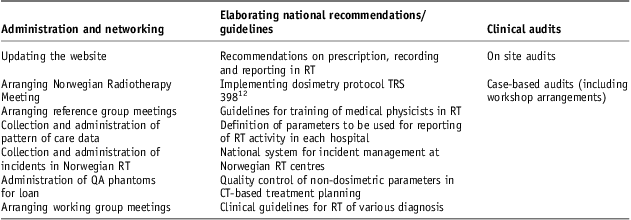
Table 1 gives an overview of elements in the national QA work performed through KVIST. The projects listed in columns 2 and 3 are briefly described in the following section. All the reports from the various projects are published as NRPA reports and are available at www.nrpa.no. Most of the reports are only published in Norwegian.
Elements in the KVIST programme
Abbreviations: RT, radiotherapy; QA, quality assurance; CT, computerised tomography.
National recommendation on prescription, recording and reporting in RT
Several international recommendations on prescribing, recording and reporting in RT have been published the last 10–15 years.10–Reference Altonen, Brahme and Lax12 These recommendations were translated, interpreted and used differently in Norwegian RT departments in the 1990s, thus leading to ambiguous documentation and reporting. The task of this project was to translate and implement the international available recommendations and adapt them to conditions existing in Norwegian RT. The project was initiated in 2001 and a report was published in Norwegian in 2003. A new WG is now finalising revised recommendations in accordance with ICRU 83.11
Implementation of TRS 398, an International Atomic Energy Agency (IAEA) dosimetrical protocol
The IAEA dosimetrical protocol TRS 398 was published in 2000.13 In this protocol, a new standard and code of practice based on absorbed dose to water was established. A WG started the implementation of this protocol in 2001 in cooperation with the Norwegian Secondary Standard Dosimetry Laboratory (SSDL) at NRPA. The WG included physicists from all the Norwegian RT departments, physicists from NRPA and one oncologist. The work included site visits where an introduction to the new protocol was given to the local physicists and comparative measurements were performed between the local dosimetry system and a reference system from the SSDL. The project also included dosimetric comparisons with the Finnish, Swedish and Danish SSDLs as well as with Laboratoire National Henri Becquerel in France.
Guidelines for training of medical physicist in RT in Norway
In Norway, no formalised training and certification for medical physicists exists. Frequently newly graduated medical physicists at Master level, with limited knowledge about RT in practice, are employed in the RT departments. Therefore, there was a clear need for a dedicated training programme in RT physics. Traditionally this training has been administrated by each department, with the inherent risk of departmental differences. In order to achieve a consistent training and to ensure an acceptable level of the competences within the RT physics group, a WG was established to develop a national training programme for medical physicists. Four physicists from different RT departments were involved in the work together with a physicist and a RTT from the KVIST team. The programme was published in 2005 and included lists of curriculum items, references and concomitant training exercises. The programme is compatible with the ESTRO/EFOMP guidelines for education and training of medical physicists in RT.Reference Eudaldo, Huizenga and Lamm14 Work is in progress to update the programme according to new developments within RT and in line with developments in ESTRO/EFOMP core curriculum for medical physicists in RT.
National system for incident management at Norwegian RT centres
The RT process is complex and errors or irregularities may occur. Several reports describe such incidents from the last two decades and highlight the need for increased focus on risk management in RT.15, Reference Furlow16 Several groups have shown that implementation of comprehensive QA programmes, including explicit and uniform protocols for timely assessment of error rates, may reduce the level of incidents and near-incidents.Reference Huang, Medlam and Lee4, Reference Yeung, Bortolotto, Cosby, Hoar and Lederer17 In 2002, a WG was established to develop a system for standardised management and registration of incidents at Norwegian RT centres. The objective was to create standardised classification (taxonomy) and codes for different types of incidents and near-incidents, close to what was described by Yeung et al.Reference Yeung, Bortolotto, Cosby, Hoar and Lederer17 and Cunningham et al.Reference Cunningham, Coffey, Knöös and Holmberg18 A low incident registration threshold was established in a ‘no-blame’ framework, focusing on learning and improvement. Furthermore, the work included development of software to register and handle the data. The Norwegian incident management system was first published in 2004 whereas a revised version was published in 2006. The system has been implemented in all Norwegian RT departments. Data has been presented in several international meetings.
Implementing clinical audit in RT
Council Directive 97/43/Euratom introduces requirements for clinical audits and states that such activity should be implemented in accordance with national procedure.19 An example of such implementation in Belgium is described by Van Houtte et al.Reference Van Houtte, Bourgois, Renard, Huget, D'hoore and Scalliet20 In a symposium arranged in 2003, it became evident that the way clinical audit was implemented varied considerably between different member states. To clarify the issue of clinical audit, the European commission published in 2009 guidelines on such procedure for medical radiological practices. In these guidelines, clinical audit is defined as systematic examination or review of medical procedures that seeks to improve quality and outcome of patient care through structured review.Reference Järvinen, Soimakallio and Wigren21 The practices, procedures and results should be evaluated against agreed standards. In 2002, a WG was appointed to explore the possibility for implementing clinical audits in Norwegian RT centres. The EU-guidelines point out that clinical audits should be multi-disciplinary. Therefore the established WG included three experienced oncologists and one RTT from four different departments additional to one oncologist and one medical physicist from the KVIST team. On-site peer review audits were performed in seven hospitals from October 2003 till November 2004. Forty patients with skeletal metastasis treated with RT were audited at each hospital. During a 2-day audit, the RT process was thoroughly reviewed for each patient individually. This included the initial clinical work-up (audit of diagnostic images, clinical examinations, etc.), planned treatment (choice of treatment schedule, treatment arrangement, type of radiation, etc.), performed treatment (treatment chart, portal images, in vivo measurements, etc.) and follow-up. All the steps were evaluated against local, national and international guidelines as well as relevant scientific publications. At the end of the audit, a meeting was arranged where the audit team presented their findings and pending points could be discussed and clarified. A report was elaborated by the audit team and provided to the department a few weeks after the visit. In several departments procedures were changed as a consequence of topics discussed in the report. Before the audit a mutual agreement were signed by the hospital and the auditors. All the data collected were considered confidential. However, if serious conditions were revealed and the hospital refused to report this, the audit team were considered to be obliged to report their findings to the health authorities.
The clinical audit WG concluded that these types of QA procedures are feasible among Norwegian RT centres. However, the process is costly, time consuming and logistically challenging.
From April 2009 till September 2011 clinical audits on breast cancer treatment were carried out in 10 hospitals using the same model as described above. Throughout these audits a pool of 18 experienced auditors were established and six to seven of these participated on each visit (including three participants from the KVIST team). Thus, the workload for each auditor was less compared the first audit period where the WG performed each audit.
Another method for clinical audit is case-based audits and such audits have been organised by the KVIST team since 2006. Two or three clinical cases are electronically distributed (including patient history, diagnostic images and computerised tomography (CT) images for treatment planning) and all RT centres are asked to perform target delineation and treatment planning according to their own procedures and to submit their suggestions to KVIST. The results are compared, analysed and presented by the KVIST team at the Norwegian Radiotherapy Meeting, followed by a broad discussion aiming at establishing consensus on deviating matters. Since 2006 cases with rectum, lung, prostate and breast cancer have been discussed as well as more general cases with pelvic lymph nodes and palliative RT. The results of pelvic lymph node delineation in a rectum cancer case from nine observers are shown in Figure 2.
Clinical target volume delineation in a rectum cancer case performed by nine observers from different radiotherapy departments in Norway.
National clinical guidelines
The case-based audits revealed a need to review the existing national guidelines within radiation oncology. Many cancer treatment guidelines only describe the RT process in brief, e.g. the treatment schedule is suggested without giving any description of volume delineation, treatment planning procedure, field arrangement or tolerance doses for organs at risk. In 2005, the KVIST group developed a template for National Guidelines in RT to ensure that all important elements in the RT process are included in the various guidelines. In cooperation with Norwegian cancer groups, national recommendations for RT of rectal, anal, oesophageal, lung and cervix cancer have been elaborated. For each of these diagnoses, a WG is appointed by the national cancer group in question and KVIST. One of the KVIST team members acts as a secretary and coordinator. The work is performed by two to three face-to-face meetings and in between by e-mail communications.
Reporting of activities in RT
Pattern of care studies (including reporting on infrastructure and staffing) are an important tool for assessing geographical variations in RT utilisation rates and accessibility. Such data could also be used to establish objective and quantifiable criteria for long-term strategy for capacity planning in RT. Both internationalReference Bentzen, Heeren and Cottier22, Reference Guedea, Venselaar and Hoskin23 and national studies are reported in the literature.Reference Eito, Calvo, Rueda and de las Heras24
The KVIST team has, in collaboration with the RG, defined parameters for comprehensive and unambiguous reporting of patterns of care for RT in Norway. These parameters include number of planning and treatment sessions for both external RT and brachytherapy for all diagnoses (aggregated data). They also cover data for infrastructure and staffing. Reporting RT activities using this template has been conducted annually since the spring of 2001. Figure 3 shows an example of figures derived the from the RT activity reporting, illustrating that 3D-based treatment planning in Norwegian RT has increased with 275% from 2001 to 2010. These figures confirm that Norwegian RT is following a trend also seen internationally.Reference Purdy2
Example of figures derived from radiotherapy activity reporting in Norway. The diagram shows the number of treatment plans performed with different methods in Norway from 2001 to 2010.
Quality control of reported data and preparation of reports are tedious work. The hospital submits their data on the web page as previously described. Using these data geographical variations in RT utilisation and accessibility have been analysed.
Quality control of non-dosimetric parameters in CT-based treatment planning
Requirements for geometric precision in RT are increasing in line with the development of new advanced treatment techniques. In 2003 KVIST launched a project on quality control of non-dosimetric parameters in CT-based treatment planning. All Norwegian RT departments were visited and quality controls on CT simulators, treatment planning systems and treatment units were performed using two phantoms for quality control of the non-dosimetric information exchange in the RT chain.Reference McNiven25Figure 4 shows a transversal slice of the geometry phantom simulating 25° and 35° rotation of the couch and gantry, respectively. A report with results and recommendations for the use of the phantom is published. No large deviations between measured and expected values were found. The quality control equipment is at present available for Norwegian RT departments for loan on request.
A screen dump from the treatment planning system (TPS) showing a computerised tomography (CT) slice (transversal view) of the geometry phantom simulating 25° couch rotation and 35° gantry rotation. Since the red lines will follow the geometry of the phantom, the quality assurance (QA) procedure indicates that the TPS generates the field correctly.
Discussion
In the report published by WHO in 1988, it is pointed out that the content of a QA programme in RT will differ with the level at which it is applied.7 Three main levels are recognised; RT department, country and international level. The system described by LeerReference Leer, McKenzie, Scalliet and Thwaites26 is an example on the former, while the system described by Weber et al. is an example of a QA programme for a clinical trial on an international level.Reference Thwaites, Scalliet, Leer and Overgaard9 However, reports about QA programmes on national level are rarely seen. The KVIST initiative is an example of such programme and differs therefore from most of the systems described in the literature.
A substantial expansion of RT in Norway was suggested in The Norwegian cancer plan. When the Ministry of Health allocated money for this expansion through the public budget, it was emphasised that development of adequate quality systems were requested. As pointed out by Weber et al., QA activities require investments in terms of time and money and small centres may not have sufficient resources to develop and implement full QA programmes locally.Reference Weber, Poortmans, Hurkmans, Aird, Gulyban and Fairchild3 However, in a small and uniform national RT community substantial parts of the QA system could be common to all departments and several QA-related issues could be addressed on a national level. Hence, all departments will benefit from knowledge found in a few hospitals. From September 2000 KVIST has organised such QA activity in Norway and many projects have been accomplished. Experience gained from this programme will be valuable for similar QA projects in other countries worldwide.
RT is a multidisciplinary speciality, using complex equipment and procedures for assessment, planning and treatment delivery. Traditionally QA and control in RT has often been limited to more physical and technical aspects. However, it is recognised lately that it should encompass a comprehensive approach to all parts of the RT process (including prescription and follow-up) and include all professions working within the field.1, 7, Reference Thwaites, Scalliet, Leer and Overgaard9 As described, the KVIST programme has included projects related to physical and technical topics as well as very clinically oriented assignments such as development of clinical guidelines. Such broad involvement has been made possible by involving the multidisciplinary team including radiation oncologists, medical physicists and RTTs.
The organisational structure is one of the important factors in the KVIST programme (Figure 1). As described by Weber et al., a lot of QA activity on a national and international level is often done by volunteers and by fellows financially supported by grants.Reference Weber, Poortmans, Hurkmans, Aird, Gulyban and Fairchild3 The organisational core in the KVIST programme is the KVIST team, comprising permanently employed persons and, thus, securing the long-term, stable funding for national QA projects. The various projects within KVIST are carried out by the WGs with members from the Norwegian RT community. The work is supported financially (travel and meeting expenses) and practically by the KVIST team. Since the KVIST team members are highly skilled in RT, they will also support the WGs professionally by writing minutes/reports and doing literature searches, etc.
By including representatives from all the RT departments in the various projects, the model allows development of national consensus documents and facilitates dialogue and implementation of new procedures. The fact that the members of the KVIST team are working part time in hospitals in three different Norwegian cities, will enhance the possibility of good communication with the whole Norwegian RT community.
The KVIST team is situated at the NRPA, a governmental organisation, which traditionally manages regulations and legislations. In communication with the RT community it is emphasised that the KVIST programme is not a part of this public management. Since the members of the KVIST team are professionals also working in a RT department, they will be considered as members of the national RT community instead of governmental representatives performing inspections.
A small, but still important element of the KVIST initiative, is that most of the meetings are arranged as 1-day meetings in an airport conference centre. Professionals working in clinical practice have a busy schedule and meetings should therefore be as time effective as possible. By arranging the meetings near an airport it is feasible to have an effective full day meeting with representative from the whole country, even for attendees from departments located more than 1600 km away from the capital city.
The order in which the different projects were defined, was carefully considered. It was considered pointless to start with a complex clinical project without having a common understanding on some basic concepts and principles. Therefore it was important to develop National recommendation on prescription, recording and reporting in RT, before the clinical projects were defined. The first clinical project run was clinical audit. Performing a peer review by visiting all the RT departments gave a unique basis for initialisation of development of National Clinical Guidelines.
For the last 2–3 years, the main focus in the KVIST programme has been clinical audits of breast cancer and development of national guidelines for RT of various cancer sites. However, it is important to realise that the foundation for these clinical projects has been built through many of the other projects that have been carried out from the first phase of the KVIST project and onwards.
The KVIST team has also acted as a link between the RT community and different health authorities. Usually bureaucrats and politicians do not have detailed knowledge about RT. This can often lead to misinterpretation and incorrect analysis of figures received from the health trusts. Through the KVIST programme patterns of care data are collected and public entities can ask NRPA for the figures on RT activity instead of approaching each individual health trust. The quality of the data will then be guaranteed by the KVIST team and explanation of each parameter will be given to warrant an appropriate use of the data.
Conclusion
Several national consensus documents have been published and implemented. Systems for incident handling and activity reporting have been established within the frame of the KVIST programme. The KVIST programme has been very well acknowledged in the Norwegian RT community. It has also succeeded in creating a positive attitude towards QA and improved the communication between centres and the various professions in RT.
Acknowledgements
The authors acknowledge the contribution from past and present members of the RG and the various WGs.
Conflicts of interest
The authors hereby state that there are no conflicts of interest.


 Open access

