


The experience of having been sexually abused is associated with a wide range of psychological symptoms and difficulties (Reference Kendall-Tackett, Williams and FinkelorKendall-Tackett et al, 1993; Reference Berliner, Elliott, Myers, Berliner and MyersBerliner & Elliott, 2002; Reference PutnamPutnam, 2003) and these problems can persist over years (Reference Tebbutt, Swanston and OatesTebbutt et al, 1997). The field of empirical research into the psychological treatment of children who have been sexually abused is relatively young. However, a number of important studies have been undertaken. Reviews of these studies have been published in the past, most notably by David Finkelhor and Lucy Berliner in 1995 (Reference Finkelhor and BerlinerFinkelhor & Berliner, 1995). More recent reviews have tended to focus on one particular form of treatment such as cognitive–behavioural therapy (CBT) (Reference King, Tonge and MullenKing et al, 1999; Reference Macdonald, Ramchandani and HigginsMacdonald et al, 2000). Important questions remain about the efficacy and effectiveness of different psychological treatments. The aim of this review is to address the issues of treatment efficacy and of planning therapy for children and families with varying needs, within a broader package of treatment and care.
METHOD
A systematic review was undertaken, and then updated in November 2002, to include all randomised controlled trials of psychological treatments for children and their families where a child had been sexually abused. This was originally part of a wider research project investigating the effective provision of services to this group of children and families (Reference Jones and RamchandaniJones & Ramchandani, 1999).
A search was made of the bibliographic databases Medline, PsycLIT, CINAHL and the Cochrane Controlled Trials Register, using terms including CHILD*, SEXUAL*, ABUSE, THERAP* and TREAT*. We hand-searched the Journal of the American Academy of Child and Adolescent Psychiatry, the Journal of Child Psychiatry and Psychology, Child Abuse Review, the British Journal of Psychiatry and Child Abuse and Neglect for the years 1997–2002. In addition, references from these studies and other reviews were tracked, and authors and other experts in the field (both in the UK and overseas) were consulted in an attempt to recover other trials. To be included, the studies had to be randomised controlled trials, the intervention had to address the behavioural or psychological effects of the sexual abuse, and outcome measures had to be used that reflected this.
The quality of the included studies was assessed using the criteria of Jadad et al (Reference Jadad, Moore and Carroll1996). This system considers randomisation, masking (blinding) and withdrawals (drop-outs) from trials. A higher score indicates greater methodological rigour. These criteria have high interrater reliability and good criterion-related validity when compared with longer scoring systems (Reference Jadad, Moore and CarrollJadad et al, 1996). Data were also extracted on numbers and ages of participants, parental and carer involvement in therapy, type and length of therapy, outcome measures used and outcomes reported. The results of the included studies were not statistically combined in a meta-analysis because of the relative heterogeneity of the participants, the therapies and the outcome measures used.
RESULTS
After the search of databases and review of abstracts and papers, 16 studies were subjected to detailed appraisal. Four studies were excluded as they were not of randomised design (Reference Verleur, Hughes and Dobkins de RiosVerleur et al, 1986; Reference Downing, Jenkins and FisherDowning et al, 1988; Reference Sullivan, Scanlan and BrookhouseSullivan et al, 1992; Reference McGain and McKinzeyMcGain & McKinzey, 1995). Three of the remaining 12 studies investigated group CBT (Reference BurkeBurke, 1988; Reference Berliner and SaundersBerliner & Saunders, 1996; Reference Deblinger, Stauffer and SteerDeblinger et al, 2001) and six studies were of individual CBT (Reference Celano, Hazzard and WebbCelano et al, 1996; Cohen & Mannarino, Reference Cohen and Mannarino1996, Reference Cohen and Mannarino1998a; Reference Deblinger, Lippmann and SteerDeblinger et al, 1996; Reference King, Tonge and MullenKing et al, 2000; Reference DominguezDominguez, 2002). The two studies by Cohen & Mannarino were of two separate populations of different age groups. Of the other three studies, one assessed the effect of adding group therapy to a family therapy treatment programme (Reference Monck, Bentovim and GoodallMonck et al, 1994), and two compared individual therapy with group therapy (Reference BakerBaker, 1987; Reference Trowell, Kolvin and WeeramanthriTrowell et al, 2002).
One of the studies was undertaken in Australia (Reference King, Tonge and MullenKing et al, 2000), two in the UK (Reference Monck, Bentovim and GoodallMonck et al, 1994; Reference Trowell, Kolvin and WeeramanthriTrowell et al, 2002) and nine in the USA. The studies recruited participants from a variety of sources, including child protection services, social services and medical and mental health practitioners. Most required that the child had experienced sexual abuse recently, and that this had been verified by the relevant child protection or youth justice agency. Children with significant learning problems were generally excluded.
Description of studies
Details of the numbers of children recruited for each study, the outcome measures used and the results are given in Table 1.
Treatment outcome studies
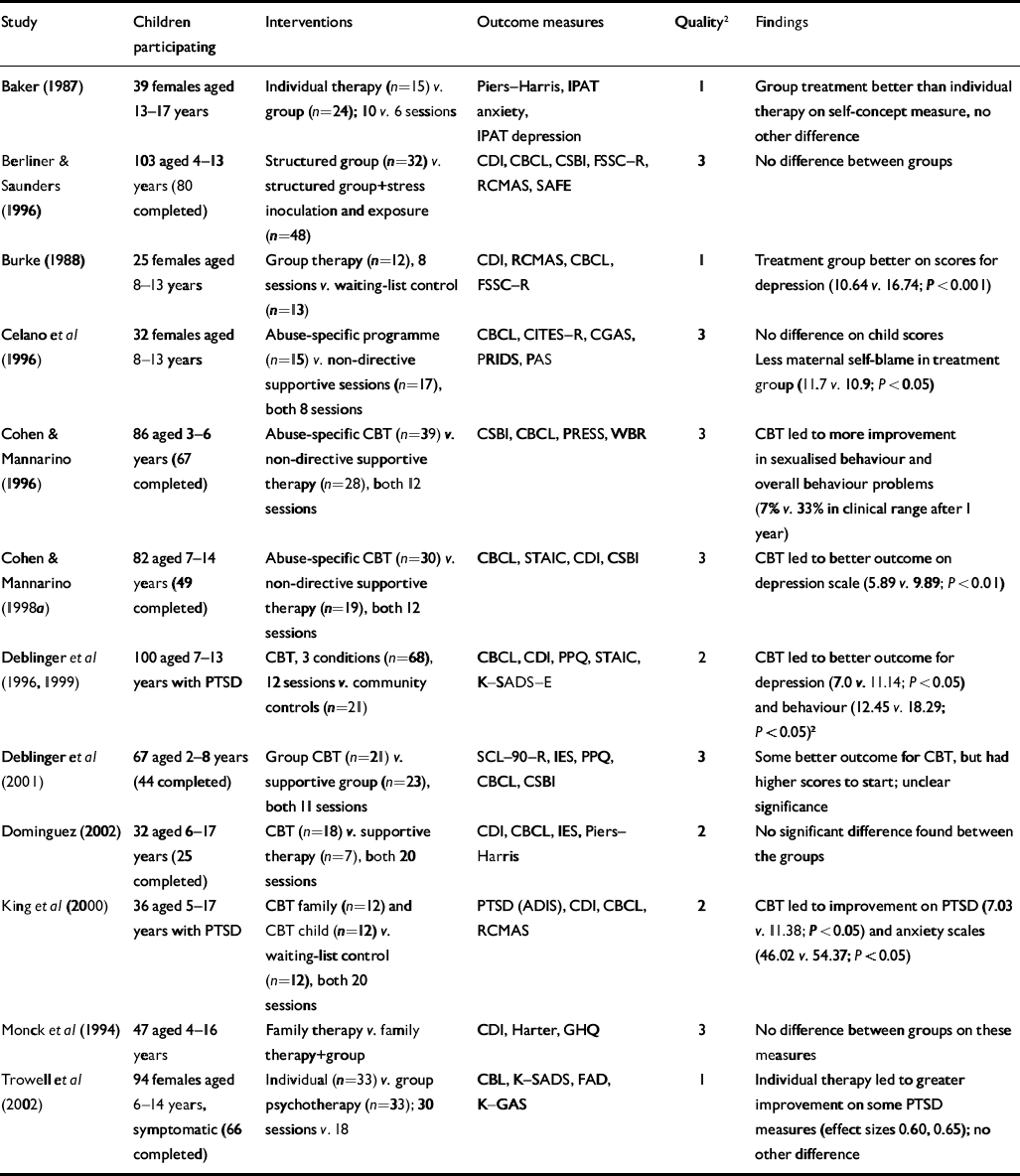
| Study | Children participating | Interventions | Outcome measures | Quality2 | Findings |
|---|---|---|---|---|---|
| Baker (Reference Baker1987) | 39 females aged 13—17 years | Individual therapy (n=15) v. group (n=24); 10 v. 6 sessions | Piers—Harris, IPAT anxiety, IPAT depression | 1 | Group treatment better than individual therapy on self-concept measure, no other difference |
| Berliner & Saunders (Reference Berliner and Saunders1996) | 103 aged 4—13 years (80 completed) | Structured group (n=32) v. structured group+stress inoculation and exposure (n=48) | CDI, CBCL, CSBI, FSSC—R, RCMAS, SAFE | 3 | No difference between groups |
| Burke (Reference Burke1988) | 25 females aged 8—13 years | Group therapy (n=12), 8 sessions v. waiting-list control (n=13) | CDI, RCMAS, CBCL, FSSC—R | 1 | Treatment group better on scores for depression (10.64 v. 16.74; P<0.001) |
| Celano et al (Reference Celano, Hazzard and Webb1996) | 32 females aged 8—13 years | Abuse-specific programme (n=15) v. non-directive supportive sessions (n=17), both 8 sessions | CBCL, CITES—R, CGAS, PRIDS, PAS | 3 | No difference on child scores Less maternal self-blame in treatment group (11.7 v. 10.9; P<0.05) |
| Cohen & Mannarino (Reference Cohen and Mannarino1996) | 86 aged 3—6 years (67 completed) | Abuse-specific CBT (n=39) v. non-directive supportive therapy (n=28), both 12 sessions | CSBI, CBCL, PRESS, WBR | 3 | CBT led to more improvement in sexualised behaviour and overall behaviour problems (7% v. 33% in clinical range after 1 year) |
| Cohen & Mannarino (Reference Cohen and Mannarino1988a ) | 82 aged 7—14 years (49 completed) | Abuse-specific CBT (n=30) v. non-directive supportive therapy (n=19), both 12 sessions | CBCL, STAIC, CDI, CSBI | 3 | CBT led to better outcome on depression scale (5.89 v. 9.89; P<0.01) |
| Deblinger et al (Reference Deblinger, Lippmann and Steer1996, Reference Deblinger, Steer and Lippmann1999) | 100 aged 7—13 years with PTSD | CBT, 3 conditions (n=68), 12 sessions v. community controls (n=21) | CBCL, CDI, PPQ, STAIC, K—SADS—E | 2 | CBT led to better outcome for depression (7.0 v. 11.14; P<0.05) and behaviour (12.45 v. 18.29; P<0.05)2 |
| Deblinger et al (Reference Deblinger, Stauffer and Steer2001) | 67 aged 2—8 years (44 completed) | Group CBT (n=21) v. supportive group (n=23), both 11 sessions | SCL—90—R, IES, PPQ, CBCL, CSBI | 3 | Some better outcome for CBT, but had higher scores to start; unclear significance |
| Dominguez (Reference Dominguez2002) | 32 aged 6—17 years (25 completed) | CBT (n=18) v. supportive therapy (n=7), both 20 sessions | CDI, CBCL, IES, Piers— Harris | 2 | No significant difference found between the groups |
| King et al (Reference King, Tonge and Mullen2000) | 36 aged 5—17 years with PTSD | CBT family (n=12) and CBT child (n=12) v. waiting-list control (n=12), both 20 sessions | PTSD (ADIS), CDI, CBCL, RCMAS | 2 | CBT led to improvement on PTSD (7.03 v. 11.38; P<0.05) and anxiety scales (46.02 v. 54.37; P<0.05) |
| Monck et al (Reference Monck, Bentovim and Goodall1994) | 47 aged 4—16 years | Family therapy v. family therapy+group | CDI, Harter, GHQ | 3 | No difference between groups on these measures |
| Trowell et al (Reference Trowell, Kolvin and Weeramanthri2002) | 94 females aged 6—14 years, symptomatic (66 completed) | Individual (n=33) v. group psychotherapy (n=33); 30 sessions v. 18 | CBL, K—SADS, FAD, K—GAS | 1 | Individual therapy led to greater improvement on some PTSD measures (effect sizes 0.60, 0.65); no other difference |
Methodological quality of studies
The average quality score for the trials was 2.2 (range 1–3). Of the 12 studies included in the review, five described the method of randomisation (Reference Monck, Bentovim and GoodallMonck et al, 1994; Reference Berliner and SaundersBerliner & Saunders, 1996; Cohen & Mannarino, Reference Cohen and Mannarino1996, Reference Cohen and Mannarino1998a ; Reference Deblinger, Stauffer and SteerDeblinger et al, 2001). The remaining studies provided no details of the randomisation procedure. Randomisation was incomplete in one study (Reference Trowell, Kolvin and WeeramanthriTrowell et al, 2002). Only the study by Celano et al (Reference Celano, Hazzard and Webb1996) described the clinician assessment as being masked to treatment group. Masking of assessors was not described by the other studies, although many used parent- and/or child-completed outcome measures. The attrition rate varied from study to study. It was not described at all by Burke (Reference Burke1988). In the other studies it ranged from 10% (Reference Deblinger, Lippmann and SteerDeblinger et al, 1996) to 35% (Reference Celano, Hazzard and WebbCelano et al, 1996) by the end of the treatment period. By the 2-year follow-up the rates were much greater – from 23% (Reference Deblinger, Steer and LippmannDeblinger et al, 1999) to 48% (Reference Berliner and SaundersBerliner & Saunders, 1996).
Efficacy of different treatments
Cognitive-behavioural therapy
The largest number of research trials, and the evidence for best effect, comes for CBT. The most convincing evidence is for work with pre-school children who received 12 sessions of therapy in conjunction with their non-abusing parent or carer (Cohen & Mannarino, Reference Cohen and Mannarino1996, Reference Cohen and Mannarino1997). Children receiving CBT showed significantly greater improvement on measures of behaviour problems such as the Child Behavior Checklist (CBCL; Reference Achenbach and EdelbrockAchenbach & Edelbrock, 1983) and of sexualised behaviour such as the Child Sexual Behavior Inventory (CSBI; Reference Friedrich, Grambsch and DamonFriedrich et al, 1992) compared with a control group of children who received a non-directive course of therapy. These beneficial effects were maintained up to 1 year later, and appear to be clinically as well as statistically significant, with 14% of those in the CBT group scoring in the clinical range on the CSBI and 7% in the clinical range on the Behavior Profile Total on the CBCL, compared with 40% and 33% respectively in the control group. However, a study of an 11-session group format of CBT used with children aged 2–8 years and their non-offending mothers showed smaller benefits over a supportive group (Reference Deblinger, Stauffer and SteerDeblinger et al, 2001). Both groups showed improvements over time, and some small differences were found favouring CBT, but pre-treatment differences that existed between the groups call into question the clinical significance of these small beneficial effects.
There have been more studies of CBT in older children, but the results from these studies are less clear-cut and are not consistent. Berliner & Saunders (Reference Berliner and Saunders1996) found no additional benefit when a specific stress inoculation and graded exposure component was added to a structured group programme. However, a number of acknowledged weaknesses in the design might have hampered this study: the children did not have to be symptomatic and had attended several sessions with a child mental health professional before entering the study, so there is the possibility of ‘floor’ effects (i.e. both groups having low symptom scores), making it difficult to demonstrate a difference between the two groups following treatment. In addition, the active treatment did not differ greatly from the control procedure in this study.
Celano et al (Reference Celano, Hazzard and Webb1996) compared an abuse-specific programme for African American girls with non-directive supportive therapy. Although positive changes were noted in the degree to which mothers and female caretakers blamed themselves, there was no difference between the two groups of children receiving the different forms of therapy. Cohen & Mannarino (Reference Cohen and Mannarino1998a ) also conducted a study comparing CBT with non-directive supportive therapy in children aged 7–14 years. Although children in the CBT group had better outcome with respect to scores for depression – 5.89 for CBT v. 9.89 for the control, measured using the Children's Depression Inventory (Reference KovacsKovacs, 1983) – there was no statistically significant difference for overall behaviour problems or sexualised behaviour. These results were hampered by the large number of children who were either withdrawn from or left the study and the consequently small numbers completing the trial: 49 of 78 children (63%).
Deblinger et al (Reference Deblinger, Lippmann and Steer1996) used a community control group as their comparator. The group receiving CBT had better outcomes than the control group on a variety of measures; the main area of improvement varied depending on who was involved in the treatment (mother only, child only, or mother and child). These relative advantages were maintained at 1-year follow-up (Reference Deblinger, Steer and LippmannDeblinger et al, 1999). In contrast, Dominguez (Reference Dominguez2002) found no difference between a group of children (aged 6–17 years) treated with CBT and those treated with supportive therapy. Both groups were shown to improve over time. However, the small numbers of children completing this trial (25 in total) probably mean that it was insufficiently statistically powered to establish a significant difference between the two groups. King et al (Reference King, Tonge and Mullen2000) found better outcomes for post-traumatic stress disorder (PTSD) symptoms in treated children compared with waiting-list controls, but no difference in outcomes between the different forms in which CBT was delivered (child only or family treatment).
Other theoretical models
There is a dearth of randomised controlled studies investigating the efficacy of therapy based on other theoretical models. Trowell et al (Reference Trowell, Kolvin and Weeramanthri2002) used a psychodynamic model for their therapeutic approach and Baker (Reference Baker1987) used a Rogerian model. However, neither of these studies compared this therapeutic approach with an alternative – comparing instead different methods of delivery of the therapy. Therefore, although both showed improvements in the children treated this cannot necessarily be taken as evidence of efficacy of the treatment approach itself.
Group v. individual therapy
There is little consistent evidence favouring one form of therapy delivery over another. Baker (Reference Baker1987) found that those receiving group therapy did better on measures of self-esteem, but no difference was found on any other measure. Trowell et al (Reference Trowell, Kolvin and Weeramanthri2002) found some improvements on PTSD outcomes favouring individual therapy, but no difference on global ratings of outcome. Finally, Monck et al (Reference Monck, Bentovim and Goodall1994) found no benefit from adding group treatment to the family programme at Great Ormond Street Hospital, London, when objective research measures were used.
Other factors related to efficacy
Although most children and families improve during their participation in a treatment trial, some become worse (Reference Berliner and SaundersBerliner & Saunders, 1996). The studies that were able to demonstrate most clearly the efficacy of treatment were those including only children who were symptomatic – usually with symptoms of PTSD (Reference Cohen and MannarinoCohen & Mannarino, 1996; Reference Deblinger, Lippmann and SteerDeblinger et al, 1996; Reference King, Tonge and MullenKing et al, 2000). A further factor of note is the involvement of a non-abusing parent or carer in the therapy. Most studies (notably all of those demonstrating a positive treatment effect) included a parent or carer in the therapy – as family network therapy (Reference Monck, Bentovim and GoodallMonck et al, 1994); in a supportive role (Reference Trowell, Kolvin and WeeramanthriTrowell et al, 2002); or in the therapy sessions with the child, sometimes beginning with separate sessions, before having combined sessions later in the therapy (Reference Celano, Hazzard and WebbCelano et al, 1996; Reference Cohen and MannarinoCohen & Mannarino, 1996; Reference Deblinger, Lippmann and SteerDeblinger et al, 1996; Reference King, Tonge and MullenKing et al, 2000; Reference Deblinger, Stauffer and SteerDeblinger et al, 2001). Cohen & Mannarino (Reference Cohen and Mannarino1998b ) found that parental support is the strongest family predictor of good outcome for the child, at least for young children. Involving a (non-abusing) parent in therapy can lead to improved parenting skills and increased support for the child (Reference Celano, Hazzard and WebbCelano et al, 1996; Reference Deblinger, Lippmann and SteerDeblinger et al, 1996).
There seems insufficient evidence to draw firm conclusions about the relative benefit of therapy at different stages of children's development. A number of other key issues remain insufficiently addressed. These include the development or adaptation of treatment for children of different ethnic and cultural backgrounds, and also for children with learning or other disabilities.
DISCUSSION
It may be considered inappropriate and unhelpful to ask whether psychological treatment for sexually abused children works or not. This is because sexual abuse is not a condition but a phenomenon that happens to children, and one in which the context it occurs in is important (Reference Finkelhor and BerlinerFinkelhor & Berliner, 1995; Reference Jones and RamchandaniJones & Ramchandani, 1999). These contexts vary widely and produce a variety of effects in children, including an important minority of children who show no effects (at least in the short term). There are, however, certain issues that are specific in sexual abuse. These include responses to the identity of the person responsible for the maltreatment, knowledge about sexually abusing behaviour, issues to do with future safety, sexual behaviour problems, and some of the post-traumatic psychological symptoms which many sexually abused children show. A range of other psychological effects are commonly seen in children who have been sexually abused, which may be related to the sexual abuse itself, or may be related to the context of parent–child attachment problems and family disharmony and violence, within which setting sexual abuse more commonly occurs. These psychological effects include externalising problems, aggression, depression, insecurity and problems with interpersonal relationships, including friendships and attachments. This variety of contexts must be held in mind when considering treatment outcome research, as this kind of research can only point up a proportion of the areas in which help and assistance may be needed.
Main findings of the studies
Conducting therapy with children and their families where the child has been sexually abused is often difficult. Maintaining the therapy is problematic, and so it is encouraging that increasing numbers of studies are now being conducted using randomised methodology. Despite the relative youth of the research field, and the variety of therapeutic methods studied here, several clear findings do emerge from this review.
First, there is evidence that some symptomatic children of pre-school age who have been sexually abused benefit from a form of CBT delivered by trained therapists to them and to their parent or carer (Cohen & Mannarino, Reference Cohen and Mannarino1996, Reference Cohen and Mannarino1997). The CBT programme used in this study included child sessions focused on safety education, assertiveness training, attributions towards the abuse, fear and anxiety, and inappropriate behaviours. Parent sessions addressed belief in the child's abuse, attributions regarding the abuse, providing appropriate support to the child, management of inappropriate behaviours and management of the child's fear and anxiety. Sessions used techniques such as cognitive reframing, thought stopping, positive imagery, contingency reinforcement programmes, parent management training and problem-solving. There is something specifically beneficial about the therapy offered as it leads to greater improvement than the non-directive comparison therapy used. Studies of younger children do require replication, however, as a study of young children (aged 2–8 years) who were not necessarily symptomatic did not show the same degree of specific benefit from CBT (Reference Deblinger, Stauffer and SteerDeblinger et al, 2001). Second, the balance of evidence suggests that older children and adolescents may also benefit from a similar format of CBT. The evidence is less strong for this group than for pre-school children. However, there remains more convincing evidence available for this form of therapy than for other competing therapeutic methods. Third, children who are symptomatic (with symptoms of PTSD or behavioural problems in these studies) are more likely to demonstrate benefit from therapy. Finally, the involvement of a non-abusing parent or carer in therapy is associated with beneficial outcomes for the child. This is especially true for younger children.
Methodological considerations
There are a number of limitations that should be considered when interpreting the results of this study. As with any systematic review there is a possibility of publication bias, whereby studies that report positive outcomes are more likely to be published than those with negative outcomes. We have taken steps to avoid this by searching for unpublished studies and by contacting researchers within the field. By these methods we identified three PhD theses (Reference BakerBaker, 1987; Reference BurkeBurke, 1988; Reference DominguezDominguez, 2002) and one trial that was still in progress (Reference Cohen and DeblingerCohen & Deblinger, 2003).
The overall scores on the Jadad quality scale (Reference Jadad, Moore and CarrollJadad et al, 1996) were low, but higher than those for psychological treatment trials in some other fields, such as children's sleep problems (Reference Ramchandani, Wiggs and WebbRamchandani et al, 2000). This is in part due to the problems of maintaining masking when psychological treatments are being assessed in trials, but also because the method sections of some of the studies were poorly reported.
Until more randomised studies have been conducted in this field, several problems will remain. First, few studies have been replicated in different settings. There is a need for further research to be conducted in different countries with different health and child protection systems. Related to this is the wider issue of generalisability, estimating the extent to which the findings can be extrapolated to a different population - not just because of differences between groups of children in various settings, but also because participants in research studies tend to respond better to treatment than those offered the same treatment outside a clinical trial. Children recruited to these studies are different in some ways from those seen in everyday practice. Children with significant learning disabilities, substance misuse problems and severe mental illness (psychotic illnesses) were excluded from most of the research trials, and so these findings cannot be reliably applied to them. Very young pre-school children are also under-represented in the research base – and they are a group at significant risk of abuse. Related to generalisability is the difficulty in predicting which children will improve with treatment, and which might even do worse (Reference Berliner, Chiccetti and TothBerliner, 1997; Reference Berliner and SaundersBerliner & Saunders, 1996). Third, it remains difficult to identify confidently the components of treatment that are particularly effective. Until there are many more research studies, involving larger numbers of children, it will be difficult to do this. The strategy used by Cohen & Mannarino (Reference Cohen and Mannarino1996, Reference Cohen and Mannarino1998a ) of comparing CBT with non-directive therapy moves us in this direction, indicating as it does that some of the cognitive–behavioural components are effective, rather than just the process of a therapeutic encounter itself.
Many of these studies have been relatively brief, with short-term follow-up; we do not know therefore if the treatments reduce the long-term problems associated with sexual abuse. The possibility of ‘sleeper’ effects (whereby children are asymptomatic immediately after the abuse, but present with symptoms at a later developmental stage such as adolescence) has been considered in previous research (Reference Sharland, Seal and CroucherSharland et al, 1996; Reference Trowell, Kolvin and WeeramanthriTrowell et al, 2002), and the current research cannot shed light on these longer-term difficulties. Research on adults who experienced sexual abuse as children has not, as yet, provided answers to these questions either. In a similar vein, the present research can only inform us about symptom measures, as these are the outcomes that have been used. Although these are the most likely outcomes to demonstrate a change in response to therapy directed at symptoms, there is a question as to whether they are the most salient ones. It might be that more generally conceptualised measures of adjustment (e.g. capacity for friendships, relationships with siblings and other family, further abuse, being abusive or bullying, educational adjustment) provide a broader perspective on personality development, on the principle that it is this aspect of adult outcome that is particularly damaged by child sexual abuse. Similarly, a purely trauma-focused model of therapy may be too narrow for the experience of child sexual abuse, and does not fully address the range and variety of difficulties experienced in both the short and longer terms.
Implications for the treatment of individual children and their families
We now move to consider the implications of these findings for the treatment of individual children, and also for the planning of services for children. Only the key points will be considered.
Treatment of children who have experienced sexual abuse has to occur within the context of the child's circumstances, often including other coexisting difficulties. In particular, the first priority will be the need for safety from further abuse. If resources are limited, treatment efforts should be focused on symptomatic children first, partly because of their burden of suffering, but also because the evidence for non-symptomatic children improving in other ways with treatment is not strong. Longer-term sleeper effects in those children who are asymptomatic soon after abuse has occurred are of concern, but with the current state of knowledge it seems appropriate to target available treatment resources at symptomatic children. This apparent differential response to treatment of asymptomatic and symptomatic children requires further research investigation.
Non-abusing parents and carers should be involved wherever this is possible, particularly when younger children have been abused. A sensitive developmental approach will dictate how the child and non-abusing parent or carer are seen – whether together in sessions, separately, or some combination of these. Parental (and particularly maternal) support of the child is crucial, and can be bolstered significantly by professional therapeutic input.
The research evidence points strongly to CBT being the first-line treatment for this group of children and their families, where it is available. In this we are in agreement with previous reviews (Reference Finkelhor and BerlinerFinkelhor & Berliner, 1995; Reference Berliner, Chiccetti and TothBerliner, 1997; Reference StevensonStevenson, 1999; Reference King, Tonge and MullenKing et al, 2000). However, the evidence at present is not strong enough to preclude using or recommending other treatment approaches, either where specific factors suggest alternative approaches, or where CBT has failed or is unavailable. A wide range of different treatments are currently used for other kinds of traumatic states in children (Reference Cohen, Mannarino and RogalCohen et al, 2001). Particular circumstances that might require the use of other treatment approaches include the treatment of children with comrobid difficulties – particularly difficult behavioural problems or significant sexual behaviour problems – and the treatment of very young children. However, there is a challenge here to the many treatments offered to these children: they should demonstrate their effectiveness and, more importantly, demonstrate that they do no harm.
We wish to highlight two other relevant clinical issues. First, there needs to be a focus on outreach and active methods of keeping children and families involved with therapeutic treatment. The attrition rates in the studies reviewed here are high, and are likely to be higher in real-life treatment. This is in common with treatment for other forms of child maltreatment (Reference Wolfe, Melton and BarryWolfe, 1995). Second, clinicians need to be alert for persisting emotional disorder, particularly depression (Reference Tebbutt, Swanston and OatesTebbutt et al, 1997). An assessment of comorbid psychiatric problems should be undertaken, and referral to psychiatric services made if appropriate.
Implications for planning services for a population
Children who have experienced sexual abuse will usually come to professional attention first through child protection services – the exact mechanisms depending on the country in question. However, sexual abuse should not be thought of as just a social services and child protection problem. As we have stressed, this group of children often had multiple problems, including significant psychiatric difficulties, and so a multi-disciplinary approach to planning services is crucial. We have previously suggested that all children who have experienced this type of abuse might benefit from a psycho-educational intervention (Reference Jones and RamchandaniJones & Ramchandani, 1999), incorporating some of the elements of the treatment packages tested in many of the studies reviewed here, such as addressing issues of responsibility for the abuse, knowledge about sexually abusive behaviour, and future safety. This type of intervention could successfully be undertaken by the professionals responsible for the initial intervention following the recognition of abuse (the social worker in the UK context). Therapies requiring further training and expertise, including the cognitive–behavioural therapies, might require either supervision from specialist child and adolescent mental health services or delivery by them. Delivery of a service to any area will therefore require an appropriate number of professionals to have the training and skills to offer CBT to this vulnerable group of children and adolescents. However, this alone will not suffice, as not everyone will respond to CBT, so a multi-modal therapeutic approach will be necessary (Reference Berliner, Chiccetti and TothBerliner, 1997).
Services will need to orient themselves to involve the non-abusing parent: this will require a deliberate targeting of this group with support and treatment services. Active approaches of this kind must respect individual choice, but will need to address obstacles to care by considering transport issues, child care (e.g. crèches), stigma, and the possibility of meetings in other settings (e.g. community centres). A more proactive approach to outreach and maintaining people within treatment is required. Finally, services for this group of children and families need to have a long-term orientation. A service offering only shortterm, symptom-driven packages of care will miss children who present at later dates. That is not to say that these children need to remain in therapy for long periods (some might do, but the evidence does not suggest that the majority would benefit from this); it is more to suggest that a significant group of these children may experience enduring problems such as depression or the later onset of problems.
Child sexual abuse can be a horrific experience in the life of a child. Increasingly, experience supports the contention that therapeutic treatments may help such children and their families, but services will have to be more clearly oriented to their needs.
Clinical Implications and Limitations
CLINICAL IMPLICATIONS
-
▪ Cognitive-behavioural therapy for children who are symptomatic has the strongest research evidence of efficacy.
-
▪ Involving a non-abusing parent in therapy is associated with an improved outcome for the child.
-
▪ The context in which each child has been abused must be considered when planning treatment.
LIMITATIONS
-
▪ Relatively few studies have been conducted, and replication of these results in other settings is needed.
-
▪ Children with learning disabilities were usually excluded from trials and so the generalisability of these findings to groups with such disabilities is questionable.
-
▪ The possibility of positive publication bias must always be considered in a systematic review.
Acknowledgements
Earlier work that informed this paper was funded by the Department of. Health (Social Services Inspectorate), London; P.R. has a training fellowship. in Health Services Research funded by the Medical Research Council, UK.




eLetters
No eLetters have been published for this article.