


1. Introduction
The rapid proliferation of generative artificial intelligence has transcended mere digital transformation and, in turn, has fundamentally disrupted the socio-legal frameworks that have previously underpinned state sovereignty and regulatory authority (Scassa, Reference Scassa2023, pp. 214–29). Viewing this phenomenon from a law and society perspective, the AI technological shift is not merely a matter of technical regulation but also represents a profound reconfiguration of the relation between transnational corporate influence and power, and the territorial logic of nation-states (Hydén, Reference Hydén and Přibáň2020, pp. 357–69). Consequently, the concentration of technical experts within a few global entities challenges the state’s capacity to maintain a public legal order, requiring a critical analysis of how AI co-produces novel norms of governance that would bypass the traditional legislative boundaries (Zuboff, Reference Zuboff2018, p. 9; Brown, Reference Brown2021, pp. 208–34).
Historically, mastery of disruptive technology—from maritime navigation during the Age of Exploration to today’s digital infrastructure and AI-driven paradigm—has served as the primary catalyst for reconfiguring legal sovereignty and global power (Akilli, Reference Akilli and Akilli2025, pp. 53–93). This trajectory arguably illustrates that sovereign authority has become increasingly contingent on a state’s capacity to regulate and internalise technical know-how, a dynamic that can now be seen as manifested in the pursuit of “digital sovereignty” within the AI-driven ecosystem. For Türkiye, this historical framing is critical because, as a state navigating the transition from an adopter of Western technologies into a strategic innovator, its National Artificial Intelligence Strategy 2021–2025 represents an important effort of asserting regulatory autonomy against the “technopolar” dominance of transnational tech-corporate entities (Aksoy, Reference Aksoy2025, p. 820; Özlü, Reference Özlü2025, pp. 151–62).
In this context, international relations have undergone a profound transformation as a result of technology being the foundation of global power and politics. A state’s influence is today significantly determined by its ability to develop technology rather than by conventional measures of power such as territorial size or military strength. AI, widely seen as the defining feature of the Fourth Industrial Revolution and a revolutionary technology, is set to profoundly reshape the global distribution of power. Early adopters, whether governmental or non-governmental actors, are expected to acquire substantial economic, strategic, and geopolitical advantages that can easily convert into global influence (Ozdemir, Reference Ozdemir2021).
Türkiye, aspiring to remain a prominent global actor, has extended this strategic vision into the AI domain. This article examines how states navigate the balance between innovation and control in the context of AI governance through the lens of a case study of Türkiye. The article first establishes a theoretical framework in Section 2, which will help in understanding AI sovereignty and the tension between innovation and control in AI governance. Afterwards, Section 3 provides an overview of the global landscape of AI regulatory frameworks, giving particular attention to the European Union’s Artificial Intelligence Act (EU AI Act) as a benchmark since it is the first comprehensive AI regulation. Sections 4 and 5 then proceed by presenting a case study of Türkiye’s approach to AI governance, examining its strategic priorities, regulatory framework, and its positioning in the global AI landscape. Section 6 then analyses how Türkiye navigates the balance between innovation and control in its AI governance strategy. This article argues that Türkiye demonstrates how a middle power can assert regulatory autonomy and AI sovereignty by carefully balancing the innovation–control asymmetry, despite facing structural constraints arising from limited control over critical AI infrastructure, underscoring the distinction between technological advancement and full regulatory autonomy.
2. Theoretical framework: AI sovereignty and regulatory autonomy
The concept of sovereignty has evolved significantly since its classical formulation, requiring adaptation to novel technological, economic, and political realities (Krasner, Reference Krasner1999, pp. 3–25). The emergence of AI as a transformative technology has prompted yet another reconsideration of sovereignty, particularly as it relates to states’ capacity to govern tech development and deployment within their respective territories (Floridi, Reference Floridi2020, pp. 371–2). This section establishes a theoretical framework for understanding AI sovereignty and the inherent tension between innovation and control that characterises AI governance efforts.
2.1. Conceptualising AI sovereignty
AI sovereignty can be understood as a specific dimension in the broader concept of digital sovereignty (Mügge, Reference Mügge2024, p. 2200; Falkner et al., Reference Falkner, Heidebrecht, Obendiek and Seidl2024, p. 2102). Mügge defines digital sovereignty as “the need for control of the digital on the physical layer (infrastructure, devices), the code layer (standards, rules, design), and the information layer (content, data)” (Mügge, Reference Mügge2024, p. 2209). In the context of AI, sovereignty encompasses a state’s ability to exercise meaningful control over AI technologies that affect its territory and citizens (Roberts, Reference Roberts2024, p. 3; Truby et al., Reference Truby, Dahdal, Brown and Ibrahim2026, p. 4). This includes the development, deployment, and governance of AI technologies. The state’s exercise of control usually extends across multiple areas—AI infrastructure like data centres, data resources, regulatory frameworks, and the development of human capital resources like computer engineers (Mügge, Reference Mügge2024, pp. 2206–11; Truby et al., Reference Truby, Dahdal, Brown and Ibrahim2026, p. 4).
The National Artificial Intelligence Strategy (2021–2025) of Türkiye situates digital sovereignty within the broader tension between reliance on foreign technology providers, including Big Tech firms that develop AI using large-scale data, and the state’s ambition to strengthen domestic capabilities (Digital Transformation Office, 2021).
However, conceptions of AI sovereignty should not be deemed as monolithic, necessitating a more nuanced understanding of varying theoretical approaches ranging from normative to descriptive and that emphasise different aspects of sovereign control. Roberts distinguishes between descriptive and normative approaches to digital sovereignty, a distinction that can be extended to AI sovereignty and applied to Türkiye’s context (Roberts, Reference Roberts2024, p. 871). For states like Türkiye, this framework is crucial for analysing how its AI strategy balances the imperative for innovation with the need for restrictions and the pursuit of broader public policy objectives. Specifically, Türkiye’s National Artificial Intelligence Strategy 2021–2025 can be examined through a descriptive lens to understand the mechanisms of power it asserts over AI technologies, while a normative perspective evaluates the legitimacy and rationale underpinning these controls (Digital Transformation Office, 2021; Roberts, Reference Roberts2024, p. 4). While the descriptive approach focuses on how power is being asserted over AI technologies, the normative approach centres on the legitimacy of the control, focusing on authority rather than mere power (Roberts, Reference Roberts2024, p. 4). This distinction between the normative and descriptive approaches is crucial to evaluate AI governance frameworks, particularly as it applies to Türkiye, as this analytical lens shifts the focus from whether states can control AI tech to whether they should and on what rationale.
AI is a complex global governance challenge (Tallberg et al., Reference Tallberg, Erman, Furendal, Geith, Klamberg and Lundgren2023, pp. 4–7). Mügge, when analysing the EU AI policy, further elaborates on the conceptual complexity of AI governance by identifying three key dimensions of AI sovereignty that entail political choices: the subject dimension (for whom/from whom sovereignty is sought), the objective dimension (competitive versus non-competitive aims), and the beneficiaries’ dimension (scope of intended beneficiaries) (Mügge, Reference Mügge2024, p. 2201). Each dimension represents a spectrum of possible approaches rather than a binary choice, allowing for nuanced analysis of how states conceptualise and pursue AI sovereignty.
The subject dimension contrasts traditional state-centric conceptions of sovereignty, which pit countries or jurisdictions, one against each other, with citizen-centric conceptions that emphasise empowering citizens vis-à-vis powerful Big Tech (Mügge, Reference Mügge2024, p. 2201). The objective dimension distinguishes between competitive approaches that seek to boost a state’s position in a global “AI race” and non-competitive approaches that aim to emancipate policymaking from such competitive rationales (Mügge, Reference Mügge2024, p. 2201). The beneficiaries dimension contrasts narrowly national and regional approaches with those that consider global impacts and responsibilities (Mügge, Reference Mügge2024, p. 2201).
This study employs Mügge’s three dimensions of AI sovereignty to critically assess Türkiye’s strategic choices within its National Artificial Intelligence Strategy 2021–2025 (Digital Transformation Office, 2021; Mügge, Reference Mügge2024, p. 2201). By applying this framework, this article aims to illustrate how Türkiye navigates the inherent tension between fostering domestic AI capabilities and managing its reliance on transnational tech providers, thereby testing the extent to which its strategy demonstrates a coherent and actionable vision towards regulatory autonomy amidst global AI tech interdependence.
2.2. The innovation-control tension in AI governance
At the heart of AI sovereignty lies a fundamental tension between innovation imperatives and control mechanisms (Chan, Papyshev and Yarime, Reference Chan, Papyshev and Yarime2024, pp. 3–5). The tension reflects the dual nature of AI as concurrently an engine of economic growth through tech advancement and also a source of potentially disruptive risks (Wang and Wu, Reference Wang and Wu2024, p. 397). States have to be able to navigate this tension as they develop governance frameworks for AI, balancing the desire to foster innovation with the need to maintain sufficient control over AI development and deployment (Smuha, Reference Smuha2021, p. 59; Zaidan and Ibrahim, Reference Zaidan and Ibrahim2024, p. 1121).
The innovation imperative in AI governance emanates from AI’s transformative potential for economic competitiveness, scientific advancement, and social welfare (Lee, Reference Lee2018, pp. 14–27). States recognise that lagging in AI development could mean significant adverse consequences for economic growth and geopolitical influence (Pavel et al., Reference Pavel, Ke, Spirtas, Ryseff, Sabbag, Smith, Scholl and Lumpkin2023). It is a recognition of AI’s influence that fuelled what scholars describe as a global “AI race,” where states compete to establish AI leadership in research, development, and commercialisation (Smuha, Reference Smuha2021, p. 63). In this competitive landscape, states feel the pressure to create favourable conditions for AI innovations, including minimal, sceptical, or targeted AI regulation, substantial public and private investment, and supportive policies for talent development and retention (Castro and McLaughlin, Reference Castro and McLaughlin2019). There may be a tendency to favour the precautionary principle, favouring innovation while managing risks, rather than the precautionary principle, erring on caution when innovation poses serious risks (Bal and Gill, Reference Bal and Gill2020, p. 13).
At the same time, states face growing pressure to establish what is called control mechanisms for AI tech to be able to address concerns related to privacy, security, ethics, and potential socioeconomic disruptions (European Commission, 2024). These concerns have intensified over the years as AI systems become more powerful and pervasive, raising questions about algorithmic bias, data protection, autonomous weapons, labour market disruption, and the concentration of power in the hands of a few tech companies (Kind, Reference Kind2020). In response, states have begun to develop regulatory frameworks, ethical guidelines, and governance mechanisms to ensure that AI development aligns with societal values and interests (Zaidan and Ibrahim, Reference Zaidan and Ibrahim2024, p. 7; Ponomarov, Reference Ponomarov2025). In this regard, there are competing approaches among states with some like the EU states adopting the precautionary principle (Csernatoni, Reference Csernatoni2025; Mazur, Reference Mazur2019, pp. 3–18), while others like China adopt the precautionary or innovation principle (Hine and Floridi, Reference Hine and Floridi2024, pp. 257–78).
The tension between innovation and control is not merely a technical or administrative challenge but a fundamental question of how states conceptualise and exercise sovereignty in the digital age (Shairgojri, Reference Shairgojri2022, p. 16). Different states navigate this tension in different ways, reflecting their unique political, economic, and cultural contexts (Chan, Papyshev and Yarime, Reference Chan, Papyshev and Yarime2024, pp. 3–5). Chan, Papyshev, and Yarime identify two broad approaches to AI regulation that embody different responses to the innovation-control tension: top-down command and control approaches exemplified by China and the EU, and the bottom-up self-regulatory approaches exemplified by Russia and the United Kingdom (Chan, Papyshev and Yarime, Reference Chan, Papyshev and Yarime2024, pp. 3–5). These approaches reflect different priorities and assumptions about the relationship between innovation and regulation.
2.3. Sovereignty implications of AI technologies
The emergence of AI as a transformative tech has profound implications for traditional conceptions of state sovereignty (Floridi, Reference Floridi2020, pp. 371–3). These implications stem from several distinctive characteristics of AI technologies: their cross-border nature, the concentration of technical expertise and resources in a handful of global corporations, and the potential of AI to transform virtually every sector of society (Ganne et al., Reference Ganne, Locks and Xu2024).
The cross-border nature of AI tech challenges territorial conceptions of sovereignty by creating governance gaps and jurisdictional ambiguities (Ghoshal, Reference Ghoshal2025, pp. 186–94; Bradford, Reference Bradford2020, pp. 131–45). AI systems often operate across multiple jurisdictions, with development, deployment, and impacts occurring in different countries (Bradford, Reference Bradford2020, pp. 131–45; World Bank, 2024). Data flows essential for AI training and operation similarly transcend national boundaries, creating challenges for data localisation and protection regimes, and what Ishkhanyan calls the “sovereignty-internationalism paradox” to AI governance (Ishkhanyan, Reference Ishkhanyan2025, p. 5; Chander and Lê, Reference Chander and Lê2015), p. 677). These characteristics limit the effectiveness of purely national approaches to AI governance and create pressure for international coordination and harmonisation (Ishkhanyan, Reference Ishkhanyan2025, p. 7; Smuha, Reference Smuha2021, p. 60).
The concentration of technical expertise and resources in a handful of global corporations, primarily based in the United States and China, has created what Roberts describes as a firm of “quasi sovereigns” over AI (Roberts, Reference Roberts2024, pp. 6–8). These corporations exercise significant control over AI development, deployment, and governance, often operating with limited public oversight or accountability (Roberts, Reference Roberts2024, pp. 6–8). This private-sector quasi-sovereignty exists alongside traditional state authority, creating complex governance arrangements that blur the boundaries between public and private power (Pasquale, Reference Pasquale2015, pp. 140–68; Graz, Reference Graz and Graz2019, pp. 24–53; Bloch-Wehba, Reference Bloch-Wehba2019, p. 27; Srivastava and Bullock, Reference Srivastava and Bullock2024, p. 8). States must navigate these arrangements as they seek to assert control and sovereignty over AI technologies, often finding themselves in asymmetric relationships with powerful tech companies (Roberts, Reference Roberts2024, pp. 2–4).
The potential of AI to transform virtually every sector of society further complicates sovereignty considerations by expanding the scope of governance challenges (Rawas, Reference Rawas2024, p. 6; Krishna, Reference Krishna2024, p. 5). AI applications in areas such as healthcare, finance, transport, and defence raise distinct regulatory issues that may require sector-specific approaches (Montagnani et al., Reference Montagnani, Najjar and Davola2024, p. 13; Bertolini, Reference Bertolini2020). The pervasive nature of AI also creates challenges for regulatory capacity and expertise, as states must develop governance frameworks that address a wide range of technical, ethical, and social considerations (UNESCO, 2021; Digital Transformation Office, 2021). These challenges are particularly acute for states with limited resources and technical capabilities, potentially exacerbating existing power asymmetries in the global tech order (Arslan, Reference Arslan2024).
These sovereignty implications have prompted states like Türkiye to develop new and flexible approaches to AI governance that seek to assert control while acknowledging the limitations of traditional sovereignty in this domain (Arslan, Reference Arslan2024; Zaidan and Ibrahim, Reference Zaidan and Ibrahim2024, p. 11; Ponomarov, Reference Ponomarov2025). These approaches include efforts to build domestic AI capabilities, establish regulatory frameworks that reflect national priorities and values, and engage in international cooperation to shape global standards and norms (Digital Transformation Office, 2021). The specific strategies states adopt reflect their unique positions in the global tech order, their domestic governance priorities, and their visions for the role of AI in society (Arslan, Reference Arslan2024). Within the Turkish legal system, sovereign authority increasingly manifests through the assertion of prescriptive and adjudicative jurisdiction over digital activities (Arslan, Reference Arslan2024; Ponomarov, Reference Ponomarov2025). This manifestation is grounded in the constitutional boundaries of the 1982 Constitution, particularly Article 13, which mandates that restrictions on fundamental rights in the digital sphere—such as privacy and freedom of expression—must be strictly prescribed by law; and Article 20, which recognises the right to protect personal data (Muratoğulları, Reference Muratoğulları, Eroğlu, Finger and Köksal2024, p. 168; Güneş, Reference Güneş2025, pp. 12–21). Administrative authority over AI and other digital technologies is further consolidated through presidential decrees and the regulatory oversight of bodies like the Digital Transformation Office, which exercise delegated powers to enforce national standards and ensure that algorithmic systems operate with the established public law framework and constitutional ecosystem (Aksoy, Reference Aksoy2025, p. 815). As such, Türkiye’s pursuit of AI sovereignty is not merely a legal imperative to maintain its constitutional integrity and administrative control against extraterritorial influence of transnational tech providers (Akilli, Reference Akilli and Akilli2025, pp. 53–93).
3. Global landscape of AI regulatory frameworks: a comparative analysis
The emergence of AI as a transformative tech has prompted jurisdictions worldwide to develop regulatory frameworks that balance innovation with risk mitigation, while also creating tension between the technology neutral approach to regulation and the specific technological features of AI (Cordella and Gualdi, Reference Cordella and Gualdi2024, p. 8). The global governance of AI has bifurcated into distinct regulatory archetypes, each reflecting divergent socio-legal priorities and visions of digital sovereignty and AI influence. While the EU has pioneered a comprehensive, risk-based legislative model through the EU AI Act (European Commission, 2024), other jurisdictions have opted for more agile or sectoral approaches (Tarafder and Vadlamani, Reference Tarafder and Vadlamani2024, p. 49; Musch et al., Reference Musch, Borrelli and Kerrigan2023; Feldstein, Reference Feldstein2023, pp. 1049–66; Siegmann and Anderljung, Reference Siegmann and Anderljung2022). The EU AI Act establishes a prescriptive global benchmark by categorising AI systems into four risk tiers—unacceptable, high, transparency, and minimal—imposing stringent compliance obligations on high-risk applications to safeguard fundamental rights (Truby et al., Reference Truby, Brown, Ibrahim and Parellada2022, pp. 270–94; Paul, Reference Paul2024, pp. 1065–82; Ebers, Reference Ebers2025, pp. 684–703). In contrast, the United States has transitioned towards a model that prioritises the removal of regulatory barriers to encourage AI innovation among leading AI companies and thereby sustain global AI dominance, relying on a decentralised sectoral framework rather than a unified federal legislation (White House, 2025a; Zhao et al., Reference Zhao, Gunn, Christ, Fairoze, Fabrega, Carlini, Garg and Hong2025). China, on the other hand, represents a third paradigm, characterised by “regulatory agility,” where the state enacts targeted decrees to balance rapid innovation with social stability and “core socialist values” (Xiao, Reference Xiao2025, p. 18; Zhang, Reference Zhang2025, p. 120).
A comparative analysis reveals several significant distinctions. First, while both the EU and Chinese frameworks are extensive in scope, they differ in their structural approach—the EU favouring regulatory certainty through a unified instrument and China prioritising regulatory agility through interconnected measures (Roberts et al., Reference Roberts, Cowls, Hine, Morley, Wang, Taddeo and Floridi2022, p. 85; Xiao, Reference Xiao2025, p. 15). Second, the two approaches diverge in their underlying values and objectives, with the EU emphasising fundamental rights protection and China balancing tech advancements with social stability and state security concerns (Roberts et al., Reference Roberts, Cowls, Hine, Morley, Wang, Taddeo and Floridi2022, p. 85). Third, the enforcement mechanisms differ substantially, reflecting China’s more centralised governance approach with lax enforcement compared to the EU’s federated model with effective enforcement (Chun et al., Reference Chun, Witt and Elkins2024, p. 52).
Türkiye’s regulatory aspirations demonstrate a strategic alignment with the EU’s normative approach while maintaining the flexibility characteristic of emerging tech powers, an approach that carefully weighs the innovation-control tension. Unlike the EU’s singular, omnibus instrument, however, Türkiye’s approach seeks to internalise international standards through a mix of presidential decrees and sectoral guidelines (Digital Transformation Office, 2021; Aksoy, Reference Aksoy2025, p. 813).
Türkiye’s sectoral guidelines are somewhat reminiscent of the UK and Swiss approaches. The UK has deliberately chosen a flexible framework over comprehensive regulation, establishing a “principles based framework” for AI regulation over specific existing sectors, and thereby allowing regulators to interpret and apply the AI regulation within their respective domains (UK Government, 2023; Hughes et al., Reference Hughes, Dwivedi, Malik, Shawosh, Albashrawi, Jeon, Dutot and Appanderanda2025, p. 493; Ponomarov, Reference Ponomarov2025; Nassr, Reference Nassr, Moretti, Rinaldi and Schlosser2024, p. 99). This non-statutory approach to AI regulation is designed to offer “critical adaptability” with the ability to keep pace with rapid and uncertain advances in AI tech (UK Government, 2023; Martínez, Reference Martínez2025, p. 243; Marsden, Reference Marsden, Hacker, Hammer, Engel and Mittelstadt2025). Switzerland has similarly adopted a sectoral approach to AI regulation, opting for a framework that integrates AI considerations into existing laws rather than creating a standalone regulatory regime (Swiss Government, 2025). This strategy reflects Switzerland’s traditional preference for regulatory precision and targeted interventions over broad legislative frameworks (DSI Strategy Lab, 2021). The sectoral approach, favouring the precautionary principle or what the UK government calls a “pro-innovation” approach (UK Government, 2023), offers certain advantages over comprehensive regulation, including potentially lower compliance burdens on innovators and more precisely tailored interventions, while allowing for more rapid regulatory responses to emerging risks. However, they also present challenges, including potential regulatory gaps, increased compliance complexity for companies operating across multiple domains, and inconsistencies in how similar risks are addressed across different sectors.
While comprehensive and sectoral regulatory approaches have gained traction in many jurisdictions, some countries like Japan have opted for an even more flexible or “soft law” model, based primarily on voluntary guidelines and industry self-regulation (Lund et al., Reference Lund, Orhan, Mannuru, Bevara, Porter, Vinaih and Bhaskara2025, p. 3648; Sharma, Reference Sharma, Kuila and Kumar2025, pp. 243–83; Moreira, Reference Moreira2025). Japan exemplifies this voluntary approach, having developed a framework that emphasises voluntary compliance, industry-led governance, and technology neutrality, while aligning with the OECD framework (Expert Group, 2021; Moreira, Reference Moreira2025). Türkiye’s approach is certainly not similar to the Japanese soft law model. While Türkiye has not yet fully codified a tiered risk-based classification equivalent to the EU AI Act, its draft legislative measures do increasingly reflect a “Brussels Effect,” mirroring the EU’s emphasis on transparency and data protection to ensure interoperability with the European market (Zaidan and Ibrahim, Reference Zaidan and Ibrahim2024, p. 7). However, Türkiye does diverge from the EU’s precautionary rigidity by emphasising “technological sovereignty”—a goal that aligns more closely with China’s focus on domestic capacity building and the US’s innovation-centric approach (Akilli, Reference Akilli and Akilli2025, pp. 53–93; Özlü, Reference Özlü2025, pp. 151–62). This hybrid approach by Türkiye demonstrates its attempt to navigate a middle path: adopting risk-based principles to maintain legal legitimacy while pursuing the innovative agility necessary to compete in the global AI race.
It is worth noting that, as AI continues to evolve as a transformative global tech, distinct patterns are indeed emerging in the international AI governance landscape despite the above-mentioned archetypal differences. These patterns reflect both convergence around certain core principles and divergence in regulatory approaches, implementation mechanisms, and the underlying values. First, there is a growing consensus that AI regulation is necessary (Judge et al., Reference Judge, Nitzberg and Russell2025, p. 90; Ahmad et al., Reference Ahmad, Ali and Yussof2025, p. 155). Second, there is increasing regulatory alignment around certain core ethical principles for AI development and deployment, including transparency, cross-border data flow, fairness, accountability, privacy, and human oversight (Bolgouras et al., Reference Bolgouras, Zarras, Leka, Stylianou, Farao and Xenakis2025, p. 5075). Third, there is growing recognition of the need for specific governance mechanisms for general-purpose AI models that may present systemic risks (Gstrein et al., Reference Gstrein, Haleem and Zwitter2024, p.17; Uuk et al., Reference Uuk, Brouwer, Schreier, Dreksler, Pulignano and Bommasani2025, p. 55).
Despite these areas of alignment, significant divergence persists in global AI governance. The most fundamental divergence concerns the appropriate level of government intervention, with approaches ranging from the EU’s comprehensive regulation to Japan’s emphasis on voluntary guidelines, as discussed earlier. Implementation mechanisms also differ substantially across jurisdictions, reflecting broader governance philosophies and administrative structures. Perhaps most fundamentally, regulatory approaches diverge in their underlying values and priorities, with the EU emphasising fundamental rights protection, the United States prioritising innovation and market-driven solutions, and China balancing tech advancement and social stability and state security concerns.
Recognising the inherently global nature of AI development and deployment, numerous international cooperation initiatives have emerged to promote coordination and alignment in AI governance like the Global Partnership on AI, G7 Hiroshima AI Process, OECD AI Policy, ASEAN AI Guide, the UN High-Level Advisory Body on AI, World Economic Forum’s AI Governance Alliance, and AI for Good (More et al., Reference More, Shah, Shelke, Behare and Bajraktari2025, pp. 163–86). These international initiatives operate at various levels of formality and inclusivity, from binding multilateral agreements to voluntary industry commitments. Despite these numerous cooperation initiatives, significant challenges remain in achieving effective global coordination on AI governance, including geopolitical tensions, competing regulatory philosophies, and rapid pace of tech development (Batool et al., Reference Batool, Zowghi and Bano2025, pp. 3265–79).
As AI governance frameworks continue to evolve, questions of digital sovereignty and jurisdictional authority have become increasingly prominent, especially for middle powers like Türkiye. The extraterritorial applications of domestic regulations represent one approach to addressing these challenges, though it raises significant concerns about regulatory overreach and potential conflicts between different jurisdictions’ requirements. The tension between global interoperability and national or regional autonomy represents a central challenge in emerging AI governance patterns, requiring frameworks that can accommodate legitimate diversity while preventing harmful fragmentation (Batool et al., Reference Batool, Zowghi and Bano2025, pp. 3265–79). Rather than converging towards a single, unified global regime, AI governance is evolving as a complex ecosystem of overlapping and interconnected initiatives operating at different levels and involving diverse stakeholders (Klein and Patrick, Reference Klein and Patrick2024; Tallberg et al., Reference Tallberg, Erman, Furendal, Geith, Klamberg and Lundgren2023, p. 3). This “regime complex” approach may ultimately prove more resilient and adaptable than more centralised alternatives, allowing for experimentation, learning, and evolution in response to rapidly developing tech and its accompanying emerging challenges (Tallberg et al., Reference Tallberg, Erman, Furendal, Geith, Klamberg and Lundgren2023, p. 3). In the meantime, middle powers like Türkiye must continue to navigate a carefully balanced approach to AI sovereignty.
4. Türkiye: navigating AI sovereignty
To assess Türkiye’s approach to AI sovereignty, this section applies the analytical framework focusing on the balance between innovation and control. The analysis is structured around six interrelated dimensions: (i) legal and institutional design, (ii) data governance and control, (iii) infrastructure and technological dependency, (iv) procurement and industrial policy, (v) accountability and rights-based safeguards, and (vi) security-driven governance. These dimensions are examined through Türkiye’s strategic orientation and policy vision, institutional arrangements, sectoral applications, and infrastructure priorities, as well as its positioning within the global AI landscape. Across all dimensions, particular attention is paid to institutional authority, enforcement capacity, and the extent to which technological advancement translates into regulatory autonomy.
4.1. Strategic orientation: NAIS and policy vision
Today, AI has evolved far beyond its original conception as systems that mimic human intelligence; it now encompasses powerful generative technologies that draw significant attention from states, including Türkiye. Acknowledging that global politics is increasingly reshaped by those who control, possess, and innovate in technology, Türkiye is determined not to remain on the sidelines (Ozdemir, Reference Ozdemir2021). This determination is particularly evident in its increasing interest in defence technologies, cybersecurity, and the pursuit of strategic autonomy. In formulating its AI strategy, Türkiye acknowledges that the global balance of power increasingly favours states leading in AI development.
In this context, the process of formulating public policies on AI is as critical as the content of the policies themselves. In other words, the development of national AI strategies has become a global trend, as countries strive to harness the transformative potential of AI and mitigate its challenges. Many countries are formulating national strategies to accelerate technological advancement. These initiatives seek to stimulate technical progress while equipping communities for the significant economic and social transformations that AI is expected to bring.
Türkiye has taken its place among the countries that have published an AI strategy, with the publication of its National Artificial Intelligence Strategy (NAIS), the first comprehensive national strategy document on AI. The NAIS was prepared in line with the Eleventh Development Plan and the Presidential Annual Programmes and reflects the principles of the “Digital Türkiye” vision and the broader “National Technology Initiative.” A participatory and inclusive approach was adopted in the preparation of the strategy for a comprehensive policymaking process with contributions from a wide range of stakeholders.
NAIS is structured around six strategic priorities: (i) Training AI experts and increasing employment in the field, (ii) Supporting research, entrepreneurship, and innovation, (iii) Expanding access to quality data and technical infrastructure, (iv) Introducing regulations that accelerate socioeconomic adaptation, (v) Strengthening international cooperation, and (vi) Accelerating structural and workforce transformation. Under these 6 pillars, the strategy outlines 24 objectives and 119 specific measures to guide Türkiye’s AI development efforts between 2021 and 2025. The NAIS sets out measures to provide a common ground for AI-related efforts in Türkiye, along with a robust governance mechanism to implement these measures. In light of recent developments in AI and evolving national priorities, the 2021–2025 Action Plan was updated as the 2024–2025 Action Plan in accordance with the Twelfth Development Plan (Digital Transformation Office, 2021).
By aligning national policy goals with global trends and practises, the NAIS identifies its strategic priority areas through international benchmarking and domestic needs assessments. The strategy is based on the exemplary practices of international institutions like the OECD, European Union, and the World Economic Forum as well as national survey data by the Turkish Informatics Association. Building a competent AI workforce, encouraging research and innovation, guaranteeing access to reliable technical infrastructure and high-quality data, and creating ethical and regulatory frameworks for AI are some of the main areas of focus. In order to address concerns like digital sovereignty and shared technological growth, NAIS also highlights the significance of international cooperation. Furthermore, it aims to support institutional and corporate transformation by managing the socioeconomic effects of AI, especially on employment. The vision, which is centred on improving key AI competences in skills, data, and infrastructure, is framed by three strategic dimensions: organisational competency, governance, and strategic consistency. These dimensions focus on enhancing the maturity of fundamental institutional capacities, ensuring continuous growth with efficient technical and administrative coordination, and concentrating on coordinating sectoral transformation, public policy, the NAIS, and international collaboration (Digital Transformation Office, 2021).
These strategic pillars guide the concrete objectives Türkiye aims to accomplish by the end of the NAIS implementation period in 2025. Among these are raising AI’s contribution to GDP to 5%, increasing AI-related employment to 50,000 (including 1,000 in public institutions), and awarding 10,000 people with graduate-level AI diplomas. Additionally, the strategy focuses on securing a spot among the top 20 nations in global AI indices, actively supporting international regulatory and standardisation efforts in trustworthy AI and cross-border data sharing, and promoting the commercialisation of locally developed AI applications through public procurement (Digital Transformation Office, 2021).
In addition to its main governance structure, the NAIS also introduces the Sectoral Co-Creation Laboratories, hosted by the TÜBİTAK Artificial Intelligence Institute and coordinated by the Ministry of Industry and Technology (MoIT), in addition to its main governance framework (Digital Transformation Office, 2021). The purpose of these labs is to provide shared innovation spaces for the development and testing of AI applications involving several stakeholders.
Governance of the NAIS follows a two-tiered framework. At the strategic level, a high-level coordination body is in charge of overall direction and decision-making. At the technical-administrative level, action plans are carried out in detail by the appropriate institutions. In March 2025, Türkiye further strengthened its AI governance ecosystem and formed the Presidency of Cybersecurity as a new institutional entity. However, the strategy itself does not specify enforceable obligations, supervisory mechanisms, or remedies, leaving implementation largely dependent on existing institutions and potentially constraining Türkiye’s capacity to translate strategic ambition into regulatory autonomy.
4.2. Legal and institutional design of AI governance
AI governance in Türkiye remains institutionally fragmented, with responsibilities distributed across data protection, telecommunications, and industrial policy bodies rather than consolidated under a dedicated AI regulator. Although the NAIS presents a comprehensive framework for governance, its successful execution is contingent upon the capabilities and directives of current regulatory bodies. In Türkiye, several bodies are formally implicated in AI governance under the strategy’s obligations. Given AI’s reliance on massive datasets, the Personal Data Protection Authority (KVKK) occupies a central role in regulating privacy and data-related aspects of algorithmic systems (KVKK, 2019). However, KVKK’s mandate is mostly focused on protecting personal data rather than AI-specific risk governance, a limitation that comparative studies of AI governance in hybrid regimes have repeatedly identified, particularly in relation to algorithmic transparency and systemic social impacts. As a result, issues such as algorithmic transparency, risk classification, and systemic social impacts fall largely outside the authority’s current enforcement mandate.
The Information and Communication Technologies Authority (ICTA), by contrast, is a major player in implementing AI-related duties under Law No. 5651 in areas like platform governance and content moderation because it has regulatory jurisdiction over digital platforms, telecommunications infrastructure, and online material (BTK, 2017). However, civil society organisations have criticised ICTA’s transparency practices and its institutional connection to the executive that raises concerns regarding its independence, especially in politically sensitive areas like speech restriction and algorithmic filtering. Moreover, although it has substantial administrative capability, the MoIT, which manages sectoral AI projects, innovation ecosystems, industrial strategy, and NAIS implementation, lacks a clear regulatory authority for overseeing high-risk AI applications.
Overall, these institutional arrangements indicate that although Türkiye has created effective governance architecture for AI, there are still deficiencies in terms of institutional independence, regulatory coherence, and the ability to oversee AI-specific matters. Because of this, NAIS tasks now depend more on coordination and strategic direction than on enforceable regulatory authority, which raises concerns about the state’s capacity to convert strategic ambition into successful AI regulation.
Moreover, Türkiye’s AI governance framework lacks clear provisions for independent oversight and prospective risk assessment. These gaps raise concerns regarding accountability and the protection of fundamental rights within an increasingly algorithmically mediated regulatory environment.
While AI holds revolutionary potential in areas such as cybersecurity and healthcare, its rapid development raises ethical and legal concerns. The shortcomings of existing governance mechanisms make regulating AI extremely difficult. AI systems are increasingly integrated into daily life, from generative models to driverless cars to predictive medicine. Regulating high-risk applications such as autonomous vehicles is especially complex due to the responsibility issues, intellectual property rights, and the absence of international regulatory standards. Achieving ethical and innovative AI governance, therefore, requires a comprehensive, internationally coordinated, and interdisciplinary strategy.
As discussed above, the EU’s AI Act represents the most comprehensive attempt to date to address these concerns through a risk-based regulatory framework. Beyond its role as a global benchmark, the Act specifies concrete requirements. For instance, unacceptable risk systems are explicitly forbidden, including AI that takes advantage of weak people, social scoring, and manipulative biometric identification. High-risk systems, such as those in healthcare, education, and critical infrastructure, are subject to stringent conformance tests, such as dataset validation and CE certification, while limited-risk systems like chatbots and deepfakes must comply with transparency obligations. Finally, AI programmes that are deemed to pose little or no risk, such as recommender systems or spam filters, can be employed without restriction and are urged to follow voluntary standards of conduct (Kim et al., Reference Kim, Jeong, Cho and Chung2025, p. 144127).
National market surveillance agencies will be mostly responsible for enforcing the EU AI Act, with coordination from the European Commission’s recently created European AI Office. Even though the EU AI Act is the first complete legal framework and seeks to be a global model, there are obstacles to its implementation, including definitional vagueness and the limitations inherent in a risk-based approach alone. Consequently, a more flexible, multi-level regulatory approach is needed to achieve a balance between protection and innovation.
For Türkiye, aligning with such frameworks may pose some challenges because of geopolitical, political, and legal factors. These include potential barriers to innovation, financial limitations, and a lack of scholarly expertise. Türkiye’s distinct geopolitical location and the expanding foreign technological presence introduce further complexity. Whether Türkiye adopts the EU model or develops its own, its regulations must balance between international collaboration, innovation, and national sovereignty (Pantserev and Oztas, Reference Pantserev and Oztas2024, pp. 131–42).
In June 2024, Türkiye released its own Draft Law on Artificial Intelligence at the same time with the EU’s ratification of the AI Act. Although this draft represents a major step in the creation of a national regulatory framework, its breadth and depth are nevertheless constrained in comparison to the EU model. It does not include a formal risk-based classification system and does not explicitly describe the responsibilities based on risk. There is potential for uncertainty in interpretation and enforcement because terminologies like “risk” and “reasonably foreseeable misuse” are either not defined or are not used at all. Furthermore, the draft does not designate a supervisory authority, and the procedures for institutional control and assessment are ambiguous in it. Additionally, it does not differentiate between high-risk and low-risk applications, placing broad tasks on all AI developers that may impede innovation and practical enforcement. In contrast, the EU AI Act defines AI more broadly and flexibly, ensuring that the legal framework will continue to be applicable as technology develops (Gonenc et al., Reference Gonenc, Yildiz and Utkan2024).
Despite its emphasis on infrastructure, international cooperation, and workforce development, Türkiye’s updated National Artificial Intelligence Strategy (2024–2025) lacks clear provisions for the development of comprehensive AI legislation. The current Draft Law on AI requires revision and broader stakeholder involvement to ensure meaningful progress in AI regulation (Okumuş et al., Reference Okumuş, Talay and Takmaz2024). Nonetheless, supporters argue that the draft law introduces transparent standards and encourages investment, thereby fostering responsible innovation, safeguarding fundamental rights, and fostering public trust in AI.
In the absence of a centralised AI regulator and clearly defined external oversight mechanisms, internal governance instruments gain increased importance in Türkiye’s AI governance framework. Within this context, internal auditing emerges as a complementary mechanism capable of partially addressing existing regulatory and supervisory gaps, particularly in relation to data governance, algorithmic accountability, and organisational risk assessment. Practices such as data audits and algorithmic audits may enable institutions to operationalise risk awareness and compliance internally, even in the absence of a formal risk-based regulatory architecture comparable to the EU AI Act. Beyond supporting responsible AI deployment, this emphasis on internal auditing also reflects Türkiye’s broader strategic orientation towards strengthening institutional capacity, enhancing interdisciplinary cooperation, and adapting existing governance professions to the challenges posed by AI-driven transformation (Ağdeniz, Reference Ağdeniz2024, pp. 112–26).
4.3. Sectoral applications, infrastructure, and priorities
In 2024, Türkiye emerged as a major player in the global technology sector by illustrating impressive advancements in several key high-tech fields. The country’s national AI policy aims to establish Türkiye as a prominent AI hub by 2025, with a focus on ethics, innovation, and workforce development (Erarslan, Reference Erarslan2024). As AI is projected to generate an economic volume of approximately $15.7 trillion in the world by 2030, many developed countries want to get their share from this to strengthen their economies (PWC, 2025).
The defence sector in Türkiye is a perfect example of how this larger national tech plan is already yielding noticeable outcomes in strategic areas. Over the past decade, Türkiye’s defence industry has undergone a rapid transformation under the framework of the National Technology Initiative, transitioning from an import-dependent nation to that of a global defence exporter. Through substantial investment in domestic research and development, strategic partnerships, and technology transfer agreements, Türkiye is currently manufacturing sophisticated unmanned aerial vehicles (UAVs), missile systems, electronic warfare technologies, and armoured vehicles. This advancement is evidenced by a 103% increase in its proportion of global arms exports from 2020 to 2024, which placed it at the 11th position globally, while its defence imports were down by 33% (Hussain and Tartir, Reference Hussain and Tartir2025). This growth has been driven by the success of major domestic firms such as Baykar, Turkish Aerospace Industries (TAI), and TUSAŞ, which have introduced innovations such as the KAAN fifth-generation fighter aircraft, the HÜRJET advanced jet trainer, the AI-powered Bayraktar TB3 unmanned combat aerial vehicle (UCAV), and indigenously developed missile systems like Gökdoğan and Bozdoğan (Baykar, 2023; TUSAŞ, 2025; TÜBİTAK, 2025). Together, these advancements show Türkiye’s strategic dedication to technological independence and worldwide competitiveness in AI applications.
In 2024, Türkiye made tremendous progress on its digital transformation agenda, focusing on global leadership, economic competitiveness, and technological sovereignty. This transformation carried out important cross-sector initiatives with the help of the Digital Transformation Office and strategic investments in infrastructure, and AI (Digital Transformation Office, 2025). A key example of this progress is the automotive sector, where TOGG (Türkiye’s first domestically manufactured electric vehicle) launched the T10F Sedan and gained dominance in the local electric vehicle (EV) market (TOGG, 2025). These initiatives, supported by government policy and funding, highlight Türkiye’s dedication to innovation, sustainable mobility, and its ambition to become a regional centre for technology.
As part of its national AI strategy, Türkiye intends to establish domestically produced AI models, encompassing large language models (LLM), engage in partnerships with Turkic countries on data sharing, and participate in global partnerships to promote ethical and successful AI research (Erarslan, Reference Erarslan2024).
By coordinating national strategy with international trends in Turkish (LLMs), quantum computing, and AI governance, Türkiye achieved notable advancements in AI in 2024. One of the most notable milestones was commissioning its first quantum computer in collaboration with Aselsan and TOBB University (Ergocun, Reference Ergocun2025). Türkiye’s first quantum computer, QuanT, a 5-qubit system represents a critical turning point in the nation’s technical development. It is anticipated that QuanT will improve skills in areas including materials science, defence, AI, and encryption, strengthening Turkey’s position as a leader in quantum technology (Quantum Computing Report, 2024). Despite these advances, critical upstream dependencies remain. However, the development and scaling of quantum and AI systems remain structurally dependent on foreign advanced chips and semiconductor supply chains, raising questions about the extent to which technological capability translates into regulatory and strategic autonomy. In this sense, limited chip sovereignty may constrain Türkiye’s ability to independently govern, secure, and regulate quantum and AI infrastructures.
In order to improve its data processing and high-performance computing capabilities, Türkiye has prioritised the Artificial Intelligence Supercomputer Investment Programme, under the framework of the “2030 Industry and Technology Strategy” (Sanayi ve Ticaret Bakanlığı, 2025). As part of this initiative, the Supercomputer Investment Programme was started by Türkiye to encourage the quick growth of the AI ecosystem. ARF, the most potent supercomputer in Turkey, was put into service at TÜBİTAK as part of this effort. With its 312 GPU cards, 14 petabytes of high-performance storage, and more than 80,000 processing cores, ARF delivers computational capability equivalent to about 40,000 high-end personal computers (Duyar, Reference Duyar2025). This infrastructure has potential ground-breaking possibilities for scientific investigation, particularly in areas related to AI. At the infrastructural level, while it significantly enhances domestic research capacity, reliance on externally produced hardware components illustrates the tension between computational capability and full regulatory autonomy.
Several major government-backed programmes exemplify Türkiye’s AI ambitions. Among them is T3 AI’LE, the nation’s first entirely indigenous LLM optimised for Turkish, developed by T3 Vakfı (T3Vakfi, 2025). Similarly, HAVELSAN’s MAIN, an advanced AI platform, integrates Turkish-language, visual, audio, and open-source intelligence models (Havelsan, 2025b). These initiatives are designed to reduce reliance on Western technologies and promote an autonomous, culturally sensitive AI ecosystem.
Türkiye’s institutional commitment to AI is further evidenced by recent policy moves. The National Security Council’s designation of AI as a national security concern and the creation of a Parliamentary AI Commission demonstrate Türkiye’s dedication to incorporating AI into digital transformation, public policy, and security (Ozdemir et al., Reference Ozdemir, Akilli and Uslu2025). Taken together, these developments reflect Türkiye’s growing regulatory ambitions and its emergence as a significant actor in digital innovation, while also revealing structural constraints arising from limited control over critical hardware inputs, thereby underscoring the distinction between technological advancement and full regulatory autonomy.
5. Strategic positioning in the global AI landscape
Türkiye’s ambition to influence global AI governance reflects its broader identity as a deliberative middle power, a state with both geopolitical leverage and technical aspirations. As a member of G20, OECD, and NATO, and as a country currently in the EU accession process, Türkiye holds a distinctive position between Western liberal principles and more state-centric digital regimes (Kızrak, Reference Kızrak2025). This normative flexibility allows Türkiye to serve as a mediator among global governing frameworks. In 2022, Türkiye joined the OECD’s Global Partnership on AI (GPAI), indicating its intention to actively contribute to the responsible development of AI, acknowledging both its geopolitical location and the increasing significance of global AI governance (MFA, 2022).
In order to comprehend Türkiye’s stance, it is necessary to place it in the context of the larger global AI governance scene, especially in light of powerful nations such as the United States that aim to influence the standards of the AI era. In July 2025, the White House released Winning the AI Race: America’s AI Action Plan, outlining more than 90 federal policy measures designed to ensure US leadership in AI. The plan is based on President Trump’s executive order on removing barriers to AI leadership. Key initiatives include reducing federal regulations that impede the deployment of AI, accelerating permits for data centres and chip factories, exporting complete AI technology packages to allies, and ensuring that government procurement prioritises objective AI models. The strategy, which is presented as crucial for both economic growth and national security, states that “winning the AI race” is critical for preserving American leadership in the world. It also stresses the significance of preserving free expression and avoiding authoritarian applications of AI (White House, 2025b).
As AI competition escalates, the United States is increasing pressure on other countries to choose between American and Chinese AI technologies. Major US tech companies, such as Microsoft and OpenAI, strengthen this polarisation by promoting American AI as democratic and reliable, in contrast to the authoritarian characteristics attributed to China’s models. To strengthen its stance, the United States has changed its diplomatic approach, particularly towards Europe, by pledging sovereign data centres and backing for democratic AI infrastructure (Krasodomski, Reference Krasodomski2025). Nevertheless, many countries remain reluctant to make a binary decision.
As the competition between China and the United States over AI intensifies, Türkiye employs a strategy based on strategic autonomy to navigate the changing geopolitical environment. Despite Western security concerns, Türkiye is exploring technological and economic partnerships with China, notably in areas like 5G, while simultaneously preserving its NATO ties and defence commitments, particularly in drone technology that is in line with NATO standards. This dual-track strategy reflects Türkiye’s broader foreign policy approach, which aims to balance the East and the West without becoming heavily dependent on either (Arslan, Reference Arslan2024). In the face of growing techno-political differences and the global AI competition, Türkiye is positioning itself as a mediating, adaptable actor, enhancing its domestic capabilities while avoiding strict alignment.
The economic rationale behind Türkiye’s AI ambitions is highlighted in the study The Economic Potential of Artificial Intelligence in Türkiye that extensively explores the potential benefits and opportunities of AI to the Turkish economy. The report suggests that widespread adoption of AI might result in a notable increase in GDP within ten years, with an anticipated yearly contribution of $50–60 billion, or a 5% increase in GDP. However, the report emphasises that Türkiye needs to develop a suitable legal framework and boost its capacity for innovation in order to fully benefit from AI. A five-year delay in AI adaptation, it notes, could lower the projected GDP gain to as little as 1%, underscoring the urgency of building a robust legal and innovation ecosystem (Sanayi ve Ticaret Bakanlığı, 2025).
5.1. Building indigenous capabilities
AI has become a central component of modern defence strategy, impacting military strategy, intelligence operations, technological innovation, and logistics. As cybersecurity and digital transformation are increasingly viewed as fundamental dimensions of national security, Türkiye is actively incorporating AI technologies into its defence modernisation efforts. Given Türkiye’s geopolitical location, development of domestic AI defence capabilities is viewed as essential for maintaining security, regional stability, and strategic autonomy (Esen, Reference Esen2025, pp.173–98).
Since the 1970s, Türkiye, which has historically relied on Western suppliers and NATO alliances, has progressively moved towards a domestic production model with the founding of companies like ASELSAN, TUSAŞ, HAVELSAN, and ROKETSAN (Mehmetcik and Çelik, Reference Mehmetcik and Çelik2021, p. 30). Although there are still structural dependencies in sectors like missile defence, radars, and optics, Ankara now has new tools of strategic autonomy since the growth of domestic industry, particularly in drone technology (Mehmetcik and Çelik, Reference Mehmetcik and Çelik2021, p. 36).
The intricate strategic environment and diverse security problems of Türkiye also influence the deployment of AI. Türkiye is located in a geopolitically unstable area that borders war zones in Syria, Iraq, and the Caucasus, and faces both asymmetric and conventional threats (Çetin and Keşvelioğlu, Reference Çetin and Keşvelioğlu2025, p. 5). In response, Türkiye’s border security, surveillance, and counterterrorism activities have been greatly improved by the incorporation of UAVs with AI capabilities. However, the deployment of UAVs such as Baykar’s TB2 and TAI’s ANKA, which rely on high-resolution imaging and AI-supported targeting capabilities, raises a number of legal and regulatory concerns, particularly with regard to export control regimes, the degree of autonomy in weapons systems, and emerging accountability gaps in the attribution of responsibility for their use (Çetin and Keşvelioğlu, Reference Çetin and Keşvelioğlu2025, p. 18).
In addition to UAVs, the goal of indigenous AI systems like HAVELSAN’s DOOB is to modernise command and control, while AI applications are applied to air defence systems like the “Steel Dome,” as well as cybersecurity platforms, and loitering munitions such as KARGU and ALPAGU (İletişim Başkanlığı, 2025; Havelsan, 2025a; STM, 2025a; STM, 2025b). Through initiatives like the $30 billion HIT-30 project, Türkiye is also making significant investments in domestic semiconductor development (such as the ÇAKIL, ÇENTİK, and YONCA projects) in reaction to international chip constraints (Esen, Reference Esen2025, pp. 173–98). This drive is in line with a larger objective of lowering reliance on foreign sources and encouraging AI innovation in both the military and the private sector. Projects such as KARGU and KIZILELMA are examples of initiatives that demonstrate technological creativity and Türkiye’s ambition for indigenous development (Baykar, 2025). Growing defence exports from Türkiye, especially AI-enabled UAVs, are also instruments of techno-diplomacy, assisting in the formation of partnerships and the extension of its influence internationally. These initiatives are part of a strategic vision that links AI to economic growth, geopolitical leverage, and national security.
6. Analysis: balancing innovation and control in Türkiye’s approach
The evolution of AI in Türkiye exemplifies the dynamic interaction between innovation and control, particularly with the defence sector. According to the Stockholm International Peace Research Institute (SIPRI), Türkiye’s global share of arms exports rose to 1.7%, placing it 11th among the world’s defence exporters for the period 2020–2024 (George et al., Reference George, Djokic, Hussain, Wezeman and Wezeman2025). This growth is supported by state-sponsored research and development initiatives, a developing AI ecosystem, and experimental programmes in autonomous systems and AI-enhanced military simulations. Innovation is developing quickly, especially with the use of domestic UAVs and AI-powered command systems.
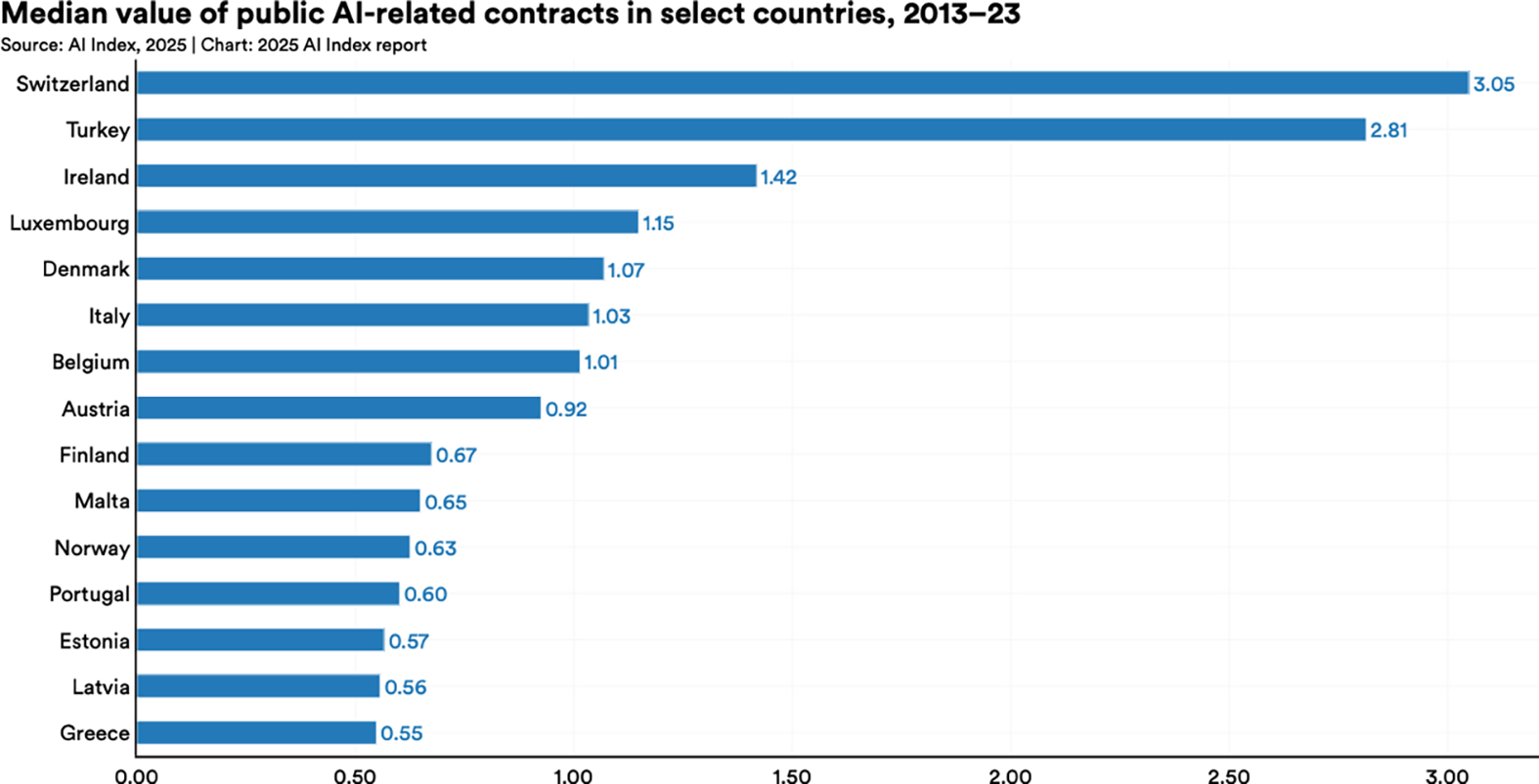
Although the most powerful force behind Türkiye’s AI sector is still defence, the nation’s use of AI extends far beyond the military. AI is being applied in a variety of fields, including trade, energy, education, health, security, governance, and transportation (Aksoy, Reference Aksoy2025, p. 820). Under the NAIS, government-sponsored initiatives have placed a greater emphasis on the deployment of AI in sectors like cybersecurity, telecommunications, and healthcare (Babaoğlu, Reference Babaoğlu2025). According to the Stanford AI Index Report 2025 (HAI, 2025), Türkiye is positioning AI as a key component of its long-term government action plan, a commitment reflected in its global ranking for the value of public AI-related contracts.
According to the Stanford AI Index Report, as shown in Figure 1, Türkiye is ranked second in the world, right behind Switzerland, for the median value of contracts connected to public AI from 2013 to 2023. Türkiye’s stance indicates a prioritisation of high-value contracts as a means of advancing technology and demonstrates the government’s readiness to make significant investments in AI applications in the public sector.
Median value of public AI-related contracts. Source: HAI (2025).
Beyond public initiatives, Türkiye’s AI innovation ecosystem is being extended by public–private collaboration. Additionally, Türkiye considers it crucial to lend strong private-sector support, and for this purpose calling for the creation of an AI-oriented start-up support tool, the Technology and Innovation Fund, and a forthcoming Venture Capital Investment Fund. Programmes like Turcorn 100 and the Tech Visa to attract talents also aim to speed up AI entrepreneurship. On the policy front, there are also initiatives to develop digital and AI literacy across sectors (Kubbe, Reference Kubbe2025).
Yet, alongside these advances, significant challenges persist. Fragmented institutional structures, doctrinal gaps, and weak integration strategies remain key challenges to Türkiye’s long-term adoption of AI (Omer, Reference Omer2025). Moreover, as Savard and Nzobonimpha argue, there is no direct connection between a state’s AI-readiness and its AI responsibility (Nzobonimpa and Savard, Reference Nzobonimpa and Savard2023, p. 401). Türkiye provides an illustrative case of this contradiction that how a state can seem AI-ready in terms of investment and contract values yet still experience institutional and governance issues. On the one hand, the government has demonstrated a commitment to establishing responsible AI governance by actively creating rules and regulations. On the other hand, working on regulatory frameworks does not necessarily make a country AI-ready.
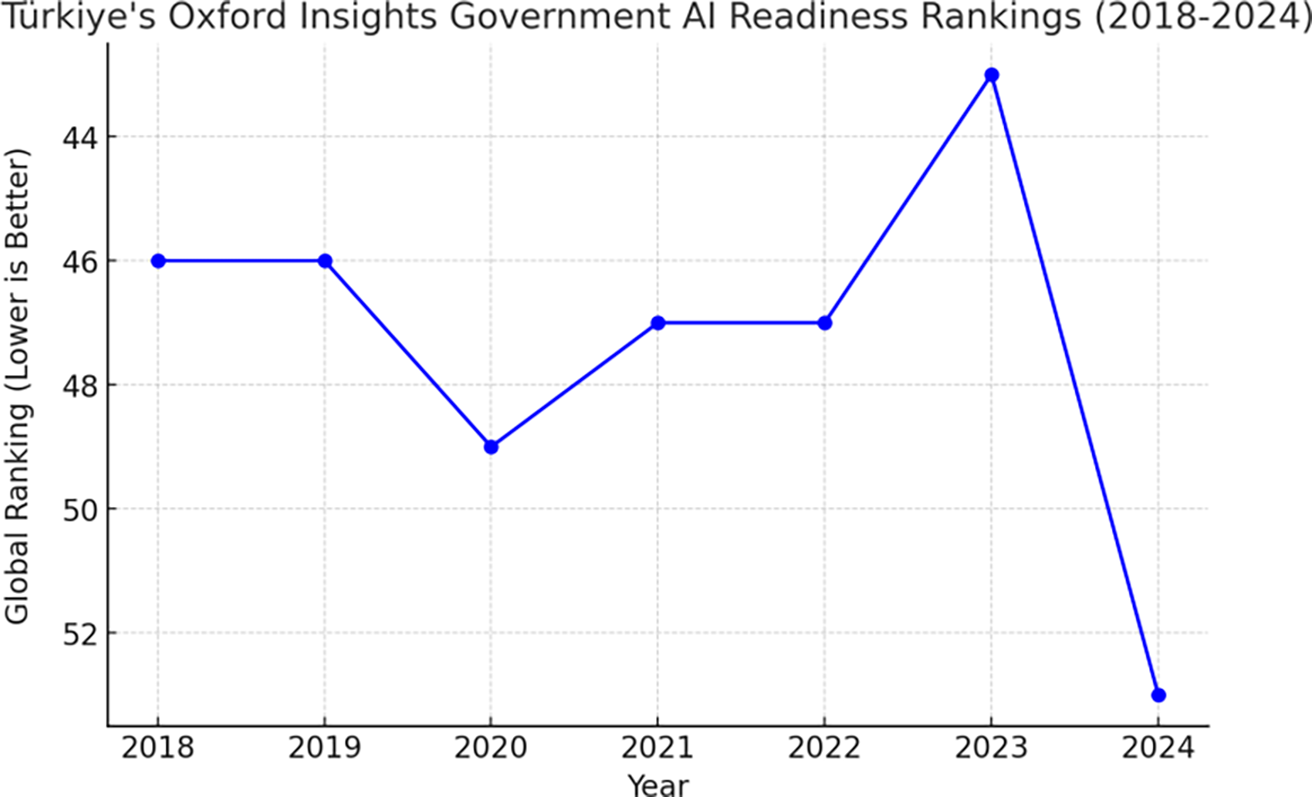
Since 2017, Oxford Insights, as shown in Figure 2, has assessed and graded governments based on their AI readiness through the annual report known as the Government AI Readiness Index that measures preparedness of governments to AI integration. The 2024 edition evaluates 40 indicators across three pillars: government, the technology sector, and data and infrastructure (Oxford Insights, 2025). Türkiye’s ranking remained relatively stable from 2018 to 2023. However, its drop to 53rd ranking in 2024 indicates a relative decline compared to other nations. Since the index is comparative, this decline suggests that while other states advanced quickly, Türkiye’s progress may have slowed down. According to the 2024 report, Türkiye scored lowest in the areas of maturity, human capital, and infrastructure. Nevertheless, it demonstrates strong performance in terms of vision and data availability. While the adoption of NAIS was a significant step, it seems that progress has been hampered by issues with democratic governance, implementation capacity, and international collaboration. These factors help explain why Türkiye’s AI readiness has declined despite increasingly ambitious strategic objectives.
Türkiye’s Oxford Insights government AI readiness rankings (2018–2024). Source: Oxford Insights (2025).
This trajectory is also visible in Türkiye’s response to global restrictions. The tension between innovation and control in Türkiye’s technological development is also further illustrated by the US decision to classify Türkiye in Tier 2 category for exporting advanced AI chips. Due to these limitations, Türkiye is unable to obtain high-end chips, which are essential for creating next-generation AI capabilities. In response, with the support of a $5 billion High Technology Investment Programme and strategic partnerships with Aselsan, Arcelik, and TÜBİTAK BİLGEM, Ankara is stepping up its efforts to achieve self-sufficiency through domestic innovation. These efforts include the development of domestic processors like the CENTIK for civilian robotics and IoT, the CAKIL for defence systems, and the YONCA sub-7nm chip project (Kilic, Reference Kilic2025).
In parallel, Türkiye has sought alignment with EU standards in order to draw foreign investment while carefully preserving sovereignty over strategic technologies. Despite Türkiye using a different regulatory framework, the nation can benefit if selectively drawing on the EU’s ethical framework to strengthen data security and accountability (Babaoğlu, Reference Babaoğlu2025). Still, reliance on external manufacturing and the technological disparity with great powers are some of the barriers to achieving complete autonomy (Kilic, Reference Kilic2025).
However, Türkiye’s approach to AI is not just centred around innovation efforts but also influenced by long-standing digital governance practices. The conflict in the governance of AI between the rhetoric of openness and the practice of control is evident in Türkiye. A recent case brings to light the contentious issues on AI autonomy and sovereignty. Grok, the AI created by X, was restricted in Türkiye in August 2025 after it was alleged to have produced content insulting Atatürk, President Erdoğan, and religious values. This restriction should be understood within Türkiye’s existing legal framework governing online speech. In particular, provisions of the Turkish Penal Code (Articles 125, 216, and 301) criminalise insults directed at the state, national symbols, and certain protected social groups. In addition, data localisation and digital sovereignty measures, most notably the Law on the Protection of Personal Data (KVKK) and the Law on the Regulation of Publications on the Internet, provide the legal basis for extending state oversight to digital platforms and AI-generated content (KVKK, 2019). This case demonstrated how governments are expanding their regulatory sovereignty into the algorithmic sphere by marking Türkiye’s first direct restriction of AI-generated content (Akin, Reference Akin2025). The fact that states have the right to censor, prosecute, or otherwise limit AI systems emphasises the extent to which these technologies function within the bounds established by sovereign authority. While framed as the defence of social values and national interests, this case demonstrates how AI sovereignty serves as a means of establishing political power.
While NAIS projects a vision of technological independence and portrays the nation as dedicated to promoting innovation, moral principles, and international collaboration in AI, the state’s response to Grok reflected its larger history of digital censorship. This dichotomy highlights the conditional nature of AI autonomy in Türkiye, which is praised when it supports state-led narratives but restricted when it clashes with political authority or cultural sensitivity.
A similar mutually reinforcing dynamic can be observed in the case of politically motivated AI research in China, where technological innovation advances alongside the consolidation of state control. China’s Social Credit System uses AI-driven surveillance to strengthen state control. This centralised model shows how algorithmic systems complicate attempts to create global standards by preserving state authority (Ishkhanyan, Reference Ishkhanyan2025, p. 8). This pattern suggests that government-led initiatives such as Türkiye’s NAIS may serve a comparable dual function, strengthening political authority while simultaneously fostering domestic AI development. Instances such as the restrictions placed on Grok illustrate constraints on AI autonomy when it conflicts with state objectives, aligning with the broader tendency of hybrid regimes to employ AI in monitoring, predicting, and shaping behaviour (Ishkhanyan, Reference Ishkhanyan2025, p. 10). Such dynamics underscore the tension between the pursuit of AI sovereignty and the maintenance of digital authoritarian practices, revealing how innovation and control can coexist in politically sensitive contexts.
Figure 3 illustrates the contradiction between the rise of digital control and the expansion of AI efforts. According to the data, Türkiye’s public AI initiatives increased steadily between 2016 and 2024, with an obvious surge after 2020. The government’s emphasis on AI as an instrument for economic transformation and strategic control is reflected in this expansion. The post-2020 efforts grew more organised under national plans and ministries, indicating a shift to state-driven institutionalisation of AI. In contrast, Freedom House’s Freedom on the Net score for Türkiye declined from 39 in 2016 to 31 in 2024, indicating a deterioration of internet freedom and user rights (Freedom House, 2016). Taken together, the data suggest that Türkiye’s pursuit of AI sovereignty encouraged innovation and state-led projects, and these changes point to the potential risks of digital control accompanying state-led AI efforts, without implying a simple causal relationship.
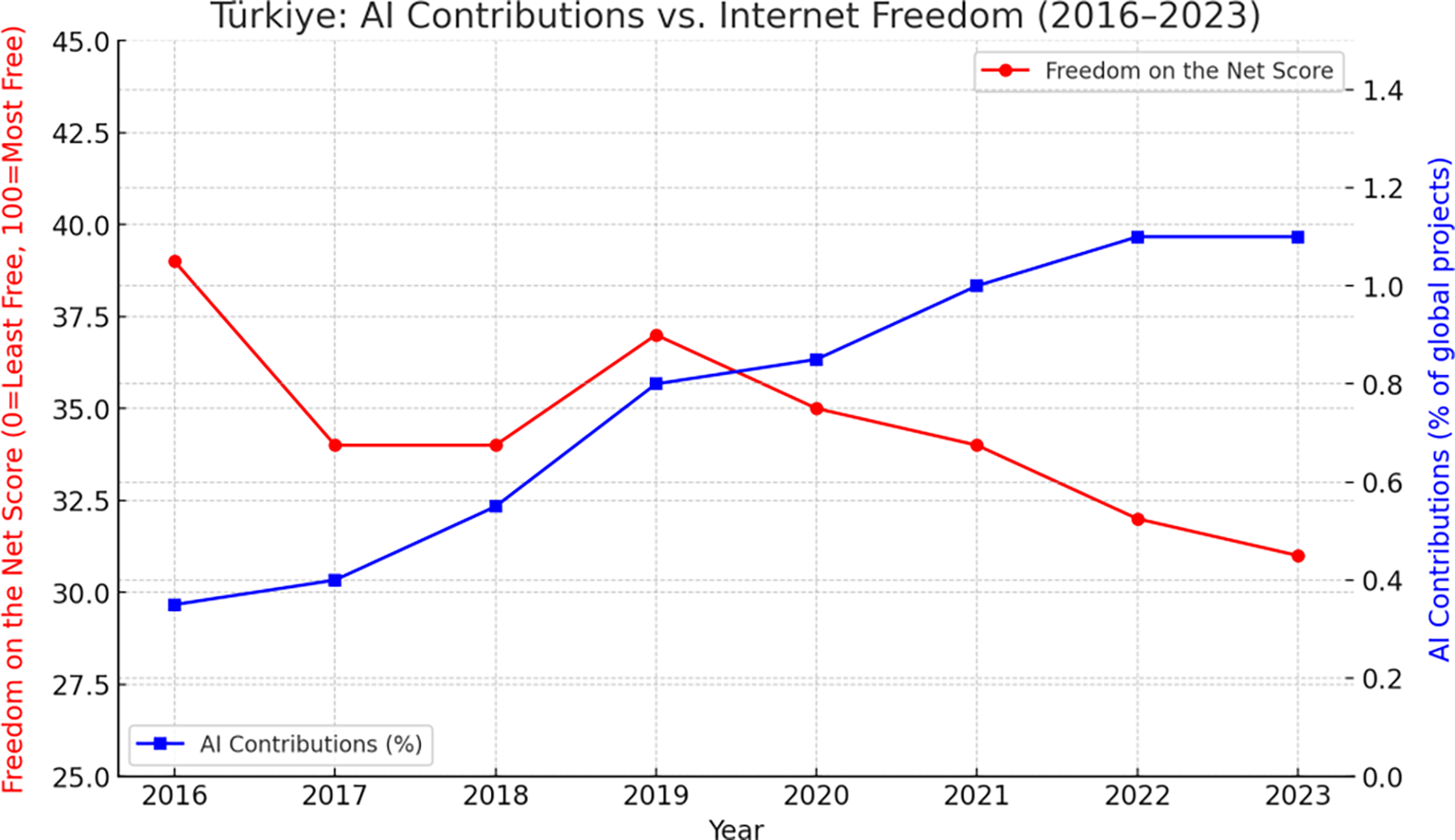
In Türkiye, this shift is enabled by several legal and regulatory tools, including Articles 125, 216, and 301 of the Turkish Penal Code, alongside the Law on Regulation of Publications on the Internet, and data localisation requirements under the Law on the Protection of Personal Data (KVKK), which collectively facilitate state oversight and content control (KVKK, 2019). A trend towards democratic backsliding and the erosion of civil liberties has become more visible in Türkiye over the past decade, particularly in connection with its gradual adoption of digital authoritarian practises. While such measures are typically associated with consolidated autocracies, Türkiye has increasingly employed them since the 2016 coup attempt. At the same time, the country’s continued pursuit of EU membership and the need to maintain international relations have required a degree of moderation, encouraging the government to balance restrictive measures with the projection of a more democratic image abroad. Compared to entrenched authoritarian regimes such as China, Iran, or North Korea, however, Türkiye’s digital control mechanisms remain less extensive, especially in terms of large-scale filtering and censorship of internet traffic, which are far more institutionalised in those contexts (Yücel, Reference Yücel2025, p. 22).
A comparison with Asian contexts highlights both similarities and notable differences. In India, the deployment of large-scale digital infrastructures such as Aadhaar, combined with the frequent use of internet shutdowns, has expanded the state’s capacity for surveillance and population management to establish a “digital panopticon” (Mohapatra, Reference Mohapatra2025, p. 5). In Indonesia, digital authoritarianism manifests through a strategic combination of state-sponsored manipulation by “buzzers” and the systematic surveillance of activists, effectively utilising legal frameworks like the ITE Law to suppress politically sensitive dissent, showing parallels with Türkiye’s selective blocking (Pratamawaty, Reference Pratamawaty2025, p. 471). Singapore, by contrast, relies on a highly institutionalised and technocratic regulatory framework. Legislation such as the Protection from Online Falsehoods and Manipulation Act (POFMA) functions as a sophisticated tool of digital authoritarianism and marginalises political dissent through mandatory “corrections” and financial restrictions on alternative media, reflecting a soft digital authoritarian model (Tan, Reference Tan2020, p. 1078). These comparisons suggest that Türkiye’s trajectory aligns with a broader pattern of hybrid regimes, where legal instruments and regulatory authority are used to constrain digital freedom while simultaneously promoting technological development and state-led innovation.
Using the rhetoric of digital progress while implementing policies like algorithmic control, content blocking, and surveillance is referred to as the “third generation” of internet controls and digital authoritarian methods. According to the literature on digital authoritarianism, states are progressively using digital technologies to expand authoritarian behaviours. Early studies identified three “generations” of internet controls (Deibert and Rohozinski, Reference Deibert, Rohozinski, Deibert, Palfrey, Rohozinski and Zittrain2010, p. 29); the first was denial of access through filtering and blocking; the second was legal and regulatory measures such as shutdowns or “just-in-time” restrictions; and the third was more complex, combining surveillance, disinformation, and narrative management. Popularised in the late 2010s, the term “digital authoritarianism” refers to the use of digital tools by authoritarian and hybrid regimes to monitor, suppress, and control both local and international populations (Polyakova and Meserole, Reference Polyakova and Meserole2019). More recent studies (Glasius, Reference Glasius2018, p. 518) have expanded this perspective, emphasising that such practices—surveillance, disinformation, spyware—are also found in democracies and hybrid systems, not only in authoritarian ones (Roberts and Oosterom, Reference Roberts and Oosterom2024, p. 874).
Taken together, Türkiye’s path demonstrates how AI advancement functions as a catalyst for both technological development and the consolidation of political authority. The existence of state control, defence initiatives, chip self-sufficiency programmes, and new projects underscores the pursuit of AI sovereignty as a national endeavour. These dynamics are further reflected in Türkiye’s efforts towards digital revolution through the formulation of NAIS and the integration of institutional frameworks with multi-sectoral projects.
7. Conclusion
The article first examined the theoretical frameworks for understanding AI sovereignty, which help in understanding the tension between innovation and control in AI governance, especially for a middle power like Türkiye. It examined the archetypes of AI regulatory approaches to critically assess Türkiye’s AI regulatory positioning, which then helped in understanding Türkiye’s approach to AI governance, strategic priorities, regulatory framework, and positioning in the global AI race.
Türkiye exemplifies how middle powers are striving to establish regulatory autonomy in the digital domain. The country is simultaneously working to enhance its domestic capacity in order to secure a stronger position within the global AI landscape. This commitment is reflected in the creation of NAIS and in Türkiye’s broader pursuit of innovation, particularly within the defence sector. AI is now deeply integrated into Türkiye’s economy and public institutions, enhancing productivity by as much as 50% in critical sectors such as healthcare, defence, and finance. The country is also adapting its labour force and education system to meet the requirements of an AI-centric future (Alpay, Reference Alpay2025). In order to avoid becoming merely a data supplier, Türkiye makes investments in creating its own AI models for its digital independence. Although not yet a global AI leader, Türkiye is quickly developing and positioning itself as an emerging player in the global AI world.
Türkiye’s dedication to technological advancement is evident in its global ranking, second in terms of the median value of public AI contracts, driven largely by its progress in UAVs. Türkiye has engaged in comparatively high-value AI procurement contracts, despite the country’s general level of AI readiness. Even if this investment hasn’t yet resulted in more extensive gains in infrastructure, human capital, or global competitiveness, it nonetheless emphasises the state’s important role in forming the domestic AI ecosystem. This state-driven approach is paralleled in the defence industry, where industrial expansion has traditionally been supported by government intervention.
The Bayraktar TB2 and the AI-enabled Kargu-2, which represent Türkiye’s preponderance as a drone power, further highlight the relationship between innovation and control in the nation’s technological development. The increase in the UAV systems exports shows how Ankara uses defence-led innovation to support regime legitimacy domestically and to seek strategic autonomy abroad. This dual role is labelled as “dronization” of Turkish foreign policy, which uses drones as instruments of techno-nationalism and domestic political control while also expanding its hard power and opening up new diplomatic channels (Mehmetcik and Çelik, Reference Mehmetcik and Çelik2021, p. 31).
However, this defence-led dominance creates a “security-rights paradox” within the Turkish legal framework, where the imperatives of national security and “technological sovereignty” particularly as it relates to AI, may inadvertently skew the state’s regulatory priorities towards security rather than the protection of fundamental digital rights as enshrined in the 1982 Constitution (Aksoy, Reference Aksoy2025, p. 820; Akilli, Reference Akilli and Akilli2025, pp. 53–93). From a law and society perspective, the rapid integration of AI into military systems—governed by the principle of military necessity—threatens to normalise high-risk, surveillance-heavy governance model that could spill over to the civilian sector (Güneş, Reference Güneş2025, pp. 12–21). Consequently, the concentration of AI expertise in the defence industry risks a regulatory imbalance, and its sustainability remains uncertain, where the administrative authority overseeing civilian AI would be overshadowed by the state’s national strategy to maintain a competitive edge in the global AI race (Özlü, Reference Özlü2025, pp. 151–62). The innovation environment that underpins Türkiye’s AI-driven military industry is risked by authoritarian intentions, institutional flaws, and lack of transparent arms sales. Therefore, the tension between innovation and control characterises Türkiye’s quest for AI sovereignty: while technology advancements create new avenues for autonomy and influence, unsolved governance issues and institutional weaknesses pose a threat to the sustainability of these achievements. The recent blocking of an AI platform illustrates how Türkiye is exercising its regulatory sovereignty as an instrument to extend state authority in the digital sphere.
Effective governance of AI requires rapid and inclusive decision-making processes with a collaborative approach. Nevertheless, issues of control remain a major issue, as seen by the difficulty of incorporating human supervision into increasingly self-governing systems and the absence of centralised regulatory frameworks (Kurç, Reference Kurç, Borchert, Schütz and Verbovszky2024, p. 338).
These efforts underscore the country’s ambition to achieve technological independence, foster economic growth, and assume an influential role in the global AI ecosystem. At the same time, an expansion of state digital control is also observable. For Türkiye to achieve sustainable success in AI, it must address its institutional and administrative weaknesses, close the existing gaps in its draft AI law, and develop a more transparent and inclusive multilateral model. True AI sovereignty is not merely an economic objective but also a political choice. Therefore, establishing a democratic and ethical AI ecosystem, one that is both effective and innovative, constitutes one of the most significant challenges facing middle powers such as Türkiye.
Theoretically, this research contributes a middle power model of AI sovereignty, which posits that states positioned between global tech hegemons and dependent adopters often adopt a hybrid “strategic autonomy” framework. Unlike the EU’s precautionary model or China’s command-and-control paradigm, this middle power model is defined by a pragmatic internalisation of international standards to maintain market interoperability, coupled with an aggressive domestic production and innovation mandate to reduce external dependencies. This model illustrates that for middle-powers, AI sovereignty is not a monolithic legal status but a dynamic process of navigating the dimensions of control within a highly interdependent global order.
To resolve existing asymmetries, this article offers three normative recommendations for Türkiye’s evolving AI governance. First, the transition from military necessity to civilian legitimacy requires codification of a comprehensive risk-based AI law that explicitly integrates constitutionally mandated safeguards, ensuring algorithmic acts are subject to judicial review. Second, Türkiye must pivot from a centralised, top-down governance model towards a multilateral, multi-stakeholder approach that includes civil society and academia, thereby fostering an ethical AI ecosystem that balances innovation with public accountability. Finally, to achieve sustainable regulatory autonomy, Türkiye must ensure that its pursuit of AI sovereignty supports a transparent regulatory environment that attracts global talent and investment while upholding the rule of law. Ultimately, true AI sovereignty for middle powers like Türkiye will be measured not by the sophistication of its AI systems but by the resilience of its democratic institutions in the face of AI disruption.
Funding statement
Open Access funding provided by the Qatar National Library.
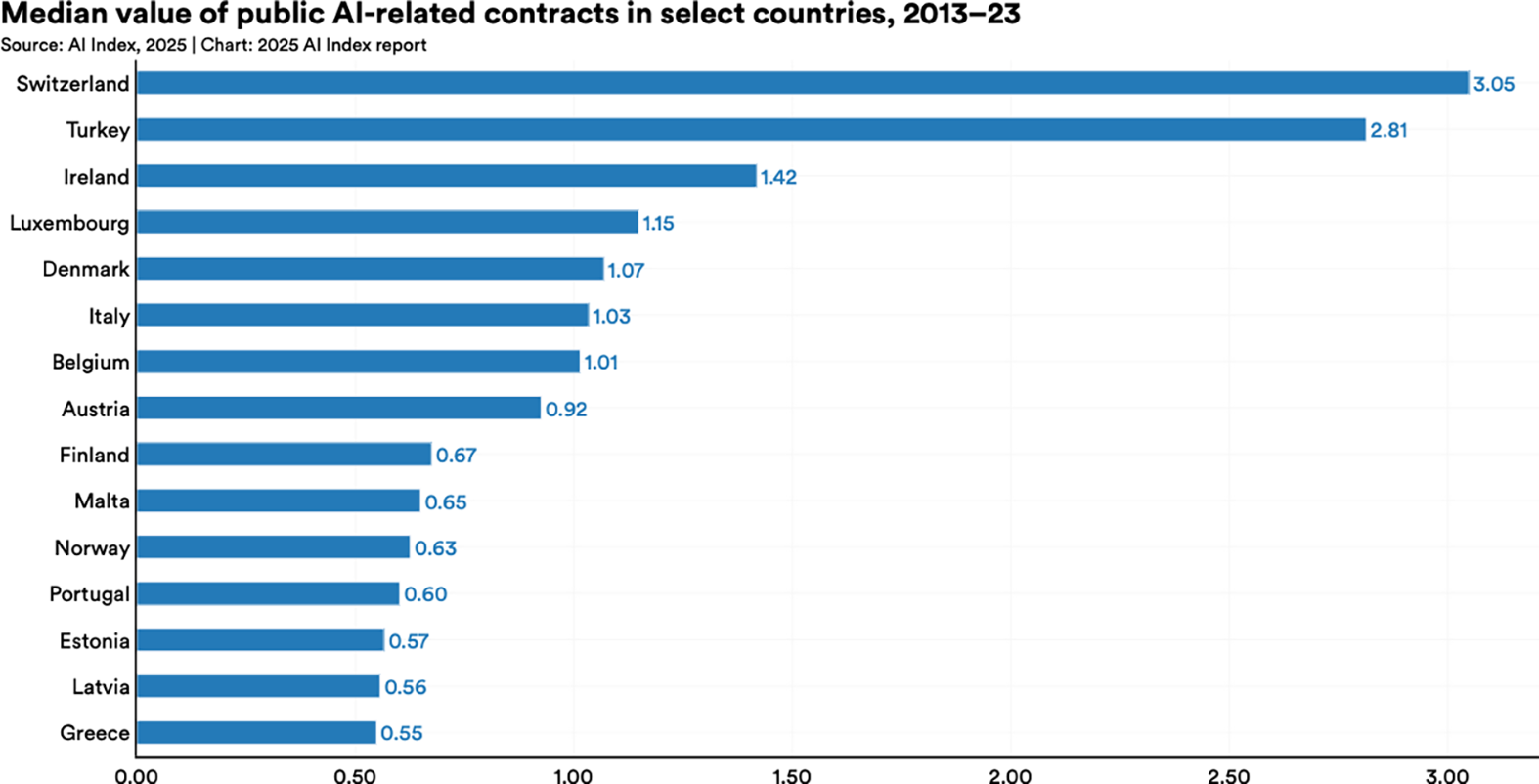
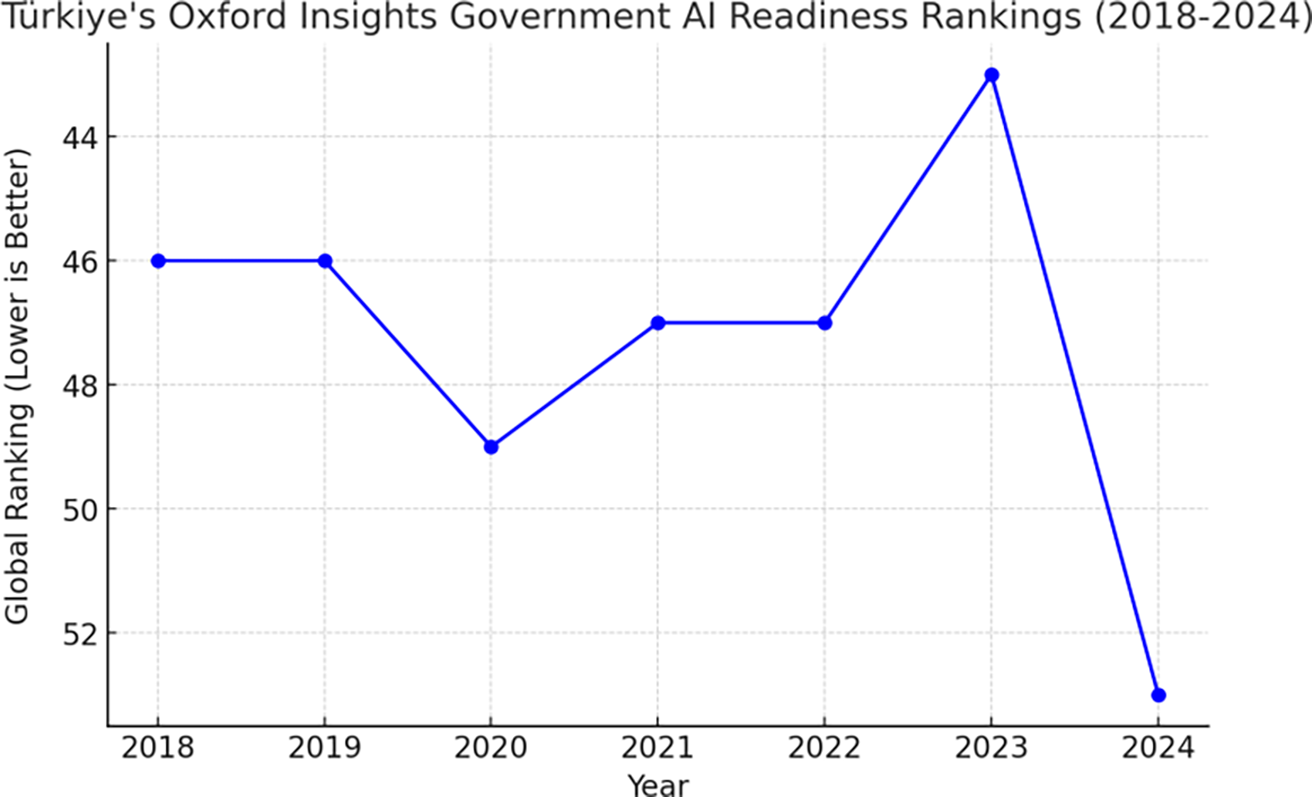
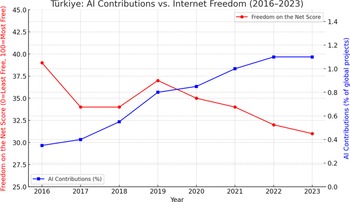

 Open access

