





Antimicrobial resistance (AMR) is identified by the World Health Organization (WHO) as 1 of 10 global public health crises that might cause a severe impact on humanity, with 1.14 million deaths attributable to bacterial AMR in 2021.Footnote 1 The primary drivers of AMR include the inappropriate use of antibiotics in human health, animal health, and agricultural practice.Footnote 2 At the same time, the structural root causes of social and economic inequities exploit antibiotics as a “quick fix” for insufficient healthcare systems and poverty, further exacerbating the spread of AMR, especially in low- and middle-income countries (LMIC).Footnote 3 In other words, AMR is a wicked global health challenge shaped by not only biological, but also sociocultural, economic, and political determinants of health.Footnote 4 However, the distribution of AMR burden was not equally divided among different countries and groups.Footnote 5 In response to this escalating public health crisis, the WHO developed the Global Action Plan on AMR, providing a strategic framework for countries to develop a National Action Plan (NAP).Footnote 6 In 2024, the United Nations General Assembly’s political declaration of the high-level meeting on AMR reaffirmed commitments and highlighted the importance of equitable approaches, with a goal of reducing global deaths associated with AMR by 10 percent by 2030.Footnote 7
Vietnam was the first country in the Western Pacific region to issue an NAP for AMR mitigation, covering the period from 2013 to 2020, and with a strong focus on the human health sector.Footnote 8 The six-year implementation of the NAP provided insights to improve in the next phase.Footnote 9 The second NAP, issued in 2023, shows a shift in recognising AMR as a multisectoral public health crisis that must be addressed across One Health sectors.Footnote 10 However, in practice, it has been challenging to ensure effective collaboration across sectors, and even within sectors, to implement the NAP in Vietnam.Footnote 11
While current efforts to combat AMR will take time to bring significant benefits to the community, the uneven burden of AMR, which disproportionately affects low- and middle-income countries and vulnerable populations, calls for urgent and equitable solutions.Footnote 12 The Just Transition concept was introduced as an approach towards equitable and sustainable strategies to reduce AMR by “rendering visible the uneven impacts of antimicrobial resistance action and inaction, ensuring that policies and interventions mitigate the effects of drug resistance while also addressing inequalities and trade-offs arising across sectors, societies, and communities with differing interests and priorities in the use of, and access to, antimicrobials.”Footnote 13 Policymakers and publics are more likely to get behind action if benefits are explicit and negative trade-offs are minimised.Footnote 14 Framing AMR policy with a Just Transitions lens emphasises fairness, justice, sustainability, and inclusivity, bringing to light issues of procedural, epistemic, and distributive justice, to guarantee the inclusivity of all voices and that their experiential knowledge is valued, and promoting equity and burden sharing in the context of AMR.Footnote 15 Just Transitions to mitigate antimicrobial resistance (AMR) are an essential approach to ensure system-wide change that addresses structural drivers and entangled inequalities underlying maladaptive antimicrobial use. Equitable and sustainable solutions are needed to manage the redistribution of antimicrobials and other resources in order to achieve a balance between personal and collective interests, access and excess, and the health of current and future generations. In order to understand what ethical and justice issues need to be taken into consideration when implementing Vietnam’s NAP for AMR mitigation, we conducted a stakeholder meeting series with governmental staff and community members in the One Health sectors and physicians in a national hospital using the Just Transitions framework.
Methods
NAP summary
Vietnam represents an interesting case study of top-down governance, in which national strategies are disseminated through hierarchical levels.Footnote 16 The first Vietnam NAP, issued by MOH in 2013, focused on strengthening the system and capacity development while promoting knowledge generation, research, and international collaboration to effectively address AMR. However, public data on its implementation are limited, particularly regarding the barriers to achieving its objectives.Footnote 17
The second NAP, issued by the Government in 2023, aims to enhance awareness of AMR, reinforce surveillance systems, minimise the spread of pathogens and infectious diseases, and promote the rational and optimised use of antimicrobials across all sectors. Furthermore, this latest NAP outlines strong multisectoral objectives across the One Health spectrum and has assigned all three sectors with specific activities.Footnote 18 However, while the Ministry of Health (MOH) and Ministry of Agriculture and Rural Development (MARD) initiated preliminary steps to implement their respective action plans for AMR mitigation across national and sub-national levels, the Ministry of Natural Resources and Environment (MONRE) has not yet issued an overall plan for the environmental sector.Footnote 19 In this system, local implementers and communities are rarely involved in the development of strategic policies.Footnote 20
Meetings and discussion topics
We conducted a series of stakeholder consultations with the aim of formulating a Just Transition framework for AMR mitigation in the Vietnamese context. This approach takes into account public perceptions and local realities, leading to the development of contextualised solutions. We first introduced the Just Transition concepts, including procedural justice, distributive justice, tensions and trade-offs, and unintended consequences, and its potential application to the Vietnam NAP for AMR mitigation. We also summarised the updated NAP and main objectives, then participants reflected on their perspectives and experiences of or suggestions for NAP implementation through the lens of Just Transition, focusing on justice, inclusivity, and equity in developing and implementing AMR strategies.Footnote 21 The meeting guide was based on a discussion about how elements of the Just Transition concepts related to NAP implementation. In detail, we discuss with participants the following questions: Who should be involved in the AMR mitigation strategy? Which groups are most affected by the AMR burden, and which groups benefit the most from AMR mitigation efforts? What challenges and trade-offs arise in implementing the NAP? What unintended consequences may result from the NAP implementation? Whose interests and influences shape the implementation of the NAP?
The consultation meetings were conducted in Ha Noi and Nam Dinh province, Vietnam, from October to December 2024, hosted by the National Hospital of Tropical Diseases, Nam Dinh Department of Health, and Nam Dinh Sub-Department of Animal Health.
Participants
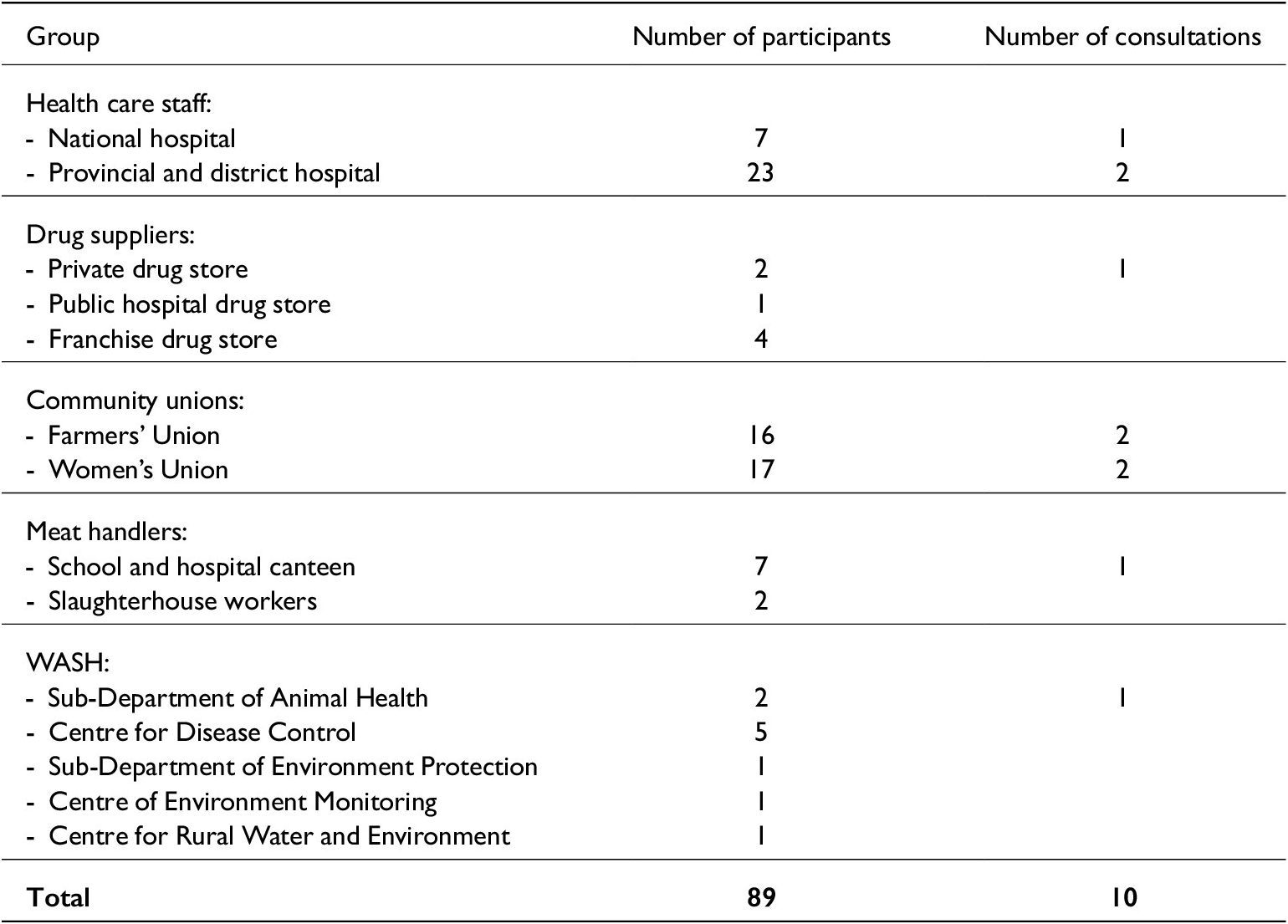
In this case study, we aimed to explore the perspectives from different stakeholders in NAP implementation through the Just Transition lens, including healthcare staff from national to local levels who were involved in antimicrobial stewardship (AMS) programmes, representatives of local unions (Women’s and Farmers’), drug sellers, meat handlers, and government agencies involved in environmental management, sanitation, and hygiene (WASH) (Table 1). They are some of the key stakeholders in the Vietnamese context.
Participant groups

Antimicrobial stewardship (AMS) in hospitals was one of the cornerstones of Vietnam’s first NAP, and AMS programmes have been implemented widely in many Vietnamese hospitals since 2016.Footnote 22 AMS emphasises optimal use of antibiotics through reducing unnecessary and inappropriate antibiotic use, and is one of the five Global Action Plan pillars.Footnote 23 Although AMS programmes were proven to be a cost-effective tool to combat AMR in different countries, there was an urgent call to contextualise the programmes for the specific conditions of low- and middle-income countries.Footnote 24 For example, a recent study in Vietnamese hospitals highlighted the importance of taking time to involve healthcare staff in co-planning and implementing AMS programmes.Footnote 25 However, AMS programmes rarely include patients’ participation, although one of its objectives is to enhance public awareness of AMR and antibiotics.Footnote 26
Private pharmacies also play a key role in managing AMR through complying with antibiotic over-the-counter (OTC) dispensing. The rapid development of private drug suppliers in Vietnam has improved community access to antibiotics and drugs in recent decades.Footnote 27 Despite regulations prohibiting OTC sales of antibiotics and the introduction of a compulsory software-based antibiotic management system, widespread OTC practices persist due to the weak reinforcement of these regulations, the sellers’ incentives, and the competitiveness gained by supplying antibiotics in communities.Footnote 28 Supplying antibiotics was also considered an act of social care provided by the drug sellers to their community.Footnote 29 Given the role of drug retailers as gatekeepers of community access to medicines and antibiotics, through consultation and supply, they might be a critical stakeholder to be involved in the NAP implementation to increase their inputs to antibiotic management.
Community and agricultural use account for the largest share of antibiotic consumption in Vietnam, and are important drivers of AMR, influenced by complex underlying social dynamics between different stakeholders such as users, sellers, and prescribers.Footnote 30 Effective community-level action requires navigation of social structures, and public engagement is a promising measure to address the overuse of antibiotics in the community.Footnote 31 Raising public awareness of AMR is also one of the Global Action Plan pillars.Footnote 32 In Vietnam, the Women’s Union and Farmers’ Union are national socio-political organisations that play a crucial role in improving local community well-being. They support communities to overcome negative shocks or improve household savings and agricultural practices, and often provide support for public health and agricultural programmes.Footnote 33 It is necessary to understand how these unions are embedded in the NAP as the implementors for community-based interventions.
Another pillar of the Global Action Plan focuses on the prevention of infections and bacterial transmission.Footnote 34 There is a high risk of AMR bacterial transmission from animal-source food to humans, and the potential for causing severe infectious disease.Footnote 35 In Vietnam, antibiotic-resistant Salmonella non-typhi were found in pork from all types of retail outlets, posing a high risk of infection to humans.Footnote 36 Meat handlers are therefore essential actors to prevent the AMR burden in the food chain.
Water, sanitation, and hygiene (WASH) are also key measures for the prevention of infections and bacterial transmission outlined in the Global Action Plan. Poor sanitation and waste disposal from healthcare facilities and industrial factories transfer large amounts of antibiotic residues to the environment, but Vietnamese authorities have not yet established a cross-sector surveillance system for AMR management.Footnote 37 Ad hoc studies found antibiotic-resistant bacteria in different samples, including vegetables, ice, and waterFootnote 38 and a strong linkage of antibiotic-resistant gene transfer from livestock farms to the environment, such as forest or rice fields.Footnote 39 In Vietnam’s administrative structures, WASH involves organisations from different disciplines and sectors. For example, within Vietnam’s governance framework, the WASH sector encompasses a range of organisations operating across multiple disciplines and administrative levels. Although MARD and MONRE serve as the primary ministries responsible for managing water resources, four other ministries, including the Ministry of Health, also hold related mandates within their respective scopes of authority, while private sectors and international agencies play significant roles.Footnote 40
We invited a total of 89 stakeholders. Healthcare representatives were from the AMS teams from three district hospitals and one province-level hospital in Nam Dinh, and one national-level hospital in Hanoi. The Women’s and Farmers’ Union members and meat handlers (school and hospital canteen and slaughterhouse workers) were from Truc Ninh district (Nam Dinh province). The WASH group consisted of representatives from Nam Dinh Centre of Disease Control (CDC), the Sub-Department of Animal Health and Water, and Environment Management Agencies. Finally, the drug suppliers were a group of public and private drug sellers and owners from franchise and retail outlets. Depending on the number of participants, we conducted one or two consultations with each group. Since women are often the main caregivers for sick family members, we expected that representatives from the Women’s Union could also reflect patients’ perspectives during the consultation process.
These stakeholders were selected due to their proven or potential impact on Vietnam NAP implementation and recruited through consultation with the Department of Health (DoH) and the Sub-Department of Animal Health in Nam Dinh province. Nam Dinh Province has a population of 1.8 million, is in the Red River Delta of northern Vietnam, and has significant livestock production and aquaculture sectors, as well as an increasing number of industrial complexes.
Ethical consideration
The consultation process was conducted as a form of engagement activities, in which participants co-created the findings with the research team, rather than serving as research objects; therefore, the work did not require ethics approval. Prior to the initiation of the workshop, we describe the work in more detail and obtain their agreement.
Data sources and presentation of data
We wanted to learn from these stakeholder consultations about how Just Transitions concepts could be applied to NAP implementation in Vietnam. For each consultation session, one researcher (HHTN, TPT, APN, ANTN, and KDH) facilitated the meeting, while another (APN, TPT, KDH, NYN, and HHTN) collected notes and observed participants’ responses. We did not audio record meetings, but the facilitator recorded key discussion points on a flip chart and synthesised them for collective review and consensus among participants (HHTN, TPT, APN, KDH, and ANTN). After each consultation meeting, we held an internal discussion, extended reflections, and collectively reviewed the results of the consultations. Fieldnotes from the consultations and internal discussions were written up in reports by HHTN. Initial analysis of data was done by HHTN. The second layer of analysis and interpretation was done by TPT, HHTN, SOL, and YHTN through multiple discussions to refine the themes. The final summary of discussion points is presented below.
Summary of discussion points
Stakeholder engagement in NAP implementation
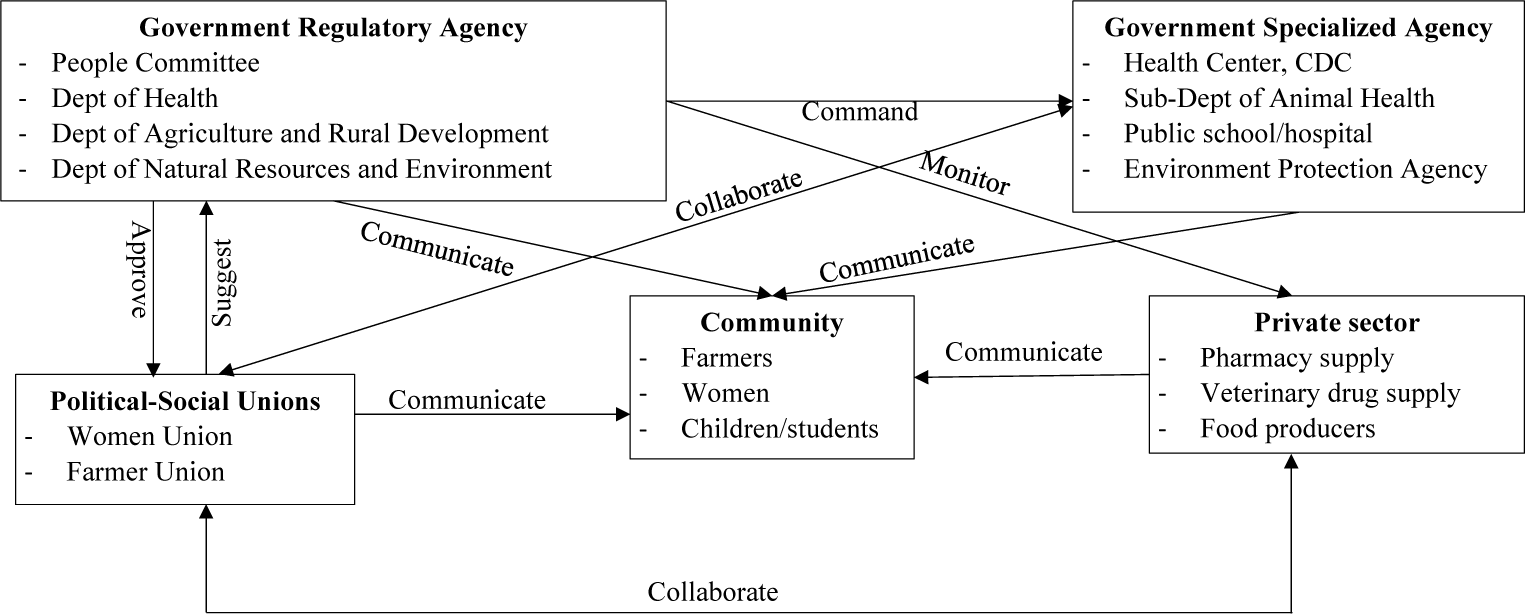
Although the NAP is currently implemented within the healthcare sector, staff in Nam Dinh CDC revealed that they had not been assigned any plans or implemented any activities that contribute to the NAP or AMR mitigation goals. The other sectors, including animal health and environmental protection, reported similar situations. However, from the discussion, all stakeholders perceived that they could contribute to AMR mitigation through different approaches and collaboration mechanisms. Figure 1 illustrates the relationships between relevant stakeholders at the provincial level and how they could be involved in the AMR mitigation strategy under the local government’s coordination in overall or in specific sectors, which requires coordination vertically (across People Committee levels), horizontally (among departments), and cross-sectorally. All stakeholders in our study believed that it is necessary for both public and private stakeholders to cooperate under the coordination of government regulatory agencies to achieve the ambitious goals laid out in the NAP. These regulatory agencies, especially at the provincial level, are responsible for adapting the NAP into a local action plan as well as allocating budgets to engage other stakeholders in its implementation. However, they have not yet established a collaboration mechanism among Departments and People’s Committees at the district level to implement the plan.
Relevant stakeholders who should be involved in the provincial AMR mitigation strategy.

At the community level, the unions might play essential roles in AMR mitigation efforts by coordinating communities and facilitating communication events via their extensive network embedded in communities and experienced community facilitators. However, they need directions from the higher levels of the organisation and input from expert actors to leverage their advantages. Similarly, the private sector—especially input suppliers such as drug companies (for human health or animal health treatment) or feed providers—may take part in AMR-related communication activities, often in collaboration with these unions within the scope of local authorities’ supervision.
Finally, specialised technical agencies are primarily in charge of technical tasks, such as instructing how to use antibiotics appropriately for human health and animal health, monitoring antibiotic usage or residues, and supporting communication and outreach efforts with their expertise. Through discussions with the research team, these agencies’ representatives suggested some potential contributions from their disciplines to AMR mitigation plans; for example, the environmental agencies might monitor antibiotic residues in water or soil. Still, they require cross-sectoral mechanisms to synergise their efforts for AMR prevention.
Procedural justice
Procedural justice refers to the involvement of relevant individuals or groups in the decision-making process to make sure that the outcomes are fair.Footnote 41 This process ensures that the interests and concerns of people are considered, thereby aiming for policies that equitably balance benefits across groups and individuals.Footnote 42 For example, the DOH and hospitals in Ho Chi Minh City and Hanoi combined information from the NAP and local data about antibiotic-resistant bacteria to develop appropriate antibiotic guidance for the cities.Footnote 43 Experts also agreed on the necessity of contributions across sectors to the AMR surveillance system at the design stage.Footnote 44 In a top-down governance system like Vietnam, however, local contributions to developing strategic plans were not considered carefully in NAP implementation, except for some special cases as above, but only for the healthcare context.
According to the Law of Promulgation of Legislative Documents, the NAP had been consulted by relevant actors through a social criticism process, which was conducted by the Vietnam Fatherland Front, while the 2023 NAP also assigned the Provincial People Committee to delegate their subordinates to implement the NAP within their discipline and scope of authorities.Footnote 45 However, in the meetings, none of the participating stakeholder groups were involved in developing or implementing the national or local AMR action plans, and only healthcare staff and drug sellers had activities assigned to them (Table 2). Staff in national, provincial, and district hospitals had formed AMS teams, but their activities were limited due to constraints in resources and guidance. The healthcare staff, even at the national hospital, reported that they were rarely involved in institutional planning or given responsibilities for action. They mainly followed national-level MOH guidelines, but they felt that in some cases these may not be well-aligned to their local contexts, leading to deviating practice from the guidelines to better fit local needs. That reflection is consistent with a study by Pham et al.,Footnote 46 which revealed the divergence between the national guidelines and the practical use of antibiotics for children under 2 months in another province of Vietnam. Similarly, the national hospital staff in our study explained that provincial hospitals could contribute to their AMR prevention actions by providing local AMR data so that they can develop appropriate antibiotic guidelines. This collaboration cannot be applied without the approval and direction of the DOH. However, the provincial government, including the Departments of Health, Agriculture, and Environment, did not proactively develop AMR mitigation strategies but waited for detailed plans or specific task assignments from their national ministries. This situation was also reported in other provinces of Vietnam.Footnote 47
Summary of NAP activities and associated justice and equity concerns for different stakeholder groups

Similarly, the Women’s and Farmers’ Union members reflected that they rarely developed their own action plans based on their specific commune context. Instead, they tended to follow the plans from higher-level authorities or collaborative plans led by other stakeholders (such as specialised agencies or private companies). Their reflection aligns with the limited involvement of public stakeholders in the AMR NAP in Southeast Asian countries reported in a previous study.Footnote 48 This lack of involvement has led to various consequences, which will be discussed later. Members in the WASH group reported that AMR management was not yet included in their annual plan as a monitoring indicator. There were no concrete plans from the Ministry of Agriculture and Rural Development (MARD) or the Ministry of Natural Resources and Environment (MONRE) to address the AMR issue, and therefore, there have not been many resources allocated to implement the NAP activities in their sector.
Distributive justice
Distributive justice refers to the fair distribution of outcomes such as disease burden, burdens of programme implementation, and programme benefits.Footnote 49 AMR is widely accepted as a global public health crisis, but in our case study, most stakeholders did not clearly perceive or experience its impact, except the AMS team at the national hospital (Table 2). According to the AMS staff, the limited diagnostic capacity in provincial and district hospitals hindered their ability to test for microbial resistance, and patients who did not respond to treatment were transferred to higher-level hospitals, thus rendering AMR an invisible problem. Therefore, the national hospital staff was concerned that the benefits of the NAP implementation, especially in strengthening the drug resistance surveillance system, would mostly go to urban populations, especially in big cities where well-equipped hospitals were located. Other experts also shared the same concern about the distributive injustice of AMR mitigation strategies in the Global South.Footnote 50 At the individual patient level, participants recognised that patients with AMR would bear the burden of longer treatment duration and higher costs. Consequently, with the implementation of NAP activities in hospitals, the AMS team expected that patient outcomes would improve, and treatment complications and costs would be reduced. In addition, they also thought that hospitals would benefit economically through reduced patient load and staff workload since they can optimise their resources for severe patients and services. Moreover, this would lead to an increase in hospital credibility as hospital-acquired infections would decline.
Many stakeholders believed that drug suppliers would be disproportionately burdened by NAP implementation without receiving any benefits. They predicted that the sales volume of drug stores would be reduced significantly if the current regulations to monitor antibiotic consumption from pharmacies were implemented more efficiently. In contrast, participants believed that the decrease in AMR burden would not directly bring them any advantages. The uncertainty from AMR containment is reasonable, as it is a wicked public health issue challenging the involved stakeholders with economic and ethical tensions and trade-offs.Footnote 51 The drug sellers themselves reported that AMR posed a problem to their businesses by rendering treatments ineffective, so addressing the problem would be beneficial. They believed they might be able to adapt to reduced antibiotic revenues by adjusting their business strategy and promoting sales of other drugs and health products. As half of the drug sellers in the meetings were from franchise pharmacies, they suggested that these pharmacies might suffer more negative impact than small independent drugstores, as they have to handle larger inventories and face high operational costs.
Community participants identified specific groups who they thought could be at higher risk of AMR, such as pregnant women, children, the elderly, and those working in hazardous environments, such as laboratory technicians. However, all stakeholders struggled to link the impact of AMR to their personal lives or daily work, or did not feel it to be an immediate concern. As a result, participants tended to view AMR impacts as an externality that affects others more than themselves, and they believed the primary beneficiaries of current mitigation efforts would be within the healthcare sector, such as medical staff or patients. Similarly, it was difficult for participants to consider distributive justice for a problem they did not see and were not involved in the implementation of actions to address. Therefore, they discussed distributive justice in a normative sense, discussing who should receive the most benefits from AMR mitigation. Participants considered benefit distribution through the lens of a need principle: distribution outcomes should be proportional to the needs of the recipients, which in this case are the patients.Footnote 52 They reported that patients are directly affected by AMR, which can lead to higher treatment costs due to prolonged treatment duration or the need for expensive drugs to replace ineffective antibiotics. Therefore, if the AMR situation improved, patients would receive the largest share of benefits. In terms of collective benefits, participants felt that activities related to NAP implementation would reduce health system overload and improve the environment, with benefits for all.
The Farmers’ Union perceived that industrial farms would benefit more from AMR interventions due to economies of scale, while smallholder farms may bear higher relative costs, for example, the cost of implementing biosecurity measures or accessibility to veterinary services. In fact, research in the province indicates that smallholder farmers use fewer antibiotics and harbour fewer antibiotic-resistant bacteria.Footnote 53 So, smallholder farmers who contribute less to the AMR problem due to their limited use of antibiotics may nevertheless bear a greater share of the burden from NAP policy implementation. They are often required to invest in costly biosecurity systems, yet may not receive proportionate benefits. This inequity is a predictable consequence of Vietnam’s animal health regulations, which provide insufficient support for small-scale farms. For example, new animal health regulations require farmers to have prescriptions from registered veterinarians in order to purchase drugs. However, the number of qualified veterinarians is insufficient, and it is costly to access them for prescriptions, making this regulation inappropriate for small- and medium-scale farms to adapt, although they represent the majority of farmers in Vietnam.Footnote 54 While the veterinary drug sellers were perceived as a reliable and common source of antibiotic recommendation in animal health in other studies, the Farmers’ Union in our study indicated that the drug sellers tend to preserve the farmers’ dependence on their services by hiding the drug use instructions from them.Footnote 55 It was suggested to modify this business model and separate veterinary advice from the veterinary drugs market, which could help to reduce AMR risks in small-scale farms.Footnote 56
Meanwhile, animal traders, important actors in agriculture value chains, were seen as “free riders” in the NAP implementation, since they experience minimal direct impact from AMR, yet would still benefit when the AMR-related risks are reduced across the system. Meat handlers reported that the traders did not contribute to any effort to reduce AMR or animal disease burden, but they would benefit when the situation improved due to the increase in trading activities. Meat handlers perceived that slaughterhouse workers and consumers were the groups most at risk of AMR. They were the only group to mention issues related to restorative justice, suggesting that food suppliers should be held accountable for cases of food poisoning and provide compensation.
Tensions and trade-offs
Participants also discussed tensions and trade-offs whose resolution would benefit from a distributive justice approach. The greatest perceived tension among all stakeholders for implementing the AMR mitigation plan was reported as the lack of resources (Table 2).
Within the healthcare sector, staff felt that there were insufficient human resources to implement NAP activities, placing strain on their workloads and potentially compromising patient care. Furthermore, inadequate human resources for monitoring and evaluation may lead to inaccurate data for developing appropriate AMS strategies. Many facilities also lacked the necessary physical resources, particularly laboratory and diagnostic resources required to guide antibiotic prescribing and produce local surveillance data. The provincial and district health centre reported that limited capacities prevented them from developing their own antibiograms and localised hospital prescribing guidelines, while their colleagues at the national hospital highlighted slow and untransparent medical supply chains to procure resources needed for implementing AMS programmes. They also discussed the differences in disease profiles across hospital levels, making it difficult to adapt a top-down protocol for AMR prevention. Health system processes, such as procurement mechanisms and health insurance, also created lock-ins and perverse incentives for antibiotic prescribing. Furthermore, physicians also had to balance the tensions arising from patient demand for antibiotics with decisions about appropriateness. The participants and those from other studies pointed out the tendency of local people to depend on antibiotics as an effective treatment for common illnesses.Footnote 57 Overall, hospitals had to balance costs and profits for each activity and tended to focus on investments in activities with short-term returns that increased revenues, rather than AMS activities requiring longer-term investment to achieve wider population-level benefits.
From the drug sellers’ perspectives, the main tensions are related to sustaining their business in the face of competition. Responding to antibiotic demands from patients fosters reciprocal and trusting relationships as well as increases profits.Footnote 58 Drug sellers, who wanted to comply with regulations on restricting antibiotic sales, had to balance this tension of keeping customers happy and sustaining their economic profits. Another tension related to drug sellers’ perception that dispensing antibiotics is a compassionate action when patients are not able to access expensive formal healthcare.Footnote 59 Other studies have confirmed high levels of inappropriate antibiotic prescription in Vietnamese hospitals and unrestricted access to antibiotics in the community despite regulations.Footnote 60
Participants from Women’s and Farmers’ Unions believed that if AMR mitigation plans were included in their annual plans, this would create financial constraints. This might significantly limit their capacity, forcing them to deprioritise other programmes or reallocate budget from existing activities to fund AMR-related activities. In turn, this could lead to unintended consequences: decreased overall efficiency of other programmes, while AMR mitigation goals remain incomplete, and this could further result in undermining the organisation’s credibility.
Environmental officers discussed AMR as a form of environmental pollution but reported inadequate government response and a lack of AMR regulations in their sector. There were no legal frameworks, policies, indicators, or budgets for environmental AMR surveillance and management. Most attention to AMR in the environment focused on hospitals and hospital waste management. This echoes the national and global situation, where the environmental sector has so far received less attention. Local offices lacked guidelines to monitor antibiotic residues in the environment, although they were equipped with adequate facilities to conduct the testing. Through discussion, the lab technique to test and monitor antibiotic residues in the human health sector is adaptable to the environmental sector, but they need official approval from national agencies and a detailed plan to conduct it.
A cross-cutting theme related to the tension between commercial and public health goals. Health workers, drug sellers, and farmers all mentioned that in the absence of clear guidance from within their sectors, drug companies often provided training and capacity-building opportunities. However, commercial interests may not align with the goal of reducing overall consumption of antibiotics but instead focus on selling specific products. When their training activities do address AMR, this may be through promoting the use of different antibiotic products rather than reducing overall use or reducing the use of “watch-group” antibiotics with higher resistance potential. From a broader perspective, pharmaceutical companies should also invest in the AMS programme—not only to demonstrate their social responsibility, but also to expand their patient reach, improve product quality and portfolio, extend the commercial lifespan of their products, and reduce research and development costs.Footnote 61
To overcome these tensions, effective multi-stakeholder collaboration is essential, particularly with the existing network of local unions, which are well-positioned to engage both community members and the private sector. However, participants reflected that provincial governments have not yet established a mechanism to utilise these resources for AMR mitigation. Other studies also highlighted the inefficiency of collaboration to combat AMR, even within the healthcare system.Footnote 62 Some participants intimated that it might be due to low levels of awareness among staff (especially at intermediate and higher levels) regarding the impact of AMR. Initiating and maintaining the collaboration and network could significantly contribute to AMR management in Vietnam.Footnote 63 However, there would be a challenge to set up this collaboration, since even the experts experienced difficulties in understanding other sectors’ AMR surveillance systems.Footnote 64
Unintended consequences
Except for the healthcare context, NAP implementation had not resulted in any significant actions at the provincial or district level at the time of this case study. As a result, participants discussed unintended consequences in terms of concerns about what might or should happen if certain policies were implemented (Table 2). For example, drug suppliers were concerned that the impact of stricter enforcement of antibiotic management may affect their performance and lead to loss of potential customers or increased operational costs to meet the regulatory standards. The participants were also concerned that limiting OTC sales of antibiotics might reduce accessibility to essential medicines in the community for both human health and animal health, if regulations were enforced. This could inadvertently increase the risk of disease outbreaks, which, in turn, may erode public trust in the NAP and discourage efforts by participating stakeholders. Costs of NAP implementation were another concern due to the lack of financial funds from the government. For example, the healthcare staff suggested that reducing antibiotic residues or antibiotic-resistant genes might increase the cost of environmental treatment (e.g., wastewater management in hospitals), but these expenses are difficult to finance under the financial autonomy mechanism. This mechanism is the national strategy to reform the public hospital system from state-funded to a mix of state subsidy and fees-for-services.Footnote 65 According to the healthcare staff, the requirement for financial autonomy limits budget flexibility within healthcare institutions, making it difficult to cover this additional environmental treatment cost. The healthcare participants also suggested that physicians might be reluctant to implement hospital-level AMS interventions, as they tend to prioritise treating patients, instead of planning AMR mitigation strategies. Furthermore, the physicians were thought to care more about their after-hours clinics and benefit from prescribing antibiotics by directing patients to their private clinics to prescribe them antibiotics. In our study, the physicians mentioned the dilemma of antibiotic management in public hospitals. In detail, the MOH requested the hospitals to appoint an AMS member who is responsible for approving or declining prescriptions of restricted antibiotics.Footnote 66 However, the physicians tended to prescribe more accessible antibiotics since they were afraid of the slow approval process, but they perceived that this could potentially lead to inappropriate and less effective treatment. The AMS team at a national hospital also mentioned the MOH’s request for hospitals to maintain low fees for microbiology tests on patients as an effort to motivate them to use the necessary diagnostics for antibiotic prescribing. However, this forced the hospitals to subsidise these tests from their own budget, leading to a reduction in the budget available for other AMS activities.
Drug sellers discussed the influences of drug manufacturers, who provided incentives in the form of training and conferences. They explained that they sometimes corrected physicians’ inappropriate antibiotic prescriptions. They felt that although this action might help to improve patients’ health, it might unintentionally reduce patients’ trust in physicians’ expertise and influence their future preference for seeking treatment at pharmacies. They also discussed the implementation of the national electronic drug management system to regulate antibiotic consumption and reduce OTC antibiotic sales. Private drug stores admitted that they sustain OTC antibiotic sales for economic reasons and maintain another reporting system in parallel to hide these sales from the authorities while managing their actual sales data. In addition, the more frequent supervision of authorities regarding antibiotic monitoring may interrupt their operations since they have to postpone their sales business to collaborate with the authorities. The reaction of drug suppliers to NAP implementation raised a concern among the WASH group about the risk of drug shortages. They were concerned that the pharmaceutical manufacturers might withdraw from the unattractive market due to stricter regulation enforcement within the scope of the NAP. On the other hand, the meat handlers were concerned that reduced access to antibiotics could delay timely treatment of foodborne diseases in humans or hinder effective outbreak control in animal husbandry.
Previous studies emphasised the need to involve relevant stakeholders to address AMR in order to include diverse perspectives in the strategic plan.Footnote 67 In our study, the participants pointed out that collaboration with the private sector, while potentially beneficial, might pose risks if not properly coordinated. For example, the involvement of pharmaceutical companies in conducting AMR-related campaigns in communities might help to reduce constraints on the budget and staff of local unions or public hospitals. However, participants were concerned that this partnership might be exploited by pharmaceutical companies to promote or sell other products. On the other hand, the local unions suggested that a partnership with large, labour-intensive companies might help the government to implement public health awareness campaigns, including those about AMR among workers. But they also faced challenges in identifying whether such collaborations might lack transparency and be a waste of resources, especially if the campaign fails to reach the intended target group.
Discussion
This case study explored perspectives and experiences of justice and equity in relation to NAP implementation in Vietnam. Procedural justice provides a framework for contextualising policies, ensuring local-fit and buy-in, which are important for successful implementation. However, low- and middle-income countries have tended to recapitulate the Global Action Plan in the development of their NAPs, resulting in mismatches between policy design and policy implementation.Footnote 68 For example, in spite of enormous efforts from the Vietnamese government to apply a One Health approach in the NAP implementation, the environmental sector—one of the three pillars of the One Health spectrum—has limited contribution to the overall strategic plans that require multidisciplinary collaboration. We similarly found that there was limited effort in contextualising national policies for provincial- and district-level implementation. None of the participating stakeholder groups had participated in decision-making for national or local policies on AMR, and only healthcare staff and drug sellers had been assigned some activities via national-level guidelines. Engagement of all relevant stakeholders in the design and implementation of the NAP for AMR mitigation could foster higher degrees of trust and perceived legitimacy and ensure better compliance with policies.Footnote 69 To date, community organisations and drugstore owners have only been minimally involved in the implementation of the NAP, but felt they had a valuable role to play in reaching community members and farmers.Footnote 70 In addition, although drug suppliers are primarily driven by economic incentives and the community organisations often lack sufficient knowledge about AMR and antibiotics, they serve as frontline actors who directly interact with and respond to the concerns of patients and communities. In other words, they are well-positioned to translate expert recommendations on AMR mitigation into feasible, context-appropriate solutions for local populations. Therefore, these stakeholders need a collaboration mechanism that links them to the government via both formal and informal networks, in order to expand NAP activities to the community. Developing a collaboration mechanism among WASH agencies is also an urgent task for addressing AMR in Vietnam.Footnote 71 This collaboration should not be confined to the WASH sector alone, as doing so risks shifting responsibilities onto vulnerable groups by emphasising changes in their hygiene behaviours while overlooking the inadequate facilities and poor environmental conditions that constrain those behaviours. Instead, it should expand to other sectors to address the structural drivers of inequities, the root causes of WASH issues.Footnote 72 Vietnam’s political system limits participation in decision-making and planning, but there are some success stories of such collaborations. The Vietnam One Health University Network involves academic institutions in building capacity for One Health staff across government agencies, and the cross-sectoral cooperation has been developed in Thai Nguyen province, with local authorities being the primary implementers.Footnote 73
Participants provided many tensions and trade-offs related to resource allocation. Consideration of distributive justice in Vietnam’s NAP implementation would ensure the socially just allocation of resources and balance competing interests fairly. In our case study, none of the participating stakeholder groups perceived significant burdens of AMR. Due to limited diagnostic capacity and insufficient stakeholders’ awareness of its impact, AMR remains an invisible problem in the Red River Delta. However, this did not reflect the reality of AMR dynamics in the area, with evidence for high levels of antibiotic use and AMR in hospitals, communities, farms, and the food supply chain.Footnote 74 Only healthcare staff and drug sellers experienced any current burden of NAP policy implementation, but this was so far minimal due to weak regulation enforcement. Due to their lack of hands-on experiences, participants focused on discussions around what the distribution of potential burdens and benefits associated with NAP implementation in the future might or should be, and unintended consequences might hinder equitable responses to the AMR crisis. This gap remains a key barrier limiting stakeholder contributions to the development and implementation of the NAP. Addressing this knowledge sector deficit is among the main objectives of the current NAP; however, a recent study has reported only moderate levels of AMR and AMU knowledge and awareness in the community, even among health-related professionals.Footnote 75 Therefore, effective and innovative communication strategies are urgently needed, and the application of smart technologies or participatory approaches should be considered. Such efforts would not only facilitate the implementation and achievement of the NAP’s objective but also represent an important step towards strengthening engagement in future NAP development, which can help to improve epistemic justice and procedural justice in AMR mitigation.
Participants highlighted several potential unintended consequences of NAP implementation. These included a growing workload on healthcare workers, loss of income for drug suppliers, reduced community-level access to essential medicines for human and animal health, the consequent potential for community-level disease outbreaks, and the diversion of budgets from other programmes to finance NAP activities. In order to ensure buy-in from stakeholders, these perceived or real adverse consequences would need to be avoided or minimised. A Just Transitions approach can help in navigating this process by making people’s concerns explicit and providing procedural justice and distributive justice framings to ensure that solutions are decided inclusively and benefits and burdens are shared fairly. In the top-down governance system, such as Vietnam’s, local stakeholders rarely practice contributing to policy or strategy development, which limits their input to help build feasible and holistic approaches to address AMR issues. Introducing innovative mechanisms to encourage and sustain dialogue between these stakeholders and policymakers could effectively reduce AMR burden while ensuring that the resulting benefits are distributed equitably. For example, the healthcare staff should be encouraged to address inappropriate practices in AMS implementation within their organisation, while the local unions should be empowered to co-create feasible channels for translating AMR knowledge to the community, rather than relying on top-down and outdated guidelines that have proven less effective.
Our case study had some limitations. We did not target veterinary drug sellers or infectious disease patients, who are important stakeholders in implementing the NAP, since the former is a significant source for antibiotic supply, and the latter is the most vulnerable group of AMR burden. Our consultations were limited to stakeholders from two provinces in northern Vietnam, limiting generalisability to other regions of Vietnam. Stakeholder consultations were not conducted as research activities, and without research ethical approval, we were not able to audio record discussions. This limited our analysis to summarising field notes and observations. Finally, except for the healthcare staff, other stakeholder groups rarely experienced the NAP implementation, which may limit their perspectives on AMR burden.
In conclusion, the NAP implementation at the provincial and district level in Vietnam was limited to healthcare settings. However, other stakeholders could substantially contribute to the AMR mitigation strategy through different collaboration mechanisms. These would require government efforts to establish legal frameworks and address existing tensions and trade-offs to motivate and engage relevant stakeholders. Their participation in different stages of NAP development and implementation would help to facilitate just and efficient distribution of limited resources for AMR mitigation.
Author contribution
Formal analysis: H.H.T.N., T.P.T., Y.H.T.N., and A.P.N.; Investigation: N.Y.N., K.H.D., and A.T.N.N.; Conceptualization: S.L.
Acknowledgement
The authors thank the Department of Health, the Sub-Department of Animal Health of Nam Dinh province, and the National Hospital of Tropical Diseases for their support in organising the meetings.
Funding statement
This work was supported by Wellcome and the British Academy. The funders had no role in the study design, data collection and analysis, decision to publish, or preparation of the manuscript.
Conflict of interest
The authors declare no competing interests.


 Open access

