


INTRODUCTION
The World Health Organization (WHO) recommends the Stop-TB Strategy for the control of tuberculosis (TB) [Reference Raviglione and Uplekar1]. One of the components of this strategy is passive case detection. This means that TB suspects with symptoms such as persistent cough for ⩾3 weeks, haemoptysis, loss of appetite or weight, malaise, tiredness or night sweats who voluntarily seek care at health facilities should be tested for TB. There are often long delays due to either patient factors (some TB suspects do not have symptoms or do not regard their symptoms as severe enough to seek care) or due to health system and/or diagnostic delays. These delays may contribute to increased severity of disease and mortality. Furthermore, they may contribute to the transmission of TB in the community as such cases remain undetected for long periods [Reference Golub2, Reference Lienhardt3]. Early diagnosis of the disease and prompt initiation of treatment is thus essential to effectively manage and control TB. Active case detection may lead to the earlier diagnosis of TB cases at an early stage of disease and thus reduce transmission of Mycobacterium tuberculosis [Reference Golub4].
In this study we compared the presence of TB-related symptoms and treatment outcome between cases who were actively detected during a community survey of TB and cases who were passively detected by the National TB Programme (NTP) in two suburbs in the Western Cape Province of South Africa in order to determine the additional value of active case finding.
METHODS
Study setting
The study area is an established epidemiological field site in Cape Town, South Africa. It comprises two neighbouring suburbs (Ravensmead and Uitsig) with a population of 36 343 served by two primary health-care clinics and a tertiary university hospital [5]. TB is managed according to the Stop-TB strategy with case detection by smear microscopy of suspects who present with symptoms (passive case detection), 2 months of intensive supervised treatment with a fixed-dose combination tablets of isoniazid, rifampicin, pyrazinamide, and ethambutol, followed by a 4-month continuation phase with isoniazid and rifampicin, and recording of cases in TB treatment registers at clinic level. In 2002 this area registered 341 new smear-positive TB cases/100 000 [5, 6]. In the current community survey involving active case finding, we calculated a bacteriologically confirmed TB prevalence of 10/1000 persons [Reference Den Boon7].
Data collection
Community survey (active case detection)
Active case detection was carried out between July and December 2002 during a cross-sectional community-based TB prevalence survey on about 15% of the adult population (aged ⩾15 years). We selected a simple random sample of 15% all the residential addresses in the study area: a total of 837/5592 addresses were selected. Trained community workers enumerated the people living on each selected address. Experienced interviewers obtained written informed consent from each participant and administered questionnaires in the local language to obtain data on sociodemographic details and presenting symptoms. Participants were requested to report to the clinic for chest radiographic (CXR) examination and at this occasion they were also asked to provide a sputum specimen. Participants who had a positive smear for acid-fast bacilli (AFB) or were culture positive for M. tuberculosis were considered to have bacteriologically positive TB and were referred to a clinic for anti-TB treatment. Those cases detected during the survey who had already started treatment were not considered as actively detected cases. Patients identified by the survey who did not commence anti-TB treatment within 2 months of diagnosis despite being reminded by three home visits by a survey team were considered initial defaulters.
Passive case detection
All TB cases diagnosed by passive case finding were identified from the TB treatment registers in the clinics between February 2004 and November 2005. Eligible cases had to be ⩾15 years and reside in the study area, and were diagnosed based on a positive smear or culture for M. tuberculosis. Information on laboratory test results and TB treatment outcomes was obtained from the TB treatment registers. Within 2 weeks of the diagnosis, research assistants attempted to contact each case to administer the same questionnaire as used for the actively detected cases. We used convenience sampling to include patients in the study: patients were only interviewed when they visited the clinic in the mornings on weekdays outside holiday periods.
Statistical analyses
Data were double-entered into a computer and the two copies compared. The dataset with the least errors was corrected after verification with the original data. Favourable treatment outcomes included cure (smear-negative after 2 months of intensive phase and at the end of treatment) and treatment completion without confirmed smear conversion. Unfavourable treatment outcomes included default (the interruption of treatment for ⩾2 months), failure (remaining or becoming again, smear positive at ⩾5 months during treatment), death (from any cause) and unknown outcomes due to the transfer of the TB case to another health district. Characteristics of the actively and passively detected cases were compared using logistic regression analysis, and odds ratios (OR) and 95% confidence intervals (CI) were calculated. All symptoms that were significant in the logistic regression analyses were included in a multiple logistic regression model with the case-detection method as the dichotomous dependent variable. We did a sub-analysis including only smear-positive TB cases because cultures are not routinely done in the NTP while in the community survey sputum samples of all cases were cultured. Analyses were performed using Stata 9 (StataCorp, College Station, TX, USA).
We obtained ethical approval for this study from the Committee for Human Research of Stellenbosch University and the University of Cape Town. The City of Cape Town Health Department, the local health authorities and the local community health committees also approved the study.
RESULTS
In the TB prevalence survey, there were 3971 adults living within the 837 households, of whom 3483 (88%) consented and completed a questionnaire. Of those, 2608 (75%) had a CXR and attempted to produce a sputum specimen but only 1170 succeeded. In addition 145 survey participants produced a sputum sample but did not have a CXR. From the total of 1315 (1170+145) participants with a sputum sample, 30 participants had bacteriologically positive TB. In a previous paper [Reference Den Boon7] we reported on only 29 confirmed TB cases since one of the detected TB patients did not have a CXR that was needed to be included in the denominator. Three of the 30 actively detected TB cases were excluded from further comparative analysis because they had already been detected and treatment started by the clinic before they were included in the survey. Analyses were thus done on 27 actively detected TB cases.
Between 15 February 2004 and 15 November 2005, 473 adults with bacteriologically positive TB were passively detected in the clinics in Ravensmead and Uitsig. These passively detected cases did not differ from the 27 actively detected cases regarding sex or age (Table 1). Thirty-seven percent of passively detected cases had previously been treated for TB, compared to 26% of actively detected cases, but this difference was not statistically significant (OR 1·69, 95% CI 0·70–4·08) (Table 1). The initial default rate in actively detected cases was high; 7/27 cases (26%) did not start treatment within 2 months of diagnosis.
Comparison of demographics, smear grading and treatment outcome between actively and passively detected tuberculosis patients
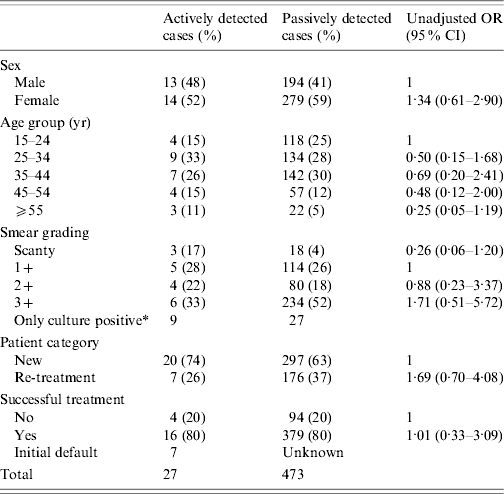
OR, Odds ratio; CI, confidence interval.
* Not analysed because cultures were not systematically done in the passively detected cases.
Three of those initial defaulters started treatment 4–14 months after the survey. The remaining four initial defaulters did not start treatment in the study area within the time period of the study. Of the 20 actively detected cases who started treatment, 16 (80%) were successfully treated which was a similar proportion as in passively detected cases (OR 1·01, 95% CI 0·33–3·09). Two of 27 (7%) actively detected TB case died, compared to 18/473 (4%) passively detected TB cases, but this difference was not significant (OR 2·02, 95% CI 0·44–9·20).
Of the 473 passively detected TB cases, 109 (23%) were interviewed. The interviewed cases did not differ significantly from the cases who were not interviewed with respect to sex, patient category (whether they were new or previously treated patients), smear grading, or treatment outcome (Table 2). However, the interviewed cases were significantly more often in the 45–54 years age group or underwent HIV testing (80% vs. 62%, OR 2·47, 95% CI 1·48–4·13). Of those who were tested for HIV, the results of the test did not differ significantly between interviewed and non-interviewed cases (Table 2).
Characteristics of the interviewed passively detected tuberculosis cases compared to all passively detected cases
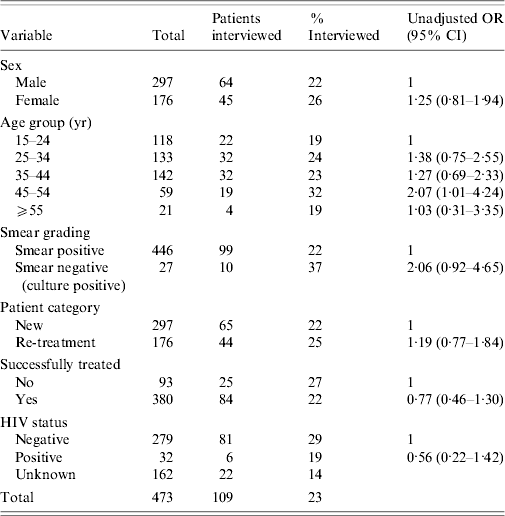
OR, Odds ratio; CI, confidence interval.
Passively detected cases reported the presence of the symptoms cough, haemoptysis, night sweats, fever, and weight loss significantly more often than those actively detected (Table 3). Furthermore, fewer cases detected by passive case detection belonged to the highest income category or used alcohol (Table 3). Passively and actively detected cases did not differ regarding education level, smoking behaviour or whether or not they had been in prison (Table 3). In the multiple logistic regression model including all the symptoms, only weight loss remained significantly different between the two groups (Table 4).
Comparison of symptoms and socio-economic status between actively and passively detected tuberculosis patients
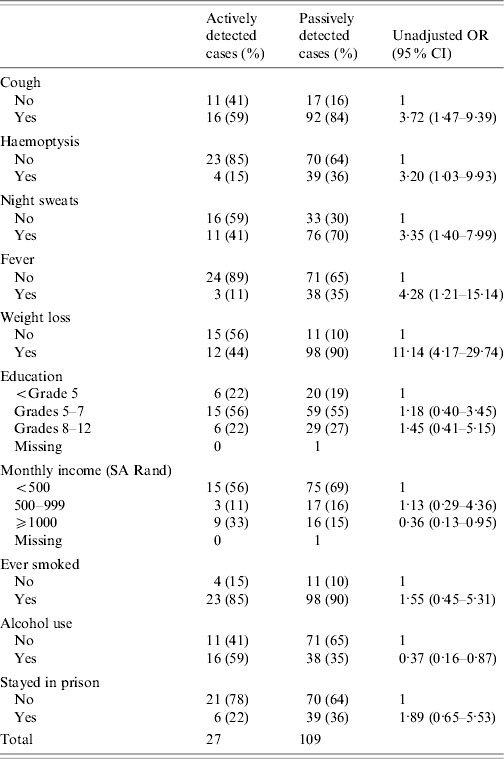
1 GBP=14 Rand.
Multiple logistic regression analysis of symptoms in actively and passively detected cases
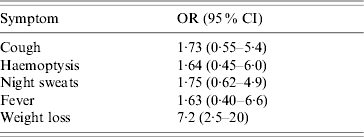
Eighteen (67%) of the 27 actively detected cases were smear-positive compared to 446/473 (94%) of the passively detected cases and 99/109 (91%) interviewed passively detected cases. Three of the 18 (17%) actively detected smear-positive TB patients were initial defaulters. For those who started treatment there was no statistical significant difference in successful treatment outcome between smear-positive actively detected cases (80%) and the smear-positive passively detected cases (80%) (OR 0·99, 95% CI 0·27–3·58). All 99 interviewed smear-positive passively detected cases were symptomatic (having at least one of the five symptoms) compared to 78% of the smear-positive actively detected cases. Of all the symptoms only the presence of weight loss was significantly different (OR 14·22, 95% CI 4·38–46·16) between actively (44%) and passively detected (92%) cases.
DISCUSSION
Passive case finding of TB cases may lead to delay in diagnosis and treatment and thus contribute to the transmission of TB. In this survey we actively screened 15% of a community for TB and detected a considerable number of TB cases: by extrapolation, if the total community had been surveyed we would have detected about 180 additional TB cases of whom about 120 would have been smear positive. We estimate that 107 of the bacteriologically positive cases would have been successfully treated (80 smear-positive cases). Thus, active case finding resulted in a significant number of the annual caseload of about 260 cases of pulmonary TB (200 of whom are smear positive), to be detected early. Active case finding might therefore potentially reduce the spread of TB by ensuring that a higher proportion of the community receive treatment. However, as illustrated by our results, ensuring completion of treatment remains a problem, particularly for those with minimal symptoms.
Treatment outcomes did not differ between actively and passively detected TB cases, but actively detected TB patients experienced a high initial default rate (26%). This high initial default rate may be due to a lack of motivation to start treatment because of the absence of symptoms. Three of the seven initial defaulters started treatment 4–14 months after diagnosis, probably only when the disease progressed and symptoms worsened. For passively detected TB cases we only had information on the treatment outcome once treatment was started and we could therefore not report on the proportion of initial defaulters. Other studies reported an initial default rate of 8–15% in the NTP [Reference Buu8, Reference Squire9]. In a study that investigated the use of a sputum register in the Stellenbosch region of the Western Cape Province in South Africa an initial default rate of 18% was found in passively detected cases (E. Botha, unpublished data). Weight loss may be the strongest reason to seek health care and treatment as this symptom was experienced by 90% of the passively detected TB cases.
Actively detected TB cases were more often in the highest income category than passively detected TB cases. A higher income may mean that actively detected TB cases have jobs more often than passively detected cases and that they therefore have less time to visit the clinic. Alternatively they may have health insurance because of their higher income and visit private health care which may lead to delay in treatment. Actively detected TB cases more often used alcohol compared to passive TB cases but this was not related to initial default. There may also be other potential differences between actively and passively detected TB cases, e.g. nutritional status, but we did not measure these.
The results of our study support those from community surveys performed in India and Nepal where actively detected cases were less symptomatic and less infectious than passively detected patients [Reference Santha10, Reference Cassels11]. These studies also showed a high initial default rate in actively detected TB cases varying from 10% in the study by Cassels et al. [Reference Cassels11] to 23% in smear-negative and 32% in smear-positive cases in the study of Santha et al. [Reference Santha10]. Contrary to our study these authors found that passively detected TB cases experienced better treatment outcomes than actively detected cases. Other studies compared active case detection by symptom or chest X-ray screening of high-risk groups with passive case detection [Reference Monney and Zellweger12–Reference Ward14]. These studies documented that patients who were actively detected were more frequently asymptomatic or had a shorter duration of symptoms than passively detected cases. In two of these three studies treatment outcomes did not differ between cases detected by screening and cases detected passively and in the third study treatment outcomes were not reported [Reference Monney and Zellweger12–Reference Ward14]. Initial default rate in actively detected cases were not mentioned in these studies although Monney & Zellweger [Reference Monney and Zellweger12] reported that anti-TB medication was started within a month of their stay in Switzerland for 72% of actively screened TB patients.
Active case finding by a community survey is an expensive and time-consuming method of case detection and studies need to determine the cost-effectiveness of such an intervention. Enhanced methods of case detection such as screening of household contacts or high-risk subgroups such as HIV-infected individuals may be a cheaper alternative to a community prevalence survey.
The power of our study was limited by small numbers as we could include only 27 actively detected cases. Nonetheless we were still able to show differences between actively and passively detected cases. There are some differences in the selection for diagnostic evaluation between actively and passively detected cases which make comparing the two groups difficult. This includes the fact that being symptomatic is inherent to passive case finding and that in the NTP cultures are not routinely done while in the community survey sputum samples of all cases were cultured. It is thus not surprising that the passively detected cases had significantly more symptoms than the actively detected cases. We attempted an analysis on the subsample of smear-positive cases, but the group was too small to show significant differences between actively and passively detected cases in treatment outcomes or symptoms, except for weight loss. A further limitation is that actively detected cases were interviewed before they knew they had TB while passively detected cases were interviewed soon after diagnosis. This could have led to recall bias as the passively detected cases could have remembered and reported their TB-related symptoms better than the actively detected cases. Another limitation of this study is that the actively detected cases were diagnosed and interviewed in 2002 while the passively detected patients were diagnosed and interviewed in 2004 and 2005. However, since the period between the community survey and the data collection for the passively detected patients was short we did not expect any bias. We used convenience sampling for the passively detected cases. This could have introduced a bias as we studied only the cases that were easy to approach and they may have had different characteristics than the other cases. However, the comparison of interviewed and uninterviewed passively detected cases did not show large differences between the two groups.
In conclusion, this study shows that active case detection results in earlier detection and treatment of TB cases than passive case detection thereby possibly reducing transmission of M. tuberculosis in the community. However, the actively detected cases were less symptomatic and probably had less severe disease. Although the TB cases detected by the community survey had similar insufficient treatment outcomes as TB cases detected in the TB programme, they experienced a high initial default rate. Strategies for developing more effective means of engaging actively detected TB cases in treatment need to be investigated if active case detection methods are going to be used in the future. The cost-effectiveness of community surveys for active TB case detection also needs further investigation.
ACKNOWLEDGEMENTS
We thank Chrissie Louw, Lelani Abrahams, Jerome Cornelius and Susan van Zyl for doing the interviews with the patients. We also thank Dr Ivan Toms, Executive Director, City Health, and the Provincial TB Programme for permission to work in the study area. We are grateful to Sandra Kik for her suggestions to improve the article. The Lung Health Survey was funded by Stellenbosch University (through funding from the South African Department of Trade and Industry, THRIP fund) and the University of Cape Town Lung Institute. The GlaxoSmithKline Action TB Programme provided research grants for developing and maintaining an epidemiological field site and for doing a study aimed at identifying surrogate markers for response to treatment in TB patients.
DECLARATION OF INTEREST
None.



