

It is well documented that adolescence is a unique phase of life in which the transition from childhood to adulthood occurs, and it includes physical, cognitive, neurodevelopmental, social, and emotional development (Lerner & Steinberg, Reference Lerner and Steinberg2009; Steinberg & Morris, Reference Steinberg and Morris2001). A growing understanding of how adolescent health affects future wellbeing (Sawyer et al., Reference Sawyer, Afifi, Blakemore, Dick, Ezeh and Patton2012) implies that adolescence is critical (Schlafer et al., Reference Schlafer, Hergenroeder, Emans, Rickert, Adger, Spear and Resnick2014) in determining future psychological health.
Stress has been defined as internal or external demands that strain or exceed coping resources (Lazarus & Folkman, Reference Lazarus and Folkman1984), or as ‘an event, situation or combination of situations in which demands are perceived by the child or adolescent as exceeding his or her capacity to comfortably respond’ (Smith & Carlson, Reference Smith and Carlson1997, p. 232). Physiological responses to stress are complex and affect health adversely, particularly if the stress lasts or becomes chronic, and even more so when followed by negative changes in lifestyle (McEwan, Reference McEwan2008). It has been suggested that subjective health complaints in adolescence may relate to the perceived stress and demands that occur during that phase of life (Wiklund, Malmgren-Olsson, Öhman, Bergström, & Fjellman-Wiklund, Reference Wiklund, Malmgren-Olsson, Öhman, Bergström and Fjellman-Wiklund2012). The World Health Organization (WHO, 2014) emphasises the need for global attention on adolescent health, not least in relation to the reported top causes of adolescent death, including suicide.
How adolescents cope with stress is consequently of importance. Compas, Connor-Smith, Saltzman, Thomsen, and Wadsworth (Reference Compas, Connor-Smith, Saltzman, Thomsen and Wadsworth2001) define coping as ‘conscious volitional efforts to regulate emotion, cognition, behaviour, physiology, and the environment in response to stressful events or circumstances’ (p. 89). They further point out that the biological, social, cognitive, and emotional changes that adolescents undergo constrain this process. Research on adolescent coping has been ongoing for some decades; however, consensus has not been reached over the most appropriate coping scale to use in this population. A critical review of six adolescent coping scales (Sveinbjornsdottir & Thorsteinsson, Reference Sveinbjornsdottir and Thorsteinsson2008) revealed that all of the test developers made a number of poor statistical choices during the development of each scale that led to serious psychometric limitations for all the scales. In light of the review, further empirical research on adolescent coping was suggested, whereby researchers were urged to follow best practice as recommended for test development in relation to item selection, the representativeness of samples, and statistical procedures. Furthermore, the importance of awareness and understanding of the numerous possible choices to be made when implementing exploratory factor analysis (EFA) was stressed. Following these recommendations, the recently published Measure of Adolescent Coping Strategies (MACS; Sveinbjornsdottir & Thorsteinsson, Reference Sveinbjornsdottir and Thorsteinsson2014) was developed according to strict guidelines for test development (AERA APA NCME, 1999) and using both EFA and confirmatory factor analysis (CFA; Child, Reference Child1990; Gorsuch, Reference Gorsuch1983; P. Kline, Reference Kline1986, Reference Kline1993, Reference Kline1994; Nunnally, Reference Nunnally1978; Tabachnick & Fidell, Reference Tabachnick and Fidell2001). The psychometric properties of the MACS proved sound across two distinct cultures (Sveinbjornsdottir & Thorsteinsson, Reference Sveinbjornsdottir and Thorsteinsson2014) and seems to be the first adolescent coping scale to hold its factor structure across populations; in this case, Australia and Iceland. The development of the MACS comprised three independent studies including more than 10,000 adolescent participants. Consequently, the MACS was presented as a cross-cultural, adolescent coping scale and, as such, a foundation for a psychometrically derived theory on adolescent coping, the first of its kind within that field of research.
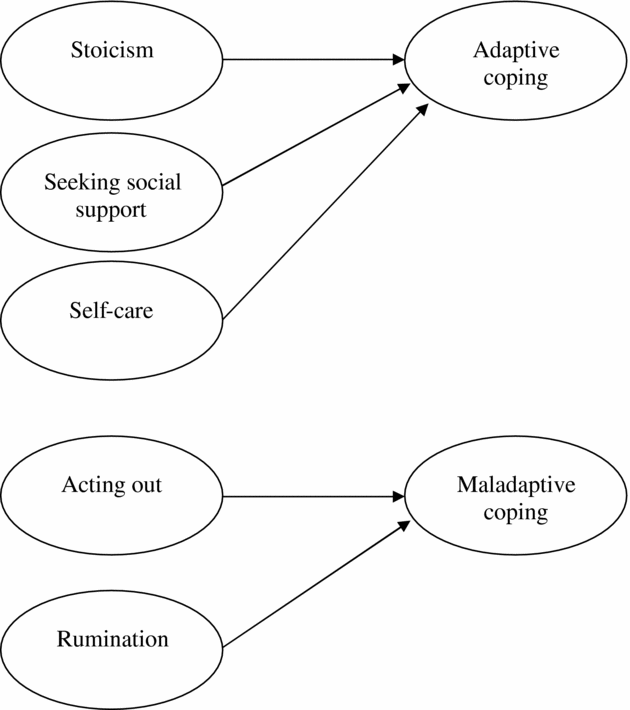
The MACS classifies adolescent coping into two dimensions, one adaptive (effective) and the other maladaptive (ineffective). Adaptive coping includes self-care (e.g., eating well and engaging in physical exercise), stoicism/distraction (e.g., enduring a stressful situation), and seeking social support. Maladaptive coping includes rumination (e.g., becoming depressed and/or anxious) and acting out (e.g., becoming aggressive and/or using drugs and alcohol; Sveinbjornsdottir & Thorsteinsson, Reference Sveinbjornsdottir and Thorsteinsson2014). Several studies have now employed the MACS successfully, finding that: (a) seeking social support and stoicism/distraction reduced the impact of negative life events on psychological health, while there was a positive association between rumination and distress and a negative association between rumination and satisfaction with life in adolescents in Botswana (Thorsteinsson, Sveinbjornsdottir, Dintsi, & Rooke, Reference Thorsteinsson, Sveinbjornsdottir, Dintsi and Rooke2013); (b) rumination and acting out mediate the perceived stress-depression relationship in Australian adolescents (Thorsteinsson, Ryan, & Sveinbjornsdottir, Reference Thorsteinsson, Ryan and Sveinbjornsdottir2013); and (c) rumination, acting out, and seeking social support affect changes in depressive symptomology over time, and stoicism/distraction and self-care affect changes in internet use over time (Thorsteinsson & Davey, Reference Thorsteinsson and Davey2014).
Although the MACS and the two-dimensional cross-cultural theory on adolescent coping, as explained above, has proven reliable and valid for populations in Iceland and Australia (Sveinbjornsdottir & Thorsteinsson, Reference Sveinbjornsdottir and Thorsteinsson2014), the theory needs to be tested in other cultures and countries. The United Nations Development Programme (UNDP) categorises 188 countries through their Human Development Index (HDI) into four groups — very high, high, medium, and low — based upon life expectancy at birth, mean and expected years of schooling, and finally, gross national income (United Nations Development Programme, 2016). In spite of cultural differences between Australia and Iceland, both of these countries share economic advances in a global perspective, scoring ‘very high’ on the HDI: Australia was ranked number 2 (HDI = 0.939) and Iceland was ranked number 9 (HDI = 0.921). Thus, further research is needed to test whether the theory holds across countries in other HDI categories as well as between countries within categories.
Fiji is a nation in the South Pacific with a ‘high’ HDI (0.736) and has been ranked number 91 (United Nations Development Programme, 2016). The UNICEF Pacific reports on the state of Pacific youth (UNICEF Pacific, 2005, 2011) stress that these youth face particular problems with economic and structural causes. Among guidelines following these reports, UNICEF Pacific emphasises the importance of improving data collection and analysis of data gathered from youth in the area. So far to our knowledge, no adolescent coping scale has been developed in the Pacific area. Therefore, it is of interest to employ CFA to examine the factor structure of MACS; that is, to examine whether the two-dimensional theory of adolescent coping (see Figure 1), adaptive versus maladaptive, is applicable in adolescent populations from less economically advanced countries with a lower HDI than either Australia or Iceland — in this case, Fiji.
A path diagram for the proposed two-dimensional theory of adolescent coping.
Hypotheses
It was hypothesised that: (a) the two-dimensional theory of adolescent coping would be applicable for Fijian adolescents; and (b) there would be significant sex differences in coping in Fiji, as was the case for the Australian and Icelandic adolescents for two of the five primary factors, that is, rumination and seeking social support, wherein girls score higher than boys.
Method
Participants
According to the Fiji National Census of Population in 2007, about 56.8% of the population are of iTaukei ethnicity, 37.5% are Indians, and a minority of around 5.7% are from other Pacific islands, Europe, and China (Fiji Bureau of Statistics, 2007).
The sample in the present study included a total of 809 adolescents from all educational directorates of Fiji (Sveinbjornsdottir & Thorsteinsson, Reference Sveinbjornsdottir and Thorsteinsson2016). The participating schools were chosen to represent the varied ethnicity in the Fijian population. There were 397 boys aged from 12 to 20 years (M = 15.79, SD = 1.25) and 409 girls aged from 13 to 19 years (M = 15.60, SD = 1.27) with three other participants not reporting their sex. Most participants spoke Fijian (n = 392), followed by Fiji Hindi (n = 330), English (n = 42), Gujarati (n = 10), or other languages (e.g., Rotuman, Chinese, Marathi, Kiribati, Tuvaluan, Korean, Pidgin, Nauruan, Urdu, or Bavan). Most of the participants (96.8%) were born in Fiji.
The Australian sample was derived from the earlier study in which the MACS was developed and which examined 3,034 adolescents, of whom 1,713 were Year 7 students (1,013 girls, 695 boys, 5 unspecified) and 1,321 were Year 10 students (822 girls and 496 boys, 3 unspecified). There were 6,908 Icelandic adolescents in the same study, of whom 3,351 were Year 7 students (1,693 girls, 1,635 boys, and 23 unspecified) and 3,557 Year 10 students (1,732 girls, 1,805 boys, and 20 unspecified). The mean age of the Australian Year 7 students was 12.33 years (SD = 0.56) and 15.28 years (SD = 0.57) for the Year 10 students; and for the Icelanders in these years, the means were 12.04 years (SD = 0.25) and 15.07 years (SD = 0.30) respectively. For further demographic description of the Australian and Icelandic participants see Sveinbjornsdottir and Thorsteinsson (Reference Sveinbjornsdottir and Thorsteinsson2014).
Measures
The English version of MACS (Sveinbjornsdottir & Thorsteinsson, Reference Sveinbjornsdottir and Thorsteinsson2014) was used for the present study in Fiji. English is the official language used throughout the Fijian educational system from Year 1. However, in order to examine whether there might be slight differences between the Australian and Fijian use of the English language, a pilot study that included several adolescents from Suva, the capital of Fiji, was implemented. This pilot study showed that there was no need to edit the original version. The MACS is a 34-item scale with five first-order factors with five to eight items per factor; the factors are stoicism/distraction, acting out, rumination, seeking social support, and self-care. In the present study, each item was answered on a scale from 0 (never) to 3 (always) with mean scores calculated for each of the five factors. The MACS has been shown to have good reliability and validity across two different Western cultures (Sveinbjornsdottir & Thorsteinsson, Reference Sveinbjornsdottir and Thorsteinsson2014) and to be applicable in one African culture (Thorsteinsson, Sveinbjornsdottir et al., Reference Thorsteinsson, Ryan and Sveinbjornsdottir2013).
Procedure
Permission was gained from the Fiji Ministry of Education and approval from the ethical committee of the School of Education, University of the South Pacific (USP). Two researchers visited each school, one of them appointed by the USP, as suggested by the USP's ethics committee, and an assistant who distributed paper-and-pencil surveys to each participant. The survey was administered in eight secondary schools in Fiji during school hours, in classrooms with, on average, 35 to 40 students in each group. Students were informed of their right not to participate at all and/or to leave single questions unanswered. Thus, completing the questionnaire equalled consent. Standard explanatory information was read to participants; they were asked to think of a stressor and to rate their responses on the MACS in relation to that stressor. The survey took approximately 30 minutes to administer.
Statistical Analysis
AMOS structural equation model software was used to conduct CFA of the MACS primary factor structure (i.e., stoicism/distraction, acting out, rumination, seeking social support, and self-care) and of the two dimensions of coping, that is, adaptive versus maladaptive coping (Byrne, Reference Byrne2010; R.B. Kline, Reference Kline2011). Missing values were imputed using covariance-based statistics or the expectation-maximisation (EM) method (normal distribution assumption). Structural equation model indices were selected to cover the main facets of model fit. The goodness-of-fit index (GFI) was used as an absolute fix index. GFI ranges from 0 to 1, with values above 0.95 indicating a good fit. The comparative fit index (CFI) was also calculated. It ranges from 0 to 1 and values above 0.90 suggest a good fit. The root mean squared error of approximation (RMSEA) and squared root mean residual (SRMR) were calculated. SRMR with a value of zero represents a perfect fit between the model and the population covariance matrix. RMSEA values below 0.06 and SRMR values below 0.09 are generally interpreted as favourable. Finally, the Tucker-Lewis coefficient (TLI) was reported, with values close to 1.0 indicating good fit.
Results
CFA was used to test the MACS’ primary factor structure and the two dimensions. The CFA showed generally a good fit for the five factors under the two dimensions with GFI = 0.95, CFI = 0.87, TLI = 0.83, RMSEA = 0.06 [90% CI: 0.05, 0.07], SRMR = 0.06, and the ratio of χ2/df = 3.87 (χ2 = 309.38, df = 80).
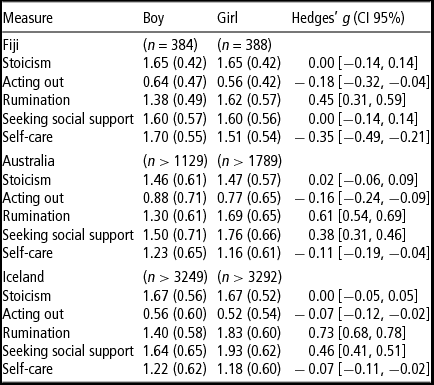
Table 1 shows where there are significant differences between boys and girls in Fiji for the five coping factors on the MACS. Of the five primary factors, there were three significant differences between the sexes. Girls were more likely to ruminate than boys, but they were lower on acting out and self-care than boys. Table 1 gives an overview of the pattern of findings for the five factors on the MACS in Fiji, Australia, and Iceland. Girls in Fiji had lower acting out, higher rumination, and lower self-care than boys in Fiji, mirroring findings in Australia and Iceland. Stoicism/distraction was identical for boys and girls in all countries.
Means (SD) for Comparisons of Boys and Girls on the Different Factors of MACS
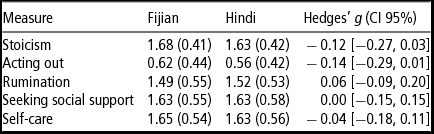
As a post hoc analysis, we compared the two main ethnic groups in Fiji. Ethnic groups were defined by language (i.e., Fijian and Hindi). About 392 participants identified Fijian as their mother tongue and 330 identified Hindi; the remaining 10.1% of participants who identified a language identified English (42), Gujarati (10), and other languages. Table 2 shows no significant differences between participants speaking Fijian and Hindi on any of the five MACS factors, given that the Hedges’ g 95% confidence intervals overlapped zero. A correlation matrix (Table 3) shows the relationship between the five primary factors.
Means (SD) Comparison for Coping by Language; Fijian (n = 392) and Hindi (n = 330)
Correlation Matrix for the Five Primary Factors of MACS, Fiji (N = 809)
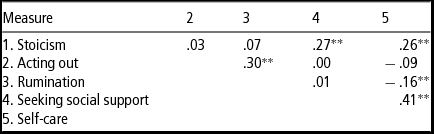
Note: *p < .05. **p < .001.
Discussion
The first and main hypothesis of this study was supported by a CFA. It confirmed that the adolescent coping scale, MACS, is applicable between countries across the two HDI categories ‘very high’ (Australia/Iceland) and ‘high’ (Fiji; as defined by the United Nations Development Programme, 2016), as had been the case between countries within the highest HDI category (Australia and Iceland; see Sveinbjornsdottir & Thorsteinsson, Reference Sveinbjornsdottir and Thorsteinsson2014). Thus, the MACS’ five primary factors of stoicism/distraction, seeking social support, self-care, rumination and acting out, comprised of two dimensions (adaptive and maladaptive), fit Fijian adolescents similarly to their Australian and Icelandic counterparts. This outcome renders further psychometric support, enriches the two-dimensional theory of adolescent coping as a cross-cultural phenomenon, and supports the MACS as a good coping scale.
The second hypothesis was partially supported. Thus, as expected, and is evident from the literature (see, for instance, Lyubomirsky, Layous, Chancellor, & Nelson, Reference Lyubomirsky, Layous, Chancellor and Nelson2015), Fijian girls were significantly higher on rumination than were Fijian boys, which is comparable with the difference between girls and boys in both Australia and Iceland. For the factor seeking social support, however, the expected sex difference in Fiji was not found (i.e., that girls score higher than boys), as for their Australian and Icelandic counterparts. Instead there was no difference between Fijian boys and girls. When comparing means for boys and girls on the seeking social support factor across the three countries, an interesting pattern was observed. The means for Fijian and Icelandic boys were similar, 0.60 and 0.64 respectively, whereas the mean for the Australian boys was somewhat lower, 0.50. The pattern of means for the girls was different to the pattern for boys. It was lowest for the Fijian girls (0.60) and highest for the Icelandic girls (0.93), with Australian girls in between (0.76). Previous research has found that increased gender inequality negatively affects women and young girls, reducing help-seeking behaviours (Barker, Olukoya, & Aggleton, Reference Barker, Olukoya and Aggleton2005; Umubyeyi, Persson, Mogren, & Krantz, Reference Umubyeyi, Persson, Mogren and Krantz2016). These results for girls in seeking social support reflects the gender inequality index (GII) ranking of the three countries: Iceland, 5; Australia, 24; and Fiji, 75, (United Nations Development Programme, 2016).
The differences between boys and girls followed the same pattern for stoicism/distraction, acting out, and self-care in the three countries. There was little or no difference between boys and girls for stoicism/distraction, while boys were higher than girls on acting out and self-care. The differences were generally small except for self-care in Fiji where the difference was moderate. Thus, it is interesting to note that sex differences between two cultures within the ‘very high’ HDI category are the same. On the other hand, sex differences between the two HDI categories ‘very high’ and ‘high’ are somewhat the same and somewhat different. It is for further research to define whether and/or how these differences may be related to the HDI and the GII.
The post hoc analysis suggests further that the MACS is cross-cultural as there were no significant differences in coping responses between the two ethnic groups of Fijians (citizens of Fiji), that is, iTaukei (ethnic Fijians) and Indian-Fijians, categorised by whether the mother tongue is Fijian or Hindi. This outcome renders further support to the MACS and the two-dimensional theory of adolescent coping.
Strengths and Limitations
The number of adolescents representing both ethnic groups of the Fijian population, as well as the diverse school directorates, is a strength of this study. The size of each ethnic group within the Fijian sample is close to the strictest of recommendations about sample sizes and proportions of participants per test item (Child, Reference Child1990; Gorsuch, Reference Gorsuch1983; P. Kline, Reference Kline1993; Nunnally, Reference Nunnally1978; Tabachnick & Fidell, Reference Tabachnick and Fidell2001). This makes psychometric inferences possible not only between the two HDI categories (very high and high), but also between the two cultures, that is iTaukei (ethnic Fijians) and Indian-Fijians, within the high HDI.
The main limitation of this study is that items included in the MACS were not selected from Fijian adolescents. It is possible that the different coping pattern within some of the primary coping factors between the two HDI categories, and the high correlations between some factors within dimensions (see Table 3) might be HDI related. Future research collecting coping responses from Fijian adolescents might further explain whether that is the case. Furthermore, the Fijian sample does not include a big cohort of younger adolescents like the Australian and Icelandic samples; thus it is older. However, the Australian and Icelandic samples of Year 7 and Year 10 students were merged, as the pattern of findings was similar for both years. Finally, an extensive comparison of different path coefficients across cultures was not attempted in the present study as the focus was on the model fit to test the relevant hypothesis.
Conclusion
The present study extended the two dimensional (adaptive vs. maladaptive) cross-cultural theory of adolescent coping that was established in Australia and Iceland to Fiji and added further psychometric support for the theory. Thus, there is growing evidence that the adolescent coping scale MACS is applicable across cultures and within cultures, as well as between the two highest HDI categories. This latest study gives researchers and health care professionals further support for the MACS as a reliable cross-cultural adolescent coping scale when conducting research or evaluating adolescent coping.
Acknowledgments
Thanks to the Faculty of Arts, Law and Education at the University of the South Pacific for support, and to Miliakere Leawere and the late Brynjar Ingi Skaptason for their valuable assistance. We also thank the Ministry of Education in Suva for support, and staff and students of secondary schools from all educational directorates of Fiji for their participation. Finally, we thank Natasha M. Loi for reading the manuscript and providing feedback.
Funding
This research was supported by a grant from The University of Akureyri Research Fund.
Declaration of Interest
The authors declare that they have no conflicts of interest.


 Open access

