



Until the end of the nineteenth century, rice was an alien food to most Mentawai, an indigenous people living in the Mentawai Archipelago, West Sumatra. On Siberut Island, the largest island in the archipelago, sago, banana, and tubers (primarily taro, but also, cassava, sweet potatoes) are the main staples while on the southern islands of Sipora, North Pagai and South Pagai, taro is a prominent source of food. Oral histories suggest that Mentawai had known rice as early as the eighteenth century, via their Malay neighbours, who lived temporarily in the archipelago as boat builders or traders of forest products. Since the twentieth century, Dutch colonial officers, missionaries, migrants, and various Indonesian state agencies have brought rice to the islands and strongly encouraged Mentawai to cultivate rice instead of their native staples, which these external entities consider to be tasteless, inferior, and backward. Eating rice, and especially wet rice (sawah, paddy) cultivation, have been features of civilisational and developmental projects that attempt to modernise the supposedly isolated, undeveloped, and ‘backward’ Mentawai.Footnote 1 Generally, Mentawai were eager to participate in such projects, at least in the early stages. However, after one or two seasons, they abandoned their sawah, for reasons that are explored here. To date, Mentawai have never fully integrated the cultivation of rice into their agriculture, nor do they voluntarily cultivate their sawah.
Earlier publications have offered different explanations for why rice is unfit for Mentawai, ranging from ecological reasonsFootnote 2 and the cynical denigration of local food,Footnote 3 to religious and labour considerations.Footnote 4 Rice cultivation has been shown to be problematic for local agricultural practices and resource management. It puts pressure on sago, taro gardens, pig husbandry, and diminishes the forest gardens that are more suited to the island's micro-climate and ecosystem.Footnote 5 The grain is also incompatible with the Mentawai sense of body and identity. Their bodies require sago, taro, and pork. A rice-based diet leaves them feeling hungry and unhealthy.Footnote 6 In this article, I offer an explanation for their ambivalence towards rice from a cultural perspective. My explanation stems from the fact that Mentawai have had diverse, and often ambiguous responses to the ‘modernisation projects’ imposed upon them by primarily external agencies.Footnote 7 Modernisation projects here refer to ideas that position Mentawai as ‘uncivilised, backward, primitive, isolated’ as well as endeavours that seek to bring them ‘progress’ and ‘advancement’. These projects have forced Mentawai to inhabit centralised government settlements, abandon important aspects of their culture and religion, and change their agricultural practices. Cultivating and consuming rice are integral parts of any modernisation project and are both symbols and a concrete device within these modernisation processes.
Rice embodies the power of sareu,Footnote 8 a term referring to non-Mentawai subjects, but in particular the Minangkabau people who are the face of these modernisation projects. The Minangkabau have been the main implementers of modernisation, acquiring power and authority from the state to instruct and decide when, where, and how Mentawai should cultivate rice. The Minangkabau represents an ethnic group in Indonesia which is considered maju (advanced) and modern as shown by their high educational levels, great culinary tradition, sophisticated rice farming system and regular rice consumption.Footnote 9 Hence, rice represents and offers, literally, a taste of modernity and an opportunity for Mentawai to show to external entities that they too are a modern people. Yet, participating in rice cultivation presupposes Mentawai subordination and ties them to asymmetrical power relations with external actors. I argue that the Mentawai reluctance to cultivate sufficient and sustainable rice production and their appetite for rice stem from an ambivalence surrounding their desire to taste modernity without losing their autonomy.
Rice, status, and modernity
Anthropologist Marvin Harris famously theorises that utilitarian principles universally regulate eating habits and food usage.Footnote 10 The selection or rejection of particular foods is determined by the cost-benefit calculus of the society's entire constellation of material constraints and opportunities. The case of rice in Southeast Asia is a good test for this theory. Rice is the most important food crop in this region. However, explanations for rice cultivation based on necessity or utilitarian principles alone are insufficient. Rice does not use land more efficiently than tubers or sago.Footnote 11 The risk of failure in rice cultivation is greater than other starch foods. It differs in terms of dependencies and social hierarchy, and requires intensive labour and care. It also attracts more pests and disease than taro or sago.Footnote 12 Arguably, rice cultivation and consumption are rooted in the social, symbolic, and cosmological roles it has engendered. The great effort necessary to domesticate and grow rice confers both social prestige and cosmological status onto this foodstuff.Footnote 13 Other scholars note that the importance of rice has only emerged in recent times, linking it to flourishing trade and population growth in ‘the age of commerce’.Footnote 14
Rice has long been perceived as a hallmark of high civilisation and a defining marker of the status and prestige of a particular society. Throughout Southeast Asia, growing rice expresses the ability of humans to transform nature and successfully connect with the world of spirits.Footnote 15 The association of rice with prestige likely stems from politically dominant cultures (Indian, Chinese, and Javanese) who are also predominantly rice growers and eaters.Footnote 16 In modern times, rice consumption and cultivation have been at the heart of the ideological construction of colonial intervention and modern-state formation, as well as a notable symbol of development across the region.Footnote 17 This is reflected in the prevalence of ‘rizification’ in policy and academic publications, an idea suggesting that rice is the ultimate goal and crucial indicator of progress in agricultural development.Footnote 18 Rice has become a central political, economic, and cultural tool throughout the region for progressing from subsistence to semi-intensive, and finally, industrialised agriculture.Footnote 19 Indeed, rice enjoys a multiplicity of meanings as food, crop, commodity, and cultural item imbued with various symbolic valences.Footnote 20 Yet, the association of rice with modernity and civilisation lingers in the collective imagination in Southeast Asia.Footnote 21 For example, the status of a society free from food insecurity and poverty in the region is still measured in terms of rice consumption.Footnote 22 In the Southeast Asian context, rice connotes the modern rather than the primitive, developed rather than backward, commerce rather than subsistence, progress rather than involution, industriousness rather than laziness. Cultivating and consuming rice is inherent to many Southeast Asian peoples’ self-identification as modern and civilised.
A great deal has been written about how dominant groups, ethnic majorities, and nation states impose their vision of modernity and civilisation through rice cultivation.Footnote 23 However, non-rice producers and eaters (who are generally, but not always, seen as marginal societies) have sometimes used rice consumption to manipulate or articulate their own version of modernity.Footnote 24 Focusing on the ways in which minorities actively respond to modern ideas, this article deploys a dynamic approach to the study of food that moves beyond conceptualising rice solely as a passive symbol of, or metaphor for, modernity. In this articulation, food reveals itself to be a transformative agent operating in all societal processes, both materially and psychologically; a substance that ‘fundamentally constitutes, sustains, and nurtures social persons while it simultaneously produces and reflects social categories, symbols, and values’.Footnote 25 Rather than focusing only on symbolism and signs, or economically driven efficiency, I suggest that rice is a transformative substance used by Mentawai to change and construct themselves, motivate behaviour, mediate social relations with external actors, orient feelings, and deal with externally imposed versions of modernity.
Methods
This article draws on in-depth ethnographic research conducted among Mentawai living in Siberut Selatan (South Siberut) district (figs. 1 and 2). ‘Mentawai’ refer to all people who speak the Mentawai language, share an eponymous ancestor who once lived in Simatalu village in northwest Siberut, and have a claim on land in the Mentawai Archipelago, a chain of four main inhabited islands and a hundred small islets off West Sumatra. The population of Siberut Selatan is distributed across five villages and 37 hamlets and is home to about 9,500 inhabitants.Footnote 26 The majority of the population consists of Mentawai, but there are also about 1,500 non-Mentawai who mainly dwell in a migrants’ village enclave in Muara Siberut. The migrants are primarily of Minangkabau, Javanese, or Batak descent, and typically work as fishermen, traders, nurses, civil servants, or teachers. Indeed, Mentawai in this area are in no way homogeneous. They have different subcultures (based on language dialects, rituals, housing, for example) and landscapes (coastal area, hinterland, for example). However, these internal variations do not significantly impact the ways people produce and consume rice.
Map of the Mentawai Islands Regency. (Drawn by Tom Bayu)

South Siberut subdistrict. (Drawn by Tom Bayu)

The data presented here is derived from a combination of ethnographic research and archival study. I spent a total of 12 months conducting field research in Siberut between May 2013 and December 2014. Archival research provided a historical account of rice cultivation and consumption since the early twentieth century. Such documents include notes of colonial officers and missionaries, reports by governmental and nongovernmental agencies, and news items in the local media. A handful of newspaper articles related to rice cultivation were published in the 1970s and 1980s. The recent written documents about rice cultivation and consumption were collected from a local newspaper, Puailiggoubat, published by the largest Mentawai NGO, Yayasan Citra Mandiri Mentawai (YCMM).Footnote 27
Food, gardening, and Mentawai autonomy
Mentawai in South Siberut are socially organised in uma: autonomous, patrilineal, and exogamous groups based on religious rituals, political decisions, and landowning units. Uma is a generic Mentawaian term equivalent to the anthropological terms ‘kin group’ or ‘clan’.Footnote 28 An uma connects living and dead group members to each other through bonds of bodily substances like blood and land. An uma roughly consists of one to a dozen nuclear families (lalep), amounting to between two to a hundred or so individuals. The social relations within and between uma are strictly egalitarian, at least for adult men. Political leaders are absent, and all decisions are ideally taken after collective consensus. Traditionally, each uma lived on its land in a large communal house (also called uma) along the banks of the main rivers that cut through the dense tropical lowland rainforest in the hilly landscape. Over the last six or seven generations, uma have, on the whole, lost any territorial autonomy they once had. Internal quarrels and migrations, exogamous marriage, the pursuit of places to grow cash crops, and a wave of resettlement projects have caused each uma and its members to disperse and resettle in other territories while retaining important rituals and political autonomy.Footnote 29
Part of the autonomy of an uma and its members is generated through their ability to produce sufficient food. Each uma has its land and every adult member has gardens (mone) in several places, consisting of a combination of staple foods, fruit trees, and cash crops. Sago and taro are the two principal subsistence crops (fig. 3). The sago palm being the most abundant and important crop is generally cultivated in sago gardens (mone sagu) located along the banks of major rivers, creeks, or streams. All the sago palms on the island have been planted over centuries and do not grow wild, although their cultivation is not as labour intensive as grain cultivation.Footnote 30 People regularly select a sucker from healthy palms and transfer the rootstock to a new field. Once the plant matures, it can flourish across the riverbank independent of human interference. Apart from starch, sago gardens provide various foods and non-edible resources. For instance, sago gardens are used for keeping pigs and chickens. The palms also supply a vital source of protein in the form of sago grubs. Valuable non-edible products include leaves for roofing, bark for house walls, and firewood.
Sago and taro, the two most important Mentawai staples. (Photograph by Author)
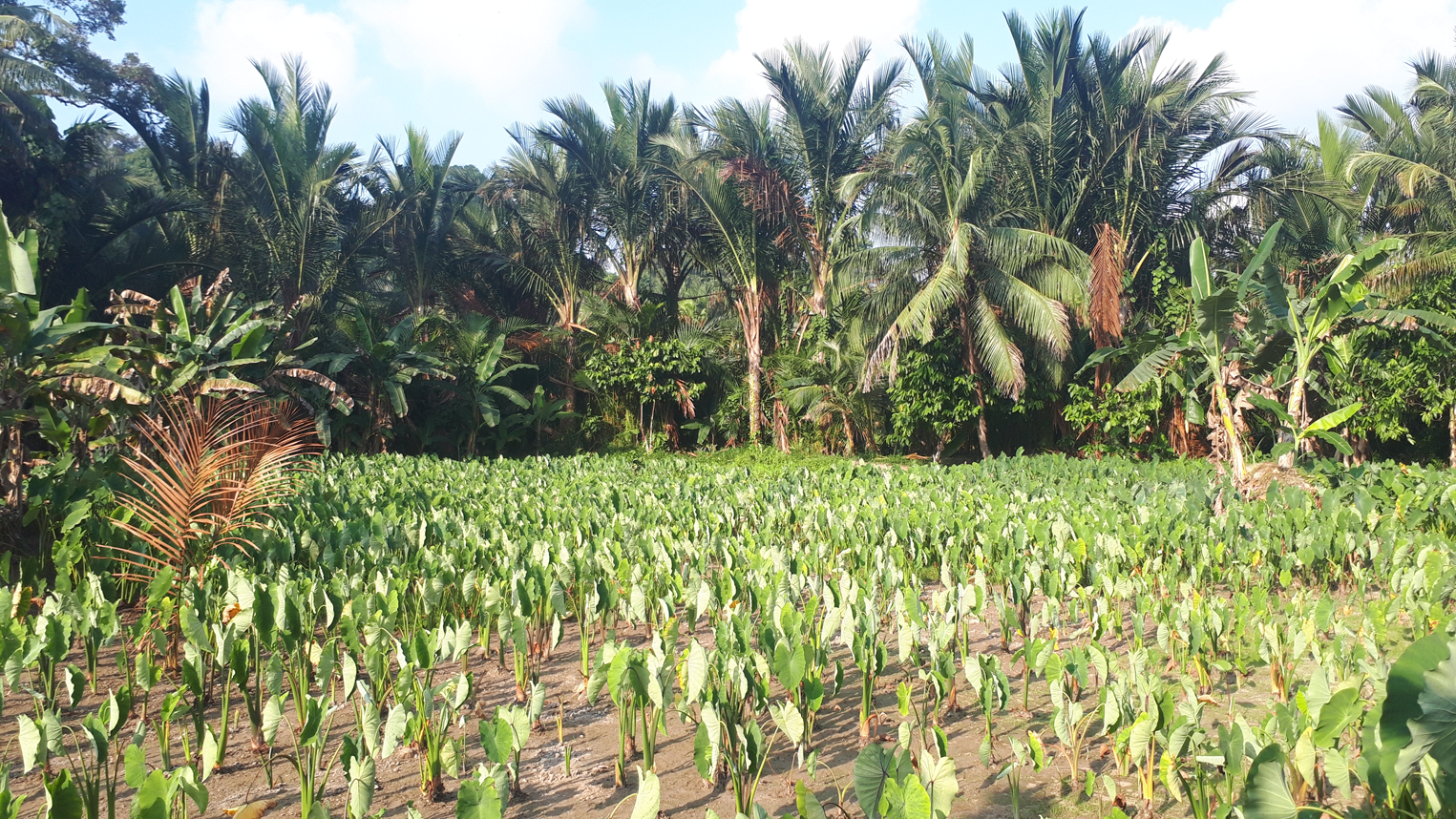
The second important staple, taro, is cultivated in taro gardens (pugettekat). Most of these gardens are located along river meanders. Taro may also be cultivated inland alongside sago gardens (as shown in fig. 3) and as part of forest gardens. Taro gardens are usually fenced with small trees, which are pruned regularly to keep pigs out. Taro gardens are a gendered, heavily domesticated space. At some stages of cultivation, men may help their wives prepare the garden by ploughing the ground or erecting fences, but women are in charge of the entire cycle of planting, weeding, harvesting, and replanting. Taro gardens are filled not only with their eponymous tubers, but also with banana, sugar cane, cassava, sweet potato, and other edible plants. Frogs, eels, and catfish are abundant in and around the gardens in the rainy season.
The products of the garden not only exist for subsistence, but also yield essential items for social exchange. Gardens as a whole or individual sago and fruit trees are always part of the local legal system and gift-economy. Paying bride price, providing a gift for a friend, and compensating (luluijet) for a social transgression all require the handover of sago plants and domestic animals. Similarly, expanding networks of friends and allies outside the uma and anticipating future events are only possible if an individual Mentawai, an individual household, or an uma has gardens in many places. Hence, sago gardens, taro gardens, and pigs are continually being cultivated even if they are already abundant.
The importance of gardens and gardening is linked to how Mentawai define their socially perceptible qualities. Mentawai self-identification is primarily characterised by their engagement in social relationships and productive labour to cultivate food in the garden. If one asks a Mentaiwan for the difference between the Mentawai and non-Mentawai, he/she would generally say that the Mentawai are forest cultivators. People identify themselves with the statement, ‘we are Mentawai, the gardeners’ (kai, si mattawai sipumone). Any person and family who engages in a combination of gardening is referred to as a genuine Mentawai (mattawai siburuk) with distinctive attributes, social prestige, and recognition. A strong body (kelak tubu) is a standard qualification. Kelak tubu is formed through years of clearing forest, planting tubers and banana, grating sago starch, and tending pigs. The term ‘kelak tubu’ is also associated with the term healthy body (marot tubu). In addition to physical attributes, genuine Mentawai must also possess certain gardening knowledge, skills, and experience.
The perceptible qualities of body, knowledge, and gardening skills are intricately intertwined with the qualitative traits of a person. A very good person (simaeru) is one who has a continuously and actively productive body (majolot tubbu), or who is always doing something (mamoile kabbei). Both terms literally mean ‘having hands that are always doing something useful and productive’. A diligent person (simamoile kabei) acts independently, without another person's direction. In contrast, a bad person has an inactive body (takmei tubbu) and keeps his/her body in place/inert (mabeili). A lazy person (sitakmei tubbu) is inactive, always sitting (mutobbou), eating (mukom), or sleeping (merep), activities associated with passivity. A lazy person possesses an immobile mind and perspective (patuat), making him or her vulnerable to the subordination of others.
Gardening and food production are thus intertwined with the ideal formulation of autonomous social actors as the loci of decision-making powers. Autonomy refers to both the independence of making a decision and a legitimate sphere of decision-making.Footnote 31 It is one's autonomy that enables one to refuse or accept another's request or command. The concept ideally applies to every Mentawai but, in practice, is limited to married men and women who produce children and sufficient food. Autonomy is primarily attained through the family, a social institution that enables men and women to share their labour and produce children and food. Autonomy can also be attained outside of the family sphere. Having sago gardens or many pigs enables a person to expand their social exchange networks and initiate or negotiate new social exchanges beyond his/her household and uma. A person with many pigs or sago gardens has a greater chance of a successful social exchange. This is primarily because possessing garden products generates social status that can influence the perspective of others.
Autonomy is a principal Mentawai social value in which the relative worth of a social person is judged based on his/her ability to adopt roles within the community commensurate with their stage of life and family status, their relative prestige and influence, and their capacity for leadership and political effectiveness. Sago palms, tubers, and fruit trees are necessary not only for subsistence, but also for defining the autonomy of individual Mentawai. Even though Mentawai see sago, taro, and other garden products as part of their self-sufficiency and autonomy, official actors perceive these as the core of a primitive culture that prevents Mentawai from becoming modern citizens alongside the majority of Indonesians. From a non-Mentawai perspective, sago has long been perceived as the food of lazy and primitive peoples, while pigs are seen as unclean animals.Footnote 32 The ultimate way to uplift Mentawai from their backwardness into modernity would be to substitute their pig husbandry with mainland animals such as cows, goats, or buffalos, while forcing or encouraging them to cultivate and consume rice.
Rice cultivation and modernisation
The proposal for rice cultivation on the island of Mentawai began in the early twentieth century after a small military Dutch garrison was established in Muara Siberut in 1911. There was a clear tendency among the Dutch to see Mentawai cultivation and culture as inefficient, primitive, and ripe for abolition. For instance, a report written by a Dutch military officer states that the Mentawai are ‘lazy, undeveloped, and stupid’.Footnote 33 The Dutch officers stationed in Muara Siberut tried to introduce wet rice cultivation, but soon realised that it was impossible to force the scattered Mentawai to replace their culture of cultivating sago and pigs with efforts to provide a stable supply of rice to the colonial officers. The officers realised it was impossible to ask Mentawai to do collective work as they were scattered all over the island and maintained their political autonomy and had a great degree of self-sufficiency. Working for others was a virtually nonexistent idea. Furthermore, there were no authority figures they could ask to discipline the population. It would be easy for Mentawai to escape from any form of control. It was ‘a nightmare for Mentawai to surrender their collective labour (kampungdiensten) and become forced labour’.Footnote 34
The colonial authorities invited Protestant missionaries from the Rheinische Mission in Wuppertal, Germany, to start the ‘civilising process’. A German missionary posted in Siberut, Friedrich Börger, believed that rice cultivation was key to directing Mentawai towards ‘god and progress’.Footnote 35 Although Börger was rather moderate compared to the radical changes propagated by his predecessor, who was killed by Mentawai, he believed that Mentawai were lazy and saw rice cultivation as way to get them to understand hard work.Footnote 36 Börger believed that rice was more nutritious than sago and taro and its cultivation would be a way to relieve women from their taro gardening chores. Moreover, rice cultivation would change the traditional way of life as characterised by long periods of taboos, elaborate animist rituals, and a deep belief in the forest spirits. He saw it as an ideal way to fight ‘persistent paganism’.Footnote 37 By producing rice, people would have more time for cultivating rice in the sawah, abandon their animist rituals and associated practices (hunting, taboos), and eventually join the Church.
To the missionary, rice consumption and cultivation were symbols of Christianity, progress, and civilisation. In the mid-1920s, Börger instructed some Protestant followers from Katurei village to dig a small paddy field in Muara Siberut, imitating the irrigated paddies of Java. Oral history reveals that this effort did not bear positive results. The pond was not well irrigated and lacked water in the dry season. The rice did not grow well and did not produce the expected yields in these conditions. In the wet season, the field was swept away after the flooding of the Siberut rivers and a series of tidal waves. Any remnants of rice were soon attacked by mice and rats from the surrounding forest. After a few attempts, the Dutch officers reported that ‘all efforts to familiarise the local population with rice cultivation have been in vain’.Footnote 38
Following independence in 1945, there was no immediate agenda in the newly formed Republic of Indonesia for dealing with Mentawai. In West Sumatra, however, it was already understood that some aspects of Mentawai culture hampered the formation of the modern state. A provincial policy to do away with this putative backwardness was soon developed. The West Sumatran government continued Dutch efforts to bring this ‘backward’ people into ‘modern life’.Footnote 39 The West Sumatran policy began with attempts to create a large and centralised village, abolish traditional religion, modify bride wealth payments, and prohibit practices considered primitive, such as tattoos, long hair, loincloths, and the hunting and eating of primates.Footnote 40 The introduction of rice cultivation and the campaign to cultivate cash crops more intensively were integral to this policy, and a way to encourage people to become a part of Indonesia's national culture. In 1955, the West Sumatran government created a demonstration rice field plot in Muara Siberut and asked some Minangkabau people to demonstrate rice cultivation. However, the project failed to encourage Mentawai to plant rice, leaving some Minangkabau volunteers to convert the small swamps surrounding the estuary of the main rivers into sawah. While Mentawai were reluctant to cultivate rice, they swiftly adopted the cultivation of other newly introduced cash crops (such as cloves) and intensively planted established commercial crops (such as coconuts) in the coastal areas. By the mid-1960s, a significant number of Mentawai from the coastal villages of Maileppet, Katurei, and Muara Siberut were already harvesting their cloves and exporting substantial quantities of copra. The first imported items they bought with money from cash crops, apart from clothes and machetes, were sacks of rice.
It was not until the late 1970s that a concerted effort to cultivate rice took place. The central government officially designated Mentawai as an ‘isolated people’ (masyarakat terasing). The Department of Social Affairs was in charge of the national programme of ‘civilisation and development’.Footnote 41 The main aim of the project was to integrate Mentawai into mainstream social and cultural life. The West Sumatran government, consisting mostly of Minangkabau officers, was the primary executor and face of the project. Rice cultivation became an indicator of the level of development and reflection of local administrative performance. An officer stated that rice cultivation was ‘the perfect way to fight complacence and laziness of the people’ and obliged Mentawai families to cultivate a minimum of seven kilograms of rice seeds in a paddy field.Footnote 42 Each resettlement hamlet or village was forced to cultivate collective sawah in swampy areas along riverbanks, slightly separated from the forest gardens. A regular patrol was organised and police officers were brought in to monitor the progress. Any dissidents were publicly embarrassed and punished by asking them to weed grass or cut their hair, and by lecturing and patronising them on how to be good citizens. During the three decades of the resettlement project involving 22 hamlets (which started in 1972 and ended in 1997), 13 collective sawah were established in Siberut Selatan.
A regular pattern emerged: rice was planted only once or twice in the early years of the project. Tools and seeds were initially subsidised, making cultivation attractive. Soon, the rice had to compete with the quick regrowth of sago and the nutrients in the swamp were depleted while weeds and grasses became uncontrollable. Pests, mainly mice, rats, and birds, ferociously consumed the grain before harvest time. After a few harvests, rice cultivation lost its appeal. When the government officers took a more relaxed attitude, rice fields were completely abandoned. Almost all paddy fields created during the resettlement projects reverted to swamps and sago gardens.
While the story of rice cultivation is generally one of a failure taking place over decades, the idea of encouraging Mentawai to produce rice has never gone away. In 2014, the central government introduced a programme in the region called ‘Thousand-hectare paddy fields in the frontiers’. Under the current regime's ‘Developing from Marginal’ agenda, the Ministry of Agriculture established the frontier area as a site of territorial sovereignty, as well as a source of new food production.Footnote 43 More than 400 hectares of swampy forest and sago gardens in Siberut Selatan and 1,100 hectares across the entire island have been cleared and converted into sawah.Footnote 44 A number of people participated in the project and opened sawah at the expense of sago gardens and swampy forest. Yet, when the subsidy from the project stopped after one or two seasons, people simply abandoned their sawah.
There are many reasons why rice cultivation was bound to fail. Ecologically, rice suffers in competition with weeds and grasses. Heavy rainfall and a humid climate make wild plants overgrow. Rice is also highly susceptible to diseases and pests, and easily destroyed by birds, rats, mice, and wild pigs. There are storage problems in humid climates, especially when storing seeds for the following year.Footnote 45 Furthermore, abundant and sustainable rice cultivation in irrigated areas requires a certain level of cooperative organisation or labour exchange.Footnote 46 The collective labour exchanges and hierarchical social structure required for rice cultivation are alien to Mentawai.
There is also another reason why rice cultivation has been a failure in Mentawai. From the outset, planting rice was a foreign idea, introduced by external actors, and placing Mentawai as unequal subjects. It decisively pushed them into the role of beneficiaries of the modernisation project and created a hierarchal relationship with outsiders. Missionaries, Dutch officials, and especially Minangkabau officers, held authority over what Mentawai had to do. Mentawai had little say in terms of when, where, or how to establish cultivation sites. Their participation in rice production was always under immense pressure from outsiders. The hierarchy of social relations involved in rice cultivation has contributed to a sense of self-decentralisation among Mentawai. Symbolically, rice represents the power imbalance between Mentawai and non-Mentawai entities and acts as a marker between two lifestyles perceived as radically different by both Mentawai and sareu.Footnote 47 The introduction of rice is seen as a way for sareu to impose their power at the expense of Mentawai autonomy.
Lure of sweet rice
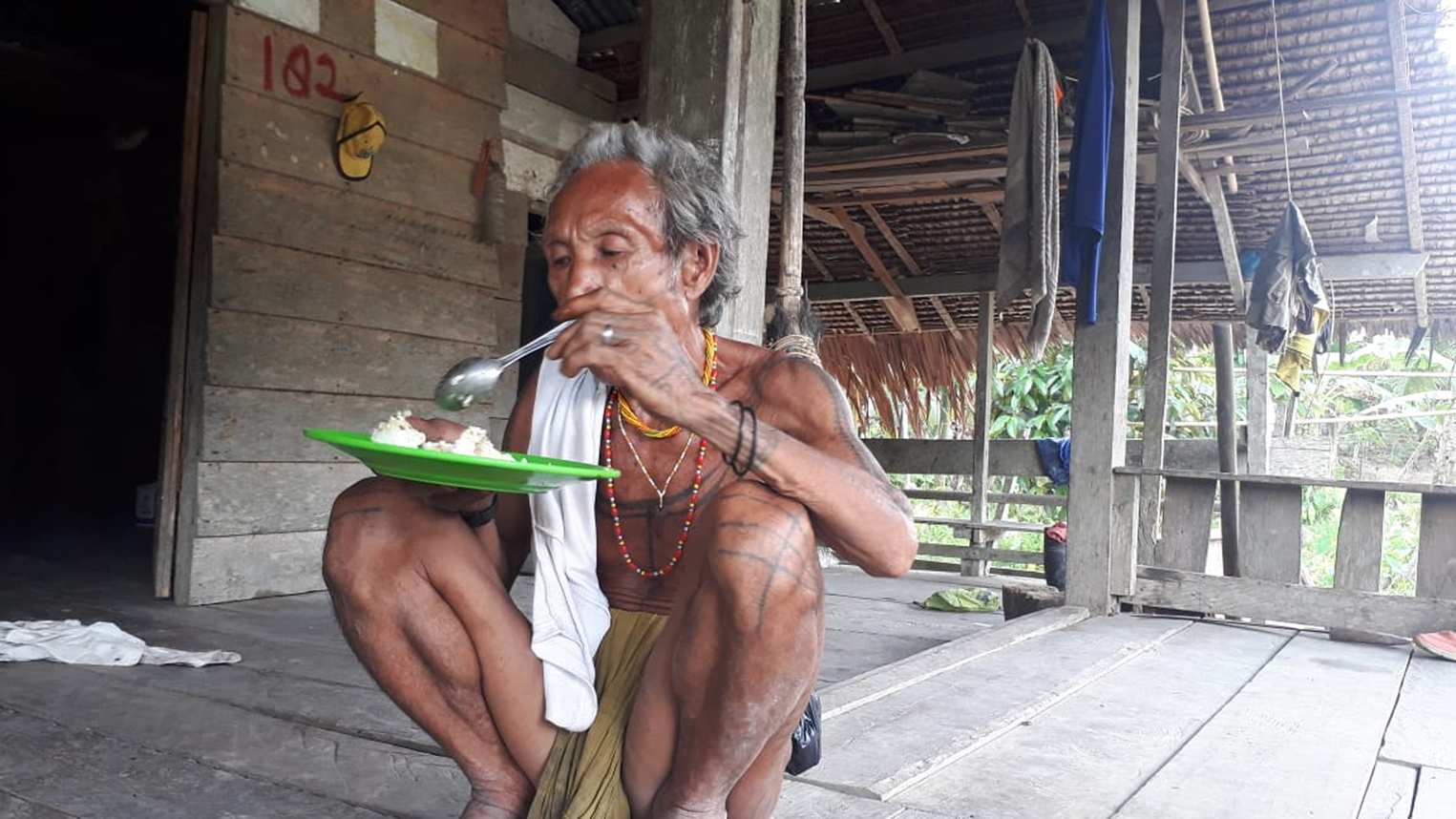
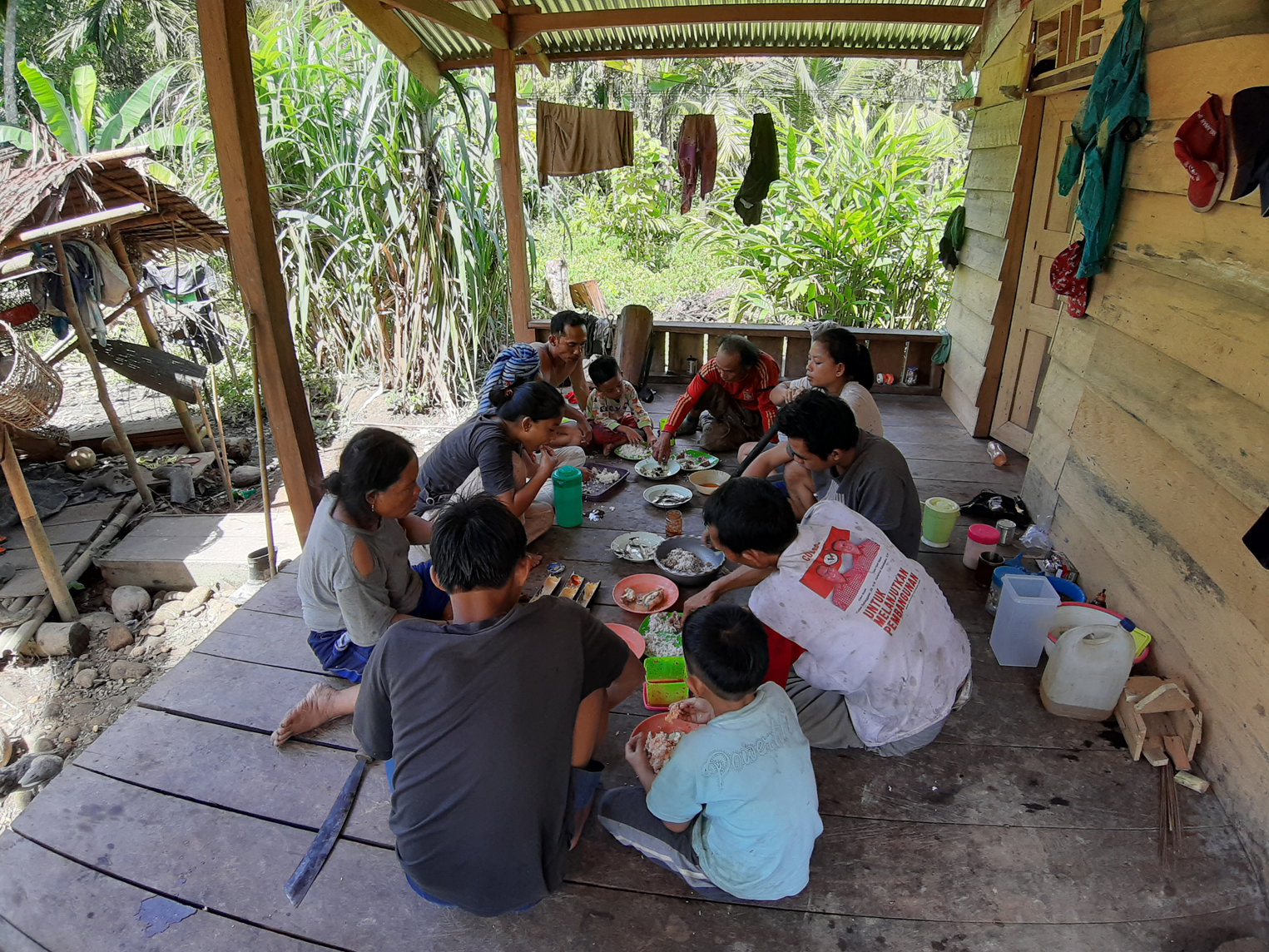
Although Mentawai are reluctant to cultivate sufficient amounts of rice, they enjoy rice-based meals. The general perception is that certain properties of rice are better than native staples. Firstly, rice is a ‘clean’ food. It is usually bought as a ready-to-cook item. People do not have to work in the dirt before cooking it, nor does the cooking method dirty their hands, unlike sago. Rice is steamed in a pot and not charred directly on a fire like sago, a process which produces soot that blackens the cook's hands.Footnote 48 Rice is white and easy to wash. Rice's materiality is seen as better than sago and taro: puffier and softer. In term of flavour, rice is considered tastier and sweeter (mananam) than native staples. It can be consumed as a proper meal on its own without any ‘extras’ or relish, unlike sago or taro, which are usually accompanied with vegetable or meat dishes (fig. 4). The younger generation in particular consumes rice without any additional condiments (fig. 5). There is also a practical reason: it is easier to prepare a rice-based meal than one based on sago or taro. The bamboo tubes need to be cleaned, the taro tubers need to be cleansed of mud, peeled and boiled or baked, and sago flour has to be extracted laboriously from sago stems and then roasted over a fire even before cooking. Processed white rice, by contrast, is cooked in a pot in just a few minutes.
A Mentawai elder enjoys a sweet rice meal without any additional relish or condiments. (Photograph by Theo Samekmek)
A typical family lunch in Muntei village. Note that children prefer to have plain rice without any condiments while elders enjoy sago and taro with steamed fish. (Photograph by Author)
The materiality of rice (white, softer, sweeter, reduced preparation time) conveys a sense of cleanliness, purity, efficiency, and sweetness associated with modernity and advancement. Mentawai do not explicitly associate the whiteness of rice with the colour of the spirits in the same way as other Southeast Asian societies do,Footnote 49 but they clearly share in the national and global trend to equate rice-based meals with all that is up-to-date, modern, successful, and desirable.Footnote 50 These attributes of rice are the exact opposite of the ‘backward’, inferior, and dark sago.Footnote 51
The decades-long campaigns presenting rice as the food of modern people have clearly had a significant impact. Mentawai have come to view themselves mostly in negative terms (backward, undeveloped, primitive, pagan),Footnote 52 while the Minangkabau, the representatives of modern Indonesia, are seen as culturally superior in all aspects.Footnote 53 Rice is the Minangkabau main staple and the symbol of their power and authority. Mentawai have come to understand that rice is not only eaten by Minangkabau people. They have observed that most of the sareu on television or in school textbooks, whether in migrant villages or mainland cities, consume rice. They have also learned that sago- and tuber-eaters are mostly humble people living on remote islands in Eastern Indonesia, or in the hinterland of Borneo, who, like Mentawai, are often portrayed by the government as being backward and primitive. Mentawai have internalised ideas and perceptions that their identity and food are inferior to those of white rice eaters. They have come to see rice as a prestigious food and a symbol of development and advancement.
Consequently, rice-based meals have become rare but prestigious events for Mentawai households. Typically, families eat rice when they have a decent amount of cash available (mabulagat). Mabulagat happens when a family, for example, starts a business outside of traditional activities, perhaps as part of a governmental project or other wage labour related to external agencies. Mabulagat may also indicate that a person has recently sold a significant quantity of cacao beans or cloves, or hosted a prominent guest from outside the island. Rice meals are also served when government officers, tourists, students, or anthropologists visit their village and stay overnight in a Mentawai house. In such cases, guests are usually hosted by village heads or elites. At some point, they will serve meals that include rice to demonstrate their hospitality and confirm their position and status. These occasions are also an opportunity for a Mentawai to show that he and his family are equal to the guest. For commoners, guests are normally expected to bring rice and other imported foods such as sugar, canned meat, or instant noodles. Hosting a rice-based meal thus illustrates the network that ordinary Mentawai have created with relevant non-Mentawai persons from the mainland.
Other occasions when people tend to enjoy rice-based meals are festive days at the end of the year. Around Christmas and the New Year, people spend their savings or sell their clove trees to obtain rice and imported beverages, such as syrup, beer, or canned milk, as well as snacks (such as cookies, biscuits, bread). These festivities are special occasions for Mentawai to celebrate their modern religion (Christianity) and events such as the New Year, although these have only been introduced in the last few decades. Finally, a rice-based meal is served when the government delivers Beras Orang Miskin (RASKIN, ‘Rice for Poor People’) (fig. 6). RASKIN is a national programme to provide subsidised rice for the poor and vulnerable to prevent food insecurity.Footnote 54 The programme reinforces the idea that Mentawai are in a state of food insecurity and overlooks the abundance of tubers and sago that they grow. Over the years, the quality of RASKIN has not been particularly good; however, the amount provided can feed a family for a few months as it is provided at a significantly subsidised rate. Despite complaining about the quality of the rice,Footnote 55 Mentawai are keen recipients of the handouts from this programme and, indeed, would be furious if they were not on the RASKIN list.
Distributing RASKIN (Beras Untuk Orang Miskin, Rice for Poor People) in Muntei. The rice is provided by Bulog (Badan Umum Logistik, Indonesian Logistics Bureau). (Photograph by Author)

The rarity of rice-based meals for Mentawai signifies social difference and inequality. This is not an everyday luxury and thus its presence connotes the arrival of a significant event. Rice-based meals show that Mentawai have obtained recognition and attained the status of being modern in the eyes of outsiders. This is reflected in the way that rice-based meals are organised.Footnote 56 While meals with sago and tubers are eaten in the kitchen area, rice-based meals are moved to the open space of the veranda so that passers-by can observe the family meal. Rice-based meals thus display the social difference and status of the eaters. In a way, consuming rice generates a sense of autonomy and creates a positive construction of self. By having rice-based meals, most Mentawai feel that they are able to be modern like other people on the mainland. Consuming rice also shows that Mentawai can be independent subjects who can produce enough cash crops, be involved in non-farm activities, and participate in market exchange. Rice-based meals give a person social prestige and status.
The consumption of rice also complicates local ideas of prosperity. Traditionally, Mentawai use the terms prosperous (makayo) and poor (magebak) to refer to their socioeconomic status. A household and uma with a vast area of ancestral land, several sago gardens, dozens of fruit trees in various forest gardens, pigs, and big longhouses are considered makayo. When I paid a short visit to Muntei village in early 2019, I found that families who were well-known for their pig husbandry skills and who owned an abundance of sago palms and a decent house, referred to themselves as ‘magebak’. This came as a surprise as, traditionally, the family would have been referred to as rich and prosperous. The head of the family told me:
We are poor. We eat only sago. We are Mentawai siburuk (old Mentawai). The rich people are working in the village office, school, and local hospital. They are Mentawai sibau (new Mentawai). They do not go to the forest and dirty their hands. But they have regular earnings and eat rice regularly. They do not eat cheap and bad rice [that is, RASKIN] from the government. Only the poor like us eat poor rice.Footnote 57
The quote above illustrates how Mentawai define modernity through rice consumption. Their word sibau conveys the English term ‘modern’. Literally meaning ‘a new thing’, sibau refers to activities or subjects that differ from subjects and activities in the past. For instance, travelling by speedboat is modern, while walking is not. Working in the city as a wage labourer or being a civil servant is modern, while going to the forest to extract forest products for money is not. Eating rice regularly is a sibau habit, while consuming sago is not. The term ‘sibau’ also carries a connotation of betterment. For instance, earning a regular salary, eating rice frequently, and having a house with brick walls, a tin roof, and ceramic floor tiles is better than relying on the sale of cash crops, eating bananas, or living in wooden houses.
‘Sibau’ also refers to subjects who do not carry out traditional activities. Teachers, nurses, or other government workers, who have limited time to tend to gardens and forests, are Mentawai sibau. They handle computers, paperwork, or modern medicine in an office and more importantly, have a regular income. This allows them to consume rice regularly. They are considered successful persons with social prestige. Teachers or village officers are now seen as prosperous persons (simakayo). The label ‘makayo’ is attributed to those who are regular rice eaters even though they do not necessarily own pigs, sago gardens, or fruit trees.Footnote 58 They are seen as equal to Minangkabau and other Indonesian citizens who have regular earnings and eat rice every day.
The ability to eat rice regularly is also a sign of maju (progress/advancement), an Indonesian word that equates to the terms ‘modern’ and sibau. Government officials and migrants in particular view Mentawai who consume rice regularly as modern. Mentawai themselves rarely use the Indonesian term modern or maju when they refer to Mentawai ‘sibau’ or when they consume rice. Nonetheless, rice consumption has become a sign of progress and modernity. Rice is considered a tasty, luxury comestible, reflecting the pleasures of modernity. Consuming rice is seen as a way of augmenting the status of being modern and prosperous. Rice-based meals are a display of social difference and status of being rich and sibau and equal to modern sareu. Consuming rice would certainly generate a positive construction of self and, as such, it becomes a particularly potent source of agency and object of desire.
Rice and modern anxiety
While rice is sweeter and tastier than taro and sago, with properties that are considered better than sago or taro, it does not satisfy the body of Mentawai. They feel that rice-based meals do not satiate their bellies for long. They report that their stomachs feel empty and their bodies feel hungry just a few hours after eating the tasty grain. Rice is believed to not have enough quality to constitute a solid and strong body for the eater. Unlike sago or taro, solid foods that are commonly roasted, water is added to rice when cooking. The water means the rice is easily absorbed by the body. According to Mentawai, it has more liquid (sua) than meat (tubu) and does not constitute the body and blood. There is a widespread opinion that regular rice eaters are weak and vulnerable to disease. Rice eaters are stereotyped as having big bellies and soft bodies. In the words of Aman Reju, a man from Muntei village:
Rice has too much water. The grain does not constitute our body and blood. We eat it but it goes to our body and comes out as pee. It tastes delicious but does not satiate our stomach and soul. It just makes you fatter and fatter. Our bodies would be dry but soft like the body of sareu if we continue to have these meals.
From a nutritional perspective, there is a convincing explanation as to why rice does not satiate the Mentawai. Gerard Persoon makes an important point when he says that any meaningful comparison between rice and sago must consider all the dietary components of these foodstuffs.Footnote 59 The decisive factor is not the quantity of nutrients in the starchy food but the total dietary composition of the meal, including the quality and quantity of complementary foods. Sago and tubers are commonly served with a significant amount of fish, meat, or vegetables.Footnote 60 In contrast, rice-based meals usually lack these complementary dishes. While I agree with this explanation, I do believe that the ambiguous taste of rice (delicious but not satisfying, sweet but not constituting body and blood) is also culturally and socially linked to the way Mentawai conceive their autonomy in the face of modernisation.
The conflicting sensory manifestations of rice on the tongue and body reflect a subtle response to this foreign substance. Taste exists between reality and desire and is culturally formed by objective nutrition, symbolic ideas, and embodied principles.Footnote 61 The dialectic between the mouth's acceptance and the body's refusal of rice might appear to be trivial, but I would argue that it exhibits a deeper awareness, structured by memories, practical knowledge, and specific cultural settings. As I have described earlier, the production and consumption of food cannot be reduced to the fulfilment of physical needs. Food and related activities (cultivating, collecting, processing, eating, sharing) are part of the whole process of constructing Mentawai bodies and, by extension, their personhood and society. These are not merely the mechanisms for and the results of production of material substances, although they certainly include the latter.Footnote 62 The notion of becoming a strong, autonomous person and creating a society filled with such people motivates every Mentawai to produce and eat sago, taro, or pigs. Perceptions of the sweetness and tastiness of rice capture the lure of modernity, but its wetness and inability to satiate reveals people's reluctance towards that very object of desire. Even while accepting rice for its sweetness, they do not want rice to replace taro in the constitution of their bodies.
This ambivalence towards rice illustrates the social process by which Mentawai seek to join the modern ranks of others while also maintaining their social identity and autonomy. On the one hand, rice-based meals are objects of longing. Rice serves as a particularly potent source of agency and object of Mentawai desire. The sweet taste of rice refracts the pleasure of modernity and the signs of progress. The majority of Mentawai admit that they relish having regular rice-based meals and living according to modern sareu ways. They have given up certain traditional practices, embraced the cultivation of cash crops, and resigned themselves to being ensnared by the idea of being equal to and recognised as a standard, rice-eating Indonesian citizen. They aspire for their children to have better education, get modern jobs, and eat rice regularly. Rather than keep their sago and gardens intact, they prefer to convert some of their gardens into cacao or clove groves, so that they can obtain regular cash flows to purchase rice.
On the other hand, as we have seen, Mentawai claim that rice is not good for their bodies and cultivating the grain has pressured their agricultural system and foodways. Mentawai are fundamentally sago, taro, and banana eaters. Their bodies are constituted from both working hard in the gardens and the forest and the food cultivated in these spaces. Both producing and consuming native staples create the good physical quality of Mentawai bodies. Rice, by contrast, is strongly associated with sareu, those who originate from and live on the mainland, working as traders or in office jobs (teachers, nurses, priests). Village elders often complain that the younger generation rely too much on government aid and devote all their energy to cash crops, with the result that many have abandoned their pig-oriented culture, communal rituals or neglected their opulent sago. They worry that their school-aged children will not touch meals of sago and exclusively consume rice in the future. Producing rice also does not generate the same value of autonomy as producing taro and sago. They fear that this will eventually erode the core of the Mentawai culture that revolves around sago, taro, and forest gardening. The expansion of paddy fields would replace their healthy sago stands and lead to the mass conversion of taro ponds. They would lose a sense of being Mentawai as genuine Mentawai bodies, personhood, and society are produced and reproduced through the cultivation of ‘forest food and activities’.Footnote 63 Thus the Mentawai perceived the establishment of sawah as an erosion of their autonomy and the abandonment of rice cultivation as an effort reassert it.
Both rice and ‘sawah’ are potent symbols of sareu, the modern but uninvited guests who impose themselves on Mentawaian territory, where sago and taro belong. In the minds of Mentawai, rice is equivalent to the power of sareu who brought it to the island and who have politically and economically dominated them. Many of my interlocutors believe that converting all their sago gardens into paddy fields would be tantamount to surrendering their identity and autonomy, and hasten the adoption of the sareu way of life. Abandoning their traditional staples to fully participate in the cash economy, where they are dependent on imported foods for sustenance, may entail more than a shift from root and tuber gardens to rice cultivation and, indeed, may require a switch from economic self-reliance to economic dependency. Nonetheless, Mentawai acknowledge that no matter how much rice they plant and eat, no matter how they desire the Minangkabau way of life,Footnote 64 their bodies and minds will never be the same as those of sareu.
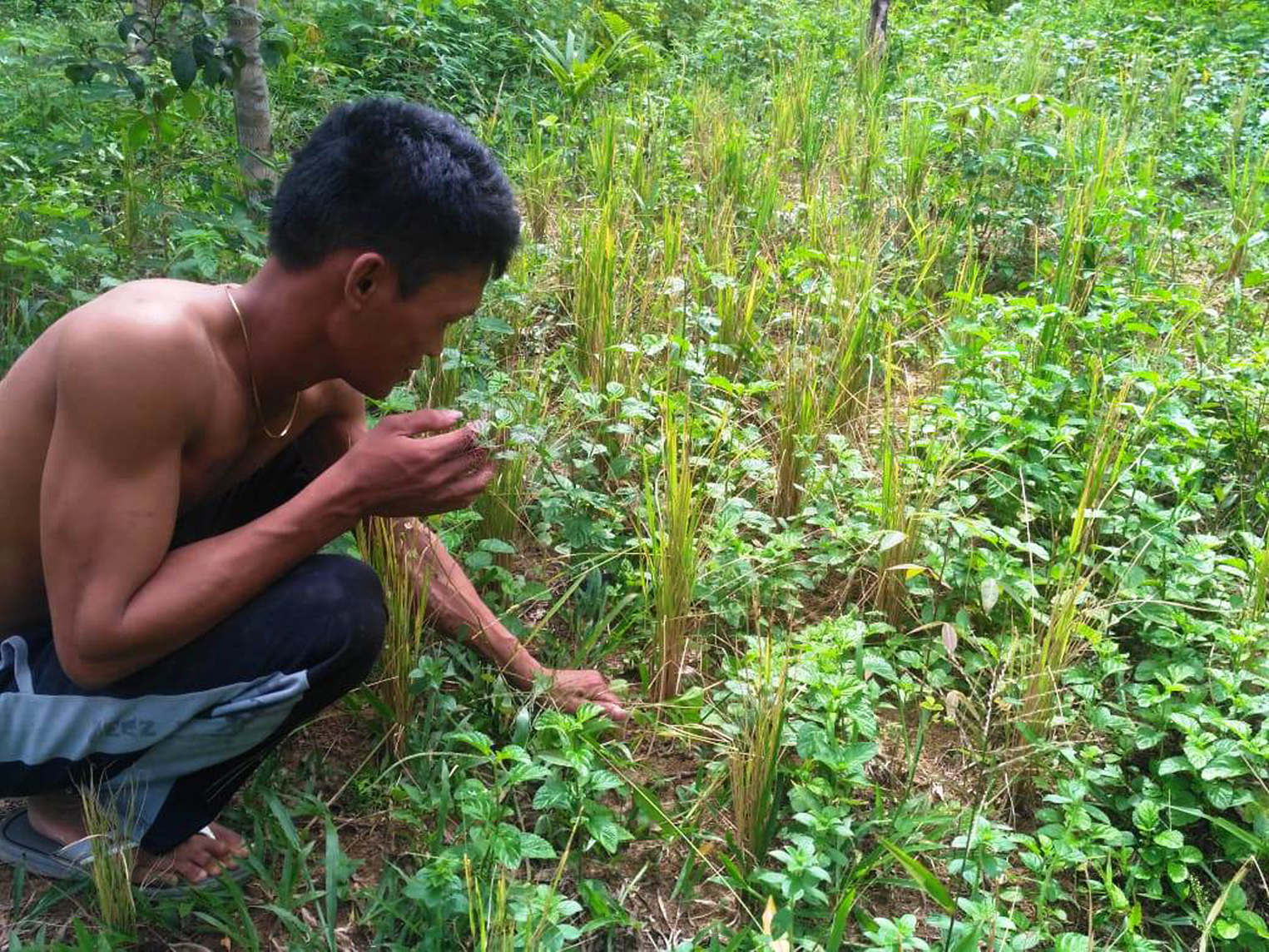
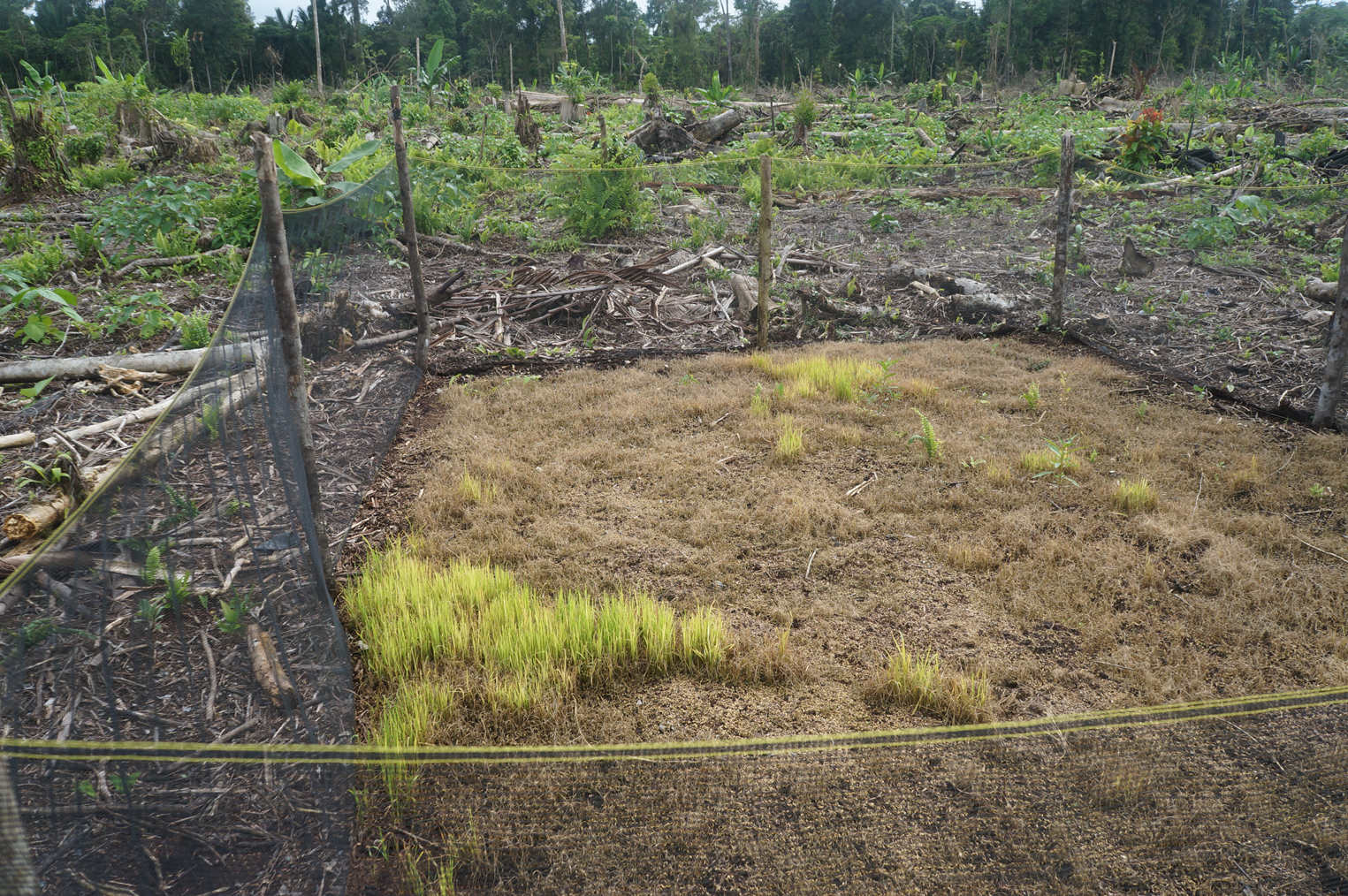
This ambivalence towards rice echoes their general perception of modernisation projects. A century of development agendas has left the impression that the promises of progress and advancement are illusory and short-lived. They have experienced how paddy field production is not sustainable, lasting only one or two years (figs. 7 and 8). After decades of willingness to follow various modernisation projects, surrendering their land for resettlement and their forests to a logging company, Mentawai are disappointed by the lack of progress, and the promises of compensation and wealth distribution that rarely materialised and disappeared just as quickly.Footnote 65 Almost without exception, their hopes for a better life through participation in these modernisation projects have gone unfulfilled.
A man from Madobag village shows his failed rice crop. The grain could not compete with the more vigorous grass and weeds. Photograph by Rus Saleleubaja, ‘Petani gagal panen’ (Rice growers do not get yields), Pualiggoubat, 5–31 June 2017. (Courtesy Puailiggoubat)
Dying rice seedlings in a rice bed, abandoned after moderate yields in the first attempt in the hamlet of Puro. (Photograph by Author)
The conflicting emotions, speculations, and interpretations that coalesce around the sweet and yet unsatisfying rice reveal the desires, destinies, and dilemmas of Mentawai facing alien but nonetheless coveted substances and ideas. Their participation in rice cultivation and consumption must be viewed in the context of their existing and long-standing relations with modernisation projects in which these habits were formed and which, in turn, have been formative. Mentawai have become oriented outwards, towards the authority of external powers. They are longing to be modern subjects. Yet, there is an ongoing process to negotiate the imposition of any external ideas and subjectivity. The reluctance to cultivate and eat rice is therefore a political act one that reaffirms, transforms, and realigns relations between Mentawai, the sareu, and the modernisation projects that they participate in.
Conclusion
This article has described and analysed the ambiguous attitudes of Mentawai towards rice. They love to consume it but are reluctant to produce it. The materiality of food (white/black, sweet/bland) identifies the grain as desirable, modern, and luxurious. The properties of rice and its preparation signal social prestige and define social status. Rice-based meals are social acts, which enchant others and construct social identity and differentiation. Yet, rice is also a dangerous substance that can erode their autonomy. People do not accept introduced substances into their foodways arbitrarily, but only in structured, historically situated contexts.Footnote 66 Tasting and sensing rice is simultaneously an active process and a reflective act. The ambiguous valuation of rice communicates the ethical and existential quandaries faced by Mentawai as they attempt to become modern subjects, who regularly consume modern comestibles at the risk of losing their cultural identity and autonomy, and who live in precariously asymmetrical relations of subordination and domination with external agencies. Sweeter but wetter, tastier but more destabilising, rice not only reveals sensory and physical engagement with a foreign substance, but also the embodiment of cultural desires and dilemmas. The enjoyment of eating rice and the reluctance to produce it reflect the ways that food is manipulated by Mentawai to change the social construction of their ‘backwardness’ and enact their version of modernity while maintaining their position as the agents of this transformation.
Rice ambivalence among Mentawai shows that food is a transformative agent, the most tangible, fundamental medium for both maintaining social practices and producing transformations through human activities. Their preference for eating or cultivating rice is guided by more than caloric efficiency and energetic practicalities, as Marvin Harris argues.Footnote 67 Clearly, Mentawai consider economic factors, such as costs, inputs, and outputs, and production constraints in their preference for cultivating cash crops and buying rice. However, this article asserts that food is not only good to eat. It supports the symbolic view that food is an apt metaphor for how people think about themselves and select cognitive categories (modern/primitive, backward/progressive). In other words, ‘rice ambivalence’ is also ‘good to think with’.Footnote 68 Yet, food is not a merely passive substance or an abstract category that informs a present code of meaning, as a structural anthropologist might say. It is a comestible that embodies ‘a set of at least implied meaning of modernity’.Footnote 69 It is also an active substance, constituting and transforming the very notion of being modern.
This article suggests that food is neither merely a metaphor for human thinking, nor a material needs-fulfilling biological necessity, but an embodiment of ideas and values that generate and motivate social actors to undertake particular activities. Hence, the role of food in a society should not be studied through static structuralist analysis or the determinism of cultural materialism, but rather examined as a creative and dynamic substance that mediates human actions and social values.Footnote 70 Food is widely deployed by societies to make sense of the world they are living in and to enact change. Manipulating food is, then, a tangible and common way to generate such transformation. By understanding the dynamic and transformative qualities of food, we can learn how people mediate their actions upon the world, both materially and symbolically, and reproduce and transform their social practices and values.


 Open access

