

Send us your youths to study in some of our colleges. We will send you ours in return. China has sent many students to America, and these are coming back with better understanding of American institutions. The same thing should be done by us [China and the Philippines] in establishing our friendship.Footnote 1
A great number of students moved with their colleges and universities westward, but there are also many others who have chosen to continue their education abroad … the Chinese student finds another host who is right at the next door – the Philippines.Footnote 2
Introduction
In 1921, Wu Ting Fang (Wu Tingfang 伍廷芳), the acting president of the southern government in China, met with Teodoro R. Yangco and Conrado Benitez, two well-known Filipino educators and businesspeople. After they had come and gone, the famous diplomat and elder statesman from China took time out of his schedule to draft a friendly thank-you note, which publishers later printed in a Manila magazine. In addition to writing the line that appears at the start of this part, Wu penned, “My message is one of mutual friendship and understanding between the Chinese and Filipinos.”Footnote 3
This brief and seemingly mundane exchange hints at the hidden world of educational exchanges between China and the Philippines that fostered personal connections, cultural understanding, political partnerships, and general goodwill. The Chinese diplomat and the two Filipino educators recognized that education could be a powerful adhesive force that brought the people of the two polities closer together. However, to Wu Ting Fang’s chagrin, designs do not always align with aspirations, as China failed to host many Filipino students during an era marked by internal tumult. The Philippines, however, attracted many Chinese students from the 1920s to the 1940s.
Chinese commentators and policymakers who traveled to the Philippines and praised, criticized, copied, and adapted innovations in education, law, public health, and governance accompanied these students. Chinese educators viewed the Philippine education system, with its emphasis on vocational training and critical inquiry, as an ideal model to import to China. At the same time, scientists and lawyers thought of the archipelago as an intellectual laboratory and incubator of ideas. Meanwhile, liberal activists saw the Philippines as a burgeoning and vibrant space of democratic experimentation and gender equality. And, while some Chinese people criticized legislative measures that limited the mobility and freedom of Chinese residents in the Philippines, many viewed the Philippines as a young and vibrant nation-state-in-waiting not just worthy but demanding of their attention.
For Chinese people who bemoaned unending conflict between militarists and rival governments and decried the rampant corruption and nepotism that discolored China, the Philippines appeared like a new canvas of possibility. The archipelago might not have been a city upon a hill, but at least it was a city above the floodplain. As historian Timothy Weston observes, “As China’s domestic and diplomatic predicament worsened, intellectuals, conservative and progressive alike, instinctively turned to schools as a primary instrument of social and political revitalization.”Footnote 4 The Philippines offered to Chinese observers and students something that Japan, the United States, England, and Germany could not: a non-militaristic, education-oriented path toward the elusive but cherished goal of “modernity.”Footnote 5 And this proved highly appealing.
Cultural Internationalism, the Tributary System, and Laboratories
Before we apply gesso to the canvas of Sino–Philippine educational exchanges, we must first collect our methodological supplies in the historiography supply shop. Some shelves are rather sparse, though. Historians have consistently overlooked or downplayed how Chinese policymakers, educators, and students researched, toured, and copied the Philippines during the early twentieth century. In fact, an extensive search through recent articles or monographs dedicated to Chinese research on and modeling of the Philippines turns up little.Footnote 6
What has caused this historiographical black hole? Though inadequate funding for Philippine-related research projects in general certainly factors in, I suspect that most of the neglect stems from an assumption that some historians might hold that Chinese people had little to learn from Filipinos. Historically, sinology, in both its Anglophone and Sinophone traditions, has been inward looking or focused on civilizational parallels. As for scholars who have reimagined China’s relationship with the world more recently, their focus is usually on either Tang and Qing dynasty relations with Central Asia, or Chinese connections with the so-called West and Japan in the nineteenth and twentieth centuries.Footnote 7 These scholars tend, whether intentionally or not, to endow the “West” and Japan with a monopoly on science, technology, rationality, and modernity.
A quick perusal through research on American educational influence in Asia, and Asian borrowing and adaptation of American educational innovations, highlights this disparity. Scholars have written extensively about American universities in China,Footnote 8 Chinese students in the United States,Footnote 9 and Chinese borrowing of American educational models.Footnote 10 Similarly, researchers have explored American influence on the Philippine education systemFootnote 11 and, more recently, Philippine influence on the United States.Footnote 12 In other words, while the shelf on Chinese borrowing from and modeling of the Philippines might be empty, the rows on Chinese borrowing of “Western” and Japanese ideas are overstocked. What accounts for this imbalance, and what are some ways to adjust the inventory?
To better appreciate the magnitude and significance of Chinese borrowing from and modeling of the Philippines, it is critical to scrub off the biases that privileged research on East–West interactions in the first place. In research on the Philippines, the main blotches come from the American colonial occupation, which has consumed the research agendas and critical framings of nationalist and imperial scholars alike. Scholars of Chinese tributary relations and researchers of cultural internationalism, however, have created useful erasers that have accomplished a reset in different contexts, and this part borrows their metaphorical erasers to clear the page and resketch a history of inter-Asian interaction and interdependence. In so doing, this part challenges both the predominance of the East–West axis in research on global knowledge flows, as well as the so-called laboratory of modernity trope, to which we will return in a moment. In other words, it centers Asia in Asian history.
Some people in the past, just like some people today, held a romantic view of a denationalized, interdependent, and harmonious world.Footnote 13 They challenged national and other artificial boundaries with their itineraries and their organizations, inspiring historians – myself included – to sketch their transnational portraits.Footnote 14 However, many of these cultural internationalists, who fostered “international cooperation through cultural activities across national boundaries,” just like the scholars who research them today, came from a place of privilege, which brought with it a certain set of blinders.Footnote 15 To put it another way, cultural internationalists and the scholars who study them, even in their global travels, sometimes inadvertently became anchored “in the metropolis,” reaffirming “metropolitan authority in its own terms,” as Mary Louise Pratt observes.Footnote 16 So, to build on this innovative transnational research but not fall into the metropolitan trap, the chapters in this part leave the metropole behind.
Scholars of the tributary “system” have pioneered an Asian-centered research model that helps accomplish such a feat.Footnote 17 The tributary “system” was an amorphous and overlapping set of interactions in Asia defined by a mutable hierarchy with China ostensibly at the center, a ritualistic exchange of tribute or gifts, and substantial if not always well-documented private trade.Footnote 18 In other words, it was a “system” of inter-“national” relations sans the Westphalian nation-state. Scholars debate when and if the system came to an end and the extent to which the Philippines or other Southeast Asian polities belonged to such an order, but the focus of the idea itself can help us realign our approach to Asia.Footnote 19 Famous scholar of the tributary system Takeshi Hamashita writes, “Asian history may be broadly understood as the history of a unified system characterized by region-wide tribute trade relations, with China at the center.”Footnote 20
This part, therefore, proposes a “cultural tributarism” approach to Asian history that combines the attention to cultural institutions and exchanges one encounters in research on cultural internationalism with the focus on inter-Asian interaction one sees in research on the tributary system. Combined, these lenses allow us to detach ourselves from European, Japanese, and American imperial power and better view and appreciate the history of Chinese borrowing from the Philippines in the early twentieth century. “Cultural tributarism” decenters the nation and the “West,” foreshortening Chinese and Filipino peoples in the landscape of history.
Chapter 3 and 4 examine how the Philippines became a model of modernity, where liberal-minded Filipino reformers, who had captured the hearts of many Asian romantics with the establishment of the First Philippine Republic in 1898, worked with American progressives to craft what they envisioned as a modern society. It shows how Filipino agents along with American colonials funneled money toward education, forestry, infrastructure, public health, and other elements of a “modern” state. These multilayered investments made the Philippines into much more than a “laboratory of modernity” – or a passive colonial space on which colonial officials applied experimental policies.Footnote 21 Filipinos played a critical role in transforming the archipelago, and many Chinese observers accepted the Philippines as a unique and inspirational form when molding their own such model.Footnote 22
However, it is important for us to recognize that, for most of the early twentieth century, the Philippines was an occupied country. Arguing for Filipino agency in an asymmetric imperial relationship sometimes necessitates downplaying the reach, and therefore the negative consequences of, American colonial rule, and this can be irresponsible in many contexts. But, as Anne Stoler and Frederick Cooper note, “colonial regimes were neither monolithic nor omnipotent,” and it can be an act of decolonization to highlight agency under occupation.Footnote 23 The chapters that follow cautiously attempt to make such an intervention by weaving in ideas pioneered by scholars of inter-Asian interactions in the Ming and Qing and by scholars of culture and imperialism.
Touring the Modern
Huang Yanpei (黃炎培) was an educator. Although his attempt to arbitrate an end to the Chinese Civil War in the 1940s through the China Democratic League has diverted much attention from historians, he spent most of his career in education. He was born in 1878 in Chuansha, Jiangsu, which is now part of Shanghai, and it was in this province and city that he began his foray into what would become a lifelong undertaking. In 1905, Huang founded the influential Jiangsu Provincial Educational Association, and in 1912 he served as the Commissioner of Education of Jiangsu.Footnote 1 Soon after his promotion, he began to take educational tours around the world, painting colorful portraits of different schools in a regular column in Shanghai’s leading daily, the Shenbao. Huang was like an itinerant artist who sought inspiration abroad before returning to his studio to teach an aspiring group of followers.
In 1917, along with 786 other charter members, Huang Yanpei founded the Chinese Vocational Education Association. The influential institution advocated for vocational education, published educational magazines, and chartered and supported vocational schools.Footnote 2 It claimed as members a who’s who of prominent educator-intellectuals from China, including Cai Yuanpei (蔡元培), Liang Qichao (梁啟超), Wu Ting Fang, and Zhang Boling (張伯苓). Huang Yanpei rose to the top of this elite group to serve as director of the Association. At its height in 1925, the Vocational Education Association directly managed fifty schools, and the Ministry of Education reported a total of 1006 vocational schools across China.Footnote 3
On January 8, 1917, before founding the Vocational Education Association, Huang Yanpei began his overseas tours with a journey to Japan and the Philippines, which resulted in two monographs.Footnote 4 With the war raging in Europe, Huang Yanpei had turned his attention to models closer to home. A team of prominent Chinese educators, including Kuo Ping-Wen (Guo Bingwen 郭秉文), who would later establish what would become Nanjing University, joined him for the educational excursion (Figure 3.1). After visiting Tokyo and stopping over in Shanghai, the entourage arrived in Manila on February 3. There, the group of educators met Albino Z. Sycip (Xue Minlao 薛敏老), a colleague of Huang’s who appears again in Chapter 6.
Huang Yanpei and other tour members to the Philippines, 1917
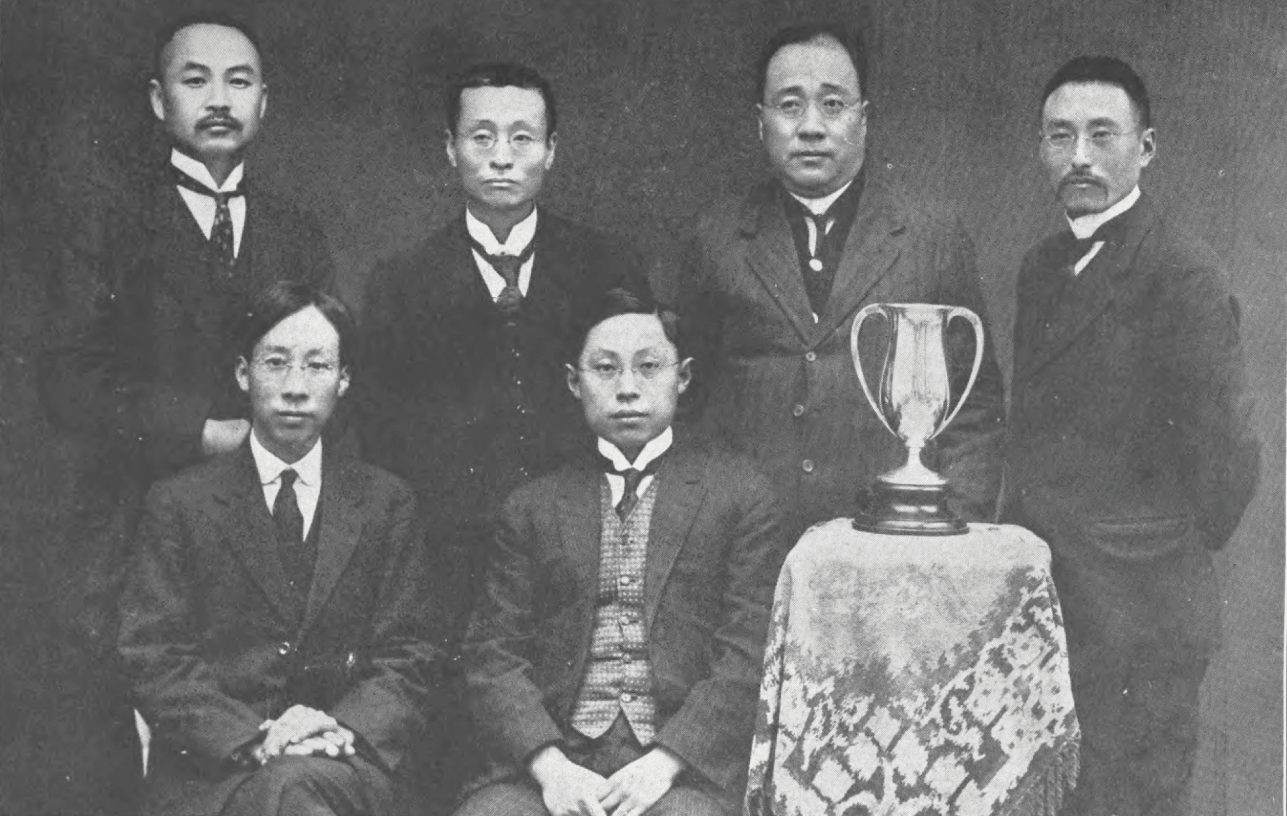
Before proceeding to inspect the schools themselves, the Chinese tour members immersed themselves in relationship-building with a series of banquets. They first traveled to the Oriental Club in Manila where they dined with representatives from the Chinese Consulate. The next night, they joined Albino Sycip and other influential residents of the archipelago for dinner.Footnote 5 After these pleasantries, which cemented important personal relationships just like the one we explored at the beginning of this part, the education tour group proceeded to the next phase of the trip. They met with the director of the Bureau of Education, toured several prominent schools, and visited with school principals, teachers, and local Chinese educators.
Philippine schools impressed members of the tour, who applied choice adjectives in their accounts that appeared in newspapers and journals back in China. The sheer scale of the educational architecture caught the attention of Kuo Ping-Wen, who noted for readers back home that the “public school system [is] in full operation with more than two-thirds of the children of school age provided with opportunities of free education.”Footnote 6 Huang Yanpei, on a different topic, wrote, “The emphasis on physical education, is something peculiar to Philippine education.”Footnote 7 Echoing Huang’s sentiments, Cai Yuanpei, the president of Peking University and a towering figure in the Chinese educational landscape, commended the emphasis on physical education in the archipelago, noting that it was one of the main reasons that the tour embarked to the Philippines in the first place.Footnote 8
For many tour members, girls’ access to education, which in turn led to prosperous careers, stood out in an all-around impressive system. Huang Yanpei, for example, noted that girls comprised 42 percent of the student population at the Philippine Normal School.Footnote 9 In an era when education became “the defining mark of modernity for a new woman,” as historian Bryna Goodman puts it, this feature of the Philippine education system certainly appealed to tour members.Footnote 10 Commenting on Filipino contributions to society more broadly, a contributor to a Chinese women’s journal described Filipinas as the most “progressive” in Asia, outlining Filipino women’s contributions to higher education, the workplace, and society at large.Footnote 11 Meanwhile, a Chinese lawyer, who penned a lengthy monograph on the archipelago after attending an international conference there, related an anecdote for his Chinese readers about a Filipina lawyer who successfully defended her client to “thunderous applause.” Perhaps with the intention of ameliorating the position of women professionals at home, the writer praised Filipinas who took up the profession of law.Footnote 12 In an era of uncertainty in China, the Philippines served as the perfect laboratory to explore alternative ways to structure society.
Featuring clear contours and a balanced color palette, the Philippine education system contrasted with China’s greyscale patchwork. The famous novelist Lao She (老捨), in a fictional account of a Martian Cat Kingdom, which exaggerated China’s societal fault lines like an impressionist painting does to a landscape, wrote sardonically, “schools have students, but no character; teachers attend to make money, administrators attend to make money, and students attend to prepare to make money. Everyone views schools as a new type of restaurant; what is education? Nobody asks.”Footnote 13 For Huang, who had likewise concluded that the greatest deficiency of Chinese schools was their “divorce from reality,” the Philippines appeared refreshingly relevant and innovative.Footnote 14
Tour members had come to the Philippines to examine the country’s vocational education system, so they stopped over at the Sales Department of the Bureau of Education to meet with experts. There, they inspected Philippine handmade products and inquired about equipment and the logistics of the program.Footnote 15 Huang and other tour members also visited the Central Luzon Agricultural School, the top-ranking agricultural high school in the Philippines; the Agricultural College of Los Baños, a branch of the University of the Philippines system that we will return to later in this chapter; and the Anglo-Chinese School, the leading Chinese school in the Philippines.
After departing from the Philippines, one tour member expressed his gratitude for the good treatment the party had received and shared his hopes that China would send another group of aspiring educators in the near future.Footnote 16 The one-month tour to the Philippines had apparently left a strong impression on Chinese educators. On May 5, 1917, only two months after the tour came to an end, Huang Yanpei, Kuo Ping-Wen, Cai Yuanpei, and others gathered for the Combined Meeting of the National Association of Educators, which resulted in the foundation of the Chinese Vocational Education Association mentioned earlier.Footnote 17
Was the founding of the Chinese Vocational Education Association directly after Huang’s and Kuo’s visit to the Philippines a coincidence? Perhaps. After all, Huang Yanpei had begun to advocate for vocational education as opposed to pragmatic education (實用主義教育) nearly a year before in a series of speeches delivered in Shanghai.Footnote 18 But the proximity of the Philippines trip to the foundation of the Vocational Education Association is too close to ignore.Footnote 19 Seeing the Philippine vocational education program in action likely gave Huang and other educators the final verification they needed that building a similar model in China was both feasible and advantageous.
Curiously, however, Huang’s biographers and historians of Chinese education have largely ignored the timing of the foundation of the Vocational Education Association as well as the influence of the archipelago on Huang’s sensibilities more broadly. They emphasize instead the influence on China of America, Japan, and Europe. Historians Wen-hsin Yeh and Margo S. Gewurtz, who write about Huang Yanpei’s visit to Southeast Asia and the Chinese Vocational Education Association respectively, do not even mention the Philippines.Footnote 20 Other scholars mention the Philippines in their research but treat it as a minor side exhibit.Footnote 21 Without the Philippines, however, the portrait of vocational education in China is incomplete.
Expanding the Tours
Beyond bringing inspiration, Huang Yanpei’s 1917 tour also brought many new friendships and collaborations that reinforced cultural ties between the Philippines and China. Just as the ritualistic exchanges of the tributary system acted as a front for diplomatic engagement and private trade, the educational tour and its ritualistic banquets served as a catalyst for private exchanges. For example, during his tour, Huang met and befriended the prominent Filipino educator Camilo Osias, who was then the president of the National University of the Philippines. Like a friendly artist who hyped his colleague’s new exhibition, Osias later led a group of Filipino educators to China to learn about their education system and provide support for Huang.
Camilo Osias, a Deweyen educator who would author a famous series of Filipino readers for schoolchildren, delivered a speech on education at the Shanghai Chamber of Commerce on his tour in 1921.Footnote 22 Osias had come as a delegate to the Far Eastern Championship Games, to which we will return in Chapter 7, but, according to reports, “educational authorities” desired to detain Osias “after [the] Olympic games to enable him to give us advice on industrial education.”Footnote 23 In his speech, Osias, standing before a friendly audience, painted a glowing portrait of vocational education. Challenging his hosts, he offered a candid comparison of the education systems in Jiangsu and the Philippines, pointing out that the Philippines spent the equivalent of ¥30 million on education per year whereas Jiangsu spent just ¥6 million despite having three times the number of students as the Philippines.Footnote 24
After the speech, several prominent Chinese educators and politicians, including Kuo Ping-wen and Chengting Thomas Wang (Wang Zhengting 王正廷), joined Camilo Osias and Huang Yanpei for yet another banquet. Mirroring Huang’s itinerary, Osias then toured several schools, including Huang’s flagship vocational school, the Chinese Vocational School.Footnote 25 Osias honed his critical but supportive message along the way with additional speeches, including one to an audience of purportedly 2–3,000 in Nanjing.Footnote 26 In those speeches, venturing beyond the frame of education, Osias voiced his support for the campaign against the Bookkeeping Act, which we learned about in Chapter 2.Footnote 27
During his first tour of the Philippines, Huang had also met and befriended the prominent local Chinese educator Gan Bun Cho (Yan Wenchu 顏文初). A year after Huang returned to China from his tour, Gan sent a letter to Huang requesting an update on Chinese educational reforms. Huang responded with a short letter that Gan published in his education journal. In his letter, Huang painted an optimistic picture of China’s potential. He sketched out the recent changes that reformers had enacted during the Combined Meeting of the National Association of Educators, and he described the development of the Jinan Institute in Nanjing – a mainland school established for Chinese overseas students.Footnote 28
In 1921, the same year of Camilo Osias’ tour, Gan Bun Cho and his educator colleagues undertook their own four-month tour to take in the Chinese educational landscape, visiting over sixty-three schools.Footnote 29 Gan, who was born in Shishi, Fujian, had moved to the Philippines in 1913 when he became the editor of the Chinese-language newspaper, the Kong Li Po (公理報).Footnote 30 During his trip back to China in 1921, Gan, along his fellow tour members, stressed the need for Chinese youth in the Philippines to follow in his footsteps and reconnect with China by studying at universities there.Footnote 31 Stuffed into Gan’s packed schedule was a detour to the Jinan Institute, where speakers from Gan’s entourage, along with the hosts, stressed unity and common goals.Footnote 32
Huang Yanpei also returned to the Philippines to inspect Chinese and vocational schools as part of a broader tour across Southeast Asia in 1921.Footnote 33 By this time, however, in part due to the success of Huang’s earlier tour, many other Chinese educators were making that same journey. For example, that same year, Chen Yousong (陳友松), a Chinese educator from Hubei who had attended the University of the Philippines, returned to the Philippines with a colleague to inspect the Philippine Normal School.Footnote 34 Echoing some of Huang Yanpei’s motifs, Chen praised the gender balance of the school, writing, “Women who lived here, were extremely happy.”Footnote 35 Elsewhere, Chen and his fellow tour members highlighted the role American teachers played in education, but they also stressed that American teachers, unlike foreign teachers in British and Dutch colonies in Southeast Asia, led students to sing the Philippine national anthem, not America’s.Footnote 36
Treating the Philippines as an educational archetype, Chinese educators highlighted the active learning strategies in Philippine pedagogy. For example, in the foreword to a translated geography textbook from the Philippines, the translator and editor depicted an impromptu activity in a Philippine classroom where students scoured through maps to locate the hometowns of visiting Chinese educators.Footnote 37 The translator wrote, “Elementary schools that can use this type of lively teaching material and teaching method right now already have [an advantage over] the old methods of forcing students to remember maps – names of mountains, names of lakes, names of cities – things that are not at all of interest.”Footnote 38 A decade earlier, the viceroy of Sichuan Province had requested that textbooks be sent from the Philippines, and the acting director of the Bureau of Education in the Philippines had obliged, sending nearly 100 textbooks.Footnote 39
While Gan Bun Cho’s primary purpose for visiting schools in China was to learn about new innovations in Chinese pedagogy to bring back to the Philippines, many other Chinese from the Philippines returned to their hometowns in China to establish schools, enhancing the overall educational link.Footnote 40 Dee C. Chuan (Li Qingquan 李清泉), a leading tycoon and community organizer in the Philippines who appears again in Chapter 5, founded the Longmen School and Shizhen Raise Virtuous Women School.Footnote 41 Another prominent Philippine Chinese businessman donated ¥130,000 to establish the Yunti School in his hometown of Heshan, Fujian.Footnote 42 Poet and educator Li Dan (李丹), meanwhile, founded a school in his hometown in Fujian in 1935 during a return trip there to mourn his recently passed mother.Footnote 43 When these Chinese entrepreneurs from the Philippines founded schools in their hometowns, they brought a little of the Philippines with them.
The Philippines was the Claude Monet, or perhaps I should say Fernando Amorsolo, for aspiring Chinese landscape artists. Even when they did not recognize the influence of the polity on their educational inclinations, Chinese educators subconsciously channeled its methods into their work. Li Dan’s emphasis on physical education and Dee C. Chuan’s encouraging of girls’ education hint at the Philippine influence.Footnote 44 In an example of a more direct connection, prominent textile merchant and devout Catholic José Tan Sunco (Chen Guangchun 陳光純) hired one of his colleagues from the Philippines, Fr. Serafin Moya, to temporarily serve as principal and teach Bible courses at his school in Quanzhou, Fujian.Footnote 45 The head of the Philippine Overseas Chinese Bank in Manila and founder of the famous Double Ten School in Xiamen, Lim Chu Cong (Lin Zhuguang 林珠光), meanwhile, modeled the curriculum of his school on that of the Anglo-Chinese School in Manila.Footnote 46
Lim Chu Cong, who served as the head of the Chinese YMCA in the Philippines, also published an article in a Chinese-language Philippine journal arguing for the popularization of sports in Chinese schools.Footnote 47 Another Chinese commentator from the Philippines similarly argued that the Fukien Christian University in Fujian needed to place more emphasis on physical education, noting, “Without physical education, the real meaning of student life will be lost.”Footnote 48 Chinese overseas leaders might not have recognized the influence of their Philippine upbringing on their pedagogical persuasions, but their schools contained many Philippine elements.
Upon his return to the Philippines in 1921, Camilo Osias reported, “My recent visit to China has given me increased interest in the welfare of the Chinese people and the Chinese Republic.”Footnote 49 Osias had traveled to China as an educator and Far Eastern Championship Games representative, but he returned as an accomplished cultural tributarist. In ways, Camilo Osias represented his generation’s Konoe Atsumaro (近衛篤麿). Konoe was a Japanese liberal who had envisioned and helped create a world of Japanese educational influence on China in an earlier era.Footnote 50 Osias, however, was the cutting-edge artist whose innovative methods led the disgruntled old-timer into quiet retirement.Footnote 51 Osias’ education work and its positive reception in China reveal a broader shift among Chinese intellectuals, who increasingly redirected their attention from Japan to the Philippines in the 1920s.
From Japan to the Philippines
Before the Philippines became a model of modernity, Japan had occupied that pedestal. Over a span of ten years, Japan defeated both China and Russia in highly publicized military engagements, colonizing Taiwan and Korea along the way. Although this aggressive strategy led many people in China to view Japan with contempt, others grudgingly respected Japan’s success and began to see Meiji-era reforms as critical to replicate.Footnote 52 Chinese and Japanese educators, each with their own motivations, collaborated on educational projects, and Chinese students trekked to Japan’s top universities to learn Japanese techniques.
In 1902, Wu Rulun (吳汝綸), in a trip much like the one Huang Yanpei would take fifteen years later, traveled to Japan on a four-month tour where he personally met the Meiji emperor. His tour resulted in a glowing 568-page compendium touting the Japanese model.Footnote 53 For students, educators, and policymakers alike, Japan represented an affordable and proven pathway to what they perceived as modernity, and Chinese observers were eager to replicate the island nation’s success by studying and adopting the country’s policies. Having read the previous two subsections, this framing should sound familiar.
Chinese observers were impressed that Japan’s national school system provided universal access, promoted social-intellectual conformity, and indoctrinated students with nationalistic sentiments.Footnote 54 Japanese officials, for their part, like other cultural internationalists of their day, eagerly welcomed Chinese students because they viewed those students as a means to extend Japanese soft power. Furthermore, many Japanese officials viewed the colony of Taiwan much like Hubert Lyautey viewed the colony in Morocco – as a “laboratory of modernity” to experiment with progressive policies. Relevant for us, they viewed it as a territory to showcase Japanese-style education.Footnote 55 Even on “mainland” China, Chinese officials, with the support of Japanese allies, attempted to implement Japanese elements in their education system.Footnote 56
“Modernity” remained a fuzzy daguerreotype, but Chinese people increasingly made out in it the contours of Honshu, Shikoku, and Kyushu. This is somewhat ironic considering historian Takeshi Hamashita’s argument that modernization in Asia “emerged as a reaction against the all-inclusive superior–subordinate relations of the traditional tribute system” that saw China perennially at the center.Footnote 57 According to Hamashita, Meiji-era industrialization was an attempt to wrest Japan from the Chinese-centered tributary system and reorient the bilateral relationship in their direction. If we use education as a barometer to measure Japan’s effectiveness in this endeavor, then we can certainly grant them high marks, but instead of tearing the countries apart, education simply reversed the flow of borrowing.Footnote 58
Japan’s influence on China expanded in the early twentieth century. From 1905 to 1906, Chinese schools employed 460 Japanese teachers, which was significantly more than any other foreign group.Footnote 59 Additionally, many Japanese cultural tributarists, like their Filipino counterparts, founded schools in China.Footnote 60 However, China’s educational relationship with Japan, like its relationship with the Philippines a decade and a half later, was one of measured symbiosis. As See Heng Teow points out, Chinese officials “actively sought to redirect the [Japanese] cultural efforts in ways that would best serve Chinese national interests and aspirations.”Footnote 61 While Japan gained influence, China gained knowledge. Educator Konoe Atsumaro had a vision, but so did his Chinese counterparts.
Of course, educational influence was not monochromatic. Japan was one of many hues in the palette of Chinese education. Historians generally identify several shifts in Chinese educational modeling. They argue that China mostly adopted European educational models and sent students there to study before 1895, after which they shifted to Japan. Japan remained the center until the United States became the new destination of choice from World War I to World War II. The Soviet Union took that mantle during the Cold War.Footnote 62 As this chapter demonstrates, however, this chronology fails to capture China’s sustained and significant interest in the Philippines. Instead of the Europe–Japan–United States–Soviet Union model, this chapter proposes a two-tiered assemblage. While wealthier people or those with access to scholarships from China began sending their children to the United States instead of Europe after World War I, less-connected Chinese families began sending their children to the Philippines instead of Japan after this same crucial turning point.
Why was World War I an inflection point? War exigencies redrew trade and supply lines, making study in Europe difficult, if not impossible. These circumstances led many Chinese students to turn to the United States, which, although involved in the fighting, was free of occupying forces. Simultaneously, in Asia, after Prime Minister Ōkuma Shigenobu (大隈重信) issued the infamous Twenty-One Demands, and after Japan attempted to enforce its Shandong Peninsula landgrab, many fed-up Chinese families began to turn away from the archipelago of innovation to the east. Instead, as the next chapter shows, many students began to direct their gaze toward the equally compelling archipelago of innovation to the south.
The Philippines offered many of the same advantages as Japan, and it surpassed Japan in several areas.Footnote 63 It boasted a well-funded common school system with highly qualified instructors. The Philippines prided itself on a young but reputable system of public universities, like the University of the Philippines, as well as an established network of missionary-founded universities, like the University of Santo Tomas and Ateneo de Manila University. The medium of instruction was English, a critical international language. Travel to the archipelago was quick and inexpensive, and room and board were affordable. Perhaps the most important asset of the Philippines, however, was that it was not Japan. The Philippines never delivered a list of Twenty-One Demands to China, and the Philippines never colonized Taiwan or Manchuria. While exclusionist policies and anti-Chinese discrimination certainly turned off some potential students, the absence of militarism attracted many others.
So, while the prominent Qing dynasty policymaker Zhang Zhidong (張之洞) had argued that Chinese students had compelling reasons to study in Japan at the turn of the century, by 1921, it was Huang Yanpei’s and Wu Ting Fang’s turn on stage, and they shared different advice.Footnote 64 Zhou Enlai (周恩來), who would become premier of the People’s Republic of China; Chiang Kai-shek (Jiang Jieshi 蔣介石), who would become leader of the Republic of China; Lu Xun (魯迅), a famous revolutionary author and doctor; He-Yin Zhen (何殷震), the prominent anarcho-feminist writer; and many other well-known and lesser-known Chinese youth studied at Japanese universities and military academies. But by 1921, the Philippines began to train and graduate its own corpus of Chinese leaders.
A Promising Alternative
A full-page image of Chinese youth who attended Ateneo de Manila greets readers in the inaugural issue of Gan Bun Cho’s education magazine.Footnote 1 The determined and poised faces of the students, some prepubescent, others approaching middle age, stare purposefully at the camera. The sheen of their clean-cut suits and the prestige of the College’s name lend them an aura of measured confidence. For the Chinese readers of this Shanghai publication, the students represented a novel and appealing possibility – one that had perhaps not yet crossed the mind of many well-to-do and middle-class families on the mainland – study abroad in the Philippines. This possibility became a reality for many families with the arrival of World War I as Chinese students began to travel to the archipelago in large numbers. Students continued to choose the Philippines through the 1930s and 1940s.
With war and a long recovery in Europe, advertisers and supporters of study abroad to the Philippines leaped into action.Footnote 2 In 1919, the Secretary-Treasurer of the Philippine Chinese Students’ Association, Cheng Look Wang, drafted a recruitment article targeting mainland Chinese families. Wang wrote, “The Philippine Chinese Students’ Association wishes to extend to all the Chinese students in the homeland … [the] heartiest welcome to [come to] this country for their studies.”Footnote 3 To enhance the credibility of his sales pitch, he incorporated elements of Huang Yanpei’s glowing reports of the Philippine education system in his article. He gave the Philippines the full five stars, writing that its education system was “the best in the Orient.”Footnote 4
Advocates of studying in the Philippines, whose accounts dotted Shanghai’s media, painted a picture of high-quality, affordable education. They stressed that, by choosing the Philippines, Chinese students had the opportunity to save on transportation costs, tuition, room, and board.Footnote 5 Cheng Look Wang stressed to his readers that the cost of an education in the Philippines was “not higher than in China and Japan, while the standard of education is even superior to that of Japan.”Footnote 6 Other writers described the application process and everyday life as a student. One commentator, for instance, outlined the logistics of studying at the University of the Philippines, going over the majors, classes, library holdings, and application materials necessary to apply.Footnote 7
In addition to a quality, affordable education, the Philippines boasted many intangible attractions, which boosters also highlighted for potential Chinese students, such as modern amenities, big-city living, tropical weather, and a sizable local Chinese population that could provide community support and links to China. One recruitment article described Manila as “a large city, almost rivaling Canton and Shanghai in size and clamor.”Footnote 8 Considering the archipelago’s location on steamship routes for students coming from Shanghai, Hong Kong, and Xiamen, ease of access must have factored into decision-making for Chinese students and their parents as well.
The Philippines also had the lure of language. English, an increasingly important international language that sometimes even served as the default language of communication at the time for Chinese from different regions of China, was the primary language of instruction at most schools.Footnote 9 For potential Chinese students who were still learning the language, one recruiter assured, “[the] first year [of study] is also a year of primarily language acquisition.”Footnote 10 Why travel to English-language learning environments on other continents when the Philippines was a short ride away? In fact, the Philippines still boasts many of the same advantages today, and as a result, it continues to attract students from India, Korea, and elsewhere in Asia.Footnote 11
Japan, by contrast, could not offer an immersive English-language learning environment. Nor could it offer peace and stability. In the early twentieth century, the Philippines also appealed to Chinese students who had planned to attend schools in China until Japanese military occupation made them reassess. Another Chinese student at the University of the Philippines wrote that the Second Sino–Japanese War “caused me to abandon my intended trip to Shanghai and leave for Manila from Amoy to continue advanced education at the University of the Philippines.”Footnote 12 However, perhaps the greatest advantage the Philippines had over Japan in recruiting Chinese students came not from any visible elements in the advertising but from the negative space surrounding it.
The Sino–Japanese fissures that destabilized their bilateral relationship helped proponents of study abroad to the Philippines. If the tributary system was marked by Chinese-enforced stability and perfunctory appeasement by Korea and polities in Southeast Asia, the post-tributary era of early twentieth-century Asia was colored by conflict and fluctuating power structures. Over the span of forty years, China survived the First Sino–Japanese War, the Boxer Rebellion, the Xinhai Revolution, the Northern Expedition, the Japanese invasions of Manchuria and Shanghai, and the Second Sino–Japanese War. The “de facto collapse of the Chinese world order” that these conflicts brought about required a psychological readjustment that forced Chinese people to recalibrate their prejudices when engaging with what many had deemed “minor” countries of the South Seas.Footnote 13
So, while Japanese aggression soured Chinese desires to study in that country, and World War I and World War II effectively curtailed opportunities to study in Europe, the Philippines became an appealing option for citizens of the humbled former regional hegemon. Dreams of Eiffel Tower night saunters were cut short, but the monuments in Rizal Park beckoned. Edward C. Lim (Lin Caixi 林材熙) wrote, “Since the outbreak of hostilities the Philippines has not only received grateful refugees from her neighbor [China] but also along with them many eager students. In fact, if statistics were to be taken it will show that during the past two years more Chinese students have come to the Philippines than to any other country.”Footnote 14
Though Lim likely exaggerated when he stated that more Chinese students went to the Philippines to study than to any other country, many students did go. One Philippine government official wrote, “Many Chinese students graduate every year from our institutions of learning, and those young men help a great deal in bringing our countries still closer.”Footnote 15 However, as we have seen in our exploration of censuses in Chapters 1 and 2, statistical errors and other, often prejudicial, oversights seem to have blotted out the true number of Chinese students in the Philippines. Shu Xincheng (舒新城), a leading republican-era scholar and vocal critic of study abroad and returned students, for example, tallied only three Chinese students in the Philippines in 1925.Footnote 16
A careful look at the enrollments of any of the prominent universities in the Philippines, however, easily disproves Shu’s statistics. According to University of the Philippines history professor Encarnacion A. Alzona in her 1932 overview, twenty-four Americans, fifty-four Chinese, nine Japanese, four Spaniards, two Englishmen, ten Siamese, one Frenchman, five Portuguese, two Syrians, and one Austrian enrolled in the University of the Philippines system during the 1928–1929 school year.Footnote 17 In other words, Chinese students made up the largest foreign constituency at the prestigious University, surpassing even the Americans, which suggests that the University “manufactured” much more than the “native elite,” as historian Resil B. Mojares has noted.Footnote 18
While the University of the Philippines was one of the leading attractions for Chinese and other foreign students, other universities and high schools also hosted students from overseas. The Catholic universities – De la Salle, Santo Tomas, and Ateneo de Manila – appealed to Christian and secular students alike.Footnote 19 And private universities, like Far Eastern and Silliman, also attracted Chinese students.Footnote 20 Even the Philippine Normal School, the charter vocational school that Huang Yanpei and other Chinese educators had visited, hosted one student from Henan, China, in 1922.Footnote 21
Browsing the University of the Philippines yearbooks reveals that at least four Chinese students graduated from the university in 1926 and another four graduated in 1930.Footnote 22 Corroborating Edward C. Lim’s earlier statement on wartime growth, that number increased to fourteen during the Second World War in 1941.Footnote 23 If we turn to the official 1918 Census, we find that 2,038 students of Chinese citizenship attended schools in the Philippines, but this number likely included many long-time residents of the islands.Footnote 24 It is nearly impossible to aggregate a reliable number of Chinese people who traveled to the Philippines with the explicit purpose of studying, but it is safe to assume that the actual figures fell somewhere within the wide gap between Shu’s three and Lim’s more than any other country. For comparison, Y. C. Wang estimates that 679 Chinese students studied in the United States in 1921 and 1,191 attended schools there in 1943.Footnote 25
To appeal to Chinese students, administrators at the University of the Philippines molded “courses of special interest to Chinese scholars such as Contemporary Chinese Problems and Oriental History and Politics.”Footnote 26 Just as they do today, cash-conscious administrators recruited tuition dollars, adding special incentives and supportive armatures to lure overseas students whose parents had deep pockets. Administrators at the University of the Philippines went so far as to hire Chinese lawyer and journalist Dr. Luis P. Uychutin (Huang Kaizong 黃開宗).Footnote 27 The United States-trained scholar was the first Chinese faculty member to teach at the University.Footnote 28
Uychutin was part of a small contingent of Chinese teachers who joined and brightened the educational canvas in the Philippines. In 1937, officials from the Chinese National University and the University of the Philippines institutionalized a professor exchange.Footnote 29 The University of the Philippines sent a professor of psychology to China, and the National University returned a political scientist to teach about Asian politics.Footnote 30 Looking across the system at an earlier moment, according to the 1918 Philippine Census, fifty-eight Chinese teachers taught at schools in the Philippines, but as with the figures for students, this number likely included long-time residents of the archipelago.Footnote 31 While the teacher exchanges between China and the Philippines never reached the depth of the Sino–Japanese exchanges, they point to the multifaceted nature of the overall educational relationship.Footnote 32
Like their Japanese counterparts, many Filipino cultural tributarists viewed influencing young Chinese elites through education and better informing Filipinos about Chinese politics as important objectives. Historian Paul Kramer describes how American “proponents of openness argued that international students, in fact, enhanced American power, particularly as carriers of American practices and institutions, and of positive imagery about American society.”Footnote 33 With similar motivations, Filipino educators likely viewed expanding the Chinese and foreign student population in the Philippines as a means to raise the profile of the Philippine model in the international arena.
Student Life
Student life at schools in the Philippines had its quirks, but it largely resembled life at universities elsewhere around the world. Study was central, comradery crucial, and youthful shenanigans a must. In 1934, Liu Zhitian (劉芝田), a graduate of the University of the Philippines who would later write two research monographs on Chinese in the Philippines, published a short article about his college experience for readers in China.Footnote 34 While he alluded to the unique attributes of Manila, like the widespread availability of papayas and watermelons, he deemed life in the city and at the University of the Philippines as comparable to life in cities and universities in China.Footnote 35
Liu Zhitian portrayed professors in the Philippines as stern, noting that Filipino students often referred to them as “tigers.”Footnote 36 Like some students today, he complained about heavy reading loads, but, also like some students today, he reflected deeply on his struggles as an informal diplomat who navigated questions about his people and a distant “homeland” by curious and unfiltered classmates and professors. One such classmate asked him if Chinese men had multiple wives, which resembles the “do Chinese people eat dogs” question that still percolates in too many classrooms today.Footnote 37 Although Liu certainly felt conflicted about his overall experience, he concluded his article with an appeal to students in China, writing, “Chinese students like us who want to study abroad but want to save on expenses, shouldn’t disregard the University of the Philippines.”Footnote 38
Chinese students in the Philippines pursued a variety of majors and career paths and participated in a variety of student clubs and sports teams. Ka Bio Siy from Fujian, Sargent Yeh (Yeh Shao Chen) from Guangdong, and Pao Cheng Chen, for example, attended the University of the Philippines to study economics, business administration, and dentistry respectively.Footnote 39 Cai Enzhi (蔡恩智) from Xiamen studied business and later went on to found a popular Chinese-language newspaper in Manila.Footnote 40 Shanghai-native Kyung Tsoong (K. T.) Loh, who led the Chinese Student Dramatic Club of Manila, directed a series of May Fourth-inspired dramas.Footnote 41 Yee Hon, an art major from Canton, in addition to traveling to the Philippines for his education, apparently also came to observe “the beautiful Filipinas” who were “his greatest inspiration.”Footnote 42
Some Chinese students in the Philippines formed and joined political organizations. For example, students started a branch organization of the National Students’ Salvation Alliance in 1936 to organize against Japanese aggression in China.Footnote 43 The May Fourth and May Thirtieth movements had inspired students in earlier years. At the same time, in solidarity with Chinese students studying in the United States, Chung Fong Ko founded a branch of the Chinese Students’ Alliance of America.Footnote 44 Chinese students viewed their Filipino peers as role models for political activism. The politically attuned Liu Zhitian, for instance, praised the activism and upbeat attitudes of his Filipino peers, hinting that mainland Chinese students could learn from them.Footnote 45 In other words, Chinese students embraced their location and waded into the politics of the United States, the Philippines, and China.
Historian Thomas Curran notes that Chinese students, upon their return to China from studying in Japan, “became an important avenue along which Japanese and Western educational ideas were transported to China.”Footnote 46 The same could be said of Chinese students, professors, and educators who studied and lived in the Philippines, like Liu Zhitian and Luis P. Uychutin, as well as the influential scholar Thomas Lin Huixiang (林惠祥). Thomas Lin Huixiang, a famous anthropologist who studied with H. Otley Beyer at the University of the Philippines, returned to China to head the Department of History and Sociology at Xiamen University after his stint in the Philippines. From that position, Lin shaped the direction of anthropological research in China, influencing two generations of scholars in his work as a professor and researcher.Footnote 47 Liu, Uychutin, and Lin, as well as their many students, became cultural ambassadors – an important subcategory of cultural tributarists – who blended elements of the two polities into their work and careers, drawing new connections between the people and institutions of both places along the way.
Although teaching and studying in the Philippines attracted many Chinese students and a few professors, the draconian nature of exclusionary policies proved to be a major barrier to recruitment and retention.Footnote 48 Although migration policy theoretically allowed Chinese students to enter the United States and the Philippines undeterred through what historian Madeline Hsu calls the educational “side door,” proving one’s status as a student was arduous.Footnote 49 Edward C. Lim warned potential students that they would be shipped to a “detention house” on Engineer Island, the Philippine equivalent of San Francisco’s Angel Island, if they had no contacts in the archipelago, even if they had the proper documentation signed by American Consulate officials in Hong Kong.Footnote 50
Complaints about detention and debasement shaded much commentary. The iconoclast socialist educator Kiang Kang-hu (Jiang Kanghu 江亢虎), who stopped by the Philippines during a tour of Southeast Asia, grumbled that Chinese travelers needed a signature from the American Consulate, a note from the doctor onboard the ship of transport, evidence of a successful interview with immigration department officials, and luggage inspections just to get the opportunity to pass through customs. According to Kiang, even if one completed the laborious process, they still had no guarantee of entry.Footnote 51
Even the prominent Philippine Chinese educator Gan Bun Cho nearly failed to enter the Philippines when he first arrived in 1912. He had applied for a “certificate of residence,” or the equivalent of a green card, but was initially denied because of his nationality.Footnote 52 The same nativist unrest and gatekeeping logic that threatened to derail the plans of those who championed international students in the United States also threatened educational exchanges between China and the Philippines. Nonetheless, the flow of students continued.
Students from across China studied diverse subjects at universities and high schools in the Philippines. Their numbers increased when alternative destinations like the United States, Japan, or Europe were closed due to warfare or political disputes, but many students chose the Philippines because it was an appealing destination in its own right. After their return to China, these students brought back with them both obvious and subtle design influences from the Philippines. But the skeptic might ask if they really brought back the Philippines, or merely a facsimile of the American original?
The American Philippines?
The Philippines was not a sovereign nation-state during the period covered in this chapter. Therefore, one could argue that Chinese people who traveled to and professed interest in the Philippine model were less interested in the Philippines itself and more interested in the space as an American colonial “laboratory of modernity.” In response, I would argue that, while this notion has some merit, Philippine “modernity” departed from its American counterpart, and its formation ultimately came about through a complex and variegated process in which Philippine and American designers along with predominantly Filipino practitioners, with the backdrop of global liberal discourses, debated, drafted, and implemented the idea.Footnote 53
However, many historians would likely challenge this argument. In his incisive and classic reflection on American imperialism and education, historian Renato Constantino argues, “The education of the Filipino under American sovereignty was an instrument of colonial policy.”Footnote 54 Constantino argues that education, perhaps more than military power, was central to American pacification of and control over the Philippines. To support his argument, he highlights the role of the Thomasites, a group of American teachers who went to the archipelago soon after American soldiers first landed, and pensionados, Filipino students who received scholarships to study in the United States. According to Constantino, through these vessels, education captured the “souls” of Filipinos.Footnote 55
Scholars since Constantino, including those on all parts of the nationalist spectrum, have largely adopted Constantino’s basic design. More Philippine nationalist-oriented historians, such as Noel V. Teodoro and Reynaldo Ileto, suggest that Americans and American-educated Filipinos became “peddlers of a consciousness formed by the American way of life.”Footnote 56 Curiously, though approaching the colonial arrangement from a completely different angle, historians of American empire, like Glenn Anthony May and Paul Kramer, have tended to paint similar pictures by foregrounding the roles of American actors in extending American imperial power and exporting “American models.”Footnote 57 Historian Joel Spring has labeled this overarching process of educational imperialism as “deculturalization.”Footnote 58 Before we engage with this theoretical framing and its implications, however, let us first explore what the Philippine education system looked like at the time, starting with vocational education.
Vocational education in the Philippines had complex beginnings. Americans David Barrows and Frank White spearheaded industrial education in the early American colonial period, as historian Glenn Anthony May points out, but Filipino lawmakers in the Senate lent moral and fiscal support by passing the Vocational Education Act in 1928.Footnote 59 The Act entrenched industrial and vocational education in Philippine public schools and established the Division of Vocational Education, a branch of the Bureau of Education designed to organize and oversee vocational education.Footnote 60 If we were to move back along the educational timeline, we would find an established vocational education system in place before the arrival of American colonials. One historian refers to the achievement of vocational education during the late Spanish colonial period as “genuinely substantial.”Footnote 61 Another historian stresses that, “beneath the educational policies and practices of Spanish colonialism was a relatively cohesive body of fairly independent Filipino educational activity.”Footnote 62
Ultimately, the Philippine education system was a collaborative endeavor. While Americans directed the Bureau of Education, they received confirmation from the Philippine Assembly before 1916 and the Philippine Senate after. The first civilian governor of the Philippines implemented a “Filipinization” policy in the islands, which led to a rapid transfer in many appointed and elected government positions, including the assistant director of the Bureau of Education, who, after 1932, was required by law to be Filipino.Footnote 63 Filipinos also populated many of the board positions of the Bureau, division superintendent positions, and school principal posts.Footnote 64 The main architect of the Pensionado Act, which inaugurated the pensionado system, was the Filipino intellectual Trinidad H. Pardo de Tavera.Footnote 65 Just as in Bengal during the so-called Bengal Renaissance, where a “new elite” took the lead in “mobilizing a ‘national’ effort to start schools,” in the Philippines, prominent individuals sought to construct a national identity through education.Footnote 66
In the Philippines, Americans tended to hold managerial and leadership positions while Filipinos held a clear majority of overall positions. In 1925, for example, 1,000 Filipino and 213 American secondary education instructors taught in Philippine schools. That same year, the entire education system boasted 25,530 Filipino and 305 American teachers, suggesting a much more skewed ratio of teachers in primary education.Footnote 67 Filipinos and Americans designed the pensionado system, which Kramer, Ileto, and Constantino dissect in their research, to train Filipinos to return to the Philippines to teach or work in civil service, and a quick look at the numbers above suggests that this and other Filipinization policies at least partially achieved their aims.Footnote 68
Textbooks help bring the complexity of the Philippine education system into focus and highlight another area of entanglement. A few years after the acting director of the Bureau of Education in the Philippines had sent textbooks to China as noted earlier, lawmakers in the Philippines established a textbook advisory committee in 1913 that later transformed into a formal textbook board.Footnote 69 Mirroring the pattern with teachers, schools gradually shifted from importing American textbooks to using homegrown ones. By 1926, at the height of the Filipinism movement, several textbooks authored by Filipinos circulated in schools, including A History of the Philippines, by Conrado Benitez; Stories of Great Filipinos, by Francisco F. and Conrado O. Benitez; A Brief History of the Philippines, by Leandro Fernández; The Philippine Readers, by Camilo Osias; Modern High School Arithmetic, by Vidal A. Tan; and Philippine Government, by George Malcolm and Maximo Kalaw.Footnote 70 Attesting to the popularity of these new textbooks, Chinese scholar Li Changfu (李長傅) translated Fernández’s history in 1936.Footnote 71
The University of the Philippines is another useful tool to explore the Philippine education system. The Philippine Assembly established the school in 1908 with the passage of the University Act (Act No. 1870). Filipinos and Americans jointly administered the school, and from 1911 to 1932 Filipinos served as four out of the six presidents.Footnote 72 The University hosted some of the most prominent liberal scholars of the period, including Carlos P. Romulo, Conrado Benitez, Leandro Fernández, Maximo Kalaw, Pio Duran, Jorge Bocobo, and Encarnacion Alzona. These scholars, like their counterparts in Penang, Bangkok, and Rangoon whom Su Lin Lewis studies in her research, “were not simply ‘Westernised elites’ or ‘proto-nationalists’, but emerged within a pluralist and transnational educational framework.”Footnote 73 They were not only Philippine nationalists, but also Asian cultural tributarists.
The Philippine Philippines
Highlighting Filipino participation and influence in the education system through legislation, teaching, and authoring textbooks, however, fails to directly address the critiques offered by Ileto, Constantino, and others, who stress that those Filipinos who participated in the education system failed to liberate their minds from colonial thought. These scholars address the concealed undertones of coloniality in addition to the concrete strokes of colonialism.Footnote 74 Ileto, for instance, describes how University of the Philippines Professor Conrado Benitez, in his 1926 history textbook, portrayed the Philippine–American War as “some kind of unfortunate misunderstanding.”Footnote 75 In other words, although a Filipino himself, Benitez could not help but think like an American apologist due to his training.
But it is important to draw two distinctions when exploring the ideas and inclinations of Filipino intellectuals in the early twentieth century, and using a cultural tributarist lens and following Su Lin Lewis’ lead can aid us in that endeavor. First, we should separate liberalism, or an Enlightenment-influenced belief system, from Americanism or a pro-American stance. It was possible to espouse the former without being consumed by the latter, especially considering the rich Philippine liberal tradition of the late Spanish colonial period and Malolos Republic.Footnote 76 Philippine national hero José Rizal, a prominent cultural internationalist who advocated for education as a precondition to liberty, was one of Asia’s foremost liberals, and many who admired him no doubt could distinguish his liberalism, which predated American occupation, from Americanism.Footnote 77
Second, Filipino participation in the colonial system does not necessitate their uncritical endorsement of all its methods or goals. It is possible, though admittedly challenging, to support a cause without signing up for an entire platform, even within an asymmetrical relationship. Anthony Reid and Zheng Yangwen have provided a ready example of resistance and autonomy in asymmetry with their research on the tributary “system.” They show how leaders of Southeast Asian polities engaged in the “‘tribute’ game” with China while pursuing their own agendas.Footnote 78 Filipino liberals and educators, while almost certainly having reservations about working with a supremacist occupying force, still played the “imperial game” with the United States in order to pursue their own independent objectives.
One scholar has described this type of imperial cognitive detachment as “hybrid nationalism,” which “enables one to strategically choose, acquire, and benefit from both [native and Western imperial] cultural resources.”Footnote 79 By working within the American imperial framework, Filipinos, like Reynaldo Ileto’s own grandfather, as Ileto notes, knowingly sacrificed the memory of Philippine resistance toward and revolution against the United States.Footnote 80 But those who made such sacrifices probably calculated the risks and rewards and chose amnesia to pursue other means of reforming their country. Perhaps they felt confident that their descendants could read between the lines and restore the troublesome history that they had intentionally glossed over.
However, imperialism weighs on not just historical subjects, but also contemporary research agendas, and it is important that we step back and take a look at our own craft.Footnote 81 Scholars of educational borrowing have by and large molded their narratives around the armature of imperialism. Many of us continue to unwittingly reproduce imperialist rhetoric and circular logic because it has been firmly imprinted on our thinking. To justify imperialism in the nineteenth and twentieth centuries, its advocates, and indeed many others, such as popular novelists and poets, developed a vocabulary of “imperial culture,” to borrow Edward Said’s term.Footnote 82 It has been the challenge of our time to decolonize history and escape from the confines of this way of thinking.
What complicates this picture is the fact that the American education system was indeed designed as a tool to further American imperial goals, and many Filipino educators contributed, perhaps even willingly or knowingly, to the achievement of those aims. Most scholars, as a result, have not allowed much room for autonomous thinking from Filipino pensionados, educators, and politicians who operated within this system. In other words, most scholars operate under the assumption that “even our imaginations must remain forever colonized,” as anthropologist Partha Chatterjee observes.Footnote 83 However, and this should go without saying, Filipino policymakers, though colonized subjects, could still think.Footnote 84 Is it not possible that Filipino intellectuals in the early twentieth century recognized and actively weighed the implications of the troubling fact that “being admitted to Cornell had an agenda behind it,” just as historian Reynaldo Ileto realized during his studies there in the late 1960s to early 1970s?Footnote 85
Edward Said provides insight that might allow us to change the contours of this conversation when he writes, “A confused and limiting notion of priority allows that only the original proponents of an idea can understand and use it. But the history of all cultures is the history of cultural borrowing.”Footnote 86 At the root of our preceding discussion is the ownership of ideas and how those ideas spread and circulate within an asymmetric relationship. Ultimately, regardless of cause or motivation, many Filipinos successfully championed vocational education, forestry, democracy, and public health measures during the American colonial period. Does it matter that they were not the “original proponents” of those ideas?
In a liberal era, many Filipinos, just like their Chinese and American counterparts, took up its banner, especially as the countervailing forces of militarism and fascism expanded. The effective implementation of liberal programs and institutions in the Philippines, in turn, led many liberals in China – and the United States for that matter – to seek out the Philippines, looking for the keys to “modernity.” In fact, it behooves us to be more specific about our liberalisms. Let us follow the lead of historian Lisandro E. Claudio and call Filipino liberal educator Camilo Osias, who studied at Columbia University with John Dewey, a “Deweyan” liberal, rather than “American” liberal.Footnote 87 Through his intervention, Claudio erases another imperial imprint. While American, German, Scottish, or French students who studied with Dewey tend to carry the label “Deweyan” in historical research, Filipinos tend to carry the label “Americanized,” or “agents” of America.Footnote 88 But we can change that.
If the history of culture is the history of borrowing, as Said argues, why can Filipino educators, teachers, principals, and legislators not own their contributions to the Philippine education system? If a hamburger can be American, and Dyngus Day Buffalonian, why can vocational education, democracy, and jazz not be Philippine? One can see a similar disparity in the labels applied to migrants. While people frame Filipinos, Chinese, and other migrants who sojourn or settle in the United States as “immigrants,” or provisional Americans, they tend to describe Americans who settle or sojourn in the Philippines or China as “expats” – a curious and vexing term that implies an impenetrable cultural identity.
Turning this formula on its head, I would argue that some of the key “American” architects and intellectuals of the early twentieth-century Philippines, though born in the United States and carrying white and imperial privilege, became Filipinos. Anthropologist H. Otley Beyer and educator Austin C. Craig are good test subjects. Beyer, the “father of Philippine anthropology,” who trained Thomas Lin Huixiang, taught at the University of the Philippines from 1914 until his death.Footnote 89 Craig, also a professor at the University of the Philippines until his dismissal in 1922, published several important histories of the Philippines, including a biography of José Rizal.Footnote 90 Though American at birth, they became Filipinos.Footnote 91 If my father, who was born in the Philippines, could become an American and then a Canadian, then these Filipinos, though American by birth, could undergo a similar legal and semantic transformation.
This was a fun adventure through postcolonialism and decoloniality. However, for the purposes of this part, the most pertinent question we could address concerns how Chinese educators, policymakers, and students viewed and interpreted the Philippine model. In the end, reflecting the complex reality on the ground, Chinese observers identified both Filipino and American contributions to the model. A commentator in 1921 captured this ambiguity well when they wrote, “China will profit by absorbing things American and Filipino. Amalgamation of Americanism and Filipinism will make China great and more progressive.”Footnote 92 Similarly, the famous educator Kuo Ping-Wen, while highlighting the achievements made under the “American government in the Philippines,” noted that “the Filipinization of the government service have given great impetus to the growth of national spirit of the Filipino people.”Footnote 93
In many other ways, even while recognizing American influence, Chinese observers treated the Philippines as an autonomous entity. They did this by calling the Philippines “the Philippines (菲律賓)” or “the Philippine Islands (菲島).”Footnote 94 When writing about other polities in the region, however, they attached the colonizing power to the country name. For example, Chinese scholars often wrote, “Dutch East Indies (荷屬印度),” and “British Malaya (英屬馬來亞).” In other words, Chinese commentators implied Philippine autonomy through naming. One Chinese scholar, capturing this act of lexical defiance in one sentence, wrote, “Filipinos (菲人), with regards to culture and talent, are better than the Dutch East Indies and British Malaya.”Footnote 95
“The American Philippines (美屬菲律賓)” rarely appeared in print, especially in book titles. History of the Philippines (菲律賓史) and Inspection of Industry and Commerce in the Philippines (菲律濱工商業考察記), for instance, leave America out.Footnote 96 The Economy of Southeast Asia’s Dutch East Indies (南洋荷屬東印度之經濟) and History of the Dutch East Indies (荷屬東印度歷史), on the other hand, both invoke the “Dutch East Indies.” Elsewhere, many Chinese people reported on “Sino-Philippine (中菲)” trade and interaction as opposed to “Chinese-American (中美)” trade.Footnote 97 This seemingly trivial but deeply decolonial intervention by Chinese commentators helped inspire not just this section, but this entire book.
Returning to schools, in 1932, prominent Chinese forester Fu Huan Kuang (Fu Huanguang 傅煥光), a graduate of the School of Forestry in Los Baños, praised his Philippine-trained Chinese colleagues, writing, “There have been returned students from other countries starting forest work in various parts of China, but none has done it with more zeal and better results. So, you see, the Philippine hardwood has in the long run proved harder and served better purpose than the species from other lands!”Footnote 98 An element of targeted Philippine pride that reflected broader patterns from Chinese observers seeped into Fu’s words like watercolor on a fresh page. It is toward the producer of that pride, the School of Forestry, that we turn in the final section.
Foresting Asia from the Makiling Mountains
The School of Forestry in Los Baños lies tucked into the foothills of the Makiling Mountains in the lush interior of southern Luzon. It is an ideal location for studying tropical forests and innovative forestry techniques.Footnote 99 Seven years after the foundation of the school in 1910, Huang Yanpei and his companions, during their first tour to the Philippines, stopped by for a visit. There, in the Los Baños hills, they met a young Chinese forestry student named Fu Huan Kuang, who would end up translating for the tour group.Footnote 100 After the encounter, and after graduating from the School of Forestry, Fu Huan Kuang returned to China to begin what proved to be a colorful career in the field.
Fu Huan Kuang became an outspoken advocate for forest preservation and soil conservation in China. He worked as a professor at several schools in Nanjing and elsewhere, including Southeast University.Footnote 101 He served as the chief of the Forestry and Park Department in Nanjing, where he oversaw a staff of twenty people and designed the Sun Yatsen Mausoleum Park, which remains a centerpiece of the city today.Footnote 102 He also served as director of the Anhui Forest Bureau and the Agricultural Institute of Anhui.Footnote 103 A man of many talents, Fu also became known for his efforts to cultivate pecans in China.Footnote 104 Fu’s meandrous yet productive career began with his training in Los Baños.
While a student at the School of Forestry, Fu Huan Kuang transformed into a cultural tributarist. He curated “a collection that will show the industrial and economic development of the Philippine Islands” for display in China. To gather material for the collection, Fu penned a letter to the director of the Philippine Bureau of Science, who, apparently impressed with Fu’s ambition, personally sent letters on Fu’s behalf to directors of other museums in the Philippines. According to the director of the Bureau of Science, Fu also expressed interest in securing material from the Manila Merchants’ Association, the Philippine Library and Museum, and the Bureau of Commerce and Industry.Footnote 105 While it is hard to determine the impact of Fu’s Philippine collection in China, its existence shows how Fu channeled new ideas from the Philippines to China.
Fu Huan Kuang also propagated Philippine ideas in his writings. In a 1921 article in Huang Yanpei’s education journal, Fu wrote at length about his experiences at Los Baños. To the advocates of vocational education who read the magazine, Fu noted, “Forestry education in the Philippines emphasizes fieldwork … there was no day that [we] didn’t spend at least an hour outside.”Footnote 106 Painting a colorful image of the training he received, he described how he, his classmates, and their fifty-year-old professor each carried thirty pounds of equipment through the mountains to conduct research. Perhaps embellishing his experience, he wrote that military training could not compare to the long treks through the elements and lengthy stints in the bush.Footnote 107 Touting the Philippine model, he ended with an appeal for Chinese to conduct field work in their own mountains, asking rhetorically, “[If you don’t] advance with difficulty through the mountains, how can [you] know the needs of the forests?”Footnote 108
The College of Forestry reflected the broader Philippine education system in its complex origins. Though arguably a pet project of American-born forester George Patrick Ahern, its establishment in 1910 came through a Philippine Assembly bill proposed by House Representative Jaime de Veyra.Footnote 109 In two telling depictions of the school’s origins, American historian Lawrence Rakestraw credits American forester George Patrick Ahern for establishing the school, whereas Filipino historian Encarnacion Alzona highlights the role of Filipino politician Jaime de Veyra in its creation.Footnote 110 In a more recent centennial commemoration publication, Fernando A. Bernardo, more diplomatically, features images of de Veyra and Ahern side by side, leaving the impression of a peaceful cofounding of the College.Footnote 111 These narratives demonstrate how debates about ownership and independence of action and thought in colonial relationships remain relevant and unsettled.
From its humble beginnings, when it hosted eighteen students in several thatch huts, the School of Forestry grew into a regional powerhouse with modern facilities and first-rate faculty. By 1930, 435 students had graduated from the school, including nine who worked for the China Forest Service.Footnote 112 Politicians and administrators designed the school to train foresters to staff the newly minted Philippine Bureau of Forestry, which was tasked with protecting and maximizing the profits of forest resources in the archipelago. Yet the founders of the school had more than the Philippines in mind. As Rakestraw puts it, “Ahern, like many of his generation, looked upon the Philippines as the portal to trade with China.”Footnote 113
In 1912, Ahern, whose paper trail was easier to follow than Senator de Veyra, sent a letter to the Secretary of the Interior of the Philippines stating, “For a considerable time I have felt strongly that the presence of a limited number of Chinese students in the Forest School would be most desirable from a number of considerations, among them being the influence which such students would exert on their return to China.”Footnote 114 His main collaborator in China, Ngan Han (Han An 韩安), a famous forester himself, took a trip to the Philippines to investigate advances in forestry and inspect the school in Los Baños in 1914.Footnote 115 Officials from the School of Forestry in Los Baños and the College of Agriculture and Forestry of Nanking University then established an official exchange program.Footnote 116 The Forestry Fund Committee of Shanghai volunteered to provide financial support for Chinese students in Los Baños.Footnote 117
Beyond the student exchanges, George Patrick Ahern helped inspire directors at the Nanking University to start their own School of Forestry.Footnote 118 A model cultural tributarist himself, Ahern suggested that Chinese students trained in Los Baños could serve as instructors for a new generation of Chinese foresters. Aided by Ngan Han’s lobbying efforts in Beijing, administrators in Nanjing founded what was reportedly one of “the most enthusiastic among the Chinese departments” of Nanking University, the College of Agriculture and Forestry.Footnote 119 Han, who served as the head of the Bureau of Forestry at the time, ushered in the new era of forestry in China with an article in the University of Nanking Magazine about its practice in the Philippines.Footnote 120 He highlighted how the Philippines not only trained and returned forestry students but also transferred entire forestry schools.
The success of the school in Los Baños pushed policymakers in China and other parts of Asia to reexamine their own national or colonial forest policies and to commit resources to train students in forestry and preservation. During the 1928–1929 school year, two Chinese students, five Siamese students, and one French student enrolled at Los Baños.Footnote 121 Recognizing the international reach of the School of Forestry, Encarnacion Alzona wrote, “The Chinese graduates of the school [of forestry] have returned to China and are in the forest service there. In the Orient there is a large demand for trained foresters.”Footnote 122
Soong Ding-Moo, an early graduate of the School of Forestry, took up his vocation at a provincial forest station in China. T’ang Ti-Hsien, a 1916 graduate, became one of the “pioneer planters of the famous Purple Mountain” near Nanjing. Ling Cien-Ying, a 1920 graduate, taught at a provincial agricultural college for two years before taking charge of the Forestry Department of Kaying College in Guangdong. Together with Fu Huan Kuang, these “Philippine boys,” as Ngan Han called them, made their mark on Chinese forestry.Footnote 123 Adding radiant accents to Ngan’s portrayal of Chinese foresters who studied in the Philippines, Fu Huan Kuang wrote, “Our responsibility is heavy, our opportunity is rare, and our experience really worth something. We, the Makiling men, are determined to do our best for the sake of the young China.”Footnote 124
Part II Conclusion, The Philippine David
During a tour of the University of the Philippines in 1928, a captivated Chinese visitor described the Philippines as the up-and-coming “Paris of the Orient.”Footnote 125 He professed, “All of my readers must think [that boast] exceedingly strange, but from examining her [the Philippines’] cultural background, environment, government, economy, law, religion, art, education and other features, [the archipelago] in fact just might turn into a civilized country.”Footnote 126 Although the chapters in this section have focused on students and educators, the Philippine model was more than simply a bust of education. It was Michelangelo’s full-bodied David, and Chinese tourists, just as they flock to view the Florentine masterpiece today, traveled to the Philippines in the early twentieth century to take in the full sculpture.
Other Chinese commentators more familiar with the archipelago expressed less surprise but equal enthusiasm toward the Philippine model. One writer, for instance, commented, “People from [the Philippines] are most advanced as lawyers, politicians, and young educators.”Footnote 127 Chinese travelers to the Philippines also sketched glowing reports about Philippine democracy and the participation of women in public life. One Chinese student who studied at the University of the Philippines and would later become a leading scientist in the Philippines wrote, “Women will not be toys and inferiors as they have hitherto been, but the help-mates, advisers and equals of men.”Footnote 128 Another writer translated an article by a Filipina suffragist that introduced to a Chinese audience the exploits of Capitana Solome, who fought for the revolutionary Katipunan, and Maria Francisco, who was the first Filipino woman to receive a law degree.Footnote 129
In 1923, the prominent Chinese lawyer Zheng Min (鄭民) attended the fourth meeting of the International Bar Association, an organization of Asian lawyers, in Manila. In addition to attending meetings, Zheng took the opportunity to visit nearby schools, prisons, police stations, and other areas of interest. The Philippine David impressed him. In fact, upon his return to China, he wrote a lengthy monograph about the archipelago and its innovations.Footnote 130 In the book, in addition to praising public education and women’s rights, Zheng described how the judicial and penitentiary systems functioned efficiently.Footnote 131 He gushed, “One could say that the Manila prison system is the number one in the world.”Footnote 132
In a public health and eugenics era, Chinese scientists and doctors praised advances made in those realms in the Philippines.Footnote 133 The Culion Leper Colony, which, according to historian Angela Leung, was the “best known in China and greatly admired by elites,” became the focal point of attention.Footnote 134 Colonial officials established the state-of-the-art leprosarium in 1906 to isolate those afflicted by the disease, and it became a point of pride and contention in the Philippines.Footnote 135 Two decades after its founding, a Chinese columnist praised the continued efforts in the Philippines to eradicate leprosy in a report published in both a leading English-language Chinese daily, and the subject specific Leper Quarterly.Footnote 136 Then, several years later, perhaps inspired by this initial report, The Leper Quarterly devoted an entire issue to fighting leprosy in the Philippines.
The editor introduced the special issue with these words: “We devote this issue of the Quarterly to the Philippines with a view to furnishing sufficient seed for thought and consideration both to the government and people alike as to what could be done in controlling the dread scourge of leprosy in China in the light of the wonderful achievement being made in the Philippine Islands.”Footnote 137 The Acting Director of the Bureau of Health in the Philippines and the head of its leprosy department echoed the editor’s sentiments in separate articles.Footnote 138 The scientist T. C. Wu (Wu Zhijian 鄔志堅), who disparaged a colony in China that was “so dirty and smelly that it was really unfit for human habitation,” praised colonies in the Philippines, writing, “With the exception of India, there is no country in the world putting up a more vigorous fight on leprosy than the Philippine Islands.”Footnote 139 The special issue on fighting leprosy in the Philippines highlights the extensive medical ties, which paralleled those formed by educators, that Chinese and Philippine cultural tributarists crafted in their shared battle to fight the disease.
Chinese observers viewed Philippine developments in public health, education, forestry, governance, and women’s rights as inspirational models to replicate and bring back to China. Just as a replica of Michelangelo’s David graces Ningbo Grand Theater Park in China today, replicas of the Philippine model appeared throughout China in its education systems, forests and parks, public health and legal regimes, prisons, and democracy in the past. Chinese people eagerly studied in, took tours of, and imported innovations from the Philippines because they viewed the Philippines as a model of “modernity.” For Chinese observers who had grown up in an era of conflict and instability, the Philippines shined as a peaceful and optimistic pathway to prosperity.
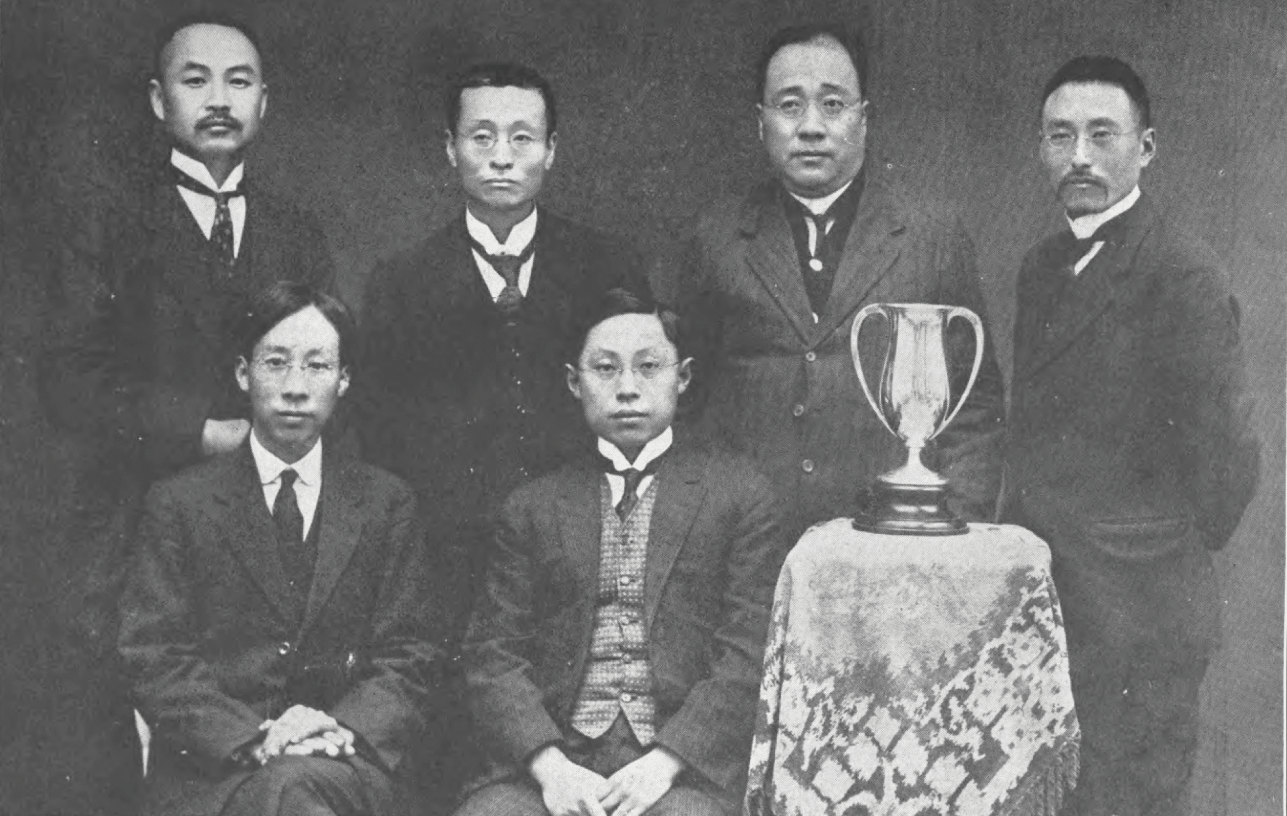

 Open access