


In this part, the application of the capability model is elaborated on three layers of the organisation: the level of the boardroom (corporate governance), the executive level (human resource management), and the level of the individual employee (flourishing work).
The model demonstrates its integrative nature not only on the conceptual level, as discussed in Part I, but also in the content of this part, specifically in the layers of the organisation. In this part, we will see that the capability approach can identify problems, areas for improvement, and solutions at different levels of the organisation. The first three chapters of this section focus on the scientific and conceptual levels. Chapter 10 provides practical examples on all three levels.
The following chapters are included in this part:
7. Introducing Justice into the Governance of Organisations
8. Linking the Capability Approach for Sustainable Employability to Strategic and Inclusive Human Resource Management
9. The Capability Model Applied to Working Individuals: Decent and Flourishing Work
10. Practical Applications of the Capability Approach
Introduction
The good governance of corporations is a topic of ongoing debate. For instance, the dominance of tech giants has increased tremendously in the midst of disruption and uncertainty, which raises concerns about how these corporations are governed. Moreover, disruptive technologies, for example artificial intelligence, may fundamentally affect the nature of production, communication, and interaction in society but also decrease the stability of interdependent value chains, systems, and processes. In addition, global environmental degradation creates concerns about the purpose of value creation in all corporations. Global challenges may reflect tipping points that threaten the sustainability of society and raise questions related to the legitimacy and trustworthiness of corporations and their systems of governance and control. The decline in public trust in corporations is further fuelled, for example, by fraud and accounting scandals in banks, automobile companies, the clothing industry, energy, food, and pharmaceuticals. Principles of good governance, appropriate checks and balances, business ethics, accountability to multiple stakeholders, and separation of ownership and control seem to be too ambiguous characteristics of the governance of modern corporations. Corporations worldwide are grappling with their relationships with stakeholders and society, as well as their legitimate purpose and identity. Thus, today’s reality suggests the need to arrive at new, feasible, and effective corporate governance solutions.
Corporate governance addresses two related questions. The first is for whom does the organisation create value, and the second is who holds the ultimate decision rights. The allocation of discretionary decision rights to individuals in organisations directly connects corporate governance with principles of justice and fairness. The dominant agency perspective in corporate governance identifies shareholders as residual claimholders and assigns them ultimate decision authority to ensure that they receive a fair return on their investments, particularly in view of the opportunistic behaviour of more knowledgeable managers [Reference Jensen and Meckling1, Reference Shleifer2]. However, companies currently have both multiple residual stakeholders and multiple beneficiaries outside the company, representing both private and public interests. Fia and Sacconi argue that in the case of multiple interdependent specific investments, shareholder primacy enables the risk of ‘abuse of authority’ and hence injustice [Reference Fia and Sacconi3]. The argument is that multiple incomplete contracts make the decision-making on dilemmas related to, for example, the distributive effects on value, self-respect, power, and other important goods dependent on personal (moral) judgement. As a result, problems of unfairness and abuse of authority easily arise, which threaten the legitimacy of corporate governance [Reference Sacconi4]. More generally, given multiple incomplete contracts, the legitimate criterion for the allocation of returns to multiple residual claimholders becomes fairness, rather than efficiency, to address dilemmas among comparable multiple residual claimholders effectively. With personal judgement and fairness being important in corporate decision-making, the need for objectivity emerges. Justice does fulfil this need, which is essential for good corporate governance, as it ensures objectivity in personal decision-making.
Theories of organisational justice have long been derived from theories of social justice. However, introducing justice in corporate governance is challenging. The following questions arise: what is justice, and what may be the foundation of justice within corporate governance? “Justice is an essentially contested concept: there is no generally accepted definition of justice” [Reference Robeyns5, p. 148]. In this chapter, we follow Kulkarni in his conception of justice as the equality of freedom of capabilities [Reference Kulkarni6]. Kulkarni takes Amartya Sen’s notion of ‘justice as freedom’ as the normative foundation of justice. The capability approach (CA) of Amartya Sen entails two fundamental normative claims: first, the claim that individual freedom to achieve well-being is of primary moral importance; second, well-being should be understood in terms of people’s capabilities to achieve well-being. Adopting CA in the context of organisations thus requires these normative claims to lead the decision-making of and within organisations [Reference Kulkarni6]. Whereas Kulkarni [Reference Kulkarni6] explores the normative core of a firm’s enterprise strategy, where the enterprise strategy links ethics and strategy [Reference Freeman7], we seek to apply Kulkarni’s approach to introduce justice in corporate governance.
Justice applied to the organisational context can thus be defined as equal freedom of capabilities for all stakeholders in the organisation. Note that equal freedom of capabilities for all stakeholders does not imply the same or equal capabilities, as stakeholders are heterogeneous. Furthermore, the notion of freedom equality implies that the freedom of stakeholders is bounded by the freedom of other stakeholders. Therefore, shaping the boundaries of the freedom of capabilities of heterogeneous stakeholders in a just way through the allocation of decision rights among stakeholders and beneficiaries can be considered the fundamental problem of corporate governance in the presence of multiple residual stakeholders and beneficiaries. The boundaries in the CA framework are defined in terms of entitlements of stakeholders (and beneficiaries), which, in corporate governance, shape the rules and practices that direct and control the decision-making on these entitlements. In this chapter, we argue that only decision-making on the entitlements of stakeholders needs to build on the contribution of stakeholders to the corporation, which is captured by a conceptualisation of justice in terms of contributive justice (see Chapter 3). Therefore, in the framework of the CA, the normative core of the governance of the corporation is concerned with the allocation of entitlements, where the objective foundation of that allocation is found in the idea of contributive justice. In the next sections, we elaborate in more detail on the CA and the notion of contributive justice in the context of the CA.
Justice as Freedom
Sen’s capability framework entails the normative claims that the freedom to achieve well-being is of primary moral importance and that well-being should be understood in terms of people’s capabilities, functionings, and entitlements. The framework explicitly focuses on how resources are or can be used or converted by individuals to achieve capabilities. Capabilities are the doings and beings that people can achieve if they choose and include both individual access and the use of resources. Functionings reflect how well individuals succeed in achieving ‘beings or doings they have reason to value’, thus converting resources via individual capabilities into valuable characteristics according to one’s own needs and preferences. There is a choice because one usually cannot realise all capabilities within a specific context. Sometimes, this choice is restricted by the context, for example, within the context of organisations. In the CA, one should strive for unrestricted choices leading to unrestricted functionings that establish “the quality of a person’s being” [Reference Sen8]. Finally, entitlements are the set of alternative commodity bundles that a person can command in a society using the totality of rights and opportunities that theyFootnote 1 face [Reference Sen9].
When Kulkarni defines “justice” in terms of “equal freedom”, he explicitly uses Sen’s notion of freedom and advocates the equality of individual freedom to capabilities [Reference Kulkarni6]. In this respect, freedom not only involves the absence of external constraints but also encompasses the ability of individuals to make choices and pursue lives they have reason to value. As this valuation may also reflect a person’s sense of rightness and wrongness or what ‘ought’ to be, deontological requirements (e.g., the person’s obligations to others) also enter the valuation exercise [Reference Sen8, Reference Sen9]. The fact that value may also include subjective moral considerations regarding the achievement of functionings is reflected in the principle of ‘bounded self-interest’, that is, “people care about being treated fairly and want to treat others fairly if those others are themselves behaving fairly” [Reference Sen10, p. 30].
The individual is the fundamental unit of analysis in the CA; however, in the CA, contextuality is a key feature. This allows us to consider the possibility of an organisational context. Although most CA theories focus on the societal level, it can be argued that the emphasis on freedom in the CA can also be applied for the analysis of how different stakeholders (e.g., workers, shareholders) voluntarily choose to align interest, preferences, and needs in the context of organisations [Reference Shrivastava, Jones, Selvarajah and Gramberg11].
Types of Justice: Contributive Justice as a Framework for Distributive Justice, Procedural Justice, and Interactional Justice
Shrivastava et al. argue that Amartya Sen’s The Idea of Justice provides a perspective on organisational justice that resolves several issues within the field [Reference Shrivastava, Jones, Selvarajah and Gramberg11]. It is stated that Sen’s Idea of Justice offers an integration of the three important aspects of justice in the organisation: distributive justice, procedural justice, and interactional justice. Whereas distributive justice focuses on the distribution of resources and outcomes, procedural justice emphasises the fairness of decision-making processes. Interactional justice focuses on the quality of the interpersonal treatment that individuals receive in decision-making processes. For the integration of the types, the concept of comprehensive justice is developed. In our view, as set out in Chapter 3, a combination of the CA with contributive justice can be an alternative to the concept of comprehensiveness, providing not only a framework within which distributive justice, procedural justice, and interactional justice are integrated but also an alternative perspective that gives these concepts a different meaning. This is elaborated in Chapter 3 for distributive justice, which is based on Sen’s parable ‘three children and a flute’. A focus on contribution provides an alternative framework for how resources can be distributed, processed, and communicated, where the emphasis is not on the ownership of the resource and the associated choices but on the use of the resource to optimise the well-being of all participants. Therefore, it is not about what divides and separates but what unites. In Chapter 3, contributive justice was discussed extensively. Later, we repeat this process enough to enable this chapter to be read independently.
Zamagni (cited by Etmanski) defines contributive justice as “the responsibility each of us has to contribute to civil society, and to our collective well-being. Contributive justice matches a person’s obligations with his or her capabilities and role in society” [Reference Etmanski12]. In addition, Gomberg argues that contributive justice proposes that each flourishes by advancing the flourishing of others and that it is one’s duty to do one’s share according to one’s abilities [Reference Gomberg13]. Sayer indicates that participation is at least as important as distribution: “what we do in life has at least as much influence on who we become and the quality of our lives, as does what we get” [Reference Sayer14, p. 1]. Contributive justice goes beyond compliance with procedures but requires a more proactive view of justice in terms of personal agency and the meaningful contribution of actors. The emphasis on the contribution does imply that the (intrinsic) reward to proactive social behaviour is in the act of collaboration itself, in terms of self-esteem and recognition. This is in contrast to reactive social behaviour, where justice is found in the fair distribution of outcomes. Finally, several authors on contributive justice (e.g., Dempsey and Gomberg) identify an encompassing relationship between the more general concept of ‘contributive justice’ and the more narrow, particular concept of ‘distributive justice’, often related to fairness [Reference Rawls and Kelly15]. This encompassing relationship is consistent with the integrative function we see for contributive justice. Contributive justice integrates distributive, procedural, and interactional justice into a common framework. In this integration, the emphasis on contribution provides a different perspective than the usual emphasis on distribution: procedures are then focused on fair contribution rather than fair distribution, and interaction is focused on each person’s contribution rather than on each person’s claim. Contributive justice does not replace distributive, procedural, and interactive justice but rather provides a different perspective for these types of justice.
Timmermann offers an extensive and nuanced discussion of the ‘duty to do one’s share according to one’s capacities’, which he considers to be one of the key issues of contributive justice [Reference Timmermann16]. In summary, he argues that it may be inconsistent with liberal values if someone is ‘forced’ to express skills that are profitable to the community but may conflict with one’s own preferences. This argument applies at the community level, where there is less or no navigational agency (see later), and is consistent with a core principle of the CA, which is that the expression of one’s capabilities must be a free choice.
For contexts in which it is, in principle, a voluntary choice to participate, such as organisations, the argument is less valid. One of the presuppositions for joining a firm is that one is willing to perform the tasks required by the firm. We conclude that Timmermann’s argument does not hold for contexts with sufficient navigational agency and that contributive justice is appropriate for firms in all its aspects [Reference Timmermann16].
Thus, contributive justice is an appropriate form of justice for organisations, with its focus on participation. The focus is not only on who we are, with the associated (distributive) rights to what we have created but also on who we want to become, with the associated rights and obligations to belong and participate, and the ability to align one’s particular moral compass with the ethical system of the organisation in which one wishes to participate. Contributive justice shapes proactive rights and duty-full (or virtuous) behaviour in context (e.g., in an organisation), aligning stakeholder personal needs and preferences with organisational roles and the organisational purposes. Timmermann argues that a fair distribution of what is already present, that is, resources or outcomes, can be denoted a reactive approach [Reference Timmermann16]. In contrast, the proactive approach focuses on creating opportunities and shaping a context within which fair distributions can occur. In other words, contributive justice shapes justice ex ante. The emphasis is on just participation in an organisation for which one chooses, with associated rights and obligations, towards oneself and the organisation. This combination of rights and obligations implies that stakeholders should be able to shape their participation or contribution accordingly and move autonomously and freely in and between social practices. A social practice is defined by Claassen as a structure of actions held together by a set of common institutions, in which several agents cooperate to reach their ends [Reference Claassen17]. This refers to both forms of agency that Claassen describes: participation agency and navigational agency [Reference Claassen17]. In these terms, we can be agents by participating as members of social practices, or we can be agents in a stronger sense by being able to navigate between social practices and to choose for ourselves which social practices we want to participate in. Claassen argues that justice should be understood in terms of (capabilities for) navigational agency. For a move to be just, navigational agency equality between agents is a demand [Reference Claassen17]. Thus, navigational agency operates within the constraints of a context, for example, as defined by a role within an organisation. Within such a role context, for example, navigational agency manifests itself as autonomous decision-making within role boundaries, role crafting, role boundary negotiation, or ultimately exit, that is, abandoning the role. Many of these mentioned activities relate to the nature of the contribution of the agent in a specifically assigned role to a larger whole. The contextually bounded freedom and autonomy to participate and contribute is also a central aspect of contributive justice. It can therefore be concluded that Claassen’s conception of justice is compatible with contributive justice and with our slightly adapted version of Kulkarni’s definition (see later). From an integrative perspective, we can say that the freedom to acquire capabilities or values is better shaped by contributing to and participating in society, community, or organisation than by distributing, in what unites us rather than in what divides us. To emphasise this, we adapt Kulkarni’s definition of justice as ‘equal freedom of capabilities’ to ‘equal freedom of capabilities in contribution’ (see Chapter 3).
Justice Applied to Organisations
Corporations are organisational systems referring to the structure or arrangement of elements within an organisation. This encompasses how tasks, roles, and responsibilities are defined and coordinated to achieve the organisation’s goals and includes the definition of all business divisions and sectors, the communication flow, and the reporting hierarchy. The organisational system is put in place to define how each role in the business functions. Organisations define the roles of stakeholders in terms of the rights and duties they have to follow to be able to participate in the practice. All of this serves the purpose of allowing stakeholders to pursue certain ends. These concepts – institutions, roles, rights and duties, and ends – are the crucial components of a practice. Practices are cooperative structures in which stakeholders pursue their ends, subject to the constraints presented by the organisation. Following Sen, ‘justice’ within the organisation can be defined as the equality of freedoms of individual capabilities to achieve well-being in fulfilling respective roles in the organisation. This normative foundation reflects the requirement for a firm to adopt an action (e.g., a strategy) because it is morally the right thing to do, that is, motivated by the norm to provide stakeholders equal freedom of achieving well-being. There are several reasons for the application of capability theory of justice as equal freedom of capabilities to contribute to the organisation: 1) the organisation is often viewed as a political system, where issues such as resource allocation, preference ordering, and conflict resolution are important; 2) value consistency between the political and organisational systems is desirable; and 3) ethical principles are not limited only to societies at large but are also important for organisations. Therefore, the opportunities to achieve individual well-being in a society can be extended to a concern for freedom to achieve stakeholder well-being within an organisation.
In the organisation, stakeholder capabilities are embedded in the firm. Many of these capabilities are tacit and it can be considered, in particular, the ability of leaders to evaluate stakeholder capabilities and provide justice to stakeholders. Focusing on justice within organisations, Dempsey claims that “every businessman in practice admits and defends the importance of distributive justice; within his own company (s)he tries to practice it, for instance, in planning vacation schedules or in designing a bonus or retirement programme” [Reference Dempsey18, p. 395]. In addition, Dempsey emphasises contributive justice as “the fundamental right and obligation of any member of the community to contribute to the common good”, where the right comes from “the genuine recognition by the leader that each member of his organization has something to contribute and needs to be given the opportunity to do so” [Reference Dempsey18, p. 396].
The following elements of the CA stand out in the development of a conceptualisation of contributive justice within organisations. First, the CA builds upon the notion of heterogeneity of individuals, which applies in particular to the notion of the corporation as a collective of diverse stakeholders and beneficiaries. In this respect, heterogeneity applies to actor motivation and needs, preferences, and abilities. In the CA, the prosocial behaviour of agents is not ruled out by assumption, and stakeholders can also be driven to different degrees by self-interest and more prosocial motives. This heterogeneity may help corporations explore different best practices in processes of direction and control, recruiting and combining stakeholders to realise organisational goals. A second fundamental element reflects the emphasis on capabilities as opposed to (distribution of) resources. Sen explicitly acknowledges the creation of new capabilities in addition to existing capabilities. Creating new capabilities through experimentation, innovation, and business development allows for the processing of freedoms and provides opportunities for involving newly created capabilities in the creation and distribution of value. A third element concerns the emphasis on (best) practice rather than abstract theorising. The CA combines pragmatism with a focus on creating just practices within the given context of corporations. Justice within the organisation is thus partly determined during operation, process-wise, as inspired by the corporate purpose, that is, the identity of the organisation. The challenge for corporate governance is then to institutionalise the boundaries of the freedom of capabilities of heterogeneous stakeholders in a just way through the allocation of decision rights among multiple residual stakeholders and beneficiaries to align the corporate purpose with heterogeneous stakeholder needs. It is the collective responsibility of corporate stakeholders to make such decision-making inclusive, and it is the individual stakeholder’s responsibility to act loyally to the collective of stakeholders.
Incorporating Justice within Corporate Governance
Within organisations, residual claims by multiple stakeholders result from processes of asset specialisation and combination. In those processes, the allocation of decision rights may be problematic. Opportunistic self-serving behaviour may hamper collaboration [Reference Bridoux and Stoelhorst19]. Mainstream corporate governance has addressed such conflicts of interest from an individual (atomistic) perspective to the detriment of a more interdependent, holistic, and collective perspective. However, within organisations, collective well-being, defined by the corporate purpose, is the firm’s reason for its existence. Bartlett and Ghoshal define purpose as “the statement of a company’s moral response to its broadly defined responsibilities, not an amoral plan for exploiting commercial opportunity” [Reference Bartlett and Ghoshal20, p. 88]. Corporate purpose reflects shared stakeholder beliefs about the meaning of a firm’s activities beyond measures of performance [Reference Gartenberg, Prat and Serafeim21]. Thus, in addition to stakeholder needs, the collectively (pre)determined corporate purpose serves to attract and hold stakeholders and foster stakeholder commitment. Purpose gives meaning to their contributions, establishes collective well-being, and serves to identify with the organisation.
Within purpose-driven organisations, effective corporate governance aligns stakeholder engagement with the corporate purpose in a way that prioritises for stakeholders the corporate purpose over individual needs and capabilities on the one hand and safeguards the potential for realising individual capabilities within the confines of the corporate purpose on the other hand. Similarly, stewardship theory assumes that collectivistic behaviour, oriented toward the collective, has greater utility than does individualistic behaviour. Originally, stewardship theory was developed as an alternative to principal-agent theory with a focus on the prosocial behaviour of the agent, that is, the manager [Reference Davis, Schoorman and Donaldson22]. In this chapter, we generalise stewardship to all stakeholders, that is, all principals, and claim that steward principals identify themselves with the purpose of the organisation and, as a result, align their needs and preferences with the purpose of their organisation [Reference Francoeur, Melis, Gaia and Aresu23]. Such stewardship is intrinsically motivated and non-opportunistic [Reference Francoeur, Melis, Gaia and Aresu23]. The resulting behaviour to undertake tasks within and for the organisation is also intrinsically motivated [Reference Davis, Schoorman and Donaldson22]. It is this behaviour that creates trust within the organisation. Stewardship entails giving priority to the long-term interests of a group over individual objectives [Reference Hernandez24]. Ultimately, feelings of autonomy and responsibility drive stakeholders’ motivation to perform. According to stewardship theory, individuals hold a covenantal relationship with their organisation as a moral commitment that binds parties to work towards a common goal without taking advantage of each other. Such psychological contracting is economic (transactional), socio-emotional, and ideological (both transformational). Moreover, the covenantal relationship implies reciprocity: stakeholders do not view other stakeholders merely as means to an end but always also as an end in themselves [Reference Freeman7].
Stewardship theory involves a model of governance that orients stakeholders towards advancing collective benefit. Stewardship behaviours are influenced by a cognitive and affective process that frames their decisions in terms of 1) collective and other-regarding and 2) long-term benefits. Stewardship thus includes an ethic of contribution. Defining stewardship as an ethic of just contribution requires an inquiry into the conditions under which stakeholders are prepared to contribute. First, stewardship requires stakeholders to identify with the purpose of the corporation and to prioritise purpose over personal needs and preferences. Second, stewardship implies transferring ultimate rights of control to the corporation, that is, to those that represent the corporation in transactions and exchanges. Third, the transfer of ultimate control rights is an act of trust, that is, an act without compensating for rewards. Fourth, stakeholder trust is founded on a principle of reciprocity and institutional trust, assuming full respect for the well-being of stakeholders at all levels of the organisation. Given the corporate purpose, choices within and by the organisation are just subject to the same moral principles that determine all the activities of the organisation. Stewardship is granted as a moral duty of stakeholders on the basis of their alignment with the corporation’s purpose within the broader society. Discretionary decision rights reside within the corporation and are allocated as an act of trust, without expectations of a return. Those that are given discretionary decision rights are accountable to all stakeholders and to society as a whole for the realisation of the purpose. Problems of alignment are addressed through deliberative practices built upon the same moral principles that (re)define stewardship.
Corporate governance serves to direct and control the corporate purpose (a), the principles of stewardship and the conditions under which stakeholders are willing to contribute as stewards of the corporation (b) and the mutual acceptance of contributing as stewards of the corporation (c). Building in this respect on the CA to justice thus requires emphasis on securing and deliberating corporate purpose among stakeholders, allowing corporate stakeholders to actively pursue their opportunities to contribute to the corporate purpose and reconcile their contribution with the individual capabilities of stakeholders within the corporation.
The emphasis on stakeholder engagement (stewardship) suggests that collaboration, rather than opportunism and conflict, should be the primary corporate mindset and normative perspective. Nevertheless, stakeholder collaboration cannot be assumed beforehand and in all circumstances. Therefore, corporate governance is also a political system within the corporation that directs and controls how power is exercised and allocated within the corporation. Within corporate governance, principles of contributive justice shape the proactive, duty-ethical behaviour of stakeholders through direction and control, balancing individual needs and preferences against each other and against the organisation’s purpose. We can now deduce the elements for recognising contributive justice in the context of organisations. First, contributive justice implies that stakeholders have the opportunity to achieve not only the internal goods of participation but also the external goods of recognition and appreciation of that participation. This means that stakeholders are entitled to opportunities to develop and exercise capabilities and are able to actively participate in decision-making related to their own activities. Evaluating this ‘capability of having a voice’ includes entitlements of at least three different aspects [Reference Bohman25]: 1) freedom in stakeholder access to the decision-making process; 2) transparency of the deliberation process to avoid the abuse of decision-making power; and 3) freedom of speech and a guarantee that there will not be any sanctions against those who express their thoughts freely. Furthermore, the capability to have a voice may be dependent on other capabilities, such as the ability to obtain education and the ability to discriminate among choices, in which case, those underlying capabilities need to be considered as well.
Second, given contributive justice, stakeholders not only have entitlements but also responsibilities and obligations to the firm and other stakeholders. Justice requires that stakeholders be held accountable for their active contribution to the common objective and the needs of other stakeholders. In this respect, the stewardship approach to corporate governance emphasises not only transparency and ex post accountability on the distribution of resources and outcomes but also process accountability and integrity, that is, just behaviour in using resources to create outcomes with an eye to the interests of others. There is a moral obligation for stakeholders to contribute to the organisational objective and to ensure that others can contribute similarly. The focal point is the managerial capability to evaluate and direct stakeholder capabilities. This involves top managers (directors) using their knowledge of stakeholder capabilities. In the CA language, this can be denoted in terms of conversion factors. Managerial capabilities such as the ability to use superior (especially tacit) knowledge of stakeholder capabilities are embedded in the firm and reflect that the managers’ knowledge regarding stakeholder capabilities that is acquired through ‘learning by doing’ is immobile and cannot be obtained or traded easily in the market. The focus on management capabilities is consistent with the fact that stewardship theory is essentially managerial in nature in that it reflects and directs how managers operate. Managers are entrusted with crucial responsibilities, such as formulating the corporate strategy, guarding the resources, performing general overhead functions, and setting up the administrative context for strategy implementation [Reference Collis and Montgomery26]. In addition, directors monitor and provide advice on how to provide justice in accomplishing purpose and stakeholder capability development.
A Contributive Corporate Governance Configuration
The previous paragraphs indicate that actors are individuals with individual needs and stewards who subjugate their needs to the purpose of the organisation. Participation and deliberation are essential in aligning individual needs and collective well-being. Responsible stakeholders do this in deliberation with other stakeholders within the context of corporate governance. This approach resembles Sen’s perspective that morally just behaviour cannot be determined independent of the context and the participating human beings themselves. Introducing contributive justice in addition to distributive justice implies multistakeholder participation in corporate governance. Conversely, contributive justice implies the stewardship of stakeholders with a commitment to the organisation.
Sen defines justice as equal freedom of individual capabilities. Thus, achieving contributive justice in the organisation requires equal freedom of capabilities to contribute to the organisation. An essential capability to achieve contributive justice in the organisation is the capability of voice defined by Kulkarni as the process that allows stakeholders “to be influential while remaining deferential”, which refers to the capabilities for dialogue, dissent, and critique [Reference Hirschman27, p. 16].
Furthermore, to allow stakeholders to convert their resources into equal freedom of capabilities to contribute, managerial capabilities are crucial. Managerial capabilities fall apart in the objective knowledge of the stakeholders’ capacities (internal capabilities) that contribute to stakeholder voice and in the tacit knowledge of the impediments and benefits in processes that facilitate stakeholder voice. The impediments include, for example, difficulties in deciding which stakeholders are going to participate in decision-making, what should be their level of involvement, the extent to which stakeholders can contest the processes, and the mechanisms through which stakeholders can contest certain decisions [Reference Bonvin and Thelen28]. Managerial ‘knowledge’ includes both the explicit element or ‘knowing about’ stakeholder capabilities and the tacit element or ‘knowing how’ to transfer knowledge across stakeholders, space, and time.
In Figure 7.1, we outline the stakeholder process towards achieving contributive justice as far as determined by the patterns of corporate governance of the organisation.
Contributive justice within corporate governance.
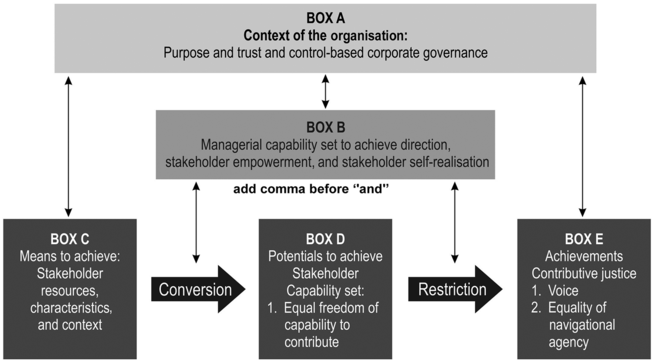
First, contributive justice takes shape through free and autonomous moves of stakeholders that convert resources (Box C) to capabilities (Box D) to choose achievements (Box E). Contribution can be regarded as an autonomous move in (and between) the bundle of social practices within the organisation. For that move to be just, navigational agency equality between stakeholders is a demand [Reference Claassen17]. This implies that within organisations, stakeholders are entitled to the abilities of exit/access, voice, conflict resolution, reform, and creation; however, these abilities are not necessarily distributed in strictly equal portions. The corporate governance context determines the actual distribution of these entitlements. In particular, this applies to the corporate purpose and corporate governance context (Box A) and the managerial capability set (Box B). For example, in Box A, the corporate purpose reflects the identity of the corporation, which serves as the guiding principle for the participation of stakeholders. Similarly, in Box A, the structure of corporate governance arranges the stakeholder entitlements of direction and control at the level of the organisation itself. To illustrate, the structure of corporate governance is usually a blend of two archetypes: (i) trust-based governance and (ii) control-based corporate governance. Trust-based governance structures (i) provide (a) arenas for dialogue, debate, and deliberation, which are crucial for the achievement of voice and contribution. These spaces are institutionalised spaces that create equity among stakeholders and provide a setting for organisational alignment and cohesion. Trust-based structures reflect decentralised decision-making and express organisational trust. Control-based governance structures (ii) seek to reduce defection functioning through (a) formalised protocols, rules, rights, and plans; (b) monitoring and reporting structures; and (c) rewards and incentive structures. In combination, they facilitate capability development for stakeholders to build the capacity and opportunity to contribute to organisational decision-making.
In the context of corporate governance (Box A), directors use their capabilities to enable and direct the choices underlying the transformation of stakeholder resources into capabilities and achievements (Box B). In particular, the following three managerial capabilities are used: (i) directive work; (ii) facilitating work; and (iii) participation work. Directive work gives primacy to organisational objectives and goals to guide stakeholders in making choices within the organisation. Facilitating work (ii) contributes to the participative agency of stakeholders by empowering them to develop and realise the capability to contribute to the organisation. Finally, (iii) participation in work contributes to the navigational agency of the stakeholders of an organisation, creating alignment and a shared understanding of the identity of the organisation, and nurturing intra-organisational relationships. Managerial capabilities guide the complete conversion process, that is, from resources (Box C) to capabilities (Box D) and from capabilities to achievements (Box E), and guarantee the freedom of the process given that stakeholders have already decided to participate in the organisation. Ultimately, the conversion process achieves the outcome of contributive justice.
Discussion and Conclusion
The legitimacy of corporate governance has been a topic of debate for decades. Among other things, owing to multiple incomplete contracts, the view that the legitimate criterion for the allocation of returns to multiple residual claimholders is fairness has been gaining ground. With fairness being important in corporate decision-making, the need for objectivity emerges. It is argued that a more prominent place for justice fulfils this need, as justice may ensure objectivity in personal decision-making. In this chapter, we introduce contributive justice to arrive at a just corporate governance and explore the implications for corporate governance.
Within purpose-driven organisations, effective corporate governance aligns stakeholder engagement with the corporate purpose. Stakeholders contribute to corporate purpose by willingly prioritising the corporate purpose over individual needs and capabilities. Organisations safeguard the potential for realising stakeholder capabilities within the confines of the corporate purpose. Following Claassen [Reference Claassen17], it is argued that for a stakeholder contribution to be just, in particular, navigational agency equality between stakeholders is needed, implying that within purpose-driven organisations, stakeholders are entitled to the capabilities of exit/access, voice, conflict resolution, reform, and creation; however, these capabilities are not necessarily distributed in strictly equal portions. It explores how corporate governance structures of trust and control, as well as processes of managerial capabilities [Reference Kulkarni6], affect the capabilities of, for example, exit/access, voice, conflict resolution, reform, and creation, ultimately achieving contributive justice.
This chapter represents the first exploration of the introduction of contributive justice within corporate governance. Thus, there remain fundamental questions and areas for subsequent research that need to be addressed.
The first question refers to the exact requirements of a corporate governance configuration that can be denoted as contributively just. While this chapter provides initial ideas, the actual translation of contributive justice into concrete principles and practices of corporate governance represents an interesting area for future research.
The second question refers to the stakeholders who need to have the possibility to participate in the decision-making of the corporation to denote the governance configuration as contributively just. The problem here is fundamentally a problem of infinite regress. Recalling Freeman’s definition that stakeholders are all those individuals or groups who can affect and are affected by the organisational objectives of the firm and that the behaviour of every stakeholder also affects the behaviour of other stakeholders, the inclusion of every stakeholder in corporate decision-making will create new stakeholders that are affected by the firm ad infinitum. Thus, the question of where and how to distinguish between stakeholders and non-stakeholders is important.
Third, even though stakeholders may have intrinsic motives for their contributions, this does not mean that their actions will automatically or inherently align with the collective objective in the absence of direction and feedback. Therefore, in the context of stewardship and contributive justice, understanding how stakeholders can be motivated to effectively contribute to the achievement of the collective well-being of the organisation is relevant. This is a question that particularly addresses the managerial capabilities within the organisation in dealing with and assuring effective contributions and distributions of exit/access, voice, conflict resolution, reform, and creation, that is, navigational agency among stakeholders.
Fourth, collective well-being may not always be aligned and must be deliberated.
Fifth, why and how stakeholders align themselves with collective goals or purposes if such goals and purposes are a form of control, and control can be demotivating.
Sixth, stakeholders are subject to bounded rationality and information asymmetry, which may influence their understanding of collective goals. To be able to contribute, stakeholders must also understand other stakeholders and their contributions. To recognise the needs of other stakeholders without assuming homogeneity, one must understand the willingness to understand the needs of the other. Problems of moral hazard and adverse selection also exist among stewards. All these observations illustrate that developing a framework of contributive justice in the context of corporate governance calls for important future research. For the design of such corporate governance, the key challenge remains balancing (interdependent) stakeholders’ needs and obligations against each other and against the need to serve the collective. To do this, there are probably no standard best practices. Thus, the challenge is not to find the practices that will be applicable in most situations.
Introduction
In recent decades, sustainable employability has received increasing attention in the field of human resource management (HRM). This chapter aims to bridge the capability approach (CA) to strategic HRM and inclusive HRM, aiming to align individual capabilities with organisational goals through a contextualised, multilevel perspective that promotes sustainable employability.
Although the definition of sustainable employability is evolving [Reference Akkermans, le Blanc, Van der Heijden and De Vos1], researchers generally agree that it encompasses obtaining and maintaining employment (i.e., employability), as well as the components of work motivation and health [Reference Ybema, van Vuuren and van Dam2]. Van der Klink and colleagues proposed that the CA is suitable as a framework for understanding sustainable employability [Reference Van der Klink, Bültmann, Burdorf, Schaufeli, Zijlstra and Abma3]. They developed a conceptualisation of sustainable employability based on Sen’s CA, stating that: “Throughout their working lives, workers can achieve tangible opportunities in the form of a set of capabilities. They also enjoy the necessary conditions that allow them to make a valuable contribution through their work, now and in the future, while safeguarding their health and welfare” ([Reference Van der Klink, Bültmann, Burdorf, Schaufeli, Zijlstra and Abma3, p. 74]; Chapter 2). The CA enhances our understanding of how opportunities (i.e., capabilities) help individuals achieve and maintain valuable functioning at work. As such, the CA provides a valuable lens for both practical and theoretical advancements in sustainable employability in the field of HRM.
HRM bridges various disciplines involved with sustainable employability (e.g., vocational psychology, occupational health, and vocational rehabilitation) and “involves management decisions related to policies and practices that together shape the employment relationship and are aimed at individual, organisational and societal goals” [Reference Boselie4, p. 5]. As such, HRM has a critical role in managing relationships between the employer and employee, ensuring fairness, motivation, and a healthy work environment, all of which can contribute to long-term organisational success [Reference Boselie4]. The multilevel focus of HRM, including the individual (i.e., micro), organisational (i.e., meso), and societal levels (i.e., macro), aligns with van der Klink and colleagues’ notion that sustainable employability does not rely solely on the individual’s attitude or motivation [Reference Van der Klink, Bültmann, Burdorf, Schaufeli, Zijlstra and Abma3]. Instead, the individual’s (work) context strongly influences their choice and ability to convert resources into opportunities (i.e., ‘capability sets’), ultimately enhancing their valuable functioning at work. HRM practices are adopted by organisations as a means of shaping this work context while balancing outcomes at the individual (e.g., sustainable employment), organisational (e.g., organisational performance), and societal levels (e.g., community value).
In recent years, sustainable employability has emerged as a key focus within strategic HRM, which emphasises the role that HRM plays in contributing to business objectives [Reference Paauwe, Boon, Collings, Wood and Szamosi5] by adopting (sets of) activities, policies, and practices designed to manage an organisation’s most valued assets – the people working there [Reference Boselie4, Reference De Lange, Kooij, van der Heijden, Finkelstein, Truxillo, Fraccaroli and Kanfer6, Reference Pak, Kooij, De Lange, Meyers and van Veldhoven7]. Ideally, HRM succeeds in creating an ecosystem in which both the individual worker and the organisation thrive. From a capability perspective, it is formulated as follows: individual and contextual resources are converted to capability sets, contributing to valuable functioning for both the individual and the organisation [Reference Van der Klink, Bültmann, Burdorf, Schaufeli, Zijlstra and Abma3]. From the lens of the CA, this means that, to achieve organisational success, employers need to actively bridge the objectives of the individual and the organisation. At the same time, individuals are (partially) dependent on their employer(s) for shaping meaningful work and life functioning [Reference Van Veldhoven8]. Within this chapter, the logic of the CA is applied to the area of strategic HRM as a means of integrating the employer’s perspective into the equation of individual capabilities. More specifically, we explore in greater detail what is necessary for organisations not only to use the CA as a tool to build individual-level capability sets but also to use the CA as a normative framework to resolve tensions between individuals’ objectives and organisational objectives.
Although the development of strategic HRM has allowed the HRM field to gain a more prominent seat at the strategic management table, some scholars are critical of overemphasising the strategic approach to HRM. One of these critiques is that an increasing focus on equipping HRM as a tool to strategically increase organisational performance may result in a focus on HR differentiation [Reference Van Zelderen, Dries and Marescaux9]. This differentiation refers to HRM’s focus on identifying, developing, and investing in an exclusive pool of employees – traditionally seen as ‘talents’ – while neglecting a focus on a more inclusive approach. Similarly, Restubog and colleagues argue that marginalised groups on the labour market (e.g., older workers, people with disabilities, or long-term unemployed individuals) have been largely overlooked in organisational research [Reference Restubog, Schilpzand, He, Lyons and Deen10]. Moreover, many of the HR management theories used for understanding the employment context rely on assumptions that may not hold for more vulnerable groups (e.g., that employees can freely, and by their own volition, navigate their careers and have personal and organisational resources to do so). As such, there is a strong call to understand whether insights in the CA and HRM for sustainable employability can be translated to vulnerable populations by engaging in inclusive HRM [Reference Audenaert, Van der Heijden, Conway, Crucke and Decramer11]. Since the CA for sustainable employability explicitly acknowledges the roles of personal resources as well as (constraining) contextual influences, in this chapter, we explore how the CA may foster the development of a more inclusive HRM approach to the sustainable employability of vulnerable workers. Additionally, the adoption of the CA as a normative framework for inclusive HRM is explored by evaluating whether it enhances an individual’s opportunities through both access to and decent work. In sum, this chapter explores the interplay between HRM and the CA with respect to sustainable employment by focusing on two key areas of HRM: strategic HRM and inclusive HRM. This chapter concludes with a reflection on future research directions.
Bridging Strategic HRM and the Capability Approach to Sustainable Employability
Within this section, the role that strategic HRM may play in fostering sustainable employability is discussed, as are the HRM tensions that may arise in this process and how the CA may be adopted as a framework for understanding how to develop the capabilities of both the individual and the organisation.
Strategic HRM
Strategic HRM explicitly draws attention to the question of how HRM activities, practices, and policies add value to organisations [Reference Paauwe, Boon, Collings, Wood and Szamosi5]. A fundamental premise here is that there should be alignment (or fit) between HRM and the organisational strategy. The early work of Mintzberg and colleagues illustrated that there is no single right way to adopt an organisational strategy [Reference Mintzberg, Ahlstrand and Lampel12]. Instead, organisations use strategies in different ways. To illustrate, organisations may adopt a strategy as a plan – defining a clear course of action towards success for the organisation. Others may adopt a strategy as a ploy, striving mainly to outfox (potential) opponents on the market. The five Ps of strategy (i.e., plan, ploy, pattern, position, or perspective; [Reference Mintzberg, Ahlstrand and Lampel12]) were already highlighted years ago as challenging to distinguish a universal organisational strategy, let alone a universally valid strategic HRM approach. Nevertheless, there seem to be several generalisable, strategic objectives of HRM across organisational contexts. The Harvard HRM model distinguishes three strategic HRM goals: social legitimacy (i.e., the organisation’s impact on society), economic rationality (i.e., the organisation’s economic welfare), and individual well-being (e.g., commitment and motivation; [Reference Beer, Boselie and Brewster13]). The main objective of strategic HRM, in that sense, is to adopt HR practices that align employees’ efforts in support of achieving these multilevel goals (i.e., given the interorganisational differences in the prioritisation of these goals; [Reference Boselie4]). Chapter 7 also discusses, in the context of corporate governance, aligning stakeholder (in this case, employee) goals with organisational goals. Examples of strategic HR practices are workforce planning, learning and development routes, employee well-being programmes, and performance management initiatives.
Tensions between Strategic HRM and Sustainable Employability
To some extent, strategic HR practices aimed at organisational performance may naturally align with a focus on sustainable employability [Reference Pak, Kooij, De Lange, Meyers and van Veldhoven7]. As such, strategic HR practices aimed at keeping employees happy, healthy, and productive may benefit both the organisation and the individual by contributing to both individual-level and organisational-level capabilities [Reference Gürbüz, Bakker, Demerouti and Brouwers14]. Given societal development, such as digitisation, hybrid working, and the growing gig economy (and its impact on employment security), many organisations increasingly adopt a strategic approach to HRM in response to these developments as a means of ensuring a sustainable alignment between the employer’s and employee’s welfare by increasing individual-level and organisational-level capabilities. Examples of such strategic practices are HR practices aimed at development (e.g., career planning or training) or the utilisation of human capital (e.g., task enrichment; [Reference Kooij, Jansen, Dikkers and de Lange15]). By investing in these strategic HR practices, organisations stimulate employability through capability-enhancing drivers. In other cases, however, HR practices aimed at employability may deviate profoundly from strategic HR goals [Reference Ybema, van Vuuren and van Dam2], as their objective is to contribute to the sustainability of the individual’s career, which may exceed organisational boundaries. Examples of such practices include maintenance-oriented HR practices (e.g., flexible working times) or accommodative HR practices (e.g., early retirement or additional leave; [Reference Kooij, Jansen, Dikkers and de Lange15]).
From these discrepancies, tensions may arise between strategic HRM interests and sustainable employability. To illustrate this with an example, consider an organisation that actively invites employees to draw up a personal development plan, on the basis of which the organisation actively supports their development (e.g., with coaching). At the individual level, one may expect that an investment in exploring occupational drivers may positively influence an individual’s sustainable employability [Reference Ybema, van Vuuren and van Dam2]. On the organisational level, in turn, the enactment of this HR practice may enable the organisation to make better use of the talents of their employees, hence supporting the organisation’s strategic goal of, for instance, increasing shareholder value. In other cases, however, the employee’s development plan may constitute a development route towards a career outside of the organisation. As a result, HR practices aimed at sustainable employability have allowed employees to actively shape their career trajectory while resulting in increased turnover intentions. These turnover intentions may exert negative pressure on organisational productivity and flexibility. Framed more positively, however, these turnover intentions may signal to the organisation that there is a need to reorganise work to more clearly align with individual capabilities.
As this example illustrates, strategic HRM and HR practices aimed at sustainable employability may either operate mutually reinforcing or may cause tensions – or so-called paradoxes – within the economic and moral drivers in the HR domain [Reference Aust, Brandl and Keegan16, Reference Peters and Lam17]. To manage these paradoxes, it is argued that organisations should balance their attention to economic, moral, and societal values [Reference Paauwe18]. This brings us to the work of Amartya Sen [Reference Sen, Nussbaum and Sen19, Reference Sen20], the founder of the CA, which explicitly integrates both moral and economic considerations that translate to the HRM context [Reference Downs and Swailes21].
Capability-Enhancing Organisations
In essence, strategic HRM at the meso level (i.e., the organisational policy level) is oriented primarily towards optimising employees’ efforts at work to generate value for the organisation and its shareholders. This stems from a reductionist perspective [Reference Subramanian, Verd, Vero and Zimmermann22] that regards employees as mere ‘human capital’ from an economic viewpoint and largely fails to acknowledge moral consideration for human development. Similarly, in the field of industrial and organisational psychology, scholars advocate for justice and adopt a human-centred approach rather than merely focusing on strategic management goals [Reference Gloss, Carr, Reichmann, Abdul-Nasiru and Oestereich23]. We consider the CA as complementary to this focus on generating economic results [Reference Van der Klink, Bültmann, Burdorf, Schaufeli, Zijlstra and Abma3, Reference Sen20]; the objective should be to allow individual employees to flourish as fulfilled individuals while simultaneously aiming for economic results [Reference Zimmermann24].
Although some research provides a grim picture of the marginalised focus of HRM on employee-focused responsibilities, such as individual fulfilment or sustainable employability [Reference Van Buren, Greenwood and Sheelan25], the CA seems to hold promise for bridging macro-, meso-, and micro-level interests. The objective of this reconciliation is that the organisational environment and the individual’s capabilities strengthen the collective capabilities of the organisation (and the wider society), and vice versa [Reference Subramanian, Verd, Vero and Zimmermann22] – a win‒win of sorts. As such, there is a mutual dependency: organisational capabilities rely on the mobilisation of individual skills and capabilities [Reference Subramanian and Zimmermann26], and the conversion of individual capabilities relies on the work context [Reference Van der Klink, Bültmann, Burdorf, Schaufeli, Zijlstra and Abma3].
The mobilisation of individual capabilities in itself is deemed insufficient, however, to fully generate collective action at the organisational level. Hoffer-Gittel argues that effective coordination (i.e., relational coordination) is highly relevant for the conversion of individual capabilities to collective action [Reference Hoffer-Gittell, Kyriakidou and Özbilgin27]. In line with this, research has highlighted the value of capability-enhancing organisations, which are pluralist, participatory, developmental, fair, and responsible (see Box 8.1). In particular, pluralist and participatory features, which allow for the consideration of different stakeholders, help bridge the micro, meso, and macro levels from a strategic HRM lens. As such, adopting a capability-enhancing approach may allow organisations to bridge strategic logics of social legitimacy, economic rationality, and employee well-being within the context of sustainable employability [Reference Paauwe and Farndale28].
| Pluralist | Taking into consideration the manifold purposes that the organisation, the employees, and other stakeholders can associate with work. |
| Participatory | Offering spaces for debating the different conceptions and purposes of work, as well as the means to implement them. |
| Developmental | Helping to expand the real freedoms that people have; capabilities being both the means and the end of development. |
| Fair | Embracing Sen’s idea of justice based on an equal capability to act. |
| Responsible | Taking responsibility for its impact on society. |
When these insights are translated to the individual level, the CA model of sustainable employability [Reference Van der Klink, Bültmann, Burdorf, Schaufeli, Zijlstra and Abma3) suggests that, within capability-enhancing organisations, individual and work input should not necessarily be viewed as determinants of sustainable employability. Rather, they are factors that result in potential (i.e., a capability set) for valuable functioning, provided that there are conversion factors present. HRM policies and practices are key examples of such conversion factors. To illustrate, organisations may adopt HRM practices such as job crafting opportunities, development conversations, or work‒life balance practices as such conversion practices, which may help translate input towards potential (i.e., capabilities) to achieve valuable functionings. This finding shows that at both the individual and collective levels, conversion factors are key contributors to translating both individual and collective capabilities to individual-level and organisational functionings.
Bridging Inclusive HRM and the Capability Approach to Sustainable Employability
Although HRM can be seen as a conversion factor within the capability model [Reference Van der Klink, Bültmann, Burdorf, Schaufeli, Zijlstra and Abma3], the mere presence of HRM policies and practices at the meso level is not sufficient to allow each employee to generate a capability set of tangible opportunities for sustainable employability. Subramanian et al. explain how inequity in HRM policies and practices may promote the generation of capabilities of specific groups of employees over others (e.g., vulnerable groups in the labour market) [Reference Subramanian, Verd, Vero and Zimmermann22]. Hence, it is argued that it is relevant to consider the value of the CA for sustainable employment from an inclusive HRM viewpoint.
Inclusive HRM
Inclusive HRM is defined as “a broad perspective of HRM, extending beyond the boundaries of the organisation and considering people who are not (yet) part of the organisation, as valuable resources whose interests need to be taken into account” [Reference Borghouts-van de Pas and Freese30, pp. 13–14]. Strategic HRM focuses primarily on the so-called core employee (i.e., those seen as ‘ideal workers’ according to ableist norms; [Reference Jammaers and Zanoni31]), whereas inclusive HRM strives to actively include the labour potential of employees in more vulnerable positions in the labour market [Reference Borghouts-van de Pas and Freese32]. Vulnerable groups in the labour market are individuals for whom obtaining and maintaining work is challenging, including people with a disability, long-term unemployed individuals, or refugees. What makes these groups ‘vulnerable’ is the fact that they are “at risk of being abused, exploited or wounded whether physically, psychologically, socially, or a combination of these, at work” [Reference Restubog, Deen, Decoste and He33, p. 3], hence obstructing these individuals’ potential for achieving sustainable employability [Reference Akkermans, le Blanc, Van der Heijden and De Vos1]. Additionally, people can be considered to have a vulnerable position in the labour market if they are currently in employment but are at risk of (potentially prolonged) unemployment (i.e., due to an illness). In that sense, it has been argued that every worker can – at some point in time – be in a vulnerable labour market position [Reference Van Heijster, van den Groenendaal, Bosman, Hartman, Freese and Borghouts34]. As such, inclusive HRM encompasses various goals, including promoting access to the labour market, ensuring decent work, and contributing to (sustainable) employability, all with the overarching objective of ensuring the sustainable labour market participation of all, including groups seen as ‘untapped potential’ [Reference Lengnick-Hall, Gaunt and Kulkarni35].
Importance of Inclusive HRM
There are various reasons for the shift towards attention to labour market participation in both research and practice [Reference Restubog, Schilpzand, Lyons, Midel Deen and He36]. First, demographic changes such as the ageing population increase the number of people of working age who face some form of disability or chronic illness, for which they require some form of adaptation in their workplace [Reference Nygaard, Thomsen, Rasmussen, Skadhauge and Gram37]. This requires organisations to be more flexible to accommodate the increasingly varying needs and characteristics of their employees. Additionally, owing to global labour shortages, organisations are required to widen their scope in regard to hiring people and making use of different types of talent – unlocking the untapped and underused potential of people who are currently sidelined [Reference Lengnick-Hall, Gaunt and Kulkarni35]. Nevertheless, employment gaps persist among vulnerable groups (e.g., demonstrated by the disability employment gap; [Reference Van Der Zwan and De Beer38]), indicating that organisations may be challenged in actively including these individuals. To address this, persisting un- and underemployment has become a topic on political agendas in several Sustainable Development Goals of the United Nations, stating that everyone should have access to decent and meaningful work, despite vulnerabilities such as disability [39].
Inclusive HRM aligns with the social legitimacy goals of strategic HRM by aligning HR practices with stakeholder expectations beyond sole financial performance [Reference Van Berkel, Ingold, McGurk, Boselie and Bredgaard40]. Social legitimacy refers to the extent to which organisations comply with existing norms and values, such as norms and values related to sustainability, justice, and inclusion [Reference Bhattacharyya41]. Borghouts and Freese argue that inclusive HRM activities may have an impact beyond organisational boundaries and focus on fostering sustainable employability through facilitating transitions in the labour market (e.g., work-to-work transitions, inactivity-to-work transitions, or assignment-to-assignment transitions) [Reference Borghouts-van de Pas and Freese32].
The Capability Approach as a Normative Framework for Inclusive HRM
Inclusive HRM involves strategies and activities that aim not only to contribute to organisational goals but also to maintain and provide opportunities for the sustainable employability of vulnerable employees or potentially vulnerable employees [Reference de Lange, Wielenga-Meijer, Duijker and Hanstede42]. Seen from a CA perspective, creating employment security at the societal level is highly relevant, as it may foster individual freedoms through enhanced opportunities through income, health, and participation [Reference Meerman, van Casteren, Brouwers, van Dam and van der Klink43]. In addition, it may reduce income-related stress and contribute to a sense of meaning in life [Reference Kuiper, Bakker and van der Klink44].
The CA provides a normative foundation for reflection on how inclusive HRM may create workplaces that allow vulnerable workers’ capabilities to be enabled and used. As Sen explains, the CA emphasises the relevance of individuals’ opportunities and choices rather than focusing merely on (employment) outcomes [Reference Sen, Nussbaum and Sen19]. By arguing for this, the CA presents a framework that helps understand that the focus of inclusive employment should not be to solely offer employment to vulnerable workers (i.e., work first approaches [Reference Frøyland, Andreassen and Innvær45]). Rather, the CA argues that organisations – and societies as a whole – have a responsibility to ensure that vulnerable groups are enabled to do work they value [Reference Bonvin, Farvaque, van Berkel and Valkenburg46] and that it is sustainable [Reference Egdell and McQuaid47]. Even though labour market participation can enable the enhancement of one’s opportunities and freedoms, this might not be the case if people are ‘forced’ into jobs that do not match their values and talents [Reference Egdell and McQuaid47]. Hence, once more, paradoxical tensions that may arise from both a strategic and an inclusive HRM viewpoint are highlighted. To address this paradoxical tension, it is argued that inclusive HRM requires twofold attention to access to work, following work-first approaches in social policy [Reference Jones, Scullion, Hynes and Martin48] but also decent work and sustainable employability approaches [Reference Borghouts-van de Pas and Freese32]. Inclusive HRM, which builds on the CA as a normative framework, can play a role in both foci by paving the way towards 1) access to work and 2) decent and sustainable employment conditions for vulnerable workers.
Inclusive HRM and Access to Work
Transitioning from inactivity to work is a vital step towards the inclusion of vulnerable workers, according to the transitional inclusive HRM labour market model [Reference Borghouts-van de Pas and Freese32]. Originally, research on the inclusion of vulnerable groups in the labour market focused on activating the so-called supply side of the labour market. Thus, both research and (social) policy focused mainly on how to motivate and support people who are (temporarily) unemployed to (re)enter the labour market (e.g., with the use of job application training). More recently, however, the importance of the active involvement of employers – as the demand side of the labour market – has been embraced [Reference Kersten, van Woerkom, Geuskens and Blonk49]. After all, employers are the gatekeepers for making work accessible and available for vulnerable groups [Reference Ingold and Stuart50]. In response to this shift in attention to the demand side, the concept of employer engagement has emerged, referring to “the active involvement of employers in addressing the societal challenge of promoting the labour-market participation of vulnerable groups” [Reference Van Berkel, Ingold, McGurk, Boselie and Bredgaard40, p. 1]. Beyond compliance with public policies (e.g., quota-driven engagement), employer engagement also occurs at the meso level of organisations through inclusive HRM practices (e.g., hiring).
Previous studies have highlighted the value of various inclusive HRM practices aimed at recruiting vulnerable workers. The use of job carving or job creation, for instance, as a means of stimulating employers to hire vulnerable workers. Kersten et al. highlighted how employer engagement may be stimulated if employers are willing and able to look beyond one’s vulnerability and rather focus on one’s talents and possibilities [Reference Kersten, van Woerkom, Geuskens and Blonk49]. One can be critical, however, about the extent to which simply providing resources (e.g., a job or internship) is sufficient for truly enhancing the capabilities of vulnerable workers to pursue the work they value. To illustrate, if a person with a disability is offered an employment contract at an organisation with limited personal, social, or environmental resources (as conversion factors), this person may be unable to thrive at work and lack the ability to achieve optimal functioning. Inclusive HRM aimed at vulnerable workers is therefore argued to require a focus beyond solely access to work (i.e., recruitment orientation). Instead, inclusive HRM should encompass HRM practices and policies aimed at providing resources and conversion factors in various stages of the employee’s journey within and beyond the organisation – moving from job security towards employment security [Reference Kersten, van Woerkom, Geuskens and Blonk51]. In line with the logic of the CA, only when these conditions are met can organisations genuinely foster the capabilities of vulnerable workers, enabling them to achieve sustainable employability [Reference Van der Klink, Bültmann, Burdorf, Schaufeli, Zijlstra and Abma3].
Inclusive HRM, Decent Work, and Sustainable Employability
As illustrated earlier, the focus on inclusive HRM for vulnerable workers should exceed a focus on solely recruitment. Instead, HRM should strive to create what is referred to as decent work with and for vulnerable groups [Reference Egdell and Graham52]. The requirements of decent work comprise – among others – physical and psychological safety, decent pay, and alignment between an organisation’s and worker’s values. As explained by the psychology of working theory [Reference Duffy, Blustein, Diemer and Autin53], decent work allows for a manifestation of human capabilities by ensuring that working conditions can operate in a capability-enhancing manner. As such, decent work ensures that the conditions necessary for individuals to exercise their capabilities are fulfilled, thereby aligning closely with the logic of the CA [Reference Van der Klink, Bültmann, Burdorf, Schaufeli, Zijlstra and Abma3]. Inclusive HRM plays a fundamental role in achieving decent working conditions that, particularly for vulnerable workers, can shape capability-enhancing contexts.
Research provides various illustrations of how organisations can adopt inclusive workplace practices to enhance the sustainable employment of vulnerable workers, in line with the logic of the CA. Van Casteren and colleagues highlighted how (HR practices aimed at) facilitative leadership and practices aimed at creating co-worker support could operate as contextual conversion factors that enable gifted workers in their capabilities [Reference Van Casteren, Meerman, Brouwers, van Dam and van der Klink54]. Furthermore, enabling vulnerable groups to have genuine choices about their work (tasks), their learning, and other work-related activities could provide relevant conversion factors that allow vulnerable groups to overcome barriers to sustainable employment [Reference Robertson55]. Similarly, a study on the inclusion of refugees in work argued that cross-cultural training could function as a conversion factor for refugees to present their work-related knowledge in their workplace and interact with colleagues in a culturally accepted way [Reference Su Lee and Wechtler56].
To these specific examples, Kersten et al. add that generalised HRM practices (e.g., accommodative or maintenance-oriented HR practices; [Reference Kooij, Jansen, Dikkers and de Lange15]) may be insufficient for achieving sustainable inclusion of (some) vulnerable groups [Reference Kersten, van Woerkom, Geuskens and Blonk49]. To illustrate, some vulnerable groups require frequent and tailored practices that consider fluctuating needs and abilities (e.g., people with a chronic progressive disease or with mental health issues), which require tailored solutions for inclusive HRM practices to act truly capability-enhancing. Access to sufficient resources is, for example, more important for people with a disability, as they must address the increased demands of their condition [Reference Koolhaas, Brouwer, Groothoff, Sorgdrager and Van der Klink57]. Additionally, one’s values regarding work may change due to an illness or work disability, leading to the need to revise the alignment between organisational values and those of the worker. For example, for people with a work-relevant disability (i.e., chronic disease, illness, or disability that impacts one’s functioning at work), value-driven employment may have become more important [Reference Kuiper, Bakker and van der Klink44]. In short, experiencing a (temporary) work disability may alter feelings of decent work in current employment as well as the resources required for attaining capability-enhancing decent work in future employment [Reference Raque, Wright and Duffy58]. In this sense, inclusive HRM does not present a one-size-fits-all framework for decent work; rather, it requires tailor-making on the basis of individual resources and necessary conversion factors for enabling capabilities.
Future Research Avenues on HRM and the Capability Approach to Sustainable Employability
In this chapter, an overview of the interplay between HRM and the CA with respect to sustainable employability at the meso level is presented, highlighting the usefulness of the CA for both strategic and inclusive approaches to HRM. Several opportunities for further exploration of the CA for sustainable employability in the HRM research field are identified.
First, the paradoxes in applying the CA to both strategic and inclusive HRM were highlighted, showcasing how organisations – despite good intentions in applying HRM – may encounter tensions in balancing individual and collective objectives when striving for sustainable employability. For instance, this chapter shows how capability-enhancing HRM practices aimed at sustainable employability may, in some cases, benefit the individual but not the organisation, or vice versa. In addition, we demonstrated how inclusive HRM practices aimed at the sustainable employment of vulnerable workers may neglect individual capabilities if there is an excessive focus on helping people reach work (i.e., work-first approach) rather than understanding what type of work they value. It is proposed that the CA can serve as a normative framework in signalling these tensions in both strategic and inclusive HRM by helping organisations evaluate whether HRM activities enhance both employees’ and organisations’ capabilities. To illustrate, the CA may help signal ‘conversion gaps’ in HRM policies and practices by drawing attention to cases where resources do not translate to real capabilities, especially for minority groups. Thus, future research could investigate how the CA functions as a normative framework, examining not only whether and how HRM practices contribute to individual and organisational outcomes (e.g., performance) but also whether they enable or constrain the capabilities of both individuals and organisations.
Another relevant avenue for further research is to explore the extent to which individual capabilities can contribute to capabilities at the (strategic) organisational level, shifting the focus from individual capabilities to understanding how these capabilities contribute to organisational capabilities. The strategic HRM concept of ‘relational coordination’ [Reference Hoffer-Gittell, Kyriakidou and Özbilgin27] provides a useful framework for understanding how individual capabilities may enable organisational capabilities through mutual respect, shared knowledge, and problem-solving communication [Reference Bolton, Logan and Gittell59]. From not only a strategic HRM perspective but also an inclusive HRM perspective, relational coordination may help organisations align their HRM efforts to generate inclusive workplaces through capability-enhancing efforts [Reference Janssens and Zanoni60], even when they invest in relational coordination beyond organisational boundaries [Reference Asmuß and Thomsen61]. Nevertheless, more research is needed that uses the concept of relational coordination as a guiding framework for strategic and inclusive HRM practices that enhance employees’ and organisations’ capabilities by coordinating capabilities, efforts, and communication through shared understanding. Within this research, adopting relational coordination may help to further explore the interconnectedness and interdependency of both individual and organisational capabilities.
Finally, this chapter argues that there is a need for a multilevel lens in which to study the interplay between HRM and the CA with respect to sustainable employability. Van der Klink et al. explained that sustainable employability not only holds relevance at the individual level (e.g., through the actualisation of work-related values) but also at the organisational and even societal levels (e.g., addressing societal challenges such as ageing populations through worker participation) [Reference Van der Klink, Bültmann, Burdorf, Schaufeli, Zijlstra and Abma3]. Given these implications at the micro, meso, and macro levels, research on the interplay between the CA and strategic and inclusive HRM should consider not only the organisational context but also the role of the institutional context in shaping contexts that support sustainable employability [Reference Lewis, Cardy and Huang62]. At the macro level, research is needed to explore how institutions such as (social) policy legislation, labour market regulations, and educational systems influence enabling (and disabling) conditions for the development of capability sets (of vulnerable workers) within society and within organisations. To conclude, future research on the role of HRM in fostering the CA for sustainable employability requires both researchers and practitioners to expand their views beyond organisational horizons.
Translating the above-mentioned reflections on research avenues to a practical application of the CA within strategic and inclusive HRM, we add three thoughts. First, the CA may be adopted by HR practitioners as a framework to emphasise the human aspect of HRM. As such, the CA draws attention to generating ‘greater good’ by adopting (strategic and inclusive) HRM practices. This is not a means of achieving solely quantifiable outcomes such as ‘vacancies filled’ or ‘leaders trained’ but rather a means of truly adding value to the lives of those working at the organisation [Reference Downs and Swailes21]. Building on this, (HR) practitioners may secondly adopt the CA as a framework for illustrating ‘conversion gaps’ within the business case of HRM by drawing attention to cases where resources may not translate into capabilities. By doing so, the CA may help create more inclusive and just HRM systems within their organisations, in which individuals are given the tools and resources to achieve their true capabilities [Reference Su Lee and Wechtler56]. Third, we argue that (HR) practitioners may advance the business case of the CA by considering the increasing pressure on organisations to act in a socially responsible way. Focusing on the role of organisations – and by extension HRM – in contributing to the ‘common good’, the CA stimulates the organisational community to engage in capability and capacity building within the HRM ecosystem to address both organisational and societal challenges [Reference Cooke63].
Introduction
Sen conceptualised the capability approach (CA) as a theoretical framework emphasising the importance of agency and freedom in achieving well-being [Reference Sen1]. Agency refers to “what a person can do in line with his or her conception of the good” [Reference Sen2, p. 206]. Individuals with high levels of agency are known for actively engaging in actions that are aligned with their values. The CA defines well-being in terms of individuals’ capabilities, functionings, and conversion factors [Reference Robeyns, Berik and Kongar3]. Capabilities refer to what individuals can achieve, such as maintaining good health, receiving an education, and earning a good income. Functionings are the real achievements of these capabilities (e.g., flourishing at work). An individual’s ability to convert resources into capabilities and functionings depends on certain personal, sociopolitical, and environmental conversion factors [Reference Di Fabio, Medvide, Kenny, Carr, Hopner, Hodgetts and Young4].
The sustainable employability (SE) model [Reference Van der Klink, Bültmann, Burdorf, Schaufeli, Zijlstra and Abma5] operationalises the CA in the workplace by encouraging structures that support workers’ agency, long-term development, and alignment between personal values and work roles, thereby fostering employability, decent work, and the potential for flourishing. Van der Klink et al. extended the application of the CA to the work environment, identifying seven core work capabilities that encapsulate the qualities that people value in their work [Reference Van der Klink, Bültmann, Burdorf, Schaufeli, Zijlstra and Abma5]. The resulting capability set was validated by Abma et al. [Reference Abma, Brouwer, De Vries, Arends, Robroek and Cuijpers6].
Decent work (DW) plays a crucial role in meeting basic needs for survival and relationships while also creating opportunities for humans to flourish [Reference Teng-Calleja, Bertulfo, Clemente, Carr, Hopner, Hodgetts and Young7]. However, when work is precarious – characterised by insecurity, instability, and lack of protection – it undermines these opportunities. The CA highlights that freedom from precariousness is essential for reducing poverty and enabling individuals to lead lives they value. By focusing on capabilities, the CA reframes how we understand and design work environments, promoting conditions that support both DW and flourishing.
Decent Work within the Capability Approach
Origins and Dimensions of Decent Work
The concept of DW originated from a public policy initiative developed by the International Labour Organization [8, 9]. It is deeply rooted in economic, political, and philosophical traditions [Reference Blustein, Lysova and Duffy10]. The indicators of DW include “employment opportunities; adequate earnings and productive work; decent working time; combining work, family, and personal life; work that should be abolished (such as child labour); stability and security of work; equal opportunity and treatment in employment; safe work environment; social security; and social dialogue, employers’ and workers’ representation” [11, p. 12].
For work to be meaningful, it must first be decent [Reference Allan, Autin, Duffy and Sterling12]. Blustein et al. included DW in the psychology-of-working theory framework and defined it in terms of five job characteristics: adequate compensation; a healthy and safe physical and psychological work environment; sufficient rest/free time; organisational values that incorporate family and social values; and reasonable access to healthcare [Reference Blustein, Lysova and Duffy10].
A literature review on DW across eighty-two countries and seventeen sectors (between 2003 and 2017) revealed that empirical research on DW was grounded in various disciplines and was still in its early stages [Reference Pereira, Dos Santos and Pais13]. Most of these studies focused on developed countries, indicating that others are under-researched and highlighting the need to include a broader scope of occupations and contexts in DW research and consider its antecedents to develop effective interventions and policies [Reference Pereira, Dos Santos and Pais13].
Various interconnected factors are increasingly shaping access to DW [Reference Di Fabio and Blustein14]. One major factor is the lasting impact of the Great Recession (2007–9), which significantly affected regions worldwide. Another is the exponential growth of information technology, which reduces the number and quality of jobs across the occupational spectrum [Reference Standing15]. As work changes rapidly, people are increasingly seeking connection and meaning. Therefore, it is vital to develop and foster modern understandings of how individuals derive meaning from their work and lives [Reference Van der Klink, Bültmann, Burdorf, Schaufeli, Zijlstra and Abma5, Reference Di Fabio and Blustein14].
Informal employment remains a significant component of global work, representing most jobs in Latin America, the Caribbean, Africa, and Asia. It is characterised by unregulated work, precariousness, fixed-term contracts, and minimal to negligible social and legal protection [Reference Dhakal and Burgess16, 17]. Consequently, the administrative impact and effectiveness of DW policies for the formal sector are limited. Developed countries also face challenges ensuring DW for all. Not everyone in developed countries can exercise the right to work, freely choose employment, enjoy just and favourable working conditions, or be protected against unemployment. Additionally, equal pay for equal work is not guaranteed, and those employed may not receive just and favourable remuneration, ensuring the existence of human dignity [Reference Athanasou18]. Therefore, DW should be seen as a global issue requiring collaborative approaches [Reference Pereira, Dos Santos and Pais13].
Certain jobs may inherently lack the elements necessary for DW, primarily owing to their nature, the work environment, or the social context in which they are performed [Reference Martínez and García19]. When these conditions are systematically lacking, achieving ‘decency’ becomes almost impossible. Examples include the following: precarious work in the gig economy [Reference Cieslik, Banya and Vira20]; forced labour (in agriculture, mining, or illicit industries such as sex trafficking); workers in illegal mining operations; work that exploits children, especially in dangerous industries such as agriculture, manufacturing, or construction; jobs in e-waste and toxic waste disposal; domestic work with abusive employers; and jobs in war zones or conflict areas [Reference Jaiswal21]. These jobs often lack basic labour rights, social protection, and decent living standards [Reference Jaiswal21, Reference Elmas-Atay22]. To address this issue, some propose focusing on worker influence over work conditions [Reference Ahlquist23] or redefining DW as jobs valued by those the worker respects [Reference Naidu24]. Others suggest promoting grassroots initiatives for sustainable, community-based work [Reference Selçuk, Nircan and Coşkun25] and exploring ways to facilitate the transition of informal workers towards formality [Reference Cieslik, Banya and Vira20].
Framing of Decent Work in the Capability Approach
Capabilities are often a prerequisite for accessing DW, but once DW has been attained, it serves as a platform to expand and strengthen those capabilities. Therefore, capabilities are fundamental for accessing and sustaining DW [Reference Ragadu and Rothmann26, Reference Su and Chan27]. Individuals with the necessary capabilities are better prepared to seek, negotiate, and maintain roles that provide fair wages, safe conditions, and personal meaning. Thus, a well-developed capability set empowers people to pursue work that is aligned with their values and meets the standards of DW [Reference Ragadu and Rothmann26]. However, DW provides opportunities for individuals to develop their capabilities further. Employees can build and expand their skills and knowledge in workplaces that offer fair treatment, job security, and professional growth opportunities. Decent work, thus, catalyses capability development, enabling individuals to grow personally and professionally, further enhancing their employability and adaptability. This bidirectional relationship means that investing in either capabilities or DW has the potential to reinforce and support the other, creating a positive cycle of empowerment and sustainable employment.
The CA emphasises the importance of individual capabilities and functionings in assessing DW [Reference Stephens28]. Decent work should provide resources and enhance individuals’ capabilities to achieve meaningful lives [Reference Blustein, Lysova and Duffy10, Reference Blustein29]. This framework advocates for measuring work quality by considering intrinsic functionings, such as meaningful engagement, and instrumental functionings, such as life fulfilment. Integrating the CA into the discourse on DW provides a multidimensional perspective that considers both intrinsic and instrumental aspects of work.
Capabilities empower individuals to pursue meaningful, secure, and safe work, which is essential to achieving DW [Reference Blustein29]. Without a strong capability set, people may be restricted to less fulfilling, precarious jobs, diminishing their well-being and security [Reference Barnard, Rothmann, De Beer, Lubbe and Mrayyan30, Reference Barnard, Rothmann, De Beer and Lubbe31]. Capabilities enhance workers’ agency, enabling them to make choices aligned with their values and needs and fostering autonomy, control, and career engagement [Reference Murangi, Rothmann and Nel32]. They also buffer against job market challenges, promoting stability and fair employment. Investing in employee capability development improves productivity and loyalty and addresses workplace inequalities, particularly for disadvantaged groups. At a societal level, capability-driven DW reduces unemployment and poverty and fosters a stronger, more equitable economy, benefiting individuals, organisations, and society.
As organisations become more virtual, a hidden form of poverty – relational poverty – is emerging, marked by a loss of belonging and connection [Reference Khan, Williams, Williams and Mayes33]. Relational poverty goes beyond financial deprivation, with a focus on the lack of high-quality, trustworthy relationships [Reference Halpern-Meekin34]. This erosion undermines the social foundations of well-being and DW. While virtual jobs may offer income and flexibility, they often fail to support key human capabilities such as developing and maintaining meaningful relationships and agency [Reference Khan, Williams, Williams and Mayes33]. The CA highlights that DW should enable people to lead lives they value. To address this, organisations must go beyond transactional interactions and intentionally foster trust, inclusion, and community, ensuring that employees feel seen, heard, and connected in meaningful ways.
Research Insights: Capabilities and Decent Work
Table 9.1 shows the results of studies on capabilities and DW.

Table 9.1(a) Long description
The table is organized into five columns labeled Title, Abstract, Main Findings, Limitations and the Sample Size N. The data included in the page are as follows.
Ragadu and Rothmann. Decent work, capabilities, and flourishing at work.
Abstract. Decent work is associated with greater employee flourishing.
Main findings. Employees with a robust capability set were more likely to report experiencing D W conditions than those with weaker capability sets. Decent work was significantly associated with the employees’ higher emotional, psychological, and social well-being levels.
Limitations. Use of a convenience sample from only two South African provinces. Cross-sectional survey design (rather than longitudinal). Quantitative approach (rather than qualitative or mixed methods).
Sample Size N. 436
Su and Chan. The associations of decent work with well-being and career capabilities: A meta-analysis.
Abstract. Decent work has medium associations with both well-being and career capabilities.
Main findings. Decent work has a medium association with both well-being and career capabilities. These associations have no significant differences across different subgroups, such as in terms of country development status or participant type.
Limitations. Predominance of cross-sectional studies. Insignificant results due to the unavailability of relevant correlations. Need for more diverse participant groups. Reliance on self-reported measures.
Sample Size N. 23369
Seubert et al. Living wages, decent work, and need satisfaction: An integrated perspective.
Abstract. Living wages, DW, and need satisfaction are integrated to explain the relationship between income and capability development.
Main findings. The paper proposes a framework of DW with five dimensions, emphasising living wages as central to enhancing capability development through need satisfaction. It highlights the influence of contextual factors on the salience of DW dimensions and their impact on capability development. An alternative explanation for the income-capabilities relationship is offered, focusing on need satisfaction rather than traditional economic models.
Limitations. Early stage of research on DW from a psychological perspective. Lack of D W testing in low-paid, precariously employed worker samples. The Decent Work Scale has limited cultural applicability due to testing primarily in the United States. Need for additional large-scale and longitudinal studies.
Sample Size N. Concept paper

Table 9.1(b) Long description
The data included in the page are as follows.
Carr et al. The living wage: Theoretical integration and an applied research agenda.
Abstract. The paper integrates theories to propose a model for understanding the links between living wages, D W, and capability development.
Main findings. The authors propose a theoretical model integrating development studies, management, psychology, and employment relationships to understand the concept of a living wage. Decent work, in general, and decent wages, in particular, can facilitate capability development. The authors suggest propositions for future empirical testing of their context-sensitive model.
Limitations. Unknown links between income and capabilities. Model not yet empirically tested.
Sample Size N. Concept paper.
Blustein et al. Understanding decent work and meaningful work.
Abstract. Decent work reflects basic workplace conditions, while meaningful work is aspirational, and need satisfaction connects the two.
Main findings. Need satisfaction is the primary connector between DW and meaningful work. Societal context, organisational conditions, and individual practices promote access to DW and meaningful work. Future research should focus on the intersection of macrolevel and psychological factors and use interdisciplinary approaches to improve work quality.
Limitations. Need for broader scholarship and methods. Focus on macrolevel and psychological factors. Need for interdisciplinary approaches. Engagement in intervention research.
Sample Size N. Concept paper.

Table 9.1(c) Long description
The data included in the page are as follows.
Ferraro et al. Decent work, work motivation and psychological capital.
Abstract. Decent work is positively associated with intrinsic and identified work motivation and promotes psychological capital.
Main findings. The D W dimension fulfilling and productive work is positively associated with intrinsic and identified work motivation and negatively associated with amotivation. Social protection (a D W dimension) is negatively related to extrinsic material work motivation.
Limitations. The study does not address the causality of relationships. The study focused on knowledge workers. Findings cannot be generalised. Qualitative research is needed to understand the relationships between the concepts.
Sample Size N. 2912
Pereira et al. Empirical research on decent work: A literature review.
Abstract. This review examines empirical research on D W, which encompasses people’s aspirations in their working lives.
Main findings. Empirical research on D W is grounded in various disciplines and is still in its early stages. Most studies report a D W deficit and do not cover D W. Medium, low, and very low development countries are under-researched in the context of D W.
Limitations. Research on DW is still in its early stages.
Sample Size N. Literature review.
Blustein et al. Decent work, A psychological perspective.
Abstract. A psychological perspective can help revitalize the D W agenda by focusing on individual experiences and reconnecting them to social justice.
Main findings. A psychological perspective can revitalise the DW agenda by focusing on individual experiences and reconnecting it to its social justice origins. A consensual definition of D W as fair, dignified, stable, and secure is essential for guiding research and policy initiatives. Addressing precarious work through a comprehensive definition of D W is crucial for improving work conditions.
Limitations. Imbalance between economic and social framings of work. More qualitative, discovery-oriented research is needed to understand working contexts. Overreliance on statistics and macrolevel data, missing lived experiences.
Sample Size N. Concept paper.

Table 9.1(d) Long description
The data included in the page are as follows.
Blustein et al. Expanding the impact of the psychology of working: Engaging psychology in the struggle for decent work and human rights.
Abstract. The paper proposes a research agenda for applied psychologists to contribute to challenges related to human rights and D W.
Main findings. The paper proposes a research agenda for psychologists to address human rights and DW challenges. It highlights the global issue of the loss of DW and its impact on well-being, especially for marginalised groups. It offers research agendas focusing on economic protections, balancing work types, and enhancing coping capacities.
Limitations. None mentioned.
Sample Size N. Concept paper.
Pouyaud. For a psychosocial approach to decent work.
Abstract. The paper proposes a psychosocial framework to incorporate the concept of DW into career counselling practices.
Main findings. It emphasises the importance of multilevel psychosocial analysis in understanding and promoting D W. It highlights the need to create personal and social freedom spaces as a main objective in career counselling for D W.
Limitations. The case study cannot be generalised to all career issues. Career interviews are often disconnected from concrete work situations, which creates a challenge in understanding how D W conditions meet individual significance.
Sample Size N. Concept paper.
Svicher and Fabio. Job crafting: A challenge to promote D W for vulnerable workers.
Abstract. Job crafting is proposed as a way to promote DW for vulnerable workers.
Main findings. Job crafting is proposed as a promising strategy to promote D W for marginalised workers. Job crafting enhances self-determination and meaning at work, which are key characteristics of D W. Job crafting can increase job search activities and motivation in the unemployed and enhance meaning at work for older employees.
Limitations. No study has addressed how job crafting can advance D W. Minimal empirical evidence on job crafting in workers with disabilities and migrant employees. No direct examination of the relationship between job crafting and work volition.
Sample Size N. Not mentioned.
As the CA emphasises the importance of context, external factors such as DW play a crucial role in people’s work capabilities and functionings [Reference Ragadu and Rothmann26]. For example, among early childhood development practitioners (ECDPs) in South Africa, safe working conditions and organisational values that complement family and social values are linked to robust capability sets. Those with a robust capability set are also more likely to report sufficient access to healthcare and sufficient free time. Decent work components, such as safe working conditions, access to healthcare, free time and rest, and complementary values are positively associated with their capability set [Reference Ragadu and Rothmann26].
Su and Chan reported an association between DW, career capabilities, and well-being [Reference Su and Chan27]. They reported that DW fits in with a CA model. Their study revealed that DW and capabilities improved individuals’ working life and enhanced individual long-term career development.
Lavagnini and Mennella contributed to the debate on DW as an instrument for measuring human development [Reference Lavagnini and Mennella42]. Decent work is interpreted here in line with Sen’s CA. Therefore, work “can be a liberator”, unless working defects prevent that.
The concept of DW has been integrated with living wages and need satisfaction theories [Reference Seubert, Hopfgartner and Glaser35, Reference Carr, Parker, Arrowsmith and Watters36]. Research has also explored connections between DW, work motivation, and psychological capital [Reference Ferraro, Moreira, Dos Santos, Pais and Sedmak37]. Despite growing interest, empirical research on DW remains limited, with most studies focusing on DW deficits [Reference Pereira, Dos Santos and Pais13]. Scholars have argued for incorporating psychological perspectives to revitalise the DW agenda and reconnect it to its social justice origins [Reference Blustein, Lysova and Duffy10, Reference Di Fabio and Blustein14, Reference Blustein, Olle, Connors-Kellgren and Diamonti38].
The labour market has long been characterised by inequality, lack of access to DW, harassment, marginalisation, and overwork [Reference Blustein, Lysova and Duffy10]. Therefore, prioritising DW is a moral imperative and strategic approach to building resilient and prosperous societies [Reference Blustein, Kenny, Di Fabio and Guichard39]. Decent work enhances economic stability and growth by improving productivity when workers receive fair wages and work under safe conditions. Promoting DW also helps reduce social inequalities by fostering the inclusion of marginalised groups. Access to DW allows marginalised individuals to integrate into society, reducing social tensions and bridging gaps related to gender, ethnicity, and socio-economic status. Furthermore, DW is an effective tool for reducing poverty and is central to achieving the United Nations’ Sustainable Development Goals, especially Goal 8, which promotes sustained and inclusive growth [11].
Research insights into capabilities and DW highlight innovative approaches to enhancing work quality and personal agency. Pouyaud presents a psychosocial framework that integrates DW into career counselling, addressing personal and contextual factors to support individuals’ career development [Reference Pouyaud40]. In a complementary approach, Svicher and Fabio identify job crafting as a valuable strategy for fostering DW, especially for marginalised workers [Reference Svicher and Di Fabio41]. Through job crafting, individuals can reshape their roles to enhance self-determination and meaning at work, both of which are central to the concept of DW.
Decent work for individuals emphasises that their capabilities are not determined by their resources (e.g., income), but rather by how they utilise them to gain freedom of choice [Reference Yao, Parker, Arrowsmith and Carr43]. According to Seubert et al., subjective experiences related to DW (including earning a living wage) fulfil various needs and promote the development of capabilities [Reference Seubert, Hopfgartner and Glaser35].
Flourishing at Work within the Capability Approach
Flourishing at work emerges as the combination of feeling good and acting effectively and is considered a measure of subjective well-being [Reference Fabricio, Kaczam, Obregon, De Almeida, Lopes and Da Veiga44]. According to Diener and Chan, flourishing refers to a combination of positive emotions and positive functioning, characterised by an employee’s psychological and social adjustment to the work environment in which they are placed [Reference Diener and Chan45]. Rothmann et al. suggest that flourishing implies high levels of well-being and define flourishing as a subjective state of emotional well-being, psychological well-being, and social well-being [Reference Rothmann, Van Zyl, Rautenbach, Van Zyl and Rothmann46]. Specific capabilities (e.g., using knowledge and skills, developing new knowledge and skills, and being involved in decision-making) enable individuals to experience flourishing at work [Reference Van der Klink, Bültmann, Burdorf, Schaufeli, Zijlstra and Abma5, Reference Abma, Brouwer, De Vries, Arends, Robroek and Cuijpers6].
Blustein et al. assert that work is a source of identity and meaning for people and provides individuals and their families with economic and social stability [Reference Blustein, Lysova and Duffy10, Reference Deng, Wang, Frasso, Ran, Zhang and Kong47]. When opportunities for DW are not available, individuals may be forced to take available jobs, even if such jobs are non-standard or of poor quality [Reference Blustein, Lysova and Duffy10]. It can be argued that the earlier assertions on poor-quality work erode an employee’s capability and, inevitably, their functioning. Decent work is a crucial bedrock for employees’ capabilities and functioning because it allows individuals’ capabilities to be enhanced and sustained. These capabilities can range from meaningful work [Reference Blustein, Lysova and Duffy10] to meaningful relationships at work, earning a good income, contributing to something meaningful at work or in families and communities, and opportunities for professional development [Reference Abma, Brouwer, De Vries, Arends, Robroek and Cuijpers6, Reference Murangi, Rothmann and Nel32].
Training opportunities that allow for harnessing twenty-first-century knowledge and skills in various occupations for sustainable employment and organisational sustainability are thus necessary [Reference Kopp, Kinkel, Schäfer, Kieslinger and Brown48]. Organisations must constantly innovate, develop, and adapt to changing external surroundings and global competition [Reference Truitt49]. Therefore, work is a place of development.
Table 9.2 summarises studies on DW, capabilities, and human flourishing.

Table 9.2(a) Long description
The table has 5 columns labeled Title, Abstract, Main Findings, Limitations, and N.
The data included in the page are as follows.
Ragadu and Rothmann involves decent work, capabilities, and flourishing at work. The study investigates the associations among decent work (D W), capabilities, and employee flourishing in South Africa. In the Main Findings section, the study identifies four capability sets among employees, robust, relational, knowledge slash skills, and weak. Employees with a robust capability set reported higher D W and well-being levels than other groups. The limitations include convenience sample and limited geographic scope, cross-sectional survey design and reliance on a quantitative approach, and lack of differentiation of capabilities based on demographic variables. The study utilizes a sample size of N = 436.
Barnard et al. involves sustainable employability of emergency nurses and the effects of precarious work and mental toughness on capabilities and mental health. The study investigates how precarious work conditions and mental toughness affect emergency nurses’ sustainable employability, capabilities, and mental health. In the Main Findings section, the study identifies that precarious work dimensions such as salary, work conditions, and professional development negatively affect emergency nurses’ capabilities and mental health, and emergency nurses’ capability set positively influences their mental health, with mental toughness moderating the negative impact of poor salary on capabilities. The limitations include sample drawn from a single province and mainly from the private sector, limiting generalisability, and potential existence of unique work values in the South African context are not captured in the study. The study utilizes a sample size of N = 204.
De Wet and Rothmann involves perceived sustainable employability such as capabilities of secondary school teachers in a South African context. The study identifies capabilities of teachers and examines their impact on well-being, organizational citizenship behavior, and intention to leave. In the Main Findings section, the study identifies that the capability set predicts well-being and organisational citizenship behaviour and intention to leave and a larger capability set correlates with higher well-being and organisational citizenship behaviour, while a smaller set correlates with a higher intention to leave. Cross-sectional survey design limits the ability to measure changes over time, a small sample size limits generalisability, quantitative survey design and suggestion for qualitative validation. The study utilizes a sample size of N = 114.

Table 9.2(b) Long description
Murangi et al. The study investigates the capabilities of special education teachers and their effects on functioning, such as meaningful work, negative affect, job performance, and intention to leave. In the Main Findings section, the study identifies that a lack of capabilities, such as earning a good income and being involved in important decisions, risks the sustainable employability of special education teachers, the capability set is associated with meaningful work, job performance, and low intention to leave, and the capability set is positively associated with well-being and negatively associated with the intention to leave. The limitations include cross-sectional research design limiting measuring effects over time, convenience sample and limited participation, reliance on a quantitative questionnaire and qualitative design suggested for unique work values. The study utilizes a sample size of N = 200.
Studies have identified links between DW, capabilities, and flourishing at work, emphasising the importance of robust capability sets for employee well-being [Reference Ragadu and Rothmann26]. A study by Ragadu and Rothmann revealed that earning a good income was valued by most ECDPs and that more than one-third of ECDPs felt that they could earn a good income [Reference Ragadu and Rothmann26]. Although earning a good income was not the only determinant of flourishing, it affected ECDP dissatisfaction. The impact of dissatisfaction is evident in the fact that earning a good income affects the livelihood of ECDPs and their realised capabilities. Ragadu and Rothmann argued that better insight into DW conditions would contribute to the flourishing of ECDPs at work [Reference Ragadu and Rothmann26]. According to De Wet and Rothmann, the capability set and specific work capabilities significantly predict secondary school teachers’ emotional, psychological, and social well-being [Reference De Wet and Rothmann50]. The specific work capabilities revealed medium effect sizes, whereas the capability set showed a large effect size. Interestingly, having a good income did not significantly predict the well-being dimensions.
Studies have shown the effects of external factors (such as job resources and demands, work precariousness, and DW) on employees’ work capabilities (enabled and achieved work values) and their impact on their functionings at work (such as flourishing, burnout, engagement, and performance). These studies among diverse professions, such as emergency nurses [Reference Barnard, Rothmann, De Beer, Lubbe and Mrayyan30, Reference Barnard, Rothmann, De Beer and Lubbe31], secondary education teachers [Reference De Wet and Rothmann50], ECDPs [Reference Ragadu and Rothmann26], and special education teachers [Reference Murangi, Rothmann and Nel32, Reference Murangi, Rothmann and Nel51], demonstrate the effects of external factors on work capabilities and flourishing.
DW positively affects mental health and well-being [Reference Su and Chan27]. Research has shown a link between job quality and lower levels of stress, anxiety, and depression, emphasising the importance of safe working conditions and work‒life balance.
Promoting Decent Work, Capabilities, and Flourishing at Work
Policymakers and organisations can adopt various strategies that are aligned with the CA to increase workers’ capabilities and promote decent work. These recommendations focus on creating an environment where workers have the freedom and opportunities to achieve their potential, live with dignity, and experience personal growth and well-being [Reference Di Fabio, Medvide, Kenny, Carr, Hopner, Hodgetts and Young4, Reference Teng-Calleja, Bertulfo, Clemente, Carr, Hopner, Hodgetts and Young7, Reference Su and Chan27, Reference Meyer and Maleka53]. Ensuring financial stability, job security, and worker well-being is central to this goal, as these factors provide the foundational conditions necessary for individuals to pursue their chosen life paths.
Human flourishing must be supported through strengthened occupational health and safety standards, as well as the provision of mental health services and workplace well-being programmes. These initiatives ensure workers’ physical, emotional, and psychological health, which is essential for achieving a good quality of life. To foster resilience and adaptability in changing labour markets, policies should enhance individuals’ access to vocational training, continuous learning opportunities, and subsidised educational programmes, thereby enabling the development of skills that expand their employment options and career trajectories.
Targeted support for marginalised groups and informal economy workers is critical for reducing precarious employment and enabling workforce participation [Reference Benavides, Silva-Peñaherrera and Vives54]. By focusing on these groups, policies can expand their capabilities, ensuring that they have the resources, opportunities, and freedoms necessary to pursue meaningful and productive lives. For example, self-employed workers value autonomy, flexibility, and self-direction [Reference Warr55]. However, many face insecurity, lack social protection, and have a limited collective voice, highlighting that autonomy alone does not ensure decent work [Reference Rossetti and Heeger56]. Decent work balances freedom with protection and allows people to perform meaningful work, connect with others, and plan their futures [Reference Blustein, Olle, Connors-Kellgren and Diamonti38]. In the Netherlands, policy is moving towards inclusive models that offer portable rights, social protection, and access to learning, regardless of employment status [Reference Baker and Gielens57, Reference Buschoff and Schmidt58]. Additionally, co-operatives and freelancer unions are being promoted as hybrid support structures to increase voice and representation among freelancers [Reference Pitts, Borghi and Murgia59]. Decent work enables workers to achieve security, dignity, and freedom to lead valued lives [Reference Conigliaro60].
Achieving DW requires strategies to support employees and foster fair, stable work environments. Research on job demands, job resources, and job crafting by Demerouti and Bakker [Reference Demerouti and Bakker61], Murangi et al. [Reference Murangi, Rothmann and Nel62], and Van den Broeck et al. [Reference Van den Broeck, De Cuyper, Luyckx and De Witte63] highlights how resources mitigate high demands, improving employee well-being and performance. Fair compensation, equal pay, and job stability are critical; organisations should prioritise long-term contracts over temporary roles to ensure security.
Future Directions and Areas for Research
Given the persistence of informal and low-quality employment, the greatest challenge in countries characterised by poverty, unemployment, and inequality is to create both employment and quality and remunerative jobs [Reference Jaiswal21].
Globalisation, technological advancements, and the gig economy offer opportunities for skill acquisition, job flexibility, and economic growth, but also present significant challenges to DW [Reference Cieslik, Banya and Vira20]. Globalisation and the gig economy can lead to low-wage, insecure jobs with limited benefits, especially in developing economies. Automation and artificial intelligence enhance productivity but displace low-skilled workers, causing job losses and skill mismatches that require robust upskilling programmes. Gig workers often lack the protection and stability of traditional jobs and face irregular hours and limited social security. The green economy and remote work trends also introduce new risks, such as job displacement and blurred work–life boundaries [Reference Selçuk, Nircan and Coşkun25]. Ensuring DW amid these shifts requires adapting labour policies to support continuous learning, inclusivity, worker well-being, and meaningful employment [Reference Randev and Jha64].
Research on DW, work capabilities, and flourishing reveals critical gaps, especially in low- and middle-income countries. Existing studies have focused mainly on high-income settings, neglecting how DW and flourishing apply to the Global South and various work sectors, such as informal and gig economy roles [Reference Jaiswal21]. The experiences of marginalised groups, such as women, racial minorities, and individuals with disabilities, are underexplored, as is the impact of intersecting identities on work capabilities.
Blustein et al. assert that qualitative research is essential to understanding experiences of decent work [Reference Blustein, Olle, Connors-Kellgren and Diamonti38]. Concerning quantitative studies, measurement inconsistency challenges research, as no standardised tools capture the multidimensional aspects of DW across diverse populations. Longitudinal studies are scarce, with extant studies providing only static snapshots rather than tracking work capabilities over time or through career transitions. Research on DW in relation to sustainable practices and green economies is emerging, with significant potential for the CA to contribute to these intersections.
A social justice perspective applies to researching and promoting decent work and the flourishing of workers [Reference Blustein, Olle, Connors-Kellgren and Diamonti38]. Social scientists should be aware of and address the political and economic systems that threaten the realisation of decent and flourishing work.
Conclusion
Considering how this chapter contributes to advancing the literature on DW, capabilities, and flourishing at work is essential. First, the CA expands the understanding of DW beyond conventional economic measures such as wages and productivity by focusing on what individuals can do and be in their work lives. Specifically, the CA redefines DW by emphasising opportunities and freedoms, shifting the focus from wages and productivity to meaningful work that fosters personal fulfilment, skill development, and well-being. It prioritises work-related well-being, advocating for job security, safety, learning, and overall quality of life.
Secondly, DW supports the development of individual capabilities by creating an environment where individuals can exercise their agency, develop skills, and pursue meaningful goals. Decent work provides education, training, and on-the-job learning opportunities, helping individuals develop skills and remain adaptable in a changing labour market. It promotes personal growth and autonomy by allowing workers to choose tasks, conditions, and career paths, enhancing self-efficacy and alignment with personal values. Decent work ensures job security and fair wages, reduces financial stress, and enables a focus on long-term goals, such as further education or career advancement. The CA redefines quality employment by prioritising freedom, agency, and well-being [Reference Duong and Pham65]. It offers a comprehensive and human-centred perspective on DW by shifting the focus from narrow economic measures to a broader understanding of human well-being.
Decent work can be a cause and an effect of capabilities. First, decent work can broaden an individual’s capability sets by providing financial security, skills development, personal growth, and a sense of purpose and belonging. A decent job, by providing security and rights, frees individuals from constant survival anxieties, allowing them to plan and act towards longer-term life objectives. Decent work expands the capabilities essential for a flourishing life [Reference Ragadu and Rothmann26]. Second, individuals with a strong (compared with a weak) capability set are significantly more inclined to report DW. Work is not just instrumental for income; it is central to human flourishing. Decent work and capabilities are mutually reinforcing; the CA provides a justice-oriented lens to evaluate work, whereas the pursuit of DW grounds the CA in concrete labour rights and conditions. The relationship between DW and capabilities is fundamentally bidirectional and synergistic. Decent work acts as a catalyst for expanding capabilities; it provides income, security, inclusion, and opportunities for growth, all of which allow individuals to achieve valuable functionings. Simultaneously, capabilities are often a prerequisite for accessing DW; education, skills, health, and agency enable people to obtain and make the most good job opportunities.
Introduction
In the preceding chapters, the scientific foundations and conceptual nuances of the capability approach (CA) were explored. This chapter shifts the focus towards practical applications of the CA, offering a closer look at how the approach can be applied in the work context and across different levels within an organisation. By showcasing real-world examples, we aim to provide readers with a tangible sense of how the CA can be implemented in practice and how its flexible framework can be adapted to diverse organisational contexts.
The chapter is structured to guide readers through applications at three key levels:
Individual level (micro level): At this level, the CA is used to enhance individual agency, foster personal growth, and/or support employee well-being in a specific organisational setting.
Team or leadership level (meso level): Here, we examine how the CA can be applied to team dynamics, decision-making, and leadership strategies, highlighting the approach’s ability to empower groups and facilitate collective capability thinking and development.
Organisational level (macro level): On this broader scale, the CA is employed to shape organisational policies and strategies, ensuring that structures and processes foster capability enhancement across all levels within the organisation.
While the examples are structured around these three levels, it is important to note that, in practice, they often overlap. Initiatives aimed at the individual level may also influence team dynamics, and organisational changes may trigger shifts in individual capabilities. Thus, although each example is categorised based on its primary starting point, many of the cases demonstrate how the CA can span multiple levels simultaneously, reinforcing the interconnected nature of capabilities within an organisational context.
Rather than focusing on theoretical validation or scientific justification, the emphasis in this chapter is on providing detailed, concrete examples of how the CA works in practice. These examples demonstrate the profound impact the CA can have on enhancing opportunities and freedoms at each level. While some cases may be supported by empirical evaluation, the primary objective is to immerse the reader in the lived experiences of applying the CA in practical settings around the world, illustrating its transformative potential in diverse organisational environments.
To improve readability, we have structured each of the seven practical applications into the following sections: Background, Intervention/Approach, Case Description/Implementation in Practice, Experienced Outcomes, and Lessons Learned and Discussion. In the subsection ‘A Comprehensive Application of the CA to Effectively Mitigate Work-Related Stress’, Case Description/Implementation in Practice and Experienced Outcomes have been combined into a single section, as the author presents detailed experiences across multiple cases. In the subsection ‘Moral Governance of Organisations: A Corporate Governance Model Based on the Capability Approach and Contributive Justice’ Intervention/Approach is omitted, as the case described in this subsection refers to Chapter 7, in which a specific corporate governance approach is discussed in detail. Experienced outcomes are not available because the corporate governance approach advocated in Chapter 7 has not yet been implemented in practice.
Table 10.1 provides a summary of the cases described in this chapter.

Table 10.1(a) Long description
The data included in the page are as follows.
The table is organized into five columns, labeled Title, Target group, Intervention or Approach, Experienced outcomes, and Lessons learned. The data are as follows.
Individual-level applications (I L A) address individual counselling as occupational health psychologist using the C A. Target groups are the workers who experience work-related mental health problems. Intervention or Approach involves applying the C A, by means of the C S W Q, in the treatment and counselling of sick-listed workers to facilitate recovery and support a sustainable return to work. Experienced outcomes suggest that the C A has enhanced the effectiveness of the treatment by facilitating the establishment of a demedicalised and secure consultation environment, as well as facilitating valuable conversations. The key lesson learned is that by shifting the focus from symptom pathology to valued work capabilities, the C A enables a therapeutic process that enhances client engagement and facilitates sustainable work participation beyond symptom reduction alone.
Individual-level applications (I L A) also address well-being of young adults with autism by applying the C A in mental health care. Target groups are the young adults with autism between 16 and 27 years who visit outpatient mental specialist services. Intervention or Approach helps the healthcare professionals to identify the capabilities of young adults with autism, reflect on them, and explore the preconditions to realize these capabilities with respect to personal, social, and environmental circumstances. Experienced outcomes suggest that the capability analyses with these youngsters provide fuller perspectives on the mental health issues they present with. The key lesson learned is that using the C A may be emancipatory for neurodiverse youngsters as a framework to consider their well-being, particularly in relation to their sustainable employability.

Table 10.1(b) Long description
The data included in the page are as follows.
Team and/or leader level applications (T L A) foster sustainable employability in Jamaica’s hospitality industry, a generational focus on work values and capabilities (G W V C). Target groups are the hotel workers in Jamaica’s hospitality sector, younger between 20 and 35 years, middle-aged between 36 and 50 years, and older workers above 50 years. Intervention or Approach empowers hotel workers by integrating their personal work values with organizational objectives, creating a dynamic and supportive workplace. The intervention enhanced self-awareness among workers, aligning personal values with organisational goals. It is supported by H R and leadership, and refined via worker feedback to boost engagement, well-being, and employability in Jamaica’s hospitality sector.
The application also integrates work values into the employment contract, contributing to sustainable value addition in work that is of benefit to employer and employees. It targets new teachers and education support staff at secondary vocational institution. Intervention or Approach integrates work values within employment contracts by having conversations about aligning work values with company values at the start of employment. The threefold approach to work values helps identify the conversion factors that either hinder or support the realization of important values. Employees appreciated the focus on them as a new employee. The key lesson learned is that when both employer and employee are willing to discuss shared work values, both feel responsible for the employee’s sustainable employability, based on reciprocity.
It is a comprehensive application of the C A to effectively mitigate work-related stress, involving the application by occupational health physicians in the public sector. It targets government employees working in the public sector. Intervention or Approach helps the O H S of the Ministry of Foreign Affairs to develop various tools, using C A, to support both employees and managers in addressing work-related stress. Experienced outcomes suggest that the C A tools such as workshops and vitality check empower employees by enhancing their awareness of personal responsibility for job satisfaction and providing practical tools to support it. The lesson learned is that integrating the tools across all organizational levels enables a comprehensive implementation of the C A supporting top-down as well as bottom-up engagement.

Table 10.1(c) Long description
Organizational level application (O L A) strengthens engagement and well-being in healthcare, supervisor-led team conversations to align work with values. It targets healthcare professionals, their supervisors and support professionals, such as H R advisors, higher management, and learning and development departments. The Work Value Conversation approach provides healthcare professionals with the opportunities to achieve important work goals and train supervisors to create these opportunities. Experienced outcomes suggest that the approach increases awareness of work values, improved communication and team collaboration. It helps organisations retain valuable staff. The key learning is that successful implementation requires well-trained leaders who can conduct open, meaningful conversations and ongoing support from H R and higher management.
Another application is the Moral governance of organizations, which is a corporate governance model based on the C A and contributive justice targeting the boardroom. The key lesson learned is that there is a growing number of entrepreneurs for whom ‘making a difference in the world’ has become a more important motivator than making a lot of money.
Notes: CA – capability approach; CSWQ – Capability Set for Work Questionnaire; HR – human resources; OHS – occupational health services.
Individual-Level Applications
Individual Counselling as an Occupational Health Psychologist via the Capability Approach
Background
Occupational health psychologists counsel clients who experience work-related mental health problems. Oftentimes, clients present with stress and burnout, but psychologists also provide counselling to individuals faced with career decisions, workplace conflict, or the need to adjust to life events. Psychologists not only counsel the client but also support their manager or HR representative in creating the best possible work environment. Over the last ten years, our occupational health psychology service has steadily adopted the CA as the theoretical framework for our interventions.
Intervention/Approach
Our interventions are intended for employees of all ages and levels in a variety of economic sectors in the Netherlands. Clients are referred to our services by the occupational health physician (OHP) or HR. Our goal is to provide treatment to facilitate recovery and support a sustainable return to work. All counsellors are experienced psychologists specialised in occupational health. A typical treatment course consists of five to fifteen sessions, which requires us to use time efficiently and set clear goals. The CA helps us do that in an evidence-based and appealing way. We implement the CA primarily through the CSWQ (see Chapter 2). Our intake has to be concise but still enables the client to share their story and has to be detailed enough to facilitate the development of a preliminary treatment plan. We found that the CSWQ is an effective tool to help achieve these goals.
During intake, the client completed two clinical questionnaires and the online version of the CSWQ. The clinical questionnaires are used to monitor outcomes and to ensure that no severe mental health issues are overlooked. The psychologist conducted the interviews mainly based on the CSWQ. In the CSWQ, clients are presented with seven work values (see Chapter 2).
The psychologist discusses the answers with the client. Values that are rated as important but unachievable indicate a threat to sustainable employability. Conversely, it is a highly encouraging indicator when the client is able to achieve the values that are significant to them.
Case Description/Implementation in Practice
Case 1: Laura
Laura was referred to our practice by her OHP with anxiety and stress-related headaches. She had transitioned from the corporate sector to teaching with the goal of having a positive influence on her students. From day one, she struggled and was very anxious. She had persevered, assuming that she just had to get used to her new surroundings. However, now she has reached a critical juncture, is anxious every day, and finds no joy in her work. The intervention proposed by the OHP was to treat anxiety with cognitive therapy.
During the initial interview, the psychologist discussed the CSWQ with Laura, and it soon became clear that she was unable to achieve her most important values and that she blamed herself for that (see the diagram of Laura’s CSWQ scores (Figure 10.1)). Instead of focusing on anxiety, the psychologist has focused on this discrepancy between value and achievability. After only one conversation, it became clear that she was very insecure about her teaching skills and spent far too much time (over) preparing her lectures. We helped her initiate a conversation with her manager and request additional training. Within several weeks, she felt more secure and less anxious. Instead of treating anxiety as an isolated disorder, we were able to offer a more sustainable solution.
Laura’s diagram.

Figure 10.1 Long description
Laura's scores out of 5 are as follows.
Apply knowledge and skills at work. Laura values this highly (4), though it is slightly less facilitated (3) but seen as highly achievable (5).
Learn new knowledge and skills at work. This holds the highest personal value (5) and is considered very achievable (5), but the current facilitation is lower (3).
Be involved in decision-making at work. This has moderate value (3) and facilitation (3), with a slightly higher achievability (4).
Earn a decent income. Value is high (4), and it is the most facilitated category (5), but interestingly, Laura rates it slightly lower in achievability (4).
Set your own goals. This shows a significant gap; it is highly achievable (5) but has lower personal value (2) and facilitation (3).
Build and maintain social contacts at work. Value and facilitation are balanced (3), while achievability is high (5).
Contribute to something valuable at work. Laura places high value on this (5) and feels it is very achievable (5), though facilitation sits at a 4.
Case 2: Alex
Alex, a highly intelligent software developer, was referred for counselling by the OHP with stress and anger issues. He had been in therapy several times before and had frequently been in conflict with mental health professionals. He was very suspicious and sceptical and did not want to be treated as a patient. Alex answered all the questions on the CSWQ with a neutral score of 3. The psychologist first discussed the CSWQ, ignoring the remarkable pattern. He managed to engage Alex in conversation by asking for examples. Those examples clearly indicated that the neutral answers were not a good representation of his actual experiences. The psychologist mentioned this observation without attaching any judgement to it and invited Alex to elaborate. He indicated that he believed that his manager felt threatened by him and that this impeded his ability to use his knowledge and skills. He had been through similar situations before, although he had no intention of replacing his manager or climbing the corporate ladder. We aided Alex in developing a method to communicate this clearly to his manager without being overly confrontational, thereby eliminating a significant trigger for his stress and anger.
Experienced Outcomes
The emphasis on values has many advantages:
First and foremost, the procedure becomes less medical. The client’s symptoms are of course addressed, but the majority of the time is dedicated to the discussion of values and work life.
Work is integrated into the discourse from the outset, rather than being treated as an afterthought, as may occur in conventional clinical settings.
There is no absolute right or wrong, which establishes a safer setting. The psychologist maintains an attitude that is non-judgemental and encourages the client to provide examples.
It is a tool that does not employ general reference groups, which is particularly significant for our neurodivergent clients, who frequently do not feel validated by more conventional instruments.
The values are frequently referenced during consultation sessions, and the client is requested to complete the questionnaire once more at the conclusion of the course so that we can compare the before and after situations.
Lessons Learned and Discussion
Based on our experience with the CSWQ over the past decade, the CA has clearly enhanced the effectiveness of our interventions by facilitating the establishment of a de-medicalised and secure consultation environment, as well as facilitating valuable conversations. It is a strength-based approach that makes our clients feel seen and appreciated. Essential elements for the success of the approach are counsellors who are genuinely curious but non-judgemental, who dare to deviate from conventional clinical models and who can encourage clients to share their stories. By shifting the focus from symptom pathology to valued work capabilities, the CA enables a therapeutic process that enhances client engagement and facilitates sustainable work participation beyond symptom reduction alone.
Well-Being of Young Adults with Autism: Applying the Capability Approach in Mental Health Care
Background
In this section, we aim to show how autistic young adults could benefit from integrating a capabilities perspective in mental health care to support their well-being. The way we currently think about good care for young adults with autism has shifted in recent decades from a biomedical focus on autism towards the adoption of neurodiversity thinking. In the biomedical model, autism is perceived as a biological deficit or disease. Consequently, interventions in recent decades have focused mainly on either the curation of core symptoms or adapting behaviour in line with social norms. The main deficit of the biomedical model is that it heavily oversimplifies the concept of well-being by ignoring diversity in personal values on the one hand and the complex interactions between individuals and the context on the other hand. Neurodiversity thinkers state that autism involves a natural variety of neurocognitive functioning, information processing, and interacting with the environment and are careful not to pathologise these variations. One lesson that the neurodiversity thinkers taught us is that societies are often not adequately adapted, organised, and/or designed for neurodiverse people. Mismatches between person and context have led to profound consequences for the well-being of people with autism, such as social exclusion and stigmatisation [Reference Chapman1], including difficulty participating in work sustainably. However, neurodiversity thinking has rarely been translated into clinical practice for young adults with autism who experience mental health problems.
For this reason, we have operationalised the CA to explore its application in clinical practice for young autistic patients. The CA offers a framework for nuanced reflection on the well-being and social justice of people with autism at the group level [Reference Pellicano, Fatima, Hall, Heyworth, Lawson, Lilley, Mahony and Stears2, Reference Robeyns3]. However, at the individual level, it also provides practical tools to discuss capabilities in life domains such as family, work, and participation in the local community.
Intervention/Approach
In our approach, we aim to identify the capabilities of young adults with autism (16–27 years old) that we meet daily across the inpatient and outpatient specialist services of a large mental health organisation in the eastern part of the Netherlands. Health professionals take time to reflect with these young people on these capabilities, weigh and specify capabilities, and explore the preconditions to realise these capabilities with respect to personal, social, and environmental circumstances. They take an open attitude, respecting diversity of any kind and listening to what matters most to these young adults with autism. In this evaluative process, capability goals are formulated, which aim to direct actions to support capability realisation and creation. Consequently, these young people are facilitated to obtain support from their social network of self-chosen important others, including caregivers, health professionals, social workers, and school mentors.
Case Description/Implementation in Practice
Case 1: Peter
Peter, a young autistic adult with mental health issues, received psychoeducation, group psychotherapy, and system therapy via an ambulatory team. Therapy provided insights into how being neurodivergent impacted his life. One of Peter’s identified capability goals was participation in work. Trained as an ICT specialist, he had just acquired a job at the service desk of a large ICT company, where he managed and dealt with direct phone calls from internal and external clients experiencing a variety of problems. To his own satisfaction, Peter was able to handle most problems with the wishes of his clients. However, one month after starting his job, he developed burnout-like symptoms. A capability interview revealed several conversion factors limiting his participation in work: his sensitivity to noise, difficulties in addressing unexpected and unpredictable events in the communication with clients (personal conversion factors), the challenging job demands of multitasking and communicating with multiple clients in a short time frame (social conversion factor), and difficulty concentrating on the bustling and opening work floor of the service centre (environmental conversion factors). Supported by a social psychiatric nurse, Peter was able to argue for minor adaptations such as a quieter workspace and a diminished number of phone calls. In the following months, he was able to participate in his work again happily.
Experienced Outcomes
In our recent study [Reference Meerman, Dewinter, Noot, Boer, Klink and Glas4], we identified eight capability domains relevant for autistic young adults:
Autonomy
Connectedness
Mental rest
Psychological growth
Physical and mental health
Play and pleasure
Work and education
Meaningfulness
We have experienced that capability analyses with these young people provide fuller perspectives on the mental health issues they present with. For numerous young adults with autism, living conditions and social circumstances significantly influence their development and well-being. This influence is sometimes observed in the interaction between being autistic and the social environment, for example, by not feeling understood, experiencing bullying, or lacking acceptance and support. In other instances, the impact seems primarily contextual, such as unsafe home or work environments, supportive families, poverty, and school discontinuation. We have experienced that many of these young people are confronted with limiting social and environmental conversion factors at work, such as coping with periods of organisational unrest, spaces of sensory overload, communication issues with colleagues or supervisors, uncertainty of job tasks, and unexpected changes on the work floor. The reflections of these young people suggest that close collaboration with important others is required to impact and realise sustainable participation at work.
Work has emerged as an important capability for young adults with autism. Young adults with autism appreciate work as a way of finding a place in society, fostering autonomy, becoming self-reliant, and building meaningful relationships with others, such as employers, customers, and colleagues.
In this way, work can be seen as a meta-capability. For these young people, work is described not only as a value in itself but also as a condition for realising those mentioned earlier, more specific individual capabilities.
Lessons Learned and Discussion
We found that participation in education and work is one of the central capabilities for young adults with autism. The combination of many personal, social, and environmental conversation factors may hamper actual participation in work. Health professionals may support participation in work by working together with the autistic young people and their important others to facilitate the realisation of participation in work, for example, by having a sharp view of possible misfits between the young people and the work environment. We conclude that using the CA may work in an emancipatory way for neurodiverse young adults as a frame with which to think about their well-being in relation to their sustainable employability.
Team- and/or Leader-Level Applications
Fostering Sustainable Employability in Jamaica’s Hospitality Industry
Background
The hospitality sector, one of Jamaica’s primary economic drivers, faces significant challenges concerning the well-being, engagement, and sustainable employability of its workforce. High turnover rates, job dissatisfaction, and a lack of opportunities for personal and professional development have been cited as key factors affecting hotel workers across various generational cohorts. Workers in the hospitality industry, particularly in developing countries such as Jamaica, often face precarious employment conditions that hinder their ability to thrive at work and maintain long-term employability. This intervention study is based on Henry Lewis’s generational work values and capabilities (GWVC) approach, which aims to address these challenges by aligning workers’ personal values with their roles in the workplace, fostering a supportive environment that enhances engagement, well-being, and sustainable employability.
Intervention/Approach
The GWVC intervention seeks to empower hotel workers by integrating their personal work values with organisational objectives, creating a dynamic and supportive workplace. The intervention objectives include the following:
encouraging employees to reflect deeply on their core priorities and motivations at work;
addressing generational workplace values to create tailored strategies for younger, middle-aged, and older employees; and
creating a culture that aligns individual aspirations and operational goals to increase workforce resilience and satisfaction.
The intervention targets hotel workers in Jamaica’s hospitality sector, where the workforce is divided into three primary generational cohorts: younger workers (20–35), middle-aged workers (36–50), and older workers (50+). The GWVC intervention is based on the CA [Reference Sen5] and the sustainable employability framework [Reference Van der Klink, Bültmann, Burdorf, Schaufeli, Zijlstra and Abma6], which aims to align personal values with organisational goals to enhance well-being and employability. Initially implemented in four North Coast Jamaican hotels, the diverse workforce enabled the study of generational work value differences. Younger workers prioritised development, autonomy, and financial security; middle-aged workers valued skill application, decision-making, and income stability; and older workers focused on lifelong learning, relationships, and aligning their goals with the organisation.
Intervention Design
The intervention was structured around three core activities, each designed to enhance self-awareness and sustainable employability by focusing on the relationship between personal values and work roles. These activities were interactive and reflective, encouraging workers to engage deeply with their work values and the opportunities provided by their work environment.
Case Description/Implementation in Practice
Reflective Workshops on Work Values
The first activity involved a series of reflective workshops aimed at helping workers identify and articulate their personal work values. In small group settings, participants engaged in discussions guided by the following questions:
What aspects of your work are most important to you?
What gives you a sense of accomplishment and fulfilment at work?
What conditions or opportunities do you need to achieve meaningful work?
Facilitators introduced the concept of the ‘capability set’, helping workers understand that their well-being at work depends on the opportunities they have to realise their personal values. The CSWQ was used to support these reflections, allowing workers to assess whether their work environment enabled them to achieve what they valued most.
Facilitator: “Let’s talk about what you value in your work. Are there aspects of your job that give you a sense of purpose or fulfilment?”
Participant: “For me, it’s knowing that I’ve helped a guest feel at home. That’s what makes me feel like I’m doing something valuable.”
Facilitator: “That’s a great example of how your personal values – making a difference for others – connect to your role. What opportunities at work allow you to do this?”
These conversations helped participants understand how their values aligned (or did not align) with their work roles, offering insights into ways to achieve more meaningful outcomes.
Individual Capability Assessments
In the second phase of the intervention, workers conducted individual assessments to evaluate how well their current job roles allowed them to achieve their personal work values. Using the CSWQ, workers assessed the following:
the opportunities provided by their work environment;
their personal ability to achieve their work values (e.g., using skills, contributing to something valuable); and
the barriers they faced in realising these values.
Facilitators guided participants through this self-assessment, helping them reflect on their scores and identify areas for improvement. For example, if a worker found that they valued decision-making autonomy but had little control over their work tasks, this was identified as a gap that needed to be addressed.Footnote 1
Facilitator: “You’ve mentioned that being involved in decision-making is important to you, but you feel you don’t have enough opportunities to participate in those decisions. How do you think this affects your job satisfaction?”
Participant: “It’s frustrating because I have ideas, but I don’t get to contribute. It makes me feel like my work isn’t as valuable as it could be.”
This assessment helps workers understand the connection between their personal values, the opportunities available in their work environment, and their overall job satisfaction.
Capability Development
The final component of the GWVC intervention focused on capability enhancement, leveraging insights from workshops and individual assessments to empower Jamaican hotel workers. Workers collaborate with line managers to develop action plans tailored to their personal work values, informed by generational data derived from the CA. These plans focus on: 1) identifying opportunities for skill development, decision-making, or other valued activities; 2) addressing barriers such as limited resources, support, or autonomy; and 3) setting goals to achieve meaningful job outcomes. For example:
Manager: “Let’s explore how you can have more input in decision-making. What tasks or projects would allow you to use your strengths and feel more involved?”
Participant: “I’d like to lead guest relations projects. That’s where I feel I can make a real impact.”
By collaborating with line managers, workers develop a clearer path towards achieving work outcomes that are aligned with their personal values, enhancing their overall well-being.
Experienced Outcomes
The capability-based intervention in Jamaica’s hospitality sector enabled workers to reflect on their personal work values and evaluate how well their roles aligned with these values. This process fostered self-awareness and open communication with supervisors, empowering employees to take charge of their professional growth. As a result, workers experienced greater engagement, well-being, and sustainable employability, benefiting both individuals and the overall workforce. The success of the intervention highlights the value of continuous support and suggests the potential for expanding this approach across the service sectors in Jamaica.
Lessons Learned and Discussion
The GWVC intervention enhances self-awareness among Jamaican hotel workers by centring on generational work values; among other things, younger workers (20–35) prioritise career development, middle-aged workers (36–50) value skill utilisation, and older workers (50+) emphasise relationships. Through cohort-specific workshops, assessments, and action plans – such as leadership opportunities for younger employees and skill-enhancing tasks for middle-aged workers – it aligns personal values with organisational goals. Supported by HR and leadership and refined via worker feedback, this scalable model boosts engagement, well-being, and employability in Jamaica’s hospitality sector. Future research is needed to assess its long-term impact on performance and team dynamics.
Integrating Work Values into the Employment Contract
Background
In recent decades, the function and meaning of work have changed enormously. Not only is what someone actually can do important but also what someone wants and can make possible in their work matters. Work is increasingly less about earning money or product output; rather, it has become a key aspect of identity and contributes to belonging. The work context has changed due to the shift towards services, where employee work values play a major role [Reference Dollevoet, Klink and Kooij7].
Viewed through the lens of the CA, it is recommended that work values be included in the process of offering and accepting work. By doing so, an agreement between employers and employees can be achieved based on reciprocity, in which they together give substance to sustainable employability. On the one hand, employees must be aware of the importance of being sustainably employable for current and future work. This assumes that they take conscious responsibility for the ownership of their employable capabilities during their working life, which supports both personal leadership and resilience. On the other hand, employers need to invest in people and resources in a work context where people feel valued and appreciated. Understanding which values employees truly find important is essential to developing ownership over their employability. This leads to mutual responsibility between employers and employees.
Intervention/Approach
Integrating work values within employment contracts is applicable across various sectors. With the start of the school year 2024–5, a group of twenty-seven new teachers and education support staff at a secondary vocational institution in the Netherlands started their employment. Together with their supervisors, they form the research group in a pilot.
Aim of the Intervention
In this pilot study, we investigated the extent to which a conversation at the start of employment about aligning work values with company values can contribute to sustainable employability. The intention is to create a more valuable agreement whereby employees are able to convert their work values to capabilities, facilitated by their employer, mainly in the context of employee onboarding.
The important aspects here are as follows:
creating awareness that work values direct the behaviour of every employee;
creating consciousness among employees and employers that the realisation of work values is not self-evident; and
achieving sustainable employability is the responsibility of both employers and employees.
Context: How It Was Developed
The idea of integrating work values into the employment contract was developed in 2018 in the new concept ‘employability as a service’ [Reference Dollevoet, Klink and Kooij7]. Based on the method of ‘light as a service’ by Thomas Rau and Sabine Oberhuber [Reference Rau and Oberhuber8], the intention is to come to an additional agreement in which the employee commits explicitly to continue employability towards his employer. This requires that supervisors make work values a topic of their conversation with employees, whereas employees articulate their values and needs.
The CA is very suitable for this pilot. Employers and employees must investigate together to what extent work values align with the organisation’s core values. Contracting expectations is very helpful, given changes in life stages, work relationships, and work ability. It promotes sustainable employability and reduces the risk of absenteeism due to illness and unwanted staff turnover.
Case Description/Implementation in Practice
This pilot is structured around four steps:
1. Identifying work values: At the start of their employment, new employees score only the first question of each work value in the CSWQ: “What is important to you in your work?”
2. Dialogue: After approximately four months, employees and supervisors discuss to what extent they have succeeded in realising their work values. Before this conversation, the employees also scored the two additional questions (“Does your work environment support these values?” and “Are you able to achieve them?”). This dialogue aims to clarify whether and why work values are converted into capabilities.
3. Focus groups: After these individual conversations, three focus groups – one for teachers, one for support staff, and one for supervisors – are organised to delve deeper into personal and work conversion factors that play a role in this process (supporting or hindering).
4. Reflection: The outcomes of the three focus groups are summarised in a reflective summary, providing a foundation for further implementation.
Experienced Outcomes
The initial results confirm our expectation that when both employers and employees are willing to discuss shared work values, both feel responsible for employees’ sustainable employability on the basis of reciprocity. This common mindset focuses on realising decent and sustainable work.
Insights from the perspective of supervisors:
The (initial) reflection by employees on what they personally find important to see reflected in their work was an important eye-opener. This seems obvious, but is not necessarily a standard topic of discussion in all recruitment and selection processes.
The threefold approach to work values helps identify the conversion factors that either hinder or support the realisation of important values. When there is a gap, supervisors realise that employees also share the responsibility of finding a solution together.
There is greater awareness of the need to ask follow-up questions and prevent differences in interpretation and expectations. For example, a teacher assumed that “influencing important decisions” referred to decisions regarding business operations, whereas the supervisor clarified that team-level decisions, such as how the examination committee functions, could also be considered important decisions.
Insights from the perspective of employees:
Reflecting on work values was seen as a positive aspect. Employees appreciated the focus on them as new employees, allowing them to express their ambitions and their choice for this specific job. At the same time, it created for them awareness of a reciprocal relationship.
Investigating the conversion factors provided deeper insight into understanding the elements that either enable or hinder the realisation of work values. To date, some employees are still unable to realise their important work values. Their self-reflection made clear why this gap had emerged in their work and to what extent it could be influenced.
The CSWQ was a good starting point for a conversation and gained real significance in an in-depth dialogue between supervisors and employees.
Lessons Learned and Discussion
In retrospect, the target group needed more theoretical context, including an explanation of the CA and the terms used, at the start of this pilot. Employees sometimes struggled to complete the questionnaire because they were unsure about the meaning of certain terms. For example, the concept of “setting one’s own goals” raises the following questions: should these goals be personal goals or organisational goals? On the basis of the positive experiences thus far, the organisation is also considering applying work values to current employees and embedding work values in their performance review circle. The four months between the first and second measurements were perceived as short. A longer period, such as a full school year, is preferred for conducting the dialogue.
A Comprehensive Application of the Capability Approach to Effectively Mitigate Work-Related Stress
Background
In recent years, sickness absenteeism in the Netherlands has steadily increased. Approximately 8 per cent of sickness-related absences are due to common mental health conditions such as stress and burnout [9]. Among the main drivers of work-related absenteeism, excessive workload and job pressure are consistently identified as critical contributors.
The public sector reflects similar trends: in 2024, 38 per cent of government employees reported very high workloads, 14 per cent experienced exhaustion attributed to their work demands, and 34.5 per cent reported “feeling empty” [10]. In this sector, ‘workload’ and ‘work stress’ are often used synonymously, creating a sense of helplessness, as employees struggle to meet the escalating demands of the public sector’s ever-faster-changing political environment nationally and internationally. The job demands-resources (JD-R) model highlights the important distinction: while workload is a significant contributor to work stress, other factors – such as a safe working environment and emotional demands – also play key roles [Reference Bakker, Demerouti and Sanz-Vergel11]. Conversely, job resources such as career growth opportunities, supportive colleagues and supervisors, clear roles, and autonomy can mitigate work stress. Although the JD-R model provides a useful framework for understanding stress dynamics, it lacks specific, actionable solutions.
Intervention/Approach
To address work-related stress more effectively, we introduced the CA, offering a structured approach focused on four main objectives:
1. Empowering employees with practical tools for managing work challenges.
2. Facilitating open communication between employees and managers.
3. The emphasis should be placed on the shared responsibility for sustainable employability.
4. Providing actionable steps for addressing (at least partly) work stress at the individual and team levels.
Case Description/Implementation in Practice and Experience Outcomes
Within this model, the OHP of the Ministry of Foreign Affairs has developed various tools to support both employees and managers with this challenging question.
Vitality Check
The Vitality Check is a questionnaire incorporating elements from validated surveys, including the Need for Recovery Scale [Reference Van Veldhoven, Van den Broeck, Daniels, Bakker, Tavares and Ogbonnaya12], the Work Engagement Scale [Reference Schaufeli, Salanova, González-romá and Bakker13], and the CSWQ [Reference Abma, Brouwer, Vries, Arends, Robroek and Cuijpers14]. It includes additional questions on self-perceived work‒life balance and the level of trust in support and coaching from one’s manager. This tool allows OHPs to provide individualised feedback and support when they are distributed voluntarily to employees on a team basis.
Individual Feedback: The OHP analyses individual responses to evaluate recovery needs, work engagement (the vitality dimension), work‒life balance, and the possibility of achieving work values. Employees with high stress levels are offered consultations with an OHP or social worker trained in the capability framework.
Team-level insights: Aggregated results from team members highlight group stress patterns. For example, the CSWQ identifies values that are important to employees but that they do not feel enabled to achieve, providing managers with actionable insights.
Workshop: Capability for Individual Awareness and Empowerment
This workshop is designed to increase awareness of personal work values within a team. The seven core work values, derived from the CSWQ, are physically represented by seven paper posters in different areas on the wall of the room, with lines extending to the centre.
Participant engagement: Employees select the value they find most important and position themselves along the line based on how enabled and able they are to achieve it.
Shared reflection: Participants discuss their perspectives, examining why some feel supported in certain values while others do not.
The discussion is then led by the workshop trainer with a focus on the following:
differing personal definitions of each value;
reasons for variance in perceived support among colleagues; and
potential advice from those who feel enabled in a value to those who do not.
Workshop: Capability in Teams
This team-centred workshop helps groups identify and support a shared team value. Rather than focusing on individual values, the team collectively selects one or more values to prioritise and assesses its capacity to achieve this goal. The exercise promotes a collaborative approach, allowing team members to identify ways to enable each other and clarify what resources are needed from higher management.
Team building and alignment: This activity enables teams to unify around shared values, fostering alignment with organisational goals and strengthening team cohesion.
Workshop: Capability for Managers
In a similar vein, this workshop encourages reflection from managers not only on their own work values but also on the perspectives of their employees regarding work values.
Managerial self-reflection: Managers begin by identifying their most important personal value and physically move to that location. If applicable, they then move to the value most supported by the organisation and finally to the value they feel most able to achieve.
Employee-centred reflection: In a second round, managers repeat the exercise, this time considering their employees’ perspectives on value importance, organisational support, and achievability.
This exercise often reveals discrepancies on two levels. One level is the discrepancy between what managers think employees find important and what employees actually find important. The second level shows the discrepancy in value achievability between managers and employees, highlighting areas for improved communication and serving as a tool to facilitate dialogue.
Organisational-Level Feedback on Vitality
Through consistent application of the Vitality Check, senior management gains valuable insights into the psychosocial workload across teams within the organisation. This information not only provides an overview of employee well-being but also highlights specific areas where employee enablement needs reinforcement.
Lessons Learned and Discussion
When a team of trainers has the requisite knowledge and expertise, the CA becomes inherently effective, largely owing to its emphasis on concrete, actionable steps. Integrating the workshops we have mentioned and vitality assessments across all organisational levels enables a comprehensive implementation of the CA, supporting top-down as well as bottom-up engagement. This empowers employees by enhancing their awareness of personal responsibility for job satisfaction and providing practical tools to support it. Communication between managers and employees becomes more effective, fostering balanced, solution-oriented dialogues where concrete actions are jointly proposed. Additionally, senior management can develop targeted strategies to help mitigate work-related stress, contributing to a healthier and more resilient organisational environment.
Organisational-Level Application
Strengthening Engagement and Well-Being in Healthcare: Supervisor-Led Team Conversations to Align Work with Values
Background
Mental health challenges, employee absenteeism, and high turnover rates are critical issues in the healthcare sector. However, the well-being, work engagement, and sustainable employability of healthcare professionals often receive insufficient attention. The work values conversation approach is a practical tool designed to help address these issues. It promotes well-being and engagement by:
providing healthcare professionals with opportunities to achieve important work goals (‘work values’); and
training supervisors to create opportunities for these values to be realised;
Adopting an integrative approach involving frontline workers, managers, and supportive professionals aims to support organisational changes and new practices.
Intervention/Approach
Target group and aim: The work value conversation approach is designed for the healthcare sector and specifically targets: 1) healthcare professionals, including nurses and other frontline workers; 2) supervisors, who manage healthcare teams; and 3) support professionals, including HR advisors, higher management, and learning and development (L&D) departments. Its main goal is to enhance sustainable employability by encouraging meaningful conversations between supervisors and their teams about what matters most to them at work and aligning these personal values with organisational goals to foster a healthier and more supportive workplace.
Development of the approach: The approach, developed in 2019, draws from the principles of positive psychology [Reference Seligman and Csikszentmihalyi15] and the CA [Reference Van der Klink, Bültmann, Burdorf, Schaufeli, Zijlstra and Abma6]. Positive psychology emphasises well-being and optimal functioning, whereas the CA focuses on providing the resources and opportunities needed to achieve work values. The approach emphasises the critical role that supervisors play in promoting well-being and sustainable employability, as highlighted by research [Reference Joosen, Lugtenberg and Arends16]. Initially, implemented in one unit at Elisabeth-Twee Steden Hospital in the Netherlands, it expanded across various departments (e.g., neurosurgery, psychiatry, and urology).
Four-step process of work values conversations: The approach is structured around four activities to guide meaningful conversations:
1. Identifying work values: Supervisors initiate small group conversations about what team members (i.e., healthcare professionals) value most in their work. This is guided by three core questions: 1) What is important to you in your work? 2) Does your work environment support these values? 3) Are you able to achieve them? The CSWQ is often used as a tool in these discussions.
Example: The supervisor, Sandra, organises a group session in which Scott mentions that he enjoys technical nursing techniques but feels insecure about his skills. His co-worker, Ellen, likes developing and writing new protocols but does not feel that this is prioritised by Sandra. Jackie, who is passionate about communication with patients and family, feels that time pressure hinders her development.
2. Analysing contextual factors: Team members discuss factors that support or hinder the realisation of their work values.
For example, Sandra carefully listens to the nurses; she asks them to elaborate on what they miss and what would help and does not pass judgement on what they feel and experience. Together, they think of ways to meet individual and team needs; Scott would benefit from a more experienced colleague to help him with difficult procedures; Ellen can help Sandra in a guideline-developing team; and Jackie is encouraged to take a motivational interviewing course, and her help is appreciated by her colleagues in ‘difficult’ communication cases.
3. Creating an action plan: The team develops a plan outlining specific steps, responsibilities, and timelines to help employees achieve their work values.
Example: After the group sessions, Sandra gained an understanding of her team members’ need to stay motivated at work. She evaluates the sessions with HR and a higher manager and drafts a plan with their input.
4. Implementing the action plan: The plan is put into practice, with regular check-ins to monitor progress and make adjustments as needed.
For example, Sandra informs team members, guides their actions, and evaluates the process with the involved members. She also schedules follow-up sessions every six months to continue value-based conversations and to get to know new colleagues.
Team discussions typically take place in small groups (one supervisor with 4–6 team members). By addressing the individual needs of all team members, the supervisor tries to provide equal opportunities (instead of providing equal resources) for engagement and well-being at work (see Figure 10.2).
Equal resources versus equal opportunities.
Note: Artist: Bert Cornelius, © by Jac van der Klink. The image might be inspired by a picture of the Interaction Institute for Social Change, Artist: Angus Maguire.


Case Description/Implementation in Practice
Several strategies supported the implementation of the approach, including the following:
Preparation: A kick-off meeting with supervisors, HR, and project leaders identifies unit needs and explores how the approach can help. This includes planning the necessary training and logistics.
Supervisor training: Supervisors receive training in self-reflection, open communication, and active listening. Tools such as the CSWQ guide discussions.
Ongoing support: Human resources and learning and development professionals provide continuous guidance to supervisors, helping them implement and sustain action plans. The approach is integrated into HR practices such as performance reviews and team meetings.
Experienced Outcomes
Positive outcomes and challenges: The approach has been evaluated through interviews and observations, yielding several positive outcomes:
Increased awareness of work values: Both supervisors and employees gained a clearer understanding of what matters most in their work.
Improved communication: Teams experienced more open conversations, leading to the resolution of long-standing issues and improved relationships.
Enhanced teamwork: This approach fostered a more collaborative environment, with mutual understanding and respect increasing among team members.
Healthcare professionals reported feeling more heard and supported by their supervisor. They valued that their supervisor dedicated time to listening to them and was sincerely interested in their personal work values. Moreover, they learned about their colleagues’ values and needs. This led to a better understanding of each other and improved team dynamics and mutual respect. Additionally, talking about what thrives you in work, focusing on positive and shared values, was empowering. In addition to the supervisor’s facilitative communication style, this improved collaboration and job satisfaction.

Figure 10.201 Long description
The first speech bubble on the left reads, "The feeling that I am in a team that respects each other
and a team that excludes no one. I think that is actually the biggest value it brings to me." [nurse]. The second one on the right reads, "It has given me more insight into how colleagues think about things. In addition, that you can take that into account and learn from it. It has made me think differently, more openly." [nurse].
Supervisors also praised the approach. They appreciated the open, non-judgemental conversations, which helped them better understand their team members’ motivations. With a deeper awareness of each employee’s needs, supervisors could offer tailored guidance. Additionally, training sessions with senior management were important for feeling supported in the process of change. Overall, the approach led to better communication within teams, improved collaboration, and greater alignment between personal values and organisational goals. Many supervisors felt that it helped in becoming more effective leaders.

Figure 10.202 Long description
The first speech bubble on the right reads, "[Work Values] certainly contributed, and the actions that were taken, to make sure that you're just more of a team. That you're strong enough as a team"” [supervisor]. The second one on the left reads, “That truly opened my eyes. It made me think: Oh you can also reorganise your department or team and tasks in a different way, ultimately increasing job satisfaction for more people." [supervisor]
However, challenges such as time constraints and uneven participation levels were noted. These factors sometimes limit consistent application across different teams. Ongoing support from supportive professionals and senior management was crucial for ensuring long-term success.
Lessons Learned and Discussion
The work values conversation approach is a practical tool for enhancing well-being and work engagement among healthcare professionals. Aligning personal values with organisational goals promotes stronger team collaboration and helps organisations retain valuable staff. Successful implementation requires well-trained leaders who can conduct open and meaningful conversations, as well as ongoing support from HR and senior management. This is not a one-time intervention but a continuous process that should be integrated into regular HR practices, performance reviews, and leadership development programmes. In addressing high workloads, absenteeism, and staff shortages, this approach contributes to a healthier and more motivated healthcare workforce.
Moral Governance of Organisations: A Corporate Governance Model Based on the Capability Approach and Contributive Justice
Background
The ultimate organisational level is the boardroom, where decisions are made that are driven by corporate governance. In Chapter 7, a structure of corporate governance is proposed that is based on the CA and contributive justice. Contributive justice focuses on contributions and participation and offers an alternative framework for how resources and outcomes can be distributed, with an emphasis not on the question ‘who gets which part of the pie’ but on ‘how can stakeholders contribute to the creation of the pie and the decision-making about its distribution’. It is not about what divides but about what unites, where the purpose of the organisation guides the contributions of stakeholders. The corporate governance model that we advocate in Chapter 7 has not yet been applied in practice. However, there is an increasing number of companies with different visions in which morality, not efficiency, is central. A focus on morality and stakeholder voice is not compatible with profit maximisation in a purely financial sense.
Case Description/Implementation in Practice
Internationally, Patagonia is the best-known example, founded by Chouinard, who led it for several decades as a successful brand for outdoor clothing. At retirement, he decided that Patagonia would be owned and managed by a trust and a foundation. The Trust owns 2 per cent of the company and all the voting stock and secures the company’s values and independence. The foundation owns 98 per cent of the stock and all the non-voting shares, ensuring that profits (approximately $100 million per year) are used to combat climate change.
Chouinard’s decision to make Patagonia steward-owned and to hand his shares ‘to the Earth’ is in line with how he led the company. Patagonia’s social focus is now secured for the long term. Steward ownership is a response to shareholder capitalism that, with a focus on short-term profit maximisation, has enormously destructive consequences for inequality and our planet’s liveability.
For the Netherlands, we focus on Camping Zeeburg. After thirty years, Toon Weijenborg decided not to sell Camping Zeeburg to one of the international tourist chains that has been buying many Dutch campsites in recent years but to a foundation that would preserve its identity. In doing so, he defied the large sums of money involved in selling his campsite: “The real camping feeling is gone if we let chains have their way.” Toon Weijenborg fears that the rise of large investors will make the ‘camping feeling’ disappear. He expresses his concerns: “The only thing those parties want is to maximise profit in a purely financial sense. The colourful wagonettes will be removed and replaced by chalets. The vegetarian menu in the restaurant will be replaced with a standard catering concept. In other words, there will be a uniform look that fits the chain’s concept.” Selling to a chain was also a nightmare for the staff of Camping Zeeburg: “We have been working here in complete freedom, but chains are diametrically opposed to that philosophy.”
Lessons Learned and Discussion
These entrepreneurs’ choices align with surveys of Dutch entrepreneurs that show a trend that ‘making a difference in the world’ is now a more important motivator for many entrepreneurs than earning a large amount of money and becoming rich (www.duurzaam-ondernemen.nl).
Conclusion
This chapter underscores CA as a powerful and adaptable framework for enhancing workplace well-being and sustainable employability across various organisational levels. Through practical applications, ranging from individual counselling sessions to team interventions and organisational-level policy changes, it demonstrates the added value of CA. By prioritising individual freedoms and justice within organisations, the CA facilitates meaningful and lasting change.
A key insight from the chapter is the emphasis on freedom, a core principle of the CA. Encouraging individuals to identify their most significant work values, the conditions needed to achieve them, and directions for capability development promotes autonomy and enables better alignment between work and personal capabilities. This freedom to pursue one’s values enhances both individual and collective well-being, which is shown in several of the real-world examples in this chapter.
The CA’s commitment to justice is equally prominent. Rather than focusing solely on equal resources, it stresses the importance of equal opportunities. With respect to fostering inclusive dialogues and addressing individual and diverse needs, CA-inspired approaches ensure the distribution of equal opportunities to achieve valuable (work) goals, regardless of background, position, or (dis)ability.
This chapter also shows that CA applications are feasible and relevant at multiple levels within organisations and society. Our understanding of mid-range work outcomes, which are important preconditions for sustainable employability, is steadily expanding. As illustrated by the cases presented, CA-based approaches can increase awareness of individual capabilities, foster empowerment, improve communication between employees and supervisors, and promote collaboration, teamwork, and effective job crafting on the basis of shared values. Nonetheless, future research is needed to fully understand the impact of the CA at both the individual level (e.g., sickness absence, performance) and the team and organisational levels (e.g., team performance, turnover, inclusive leadership).
In conclusion, the examples in this chapter illustrate the transformative potential of the CA. By focusing on personal work values and opportunities, it offers a human-centred approach to management, one that recognises the importance of aligning individual and organisational goals. While challenges remain, these applications suggest that with the right support and commitment, the CA can make a significant contribution to healthier, more engaged, and sustainable workforces. Future efforts should continue to explore and expand the reach of CA applications to benefit the well-being of employees across various sectors.
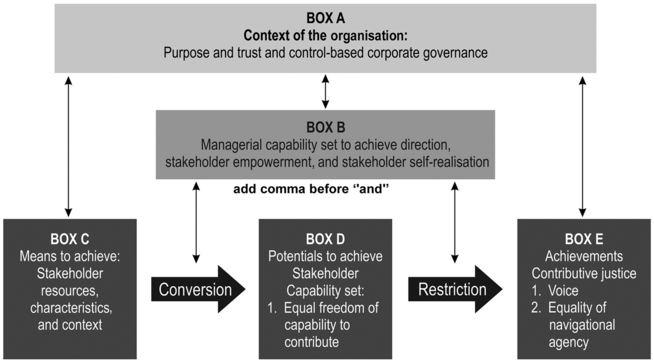
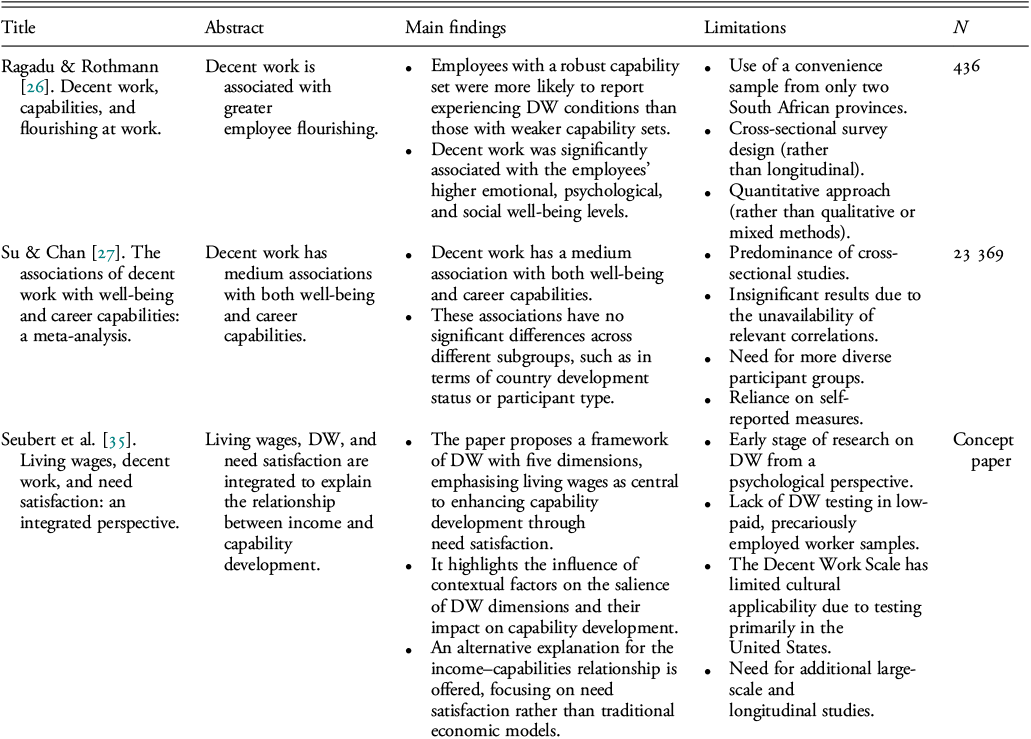
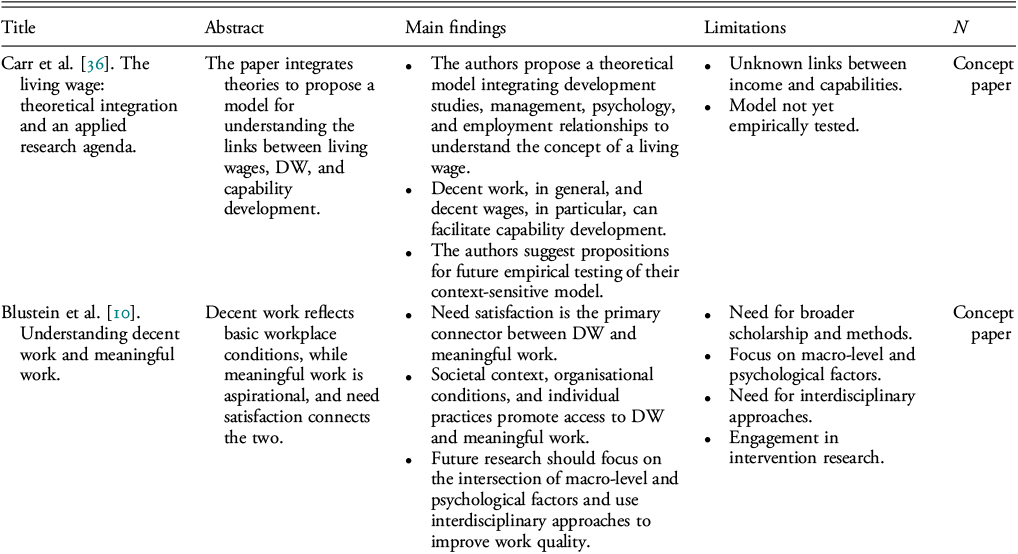
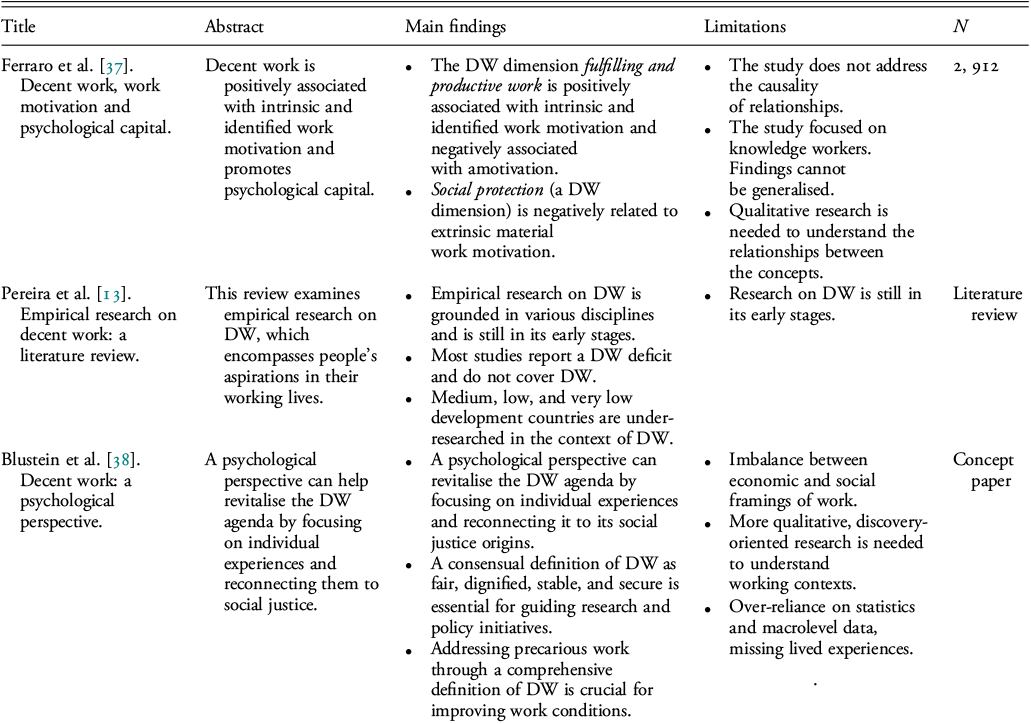
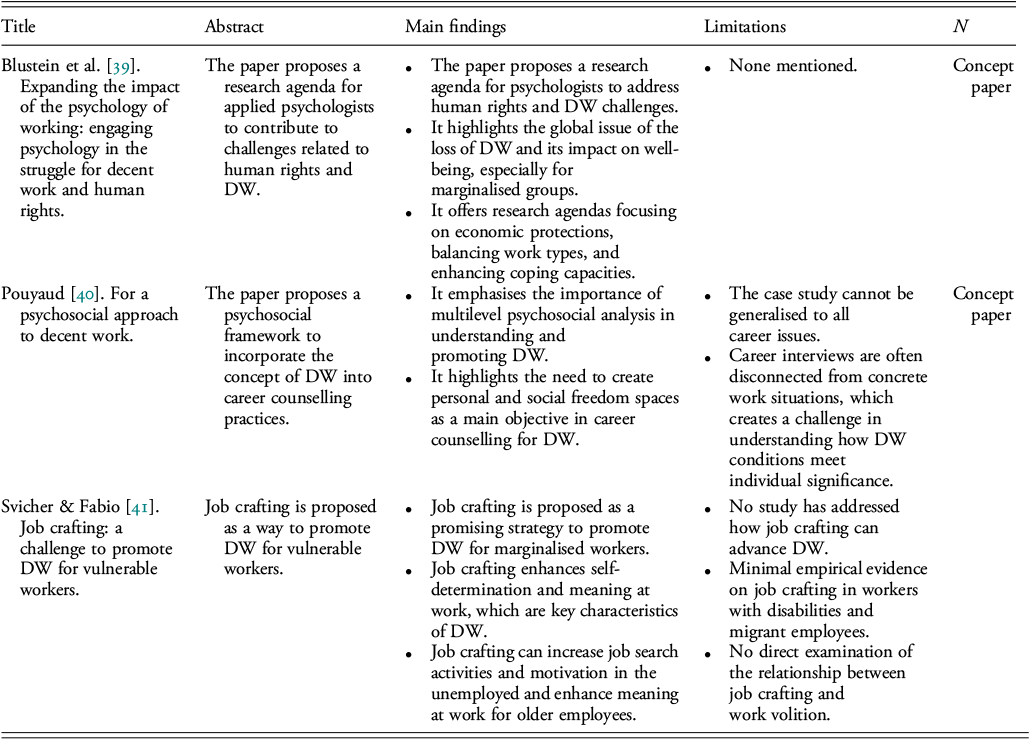
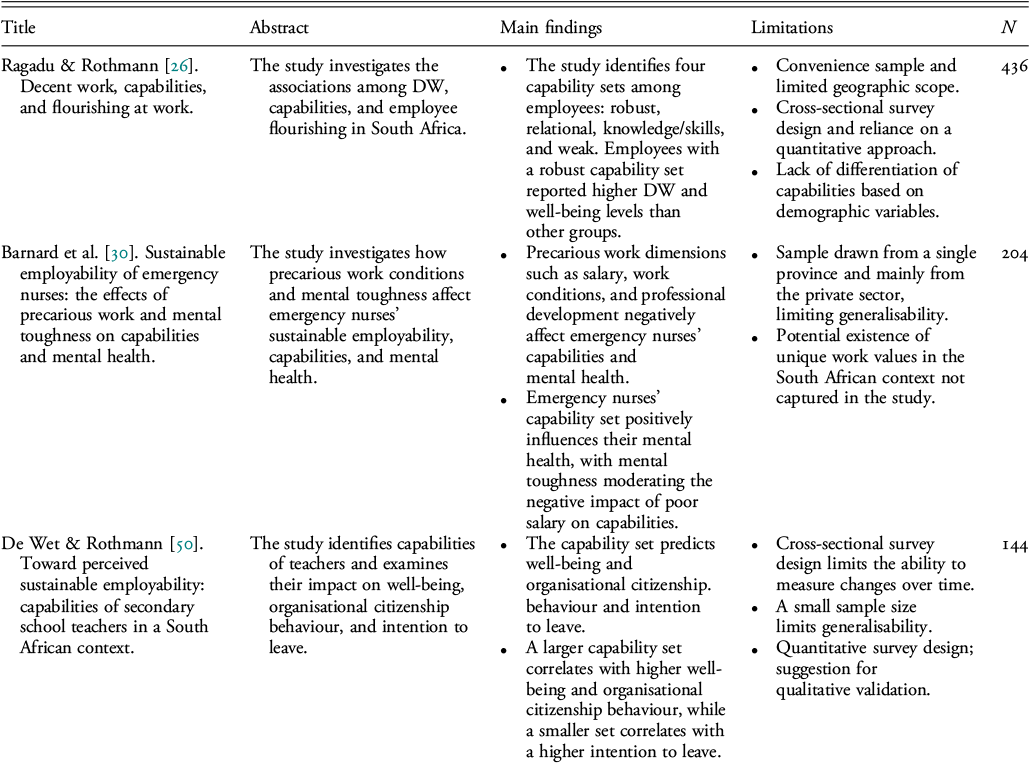
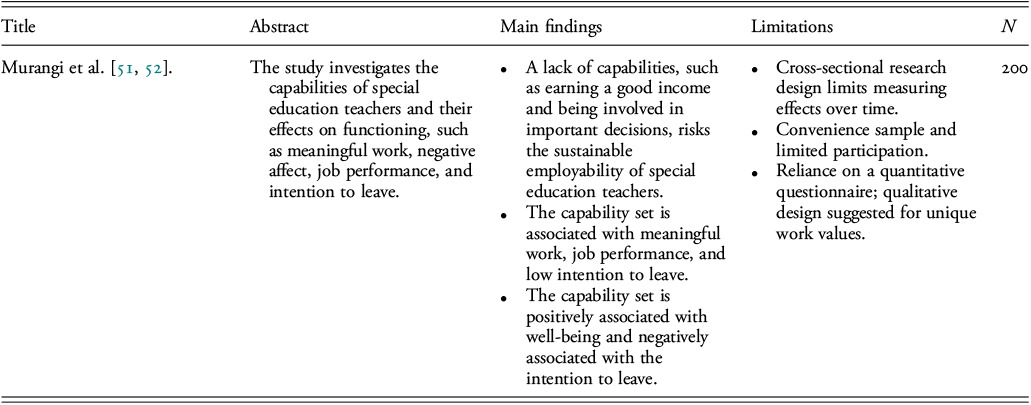
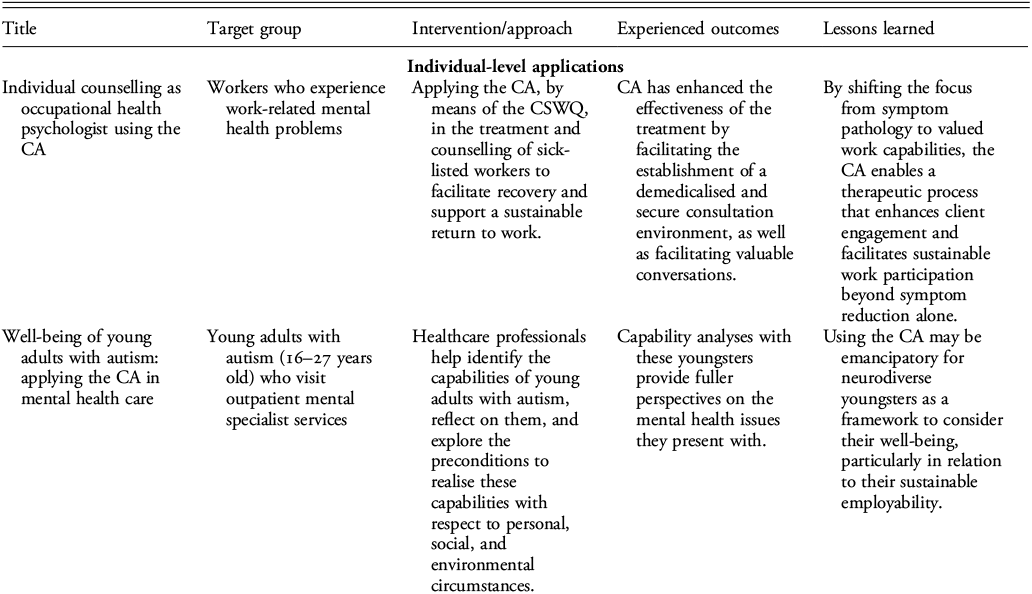
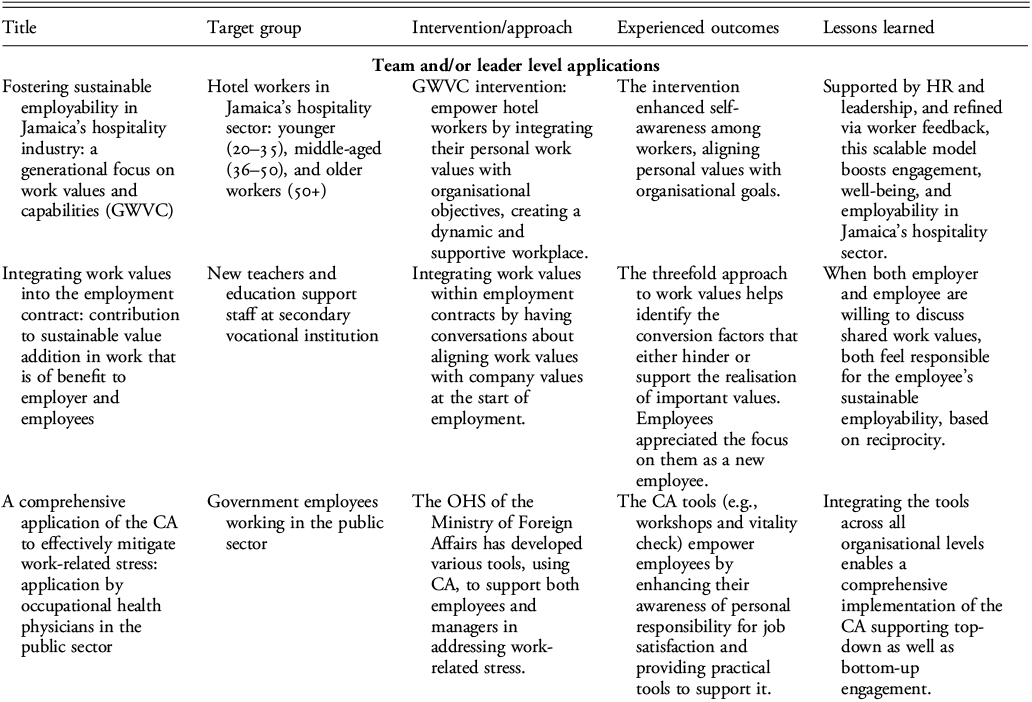
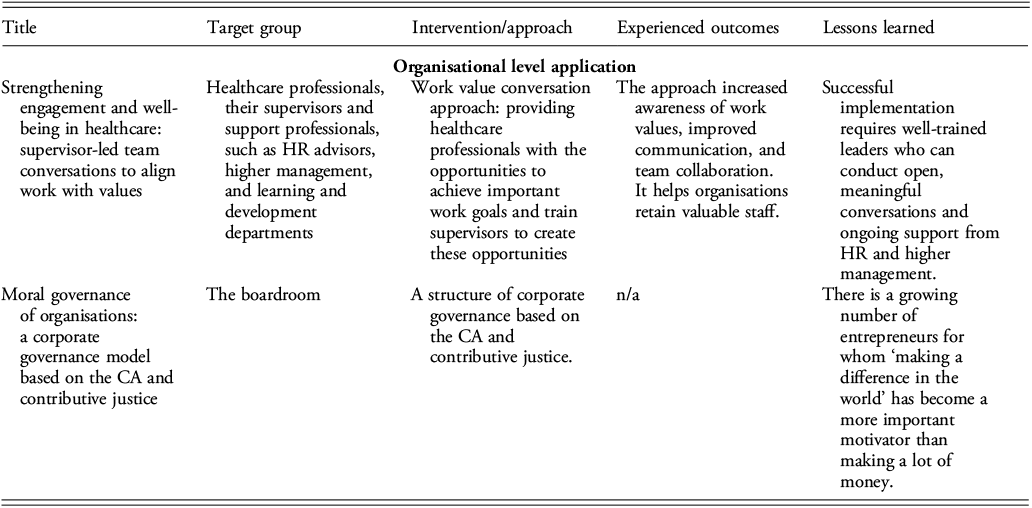
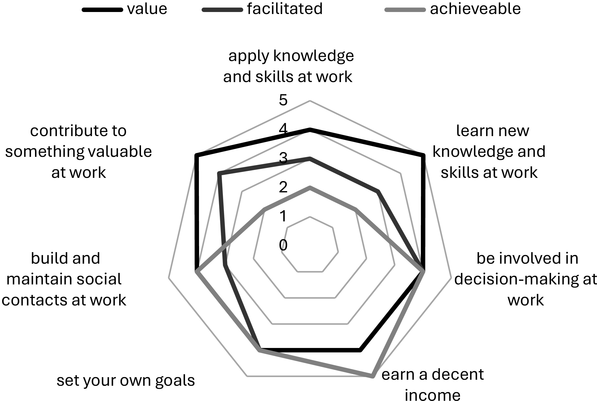


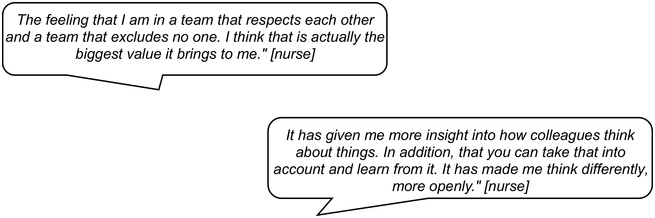
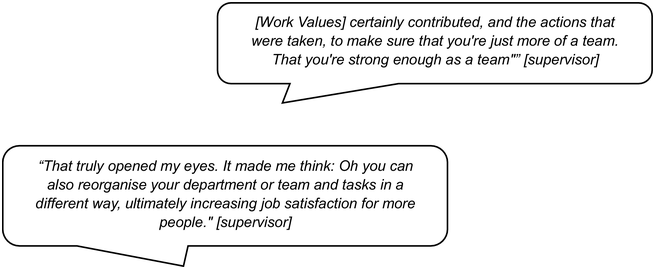

 Open access