


The diagnostic category of major depression, which was introduced in the 1970s, is supported by the identification of possible biological substrates for the disorder, its chronicity, relapsing nature, disability and the evidence of efficacy of antidepressants from randomised trials. The arguments against the diagnostic label include: the lack of unequivocal replication of biological abnormalities; the limited proof regarding the efficacy of antidepressants from meta-analysis; the high rates of spontaneous remission and of placebo response; and its clinical heterogeneity. This article discusses the issues related to the background, concepts, implications, impact and consequences of the diagnostic label.
Historical background
Much of the confusion surrounding the classification of depression arose because it provided a convenient arena for several disputes about the nature of mental illness in general (Reference Kendall and BurrowsKendall 1977). The debate resulted in many polarised positions:
-
• Is depression a disease or a reaction type?
-
• Are categories of depression independent entities or arbitrary concepts?
-
• Should depression be classified on the basis of symptomatology, aetiology or pathology?
-
• Should depression be portrayed in terms of categories or dimensions?
The confusion is made worse by the fact that depressive symptoms, sadness and feelings of hopelessness and helplessness, which form the core, are found in a wide variety of contexts: medical diseases, psychoses, neuroses, as reactions to stress and as part of normal mood.
The 1960s
In the 1960s the division of depression into psychotic/neurotic and endogenous/reactive (exogenous) categories was at the centre of the controversy (Reference Mendels and CochraneMendels 1968). Psychotic and endogenous were often considered synonymous, as were neurotic and reactive. The former was used to describe presentation with acute and severe depression, psychomotor retardation, diurnal variation, weight loss and severe insomnia, the latter with symptoms of mild and chronic depression with anxiety, self-pity and anorexia, which was related to stress. However, a proportion of episodes of ‘endogenous’ depression were precipitated by stressful life events and made such differentiation complex. Some argued that such divisions were only separating mild from severe disorders. The demise of these terms was a result of the multiple meanings prevalent in literature and difficulties in precisely defining them.
The 1970s and ‘80s
The 1970s saw major changes in psychiatric diagnosis. The US–UK diagnostic project revealed major inconsistencies in transatlantic diagnoses, which resulted in the realisation that the urgent need was to improve the interrater reliability of psychiatric labels (Reference Cooper, Kendall and GurlandCooper 1972). Operational criteria for diagnosis introduced by Reference Feighner, Robins and GuseFeighner et al (1972) were a major advance and caught the imagination of the psychiatric community. These criteria side-stepped much of the controversy related to categorising depression and focused on reliability. The DSM–III (American Psychiatric Association 1980) that followed consolidated this approach. The roles of stress and coping styles were discounted and the new scheme with its descriptive approach, operational criteria and emphasis on reliability seemed to have firmly placed many unresolved issues on the back burner and it became the new standard.
The current position
The current classificatory systems, the DSM–IV (American Psychiatric Association 1994) and the ICD–10 (World Health Organization 1992), continue the same approach. The traditional categories of melancholia (endogenous depression), dysthymia (neurotic depression) and adjustment disorder (reactive depression) are retained. However, the major depressive episode (American Psychiatric Association 1994) straddles all three conceptual categories. It essentially represents severe depression, which can be seen in people with poor coping and/or with precipitating stress and also early in the course of melancholia. However, the mandatory requirement of excluding a depressive episode in people who present with classic dysthymia and adjustment disorders usually results in the use of the depressive episode label for such presentations. The ICD–10 went a step further and subclassified the depressive episode into mild, moderate and severe, on the basis of a symptom count. The symptom thresholds for mild and moderate depressive episodes were reduced. Consequently, the criteria for such episodes are usually satisfied by people who present with acute stress-related problems (adjustment disorders) and chronic depression (dysthymia).
The fallout
The category of major depression had a significant impact on classifying and treating depressive disorders. The issues are discussed briefly below.
Major depression as a biological disease
Major depression became the new benchmark for depression. Subsequent research has suggested that DSM-defined major depressive disorder is a systemic condition associated with functional hypercortisolaemia, altered intracellular signal transduction and protein activity in the central nervous system (Reference SheltonShelton 2007). Structural abnormalities in the brain have also been reported (Reference HarrisonHarrison 2002). However, these findings remain preliminary because of the lack of unequivocal replication and failure to control for potential confounders and comorbid conditions.
The inability to identify specific biological markers to diagnose individuals with major depression and the failure of such abnormalities to differentiate major depression from other psychiatric disorders also argue that, although average differences between groups may exist, the marked heterogeneity within groups does not allow for the recognition of individuals with this condition using particular biological markers.
Nevertheless, the pharmaceutical industry quickly adopted major depression as the standard for testing all antidepressant treatments. Fluoxetine and other selective serotonin reuptake inhibitors (SSRIs) were found to be effective. Their usage in clinical practice increased as they did not have the troublesome sedative or anticholinergic side-effects of the older tricyclics. Antidepressants became the treatment of choice. There was neither a need to speculate on the role of the precipitating stress and coping strategies nor the requirement to manage them with psychotherapy. Fluoxetine became the panacea for loneliness, relationship difficulties, interpersonal conflicts, inability to cope with day-to-day stress and the like (Reference JacobJacob 2003). Major depression was equated with biological disease and focusing on its causes was considered old-fashioned. Why would anybody spend time on psychotherapy when these wonder drugs were said to elevate the patient's mood irrespective of its cause and context? The choice of medication by the late 1990s was enormous: fluoxetine, sertraline, paroxetine, citalopram, fluvoxamine, venlafaxine, reboxetine and mirtazapine could be used in sequence and occasionally in combination with the older anti-depressants and benzodiazepines (Reference Paykel, Scott, Gelder, Lopez-Ibor and AndreasenPaykel 2000). The medicalisation of distress was complete.
Major depression, spontaneous remission and placebo response
There is evidence to suggest that major depression is a chronic and relapsing condition associated with psychological, social, physical and economic morbidity (Reference AndrewsAndrews 2001a; Reference Thomas and MorrisThomas 2003) However, the earlier investigations of long-term outcome mainly recruited people with endogenous depression, not the more recently conceptualised major depression (Reference Kiloh, Andrews and NelsonKiloh 1988; Reference Lee and MurrayLee 1988). On the whole, studies that have followed up in-patients have documented poorer outcomes (Reference Kiloh, Andrews and NelsonKiloh 1988; Reference Lee and MurrayLee 1988; Reference Judd, Akiskal and MaserJudd 1998; Reference Kennedy, Abbott and PaykelKennedy 2003) than those that have examined the course in out-patient populations (Reference Holma, Holma and MelartinHolma 2008). In addition, research into major depression supports the argument that there is a high rate of spontaneous remission (Reference McLeod, Kessler and LandisMcLeod 1992; Reference Kendler, Walters and KesslerKendler 1997). Many authors have highlighted the high rate of improvement in the placebo arms of randomised trials employed to test the efficacy of antidepressant medication (Reference Moncrieff, Wessely and HardyMoncrieff 1998; Reference Khan, Warner and BrownKhan 2000; Reference AndrewsAndrews 2001b). A meta-analysis by Reference Kirsch, Deacon and Huedo-MedinaKirsch et al (2008) found no evidence that SSRIs are efficacious for milder forms of depression. The precise implication of the evidence related to the value of antidepressants is debated, with other authors arguing for small or medium effect sizes rather than a complete absence of efficacy (Reference Turner and RosenthalTurner 2008). Other investigations have also shown that enhanced acute-phase treatments (a collaborative programme between primary care physicians and mental health consultants which includes physician training, patient education, availability of a mental health consultant for co-treatment and monitoring of medication adherence) do not necessarily result in improved long-term outcome (Reference Lin, Simon and KatonLin 1999). There is also a lack of evidence from genetic research to support the DSM–IV diagnosis of major depression (with its criteria of 2 weeks' duration, five symptoms or clinically significant impairment) as a discrete entity (Reference Kendler and GardnerKendler 1998). Major depression may simply be an arbitrary diagnostic convention imposed on a continuum of depressive symptoms of varying severity and duration. These issues have polarised the debate as to whether placebos or antidepressants are the ‘cure’ for depression.
Although the diagnosis of adjustment disorders is retained in the international classificatory systems, it is eclipsed by the focus on mood disorders among researchers, policy makers and, consequently, among clinicians (Reference Casey, Dowrick and WilkinsonCasey 2001). In addition, academics have also neglected the category and have failed to examine it in the large epidemiological studies such as the Epidemiologic Catchment Area and the National Co-Morbidity Survey in the USA and the National Psychiatric Morbidity Survey in the UK (Reference Myers, Weissman and DischlerMyers 1984; Reference Kessler, McGonagle and ZhaoKessler 1994; Reference Jenkins, Lewis and BebbingtonJenkins 1997). Instruments used to assess common mental disorders in primary care, for example the Revised Clinical Interview Schedule (Reference Lewis, Pelosi and ArayaLewis 1992) and the Composite International Diagnostic Interview (Reference Robins, Wing and WittchensRobins 1988), fail to consider the diagnostic label. The marginalisation of adjustment disorders in clinical practice is due to the elastic concept of depression and the rigid application of diagnostic hierarchy and criteria (Reference Casey, Dowrick and WilkinsonCasey 2001).
As Casey and colleagues noted, the diagnosis of adjustment disorder implies a short-term problem which is highly likely to remit spontaneously. Such conditions have a high placebo response rate, but also often respond well to supportive approaches focusing on stress management. If ‘depressive episode’ (with its disease implications) is diagnosed, then antidepressants may be unnecessarily prescribed. The diagnosis of dysthymia implies a chronic disorder with recurrent exacerbations linked to life events and a low antidepressant response rate. Here too, diagnosing a ‘depressive episode’ (so-called ‘double depression’) may lead to unnecessary prescription of antidepressants rather than recognising the importance of predisposing personality traits and contextual factors. Treatment could address poor coping strategies and lifestyle changes instead. The high rate of response to placebo does not in itself invalidate the concept of major depression, but its marked heterogeneity of symptoms, clinical patterns, context, personality, stress, coping, treatment response, course and outcome do.
Conceptual issues
Traditionally, systems of psychiatric classification have used categories (Reference Bogenschutz, Nurnberg, Sadock and SadockBogenschutz 2000). Such systems use rules to recognise categories with clearly defined boundaries. In addition, there is homogeneity within specific diagnostic headings. Alternatively, typologies are used to assign individuals to a specific group if they resemble a typical member or prototype. This view permits borderline cases and allows for heterogeneity within categories. Typical prototypical grouping has a clearly defined centre but the boundary is indistinct, depending on judgement or the use of a chosen cut-off. It is argued that prototypal (typological) models more closely resemble clinical reality in psychiatry. Although the ICD–10 and DSM–IV systems employ categories with operational criteria, they are essentially prototypal systems.
From a typological point of view, three types of non-organic depression can be recognised:
-
• chronic depression as a result of poor coping strategies and personality traits
-
• acute depression secondary to severe stress in people with good premorbid adjustment
-
• depression arising de novo in people with good coping skills.
The characteristics of the classic prototypes of depression are listed in Table 1. Although depressive symptoms are present in all categories of depression, those of melancholia are most characteristic. Patients with melancholia present with a qualitatively different type of depression, often associated with high suicide risk, agitation, psychomotor retardation, stupor and psychotic symptoms, and they require antidepressant medication or electroconvulsive therapy. People with chronic depression often have poor coping skills, maladaptive patterns of behaviour and multiple stressors. People with adjustment disorders are usually well-adjusted individuals under acute and severe stress.
Major depression, on the other hand, does not fit into any particular typology and the diagnosis is employed to label individuals with depression of specified severity. Patients with all three typologies can satisfy the criteria for major depression. Most psychiatrists working with such patients acknowledge that there is heterogeneity within this category with relation to clinical presentation, the presence of stress, coping strategies and response to treatment. Patients who present with melancholic features require antidepressants. Patients with good premorbid adjustment and symptoms associated with stress respond to supportive therapies. Patients with long-standing maladaptive patterns of behaviour and chronic depression require psychological interventions that aim to change attitudes, coping strategies, lifestyle and philosophy. Psychiatrists and psychotherapists readily acknowledge that recovery in dysthymia depends more on the patient's personal resources and available social supports than on antidepressant medication. These issues have resulted in confusion about the validity of the diagnostic category of major depression (Reference JacobJacob 2003; Reference Torpey and KleinTorpey 2008).
Possible future direction
Implications of the atheoretical nature of classification for depression
Despite the claims that the current classifications are atheoretical with regard to aetiology and possibly to pathology, the category of adjustment disorder clearly acknowledges the role of stress in the production of depressive symptoms. Similarly, the roles of stress, coping and personality traits in the maintenance of chronic depression are difficult to discount. The need for antidepressants and/or electroconvulsive therapy in the treatment of melancholia also highlights that different diagnostic headings are not mere descriptive categories but refer to dissimilar conditions with differing aetiology and pathology requiring specific treatments. ‘Atheoretical’ approaches to classification may have removed the stranglehold of many theories but their disadvantages in the context of depression argue for a more pragmatic approach. There is a need to refocus on the classic typologies of depression. The role of precipitating stress, coping strategies and personality traits in producing and maintaining adjustment disorders and dysthymia, respectively, needs to be re-emphasised. The trend to decontextualise depression and other psychiatric disorders and universalise their criteria using a symptom checklist may improve reliability but only at the cost of validity. Box 1 suggests further ways in which the classification of depression could be improved.
Improving the classification of depression
-
• Acknowledge the limitation of using severity criteria to define categories
Major depression denotes a more severe form of depression, but its diagnostic criteria can be met by people with melancholia, dysthymia and adjustment disorders. Re-emphasising the classic typologies in diagnosing patients will be useful in clinical practice and will suggest direction for therapy and management. The mandatory need to relabel (with major depression) people who satisfy criteria for adjustment disorders and dysthymia just because they also happen to meet major depression criteria requires re-examination. Specifying severity within these typologies may prove more useful than a separate category of major depression that straddles all prototypes.
-
• Use longitudinal data in addition to cross-sectional characteristics to delineate typologies
The current descriptive and cross-sectional approach fails to account for longitudinal issues that delineate the different prototypes of depression. Personality traits, coping styles, age at onset, type and severity of stressors, duration of illness and family history of depression are useful in matching prototypical categories and should be used in diagnosis.
-
• Increase the use of placebo, support and psychotherapy
Depression can be treated with placebos, support and cognitive–behavioural therapy (Reference Andrews and JenkinsAndrews 1999) under the following conditions:
absence of melancholic features
mild to moderate severity
symptoms present for less than 1 month
the presence of precipitating stress suggesting adjustment disorders in people with good coping skills
the presence of poor coping and neurotic personality in people meeting criteria for chronic depression and dysthymia.
Although antidepressants can also be used to treat such patients, clinicians managing patients with stress-related disorders and chronic depression should realise the futility of using medication in isolation. The management of stress and the need to change ways of coping are cardinal to improvement.
Typologies and the need for a more holistic approach
Patients may not perfectly fit typologies and this can result in borderline and mixed presentations. Symptoms of depression may be caused by diseases of the brain, by severe stress in individuals with good coping skills or may be a habitual reaction in people with poor coping strategies who are overwhelmed by the demands of life. Combinations of causes may operate in the same patient. Antidepressants seem to help patients with neurotransmitter dysfunction. Placebos and psychological support assist people with good coping skills to tide over stress, and changes in philosophy and lifestyle help those with poor coping skills. Using all these approaches in all patients, with differing emphasis depending on specific issues, usually produces results (Reference Pampallona, Bollini and TibaldiPampallona 2004; Reference MarkowitzMarkowitz 2008). Prescribing antidepressants alone for people with stress and poor coping, irrespective of the diagnostic label, often results in poorer outcome. In fact, increased emphasis on medication undermines the concomitant psychological treatments necessary, reducing the patient's responsibility to change attitudes, lifestyle and philosophy.
Researchers have often highlighted the futility of going back to aetiology-based classifications (Reference KendlerKendler 2006). Although the arguments for the typologies suggest a return to an emphasis on causation, the issues actually imply the recognition of clinical patterns based on longitudinal presentation, course and outcome of the common types of depression. A shift from cross-sectional presentations to a longitudinal framework is also in keeping with recent trends in psychiatric diagnosis. A better understanding of the biology of the different types of depression can certainly lead to more precise classifications, but the current understanding of the issues mandates the use of clinical diagnostic standards. The suggested scheme uses the rules commonly followed by good clinicians and uses existing diagnostic headings and criteria. The central argument is that the classic typologies should have a severity specifier instead of introducing a separate category of major depression. However, such changes will necessarily have to be supported by evidence-based research.
The disease–illness dichotomy
Doctors diagnose and treat diseases, whereas patients suffer from illnesses. Diseases are pathological entities conceptualised by physicians, who offer scientific causal explanations and prescribe treatments with the aim to cure. Illness, on the other hand, is a subjective experience based on personal sociocultural orientation and explanations. Whereas there is an overlap between disease and illness, the divide persists because of the absence of a one-to-one relationship between the two (Reference TsengTseng 2001). Similar degrees of pathology generate different levels of pain and distress. The course of a disease can be different from the trajectory of an illness. In addition, illness can occur in the absence of disease. Over the past century we have seen the decline of clinical medicine and general practice and the meteoric rise of specialist and tertiary care approaches worldwide. The progressive medicalisation of distress has lowered thresholds for tolerating mild symptoms and for seeking medical attention for such complaints (Reference Barsky and BorusBarsky 1995). People visit physicians when they are disturbed or distressed, in pain or worried about the implication of their symptoms (Reference HeathHeath 1999). Grief at loss, frustration at failure, the gloom of despair, the apathy of disillusionment, the demoralisation of long suffering and the cynical outlook of pessimism usually resolve spontaneously without specific psychiatric intervention (Reference SnaithSnaith 1987). However, the provision of support currently mandates the need for medical models, labels and treatments to justify medical input (Reference JacobJacob 2006). Failure to address issues related to the disease–illness dichotomy and the cure–healing divide and to bridge the gap between these part-perceptions is a major cause of the contemporary confusion in the diagnosis and management of depression.
Conclusions
The heterogeneity within major depression and the high rate of spontaneous remission and of placebo response suggests the need to reconsider the usefulness of the category. Current categorisation systems, based on description rather than aetiology, have served the psychiatric community well but it is time to acknowledge the roles of stress and poor coping in producing depressive disorders. There is a need for more pragmatic approaches that move beyond major depression.
-
1 Psychiatric classification is based on distinct:
-
a dimensions
-
b typologies
-
c categories
-
d axes
-
e classes.
-
-
2 The current psychiatric diagnoses are mainly based on issues related to:
-
a disease
-
b illness
-
c biological abnormality
-
d good reliability
-
e validity.
-
-
3 Placebos, support or cognitive–behavioural therapy alone are inappropriate for:
-
a depression of mild to moderate severity
-
b depression that has lasted for less than 1 month
-
c depression in the presence of precipitating stress suggesting adjustment disorders in people with good coping skills
-
d depression in the presence of poor coping and neurotic personality in people qualifying for chronic depression and dysthymia
-
e depression in the presence of melancholic features.
-
-
4 Major depression essentially represents:
-
a a severe form of depression
-
b melancholia
-
c dysthymia
-
d adjustment disorder
-
e personality disorder.
-
-
5 SSRIs are most useful for:
-
a mild depression
-
b moderate depression
-
c severe depression
-
d adjustment disorders
-
e melancholia.
-
MCQ answers
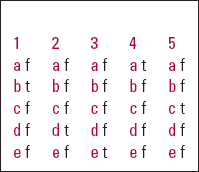
| 1 | 2 | 3 | 4 | 5 | |||||
|---|---|---|---|---|---|---|---|---|---|
| a | f | a | f | a | f | a | t | a | f |
| b | t | b | f | b | f | b | f | b | f |
| c | f | c | f | c | f | c | f | c | t |
| d | f | d | t | d | f | d | f | d | f |
| e | f | e | f | e | t | e | f | e | f |
Clinical characteristics of the classic prototypes of depression and their comparison with major depression
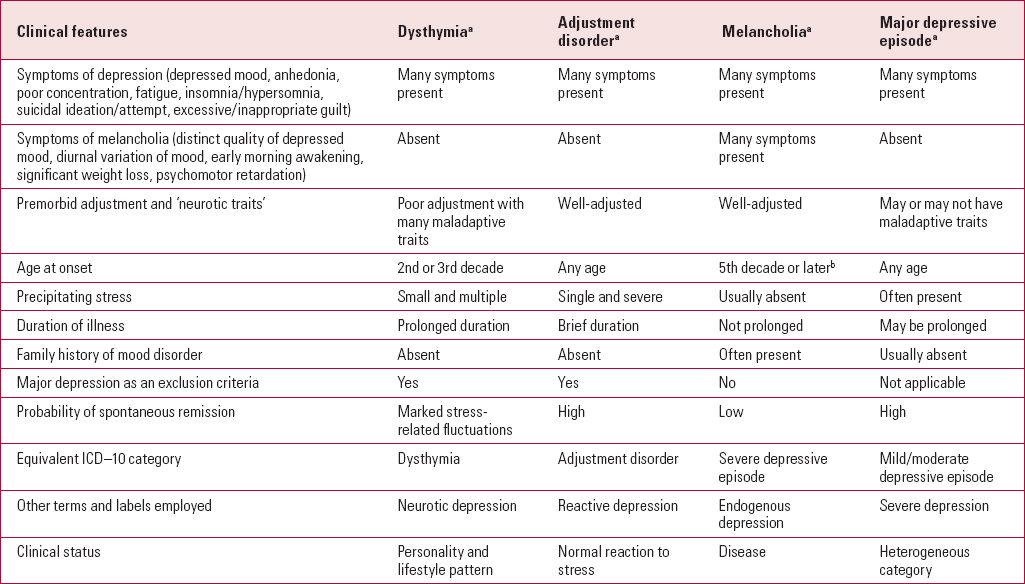
| Clinical features | Dysthymia a | Adjustment disorder a | Melancholia a | Major depressive episode a |
|---|---|---|---|---|
| Symptoms of depression (depressed mood, anhedonia, poor concentration, fatigue, insomnia/hypersomnia, suicidal ideation/attempt, excessive/inappropriate guilt) | Many symptoms present | Many symptoms present | Many symptoms present | Many symptoms present |
| Symptoms of melancholia (distinct quality of depressed mood, diurnal variation of mood, early morning awakening, significant weight loss, psychomotor retardation) | Absent | Absent | Many symptoms present | Absent |
| Premorbid adjustment and ‘neurotic traits’ | Poor adjustment with many maladaptive traits | Well-adjusted | Well-adjusted | May or may not have maladaptive traits |
| Age at onset | 2nd or 3rd decade | Any age | 5th decade or laterb | Any age |
| Precipitating stress | Small and multiple | Single and severe | Usually absent | Often present |
| Duration of illness | Prolonged duration | Brief duration | Not prolonged | May be prolonged |
| Family history of mood disorder | Absent | Absent | Often present | Usually absent |
| Major depression as an exclusion criteria | Yes | Yes | No | Not applicable |
| Probability of spontaneous remission | Marked stress- related fluctuations | High | Low | High |
| Equivalent ICD–10 category | Dysthymia | Adjustment disorder | Severe depressive episode | Mild/moderate depressive episode |
| Other terms and labels employed | Neurotic depression | Reactive depression | Endogenous depression | Severe depression |
| Clinical status | Personality and lifestyle pattern | Normal reaction to stress | Disease | Heterogeneous category |



eLetters
No eLetters have been published for this article.