





I was fascinated by the camel trains; they are a part of the East I hardly expected to find. I thought their day was about over. Nothing of the sort. The camel trains, in fact, own Smyrna, and give it its commercial importance. They bring the great bulk of merchandise—rugs, mattings, nuts, dried fruits, spices, and all the rare native handiwork from far dim interiors that railroads will not reach in a hundred years. They come swinging out of Kurdistan—from Ispahan and from Khiva; they cross the burning desert of Kara Koom. Footnote 1
Only humans construct narratives of history. However, they are not the only actors in history. Nonhuman animals are important history-shaping actors whose critical roles in history are mostly overlooked, largely due to their inability to leave written evidence. Although their voices may be unheard, nonhuman animals have had a considerable impact on the lives of humans (or human animals). At the same time, they have been dramatically affected by the actions of humans. Expanding and building upon the existing work of anthropologists, sociologists, philosophers, and geographers in animal studies, historians have recently recognized the significance of nonhuman animals as history-shaping actors and looked more closely at relationships between humans and nonhuman animals.Footnote 2 In contrast with Europe, North America, and elsewhere, where the “animal turn” is by now established, the history of animals and human-animal encounters in the Ottoman Empire was traditionally a topic of little interest in Ottoman studies.Footnote 3 However, over the past decade, Ottoman historians have increasingly come to recognize the importance of nonhuman animals and conceptualized them as historical actors.Footnote 4
David Gary Shaw, in his study of the Duke of Wellington's horse, Copenhagen, at the Battle of Waterloo, has suggested that animals can function as historical actors, which he defines as those “without whom things, especially a particular doing, might have been significantly different.”Footnote 5 Inspired and motivated by Shaw and other recent research in historical animal studies, environmental history, and human-animal studies, I aim to shed light on the use of camels in Western Anatolia in the late Ottoman Empire, focusing particularly on their increased role in the significant social, economic, and ecological transformations that occurred in the region in the middle to late 19th and early 20th centuries. I propose that the camel was a visible yet often underestimated historical actor in the incorporation of Western Anatolia into global markets, and that including camels in this category allows us to think beyond the general framework of Western Europe's commercial discovery of the Ottoman Empire. I also suggest that the processes of the empire's modernization and integration into the global economy have an animal dimension that has been little explored.
The Ottoman Empire, The Animal World, and The Camel
The Ottoman Empire was not a solely human realm. Any historical study of the Ottoman Empire that ignores the complex interactions between humans and nonhumans presents, at best, an incomplete picture of the region. In the Ottoman realm, nonhuman animals lived through and witnessed the same history as humans. Together with other imperial actors, animals shaped the empire's history in profound ways, and were in turn shaped by it. They supplied the Ottoman people with the motor energy to cross deserts, mountains, and steppes, to conduct pilgrimages, to conquer new lands, to move merchandise, to cultivate fields, and to turn wheels. They also fed, clothed, protected, and entertained them. On the other hand, at times animals kept and encountered by the Ottoman people chased and endangered them and harmed their property or crops, as well biting, stinging, infesting, poisoning, and even killing them.Footnote 6 In short, animals, wild and domesticated, along with other human and nonhuman actors, played their part in the historical evolution of the Ottoman Empire.
In the animal world of this vast empire, beasts of burden were central to the lives of people because of the empire's unique geography. The Ottoman Empire lacked large navigable rivers—with a few exceptions, such as the Danube in the west and the Tigris and Euphrates in the east. The impracticality of most Ottoman rivers serving as waterways forced traders to rely on animals for the conveyance of merchandise. They used donkeys and mules and less often employed horses, oxen, and buffalo as pack animals for short distances. In contrast, they used camels as the most important means to transport goods and supplies over long distances. Although no official figures exist, archival, published, and pictorial sources confirm the importance and ubiquity of camels in the transportation of goods and people.Footnote 7
The major preference for the camel was due to its carrying capacity, strength, and endurance. Thanks to its ability to tolerate increased body temperature, the camel could go large distances with little water or food under a burden of 550 to 700 pounds, a figure that surpassed the carrying capacity of the mule (or horse) and the donkey combined.Footnote 8 In addition to this, the fact that the camel could forage on shrubs and trees, rather than depending on grasses, allowed breeders to raise it at a lower cost.Footnote 9 As a result, the camel became a source of energy to move goods and people not only along the dirt tracks across the empire, but also within the cities and towns of the Ottoman Empire. Textual, visual, and zooarchaeological evidence also indicates the use of camels for purposes other than trade and travel. For example, camels were efficient laborers in the Egyptian countryside: they were used for ploughing the land, digging and dredging canals, reinforcing canal embankments, and clearing debris and mud that clogged wells.Footnote 10 In different regions and periods, the camel was indispensable to the transportation of artillery supplies.Footnote 11 Camel dung was a valuable source of energy in areas where firewood was not available.Footnote 12 Furthermore, it served for manure in fields, orchards, and vineyards that contributed to the growth of agricultural productivity.Footnote 13 Even camel corpses were useful to nomads and settled communities in the rural areas. Nomadic pastoralists used the leather derived from the hides of camels to produce clothes, horse and camel gear, and also “the soles [of their sandals] that they fastened solidly so as to traverse even the hottest sands.”Footnote 14 Camel hair was a valuable thread, especially employed in the manufacture of hats, shawls, bed covers, and fine brushes or pencils for painting and drawing.Footnote 15 Their fat-rich meat, which was described by several European observers as “palatable,” constituted an important part of the diet, especially in the Arabic-speaking lands.Footnote 16 In short, the camel was a vital source of power that significantly contributed to the trade, agriculture, and industry of the Ottoman Empire by hauling merchandise, pulling ploughs to till the soil, and turning wheels to irrigate the fields.
Transformed Camel Bodies
In the Ottoman Empire, the camel was generally associated with nomadic and seminomadic tribespeople. The nomads, also known as bedouin in Arab-speaking lands and yörük in Anatolia and the Balkans, literally had a monopoly on camel caravans, and thus on internal commerce.Footnote 17 A large number of nomadic tribes, operating independently or in connection with one another, controlled and managed the caravan network across the empire.Footnote 18 A caravan could be made up of hundreds, or in some cases thousands, of camels traveling together. In a caravan, in addition to merchants and intermediaries, who either owned or were responsible for the merchandise transported, travelers, pilgrims, and vagabonds trailed behind the caravan out of concerns for security. Nomads’ involvement in and control of the caravan trade across the Ottoman Empire, both as suppliers of camels and as guides and guards, has been well explored.Footnote 19 Less known is the significant role played by the nomadic tribespeople, especially the Anatolian nomads, in improving the physique of camels through hybridization.
The Anatolian peninsula lies at the intersection of the natural habitats of two camel species: the one-humped, longer-legged dromedary (or Arabian) camel (Camelus dromedarius) and the two-humped, shorter-legged Bactrian camel (Camelus bactrianus). This favorable geography enabled the Anatolian nomads to continue and improve upon the practice of camel hybridization, the intentional crossbreeding of the dromedary and the Bactrian camel.Footnote 20 The overall aim of hybridization was to produce a “better” camel: in this historical context, a vigorous and able-bodied breed that would serve as a pack animal.Footnote 21 Among the Anatolian pastoralists, the dromedary was known as boz, the male being lök and the female kayalık; and the Bactrian (male and female) was known as buhur or bohur. Hybridization was carried out between the male Bactrian and the female Arabian (dromedary), and the first generation (F1) hybrid progeny was known as tülü, the male tülü being besrek or beserek and the female maya.Footnote 22 Further crossbreeding between of F1 hybrid camels among themselves was avoided since the resulting progeny (F2x), namely kükürdi, “was smaller, weaker, and extremely vicious or unable to cope with inclement weather.”Footnote 23 Further hybridization to obtain second-generation hybrids (F2) was achieved using the “backcross” method, in which the F1 males and females were bred to dromedary or Bactrian progenitors. The resulting F2 hybrid progenies were known as tavsi, when the female F1 maya was bred with a male Bactrian progenitor, and teke, when a male F1 tülü was bred with a female dromedary progenitor.Footnote 24 F2 hybrids were used as pack animals; tavsi were preferred for colder areas and teke for the hotter areas in southern Anatolia.Footnote 25 In light of this information, it can be suggested that crossbreeding and inbreeding were conducted both carefully and purposefully, taking the breed's topographical and climatic suitability into consideration and avoiding less-valued and intractable progenies (Fig. 1).Footnote 26
Camel breeds in Western Anatolia
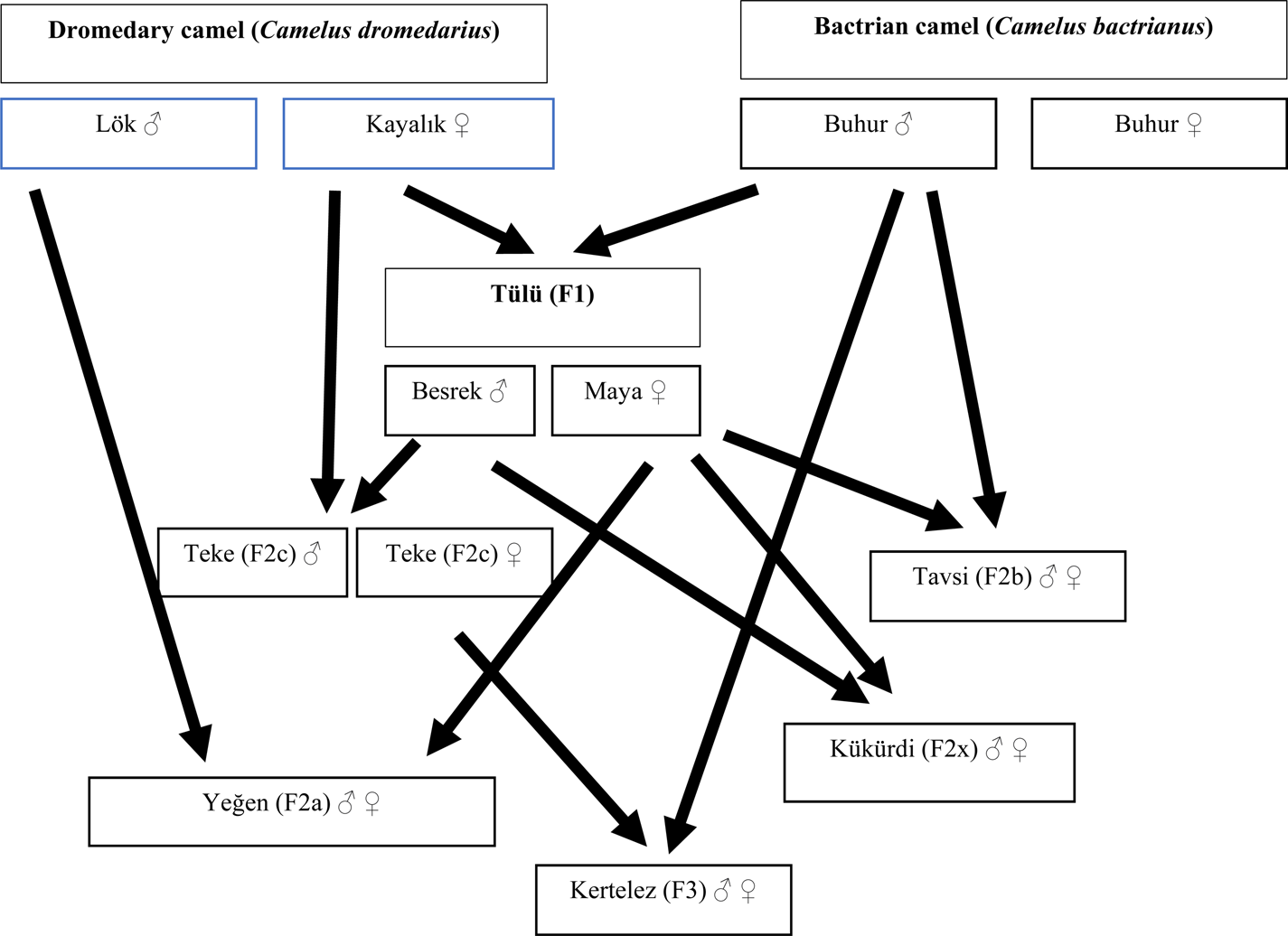
Crossbreeding was a serious effort that reconfigured the camel's physical capacity and improved its role as a power unit. Moreover, this practice redefined concepts of distance and weight and changed the character of trade. Each crossbred camel promised more animal power, and thus the ability to carry a larger load. In this respect, camel breeding provided a “biotechnical fix” to an expanding market that relied on animal power. Colloquially named after its breeder, the hybrid, one-humped “Turcoman” camel was favored for its strength and endurance. As a larger and stronger breed than either of its progenitors, the dromedary and the Bactrian camel, its height was often greater than its length and could reach 7.60 feet at the hump and 7.05 feet at the shoulder.Footnote 27 A hybrid camel weighed an average of 1,300 pounds, but it could often reach 1,800 to 1,900 pounds.Footnote 28 The burden a hybrid camel could carry varied from 550 to 1,200 pounds, a figure at least double the amount that the pure dromedary or Bactrian camel could carry.Footnote 29
Textual and pictorial evidence for camel hybridization during the Ottoman classical period is limited, yet it provides some insight into an established background of crossbreeding of dromedary females with pure-blood Bactrians in Ottoman lands. For example, a miniature held in the Topkapı Saray Library in Istanbul depicts two camels in violent combat. A closer look at the drawing, which is dated 1544–45, reveals the hybrid nature of the two camels: they have neither the double hump that differentiates the Bactrian camel nor the single hump typical of the dromedary.Footnote 30 An imperial order dating to 1579 was sent to the qadi of Caffa, a Black Sea port located on the southern shores of the Crimean peninsula, asking him to purchase two trains of buhur camels from nomadic pastoralists and send them to Giannitsa in central Macedonia.Footnote 31 Records from the 15th to the 18th century attest to the practice of camel hybridization, however they are not comprehensive enough to allow conclusions about its extent.
Camel hybridization probably became more systematic in the 19th century, particularly in the western and central parts of Anatolia, in response to the growing demand for camels to transport merchandise. There are two lines of evidence to support this assumption. First, accounts of European travelers confirm the continual importation of Bactrian stud males and a proliferation of crossbreeding during this period. The Swiss traveler Johann Ludwig Burckhardt, for instance, wrote in 1831 that the Anatolian camel was a breed of an “Arab [dromedary] she-camel and the double-humped male dromedary [Bactrian] imported from the Crimea.”Footnote 32 Edwin E. Bliss, an employee of the American Board missionaries in Merzifon, after his contact with the pastoralists around Yozgat in central Anatolia, suggested in 1855 that the Bactrian camel was “brought to Bozouk [Yozgat] from Erzroun [Erzurum] and the regions beyond, and also from the Crimea, but solely for the purpose of breeding.”Footnote 33 Henry C. Wayne, commander of the US Camel Corps, denied the suggestion of Burckhardt and Bliss that there were no pure-blood Bactrian females in Anatolia: “At Smyrna, or from the country around it, in any direction, as far as it may be desirable to go,” he wrote, “every variety of burden camel known in Asia Minor—Löks, Pehlavans, Arvanas, Tiulus [tülüs], or Mayas and Bactrian males for breeding—can be purchased, but no dromedaries.”Footnote 34 Similarly, in 1864, the Dutch traveler Henry J. Van Lennep noted that breeding was initiated “both by fresh importations from Mesopotamia and the crossing of Bactrian, which is kept in all southern portions of Asia Minor in small numbers for this purpose.”Footnote 35 In 1869, Robert Hartmann claimed that Turkish and Kurdish nomads met the Najd bedouins of the Arabian Peninsula to purchase 8,000 to 10,000 camels, which were crossbred with the Bactrian camels.Footnote 36 According to another account from 1909, two-humped camels were brought to Western Anatolia from Konya and Ankara every winter for breeding.Footnote 37 In short, official Ottoman sources tell us little about whether nomadic tribes kept pure-blood Bactrian studs in the western and southwestern parts of Anatolia, or brought them from neighboring regions, or if they kept pedigrees and used them as breeding tools. However, travelers’ accounts from the 19th and early 20th centuries confirm the practice of camel hybridization during this period and the ubiquity of hybrid camels on the Anatolian plateau.
A second line of evidence for camel crossing comes from the age-old tradition of camel wrestling. In Ottoman Anatolia, the yörüks, the nomadic pastoralists, embraced camel wrestling (or “fighting”) and adapted it to their own social and physical environment to meet the demand for robust camels.Footnote 38 It is noticeable that there is no mention of camel wrestling in European travelers’ accounts from the 16th, 17th, or 18th century. Even the indefatigable 17th-century Ottoman traveler Evliya Çelebi, for unknown reasons, provides no account of camel wrestling in Ottoman lands. Perhaps this was because camel wrestling, as depicted in the above-mentioned miniature, was only an occasional pastime among the members of the Ottoman elite. It may have been only in the early 19th century that the yörüks, especially those in the western and southwestern parts of Anatolia, developed camel wrestling as a form of cultural practice to aid camel breeding, and thus to feed a specific transportation industry.Footnote 39 Although camel wrestling matches are seen today as a form of entertainment, the initial motive behind pitting male tülü hybrids against each other was to select the strongest camels for breeding.Footnote 40 In the absence of the modern genetic understanding of camel breeding, practical knowledge and experience were crucial not only for increasing the stock but also for improving the physical and mental capabilities of the camel for transport. The nomadic pastoralists possessed both the practice and skills to mate suitable breeds to magnify the camel's physical traits. In this respect, they acted as the pioneers of biotechnology in the Ottoman Empire.Footnote 41
Hybrid Camels in Western Anatolia
From the 17th to the mid-19th century, long-distance trade was Izmir's lifeblood, and its success depended largely on camel caravans that brought precious goods and merchandise from afar to the city. The Western Anatolian merchants engaged in interregional trade favored the hybrid camel because of its suitability to the climate and terrain of Anatolia and Iran. The hybrid camel, as both a heat- and cold-resistant breed, could withstand the rigorous winters of the Anatolian steppes.Footnote 42 In fact, the practice of crossing Bactrian studs with dromedary females, which had been followed in Western Anatolia since the Roman period, increased in importance in the Ottoman period to respond to the growing demand for stronger pack animals to bear heavier burdens for longer periods of time.Footnote 43 The need for transregional and intercontinental trade combined with the involvement, expertise, and practical knowledge of nomadic tribespeople allowed the conscious manipulation of the camel physique for greater profit and helped traders push the limits of commerce and production in the region.
Although Ottoman archival sources offer some insight into the extent of the use of the camel from Western Anatolian provinces in military campaigns, they provide limited information about the pivotal role it played in the rapid social, economic, and ecological transformation in Izmir and its surrounding areas.Footnote 44 However, camels appear frequently in the accounts of European travelers, explorers, traders, missionaries, and consular agents who visited the region in the 17th, 18th, and 19th centuries.Footnote 45 European observers’ accounts of camels provided descriptions of the biological and physical qualities of the animals and their economic, social, and cultural value, as well as details regarding camel caravans, including their size, speed, and organization. For instance, Giovanni Francesco Gemelli Careri, a 17th-century Italian adventurer and traveler, noted in 1693 the arrival of a caravan in Izmir from Persia, “consisting of one hundred and twenty camels laden with silk.”Footnote 46 The French botanist Joseph Pitton de Tournefort observed, in 1701, that large quantities of painted cloth were sent from Tokat to Izmir, from where they were forwarded to France to be sold as toiles de Levant.Footnote 47 John Montagu, the Earl of Sandwich, noted in 1739 the arrival of 3,000 camels in a caravan bringing Persian commodities to the city.Footnote 48 Thomas Robert Jolliffe confirmed this almost a century later, in June 1817, and claimed “caravans from thence [Persia] bringing 200 bales or more [of silk] in the course of a year.”Footnote 49
The commercial use of camels in Western Anatolia was not restricted to the transport of silk and woven textiles from Iran and eastern Anatolia. Merchandise transported from east to west by camel caravans included cereals, cotton, tobacco, fruit and vegetables, olives, timber, minerals, and other raw materials. For example, the employment of 1,000 to 1,500 camels for carrying soap-earth is documented in several sources from the 16th and 17th centuries.Footnote 50 In the summer of 1765, Richard Chandler reported that he came across “a camel laden with charcoal” in the Frank district of Izmir.Footnote 51 “Numerous caravans,” wrote Charles Wilkinson in 1806, “bring from the interior of Asia Minor cotton, the silky fleeces of Angora, carpets and silk from Persia, drugs of all kinds, wax, figs, and etc.”Footnote 52
Although the camel was indispensable to the region, some foreign observers regarded the animal as a traditional mode of transport and the antithesis of wheeled transport, which increasingly became a symbol of progress in Western Europe. The stark contrast that the camel offered to wheeled transport, because of its comparative slowness, prompted European observers to disdain the Ottoman people and to consider the camel caravan as “a romantic wonder instead of a commonplace means of transportation.”Footnote 53 They vied with one another in the stereotypical presentation of the Ottoman Empire and the exotic portrayal of the camel-drivers and camels; they made biased statements that failed to reflect existing realities. The camel fitted the commercial structure of the region as, with its carrying capacity, strength, and endurance, it was unmatched for long-distance travel. Overall, in late Ottoman Anatolia, horse-drawn wagons were scarcely used, because their arched framework made them unsuitable for hauling bulky packages. Moreover, horse-drawn wheeled transport over long distances was difficult in the absence of paved roads; merchants avoided this mode of transport, as the bumping and jolting from the uneven surface often damaged their goods.Footnote 54 Similarly, two-wheeled ox-drawn carts were less visible and available and were used only for short distances.Footnote 55 In short, Western Anatolians were probably aware of wheeled transport, which they had previously used from time to time and from place to place. However, they did not adopt wagons drawn by horses, oxen, and mules because they were inappropriate for long-distance trade, on which Izmir's economy depended. Wheeled transport was not widely used in Western Anatolia, not as some European visitors claimed for psychological and ideological reasons, but for practical purposes.
Certainly, the camel was a form of what Diana K. Davis has defined as “environmental orientalism,” an imaginative mode that many European observers used to justify the moral, intellectual, and physical superiority of the West over the East.Footnote 56 They overlooked the camel's economic, social, and cultural prominence in the region and exoticized and treated it as a quaint survival of a distant antique culture. From a European perspective, spotting a camel caravan and describing it in detail served as a pretext to compare the slow-moving, lifeless, and stagnant East with the developed, advanced, and modernized West. Nevertheless, a significant number of European observers acknowledged the cultural, social, and economic value of the camel and praised it for its character and physical capabilities. For example, in 1803, William Hunter regarded camels as “swift, strong, patient, and tractable” animals, whereas he described Ottoman horses as “diminutive and incapable of much fatigue.”Footnote 57 Indeed, the camel's muscular strength and carrying capacity eliminated the need not only for wagons but also for horses, donkeys, and mules for long-distance trade and travel. Whereas camels could carry a cargo weight of 550 pounds, horses and mules had the ability to carry 420 and 170 pounds of goods respectively.Footnote 58 Moreover, camels could eat, walk, and sleep “under [their] burden, often for weeks at a time.”Footnote 59 Horses, donkeys, and mules, on the other hand, because of their speed for shorter distances, were used for transporting people, carrying letters, and conveying important deliveries.Footnote 60 When time and distance mattered, and the weight and volume of cargo were small, horses served as couriers, in the same way as today's “priority mail.”
Camel Bells and Train Whistles
The second half of the 19th century in Western Anatolia saw, as one of the major infrastructural projects of the late Ottoman Empire, the creation of a railroad network of hundreds of miles. As British entrepreneurs rolled out the first plans for railroad tracks that would slice through the fertile farmlands of western Anatolia, the camel was still a vital source of power for carrying goods and merchandise in the region.Footnote 61 In the absence of animal census figures and official statistics, the only available (somewhat unreliable, but highly valuable) information on the camel population in mid-19th-century Western Anatolia comes from personal accounts and reports. In 1833, for instance, the American zoologist James Ellsworth De Kay noted: “it is not uncommon at this period of the year [late summer and early autumn] to witness the arrival of 1,500 camels, each loaded with five or six hundred weight [pounds] of figs.”Footnote 62 According to Ottoman sources, in the mid-19th century 20,000 camels were employed in transportation between Izmir and central Anatolia.Footnote 63 In 1858, various newspapers described the arrival of “no less than 5,000 camels” daily, carrying only two articles—fruit and tobacco.Footnote 64 In 1859, “according to a low average of the various estimates made by a Special Commissioner sent out for the purpose,” there were 10,000 camels and 500 mules, “at the cost of over £400,000 per annum,” on the Izmir-Aydın route. In addition to these, there were at least 20,000 camels “employed on various routes conveying the produce from the interior to the sea.”Footnote 65 No matter how the figures vary, the camel as a bearer of heavy loads between Izmir and the interior played a role that should not be underestimated.
Although camels abounded in mid-19th-century Western Anatolia, trading by means of this animal was not always profitable. Transport by land was so slow and expensive that only the crops within a certain distance of Izmir were worth transporting by camel. The exception was commodities of high value in proportion to weight and bulk. In other words, the high cost of transport limited the cultivation of certain crops for export and exchange, and carrying goods by camel, in many cases, was not profitable even for short distances. “The means of transporting goods from and to the coast are confined to the camel and mule, a mode of conveyance which is so expensive,” one observer noted in 1854, “that only the more valuable goods can bear the cost.”Footnote 66 In 1857, the English economist Nassau Senior claimed that the produce in Izmir was “sold for seven times as much as it cost in the country.”Footnote 67 According to the Daily News in 1857, a large mass of produce remained in the field due to the “exorbitant rates of camel transport.”Footnote 68 Felix Wakefield, an English surveyor and civil engineer, confirmed this claim in the report he sent from Afyon in the western part of central Anatolia in the same year: “The harvest of grain for two years, over and above the necessary consumption is still in the stores here and at Sandıklı, all owing to high price of transport.”Footnote 69 A similar situation appears to have existed all around the region. For example, barley grown in Menemen, a small town a 16-hour camel journey north of Izmir, was “worth on the spot 4½ piastres the kilo,” whereas “the cost of conveying a kilo to this place [Izmir] was 7½ to 8 piastres, or double the original value of the barley.”Footnote 70 Aydın was said to be home to “large bazaars filled to overflowing with produce of all kinds that can find no market. Two years harvest of grain and valonia are still stored there with no means at present of finding transport to get it away.”Footnote 71 In short, the camel was rewarding for low-volume items over long distances, and merchants engaged in camel caravan trade were very selective about what they moved.
The importance of camel energy for the region's trade and agriculture was beyond question. Nevertheless, the use of camels imposed certain restrictions on the trade of local foodstuffs, which marginalized the agricultural productivity of the region. Railroad boosters sought greater profits through increased agricultural output, and they knew this could not be achieved without the assistance of camels. They were aware of the value of this animal, but the question was how to use it in the most effective way to maximize profits. Therefore, in the context of “railroadization,” it became imperative to enhance the use of animal power in its current form. The Izmir-Aydın railway construction was already underway when the first comments were made about the optimal use of camels in the region. Referring to the forthcoming railroad project, the Daily News reported in 1857, “produce in the more distant localities, now immovable and of nominal value in consequence of the present high cost of camel transport, will suddenly acquire a marketable value.”Footnote 72 A year later, a commentator in the Leeds Mercury likewise argued that the railroad would reduce the cost of transport by half, and that: “the camels now set on long journeys will be more profitably employed in conveying the produce of the fertile valleys in the vicinity to the various stations on the line.”Footnote 73 Another critic noted a special advantage that Western Anatolia had in the integration of camel power into the evolving transport network: “The formation of roads—usually necessary to open up the internal communication—is not required in this case,” adding that “tracks for them [camels] exist throughout the country for hundreds of miles.” He further noted, “By the opening of this railway it is estimated that upwards up to 20,000 camels employed in the through journey from Aidin to Smyrna will be disposable as feeders conveying the produce from outlying districts to the railway for transport to Smyrna.”Footnote 74 In light of these views, it can be suggested that railway boosters did not seek to substitute machine for animal power, but attempted to combine the two. They maintained that higher production and mobility depended on the harmonious working together of steam and animal power, rather than the replacement of one by the other.
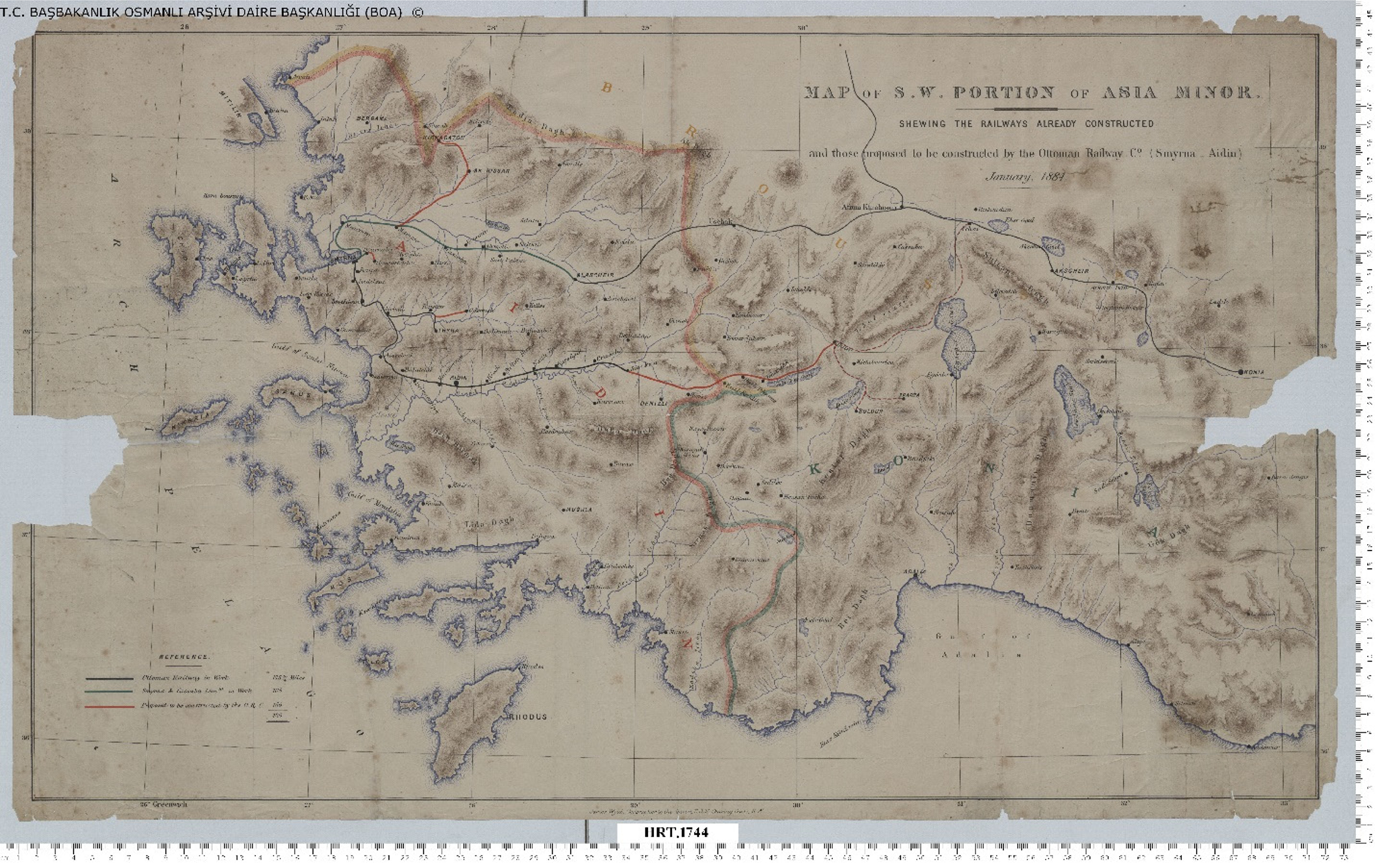
In 1866, the Izmir-Aydın and the Izmir-Kasaba (Turgutlu) railroads, which were the main lines, were inaugurated. In the following decades, the railroads expanded rapidly east and northward and provided a network of 635 miles, situating every village, farm, and orchard conveniently near a railroad station. In the east, it reached Alaşehir in 1875, then Sarayköy in 1882, Dinar and Denizli in 1889, and finally Afyonkarahisar, at the western edge of the central Anatolian plateau, in 1890. Branching off the two trunk lines, steam trains started to run from Izmir to Tire and Ödemiş in 1883, to Çatal in 1884, to Söke in 1890, and to Eğirdir in 1892. In the north, the Soma extension was opened in 1890, and the line eventually reached Bandırma on the Marmara Sea in 1912 (Fig. 2).
The Western Anatolian railway network in 1884
Source: BOA, HRT. h..1744, 2 Rebiülahir 1304 [31 January 1884].
During the construction of the Izmir-Aydın railway, Sir Rowland Macdonald Stephenson had commented, “The railway, once constructed, must be the channel of communication between Europe and Asia, the great artery through which the pulses of Asiatic trade must throb for evermore.”Footnote 75 Stephenson's predictions came true when the first steam locomotives began running up and down the Izmir-Aydın and the Izmir-Kasaba lines and their adjacent connections. The railways made it possible to move agricultural products, raw materials, manufactured goods, and textiles from the interior to the port city of Izmir more quickly and economically than ever before. They fostered the flow of natural resources from the country to the city and of supplies from city to country and contributed to the increased interconnectivity between interior and coast. Moreover, by dramatically reducing the cost of shipping as well as the time involved, railways contributed to the flow of European capital into the interior.Footnote 76 The distances, which had previously been calculated by camel pace and expressed in terms of weeks and days spent on the back of a camel or horse, were now measured in hours and minutes.
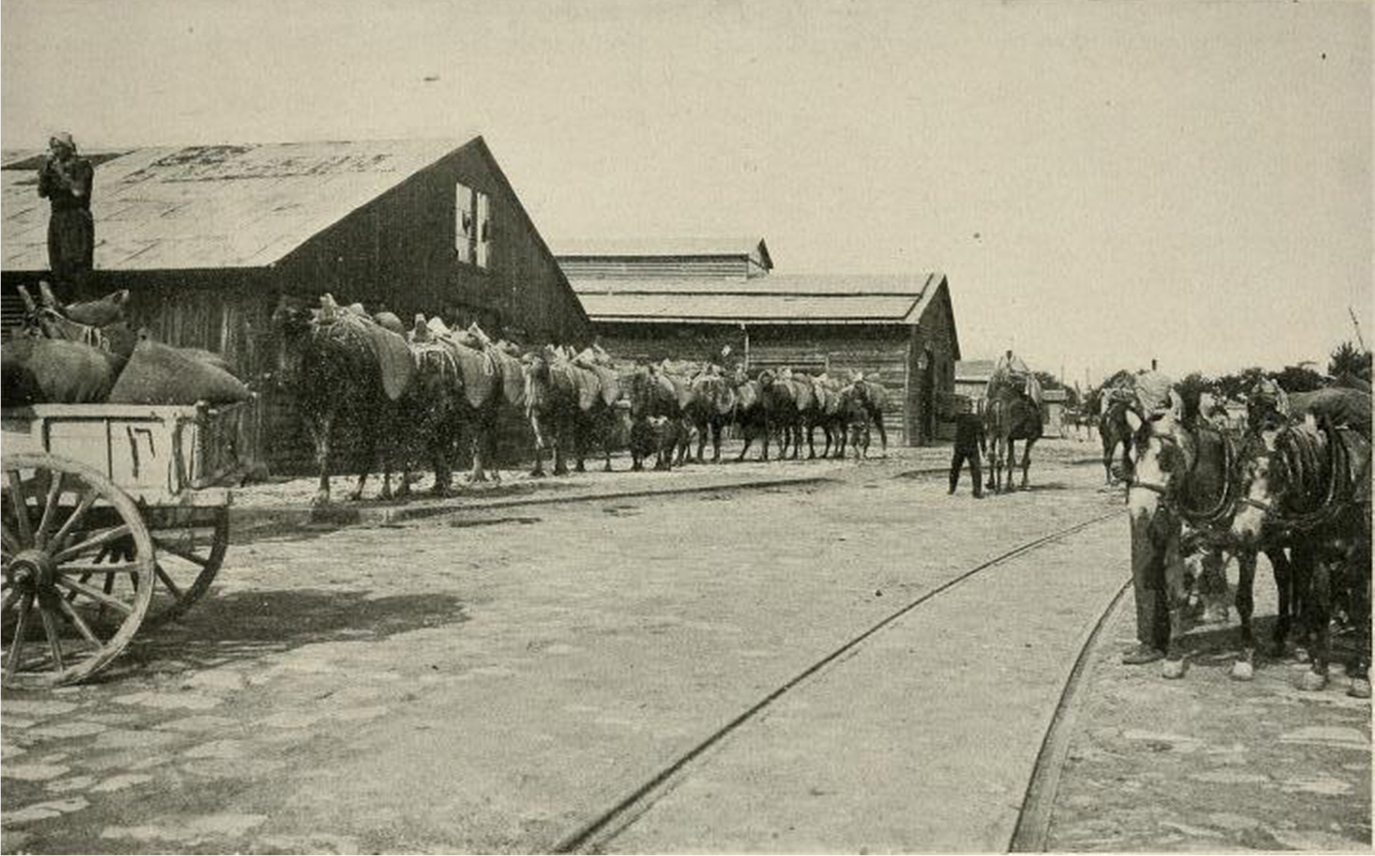
The “transport revolution” witnessed by Western Anatolia in the form of railways in the late 19th and early 20th centuries altered the manner in which people traveled and traded. Steam-powered locomotives, as with modern industrial machines, facilitated the movement of people and goods. Railroads, by offering faster and cheaper delivery on a predictable schedule, profoundly revolutionized land transport. However, they did not eliminate camels as a traditional means of transportation. Hybrid camels, their bodies reshaped by humans and their role within the developing transport network being redefined by technology, remained an indispensable part of 19th-century Western Anatolia. Camels that had previously operated between the interior and the port came to bridge the producing districts and railway termini in the age of steam. Because railroads did not reach everywhere, merchants remained dependent on caravans to extract agricultural resources and raw materials from these districts. As reported by the Irish author James Carlile McCoan, from 1866 onward camel-drivers began “to act as feeders to, rather than rivals of, the railroad.” McCoan further noted that “four-footers of a dozen years ago have become the best auxiliaries of the line by bringing down goods from, and carrying back others to, the interior beyond Aidin, and by feeding the interior stations with the valonea, wool, madder roots, cotton, and the score of other material for export, which are so abundantly produced by the rich districts on either side.”Footnote 77 For instance, a total of 30,000 camels were employed between Alaşehir and Kütahya after the former had become the Izmir-Kasaba railway's eastern terminus in 1875.Footnote 78 Similarly, Dinar, at the eastern extremity of the Izmir-Aydın railway, was an assembly point for camels, where camel-drivers awaited the arrival of steam locomotives to move the cargo to interior points.Footnote 79 While the Izmir-Aydın and Izmir-Kasaba railways extended their tentacles across Western Anatolia, camels consistently found economic niches to retain their roles as feeders of the railway (Fig. 3).
Camel-drivers unloading cargo at a railway station near Izmir
Source: Ernest L. Harris, “Some Ruined Cities of Asia Minor”, The National Geographic Magazine 19, no. 12 (Dec. 1908): 837.
The rapidly growing railway network took on a large share of traffic formerly handled by camels. Nevertheless, the method of bringing certain crops to the nearest railway station by camel and measuring them in “camel loads” continued to be used until the first decades of the 20th century.Footnote 80 For example, in 1860, the Reading Mercury reported the arrival of 34,000 camels in Izmir in the “fig season.”Footnote 81 In 1882, Gwynne Harris Heap, the US consul in Istanbul, recorded the arrival of 54,000 camel loads of figs in Izmir.Footnote 82 In another account in 1902, the American horticulturalist George Christian Roeding wrote that he “learned that conservative men estimated the crop of figs at 100,000 camel loads.”Footnote 83
In The Horse in the City: Living Machines in the Nineteenth Century, Clay McShane and Joel Tarr challenge the statement that industrialization ruled out the use of animal power and argue against the generalization that “the coal-fueled virtually eliminated the oat-fueled.”Footnote 84 Showing the important place horses occupied in 19th-century North America, McShane and Tarr assert that horses were indispensable sources of power for industrial and economic development in cities. A similar assertion can be made for camels in 19th-century Western Anatolia. Camels and steam-powered railroad cars competed with, and confronted, each other; but eventually, they complemented one another as transformers. The success of the Izmir-Aydın and Izmir-Kasaba railroads depended largely on the availability of camels, because railroad cars rolled on to Izmir from the interior only when loaded with the cotton, tobacco, figs, raisins, olives, and other agricultural products that camels transported from the fields. Even though its overall long-term economic impact diminished the crucial role of camel transport over time, the presence of railways, by creating new jobs and ensuring economic benefits for some nomadic pastoralists, camel-drivers, peasants, rural laborers, and purveyors of agricultural goods in the region, allowed the caravans to thrive.
The camel population in Western Anatolia did not decrease through the decades, as the demand for animal power to haul agricultural produce and other goods grew. As the most crucial beast of burden for the region, the camel dominated the region's urban and rural landscape, even after the dramatic changes brought about by steam engines. In the interior, camels connected backcountry areas with the railroad network, whereas in the city they carried the cargo from the railway termini to warehouses.Footnote 85 The harmonious work of the camel and the railroad is a perfect example of how traditional and modern means of transportation coexisted and complemented each other in the late Ottoman Empire.Footnote 86 Estimates of the camel population in the years following the opening of the railway lines affirm the mutually reinforcing relationship that existed between camels and steam-powered wagons. In 1866, the year in which the main lines were completed, nearly half the traffic was still conducted by means of camels.Footnote 87 In 1872, Carl von Scherzer reported that of 45,000 camels in Anatolia, 9,000 were employed in the Aydın and Kasaba districts. In addition, he claimed that in the autumn every year 8,000 camels arrived in Izmir from Afyonkarahisar and beyond and remained in the surrounding area until mid-April.Footnote 88 In 1894, Thomas Gaskell Allen noted: “The locomotive is already competing with the hundred and sixty thousand camels employed in the peninsula caravan-trade.”Footnote 89
Camels, as living machines, had such an important role that trade and transport would have been adversely affected, and even come to a standstill, without their muscle power. As an example, the social and economic consequences of the reduction in camel labor caused by natural and intentional disasters such as famine and war could immediately be felt.Footnote 90 During the Crimean War (1853–56), the British hired 30,000 camels from the Ottoman government for carrying military supplies and cargo; nearly all of them died of the cold.Footnote 91 In Izmir, during the war years, the British Consul, Charles Blunt, reported that corn prices skyrocketed and that the crop could not be delivered to the neighboring islands, owing to a “great scarcity of camels to transport the corn from the interior, the animals having been employed elsewhere in consequence of the war.”Footnote 92 Similarly, during the Ottoman-Russian War of 1877–78, there was a considerable decrease in fig exports due to “the scarcity of camel transport to the various stations.”Footnote 93 And when epizootics such as cattle plague struck, camels were in short supply, and traders and consumers acutely felt their absence.Footnote 94
Concomitant with the growth and diversification of agriculture that resulted from integration of the Ottoman Empire with the capitalist world system, the development of extraction industries also expanded the use of camel power in the region. The camel, together with the donkey and mule, was employed in areas other than agriculture. There are numerous accounts and records of camels being used to move timber from forests, minerals and stones from the pits, and salt from the saltpans to the railway stations.Footnote 95 For example, in 1908 it took “one donkey a week to carry 400 pounds of chrome ore” to the camel stations, whereas it took “five camels one day to transport a ton of chrome over a distance of fifteen miles.”Footnote 96 Emery stone, which was used for polishing purposes as well as for wheel manufacturing, also was brought from the mines on camels and donkeys. However, this was no easy job. As reported in 1907 by Ernest L. Harris, the American consul in Izmir, it was not possible “to secure regular transportation facilities for the mineral for the reason that most of the mines are situated in distant mountain districts,” and the camel-drivers preferred to carry agricultural goods, even at a lower price.Footnote 97 In short, at the end of the 19th and beginning of the 20th century, without the energy provided by camels and other animals, the forests, mines, and salt pans around Izmir could not have been fully exploited.
The steam railroad and the camel complemented each other until the mid-20th century. The rural residents of Anatolia continued to use camels to extract resources from areas beyond the railroad's reach. However, from the 1950s onward, when motor vehicles became ubiquitous features of the transport network in modern Turkey, camels were doomed. Whereas camels could integrate with the railroads because the steam-powered locomotives replaced only a portion of the camel network, the internal combustion engine replaced it all, including every part of the railroad system. In the post-camel age, camels have lost their function as beasts of burden and have been relegated to being a tourist attraction in the western and southwestern parts of Anatolia.
Conclusion
Camels were an integral component of the agricultural and commercial development of Western Anatolia and the evolution of Izmir as the region's largest port and its gateway to the Mediterranean. Expanding agriculture and manufacturing and advances in transport technology resulted in a growing demand for camels in the late 19th and early 20th centuries. Residents of western Anatolia used camel power more than they used the power of any other beast of burden; and, thanks to the improved physique of camels through hybridization, they profited more from camels than did any other residents of Ottoman Anatolia. Camels provided the much-needed energy for freighting goods and merchandise. Caravans of thousands of camels plied tracks throughout Anatolia, carrying agricultural goods, textiles, animal skins, salt, gems, and minerals. In addition, timber, brick, stone, alum, and other materials needed by urban residents to construct their houses arrived on the backs of camels. Camels, in short, were instrumental for the flourishing of trade and manufacturing, and also for the making and remaking of cities in 19th-century Western Anatolia.
In an article on the theft of milk in 17th-century England, Erica Fudge raised the question: “If the peasant laborers and smallholders of early modern England worried about their livestock—which they did—shouldn't we, as historians, be concerned about them too?”Footnote 98 Likewise, I have asked: Given that camels mattered to nomadic pastoralists, landholders, peasants, fruit growers, merchants, railway boosters, intermediaries, agents, and other actors in the trade, agriculture, and industry network of Western Anatolia, why shouldn't they matter to us, as historians of the Ottoman Empire? As I have argued, the use of camels transformed the way in which trade and transport operated in Western Anatolia. Thanks to successful crossbreeding carried out by nomadic pastoralists, camels continued to exist as prime movers and even flourished in the age of steam. Even though they have been largely excluded from the writing of history, camels were important history-shaping actors. Incorporating them into the historical narrative allows us to present a more accurate picture of the complex relationships that existed between humans, nature, and technology and to change the way we think about the Ottoman Empire.
Acknowledgments
Earlier versions of this article were presented at the Consuming Animals Conference in York, UK, on 17–18 March 2017; at the European Society for Environmental History (ESEH) Conference in Zagreb, Croatia, on 30 June–2 July 2017; and at the American Society for Environmental History (ASEH) Conference in Columbus, OH, on 10–14 April 2019. I appreciate the comments from co-panelists and participants at these meetings. I thank Alan Mikhail, Alex Schweig, Donna Landry, John McNeill, Linda Darling, Maurizio Dioli, Özlem Sert, and Semih Çelik for their comments and suggestions on an earlier version of this article. Finally, I want to express my gratitude to IJMES editor Joel Gordon and to the three anonymous reviewers for their inspirational suggestions.


 Open access

