

A Mathematical Lecturer for the City of London
One of the least-celebrated consequences of Spain’s failed attempt to invade Britain in 1588 was the establishment of the first public lecture series on the mathematical sciences in England. The new “Mathematical Lecturer to the City of London” post was filled by Thomas Hood, an instrument maker and author. The son of a member of the Merchant Taylors’ Guild, Hood stood at the center of the overlapping worlds of commerce and the sciences in early modern London. The guild, primarily involved in importing and exporting cloth, was then one of the wealthiest groups of incorporated tradesmen in the city. Hood likely was educated at the Merchant Taylors’ School (f. 1561), which, in a period when numeracy was very rare, regularly taught arithmetic. He then went on to become the author of a series of textbooks on mathematics, astronomy and navigation. Tasked with helping to bring the riches of long-distance trade better within England’s reach, his lectures and publications introduced and popularized the use of terrestrial and celestial globes. In 1598, he invented a calculating instrument, later known as the Hood sector, that reduced the laborious work of calculating logarithms (useful for both commerce and navigation) to simple addition and subtraction.Footnote 1
Hood gave his first lecture on November 4, 1588 in the Gracechurch Street house of the wealthy guild member Thomas Smythe. Smythe was prominent among a consortium of City merchants who, with the formal support of the Privy Council, had joined in the funding of the new post. Smythe also had colonial ambitions: with his friend Sir Walter Raleigh he was involved in the Virginia Company, and was also a founder of the Muscovy Company and a shareholder in the Somers Isles (Bermuda) Company. And, in 1600, when Queen Elizabeth first granted an exclusive charter to the newly formed “Company of Merchants of London, Trading to the East,” Smythe would be elected the first governor of the East India Company, a position he would keep (except for a few years) until 1623.
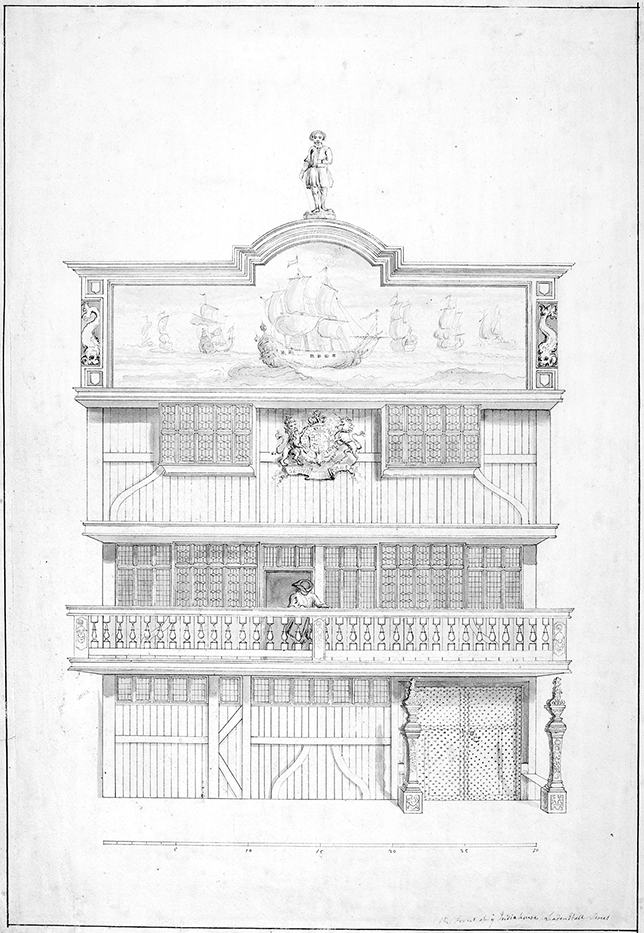
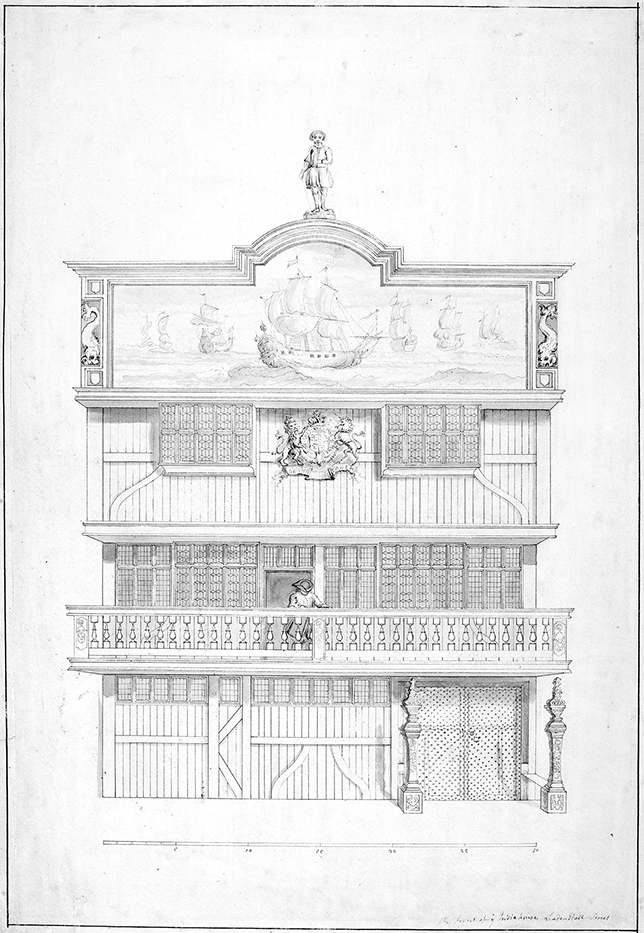
Drawing of the old India House on Leadenhall Street, 1628–1746, by George Vertue.
London-based merchants, mariners and traders, including those involved in the early East India Company, played a critical role in the development of the sciences in early modern Britain.Footnote 2 But while long-distance trade and attempts at colonization had always engaged with many branches of science, the structures that connected science to commerce would take various forms.
This chapter introduces the early East India Company and its modes of engaging with the sciences before the mid eighteenth century. Two aspects of science and the early modern Company are emphasized. First, before 1757, the Company generally contracted out many of the navigational, historical, medical, mathematical and other areas of technical expertise that supported and were supported by overseas trade. As an institution, the Company did directly own and manage a vast amount of information related to logistics, regulations and accounting. However, although the Company also depended upon technical and scientific expertise, it did not directly fund, manage or organize the other branches of science upon which its operations depended. There were exceptions: the Hood lectureship is one of several important instances in which the Company or its close associates would directly fund or otherwise support research or education in the sciences. Thus, in this period, and following a general pattern of early modern “contractor states,” science generally grew and developed under the Company, if not at the Company. And, as the second part of the chapter explains, science under the Company found space to grow by way of the peculiar structure and organization of Company trading. The Company’s allowance for malfeasance under the so-called private trade would be especially important to the growth of the curiosity and manuscript trade between Britain and Asia in this period.
Science and the Company before 1757
The Company was organized with the aim of entering the lucrative maritime spice and drug trade, then centered in Sumatra, Java and neighboring islands. Much earlier in the 1500s, first the Portuguese and then the Dutch had established regular and profitable ocean commerce with several kingdoms and port towns along the Indonesian archipelago, and as this trade flourished it threatened the profits of the English Levant Company’s overland Mediterranean trade in spice and other commodities from the East. The charter granted by Elizabeth in 1600 to the “Company of Merchants Trading to the East” gave this group a monopoly on English trade beyond the Cape of Good Hope (as it was then known) but only for a limited time; the monopoly was to be renegotiated every twenty years. On the Company’s third voyage in 1607/8 a treaty was negotiated with the Mughal emperor, granting the Company trading rights at the port of Surat. This was not, however, an exclusive treaty and the Portuguese effectively dominated the Surat trade with Europe. This would change in 1619 when, after the Company’s fleet defeated the Portuguese, the Mughal court granted the Company exclusive trading rights. By the 1620s, the East India Company had given up on the spice trade but had begun to discover that the European market for Indian textiles had unplumbed depths.
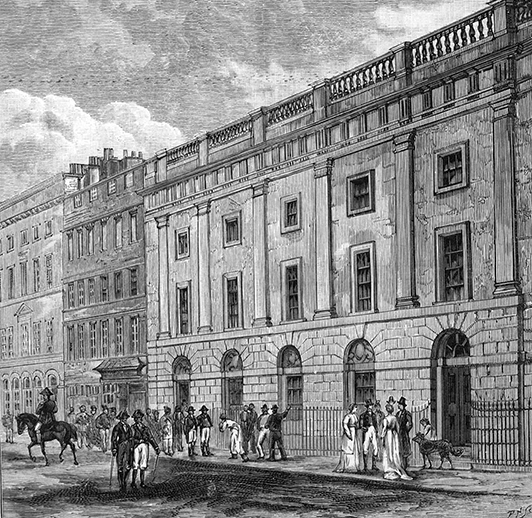
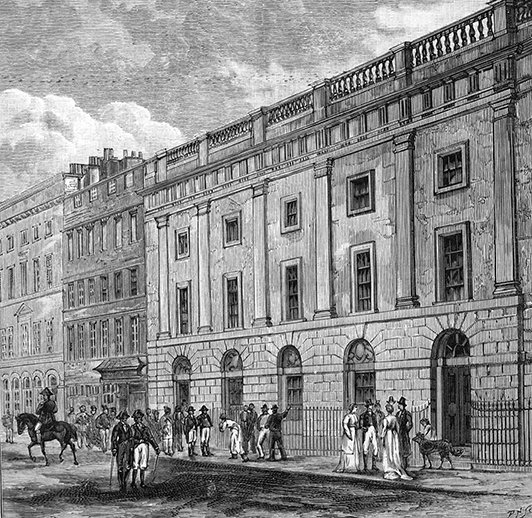
East India House after a re-facing in 1726. Illustrated London News, August 30, 1890.
The Company was divided into the Court of Committees and the General Court, or Court of Proprietors. The General Court was made up of shareholders with holdings above a certain threshold. The Court of Committees (later Court of Directors) was made up of a governor (later chairman), a deputy-governor and twenty-four directors, each of whom was the head of an administrative committee. The governor and the directors were elected by ballot in the General Court.
Until well into the seventeenth century, Company investors were intensely aware of their relative insignificance and inexperience on the stage of inter-oceanic commerce, especially to any region beyond the transatlantic circuit. The informational foundations of England’s early attempts at transoceanic trade thus began in large part as a process of capturing and translating sources from their Iberian and Dutch trading rivals (a practice that, as we will see, would continue over several centuries). When assessing the opportunities and dangers in investing in trade to the East, early investors turned to the encyclopedic and compiling “cosmographers” such as the chaplain and geographer Richard Hakluyt and the astrologer-mathematician and antiquary John Dee. Hakluyt had managed to acquire rare and valuable Portuguese, Spanish and Dutch travel accounts.Footnote 3 The Iberian powers closely guarded much of their information, but recent English naval successes against the Portuguese had provided information-rich plunder, and Hakluyt also gained access to Spanish and French sources while chaplain to an English diplomatic mission to Paris in 1585. In 1601, after being appointed as an advisor to the newly formed East India Company, Hakluyt produced an English translation of a Portuguese manuscript compendium of “the different and astounding routes by which in times gone pepper and spice came from India to our parts … up to the year 1555.”Footnote 4 The Discoveries of the World, as Hakluyt titled it, gave vital information on not only sea routes but also friendly and hostile ports, as well as legal-historical documentation relating to rights of conquest and discovery. “The work,” announced Hakluyt, “though small in bulk containeth so much rare and profitable matter, as I know not where to seeke the like, within so narrow and street [straight] a compass.”Footnote 5
In seeking material to translate and compile, Hakluyt sometimes turned to the library of John Dee. Dee was a great “informer” of his day, an advisor to the Crown and colonial adventurers, and his library was rumored to be one of the largest in England, especially rich in accounts of travel and exploration.Footnote 6 From the 1570s onwards, Dee had been using his library to promote English economic and territorial expansion, drawing on his antiquarian collecting to make various arguments for British extraterritorial claims. His most ambitious work, The Brytysh Monarchy, was the first to use the term “British Impire,” and it also made the argument (based on Welsh folklore about transatlantic voyages) for Elizabeth to be titled “Queen of the New World.”Footnote 7
The collecting, translating, copying and publishing activities of antiquarian geographers such as Dee and Hakluyt were the routes through which the would-be English colonists and adventurers gathered both critical intelligence and an ideological-legal justification for their projects in the earliest years of English colonialism. While profiting from granting the Crown and various colonial companies access to their private collections, both Dee and Hakluyt also argued that the English nation desperately needed its own repository. Hakluyt argued in 1587, for example, that the English Crown should also “collect in orderly fashion the maritime records of our own countrymen, now lying scattered and neglected, and … bring them to the light of day in a worthy guise, to the end that posterity … may at last be inspired to seize the opportunity offered to them of playing a worthy part.”Footnote 8 Neither the English Crown nor the companies themselves attempted to form a centralized repository for information until nearly 200 years later.
Instead, as the colonial companies – the Virginia Company, the East India Company and the Hudson’s Bay Company, to name a few – expanded their operations over the next century, this model of relying on the technical and informational resources of advisors would remain. From its earliest days, Company servants (i.e. employees) were engaged in a wide range of early modern sciences, but they tended to collect and (sometimes) publish as individuals, not for the Company. Wherever Company-hired ships landed, captains and crew voraciously sought information that might help them get home with a profitable cargo or provide future advantage over their European trading rivals.
By the early eighteenth century, the Company managed to establish a more solid presence in Asia, still only in a string of fortified ports on the subcontinent and in the Malay archipelago. Backed by a growing military, and as the political and economic stakes of the Company’s monopoly trade continued to grow, the Company became more deeply entangled in domains of knowledge upon which its operations always depended: knowledge of the science of navigation and of maritime defense, of fortification and surveying, and of the societies and natures within which its businesses were located. European foreigners now had to forge relationships with locals – both political or religious elites and workers of many kinds – through which it might be possible to gain insight into areas useful to the colonial project. In history, medicine, botany, agriculture, manufacturing, natural history, arts and crafts, linguistics, law, and many other fields, manuscripts and informants (such as local doctors, teachers and guides) were sought and their knowledge sometimes copied, appropriated, hybridized or even repressed by the foreigners. After a series of wars in 1757, the Company became a dominant territorial power, stepping in to take the reins of the Mughal Empire’s centuries-old systems of governance. It was now a mammoth task of both appropriation and invention for Company servants to gain even a partial understanding of the land, languages, laws, and religious and civil structures in the societies that it was purportedly now governing. All the while, at the level of the Company’s efforts to know itself and manage the many distant moving parts of which it was constituted, within the headquarters at India House a vast paper trail of colonial expansion was growing continuously.
But that bureaucracy – unlike, as we will see, in other European colonial administrations – did not yet extend to formally organizing, managing and producing what we would now call “scientific” or “historical” knowledge. Beyond its correspondence, accounting and finance records, and the (increasingly important) judicial and legislative records, the Company itself did not directly engage in collecting or natural knowledge resource storage and handling. Instead, until the late eighteenth century, the directors “outsourced,” or contracted out, much of the knowledge required for long-distance trade. Beyond the account books and correspondence, the one policy the Company did have that related to archives and information (possibly on Hakluyt’s advice) was that each ship captain had to deposit a ship’s logbook – where daily recordings of distance logs, observations for latitude and longitude (and, after 1791, chronometer readings), and other measures and comments would be entered in a standard form – with the directors of the Company.Footnote 9
Cartography and geography, for example, were initially managed not by any Company office but by the ship owners and, even more, by the captains hired separately for each voyage.Footnote 10 Generally, it was the ship captains who maintained their own chart collections as part of their set of navigational instruments. Captains, in turn, relied upon London’s thriving commercial market in navigational knowledge throughout the seventeenth century and well into the 1750s. The Thameside Chartmakers, a branch of the Draper’s Company, supplied both the captains hired by the Company and those of the Royal Navy with much of the charts, maps and plans used in commercial exploration and navigation.Footnote 11 Until well into the eighteenth century in Britain, hydrographical information, like charts and maps in general, were not produced, managed or controlled by the state. London was also a leading European center for the manufacture of the practical mathematical instruments depended upon by astronomers, navigators and surveyors hired by the Company.Footnote 12 The same outsourcing pattern held for the Company’s surgeons and naturalists, who were required to purchase their own medicines, books and instruments. In England, Company surgeons decided what medicines to bring and purchased them with their own funds from any apothecary they chose. Similarly, Company writers (as the entry-level positions were called) or factors (merchants) wishing to learn the foreign languages or other skills useful for trade and diplomacy were on their own until the late eighteenth century, when outgoing writers were granted a “munshi’s allowance” to hire tutors once they arrived in India.
At times the Company did directly fund or patronize experiments, publications or expeditions. For example, the directors gave free passage to the future Astronomer Royal Edmund Halley on his expedition to St. Helena to produce a chart of the southern stars in 1676.Footnote 13 Early in the seventeenth century, the Company, jointly with the Muscovy Company, funded expeditions in search of the Northwest Passage, and in the eighteenth century it supported the 1761 transit of Venus expeditions. The directors also gave periodic support to the Royal Society, for example by donating to its collections.Footnote 14 Generally, however, there was little in the way of Company-owned or produced science. Instead, the knowledge and technical skill that underpinned maritime commerce was something the Company rented or hired via the employment of individuals who themselves owned and possessed the relevant skills, knowledge and technology. To be clear: the Company was also itself the most important “contractee” of the Crown; in effect, the Company’s monopoly was a way for the Crown to contract out the project of long-distance trade and colonization. The Company managed England’s militarized trade with Asia and it, in turn, provided the Crown with revenue from import and export taxes, as well as lump-sum payments and loans from the Company.
None of the Company’s imperial rivals contracted out so much of their information management. The medical, nautical, commercial, cartographic and archival information in the Iberian empires was highly centralized. Portugal dominated the Eastern trade for the entire sixteenth and much of the seventeenth centuries. From its first overseas expansion in North Africa in the early 1400s, Portugal had by 1550 established a disparate network of maritime trading ports that stretched from Japan through Southeast Asia to Goa, the Caribbean and South America. The Casa da India was its headquarters in Lisbon and the Armazém da Guiné e Índias was the shipyard where all training, shipbuilding and management of maritime supplies, including maps and instruments, was organized. Navigational knowledge was directed by the cosmógrafo-mor (chief cosmographer) and a group of pilots and scholars. The chief cosmographer’s duties, according to a 1592 Regiment, included examining and rating makers of nautical instruments and charts and “authenticating” all charts, globes and maps. His office was also in charge of training future pilots in mathematics, astronomy and cosmography. All navigational information was kept in the strictest secrecy, including the officially sanctioned map for use by the pilots, the Padrão Real. The position was kept in this form until 1779, when it was completely reformed.Footnote 15
In Spain, the Casa de Contratación (House of Trade) in Seville had since the early 1500s been the center of administration and information collection and production, including navigational, medical and natural philosophical works. The charts and surveys that went into the production of the Padrón Real, Spain’s version of the Padrão Real, were kept under equally strict rules of secrecy. In the 1580s, there was a push to reform and extend the medical, navigational, geographical and cartographical information being collected at the Casa. In stark contrast to the case of Britain, in Spain all drugs used and dispensed in the colonies had to be tested and approved by a royal apothecary.Footnote 16 By the 1580s the Council of the Indies had developed a systematic and relatively homogeneous process of information gathering, based around what came to be known as the relaciones (geographical accounts). The relaciones were the returned answers to a standard-issue questionnaire produced by the Council of the Indies. By 1730 the questionnaire, sent to all parts of Spanish America, had grown to 435 questions. The relaciones were being collected with the intention of producing, at some point, edited authoritative editions. But, as Daniela Bleichmar argues, when the replies arrived from across the Atlantic, they were generally put directly into the state archives, where they remained, and “failed to become the basis of government action.”Footnote 17
France, whose empire was second in size only to Spain during the seventeenth century, had begun to organize many branches of science and medicine hierarchically under the state from the time of Louis XIV. France’s “colonial machine,” as James McClellan and François Regourd have called it, became, during the eighteenth century, inseparable from the state’s institutions of science.Footnote 18 Under the king and the Ministry of the Navy and the Colonies, the Depôt des Carts et Plans and the Observatoire Royale managed astronomy and cartography for the colonial fleets. Royal naval hospitals and medical schools developed techniques and trained surgeons that were sent to the colonies. The Jardin du Roi and other state-run gardens and agricultural societies were clearing houses for botany and natural history. Under the Académie des Sciences, the network of scientific correspondence reached the colonies and supported the publication and exchange of information. Science and empire were part of one vast state enterprise, in stark contrast to the case of Britain.
The Dutch Republic’s Verenigde Oost-Indische Compagnie (VOC) was, in contrast, similar in many ways to Britain and the East India Company, although the VOC was more closely tied to the state. Another major difference was that the VOC built and owned all of its ships, whereas after the 1660s the Company generally hired out ships for individual voyages; only in India after 1800 did the Company start to build some of its own ships (and these mostly stayed in Asia). Also, while the Dutch Secretariat at The Hague was in many ways the center of navigational and trade information management, the Dutch also established a major hydrographic office and map seller in Batavia (Jakarta) in 1650.Footnote 19 Otherwise regarded as one of the least secretive or protective trading companies, the VOC did sometimes petition the state for patents of protection on maps, plans and other resources related to the Eastern trade. Generally, Dutch cartography and other colonial publications circulated widely, especially in England.Footnote 20
The flipside of the East India Company’s outsourcing of knowledge management was that those who the Company hired were largely free to profit from knowledge or information gained while under the employ of the Company. By the early decades of the eighteenth century, there was a robust market in travel accounts and histories of English (and increasingly Scottish) seamen and traders. Captains regularly published accounts of voyages, including diaries, routes and charts, hoping to defray some of the costs of their voyages in this way.Footnote 21 For the same reason, returned surgeons printed herbals, natural histories or their own travel accounts. Often the Company, or a group of directors, would contribute to the publication by agreeing in advance to purchase (i.e. subscribe to) a certain number of books.Footnote 22
This model of decentralized resource management at the Company was not limited to the domain of knowledge; it appears to fit neatly within a well-established structural form that was especially prominent in the early modern English state. Some historians have suggested that this model was the precursor to the modern nation state. Arguing against earlier understanding of early modern states as unorganized and ineffective, and relatively unimportant compared to the pace of individual enterprise, John Brewer, for example, shows that states were in fact highly adept at the central function of raising armies. But this ability, in turn, depended upon being able to procure food, clothing, transport and weaponry, all of which, in its turn, required collaboration with private enterprise. The Royal Navy, for example, was in the period a major purchaser and consumer of goods but was not itself a producer. Instead, it contracted out to private firms everything from victualling to shipbuilding to gunsmithing.Footnote 23 The contractor mode of state enterprise may also be applied to the provisioning of information and knowledge at the early modern Company. It captures the knowledge management practices of the Company up to at least the Seven Years’ War. As we will see in the next sections, that model began to change toward the end of the eighteenth century, as the Company began to accumulate its own stores of knowledge resources. The timing of this shift can also be aligned with a broader historical pattern away from the contractor model and toward the centralization of such functions under state offices.Footnote 24
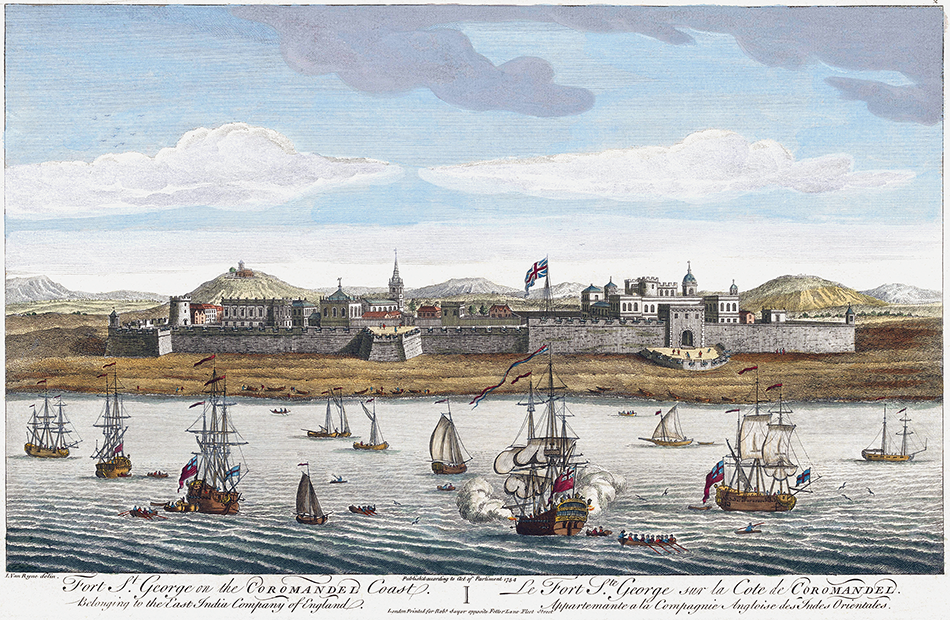
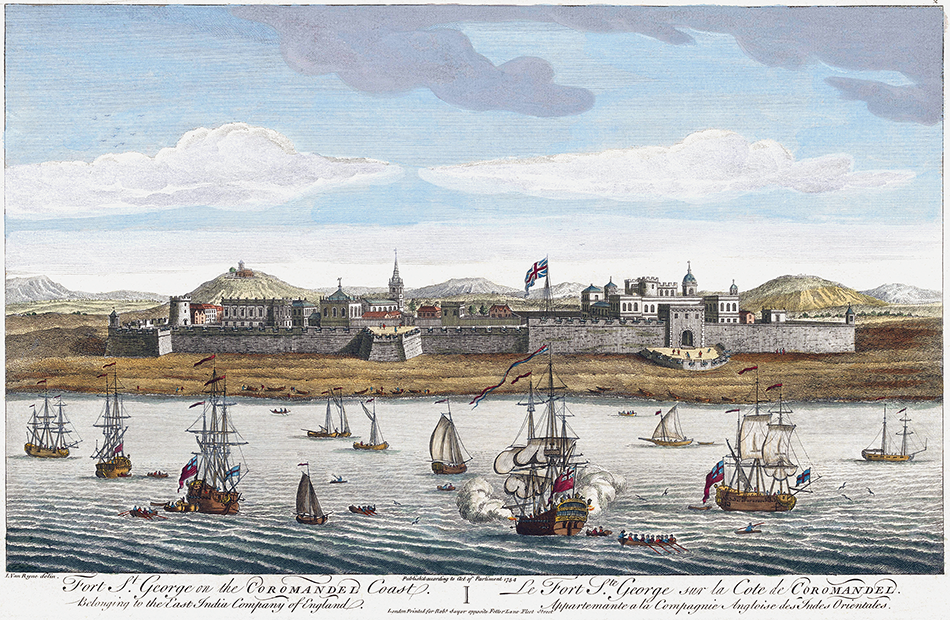
Fort St. George, Madras in the mid eighteenth century. From a print by Jan Van Ryne (1712–1760);
Collecting and the Internal Free Trade
Long-distance trade and associated new commodity regimes were essential to a wide range of practitioners, practices, institutions and cultures that came to define the new sciences of early modern Europe. Histories of collecting and natural history under the Company in the early modern period have often focused on individual collectors and their networks of correspondence and exchange. For good reason, many historians have organized their examinations of seventeenth- and eighteenth-century knowledge and empire around a series of case studies of individual collectors or naturalists. In the early modern period, it was precisely at the level of individual agency that science under the Company was primarily organized (or unorganized) at this time. Emily Erikson has argued that it was this decentralized organization of the Company that fostered a robust information exchange in general: “When the English Company had a decentralized organizational structure, which is to say that significant autonomy lay in the hands of employees, social networks encouraged the transmission of local information and led to the incorporation of more ports and goods into the English trade network.”Footnote 25 It was also within this decentralized mode of practice that a vibrant culture of “collecting” and natural history grew in Britain and its colonies in Asia.
Underneath the umbrella of the East India Company’s monopoly on all trade east of the Cape of Good Hope, there was a vibrant ecosystem of private trade conducted by individuals for their own profit. Some were illegal “interlopers”; that is, British individuals conducting trade between Britain and Asia without permission of the Company. But the bulk of the private trade, which has been estimated to be anywhere from 10 percent to 50 percent of the total British Eastern trade, was legal and under license from the Company. Ship captains and other officers were a great beneficiary of the legal private trade, or, as Erikson calls it, the “internal free trade market” under the Company monopoly.Footnote 26 The vast majority of individual income from a voyage would come from this. In 1740, for example, according to K. N. Chaudhuri, a commander’s salary might be £10, but he might be expected to make between £5,000 and £10,000 with his allotted space for his own capital goods if in command of a large ship.Footnote 27 Some individuals were licensed to run private trading firms in the inter-Asian trade (this, for example, is how the majority of the opium trade with China worked). Critically, agents and servants of the Company were also, until the 1760s, allowed to accept personal gifts in the course of their duties. Within all ranks of the Company, from surgeons to governors, collecting in one way or another had long been common. In the period before territorial and wartime expansion under the Company, much of this collecting would be conducted on a small scale, for personal use, as piece-by-piece sale or barter, or – in the cities and towns in the East – by visiting the local markets or bazaars. Thus factors, governors and other servants based in the colonies were allowed to engage in a certain amount of direct trade between Asia and Britain; cargo holds, for example, contained space reserved for the “private trade,” which also had its own warehouse back in East London.
Together with the practice of contracting out knowledge management (described in more detail in Chapter 3), malfeasance encouraged a robust growth of collecting under the Company, if not really at the Company. Importantly, this is not to say the Company did not attempt to monopolize aspects of the knowledge trade or control the direction of information flows or of technology. As a corporation of shareholders, vulnerable to stock-price dips related to rumors of poor crops or lost cargoes, those involved in core businesses of shipping and trade had always tried in various ways to control the means of private communication to and from Asia, as evident in the many rules and regulations regarding personal correspondence. Miles Ogborn, Huw Bowen and others have documented the persistent belief among many directors in London that a shadowy, subterranean network was at work in their territories, attempting to undermine the authority and interests of India House.Footnote 28 Company employees had a great deal of autonomy relative to other trading companies, and the threat of competition from other British groups was real. Bowen’s study of the arms and instruments trade between Britain and the subcontinent shows, for example, that the Company couldn’t even stop English companies from providing arms to its own enemies.Footnote 29 Thus, as we will see, the Company certainly severely restricted who could travel to and collect information within its territories. Some governors were also notorious for trying to censor the press in India, shutting down English-language presses in Calcutta and Bombay, and even attempting to keep printing technology out of the hands of local rulers, most famously in explicitly forbidding its servants to provide printing presses.Footnote 30 Even if, relative to other European empires, there were less restrictions on information and communication, the Company was very far from overtly pursuing a “free market” in knowledge.
Unlike textiles, spices, raw materials and other commodities, manuscripts and curiosities were not sold directly by the Company at the auction rooms within India House. Instead, this material passed directly into private hands. From the Americas to China, European traders could easily supplement their primary trade with natural and artificial curiosities as well as highly valued drawings and paintings of local flora, fauna and scenes produced specifically for European collectors.Footnote 31 Apothecaries, alchemists, physicians and gardeners were key purchasers of exotica from abroad. Already by the mid seventeenth century, the curiosity market was so well established that a regular global trade could form around popular items for cabinets or wunderkammer, such as the “most rare and precious Commodity” of the “Teeth or Horns of the fishes called Sea-Unicorns” (narwhals), which according to one captain in 1656 were sought across Europe for the “Closets of the Curious.”Footnote 32 By the mid seventeenth century, London was awash in natural and artificial curiosities.Footnote 33 Fascinating evidence of its scope is found in a remarkable archive of records of the purchases made by the merchant and Barbados investor William Courten (1642–1702). Courten bought items from more than eighty individuals, many of them trading within walking distance of his rooms in London’s Middle Temple.
Out of this commerce would emerge the collection that would become the first public museum in England: the Tradescant’s museum. It was put together by London gardeners and plant merchants. John Tradescant and his son formed their collection by way of their status as semiofficial buyers for the royal gardens. They formed the Musaeum Tradescantium, which from the 1630s was open for viewing at a building christened “The Ark” in Lambeth. The museum was just one of many sites where seventeenth-century Londoners might come into contact with displays of collections or exotica from abroad. Traveling shows, outdoor exhibitions and even some public houses, such as Don Saltero’s coffee-house, all put on exhibitions of curiosities, usually for a small price.Footnote 34 According to its Royal Charter, when the Royal Society was established in 1662, a key reason for organizing such an institution was the pressing need for a central repository or “storehouse” of information resources.Footnote 35 And the scope and scale of these early modern museums, society collections and public exhibitions were matched and often exceeded by those of colonialists and plantation owners (such as Hans Sloane) or the Company servants (such as Elihu Yale and Josiah Child) who made huge personal fortunes in India.Footnote 36
In Asia, collections were also expanding (and sometimes dissolving) in the context of increasing European presence. It was essential for would-be traders to bring out to the East items from Europe or elsewhere that could be offered as gifts in exchange for gaining commercial preferences and trading rights or bartered for other items. The social conventions of commercial diplomacy required the exchange of gifts and presents; the gift exchange was fundamental to the formation of British trading networks within Asia.Footnote 37 It was therefore essential for Company agents to cultivate an understanding of the collecting interests of the local elite, who were as avid collectors of curiosities and exotica as their European counterparts.Footnote 38 The factors at the Company’s ports in early seventeenth-century India reported constantly on the kind and quantity of gifts required. “Something or other, though not worth two shillings, must be presented every eight days,” writes the chief factor at Ajmere:Footnote 39 “The Great Mogul was exceedingly delighted with anything strange …. Rich gloves, embroidered caps, purses, looking and drinking glasses, curious pictures, knives, striking clocks … if [you have] a jack to roast meat on, I think he would like it, or any toy of new invention.”
The governor of Surat requested a long list of items to be used as gifts, including “two suits of armour, swords” and live animals, preferably “mastiffs, greyhounds, spaniels, and little dogs.”Footnote 40 Sir Thomas Roe asked for “pictures well-wrought, those of France, Germany, Flanders, &c. being fittest for that purpose.” On another occasion, the Company sent as a gift for a Mughal ruler “a coach and horses, with a coachman who had been in the service of the Bishop of Lichfield, to drive the coach.”Footnote 41 Likewise, Company servants also brought home a constant stream of gifts of rare or valuable curiosities for the royals of England. Jewels, artworks and live animals were especially popular among the royalty.Footnote 42 Such exchanges had long been a fundamental aspect of diplomacy and commerce.
*
Like all European trading empires in the early modern era, the successful expansion of Company influence in Asia depended upon a great deal of social, scientific and technical expertise. Unlike many of its rivals, however, much of the knowledge and expertise upon which the English East India Company depended was highly decentralized, with the production and management of natural and technical knowledge generally contracted out to the surgeons, ship captains and factors hired by the Company. The Company’s unique formalization of malfeasance – the “internal free trade” – further supported a system whereby a great deal of scholarship and collecting was done under the Company, but not by the Company. To be sure, some of the manuscripts, curiosities and works of art acquired by Britons in Asia – whether gifts, purchases or plunder – had found their way to the Company’s headquarters in India House since the seventeenth century. Although no evidence describing a cabinet or wunderkammer at India House has yet been found, a few references to curiosities and a more substantial collection do exist. For example, in the spring of 1667, during his monthlong tour of England, Prince Cosimo III of Tuscany visited India House, which was “full of rare and curious things, both animal and vegetable … which came from India, and are kept here to gratify the curiosity of the public.”Footnote 43 There is also evidence, as Anna Winterbottom has shown, of interaction during this period between the Company’s collections and the early Royal Society of London (est. 1663), which had its own cabinet, and which offered financial encouragement to Company servants who would collect for the Royal Society’s repository.Footnote 44 In these and other ways, even while collecting under the Company was restricted to private trade, India House was one of the sites where privately collected materials, as well as gifts offered to the directors or the Company itself, were stored and displayed. In the later eighteenth century, however, as the Company gained in political and economic standing on the subcontinent, the nature of the India House collections would begin to change.
Clearly, the opening of the library and museum at India House in 1801 did not by any means mark the start of collecting by Company servants or the first accumulation of curiosities and other artifacts at India House. What it did mark, however, as we will see, is a key moment in a structural reorganization of the sciences within the Company; in other words, a new relationship between the Company as an institution and the knowledge and expertise upon which its operations depended. But the beginning of that reorganization, as we will see in the next chapter, would be rooted first and foremost in a changed political economy within North India, after the Company’s first major defeat of the Mughals and the subsequent destabilization of the old networks of education, scholarship and expertise that had grown up around the Mughal courts.

 Open access