


INTRODUCTION
Infectious intestinal disease (IID), usually described as diarrhoea or vomiting due to microorganisms, is one of the most common diseases in the world. In developed countries the associated mortality is low, but morbidity and economic costs remain substantial because of the high incidence [Reference Brandhof1, Reference Gauci2].
In The Netherlands, surveillance of IID is based on notifications from general practitioners (GPs), hospitals and laboratories. However, not all cases with IID present to the healthcare system, because the disease is usually mild and self-limiting. In 1999, a prospective population-based cohort study (the Sensor study) was performed to estimate the magnitude and distribution of IID at population level in The Netherlands. This study estimated the incidence of IID at 283/1000 person-years, corresponding to 4·5 million episodes of IID/year [Reference Wit3]. In combination with a general practice-based study [Reference Wit4] we learned that about 1/20 cases with IID in the community consults a GP. This study also showed that consulting cases suffered from more severe symptoms, had a longer duration of symptoms and more often were aged <1 year [Reference Wit4].
In recent years, an increasing trend has been observed in the number of hospital admissions for gastroenteritis in The Netherlands, which has been associated with rotavirus infections in young children and the elderly and norovirus infections in adults and the elderly. In addition, gastroenteritis mortality in the elderly has increased since 2003. In laboratory-confirmed infections, bacterial causes of IID have been declining over the past years, except for a few large outbreaks [Reference Pelt5]. Whether these trends may also be observed at population level and whether healthcare-seeking behaviour has changed over time are relevant questions in order to gain insight in the current burden of IID in The Netherlands.
Because in many European countries incidence data at population level are lacking and healthcare systems differ between countries, population-based surveys on the burden of IID have recently been carried out in Denmark, France, Germany, Italy, Poland and The Netherlands. In order to facilitate inter-country comparisons of the results, the methodology such as the case definition and a minimum set of core questions addressed, has been agreed upon within the framework of MedVetNet Work Package 23 (www.medvetnet.org).
This paper describes the retrospective population-based survey in The Netherlands. The aim of the study was to estimate the incidence and disease burden, to study the selection of patients consulting a GP and to identify potential risk factors for IID in the community.
METHODS
The study was a retrospective, cross-sectional survey of a random sample of 6000 persons. The survey was performed during the 1-year period from 1 February 2009 to 1 February 2010.
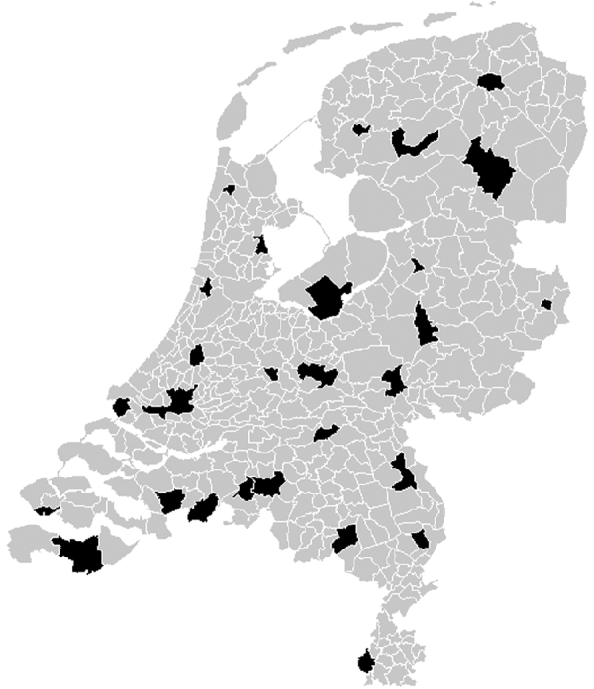
The 6000 persons were selected at random from population registries of 28 municipalities in The Netherlands (Fig. 1), which were representative of the degree of urbanization in The Netherlands. A questionnaire and accompanying letter were sent to all persons selected for the survey. Each month, 500 questionnaires were sent. Persons were invited either to complete the paper questionnaire or to complete the questionnaire online via the internet after logging on with a supplied username and password. Parents were asked to complete the questionnaire on behalf of their children.
The 28 municipalities in The Netherlands, from which a random sample of 6000 persons was drawn.
The questionnaire collected information about demographic characteristics, occurrence of diarrhoea and/or vomiting during the 4 weeks before the questionnaire was completed, symptoms of gastroenteritis, medical care, days lost from work or school, and travel history. In addition, questions were asked about use of gastric acid suppressive medication, ownership of pets, ownership of a sandbox, occupational exposure to animals or raw meat and having an occupation as food handler. These exposures were chosen since they have recently been associated with laboratory-confirmed infections with Salmonella and Campylobacter in The Netherlands [Reference Doorduyn6, Reference Doorduyn7]. The questionnaire was developed by modifying questions from validated tools used in the UK cohort IID2 study and by adding questions from a previous case-control study in The Netherlands [Reference Doorduyn6, Reference Doorduyn7].
The target sample size was 1820 completed questionnaires. Calculations were based on the assumption that the prevalence of IID was about 5% with a precision of 1%.
We used the case definition proposed by the International Collaboration on Enteric Disease ‘Burden of Illness’ Studies [Reference Majowicz8]. A case of IID was defined as a person with ⩾3 loose stools, or any vomiting, in 24 h, in the 4 weeks prior to completion of the questionnaire, but excluding those (a) with cancer of the bowel, irritable bowel syndrome, Crohn's disease, ulcerative colitis, celiac disease, or another chronic illness with symptoms of diarrhoea or vomiting, or (b) who report their symptoms were due to drugs, alcohol, or pregnancy.
The occurrence of IID per person/year was calculated as (365/28)×(four-weekly incidence proportion), since the period of observation was 28 days. The occurrence of episodes of IID/year was calculated by multiplying the incidence per person/year with the number of inhabitants in The Netherlands in 2009. Data on population figures were derived from Statistics Netherlands.
The degree of urbanization was categorized by addresses/km2 as urban (>2500), urbanized (500–2500) and rural (<500). The level of education achieved by adult participants, or by one of the parents for those aged <18 years was classified as low (primary, lower vocational or lower secondary education), intermediate (intermediate vocational, intermediate secondary or higher secondary education), and high (higher vocational and university education).
We compared participants meeting the case definition to asymptomatic participants with regard to characteristics and exposures indicated above. We also compared cases with IID who visited a physician with cases with IID who did not visit a physician. Analyses were performed using cross-tabulations, χ2 tests and univariable logistic regression models, which also included age, sex, degree of urbanization and highest level of education. Variables that reached a significance level of P⩽0·20 in the univariable analyses were selected for inclusion in a multivariable logistic regression model. A manual backwards selection procedure was used in which variables that the likelihood ratio test gave a P value ⩽0·05 were kept in the multivariable model. Age, sex, degree of urbanization and highest level of education were kept in the model.
RESULTS
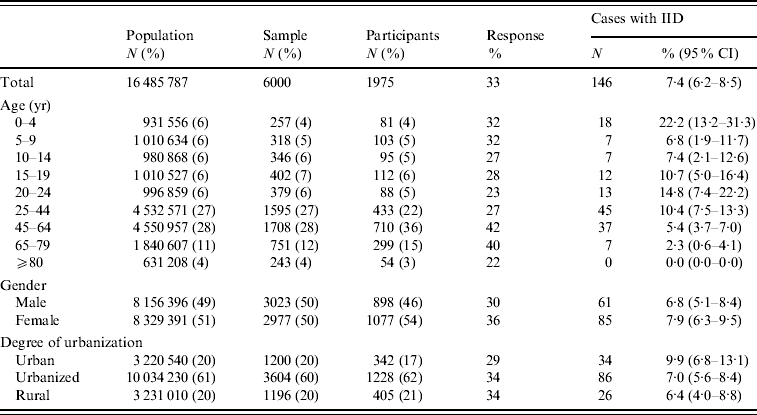
A total of 2045 (34%) persons completed the questionnaire, of which 116 (6%) were completed via the internet. Seventy (3·4%) questionnaires were not used in the analysis, because the questionnaire was completed by a different person than invited (n=59) or data about gastroenteritis symptoms were missing (n=11). The remaining 1975 participants represented the Dutch population fairly well with regard to age, sex and degree of urbanization (Table 1). Response rates were lowest in persons aged ⩾80 years and highest in persons aged 45–64 and 65–79 years. The response was also higher for women.
Questionnaire response and cases with IID by age, gender and degree of urbanization, The Netherlands, 2009
IID, Infectious intestinal disease; CI, confidence interval.
Gastrointestinal symptoms were reported by 231 (10·8%) of the respondents during the 4-week period before completing the questionnaire. Eighty-five (37%) persons with gastrointestinal symptoms did not meet the case definition, because the symptoms were present for longer than 1 month (n=43) or because they reported that the symptoms were due to medication, alcohol, pregnancy or a non-infectious gastrointestinal disease (n=42). A total of 146 (7·4%) of 1975 participants met the case definition (Table 1). This results in a rate of 0·96 episodes of IID per person/year (95% CI 0·81–1·11) or an incidence of 964/1000 person-years, which corresponds to about 15·9 million episodes of IID in The Netherlands each year (95% CI 13·4–18·4 million). IID was more common in urban areas (9·9%) in young children aged 0–4 years (22·2%) and young adults aged 20–24 years (14·8%) and less common in persons aged ⩾45 years (4·4%; Table 1).
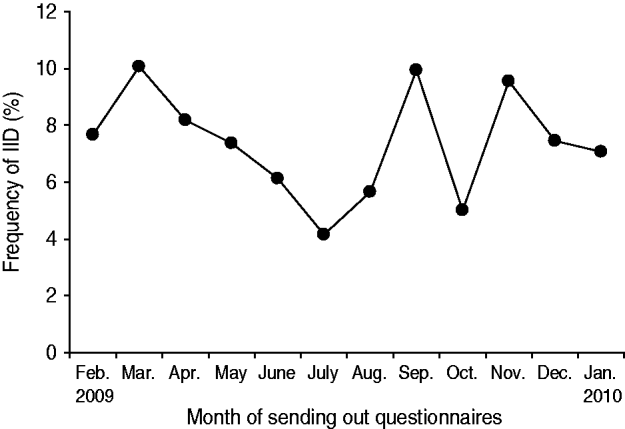
The frequency of IID varied by month from 4·1% to 10·1% (Fig. 2). The highest frequencies were during spring and autumn. It is important to note that these figures refer to the month the questionnaires were sent and are not necessarily concurrent with month of illness.
Estimated frequency of infectious intestinal disease (IID) in a 4-week period by month in which the questionnaires were sent, The Netherlands, 2009.
Of the 146 cases, 19% had diarrhoea and vomiting, 55% had diarrhoea without vomiting and 26% had vomiting without diarrhoea. Abdominal cramp was the most frequently reported additional symptom (64%), followed by abdominal pain (63%), nausea (60%), fever (24%), mucus in the stool (11%) and blood in the stool (6%). Of the 108 cases with diarrhoea, 104 (96%) had recovered at the time the questionnaire was completed. For these cases the median duration of diarrhoea symptoms was 2 days [25th–75th percentile (P25–75): 1–3 days]. Of the 66 cases with vomiting, 65 (98%) had recovered. For these cases the median duration of vomiting was 1 day [25th–75th percentile (P25–75): 1–2 days].
The most frequently suggested causes of illness provided by cases with IID were consuming contaminated food or water (33%), contamination by another person (21%), stomach flu/caught a virus (16%), stress/psychological problems (4%), eating fatty foods (3%), migraine/headache (3%).
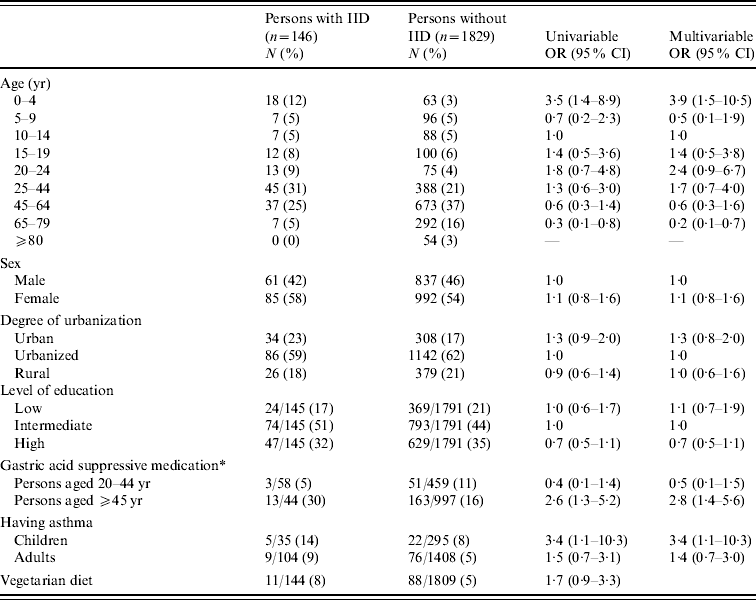
In the univariable and multivariable analysis, young age (0–4 years), having asthma as a child and use of gastric acid suppressive medication at age ⩾45 years were potential risk factors for IID (Table 2).
Univariable and multivariable analysis of potential risk factors for IID, The Netherlands, 2009
IID, Infectious intestinal disease; OR, odds ratio; CI, confidence interval.
* No gastric acid suppressive medication was taken by persons aged <20 years.
Eleven (8%) cases contacted a physician because of the illness. Two cases did not report any information about their healthcare-seeking behaviour. In the univariable analyses, cases who visited a physician had a significantly longer duration of symptoms than cases who did not contact a physician. They also more often had blood in the stool and a low level of education (Table 3). In the multivariable analysis, a long duration of symptoms was the only statistical significant association with contact with a physician. Having blood in the stool was associated with a longer duration of symptoms (χ2 test P=0·002): of the seven cases with blood in the stool one had a short duration of symptoms and for one the duration of symptoms was unknown. Therefore blood in the stool was only marginally significant in the multivariable model. Children tended to have a longer duration of symptoms as well (χ2 test P=0·08) and the association between being a child and visiting a physician with IID was marginally significant in the multivariable model. The association with having a low educational level was also marginally significant (Table 3).
Univariable and multivariable analysis of determinants for visiting a physician by cases with IID, The Netherlands, 2009
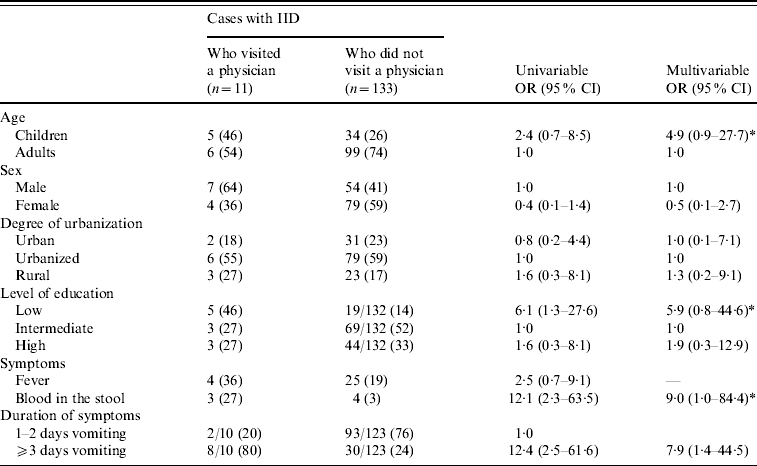
IID, Infectious intestinal disease; OR, odds ratio; CI, confidence interval.
* Marginally significant association (age: P=0·07; low level of education: P=0·08; blood in stool: P=0·05).
Two cases reported that stool samples were investigated of which one reported that the causative agent (Campylobacter) was found. One case was hospitalized. Three cases received antimicrobial medication. Twelve (8%) cases had travelled in the week before the symptoms started. Nineteen (13%) cases had been absent from work because of the illness, another 20 (14%) cases had been absent from school and for three (2%) cases someone else had been absent from work to take care of the patient. The median duration of absenteeism was 2 days for absence from work (P25–75: 1·0–2·5 days), 2 days for absence from school (P25–75: 1·0–4·5 days) and 1 day for absence from work by someone else (P25–75: 0·5–3 days).
DISCUSSION
This retrospective survey focused on the burden of IID in the community. In The Netherlands, the last study on IID in the community dated from 1999 [Reference Wit3]. The incidence of IID in the present study was estimated at 964/1000 person-years, corresponding to about 15·9 million episodes of IID in the Dutch community each year. This is far higher than the incidence of 287/1000 person-years estimated in the Sensor study in 1999. Part of the difference may be explained by the use of different case definitions, but even if the case definition of the Sensor study is applied, the incidence in the present study remains high (865/1000 person-years).
In retrospective surveys on disease burden, a special form of recall bias called ‘telescoping’ plays a role [Reference Wheeler9]. The term telescoping is used to describe the phenomenon that people remember disease episodes as being more recent than they actually were, leading to an overestimation of the incidence in the recall period. Although we attempted to exclude cases who reported disease onset earlier than 28 days ago, telescoping may have played a role in the present study. In addition, the retrospective design might have resulted in selection bias. About 33% of those invited, participated in the study. It may be possible that those who recently suffered from gastroenteritis symptoms were more likely to be motivated to participate in the study than those who did not recently experience symptoms of IID. Indeed, responses were slightly higher in spring (35%) and autumn (36%) when frequency of IID was highest (Fig. 2). These periods correspond well with the virological and bacteriological aetiology found in the laboratory surveillance and hospital uptake for IID [Reference Pelt5].
Experiences from the UK IID study have shown that estimates of disease burden in the community differ substantially between retrospective and prospective study designs even when using identical case definitions: the retrospective part of the IID study estimated a 2–3 times higher incidence than the prospective study [Reference Wheeler9]. Because the incidence of IID in the present study was more than three times higher than estimated in the prospective survey of 1999, this suggests that the incidence of IID at population level in The Netherlands is currently at about the same level or somewhat higher than 10 years ago.
Comparison with incidence rates in other countries has been difficult, because study designs, study period and case definitions usually differ between studies. Recently, many European countries have performed a survey on the burden of IID, using the same case definitions and a similar set of core questions, which will make inter-country comparisons possible. In Canada, and the USA between 2000 and 2002 response rate (35–36%), prevalence of diarrhoea in the community in the 4 weeks prior to interview (7·6%) and number of episodes per person/year (0·99) are similar to those found in our study [Reference Scallan10]. However, visiting a medical person for respondents reporting diarrhoea was 2–3 times higher in these countries. Most countries have performed a telephone survey. In The Netherlands, it was more feasible to conduct a postal survey, since an increasing proportion of homes do not have a landline, especially young adults, whereas municipalities have an up-to-date population registry of the inhabitants. With the invitation to participate we offered the possibility of completing the questionnaire online via the internet. Only 6% of participants used this opportunity. Because the questionnaire was short, it was probably easier for people to complete on paper straightaway.
Young children, children with asthma and persons aged ⩾45 years who used gastric acid suppressive medication were identified as potential risk factors for acquiring IID. IID is known to be common in childhood. In a study in young children with gastroenteritis symptoms in the community, rotavirus and norovirus were the main causes of illness [Reference Iturriza Gomara11]. Use of anti-secretory medication, especially proton pump inhibitors, have previously been associated with Campylobacter and Salmonella infections in The Netherlands [Reference Doorduyn6, Reference Doorduyn7] and numerous other studies on bacterial gastroenteritis [Reference Linsky12, Reference Neal and Slack13]. The occurrence of gastrointestinal symptoms in children with asthma has also been documented before [Reference Caffarelli14], but the reason for this association remains unclear. Recently, rotavirus infection has been associated with a higher risk of recurrent wheeze in infants [Reference Reimerink15], but whether asthma may be a cause or a consequence of gastrointestinal infections remains to be elucidated.
One (8%) out of 13 cases with IID visited a physician. This is higher than the proportion of GP visits in the Sensor study, which was 5%. The strongest predictor for contact with a physician was the duration of symptoms: cases who suffered from IID for ⩾3 days were more likely to contact a physician than those with shorter episodes of IID. If the duration of symptoms is not known, having blood in the stool turned out to be a good predictor as well, because most cases with blood in the stool also had long duration of symptoms. Children with IID were more likely to visit a physician, partly because children were more likely to experience longer episodes of IID than adults.
In conclusion, IID is common and has a significant burden of illness in The Netherlands. We estimated an incidence of 964 episodes/1000 person-years, which corresponds to about 15·9 million episodes of IID/year. The incidence is substantially higher than the incidence of 283/1000 person-years as estimated in 1999 in The Netherlands. This is probably largely due to the retrospective nature of the present study and to a lesser extent to differences in case definitions. Young children, children with asthma and persons aged ⩾45 years using gastric acid suppressive medication were identified as potential risk factors of acquiring IID. Cases with a long duration of symptoms were more likely to visit a physician. In cases with blood in the stool and in young children episodes of IID more often have a longer duration and therefore these cases more often seek medical care.
DECLARATION OF INTEREST
None.



