


According to different organizations (e.g., United Nations Children’s Fund [UNICEF], 2011) around 20% of the world’s adolescents display behavioral problems or suffer from internalized problems (especially related to mood and anxiety disorders). Immigrant adolescents can be especially vulnerable (e.g., Derluyn, Broekaert, & Schuyten, Reference Derluyn, Broekaert and Schuyten2008), but sometimes, they display an adequate –or even better– adjustment compared to their native counterparts (e.g., Sam, Vedder, Liebkind, Neto, & Virta, Reference Sam, Vedder, Liebkind, Neto and Virta2008; van Geel & Vedder, Reference van Geel and Vedder2010).
The advance of positive psychology has motivated a shift in the focus of the discipline by encouraging psychologists to pay attention to the optimal functioning and the positive aspects of people (Seligman & Csikszentmihalyi, Reference Seligman and Csikszentmihalyi2000). Accordingly, the proposed model is focused on the positive aspects of adjustment (self-esteem and life satisfaction) as protective factors for an adequate adjustment.
In the present research, we examine a common model of psychological adjustment for both native and immigrant adolescents living in Spain. We were interested in understanding whether psychological adjustment could have a similar functional role in native and immigrant adolescents, mediating the positive relationship between family support and school adjustment, and the negative relationship between family support and problem behaviors. We also explored the mediating role of school adjustment in the negative relationship between psychological adjustment and problem behaviors.
Context of the Research
Since the end of the 20th century, Spain has become an immigrant-receiving country for many newcomers from Africa, Eastern Europe, and Latin America. Nowadays, Spain is still one of the European countries with a large number of immigrants (10.11% of the total population; Instituto Nacional de Estadística [INE], 2018). In 2018, youth immigrants (from 15 to 19 years old) represented 10.09% of the total Spanish population of this age cohort (INE, 2018). The study was conducted in Almería, a southern area (quite close to Africa) with high rates of immigration (20.61%). Here, 19.05% of the adolescents (from 15 to 19 years old) are immigrants (no Spanish nationality). Recent national statistics regarding the academic year 2015/2016 (Ministerio de Educación, Cultura y Deporte, 2016) show that 9.1% of the students enrolled in Compulsory Secondary Education (aged from 12 to 16) and 6.6% of the students enrolled in Bachillerato [Upper Secondary Education] (optional; aged from 16 to 18) in Spain did not have Spanish nationality. Of the eight provinces of Andalusia, Almería presents the highest rate of foreign students with 15.9% in Compulsory Secondary Education and 10% in Bachillerato [Upper Secondary Education]: Both percentages are above the national average.
Different Backgrounds but Comparable Adjustment
Living between the demands of two cultural contexts (original and host culture) can be challenging for immigrant adolescents, and yet many of them experience good psychological adjustment and positive outcomes (e.g., Berry, Phinney, Sam, & Vedder, Reference Berry, Phinney, Sam and Vedder2006; Harker, Reference Harker2001; van Geel & Vedder, Reference van Geel and Vedder2010). A recent review (Dimitrova, Chasiotis, & van de Vijver, Reference Dimitrova, Chasiotis and van de Vijver2016) has integrated the dispersed evidence from different studies about the adjustment of children and adolescents trying to contrast the hypothesis of migration morbidity (i.e., immigrants would display less adjustment compared to natives) against immigrant paradox (i.e., immigrants would display more favorable outcomes). The review found that migration morbidity was generally better supported, especially for studies originating in Northern compared to Southern Europe. However, the facilitation of family reunion of immigrants was found to be positively associated with fewer internalized problems and academic problems. These findings entail a support for the immigrant paradox under some circumstances, and highlight the importance of family for adolescents.
Family Support and Youth Adjustment
Psychological adjustment refers to a personal sense of well-being and good mental health (Ward & Kennedy, Reference Ward and Kennedy1993). The literature has shown that the most common measures of psychological adjustment –especially in adolescents and youth– are self-esteem and life satisfaction (e.g., Berry et al., Reference Berry, Phinney, Sam and Vedder2006; Sam & Virta, Reference Sam and Virta2003). Self-esteem –the affective valence attributed to the self (Rosenberg, Reference Rosenberg1965)– has been linked to adolescents’ mood as well as to the level of energy and motivation, being a major indicator of adjustment during this stage (Ullman & Tatar, Reference Ullman and Tatar2001). This variable is also an indicator of psychological resilience in minority group members (Sam & Virta, Reference Sam and Virta2003). Life satisfaction, a common indicator of well-being, has been identified as people’s cognitive evaluation of their own life (Diener & Diener, Reference Diener and Diener1995). Studies of adolescents have shown significant relationships among life satisfaction and positive and negative life experiences and parenting style (for a review see Proctor, Linley, & Maltby, Reference Proctor, Linley and Maltby2009).
Even if there are many factors contributing to the psychological adjustment of adolescents, family is especially important for adolescents’ life satisfaction (Sam & Virta, Reference Sam and Virta2003) and their self-esteem (Portes, Vickstrom, & Aparicio, Reference Portes, Vickstrom and Aparicio2011). Although all parenting dimensions (i.e., strictness-supervision, social support/involvement and psychological autonomy granting) are positively related to life satisfaction, perceived parental social support (i.e., family support) is the strongest correlate (Suldo & Huebner, Reference Suldo and Huebner2004). Social support refers to those relationships that provide us with authentic assistance or with a feeling of attachment to those we perceive as loving or caring (Hobfoll & Stokes, Reference Hobfoll, Stokes and Duck1988). Perceived social support is considered an effective coping resource because it contributes to creating a positive emotional experience that decreases the negative consequences of different stressful situations (Bruwer, Emsley, Kidd, Lochner, & Seedat, Reference Bruwer, Emsley, Kidd, Lochner and Seedat2008). Parental support is undoubtedly important to adolescents when facing distress (Colarossi & Eccles, Reference Colarossi and Eccles2003; Demaray, Malecki, Davidson, Hodgson, & Rebus, Reference Demaray, Malecki, Davidson, Hodgson and Rebus2005). Additionally, positive and close relationships between adolescents and their parents may result in the perception of more support and provide a sense of security for adolescents, working as a protective factor which allows first-generation immigrants to maintain a high sense of well-being (Harker, Reference Harker2001).
Family functioning can also have a deep impact on social adjustment and problem behaviors. Several studies have shown that adolescents who have positive relationships with their parents (i.e., warm, loving, intimate relations) are less likely to exhibit problem behaviors (Buist, Deković, & Gerris, Reference Buist, Deković and Gerris2011). Specifically, there is consistent evidence that parental support is associated with school adjustment, academic self-concept (e.g., Demaray et al., Reference Demaray, Malecki, Davidson, Hodgson and Rebus2005) and to fewer problem behaviors such as delinquency or substance use (Zimmerman, Salem, & Maton, Reference Zimmerman, Salem and Maton1995).
Psychological adjustment is also relevant for social adjustment. Studies of adolescents have shown positive and significant relationships between life satisfaction and the establishment of high standards and adaptative perfectionism (e.g., Gilman, Ashby, Sverko, Florell, & Varjas, Reference Gilman, Ashby, Sverko, Florell and Varjas2005), as well as negative relationships between life satisfaction and substance use (e.g., Pikó, Luszczynska, Gibbons, & Teközel, Reference Pikó, Luszczynska, Gibbons and Teközel2005; for a review see Gilman & Huebner, Reference Gilman and Huebner2003, and Proctor et al., Reference Proctor, Linley and Maltby2009). On the other hand, it is also widely accepted that adolescents’ school adjustment is negatively related to their problem behaviors such as substance use (e.g., Bryant & Zimmerman, Reference Bryant and Zimmerman2002; Pikó et al., Reference Pikó, Luszczynska, Gibbons and Teközel2005).
Taking into account all these variables, Shek (Reference Shek2002) analyzed the relation between family functioning and adolescents’ psychological well-being (e.g., life satisfaction, self-esteem), school adjustment (i.e., academic performance, satisfaction with one’s academic performance, and school conduct), and problem behaviors (i.e., consumption of gateway drugs, abuse of psychoactive drugs, and delinquency behavior) of Chinese adolescents. These results showed that those who perceived more family dysfunction displayed more mental health problems and problem behaviors and had poorer school adjustment. These relations were found for adolescents with and without economic disadvantage. In another study carried out in the USA with students (aged from 11 to 19), Suldo and Huebner (Reference Suldo and Huebner2004) found a strong positive relationship between parental social support and adolescent life satisfaction even when adolescent’s age, socioeconomic status, and race were controlled. As expected, problem behaviors were negatively related to both parental support and life satisfaction. They also found that life satisfaction fully mediated the relation between parental social support and adolescents’ problem behaviors. These authors claim that life satisfaction serves a functional role, “as a crucial cognitive mechanism through which environmental experiences influence adolescents’ behavior” (p. 189).
A Conceptual Model of Psychological Adjustment
Based on previous findings, we aimed to explore the relations between family support, psychological adjustment (i.e., self-esteem and life satisfaction), school adjustment, and problem behaviors for both native and immigrant adolescents living in Spain. In line with the findings of Suldo and Huebner (Reference Suldo and Huebner2004) we were mainly interested in understanding whether the psychological adjustment of native and immigrant adolescents could work as the mediator mechanism by which the effect of family support operates on school adjustment and problem behaviors. Additionally, given the associations between school experiences and deviant behavior (Bryant & Zimmerman, Reference Bryant and Zimmerman2002), we propose that psychological adjustment would be negatively and indirectly related to problem behaviors through school adjustment.
In sum, the conceptual model proposed in this research predicts a linear mediation with adolescents’ psychological adjustment mediating between family support and school adjustment, and school adjustment mediating between psychological adjustment and problem behaviors.
The Structural Equation Modeling (SEM) technique of path analysis was used to test this model. According to Kline (Reference Kline2011), SEM can be seen more as a disconfirmatory technique, since it can help us to reject false models (those with poor fit to the data). In order to contrast our hypotheses about psychological adjustment as a mediator between family support and school adjustment and problem behaviors, two alternative models were tested. The first model considers family support predicting school adjustment, which in turn predicts a better psychological adjustment, and then fewer problem behaviors. The second model considers family support predicting higher levels of psychological and school adjustment, which in turn would predict lower levels of problem behaviors. These models are expected to fit the data poorly especially due to two sets of evidence: According to some authors (Lyubomirsky, King, & Diener, Reference Lyubomirsky, King and Diener2005), positive affect might precede (instead of being a consequence of) diverse successful outcomes (and we can consider school adjustment as an example of successful outcome). Among other factors, this finding can be explained because positive affect is quite effective for coping with stress and challenges (as the school can represent for adolescents), and with creativity and problem solving (see Lyubomirsky et al., Reference Lyubomirsky, King and Diener2005 for a review). Additionally, a robust set of research supports the idea that problem behaviors are strongly related to school adjustment (Bryant & Zimmerman, Reference Bryant and Zimmerman2002), even more frequently than to psychological adjustment.
The replication of models among different populations is also essential. We expected to find a good fit for a multigroup model (without and with equality constraints) with both native and immigrant adolescents living in Spain. Given that the migration experience is often a stressful, unusual and –in many senses– a unique life event in different areas (personal, social, academic, etc.), we might expect some differences between immigrant and native adolescents in the proposed model. However, we predict that the basic processes (i.e., mediating role of psychological adjustment) do not differ between both groups, although the strength of the associations might differ as in the study by Shek (Reference Shek2002).
Method
Participants
One hundred and fifty-six native adolescents (52.3% males) with Spanish nationality (both parents born in Spain) volunteered to participate in this study. Their ages ranged between 13 and 19 years old (M = 15.10, SD = 1.13). Additionally, 138 immigrant adolescents volunteered to participate in this study. One participant was considered an outlier (with 4 SD under the mean of family support) and was excluded from all subsequent data analyses. This sample included only first generation immigrant adolescents: Participants who were born in a different country, and arrived in Spain when they were children (mean age of arrival was 8.30 years, SD = 3.58). This sample was composed of adolescents (64% males) from three different immigrant groups: Moroccan (n = 48), Romanian (n = 40), and Ecuadorian (n = 49). No significant differences were found among them on most variables (p > .05). However, on “problem behaviors”, F(2, 133) = 6.06, p = .003, η2p = .08, Moroccan immigrants (M = 1.35; SD = .40) reported fewer problems compared to Romanians (M = 1.68, SD = .50; p = .005) and Ecuadorians (M = 1.62, SD = .52; p = .019), whereas no differences were found between Romanians and Ecuadorians (p = 1.00). The ages of immigrant participants ranged between 13 and 19 years (M = 15.44, SD = 1.27). Participants from both samples resided in Almería (a city in the south of Spain characterized by a high influx of immigrants), and they attended local and public high schools. They did not receive any reward for their participation. All ethical considerations were taken into account in line with APA guidelines.
Instruments
Participants filled out a questionnaire composed of different instruments to measure the following variables:
Family support. This was measured using a sub-scale composed of four items (family support dimension) extracted from the Multidimensional Scale of Perceived Social Support (Zimet, Dahlem, Zimet, & Farley, Reference Zimet, Dahlem, Zimet and Farley1988). Participants responded on a 7-point Likert scale (1 = totally disagree; 7 = totally agree) concerning beliefs and feelings about themselves and their families (e.g., “My family really tries to help me,” “I can talk about my problems with my family”). Higher scores indicated greater perceived family support (Spanish adolescents’ α = .85 [average inter-item correlation = .60; range of item-total correlations = .59 to .79]/immigrant adolescents’ α = .68 [average inter-item correlation = .39; range of item-total correlations = .37 to .57]).
Psychological adjustment. Two scales used in previous research (e.g., Berry et al., Reference Berry, Phinney, Sam and Vedder2006; Berry & Sabatier, Reference Berry and Sabatier2010) were used to measure psychological adjustment: Self-esteem and life satisfaction.
Self-esteem. This was measured with the Rosenberg (Reference Rosenberg1965) scale, composed of 10 items describing feelings and beliefs about oneself (e.g., “Overall, I am satisfied with myself”). Participants responded on a 5-point Likert-type scale (1 = strongly disagree; 5 = strongly agree). Higher scores were indicative of high self-esteem (Spanish adolescents’ α = .78 [average inter-item correlation = .27; range of item-total correlations = .24 to .72]; immigrant adolescents’ α = .61 [average inter-item correlation = .14; range of item-total correlations = .10 to .47]).
Life satisfaction. We used the Student’s Life Satisfaction Scale (SLSS, Huebner, Reference Huebner1991). It consisted of seven items describing feelings and beliefs about one’s own life (e.g., “My life is perfect”). Participants answered from 1 (strongly disagree) to 5 (strongly agree). Higher scores indicated greater life satisfaction (Spanish adolescents’ α = .82 [average inter-item correlation = .41; range of item-total correlations = .36 to .71]; immigrant adolescents’ α = .68 [average inter-item correlation = .25; range of item-total correlations = .26 to .54]).
School adjustment. To measure this variable, we used six items extracted from the scale used by Berry et al. (Reference Berry, Phinney, Sam and Vedder2006). Participants responded on a 5-point Likert-type scale (1 = strongly disagree; 5 = strongly agree) on feelings about school and their studies (e.g., “I like school”). Higher scores showed better school adjustment (Spanish adolescents’ α = .61 [average inter-item correlation = .20; range of item-total correlations = .18 to .44]; immigrant adolescents’ α = .61 [average inter-item correlation = .20; range of item-total correlations = .08 to .56])
Problem behaviors. This variable was measured using the Dornbusch, Ritter, Chen, and Mont-Reynaud (Reference Dornbusch, Ritter, Chen and Mont-Reynaud1989) scale. Participants were asked to indicate to what extent they carried out certain actions (11 items), covering minor problem behaviors (e.g., copying homework, arriving late at school) to more serious ones (e.g., stealing, drinking alcohol, using drugs, or being in trouble with the police). The response scale ranged between 1 (never) and 5 (very often). Higher scores were indicative of problem behaviors (Spanish adolescents’ α = .80 [average inter-item correlation = .28; range of item-total correlations = .31 to .61]; immigrant adolescents’ α = .79 [average inter-item correlation = .29; range of item-total correlations = .26 to .62])
Socio-demographic variables. All participants indicated their sex, age and country of birth (of the teenager and their parents). Immigrants also reported their age on arrival in Spain.
Procedure
Taking into account governmental official data, we selected the three public High Schools in Almería with the highest number of foreign students. Permissions were obtained from the authorities of the schools involved in the research. The teaching staff and the orientation team were informed about the objectives of the research and were allowed to review the measures applied. The previous measures were included in a more extensive questionnaire that was administered by the investigators and trained assistants. Questionnaires were administered in the schools, in groups, and took about one hour. In all cases, a member of the management, the orientation team, or the teaching staff was present in the classroom.
Data analysis
First, we present the descriptive statistics and the correlations (Pearson’s r) for all the variables in the study. Second, Structural Equation Modeling (SEM) was used to examine the relational patterns specified in our hypotheses. Measures were standardized for correlation and SEM analyses. Since the data showed multivariate kurtosis (Mardia’s normalized coefficients of 7.73) for the Spanish sample, we reported the Satorra-Bentler scaled chi-square statistic (Satorra & Bentler, Reference Satorra, Bentler, von Eye and Clogg1994), a correction for χ2 when distributional assumptions are violated (Byrne, Reference Byrne2008).
Results
Descriptive data
A preliminary analysis of the means of the variables revealed, as shown in Table 1, that participants perceived high family support, showed relatively high levels of life satisfaction and self-esteem, high school adjustment, and they reported relatively few problem behaviors. All means were significantly different from the theoretical mean-point of the scale according to one-sample t-tests (p < .001). The values were similar to previous studies using the same scales with samples of immigrants from different origins (e.g., Morocco) and native adolescents: Self-esteem and problem behaviors were similar to Berry and Sabatier’s study (2010); self-esteem was similar to Sam and Virta study’s (2003), Ullman and Tatar’s study (2001), and van Geel and Vedder’s study (2010).
Descriptive Statistics and Pearson Correlations
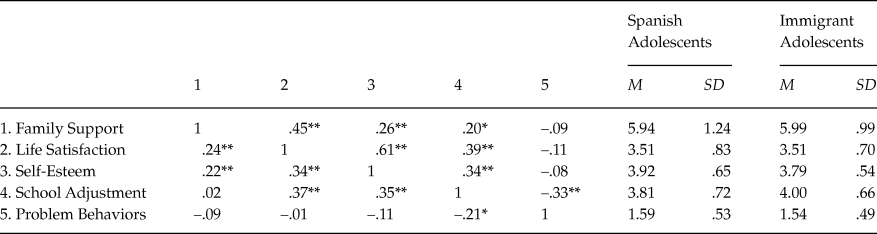
Note: *p < .05, **p < .01. Correlations for Spanish adolescents are shown above the main diagonal; correlations for immigrant adolescents are shown below the main diagonal.
Spanish born participants and immigrants did not differ in any variable (p > .05) except in school adjustment, t(290) = 2.34, p = .020, d = .28: Immigrants showed more school adjustment than Spanish adolescents (see Table 1 for means and SDs).
Most of the variables for both samples were significantly related to one another. Overall, high family support was related to higher levels of life satisfaction and self-esteem. Life satisfaction and self-esteem were positively correlated to school adjustment, which was negatively related to problem behaviors.
A Multi-Group Model of Psychological Adjustment
In order to test some of our objectives, and understand whether psychological adjustment mediated the relationship between family support and school adjustment and problem behaviors, the following model was delimited. Self-esteem and life satisfaction were treated as observed variables, which loaded on the latent factor of Psychological Adjustment. It was predicted that Family support would be positively related to adolescents’ Psychological Adjustment, which in turn would be positively associated to their School Adjustment, thus finally would have a negative relation with their Problem Behaviors. Several mediations were predicted: The latent factor of psychological adjustment (i.e., life satisfaction and self-esteem) might mediate between the positive relationship of family support and school adjustment, and between the negative relationship of family support and problem behaviors.
The hypothesized model yielded a reasonable good fit to the data for Spanish adolescents: S-Bχ2(5, 155) = 2.25, p = .81; CFI = 1.00; SRMR = .02; RMSEA < .001, 90% CI [0, .07]; and for immigrant adolescents: χ2(5, 135) = 9.32, p = .10; CFI = .92; SRMR = .05; RMSEA = .08, 90% CI [0, .16]. Once we had assessed that the proposed model was tenable separately for each group of interest, two multi-group analyses were performed: The first one without constraints and the second one subject to cross-group equality constraints for regression coefficients.
Model without equality constraints
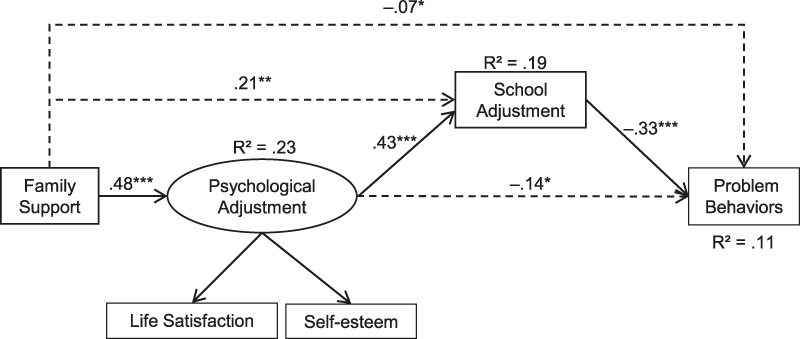
The hypothesized unconstrained model yielded a reasonable good fit to the data: S-Bχ2(10, 290) = 10.51, p = .40; CFI = .99; SRMR = .039; RMSEA = .019, 90% CI [0, .09]. Family support perceived by Spanish and immigrant adolescents was positively related to their psychological adjustment, which in turn was positively related to their school adjustment, which finally was negatively related to their problem behaviors. All the standardized effects are presented in Figure 1 and 2.
Model for Spanish Adolescents. Solid lines represent direct effects, whereas dotted lines represent indirect effects.
Model for Immigrant Adolescents. Solid lines represent direct effects, whereas dotted lines represent indirect effects.
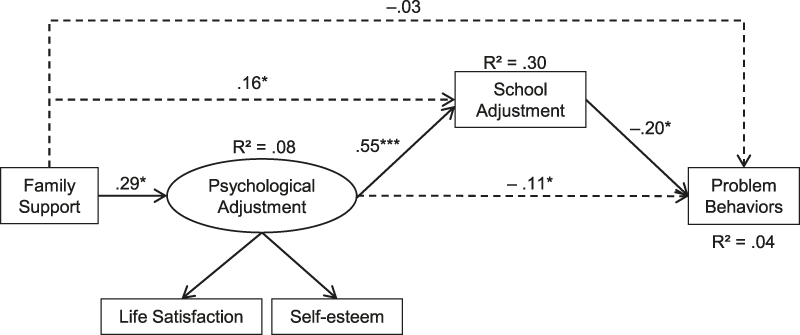
As predicted, adolescents’ psychological adjustment was found to be an important mechanism to describe the relationship between family support and school adjustment: Family support indirectly predicted school adjustment through adolescents’ psychological adjustment for both Spanish, z = 2.70, p = .007; and immigrant adolescents, z = 2.42, p = .015. An additional mediation describing how psychological adjustment might be related to problem behaviors was found: Adolescents’ psychological adjustment indirectly predicted problem behaviors through school adjustment for both samples, z = –2.51, p = .012 (Spanish adolescents) and z = –2.01, p = .044 (immigrant adolescents). For Spanish adolescents, family support indirectly predicted problem behaviors through psychological adjustment and school adjustment, z = –2.09, p = .037, but no indirect effect was confirmed for immigrant adolescents in this regard, z = –1.71, p = .087.
Regarding the proportion of explained variance for the Spanish adolescents’ model (see Figure 1), we found that the effect size of psychological adjustment (directly explained by family support) and school adjustment (directly explained by psychological adjustment and indirectly explained by family support) were moderate (R 2 > .18), as well as the effect size of problem behaviors (R 2 > .10). Regarding the proportion of explained variance for the immigrant adolescents’ model (see Figure 2), we found that the effect size of school adjustment (directly explained by psychological adjustment and indirectly predicted by family support) was quite large (R 2 = .30), whereas the effect size of psychological adjustment was rather moderate (R 2 = .08), and that of problem behaviors was quite small (R 2 = .04).
Model with equality constraints
In order to confirm that the processes delimited by the proposed model of psychological adjustment were essentially the same across native and immigrant adolescents, a multiple group model was delimited consistent with the processes described in Figures 1 and 2. Equality constraints specified that all direct paths would be equal in both samples. All equality constraints were correctly imposed and the multigroup model yielded a adequate fit to the data, S-Bχ2(13, 290) = 16.97, p = .20; CFI = .98; SRMR = .06; RMSEA = .046, 90% CI [0, .10]. Inspection of the Robust Lagrange Multiplier (LM) test revealed that none of the equality constraints were violated (p > .06). Hence, there was evidence that the direct relationships among variables were comparable for native and immigrant adolescents. In order to test the hypotheses about differences in model fit, we contrasted the goodness-of-fit chi-square value of the less restrictive model (the model without equality constraints) with the goodness-of-fit chi-square value of the more restrictive model (the model with constraints). Given that we use the Satorra-Bentler scaled chi-square statistic due to elevated multivariate kurtosis (Satorra & Bentler, Reference Satorra, Bentler, von Eye and Clogg1994), we report here the scaled difference chi-squared for testing differences in model fit (Bryant & Satorra, Reference Bryant and Satorra2012). The scaled difference chi-square test between the constrained and unsconstrained model was conducted with the excel macro provided by Bryant and Satorra (Reference Bryant and Satorra2013). This analysis confirmed that the fit of the constrained model was not significantly poorer than the fit of the unconstrained model, Δχ2SB(3) = 6.70, p = .08.
Alternative Models
In order to contrast our hypotheses about psychological adjustment as a mediator, two additional alternative models were tested. One model was with family support predicting school adjustment, which in turn predicted psychological adjustment, and then problem behaviors. This model showed poor fit for both Spanish adolescents, S-B χ2(5, 155) = 31.38; p < .001; CFI: .72; SRMR = .13; RMSEA = .19, 90% CI [.13, .25]; and immigrant adolescents, χ2(5, 135) = 18.02; p = .003; CFI: .77; SRMR = .09; RMSEA = .14, 90% CI [.07, .21].
Another model was tested with family support predicting higher levels of psychological and school adjustment, which in turn predicted lower levels of problem behaviors. This model also showed poor fit for both Spanish adolescents, S-B χ2(4, 155) = 9.26; p = .055; CFI: .95; SRMR = .11; RMSEA = .09, 90% CI [0, .17]; and immigrant adolescents, χ2(4, 135) = 33.31; p < .001; CFI: .48; SRMR = .13; RMSEA = .23, 90% CI [.16, .31].
Discussion
This work presented a conceptual model that integrated some psychosocial variables related to the psychological adjustment of both native and immigrant adolescents living in Spain.
The findings of this research confirmed the proposed model in both native and immigrant adolescents: Family Support positively predicted adolescents’ psychological adjustment, which in turn positively predicted their school adjustment, thereby was negative related to their problem behaviors. Accordingly, results confirmed the mediating role of psychological adjustment between family support and school adjustment (both samples) and problem behaviors (Spanish sample). Consistent with previous studies (Harker, Reference Harker2001; Portes et al., Reference Portes, Vickstrom and Aparicio2011; Sam & Virta, Reference Sam and Virta2003; Suldo & Huebner, Reference Suldo and Huebner2004), family support was confirmed to be an important variable related to adolescents’ psychological adjustment.
This research also enlightened the relationship between psychological adjustment and problem behaviors, contributing in this sense to the current literature. Even if psychological adjustment was not directly related to problem behaviors in these samples, it was indirectly related through school adjustment. Namely, adolescents’ school adjustment can serve a functional role, mediating the effect of psychological adjustment on problem behaviors. This is not unexpected, given the strong relationships found between school experiences and problem behaviors (Bryant & Zimmerman, Reference Bryant and Zimmerman2002).
Even if Shek (Reference Shek2002) had already showed the relationships between family functioning, psychological well-being, school adjustment, and problem behaviors, no clear evidence of the mediating role of psychological adjustment and school adjustment had been gathered by studying conjointly all these variables. The most important contribution of this research is that it integrates previous but partial results, showing a more complete picture of relationships among psychosocial variables related to psychological adjustment.
Moreover, these findings were confirmed for both native and immigrant adolescents, demonstrating that the basic processes remain the same irrespective of the culture. There was one difference between the models in the native and immigrant samples. Specifically, family support did not have a clear indirect effect (through youth adjustment) on problem behaviors in the immigrant group but it did in the native sample. For native adolescents, psychological adjustment can serve as a cognitive mechanism to link their family environment (i.e., family support) with problem behaviors (similar to what Suldo & Huebner [Reference Suldo and Huebner2004] have found). However, this functional role of psychological adjustment seems to be less supported for immigrant adolescents in our context. Even if several explanations can be formulated (e.g., use of self-report measures), additional data and a more rigorous design should be implemented to fully understand these differences.
Accordingly, additional research (e.g., longitudinal studies) needs to be conducted in order to clarify these interesting differences. Despite this, the common findings (regardless of the culture of each group of adolescents) appear to us to be important and relevant for planning future interventions.
In general, our results emphasize the pivotal role of family support in the network of relationships studied. Future investigation should include different types of social support that immigrant and native adolescents might receive in their lives (e.g., from teachers, friends, significant others). Therefore, research about how specific types of support may contribute to different types of adjustment (psychological, to the school, etc.) of adolescents is still needed.
On the other hand, the descriptive data that showed similar results in both samples (and a slightly better school adjustment for immigrants) are consistent with recent research comparing adjustment between immigrant and native young people in different countries (see Berry et al., Reference Berry, Phinney, Sam and Vedder2006; Sam et al., Reference Sam, Vedder, Liebkind, Neto and Virta2008; Suárez-Orozco, Rhodes, & Milburn, Reference Suárez-Orozco, Rhodes and Milburn2009; van Geel & Vedder, Reference van Geel and Vedder2010). Overall, some of these studies have identified what has been called the immigrant paradox: The counterintuitive finding that (first-generation) immigrants adapt just as well or even better than their national peers despite their poorer socio-economic conditions. The present study did not measure income or level of parental education. However, native and immigrant adolescents in both studies reported relatively high family support, good psychological and school adjustment, and few problem behaviors.
Several implications arise from these results. Firstly, educational and social interventions should continue to emphasize family, since it appears to be a crucial factor for fostering psychological adjustment especially concerning native adolescents. Multilevel interventions should try to improve mutual understanding between adolescents and their parents. Additionally, we should take into account the unique role played by the educational institutions: According to our results, psychological adjustment negatively predicted problem behaviors through school adjustment. Adolescents’ school adjustment seems to be negatively related to problem behaviors consistently. This is not surprising, considering the time adolescents spend at school in western societies. However, we should emphasize the important role of school as a source of motivation, protection, and growth of adolescents, and that it should never cause frustration.
This study is not free of limitations. Firstly, the cross-sectional nature of the data used in the present work does not allow inferences over time. Secondly, unfortunately, we could only get self-reports as indicators of adolescents’ adjustment. Using external appraisals (from parents, teachers, or peers) may enrich our findings and suggest different patterns of relations among the variables included in both studies (Stevens et al., Reference Stevens, Pels, Bengi-Arlslan, Verhulst, Vollebergh and Crijnen2003) while avoiding social desirability. Thirdly, we studied an immigrant sample composed of adolescents from different ethnic and national groups. Although there were no significant differences among them in most variables, a deeper analysis of different and specific ethnic groups would be useful to confirm or reject a similar model relevant and sensitive to different cultures and contexts. Moreover, the introduction of additional variables such as ethnic identity could be especially interesting. Finally, the sample size does not allow us to test for clustering students within schools, an important factor to consider when carrying out studies in the school setting. As we have no information of their family income, and could not access to the median family income (as well as variability in income) in the neighborhood in which the schools are located, this study cannot test the immigrant paradox.
Despite these limitations, we believe this work might contribute to filling some gaps in the research focused on positive aspects of development suggesting an integrative model about psychological adjustment, showing common findings for native and immigrant adolescents and some interesting differences.



