

What Is Opium?
Opium, manufactured from the sap of the opium poppy (Papaver somniferum), has been cultivated by humans for centuries. It has been used, in one form or another, for medicinal as well as recreational purposes, and is the precursor to all modern-day opiate pharmaceutical agents. The term opioid refers broadly to all compounds related to opium and these drugs are classified as either naturally occurring, semi-synthetic, or fully synthetic, depending on their origin. Opiates are drugs specifically derived from opium, and include the naturally occurring products morphine, codeine, and thebaine and the semi-synthetic congeners derived from them, which include medications such as heroin and buprenorphine. These semi-synthetic drugs were developed by chemically modifying the naturally occurring psychoactive components present in the opium poppy to take advantage of specific properties inherent to the different compounds present in the plant. In some cases the intent was to increase potency by reducing the volume required to create a similar effect, in other cases attempts were made to adjust the duration of action or reduce the incidence of unwanted side effects. When these desired effects could not be achieved by modifying these naturally occurring compounds, scientists worked to create fully synthetic versions. The fully synthetic opioids include medications such as methadone and fentanyl, which have been synthesized to act in a similar manner as the natural occurring opioids but are not directly made from the natural occurring compounds.
Morphine, the active ingredient in opium, derives its name from Morpheus, the Greek god of dreams, son of Hypnos, the god of sleep. In its pure form it is 10 times more potent than unrefined opium. Originally isolated from opium by German scientist Friedrich Sertürner in 1803, morphine very quickly became widely used as strong painkiller, alleviating much of the pain related to battlefield injuries suffered by soldiers on both sides during the United States Civil War (April 12, 1861 to May 9, 1865). Sadly, as a result of this widespread use, it is estimated that roughly 400,000 of these soldiers became addicted to the drug, continuing to suffer in a different way long after the war was over.
Several attempts were made during the last half of the nineteenth century to create a safer and less addictive alternative to morphine, and in 1874 heroin was synthesized from morphine by English chemist Alder Wright. In the 1890s, heroin was produced by the German pharmaceutical company Bayer and marketed as a morphine substitute. In addition to its properties as a potent painkiller (heroin is actually metabolized into morphine once it enters the body), heroin is also a potent cough suppressant and Bayer declared heroin a safer alternative for children suffering from coughs and colds. Unfortunately, despite their best efforts at finding a safer alternative, heroin did not turn out to be less addictive than morphine. By the early 1900s, heroin addiction in the United States and Western Europe had become even more of a problem than morphine addiction.
In 1924, the US Congress passed the Anti-Heroin Act, making it illegal to manufacture, import, or sell heroin in the United States. By that time, however, people had already developed a strong taste for the drug and the trade in illegally produced heroin rapidly increased. So-called “black tar heroin,” named for its dark orange or brown color and tar-like consistency, is a form of heroin that is generally manufactured in Mexico and imported to the Western and Midwestern United States, while “white powder heroin” is more often manufactured in Columbia and imported into the Eastern United States. As we will see in the chapters that follow, regardless of where the heroin comes from, it is generally manufactured with few quality control measures and contains (sometimes dangerous) adulterants designed to increase profits.
Origins of Opium
Though it is likely that humans have maintained a somewhat complicated relationship with Papaver somniferum for some time longer than this, the earliest known reference to the cultivation of these poppies for the opium they contain is from Mesopotamia around 3000 BCE.Footnote 1 In the southernmost region of the area, in what is now modern-day Iraq and Kuwait, the ancient Sumerians grew, harvested, and processed this plant to produce medicine and, as is suggested by reference to the bright red poppy flowers as hul gil, “the joy plant,” for recreational use.Footnote 2
From Mesopotamia, knowledge of the opium poppy spread along trade routes eastward to Persia and westward to Egypt, where records describe opium use during the reign of King Tutankhamen (1333–1324 BCE) as a pain-reliever and a narcotic,Footnote 3 and to Greece, where references to opium’s powers are chronicled in the ancient literature. In the late eighth century BCE, Homer referred to opium’s healing powers in the Odyssey,Footnote 4 and the Iliad,Footnote 5 Hippocrates (460–377 or 355 BCE) mentions the poppy as being used in medicinal preparations, and Aristotle (384–322 BCE) describes opium as a hypnotic drug. Opium was frequently used in these ancient societies as a narcotic to induce sleep, an analgesic to relieve pain, and most likely also as a recreational drug.
Opium Comes to China
From the fertile crescent, via trade along the Silk Road, opium traveled east through a region where most of the world’s opium poppies are still grown today. From Afghanistan and Pakistan eastward into India, Myanmar, and Thailand, into central Asia, and eventually China where, by the seventh century CE, opium had arrived.
By the 1700s, China had developed a taste for opium and, as demand increased, so did the profitability of importation. Fueled by increased supply, primarily from poppy-growing regions of India under the control of the British Empire, rates of opium addiction increased dramatically in China. In 1796, the Jiaqing emperor (Qing dynasty, 1644–1912) outlawed opium importation and cultivation in an attempt to stem the increasingly problematic issue of opium addiction. Outlawing opium, however, just drove the trade underground and illegal importation, primarily from the regions of India controlled by Great Britain, continued. The British openly smuggled opium into China through the East India Company, in defiance of the Emperor’s decree, as this was a considerably lucrative trade, eventually leading to an attempt by China to prevent the British from flooding their homeland with opium. The result: two armed conflicts referred to as the “Opium Wars.”
The First Opium War (1839–1842) lasted three years and ended with the Treaty of Nanking. As a result of the treaty China was forced to cede Hong Kong to the British Empire and to keep the ports in Shanghai, Canton, and other ports open to trade. In 1856, a short 14 years after the Treaty of Nanking, the Second Opium War (1856–1860) began. This time the British and the French fought the Chinese and after four years the Emperor was forced to make the opium trade legal once again in China. As a result of what many consider an inappropriate and immoral use of military power by the British Empire, rates of opium addiction in China continued to dramatically increase.
Opium Comes to the United States
Before the Second Opium War had even begun, thousands of Chinese began to leave China, seeking work in America, primarily as laborers building the trans-continental railroad and mining in the gold fields of California. These immigrants brought with them their culture and traditions, which included for some, at the time anyway, the smoking of opium. Opium dens, businesses which allowed for the purchase and use of opium in a single location, much like a bar or public house provides both alcohol for sale and a place to drink it, were established primarily by and for the immigrant population. Initially located in areas of high Chinese populations in cities in the Western United States, frequently called “Chinatowns,” opium dens soon began appearing outside these areas and attracting non-Chinese clientele. By the 1870s, the rates of opium addiction in America began to skyrocket as it had in China, and in 1875, San Francisco became the first city in the United States to attempt to outlaw opium. The initial ordinance approved by the city supervisors was ostensibly race neutral and simply made it a misdemeanor to maintain a business or to patronize any such business where opium was smoked. The use of opium by private citizens whether in public or in their own homes was not targeted, only the public houses. The specific wording in the statute specified that “no person shall keep or visit an opium den,” but in practice this law was only enforced when it came to dens in the White areas of the city. The concern, clearly, was not that people were smoking and becoming addicted to opium but that White people were smoking and becoming addicted to opium. According to an 1875 article in the San Francisco Chronicle, the city’s Board of Supervisors enacted this legislation only after learning of “opium-smoking establishments kept by Chinese, for the exclusive use of white men and women” that were attracting “young men and women of respectable parentage.” Apparently, America’s first law banning any nonalcoholic drug was enacted only when drug misuse and addiction began to become a problem in the White community, a theme that continues to this day and one which we explore further in subsequent chapters.
Laudanum
Laudanum, a mixture of opium suspended in alcohol (opium tincture), was first developed in the seventeenth century by the English physician, Thomas Sydenham (1624–1689). By the eighteenth century the combination had become very well known to the medical community and the general public and was widely used to treat a variety of maladies. Laudanum was touted as “one of the best known and most extensively used household remedies,” ostensibly a “cure-all” for multiple ailments including, among other things, yellow fever, cardiac disease, colds, dysentery, and excessive secretions. It was used as a pain reliever for adults and children, and even to soothe fussy babies. Available over the counter without a prescription, laudanum was also commonly used as a “pick-me-up” by middle-class women (more than any other social group in the late-nineteenth century), occasionally leading to addiction. A newspaper article in the Auckland Star (July 25, 1890, p. 3)Footnote 6 describes the fate of one such woman who had become addicted to the mixture: “A respectable looking woman named Walker was charged today at the police court with a series of petty thefts. She pleaded “Guilty,” but for the defense her son gave evidence to the effect that his mother was a laudanum and opium consumer, and not responsible for her actions.”
Harrison Narcotics Tax Act
The American “war on drugs” unofficially began in 1914 with the signing of the Harrison Narcotics Tax Act. The act did not outright make opium illegal but imposed a tax on the manufacture and importation of opium and its derivatives (as well as coca leaves) and placed restrictions on their sale and distribution. This strategy of taxing what you want less of and subsidizing what you want more of that we are all familiar with is not a new strategy, and when the US government recognized that a problem with opium existed over a century ago, their initial response was to tax and regulate.
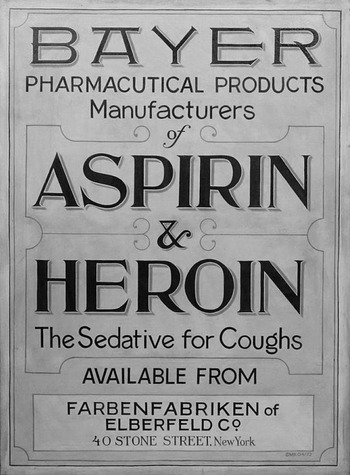
By 1908, opium use in the United States had increased to the point where it was difficult to find someone not either directly or indirectly affected by the problem. In response to demands by the people that something be done, President Theodore Roosevelt appointed Dr. Hamilton Wright (1867–1917), an American physician and pathologist, as the Opium Commissioner of the United States. Despite his apparent enthusiasm for the post, Dr. Wright was unable to stem the tide of the last opium epidemic. Based primarily on conversations with leaders in the south and central Pacific Asian nations, who had far more experience dealing with the management of the opium problem, his commission recommended against outright prohibition and instead proposed a gradual abolition of the trade through taxation and regulation. The degree to which opium addiction had become a problem is outlined in a New York Times article from 1911 in which Wright is quoted as saying, “Of all the nations of the world, the United States consumes the most habit-forming drugs per capita. Opium, the most pernicious drug known to humanity, is surrounded, in this country, with far fewer safeguards than any other nation in Europe fences it with. China now guards it with much greater care than we do; Japan preserves her people from it far more intelligently than we do ours, who can buy it, in almost any form, in every tenth one of our drug stores.” Heroin was one such form of opium sold by druggists throughout the United States until being banned (see Figure 1.1).
Drug store sign for products heroin and aspirin before the US heroin ban 1924.
How We Got Here
Over a century ago the world recognized that opioid addiction was a significant problem that needed to be addressed, and yet today, in 2023, we are faced with an escalating epidemic of opioid misuse and addiction, a world in which few, if any of us, have remained unscathed. While this section focuses on the specific factors which have led to the exponential increase in opioid misuse in the United States, the stories are similar, if not exactly the same, around the world as we will see in the chapters that follow.
By the time the Harrison Narcotics Tax Act was passed in 1914, the US government was well aware of the scope of the problem as well as the efforts being made by other countries to stem the rising tide of the epidemic. Canada, Germany, Russia, France, and England had already passed laws regulating or banning outright the opium trade. Even the Crown Colony of Hong Kong, despite its earlier role in the Opium Wars as a central location of the opium trade, had also already passed a strict anti-opium law. Despite this, however, opium refined and ready to smoke continued to be imported into the country, packaged and ready for sale. According to Dr. Wright, “not less than 20,000 pounds per annum have been smuggled into the United States across our northern boundary” and while less was known about the importation of opium across the southern border the government was “sure that large amounts of opium prepared for smoking are imported into Mexico, and that most of it is not consumed there.” It is reasonable to assume, then, that what was not consumed in Mexico was also imported into the United States. The country was, quite literally, a primed tinderbox waiting for a spark.
To understand this analogy, one has to consider the “Triad of Fire.” For those unfamiliar with the concept, the idea is that for fire to exist three components must come together at the same time under ideal conditions. First, you have to have fuel. If there is nothing to burn, there will be no fire. Second, you have to have an ignition source, the spark that starts the combustion. Third, and this is the most important element, you have to have an oxidizing agent, an atmosphere that supports combustion. In outer space, fire is not supported because there is no oxygen and on Earth a fire can be suppressed by removing its access to the oxidizing agent. In our example the fire is the epidemic, sparked by opioids, consuming lives (fuel) and supported by the sometimes well-intentioned but mostly ineffectual policies (oxidizing agent) designed to combat the opioid epidemic.
The Perfect Storm
By the 1980s, the heroin trade in the United States had become well established. Mexican “black tar” heroin dominated the trade in Los Angeles, San Francisco, and other major cities along the West Coast while Columbian “white powder” heroin dominated the trade east of the Mississippi. Though the product looked different, it behaved the same way, and during this time, it was all about location. In the east, the Columbian cartels had access to ports in the southern United States and well-established distribution networks, stretching from Miami to New York City. If you were a heroin addict on the Eastern Seaboard you were, statistically speaking, more likely to be using a Columbian product. In the west, the distribution routes favored the Mexican cartels, and most users were purchasing the Mexican-produced heroin product. From a business standpoint it seemed like a stable market, with two different manufacturers supplying two separate regions with basically the same product, but all of that was about to change.
In the early 1990s, the Mexican cartels began to expand eastward into the territory historically controlled by the Colombian cartels. The Mexican cartels had basically the same product as the Columbians and were selling it at the same price point, but they held two advantages, which ultimately allowed them to gain territory. First, they were closer to the customer, which allowed for lower distribution expenses; and second, they had developed an innovative marketing strategy. In their attempts to encroach onto their rival distributors’ territory they began to offer door-to-door service, increased marketing with free samples, and provided reliable service, something the Columbians had not been able to do.
Simultaneously, in the medical world, things were changing as well. In 1986, Foley and Portenoy published a case series in the journal Pain, in which they detailed their experience of treating 38 patients with nonmalignant pain using chronic opioid analgesics and determined that “opioid maintenance therapy can be a safe, salutary and more humane alternative to the options of surgery or no treatment in those patients with intractable nonmalignant pain and no history of drug abuse.” The idea that opioids are safe to use for both acute and chronic pain was revolutionary, and only a decade later pain became the “fifth vital sign.” The so-called “vital signs,” traditionally your heart rate, blood pressure, respiratory rate, and body temperature, are essential for identifying disease processes and guiding response to treatment. Add pain as the “fifth vital sign” and response to treatment includes being free from pain. In 1996, Purdue Pharma released and marketed a new opioid, designed to have less abuse potential. OxyContin came onto the market and, if you are in pain, the establishment proclaimed, it should be treated. In 1998, the Veterans Administration and the Joint Commission on Accreditation of Healthcare Organizations adopted pain as the “fifth vital sign” and it wasn’t long afterward that reports of physicians being sued for inadequate treatment of pain began making headlines.
Subsequently, since the 1990s the United States has experienced three waves in the rise of opioid overdose deaths, generally used as a marker for increased opioid misuse activity. In 1999, a rise in opioid overdose deaths was identified as specifically related to a rise in prescription opioid deaths, primarily related to OxyContin misuse. In 2010, likely due to increased enforcement of anti-diversion laws resulting in higher prices for gray-or black-market prescription pharmaceuticals, a significant rise in heroin overdose deaths occurred. In 2013, we began to see a rise in opioid overdose deaths related to synthetic opioids, specifically fentanyl. Today, in some areas, synthetic opioids are more prevalent than heroin. Fentanyl is easier and less expensive to manufacture than heroin. It does not require an agriculture infrastructure and can be completely synthesized in any location. Because it is so much more potent than heroin, it can be transported for the same cost but generate a hundredfold more profit, and because the half-life is so much shorter, customers come down from their high and start to feel withdrawal symptoms more frequently, ensuring that they will return to purchase more product, so long as they don’t unintentionally overdose. As we will see in the following chapters, recent statistics suggest that we may actually now be living through what will eventually be called the fourth wave of opioid overdose deaths related to the coronavirus pandemic, though only time will tell.

