





Background
Pediatric palliative care (PPC) focuses on the needs of seriously ill children and their families (World Health Organization 2016). Globally there is a vast need for palliative care (PC), with more than 56 million people needing PC annually and 80% of these individuals residing in low- and middle-income countries (LMIC), such as India (Knaul et al. Reference Knaul, Farmer and Krakauer2018). Despite the documented need for PC, more than 86% of individuals who need PC cannot access this type of care. In India, the largest and most populous South Asian country, PC is accessible to less than 1% of children who need these services (Mathews and Kumar Reference Mathews, Kumar, Knapp, Madden and Fowler-Kerry2012).
Palliative care education
Limited PC knowledge and skills among health-care providers (HCP) are significant barriers to increasing access to PC in LMIC (Sasaki et al. Reference Sasaki, Bouesseau and Marston2017). Without adequate PC education, HCP lack knowledge and skills of how to assess and treat pain and other physical symptoms (Sasaki et al. Reference Sasaki, Bouesseau and Marston2017).
There is very little PC training provided during medical and nursing training in India and most other LMIC; thus, most HCP are mostly unaware of the benefits of PC or how to provide basic PC (Salins Reference Salins2020). Among postgraduate (PG) medical trainees at a tertiary hospital in southern India, only 44% had received any PC training (Patel et al. Reference Patel, Deo and Bhatnagar2019). Opportunities for continuing professional development (CPD) in PC are similarly limited (Hannon et al. Reference Hannon, Zimmermann and Knaul2016; Yennurajalingam et al. Reference Yennurajalingam, Amos and Weru2019). Any PC training is typically delivered in urban areas, making it difficult for HCP in rural or remote areas to attend, since widespread staff shortages make it difficult to take time away from clinical duties to attend training (Saini and Bhatnagar Reference Saini and Bhatnagar2016). Travel requirements introduce financial burdens, placing additional strain on already limited health budgets in LMIC (Hannon et al. Reference Hannon, Zimmermann and Knaul2016).
Online learning
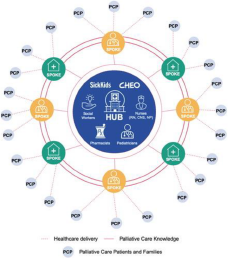
Online learning suggests a solution to address the vast shortage in skilled PC providers, facilitating access to PC knowledge and skills for HCP in LMIC (Frehywot et al. Reference Frehywot, Vovides and Talib2013; Salins Reference Salins2020). Project ECHO (Extension for Community Healthcare Outcomes) is a specific model of online learning, which was originally developed to improve the knowledge and skills of community-level HCP (Arora et al. Reference Arora, Snead and Zalud-Cerrato2017). ECHO uses a “hub-and-spoke” design, where internet-based videoconferencing allows experts at a “hub” facility to connect with learners (“spokes”) for regularly scheduled teaching and mentoring as shown in Fig. 1. The “hub” team generally consists of a group of specialist clinicians located at an academic medical or tertiary care center. Participants at “spoke” sites are generally HCP working outside of a tertiary center, who join an ECHO program to learn and share best practices in providing care to a particular patient population (Usher et al. Reference Usher, Payne and Real2022).
Illustrative example of hub-and-spoke design of project ECHO.

ECHO suggests an innovative solution to address the PC needs in LMIC, by connecting HCP in lesser-resourced settings with PC specialists who need not be in the same region or country (Arora et al. Reference Arora, Snead and Zalud-Cerrato2017). Furthermore, because ECHO encourages active learning through discussion and sharing of ideas and experiences, participants are able to test and apply their knowledge, thereby encouraging them to adopt new practices in their daily work (Varon et al. Reference Varon, Baker and Byers2021).
CPD ECHO programs on a variety of subjects, including PC, have been reported in the literature; however no undergraduate (UG) or PG ECHO programs have been reported (McBain et al. Reference McBain, Sousa and Rose2019; Zhou et al. Reference Zhou, Crawford and Serhal2016). A small number of PC ECHO programs have reported HCP-level outcomes, including self-reported improvements in knowledge, skills, and attitudes (Doherty et al. Reference Doherty, Rayala and Evans2021b; Lynch-Godrei et al. Reference Lynch-Godrei, Doherty and Sapkota2021; Usher et al. Reference Usher, Payne and Real2022). Several programs have reported qualitative outcomes for learners and teachers (Doherty et al. Reference Doherty, Modanloo and Evans2021a; Kwok et al. Reference Kwok, Vembu and Brown2022; Manson et al. Reference Manson, Gardiner and Taylor2021). Studying health outcomes in PC can be particularly challenging because of the burden of serious illness for PC patients and their relatives, and these outcomes have not been reported for PC ECHO programs (Barclay et al. Reference Barclay, Moran and Boase2019; Feudtner et al. Reference Feudtner, Rosenberg and Boss2019).
Communities of practice through ECHO
In communities of practice (COP), learning occurs when individuals with a shared interest meet regularly and learn how to improve care (Wenger Reference Wenger1999). By enabling learners and teachers to interact and share experiences and knowledge, ECHO supports the development of COP (Lalloo et al. Reference Lalloo, Osei-Twum and Rapoport2020). Only 1 previous study has explored the learning experiences of HCP in a PC ECHO program in South Asia, where study participants identified that the supportive learning environment and opportunities to exchange ideas with a diverse group of faculty experts and other learners were key benefits of the program (Doherty et al. Reference Doherty, Modanloo and Evans2021a).
There is a significant need for PC education in LMIC, and ECHO suggests a novel model to address this need. However, there is limited evidence describing how learning occurs and which program and participant features are particularly beneficial for learning and sustained program participation in this setting.
The current study will explore the learning experiences of a PC ECHO program for residents with a flipped classroom design. The aims of this study are to identify the program features which are critical to its success and challenges. The study will explore how participation and learning is motivated and sustained for both residents and teachers.
Methods
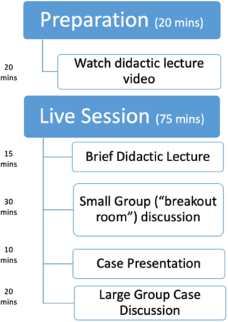
The educational intervention consisted of 27 biweekly online learning sessions (each 75 minutes in duration). The program structure incorporated a flipped classroom design with a didactic lecture video (20 minutes) to be watched prior to each “live” session. Live sessions included of virtual small group discussions (“breakout rooms”) with 6–8 learners and a teacher (Fig. 2). A more detailed description of the learning program design and teaching topics is found in Supplement 1. The curriculum development process included selection of topics, standardization of teaching presentation format, and development of learning objectives. The process included a review of the literature, discussion with experts, and feedback from stakeholders, including both residents in palliative medicine and the program directors for palliative medicine training programs. Expert and stakeholder input was done through 2 online curriculum development sessions and subsequent feedback by email.
Structure of the ECHO PPC program.

To ensure standardization of the small group discussions, facilitators were provided with the discussion questions and model answers ahead of each small group session. All facilitators attended an online training session (duration 1 hour) prior to conducting small group discussions and were provided with a handbook of facilitator guidelines to ensure adherence to key facilitation practices. New facilitators were paired with a facilitator trainer for mentoring during at least 2 small group sessions. The trainer supervised facilitation during at least 2 small group sessions, providing coaching to the new facilitator, and conducted debriefing with them after the sessions. New facilitators were permitted to conduct facilitation independently once they were observed to be competent by a trainer.
Interpretive description (ID) methodology was used, which allowed integration of the study team member’s experiences, while permitting identification and analysis of strategies to improve the learning program and to understand factors influencing participation in the program (Hunt Reference Hunt2009; Thorne Reference Thorne2016). Interviews allowed detailed exploration of participants’ experiences, probing the factors influencing participants’ learning. Further details of the ID steps followed, are detailed in Supplement 3 (Thompson Burdine et al. Reference Thompson Burdine, Thorne and Sandhu2021).
Study population and setting
The study population consists of ECHO PPC participants during the 2021–2022 program, including teachers and residents. The residents were those in 4 PC PG training programs in India and Bangladesh. The teachers were PC specialist physicians who provided didactic lectures and lead group discussions.
Sampling and recruitment
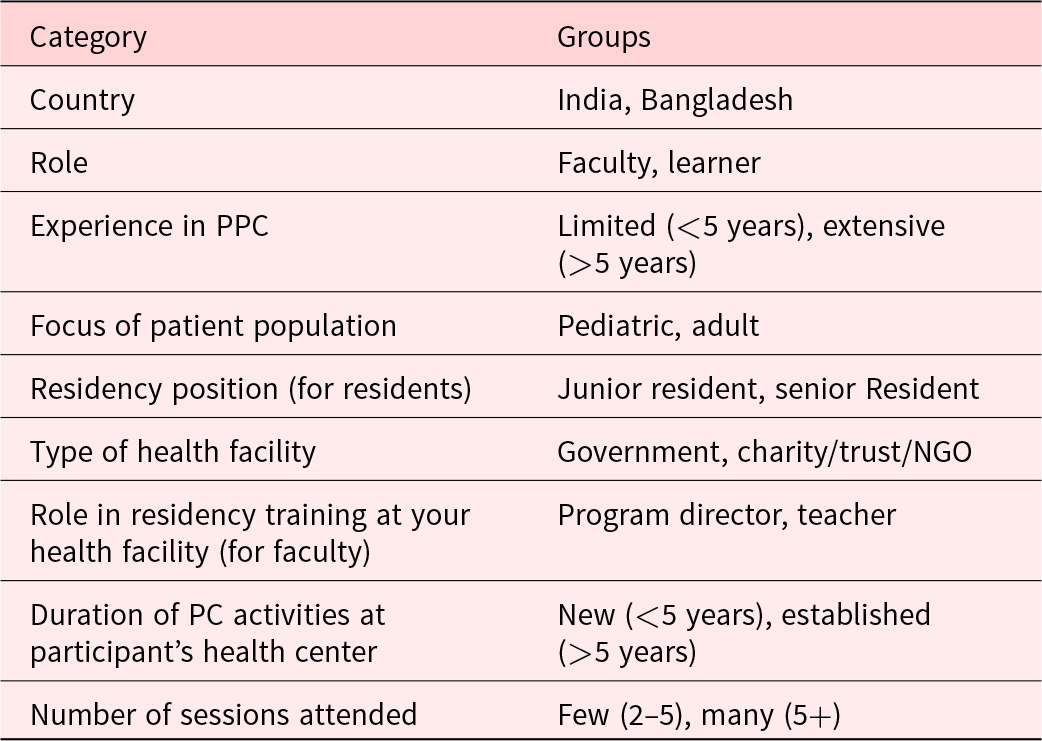
Purposeful sampling was used to explore the breadth and heterogeneity of the population (Maxwell Reference Maxwell2012). Participants were selected from particular subgroups to facilitate maximum variation sampling, from the widest range of perspectives (Given Reference Given2008). Subgroups considered in sampling are shown in Table 1. Sampling was iterative, incorporating new characteristics as the data collection progressed (Rubin and Rubin Reference Rubin and Rubin2005). Potential participants were recruited via email and social media.
Subgroups considered in stratified purposeful sampling

Sample size
There were 50 potential participants and 11 were included in the study, balancing the scope of the research and study feasibility. The sample size was not predetermined, and was derived from the iterative process of data collection and analysis (Watling and Lingard Reference Watling and Lingard2012). Since this study is exploratory in nature, data saturation was not an endpoint and findings are applicable without saturation (Braun and Clarke Reference Braun and Clarke2021).
Data collection
Key demographic data were obtained verbally during interviews. Semi-structured individual interviews were conducted using open-ended questioning based on an interview guide, probing question allowed the interviewer to explore responses in greater detail (Supplement 2). The interview guide focused on learning processes in online learning, ensuring content and construct validity, and incorporated the researcher’s previous experiences interviewing ECHO learners in South Asia (Sireci Reference Sireci1998). The guide was piloted with a resident and teacher, and modifications were made to improve the clarity of the questions and probes. Interviews were audio-recorded and transcribed, and data were collected via interviewer note-taking and audio recordings.
Interviews were conducted via Zoom, the same online platform used for ECHO PPC. Interviews were transcribed automatically in Zoom, and then reviewed to ensure accuracy. One study team member (MD), a Canadian-trained PC physician, closely involved in implementing ECHO PPC, conducted all interviews. As an “insider,” the researcher brought a well-developed understanding of ECHO program to the research, which supported the development of research questions grounded in a rich understanding of the context.
The audio transcripts were de-identified, with each participant identified by a numerical code (1–11) and role (resident (R) or teacher (T)). After de-identification, analysis was conducted using NVivo-12 software (QSR International Inc., Cambridge, MA).
Data analysis
Data analysis used thematic analysis, following the framework described by Braun and Clarke (Reference Braun and Clarke2022), with analysis proceeding in an iterative manner from specific codes and categories to more general ideas and themes which emerged from the data.
Researcher bias and reflexivity
The research design was developed from the literature review with critical review of the design based on the research questions. During data collection and analysis, investigators critically reflected on potential themes and ideas, including their own professional experiences and perspectives were affecting interpretation of results.
Results
Demographic data
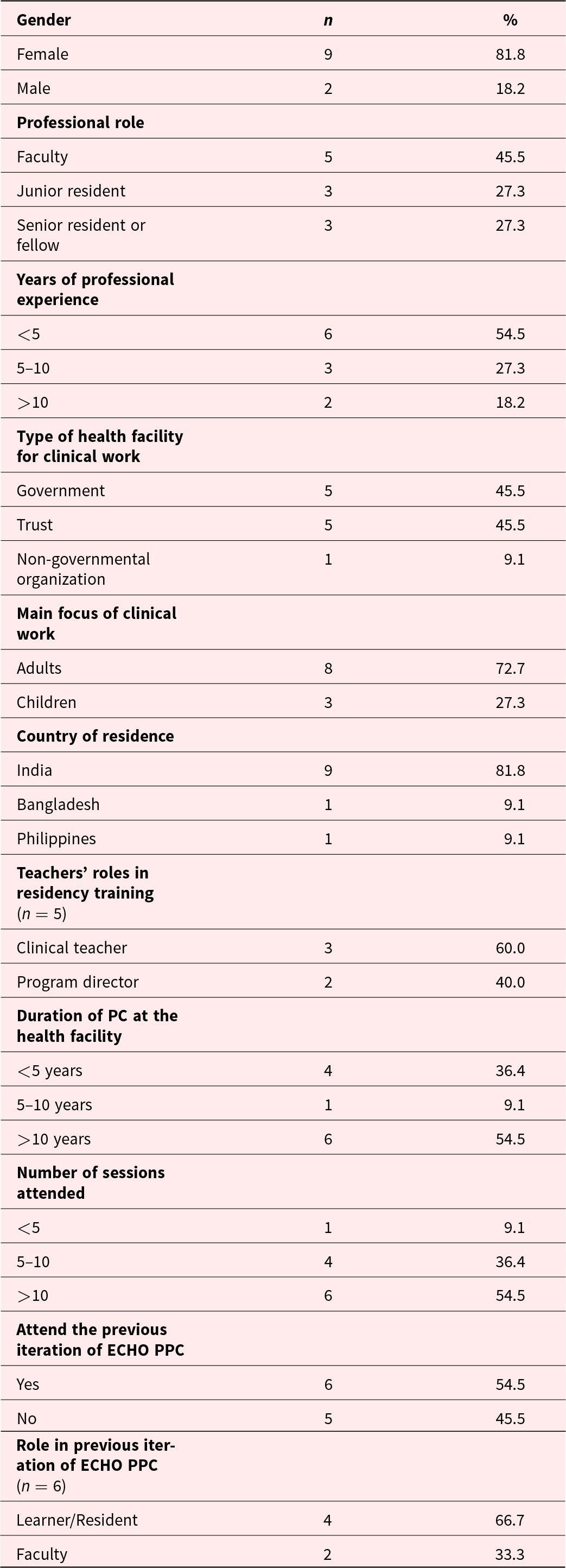
Eleven ECHO PPC residents and teachers were interviewed. All study participants were physicians with wide range of professional experience (1–17 years). Five teachers and 6 residents participated which includes 3 junior residents (first year of training), and 3 senior residents or fellows (second year of training or higher). Table 2 presents a summary of participants’ demographic data.
Demographic data of interview participants (n = 11, unless otherwise specified)

Interview findings
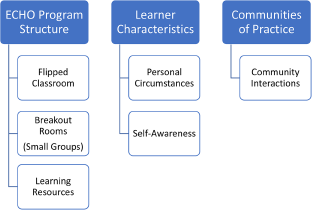
Three major themes and 6 subthemes were identified. Major themes included the ECHO program features, individual learner characteristics, and learning through COP. The themes and subthemes are shown in Fig. 3.
Major ECHO PPC themes and subthemes.

ECHO program features
Participants consistently described the ECHO program components and structure and linked these to their learning processes. The ECHO program components included 3 distinctsubthemes: flipped classroom, breakout rooms, and learning resources.
Flipped classroom
Participants noted that the flipped classroom approach provided more discussion time, since the length of the didactic lecture was reduced. This structure led to enhanced learning for participants, with 1 teacher noting “because people were asked to go and watch the video … and we had a small summary of it, so there was quite a lot of time for discussion, … so that was one thing which I felt was very good in [this] ECHO series” (T2).
Breakout rooms
Participants appreciated the use of breakout rooms which provided more opportunities for structured discussion and led to more direct interactions with teachers, who were able to share their knowledge and experience. Teachers also noted that residents were able to participate more actively during breakout rooms and that this enhanced their learning, “being a smaller group, [the residents] were more confident to put up their views … than in a larger group and we also used to… ask them to summarize it, so it gave them confidence” (T2).
The actions of teachers were identified by residents as being particularly important for ensuring successful learning in breakout rooms, as teachers guided and enriched the discussion, providing ample opportunities for maximum contributions among participants. One resident noted,
the facilitator [teacher] kind of set the flow of the discussion that was going on in the group and maybe give pointers, gave their own views, and made sure that every one of the participants actually participated in the whole discussion, so that everyone puts forward their point of view.… They [teachers] actually make the whole environment very comfortable. (R7)
Learning resources
Participants described the benefits of having access to the learning materials (e.g., presentations, video recordings) from ECHO sessions and additional learning resources (e.g., journal articles, guidelines). Participants used these materials during their daily clinical care, as well as for self-study, and when training to other HCP. Despite being PC experts, teachers also reported that ECHO resources helped them to refresh their knowledge. One teacher described their motivation to review the resources, noting “I felt that I missed a few points during the [ECHO] discussion so…I would rather go back and learn or see the articles which were being shared” (T2).
Individual learner characteristics
Individual characteristics of participants influenced their learning experiences with ECHO PPC. Individual characteristics were divided into 2 distinctsubthemes: personal circumstances and self-awareness of learning needs.
Personal circumstances
The personal circumstances of participants, such as personal or family health problems or situations, challenged their ability to join the ECHO sessions. Since the sessions were outside of regular work hours many participants had competing personal demands. One teacher noted, “[the residents] are on … emergency duty, and then the next day goes, and then sadly they’re in [zoom] calls, and then people also have been having their own health problems, family health problems” (T4). Teachers seemed to experience a sense of anticipation, looking forward to the ECHO session with the residents, and experiencing feelings of disappointment if the residents did not attend.
Time was a frequent barrier to full participation in the program, with participants identifying that finding time to prepare for the sessions and then to participate in the ECHO sessions was particularly challenging due to busy work schedules and overnight call duties. Teachers also highlighted the challenges of finding time to prepare to lead the breakout room discussions. Despite time-related barriers, participants were able and motivated to participate in ECHO PPC, noting that the learning benefits superseded their workload commitments, and they would “make time” to join.
Self-awareness of learning needs
Participants identified their own learning gaps in pediatric PC as a key motivator to participate and sustain participation, with statements such as
I don’t [have] much exposure in the paediatric palliative care sessions or palliative care courses. So, prior to starting this course, I was having only 5–10% of knowledge of what is [paediatric palliative care] and that the ECHO program represented a unique opportunity to learn about this topic, which I felt was very important. (R9)
Participants identified the ECHO program as a unique learning opportunity, which motivated them to attend despite their other time commitments and personal challenges, as mentioned in the previous subtheme.
Communities of practice
Participants identified their learning as being highly connected to the creation of COP within ECHO PPC. Several key features of the COP which participants particularly valued included reflective practice and peer support. The COP led to reflective practice, as residents described how they critically evaluated their own practice in light of experiences shared by other participants. The residents were conscious “that there are other programs around the country doing the same things” and identified that “that helps” (R8).
The residents are contented on how the COP provided peer support based on the belief that they shared, “similar challenges and knowing how they’re approaching those challenges” (R8). Participants also identified that they received peer support about new treatments which helped them implement the new practices in their clinical work. A resident noted,
I can try to put it into my own practice as well. So sometimes if I have a difficult case, and I heard this experience from Bangladesh, India or Nepal I have the kind of confidence to try, or I had the idea to try what they have also done. (R8)
Residents described sharing of good practices which boosted their confidence to implement similar treatment strategies.
Community interactions
Both teachers and residents noted that being in ECHO lead them to feel that they were part of a community where they benefitted from hearing about PC practices at other health centers and could also receive support. One resident noted, “[hearing] what they [other residents and teachers] were doing and the challenges they will be seeing … that really built up that sense of camaraderie or you know that I can turn to somebody for help if needed” (R10). Participants described how the community interactions continued outside of the live ECHO sessions through social media channels established for the course.
Both teachers and residents identified the value of learning how PC was practiced at centers in different countries and cultures, particularly healthcare centers with more experience. One teacher, “it also helped me to know about various opinions and views about how palliative care is done at different parts of the world, because [ECHO PPC] experts were from different parts of the globe and also, from different parts of India” (T2).
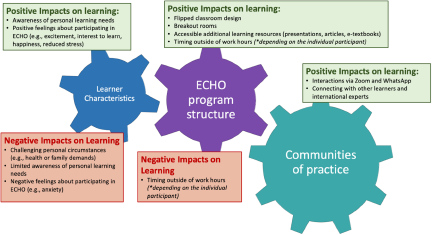
A model of the relationships between themes and subthemes
The interview findings suggest that the study themes (learner characteristics, ECHO program structure, COP) are interrelated. Figure 4 illustrates how the theme interacts with each other to generate learning, illustrating how individual learner characteristics influence the ECHO program and the ECHO program in turn influences learning through COP. The factors can influence learning within the themes of individual learner characteristics and ECHO program, and can either positively (green boxes) or negatively impact learning (red boxes).
Interaction of ECHO learning experience themes including factors positively or negative impacting learning in ECHO PPC model.

Discussion
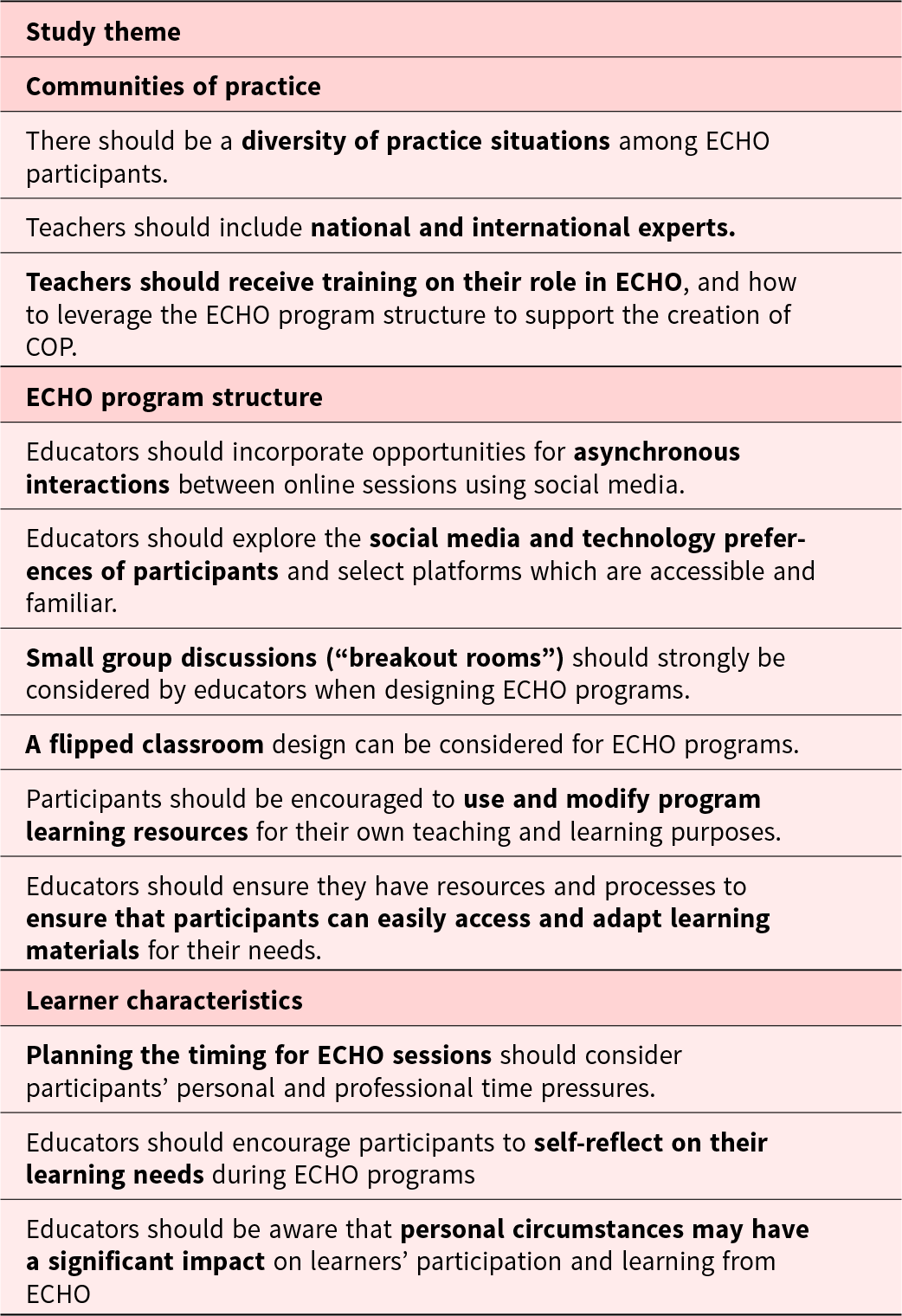
This study identified key components of COP which explain how learning occurs in ECHO, identifying that an ECHO program stimulates reflective practice and peer support through regular interactions among a group of learners. The study also identified key components of the ECHO program and characteristics of the learners which impacted learning. Table 3 suggests key recommendations for educators designing online learning programs based on study findings.
Key recommendations for educators based on study findings

Communities of practice
COP describes how learning occurs when participants with a shared interest interact regularly to learn together (Lave and Wenger Reference Lave and Wenger1991). Learners often benefit from sharing experiences which allow them to reflect on their own clinical practice, ultimately leading to new insights (Wenger Reference Wenger1999). In this study, participants were aware of being part of a COP, and described the benefits of the community’s peer support. This is similar to findings from PC ECHO programs from a wide range of countries (Doherty et al. Reference Doherty, Modanloo and Evans2021a; Kwok et al. Reference Kwok, Vembu and Brown2022; Manson et al. Reference Manson, Gardiner and Taylor2021; Usher et al. Reference Usher, Payne and Real2022). This suggests that COP is a consistent feature of ECHO which is experienced by different types of HCP and can occur in diverse locations globally. Educators designing ECHO should be aware that COP is a common and consistent experience within ECHO and should design programs to encourage regular interactions and sharing which will enhance COP learning.
The opportunity to compare and contrast cultural differences and similarities seems to be a particular benefit in PC ECHO programs, since the practice of PC is highly specific to the cultural context, exploring these differences may help learners to better understand PC by critically reflecting on what are the key components of PC and how these can be implemented in their setting (Stoltenberg et al. Reference Stoltenberg, Spence and Daubman2020). This study found that through reflective practice during ECHO sessions, learners explored different experiences of providing PC and gained new understanding. This element of reflective practice was also seen in a previous PC ECHO program in South Asia, where participants highlighted that the opportunity to learn from the experiences of others from different cultures and countries was a specific benefit of the ECHO program (Doherty et al. Reference Doherty, Modanloo and Evans2021a). This suggests that future PC ECHO programs should consider how to provide participants with diverse perspectives on PC.
The role of teachers in COP
In COP, the role of the teacher is to guide learners, by suggesting new behaviors, providing space and support for learners to explore their own solutions, and identifying opportunities for learners to practice skills (Torre et al. Reference Torre, Daley and Sebastian2006). In this study, teachers identified the importance of their actions to promote interactive discussions and reflective practice among participants. Teachers recognized that these actions provided learners with opportunities to explore how the concepts from ECHO PPC could be applied to patient care in learners’ clinical settings. These findings suggest that learning may be enhanced by providing training to ECHO teachers which emphasizes their role as a guide and teaches them key behaviors to guide learners.
Teachers are also influenced and learn from the COP, by utilizing the community interactions and discussions to engage in reflective practice themselves (Pyrko et al. Reference Pyrko, Dörfler and Eden2017). In this study, teachers described identifying areas of personal strength and improvement, noting that this approach sustained and motivated their participation. A previous PC ECHO study, described how the program helped teachers to realize that they had overestimated PC knowledge of ECHO learners and thus they were able to adjust their teaching to better match participants’ actual knowledge and skills (Usher et al. Reference Usher, Payne and Real2022). These findings suggest that teachers’ personal commitment and motivation may be encouraged by the personal benefits they derive from participation. These findings should be further explored in future studies, focused on teachers’ learning experiences.
Synchronous and asynchronous learning opportunities in COP
The present study described how the learning environment was expanded beyond the weekly online sessions, occurring asynchronously through social media messaging between sessions. The unique combination of a social media platform and live ECHO sessions described in this study, seem to provide additional synergies for learning and has not been previously described in the literature. This innovative design is supported by principles from technology-enhanced learning which suggest that providing learners with opportunities for learning when it is personally convenient, such as through asynchronous social media messaging, improves learning (Nielsen Reference Nielsen2005). Asynchronous opportunities may be particularly important in addressing the negative impacts of challenging personal circumstances (e.g., family responsibilities, work/duty hours).
The value of “safe spaces” for support and learning have previously been described using in-person peer groups to support medical trainees; however, this has not been widely described in an online format (Chou et al. Reference Chou, Johnston and Singh2011, Reference Chou, Teherani and Masters2014). Social media chats, as described in this study, seem to facilitate an online forum for peer support with challenging clinical situations and thereby create “safe spaces” for learning and reflection. This may be particularly beneficial in PC where HCP face the additional challenge of dealing with serious illness and death on a regular basis.
Flipped classroom
In a flipped classroom approach, learners review video lectures and written materials prior to the live classroom sessions, which allows more time for active learning, discussion, and interaction (Chen et al. Reference Chen, Lui and Martinelli2017). The present study is the first to describe the enhancement of learning from a flipped classroom approach in Project ECHO. Previous studies of UG medical students in India have described the positive benefits of a flipped classroom on learning, showing improvements in learners’ knowledge, as well their enthusiasm for the design (Aristotle et al. Reference Aristotle, Subramanian and Jayakumar2021; Sreegiri et al. Reference Sreegiri, Madhavi and Kumari2018). In this study, PG learners enthusiastically embraced the flipped classroom, suggesting that a flipped classroom is a highly valued learning format for PG learners in this setting.
Technological considerations
A previous ECHO study described internet access as a barrier to online learning, with 59% of participants citing internet access as a barrier in rural Bangladesh (Doherty et al. Reference Doherty, Lynch-Godrei and Azad2022). Participants in the current study did not identify internet access as a similar barrier, which may reflect their residence in urban areas, where stronger internet connections are available. Indeed, this study’s findings closely match those from a previous study in India which found that 88% of practicing PC physicians did not anticipate that internet access would be a barrier to their participation in online learning (Kiss-Lane et al. Reference Kiss-Lane, Spruijt and Day2019). This suggests that internet access is a not always a barrier to online learning in LMIC and some learners may be more affected than others by this barrier.
Study strengths and limitations
This study provides a detailed picture of learning experiences of residents and teachers in an online learning program in South Asia. The study successfully included a diverse group of participants, which suggests that the study describes a broad range of resident and faculty perspectives on ECHO. The study findings are expected to be relevant and applicable to online learning programs not only in South Asia and in other settings where resources are limited but also globally.
The limited number of study participants is a limitation in this study, and interviews of additional ECHO participants may provide further insights. Some aspects of experiences of participants in this study’s ECHO program may be unique to this program since learning is influenced by the interactions between learners and teachers.
Conclusion
This study describes how an online learning program such as Project ECHO, can lead to learning through COP which provides opportunities for learners and teachers to interact and engage in peer support and reflective practice which stimulates learning. Key elements of the ECHO program which support learning and sustain participation, include small group discussions, a flipped classroom design, and opportunities for asynchronous interactions. Individual learner characteristics including effective self-reflection and personal circumstances impact learning. Educators should consider these elements when implementing online learning, particularly in resource-limited settings.
Supplementary material
The supplementary material for this article can be found at https://doi.org/10.1017/S1478951524000762.
Funding
This research received no specific grant from any funding agency in the public, commercial, or not-for-profit sectors.
Competing interests
The authors declare that this project and research was carried out in absence of commercial or financial relationships that could be considered a potential conflict of interest.
Ethical approval
The study was approved by the research ethics boards of University of Dundee, United Kingdom and the Children’s Hospital of Eastern Ontario Research Institute, Canada. Written informed consent was obtained from participants prior to participation, including consent for verbal recording.


 Open access

