


Introduction
Developmental disabilities, including autism, affect an estimated 15% of children in the United States (Boyle et al., Reference Boyle, Boulet, Schieve, Cohen, Blumberg, Yeargin-Allsopp, Visser and Kogan2011). The Centers for Disease Control and Prevention’s (CDC) most recent prevalence estimate indicates that 1 out of every 110 children (2009) has some form of autism, declaring it to be ‘an urgent public health concern.’ Studies have shown that appropriate and timely interventions for children diagnosed with autism improve communication, social interaction, cognitive ability, and quality of life (Woods and Wetherby, Reference Woods and Wetherby2003; Dawson, Reference Dawson2008; Pierce et al., Reference Pierce, Carter, Weinfeld, Desmond, Hazin, Bjork and Gallagher2011). Recognizing the importance of early detection and intervention, the American Academy of Pediatrics (AAP) made a recommendation to perform screening for autism using a standardized autism-specific screening tool on all children at the 18- and 24-month visits (2006; Johnson and Myers, Reference Johnson and Myers2007). Currently, fewer than 25% of pediatricians screen for developmental delay using recommended tools (Sand et al., Reference Sand, Silverstein, Glascoe, Gupta, Tonniges and O’connor2005) and fewer than 10% screen for autism on a regular basis (Johnson and Myers, Reference Johnson and Myers2007).
A number of studies have looked at barriers to developmental and autism-specific screening in pediatric practice (Flores et al., Reference Flores, Lee, Bauchner and Kastner2000; Sand et al., Reference Sand, Silverstein, Glascoe, Gupta, Tonniges and O’connor2005; Dosreis et al., Reference Dosreis, Weiner, Johnson and Newschaffer2006; Pinto-Martin et al., Reference Pinto-Martin, Young, Mandell, Poghosyan, Giarelli and Levy2008). Very little is published on barriers to screening for developmental disorders, including autism, in family medicine practice. According to Glascoe and Dworkin (Reference Glascoe and Dworkin1993), physicians are influenced by their unique experiences, beliefs, and attitudes when selecting clinical information from an array of data. Physicians’ experiences, beliefs, and attitudes about autism have not been systematically explored, and little is known about how physicians’ beliefs contribute to attitudes for autism screening. In this study, we examined the process of autism screening as perceived by family physicians using a critical medical anthropology (Singer and Baer, Reference Singer and Baer2011) framework. This study explored potential barriers to the adoption of AAP-recommended autism screening at 18- and 24-month visits in a family medicine practice.
Method
A convenience sample of family practice physicians in the Kansas City metropolitan area was obtained through a letter of invitation to participate in the research, with a supporting letter from the president of the Kansas chapter of the American Academy of Family Physicians (AAFP). The AAFP president identified family physician practices that interacted with pediatric patients; he believed that the selected establishments were very likely to be interested in the research topic. Of the 45 letters mailed, 15 providers agreed to participate. A series of six interviews and three focus groups were conducted between December 2007 and August 2009 at locations determined by the participants. Practice settings of participants varied; four participants practiced in academic settings, three participants had private (solo) practices in the community, and eight participants were in group practices. There were three participants in each focus group. Participant’s ages ranged from 34 to 60 years, and six of them (40%) were women. Their work experiences ranged from 5 to 27 years. Fifty-dollar gift cards were offered to focus groups and interview participants and they were accepted by a few, but not all. The Human Subjects Committee at the University of Kansas Medical Center reviewed and approved the study protocol.
Data collection consisted of interviews and focus group discussions. Originally, the research was designed for focus groups only. However, it was impossible to gather enough practicing family physicians at the same location and time. In an effort to accommodate schedules and increase participation, interviews were conducted as well. Using both methods was advantageous because data gathered included in-depth descriptions and explanations, as well as ideas that came about through participant interactions. Using interviews and focus groups allowed us to view the results in both settings (and there was little difference in the outcome). Participants completed a brief demographic survey with information about personal experience with autism before focus group discussions and interviews. Focus group discussions and interviews took place at the participants’ practice sites. Dr Fenikilé, who has been formally trained in qualitative data collection techniques, conducted all interviews and moderated all focus group sessions. It is important to disclose that Dr Fenikilé and Dr Ellerbeck are developmental pediatricians and have a bias toward autism screening implementation. The remaining authors are trained researchers who do not have an agenda toward the promotion of autism screening.
Semi-structured questions based on the CMA framework were used to address needs and barriers to autism screening and referral at four levels, including macro-social, intermediate-social, micro-social, and the individual (Table 1). The same questions were used in both interviews and focus groups to allow us to more easily analyze across the two methods of data collection. Focus groups and interviews were conducted in English and lasted for 40–60 min. Each session was audio recorded and transcribed verbatim. Verbatim transcripts were independently read and inductively coded by the first and third author. The first author made an initial list of coding topics; then, the third author made suggestions and the two agreed on a revised coding scheme. After each author completed coding the data, the two compared their coded transcripts to ensure that the coding was done in a consistent way. Each author wrote themes separately. These were sent to the PI for review. All authors met and discussed the initial themes and then combined these into final thematic statements. Transcripts were analyzed for common themes following a grounded theory approach of qualitative text analysis (Singer and Baer, Reference Singer and Baer2011). No additional interviews or focus groups took place after data saturation was achieved on our main research question – that is, ‘what autism screening tools do family physicians use (if any) and why?’ Autism screening is a difficult topic to saturate because of the huge variation in the activities undertaken by family physicians. Trustworthiness criteria including member checks and peer debriefing were employed to ensure validity of findings. For example, the results were shared with groups of individuals who were interviewed or with those who participated in focus groups. During the analysis phase, several meetings took place between the two analysts (i.e., the first and third authors) and additional meetings took place with clinical faculty in the Department of Family Medicine at the University of Kansas Medical Center for feedback.
Topics covered during interviews and discussions
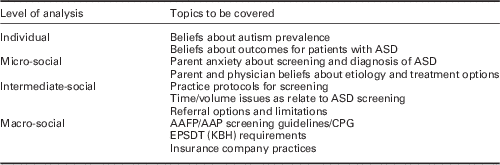
ASD=autism spectrum disorder; AAFP=American Academy of Family Physicians; AAP=American Academy of Pediatrics; CPG=clinical practice guidelines; EPSDT=early and periodic screening, diagnostic and treatment.
Results
A total of 6 out of 15 participants were women. All participants saw pediatric patients; about half of the participants estimated that 25% of their patients were in the pediatric age group, whereas the remaining participants had ~15% pediatric patients. All participants provided well-child care; none administered autism-specific screening tools to screen for autism during well-child care visits. Overall, there was no consensus among the participants regarding routine screening for autism during well-child visits. Description of themes within the topic areas and supporting quotes are reported below.
Views on autism prevalence
Participants described autism prevalence in three main ways: an expanded definition, change in diagnostic category, and the need for service eligibility.
Expanded definition
When asked about their views on the increasing prevalence of autism, all participants agreed that increased awareness by both professionals and the public plays a significant role. In addition, most participants agreed that the increase in the prevalence of autism is due to diagnosis based on the current expanded definition. There was no agreement on whether autism is over- or under-diagnosed. Statements such as ‘I think we are more aware of it (autism) because we are learning more about it’ and ‘I question whether the diagnosis of autism is the most appropriate for all of those children that it’s been applied to’ represent the vast array of opinions expressed in the interviews and focus groups.
Change in diagnostic category
In addition, the majority of participants stated that there is a shift in diagnostic category. They believed that most children who previously would have been labeled as having a speech/language problem with behaviors different from the norm are now moved to the autism spectrum category. Most emphasized the descriptive nature of the diagnosis, which is believed to have significant impact on the reported prevalence of autism.
Need for service eligibility
Some also believed that the increased diagnosis of autism is influenced by the need for service eligibility. Most participants agreed that families have problems accessing required services for their children without a diagnosis that meets eligibility criteria. ‘I think the frequency of diagnosis and the broadening of the definition has been affected by politics, by parent and child need, by the medical profession’s desire to see that the child gets the things he needs.’
Views on routine autism screening
Participants revealed a wide range of screening preferences and practices. Specific autism-screening tools and developmental assessments were discussed, including the pros and cons of using such instruments. The implications of implementing a tool were examined as well.
Screening preferences and practices
Participants preferred general developmental assessment over autism-specific screening. In general, participants did not agree with routine screening for autism during well-child visits. Most participants preferred to administer general developmental assessment tools, along with direct observation during clinic encounters. In general, participants who have been in practice longer agreed that the decision to screen for autism should be based primarily on concerns raised by parents and/or physicians’ observation rather than the AAP’s universal screening recommendation for a specific condition. An experienced physician stated, ‘… a general sensitivity to the parent’s concern accompanied by some formalized developmental assessment will give a sensitive physician a sense that there is or there is not something wrong.’ This sentiment was shared among other physicians who had been in practice longer. Physicians who more recently completed residency training favored using screening tools to identify concerns that could otherwise be missed. A physician with less than five years of experience stated his/her uneasiness with a reliance on accumulated knowledge: ‘We’re fresh out of residency so we don’t have experience … So for me I tend to be a little more detailed and if there is a screening tool, then I document it in my notes so that I can compare it to when I see them again.’
For those physicians who did not endorse routine autism screening, reasons differed. Some participants viewed screening for a specific condition, such as autism, to be an inefficient use of a physician’s time, because a finite amount of time exists for a routine visit and other issues need to be addressed. The trepidation relates to screening for every possible condition a child may have. Some participants did not think screening for numerous individual conditions is realistic in the time allotted. Other participants stated that individualizing care and addressing what is important to that particular child adds more value to a well-child care visit.
A few participants expressed concern that identifying ‘mild’ cases in children whose parents are not concerned and who might not qualify for services could cause more harm than good. ‘I am concerned about that with autism that, if I detect something thing that the parents aren’t concerned about, will I actually get a service that results in less harm than if I wait until the behavior is bothering the parent?’
Screening implementation and implications
Some participants indicated that they are not aware of any AAFP guideline recommending routine screening for autism. ‘I haven’t seen a push in my medical journals to discuss and go aggressively for the diagnosis of autism.’ Therefore, the perception of insufficient evidence for the benefit of routine screening influenced some individuals’ decision to screen.
On the other hand, those who supported autism screening suggested incorporating the tool in the electronic medical record (EMR) to improve efficiency and compliance. In addition, the EMR was believed to be of great value for patient follow-up and for research purposes, ‘… if we can pull in the screening tool in the EMR and just do the screens right there and then, that would be of great value. And plus for research issues too that you can just pull it all electronically and depending on the screening tool, it will help with the false positives or negatives as well.’
Others stated that having a tool that compares a child with normal peers adds to the credibility of the physician when communicating concern to parents. Also, the tool provides the parents with an objective measure. ‘I think when you use a specific tool; the parent is more apt to believe what you say, if you can show this is where most of the children are at this age group and your child is functioning here to here. Then the parents have something concrete to look at and hold on to.’
Major barriers to autism screening
Overwhelmingly, participants discussed three major barriers to autism screening – lack of time, lack of knowledge (training), and lack of funding.
Lack of time
All participants cited lack of time as a barrier to implementing routine screening in a well-child care encounter. Well-child care visits are loaded with many recommendations, including immunizations. A participant who is part of a university hospital-based practice stated the time constraint issue: ‘Every new thing you put in place, another screen, another form, another … and it may be the same question but even a different iteration of the same questions that comes up with screening tool, still requires somebody to consolidate that information.’
Limited time involves more than the time used to administer the screening and combine collected information. Constraints are compounded by compiling several sources of data. For example, most participants expressed the dilemma faced between eliciting and addressing parents’ concerns while at the same time addressing the recommended health directives outlined in practice guidelines. A participant who struggles with this balance stated, ‘… there is more and more things put in our laps and appropriately so in many cases, but we don’t have two hours to spend with each patient or an hour for that matter.’
Lack of knowledge/inadequate training
More than half of the participants indicated that they lack knowledge about both the early signs and symptoms of autism and the specific ages when autism-specific screening is recommended. The uneasiness with family physicians implementing screening measures was captured in the statement ‘… I don’t even know that I’d know the right questions to ask … I don’t know what I’d look for at 18 months.’
Most participants lacked familiarity with autism screening tools and were not aware of any specific guidelines recommending routine autism screening. In part, participants agreed that this deficit relates to the lack of emphasis on developmental issues received in residency trainings. ‘I think family physicians are so uncomfortable with child development … they don’t have comfort with the formalized tools, they are not comfortable with the diagnosis, and they are not comfortable with the treatment.’
In addition to the lack of knowledge about autism screening tools, some participants indicated that general lack of knowledge about causes of autism and the inability to explain the etiology to parents create a barrier. Some participants reported that parents raise concerns about autism during well-child visits that involve vaccine administration. This belief, that vaccinations cause or contribute to autism, has become somewhat common in the general population because of individual reports in the media of a possible link. Despite the lack of evidence linking vaccination to autism demonstrated in the medical literature, the lack of knowledge about causes of autism is believed to exacerbate communication difficulties concerning issues related to autism.
Lack of funding
Inadequate funding was perceived as a barrier for both physicians and families, although the challenges were different. Generally, participants stated that the jobs of primary-care providers are not highly valued and pay rates for ambulatory practices are ‘dismal.’ All clinicians indicated that additional time spent in screening is not reimbursed because it is bundled with the preventive-care visit.
Most participants highlighted the need for changes in the healthcare delivery system, calling for a system that allows primary-care providers to spend more time interacting with families and children. Participants envisioned a system that values time spent addressing parental concerns, observing the child and his/her interaction with the family, and providing quality evidence-based care to all children and families. ‘I think that the health policy, the legislation needs to incorporate behavioral disorders as more of a primary focus of prevention …’
Some of the participants also stated the need for increased funding and a social component to be incorporated into the treatment process via networks and support systems. ‘I don’t think society really cares about kids. I think that … like to say we care about kids but in reality we don’t fund it. We don’t make sure that no child is left behind … if we really cared we’d fund it and make sure that there were resources.’
Other perceived barriers to routine autism screening
Although lack of time, lack of knowledge, and lack of funding emerged as major barriers to routine autism screening, participants mentioned other significant issues such as lack of resources, changes in diagnostic criteria, and stigma.
Lack of resources
The perception of limited resources available to children with autism and lack of funding for those services influenced the decision of some participants to routinely screen for autism. One participant stated, ‘If there are resources to refer them to, sure. But I don’t want to screen for something I can’t get services for.’ Reluctance toward screening became more pronounced among some participants when the suspected case was a ‘mild form of autism’ – that is, the child was unlikely to qualify for available services. One family physician discussed his/her fear in screening a child with a positive result: ‘… I would love if the resources were there that if I screen, I could get the service. But I’m pretty sure that if I screen and I find something parents aren’t complaining about, that if I tried to get the service I wouldn’t get it anyway.’
In addition, insurance status of the child was also believed to play a role in accessing available resources. ‘And the problem in the medical system is very specific to the fact that our insurance companies in the United States are private … they are not required to cover anybody, and people with various types of diseases or disorders are discriminated against …’
Furthermore, some clinicians believed that, in addition to resources overall being limited or scarce, services provided through the school system are inferior to the services provided through the Early Intervention (EI) programs. This is believed to be directly linked to the financial status of the local school districts, which determines the quality and availability of services required by families and their children. ‘Well the personalized service, the one-on-one that the zero- to- three get is always a gold standard the schools have trouble reaching … my sense of the school’s success is directly related to the funds available.’
Not all of the participants referred patients to community-based services like EI. Some awaited recommendation from a specialist before sending a child suspected of having autism. This may suggest the lack of knowledge about available resources that the family could be referred to.
Change in autism diagnostic criteria
The perceived changes in the diagnostic criteria for autism were regarded by some participants as a barrier to routine screening. This was also reflected by the lack of consensus regarding the increase in autism prevalence. ‘What we were taught in a medical school, an autistic child was one who had no communication skills, hardly any relationship to reality, and now they’re pushing it … any child with social sharing issues has autistic tendencies.’
In addition, change in diagnostic criteria was believed to lead to the mislabeling of some children as having autism spectrum disorder. As a result, some participants voiced their reluctance to routinely screen because of incorrect diagnosis. A frequently expressed opinion describes overdiagnosis: ‘Everyone whose child isn’t quite right now potentially is being labeled autistic to some degree or form … In particular, I think speech delays labeled quickly to be autism before it’s really worked up.’
Autism was perceived as a condition that is not well defined. Participants acknowledged the difficulty of making a diagnosis because of symptom variation and overlap. ‘… I think the condition, however you define it, hasn’t quite established its home turf, its home definition. And so a lot that otherwise can’t be assigned to something is dumped in.’ Therefore, the perception of autism spectrum disorder’s complex definition resulted in uncertainty when classifying behaviors.
Labeling effect
Although some participants believed that a physician may be inclined to make a diagnosis of autism to ascertain service eligibility, others reported concerns expressed by parents about having their child labeled with a chronic condition. Parental reluctance was believed to arise from the following: (1) the fact that much is still not known about what causes autism; (2) the wide range of observed symptoms; (3) the stigma of the diagnosis; and (4) fear of rejection by insurance companies.
Although the majority of participants stated that insurance companies may not cover services for children having autism spectrum disorder, there were a few who did not see insurance eligibility influencing parents’ decision to seek evaluation or diagnosis.
General developmental assessment tools preferred over an autism-specific screening tool
None of the participants used autism-specific screening tools at the 18- and 24-month well-child visits. All but one lacked awareness of recommended autism screening tools. Most clinicians used the Denver Developmental Screening tool and some used questionnaires (developed by their practices) to assess overall development during well-child care encounters. Statements such as ‘I’ve heard of Denver Screening, but not for autism specifically,’ ‘We don’t have a specific tool that we use (for autism), we do the Denver Developmental Screen,’ and ‘I don’t know what other screens there are but I haven’t looked into it that much’ demonstrate the preference for a general developmental assessment screening tool over the autism-specific screening tool. Some participants expressed concern about using a screening tool designed to assess for one specific condition within a limited amount of time. ‘… I’ve got a tool I’m comfortable with and adding on something, especially when it is so focused becomes an inappropriate use of time.’ Some participants stated that they would have to omit certain things to add another task.
Those who believed extra time is justified to implement recommended screening had concerns about reimbursement, whereas some clinicians did not view autism screening as a priority in their practice. Assessing overall development and focusing on issues of concern was viewed as more efficient and practical.
Views on treatment for the management of autism
Most participants had difficulty deciding whether medical insurance companies or the educational system should pay for autism screening and services. Many agreed that it should be a joint effort between medical and educational service providers. ‘Ours has to be a team, it has to be. Everybody has to share responsibility. I mean we can help with diagnosis but we can’t provide the developmental services that are needed, so that has to be either educational or psychiatric or psychological and not through our office.’
Just as the cause of autism is not fully understood, so is the role of medication in treating autistic children. Most participants believed that medication does not play a significant role in the management of children with autism. ‘I certainly think education is the way to go. I do not think there’s any documented medical treatment for autism that I know of.’
Physicians were asked about their management of children suspected of having autism or developmental problems. Almost all of the participants indicated that they refer patients to subspecialists for evaluation and management of conditions associated with autism. Some expressed their reliance on specialists’ recommendation before referring children for interventions.
Participants’ suggestions to improve autism screening by their primary-care providers (see Table 2)
Systemic change
Access to care and an equitable healthcare system were among the highlighted issues. Participants voiced the need for change in the healthcare delivery system to implement additional health directives. Participants who agreed to routinely screen for autism suggested incorporating the recommended screening tool (M-CHAT) into the EMR to improve efficiency and compliance. Some also expressed the need for a care coordinator within a family medicine practice to facilitate referral and communication between provider, families, subspecialists, and community programs.
Participants’ suggestions to improve screening practices
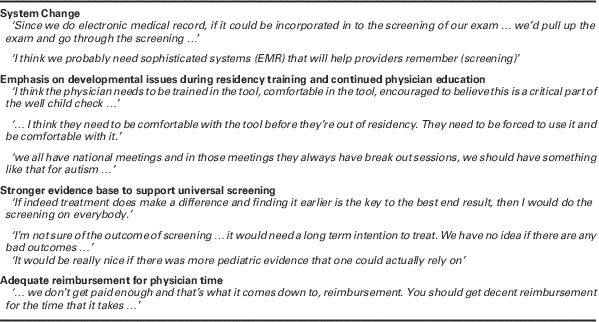
EMR=electronic medical record.
Better physician reimbursement
Inadequate reimbursement for physician time was a recurring theme in all focus group discussions and interviews. Physicians felt that there are too many health directives that require their attention in a limited amount of time. All participants believed that better compensation for the physician’s time spent providing comprehensive and quality care would improve implementation of the recommended surveillance and routine screening procedures.
Better physician training
Physician training on developmental issues and recommended screening tools was emphasized. All participants agreed that residency programs should place more emphasis on developmental and behavioral issues, as well as provide training on the use of screening tools. To help bridge the knowledge gap for practicing physicians, participants emphasized the importance of continuing education through local or national CME programs.
Stronger evidence base supporting the benefit of screening
Participants who did not endorse routine screening argued that the current recommendation by the AAP is based on consensus and expert opinion rather than on strong evidence showing the benefit of routine screening. They indicated that more outcome studies on the benefits of screening involving diverse populations are required to support routine autism screening.
Discussion
This qualitative study provides details necessary to understand family physicians’ beliefs and attitudes about autism and autism screening, and their potential role as barriers to implementing screening. Family physicians play a significant role in providing care to US children, despite the increase in the pediatric work force (Freed et al., Reference Freed, Nahra and Wheeler2004; Cohen and Coco, Reference Cohen and Coco2010). This is particularly true for children living in rural and smaller communities, where the majority often receive their healthcare services from family physicians (Backer, Reference Backer2005). Overall, ~15% of children younger than two years are seen by family physicians for well-child visits (Randolph and Pathman, Reference Randolph and Pathman2001).
In this study, we found that family physicians generally do not support routine screening for autism during well-child visits. None of the participants interviewed use autism-specific screening tools during well-child visits. Participants expressed a lack of awareness concerning routine autism screening and autism screening tools. In addition, the prevailing notion that screening should follow concerns raised by parents or physicians’ own observations (developmental surveillance) has hindered implementation of screening. This finding is in contrast with previous studies, which have primarily stated lack of knowledge and time as the major barriers (Sand et al., Reference Sand, Silverstein, Glascoe, Gupta, Tonniges and O’connor2005; Dosreis et al., Reference Dosreis, Weiner, Johnson and Newschaffer2006; Elliott, Reference Elliott2007). Participants generally favored using a general developmental assessment tool coupled with direct observation rather than screening for a specific condition.
The most significant challenge highlighted by family physicians is a balance between implementing recommended health directives, staying focused on parental concerns, and remaining mindful of time limitations. Participants expressed the challenge in orchestrating these needs into a practical framework. There was widespread recognition of the need to individualize care and address parental concerns. Participants with more experience often expressed their desire to have more observation time with the child than go through checklists. Screening was favored among participants with fewer years of experience who do not feel as confident about their ability to identify developmental concerns, especially autism, which has variable presentations.
Regardless of years of experience and practice setting, lack of awareness of the AAP’s recommendation to screen routinely and lack of awareness of the recommended tools were evident among all participants. The paucity of discussions on such issues in family medicine journals reflects the limited attention given to the topic. The need for stronger evidence to support routine screening based on outcome studies was strongly expressed among participants, similar to the reports by Al-Qabandi et al. (Reference Al-Qabandi, Gorter and Rosenbaum2011) and Williams and Brayne (Reference Williams and Brayne2006). The current strength of recommendation taxonomy (Ebell et al., Reference Ebell, Siwek, Weiss, Woolf, Susman, Ewigman and Bowman2004) rating for autism screening described in family medicine journals reflects what participants described as a weak evidence base in support of routine screening. For some, applying the recommendation to a culturally and socioeconomically diverse population was also in question. Among the concerns were the following: parents’ levels of education (literacy) potentially limiting their understanding of what the screening question is asking, the influence of culture on parent’s interpretation of their child’s behavior, and language barriers. This is in contrast to the finding by Schonwald et al. (Reference Schonwald, Huntington, Chan, Risko and Bridgemohan2009) and King et al. (Reference King, Tandon, Macias, Healy, Duncan, Swigonski, Skipper and Lipkin2010), which showed the feasibility of implementing routine developmental screening in an urban community with diverse socioeconomic backgrounds.
All participants felt pressure to accomplish more in less time. Despite the brief nature of the screening tool, many see the task as time-consuming. The dilemma of balancing parental concern and individualized care with the many preventive health directives for well-child care visits is an ever-present issue (Tanner et al., Reference Tanner, Stein, Olson, Frintner and Radecki2009). Limited time generally seemed to go hand in hand with two issues: the value of a specific screening tool and reimbursement by insurance companies. However, in some instances, the decision to screen was not a matter of time or reimbursement but rather it was linked to available and affordable resources for children and their families. The argument made was ‘what good will it do to screen if we can’t provide services?’ Some expressed the need for an equitable health system that promotes early recognition of developmental problems, as well as provides appropriate and adequate intervention. According to Radecki et al. (Reference Radecki, Sand-Loud, O’connor, Sharp and Olson2011), a significant portion of the pediatricians interviewed use informal checklists and do not use the recommended developmental screening tools with children younger than 36 months. The departure from AAP-recommended guidelines reflects the significant challenge that lies ahead. Similar to the findings by Tanner et al. (Reference Tanner, Stein, Olson, Frintner and Radecki2009), participants acknowledged the need to emphasize developmental issues during residency training and continued professional education to improve well-child care practices.
Because of the small sample size and the selection of participants practicing in a metropolitan area, our results may not represent the larger family physician community. Thus, limitations to this project include the transfer of results to similar geographic locations – that is, urban areas in the Midwest, rather than rural areas. The next step for this research is to examine family physician screening practices of pediatric patients in rural areas. Continuation of the project is essential as family physicians in rural areas see more pediatric patients. Although the research presented does not lead to definite conclusions, the expressed opinions are nonetheless revealing as they provide important perspectives on the impact that beliefs and attitudes have on physicians’ decision-making process.
Conclusion
In this qualitative study, family physicians expressed their beliefs about autism and their attitudes about autism screening in their practices. Universal screening for autism at 18- and 24-month visits is neither widely accepted nor is it implemented by family physicians. Despite efforts made by parent groups, the CDC (Centers for Disease Control and Prevention, 2012), and the AAP to promote early identification of children with autism spectrum disorder through routine screening, implementation of screening and referral in the medical home continues to be challenging. The gap between the age at which children can be identified with developmental problems, including autism, and when they actually are identified is large (Shattuck et al., Reference Shattuck, Durkin, Maenner, Newschaffer, Mandell, Wiggins, Lee, Rice, Giarelli, Kirby, Baio, Pinto-Martin and Cuniff2009). This gap is even more significant for children of low-income families (Fountain et al., Reference Fountain, King and Bearman2011). A number of studies conducted among primary-care providers have attributed this pitfall to lack of knowledge, time, and inadequate reimbursement (Mandell et al., Reference Mandell, Novak and Zubritsky2005; Rhoades et al., Reference Rhoades, Scarpa and Salley2007). The current study adds views and perspectives that received little attention in previous studies. Participants in this study frequently expressed the lack of autism knowledge, specifically concerning the following: recommended screening, screening tools, etiology, and effective treatment. Another barrier to routine autism screening is the lack of available resources for families within their communities. Finally, most participants called for stronger outcome studies supporting the benefit of screening as a necessary prerequisite to implementation of systematic autism screening.
Acknowledgments
The authors acknowledge the family physicians who shared their time and invaluable insight. In addition, the authors have nothing to disclose.



