




Introduction
Artificial insemination (AI) is widely used in the pork industry to improve herd genetics, increase litter sizes, and enhance overall production while simultaneously lowering costs associated with maintaining boars on farms and improving biosecurity (Knox, Reference Knox2016). In Australia, the use of AI has significantly boosted productivity, contributing to approximately $6 billion in domestic product during the 2023–24 financial year (Australian Pork Limited, 2024). This growth has been complemented by a 53.6% increase in export value and a 32% rise in export volume, underscoring the industry’s vital role in trade and national economic stability (Australian Pork Limited, 2024). Domestically, Australians consume an estimated 10.3 kg of fresh pork per person annually, supported by a national herd of approximately 2.5 million pigs at any given time, reinforcing the industry’s significance in the national economy (Australian Pork Limited, 2024).
The Australian pork industry operates within a closed herd system, prohibiting the importation of live pigs and any stored genetic material. This enhances national biosecurity and places greater responsibility on domestic management practices, including semen quality and antimicrobial use, to protect herd health and sustain productivity. To satisfy the demand for pork and enhance genetic variation, which is crucial for herd resilience to disease, farms rely on semen distribution centres across Australia to provide fresh ejaculates for AI (Mote and Rothschild, Reference Mote, Rothschild, Bazer, Lamb and Wu2020).
Commercial pork production in Australia is dominated by Large White, Landrace, and Duroc breeds (Department of Primary Industries, 2016). Large White and Landrace lines are primarily utilised as maternal lines due to their high prolificacy, maternal ability, and longevity, while Duroc is commonly used as a terminal sire for its superior growth rate, feed efficiency, and meat quality characteristics (Australian Pork Limited, 2022; Hermesch et al., Reference Hermesch, Arnal, Boerner and Dominik2015).
To meet domestic demand and maintain genetic diversity, commercial farms rely on specialised semen distribution centres to supply liquid ejaculates for AI across Australia (Schrobback et al., Reference Schrobback, Aboah, Richards, van Barneveld, McFallan and Langbridge2025). Boar semen is collected almost exclusively using the gloved-hand technique, allowing selective collection of the sperm-rich fraction while minimising contamination from accessory gland secretions (Althouse et al., Reference Althouse, Kuster, Clark and Weisiger2000; Kuster and Althouse, Reference Kuster and Althouse2016).
Unlike the semen of other production animals, such as rams, boar spermatozoa are highly sensitive to cold shock and cannot be reliably cryopreserved (Kuster and Althouse, Reference Kuster and Althouse2016). Consequently, semen is diluted in commercial liquid extenders and stored at approximately 16°C, typically for 3–5 days (Kuster and Althouse, Reference Kuster and Althouse2016).
Australia’s geographic scale necessitates long-distance transport of extended semen, with doses frequently travelling considerable distances between collection centres and commercial farms. This reliance on chilled ejaculates increases the risk of bacterial proliferation; therefore, semen extenders often contain antibiotics to mitigate the risks of bacteriospermia (Kuster and Althouse, Reference Kuster and Althouse2016). However, growing concerns over antimicrobial resistance (AMR) have led to increased scrutiny of antimicrobial use in livestock production, including regulatory oversight of antibiotic inclusion in boar semen extenders.
Regulatory approaches to antibiotic inclusion in boar semen extenders differ internationally. In Australia, low concentrations of antibiotics (≤0.1 mg/mL) may be included in semen extenders without individual product registration under veterinary medicines regulations; however, producers are required to manage use carefully due to the potential for antibiotic residues and associated withholding periods following insemination (APVMA, 2022; Australian Pork Limited, 2022). In contrast, the European Union adopts a more prescriptive framework under its Animal Health Law, explicitly linking AMR to transmissible disease control and mandating transparency, traceability, and justification of antibiotic use in germinal products, with detailed reporting of active substances and concentrations where antibiotics are included (Regulation (EU) 2016/429; Commission Delegated Regulation (EU) 2020/686) (European Commission, 2019). Collectively, these regulatory approaches reflect an increasing global focus on antimicrobial stewardship in boar semen production, underscoring the importance of coordinated industry and policy responses to reduce reliance on antibiotics without compromising reproductive efficiency or biosecurity.
In response to these concerns, the United Nations Food and Agriculture Organisation (FAO) developed the Action Plan on Antimicrobial Resistance 2021–2025, targeting the misuse of antimicrobials in livestock production (FAO, 2021). In line with this global initiative, Australian Pork Limited implemented its Antimicrobial Stewardship programme to ensure responsible antimicrobial use within the Australian pork industry (Australian Pork Limited, 2024). This programme promotes the principle of using antimicrobials ‘as little as possible, as much as necessary’ while emphasising the importance of strict biosecurity measures to reduce the need for disease management through traditional antimicrobials (FAO, 2021).
This review aims to analyse the current knowledge regarding bacterial contamination in liquid boar semen, the consequences associated with this contamination on sperm quality, and the impact of antimicrobial inclusion in semen extenders.
A structured literature review was conducted using PubMed, Web of Science, and Scopus between March and May 2025 to identify studies on bacterial contamination of boar semen, antimicrobial use in semen extenders, and emerging alternatives. Search terms combined ‘boar semen’, ‘bacteriospermia’, ‘artificial insemination’, ‘semen extender’, ‘antibiotic’, ‘antimicrobial resistance’, ‘nanoparticle’, ‘probiotic’, and ‘alternative antimicrobial’, with additional references retrieved from key bibliographies and industry reports.
Eligible studies included both in vivo and in vitro investigations that examined bacterial species associated with boar semen, sources of contamination, impacts on sperm function, antimicrobial practices, or novel antimicrobial-reduction strategies relevant to porcine reproduction. While the review focuses on semen used for AI, in vitro studies were included where they provided mechanistic insight into bacteria–sperm interactions, antimicrobial efficacy, or extender performance, recognising that such studies underpin the development and interpretation of applied in vivo research. Non-English articles and those unrelated to porcine semen or lacking relevance to semen handling, storage, or fertility outcomes were also excluded. In total, 87 studies were included, and findings were synthesised thematically into bacterial composition and sources, impacts on fertility and semen quality, and antimicrobial practices and alternatives.
Bacteriospermia
Composition of boar seminal microbiota
Bacteriospermia is defined as the presence of bacteria in seminal fluid (Al-Dahmoshi et al., Reference Al-Dahmoshi, Naher and Al-Charrakh2009). The bacteria commonly found in boar semen can be characterised as either commensal of the urogenital tract or opportunistic pathogens introduced through contamination during semen collection and processing (Ngo et al., Reference Ngo, Morrell and Tummaruk2025b). Commensal species such as Bacillus spp., Micrococcus spp., and coagulase-negative Staphylococcus spp. are considered part of the normal flora of the urogenital tract and are typically non-pathogenic, with adverse effects being strictly concentration-dependent (Althouse et al., Reference Althouse, Kuster, Clark and Weisiger2000; Althouse and Lu, Reference Althouse and Lu2005; Maes et al., Reference Maes, Nauwynck, Rijsselaere, Mateusen, Vyt, De Kruif and Van Soom2008). These microbes primarily originate from the preputial diverticulum and the skin, where they can persist as part of the natural microbiota (Contreras et al., Reference Contreras, Núñez-Montero, Bruna, García, Leal, Barrientos and Weber2022; Dalmutt et al., Reference Dalmutt, Moreno, Gomes, P V Cunha, Barbosa, Sato, Knöbl, Pedroso and Moreno2020; Kuster and Althouse, Reference Kuster and Althouse2016).
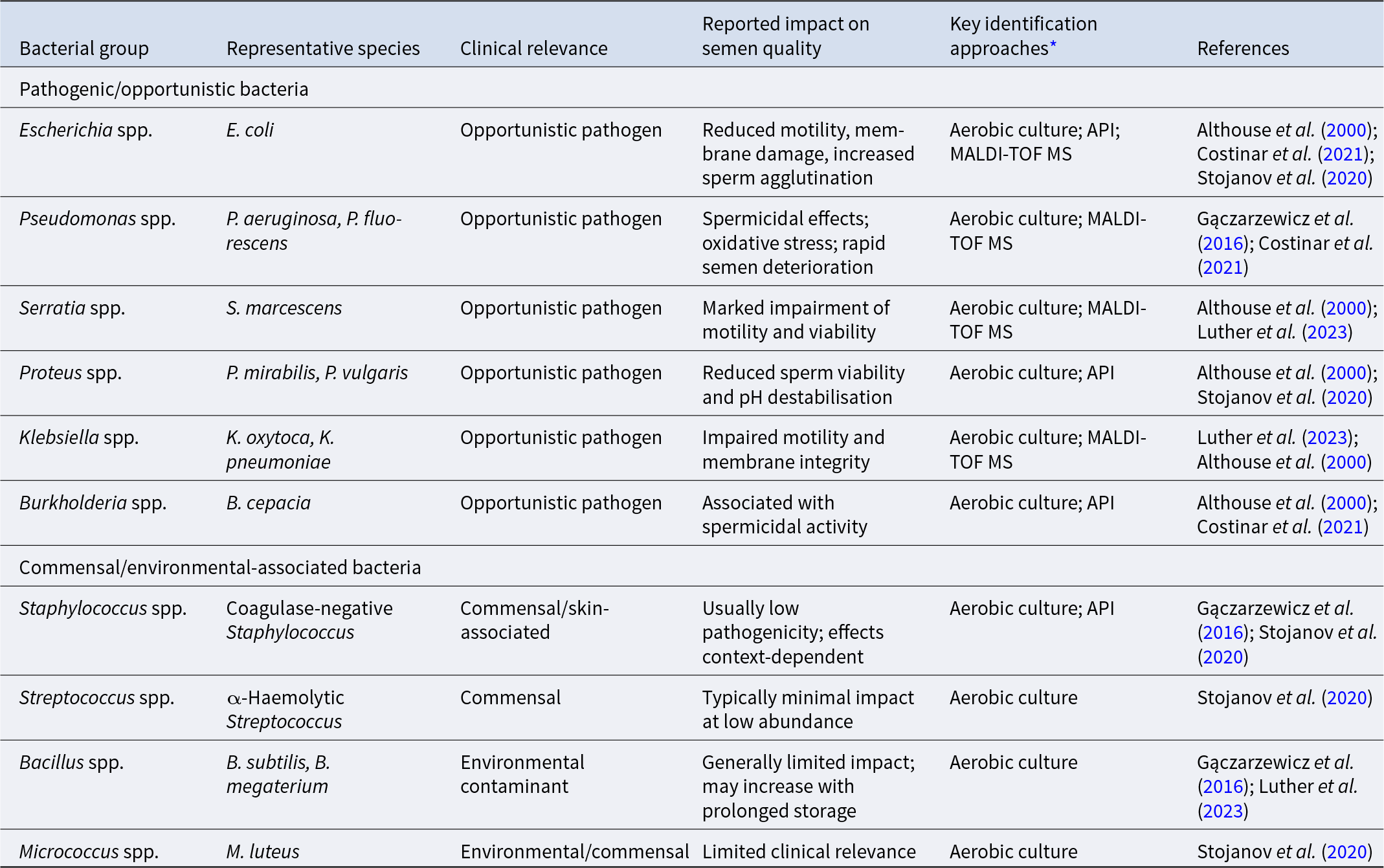
However, poor handling practices of semen and environmental exposure during handling can lead to the introduction of opportunistic pathogenic species, such as Escherichia coli and Klebsiella oxytoca, which can potentially affect sperm quality and reproductive outcomes (Table 1; Costinar et al., Reference Costinar, Herman, Pitoiu, Iancu, Degi, Hulea and Pascu2021; Gòdia et al., Reference Gòdia, Ramayo-Caldas, Zingaretti, Darwich, López, Rodríguez-Gil, Yeste, Sánchez and Clop2020). Environmental factors known to predispose ejaculates to bacteriospermia include dust, organic debris, faecal contamination, high humidity, inadequate ventilation, and insufficient sanitation of collection rooms or equipment (Althouse and Lu, Reference Althouse and Lu2005; Contreras et al., Reference Contreras, Núñez-Montero, Bruna, García, Leal, Barrientos and Weber2022; Nitsche-Melkus et al., Reference Nitsche-Melkus, Bortfeldt, Jung and Schulze2020; Schulze et al., Reference Schulze, Ammon, Rüdiger, Jung and Grobbel2015a). To minimise these risks, recommended good management practices involve routine cleaning and disinfection of collection areas, inherently maintaining a dry, low-dust environment, using sterile or single-use collection bags and filters, wearing disposable gloves, performing preputial cleaning prior to collection and regular sanitisation of artificial vaginas and handling equipment (Althouse and Lu, Reference Althouse and Lu2005; Contreras et al., Reference Contreras, Núñez-Montero, Bruna, García, Leal, Barrientos and Weber2022; Costinar et al., Reference Costinar, Herman, Pitoiu, Iancu, Degi, Hulea and Pascu2021; Nitsche-Melkus et al., Reference Nitsche-Melkus, Bortfeldt, Jung and Schulze2020; Schulze et al., Reference Schulze, Jung and Hensel2023). These practices form a critical barrier against contamination and reduce reliance on antibiotics in extenders, and are an important stewardship consideration (Ngo et al., Reference Ngo, Suwimonteerabutr, Prapasarakul, Morrell and Tummaruk2023b).
Common bacterial species isolated from boar semen

Table 1 Long description
The table categorizes bacterial species isolated from boar semen into pathogenic/opportunistic and commensal/environmental groups, highlighting their clinical relevance and impact on semen quality. Pathogenic bacteria like Escherichia, Pseudomonas, and Serratia are noted for reducing motility and viability, while commensal bacteria such as Staphylococcus and Streptococcus generally have minimal impact. Identification methods include aerobic culture, API, and MALDI-TOF MS. References indicate studies by Althouse, Costinar, and others, emphasizing the importance of bacterial identification in assessing semen quality. The table suggests that opportunistic pathogens have a more significant negative effect on semen quality compared to commensal bacteria.
* RT-PCR, reverse transcription polymerase chain reaction; MALDI-TOF, matrix-assisted laser desorption/ionisation time-of-flight mass spectrometry.
Various studies have identified several different bacterial species in boar semen (Table 1), though the identification techniques employed may be a limiting factor. Traditional in vitro culture methods, such as Gram staining and Analytical Profile Index systems, classify bacteria based on morphology and biochemical properties (Gączarzewicz et al., Reference Gączarzewicz, Udała, Piasecka, Błaszczyk and Stankiewicz2016). These approaches are relatively low-cost and accessible but are limited to detecting cultivable organisms and may overlook fastidious or anaerobic species (Mobed et al., Reference Mobed, Baradaran, Guardia, Agazadeh, Hasanzadeh, Rezaee, Mosafer, Mokhtarzadeh and Hamblin2019). Additional phenotypic tests, such as oxidative/fermentative tests, catalase and oxidase reactions, haemolysis production, and coagulase tests, assist with bacterial species identification but remain dependent on successful culture growth (Costinar et al., Reference Costinar, Herman, Pitoiu, Iancu, Degi, Hulea and Pascu2021; Stojanov et al., Reference Stojanov, Milovanović, Barna, Prodanov Radulović, Apić, Stojanović and Maksimović2020).
Genomic and proteomic technologies, such as matrix-assisted laser desorption/ionisation time-of-flight (MALDI-TOF) mass spectrometry and high-throughput whole-genome sequencing, are also increasingly utilised to characterise bacterial diversity at the molecular level (Ngo et al., Reference Ngo, Suwimonteerabutr, Apiwatsiri, Saenkankam, Prapasarakul, Morrell and Tummaruk2023a; Zhang et al., Reference Zhang, Liu, Yang, Li, Wen, Han, Li, Jiang and Li2020). These tools can detect a broader spectrum of microorganisms, including those that are not culturable, offering improved resolution and sensitivity. Costinar et al. (Reference Costinar, Herman, Pitoiu, Iancu, Degi, Hulea and Pascu2021) and Luther et al. (Reference Luther, Nguyen, Verspohl and Waberski2023) both effectively applied MALDI-TOF analysis to identify bacterial isolates, with the former complementing the MALDI-TOF analysis with API 20E for confirmatory identification. Despite these strengths, molecular genomic approaches are still costly, requiring specialised expertise and infrastructure and therefore are not yet routinely implemented in this type of screening. Combining culture-dependent and molecular techniques may lead to a better understanding of the boar seminal microbiota as seen in human diagnostics (Jarvi et al., Reference Jarvi, Lacroix, Jain, Dumitru, Heritz and Mittelman1996).
Contamination sources and environmental influence
Environmental factors are crucial in the contamination of semen samples, with bacterial contaminants originating from farm surfaces, soil, water, and faecal matter, and preputial fluid (Gòdia et al., Reference Gòdia, Ramayo-Caldas, Zingaretti, Darwich, López, Rodríguez-Gil, Yeste, Sánchez and Clop2020; Stojanov et al., Reference Stojanov, Milovanović, Barna, Prodanov Radulović, Apić, Stojanović and Maksimović2020). Although many organisms present in the preputial diverticulum form part of the boar’s normal microbiota, they are considered contaminants when introduced to the ejaculate during collection, as they are not native to seminal fluid and may impact semen quality (Kuster and Althouse, Reference Kuster and Althouse2016). Even under strict hygienic conditions in boar studs, pigs remain exposed to external contaminants, increasing the likelihood of bacterial presence in semen (Gòdia et al., Reference Gòdia, Ramayo-Caldas, Zingaretti, Darwich, López, Rodríguez-Gil, Yeste, Sánchez and Clop2020). This can be attributed to semen collection methods, including the gloved-hand method, in which direct manual stimulation of the penis increases potential contact with preputial secretions, collection equipment, and the surrounding environment (Althouse and Lu, Reference Althouse and Lu2005; King and Macpherson, Reference King and Macpherson1973).
Since boar semen is predominantly collected by the gloved-hand method, the human factor plays a critical role in environmental contamination. Inadequate hand hygiene, micro-perforations in gloves, prolonged handling time, and contact with contaminated surfaces can facilitate bacterial transfer from personnel to the ejaculate (Althouse and Lu, Reference Althouse and Lu2005). This is supported by Goldberg et al. (Reference Goldberg, Argenti, Faccin, Linck, Santi, Bernardi, Cardoso, Wentz and Bortolozzo2013), who reported significantly higher aerobic mesophile counts when collection gloves or boars were dirty, preputial fluid entered the collection container, or excessive preputial hair was present. These findings are consistent with standard minimum contamination protocols, which emphasise trimming of preputial hair, using clean gloves, and correct penile handling to prevent preputial fluids from draining into the ejaculate (Althouse et al., Reference Althouse, Kuster, Clark and Weisiger2000; Althouse and Lu, Reference Althouse and Lu2005; Goldberg et al., Reference Goldberg, Argenti, Faccin, Linck, Santi, Bernardi, Cardoso, Wentz and Bortolozzo2013). Furthermore, variability in operator technique, including inconsistent cleaning of the preputial area, failure to discard the initial ejaculate fractions, or improper glove use, has been associated with increased bacterial loads in semen samples (Althouse, Reference Althouse2008; Contreras et al., Reference Contreras, Núñez-Montero, Bruna, García, Leal, Barrientos and Weber2022).
Opportunistic and pathogenic bacteria such as E. coli have been detected in semen samples, suggesting post-ejaculatory contamination due to mishandling during collection and processing (Stojanov et al., Reference Stojanov, Milovanović, Barna, Prodanov Radulović, Apić, Stojanović and Maksimović2020). Recent studies have further demonstrated that Escherichia-Shigella taxa and other Enterobacterales are negatively correlated with sperm motility and viability, indicating their potential to impair fertility in AI doses (McAnally et al., Reference McAnally, Smith, Wiegert, Palanisamy, Chitlapilly Dass and Poole2023; Ngo et al., Reference Ngo, Suwimonteerabutr, Apiwatsiri, Saenkankam, Prapasarakul, Morrell and Tummaruk2023a). Arfken et al. (Reference Arfken, Song and Sung2015) further analysed the airborne microbiome in pig farms and identified a bacterial composition closely resembling those detected in boar semen, emphasising the link between environmental exposure and seminal bacterial contamination. Farm-associated reservoirs, including sinks, drains, collection utensils, and even the skin flora of workers, have been implicated as vectors for microbial introduction into semen samples (Contreras et al., Reference Contreras, Núñez-Montero, Bruna, García, Leal, Barrientos and Weber2022). These findings highlight the need for stringent biosecurity measures and improved diagnostic methods to minimise contamination risks and ensure semen quality in swine reproduction (Gòdia et al., Reference Gòdia, Ramayo-Caldas, Zingaretti, Darwich, López, Rodríguez-Gil, Yeste, Sánchez and Clop2020).
Importantly, several of the bacteria commonly introduced via environmental and handling-related contamination, including E. coli, Serratia marcescens, K. oxytoca, and Pseudomonas aeruginosa, have been directly associated with reduced conception rates, increased returns to oestrus, and uterine inflammation following insemination in recent studies (Costinar et al., Reference Costinar, Herman, Pitoiu, Iancu, Degi, Hulea and Pascu2021; Henneberg et al., Reference Henneberg, Riedel, Jung and Schulze2025; Luther et al., Reference Luther, Nguyen, Verspohl and Waberski2023; Maes et al., Reference Maes, Nauwynck, Rijsselaere, Mateusen, Vyt, De Kruif and Van Soom2008; Stojanov et al., Reference Stojanov, Milovanović, Barna, Prodanov Radulović, Apić, Stojanović and Maksimović2020). In Australia, where sow fertility management relies almost exclusively on AI with chilled semen distributed over long distances, even low-level contamination with such fertility-impairing species may have disproportionate impacts on reproductive performance and herd efficiency (Kuster and Althouse, Reference Kuster and Althouse2016).
Impacts of bacteriospermia on fertility
Bacterial contamination poses a significant risk during collection and processing, potentially leading to reduced semen quality, impaired fertility, and economic losses (Kuster and Althouse, Reference Kuster and Althouse2016). Researchers have linked the use of bacteriospermic semen in AI to a cascade of reproductive complications. These complications encompass elevated incidences of vulval discharges following insemination, a greater probability of sows returning to oestrus, early embryonic or foetal death, and systemic infections in sows (Dalin et al., Reference Dalin, Kaeoket and Persson2004; Goldberg et al., Reference Goldberg, Argenti, Faccin, Linck, Santi, Bernardi, Cardoso, Wentz and Bortolozzo2013; Maes et al., Reference Maes, Nauwynck, Rijsselaere, Mateusen, Vyt, De Kruif and Van Soom2008; Morrell and Wallgren, Reference Morrell and Wallgren2011), impacting sow welfare and the economic viability of the farm. Vulval discharges are often indicative of uterine inflammation, which can impair the establishment of pregnancy. At the same time, regular returns to oestrus suggest unsuccessful fertilisation or early embryonic death, leading to wasted insemination efforts and increased non-productive days (Dalin et al., Reference Dalin, Kaeoket and Persson2004; Muirhead, Reference Muirhead1986). Each of these complications carries substantial consequences for reproductive efficiency and farm productivity. Moreover, systemic infections may broadly compromise sow health, affecting long-term reproductive performance and raising welfare concerns and financial burdens associated with treatment and potential culling (Grahofer et al., Reference Grahofer, Björkman and Peltoniemi2020). Systemic infections in sows and gilts also require veterinary intervention, increasing treatment costs and potentially affecting the animal’s long-term reproductive potential.
Bacterial species-specific impacts on semen quality
In addition to reproductive consequences, bacterial contamination has a pronounced negative impact on semen quality by reducing sperm viability and motility (Althouse, Reference Althouse2008; Kuster and Althouse, Reference Kuster and Althouse2016). Prolonged exposure to bacteria during semen storage promotes pH acidification, acrosome damage, and sperm agglutination, ultimately reducing fertilising potential (Goldberg et al., Reference Goldberg, Marisa, Lourdes, Wentz and Bortolozzo2017; Luther et al., Reference Luther, Nguyen, Verspohl and Waberski2023; Stojanov et al., Reference Stojanov, Milovanović, Barna, Prodanov Radulović, Apić, Stojanović and Maksimović2020). Extensive global research has documented the detrimental effects of bacterial contamination on semen quality, linking elevated bacterial loads with impaired sperm function, particularly increased acrosome damage and reduced motility, both critical for successful fertilisation. Stojanov et al. (Reference Stojanov, Milovanović, Barna, Prodanov Radulović, Apić, Stojanović and Maksimović2020) observed a clear association between higher bacterial loads and acrosomal defects, confirmed by using cytological and flow cytometry analyses. Costinar et al. (Reference Costinar, Herman, Pitoiu, Iancu, Degi, Hulea and Pascu2021) further supported these findings by identifying several bacterial species – E. coli, Burkholderia cepacia, S. marcescens, and Proteus mirabilis – that compromise sperm function through toxin secretion and membrane destabilisation. These studies showed that bacteria disrupt spermatozoa’s structural integrity and functional capability, reinforcing the need for targeted microbial control within AI programmes. Luther et al. (Reference Luther, Nguyen, Verspohl and Waberski2023) expanded upon this work by highlighting the harmful effects of S. marcescens and K. oxytoca when present at concentrations above 10⁶ CFU/ml; by contrast, bacterial loads in native boar semen are typically reported to range between 103 and 105 CFU/mL (Morrell and Wallgren, Reference Morrell and Wallgren2011). These species significantly impaired sperm motility and induced marked agglutination, hindering the progressive movement necessary for fertilisation. Identifying such species-specific effects is, therefore, essential for developing more precise interventions that minimise the bacterial impact on semen quality.
The mechanisms through which bacteria damage sperm vary considerably. For instance, E. coli produces adhesive toxins that promote sperm agglutination, clustering sperm cells and diminishing their motility (Stojanov et al., Reference Stojanov, Milovanović, Barna, Prodanov Radulović, Apić, Stojanović and Maksimović2020). Pseudomonas aeruginosa secretes a combination of virulence factors, such as haemolytic phospholipases, elastase, and metalloproteases, which degrade essential membrane lipids like phosphatidylcholine and sphingomyelin, leading to extensive acrosomal damage (Pirnay et al., Reference Pirnay, Matthijs, Colak, Chablain, Bilocq, Van Eldere, De Vos, Zizi, Triest and Cornelis2005; Stojanov et al., Reference Stojanov, Milovanović, Barna, Prodanov Radulović, Apić, Stojanović and Maksimović2020). Pigments secreted by bacteria, such as pyocyanin secreted from P. aeruginosa, interfere with host cellular function and promote bacterial colonisation (Heck and Abrahamson, Reference Heck and Abrahamson1986). Importantly, these effects are not unique to boars. Similar bacterial impacts on semen quality have been observed in bulls, stallions, rams, and humans. In bulls, for example, Staphylococcus aureus and E. coli have been associated with reduced sperm motility and membrane integrity (González-Marín et al., Reference González-Marín, Roy, López-Fernández, Diez, Carabaño, Fernández, Kjelland, Moreno and Gosálvez2011; Yániz et al., Reference Yániz, Marco-Aguado, Mateos and Santolaria2010). In equine semen, P. aeruginosa and K. pneumoniae are common contaminants associated with reduced sperm motility and longevity and may also have devastating effects on mare fertility (Ramires Neto et al., Reference Ramires Neto, Sancler Da Silva, Resende, Guasti, Monteiro, Papa, Dell’aqua Júnior, Puoli Filho, Alvarenga and Papa2015). Human studies also reflect this trend, with infections of Ureaplasma urealyticum, E. coli, and Enterococcus faecalis being associated with decreased sperm motility, increased DNA fragmentation, and impaired fertilisation potential (Diemer et al., Reference Diemer, Huwe, Ludwig, Schroeder-Printzen, Michelmann, Schiefer and Weidner2003; Moretti et al., Reference Moretti, Capitani, Figura, Pammolli, Federico, Giannerini and Collodel2009). Collectively, these findings across species underscore the broader relevance of bacterial interference with reproductive efficiency and highlight the need for robust microbial monitoring in semen management practices.
In addition to direct cellular damage, bacterial contamination can alter the physicochemical properties of semen extenders, most notably through pH modification. Such pH shifts further compromise sperm viability and function during storage. Menezes et al. (Reference Menezes, Mellagi, Da Silva Oliveira, Bernardi, Wentz, Ulguim and Bortolozzo2020) observed that extended semen treated with antibiotics maintained a more stable pH over 24 hours compared to untreated controls. However, by 72 hours, semen stored at 10°C and 17°C without antibiotics showed elevated pH levels relative to antibiotic-treated samples stored at 5°C. Interestingly, at 120 hours, only the samples stored at 17°C without antibiotics experienced a notable drop in pH. These alterations are largely attributed to bacterial metabolic by-products, and the extent of pH change varies depending on the bacterial species involved and the buffering capacity of the semen extender (Althouse et al., Reference Althouse, Kuster, Clark and Weisiger2000). Overall, the multifactorial nature of bacterial interference, from structural damage to environmental alterations, underscores the importance of rigorous microbial screening and species-specific management strategies in semen collection, storage, and use across a wide range of mammalian species.
Semen extenders and antimicrobials
Following collection, semen is suspended in extenders to prolong the viability of spermatozoa during processing and transportation. These additives contain protective ingredients that facilitate sperm survival outside the reproductive tract (Brinsko et al., Reference Brinsko, Blanchard, Varner, Schumacher, Love, Hinrichs, Hartman, Brinsko, Blanchard, Varner, Schumacher, Love, Hinrichs and Hartman2011). Although the ingredients in commercial semen extenders are typically undisclosed, they are known to include biological buffers and metabolisable substrates, such as glucose, to provide an energy source (Brinsko et al., Reference Brinsko, Blanchard, Varner, Schumacher, Love, Hinrichs, Hartman, Brinsko, Blanchard, Varner, Schumacher, Love, Hinrichs and Hartman2011; Luther et al., Reference Luther, Nguyen, Verspohl and Waberski2021). Supplementation with antimicrobials is commonly used to prevent bacteriospermia and the resulting bacteria-induced damage to spermatozoa (Brinsko et al., Reference Brinsko, Blanchard, Varner, Schumacher, Love, Hinrichs, Hartman, Brinsko, Blanchard, Varner, Schumacher, Love, Hinrichs and Hartman2011). For example, MiniTube’s Androstar® Premium extender includes a proprietary cell-shield protective additive listed in the manufacturer’s leaflet. However, the lack of information regarding extender composition makes it more difficult to interpret experimental results and determine the extent of the impact of antimicrobial use.
As Althouse (Reference Althouse2008) described, bacteria and spermatozoa compete for essential nutrients within semen extenders, which compromises sperm vitality. The release of harmful substances increases this competition; live bacteria produce metabolic by-products such as reactive oxygen species (ROS), while dead bacteria release lipopolysaccharides from their cell walls. These compounds have been shown to disrupt the sperm plasma membrane and acrosome, ultimately impairing sperm function and fertility potential (He et al., Reference He, Guo, Gong and Zhao2017). The accumulation of such bacterial by-products during liquid storage has been associated with reduced motility, compromised membrane integrity, and decreased semen quality (Gączarzewicz et al., Reference Gączarzewicz, Udała, Piasecka, Błaszczyk and Stankiewicz2016). This highlights the importance of managing bacterial contamination in extended semen not only to preserve sperm viability but also to maintain reproductive efficiency in AI programmes.
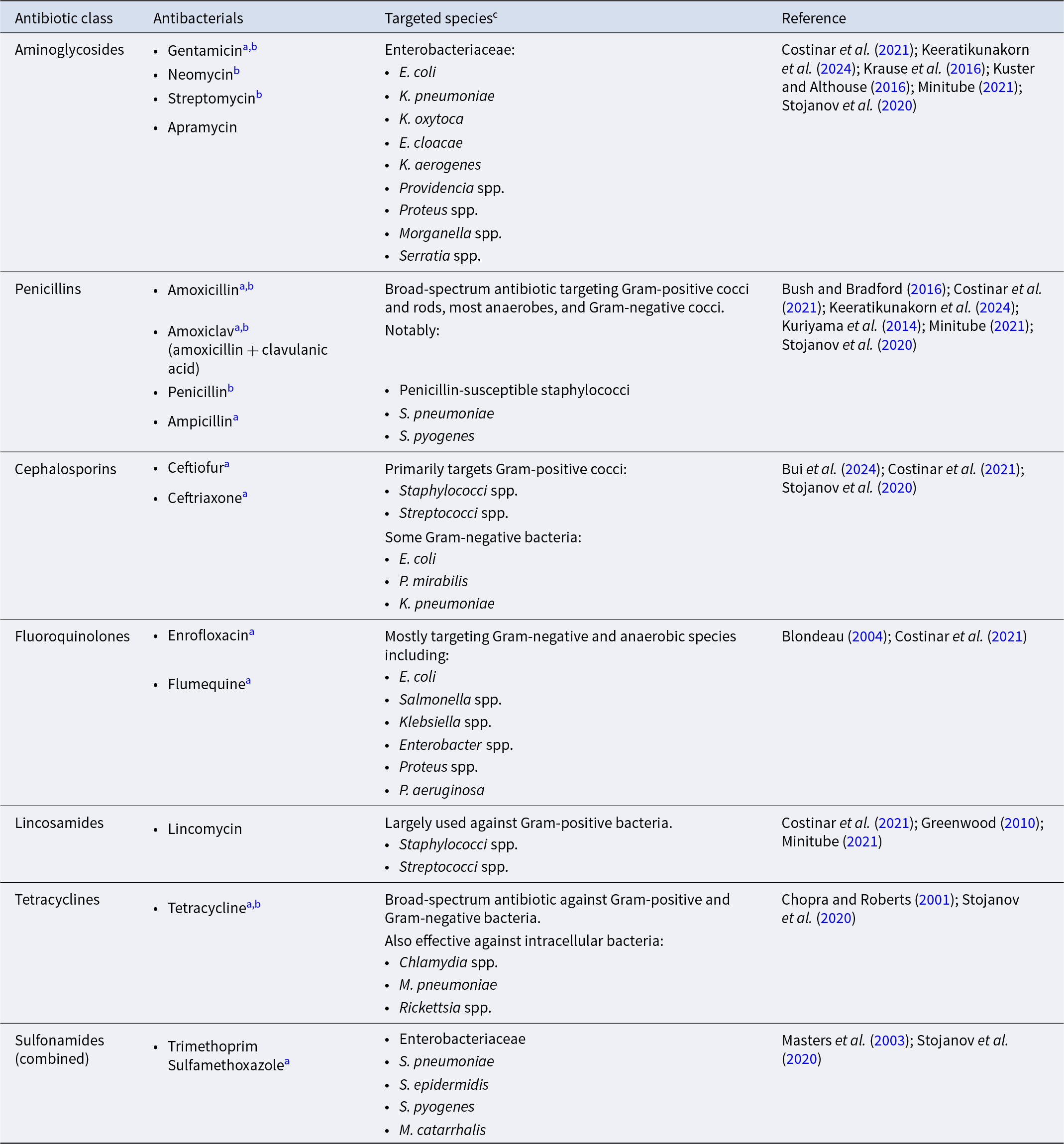
Gentamicin, neomycin, and streptomycin are among the most common antimicrobials currently included in boar semen extenders (Table 2; Keeratikunakorn et al., Reference Keeratikunakorn, Chanapiwat, Aunpad, Ngamwongsatit and Kaeoket2024), including those relevant to commercial porcine AI systems used in Australia. These antibacterials are predominantly aminoglycosides and are used prophylactically to suppress bacterial growth during storage, preventing bacteriospermia-related damage during storage. According to the World Health Organisation, these aminoglycosides are classified as critically important antimicrobials (CIAs) for human medicine, due to their role in treating serious Gram-negative infections (WHO, 2019).
Antibacterials currently included in semen extenders and their primary bacterial targets

Table 2 Long description
The table lists various antibacterial classes used in semen extenders, detailing specific antibacterials and their primary bacterial targets. Aminoglycosides like gentamicin target Enterobacteriaceae, while penicillins such as amoxicillin are broad-spectrum, effective against gram-positive cocci and rods. Cephalosporins, including ceftiofur, primarily target gram-positive cocci, whereas fluoroquinolones like enrofloxacin focus on gram-negative and anaerobic species. Lincosamides and tetracyclines are noted for their effectiveness against gram-positive bacteria and intracellular bacteria, respectively. Sulfonamides combined with trimethoprim sulfamethoxazole target a range of species including Enterobacteriaceae and Streptococcus pneumoniae. The references cited provide evidence for the efficacy and application of these antibacterials in semen extenders.
a Broad-spectrum antibiotic.
b Antibiotic used in human medicine.
cFull names of bacterial species: Enterobacter cloacae, Klebsiella aerogenes (formerly Enterobacter aerogenes), Streptococcus pneumoniae, Streptococcus pyogenes, Mycoplasma pneumoniae, Staphylococcus epidermidis, and Moraxella catarrhalis.
With increasing global concerns about AMR, closer scrutiny of the continued use of these antibacterials in agricultural settings is necessary (FAO, 2021). Of particular concern is the inclusion of third-generation cephalosporins, such as ceftriaxone, in some semen extender formulations (Table 2; Arumugham et al., Reference Arumugham, Gujarathi and Cascella2023). These agents are designated by the WHO as highest priority CIAs (HP-CIAs) due to their essential role in treating severe, life-threatening human infections (Arumugham et al., Reference Arumugham, Gujarathi and Cascella2023; WHO, 2019). Similarly, fluoroquinolones, including enrofloxacin, are also classified as HP-CIAs (WHO, 2019). The use of these CIAs in non-therapeutic settings, such as semen extenders, raises significant ethical and regulatory concerns, as it may accelerate the development of resistance to drugs that are vital for human medicine.
While the inclusion of antimicrobials in semen extenders partially manages bacterial contamination and safeguards sperm quality during storage, this practice raises significant concerns regarding the contribution of AI programmes to the broader issue of AMR. The repeated and often prophylactic use of broad-spectrum antimicrobials, some critical to human and animal medicine, within livestock reproduction systems poses a potential selection pressure for resistance development and spread (FAO, 2021).
Importantly, antimicrobial exposure within semen extenders and following insemination may occur at sub-inhibitory concentrations, either due to dilution effects, degradation during storage, or through interactions with the sow reproductive tract (Althouse and Lu, Reference Althouse and Lu2005; Gullberg et al., Reference Gullberg, Cao, Berg, Ilbäck, Sandegren, Hughes and Andersson2011; Ngo et al., Reference Ngo, Suwimonteerabutr, Prapasarakul, Morrell and Tummaruk2023b). Such conditions are known to promote minimal selective concentrations, enhance mutagenesis, stimulate biofilm formation, and increase horizontal gene transfer, including plasmid mobilisation and exchange of resistance determinants among commensal and opportunistic bacteria (Gullberg et al., Reference Gullberg, Cao, Berg, Ilbäck, Sandegren, Hughes and Andersson2011; Malaluang et al., Reference Malaluang, Wilén, Frosth, Lindahl, Hansson and Morrell2023). Mounting evidence suggests a troubling prevalence of AMR among bacterial isolates found in boar semen, raising concerns about the long-term efficacy of commonly used antimicrobials in extenders.
Stojanov et al. (Reference Stojanov, Milovanović, Barna, Prodanov Radulović, Apić, Stojanović and Maksimović2020) assessed the activity of eight antimicrobials, namely amoxicillin, amoxicillin-clavulanic acid, ceftriaxone, enrofloxacin, gentamicin, streptomycin, tetracycline, and trimethoprim-sulfamethoxazole, against bacteria isolated from boars in Serbia, finding that P. aeruginosa isolated from the semen was 100% resistant to all drugs tested except for ceftriaxone and enrofloxacin. Similarly, bacterial species from the Enterobacteriaceae family carried resistance against synthetic penicillins, tetracyclines, and trimethoprim-sulfamethoxazole. In Romania, Costinar et al. (Reference Costinar, Herman, Pitoiu, Iancu, Degi, Hulea and Pascu2021) tested the same antibacterials, along with ceftiofur, lincomycin, neomycin, flumequine, apramycin, penicillin, and ampicillin, finding that 56.52% of isolates were resistant to gentamicin, and all Gram-negative bacteria present showed resistance against at least one of the antimicrobial groups tested.
In contrast, Bennemann et al. (Reference Bennemann, Machado, Girardini and Tonin2018) in Brazil reported high gentamicin susceptibility in 80% of isolates tested. Such discrepancies may reflect regional variation in bacterial populations and antimicrobial usage patterns. However, collectively, these findings highlight a growing reduction in antibacterial effectiveness, underscoring the urgency for ongoing surveillance and perhaps reconsideration of standard antimicrobial protocols in AI practices. Beyond direct resistance selection, bacteria or mobile genetic elements introduced to the sow reproductive tract via semen may transiently interact with resident microbiota, creating opportunities for horizontal gene transfer via conjugation, transformation, or transduction (von Wintersdorff et al., Reference von Wintersdorff, Penders, van Niekerk, Mills, Majumder, van Alphen, Savelkoul and Wolffs2016). Subsequent dissemination may occur through faecal shedding, environmental contamination, or contact with personnel and equipment facilitating spread between the herd (Colomer-Lluch et al., Reference Colomer-Lluch, Imamovic, Jofre and Muniesa2011; Zhang et al., Reference Zhang, Liu, Wang, Fang, Sun, Liu and Liao2021). This repeated nature of insemination across large breeding populations, therefore, amplifies cumulative selection pressure within intensive AI systems.
Crucially, this also reveals a critical gap in knowledge in Australia, as there is little to no data on the bacterial species present in the semen of Australian boars or on their resistance profiles. While Australia’s closed-herd system provides strong biosecurity advantages by limiting the introduction of exotic resistant strains, it also increases the relative importance of domestic selection pressures. Resistance that emerges locally within AI centres or breeding herds may persist and circulate within the national production system with limited external dilution, highlighting semen handling and antimicrobial use as key control points for stewardship (D’souza and Dunshea, Reference D’souza and Dunshea2021). Given Australia’s closed herd system, this lack of region-specific data is concerning. The evidence from other regions suggests significant variation in both species and AMR patterns, making it imperative to conduct targeted research in the Australian context to inform responsible antimicrobial use and protect herd health (Bennemann et al., Reference Bennemann, Machado, Girardini and Tonin2018; Costinar et al., Reference Costinar, Herman, Pitoiu, Iancu, Degi, Hulea and Pascu2021; Luther et al., Reference Luther, Nguyen, Verspohl and Waberski2023; Stojanov et al., Reference Stojanov, Milovanović, Barna, Prodanov Radulović, Apić, Stojanović and Maksimović2020).
Practical implications and alternatives to antimicrobial inclusion
The indiscriminate use of antimicrobials in the animal production industry, including AI programmes, may contribute significantly to the development and dissemination of AMR (Ardakani et al., Reference Ardakani, Canali, Aragrande, Tomassone, Simoes, Balzani and Beber2023). Several stewardship strategies have been proposed to reduce the AMR burden without compromising ejaculate quality. Regular microbial monitoring of both semen and the AI environment is strongly recommended. Both Stojanov et al. (Reference Stojanov, Milovanović, Barna, Prodanov Radulović, Apić, Stojanović and Maksimović2020) and Costinar et al. (Reference Costinar, Herman, Pitoiu, Iancu, Degi, Hulea and Pascu2021) emphasised the necessity of routine bacterial screening and AMR checks, thereby safeguarding sperm viability and informing the targeted use of antimicrobials. Tailoring semen extenders to fit identified AMR profiles reduces the use of ineffective antibacterials, limiting the risk of further AMR development. Moreover, maintaining strict hygiene during semen collection, extender preparation, and storage is critical, as high microbial loads are often the result of suboptimal handling rather than innate contamination (Goldberg et al., Reference Goldberg, Marisa, Lourdes, Wentz and Bortolozzo2017).
Currently, the complete elimination of antimicrobials from semen extenders may be inappropriate at storage temperatures of 17°C, increasing the risk of bacterial overgrowth and sperm quality deteriorating. However, Luther et al. (Reference Luther, Nguyen, Verspohl and Waberski2021) demonstrated that reducing antimicrobial concentrations by 50% in commercial semen extenders in Germany maintains sufficient antimicrobial efficacy to protect samples from contamination. Therefore, dose optimisation through antimicrobial susceptibility testing could serve as a pragmatic measure to address AMR while alternative emerging strategies continue to develop. Nevertheless, caution must be taken when using reduced antimicrobial concentrations that may fall within a sub-inhibitory range, as they may fail to both fully suppress bacterial growth and encourage the development and transfer of AMR. Sub-inhibitory antimicrobial exposure can place selective pressure on bacteria, promoting adaptive responses such as increased mutation rates, stress-induced resistance mechanisms, and horizontal gene transfer of resistance genes (Ding et al., Reference Ding, Ye, Liu, Wang, Chen, Zhang, Wang, Sjöling, Martín-Rodríguez, Hu, Chen and Zhou2022). Ching et al. (Reference Ching, Orubu, Sutradhar, Wirtz, Boucher and Zaman2020) highlighted this risk in a systematic review, showing that exposure to fluoroquinolones at sub-inhibitory levels consistently induced resistance development across a range of bacterial species. These findings underscore the need for rigorous minimum inhibitory concentration-based validation when implementing reduced-dose strategies to ensure efficacy and truly mitigate AMR emergence.
Natural antimicrobials
Emerging approaches to reducing reliance on traditional drugs include the use of alternative natural antimicrobials, nanotechnology, and microbial-based interventions. Natural compounds, such as plant-derived essential oils, peptides (including lactoferrin and lysozyme), and polyphenols, have shown promise in reducing bacterial growth without compromising sperm function (Luther et al., Reference Luther, Nguyen, Verspohl and Waberski2021, Reference Luther, Nguyen, Verspohl and Waberski2023; Miao et al., Reference Miao, Zhao, Zhu, Zeng, Yang, Zhang, Lund and Zhang2024; Ros-Santaella et al., Reference Ros-Santaella, Nový, Scaringi and Pintus2024).
Lysozyme, an antimicrobial protein naturally found in seminal plasma and cervical mucus, has demonstrated the ability to preserve sperm plasma membrane and acrosome integrity during storage while reducing bacterial loads to levels comparable with gentamicin (Ros-Santaella et al., Reference Ros-Santaella, Nový, Scaringi and Pintus2024). Similarly, an organic bactericidal supplement incorporated into the commercial Androstar® Plus extender maintained sperm quality in boar semen for up to 144 hours in the absence of conventional antibiotics; however, the authors emphasised the continued need for routine screening for common antimicrobial-resistant strains when implementing antibiotic-free systems (Luther et al., Reference Luther, Nguyen, Verspohl and Waberski2023).
Recent work has also highlighted the potential of plant-derived extracts as multifunctional additives to semen extenders. Scaringi et al. (Reference Scaringi, Pintus, Nový, Božiková, Maršík and Ros-Santaella2025) found that Uncaria tomentosa (cat’s claw) extract exhibited antimicrobial activity against a range of bacteria isolated from boar semen, including both Gram-positive and Gram-negative species, while influencing sperm resilience under conditions of oxidative stress and extended storage. Importantly, the extract reduced bacterial growth without exerting cytotoxic effects on spermatozoa, and in some conditions contributed to the preservation of membrane integrity and selected mobility parameters, supporting its potential as a natural alternative to conventional antimicrobials in semen extenders (Scaringi et al., Reference Scaringi, Pintus, Nový, Božiková, Maršík and Ros-Santaella2025).
Other antimicrobial peptides (AMPs), such as nisin, have shown partial efficacy, including reducing Enterobacterales populations; however, high concentrations have been associated with detrimental effects on progressive motility and oxidative balance, highlighting the narrow therapeutic window of some antimicrobial alternatives (Ros-Santaella et al., Reference Ros-Santaella, Nový, Scaringi and Pintus2024).
Despite their potential, these natural alternatives are not without limitations. One major constraint is the technological complexity and high cost associated with production, purification, and validation of these agents, particularly at a commercial scale. For example, AMPs as potential antimicrobial replacements must exhibit bacterial selectivity, proteolytic stability, and thermodynamic resistance without damaging sperm – characteristics that are technically challenging to achieve and optimise simultaneously for commercial semen preservation (Schulze et al., Reference Schulze, Grobbel, Müller, Junkes, Dathe, Rüdiger and Jung2015b). Additionally, logistical challenges, such as regulatory approval, formulation compatibility, and farmer adoption, will also need to be considered before these alternatives can be reliably implemented in routine semen processing systems (Schulze et al., Reference Schulze, Dathe, Waberski and Müller2016).
Nanotechnology-based solutions explore the use of metallic nanoparticles such as silver, gold, selenium, and zinc oxide in semen extenders. These nanoparticles deliver a bactericidal effect by releasing metal ions, generating ROS, and disrupting bacterial membranes and intracellular processes – mechanisms that ultimately compromise cell integrity and lead to bacterial death (Girma et al., Reference Girma, Mebratie, Mekuye, Abera, Bekele and Alamnie2024). These properties have been associated with both antimicrobial and antioxidant effects, as well as potential fertility-enhancing benefits (Khalil et al., Reference Khalil, El-Rais, Hegazy, Hassan, El-Raghi and El-Moghazy2024; Pérez-Duran et al., Reference Pérez-Duran, Susana, Netzayeli, Arcelia, Brenda, Edwin and Nuñez-Anita2020; Yousef et al., Reference Yousef, Abdelhamid, Hidalgo, Fathy, Gómez-Gascón and Dorado2021). Khalil et al. (Reference Khalil, El-Rais, Hegazy, Hassan, El-Raghi and El-Moghazy2024) found that supplementing semen extenders with metallic nanoparticles improved post-thaw sperm viability, motility, membrane and acrosome integrity, and reduced apoptosis and oxidative stress, resulting in improved pregnancy rates. Similarly, Yousef et al. (Reference Yousef, Abdelhamid, Hidalgo, Fathy, Gómez-Gascón and Dorado2021) discovered that including silver-carbon nanoparticles in semen extenders was found to effectively inhibit common semen contaminants such as E. coli and P. aeruginosa at low concentrations without affecting sperm quality during storage. Pérez-Duran et al. (Reference Pérez-Duran, Susana, Netzayeli, Arcelia, Brenda, Edwin and Nuñez-Anita2020) further demonstrated that silver nanoparticles sized 10–20 nm decreased the proliferation of S. aureus and preserved chilled porcine spermatozoa viability, mitochondrial metabolism, membrane integrity, and morphology, with no adverse changes related to capacitation or the acrosomal reaction at 4 mM concentrations.
While these findings highlight the promising role of nanotechnology in enhancing fertility and combating bacteriospermia, their broad application warrants careful consideration. In vivo studies in mice and rats have shown that nanoparticles can accumulate in organs such as the liver, spleen, and gastrointestinal tract and are primarily cleared via hepatobiliary pathways, raising concerns about tissue retention and long-term safety (Kumar et al., Reference Kumar, Roy, Ohulchanskky, Vathy, Bergey, Sajjad and Prasad2010). Additionally, in rats, various nanoparticles have been found capable of crossing biological barriers and exerting toxic effects on reproductive organs with prolonged exposure, suggesting potential risks to sow reproductive health (Wang et al., Reference Wang, Song, Wu, Zhang, Chen and Shao2018). The environmental fate of these particles is also a growing concern, as their excretion and interaction with ecosystems are not yet fully understood (Ray et al., Reference Ray, Yu and Fu2009). Therefore, while nanotechnology offers clear potential in enhancing sperm viability while mitigating bacteriospermia, further research is needed to ensure its safe integration into reproductive protocols without compromising animal welfare or environmental sustainability.
Probiotics or competitive exclusion techniques, based on introducing beneficial, non-pathogenic bacterial strains to outcompete and suppress the growth of harmful microbes, offer another novel method of reducing antimicrobial use in semen extenders. Recent studies, including boar-specific trials, highlight the feasibility of this approach in improving semen quality and microbial balance (Elalfy et al., Reference Elalfy, Mansour and Hashem2024; Keeratikunakorn et al., Reference Keeratikunakorn, Kaewchomphunuch, Kaeoket and Ngamwongsatit2023; Miao et al., Reference Miao, Zhao, Zhu, Zeng, Yang, Zhang, Lund and Zhang2024; Rafiee et al., Reference Rafiee, Sereshki, Alipour, Ahmadipanah, Pashoutan Sarvar and Wilkinson2022). The microbiome of the urogenital tract is regulated by endogenously produced antimicrobial agents such as lysozyme, lactoferrin, and AMPs (Miao et al., Reference Miao, Zhao, Zhu, Zeng, Yang, Zhang, Lund and Zhang2024). Disruptions to microbial community balance can impair sperm quality and contribute to fertility complications, where dysbiosis has been linked to altered sperm immunogenicity and spontaneous abortion, which could, however, be mitigated by probiotic supplementation (Rafiee et al., Reference Rafiee, Sereshki, Alipour, Ahmadipanah, Pashoutan Sarvar and Wilkinson2022).
However, recent work highlights that probiotic-based strategies may not uniformly preserve sperm quality. Ngo et al. (Reference Ngo, Taechamaeteekul, Boonprakob, Kamwa, Prapasarakul, Wattanaphansak and Tummaruk2026) reported that withdrawal of antibiotics and transition to probiotic supplementation in boars resulted in a significant decline in sperm motility, viability, and acrosome integrity over time, despite no increase in total bacterial load or reduction in Lactobacillus spp. Instead, reduced sperm quality was associated with a shift towards Gram-negative opportunistic pathogens, including Enterobacterales and Gammaproteobacteria, indicating that bacterial composition rather than overall abundance is a critical determinant of sperm quality.
In the context of AMR, probiotics may offer a sustainable alternative to antimicrobials in semen extenders. Research has shown that cell-free supernatants from strains like Lactobacillus spp. and Pediococcus spp. can effectively inhibit AMR-carrying pathogens found in boar semen, such as P. aeruginosa, E. coli, and P. mirabilis, outperforming other probiotic sources (Keeratikunakorn et al., Reference Keeratikunakorn, Kaewchomphunuch, Kaeoket and Ngamwongsatit2023). Furthermore, Lactococcus lactis has demonstrated antibiotic-like effects in rabbit semen extenders, improving semen quality over time during cold storage (Elalfy et al., Reference Elalfy, Mansour and Hashem2024). These findings support the integration of probiotics as a safe, functional alternative to antibiotics, capable of both preserving semen quality and combating pathogenic contamination in AI.
In addition to extender reformulation, physical and light-based decontamination approaches are emerging as practical alternatives for reducing bacterial load without relying on antimicrobials. Photodynamic inactivation, using a porphyrin photosensitiser in combination with LED illumination, has been shown to effectively reduce bacterial contamination in liquid-stored boar semen while preserving sperm functional parameters and fertility in proof-of-concept insemination studies (Luther et al., Reference Luther, Varzandeh, Beckermann, Feyer, Maaßen, Oldenhof, Hackbarth and Waberski2024; Maaßen et al., Reference Maaßen, Luther, Varzandeh, Hackbarth and Waberski2025). Similarly, single-layer centrifugation (SLC) techniques reduce bacterial contamination by physically separating spermatozoa from bacteria and debris, without the use of antibiotics (Morrell and Wallgren, Reference Morrell and Wallgren2011). When combined with storage at approximately 4°C, SLC has been shown to maintain sperm quality while achieving bacterial suppression comparable to conventional storage at 17°C with antibiotic-supplemented extenders, supporting its application as a non-antibiotic strategy for controlling bacteriospermia in AI systems (Morrell et al., Reference Morrell, Núñez-González, Crespo-Félez, Martínez-Martínez, Martínez Alborcia, Fernández-Alegre, Dominguez, Gutiérrez-Martín and Martínez-Pastor2019; Ngo et al., Reference Ngo, Morrell and Tummaruk2025b).
Conclusion
A strategic, multifaceted approach is necessary to reduce dependency on traditional antimicrobials in AI in boars, particularly in alignment with FAO guidelines, to address the issue of bacteriospermia and AMR. Current literature reveals a diverse, globally distributed range of bacterial species in boar semen, including multi-drug resistant strains which exhibit high levels of AMR to commonly used antimicrobials. These findings raise concerns regarding the long-term efficacy of antibiotic-based semen extenders. The persistence of bacteriospermia has been shown to negatively impact semen quality, with reductions to sperm motility and membrane integrity, particularly linked to contamination with opportunistic pathogens such as E. coli, K. oxytoca, and S. marcescens. These detrimental effects on sperm quality pose a threat to fertilisation, potentially compromising reproductive efficiency. There is a critical need to develop alternative strategies for bacterial control in boar semen.
This issue is particularly relevant to the Australian pork industry, whose closed herd systems strongly emphasise maintaining genetic integrity and stringent biosecurity standards. A critical gap that must be filled still exists in understanding the specific bacterial communities present in Australian AI systems and their resistance profiles.
Acknowledgements
None.
Author contributions
T.B. performed literature searches and wrote the manuscript. C.V. and R.B. contributed to manuscript preparation and conceptualisation.
Funding statement
This research, and work by T.B., was funded by Australian Pork Limited (grant number 2025/0123).
Competing interests
All authors declare no conflict of interest.

 Open access

