


The feasibility of substituting community alternatives for most long-stay hospital beds is widely accepted, but debate persists as to how far acute beds can be replaced and with what kind of community service (Reference KluiterKluiter, 1997). Current English policy advocates specialist crisis resolution teams (CRTs) dedicated to providing short-term intensive home treatment, and these are rapidly being introduced nationwide (Department of Health, 2001; Reference JohnsonJohnson, 2004). However, whether CRTs are preferable to generic community teams that provide home treatment in crises alongside continuing care is vigorously debated (Reference Pelosi and JacksonPelosi & Jackson, 2000). Earlier studies of intensive home treatment initiated in emergencies (Reference Stein and TestStein & Test, 1980; Reference Hoult, Reynolds and Charbonneau-PowisHoult et al, 1983; Reference Marks, Connolly and MuijenMarks et al, 1994) provide only limited support for the current CRT model, as the experimental teams continued to provide care once the crisis had resolved, and control services did not include routine home visits by multidisciplinary teams.
Study aims and design
We assessed the effects of introducing CRTs in an area with well-established community mental health teams. We selected a quasi-experimental design since recruitment to a randomised trial at the time of a crisis poses substantial practical and ethical difficulties. As guidance on quasi-experiments (Reference Cook and CampbellCook & Campbell, 1979; Reference McKee, Britton and BlackMcKee et al, 1999; Reference Maclehose, Reeves and HarveyMacLehose et al, 2000) recommends, we aimed to make the groups as comparable as possible, and to measure comprehensively and adjust statistically for potential confounders.
Our primary hypotheses were that the introduction of a CRT would be associated with fewer admissions and with better patient satisfaction in the 6 weeks following a crisis. Secondary hypotheses related to other dimensions of clinical and social outcome.
METHOD
Study sample
The sample consisted of all crisis presentations to secondary mental health services of adults aged 18-65 years resident in two geographically defined sectors with a combined population of 63 000 in the southern part of the inner-London borough of Islington. The first recruitment period, lasting 6 months, immediately preceded the introduction of a CRT. The second followed its introduction and lasted 9 months. The study received local research ethics committee approval.
Definition of crisis
The research team developed an operational definition of a crisis, shown in the Appendix. This was intended to describe situations in which, in the context of the local service system prior to CRT introduction, clinicians would regard admission to an acute hospital ward as justified.
Identification of crises
Throughout the study, researchers contacted the staff of the casualty department liaison team, the local community mental health teams and crisis houses and, in the second phase, the CRT at least twice a week to identify all potential crisis presentations. Vignettes of each were then evaluated by a rating panel consisting of at least three senior psychiatrists and a clinical psychologist. The panel was not told whether presentations had resulted in admission and was asked to reach a consensus about whether they met study criteria for a crisis. Those that did not were excluded from further assessments and analyses.
Interventions
Before introduction of the CRT, acute care involved acute wards, two 24-h staffed crisis houses, well-established community mental health teams, available 9 a.m. to 5 p.m. on weekdays, and a multidisciplinary liaison team available between 8 a.m. and 10 p.m. in the casualty department. Local patterns of care were investigated during the pre-CRT phase using the European Service Mapping Schedule (Reference Johnson and KuhlmannJohnson et al, 2000). Quite high levels of community contacts were found: 49% of continuing care community service users were seen outside health service premises at least once during a census month. However, contacts were not usually very frequent: 1.5% of service users were seen three or more times in a single week.
Crisis team group
The CRT group was identified after a CRT was added to the service system described above. This conformed to the model described in national policy guidelines (Department of Health, 2001): it was available 24 h a day to assess and treat people in their homes or other community settings. Members included nurses, social workers, support workers and a junior psychiatrist. The CRT was required to assess whether home treatment was feasible before any acute admission could take place. Patients could be visited several times a day if necessary and were discharged from the CRT caseload once the crisis had resolved. Johnson (Reference Johnson2004) has described this model in more detail.
Six weeks elapsed between the end of the pre-CRT group recruitment period and the start of the CRT group recruitment period. The same senior staff were in post throughout the study period, except that one of the community mental health team leaders moved to manage the CRT.
Assessments
Assessments were carried out immediately after identification of the crisis, then 6 weeks and 6 months afterwards. Except where a single source is specified below, best available information was elicited from participants, staff and clinical records. Participants were interviewed if the clinicians responsible for their care felt this was feasible and informed consent could be obtained. As systematic differences between interview responders and non-responders were likely, we obtained ethical approval for some anonymised data collection regarding those not interviewed.
Baseline data collection
Baseline data were collected as soon as possible after the initial crisis: researchers aimed to carry out all assessments within a week. Structured questionnaires were used to assess:
-
(a) socio-demographic characteristics;
-
(b) clinical and social history, including diagnosis and previous service use;
-
(c) referral route, location of first (index) assessment by mental health professionals during the crisis, presenting problems, and risk of self-harm, violence, self-neglect or serious lack of caution (staff ratings);
-
(d) symptoms and social functioning rated by staff using the Health of the Nation Outcome Scale (HoNOS, Reference Wing, Beevor and CurtisWing et al, 1998) and Life Skills Profile (LSP; Reference Parker, Rosen and EmdurParker et al, 1991), and at patient interviews using the extended Brief Psychiatric Rating Scale (BPRS; Reference Lukoff, Liberman and NeuchterleinLukoff et al, 1986);
-
(e) quality of life: rated by patients using the Manchester Short Assessment of Quality of Life (MANSA; Reference Priebe, Huxley and KnightPriebe et al, 1999).
Follow-up assessments
Primary outcomes. Best available information was used to ascertain whether each patient had been admitted in the 6 weeks after the crisis. Service satisfaction was assessed using the Client Satisfaction Questionnaire (CSQ-8; Reference Atkisson and ZwickAtkisson & Zwick, 1982).
Secondary outcomes. The BPRS and MANSA were re-assessed at patient interview at 6 weeks. HoNOS and LSP ratings, admissions and adverse events were assessed 6 weeks and 6 months after the crisis. Six-month assessments were based solely on staff reports and records.
Analysis
Stata Release 8 (for PC) was used in an analysis involving the following pre-specified stages.
-
(a) Baseline differences: univariate tests were used to assess differences between pre-CRT and CRT groups for all baseline characteristics measured.
-
(b) Comparison between interview responders and non-responders: univariate comparisons were made between those interviewed and those not interviewed at 6 weeks.
-
(c) Primary hypotheses: a series of regression analyses was used to test the primary hypotheses and investigate whether baseline differences could account for the results. Nineteen people experienced crises that led to their inclusion in both the pre-CRT and CRT groups, and lack of independence between their outcomes was allowed for in all regression analyses by computing robust standard errors, clustered on individual patients (Reference RogersRogers, 1993). In the case of admission by 6 weeks:
-
(i) the primary hypothesis was tested through a logistic regression with admission by 6 weeks as dependent variable and experimental group as an independent variable.
-
(ii) We then added each of the baseline socio-demographic, clinical and social variables in turn as a second independent variable in this regression. Variables whose entry into this analysis resulted in relatively large changes in the odds ratio for the association between experimental condition and admission were identified as potential confounders.
-
(iii) We added into the regression model from (i) the following combinations of variables: the 10 variables identified at step (ii) as producing the greatest change in the odds ratio for experimental status; the 15 and then the 20 variables producing the greatest change in this odds ratio; the 10 variables producing the largest positive shift in this odds ratio together with the 10 producing the largest negative shift.
In the first of these regressions we also explored the effects of including in the model interactions between the potential confounders. This made very little difference, and interaction terms were not included in the other regressions.
-
(iv) To further test the robustness of our results, the 20 variables most strongly associated with likelihood of admission (assessed by P values in the individual logistic regressions) were entered into a stepwise logistic regression with admission in the initial 6 weeks as the dependent variable.
Our criterion for accepting that a genuine association was likely was that it should remain similar in magnitude and significant at the P=0.05 level with each combination of independent variables. The same procedure was used to test the hypothesis regarding satisfaction, but with linear rather than logistic regression.
-
-
(d) Secondary hypotheses: univariate analyses were initially used to test secondary hypotheses, following which we investigated the effects of adjusting for baseline scores for the relevant variable. Where this yielded evidence of an association, the procedures outlined above were used to investigate potential confounders. For 12 people with follow-up but no baseline data for MANSA and BPRS, missing baseline values were imputed from regression models, using other baseline variables as predictors (Reference White and ThompsonWhite & Thompson, 2005).
RESULTS
Recruitment and response rate
Three hundred and eighteen potentially eligible emergency presentations were identified. Of these, the panel rejected, as not meeting study criteria for a crisis, 42 (35% of those initially identified) in the pre-CRT phase and 71 (36%) in the CRT phase. In all, 200 crises were evaluated as meeting study criteria, 77 during the pre-CRT phase (12.8 per month) and 123 in the CRT phase (13.7 per month).
Socio-demographic data, information about crises and LSP and HoNOS ratings were obtained for all 200 at baseline. Interviews were completed with 140 participants (70%). At 6 weeks, data on admissions and adverse events and HoNOS and LSP ratings were obtained for all 200, of whom 49 out of 77 (64%) in the pre-CRT group and 78 out of 123 (63%) in the CRT group were interviewed. At 6 months, information was available for all but 10 people: the whereabouts of 4 were uncertain and 6 had died.
Sample characteristics
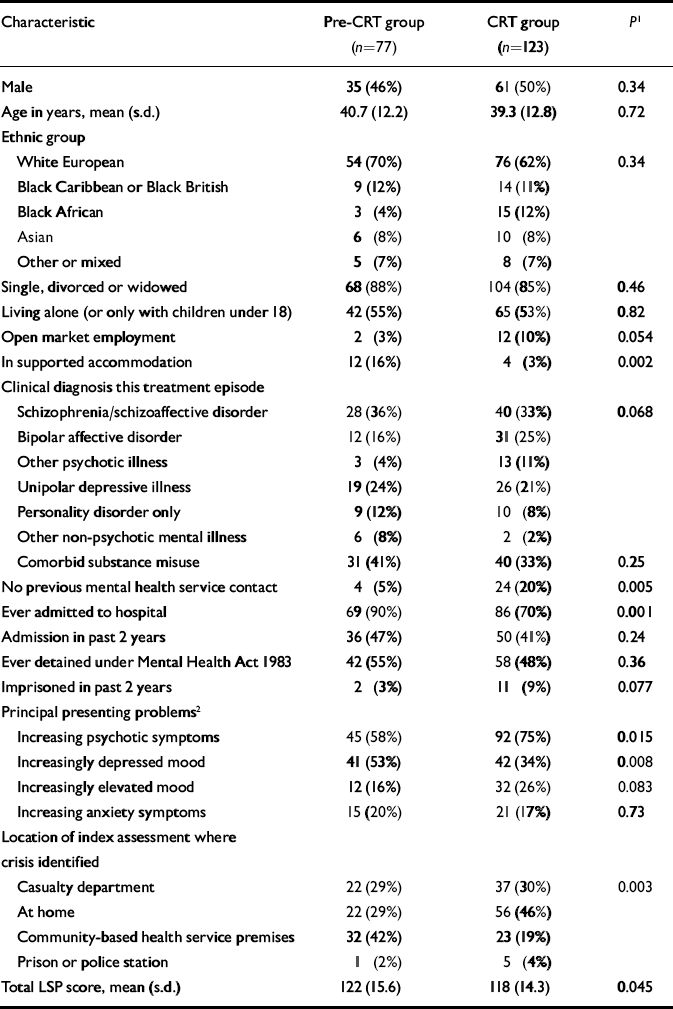
As Table 1 shows, most socio-demographic characteristics of the two groups were similar, but there were some potentially important differences, especially in presenting problems and previous service use. The variables shown are selected from 110 univariate tests carried out for baseline differences. Of these, P values fell below 0.05 in 24 cases (5.5 would be expected by chance) and below 0.01 in 14 (1.1 expected by chance). Thus there were probably systematic baseline differences between the populations from which the groups were drawn.
Table 1 Baseline characteristics of the pre-CRT (control) and CRT (experimental) groups
| Characteristic | Pre-CRT group (n=77) | CRT group (n=123) | P 1 |
|---|---|---|---|
| Male | 35 (46%) | 61 (50%) | 0.34 |
| Age in years, mean (s.d.) | 40.7 (12.2) | 39.3 (12.8) | 0.72 |
| Ethnic group | |||
| White European | 54 (70%) | 76 (62%) | 0.34 |
| Black Caribbean or Black British | 9 (12%) | 14 (11%) | |
| Black African | 3 (4%) | 15 (12%) | |
| Asian | 6 (8%) | 10 (8%) | |
| Other or mixed | 5 (7%) | 8 (7%) | |
| Single, divorced or widowed | 68 (88%) | 104 (85%) | 0.46 |
| Living alone (or only with children under 18) | 42 (55%) | 65 (53%) | 0.82 |
| Open market employment | 2 (3%) | 12 (10%) | 0.054 |
| In supported accommodation | 12 (16%) | 4 (3%) | 0.002 |
| Clinical diagnosis this treatment episode | |||
| Schizophrenia/schizoaffective disorder | 28 (36%) | 40 (33%) | 0.068 |
| Bipolar affective disorder | 12 (16%) | 31 (25%) | |
| Other psychotic illness | 3 (4%) | 13 (11%) | |
| Unipolar depressive illness | 19 (24%) | 26 (21%) | |
| Personality disorder only | 9 (12%) | 10 (8%) | |
| Other non-psychotic mental illness | 6 (8%) | 2 (2%) | |
| Comorbid substance misuse | 31 (41%) | 40 (33%) | 0.25 |
| No previous mental health service contact | 4 (5%) | 24 (20%) | 0.005 |
| Ever admitted to hospital | 69 (90%) | 86 (70%) | 0.001 |
| Admission in past 2 years | 36 (47%) | 50 (41%) | 0.24 |
| Ever detained under Mental Health Act 1983 | 42 (55%) | 58 (48%) | 0.36 |
| Imprisoned in past 2 years | 2 (3%) | 11 (9%) | 0.077 |
| Principal presenting problems 2 | |||
| Increasing psychotic symptoms | 45 (58%) | 92 (75%) | 0.015 |
| Increasingly depressed mood | 41 (53%) | 42 (34%) | 0.008 |
| Increasingly elevated mood | 12 (16%) | 32 (26%) | 0.083 |
| Increasing anxiety symptoms | 15 (20%) | 21 (17%) | 0.73 |
| Location of index assessment where | |||
| crisis identified | |||
| Casualty department | 22 (29%) | 37 (30%) | 0.003 |
| At home | 22 (29%) | 56 (46%) | |
| Community-based health service premises | 32 (42%) | 23 (19%) | |
| Prison or police station | 1 (2%) | 5 (4%) | |
| Total LSP score, mean (s.d.) | 122 (15.6) | 118 (14.3) | 0.045 |
CRT, crisis resolution team; LSP, Life Skills Profile.
1. P values are from chi-squared tests for categorical variables and t-tests for continuous variables.
2. Multiple presenting problems were recorded for many patients.
Comparisons were made on all baseline variables between interview responders and non-responders at follow-up. Few differences were found, but Black Africans (P=0.039) and people assessed in casualty (P=0.013) were less likely to be interviewed, and responders had higher functioning than non-responders on the social contact LSP sub-scale (P=0.018).
In-patient admission in the 6 weeks following the crisis
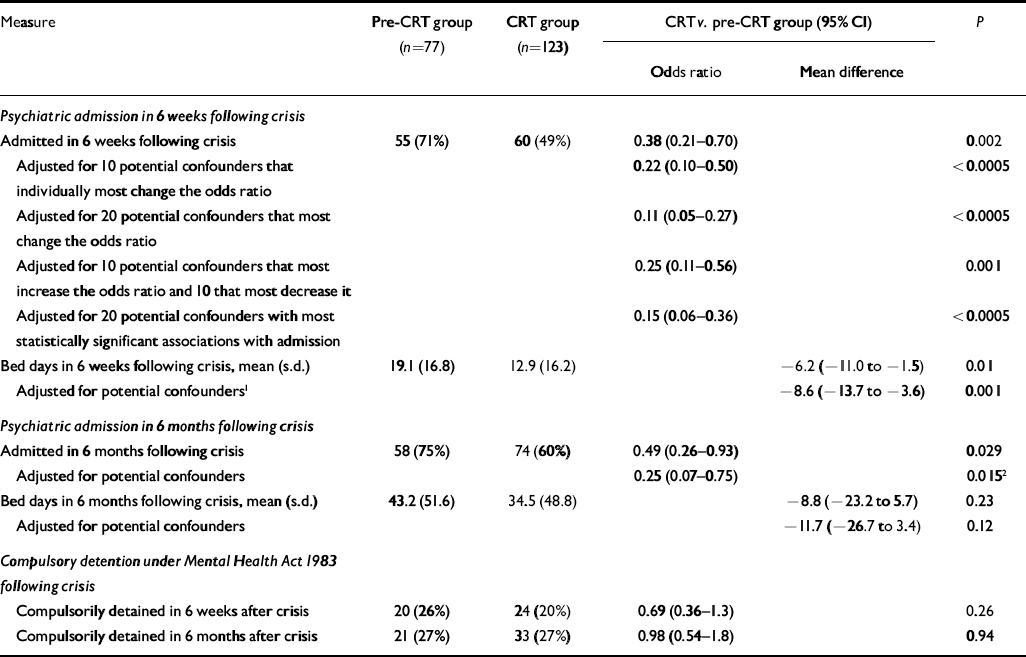
As Table 2 shows, 55 (71%) pre-CRT group members and 60 (49%) of the CRT group were admitted within 6 weeks (odds ratio 0.38, 95% confidence interval 0.21-0.70). The effects of all 110 baseline clinical and social variables on the odds ratio for the association between experimental group and admission were tested, individually and then for planned combinations of variables, as described above. The finding of a highly significant association between experimental group and admission by 6 weeks remained robust throughout all tests involving different combinations of baseline variables, and the odds ratio did not rise above 0.38 in any case.
Table 2 Bed use following the crisis
| Measure | Pre-CRT group (n=77) | CRT group (n=123) | CRT v. pre-CRT group (95% CI) | P | ||
|---|---|---|---|---|---|---|
| Odds ratio | Mean difference | |||||
| Psychiatric admission in 6 weeks following crisis | ||||||
| Admitted in 6 weeks following crisis | 55 (71%) | 60 (49%) | 0.38 (0.21-0.70) | 0.002 | ||
| Adjusted for 10 potential confounders that individually most change the odds ratio | 0.22 (0.10-0.50) | <0.0005 | ||||
| Adjusted for 20 potential confounders that most change the odds ratio | 0.11 (0.05-0.27) | <0.0005 | ||||
| Adjusted for 10 potential confounders that most increase the odds ratio and 10 that most decrease it | 0.25 (0.11-0.56) | 0.001 | ||||
| Adjusted for 20 potential confounders with most statistically significant associations with admission | 0.15 (0.06-0.36) | <0.0005 | ||||
| Bed days in 6 weeks following crisis, mean (s.d.) | 19.1 (16.8) | 12.9 (16.2) | − 6.2 (−11.0 to −1.5) | 0.01 | ||
| Adjusted for potential confounders 1 | − 8.6 (−13.7 to −3.6) | 0.001 | ||||
| Psychiatric admission in 6 months following crisis | ||||||
| Admitted in 6 months following crisis | 58 (75%) | 74 (60%) | 0.49 (0.26-0.93) | 0.029 | ||
| Adjusted for potential confounders | 0.25 (0.07-0.75) | 0.015 2 | ||||
| Bed days in 6 months following crisis, mean (s.d.) | 43.2 (51.6) | 34.5 (48.8) | − 8.8 (−23.2 to 5.7) | 0.23 | ||
| Adjusted for potential confounders | − 11.7 (−26.7 to 3.4) | 0.12 | ||||
| Compulsory detention under Mental Health Act 1983 following crisis | ||||||
| Compulsorily detained in 6 weeks after crisis | 20 (26%) | 24 (20%) | 0.69 (0.36-1.3) | 0.26 | ||
| Compulsorily detained in 6 months after crisis | 21 (27%) | 33 (27%) | 0.98 (0.54-1.8) | 0.94 | ||
1. For secondary outcomes, we have shown only the regression with the 10 potential confounders that most increase the odds ratio and the 10 that most decrease it. Where other regressions yield substantially different results, this is noted in the text.
2. Result not accepted as clearly significant because of fluctuations with different methods of selecting potential confounders.
Secondary hypotheses regarding admission
A 6.2-day difference in mean bed use between the groups also remained statistically significant throughout testing for potential confounders. Logarithmic transformation of bed use data was not used as graphing indicated little skewness. However, there was some clumping due to a substantial number of zero values. In view of this, a non-parametric test was carried out as a sensitivity analysis: Wilcoxon's rank sum test also indicated a significant difference between the groups (P=0.0034).
By 6 months, 58 pre-CRT (75%) and 74 CRT group members (60%) had been admitted at least once, a difference still just reaching the P=0.05 level of significance. A caveat is that once the CRT began work, pre-CRT group members could not be refused access to it. No pre-CRT group member used the CRT during the initial 6 weeks, but 15 used it between 6 weeks and 6 months. However, admission rates are unlikely to be much influenced by this, as 13 of these 15 individuals had been admitted at least once by 6 months despite their contact with the CRT. Adjustment for potential confounders was carried out as before, but now yielded equivocal results, with experimental condition significantly associated with admission by 6 months in some but not all the planned regressions, depending on method of selecting variables (odds ratio for experimental condition varied between 0.25 and 0.78). Confounding thus appeared more likely to account for the difference in admissions at 6 months than at 6 weeks.
The mean difference in bed use between the groups increased from 6.2 to 8.8 between the 6-week and 6-month stages, but standard deviations were wide and at 6 months the difference did not reach the P<0.05 significance level (although for Wilcoxon's rank sum test P=0.05). This finding must be treated with caution, as the availability of the CRT to pre-CRT group members may have reduced pre-CRT bed days. No difference was found in rates of involuntary hospitalisation.
Satisfaction
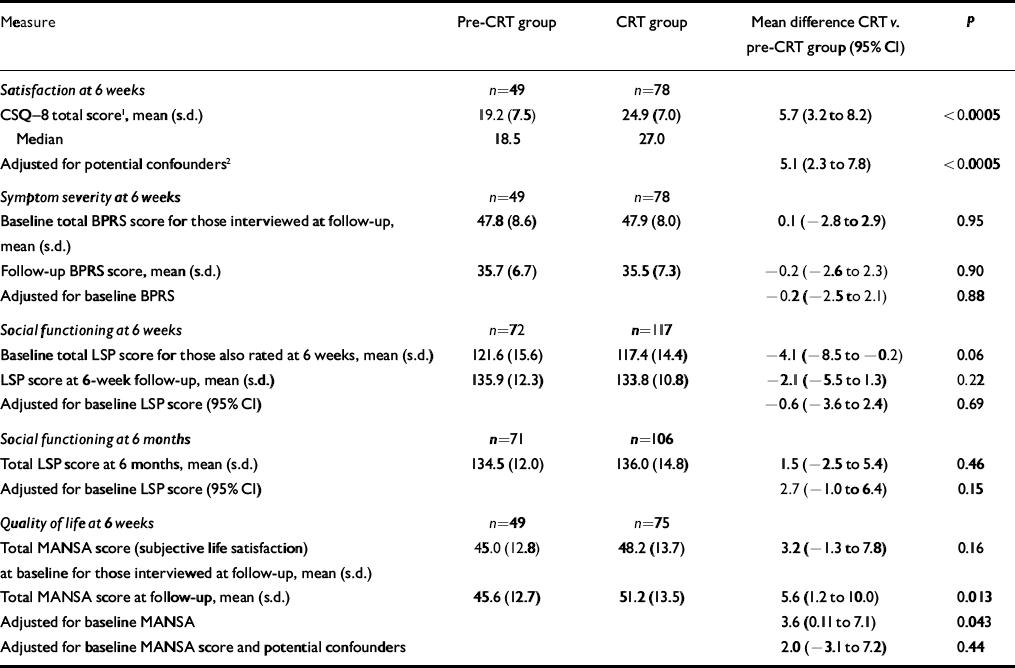
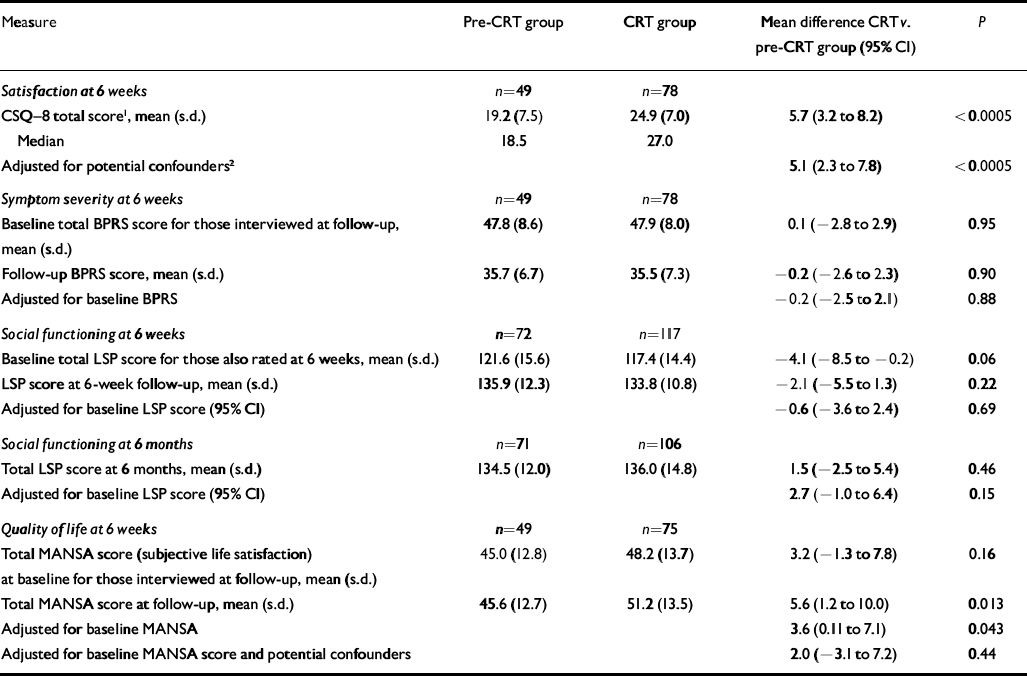
Table 3 shows that a highly significant difference was found in mean and median patient satisfaction scores. The median for the pre-CRT group indicated mild dissatisfaction, the CRT median a very positive view. This result remained highly significant throughout testing for potential confounders.
Table 3 Satisfaction and secondary measures of clinical and social functioning
| Measure | Pre-CRT group | CRT group | Mean difference CRT v. pre-CRT group (95% CI) | P |
|---|---|---|---|---|
| Satisfaction at 6 weeks | n=49 | n=78 | ||
| CSQ-8 total score 1 , mean (s.d.) | 19.2 (7.5) | 24.9 (7.0) | 5.7 (3.2 to 8.2) | <0.0005 |
| Median | 18.5 | 27.0 | ||
| Adjusted for potential confounders 2 | 5.1 (2.3 to 7.8) | <0.0005 | ||
| Symptom severity at 6 weeks | n=49 | n=78 | ||
| Baseline total BPRS score for those interviewed at follow-up, mean (s.d.) | 47.8 (8.6) | 47.9 (8.0) | 0.1 (−2.8 to 2.9) | 0.95 |
| Follow-up BPRS score, mean (s.d.) | 35.7 (6.7) | 35.5 (7.3) | − 0.2 (−2.6 to 2.3) | 0.90 |
| Adjusted for baseline BPRS | − 0.2 (−2.5 to 2.1) | 0.88 | ||
| Social functioning at 6 weeks | n=72 | n=117 | ||
| Baseline total LSP score for those also rated at 6 weeks, mean (s.d.) | 121.6 (15.6) | 117.4 (14.4) | − 4.1 (−8.5 to −0.2) | 0.06 |
| LSP score at 6-week follow-up, mean (s.d.) | 135.9 (12.3) | 133.8 (10.8) | − 2.1 (−5.5 to 1.3) | 0.22 |
| Adjusted for baseline LSP score (95% CI) | − 0.6 (−3.6 to 2.4) | 0.69 | ||
| Social functioning at 6 months | n=71 | n=106 | ||
| Total LSP score at 6 months, mean (s.d.) | 134.5 (12.0) | 136.0 (14.8) | 1.5 (−2.5 to 5.4) | 0.46 |
| Adjusted for baseline LSP score (95% CI) | 2.7 (−1.0 to 6.4) | 0.15 | ||
| Quality of life at 6 weeks | n=49 | n=75 | ||
| Total MANSA score (subjective life satisfaction) at baseline for those interviewed at follow-up, mean (s.d.) | 45.0 (12.8) | 48.2 (13.7) | 3.2 (−1.3 to 7.8) | 0.16 |
| Total MANSA score at follow-up, mean (s.d.) | 45.6 (12.7) | 51.2 (13.5) | 5.6 (1.2 to 10.0) | 0.013 |
| Adjusted for baseline MANSA | 3.6 (0.11 to 7.1) | 0.043 | ||
| Adjusted for baseline MANSA score and potential confounders | 2.0 (−3.1 to 7.2) | 0.44 |
CSQ-8, Client Satisfaction Questionnaire; BPRS, Brief Psychiatric Rating Scale; LPS, Life Skills Profile; MANSA, Manchester Short Assessment of Quality of Life.
1. Range of CSQ-8 scores 8-32: a score of 8 indicates great dissatisfaction, 32 great satisfaction, 20 indifference.
2. In this table, adjusted mean differences relate to the 10 baseline variables producing the greatest increase in adjusted mean difference and the 10 producing the greatest decrease. The results for variables in this table were similar for all methods of adjustment.
How much non-response could have influenced these findings is an important question. To assess this, we considered how far scores for non-responders would have to diverge from those for responders for the overall result to change. If the mean score for all pre-CRT non-responders were 24.7 (2 points above the overall mean for responders in the study sample) and the mean score for all CRT non-responders were 20.7 (2 points below the study mean), the overall means for the pre-CRT group and CRT group would be 21.4 and 23.4, respectively. Assuming standard deviations as for responders, this would just fail to reach statistical significance (t=1.97, P=0.054). Thus, a marked reversal of the pattern observed among responders would have to be present among non-responders for a different overall result to be obtained.
Other clinical and social outcomes
Table 3 also shows symptom severity, which was very similar in the two groups at both times. Baseline LSP scores suggested greater impairment in the CRT group, a difference which had disappeared by the 6-month stage. However, regression with adjustment for baseline score did not yield a statistically significant result. A significant difference in follow-up MANSA score persisted after adjustment for baseline score, but not after adjustment for potential confounders. Adverse events are shown in Table 4. More deaths (4 of them suicides) occurred in the CRT group, but the difference was not statistically significant.
Table 4 Adverse events
| Event | Pre-CRT group (n=77) | CRT group (n=123) | Odds ratio CRT v. pre-CRT group (95% CI) | P |
|---|---|---|---|---|
| Deaths (6-week follow-up) | 0 | 1 (1%) | 0.62 1 | |
| Deaths (6-month follow-up) | 1 (1%) | 5 (4%) | 3.3 (0.37-28.6) | 0.40 |
| Baseline history of suicide attempts (past 2 years) | 30 (39%) | 31 (25%) | ||
| Baseline history of suicide attempts (past month) | 18 (22%) | 17 (14%) | ||
| Any suicide attempt (6-month follow-up) | 17 (23%) | 17 (15%) | 0.58 (0.28-1.2) | 0.16 |
| Adjusted for baseline history of suicide attempts | 0.87 (0.38-2.0) | 0.73 | ||
| Baseline violent or severely threatening behaviour (past 2 years) 2 | 21 (27%) | 37 (31%) | ||
| Baseline violent or severely threatening behaviour (past month) | 10 (13%) | 31 (25%) | ||
| Minor violence 3 or severely threatening behaviour (6-month follow-up) | 16 (21%) | 38 (32%) | 1.8 (0.95-3.3) | 0.07 |
| Adjusted for baseline history of violence | 1.4 (0.69-2.7) | 0.38 |
1. Fisher's exact test.
2. Definition of severe threatening behaviour: threatening someone with a weapon or repeatedly threatening to inflict significant harm on them.
3. All the acts of violence reported fell within the study definition of minor violence, which was that victims did not require hospital admission and did not sustain any lasting disability.
DISCUSSION
Methodological strengths and weakness
The major strength of the design was good external validity. Data were obtained for all eligible crisis presentations, and the routine clinical service was not altered to implement the study design.
Lack of randomisation is an important limitation. The comparison groups were similar on many measures, but the differences were unlikely to be due solely to chance. However, a strength of the study is comprehensive measurement of and adjustment for baseline variables that might be associated with the primary outcomes. It remains conceivable that significant differences in these outcomes are explained by an unmeasured confounder, but residual confounding is relatively unlikely in view of the observations that no adjustment moved the odds ratio much towards 1.0 for admission by 6 weeks or the adjusted mean difference in satisfaction scores much towards 0 (Reference Stewart, Prince, Stewart, Ford and HotopfStewart, 2003).
Successive rather than simultaneous recruitment of the groups means that differences in outcome might have resulted from a change other than the introduction of the CRT, although there were no obvious candidates. Masking the researchers, clinicians or participants was not feasible. The distinctive clinical population of inner London, the newness of the team, the fact that only one CRT and two community mental health teams were involved, and the extensive experience in CRT development of J.H., who was consultant psychiatrist in one of the sectors throughout the pre-CRT and CRT periods, may limit generalisability.
Our methodology set a high threshold for identifying service users as being in crisis. Reduction in admissions may well have been less for crises meeting these relatively stringent criteria than among patients who, before the introduction of the CRT, may have been admitted to hospital despite not meeting these criteria.
Finally, the response rate was relatively low, although higher than in two recent surveys of crisis service users in which response rates were a third or less (Reference Whittle and MitchellWhittle & Mitchell, 1997; Reference Ford, Minghella and ChalmersFord et al, 2001). This probably reflects the difficulties in recruiting people who have recently experienced a mental health crisis. Our assessment of the possible effects of missing data suggests that our finding of greater service satisfaction is unlikely to be entirely attributable to response bias.
Admission patterns
At 6 weeks, there were convincing differences in admission rate and in bed days, indicating that the CRT appeared to serve its intended function of diversion from admission. The difference was, however, smaller than in many earlier studies of intensive home treatment initiated in an emergency (Reference Stein and TestStein & Test, 1980; Reference Hoult, Reynolds and Charbonneau-PowisHoult et al, 1983), and 60% of the CRT group had been admitted by 6 months. The poor social circumstances of many of our service users and the large numbers with a history of violence or involuntary admission may be inimical to home treatment. Moreover, community mental health teams already visited many patients at home: it may be more difficult for new teams to better the outcomes achieved by services that are already substantially home-based.
Although the differences in bed use were limited, they made a clinically important difference to service functioning. At 6 months, mean bed use in the CRT group was 20% lower than in the pre-CRT group. While this was not statistically significant, it does fit with local routine data on bed occupancy in the study sectors, which indicated a substantial fall in bed occupancy, allowing the practice of purchasing overspill beds in the private sector to cease. There was no effect on involuntary hospitalisation, suggesting that it is easier for a CRT to prevent voluntary admissions of reasonably cooperative patients.
Patient satisfaction
Mirroring earlier randomised trials (Reference Hoult, Reynolds and Charbonneau-PowisHoult et al, 1983) and recent uncontrolled surveys, our data suggest that service users prefer CRT care. Given that pre-CRT and CRT care appear similar on most other outcomes, this seems a reasonable justification for favouring this model in service planning. It should be noted, however, that satisfaction was measured at an early stage when patients had experienced only a single episode of CRT care, and we did not investigate the views of carers.
Other outcomes
As in most home treatment studies, our study lacks power for analysis of suicides and other serious adverse events. The greater incidence of deaths in the CRT group is probably a chance finding. Three of the four patients who died by suicide had been admitted to hospital by the CRT: one died by suicide soon after discharge without re-referral to the CRT, one was allowed to discharge himself shortly after admission and died by suicide later that day, and one died by suicide while on leave from hospital. Only one was receiving CRT care when he died. Although four suicides occurred during the 9-month CRT phase of our study, only two were recorded in the following 9 months, during which the CRT continued to operate.
Our investigation gives few grounds for believing that there are major differences between the two models of care in the symptomatic and social progress of individuals following crises. This is not surprising given that many had severe illnesses, limited social resources and long psychiatric histories. For a very brief period of CRT care to have made a detectable difference to aggregate scores for outcomes such as social functioning and quality of life would have been remarkable. If the availability of CRTs does prove to make a difference to patients' engagement and their clinical and social outcomes, this is more likely to be apparent once a cohort has repeatedly been able to avoid hospital admission.
APPENDIX
Operational definition of crisis
A crisis is a situation in which the following three criteria are met.
-
1. A substantial deterioration has occurred in the mental health and/or social functioning of a patient, either against the background of an existing mental disorder or in someone not previously known to services
OR
A significant disruption in the support network and social circumstances of a severely mentally ill person threatens his/her ability to continue to function at an adequate level
AND
-
2. The deterioration or disruption is such that:
the risk that the individual will harm him or herself or others has substantially increased
AND/OR
the individual is no longer able to care for him/herself at an acceptable level, so that there is a threat of significant physical debility or injury resulting from self-neglect
AND/OR
because of his/her lack of caution, the individualis at significant risk of injury, imprudent actions with lasting serious consequences or becoming the victim of assault or exploitation by others
AND/OR
members of the individual's usual support network who are essential to his/her community functioning state that they can no longer sustain their usual role in supporting him/her
AND
-
3. The extent of the deterioration or disruption is so severe that secondary mental health professionals believe that a change in the management of his/her illness must be initiated immediately.
Clinical Implications and Limitations
CLINICAL IMPLICATIONS
-
▪ The introduction of a crisis resolution team was associated with reductions in admission rate and bed use in the 6 weeks following a psychiatric emergency, although findings over 6 months were more equivocal.
-
▪ The reduction was greater in voluntary than in compulsory admissions.
-
▪ Patient satisfaction was greater following introduction of the crisis resolution team, but other clinical and social outcomes were similar.
LIMITATIONS
-
▪ The inner-London setting of the study and the presence of a highly experienced expert on home treatment may limit the generalisability of study findings.
-
▪ The study was quasi-experimental rather than randomised: although thorough attempts were made to adjust for baseline differences, the possibility of unmeasured confounders cannot be ruled out.
-
▪ Interview response rate at 6-week follow-up was only 63.5%, although bed use data were available for the whole sample.
Acknowledgements
We thank Camden and Islington Mental Health and Social Care Trust for their support for this study, as well as all the service users and clinicians who gave their time.




eLetters
No eLetters have been published for this article.