Background
Primary care providers serve at the front line of community-based care (Sandberg et al., Reference Sandberg, Johnson, Robila and Miller2002; Lemon et al., Reference Lemon, Zapka, Estabrook, Erban and Luckmann2003; Grumbach and Mold, Reference Grumbach and Mold2009; Sloane et al., Reference Sloane, Dolor and Halladay2009; Stange and Ferrer, Reference Stange and Ferrer2009). Because research is an essential element in addressing and deconstructing health disparities, it is imperative to gain a better understanding of how to encourage primary care practices (heretofore to be referred to as ‘practices’) to engage in empirical and clinical research. Factors known to influence primary care physicians’ participation in research include: personal interest in the research topic, clinical relevance, sense of project ownership, use of ‘study champions’, clinical revenue cost associated with participation, patient burden, and the use of protocols that are simple and do not interfere with patient care (Murphy et al., Reference Murphy, Spiegal and Kinmonth1992; Ward, Reference Ward1994; Kuvenhoven et al., Reference Kuvenhoven, Dagnelie and de Melker1997; Foy et al., Reference Foy, Parry and McAvoy1998; Temte and Beasley, Reference Temte and Beasley2001). Past research has also spotlighted particular barriers that practices encounter when approached with the opportunity to engage in research: lack of time, lack of familiarity with methodologies and statistical analysis, lack of adequate staffing, and lack of interest, among other issues (Silagy and Carson, Reference Silagy and Carson1989; Stange, Reference Stange1996; Plane et al., Reference Plane, Beasley, Wiesen, McBride and Underbakke1998; Asch et al., Reference Asch, Connor, Hamilton and Fox2000; de Wit et al., Reference de Wit, Quartero, Zuithoff and Numans2001; Rosemann and Szecsenyi, Reference Rosemann and Szecsenyi2004; Hummers-Pradier et al., Reference Hummers-Pradier, Scheidt-Nave, Martin, Heinemann, Kochen and Himmel2008; Bakken et al., Reference Bakken, Lantigua, Busacca and Bigger2009; Johnston et al., Reference Johnston, Liddy, Hogg, Donskov, Russell and Gyorfi-Dyke2010).
Clearly, research in this arena has been fruitful and extensive; yet a vast majority of this research has focused exclusively on micro- (physician-specific) and meso-level (practice-specific) factors. Minimal attention has been paid to the context – the more macro-level issues such as how these barriers relate to practices’ role within the current US health-care delivery system. The current US health-care system is largely a fee-for-service model in which patients are billed separately for each test and procedure. Although not as common, the US health system does also feature capitation payment arrangements, as well as bundled payment (ie, episode-based payment or packing pricing) reimbursement processes. Within any of these particular systems, however, most practices are not evaluated on the amount of research in which they are involved; rather practices’ ‘productivity’ is gauged in terms of the health outcomes of their patients, and more often, by the number of patients these practices see and the revenue that the practice creates. It is necessary to explore practices’ perceived constraints to research within the context of the payment models (specifically regarding fee for service as it is the dominant model) because of the impact and influence these overarching pressures can have on the willingness (and ability) for practices to actually take on research endeavors while maintaining productivity.
Furthermore, past studies in this area have presented micro- and meso-level constraints as mutually exclusive, neglecting to explore how these barriers relate to one another. For example, research protocols that are complex and interfere with patient care certainly negatively affect patient burden, the physician's time, and revenue of the practice itself. Examining these linkages may offer a better understanding of how primary care practices view research opportunities.
This study, utilizing a series of focus groups with health-care providers and administrators from five separate community-based practices, presents practices’ perceived constraints to engaging with research, spotlights particular inter-workings of the practices themselves that can be dramatically affected by various elements of the research process, and examines practices’ willingness to engage in research as they relate to the current function of the US health-care system.
Methods
Participants were recruited from five different US primary care practices out of a total of 12 primary care practices within an independent academic medical center's medical group. This medical group consists of >140 clinical care providers, comprises community-based primary care and specialty-care services in Delaware and New Jersey. Each practice was located in a suburban site in Delaware and had previously participated in the Tailored Navigation Intervention (TNI) study.Footnote 1 Of the five practices, all but one could be characterized as small (four providers or less) and comprising physicians whose full effort was devoted to clinical care. The reimbursement structure was determined by the organization and the same for all physicians and practices.
The five practices were selected through convenience sampling and practice physicians were invited via email to participate. These physicians were encouraged to invite any other staff who they saw as participating in practice-based decision making. There were a total of 17 participants: 13 doctors, three nurses, and one practice administrator. Six of the 13 participant physicians were female and eight of the 13 physicians had been in practice for 10 years or more. Each focus group lasted ∼45 min, and was led by two or more investigators (authors). Utilizing a semi-structured approach, specific questions were asked of each group to prompt discussion and various other questions (that arose during the discussions but were not on the original guide) were explored within each group as well. Each focus group was audio recorded (with the participants’ permission) using a digital recording device and these recordings were transcribed by an unaffiliated professional transcription service. Transcripts were uploaded into NVivo-9® (QSR International), a qualitative data analysis software package. Focus groups were an appropriate method for data collection for this study because as stated by Denzin and Lincoln (Reference Denzin and Lincoln2008: 397), ‘…the synergy and dynamism generated within homogenous collectives often reveal unarticulated norms and normative assumptions.’
Analyses and interpretation of qualitative data
Data were analyzed using a multistep coding process (Miles and Huberman, Reference Miles and Huberman1994; Kvale and Brinkmann, Reference Kvale and Brinkmann2009). Transcripts were first read by each author independently to identify and develop initial coding categories. The goal of this initial analysis process was to identify what participants believed were barriers and constraints to engaging in research. This inductive, open-coding process yielded such codes as time, money, staff/workforce, disruption, methodology, value, and threat, among others.Footnote 2 To better explore the interrelated nature of these constraints, these codes were then used in tandem with the barriers and facilitators noted by previous research (ie, ‘study champion’, protocols, project ownership, clinical relevance, etc.), and the transcripts were again analyzed to explore reoccurring categories and themes within the data. This secondary analysis process revealed numerous connections between constraints. The researchers then explored these connections in terms of how they exist within the larger health-care system. This process spotlighted the participants’ need to produce particular outcomes and that the research-related constraints hinder this production process. The theme of sensitive production process was then used as a code and all interview data were analyzed extensively to continually extract the processes behind this particular theme and until saturation was reached. What emerged from the data was the notion of a valuable and sensitive ‘Flow’ within primary care practice, which is discussed in the section that follows.
To ensure a satisfactory level of inter-coder reliability, the authors met at the beginning and end of each stage of analysis to discuss findings, memos, and notations. Differences between team members regarding particular findings were openly discussed and decisions were based on consensus. We sought to minimize the potential bias of a fellow-physician interviewer by having at least one non-physician co-author at each interview. In addition, analysis of the qualitative data was led by a non-physician co-author.
Results
Practices’ perceived constraints regarding research
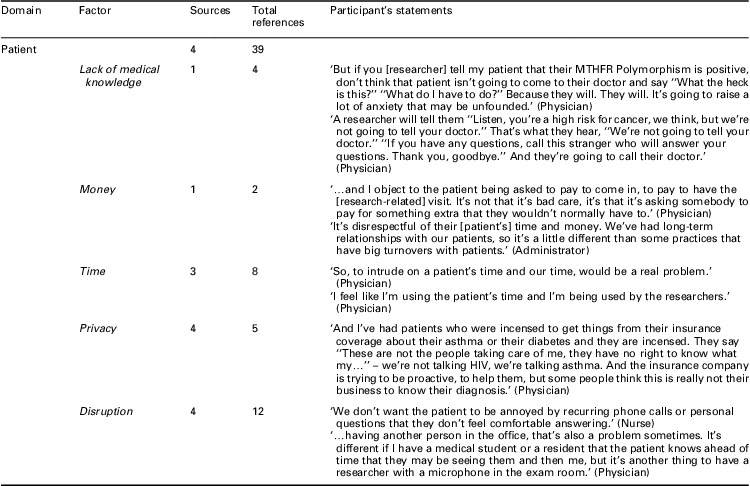
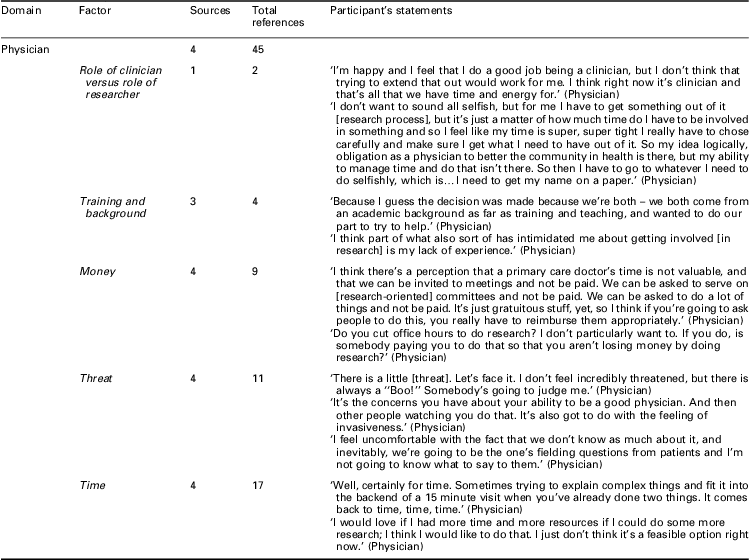
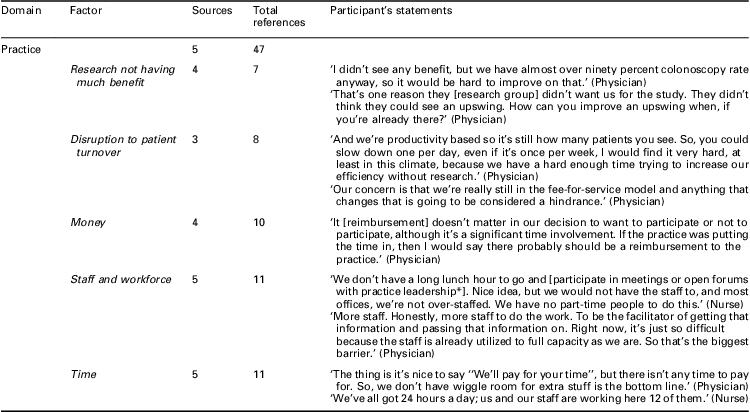
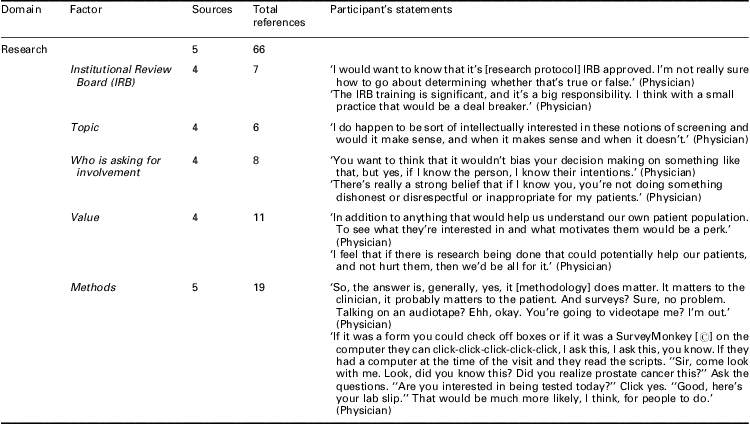
During the initial analyses, perceived constraints to engaging in research were categorized into four related, yet distinct, domains: the Patient, the Physician, the Practice, and the Research. Tables 1–4 present the five most frequently noted characteristics of each domain, the frequency of which they were referenced,Footnote 3 and selected quotes as representative data.
Patient-related perceived constraints

The most discussed factor among any domain was methodology (19; Table 4), with special concern pertaining to physicians’ sensitivity to the data collection processes. As one physician stated:
So, the answer is generally, yes, it [methodology] does matter. It matters to the clinician, it probably matters to the patient. And surveys? Sure, no problem. Talking on an audiotape? Eh, okay. You're going to videotape me? I'm out.
Regarding the Patient domain (Table 1), participants expressed their concerns with how research has the potential to disrupt (12) patients’ personal life (with phone calls or requiring extra visits) and their visit with the clinician, as well as the patient's own time (8).
Within the Physician domain, participants noted that research can intrude on, and even absorb, the physician's time (17; Table 2), with physician–participants specifically noting the difficulty in fitting research efforts into an already saturated work schedule:
Investigator: ‘Is there a major thing that was actually the most problematic for you regarding getting involved with research?’
Participant: ‘Fitting it into an already busy schedule. Yes. Time personally, time with staff. When we're doing a busy clinical practice, where do you?’
Physician-related perceived constraints
Participants, especially physicians, also spoke of the potential threat (11) they could experience from particular methodologies used during the study, but also from the potential of medical uncertainty exposed during patients’ questioning. Hence, it would appear that primary care physicians feel somewhat vulnerable to the aspects of research.
Table 3, which features the practice-related perceived constraints, shows that, although time (11) and money (8) are consistent barriers to research for practices, participants are also concerned with the extent to which the research will affect their patient turnover (8), benefit their practice and their patients (7), and how much it will tie up the staff (11).
Practice-related perceived constraints
*Wording has been changed to protect confidentiality of participants and practice. However, the sentiment/point of the statement has not been altered in any way.
The interconnectedness of these factors
What is apparent from these specific data, and from past studies, is that there is significant overlap among these factors. Although often featured in previous literature as mutually exclusive, these constraints/factors do not appear to exist independent of one another. For example, one physician stated, ‘So anything more than minimally invasive would really be difficult. If it meant seeing one less patient a day it would be a bust’,Footnote 4 which exhibits the related nature of research methodology and patient turnover.
Similarly, another physician noted that if the project required a patient to undergo a particular test (eg, a cancer screening) and the results came back positive, the patient would probably not raise their questions with the designated researcher; rather they will turn to their doctor:
While the records may not come to us officially to put in the chart as this test was done, we're still going to be fielding those questions I think, because you're raising their anxiety.
Hence, even if the research-related tests are conducted external to the visit with their physician, the physician will still be forced to confront the aftershocks of the research procedures, thereby impacting the physician's time and role as a researcher/clinician.
Moreover, Table 4 shows that the methodology utilized in the research can have an impact on whether or not participants would be willing to engage in the research – the more invasive being more problematic. However, this issue was also raised in terms of disruption to the patient–participants voiced their concerns of patients being bothered or oppressed by particular elements of the research methods.
Research-related perceived constraints
The tables also provide evidence of the consistency of particular concepts across domains. For example, and as noted earlier, time is considered an important factor when making the decision to engage in research and is related not only to the Patient (ie, the patient's time is valuable and should not be taken for granted), but also to the Physician (ie, taking extra time during the visit to explain things to patients, and/or personal time to actually do research or talk with researchers), and the Practice itself (ie, no one in the practice has ‘extra’ time to give to research). This was also evident with money; concerns were frequently voiced about research causing unnecessary payments (for visits) for the Patient, lack of proper reimbursement for the Physician, and research lending to an interference with patient turnover affecting revenue for the Physician and for the Practice.
As evident from Tables 1–4, participants spoke of the inter-workings of their practice, as well as their personal responsibilities, as sensitive and vulnerable to research-related factors: seeing one less patient as being a ‘bust’, a staff member having to miss 40 min for a meeting as being detrimental to the practice, data collection straining an already tightly scheduled visit, test results requiring additional discussions and/or visits, and clinicians being quite wary to assume the mantle of the ‘researcher’ in addition to their physician role. Secondary analyses were therefore conducted to examine: (a) how the interconnections among the perceived constraints can help explain why aspects of primary care seem sensitive and vulnerable to research-related efforts and (b) how this sensitivity may/may not be influenced by the current US health-care delivery system and the payment/reimbursement models.
The value of ‘Flow’ and a macro-level perspective
Physicians (from separate focus groups) noted the value and vulnerability of a ‘Flow’ to their practice and for their patients:
Office flow is really number one. So, if [research] interfered with office or patient care, then we'd probably be more reluctant.
Although, the research assistant needs to review the schedule in advance and that kind of thing, is this still going to be somewhat intrusive to the office flow? Make sure that we knew specifically how the logistics would go for that one.
So, I mean, like how much would it affect our patient flow? That's probably big for me, especially because I'm very, like, ‘Oh my gosh, we're on-time!’, so that is a big one for me.
The data suggest, however, that there is something much more to this notion of a ‘flow’ within primary care – there appears to be a balance sought by practices, and engaging in research has the potential to disturb this balance. More specifically, there appears to be a multi-level ‘Flow’ (ie, beyond mere office and patient flow) that is sustained and protected by those involved in primary care, especially physicians (as the assumed leaders of the practice) with regard to: (a) their role and responsibilities as a clinician (individual level), (b) the conversation/exchange with their patient (interaction level), and (c) the inter-workings of the practice in which they work (organization level).
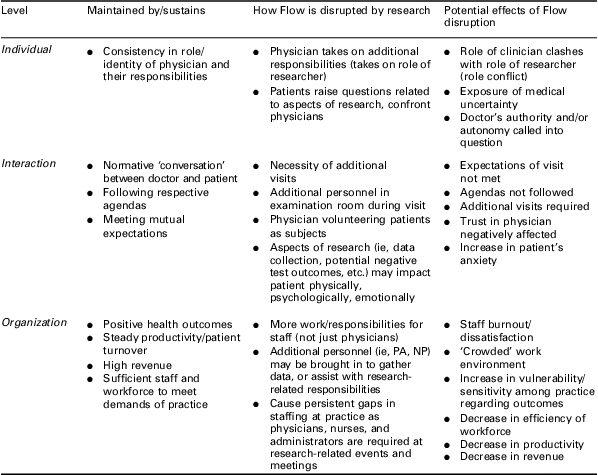
Table 5 depicts this broader understanding of Flow within primary care by exhibiting how it is maintained at each specific level, how research has the potential to disrupt Flow, and the possible effects of Flow disruption. Examining the interconnections among the perceived constraints suggest that, although each level of Flow (individual, interaction, and organization) has its own principles and functions, each level affects/impacts each other level. For example, a physician interested in research assumes more responsibilities external to those akin to the fundamental role of the physician, thereby potential disrupting Flow at the individual level. This shift, albeit possibly quite minute, can negatively affect Flow at the interaction level by limiting the time the doctor has with patients and/or affecting the patients’ emotional/psychological health. This could then lend to a drop in patient turnover and a decrease in overall revenue, and, as was presented earlier, even the drop in one patient is perceived as a ‘bust’ for these practices. For these practices, engaging in research while maintaining Flow at each level is much like attempting to add a chainsaw while currently juggling three tennis balls (as outlined in Table 5). Engaging in research not only has the potential to disrupt Flow at each level, but even the fear of the potential disruption to Flow can be seen as a barrier to participation and affecting the facility's willingness to engage in research.
When looking at these issues from a macro-level perspective, however, it is clear that the maintenance of Flow contributes to the desired outcomes of primary care practice: high revenue, effective patient care, efficient practices, and physician/staff well-being. Yet, according to participants, these outcomes appear to be dictated by the payment system/structure within which the practices reside.Footnote 5 In turn, from this broader perspective, research has the potential to negatively affect the production of these outcomes.
The following discussion among two clinician-participants highlights how research can significantly affect the efficiency and productivity of the practice:
Physician A: ‘And we're productivity-based so it's still how many patients you see. So you could slow down one [patient] per day (pause) even if it's one per week, I would find it very hard, at least in this climate…’
Physician B: ‘And this is, and just to make it clear…this is an outpatient practice. It's the same expectations as any other outpatient office.’
These physicians note that there are certain ‘expectations’ related to ‘how many patients you see’ and that this is not only important to the practice itself but also a valued element of the productivity-based system nested within US health-care delivery. Similarly, participants frequently noted the overarching payment system as constraining their ability and willingness to engage in research as the system (in this case, the fee-for-service model) touts the value of certain practice outcomes, specifically those in line with ‘productivity’, such as revenue and patient turnover.
Our concern is that we're really still in the fee-for-service model and anything that changes that is going to be considered a hindrance and it's probably very…it hasn't been accepted at least at the levels I've seen in terms of the groups here in terms of research. (Physician)
This is not to say that these practices are not concerned with other outcomes such as patients’ health, well-being of physicians/staff, or efficient care delivery. Rather, what these data suggest is that the dominant funding model specific to the US health-care delivery system predicts and outlines expectations of primary care facilities in terms of outcomes and overall productivity. Hence, the overarching payment system actually ‘designs’ the Flow. Therefore, these data suggest that, although research has the potential to negatively affect Flow and the individual, interactional, and organizational-level outcomes (as outlined in Table 5), from a macro-level perspective, the pressures and expectations from the payment model designs the Flow and dictate these outcomes, thereby stifling these practices’ willingness and ability to engage in research.
In summary, what appears from primary and secondary analyses is that these constraints to research are indeed interrelated, but what is most notable is that these factors actually speak to a desire (or even necessity) of practices to sustain a balance, or Flow. This Flow is evident at the individual level (identity/role of physician), the interaction level (doctor–patient visit/conversation), and the organization level (inter-workings and outcomes of practice), and is essential for yielding the outcomes dictated by funding/reimbursement models.
Discussion
Past studies have highlighted the concept of ‘patient flow’ (a.k.a. patient turnover) as being affected by research (Asch et al., Reference Asch, Connor, Hamilton and Fox2000), the complicated nature of simultaneous researcher and physician roles (Shelton et al., Reference Shelton, Wofford, Gosselink, McClatchey, Brekke, Conry, Wolfe and Cohen2002), and the intermingling of micro-level (practitioner characteristics) and meso-level (culture of the practice) factors as affecting practices’ willingness to engage in research (Verhoef et al., Reference Verhoef, Mulkins, Kania, Findlay-Reece and Mior2010). Furthermore, a general concept of ‘flow’ has certainly been explored in previous research.
Mihaly Csikszentmihalyi (Reference Csikszentmihalyi1990; Reference Csikszentmihalyi1997; Nakamura and Csikszentmihalyi, Reference Nakamura and Csikszentmihalyi2002) discusses how flow can be achieved in the work place when perceived challenges extend (neither under- or over-stress) personal capabilities, there is a clear understanding of goals and prompt feedback regarding progress. When these conditions are met, individuals can be said to be ‘in flow.’ On the other hand, anxiety, according to Csikszentmihalyi, is experienced when the challenges of work overwhelm the individual's skills. This notion of individual-level flow raised by Csikszentmihalyi is quite similar to that offered within this specific study regarding the Flow maintained by the consistency of the physician's role and responsibilities. As outlined in Table 5, the introduction of research can disrupt this particular level of Flow by broadening and multiplying the duties and tasks required by the physician, adding the role of the researcher to the ever-present role of the physician, and even spotlighting (in a negative sense) concepts and outcomes that the physician may not be familiar with.
‘Flow’ within primary care practice
PA = physician assistant; NP = nurse practitioner.
In the physiological sense, Flow (as it explored in this specific study) is similar to homeostasis as it relates to the human body. Claude Bernard introduced the notion of homeostasis as the adapting and regulatory mechanism of systems to self-police and maintain a stable and constant condition of properties such as temperature and the pH of the blood (Selye, Reference Selye1976). In this specific study, we extend this perspective to suggest that the goal of primary care providers is to maintain homeostasis and balance (ie, maintain Flow) within their organization, during their interactions with their patients, and within themselves regarding their responsibilities and professional duties. For practices, the introduction of stress (ie, research) requires a response and adaptation that is often perceived as overtly detrimental to the outcomes dictated by the payment/reimbursement models. Therefore, research may likely be avoided.
Regarding the macro-level perspective and how the perceived constraints fit within the context of the US health-care system, we suggest that the paramount mechanisms affecting practices’ willingness to engage in research are not the barriers discussed in previous research, or those offered in Tables 1–4 of this study, but rather the outcomes of well-maintained Flow – revenue, health outcomes, and effective and efficient practices. As stated by the participants, these outcomes must be met for their practices to survive. Engaging in research is unlikely to be fiscally beneficial. As Landon et al. (Reference Landon, Reschovsky, Reed and Blumenthal2001) argue, the financial climate in which the organization exists, as well as the features of the health-care market, affect the physicians’ approach to care (which we argue includes their willingness to engage in research). Similarly, Shelton et al. (Reference Shelton, Wofford, Gosselink, McClatchey, Brekke, Conry, Wolfe and Cohen2002: 88) state, ‘This problem of retention [of primary care practices in research] is likely to occur more commonly in the future as recruitment efforts face an increasingly business-like health care environment that focuses on clinical productivity.’
Within this study, the primary care physicians stated that they are strongly encouraged by their organization to engage in research, but such activities are not regarded or expressed as mandatory, unlike the necessity of meeting the productivity-based expectations. In this sense, research can be viewed as extracurricular and/or supplemental to their primary role and responsibilities. Therefore, until research activity is regarded as normative within primary care (ie, required as part of the outcomes), and/or a reward-for-research model is offered (thereby possibly reprioritizing outcomes), and/or disruptions to Flow become standard, research will continue to be seen as outside the realm of responsibilities for practices, and as a foreign invader on the Practice, the Physician, and the Patient.
Previous work in this area has done well to spotlight the barriers and facilitators affecting practices’ ability and willingness to engage in research; this specific study suggests that, unless researchers can create ‘invisible’ protocols that leave a negligible (if any) footprint on the practice, attention must turn toward the oppressive nature of the overarching productivity-based payment systems in which these practices exist. These perceived constraints and barriers do not exist on their own, they exist within a larger context that stifles and restricts the activity practices can engage in. If practices serve at the frontline of community-based care, then they, and research stemming from these institutions, are a key to promising efforts toward dismantling health-related disparities. Future research should focus on further untangling how practices can promote promising research agendas while still maintaining productivity such as the feasibility and general impact of current research-related requirements for recertification, and the availability and attainment of grants specifically aimed toward primary care providers interested in research.
Limitations
The findings presented here may not be representative of all practices’ perceived constraints, given that only five practices were studied. Furthermore, as noted earlier, because the majority of participants in the focus groups were physicians, an extensive amount of data was from the physicians’ perspectives. Although it is often the physician making the decision for the practice to participate in research, a more extensive project would include more data from nurses and administrators involved in these practices. Another limitation is the possibility that the questions asked and the topics covered may have influenced the rate of which certain factors/issues were raised by the participants in that the types of questions and question content could have made certain factors more salient. However, this is an issue of any study involving focus groups.
As noted, this study features five practices nested within the fee-for-service model. Clearly, this has significant impact on the findings presented, and the findings presented in this paper are not generalizable to all primary care practices in all forms of payment/reimbursement models. As no comparator model was explored in this study, it could be argued that the inferences made from the data, specifically that the payment system/structure dictates Flow and the outcomes of primary care practices, may be specific to practices within the fee-for-service model. Perhaps, the productivity-based outcomes such as high revenue, effective patient care, efficient practices, and physician/staff well-being are not the result of the reimbursement model, but fostered by providers’ (within the practice) own drive to provide patients with high-quality care, enhanced coordination and continuity of care, and greater access to that care – all of which could be negatively affected by engaging in research. Future research should examine the constraints to research faced by practices from various quality- and productivity-based payment models to further explore these issues.
Conclusions
The interconnectedness of the perceived constraints affecting practices’ willingness to engage in research suggests that there is a Flow within primary care that is highly valued but also sensitive to research-related efforts. The maintenance of Flow at each level (Individual, Interaction, and Organization) perpetuates the outcomes dictated by the current payment/reimbursement models (namely, the fee-for-service model) nested within the US health-care system, and therefore must be protected and sustained. Given that engaging in research poses a potential threat to Flow at any level and overall, and could negatively impact general revenue, patient outcomes, and the overall well-being of the practice, it is argued that the risk of research contaminating and/or hindering the productivity required by the practice is often perceived by practices as outweighing the potential benefits. We argue that this is the true underlying issue regarding practices’ lack of involvement in research. The findings from this particular study are in agreement with those of previous studies that suggest that it will continue to be difficult to engage primary care practices, those most connected to the community, in research endeavors until changes are made at the structural and policy level; however, this specific study further argues that attempts must also be made to alter the driving forces behind the productivity-based fee-for-service model in order to allow providers opportunities to maintain Flow while also engaging in research.
Acknowledgments
This project was carried out with the support of the Cancer Development Award, CCDA – 08-107-01, from the American Cancer Society. The authors would like to thank Dave Ermann, PhD, Jenn Kennard, MD, and Tim Kennard, MD for reviewing an earlier draft of this paper.