


Epidemiological data showing a greater prevalence of eating disorders in industrialised societies than in developing societies suggest that the cultural context may be one important aetiological component. However, specific cultural mechanisms that mediate disordered eating remain poorly understood. Previous attempts to establish a relationship between media exposure and eating disorders have been limited by the use of study subjects from environments in which there is chronic exposure to Western media imagery and disordered eating is already prevalent. The purpose of this study was to evaluate the impact of the recent introduction of Western television on disordered eating among ethnic (indigenous) Fijian adolescent girls — a relatively media-naïve population in which disordered eating previously was thought to be rare. To our knowledge, this is the first study investigating patterns of disordered eating before and after prolonged television exposure in a developing society. Demonstration of a significant impact of media exposure would allow insight into the pathogenesis of eating disorders and suggest potential preventive strategies.
METHOD
The impact of television exposure on indicators of disordered eating was investigated via a prospective, multi-wave cross-sectional design in which two separate samples of ethnic Fijian adolescent girls were assessed in Nadroga, Fiji. The first wave occurred in 1995, within a few weeks of the introduction of television to Nadroga, and the second in 1998, after the area had been exposed to television for 3 years. Qualitative methods — borrowed from the standard toolbox of anthropological methodology and involving a detailed analysis of narrative data to illuminate how cultural processes affect feelings and behaviours in this context — were used to complement quantitative methods. Specific research questions included: whether exposure to Western television has stimulated disordered eating behaviour despite local cultural practices that have traditionally supported robust appetites and body shapes; whether markers of disordered eating in Fiji are associated with body dissatisfaction as they are in the West; and whether a shift away from traditional values — as evidenced by intergenerational disparities in attitudes concerning diet — may be one mechanism mediating between television exposure and disordered eating.
Study site
Fiji was selected as a study site because of its extremely low prevalence of eating disorders, having only one reported case of anorexia by the mid-1990s. The Nadroga province of Fiji was selected for its lack of exposure to television until mid-1995. Similar to other Polynesian groups (Reference PollockPollock, 1995), ethnic Fijian traditional aesthetic ideals reflect a preference for a robust body habitus; thus, the prevailing ‘pressure to be slim’ thought to be associated with dieting and disordered eating in many industrialised societies was distinctly absent in traditional Fiji. In addition, traditional Fijian values and practices encourage robust appetites and a widespread vigilance for and social response to appetite and weight loss. Individual efforts to reshape the body by dieting or exercise thus traditionally have been discouraged (Reference BeckerBecker, 1995; Reference Becker and HamburgBecker & Hamburg, 1996).
Study population
The study population comprised all ethnic Fijian adolescent girls enrolled in Forms 5-7 at two secondary schools in Nadroga during the respective data collection periods. Written informed consent was obtained from subjects and a corresponding parent or guardian. Sixty-three respondents participated in the study in 1995, within a month of television being introduced to the area, and 65 respondents participated in 1998, after television had been broadcast to the area for 3 years. Information about the total number of students meeting inclusion criteria was not available in 1995; in 1998, the response rate was 71%.
Data collection
Subjects in both samples responded to a modified 26-item eating attitudes test (EAT-26; Reference Garner, Olmsted and BohrGarner et al, 1982) that included questions concerning bingeing and purging behaviours. The EAT-26 has been in widespread use in a variety of cultural settings and required no translation for use in this study population because all subjects were fluent in English; however, to enhance comprehensibility, concepts or words that were thought potentially unfamiliar to subjects were explained orally in both English (the language of instruction) and the local Fijian dialect (Nadroga, an unwritten variant of standard Fijian) at the discretion of the investigators. An EAT-26 score greater than 20 was considered to be high (cf. Reference Garner, Olmsted and BohrGarner et al, 1982). In addition, subjects responded to questions concerning household ownership of television and frequency of television viewing. Weight and height were measured also. Respondents in the two waves who self-reported either bingeing or purging behaviours were asked to respond to a semi-structured interview developed for this study, keyed to clinical definitions of bingeing and purging to confirm the behaviour (e.g. to determine whether vomiting was induced and directed towards weight control).
In 1998, additional survey questions elicited data on body image, dieting and potential intergenerational disparities between subjects and their parents with respect to traditions concerning diet and weight. For example: How important is it to you to weigh what you would like to weigh? Would it bother you if you were too thin? Would it bother you if you were too heavy? Do you ever think that you look too big or too fat? Do you ever think that you should eat less? Have you ever tried to change what you eat in order to change your weight? Have you ever tried to change how much you eat in order to change your weight? Do your parents or family ever say that you should eat more? In addition, narrative data were collected via openended, semi-structured interviews from a subset of 30 purposively sampled respondents with a range of disordered eating attitudes and behaviours and television viewing habits within the original sample. Questions probed attitudes and practices concerning diet and weight relative to local cultural traditions and exposure to television within this peer environment. For example: How do you feel about your weight? Have you ever tried to gain or lose weight? Do you want to look different from the way your parents think you should look? How do you feel about eating when you go to a [traditional feast]? What do you think of American TV? Do you admire any characters on TV? Do you ever wish you could be more like them? Do you think TV has affected cultural traditions in Fiji?
Data analysis
Sample differences in television exposure, age, body mass index, bingeing and purging behaviours, and EAT-26 scores were examined. Student'st-tests were used to test for differences in means across samples. Differences in proportions were assessed using χ2 tests and corresponding exact P values due to small sample sizes. Finally, adjusted odds ratios were obtained from logistic regression models to examine the associations among markers of disordered eating, body dissatisfaction and intergenerational disparity. Narrative data from the 1998 sample were audiotaped, transcribed and analysed for thematic content and frequency of responses with the assistance of ATLAS.ti (Reference MuhrMuhr, 1997).
RESULTS
Quantitative data
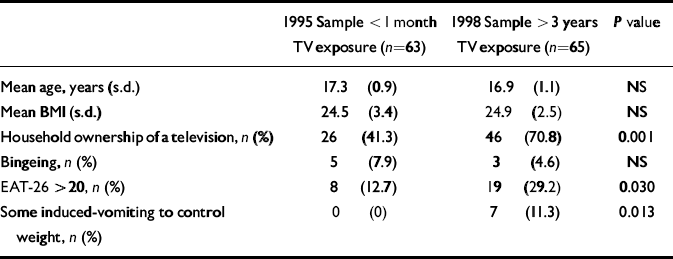
The mean age in years in the 1995 and 1998 samples was 17.3 (s.d.=0.9) adn 16.9 (s.d.=1.1), respectively. The mean body mass index (BMI) was 24.5 (s.d.=3.4) and 24.9 (s.d.=2.5), respectively. Table 1 shows that there were no significant differences between the samples in mean age or body mass index. By study design, the samples were chosen for their markedly different duration of television exposure; television was introduced to Nadroga just prior to the beginning of the study, so the 1995 sample had been exposed for less than one month; by contrast, the 1998 sample had been exposed to television for just over 3 years. Television exposure within the respective samples appeared relatively homogeneous, with virtually all subjects (98% and 97%, respectively) reporting some television viewing at the time of the survey. Thus, chronicity of television exposure to the community, reflected by differences between the 1995 and 1998 samples, was the major variable chosen for assessment of the effects of television viewing on disordered eating attitudes and behaviours. In addition to chronicity of exposure, the samples differed significantly with respect to access to television viewing, as reflected by between-sample differences in the prevalence of household ownership of television: 41.3% of the 1995 sample indicated household ownership of a television, which increased to 70.8% in 1998 (χ2=11.31, d.f.=1, P=0.001).
Table 1 Comparison between 1995 and 1998 samples with respect to age, body mass index (BMI), household ownership of television, bingeing, purging and high EAT-26 scores
| 1995 Sample < 1 month | 1998 Sample > 3 years | P value | |||
|---|---|---|---|---|---|
| TV exposure (n=63) | TV exposure (n=65) | ||||
| Mean age, years (s.d.) | 17.3 | (0.9) | 16.9 | (1.1) | NS |
| Mean BMI (s.d.) | 24.5 | (3.4) | 24.9 | (2.5) | NS |
| Household ownership of a television, n(%) | 26 | (41.3) | 46 | (70.8) | 0.001 |
| Bingeing, n(%) | 5 | (7.9) | 3 | (4.6) | NS |
| EAT-26 > 20, n(%) | 8 | (12.7) | 19 | (29.2) | 0.030 |
| Some induced-vomiting to control weight, n(%) | 0 | (0) | 7 | (11.3) | 0.013 |
Two significant between-sample differences on indicators of disordered eating were identified. First, the percentage of subjects with EAT-26 scores greater than 20 was 12.7% in 1995, compared with 29.2% in 1998 (χ2=5.25, d.f.=1, P=0.030). Within the 1998 sample, EAT-26 scores greater than 20 were significantly associated with dieting (χ2=8.20, d.f.=1, P=0.006) and self-induced vomiting (χ2=12.10, d.f.=1, P=0.002), as expected, indicating its likely value as an indicator of disordered eating in this population. Second, the percentage of subjects reporting self-induced vomiting to control weight was 0% in 1995 but had reached 11.3% by 1998 (χ2=6.95, d.f.=1, P=0.013). There was no confirmed diuretic or laxative use to lose weight nor BMI consistent with anorexia nervosa (i.e. ≤17.5) (American Psychiatric Association, 1994) in either sample. Finally, the frequency of self-reported binge-eating was not significantly different in the 1995 and 1998 samples: 7.9% and 4.6%, respectively (Table 1).
Variability in daily television viewing was not substantial enough in the 1995 and 1998 samples to allow for meaningful analysis of the association between frequency of viewing and disordered eating attitudes and behaviours. However, we were able to examine the association between television ownership and disordered eating. Respondents living in households with a television set were more than 3 times as likely to have an EAT-26 score greater than 20 (OR=3.47; 95% CI 1.21-9.98; P=0.021). This association was somewhat attenuated after controlling for sample year (OR=2.86; 95% CI 0.97-8.44;P=0.057). Given the local practice of collective viewing at one another's homes, we consider household television ownership to be an indicator of community access to television in addition to a marker of individual exposure.
Next we tested the hypotheses that body dissatisfaction (as reflected in the opinion that one should eat less) and intergenerational disparity in values placed on robust appetites were associated with self-induced vomiting and high EAT-26 scores within the 1998 sample. As predicted, a significantly higher proportion of subjects who felt that they should eat less reported self-induced vomiting (21.4% v. 2.7%, χ 2=5.82, d.f.=1, P=0.037). Notably, self-induced vomiting was not associated with BMI, indicating that the subjects' perceived rather than actual weight was the salient predictor of purging behaviour. Moreover, high levels of perceived intergenerational disparity on the issue of eating less were associated with an increased probability of self-induced vomiting (26.3% v. 4.4%, χ2=6.75, d.f.=1,P=0.019). In a multivariate logistic regression model, the likelihood of having an EAT-26 score greater than 20 was significantly higher also for those who reported feeling that they should eat less (OR=7.42, 95% CI=2.12-30.93, P=0.003), independent of subjects' BMI.
Baseline survey data on dieting were not collected in 1995 because ethnographic data had demonstrated previously that dieting for weight reduction was rare in Fijian traditional culture (Reference BeckerBecker, 1995). By 1998, however, survey data indicated that dieting had become extremely prevalent among the study population, with 69% reporting that they had dieted to lose weight at some previous time and 62% reporting that they had engaged in dieting behaviour in the 4 weeks prior to the study. In addition, 74% of the 1998 study population reported that they felt ‘too big or fat’ at least some of the time, in sharp contrast to previous prevailing traditional norms supporting a large body size. Feeling ‘too big or fat’ was significantly associated with current dieting (χ2=10.04, d.f.=1, P=0.003), suggesting that body dissatisfaction expressed in this way has concrete behavioural manifestations in this context.
Qualitative data
Several themes emerged from the open-ended interviews in 1998 that suggest television's profound influence on attitudes and behaviours concerning diet, weight and body shape in this peer environment. First, narrative data revealed prevalent admiration for characters seen on television as well as explicit interest in emulating them through changing behaviour, clothing or hairstyle or through reshaping the body; indeed, all subjects but one (of note, one without a history of vomiting or a high EAT-26 score) reported this. Of the subjects interviewed, 83% responded that they felt television had specifically influenced their friends and/or themselves to feel differently about or change their body shape or weight and 77% reported that television had influenced their own body image. Indeed, they frequently articulated a desire to lose weight or reshape their body in order to become more like a Western television character (see Appendix). Of note, the subjects with high EAT-26 scores or induced vomiting were more likely (85%) than subjects without high EAT-26 scores or vomiting (60%) to report television's influence on their own body image.
Respondents demonstrated a keen interest in enhancing their prospects of securing a job or in accomplishing work at home, with 40% of subjects interviewed rationalising their desire to eat less or lose weight as a means of improving career prospects or becoming more useful at home. In addition, 30% of those interviewed indicated that television characters served as role models concerning work or career issues (see Appendix). Finally, all subjects interviewed identified ways in which television affected traditional values or behaviour. Some subjects also expressed their awareness of developing intergenerational tensions around the teenagers' adoption of Western customs viewed on television and specifically articulated conflict concerning expectations about an appropriate amount of food to eat. For example, 31% of the study population perceived that parents felt that they should eat more than they, themselves, felt was sufficient (see Appendix).
DISCUSSION
This study represents the first known investigation of television's impact upon disordered eating attitudes and behaviours in a traditional society. Survey data demonstrate a significant increase in the prevalence of two key indicators of disordered eating among this study population of ethnic Fijian adolescent girls — high EAT-26 scores and self-induced vomiting to lose weight — following novel, prolonged television exposure in their community and a concomitant increase in the percentage of households owning television sets. In addition, narrative data explicitly link changing attitudes about diet, weight loss and aesthetic ideals in the peer environment to Western media imagery. The impact of television appears especially profound, given the longstanding cultural traditions that previously had appeared protective against dieting, purging and body dissatisfaction in Fiji.
Relationship among culture, the media and eating disorders
Current understanding of how cultural context promotes risk for eating disorders links body dissatisfaction to internalisation of a cultural valuation of thinness, thus predisposing towards disordered eating (Reference Garner, Garfinkel and SchwartzGarner et al, 1980; Reference Striegel-Moore, Silberstein and RodinStriegel-Moore et al, 1986). With the theoretical premise that exposure to idealised images of beauty in the media stimulates social comparison (Reference FestingerFestinger, 1954) and potential body image disturbance or dissatisfaction (Reference Heinberg and ThompsonHeinberg & Thompson, 1992), numerous observational studies have investigated how media exposure (specifically, televised and print media from the women's fashion industry) is related to disordered eating. Several of these studies have demonstrated an association between reported media exposure and various indices of disordered eating (e.g. Reference Stice and ShawStice & Shaw, 1994; Reference Tiggemann and PickeringTiggemann & Pickering, 1996; Reference Field, Cheung and WolfFieldet al, 1999). Whereas a causal relationship is difficult to establish in observational studies, an increase in indices of disordered eating has been documented following the experimental manipulation of subjects by exposure to media-generated images (e.g. Reference IrvingIrving, 1990; Reference RichinsRichins, 1991; Reference Stice and ShawStice & Shaw, 1994). However, a number of studies found that only vulnerable subjects (i.e. those with some underlying eating disorder symptomatology or body dissatisfaction) were affected adversely by experimental media exposure (e.g. Reference Hamilton and WallerHamilton & Waller, 1993), whereas others found no clear impact of media exposure upon indices of disordered eating (e.g. Reference Cusumano and ThompsonCusumano & Thompson, 1997).
With one exception (Reference RichinsRichins, 1991), these studies did not incorporate qualitative data; thus, subjects' experience of how media consumption may affect body image and dissatisfaction or disordered eating is not well understood. Moreover, these studies have uniformly examined media exposure among populations already chronically exposed to media, making it difficult to discern the consequences of novel media exposure on eating disorder symptoms. Finally, in contrast to the present study, these other studies have exclusively examined media impact upon individuals rather than upon a peer environment. Thus, although it is widely believed that media exposure may be an important socio-cultural factor contributing to the pathogenesis of eating disorders, previous studies investigating its impact on disordered eating have been inconclusive.
Social change and eating disturbances
A growing literature documents the emergence of disordered eating in the setting of cultural transition and globalising political and economic forces (Reference LeeLee, 1998). For instance, intergenerational conflict arising within cultural transition appears to be associated with eating disturbances (Reference Furnham and HusainFurnham & Husain, 1999). Moreover, specific cultural forces, such as exposure to Western media imagery, may promote transformations in body aesthetic ideals (Reference Craig, Swinburn and Matenga-SmithCraig et al, 1996) that stimulate eating disordered behaviour and encourage its widespread use as an idiom of distress in the setting of tensions generated by social change (Reference Katzman and LeeKatzman & Lee, 1997).
In the past several decades in Fiji, subsistence agriculture lifeways that prevailed for centuries have yielded to a cash economy, and an increased participation in the global economy has brought a rise in consumerism and increasing opportunities for and pressures to engage in wage-earning among youth. Thus, television is potentially only one of several social factors contributing to the increased prevalence of high EAT-26 scores and induced vomiting in the 1998 sample. On the other hand, the narrative data in this study suggest specific ways in which televised images have been instrumental in stimulating body dissatisfaction and a desire to lose weight. As Fijian adolescents become increasingly aware that their traditional culture does not equip them to negotiate the novel conflicts posed by rapid social change, television provides the illusion of a template for the successful engagement in a Western lifestyle.
Similarly, other studies of the effects of television on traditional societies have documented ways in which local cultures incorporate ideas from this medium in creative ways, such as in gleaning strategies for coping with changes associated with modernisation (Reference VaranVaran, 1998) or negotiating ‘hybrid identities’ in the context of globalisation (Reference BarkerBarker, 1997). Finally, although television is not the only source of idealised images of Western beauty available to Fijian adolescents — indeed, print media, movies, videos and advertising predate television in this area — it is certainly the most accessible and most widely consumed medium and the only one introduced during the time frame of this study.
Study limitations
Several potential considerations arise in interpreting these data. First, clinical diagnoses were not sought in this study and disordered eating attitudes and behaviours cannot necessarily be equated with the presence of an eating disorder. Nevertheless, both high EAT-26 scores and induced vomiting are potentially worrisome clinical signs that often are associated with an eating disorder. Although the interpretation of a symptom such as induced vomiting should be made cautiously in another cultural context, its association with body dissatisfaction in this study population parallels clinical presentations of disordered eating in Western settings. Second, not all indicators of disordered eating increased in this study. The absence of purging by induced vomiting or diuretic or laxative abuse in the first sample is consistent with the previously extremely low prevalence of bulimia nervosa among ethnic Fijians; apparently, television exposure had no effect in stimulating either laxative or diuretic abuse among subjects in this study population, possibly due to lack of spending money to purchase over-the-counter preparations. The absence of extremely low-weight individuals in either sample may be explained by the calorific density of the traditional Fijian diet. The lack of increase in bingeing between 1995 and 1998 merits further exploration.
Next, the possibility that participants in successive samples were not fully comparable cannot be excluded. However, both study populations were drawn from the same grade levels and schools and were similar with respect to ethnicity, gender, age and BMI, suggesting a high degree of comparability. We also cannot exclude the possibility that the subjects who reported disordered eating symptoms in 1998 had experienced them even before television exposure in 1995, although we believe this to be unlikely given that previously there was an extremely low prevalence of eating disorders in Fiji. The sample sizes in this study also were unavoidably small because of the limited population of ethnic Fijian adolescent girls attending these secondary schools.
Finally, because of the homogeneity of television viewing within the respective study populations and in contrast to previous studies on media exposure and disordered eating, this study demonstrates the effect of a prolonged duration of television exposure on a peer environment rather than a dose effect of television exposure on individuals. None the less, narrative data suggest that the effects of television exposure indeed may be diffused among the peer group. That is, respondents not only made explicit references to how television influenced them, but also to how peer opinion of what was admirable in television characters affected them. Indeed, we believe that the effects of television exposure on adolescent individuals' body and self-image may be mediated through the peer environment by influences on community-wide aesthetic ideals and stimulation of consumerism.
Implications
Generalisation about the impact of television upon Fijians to other populations requires caution; indeed, there are several factors that may render Fijian adolescents especially vulnerable to developing disordered eating in response to television exposure. First, there is a pronounced disparity between the narrow range of body shapes portrayed on television and those of ethnic Fijians in a setting in which traditional culture supports a keen attentiveness for appetite and weight change. This may engender sensitivity among Fijian adolescents to the routine Fijian commentary about weight. Second, television actresses' slender bodies are consistently paired with icons of prestige that are appealing yet relatively inaccessible to Fijians (e.g. expensive clothing and careers), thus associating thinness with glamour. Finally, ethnographic data suggest that there may be little awareness that television images are contrived and heavily edited. Further qualitative research is warranted on television's impact on adolescents in other settings to compare vulnerabilities to media exposure and enhance understanding of how media imagery mediates the risk of disordered eating.
On the other hand, the recent introduction of broadcast television into a relatively media-naïve traditional society with an extremely low prevalence of eating disorders has allowed a naturalistic experiment evaluating the impact of Western television exposure on disordered eating attitudes and behaviours. The addition of qualitative data to a conventional survey design provides an essential context for understanding the potential mechanisms that connect television exposure to symptoms in this population. The dramatic increase in disordered eating attitudes and behaviours in this peer environment following prolonged television exposure represents an extraordinary cultural shift, given the previously enduring strong cultural sanctioning of robust appetites and body size among Fijians.
The identification of specific Western cultural values and media imagery associated with changing aesthetic ideals and body dissatisfaction in Fiji provides novel support for specific culturally based contributions to the aetiology of disordered eating. Moreover, it affords a unique window on the cultural mediation of disordered eating in Westernised, industrialised societies and may suggest preventive strategies in a variety of social contexts. Further research is required to understand how Western media imagery and television viewing may act as catalysts for other social and mental health problems among youth in developing societies and elsewhere.
Clinical Implications and Limitations
CLINICAL IMPLICATIONS
-
• Cultural context appears to be relevant to the development of disordered eating attitudes and behaviours.
-
• Western media imagery may have a profoundly negative impact upon body image and disordered eating attitudes and behaviours, even in traditional societies in which eating disorders have been thought to be rare.
-
• Social change can rapidly alter mental illness idioms.
LIMITATIONS
-
• This study investigated indicators of disordered eating attitudes and behaviours rather than clinical diagnoses of eating disorders.
-
• Although unlikely, the possibility that subjects who reported disordered eating in 1998 had experienced them prior to the introduction of television in 1995 could not be excluded.
-
• Other social variables potentially contributing to the increase in prevalence of disordered eating were not investigated.
APPENDIX
Excerpts of narrative data indicating admiration for and a desire to emulate television characters' body shape and size
‘When I look at the characters on TV, the way they act on TV and I just look at the body, the figure of that body, so I say, “look at them, they are thin and they all have this figure”, so I myself want to become like that, to become thin. (s-22)
… I think all those actors and actresses that they show on TV, they have a good figure and so I, I would like to be like them… since the characters [on Beverly Hills 90210] are slimbuilt, [my friends] come and tell me that they would also like to look like that. So they, they change their mood, their hairstyles, so that they can be like those characters… so in order to be like them, I have to work on myself, exercising and my eating habits should change. (s-46)
… when they see that some of the characters are, are very fit in their body and then try to be like that, they try to be like that character. (s-30)
… it's good to watch [TV] because… it's encouraged me that what I'm doing is right; when I see the sexy ladies on the television, well, I want to be like them, too. (s-20)
[TV] usually affects me because I see some of the, some of the girls, when I see their bodies, how they have been built, their weight. I see them, it affects me ‘cause, ah, I usually want to become that weight…. Because people nowadays watching TV, they copy some of the things that [are] there. That's why they are changing so much. (s-7)
[TV viewing] affects me because sometimes I feel fat… (s-34)
… most of the time when I watch TV… when I look at [the actresses] they… look… thin, and they do most of the things I can't do, so I just want to lose my weight again. (s-44)
… I just want to be slim because [the television characters] are slim. Like it's influencing me so much that I have to be slim. (s-45)
I want to be like [Cindy Crawford]… I want to be like that, very tall, [I] want to be taller and thinner… [TV] always affects me that… I always say how thin I want to become… I wanted to become that thin, but I always tried to become that thin. (s-48)
I like Xena [a female television character] a little bit… ‘cause she's just slim and she's… fit, too… before when I was a lot bigger and fat, you know, we can't do what Xena can do… when Xena started, from there I started to change my, I lose weight. (s-50)
… I really want myself to be like [Xena]. And also, I like the look of her body, the shape of her body. Sometimes I really want myself to be like her, but then at home they keep on telling me that I will never be like her. (s-62)
… the actresses and all those girls, especially those European girls, I just like, I just admire them and I want to be like them. I want their body, I want their size. I want myself to be [in] the same position as they are…. Because Fijians are, most of us Fijians are, many of us, most, I can say most, we are brought up with those heavy foods, and our bodies are, we are getting fat. And now, we are feeling, we feel that it is bad to have this huge body. We have to have those thin, slim bodies [on TV].’ (s-64)
Excerpts of narrative data indicating how television characters are perceived as role models for entering a job
‘… sometimes we can see [teenagers] on TV… and they are very slim. They are the same ages, but they are working, they are slim and they are very tall and they are cute, nice; so from there we want ourselves or we want our bodies to become like that. So we try to maintain our weight, try to lose a lot of weight to become more like them. (s-24)
… they look good on the television, how they act and also how their body looks like when they… do some jobs, they are free to move around and do their jobs… I try to look at them and change the way, my way, of dressing and also the ways of looking fit and look to lose weight. (s-44)
I like Shortland Street [an Australian drama] because of the many young adults involved with it… I want to be like that, I want to imitate them — the way they live, the type of food they eat… it gives me ideas of how to solve problems when being in this world. (s-64)
[TV] teaches me what I should do, and what I should not do.’ (s-26)
Excerpts of narrative data indicating perceived intergenerational conflict stimulated by exposure to television
‘… the rules that have been made by the village, they are not following it, [because] they are copying Western culture. (s-24)
… the way of talking to adults has changed; before they used to be polite, but now some of the Fijian children, they are tending to be impolite. (s-46)
Culture in Fiji normally accepts women here as big, heavy. In the TV, the women are thin… (s-58)
… my parents tell me to eat more, but I don't want to gain more weight. (s-15)
… [my family will tell me to eat more], but I will not, I do not want to eat a lot of food to gain again some of the weight that I have lost. (s-23)
My mom wants me to look like her, like growing fat like that, but I don't want that.’ (s-50)
Acknowledgements
The authors wish to acknowledge the Fijian Ministry of Education for their assistance in arranging for the schools' participation. The authors thank Kesaia Navara and Sr Joana Rokomatu for their facilitation and assistance with data collection. This study was supported by: the Irene Pollin Fellowship in Memory of Cherry Adler; Harvard Medical School; a Dupont—Warren Fellowship from the Harvard Consolidated Department of Psychiatry; and the Harvard Eating Disorders Center.




eLetters
No eLetters have been published for this article.