

Introduction
Organisations are continuously shaped by technological, social, and institutional changes in their environment. Organisations, whether business enterprises, healthcare institutions, or higher education institutions (HEIs), comprise interconnected components that collectively support organisational goals. Among these, people, processes, and technologies interact in complex ways to shape organisational functioning and outcomes. From a systems perspective, organisations can therefore be understood as socio-technical systems, in which social elements such as individuals, roles, and relationships interact with technical elements, including tools, processes, and technological infrastructures, to influence organisational performance and the broader environment (Trist, Reference Trist1981). Hence, the concept of socio-technical systems emphasises that technological change cannot be examined in isolation from the human and organisational contexts in which it is embedded. This also aligns with a sense-making perspective, where organisational actors interpret and respond appropriately to new technologies under conditions of uncertainty (Maitlis & Christianson, Reference Maitlis and Christianson2014; Weick, Sutcliffe & Obstfeld, Reference Weick, Sutcliffe and Obstfeld2005).
Within such socio-technical systems, technological innovations frequently act as catalysts, reshaping organisational arrangements and stakeholder interactions (Thomas, Reference Thomas2024). One such technological development currently transforming organisational practices across sectors is generative artificial intelligence (GenAI). GenAI refers to a class of artificial intelligence technologies capable of producing novel, human-like outputs such as text, images, audio, video, and computer code (Peres, Schreier, Schweidel & Sorescu, Reference Peres, Schreier, Schweidel and Sorescu2023). Recent advances in transformer-based architectures, particularly the generative pre-trained transformer models, have significantly expanded these capabilities, enabling increasingly sophisticated forms of automated content generation (Castelli & Manzoni, Reference Castelli and Manzoni2022). As a result, GenAI tools such as ChatGPT, Midjourney, and GitHub Copilot are rapidly being adopted across HEIs to personalise learning experiences, support academic writing, and streamline routine academic communication (Chiu, Xia, Zhou, Chai & Cheng, Reference Chiu, Xia, Zhou, Chai and Cheng2023).
However, the rapid integration of these technologies raises important institutional questions. What role should HEIs play in guiding the adoption and responsible use of GenAI? Should institutions develop governance frameworks that regulate their ethical and pedagogically appropriate use, or should they restrict their application within academic environments altogether? These questions reflect broader concerns regarding how educational institutions respond to emerging technologies that simultaneously expand capabilities while challenging existing norms and practices.
The speed with which GenAI technologies have diffused further intensifies these debates. For instance, ChatGPT reportedly reached one million users within 5 days of its launch (Roose, Reference Roose2022) and surpassed 100 million users within the first 2 months following its release in late 2022 (Chow, Sanders & Li, Reference Chow, Sanders and Li2023). Such unprecedented diffusion highlights the scale and pace at which GenAI technologies are being incorporated into everyday academic and professional practices. Consequently, GenAI has increasingly been described as a transformative force within higher education (UNESCO, 2025). While some scholars emphasise its potential to enhance teaching, learning, and knowledge creation, others highlight risks related to academic integrity, authorship, and the evolving role of educators (Farrelly & Baker, Reference Farrelly and Baker2023). In particular, the introduction of GenAI into higher education has sparked scholarly debate around issues such as assessment design, authorship attribution, academic standards, and the integrity of student learning processes (Lim, Gunasekara, Pallant, Pallant & Pechenkina, Reference Lim, Gunasekara, Pallant, Pallant and Pechenkina2023).
These contrasting perspectives highlight a broader organisational question: how HEIs interpret, govern, and integrate GenAI within existing institutional norms, professional roles, and academic practices. Institutional responses to GenAI varied from imposing bans and other restrictive practices to encouraging its use in teaching and assessments. At the same time, scholars increasingly emphasise the need to cultivate AI literacy and support responsible engagement with AI-enabled tools (Fischer & Dobbins, Reference Fischer and Dobbins2024). Within the broader HEI landscape, these issues are particularly salient in business and management education. Business schools traditionally emphasise analytical reasoning, applied problem-solving, and ethical judgement, capabilities that may both benefit from and be challenged by GenAI tools. As GenAI becomes embedded within business education, it raises deeper questions about professional identity, institutional logics, and organisational routines within management education. In particular, the integration of GenAI challenges long-standing assumptions regarding how business schools legitimise knowledge, credential expertise, and develop managerial capabilities (Buele & Llerena-Aguirre, Reference Buele and Llerena-Aguirre2025; Chowdhury, Budhwar & Wood, Reference Chowdhury, Budhwar and Wood2024). From this perspective, GenAI represents not merely a pedagogical tool but a broader organisational disruption that compels business schools to renegotiate their roles as institutions responsible for both knowledge production and professional formation (Gering, Feher, Harmat & Tamassy, Reference Gering, Feher, Harmat and Tamassy2025).
Prior research on GenAI in business and management education reflects these two broad perspectives. One stream highlights the promising applications of GenAI, suggesting that it can enrich learning experiences and improve teaching efficiency when aligned with pedagogical goals. In contrast, another stream foregrounds significant concerns, including threats to academic integrity, students’ over-reliance on automated outputs, equity issues related to differential access and digital literacy, and institutional uncertainty regarding governance and acceptable use. These concerns also extend to whether institutions possess the organisational capabilities necessary to regulate and integrate these technologies responsibly (AGill-Simmen, Reference Gill-Simmen2025, Reference Gill-Simmen2025).
Although existing scholarship has begun to map the broad contours of GenAI’s influence in higher education, a systematic understanding of its implications within business education remains limited. In particular, relatively little attention has been given to how GenAI is reshaping management education not only as a pedagogical practice but also as an organisational and institutional phenomenon, where emerging technologies interact with organisational norms, established practices, and professional roles.
Against this backdrop, this scoping review paper examines the evolving role of GenAI in business education through a socio-technical system lens, positioning business schools and HEIs as organisations in which social, institutional, and technological elements are intertwined dynamically. By integrating both supportive and critical perspectives from existing scholarship, the study moves beyond isolated pedagogical discussion to develop a more structured understanding of how GenAI is shaping, and being shaped by, organisational practices within business schools. In doing so, it highlights key tensions that emerge in GenAI integration, including those between efficiency and authentic learning, institutional control and academic freedom, and technological standardisation and professional judgement.
Using a scoping review approach, the study synthesises dominant themes, emerging challenges, and potential opportunities identified in the existing literature. It contributes to a theoretically grounded understanding of how GenAI is transforming teaching, learning, and assessment as organisational and institutional practices within business schools, consistent with a socio-technical systems perspective, while also recognising the role of sense-making in how organisational actors interpret and respond to the changing environment.
Methodology
The study adopts a scoping review to map and synthesise emerging knowledge on how GenAI is reshaping management education not only as a pedagogical practice but also as an organisational and institutional phenomenon. Scoping reviews are well-suited to emerging and rapidly evolving fields, in which core concepts and boundaries are still being established (Arksey & O’Malley, Reference Arksey and O’Malley2005; Colquhoun et al., Reference Colquhoun, Levac, O’Brien, Straus, Tricco, Perrier and Moher2014). They enable the exploration of emerging trends, benefits, and challenges across the literature, while identifying gaps and future research directions (Peters et al., Reference Peters, Godfrey, Khalil, McInerney, Parker and Soares2015). Given that research on GenAI in business education has expanded rapidly since late 2022, a scoping review is the most appropriate design for this study.
The review followed the five-stage framework proposed by Arksey and O’Malley (Reference Arksey and O’Malley2005). In this section, we describe the five stages: first, research questions were identified through preliminary exploration of the literature; second, relevant studies were identified through a systematic search of the Scopus database; third, studies were selected based on predefined inclusion and exclusion criteria; fourth, data were charted using a descriptive analytical approach; and fifth, findings were collated, summarised, and reported.
Identifying the research questions
Despite growing recognition of the significance of GenAI, research examining its implications for business education at the organisational and institutional levels remains limited. Existing studies have largely focused on GenAI as a pedagogical tool, particularly in teaching and learning contexts following the introduction of ChatGPT and similar technologies (e.g., Belkina et al., Reference Belkina, Daniel, Nikolic, Haque, Lyden, Neal and Hassan2025; Law, Reference Law2024). Consequently, there is a lack of systematic understanding of how GenAI is reshaping business education as an organisational practice and institutional domain. There is also limited synthesis of broader trends, resulting in a lack of consensus on the emerging themes reshaping the use of GenAI in business education.
Consistent with the socio-technical system framing adopted in this paper, which positions HEIs as socio-technical systems in which educators, students, and institutional leaders interact with GenAI as a technical element, this study examines how GenAI is shaping and being shaped by educational practices in business schools. This scoping review examined peer-reviewed research published between January 2023 and June 2025. The review was guided by the following research questions:
1. What are the emerging themes in the use of GenAI in business education?
2. What are the benefits of using GenAI in business education?
3. What challenges are associated with the use of GenAI in business education?
Identifying relevant studies
Multiple searches were conducted to identify relevant studies. An initial exploratory search was performed in Google Scholar to assess the suitability of the search terms. Relevant studies were identified through a systematic search of the Scopus database in April 2025, with updates at the end of June 2025. Scopus was selected for three reasons. First, it includes high-quality, peer-reviewed sources indexed by recognised quality indicators, such as SCImago Journal Rank. Second, compared to Web of Science, Scopus offers broader journal coverage across interdisciplinary fields such as management, education, and information systems, resulting in approximately 20% more coverage of relevant literature. Third, Scopus supports efficient data management through the export of comprehensive bibliographic records, making it well-suited to scoping review methodologies (Falagas, Pitsouni, Malietzis & Pappas, Reference Falagas, Pitsouni, Malietzis and Pappas2008; Schotten, Meester, Steiginga & Ross, Reference Schotten, Meester, Steiginga and Ross2017).
To account for the varied terminology used to describe GenAI in business education, a combination of relevant keywords and Boolean operators was employed, as shown below:
Search String: (TITLE-ABS-KEY (“Management education” OR “Business Education” OR “Business School”) AND TITLE-ABS-KEY (“Generative Artificial Intelligence” OR “Gen AI” OR “Generative AI” OR ChatGPT OR “Chat GPT”)) AND (LIMIT-TO (SUBJAREA, “BUSI”)) AND (LIMIT-TO (LANGUAGE, “English”)) AND (LIMIT-TO (DOCTYPE, “ar”) OR LIMIT-TO (DOCTYPE, “cp”))*
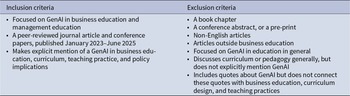
Only peer-reviewed journal articles and conference proceedings were included. This restriction was applied to ensure conceptual and methodological rigour, as peer-reviewed research has undergone scholarly scrutiny. Conference papers were included to capture the most recent findings, given the rapid evolution of GenAI research. Table 1 summarises the inclusion and exclusion criteria applied in this study.
Inclusion and exclusion criteria
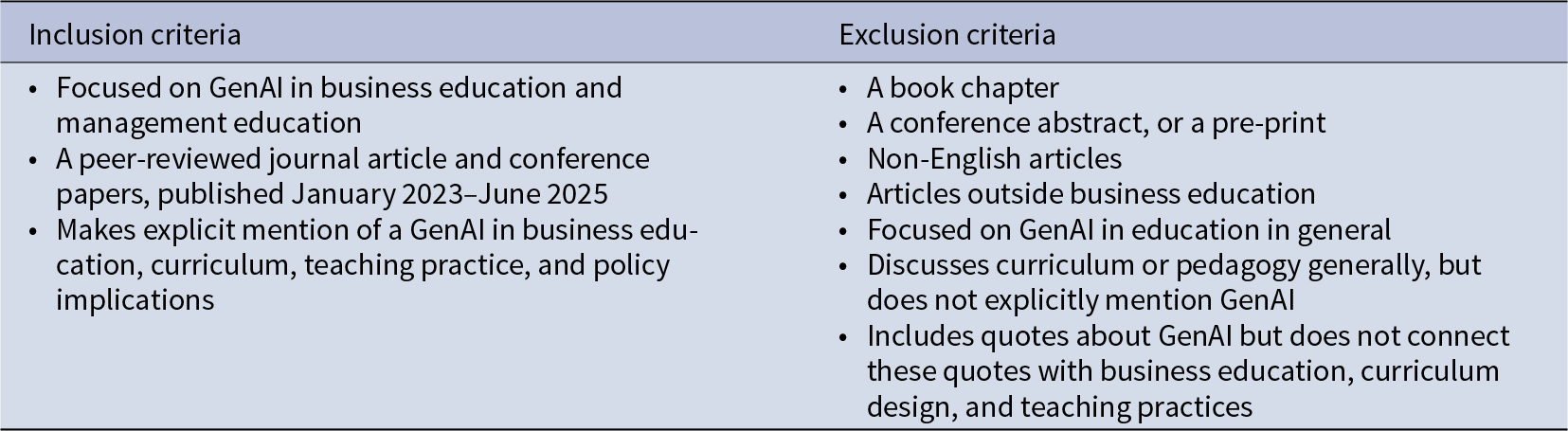
Table 1 Long description
The table outlines criteria for selecting articles related to GenAI in business education. Inclusion criteria require articles to be peer-reviewed journal articles or conference papers published between January 2023 and June 2025, with explicit mention of GenAI in business education, curriculum, teaching practice, and policy implications. Exclusion criteria consist of book chapters, conference abstracts, pre-prints, non-English articles, articles outside business education, those focused on GenAI in general education, and those discussing curriculum or pedagogy without explicit mention of GenAI. The table emphasizes the importance of specificity in the context of business education and the need for articles to directly connect GenAI with curriculum design and teaching practices.
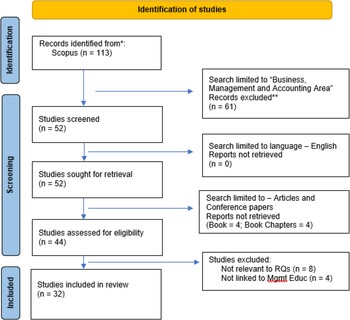
A multi-step approach was employed to select articles. The initial search identified 113 records. All titles and abstracts were screened using the inclusion and exclusion criteria outlined in Table 1. Records were then narrowed by applying the following limits: language (English), years (2023–June 2025), document type (journal articles and conference papers), and topical relevance to business and management education. Consistent with Baker, Irwin, Hamilton, and Birman (Reference Baker, Irwin, Hamilton and Birman2022), book chapters, non-English articles, and studies outside the scope of business education were excluded. After title and abstract screening, 44 studies remained. After full-text screening, the final sample was 32 articles. Any conflicts and uncertainties regarding the final list were resolved through regular discussion among the authors. Figure 1 illustrates the article selection process, guided by the PRISMA protocol.
Adapted PRISMA flow diagram.
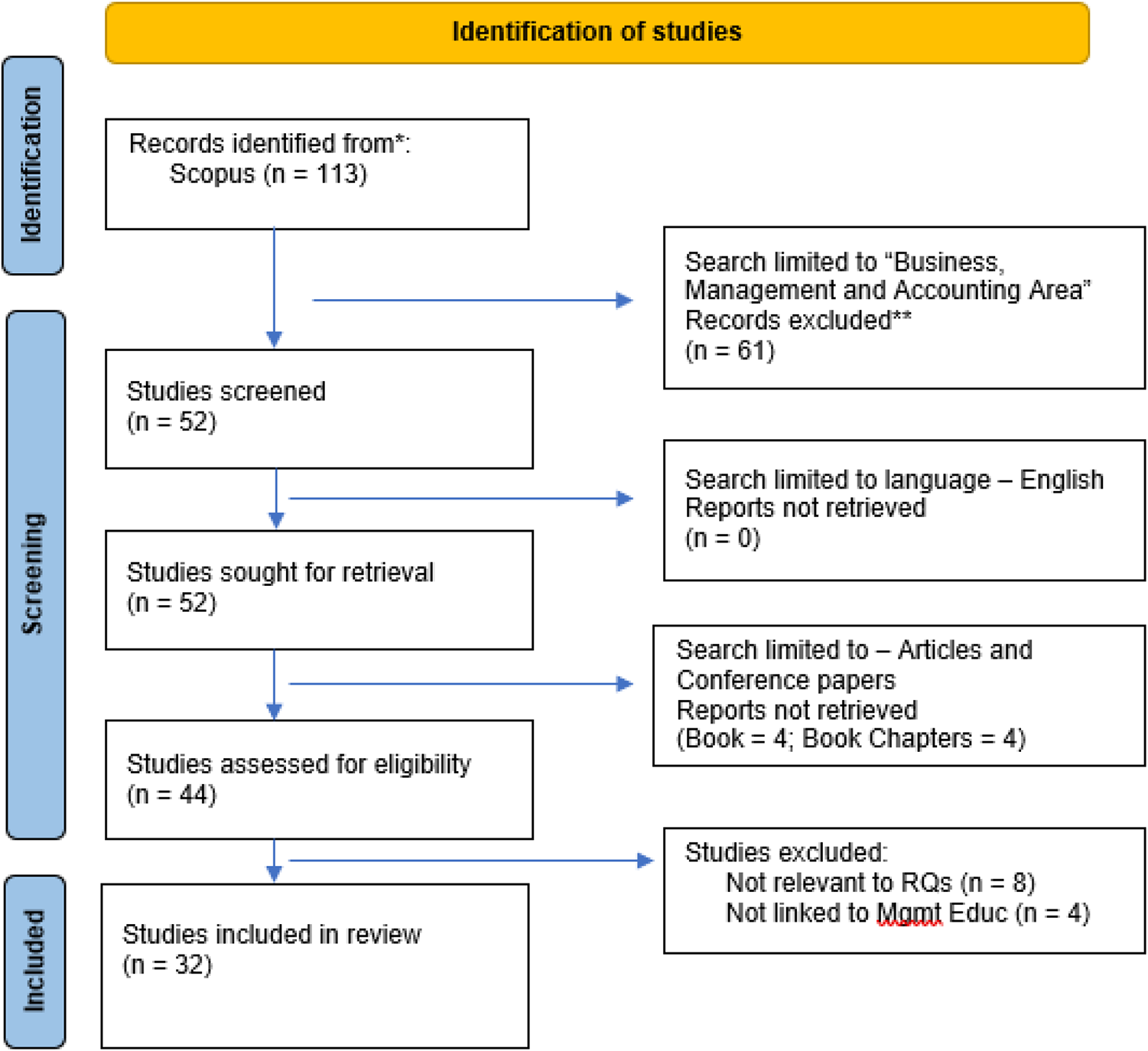
Figure 1 Long description
The flowchart details the process of identifying and screening studies for review. It begins with the identification phase, where 113 records were sourced from Scopus. In the screening phase, 52 studies were initially screened, with 61 records excluded due to limitations to the 'Business, Management and Accounting Area'. The search was further limited to English language, resulting in no reports being retrieved. The search was also limited to articles and conference papers, excluding 8 reports not relevant to research questions and 4 not linked to management education. After assessing eligibility, 44 studies were considered and finally, 32 studies were included in the review.
Characteristics of the included studies
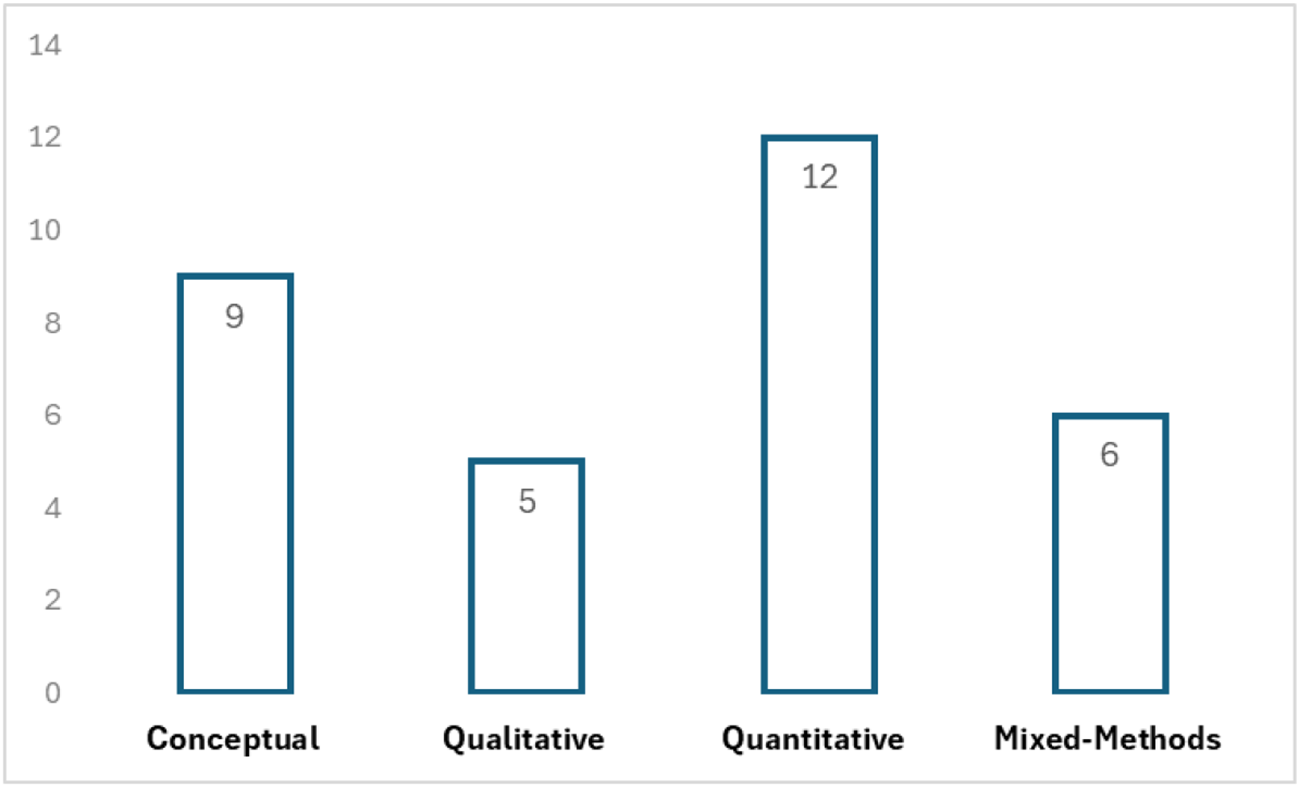
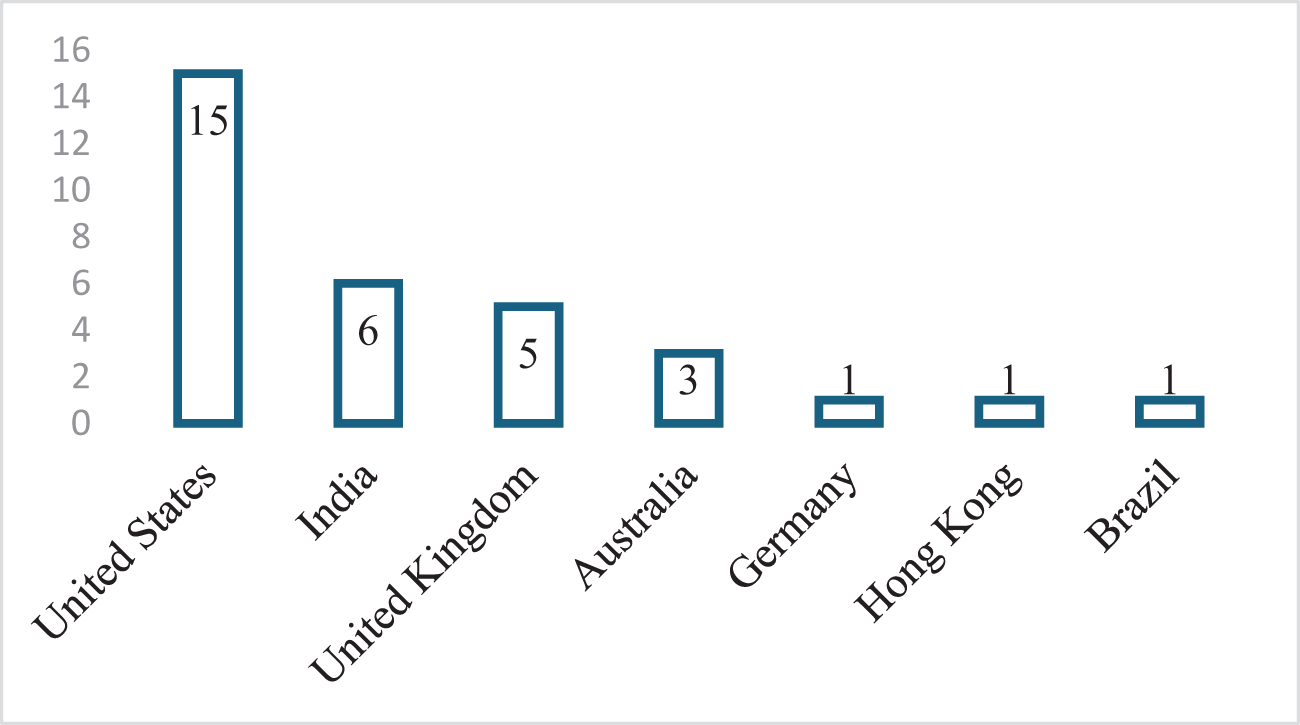
The characteristics of the final sample of 32 articles are presented in Figs. 2 and 3, classified by research method (conceptual, qualitative, quantitative, and mixed methods) and by the country of the first author. The distribution indicates that research in this area is currently concentrated in a few countries, with the United States leading. As research interest in GenAI continues to grow globally, a broader geographic spread is likely to emerge.
Number of studies by research method.
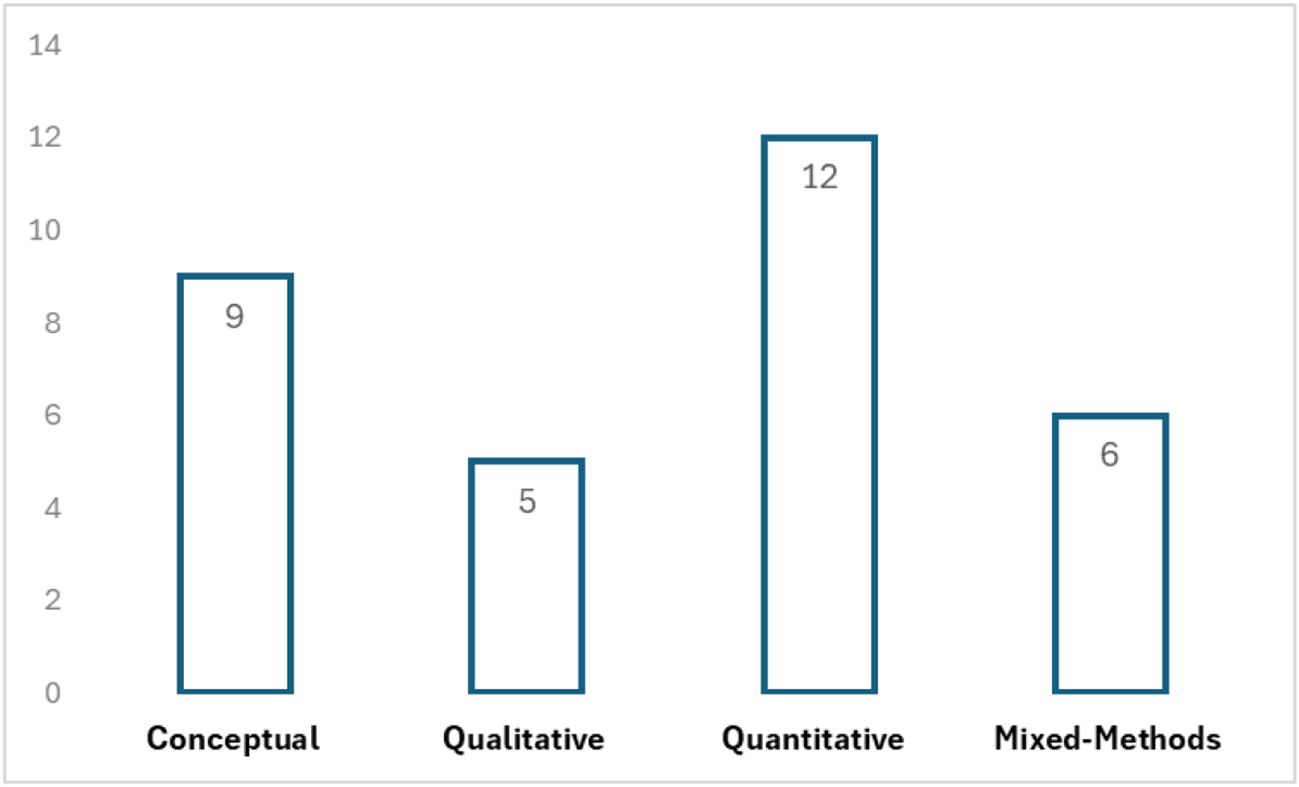
Figure 2 Long description
A bar graph displays the number of studies categorized by research method. The x-axis represents the research methods: Conceptual, Qualitative, Quantitative and Mixed-Methods. The y-axis shows the number of studies, ranging from 0 to 14. The Conceptual method has 9 studies, Qualitative has 5 studies, Quantitative has 12 studies and Mixed-Methods has 6 studies.
Distribution of studies across countries (based on first author).
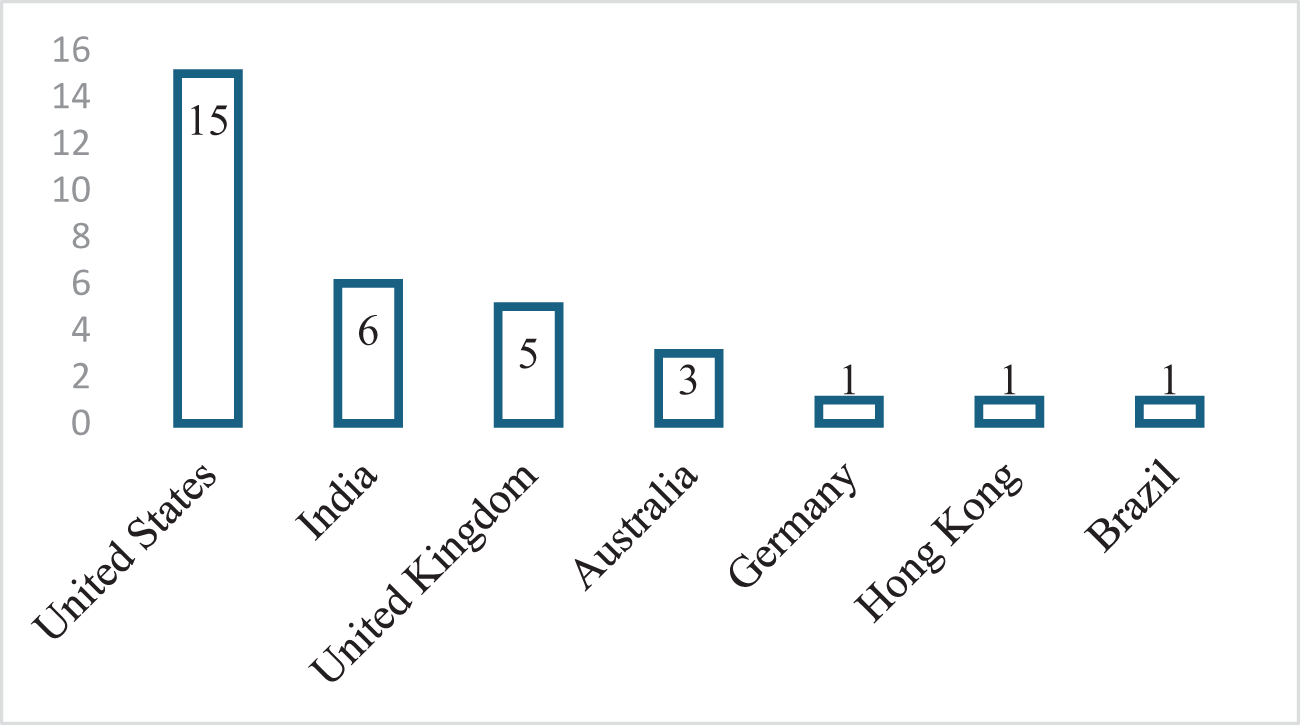
Figure 3 Long description
A bar graph illustrating the distribution of studies across seven countries. The x-axis lists the countries: United States, India, United Kingdom, Australia, Germany, Hong Kong and Brazil. The y-axis represents the number of studies, ranging from 0 to 16. The United States has the highest number of studies at 15, followed by India with 6, United Kingdom with 5, Australia with 3 and Germany, Hong Kong and Brazil each with 1 study.
Data analysis and charting
Data analysis involved identifying key themes and sub-themes across the 32 included studies. Relevant data were extracted to address each of the three research questions. For RQ1 (emerging themes), data extraction captured descriptive publication information – year, country, study type, and disciplinary focus, alongside any conceptual frameworks or models related to GenAI in business education. For RQ2 (benefits), the extraction focused on positive outcomes and pedagogical gains attributed to GenAI use. For RQ3 (challenges), the extraction focused on difficulties, limitations, risks, and institutional concerns. Studies were also distinguished based on whether they focused specifically on management education or addressed GenAI within a broader business education or pedagogical context. Across all three data extraction sheets, future research directions were also captured to inform subsequent research.
The first author undertook data extraction, with substantial contributions from co-authors. Each paper was independently reviewed by at least two researchers, who summarised themes and mapped emerging trends. Interpretations were verified through team discussions. To ensure consistency and reliability, the co-authors conducted two separate consistency checks to assess whether similar information was obtained across the studies (Tricco et al., Reference Tricco, Lillie, Zarin, O’brien, Colquhoun, Kastner and Straus2016). The authors then inductively developed recurring concepts and themes to answer the three research questions. This inductive approach aligns with scoping review conventions, which prioritise breadth and conceptual mapping (Colquhoun et al., Reference Colquhoun, Levac, O’Brien, Straus, Tricco, Perrier and Moher2014).
The team’s weekly discussion process was guided by a shared concern about how GenAI is framed across the literature – whether it is positioned as a threat or an opportunity – and how institutional, pedagogical, and individual stakeholder perspectives are represented. This is consistent with the socio-technical system framing of the paper, which focuses on the dynamic interactions between social actors within HEIs – such as educators, students, and leaders – and the technical dimensions of GenAI. These discussions supported a structured, reflective interpretation of the literature without departing from the breadth-oriented objectives of a scoping review.
Collating, summarising, and reporting the results
Following Arksey and O’Malley’s (Reference Arksey and O’Malley2005) framework, the research team collated, summarised, and reported the results of the scoping review. The findings related to the research questions are presented and discussed in the following sections.
Findings
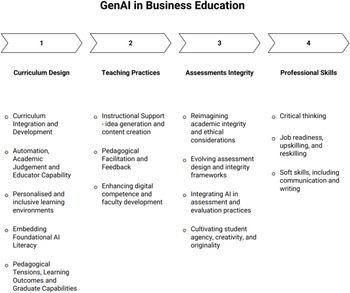
The study aimed to examine how GenAI is influencing business education. The analysis reveals the key emergent themes and sub-themes identified in the study, as illustrated in Fig. 4, thereby addressing RQ1.
Schematic diagram of key themes and sub-themes of GenAI in business education. Source: Authors’ own creation.
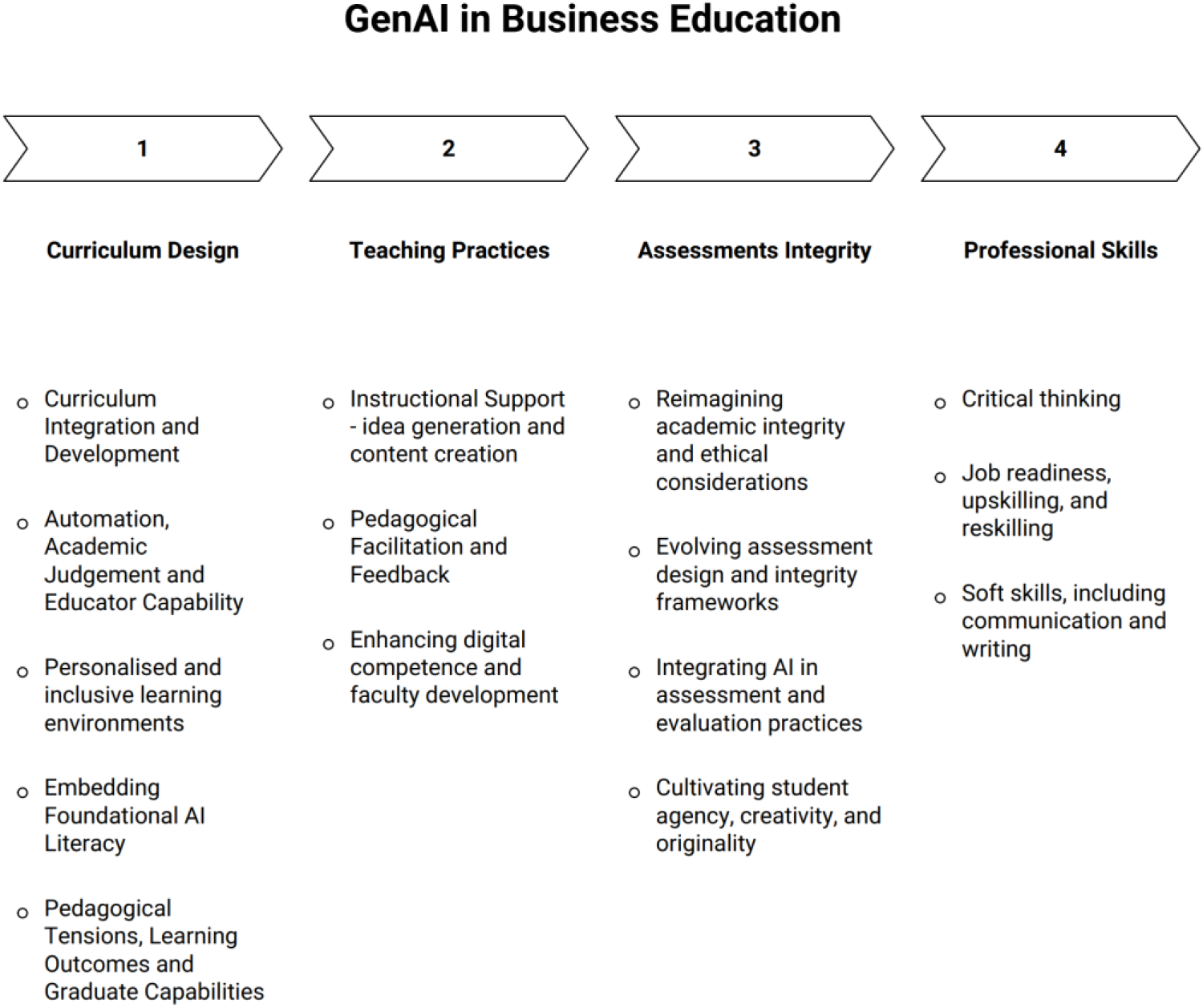
Figure 4 Long description
The diagram illustrates key themes of GenAI in business education, divided into four categories: Curriculum Design, Teaching Practices, Assessments Integrity and Professional Skills. Curriculum Design includes curriculum integration and development, automation, academic judgment and educator capability, personalized and inclusive learning environments, embedding foundational AI literacy and pedagogical tensions, learning outcomes and graduate capabilities. Teaching Practices cover instructional support for idea generation and content creation, pedagogical facilitation and feedback and enhancing digital competence and faculty development. Assessments Integrity involves reimagining academic integrity and ethical considerations, evolving assessment design and integrity frameworks, integrating AI in assessment practices evaluation and cultivating student agency, creativity and originality. Professional Skills focus on critical thinking, job readiness, upskilling and reskilling and soft skills, including communication and writing.
Curriculum design
This theme positions GenAI as a powerful yet contested force in the redesign of business education curricula. Some researchers argue that GenAI is more than a technical tool, as it is increasingly discussed as a catalyst for redesigning curriculum structures, learning objectives, and pedagogical approaches. This section synthesises how existing literature conceptualises the influence of GenAI on curriculum design in business education.
Curriculum integration and development
GenAI is increasingly associated with a shift from course-level design to programme-level curriculum integration, adopting a systems thinking perspective that positions GenAI as a catalyst for curriculum coherence rather than a technical add-on (Krammer, Reference Krammer2025). This shift reflects a broader socio-technical reconfiguration, in which curriculum is not simply updated by technology but is co-shaped by institutional priorities, academic culture, and organisational readiness.
Furthermore, GenAI supports rapid curriculum customisation, enabling real-time content updates and streamlined development of teaching materials. However, the speed of curriculum development does not guarantee the depth of redesign. While clear efficiency gains are visible, the literature also raises concerns about the academic judgement and rigour. Specifically, over-reliance on GenAI may result only in surface-level updates rather than substantive pedagogical redesign (Vecchiarini & Somia, Reference Vecchiarini and Somia2023).
Automation, academic judgement, and educator capability
The integration of GenAI helps automate routine teaching and support activities, including curriculum drafting, assessment grading, responding to student queries, and research assistance, potentially freeing academic time for higher-order pedagogical design and student engagement (Gupta & Singh, Reference Gupta and Singh2024; Vecchiarini & Somia, Reference Vecchiarini and Somia2023). However, the literature raises ongoing concerns about where to draw the line between routine task automation and core academic responsibilities, a boundary that remains institutionally contested. Compounding this, the rapid emergence of GenAI has created new demands on educator capability, requiring higher levels of technical fluency and sustained professional development (Zhan, Rahman & Cui, Reference Zhan, Rahman and Cui2023). The structural lag between the pace of technological change and the development of academic capability sharpens the tension between automation and judgement, raising questions about institutional readiness.
Personalised and inclusive learning environments
GenAI-enabled curricula support personalised and adaptive learning pathways, promoting learner-centred and inclusive curriculum design, which is valuable in addressing the needs of heterogeneous student cohorts (Gupta, Mahajan, Badhera & Kushwaha, Reference Gupta, Mahajan, Badhera and Kushwaha2024). Nevertheless, the literature in this area remains underdeveloped regarding the potential effects of algorithmic bias, raising questions about equity, fairness, and effectiveness in curriculum implementation (Chiu et al., Reference Chiu, Xia, Zhou, Chai and Cheng2023; Lim et al., Reference Lim, Gunasekara, Pallant, Pallant and Pechenkina2023). The promise of inclusion, therefore, cannot be assumed from technological capability alone but requires deliberate institutional interrogation of how adaptive systems are designed, deployed, and monitored.
Embedding foundational AI literacy
There is a growing emphasis on embedding foundational AI literacy within business and management curricula. GenAI is used not only to reshape delivery modes but also to support content through learning activities such as idea generation, business modelling, and strategic analysis (Vecchiarini & Somia, Reference Vecchiarini and Somia2023; Zhan et al., Reference Zhan, Rahman and Cui2023). Yet AI literacy is not a neutral technical competency – its meaning, scope, and value are shaped by institutional context, disciplinary norms, and the organisational environments into which graduates are inducted. Despite the positive use of GenAI in this area, the literature provides limited guidance on the appropriate scope, sequencing, and progression of GenAI literacy across programmes.
Pedagogical tensions, learning outcomes, and graduate capabilities
Strategic integration of GenAI has the potential to enhance student autonomy, creativity, and higher-order learning. However, excessive or ad hoc use risks diminishing critical thinking and encouraging surface learning. These tensions influence decisions related to scaffolding, assessment design, and instructional design strategies (Hyde, Busby & Bonner, Reference Hyde, Busby and Bonner2024; Mourtajji & Arts-Chiss, Reference Mourtajji and Arts-Chiss2024; Valcea, Hamdani & Wang, Reference Valcea, Hamdani and Wang2024). These pedagogical tensions are further reflected in calls to reframe learning outcomes to balance efficiency gains with the development of critical thinking, professional judgement, and self-efficacy. Curriculum redesign is expected to ensure that graduates can engage with AI technologies ethically and responsibly (Lee & Tseng, Reference Lee and Tseng2024; Trindade, Edirisinghe & Luo, Reference Trindade, Edirisinghe and Luo2025), thereby strengthening graduate capabilities required for workplaces. However, the extent to which institutional structures and assessment frameworks are genuinely reconfigured to support such outcomes, rather than simply restated, remains an open question. Although outcome redesign is strongly advocated, empirical evidence that the revised outcomes translate into measurable capability development remains limited.
Collectively, these sub-themes reveal that curriculum redesign using GenAI is less a technical exercise than a contested pedagogical process. Efficiency gains in curriculum development and delivery do not automatically translate into deeper learning or stronger graduate capabilities. Equally, the promise of personalised and inclusive learning remains contingent on resolving questions of algorithmic bias and educator readiness that the literature has yet to adequately address. The central challenge for business schools is therefore not whether to integrate GenAI into curricula, but how to do so in ways that preserve academic judgement, ethical reasoning, and genuine capability development.
Teaching practices
This theme highlights how GenAI is reshaping teaching practices in business education, promoting a shift from traditional teacher-centred approaches to more student-focused, facilitative pedagogies. The literature consistently recommends rethinking teaching strategies and carefully integrating GenAI to support learning in AI-enabled learning environments. Rather than operating as a neutral tool, GenAI enters teaching practice through socio-technical configurations shaped by institutional priorities, educator identity, and organisational readiness. Three consolidated sub-themes are discussed below.
Instructional support – idea generation and content creation
The rise of GenAI has encouraged educators to reconsider and innovate their teaching practices, both within and beyond the classroom. GenAI is increasingly used for idea generation, content creation, and information retrieval across curriculum development and assessment design (Keiper, Fried, Lupinek & Nordstrom, Reference Keiper, Fried, Lupinek and Nordstrom2023). Educators use tools like ChatGPT to draft teaching materials, presentation slides, and lesson plans (Zhan et al., Reference Zhan, Rahman and Cui2023), with clear efficiency gains reported in the literature.
However, the literature questions the credibility, depth, and contextual appropriateness of such materials. Scholars emphasise the need for academic judgement, peer reviews, and critical scrutiny when using GenAI-generated content. Overall, the evidence suggests that GenAI can support teaching practices when accompanied by careful steps and guidelines for safe use (Chiu et al., Reference Chiu, Xia, Zhou, Chai and Cheng2023; Fischer, Sweeney, Lucas & Gupta, Reference Fischer, Sweeney, Lucas and Gupta2024; Lim et al., Reference Lim, Gunasekara, Pallant, Pallant and Pechenkina2023). The central tension here is between the efficiency that GenAI enables and the depth of pedagogical judgement it risks displacing, a boundary that remains institutionally undefined.
Pedagogical facilitation and feedback
The literature positions GenAI as an instructional aid capable of generating teaching materials, supporting self-directed learning, and delivering personalised feedback (George, Storey & Hong, Reference George, Storey and Hong2025; Zhan et al., Reference Zhan, Rahman and Cui2023). In remote and low-support contexts, particularly, GenAI can provide on-demand guidance that supplements human instruction.
However, the literature cautions against the over-reliance on GenAI, recognising that these tools cannot fully replace the role of human educators in creating and scaffolding authentic learning environments. This raises a foundational question about substitution: at what point does AI-facilitated support begin to erode the relational and contextual dimensions of teaching that remain distinctly human? (George et al., Reference George, Storey and Hong2025; Gupta et al., Reference Gupta, Mahajan, Badhera and Kushwaha2024; Park & Kim, Reference Park and Kim2025; Zhan et al., Reference Zhan, Rahman and Cui2023)
On feedback specifically, GenAI is reported to boost student engagement by delivering immediate, personalised, and context-specific feedback (Park & Kim, Reference Park and Kim2025). Yet the literature highlights ongoing concerns about validity and pedagogical value, and empirical comparisons with human instructor feedback remain limited.
Enhancing digital competence and faculty development
The integration of GenAI into teaching practice creates significant capability demands on educators, requiring higher levels of technical fluency alongside sustained professional development (Zhan et al., Reference Zhan, Rahman and Cui2023). The literature further emphasises the challenges educators face when adapting GenAI into teaching practice (Portuguez-Castro & Marchena Sekli, Reference Portuguez-Castro and Marchena Sekli2025). These challenges may restrict their capacity to effectively develop curricula, apply innovative student-centred pedagogies, design innovative assessments, and provide meaningful feedback. However, this innovation imperative is unevenly distributed. The ability to adapt is shaped by institutional resources, career stage, and disciplinary culture, raising equity questions that professional development mandates rarely address. GenAI adoption in teaching is thus not merely a technical transition but an organisational challenge, whose outcomes depend on whether institutions support genuine pedagogical transformation rather than surface-level compliance.
Assessments integrity
This theme highlights how GenAI is reshaping assessment design in business education, demanding a shift away from traditional written tasks toward more ethically grounded, student-centred evaluation practices. The literature reveals a field in transition, moving from reactive integrity policing toward deeper questions about evaluative judgement, knowledge production, and the conditions under which student capability can be meaningfully demonstrated in AI-enabled environments.
Reimagining academic integrity and ethical considerations
The rise of GenAI has compelled educators to reconsider what academic integrity means in practice. Studies argue that traditional written assessments are increasingly vulnerable to ‘undetectable AI-assisted plagiarism’ (Valcea, Hamdani & Wang, Reference Valcea, Hamdani and Wang2024), raising doubts about the fairness and credibility of long-used evaluation methods. The deeper issue is epistemic. Existing definitions of academic integrity were built on assumptions that knowledge production is individual, traceable, and separable from its tools, which GenAI fundamentally destabilises (Fischer et al., Reference Fischer, Sweeney, Lucas and Gupta2024; Gupta & Singh, Reference Gupta and Singh2024; Vecchiarini & Somia, Reference Vecchiarini and Somia2023). When AI can generate competent, contextually appropriate responses, the question of what student work is ‘meant to evidence’ becomes genuinely contested. Although some universities have attempted to ban tools such as ChatGPT, scholars widely critique such measures as short-term fixes that do not address the deeper ethical questions involved (Vecchiarini & Somia, Reference Vecchiarini and Somia2023). Instead, the literature increasingly advocates assessment designs that are inherently resistant to misuse, such as oral assessments, authentic tasks, and performance-based assessments (Gupta & Priyanka, Reference Gupta and Priyanka2026). Overall, the literature suggests that institutions must move beyond efforts to ‘police’ AI use toward developing a more thoughtful and contemporary understanding of academic integrity in an AI-enabled world.
Evolving assessment design and integrity frameworks
Across the literature, there is a broad consensus that GenAI requires a fundamental rethinking of assessment design (Fischer et al., Reference Fischer, Sweeney, Lucas and Gupta2024). Traditional formats such as essays, open-book tasks, and take-home assignments (Krammer, Reference Krammer2025) are no longer considered reliable, given GenAI’s ability to generate strong answers with minimal effort. Consequently, scholars recommend assessment formats that require students to demonstrate individual understanding, including proctored examinations, oral defences, and applied real-world tasks (Valcea, Hamdani & Wang Reference Valcea, Hamdani and Wang2024).
GenAI is thus characterised as both helpful and disruptive. On the one hand, it encourages the adoption of more authentic and meaningful assessment practices; on the other hand, it exposes the weaknesses of conventional assessment formats (Lim et al., Reference Lim, Gunasekara, Pallant, Pallant and Pechenkina2023). The literature has not yet adequately addressed how originality, critical reasoning, and professional judgement should be conceptualised and assessed when AI can simulate them competently.
Integrating AI in assessment and evaluation practices
Researchers (Bohórquez-López, Reference Bohórquez-López2024; Keiper et al., Reference Keiper, Fried, Lupinek and Nordstrom2023) highlight several practical benefits of GenAI in assessment processes, including increased grading efficiency, clearer feedback, and support for faculty in developing assessment materials. For instance, educators can use ChatGPT to test and refine sample questions based on the AI-generated responses. GenAI can also support personalised learning by generating practice questions, explanations (Portuguez-Castro & Marchena Sekli, Reference Portuguez-Castro and Marchena Sekli2025), and discipline-specific examples, particularly in fields such as finance, marketing, and entrepreneurship (Gupta & Singh, Reference Gupta and Singh2024). Comparative studies suggest that while GenAI can apply assessment criteria consistently, differences in evaluative judgement between AI and human instructors remain evident, reinforcing the idea that AI can support but not substitute for human assessment (Grzesiak, Kluza, Potoczek & Szała, Reference Grzesiak, Kluza, Potoczek, Szała and Baresi2024).
Cultivating student agency, creativity, and originality
One emerging approach encourages students to engage with AI-generated responses as a benchmark and to ‘go beyond’ them by extending, critiquing, and improving upon AI outputs, a strategy that can be described as a ‘do better than this’ approach (Valcea et al., Reference Valcea, Hamdani and Wang2024). This reframes originality not as the absence of AI use, but as deliberate intellectual differentiation from it, a conceptually productive shift that has significant implications for how assessment rubrics are designed and what they are understood to measure.
Yet the risks of over-reliance and surface engagement remain real (Keiper et al., Reference Keiper, Fried, Lupinek and Nordstrom2023; Zhan et al., Reference Zhan, Rahman and Cui2023). Scholars advocate promoting authentic, experiential, and reflective assessment designs that draw on personal experience and contextual understanding, making them inherently resistant to AI replication (Bell & Bell, Reference Bell and Bell2023). Within this framing, GenAI is positioned as a supportive resource that can free students from routine work to undertake deeper analytical work (Bohórquez-López, Reference Bohórquez-López2024), rather than a substitute for human creativity, judgement, and reasoning. The underlying logic is that genuine student agency, the capacity to reason, judge, and produce meaning in context, cannot be replicated by AI and assessment design should actively cultivate and foreground it.
Professional skills
The literature shows that GenAI is reshaping professional skill development in business education across three major areas: critical thinking, job readiness, including continuous upskilling, and soft skills, particularly writing and workplace communication. GenAI can either strengthen or weaken graduate attributes, depending on how it is integrated into learning and assessment (Fischer et al., Reference Fischer, Sweeney, Lucas and Gupta2024; Grzesiak et al., Reference Grzesiak, Kluza, Potoczek, Szała and Baresi2024; Valcea, Hamdani & Wang, Reference Valcea, Hamdani and Wang2024). A recurring theme in the literature is the need for intentional pedagogical design and redesign, including responsible use and reflective learning. This theme further examines how GenAI is reshaping professional skill development in business education across three domains: critical thinking, job readiness, and communication. Rather than simply noting that GenAI can either enhance or undermine these skills, the analysis foregrounds the mechanisms through which these outcomes occur and why they are unevenly distributed. These professional skills are detailed below.
Critical thinking
The literature identifies a specific mechanism by which GenAI threatens the development of critical thinking: the bypassing of the problem-formulation stage. Grzesiak et al. (Reference Grzesiak, Kluza, Potoczek, Szała and Baresi2024) argue that large language models can support learning through feedback and alternative perspectives, but they are limited in their ability to support complex or nuanced tasks. When students outsource the initial framing of a problem to GenAI, they bypass what the literature identifies as the most cognitively demanding and developmentally significant stage of reasoning – defining the problem and specifying its constraints. The authors recommend that students be trained to evaluate AI-generated feedback and use it as a prompt for further insights rather than as a substitute for independent analysis and judgement. Hence, the use of GenAI does not always lead to negative learning outcomes; its effect depends on how learning activities are designed and how expectations are communicated and enacted.
Fischer et al. (Reference Fischer, Sweeney, Lucas and Gupta2024) present their argument through the lens of sense-making as a core element of ‘graduateness’. As students engage with GenAI, the idea of sense-making becomes very important, i.e., by its ability to connect complex information to context. Critical thinking, therefore, includes reflective interpretation and informed judgements under uncertainty (Fischer et al., Reference Fischer, Sweeney, Lucas and Gupta2024). In managerial decision-making contexts, problem identification and articulation are critical. However, research cautions that the use of GenAI may lead students to bypass this problem formulation, even though defining the problem and specifying constraints are central to effective reasoning, thereby compromising the development of students’ critical thinking capabilities. Finally, reflective learning is positioned as a critical counterbalance to the limitations associated with GenAI use. Schwandt (Reference Schwandt2005) emphasises contemplation, deliberation, and sense-making as core elements of this process. However, the increasing prioritisation of technical credentialing risks displacing the development of students’ critical thinking capacities, particularly their ability to analyse, evaluate, and make informed, independent decisions when engaging with AI.
Job readiness, upskilling, and reskilling
Job readiness in the context of GenAI is emerging as complex and diverse as it becomes embedded in professional work. Cardon et al. (Reference Cardon, Fleischmann, Logemann, Heidewald, Aritz and Swartz2024) argue that generative AI has rapidly altered how white-collar work is performed. While most workers believe they must gain new skills as GenAI becomes embedded in everyday work, the opportunities to get trained often lag, creating a structural gap that business education is positioned to address, but has not yet systematically closed. The mechanism linking GenAI to job readiness is not straightforward. Portuguez-Castro and Marchena Sekli (Reference Portuguez-Castro and Marchena Sekli2025) point out that information quality and perceived performance improvements shape adoption, but this adoption can, in turn, impact performance and information quality. Uncritical adoption can therefore entrench poor practice as readily as it builds capability, suggesting that students require not tool familiarity but purposeful integration of GenAI into professional workflows alongside the evaluative and ethical reasoning needed to apply its outputs responsibly.
A further mechanism identified in the literature is the skill divide. Valcea, Hamdani & Wang, (Reference Valcea, Hamdani and Wang2024) argue that GenAI disproportionately upskills experienced users while potentially deskilling novices, who may substitute AI outputs for the effortful practice through which foundational competencies are developed. This has significant collective implications – not only for individual employability but for the distribution of capability across graduate cohorts and, by extension, for organisational knowledge in AI-enabled workplaces. George et al. (Reference George, Storey and Hong2025) underscore digital confidence as a key employability factor. However, the literature is clear that confidence without judgement risks producing graduates who are fluent in AI use but ill-equipped to evaluate or appropriately use it critically.
Soft skills, including communication and writing
The relationship between GenAI and writing competence is paradoxical: by automating the surface features of written production, GenAI simultaneously raises the stakes for the communicative judgement that writing demands. Although GenAI has become known for writing automation, scholars argue that it does not diminish the importance of writing proficiency; rather, it highlights its significance as a critical skill for employability (Fischer et al., Reference Fischer, Sweeney, Lucas and Gupta2024). If universities do not adequately assess students’ ability to write coherently and independently, this suggests that students may not be adequately prepared with the core writing skills employers require. Business schools, therefore, need to ensure students gain writing ability as a demonstrated competence, even as they use GenAI.
Another important competency around GenAI is communication. Much of the mainstream discussion around GenAI has focused on written output, including drafting, editing, and refinement to meet workplace requirements (Cardon et al., Reference Cardon, Fleischmann, Logemann, Heidewald, Aritz and Swartz2024). While GenAI-generated writing may be automated, what is critical is the focus on judgement in communication, audience awareness, tone, evidence, and ethical communication. Gupta and Priyanka (Reference Gupta and Priyanka2026) focus on how GenAI may support communication that helps in critical analysis and problem-solving. Soft skills also extend beyond writing to include collaboration, teamwork, and collegiality.
Overall, the literature highlights the continued importance of professional skills in business education, even as GenAI becomes more widely accepted. Critical thinking, job readiness, sense-making, and soft skills remain central to employability. These findings reinforce that professional capability development is not diminished by GenAI, rather these skills continue to play an important role in developing employability skills in business students. At the same time, GenAI serves as a supporting resource rather than a substitute for human judgement and capability.
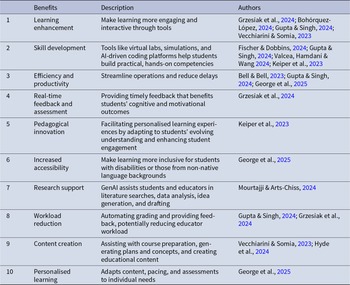
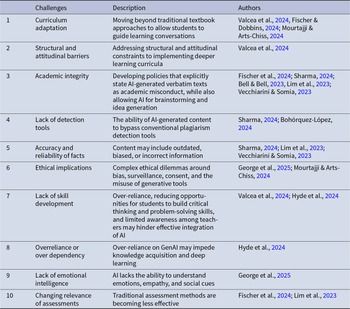
Building on these thematic insights, the analysis also identifies a broader set of benefits and challenges associated with GenAI in business education. They are synthesised from the literature reviewed and presented in Tables 2 and 3, respectively, thereby addressing Research Questions 2 (RQ2) and 3 (RQ3) of the study.
Benefits of GenAI in business education
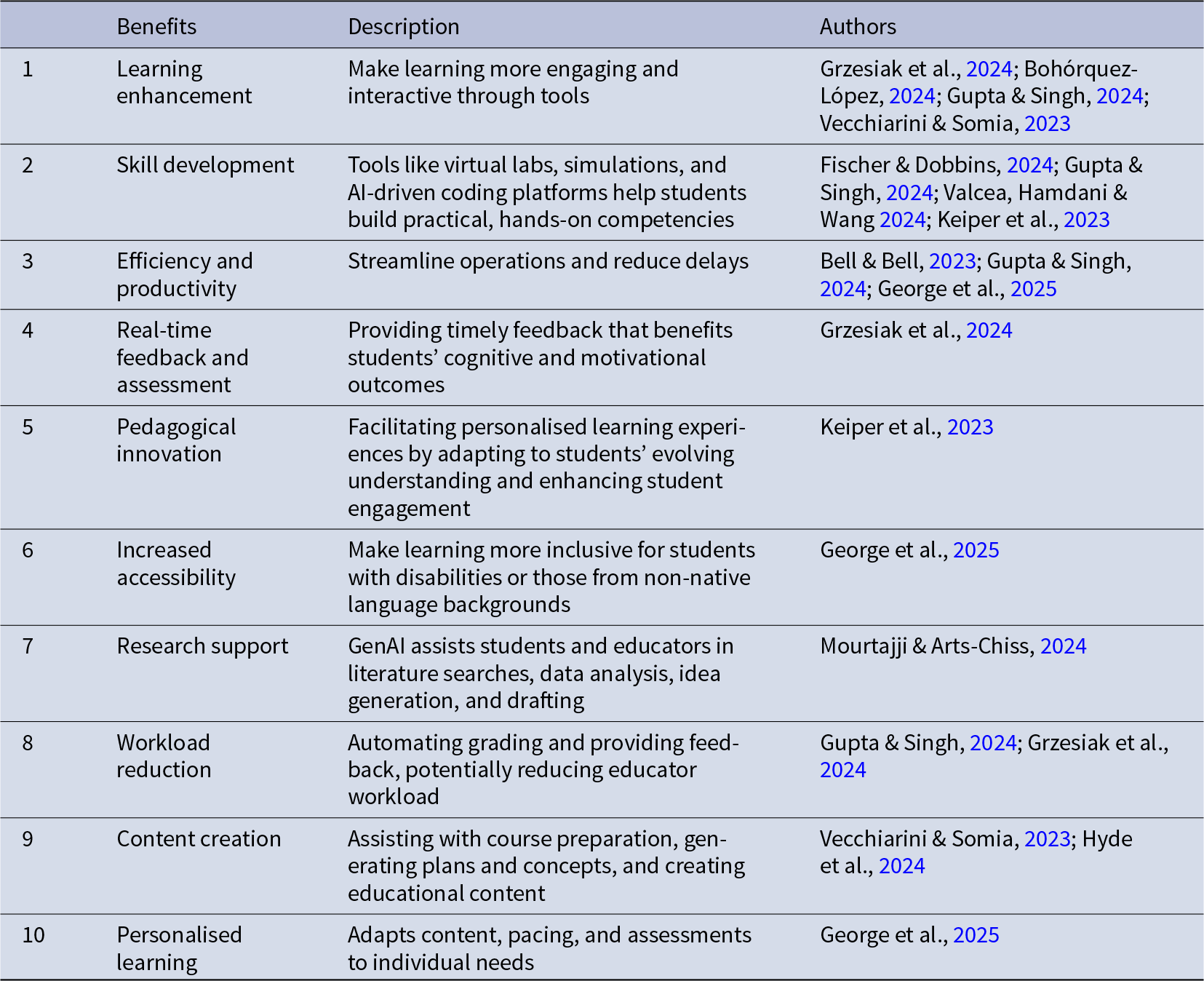
Table 2 Long description
The table outlines various benefits of GenAI in business education, including learning enhancement, skill development, and efficiency. Key data points highlight how GenAI tools make learning interactive, develop practical skills, and streamline operations. Authors such as Grzesiak et al., Gupta & Singh, and George et al. provide evidence from 2023 to 2025. Comparisons show GenAI's role in personalized learning and accessibility, making education more inclusive. Trends indicate a shift towards pedagogical innovation and workload reduction through automation. Interpretation should consider the diverse applications and potential limitations in different educational contexts.
Challenges of GenAI in business education
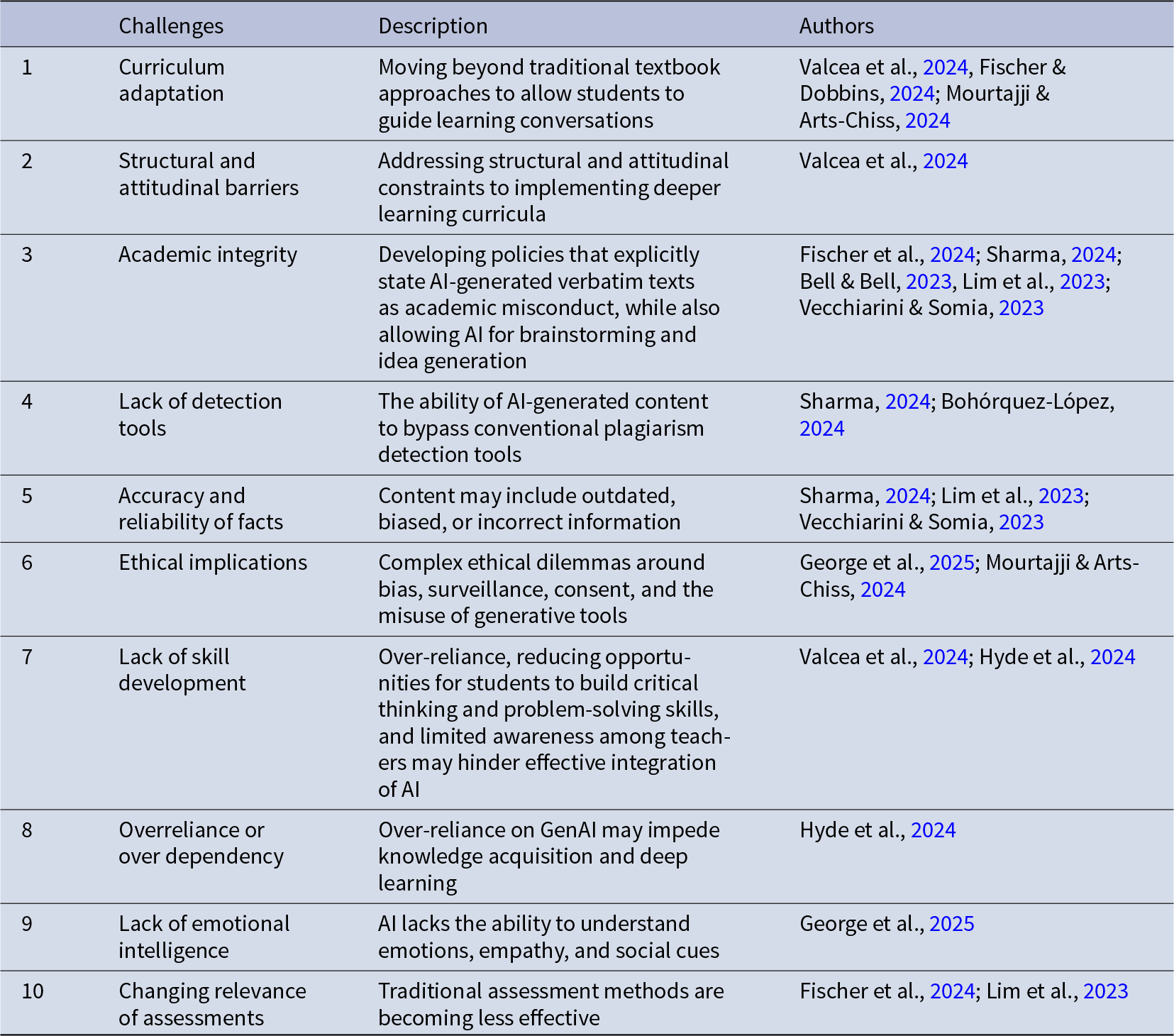
Table 3 Long description
The table outlines various challenges faced in incorporating generative AI into business education, highlighting issues such as curriculum adaptation, structural barriers, and academic integrity. Notable challenges include the need for curriculum adaptation to foster student-led learning, and the development of policies to address AI-generated content as academic misconduct. Ethical implications, such as bias and surveillance, are also significant concerns. Authors like Valcea et al., Fischer & Dobbins, and George et al. provide insights into these challenges. Comparisons reveal a focus on both structural and attitudinal barriers, as well as the lack of detection tools for AI-generated content. The table suggests a trend towards addressing these challenges through policy development and curriculum changes.
Together, these findings provide a good overview of the key themes, benefits, and challenges associated with the use of GenAI in business education.
Discussion
This scoping review examined how GenAI is influencing business education. The study revealed four interrelated themes: curriculum design, teaching practices, assessment integrity, and professional skills. GenAI integration is not primarily a technical change but an institutional and socio-technical change, shaped by organisational practices, professional norms, and governance structures. This can also be viewed as an ongoing sense-making process (Maitlis & Christianson, Reference Maitlis and Christianson2014; Weick et al., Reference Weick, Sutcliffe and Obstfeld2005), where educators, students, and institutional actors interpret, negotiate, and respond to GenAI within existing organisational values, norms, and practices as technologies emerge.
Unsurprisingly, curriculum design emerges as a foundational area of change due to GenAI. The literature frames GenAI as a catalyst for broader curriculum reconsideration rather than as one more independent tool. A purposeful integration of GenAI can benefit all functional disciplines and areas in business education. However, the literature points to gaps between aspiration and implementation due to workload, limited staff, and uncertain outcomes. The process also involves financial and non-financial costs.
The tensions highlight that curriculum revision requires more than technological adoption, as change is often driven by capability constraints rather than pedagogical intent, and existing institutional structures are more likely to be reproduced rather than transformed. From a sense-making perspective, these tensions reflect competing interpretations of GenAI’s role, as institutions balance adopting new technologies with established academic norms and professional practices. A recurring concern is that curriculum changes may become tool-focused, embedding procedural familiarity with GenAI without sufficient integration of ethical reasoning and critical reflection.
Teaching practices are significantly benefited by the integration of GenAI, which is used for idea generation, content preparation, and personalised feedback, contributing to more flexible and student-centred pedagogies. Here too, the literature cautions against over-reliance and against overlooking context without adequate academic judgement. Unplanned use of GenAI risks reinforcing generic content and weakening disciplinary depth.
Often, educators and students are reluctant to use GenAI, and in some cases, access is limited or denied. The capacity to integrate GenAI meaningfully is unevenly distributed across institutions, career stages, and disciplinary cultures, raising concerns that professional development mandates do not adequately address. This suggests that successful adoption depends on positioning GenAI as a supporting resource for teaching, rather than a substitute for disciplinary expertise. From an institutional standpoint, curriculum change driven by technological capabilities rather than pedagogical intent risks failing to transform existing systems. This points to a critical institutional question: where the threshold of human judgement lies and how that threshold should be defined and protected by institutions. This is a governance challenge the literature has raised but not resolved.
Rather than viewing AI-generated outputs solely as substitutes for student work, educators can encourage students to critically evaluate and refine AI-generated responses. Such approaches may strengthen analytical reasoning by prompting learners to interrogate whether AI-generated outputs adequately address the problem at hand, whether they contain inaccuracies or biases, and how they might be improved to generate more robust insights. Thus, while concerns surrounding academic integrity and over-reliance on AI persist, GenAI also presents significant opportunities to reconsider how students learn, how educators design learning experiences, and how assessment practices capture authentic learning outcomes.
Assessment integrity is one of the most debated areas in the literature. The integrity of traditional written assessments is increasingly questioned, as they are considered vulnerable to AI-assisted misconduct. In this context, one way is to rely on detection of its usage or employ secure delivery mechanisms for these assessments. However, these approaches do not address the deeper questions about what student work is meant to evidence when GenAI can generate competent and contextually appropriate responses. Unrestricted acceptance of AI further destabilises foundational assumptions about knowledge production that existing integrity frameworks were not designed to handle. Accordingly, the focus is shifting towards redesigning assessment practices rather than worrying about the integrity of traditional assessment formats. Furthermore, the literature highlights clear benefits of GenAI in the assessment, including the development of templates quickly, faster feedback generation, and grading support. While doing so, educators need to consider integrity frameworks that acknowledge the use of GenAI while ensuring a central role for human judgement. Some scholars are also concerned about equity issues, as some students may be disadvantaged due to inadequate access or limited ability to use GenAI and other digital tools.
The final theme relates to professional skills, which have traditionally been highlighted as critical for employability. However, these must be reframed in the context of the GenAI world as it reshapes the expectations around critical thinking, job readiness, and soft skills. While GenAI can support efficiency and ideation, there is concern that an unstructured reliance may undermine foundational skills, particularly among less experienced learners or those with limited access to these technologies. This reinforces the emphasis on traditional soft skills like sense-making – understood as the capacity to interpret complex information and act under conditions of uncertainty – alongside problem formulation, and reflective judgement as core attributes, critical for employability. It follows that continuous upskilling, like any continuous professional development activity, is necessary as work practices are reorganised to accommodate GenAI. Importantly, GenAI is not a replacement for soft skills, which are inherently human. Rather, its integration can serve as an enabler of the core professional skills such as communication, collaboration, integrity, and ethical judgement, even within AI-enabled workplaces.
The main themes identified in the scoping review suggest that GenAI’s influence on business education is increasingly inevitable, as evidenced by its wide usage. However, effective integration depends on curriculum coherence, assessment design, and institutional support, not to speak of instructors’ motivation and capability to engage with GenAI technologies. The challenge is not whether to integrate GenAI but how to ensure that integration is governed by pedagogical intent, supported by institutional infrastructure, and evaluated against genuine standards of capability development, not merely technological adoption.
This study contributes to management and organisation scholarship by demonstrating that GenAI integration in business education goes beyond being a technological or pedagogical matter to constitute a socio-technical and organisational phenomenon, involving institutional structures, professional practices, and sense-making processes that influence organisational outcomes.
Implications
Building on the findings, this scoping review has important implications for three key stakeholders in business education: business educators, academic leaders, and institutional policymakers as they address the challenge of integrating GenAI into business education. These implications are considered not only at the individual level but also as organisational and institutional challenges requiring coordinated governance responses.
Implications for business educators
For business educators, the themes identified demonstrate a clear pedagogical shift from content transmission toward learning designs that emphasise engagement, application, critical thinking, and thoughtful reflection. Traditional assessment formats can no longer be retained unchanged; redesign must be purposeful, oriented towards learning and capability development. Educators are therefore required to redesign assessments to encourage and reward professional and employability skills through oral examinations, presentations, applied projects, and real-world problem-solving. Such approaches reduce reliance on routine AI-generated outputs while promoting authentic learning and enhanced employability.
Business students need critical thinking and problem-solving skills, among others. While GenAI can support idea generation, feedback, and problem identification, its outputs may be biased or inaccurate. Hence, educators should prepare students to take these outputs with a degree of caution and use them as prompts for further inquiry rather than as final answers. Teaching students to critically interrogate AI outputs, verify information, recognise bias, and reason about ethical aspects is foundational to professional judgement in AI-enabled workplaces.
Implications for curriculum designers
The review findings have implications for curriculum designers. GenAI should be understood not as an additional tool but as a socio-technical shift that demands changes in how learning is designed and governed at the programme level. It follows that curriculum designers should purposefully support the integration of GenAI use with learning outcomes and graduate capabilities. Curriculum designers have the opportunity to progressively include GenAI-aligned assessments, increasing their difficulty across multiple areas, including content, lesson plans, class activities, and assessment designs, as part of a programme portfolio. This approach requires deliberate institutional planning, clear progression frameworks, and governance structures that ensure curriculum redesign is driven by pedagogical intent.
Implications for institutional policymakers and governance
Finally, any initiatives introduced by educators or curriculum designers require strong institutional support and oversight. Clear guidelines, access to resources, and ongoing professional development training for staff are essential to create an enabling environment for the responsible use of GenAI. Institutional policies should also address equity concerns, ensuring that students from disadvantaged backgrounds do not feel left out due to unequal access or digital capability gaps, such as the ‘digital divide’ seen in Internet access. Effective governance of GenAI integration requires business schools to move beyond policy statements towards institutional frameworks that define where human judgement must be preserved and how academic standards are protected as technological capabilities evolve. This would include working with industry partners to ensure that graduate capabilities remain relevant and ethically grounded.
Limitations and future directions
This study has several limitations. First, as a scoping review, the analysis is based on a relatively small number of articles from a limited period. The final sample included 32 peer-reviewed articles. While this is appropriate for mapping an emerging field, it limits the depth of conclusions drawn. Second, the review focuses mainly on business and management education. Third, the review does not draw on practitioner-oriented sources that could have offered contemporary perspectives on institutional implementation and governance. This disciplinary focus may constrain the generalisability of findings and exclude potentially relevant insights from other disciplines. Finally, the reliance on Scopus, despite its wide coverage, may introduce selection bias by potentially omitting a few relevant studies from other databases.
Future research in this area holds considerable promise. First, with more time and further research in this area, researchers can move beyond descriptive mapping to conduct systematic literature reviews or meta-analyses that examine specific pedagogical outcomes associated with the use of GenAI. Second, empirical studies can examine how GenAI influences specific areas, such as critical thinking, soft skills, the generation of creative solutions, assessment practices, and employability. Third, cross-disciplinary and cross-institutional comparisons would offer valuable insights into how organisational context, governance structures, and institutional culture shape the outcomes of GenAI integration in higher education. Finally, from a sense-making lens, future research could explore how educational organisations and key actors interpret and respond to AI in influencing organisational norms, practices, and capabilities, providing insight into how these technologies can be sustainably integrated into organisational practices.
Conflict(s) of interest
The authors declare none.
Arshia Kaul is a Lecturer at the Central Queensland University, Australia, researching mainly in supply chain management, quality management, responsible management education, and sustainability.
Snigdha Malhotra is a faculty member at Fortune Institute of International Business, India, focusing on organisational behaviour, human resource management, responsible management education, and sustainability.
Hanoku Bathula is a Professional Teaching Fellow at the University of Auckland Business School, New Zealand, researching sustainability, cultural intelligence, and higher education.
Aman Ullah is a Lecturer at the University of Melbourne, Australia, focusing on human resources and pedagogy.

 Open access

