


1 Introduction
In [Reference Wang34], Wang introduced quantum automorphism groups of finite space. These are compact quantum groups in the sense of Woronowicz [Reference Woronowicz36, Reference Woronowicz38] and can be used to describe symmetries in the setting of $C^*$
-algebras. A particular example is the quantum permutation group
$C^*$
-algebras. A particular example is the quantum permutation group $S_n^+$
, which generalizes the classical symmetry group of n points
$S_n^+$
, which generalizes the classical symmetry group of n points $S_n$
. It can be defined by the universal unital
$S_n$
. It can be defined by the universal unital $C^*$
-algebra
$C^*$
-algebra
 $$\begin{align*}C(S_n^+) := C^*( u_{ij} \mid {(u_{ij})} \text{ is a magic unitary}), \end{align*}$$
where an $n \times n$
matrix
$n \times n$
matrix $u := (u_{ij})$
is called a magic unitary if
$u := (u_{ij})$
is called a magic unitary if
 $$\begin{align*}u_{ij}^2 = u_{ij}^* = u_{ij}, \quad \sum_{k=1}^n u_{ik} = \sum_{k=1}^n u_{kj} = 1 \qquad (1 \leq i, j \leq n). \end{align*}$$
Magic unitaries are also called quantum permutations since magic unitaries with entries in $\mathbb {C}$
are exactly classical permutation matrices.
$\mathbb {C}$
are exactly classical permutation matrices.
In the same setting, Bichon [Reference Bichon4] and Banica [Reference Banica2] introduced two different versions of quantum automorphism groups of finite graphs. Both quantum groups generalize the classical automorphism group of a graph by imposing the additional relation $A_\Gamma u = u A_\Gamma $
on a magic unitary u, while Bichon’s quantum automorphism group includes some additional relations. Here,
$A_\Gamma u = u A_\Gamma $
on a magic unitary u, while Bichon’s quantum automorphism group includes some additional relations. Here, $A_\Gamma $
denotes the adjacency matrix of a graph
$A_\Gamma $
denotes the adjacency matrix of a graph $\Gamma $
, which requires the magic unitary u to respect the graph structure. Quantum automorphism groups of graphs provide a large class of examples of compact quantum groups and have, for example, been studied in [Reference Chassaniol9, Reference Dobben de Bruyn, Kar, Roberson, Schmidt and Zeman13, Reference Levandovskyy, Eder, Steenpass, Schmidt, Schanz and Weber20, Reference Schmidt29]. In particular, these quantum automorphism groups have been further generalized to different structures, such as multigraphs [Reference Goswami and Hossain16], Hadamard matrices [Reference Gromada17], matroids [Reference Corey, Joswig, Schanz, Wack and Weber10, Reference Corey, Schmidt and Wack11], and quantum graphs [Reference Brannan, Chirvasitu, Eifler, Harris, Paulsen, Su and Wasilewski7, Reference Brannan, Eifler, Voigt and Weber8].
$\Gamma $
, which requires the magic unitary u to respect the graph structure. Quantum automorphism groups of graphs provide a large class of examples of compact quantum groups and have, for example, been studied in [Reference Chassaniol9, Reference Dobben de Bruyn, Kar, Roberson, Schmidt and Zeman13, Reference Levandovskyy, Eder, Steenpass, Schmidt, Schanz and Weber20, Reference Schmidt29]. In particular, these quantum automorphism groups have been further generalized to different structures, such as multigraphs [Reference Goswami and Hossain16], Hadamard matrices [Reference Gromada17], matroids [Reference Corey, Joswig, Schanz, Wack and Weber10, Reference Corey, Schmidt and Wack11], and quantum graphs [Reference Brannan, Chirvasitu, Eifler, Harris, Paulsen, Su and Wasilewski7, Reference Brannan, Eifler, Voigt and Weber8].
1.1 Quantum automorphism groups of hypergraphs
In this article, we present a definition of a quantum automorphism group for hypergraphs. Hypergraphs generalize classical graphs by allowing an edge to connect not only two but an arbitrary number of vertices. This makes hypergraphs quite general and gives them many applications in discrete mathematics and computer science [Reference Ausiello and Laura1, Reference Gallo, Longo, Pallottino and Nguyen15]. In particular, it is possible to form the dual of a hypergraph by interchanging its vertices and edges, which is, in general, not possible for classical graphs. See [Reference Berge3] for further information on hypergraphs.
In the following, a hypergraph $\Gamma := (V, E)$
is given by a finite set of vertices V, a finite set of edges E, and two maps
$\Gamma := (V, E)$
is given by a finite set of vertices V, a finite set of edges E, and two maps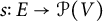 $s \colon E \to \mathcal {P}(V)$
and
$s \colon E \to \mathcal {P}(V)$
and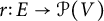 $r \colon E \to \mathcal {P}(V)$
. An edge
$r \colon E \to \mathcal {P}(V)$
. An edge $e \in E$
can be depicted by an arrow from the set of source vertices
$e \in E$
can be depicted by an arrow from the set of source vertices $s(e)$
to the set of range vertices
$s(e)$
to the set of range vertices $r(e)$
. Thus, we can view classical directed edges as hyperedges with
$r(e)$
. Thus, we can view classical directed edges as hyperedges with $\left \lvert s(e)\right \rvert = \left \lvert r(e)\right \rvert = 1$
. Note that we consider directed hypergraphs which can also have empty edges and multi-edges.
$\left \lvert s(e)\right \rvert = \left \lvert r(e)\right \rvert = 1$
. Note that we consider directed hypergraphs which can also have empty edges and multi-edges.
In this setting, our quantum automorphism group $\operatorname {\mathrm {Aut}}^+(\Gamma )$
of a hypergraph
$\operatorname {\mathrm {Aut}}^+(\Gamma )$
of a hypergraph $\Gamma $
is given by the following compact matrix quantum group.
$\Gamma $
is given by the following compact matrix quantum group.
Definition 1 (Definition 3.4)
Let $\Gamma := (V, E)$
be a hypergraph and
$\Gamma := (V, E)$
be a hypergraph and $\mathcal {A}$
the universal unital
$\mathcal {A}$
the universal unital $C^*$
-algebra with generators
$C^*$
-algebra with generators $u_{vw}$
for all
$u_{vw}$
for all $v, w \in V$
and
$v, w \in V$
and $u_{ef}$
for all
$u_{ef}$
for all $e,f \in E$
such that
$e,f \in E$
such that
-
(1) $u_V := {(u_{v w})}_{v, w \in V}$
and
$u_E := {(u_{e f})}_{e, f \in E}$
are magic unitaries;
$u_V := {(u_{v w})}_{v, w \in V}$
and
$u_E := {(u_{e f})}_{e, f \in E}$
are magic unitaries; -
(2)
$A_s u_E = u_V A_s$
and
$A_r u_E = u_V A_r$
, where
$A_r, A_s \in \mathbb {C}^{V \times E}$
are defined by
$$\begin{align*}{(A_s)}_{ve} = \begin{cases} 1 & \text{if } v \in s(e), \\ 0 & \text{otherwise,} \end{cases} \quad {(A_r)}_{ve} = \begin{cases} 1 & \text{if } v \in r(e), \\ 0 & \text{otherwise,} \end{cases} \qquad \forall v \in V, \, e \in E. \end{align*}$$

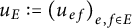




Then $\operatorname {\mathrm {Aut}}^+(\Gamma ) := (\mathcal {A}, u_V \oplus u_E)$
is the quantum automorphism group of the hypergraph
$\operatorname {\mathrm {Aut}}^+(\Gamma ) := (\mathcal {A}, u_V \oplus u_E)$
is the quantum automorphism group of the hypergraph $\Gamma $
.
$\Gamma $
.
Intuitively, $\operatorname {\mathrm {Aut}}^+(\Gamma )$
is given by a quantum permutation
$\operatorname {\mathrm {Aut}}^+(\Gamma )$
is given by a quantum permutation $u_V$
on the vertices and a quantum permutation
$u_V$
on the vertices and a quantum permutation $u_E$
on the edges, which are compatible by intertwining the incidence matrices
$u_E$
on the edges, which are compatible by intertwining the incidence matrices $A_s$
and
$A_s$
and $A_r$
. If
$A_r$
. If $u_V$
and
$u_V$
and $u_E$
are classical permutation matrices, then this definition gives exactly the classical automorphism group of a hypergraph (see Section 3.1).
$u_E$
are classical permutation matrices, then this definition gives exactly the classical automorphism group of a hypergraph (see Section 3.1).
Note that in contrast to the quantum automorphism groups of Bichon and Banica, we include a second magic unitary for the edges. This is necessary to capture quantum symmetries between multi-edges, which are allowed in our definition of hypergraph. See, for example, Section 3.3 for the quantum symmetries of a concrete family of hypergraphs with multi-edges. However, if a hypergraph $\Gamma $
or its dual
$\Gamma $
or its dual $\Gamma ^*$
have no multi-edges, then our definition reduces to only one magic unitary.
$\Gamma ^*$
have no multi-edges, then our definition reduces to only one magic unitary.
Theorem 1 (Corollaries 3.17 and 3.18)
Let $\Gamma := (V, E)$
be a hypergraph.
$\Gamma := (V, E)$
be a hypergraph.
-
(1) If
$\Gamma $
has no multi-edges, then
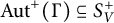
$\operatorname {\mathrm {Aut}}^+(\Gamma ) \subseteq S_V^+$
. -
(2) If
$\Gamma ^*$
has no multi-edges, then
$\operatorname {\mathrm {Aut}}^+(\Gamma ) \subseteq S_E^+$
.



Since hypergraphs are a generalization of classical graphs and multigraphs, it is natural to ask how our quantum automorphism group relates to the quantum automorphism groups of Bichon [Reference Bichon4], Banica [Reference Banica2], and Goswami–Hossain [Reference Goswami and Hossain16]. Denote by $\operatorname {\mathrm {Aut}}^+_{\operatorname {\mathrm {Bic}}}(\Gamma )$
the quantum automorphism group of Bichon and by
$\operatorname {\mathrm {Aut}}^+_{\operatorname {\mathrm {Bic}}}(\Gamma )$
the quantum automorphism group of Bichon and by $\operatorname {\mathrm {Aut}}^+_{\operatorname {\mathrm {GH}},\operatorname {\mathrm {Bic}}}(\Gamma )$
the quantum automorphism group of Goswami–Hossain in the sense of Bichon. Then the following theorem shows that we obtain both quantum groups as a special case when encoding classical graphs and multigraphs as hypergraphs.
$\operatorname {\mathrm {Aut}}^+_{\operatorname {\mathrm {GH}},\operatorname {\mathrm {Bic}}}(\Gamma )$
the quantum automorphism group of Goswami–Hossain in the sense of Bichon. Then the following theorem shows that we obtain both quantum groups as a special case when encoding classical graphs and multigraphs as hypergraphs.
Theorem 2 (Theorems 4.3, 4.7, and 4.11)
-
(1) Let
$\Gamma := (V, E)$
be a directed graph as in Definition 2.2. Define the source and range maps
$s(v, w) = \{ v \}$
and
$r(v, w) = \{ w \}$
for all edges
$(v, w) \in E$
. Then
$\Gamma $
is a hypergraph with
$\operatorname {\mathrm {Aut}}^+(\Gamma ) = \operatorname {\mathrm {Aut}}^+_{\operatorname {\mathrm {Bic}}}(\Gamma )$
. -
(2) Let
$\Gamma := (V, E)$
be a simple graph as in Definition 2.1. Define the source and range maps
$s(\{v, w\}) = \{v, w\}$
and
$r(\{v, w\}) = \{v, w\}$
for all edges
$\{v, w\} \in E$
. Then
$\Gamma $
is a hypergraph with
$\operatorname {\mathrm {Aut}}^+(\Gamma ) = \operatorname {\mathrm {Aut}}^+_{\operatorname {\mathrm {Bic}}}(\Gamma )$
. -
(3) Let
$\Gamma := (V, E)$
be a multigraph as in Definition 2.4 with source map
$s'$
and range map
$r'$
. Define the new source and range maps
$s(e) = \{ s'(e) \}$
and
$r(e) = \{ r'(e) \}$
for all
$e \in E$
. Then
$\Gamma $
is a hypergraph with
$\operatorname {\mathrm {Aut}}^+(\Gamma ) = \operatorname {\mathrm {Aut}}^+_{\operatorname {\mathrm {GH}},\operatorname {\mathrm {Bic}}}(\Gamma )$
.


















Note that the previous theorem can also be used to construct many concrete examples of quantum automorphism groups of hypergraphs.
1.2 Quantum symmetries of hypergraph
$C^*$
-algebras

Related to quantum automorphism groups of classical graphs is the study of quantum symmetries of graph $C^*$
-algebras in [Reference Joardar and Mandal19, Reference Schmidt and Weber30]. These
$C^*$
-algebras in [Reference Joardar and Mandal19, Reference Schmidt and Weber30]. These $C^*$
-algebras are defined in terms of an underlying graph and have been studied since the 1980s. They include many examples like matrix algebras, continuous functions on the circle, or the Cuntz algebra (see [Reference Raeburn24] for more details). Recently, Trieb–Weber–Zenner [Reference Trieb, Weber and Zenner32] introduced hypergraph
$C^*$
-algebras are defined in terms of an underlying graph and have been studied since the 1980s. They include many examples like matrix algebras, continuous functions on the circle, or the Cuntz algebra (see [Reference Raeburn24] for more details). Recently, Trieb–Weber–Zenner [Reference Trieb, Weber and Zenner32] introduced hypergraph $C^*$
-algebras, which generalize graph
$C^*$
-algebras, which generalize graph $C^*$
-algebras to the setting of hypergraphs. This new class includes all graph
$C^*$
-algebras to the setting of hypergraphs. This new class includes all graph $C^*$
-algebras but also new examples of non-nuclear
$C^*$
-algebras but also new examples of non-nuclear $C^*$
-algebras. See also the recent work by Schäfer–Weber [Reference Schäfer and Weber26] which characterizes the nuclearity of hypergraph
$C^*$
-algebras. See also the recent work by Schäfer–Weber [Reference Schäfer and Weber26] which characterizes the nuclearity of hypergraph $C^*$
-algebras in terms of minors of the underlying hypergraph.
$C^*$
-algebras in terms of minors of the underlying hypergraph.
In [Reference Schmidt and Weber30], Schmidt–Weber showed that Banica’s quantum automorphism group acts maximally on the corresponding graph $C^*$
-algebra. We generalize this result to hypergraphs by showing that our quantum automorphism group
$C^*$
-algebra. We generalize this result to hypergraphs by showing that our quantum automorphism group $\operatorname {\mathrm {Aut}}^+(\Gamma )$
acts on the corresponding hypergraph
$\operatorname {\mathrm {Aut}}^+(\Gamma )$
acts on the corresponding hypergraph $C^*$
-algebra
$C^*$
-algebra $C^*(\Gamma )$
. As in the case of graph
$C^*(\Gamma )$
. As in the case of graph $C^*$
-algebras, hypergraph
$C^*$
-algebras, hypergraph $C^*$
-algebras are generated by a family of projections
$C^*$
-algebras are generated by a family of projections ${\{ p_v \}}_{v \in V}$
and a family of partial isometries
${\{ p_v \}}_{v \in V}$
and a family of partial isometries ${\{ s_e \}}_{e \in E}$
(see Definition 2.33). Our action is then given by permuting these generators using the magic unitaries
${\{ s_e \}}_{e \in E}$
(see Definition 2.33). Our action is then given by permuting these generators using the magic unitaries $u_V$
and
$u_V$
and $u_E$
, that is,
$u_E$
, that is,
 $$\begin{align*}\alpha(p_v) = \sum_{w \in V} p_w \otimes u_{wv}, \qquad \alpha(s_e) = \sum_{f \in E} s_f \otimes u_{fe} \qquad \forall v \in V, \, e \in E. \end{align*}$$
It turns out that this action equals the one of Schmidt–Weber in the case of classical graphs, but our quantum automorphism group is no longer maximal with respect to it. However, we obtain maximality under the additional assumption that $\operatorname {\mathrm {Aut}}^+(\Gamma )$
also acts on
$\operatorname {\mathrm {Aut}}^+(\Gamma )$
also acts on $C^*(\Gamma ')$
, where
$C^*(\Gamma ')$
, where $\Gamma '$
is obtained by inverting the direction of all edges and by interchanging the vertices and edges of
$\Gamma '$
is obtained by inverting the direction of all edges and by interchanging the vertices and edges of $\Gamma $
.
$\Gamma $
.
Theorem 3 (Theorems 5.2 and 5.7)
Let $\Gamma := (V, E)$
be a hypergraph and
$\Gamma := (V, E)$
be a hypergraph and $\Gamma ' := {(\Gamma ^{*})}^{\operatorname {\mathrm {op}}}$
. Then
$\Gamma ' := {(\Gamma ^{*})}^{\operatorname {\mathrm {op}}}$
. Then $\operatorname {\mathrm {Aut}}^+(\Gamma )$
is the largest compact matrix quantum group that acts faithfully on both
$\operatorname {\mathrm {Aut}}^+(\Gamma )$
is the largest compact matrix quantum group that acts faithfully on both $C^*(\Gamma )$
and
$C^*(\Gamma )$
and $C^*(\Gamma ')$
via
$C^*(\Gamma ')$
via
 $$\begin{align*}\alpha_1 \colon C^*(\Gamma) \to C^*(\Gamma) \otimes C(\operatorname{\mathrm{Aut}}^+(\Gamma)), \quad \alpha_2 \colon C^*(\Gamma') \to C^*(\Gamma') \otimes C(\operatorname{\mathrm{Aut}}^+(\Gamma)) \end{align*}$$
with
 $$ \begin{align*} \alpha_1(p_v) &= \sum_{w \in V} p_w \otimes u_{wv} \quad \forall v \in V, &\qquad \alpha_1(s_e) &= \sum_{f \in E} s_f \otimes u_{fe} \qquad \forall e \in E, \\ \alpha_2(p_e) &= \sum_{f \in E} p_f \otimes u_{fe} \quad \forall e \in E, &\qquad \alpha_2(s_v) &= \sum_{w \in V} s_w \otimes u_{wv} \qquad \forall v \in V. \end{align*} $$
Overview of the article: We begin in Section 2 with some preliminaries on graphs, hypergraphs, quantum groups, as well as graph and hypergraph $C^*$
-algebras. Then we introduce our quantum automorphism groups of hypergraphs in Section 3 and explore some first properties. Further, we give examples of hypergraphs with maximal quantum symmetries and consider the case of hypergraphs without multi-edges. In Section 4, we compute the quantum automorphism groups of hypergraphs that are constructed from classical graphs and multigraphs. In particular, we show that these agree with the quantum automorphism group of Bichon or its multigraph version in the sense of Goswami–Hossain. Finally, we construct the action on hypergraph
$C^*$
-algebras. Then we introduce our quantum automorphism groups of hypergraphs in Section 3 and explore some first properties. Further, we give examples of hypergraphs with maximal quantum symmetries and consider the case of hypergraphs without multi-edges. In Section 4, we compute the quantum automorphism groups of hypergraphs that are constructed from classical graphs and multigraphs. In particular, we show that these agree with the quantum automorphism group of Bichon or its multigraph version in the sense of Goswami–Hossain. Finally, we construct the action on hypergraph $C^*$
-algebras in Section 5 and present some remaining open questions in Section 6.
$C^*$
-algebras in Section 5 and present some remaining open questions in Section 6.
2 Preliminaries
2.1 Notations
We begin by introducing some notations and conventions that will be used throughout the rest of the article. In the following, many results will be formulated in the language $C^*$
-algebras. In particular, we will use universal
$C^*$
-algebras. In particular, we will use universal $C^*$
-algebras and tensor products of
$C^*$
-algebras and tensor products of $C^*$
-algebras. For more information on these topics, we refer to [Reference Blackadar6].
$C^*$
-algebras. For more information on these topics, we refer to [Reference Blackadar6].
Let X and Y be sets. Then we denote by $\mathcal {P}(X)$
the power set of X and by
$\mathcal {P}(X)$
the power set of X and by $X \sqcup Y$
the disjoint union of X and Y. Assume X and Y are finite. Then
$X \sqcup Y$
the disjoint union of X and Y. Assume X and Y are finite. Then $\mathbb {C}^X$
is the
$\mathbb {C}^X$
is the $C^*$
-algebra of all complex-valued functions on X with a basis
$C^*$
-algebra of all complex-valued functions on X with a basis ${\{ e_{i} \}}_{i \in X}$
given by indicator functions. Similarly,
${\{ e_{i} \}}_{i \in X}$
given by indicator functions. Similarly, $\mathbb {C}^{X \times Y}$
is the
$\mathbb {C}^{X \times Y}$
is the $C^*$
-algebra of all complex-valued matrices with rows indexed by X and columns indexed by Y. Here, the standard matrix units
$C^*$
-algebra of all complex-valued matrices with rows indexed by X and columns indexed by Y. Here, the standard matrix units $e_{ij} \in \mathbb {C}^{X \times Y}$
are given by
$e_{ij} \in \mathbb {C}^{X \times Y}$
are given by ${(e_{ij})}_{k\ell } := \delta _{ik} \delta _{j\ell }$
for all
${(e_{ij})}_{k\ell } := \delta _{ik} \delta _{j\ell }$
for all $i, k \in X$
and
$i, k \in X$
and $j,\ell \in Y$
.
$j,\ell \in Y$
.
If $\mathcal {A}$
and
$\mathcal {A}$
and $\mathcal {B}$
are arbitrary
$\mathcal {B}$
are arbitrary $C^*$
-algebras, then we denote by
$C^*$
-algebras, then we denote by $\mathcal {A} \otimes \mathcal {B}$
their minimal tensor product. In addition, we identify elements
$\mathcal {A} \otimes \mathcal {B}$
their minimal tensor product. In addition, we identify elements $u \in \mathcal {A} \otimes \mathbb {C}^{X \times Y}$
with
$u \in \mathcal {A} \otimes \mathbb {C}^{X \times Y}$
with $\mathcal {A}$
-valued matrices
$\mathcal {A}$
-valued matrices ${(u_{ij})}_{i\in X, j \in Y}$
via
${(u_{ij})}_{i\in X, j \in Y}$
via $u = \sum _{i \in X} \sum _{j \in Y} u_{ij} \otimes e_{ij}$
.
$u = \sum _{i \in X} \sum _{j \in Y} u_{ij} \otimes e_{ij}$
.
If $u \in \mathcal {A} \otimes \mathbb {C}^{X \times Y}$
and
$u \in \mathcal {A} \otimes \mathbb {C}^{X \times Y}$
and $v \in \mathcal {A} \otimes \mathbb {C}^{Y \times Y}$
, then their direct sum
$v \in \mathcal {A} \otimes \mathbb {C}^{Y \times Y}$
, then their direct sum $u \oplus v \in \mathcal {A} \otimes \mathbb {C}^{(X \sqcup Y) \times (X \sqcup Y)}$
is given by
$u \oplus v \in \mathcal {A} \otimes \mathbb {C}^{(X \sqcup Y) \times (X \sqcup Y)}$
is given by
 $$\begin{align*}{(u \oplus v)}_{ij} := \begin{cases} u_{ij} & \text{if } i, j \in X, \\ v_{ij} & \text{if } i, j \in Y, \\ 0 & \text{otherwise,} \\ \end{cases} \quad \forall i, j \in X \sqcup Y. \end{align*}$$
Finally, assume that $\mathcal {A}$
is unital. Then we identify scalar matrices
$\mathcal {A}$
is unital. Then we identify scalar matrices $u \in \mathbb {C}^{X \times Y}$
with the
$u \in \mathbb {C}^{X \times Y}$
with the $\mathcal {A}$
-valued matrices
$\mathcal {A}$
-valued matrices $1 \otimes u \in \mathcal {A} \otimes \mathbb {C}^{X \times Y}$
.
$1 \otimes u \in \mathcal {A} \otimes \mathbb {C}^{X \times Y}$
.
2.2 Graphs and hypergraphs
Graphs are combinatorial objects consisting of a set of vertices that are connected by edges. In the following, we begin with the definition of simple and directed graphs before we come to multigraphs and directed hypergraphs as in [Reference Gallo, Longo, Pallottino and Nguyen15].
Definition 2.1 A simple graph $\Gamma := (V, E)$
is given by a finite set of vertices V and a set of edges
$\Gamma := (V, E)$
is given by a finite set of vertices V and a set of edges $E \subseteq \mathcal {P}(V)$
with
$E \subseteq \mathcal {P}(V)$
with $\left \lvert e\right \rvert = 2$
for all
$\left \lvert e\right \rvert = 2$
for all $e \in E$
.
$e \in E$
.
Definition 2.2 A directed graph $\Gamma := (V, E)$
is given by a finite set of vertices V and a set of edges
$\Gamma := (V, E)$
is given by a finite set of vertices V and a set of edges $E \subseteq V \times V$
.
$E \subseteq V \times V$
.
An edge $\{v, w\}$
in a simple graph can be visualized by a line from v to w, whereas an edge
$\{v, w\}$
in a simple graph can be visualized by a line from v to w, whereas an edge $(v, w)$
in a directed graph can be visualized by an arrow from v to w. Further, directed graphs can have self-loops
$(v, w)$
in a directed graph can be visualized by an arrow from v to w. Further, directed graphs can have self-loops $(v, v)$
, which are excluded in our definition of simple graphs. Although edges are modeled differently in both definitions, we can describe them uniformly by an adjacency matrix.
$(v, v)$
, which are excluded in our definition of simple graphs. Although edges are modeled differently in both definitions, we can describe them uniformly by an adjacency matrix.
Definition 2.3 Let $\Gamma := (V, E)$
be a simple or directed graph. Then two vertices
$\Gamma := (V, E)$
be a simple or directed graph. Then two vertices $v, w \in V$
are adjacent, and we write
$v, w \in V$
are adjacent, and we write $v \sim w$
, if
$v \sim w$
, if $\{v, w\} \in E$
or
$\{v, w\} \in E$
or $(v, w) \in E,$
respectively. Further, we define the adjacency matrix
$(v, w) \in E,$
respectively. Further, we define the adjacency matrix $A_{\Gamma } \in \mathbb {C}^{V \times V}$
by
$A_{\Gamma } \in \mathbb {C}^{V \times V}$
by
 $$\begin{align*}{(A_{\Gamma})}_{vw} := \begin{cases} 1 & \text{if } v \sim w, \\ 0 & \text{otherwise,} \end{cases} \qquad \forall v, w \in V. \end{align*}$$
By allowing multiple edges between each pair of vertices, we can generalize directed graphs to multigraphs.
Definition 2.4 A (directed) multigraph $\Gamma := (V, E)$
is given by a finite set of vertices V, a finite set of edges
$\Gamma := (V, E)$
is given by a finite set of vertices V, a finite set of edges $E,$
and two maps
$E,$
and two maps $s \colon E \to V$
and
$s \colon E \to V$
and $r \colon E \to V$
.
$r \colon E \to V$
.
In a multigraph, an edge $e \in E$
can be depicted by a directed arrow from the source vertex
$e \in E$
can be depicted by a directed arrow from the source vertex $s(e)$
to the range vertex
$s(e)$
to the range vertex $r(e)$
as in the case of directed graphs. Further, in the setting of multigraphs, we will be interested in vertices with only incoming or outgoing edges.
$r(e)$
as in the case of directed graphs. Further, in the setting of multigraphs, we will be interested in vertices with only incoming or outgoing edges.
Definition 2.5 Let $\Gamma := (V, E)$
be a multigraph and
$\Gamma := (V, E)$
be a multigraph and $v \in V$
. Then
$v \in V$
. Then
-
(1) v is a source, if
$v \neq r(e)$
for all
$e \in E$
. -
(2) v is a sink, if
$v \neq s(e)$
for all
$e \in E$
. -
(3) v is isolated, if v is a source and a sink.


By replacing the vertices $s(e)$
and
$s(e)$
and $r(e)$
in a multigraph with arbitrary subsets of vertices, we finally arrive at the definition of a hypergraph.
$r(e)$
in a multigraph with arbitrary subsets of vertices, we finally arrive at the definition of a hypergraph.
Definition 2.6 A (directed) hypergraph $\Gamma := (V, E)$
is given by a finite set of vertices V, a finite set of edges
$\Gamma := (V, E)$
is given by a finite set of vertices V, a finite set of edges $E,$
and source and range maps
$E,$
and source and range maps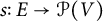 $s \colon E \to \mathcal {P}(V)$
and
$s \colon E \to \mathcal {P}(V)$
and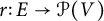 $r \colon E \to \mathcal {P}(V)$
.
$r \colon E \to \mathcal {P}(V)$
.
In a hypergraph, an edge $e \in E$
can be depicted by an arrow from the set of source vertices
$e \in E$
can be depicted by an arrow from the set of source vertices $s(e)$
to the set of range vertices
$s(e)$
to the set of range vertices $r(e)$
. Thus, classical directed edges correspond to hyperedge with
$r(e)$
. Thus, classical directed edges correspond to hyperedge with $\left \lvert s(e)\right \rvert = \left \lvert r(e)\right \rvert = 1$
, see also Definitions 2.11 and 2.12 below. Note that we allow empty sets in both the source and range map.
$\left \lvert s(e)\right \rvert = \left \lvert r(e)\right \rvert = 1$
, see also Definitions 2.11 and 2.12 below. Note that we allow empty sets in both the source and range map.
Similarly to the adjacency matrix of classical graphs, it is also possible to describe the edge structure of a hypergraph using an incidence matrix.
Definition 2.7 Let $\Gamma := (V, E)$
be a hypergraph. Then its incidence matrices
$\Gamma := (V, E)$
be a hypergraph. Then its incidence matrices $A_s, A_r \in \mathbb {C}^{V \times E}$
are given by
$A_s, A_r \in \mathbb {C}^{V \times E}$
are given by
 $$\begin{align*}{(A_s)}_{ve} = \begin{cases} 1 & \text{if } v \in s(e), \\ 0 & \text{otherwise,} \end{cases} \quad {(A_r)}_{ve} = \begin{cases} 1 & \text{if } v \in r(e),\\ 0 & \text{otherwise,} \end{cases} \qquad \forall v \in V, \, e \in E. \end{align*}$$
It is also possible to generalize the notation of sources and sinks from multigraphs to hypergraphs.
Definition 2.8 Let $\Gamma := (V, E)$
be a hypergraph and
$\Gamma := (V, E)$
be a hypergraph and $v \in V$
. Then
$v \in V$
. Then
-
(1) v is a source, if
$v \notin r(e)$
for all
$e \in E$
. -
(2) v is a sink, if
$v \notin s(e)$
for all
$e \in E$
. -
(3) v is isolated, if v is a source and a sink.


Further, the following properties will be used to describe hypergraphs with a special structure.
Definition 2.9 Let $\Gamma := (V, E)$
be a hypergraph. Then
$\Gamma := (V, E)$
be a hypergraph. Then
-
(1)
$\Gamma $
has no multi-edges, if
$s(e_1) = s(e_2)$
and
$r(e_1) = r(e_2)$
implies
$e_1 = e_2$
for all
$e_1, e_2 \in E$
. -
(2)
$\Gamma $
is undirected, if
$s(e) = r(e)$
for all
$e \in E$
. -
(3)
$\Gamma $
is k-uniform, if
$|s(e)| = |r(e)| = k$
for all
$e \in E$
.






Given a simple graph, a directed graph, or a multi-graph, it is possible to regard it as a hypergraph in a natural way. In the following, we define the corresponding source and range maps and show how the resulting hypergraphs can be characterized using the properties defined previously.
Definition 2.10 Let $\Gamma := (V, E)$
be a simple graph. Then we can regard
$\Gamma := (V, E)$
be a simple graph. Then we can regard $\Gamma $
as a hypergraph with the source and range map given by
$\Gamma $
as a hypergraph with the source and range map given by $s(\{v, w\}) := \{ v, w \}$
and
$s(\{v, w\}) := \{ v, w \}$
and $r(\{v, w\}) := \{ v, w \}$
for all
$r(\{v, w\}) := \{ v, w \}$
for all $\{v, w\} \in E$
. Conversely,
$\{v, w\} \in E$
. Conversely, $2$
-uniform undirected hypergraphs without multi-edges correspond exactly to simple graphs in this way.
$2$
-uniform undirected hypergraphs without multi-edges correspond exactly to simple graphs in this way.
Definition 2.11 Let $\Gamma := (V, E)$
be a directed graph. Then we can regard
$\Gamma := (V, E)$
be a directed graph. Then we can regard $\Gamma $
as a hypergraph by defining the source and range map given by
$\Gamma $
as a hypergraph by defining the source and range map given by $s(v, w) := \{ v \}$
and
$s(v, w) := \{ v \}$
and $r(v, w) := \{ w \}$
for all
$r(v, w) := \{ w \}$
for all $(v, w) \in E$
. Conversely,
$(v, w) \in E$
. Conversely, $1$
-uniform hypergraphs without multi-edges correspond exactly to directed graphs in this way.
$1$
-uniform hypergraphs without multi-edges correspond exactly to directed graphs in this way.
Definition 2.12 Let $\Gamma := (V, E)$
be a multigraph with source map
$\Gamma := (V, E)$
be a multigraph with source map $s' \colon E \to V$
and range map
$s' \colon E \to V$
and range map $r' \colon E \to V$
. Then we can regard
$r' \colon E \to V$
. Then we can regard $\Gamma $
as a hypergraph with the new source and range map given by
$\Gamma $
as a hypergraph with the new source and range map given by $s(e) := \{s'(e)\}$
and
$s(e) := \{s'(e)\}$
and $r(e) := \{r'(e)\}$
for all
$r(e) := \{r'(e)\}$
for all $e \in E$
. Conversely,
$e \in E$
. Conversely, $1$
-uniform hypergraphs correspond exactly to multigraphs in this way.
$1$
-uniform hypergraphs correspond exactly to multigraphs in this way.
Given any hypergraph, it is always possible to obtain a new hypergraph by interchanging the source and range maps or by interchanging the vertices and edges.
Definition 2.13 Let $\Gamma = (V, E)$
be a hypergraph. Then its opposite hypergraph is given by
$\Gamma = (V, E)$
be a hypergraph. Then its opposite hypergraph is given by $\Gamma ^{\operatorname {\mathrm {op}}} := (V, E)$
with
$\Gamma ^{\operatorname {\mathrm {op}}} := (V, E)$
with $s^{\operatorname {\mathrm {op}}}(e) := r(e)$
and
$s^{\operatorname {\mathrm {op}}}(e) := r(e)$
and $r^{\operatorname {\mathrm {op}}}(e) := s(e)$
for all
$r^{\operatorname {\mathrm {op}}}(e) := s(e)$
for all $e \in E$
.
$e \in E$
.
Definition 2.14 Let $\Gamma = (V, E)$
be a hypergraph. Then its dual hypergraph is given by
$\Gamma = (V, E)$
be a hypergraph. Then its dual hypergraph is given by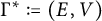 $\Gamma ^* := (E, V)$
with source and range maps
$\Gamma ^* := (E, V)$
with source and range maps $s^*$
and
$s^*$
and $r^*$
defined by
$r^*$
defined by
 $$\begin{align*}s^*(v) := \{ e \in E \ | \ v \in s(e) \}, \quad r^*(v) := \{ e \in E \ | \ v \in r(e) \}. \end{align*}$$
Note that we can use the dual source and range maps $s^*$
and
$s^*$
and $r^*$
to rewrite the source and range maps s and r as
$r^*$
to rewrite the source and range maps s and r as
 $$\begin{align*}s(e) = \{ v \in V \ | \ e \in s^*(v) \}, \quad r(e) = \{ v \in V \ | \ e \in r^*(v) \} \quad \forall e \in E. \end{align*}$$
In particular, we have ${(\Gamma ^*)}^* = \Gamma $
.
${(\Gamma ^*)}^* = \Gamma $
.
2.3 Compact matrix quantum groups
Compact quantum groups were first introduced by Woronowicz in [Reference Woronowicz36, Reference Woronowicz38] and are a generalization of classical compact groups to describe symmetries in the setting of $C^*$
-algebras. In the following, we will focus only on compact matrix quantum groups, which form a subclass of compact quantum groups analogous to classical matrix groups. We begin with some basic definitions before we come to actions on
$C^*$
-algebras. In the following, we will focus only on compact matrix quantum groups, which form a subclass of compact quantum groups analogous to classical matrix groups. We begin with some basic definitions before we come to actions on $C^*$
-algebras and the quantum permutation group. For more information on compact quantum groups, we refer to [Reference Neshveyev and Tuset23, Reference Timmermann31].
$C^*$
-algebras and the quantum permutation group. For more information on compact quantum groups, we refer to [Reference Neshveyev and Tuset23, Reference Timmermann31].
Definition 2.15 Let I be a finite index set. A compact matrix quantum group $G := (\mathcal {A}, u)$
consists of a unital
$G := (\mathcal {A}, u)$
consists of a unital $C^*$
-algebra
$C^*$
-algebra $\mathcal {A}$
and a matrix
$\mathcal {A}$
and a matrix $u := {(u_{ij})}_{i,j \in I} \in \mathcal {A} \otimes \mathbb {C}^{I \times I}$
, such that
$u := {(u_{ij})}_{i,j \in I} \in \mathcal {A} \otimes \mathbb {C}^{I \times I}$
, such that
-
(1)
$\mathcal {A}$
is generated by the matrix entries
$u_{ij}$
for all
$i, j \in I$
; -
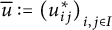
(2) u is unitary and
$\overline {u} := {(u_{ij}^*)}_{i,j\in I}$
is invertible; -
(3) there exists a unital
$*$
-homomorphism
$\Delta \colon \mathcal {A} \to \mathcal {A} \otimes \mathcal {A}$
given by
$ \Delta (u_{ij}) = \sum _{k \in I} u_{ik} \otimes u_{kj} $
for all
$i, j \in I$
.






If G is a compact matrix quantum group, then the $C^*$
-algebra
$C^*$
-algebra $\mathcal {A}$
will be denoted by
$\mathcal {A}$
will be denoted by $C(G)$
and the
$C(G)$
and the $*$
-algebra generated by the entries
$*$
-algebra generated by the entries $u_{ij}$
will be denoted by
$u_{ij}$
will be denoted by $\mathcal {O}(G)$
. Further, the matrix u is called the fundamental representation of G.
$\mathcal {O}(G)$
. Further, the matrix u is called the fundamental representation of G.
As for classical groups, it is possible to define subgroups, quotients, and isomorphisms for compact matrix quantum groups. However, in order to formulate these, it is convenient to first introduce morphisms of compact quantum groups.
Definition 2.16 Let G and H be two compact matrix quantum groups. A morphism of compact quantum groups is a unital $*$
-homomorphism
$*$
-homomorphism $ \varphi \colon C(H) \to C(G), $
such that
$ \varphi \colon C(H) \to C(G), $
such that $ (\varphi \otimes \varphi ) \circ \Delta _H = \Delta _G \circ \varphi. $
Note that there also exists a stronger notion of morphism between compact matrix quantum groups that respects their fundamental representations. However, we are interested in morphisms of compact quantum groups since we want to be able to compare compact matrix quantum groups of different sizes.
Definition 2.17 Let G and H be two compact matrix quantum groups.
-
(1) H is a subgroup of G and we write
$H \subseteq G$
if there exists a surjective morphism of compact quantum groups
$\varphi \colon C(G) \to C(H)$
. -
(2) H is a quotient of G if there exists an injective morphism of compact quantum groups
$\varphi \colon C(H) \to C(G)$
. In this case, we identify
$C(H)$
with a
$C^*$
-subalgebra of
$C(G)$
. -
(3) G and H are isomorphic and we write
$G = H$
if there exists a bijective morphism of compact quantum groups
$\varphi \colon C(G) \to C(H)$
. Note that in this case,
$\varphi ^{-1}$
is again a morphism of compact quantum groups.






While the comultiplication $\Delta $
of a quantum group generalizes the multiplication of a classical group, there exists further structure on the
$\Delta $
of a quantum group generalizes the multiplication of a classical group, there exists further structure on the $*$
-algebra
$*$
-algebra $\mathcal {O}(G)$
that corresponds to the neutral element and the inverse map in the classical case.
$\mathcal {O}(G)$
that corresponds to the neutral element and the inverse map in the classical case.
Remark 2.18 Let G be a compact matrix quantum group with fundamental representation u. Then there exists a unital $*$
-homomorphism
$*$
-homomorphism $\varepsilon \colon \mathcal {O}(G) \to \mathbb {C}$
called the counit and a unital anti-homomorphism
$\varepsilon \colon \mathcal {O}(G) \to \mathbb {C}$
called the counit and a unital anti-homomorphism $S \colon \mathcal {O}(G) \to \mathcal {O}(G)$
called the antipode, which are given by
$S \colon \mathcal {O}(G) \to \mathcal {O}(G)$
called the antipode, which are given by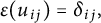 $ \varepsilon (u_{ij}) = \delta _{ij}, $
and
$ \varepsilon (u_{ij}) = \delta _{ij}, $
and $S(u_{ij}) = u_{ji}^*$
for all
$S(u_{ij}) = u_{ji}^*$
for all $i, j \in I$
. These turn
$i, j \in I$
. These turn $\mathcal {O}(G)$
into a Hopf
$\mathcal {O}(G)$
into a Hopf $*$
-algebra. For more details, see [Reference Timmermann31].
$*$
-algebra. For more details, see [Reference Timmermann31].
Using the Hopf $*$
-algebra structure of
$*$
-algebra structure of $\mathcal {O}(G)$
, we can now define actions of compact matrix quantum groups as in [Reference Bichon4, Reference Wang34].
$\mathcal {O}(G)$
, we can now define actions of compact matrix quantum groups as in [Reference Bichon4, Reference Wang34].
Definition 2.19 Let G be a compact matrix quantum group and $\mathcal {A}$
a unital
$\mathcal {A}$
a unital $C^*$
-algebra. An action of G on
$C^*$
-algebra. An action of G on $\mathcal {A}$
is a unital
$\mathcal {A}$
is a unital $*$
-homomorphism
$*$
-homomorphism $\alpha \colon \mathcal {A} \to \mathcal {A} \otimes C(G)$
, such that
$\alpha \colon \mathcal {A} \to \mathcal {A} \otimes C(G)$
, such that
-
(1)
$(\alpha \otimes \operatorname {\mathrm {id}}) \circ \alpha = (\operatorname {\mathrm {id}} \otimes \Delta ) \circ \alpha $
; -
(2) there exists a dense
$*$
-subalgebra
$\mathcal {B} \subseteq \mathcal {A}$
with
$\alpha (\mathcal {B}) \subseteq \mathcal {B} \otimes \mathcal {O}(G)$
; -
(3)
$(\operatorname {\mathrm {id}} \otimes \varepsilon ) \circ \alpha |_{\mathcal {B}} = \operatorname {\mathrm {id}}$
.





Alternatively, the second and third conditions can be replaced by the more analytical condition that $(1 \otimes C(G)) \alpha (\mathcal {A})$
is linearly dense in
$(1 \otimes C(G)) \alpha (\mathcal {A})$
is linearly dense in $\mathcal {A} \otimes C(G)$
(see, e.g., [Reference Schmidt and Weber30]). However, Definition 2.19 will be easier to check in our case.
$\mathcal {A} \otimes C(G)$
(see, e.g., [Reference Schmidt and Weber30]). However, Definition 2.19 will be easier to check in our case.
Definition 2.20 Let $\alpha $
be an action of a compact matrix quantum group G on a
$\alpha $
be an action of a compact matrix quantum group G on a $C^*$
-algebra
$C^*$
-algebra $\mathcal {A}$
. Then
$\mathcal {A}$
. Then $\alpha $
is faithful if for any quotient H of G, such that
$\alpha $
is faithful if for any quotient H of G, such that $\alpha |_{C(H)}$
is an action on
$\alpha |_{C(H)}$
is an action on $\mathcal {A}$
, we have
$\mathcal {A}$
, we have $C(H) = C(G)$
.
$C(H) = C(G)$
.
Next, we define magic unitaries and the quantum permutation group $S_n^+$
, which was first introduced by Wang [Reference Wang34] as the quantum automorphism group of the finite set
$S_n^+$
, which was first introduced by Wang [Reference Wang34] as the quantum automorphism group of the finite set $X := \{1, \ldots , n\}$
. However, we will consider the case of arbitrary finite sets X and denote the corresponding quantum permutation group by
$X := \{1, \ldots , n\}$
. However, we will consider the case of arbitrary finite sets X and denote the corresponding quantum permutation group by $S_X^+$
.
$S_X^+$
.
Definition 2.21 Let X be a finite set and $\mathcal {A}$
be a unital
$\mathcal {A}$
be a unital $C^*$
-algebra. An element
$C^*$
-algebra. An element $u:= (u_{ij}) \in \mathcal {A} \otimes \mathbb {C}^{X \times X}$
is called magic unitary, if
$u:= (u_{ij}) \in \mathcal {A} \otimes \mathbb {C}^{X \times X}$
is called magic unitary, if
 $$\begin{align*}u_{ij}^2 = u_{ij}^* = u_{ij} \quad \forall i, j \in X, \qquad \sum_{j \in I} u_{ij} = \sum_{j \in I} u_{ji} = 1 \quad \forall i \in X. \end{align*}$$
Note that magic unitaries with entries in $\mathbb {C}$
are exactly classical permutation matrices, which gives magic unitaries also the name quantum permutation matrices. These matrices have applications in quantum information via non-local games [Reference Lupini, Mančinska and Roberson21] and concrete magic unitaries have, for example, been recently studied in [Reference Faroß and Weber14, Reference Nechita, Schmidt and Weber22]. For more information and open problems related to magic unitaries, we refer to [Reference Weber35].
$\mathbb {C}$
are exactly classical permutation matrices, which gives magic unitaries also the name quantum permutation matrices. These matrices have applications in quantum information via non-local games [Reference Lupini, Mančinska and Roberson21] and concrete magic unitaries have, for example, been recently studied in [Reference Faroß and Weber14, Reference Nechita, Schmidt and Weber22]. For more information and open problems related to magic unitaries, we refer to [Reference Weber35].
Now, the quantum permutation group $S_X^+$
is the compact matrix quantum group with a universal magic unitary as its fundamental representation.
$S_X^+$
is the compact matrix quantum group with a universal magic unitary as its fundamental representation.
Definition 2.22 Let X be a finite set and $\mathcal {A}$
be the universal unital
$\mathcal {A}$
be the universal unital $C^*$
-algebra with generators
$C^*$
-algebra with generators $u_{ij}$
for all
$u_{ij}$
for all $i, j \in X$
such that
$i, j \in X$
such that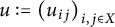 $u := {(u_{ij})}_{i,j\in X}$
is a magic unitary. Then
$u := {(u_{ij})}_{i,j\in X}$
is a magic unitary. Then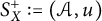 $S_X^+ := (\mathcal {A}, u)$
is the quantum permutation group on X.
$S_X^+ := (\mathcal {A}, u)$
is the quantum permutation group on X.
In [Reference Wang34], Wang showed that the quantum permutation group $S_X^+$
is the largest compact matrix quantum group that acts on
$S_X^+$
is the largest compact matrix quantum group that acts on $\mathbb {C}^X$
in the following sense. Thus, we can think of
$\mathbb {C}^X$
in the following sense. Thus, we can think of $S_X^+$
as the quantum automorphism group of a finite set X.
$S_X^+$
as the quantum automorphism group of a finite set X.
Proposition 2.23 [Reference Wang34]
Let X be a finite set. Then $S_X^+$
acts faithfully on
$S_X^+$
acts faithfully on $\mathbb {C}^X$
via the map
$\mathbb {C}^X$
via the map $\alpha \colon \mathbb {C}^X \to \mathbb {C}^X \otimes C(S_X^+)$
given by
$\alpha \colon \mathbb {C}^X \to \mathbb {C}^X \otimes C(S_X^+)$
given by
 $$\begin{align*}\alpha(e_i) = \sum_{j \in X} e_{j} \otimes u_{ji} \quad \forall i \in X, \end{align*}$$
where u denotes the fundamental representation of $S_X^+$
and
$S_X^+$
and ${\{ e_i \}}_{i \in X}$
the standard basis of
${\{ e_i \}}_{i \in X}$
the standard basis of $\mathbb {C}^X$
. Further, if G is any compact matrix quantum group that acts faithfully on
$\mathbb {C}^X$
. Further, if G is any compact matrix quantum group that acts faithfully on $\mathbb {C}^X$
via the action
$\mathbb {C}^X$
via the action $\alpha $
, then
$\alpha $
, then $G \subseteq S_X^+$
.
$G \subseteq S_X^+$
.
When defining quantum automorphism groups of graphs or hypergraphs, we will consider intertwiner relations of the form $Au = vA$
, where u and v are unitary matrices over a
$Au = vA$
, where u and v are unitary matrices over a $C^*$
-algebra and A is a scalar matrix. The following proposition can be verified by a simple computation and gives a useful reformulation of these relations.
$C^*$
-algebra and A is a scalar matrix. The following proposition can be verified by a simple computation and gives a useful reformulation of these relations.
Proposition 2.24 Let $\mathcal {A}$
be a unital
$\mathcal {A}$
be a unital $C^*$
-algebra. Further, let
$C^*$
-algebra. Further, let $u \in \mathcal {A} \otimes \mathbb {C}^{I \times I}$
,
$u \in \mathcal {A} \otimes \mathbb {C}^{I \times I}$
, $v \in \mathcal {A} \otimes \mathbb {C}^{J \times J}$
be unitaries, and
$v \in \mathcal {A} \otimes \mathbb {C}^{J \times J}$
be unitaries, and $T \in \mathbb {C}^{J \times I}$
. Then
$T \in \mathbb {C}^{J \times I}$
. Then $Tu = vT$
if and only if
$Tu = vT$
if and only if $T^* v = u T^*$
.
$T^* v = u T^*$
.
Further, we will use the free product of compact matrix quantum groups, which was introduced in [Reference Wang33].
Definition 2.25 Let $G := (\mathcal {A}, u)$
and
$G := (\mathcal {A}, u)$
and $H := (\mathcal {B}, v)$
be two compact matrix quantum groups. Then the free product
$H := (\mathcal {B}, v)$
be two compact matrix quantum groups. Then the free product $G * H$
is the compact matrix quantum group
$G * H$
is the compact matrix quantum group
 $$\begin{align*}G * H := (\mathcal{A} * \mathcal{B}, u \oplus v), \end{align*}$$
where $\mathcal {A} * \mathcal {B}$
denotes the universal unital free product of
$\mathcal {A} * \mathcal {B}$
denotes the universal unital free product of $C^*$
-algebras and we identify u and v with
$C^*$
-algebras and we identify u and v with $\mathcal {A} * \mathcal {B}$
-valued matrices via the canonical inclusions
$\mathcal {A} * \mathcal {B}$
-valued matrices via the canonical inclusions $\mathcal {A}, \mathcal {B} \hookrightarrow \mathcal {A} * \mathcal {B}$
.
$\mathcal {A}, \mathcal {B} \hookrightarrow \mathcal {A} * \mathcal {B}$
.
Example 2.26 Consider two finite sets X and Y with corresponding quantum permutation groups $S_X^+$
and
$S_X^+$
and $S_Y^+$
. Then their free product
$S_Y^+$
. Then their free product $S_X^+ * S_Y^+$
is given by the universal unital
$S_X^+ * S_Y^+$
is given by the universal unital $C^*$
-algebra
$C^*$
-algebra
 $$\begin{align*}C(S_X^+ * S_Y^+) = C^*( u_{i j}, v_{k \ell} \ | \ (u_{i j}) \text{ and } (v_{k \ell}) \text{are magic unitaries}), \end{align*}$$
where the elements $u_{i j}$
are indexed over X and the elements
$u_{i j}$
are indexed over X and the elements $v_{k \ell }$
are indexed over Y. Further, the comultiplication is defined by
$v_{k \ell }$
are indexed over Y. Further, the comultiplication is defined by
 $$\begin{align*}\Delta(u_{i j}) = \sum_{s \in X} u_{is} \otimes u_{sj}, \quad \Delta(v_{k \ell}) = \sum_{t \in Y} v_{it} \otimes v_{tj}. \end{align*}$$
2.4 Quantum automorphism groups of graphs
In the case of graphs, there exist two different versions of quantum automorphism groups, which have been introduced by Bichon [Reference Bichon4] and Banica [Reference Banica2]. These quantum groups have been further studied, for example, in [Reference Chassaniol9, Reference Dobben de Bruyn, Kar, Roberson, Schmidt and Zeman13, Reference Levandovskyy, Eder, Steenpass, Schmidt, Schanz and Weber20, Reference Schanz25, Reference Schmidt29] and have been recently generalized to multigraphs in [Reference Goswami and Hossain16]. In the following, we begin with the definition of the quantum automorphism groups of Bichon, before we come to the version of Banica and the recent version for multigraphs by Goswami–Hossain. For more information on quantum automorphism groups of graphs, we refer to [Reference Schmidt29].
Definition 2.27 Let $\Gamma := (V, E)$
be a simple or directed graph and denote by
$\Gamma := (V, E)$
be a simple or directed graph and denote by $\mathcal {A}$
the universal unital
$\mathcal {A}$
the universal unital $C^*$
-algebra with generators
$C^*$
-algebra with generators $u_{ij}$
for all
$u_{ij}$
for all $i, j \in V$
and the following relations:
$i, j \in V$
and the following relations:
-
(1)
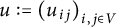
$u := {(u_{ij})}_{i,j\in V}$
is a magic unitary; -
(2)
$A_{\Gamma } u = u A_{\Gamma }$
, where
$A_{\Gamma }$
is the adjacency matrix of
$\Gamma $
; -
(3)
$\displaystyle u_{ik} u_{j\ell } = u_{j\ell } u_{ik}$
for all
$i \sim j$
and
$k \sim \ell $
.





Then $\operatorname {\mathrm {Aut}}^+_{\operatorname {\mathrm {Bic}}}(\Gamma ) := (\mathcal {A}, u)$
is Bichon’s quantum automorphism group of
$\operatorname {\mathrm {Aut}}^+_{\operatorname {\mathrm {Bic}}}(\Gamma ) := (\mathcal {A}, u)$
is Bichon’s quantum automorphism group of $\Gamma $
.
$\Gamma $
.
Note that the second relation $A_{\Gamma } u = u A_{\Gamma }$
was originally formulated using a different set of relations. However, the following proposition shows that both versions are equivalent.
$A_{\Gamma } u = u A_{\Gamma }$
was originally formulated using a different set of relations. However, the following proposition shows that both versions are equivalent.
Proposition 2.28 [Reference Schmidt29, Proposition 2.1.3]
Let $\Gamma := (V, E)$
be a simple or directed graph,
$\Gamma := (V, E)$
be a simple or directed graph, $\mathcal {A}$
a unital
$\mathcal {A}$
a unital $C^*$
-algebra, and
$C^*$
-algebra, and $u \in \mathcal {A} \otimes \mathbb {C}^{V \times V}$
a magic unitary. Then
$u \in \mathcal {A} \otimes \mathbb {C}^{V \times V}$
a magic unitary. Then $A_{\Gamma } u = u A_{\Gamma }$
is equivalent to
$A_{\Gamma } u = u A_{\Gamma }$
is equivalent to
 $$ \begin{align*} & u_{ik} u_{j\ell} = u_{j\ell} u_{ik} = 0 \quad \forall i \sim j, \, k \nsim \ell, \\ & u_{ik} u_{j\ell} = u_{j\ell} u_{ik} = 0 \quad \forall i \nsim j, \, k \sim \ell. \end{align*} $$
Using this reformulation of the intertwiner relations $A_{\Gamma } u = u A_{\Gamma }$
, one can also prove the following proposition, which will be useful later. See [Reference Schmidt and Weber30] for further details.
$A_{\Gamma } u = u A_{\Gamma }$
, one can also prove the following proposition, which will be useful later. See [Reference Schmidt and Weber30] for further details.
Proposition 2.29 Let $\Gamma := (V, E)$
be a simple or directed graph and denote by u the fundamental representation of
$\Gamma := (V, E)$
be a simple or directed graph and denote by u the fundamental representation of $\operatorname {\mathrm {Aut}}^+_{\operatorname {\mathrm {Bic}}}(\Gamma )$
. Then
$\operatorname {\mathrm {Aut}}^+_{\operatorname {\mathrm {Bic}}}(\Gamma )$
. Then
 $$\begin{align*}\sum_{\substack{k, \ell \in V \\ k \sim \ell}} u_{i k} u_{j \ell} = \sum_{\substack{k, \ell \in V \\ k \sim \ell}} u_{k i} u_{\ell j} = 1 \quad \forall i \sim j. \end{align*}$$
By dropping Relation 3 in Definition 2.27, we obtain the quantum automorphism group of Banica, which is often studied instead of Bichon’s version. However, we will mainly be interested in Bichon’s version and its following generalization to multigraphs as recently defined by Goswami–Hossain [Reference Goswami and Hossain16].
Definition 2.30 Let $\Gamma := (V, E)$
be a multigraph without isolated vertices. Denote by
$\Gamma := (V, E)$
be a multigraph without isolated vertices. Denote by $\mathcal {A}$
the universal unital
$\mathcal {A}$
the universal unital $C^*$
-algebra with generators
$C^*$
-algebra with generators $u_{ef}$
for all
$u_{ef}$
for all $e, f \in E$
and the following relations:
$e, f \in E$
and the following relations:
-
(1) The matrix
$u := {(u_{ef})}_{e,f \in E}$
is a magic unitary. -
(2) Let
$v \in V$
and
$e_1, e_2 \in E$
.-
• If
$s(e_1) = s(e_2)$
, then
$\sum _{\substack {f \in E \\ s(f) = v}} u_{e_1 f} = \sum _{\substack {f \in E \\ s(f) = v}} u_{e_2 f}$
. -
• If
$r(e_1) = r(e_2)$
, then
$\sum _{\substack {f \in E \\ r(f) = v}} u_{e_1 f} = \sum _{\substack {f \in E \\ r(f) = v}} u_{e_2 f.}$
-
-
(3) Let
$e, f \in E$
. Then
$u_{ef} = 0$
if-
•
$s(e)$
is neither a source nor a sink and
$s(f)$
is a source; -
•
$r(e)$
is neither a source nor a sink and
$r(f)$
is a sink.
-
-
(4) Let
$v \in V$
be neither a source nor a sink and
$e_1, e_2 \in E$
such that
$s(e_1) = r(e_2)$
is neither a source nor a sink. Then
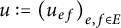
$ \sum _{\substack {f \in E \\ s(f) = v}} u_{e_1 f} = \sum _{\substack {f \in E \\ r(f) = v}} u_{e_2 f}. $










Then $\operatorname {\mathrm {Aut}}^+_{\operatorname {\mathrm {GH}},\operatorname {\mathrm {Bic}}}(\Gamma ) := (\mathcal {A}, u)$
is the quantum automorphism group of
$\operatorname {\mathrm {Aut}}^+_{\operatorname {\mathrm {GH}},\operatorname {\mathrm {Bic}}}(\Gamma ) := (\mathcal {A}, u)$
is the quantum automorphism group of $\Gamma $
by Goswami–Hossain in Bichon’s sense.
$\Gamma $
by Goswami–Hossain in Bichon’s sense.
Note that we swapped the conditions in Relation 3 in contrast to the original definition in [Reference Goswami and Hossain16, Definition 3.16].
2.5 Graph and hypergraph
$C^*$
-algebras

Graph $C^*$
-algebras are a well-studied class of
$C^*$
-algebras are a well-studied class of $C^*$
-algebras that are defined in terms of an underlying graph and generalize Cuntz–Krieger algebras [Reference Cuntz and Krieger12]. They include many concrete examples like matrix algebras, continuous functions on the circle, or the Cuntz algebra. In the following, we define graph
$C^*$
-algebras that are defined in terms of an underlying graph and generalize Cuntz–Krieger algebras [Reference Cuntz and Krieger12]. They include many concrete examples like matrix algebras, continuous functions on the circle, or the Cuntz algebra. In the following, we define graph $C^*$
-algebras only for finite directed graphs. See [Reference Raeburn24] for more information and the general case of infinite graphs.
$C^*$
-algebras only for finite directed graphs. See [Reference Raeburn24] for more information and the general case of infinite graphs.
Definition 2.31 Let $\Gamma := (V, E)$
be a directed graph. The graph
$\Gamma := (V, E)$
be a directed graph. The graph $C^*$
-algebra
$C^*$
-algebra $C^*(\Gamma )$
is the universal
$C^*(\Gamma )$
is the universal $C^*$
-algebra generated by mutually orthogonal projections
$C^*$
-algebra generated by mutually orthogonal projections $p_v$
for all
$p_v$
for all $v \in V$
and partial isometries
$v \in V$
and partial isometries $s_e$
with orthogonal ranges for all
$s_e$
with orthogonal ranges for all $e \in E$
such that
$e \in E$
such that
-
(1)
$s_{(v,w)}^* s_{(v,w)} = p_{w}$
for all
$(v, w) \in E$
; -
(2)
$s_{(v,w)} s_{(v,w)}^* \leq p_{v}$
for all
$(v, w) \in E$
; -
(3)
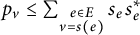
$p_v \leq \sum _{\substack {e \in E \\ v = s(e)}} s_e s_e^*$
for all
$v \in V$
that are not a sink.





In [Reference Schmidt and Weber30], Schmidt and Weber then showed that Banica’s quantum automorphism group $\operatorname {\mathrm {Aut}}^+_{\operatorname {\mathrm {Ban}}}(\Gamma )$
of a finite graph
$\operatorname {\mathrm {Aut}}^+_{\operatorname {\mathrm {Ban}}}(\Gamma )$
of a finite graph $\Gamma $
acts maximally on the corresponding graph
$\Gamma $
acts maximally on the corresponding graph $C^*$
-algebra
$C^*$
-algebra $C^*(\Gamma )$
.
$C^*(\Gamma )$
.
Proposition 2.32 [Reference Schmidt and Weber30]
Let $\Gamma := (V, E)$
be a directed graph. Then
$\Gamma := (V, E)$
be a directed graph. Then $\operatorname {\mathrm {Aut}}^+_{\operatorname {\mathrm {Ban}}}(\Gamma )$
acts maximally on
$\operatorname {\mathrm {Aut}}^+_{\operatorname {\mathrm {Ban}}}(\Gamma )$
acts maximally on $C^*(\Gamma )$
via
$C^*(\Gamma )$
via $\alpha \colon C^*(\Gamma ) \to C^*(\Gamma ) \otimes C(\operatorname {\mathrm {Aut}}^+_{\operatorname {\mathrm {Ban}}}(\Gamma ))$
given by
$\alpha \colon C^*(\Gamma ) \to C^*(\Gamma ) \otimes C(\operatorname {\mathrm {Aut}}^+_{\operatorname {\mathrm {Ban}}}(\Gamma ))$
given by
 $$\begin{align*}\alpha(p_v) = \sum_{w \in V} u_{vw} \otimes p_{w}, \quad \alpha(s_{(v_1, w_1)}) = \sum_{(v_2, w_2) \in E} u_{v_1 v_2} u_{w_1 w_2} \otimes s_{(v_2, w_2)} \end{align*}$$
for all $v \in V$
and
$v \in V$
and $(v_1, w_1) \in E$
.
$(v_1, w_1) \in E$
.
See also [Reference Joardar and Mandal19] for more information on actions of quantum groups on graph $C^*$
-algebras. Recently, Trieb–Weber–Zenner [Reference Trieb, Weber and Zenner32] introduced hypergraph
$C^*$
-algebras. Recently, Trieb–Weber–Zenner [Reference Trieb, Weber and Zenner32] introduced hypergraph $C^*$
-algebras by replacing the graph in the definition of graph
$C^*$
-algebras by replacing the graph in the definition of graph $C^*$
-algebras with a hypergraph.
$C^*$
-algebras with a hypergraph.
Definition 2.33 Let $\Gamma := (V, E)$
be a hypergraph. Then the hypergraph
$\Gamma := (V, E)$
be a hypergraph. Then the hypergraph $C^*$
-algebra
$C^*$
-algebra $C^*(\Gamma )$
is the universal
$C^*(\Gamma )$
is the universal $C^*$
-algebra generated by mutually orthogonal projections
$C^*$
-algebra generated by mutually orthogonal projections $p_v$
for all
$p_v$
for all $v \in V$
and partial isometries
$v \in V$
and partial isometries $s_e$
for all
$s_e$
for all $e \in E$
such that
$e \in E$
such that
-
(1)
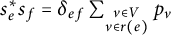
$ s_e^* s_f = \delta _{ef} \sum _{\substack {v \in V \\ v \in r(e)}} p_v$
for all
$e, f \in E$
; -
(2)
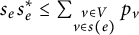
$ s_e s_e^* \leq \sum _{\substack {v \in V \\ v \in s(e)}} p_v$
for all
$e \in E$
; -
(3)
$ p_v \leq \sum _{\substack {e \in E \\ v \in s(e)}} s_e s_e^*$
for all
$v \in V$
that are not a sink.


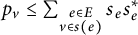

If a directed graph is encoded as a hypergraph as in Definition 2.11, then the corresponding hypergraph $C^*$
-algebra agrees with the classical graph
$C^*$
-algebra agrees with the classical graph $C^*$
-algebra. However, hypergraph
$C^*$
-algebra. However, hypergraph $C^*$
-algebras also include new examples of non-nuclear
$C^*$
-algebras also include new examples of non-nuclear $C^*$
-algebras. For more on the nuclearity of hypergraph
$C^*$
-algebras. For more on the nuclearity of hypergraph $C^*$
-algebras, we refer to the recent work of Schäfer and Weber [Reference Schäfer and Weber26], where the nuclearity of hypergraph
$C^*$
-algebras, we refer to the recent work of Schäfer and Weber [Reference Schäfer and Weber26], where the nuclearity of hypergraph $C^*$
-algebras is characterized in terms of minors of the underlying hypergraph.
$C^*$
-algebras is characterized in terms of minors of the underlying hypergraph.
3 Quantum symmetries of hypergraphs
3.1 Automorphism groups of hypergraphs
We first recall the definition of the classical automorphism group of a hypergraph and characterize it in terms of permutation matrices, before we introduce the quantum automorphism group of a hypergraph.
Definition 3.1 Let $\Gamma := (V, E)$
be a hypergraph. Then its automorphism group is
$\Gamma := (V, E)$
be a hypergraph. Then its automorphism group is
 $$\begin{align*}\operatorname{\mathrm{Aut}}(\Gamma) := \Big\{ (\sigma, \tau) \in S_V \times S_E \ \mid \ \forall e \in E\colon {\sigma(s(e)) = s(\tau(e))\land \sigma(r(e)) = r(\tau(e))}\Big\}, \end{align*}$$
where $\sigma \in S_V$
acts on
$\sigma \in S_V$
acts on $\mathcal {P}(V)$
by
$\mathcal {P}(V)$
by $ \sigma (\{ v_1, \ldots v_k \}) := \{ \sigma (v_1), \ldots , \sigma (v_k) \}. $
Thus, a hypergraph automorphism consists of a permutation of the vertices and a permutation of the edges that are compatible by respecting the source and range maps. Next, we show how these compatibility conditions can be reformulated when both permutations are given as permutation matrices.
Definition 3.2 Let X be a finite set. The permutation representation of $S_X$
is given by
$S_X$
is given by $S_X \to \mathbb {C}^{X \times X}$
,
$S_X \to \mathbb {C}^{X \times X}$
, $\sigma \mapsto P_\sigma $
with
$\sigma \mapsto P_\sigma $
with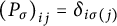 ${(P_\sigma )}_{ij} = \delta _{i\sigma (j)}$
for all
${(P_\sigma )}_{ij} = \delta _{i\sigma (j)}$
for all $i, j \in X$
.
$i, j \in X$
.
Note that the permutation representation is faithful, so we have an embedding $S_X \hookrightarrow \mathbb {C}^{X \times X}$
given by permutation matrices.
$S_X \hookrightarrow \mathbb {C}^{X \times X}$
given by permutation matrices.
Proposition 3.3 Let $\Gamma := (V, E)$
be a hypergraph and
$\Gamma := (V, E)$
be a hypergraph and $(\sigma , \tau ) \in S_V \times S_E$
. Then
$(\sigma , \tau ) \in S_V \times S_E$
. Then
-
(1)
$\sigma (s(e)) = s(\tau (e))$
for all
$e \in E$
if and only if
$A_s P_\tau = P_\sigma A_s$
, -
(2)
$\sigma (r(e)) = r(\tau (e))$
for all
$e \in E$
if and only if
$A_r P_\tau = P_\sigma A_r$
,






where $A_s$
and
$A_s$
and $A_r$
are the incidence matrices of
$A_r$
are the incidence matrices of $\Gamma $
.
$\Gamma $
.
Proof We prove only the first statement about the source map s. The second statement about the range map r follows in a similar way. Using the definitions of $A_s$
and permutation matrices, one verifies that
$A_s$
and permutation matrices, one verifies that
 $$\begin{align*}A_s P_\tau = P_\sigma A_s \iff {(A_s)}_{v\tau(e)} = {(A_s)}_{\sigma^{-1}(v) e} \quad \forall v \in V, \, e \in E, \end{align*}$$
where the right side is equivalent to
 $$\begin{align*}v \in s(\tau(e)) \iff \sigma^{-1}(v) \in s(e) \qquad \forall v \in V, \, e \in E. \end{align*}$$
However,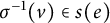 $\sigma ^{-1}(v) \in s(e)$
can be rewritten as
$\sigma ^{-1}(v) \in s(e)$
can be rewritten as $v \in \sigma (s(e))$
, so that we obtain
$v \in \sigma (s(e))$
, so that we obtain
 $$\begin{align*}v \in s(\tau(e)) \iff v \in \sigma(s(e)) \qquad \forall v \in V, \, e \in E. \end{align*}$$
This means that $s(\tau (e)) = \sigma (s(e))$
for all
$s(\tau (e)) = \sigma (s(e))$
for all $e \in E$
.
$e \in E$
.
3.2 Quantum automorphism groups of hypergraphs
Using the characterization of classical hypergraph automorphisms in terms of permutation matrices, we can now define the quantum automorphism group of a hypergraph.
Definition 3.4 Let $\Gamma := (V, E)$
be a hypergraph and denote by
$\Gamma := (V, E)$
be a hypergraph and denote by $\mathcal {A}$
the universal unital
$\mathcal {A}$
the universal unital $C^*$
-algebra with generators
$C^*$
-algebra with generators $u_{vw}$
for all
$u_{vw}$
for all $v, w \in V$
and
$v, w \in V$
and $u_{ef}$
for all
$u_{ef}$
for all $e,f \in E$
, such that
$e,f \in E$
, such that
-
(1)
$u_V := {(u_{v w})}_{v, w \in V}$
and
$u_E := {(u_{e f})}_{e, f \in E}$
are magic unitaries; -
(2)
$A_s u_E = u_V A_s$
and
$A_r u_E = u_V A_r$
, where
$A_s, A_r \in \mathbb {C}^{V \times E}$
are the incidence matrices of
$\Gamma $
.

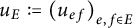



Then $\operatorname {\mathrm {Aut}}^+(\Gamma ) := (\mathcal {A}, u_V \oplus u_E)$
is the quantum automorphism group of
$\operatorname {\mathrm {Aut}}^+(\Gamma ) := (\mathcal {A}, u_V \oplus u_E)$
is the quantum automorphism group of $\Gamma $
.
$\Gamma $
.
Intuitively, we replace the permutations $\sigma \in S_V$
and
$\sigma \in S_V$
and $\tau \in S_E$
in the definition of the classical automorphism group by quantum permutation matrices
$\tau \in S_E$
in the definition of the classical automorphism group by quantum permutation matrices $u_V$
and
$u_V$
and $u_E$
. The compatibility conditions between these two matrices can then be expressed by the intertwining relations from the previous sections.
$u_E$
. The compatibility conditions between these two matrices can then be expressed by the intertwining relations from the previous sections.
Before we show that the previous definition of $\operatorname {\mathrm {Aut}}^+(\Gamma )$
indeed generalizes the classical automorphism group
$\operatorname {\mathrm {Aut}}^+(\Gamma )$
indeed generalizes the classical automorphism group $\operatorname {\mathrm {Aut}}(\Gamma )$
, we first comment on the relations in Definition 3.4.
$\operatorname {\mathrm {Aut}}(\Gamma )$
, we first comment on the relations in Definition 3.4.
Remark 3.5 For $\operatorname {\mathrm {Aut}}^+(\Gamma )$
to be well-defined as a compact matrix quantum group, the magic unitary relations and intertwiner relations have to be compatible with the comultiplication
$\operatorname {\mathrm {Aut}}^+(\Gamma )$
to be well-defined as a compact matrix quantum group, the magic unitary relations and intertwiner relations have to be compatible with the comultiplication $\Delta \colon \mathcal {A} \to \mathcal {A} \otimes \mathcal {A}$
. However, this follows directly from the existence of
$\Delta \colon \mathcal {A} \to \mathcal {A} \otimes \mathcal {A}$
. However, this follows directly from the existence of $S_n^+$
and the fact that additional intertwiner relations always respect the comultiplication (see [Reference Wang34, Reference Woronowicz37]).
$S_n^+$
and the fact that additional intertwiner relations always respect the comultiplication (see [Reference Wang34, Reference Woronowicz37]).
Remark 3.6 Recall that the magic unitary relations of $u_V$
and
$u_V$
and $u_E$
are given by
$u_E$
are given by
 $$\begin{align*}u_{vw}^2 = u_{vw}^* = u_{vw} \quad \forall v, w \in V, \qquad u_{ef}^2 = u_{ef}^* = u_{ef} \quad \forall e, f \in E, \end{align*}$$
 $$\begin{align*}\sum_{w \in V} u_{vw} = \sum_{w \in V} u_{wv} = 1 \quad \forall v \in V, \qquad \sum_{f \in E} u_{ef} = \sum_{f \in E} u_{fe} = 1 \quad \forall e \in E, \end{align*}$$
and the intertwiner relations $A_s u_E = u_V A_s$
and
$A_s u_E = u_V A_s$
and $A_r u_E = u_V A_r$
can be written as
$A_r u_E = u_V A_r$
can be written as
 $$\begin{align*}\sum_{\substack{f \in E \\ v \in s(f)}} u_{fe} = \sum_{\substack{w \in V \\ w \in s(e)}} u_{vw}, \qquad \sum_{\substack{f \in E \\ v \in r(f)}} u_{fe} = \sum_{\substack{w \in V \\ w \in r(e)}} u_{vw} \qquad \forall v \in V, e \in E. \end{align*}$$
Note that $A_s^*$
and
$A_s^*$
and $A_r^*$
are also intertwiners by Proposition 2.24 since
$A_r^*$
are also intertwiners by Proposition 2.24 since $u_V$
and
$u_V$
and $u_E$
are unitaries. Thus, we have the additional relations
$u_E$
are unitaries. Thus, we have the additional relations $A_s^* u_V = u_E A_s^*$
and
$A_s^* u_V = u_E A_s^*$
and $A_r^* u_V = u_E A_r^*$
, which can be written as
$A_r^* u_V = u_E A_r^*$
, which can be written as
 $$\begin{align*}\sum_{\substack{w \in V \\ w \in s(e)}} u_{wv} = \sum_{\substack{f \in E \\ v \in s(f)}} u_{ef}, \qquad \sum_{\substack{w \in V \\ w \in r(e)}} u_{wv} = \sum_{\substack{f \in E \\ v \in r(f)}} u_{ef} \qquad \forall v \in V, e \in E. \end{align*}$$
Remark 3.7 Let $u := u_V \oplus u_E$
and define the block matrix
$u := u_V \oplus u_E$
and define the block matrix
 $$\begin{align*}A := \begin{pmatrix} 0 & A_s \\ A_r^* & 0 \end{pmatrix} \in \mathbb{C}^{(V \sqcup E) \times (V \sqcup E)}. \end{align*}$$
Then $Au = uA$
is equivalent to
$Au = uA$
is equivalent to $A_s u_E = u_V A_s$
and
$A_s u_E = u_V A_s$
and $A_r^* u_V = u_E A_r^*$
, where the second equation is again equivalent to
$A_r^* u_V = u_E A_r^*$
, where the second equation is again equivalent to $A_r u_E = u_V A_r$
by Proposition 2.24. Therefore, the relations
$A_r u_E = u_V A_r$
by Proposition 2.24. Therefore, the relations $A_s u_E = u_V A_s$
and
$A_s u_E = u_V A_s$
and $A_r u_E = u_V A_r$
in Definition 3.4 can be formulated as the single intertwiner relation
$A_r u_E = u_V A_r$
in Definition 3.4 can be formulated as the single intertwiner relation $Au = uA$
.
$Au = uA$
.
The following proposition shows that the quantum automorphism group $\operatorname {\mathrm {Aut}}^+(\Gamma )$
indeed generalizes the classical automorphism group
$\operatorname {\mathrm {Aut}}^+(\Gamma )$
indeed generalizes the classical automorphism group $\operatorname {\mathrm {Aut}}(\Gamma )$
in the sense of compact matrix quantum groups.
$\operatorname {\mathrm {Aut}}(\Gamma )$
in the sense of compact matrix quantum groups.
Proposition 3.8 Let $\Gamma $
be a hypergraph. Then
$\Gamma $
be a hypergraph. Then $\operatorname {\mathrm {Spec}} C(\operatorname {\mathrm {Aut}}^+(\Gamma )) \cong \operatorname {\mathrm {Aut}}(\Gamma )$
as finite groups.
$\operatorname {\mathrm {Spec}} C(\operatorname {\mathrm {Aut}}^+(\Gamma )) \cong \operatorname {\mathrm {Aut}}(\Gamma )$
as finite groups.
Proof Let $\Gamma := (V, E)$
and denote by
$\Gamma := (V, E)$
and denote by $\mathcal {A}$
the
$\mathcal {A}$
the $C^*$
-algebra
$C^*$
-algebra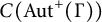 $C(\operatorname {\mathrm {Aut}}^+(\Gamma ))$
. Then
$C(\operatorname {\mathrm {Aut}}^+(\Gamma ))$
. Then $\operatorname {\mathrm {Spec}} \mathcal {A}$
is a group with multiplication given by
$\operatorname {\mathrm {Spec}} \mathcal {A}$
is a group with multiplication given by $\varphi * \psi := (\varphi \otimes \psi ) \circ \Delta $
and is isomorphic to a subgroup of unitary matrices
$\varphi * \psi := (\varphi \otimes \psi ) \circ \Delta $
and is isomorphic to a subgroup of unitary matrices $G \subseteq \mathbb {C}^{(V \sqcup E) \times (V \sqcup E)}$
via
$G \subseteq \mathbb {C}^{(V \sqcup E) \times (V \sqcup E)}$
via
 $$\begin{align*}\varphi \in \operatorname{\mathrm{Spec}} \mathcal{A} \ \longleftrightarrow \ \varphi(u) := (\varphi(u_{ij})) \in \mathbb{C}^{(V \sqcup E) \times (V \sqcup E)}, \end{align*}$$
see, for example, [Reference Timmermann31, Proposition 6.1.11]. Further, we have the decomposition $u = u_E \oplus u_V$
, so that
$u = u_E \oplus u_V$
, so that $\varphi (u) = \varphi (u_E) \oplus \varphi (u_V)$
is given by a pair of matrices
$\varphi (u) = \varphi (u_E) \oplus \varphi (u_V)$
is given by a pair of matrices $\varphi (u_E)$
and
$\varphi (u_E)$
and $\varphi (u_V)$
. Since
$\varphi (u_V)$
. Since $u_V$
and
$u_V$
and $u_E$
are magic unitaries,
$u_E$
are magic unitaries, $\varphi (u_E)$
and
$\varphi (u_E)$
and $\varphi (u_V)$
are exactly permutation matrices, which correspond to a pair of permutations
$\varphi (u_V)$
are exactly permutation matrices, which correspond to a pair of permutations $(\sigma , \tau ) \in S_V \times S_E$
via the permutation representation from Definition 3.2. Proposition 3.3 then implies that
$(\sigma , \tau ) \in S_V \times S_E$
via the permutation representation from Definition 3.2. Proposition 3.3 then implies that $(\sigma , \tau )$
are exactly automorphisms of
$(\sigma , \tau )$
are exactly automorphisms of $\Gamma $
.
$\Gamma $
.
3.3 Examples of hypergraphs with maximal quantum symmetry
Before we come to examples of quantum automorphism groups of hypergraphs, we first show that these quantum groups are always subgroups of $S_V^+ * S_E^+$
.
$S_V^+ * S_E^+$
.
Proposition 3.9 Let $\Gamma := (V, E)$
be a hypergraph. Then
$\Gamma := (V, E)$
be a hypergraph. Then $\operatorname {\mathrm {Aut}}^+(\Gamma ) \subseteq S_V^+ * S_E^+$
.
$\operatorname {\mathrm {Aut}}^+(\Gamma ) \subseteq S_V^+ * S_E^+$
.
Proof Denote by u the fundamental representation of $\operatorname {\mathrm {Aut}}^+(\Gamma )$
and by
$\operatorname {\mathrm {Aut}}^+(\Gamma )$
and by $\widehat {u}$
the fundamental representation of
$\widehat {u}$
the fundamental representation of $S_V^+ * S_E^+$
. Since
$S_V^+ * S_E^+$
. Since $u_V$
and
$u_V$
and $u_E$
are magic unitaries, the universal property of
$u_E$
are magic unitaries, the universal property of $C(S_V^+ * S_E^+)$
implies the existence of a unital
$C(S_V^+ * S_E^+)$
implies the existence of a unital $*$
-homomorphism
$*$
-homomorphism $\varphi \colon C(S_V^+ * S_E^+) \to C(\operatorname {\mathrm {Aut}}^+(\Gamma ))$
with
$\varphi \colon C(S_V^+ * S_E^+) \to C(\operatorname {\mathrm {Aut}}^+(\Gamma ))$
with $\varphi (\widehat {u}_{vw}) = u_{vw}$
and
$\varphi (\widehat {u}_{vw}) = u_{vw}$
and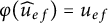 $\varphi (\widehat {u}_{ef}) = u_{ef}$
. This
$\varphi (\widehat {u}_{ef}) = u_{ef}$
. This $*$
-homomorphism is surjective since
$*$
-homomorphism is surjective since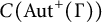 $C(\operatorname {\mathrm {Aut}}^+(\Gamma ))$
is generated by the entries of
$C(\operatorname {\mathrm {Aut}}^+(\Gamma ))$
is generated by the entries of $u_V$
and
$u_V$
and $u_E$
. Further, one verifies directly that it is a morphism of compact quantum groups. Thus,
$u_E$
. Further, one verifies directly that it is a morphism of compact quantum groups. Thus, $\operatorname {\mathrm {Aut}}^+(\Gamma ) \subseteq S_V^+ * S_E^+$
.
$\operatorname {\mathrm {Aut}}^+(\Gamma ) \subseteq S_V^+ * S_E^+$
.
Next, we construct a concrete family of hypergraphs $\Gamma _{n,m}$
for which equality in the previous proposition holds. Thus, these hypergraphs have maximal possible quantum symmetries in the sense of Definition 3.4.
$\Gamma _{n,m}$
for which equality in the previous proposition holds. Thus, these hypergraphs have maximal possible quantum symmetries in the sense of Definition 3.4.
Definition 3.10 Let $n, m \in \mathbb {N}$
. Define the hypergraph
$n, m \in \mathbb {N}$
. Define the hypergraph $\Gamma _{n, m} := (V, E)$
with vertices
$\Gamma _{n, m} := (V, E)$
with vertices $V = \{1, \ldots , n\}$
, edges
$V = \{1, \ldots , n\}$
, edges $E = \{1, \ldots , m\}$
, and source and range maps
$E = \{1, \ldots , m\}$
, and source and range maps $s(e) := V$
and
$s(e) := V$
and $r(e) := V$
for all
$r(e) := V$
for all $e \in E$
.
$e \in E$
.
Proposition 3.11 Let $n, m \in \mathbb {N}$
and
$n, m \in \mathbb {N}$
and $\Gamma _{n, m} := (V, E)$
be the hypergraph of Definition 3.10. Then
$\Gamma _{n, m} := (V, E)$
be the hypergraph of Definition 3.10. Then $\operatorname {\mathrm {Aut}}^+(\Gamma _{n,m}) = S_V^+ * S_E^+$
.
$\operatorname {\mathrm {Aut}}^+(\Gamma _{n,m}) = S_V^+ * S_E^+$
.
Proof Denote by u the fundamental representation of $\operatorname {\mathrm {Aut}}^+(\Gamma _{n,m})$
and by
$\operatorname {\mathrm {Aut}}^+(\Gamma _{n,m})$
and by $\widehat {u}$
the fundamental representation of
$\widehat {u}$
the fundamental representation of $S_V^+ * S_E^+$
. By the proof of Proposition 3.9, we have
$S_V^+ * S_E^+$
. By the proof of Proposition 3.9, we have $\operatorname {\mathrm {Aut}}^+(\Gamma _{n,m}) \subseteq S_V^+ * S_E^+$
via a unital
$\operatorname {\mathrm {Aut}}^+(\Gamma _{n,m}) \subseteq S_V^+ * S_E^+$
via a unital $*$
-homomorphism
$*$
-homomorphism $\varphi \colon C(S_V^+ * S_E^+) \to C(\operatorname {\mathrm {Aut}}^+(\Gamma _{n,m}))$
with
$\varphi \colon C(S_V^+ * S_E^+) \to C(\operatorname {\mathrm {Aut}}^+(\Gamma _{n,m}))$
with $\varphi (\widehat {u}_{vw}) = u_{vw}$
and
$\varphi (\widehat {u}_{vw}) = u_{vw}$
and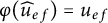 $\varphi (\widehat {u}_{ef}) = u_{ef}$
. To show the other inclusion, we construct the inverse
$\varphi (\widehat {u}_{ef}) = u_{ef}$
. To show the other inclusion, we construct the inverse $*$
-homomorphism using the universal property of
$*$
-homomorphism using the universal property of $C(\operatorname {\mathrm {Aut}}^+(\Gamma _{n,m}))$
. Thus, we have to show that
$C(\operatorname {\mathrm {Aut}}^+(\Gamma _{n,m}))$
. Thus, we have to show that $\widehat {u}_V$
and
$\widehat {u}_V$
and $\widehat {u}_E$
satisfy the relations from Definition 3.4. However,
$\widehat {u}_E$
satisfy the relations from Definition 3.4. However, $\widehat {u}_V$
and
$\widehat {u}_V$
and $\widehat {u}_{E}$
are magic unitaries by definition, and we compute
$\widehat {u}_{E}$
are magic unitaries by definition, and we compute
 $$\begin{align*}\sum_{\substack{f \in E \\ v \in s(f)}} \widehat{u}_{fe} = \sum_{f \in E} \widehat{u}_{fe} = 1 = \sum_{w \in V} \widehat{u}_{vw} = \sum_{\substack{w \in V \\ w \in s(e)}} \widehat{u}_{vw} \quad \forall v \in V, e \in E, \end{align*}$$
so that $A_s \widehat {u}_E = \widehat {u}_V A_s$
by Remark 3.6. Similarly, one shows that
$A_s \widehat {u}_E = \widehat {u}_V A_s$
by Remark 3.6. Similarly, one shows that $A_r \widehat {u}_E = \widehat {u}_V A_r$
by replacing the source map s with the range map r. Thus, the
$A_r \widehat {u}_E = \widehat {u}_V A_r$
by replacing the source map s with the range map r. Thus, the $*$
-homomorphism from Proposition 3.9 is invertible, which shows
$*$
-homomorphism from Proposition 3.9 is invertible, which shows $\operatorname {\mathrm {Aut}}^+(\Gamma _{n,m}) = S_V^+ * S_E^+$
.
$\operatorname {\mathrm {Aut}}^+(\Gamma _{n,m}) = S_V^+ * S_E^+$
.
3.4 Opposite and dual hypergraphs
Next, we compute the quantum automorphism groups of the opposite and dual of a hypergraph. Recall from Definition 2.14 that the opposite hypergraph $\Gamma ^{\operatorname {\mathrm {op}}}$
is obtained by interchanging the source map and the range map of a hypergraph
$\Gamma ^{\operatorname {\mathrm {op}}}$
is obtained by interchanging the source map and the range map of a hypergraph $\Gamma $
. One can directly verify that in the classical case, both
$\Gamma $
. One can directly verify that in the classical case, both $\operatorname {\mathrm {Aut}}(\Gamma )$
and
$\operatorname {\mathrm {Aut}}(\Gamma )$
and $\operatorname {\mathrm {Aut}}(\Gamma ^{\operatorname {\mathrm {op}}})$
coincide. In the following, we show that this fact can be generalized to the quantum setting.
$\operatorname {\mathrm {Aut}}(\Gamma ^{\operatorname {\mathrm {op}}})$
coincide. In the following, we show that this fact can be generalized to the quantum setting.
Proposition 3.12 Let $\Gamma $
be a hypergraph. Then
$\Gamma $
be a hypergraph. Then $\operatorname {\mathrm {Aut}}^+(\Gamma ) = \operatorname {\mathrm {Aut}}^+(\Gamma ^{\operatorname {\mathrm {op}}})$
.
$\operatorname {\mathrm {Aut}}^+(\Gamma ) = \operatorname {\mathrm {Aut}}^+(\Gamma ^{\operatorname {\mathrm {op}}})$
.
Proof Let $\Gamma := (V, E)$
. Denote by u the fundamental representation of
$\Gamma := (V, E)$
. Denote by u the fundamental representation of $\operatorname {\mathrm {Aut}}^+(\Gamma )$
and by
$\operatorname {\mathrm {Aut}}^+(\Gamma )$
and by $\widehat {u}$
the fundamental representation of
$\widehat {u}$
the fundamental representation of $\operatorname {\mathrm {Aut}}^+(\Gamma ^{\operatorname {\mathrm {op}}})$
. By definition, we have
$\operatorname {\mathrm {Aut}}^+(\Gamma ^{\operatorname {\mathrm {op}}})$
. By definition, we have $A_{s^{\operatorname {\mathrm {op}}}} = A_r$
and
$A_{s^{\operatorname {\mathrm {op}}}} = A_r$
and $A_{r^{\operatorname {\mathrm {op}}}} = A_s$
, so that the entries of u and
$A_{r^{\operatorname {\mathrm {op}}}} = A_s$
, so that the entries of u and $\widehat {u}$
satisfy exactly the same relations. Hence, by the universal properties of
$\widehat {u}$
satisfy exactly the same relations. Hence, by the universal properties of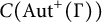 $C(\operatorname {\mathrm {Aut}}^+(\Gamma ))$
and
$C(\operatorname {\mathrm {Aut}}^+(\Gamma ))$
and $C(\operatorname {\mathrm {Aut}}^+(\Gamma ^{\operatorname {\mathrm {op}}}))$
, there exists a
$C(\operatorname {\mathrm {Aut}}^+(\Gamma ^{\operatorname {\mathrm {op}}}))$
, there exists a $*$
-isomorphism
$*$
-isomorphism $\varphi \colon C(\operatorname {\mathrm {Aut}}^+(\Gamma )) \to C(\operatorname {\mathrm {Aut}}^+(\Gamma ^{\operatorname {\mathrm {op}}}))$
with
$\varphi \colon C(\operatorname {\mathrm {Aut}}^+(\Gamma )) \to C(\operatorname {\mathrm {Aut}}^+(\Gamma ^{\operatorname {\mathrm {op}}}))$
with $\varphi (u_{vw}) = \widehat {u}_{vw}$
and
$\varphi (u_{vw}) = \widehat {u}_{vw}$
and $\varphi (u_{ef}) = \widehat {u}_{ef}$
. Further, a direct computation shows that this
$\varphi (u_{ef}) = \widehat {u}_{ef}$
. Further, a direct computation shows that this $*$
-isomorphism is indeed a morphism of compact quantum groups.
$*$
-isomorphism is indeed a morphism of compact quantum groups.
Next, we consider dual hypergraphs. Recall from Definition 2.14 that the dual $\Gamma ^*$
of a hypergraph
$\Gamma ^*$
of a hypergraph $\Gamma $
is obtained by interchanging the vertices and edges. As in the case of the opposite hypergraph, one verifies that a hypergraph and its dual have isomorphic classical automorphism groups via the map
$\Gamma $
is obtained by interchanging the vertices and edges. As in the case of the opposite hypergraph, one verifies that a hypergraph and its dual have isomorphic classical automorphism groups via the map $(\sigma , \tau ) \mapsto (\tau , \sigma )$
. This again generalized to the quantum setting as follows.
$(\sigma , \tau ) \mapsto (\tau , \sigma )$
. This again generalized to the quantum setting as follows.
Proposition 3.13 Let $\Gamma $
be a hypergraph. Then
$\Gamma $
be a hypergraph. Then $\operatorname {\mathrm {Aut}}^+(\Gamma ) = \operatorname {\mathrm {Aut}}^+(\Gamma ^*)$
.
$\operatorname {\mathrm {Aut}}^+(\Gamma ) = \operatorname {\mathrm {Aut}}^+(\Gamma ^*)$
.
Proof Let $\Gamma := (V, E)$
and denote by u the fundamental representation of
$\Gamma := (V, E)$
and denote by u the fundamental representation of $\operatorname {\mathrm {Aut}}^+(\Gamma )$
and by
$\operatorname {\mathrm {Aut}}^+(\Gamma )$
and by $\widehat {u}$
the fundamental representation of
$\widehat {u}$
the fundamental representation of $\operatorname {\mathrm {Aut}}^+(\Gamma ^*)$
. We begin by constructing a
$\operatorname {\mathrm {Aut}}^+(\Gamma ^*)$
. We begin by constructing a $*$
-isomorphism
$*$
-isomorphism $\varphi \colon C(\operatorname {\mathrm {Aut}}^+(\Gamma )) \to C(\operatorname {\mathrm {Aut}}^+(\Gamma ^*))$
with
$\varphi \colon C(\operatorname {\mathrm {Aut}}^+(\Gamma )) \to C(\operatorname {\mathrm {Aut}}^+(\Gamma ^*))$
with $\varphi (u_{vw}) = \widehat {u}_{vw}$
and
$\varphi (u_{vw}) = \widehat {u}_{vw}$
and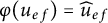 $\varphi (u_{ef}) = \widehat {u}_{ef}$
using the universal properties of
$\varphi (u_{ef}) = \widehat {u}_{ef}$
using the universal properties of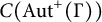 $C(\operatorname {\mathrm {Aut}}^+(\Gamma ))$
and
$C(\operatorname {\mathrm {Aut}}^+(\Gamma ))$
and $C(\operatorname {\mathrm {Aut}}^+(\Gamma ^*))$
. Hence, we have to show that the entries of u and
$C(\operatorname {\mathrm {Aut}}^+(\Gamma ^*))$
. Hence, we have to show that the entries of u and $\widehat {u}$
satisfy the same relations. Since
$\widehat {u}$
satisfy the same relations. Since $u_V$
,
$u_V$
, $u_E$
,
$u_E$
, $\widehat {u}_E$
, and
$\widehat {u}_E$
, and $\widehat {u}_V$
are all magic unitaries, it only remains to show that
$\widehat {u}_V$
are all magic unitaries, it only remains to show that
 $$\begin{align*}A_s u^{(1)} = u^{(2)} A_s \iff A_{s^*} u^{(2)} = u^{(1)} A_{s^*}, \end{align*}$$
 $$\begin{align*}A_r u^{(1)} = u^{(2)} A_r \iff A_{r^*} u^{(2)} = u^{(1)} A_{r^*} \end{align*}$$
for two arbitrary magic unitaries $u^{(1)}$
and
$u^{(1)}$
and $u^{(2)}$
indexed by V and
$u^{(2)}$
indexed by V and $E,$
respectively. However, this follows directly from Proposition 2.24, since
$E,$
respectively. However, this follows directly from Proposition 2.24, since
 $$\begin{align*}{(A_{s^*})}_{ev} = \begin{cases} 1 & \text{if } e \in s^*(v), \\ 0 & \text{otherwise}, \end{cases} = \begin{cases} 1 & \text{if } v \in s(e), \\ 0 & \text{otherwise}, \end{cases} = {(A_s)}_{ve} = {(A_s^T)}_{ev} \end{align*}$$
for all $e \in E$
and
$e \in E$
and $v \in V$
, so that
$v \in V$
, so that $A_{s^*} = A_s^T = A_s^*$
and similarly
$A_{s^*} = A_s^T = A_s^*$
and similarly $A_{r^*} = A_r^*$
. Thus, the
$A_{r^*} = A_r^*$
. Thus, the $*$
-isomorphism
$*$
-isomorphism $\varphi $
exists and one verifies directly that it is a morphism of compact quantum groups.
$\varphi $
exists and one verifies directly that it is a morphism of compact quantum groups.
3.5 Hypergraphs without multi-edges
In contrast to the quantum automorphism group of graphs by Bichon and Banica, our quantum automorphism group includes an additional magic unitary $u_E$
for the edges. This magic unitary is necessary to capture quantum symmetries between multi-edges, see, for example, the family of hypergraphs in Section 3.3. However, it turns out that if a hypergraph has no multi-edges, then the magic unitary
$u_E$
for the edges. This magic unitary is necessary to capture quantum symmetries between multi-edges, see, for example, the family of hypergraphs in Section 3.3. However, it turns out that if a hypergraph has no multi-edges, then the magic unitary $u_E$
is redundant and we can express the entries of
$u_E$
is redundant and we can express the entries of $u_E$
in terms of the entries of
$u_E$
in terms of the entries of $u_V$
.
$u_V$
.
We begin with the following lemma, which relates the entries of $u_E$
to the entries of
$u_E$
to the entries of $u_V$
.
$u_V$
.
Lemma 3.14 Let $\Gamma := (V, E)$
be a hypergraph and
$\Gamma := (V, E)$
be a hypergraph and $X \subseteq V$
. Then
$X \subseteq V$
. Then
 $$\begin{align*}\sum_{\substack{f \in E \\ X \subseteq s(f)}} u_{fe} = \prod_{v \in X} \sum_{\substack{w \in V \\ w \in s(e)}} u_{vw} \quad \forall e \in E. \end{align*}$$
In particular, the product commutes. The same statement also holds for the range map r.
Proof Let $e \in E$
and
$e \in E$
and $X \subseteq V$
. Fix an arbitrary ordering
$X \subseteq V$
. Fix an arbitrary ordering $X = \{v_1, \ldots , v_k \}$
, where all
$X = \{v_1, \ldots , v_k \}$
, where all $v_i$
are distinct. Then
$v_i$
are distinct. Then
 $$\begin{align*}\prod_{v \in X} {(A_s u_E)}_{v e} = \prod_{v \in X} \sum_{\substack{f \in E \\ v \in s(f)}} u_{fe} = \sum_{\substack{f_1 \in E \\ v_1 \in s(f_1)}} \dots \sum_{\substack{f_k \in E \\ v_k \in s(f_k)}} u_{f_1 e} \dots u_{f_k e}. \end{align*}$$
Since $u_{f_1 e} \dots u_{f_k e} = \delta _{f_1 f_2} \dots \delta _{f_1 f_k} u_{f_1 e}$
, it follows that
$u_{f_1 e} \dots u_{f_k e} = \delta _{f_1 f_2} \dots \delta _{f_1 f_k} u_{f_1 e}$
, it follows that
 $$\begin{align*}\prod_{v \in X} {(A_s u_E)}_{v e} = \sum_{\substack{f \in E \\ v_1 \in s(f), \ldots, v_k \in s(f)}} u_{f e} = \sum_{\substack{f \in E \\ X \subseteq s(f)}} u_{fe}. \end{align*}$$
On the other hand, we can apply $A_s u_E = u_V A_s$
to the original expression to obtain
$A_s u_E = u_V A_s$
to the original expression to obtain
 $$\begin{align*}\prod_{v \in X} {(A_s u_E)}_{v e} = \prod_{v \in X} {(u_V A_s)}_{v e} = \prod_{v \in X} \sum_{\substack{w \in V \\ w \in s(e)}} u_{vw}. \end{align*}$$
Thus,
 $$\begin{align*}\sum_{\substack{f \in E \\ X \subseteq s(f)}} u_{fe} = \prod_{v \in X} \sum_{\substack{w \in V \\ w \in s(e)}} u_{vw}. \end{align*}$$
Since the left side does not depend on the order of X, the product on the right side commutes. Further, we can replace s with r to obtain a proof of the corresponding statement for the range map r.
Using an inclusion–exclusion argument, we can further improve the previous lemma to obtain the equality $X = s(f)$
instead of
$X = s(f)$
instead of $X \subseteq s(f)$
on the left side.
$X \subseteq s(f)$
on the left side.
Lemma 3.15 Let $\Gamma := (V, E)$
be a hypergraph and
$\Gamma := (V, E)$
be a hypergraph and $X \subseteq V$
. Then
$X \subseteq V$
. Then
 $$\begin{align*}\sum_{\substack{f \in E \\ s(f) = X}} u_{fe} = \sum_{X \subseteq Y \subseteq V} {(-1)}^{\left\lvert Y\right\rvert - \left\lvert X\right\rvert} \prod_{v \in Y} \sum_{\substack{w \in V \\ w \in s(e)}} u_{vw} \quad \forall e \in E. \end{align*}$$
The same statement also holds for the range map r.
Proof By rewriting the statement using Lemma 3.14, we have to show that
 $$\begin{align*}\sum_{\substack{f \in E \\ s(f) = X}} u_{fe} = \sum_{X \subseteq Y \subseteq V} {(-1)}^{\left\lvert Y\right\rvert - \left\lvert X\right\rvert} \sum_{\substack{f \in E \\ Y \subseteq s(f)}} u_{fe} \quad \forall e \in E. \end{align*}$$
Now, consider an element $u_{fe}$
with
$u_{fe}$
with $X \subseteq s(f)$
and define
$X \subseteq s(f)$
and define $k := |s(f)| - |X|$
. Then there are exactly
$k := |s(f)| - |X|$
. Then there are exactly $\binom {k}{\ell }$
subsets Y with
$\binom {k}{\ell }$
subsets Y with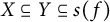 $X \subseteq Y \subseteq s(f)$
and
$X \subseteq Y \subseteq s(f)$
and $|X| + \ell $
elements. Further, each is weighted with a factor of
$|X| + \ell $
elements. Further, each is weighted with a factor of
 $$\begin{align*}{(-1)}^{|Y|-|X|} = {(-1)}^{(|X| + \ell) - |X|} = {(-1)}^{\ell} \end{align*}$$
on the right side of the equation. Thus, by the binomial theorem, the total contribution of $u_{ef}$
on the right side is
$u_{ef}$
on the right side is
 $$\begin{align*}\sum_{\ell = 0}^k \binom{k}{\ell} {(-1)}^{\ell} = {((-1) + 1)}^k = \begin{cases} 1 & \text{if } k = 0, \\ 0 & \text{if } k> 0. \end{cases} \end{align*}$$
Therefore, the right side of the equation contains exactly each $u_{fe}$
with
$u_{fe}$
with $k = 0$
, which is equivalent to
$k = 0$
, which is equivalent to $s(f) = X$
. The corresponding statement for the range map r can be proven in the same way.
$s(f) = X$
. The corresponding statement for the range map r can be proven in the same way.
The previous lemma can now be used to show that the elements of $u_E$
can be expressed in terms of the elements of
$u_E$
can be expressed in terms of the elements of $u_V$
if the underlying hypergraph has no multi-edges.
$u_V$
if the underlying hypergraph has no multi-edges.
Theorem 3.16 Let $\Gamma := (V, E)$
be a hypergraph without multi-edges. Denote by
$\Gamma := (V, E)$
be a hypergraph without multi-edges. Denote by $C^*(u_V)$
the
$C^*(u_V)$
the $C^*$
-algebra generated by
$C^*$
-algebra generated by $u_{vw}$
for all
$u_{vw}$
for all $v, w\in V$
. Then
$v, w\in V$
. Then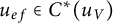 $u_{ef} \in C^*(u_V)$
for all
$u_{ef} \in C^*(u_V)$
for all $e,f \in E$
.
$e,f \in E$
.
Proof Let $e, f \in E$
. Then
$e, f \in E$
. Then
 $$\begin{align*}\sum_{\substack{g \in E \\ s(g) = s(e)}} u_{gf}, \sum_{\substack{g \in E \\ r(g) = r(e)}} u_{gf} \in C^*(u_V) \end{align*}$$
by choosing $X = s(e)$
and
$X = s(e)$
and $X = r(e)$
in Lemma 3.15. This implies
$X = r(e)$
in Lemma 3.15. This implies
 $$\begin{align*}\bigg( \sum_{\substack{g \in E \\ s(g) = s(e)}} u_{gf} \bigg) \bigg( \sum_{\substack{g \in E \\ r(g) = r(e)}} u_{gf} \bigg) = \sum_{\substack{g_1, g_2 \in E \\ s(g_1) = s(e) \\ r(g_2) = r(e)}} \underbrace{u_{g_1 f} u_{g_2 f}}_{\delta_{g_1 g_2} u_{g_1 f}} = \sum_{\substack{g \in E \\ s(g) = s(e) \\ r(g) = r(e)}} u_{gf} \in C^*(u_V). \end{align*}$$
However, $\Gamma $
has no multi-edges, so that
$\Gamma $
has no multi-edges, so that
 $$\begin{align*}u_{ef} = \sum_{\substack{g \in E \\ s(g) = s(e) \\ r(g) = r(e)}} u_{gf} \in C^*(u_V). \end{align*}$$
Translating the previous theorem to the setting of quantum groups yields the following two corollaries.
Corollary 3.17 Let $\Gamma := (V, E)$
be a hypergraph without multi-edges. Then
$\Gamma := (V, E)$
be a hypergraph without multi-edges. Then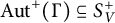 $\operatorname {\mathrm {Aut}}^+(\Gamma ) \subseteq S_V^+$
.
$\operatorname {\mathrm {Aut}}^+(\Gamma ) \subseteq S_V^+$
.
Proof Denote by $\textit {u}$
the fundamental representation of
$\textit {u}$
the fundamental representation of $\operatorname {\mathrm {Aut}}^+(\Gamma )$
and by
$\operatorname {\mathrm {Aut}}^+(\Gamma )$
and by $\widehat {u}$
the fundamental representation of
$\widehat {u}$
the fundamental representation of $S_V^+$
. As in the proof of Proposition 3.9, there exists a morphism of compact quantum groups
$S_V^+$
. As in the proof of Proposition 3.9, there exists a morphism of compact quantum groups $\varphi \colon C(S_V^+) \to \operatorname {\mathrm {Aut}}^+(\Gamma )$
with
$\varphi \colon C(S_V^+) \to \operatorname {\mathrm {Aut}}^+(\Gamma )$
with $\varphi (\widehat {u}_{vw}) = u_{vw}$
. By Theorem 3.16, this morphism is surjective, so that
$\varphi (\widehat {u}_{vw}) = u_{vw}$
. By Theorem 3.16, this morphism is surjective, so that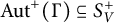 $\operatorname {\mathrm {Aut}}^+(\Gamma ) \subseteq S_V^+$
.
$\operatorname {\mathrm {Aut}}^+(\Gamma ) \subseteq S_V^+$
.
Corollary 3.18 Let $\Gamma := (V, E)$
be a hypergraph such that
$\Gamma := (V, E)$
be a hypergraph such that $\Gamma ^*$
has no multi-edges. Then
$\Gamma ^*$
has no multi-edges. Then $\operatorname {\mathrm {Aut}}^+(\Gamma ) \subseteq S_E^+$
.
$\operatorname {\mathrm {Aut}}^+(\Gamma ) \subseteq S_E^+$
.

4 Link to quantum symmetries of classical graphs
In this section, we study the quantum automorphism group $\operatorname {\mathrm {Aut}}^+(\Gamma )$
for hypergraphs which come from a classical directed, simple, or multigraph as defined in Section 2.2. In particular, we show that, in this case, our quantum automorphism group for hypergraphs agrees with the quantum automorphism group of Bichon for classical graphs or its multigraph version by Goswami–Hossain. Thus, we can view our quantum automorphism group for hypergraphs as a generalization of the quantum automorphism group of Bichon for graphs.
$\operatorname {\mathrm {Aut}}^+(\Gamma )$
for hypergraphs which come from a classical directed, simple, or multigraph as defined in Section 2.2. In particular, we show that, in this case, our quantum automorphism group for hypergraphs agrees with the quantum automorphism group of Bichon for classical graphs or its multigraph version by Goswami–Hossain. Thus, we can view our quantum automorphism group for hypergraphs as a generalization of the quantum automorphism group of Bichon for graphs.
4.1 Directed graphs
We begin with directed graphs as in Definition 2.2. Recall from Definition 2.11 that we can identify a directed graph $\Gamma := (V, E)$
with a
$\Gamma := (V, E)$
with a $1$
-uniform hypergraph without multi-edges by defining the source and range maps
$1$
-uniform hypergraph without multi-edges by defining the source and range maps $s(v, w) := \{ v \}$
and
$s(v, w) := \{ v \}$
and $r(v, w) = \{ w \}$
for all
$r(v, w) = \{ w \}$
for all $(v, w) \in E$
. In this way, we can apply Definition 3.4 to obtain a hypergraph quantum automorphism group
$(v, w) \in E$
. In this way, we can apply Definition 3.4 to obtain a hypergraph quantum automorphism group $\operatorname {\mathrm {Aut}}^+(\Gamma )$
. In the following, we show that
$\operatorname {\mathrm {Aut}}^+(\Gamma )$
. In the following, we show that $\operatorname {\mathrm {Aut}}^+(\Gamma )$
agrees with the quantum automorphism group
$\operatorname {\mathrm {Aut}}^+(\Gamma )$
agrees with the quantum automorphism group $\operatorname {\mathrm {Aut}}^+_{\operatorname {\mathrm {Bic}}}(\Gamma )$
of Bichon. We begin by reformulating the intertwiner relations
$\operatorname {\mathrm {Aut}}^+_{\operatorname {\mathrm {Bic}}}(\Gamma )$
of Bichon. We begin by reformulating the intertwiner relations $A_s u_E = u_V A_s$
and
$A_s u_E = u_V A_s$
and $A_r u_E = u_V A_r$
in the setting of directed graphs.
$A_r u_E = u_V A_r$
in the setting of directed graphs.
Lemma 4.1 Let $\Gamma := (V, E)$
be a directed graph,
$\Gamma := (V, E)$
be a directed graph, $\mathcal {A}$
a unital
$\mathcal {A}$
a unital $C^*$
-algebra,
$C^*$
-algebra, $u_V \in \mathcal {A} \otimes \mathbb {C}^{V \times V}$
, and
$u_V \in \mathcal {A} \otimes \mathbb {C}^{V \times V}$
, and $u_E \in \mathcal {A} \otimes \mathbb {C}^{E \times E}$
. Then the relations
$u_E \in \mathcal {A} \otimes \mathbb {C}^{E \times E}$
. Then the relations $A_s u_E = u_V A_s$
and
$A_s u_E = u_V A_s$
and $A_r u_E = u_V A_r$
are equivalent to
$A_r u_E = u_V A_r$
are equivalent to
 $$\begin{align*}\sum_{\substack{(v_2, w_2) \in E \\ v_0 = v_2}} u_{(v_2, w_2)(v_1, w_1)} = u_{v_0 v_1}, \quad \sum_{\substack{(v_2, w_2) \in E \\ v_0 = w_2}} u_{(v_2, w_2)(v_1, w_1)} = u_{v_0 w_1} \end{align*}$$
for all $v_0 \in V$
and
$v_0 \in V$
and $(v_1, w_1) \in E$
.
$(v_1, w_1) \in E$
.
Proof Let $v_0 \in V$
,
$v_0 \in V$
, $e := (v_1, w_1) \in E$
. Then
$e := (v_1, w_1) \in E$
. Then
 $$\begin{align*}{(A_s u_E)}_{v_0 e} = \sum_{\substack{f \in E \\ v_0 \in s(f)}} u_{fe} = \sum_{\substack{(v_2, w_2) \in E \\ v_0 = v_2}} u_{(v_2, w_2)(v_1, w_1)}. \end{align*}$$
On the other hand, the image of s always contains one element and there are no multi-edges so that
 $$\begin{align*}{(u_V A_s)}_{v_0 e} = \sum_{\substack{w \in V \\ w \in s(e)}} u_{v_0 w} = u_{v_0 v_1}. \end{align*}$$
Thus, $A_s u_E = u_V A_s$
is equivalent to
$A_s u_E = u_V A_s$
is equivalent to
 $$\begin{align*}\sum_{\substack{(v_2, w_2) \in E \\ v_0 = v_2}} u_{(v_2, w_2)(v_1, w_1)} = u_{v_0 v_1} \qquad \forall v_0 \in V, \, (v_1, w_1) \in E. \end{align*}$$
The equivalence between $A_r u_E = u_V A_r$
and the second equation in the statement follows similarly.
$A_r u_E = u_V A_r$
and the second equation in the statement follows similarly.
Using the previous lemma, we can now express the entries of $u_E$
in terms of the entries of
$u_E$
in terms of the entries of $u_V$
.
$u_V$
.
Lemma 4.2 Let $\Gamma := (V, E)$
be a directed graph and denote by u the fundamental representation of
$\Gamma := (V, E)$
be a directed graph and denote by u the fundamental representation of $\operatorname {\mathrm {Aut}}^+(\Gamma )$
. Then
$\operatorname {\mathrm {Aut}}^+(\Gamma )$
. Then
 $$\begin{align*}u_{(v_1, w_1) (v_2, w_2)} = u_{v_1 v_2} u_{w_1 w_2} = u_{w_1 w_2} u_{v_1 v_2} \quad \forall (v_1, w_1), (v_2, w_2) \in E. \end{align*}$$
Proof Let $(v_1, w_1), (v_2, w_2) \in E$
. By Lemma 4.1, we have
$(v_1, w_1), (v_2, w_2) \in E$
. By Lemma 4.1, we have
 $$\begin{align*}u_{v_1 v_2} = \sum_{\substack{(v_3, w_3) \in E \\ v_1 = v_3}} u_{(v_3, w_3)(v_2, w_2)}, \qquad u_{w_1 w_2} = \sum_{\substack{(v_4, w_4) \in E \\ w_1 = w_4}} u_{(v_4, w_4)(v_2, w_2)}, \end{align*}$$
which yields
 $$ \begin{align*} u_{v_1 v_2} u_{w_1 w_2} &= \sum_{\substack{(v_3, w_3) \in E \\ v_1 = v_3}} \sum_{\substack{(v_4, w_4) \in E \\ w_1 = w_4}} \underbrace{u_{(v_3, w_3)(v_2, w_2)} u_{(v_4, w_4)(v_2, w_2)}}_{\delta_{(v_3, w_3)(v_4, w_4)} u_{(v_3, w_3)(v_2, w_2)}} = \sum_{\substack{(v_3, w_3) \in E \\ v_1 = v_3 \\ w_1 = w_3}} u_{(v_3, w_3)(v_2, w_2)}, \\ u_{w_1 w_2} u_{v_1 v_2} &= \sum_{\substack{(v_4, w_4) \in E \\ w_1 = w_4}} \sum_{\substack{(v_3, w_3) \in E \\ v_1 = v_3}} \underbrace{ u_{(v_4, w_4)(v_2, w_2)} u_{(v_3, w_3)(v_2, w_2)}}_{\delta_{(v_4, w_4)(v_3, w_3)} u_{(v_3, w_3)(v_2, w_2)}} = \sum_{\substack{(v_3, w_3) \in E \\ v_1 = v_3 \\ w_1 = w_3}} u_{(v_3, w_3)(v_2, w_2)}. \end{align*} $$
Since $\Gamma $
has no multi-edges, we have
$\Gamma $
has no multi-edges, we have
 $$\begin{align*}u_{(v_1, w_1) (v_2, w_2)} = \sum_{\substack{(v_3, w_3) \in E \\ v_1 = v_3 \\ w_1 = w_3}} u_{(v_3, w_3)(v_2, w_2)}. \end{align*}$$
Thus,
 $$\begin{align*}u_{(v_1, w_1) (v_2, w_2)} = u_{v_1 v_2} u_{w_1 w_2} = u_{w_1 w_2} u_{v_1 v_2}. \end{align*}$$
Now, we can show that our quantum automorphism group $\operatorname {\mathrm {Aut}}^+(\Gamma )$
agrees with the quantum automorphism group
$\operatorname {\mathrm {Aut}}^+(\Gamma )$
agrees with the quantum automorphism group $\operatorname {\mathrm {Aut}}^+_{\operatorname {\mathrm {Bic}}}(\Gamma )$
when we identify the magic unitary
$\operatorname {\mathrm {Aut}}^+_{\operatorname {\mathrm {Bic}}}(\Gamma )$
when we identify the magic unitary $u_V$
with the fundamental representation of
$u_V$
with the fundamental representation of $\operatorname {\mathrm {Aut}}^+_{\operatorname {\mathrm {Bic}}}(\Gamma )$
.
$\operatorname {\mathrm {Aut}}^+_{\operatorname {\mathrm {Bic}}}(\Gamma )$
.
Theorem 4.3 Let $\Gamma $
be a directed graph. Then
$\Gamma $
be a directed graph. Then $\operatorname {\mathrm {Aut}}^+(\Gamma ) = \operatorname {\mathrm {Aut}}^+_{\operatorname {\mathrm {Bic}}}(\Gamma )$
.
$\operatorname {\mathrm {Aut}}^+(\Gamma ) = \operatorname {\mathrm {Aut}}^+_{\operatorname {\mathrm {Bic}}}(\Gamma )$
.
Proof Let $\Gamma := (V, E)$
. Denote by u the fundamental representation of
$\Gamma := (V, E)$
. Denote by u the fundamental representation of $\operatorname {\mathrm {Aut}}^+(\Gamma )$
and by
$\operatorname {\mathrm {Aut}}^+(\Gamma )$
and by $\widehat {u}$
the fundamental representation of
$\widehat {u}$
the fundamental representation of $\operatorname {\mathrm {Aut}}^+_{\operatorname {\mathrm {Bic}}}(\Gamma )$
. Further, define the elements
$\operatorname {\mathrm {Aut}}^+_{\operatorname {\mathrm {Bic}}}(\Gamma )$
. Further, define the elements $\widehat {u}_{(v_1, w_1)(v_2, w_2)} := \widehat {u}_{v_1 v_2} \widehat {u}_{w_1 w_2}$
for all
$\widehat {u}_{(v_1, w_1)(v_2, w_2)} := \widehat {u}_{v_1 v_2} \widehat {u}_{w_1 w_2}$
for all $(v_1, w_1), (v_2, w_2) \in E$
, and the matrices
$(v_1, w_1), (v_2, w_2) \in E$
, and the matrices $\widehat {u}_V := {(\widehat {u}_{vw})}_{v,w \in V}$
and
$\widehat {u}_V := {(\widehat {u}_{vw})}_{v,w \in V}$
and $\widehat {u}_E := {(\widehat {u}_{ef})}_{e,f \in E}$
.
$\widehat {u}_E := {(\widehat {u}_{ef})}_{e,f \in E}$
.
To prove the statement, we begin by constructing a unital $*$
-homomorphism
$*$
-homomorphism $\varphi \colon C(\operatorname {\mathrm {Aut}}^+(\Gamma )) \to C(\operatorname {\mathrm {Aut}}^+_{\operatorname {\mathrm {Bic}}}(\Gamma ))$
defined by
$\varphi \colon C(\operatorname {\mathrm {Aut}}^+(\Gamma )) \to C(\operatorname {\mathrm {Aut}}^+_{\operatorname {\mathrm {Bic}}}(\Gamma ))$
defined by $\varphi (u_{vw}) = \widehat {u}_{vw}$
and
$\varphi (u_{vw}) = \widehat {u}_{vw}$
and $\varphi (u_{(v_1,w_1)(v_2,w_2)}) = \widehat {u}_{v_1 v_2}\widehat {u}_{w_1 w_2}$
using the universal property of
$\varphi (u_{(v_1,w_1)(v_2,w_2)}) = \widehat {u}_{v_1 v_2}\widehat {u}_{w_1 w_2}$
using the universal property of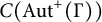 $C(\operatorname {\mathrm {Aut}}^+(\Gamma ))$
. Thus, we have to show that the matrices
$C(\operatorname {\mathrm {Aut}}^+(\Gamma ))$
. Thus, we have to show that the matrices $\widehat {u}_V$
and
$\widehat {u}_V$
and $\widehat {u}_E$
satisfy the relations from Definition 3.4. By Definition 2.27,
$\widehat {u}_E$
satisfy the relations from Definition 3.4. By Definition 2.27, $\widehat {u}_V$
is a magic unitary, and we have
$\widehat {u}_V$
is a magic unitary, and we have
 $$\begin{align*}\widehat{u}_{v_1 v_2} \widehat{u}_{w_1 w_2} = \widehat{u}_{w_1 w_2} \widehat{u}_{v_1 v_2} \quad \forall (v_1, w_1),(v_2, w_2) \in E, \end{align*}$$
which implies
 $$ \begin{align*} {(\widehat{u}_{v_1 v_2} \widehat{u}_{w_1 w_2})}^* &= {(\widehat{u}_{w_1 w_2})}^* {(\widehat{u}_{v_1 v_2})}^* = \widehat{u}_{w_1 w_2} \widehat{u}_{v_1 v_2} = \widehat{u}_{v_1 v_2} \widehat{u}_{w_1 w_1}, \\ {(\widehat{u}_{v_1 v_2} \widehat{u}_{w_1 w_2})}^2 &= \widehat{u}_{v_1 v_2} \widehat{u}_{w_1 w_2} \widehat{u}_{v_1 v_2} \widehat{u}_{w_1 w_2} = {(\widehat{u}_{v_1 v_2})}^2 {(\widehat{u}_{w_1 w_2})}^2 = \widehat{u}_{v_1 v_2} \widehat{u}_{w_1 w_2}. \end{align*} $$
Further, the additional relations from Proposition 2.29 yield
 $$ \begin{align*} & \sum_{(v_2, w_2) \in E} \widehat{u}_{v_1 v_2} \widehat{u}_{w_1 w_2} = \sum_{\substack{v_2, w_2 \in V \\ (v_2, w_2) \in E}} \widehat{u}_{v_1 v_2} \widehat{u}_{w_1 w_2} = 1, \\ & \sum_{(v_2, w_2) \in E} \widehat{u}_{v_2 v_1} \widehat{u}_{w_2 w_1} = \sum_{\substack{v_2, w_2 \in V \\ (v_2, w_2) \in E}} \widehat{u}_{v_2 v_1} \widehat{u}_{w_2 w_1} = 1 \end{align*} $$
for all $(v_1, w_1) \in E$
. Hence,
$(v_1, w_1) \in E$
. Hence, $\widehat {u}_E$
is a magic unitary. Next, we check the intertwiner relation
$\widehat {u}_E$
is a magic unitary. Next, we check the intertwiner relation $A_s \widehat {u}_E = \widehat {u}_V A_s$
. Let
$A_s \widehat {u}_E = \widehat {u}_V A_s$
. Let $v_0 \in V$
and
$v_0 \in V$
and $(v_1, w_1) \in E$
. Then
$(v_1, w_1) \in E$
. Then
 $$\begin{align*}&\sum_{\substack{(v_2, w_2) \in E \\ v_0 = v_2}} \widehat{u}_{v_2 v_1} \widehat{u}_{w_2 w_1} = \widehat{u}_{v_0 v_1} \sum_{\substack{(v_2, w_2) \in E \\ v_0 = v_2}} \widehat{u}_{w_2 w_1} = \widehat{u}_{v_0 v_1} \sum_{w_2 \in V} {(A_{\Gamma})}_{v_0 w_2 }\widehat{u}_{w_2 w_1}. \end{align*}$$
By Definition 2.27, we have $A_{\Gamma } \widehat {u}_V = \widehat {u}_V A_{\Gamma }$
, so that
$A_{\Gamma } \widehat {u}_V = \widehat {u}_V A_{\Gamma }$
, so that
 $$\begin{align*}\widehat{u}_{v_0 v_1} \sum_{w_2 \in V} {(A_{\Gamma})}_{v_0 w_2 }\widehat{u}_{w_2 w_1} = \widehat{u}_{v_0 v_1} \sum_{w_2 \in V} \widehat{u}_{v_0 w_2 } {(A_{\Gamma})}_{w_2 w_1}. \end{align*}$$
Since $\widehat {u}_{v_0 v_1} \widehat {u}_{v_0 w_2} = \delta _{v_1 w_2} \widehat {u}_{v_0 v_1}$
, it follows that
$\widehat {u}_{v_0 v_1} \widehat {u}_{v_0 w_2} = \delta _{v_1 w_2} \widehat {u}_{v_0 v_1}$
, it follows that
 $$\begin{align*}\widehat{u}_{v_0 v_1} \sum_{w_2 \in V} \widehat{u}_{v_0 w_2 } {(A_{\Gamma})}_{w_2 w_1} = \sum_{w_2 \in V} \delta_{v_1 w_2} \widehat{u}_{v_0 v_1} {(A_{\Gamma})}_{w_2 w_1} = \widehat{u}_{v_0 v_1} {(A_{\Gamma})}_{v_1 w_1} = \widehat{u}_{v_0 v_1}. \end{align*}$$
Thus, we have in total
 $$\begin{align*}\sum_{\substack{(v_2, w_2) \in E \\ v_0 = v_2}} \widehat{u}_{(v_2, w_2)(v_1, w_1)} = \sum_{\substack{(v_2, w_2) \in E \\ v_0 = v_2}} \widehat{u}_{v_2 v_1} \widehat{u}_{w_2 w_1} = \widehat{u}_{v_0 v_1} , \end{align*}$$
which is equivalent to $A_s \widehat {u}_E = \widehat {u}_V A_s$
by Lemma 4.1. Similarly, one shows
$A_s \widehat {u}_E = \widehat {u}_V A_s$
by Lemma 4.1. Similarly, one shows $A_r \widehat {u}_E = \widehat {u}_V A_r$
so that the map
$A_r \widehat {u}_E = \widehat {u}_V A_r$
so that the map $\varphi $
exists.
$\varphi $
exists.
Next, we construct the inverse map $\psi \colon C(\operatorname {\mathrm {Aut}}^+_{\operatorname {\mathrm {Bic}}}(\Gamma )) \to C(\operatorname {\mathrm {Aut}}^+(\Gamma ))$
given by
$\psi \colon C(\operatorname {\mathrm {Aut}}^+_{\operatorname {\mathrm {Bic}}}(\Gamma )) \to C(\operatorname {\mathrm {Aut}}^+(\Gamma ))$
given by $\psi (\widehat {u}_{vw}) = u_{vw}$
using the universal property of
$\psi (\widehat {u}_{vw}) = u_{vw}$
using the universal property of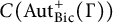 $C(\operatorname {\mathrm {Aut}}^+_{\operatorname {\mathrm {Bic}}}(\Gamma ))$
. Thus, we have to show that the matrix
$C(\operatorname {\mathrm {Aut}}^+_{\operatorname {\mathrm {Bic}}}(\Gamma ))$
. Thus, we have to show that the matrix $u_V$
satisfies the relations from Definition 2.27. First, note that
$u_V$
satisfies the relations from Definition 2.27. First, note that $u_V$
is a magic unitary by Definition 3.4. Second, we have to show that
$u_V$
is a magic unitary by Definition 3.4. Second, we have to show that $A_{\Gamma } u_V = u_V A_{\Gamma }$
. Observe that
$A_{\Gamma } u_V = u_V A_{\Gamma }$
. Observe that $A_{\Gamma } = A_s A_r^*$
, since
$A_{\Gamma } = A_s A_r^*$
, since
 $$\begin{align*}{(A_s A_r^*)}_{v w} = \sum_{e \in E} {(A_s)}_{v e} {(A_r)}_{w e} = \sum_{e \in E} \delta_{(v, w)e} = \begin{cases} 1 & \text{if } (v, w) \in E, \\ 0 & \text{otherwise}, \end{cases} \end{align*}$$
for all $v, w \in V$
. Hence,
$v, w \in V$
. Hence,
 $$\begin{align*}A_{\Gamma} u_V = A_s A_r^* u_V = A_s u_E A_r^* = u_V A_s A_r^* = u_V A_{\Gamma}, \end{align*}$$
because $A_r^*$
also intertwines
$A_r^*$
also intertwines $u_V$
and
$u_V$
and $u_E$
by Remark 3.6. Finally, we have to check that
$u_E$
by Remark 3.6. Finally, we have to check that $u_{v_1 v_2} u_{w_1 w_2} = u_{w_1 w_2} u_{v_1 v_2}$
for all edges
$u_{v_1 v_2} u_{w_1 w_2} = u_{w_1 w_2} u_{v_1 v_2}$
for all edges $(v_1, w_1), (v_2, w_2) \in E$
. But this follows directly from Lemma 4.2, since
$(v_1, w_1), (v_2, w_2) \in E$
. But this follows directly from Lemma 4.2, since
 $$\begin{align*}u_{v_1 v_2} u_{w_1 w_2} = u_{(v_1, w_1)(v_2, w_2)} = u_{w_1 w_2} u_{v_1 v_2}. \end{align*}$$
Thus, the $*$
-homomorphism
$*$
-homomorphism $\psi $
exists. Note that the maps
$\psi $
exists. Note that the maps $\varphi $
and
$\varphi $
and $\psi $
are indeed inverse, because
$\psi $
are indeed inverse, because
 $$\begin{align*}\widehat{u}_{v w} \ \longleftrightarrow \ u_{v w}, \qquad \widehat{u}_{v_1 v_2}\widehat{u}_{w_1 w_2} \ \longleftrightarrow \ u_{v_1 v_2} u_{w_1 w_2} = u_{(v_1, w_1)(v_2, w_2)} \end{align*}$$
by Lemma 4.2. Further, a direct computation shows that they are morphisms of compact quantum groups.
4.2 Simple graphs
Next, we come to simple graphs as in Definition 2.1. Recall from Definition 2.10 that we can regard simple graphs as $2$
-uniform undirected hypergraphs without multi-edges by defining the source and range maps
$2$
-uniform undirected hypergraphs without multi-edges by defining the source and range maps $s(\{v, w\}) := \{ v, w \}$
and
$s(\{v, w\}) := \{ v, w \}$
and $r(\{v, w\}) := \{ v, w \}$
for all
$r(\{v, w\}) := \{ v, w \}$
for all $\{v, w\} \in E$
. In the following, we show that, for a simple graph
$\{v, w\} \in E$
. In the following, we show that, for a simple graph $\Gamma $
, our quantum automorphism group
$\Gamma $
, our quantum automorphism group $\operatorname {\mathrm {Aut}}^+(\Gamma )$
agrees again with the quantum automorphism group
$\operatorname {\mathrm {Aut}}^+(\Gamma )$
agrees again with the quantum automorphism group $\operatorname {\mathrm {Aut}}^+_{\operatorname {\mathrm {Bic}}}(\Gamma )$
by Bichon. We begin with a reformulation of the intertwiner relations
$\operatorname {\mathrm {Aut}}^+_{\operatorname {\mathrm {Bic}}}(\Gamma )$
by Bichon. We begin with a reformulation of the intertwiner relations $A_s u_E = u_V A_s$
and
$A_s u_E = u_V A_s$
and $A_r u_E = u_V A_r$
in the setting of simple graphs.
$A_r u_E = u_V A_r$
in the setting of simple graphs.
Lemma 4.4 Let $\Gamma := (V, E)$
be a simple graph,
$\Gamma := (V, E)$
be a simple graph, $\mathcal {A}$
a unital
$\mathcal {A}$
a unital $C^*$
-algebra, and
$C^*$
-algebra, and $u_V \in \mathcal {A} \otimes \mathbb {C}^{V \times V}$
and
$u_V \in \mathcal {A} \otimes \mathbb {C}^{V \times V}$
and $u_E \in \mathcal {A} \otimes \mathbb {C}^{E \times E}$
be two unitaries. Then the following are equivalent:
$u_E \in \mathcal {A} \otimes \mathbb {C}^{E \times E}$
be two unitaries. Then the following are equivalent:
-
(1)
$A_s u_E = u_V A_s$
and
$A_r u_E = u_V A_r$
; -
(2)
$ \sum _{\substack {v_2 \in V \\ \{v_0, v_2\} \in E}} u_{\{v_0, v_2\}\{v_1, w_1\}} = u_{v_0 v_1} + u_{v_0 w_1} $
for all
$v_0 \in V$
and
$\{v_1, w_1\} \in E$
; -
(3)
$ \sum _{\substack {v_2 \in V \\ \{ v_0, v_2 \} \in E }} u_{\{ v_1, w_1 \} \{v_0, v_2\}} = u_{v_1 v_0} + u_{w_1 v_0} $
for all
$v_0 \in V$
and
$\{v_1, w_1\} \in E$
.








Proof Since $A_s = A_r$
, we only have to consider
$A_s = A_r$
, we only have to consider $A_s u_E = u_V A_s$
. Let
$A_s u_E = u_V A_s$
. Let $v_0 \in V$
and
$v_0 \in V$
and $e := \{ v_1, w_1 \} \in E$
. Then
$e := \{ v_1, w_1 \} \in E$
. Then
 $$ \begin{align*} {(A_s u_E)}_{v_0 e} &= \sum_{f \in E} {(A_s)}_{v_0 f} u_{f e} = \sum_{\substack{f \in E \\ v_0 \in f}} u_{f e} = \sum_{\substack{v_2 \in V \\ \{ v_0, v_2 \} \in E }} u_{\{v_0, v_2\} \{ v_1, w_1 \}}, \\ {(u_V A_s)}_{v_0 e} &= \sum_{w \in V} u_{v_0 w} {(A_s)}_{w e} = \sum_{\substack{w \in V \\ w \in e}} u_{v_0 w} = u_{v_0 v_1} + u_{v_0 w_1}. \end{align*} $$
Hence, $A_s u_E = u_V A_s$
is equivalent to
$A_s u_E = u_V A_s$
is equivalent to
 $$\begin{align*}\sum_{\substack{v_2 \in V \\ \{ v_0, v_2 \} \in E }} u_{\{v_0, v_2\} \{ v_1, w_1 \}} = u_{v_0 v_1} + u_{v_0 w_1} \quad \forall v_0 \in V, \, \{v_1, w_1\} \in E. \end{align*}$$
Similarly, we compute
 $$ \begin{align*} {(u_E A_s^*)}_{e v_0} &= \sum_{f \in E} u_{e f} {(A_s^*)}_{f v_0} = \sum_{\substack{f \in E \\ v_0 \in f}} u_{e f} = \sum_{\substack{v_2 \in V \\ \{ v_0, v_2 \} \in E }} u_{\{ v_1, w_1 \} \{v_0, v_2\}}, \\ {(A_s^* u_V )}_{e v_0} &= \sum_{w \in V} {(A_s)}_{e w} u_{w v_0} = \sum_{\substack{w \in V \\ w \in e}} u_{w v_0} = u_{v_1 v_0} + u_{w_1 v_0}. \end{align*} $$
Thus, $u_E A_s^* = A_s^* u_V$
is equivalent to
$u_E A_s^* = A_s^* u_V$
is equivalent to
 $$\begin{align*}\sum_{\substack{v_2 \in V \\ \{ v_0, v_2 \} \in E }} u_{\{ v_1, w_1 \} \{v_0, v_2\}} = u_{v_1 v_0} + u_{w_1 v_0} \quad \forall v_0 \in V, \, \{v_1, w_1\} \in E, \end{align*}$$
which is again equivalent to $A_s u_E = u_V A_s$
by Proposition 2.24.
$A_s u_E = u_V A_s$
by Proposition 2.24.
As in the case of directed graphs, we can now use the previous lemma to express the entries of the magic unitary $u_E$
in terms of the entries of
$u_E$
in terms of the entries of $u_V$
.
$u_V$
.
Lemma 4.5 Let $\Gamma := (V, E)$
be a simple graph, denote by u the fundamental representation of
$\Gamma := (V, E)$
be a simple graph, denote by u the fundamental representation of $\operatorname {\mathrm {Aut}}^+(\Gamma )$
and let
$\operatorname {\mathrm {Aut}}^+(\Gamma )$
and let $\{v_1, w_1\}, \{v_2, w_2\} \in E$
. Then
$\{v_1, w_1\}, \{v_2, w_2\} \in E$
. Then
 $$ \begin{align*} u_{\{v_1, w_1 \}\{v_2,w_2\}} = u_{v_1 v_2} u_{w_1 w_2} + u_{v_1 w_2} u_{w_1 v_2 } = u_{v_1 v_2} u_{w_1 w_2} + u_{w_1 v_2} u_{v_1 w_2}. \end{align*} $$
Proof Since $v_1 \neq w_1$
, we have
$v_1 \neq w_1$
, we have
 $$ \begin{align*} (u_{v_1 v_2} + u_{v_1 w_2})(u_{w_1 v_2} + u_{w_1 w_2}) &= \underbrace{u_{v_1 v_2} u_{w_1 v_2}}_{0} + u_{v_1 v_2} u_{w_1 w_2} + u_{v_1 w_2} u_{w_1 v_2} + \underbrace{u_{v_1 w_2} u_{w_1 w_2}}_{0} \\ &= u_{v_1 v_2} u_{w_1 w_2} + u_{v_1 w_2} u_{w_1 v_2}. \end{align*} $$
On the other hand, Lemma 4.4 yields
 $$ \begin{align*} (u_{v_1 v_2} + u_{v_1 w_2})(u_{w_1 v_2} + u_{w_1 w_2}) &= \sum_{\substack{v_3 \in V \\ \{v_1, v_3\} \in E}} u_{\{v_1, v_3\}\{v_2, w_2\}} \sum_{\substack{v_4 \in V \\ \{w_1, v_4\} \in E}} u_{\{w_1, v_4\}\{v_2, w_2\}} \\ &= \sum_{\substack{v_3, v_4 \in V \\ \{v_1, v_3\}, \{w_1, v_4\} \in E}} \underbrace{u_{\{v_1, v_3\}\{v_2, w_2\}} u_{\{w_1, v_4\}\{v_2, w_2\}}}_{\delta_{\{v_1, v_3\}\{w_1, v_4\}} u_{\{v_1, v_3\}\{v_2, w_2\}} } \\ &= u_{\{v_1, w_1\}\{v_2, w_2\}}, \end{align*} $$
where $\{v_1, v_3\} = \{w_1, v_4\}$
and
$\{v_1, v_3\} = \{w_1, v_4\}$
and $v_1 \neq w_1$
implies
$v_1 \neq w_1$
implies $v_3 = w_1$
in the last step. Thus,
$v_3 = w_1$
in the last step. Thus,
 $$\begin{align*}u_{\{v_1, w_1\}\{v_2, w_2\}} = (u_{v_1 v_2} + u_{v_1 w_2})(u_{w_1 v_2} + u_{w_1 w_2}) = u_{v_1 v_2} u_{w_1 w_2} + u_{v_1 w_2} u_{w_1 v_2}. \end{align*}$$
Similarly, we compute
 $$\begin{align*}(u_{v_1 v_2} + u_{w_1 v_2}) (u_{v_1 w_2} + u_{w_1 w_2}) = u_{v_1 v_2} u_{w_1 w_2} + u_{w_1 v_2} u_{v_1 w_2} \end{align*}$$
and
 $$ \begin{align*} (u_{v_1 v_2} + u_{w_1 v_2}) (u_{v_1 w_2} + u_{w_1 w_2}) &= \sum_{\substack{v_3, v_4 \in V \\ \{v_1, v_3\}, \{v_2, v_4\} \in E}} \underbrace{u_{\{v_1, w_1\} \{v_2, v_3\} } u_{\{v_1, w_1\} \{w_2, v_4\}}}_{\delta_{\{v_2, v_3\} \{w_2, v_4\}} u_{\{v_1, w_1\} \{v_2, v_3\} }} \\ &= u_{\{v_1, w_1\} \{v_2, w_2 \}} \end{align*} $$
using $v_2 \neq w_2$
and the other part of Lemma 4.4. Hence,
$v_2 \neq w_2$
and the other part of Lemma 4.4. Hence,
 $$\begin{align*}u_{\{v_1, w_1\} \{v_2, w_2 \}} = u_{v_1 v_2} u_{w_1 w_2} + u_{w_1 v_2} u_{v_1 w_2} \quad \forall \{v_1, w_1\}, \{v_2, w_2\} \in E. \end{align*}$$
In addition to the previous lemmas, we need the following proposition for general hypergraphs, which states that $u_{vw} = 0$
if the vertices v and w are contained in a different number of edges. This proposition will also be used in Section 4.3 when computing the quantum automorphism groups of multigraphs.
$u_{vw} = 0$
if the vertices v and w are contained in a different number of edges. This proposition will also be used in Section 4.3 when computing the quantum automorphism groups of multigraphs.
Note that this type of relation seems to be useful when computing quantum symmetries of concrete hypergraphs. For example, a similar relation $u_{ij} u_{kl} = 0$
for
$u_{ij} u_{kl} = 0$
for $d(i, k) \neq d(j, l)$
was used in [Reference Schmidt27, Reference Schmidt28] to compute the quantum symmetries of classical graphs, where d denotes the distance between two vertices.
$d(i, k) \neq d(j, l)$
was used in [Reference Schmidt27, Reference Schmidt28] to compute the quantum symmetries of classical graphs, where d denotes the distance between two vertices.
Proposition 4.6 Let $\Gamma := (V, E)$
be a hypergraph and denote by u the fundamental representation of
$\Gamma := (V, E)$
be a hypergraph and denote by u the fundamental representation of $\operatorname {\mathrm {Aut}}^+(\Gamma )$
. Define
$\operatorname {\mathrm {Aut}}^+(\Gamma )$
. Define
 $$\begin{align*}N_s(v) := \left\lvert\{ e \in E ~|~ v \in s(e) \}\right\rvert \quad \forall v \in V. \end{align*}$$
Then $N_s(v) \cdot u_{vw} = u_{vw} \cdot N_s(w)$
for all
$N_s(v) \cdot u_{vw} = u_{vw} \cdot N_s(w)$
for all $v, w \in V$
. In particular,
$v, w \in V$
. In particular, $N_s(v) \neq N_s(w)$
implies
$N_s(v) \neq N_s(w)$
implies $u_{vw} = 0$
. The same statement also holds for the range map r.
$u_{vw} = 0$
. The same statement also holds for the range map r.
Proof Let $v \in V$
. By summing both sides of
$v \in V$
. By summing both sides of ${(A_s u_E)}_{ve} = {(u_V A_s)}_{ve}$
over all
${(A_s u_E)}_{ve} = {(u_V A_s)}_{ve}$
over all $e \in E$
, we obtain
$e \in E$
, we obtain
 $$ \begin{align*} \sum_{e \in E} \sum_{f \in E} {(A_s)}_{vf} u_{fe} &= \sum_{f \in E} {(A_s)}_{vf} \underbrace{\bigg(\sum_{e \in E} u_{fe}\bigg)}_{1} = \sum_{f \in E} {(A_s)}_{vf} = N_s(v), \\ \sum_{e \in E} \sum_{w \in V} u_{vw} {(A_s)}_{we} &= \sum_{w \in V} u_{vw} \bigg( \sum_{e \in E} {(A_s)}_{we} \bigg) = \sum_{w \in V} u_{vw} \cdot N_s(w). \end{align*} $$
Thus, $N_s(v) = \sum _{w \in V} u_{vw} \cdot N_s(w)$
, which implies
$N_s(v) = \sum _{w \in V} u_{vw} \cdot N_s(w)$
, which implies
 $$\begin{align*}N_s(v) \cdot u_{vw} = u_{vw} \cdot N_s(v) = \sum_{x \in V} \underbrace{u_{vw} u_{vx}}_{\delta_{wx} u_{vw}} \cdot N_s(x) = u_{vw} \cdot N_s(w) \quad \forall v,w \in V. \end{align*}$$
In particular, if $N_s(v) \neq N_s(w)$
, then
$N_s(v) \neq N_s(w)$
, then
 $$\begin{align*}N_s(v) \cdot u_{vw} = u_{vw} \cdot N_s(w) \ \Longleftrightarrow \ (N_s(v) - N_s(w)) \cdot u_{vw} = 0 \ \Longleftrightarrow \ u_{vw} = 0. \end{align*}$$
The corresponding statement and proof for the range map can be obtained by replacing s with r.
We can now show that, for simple graphs, our quantum automorphism group agrees with the quantum automorphism group by Bichon when we identify the magic unitary $u_V$
with the fundamental representation of
$u_V$
with the fundamental representation of $\operatorname {\mathrm {Aut}}^+_{\operatorname {\mathrm {Bic}}}(\Gamma )$
.
$\operatorname {\mathrm {Aut}}^+_{\operatorname {\mathrm {Bic}}}(\Gamma )$
.
Theorem 4.7 Let $\Gamma $
be a simple graph. Then
$\Gamma $
be a simple graph. Then $\operatorname {\mathrm {Aut}}^+(\Gamma ) = \operatorname {\mathrm {Aut}}^+_{\operatorname {\mathrm {Bic}}}(\Gamma )$
.
$\operatorname {\mathrm {Aut}}^+(\Gamma ) = \operatorname {\mathrm {Aut}}^+_{\operatorname {\mathrm {Bic}}}(\Gamma )$
.
Proof Denote by u the fundamental representation of $\operatorname {\mathrm {Aut}}^+(\Gamma )$
and by
$\operatorname {\mathrm {Aut}}^+(\Gamma )$
and by $\widehat {u}$
the fundamental representation of
$\widehat {u}$
the fundamental representation of $\operatorname {\mathrm {Aut}}^+_{\operatorname {\mathrm {Bic}}}(\Gamma )$
. Further, define the elements
$\operatorname {\mathrm {Aut}}^+_{\operatorname {\mathrm {Bic}}}(\Gamma )$
. Further, define the elements
 $$\begin{align*}\widehat{u}_{\{v_1, w_1\} \{v_2, w_2\}} := \widehat{u}_{v_1 v_2} \widehat{u}_{w_1 w_2} + \widehat{u}_{v_1 w_2} \widehat{u}_{w_1 v_2} \quad \forall \{v_1, w_1\}, \{v_2, w_2\} \in E, \end{align*}$$
and the matrices $\widehat {u}_V := {(\widehat {u}_{vw})}_{v,w\in V}$
and
$\widehat {u}_V := {(\widehat {u}_{vw})}_{v,w\in V}$
and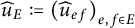 $\widehat {u}_E := {(\widehat {u}_{ef})}_{e,f\in E}$
. Note that
$\widehat {u}_E := {(\widehat {u}_{ef})}_{e,f\in E}$
. Note that $\widehat {u}_{\{v_1, w_1\} \{v_2, w_2\}}$
is well-defined, since
$\widehat {u}_{\{v_1, w_1\} \{v_2, w_2\}}$
is well-defined, since $\widehat {u}_{v_1 v_2} \widehat {u}_{w_1 w_2} = \widehat {u}_{w_1 w_2} \widehat {u}_{v_1 v_2}$
by Definition 2.27.
$\widehat {u}_{v_1 v_2} \widehat {u}_{w_1 w_2} = \widehat {u}_{w_1 w_2} \widehat {u}_{v_1 v_2}$
by Definition 2.27.
First, we construct the unital $*$
-homomorphism
$*$
-homomorphism $\varphi \colon C(\operatorname {\mathrm {Aut}}^+(\Gamma )) \to C(\operatorname {\mathrm {Aut}}^+_{\operatorname {\mathrm {Bic}}}(\Gamma ))$
given by
$\varphi \colon C(\operatorname {\mathrm {Aut}}^+(\Gamma )) \to C(\operatorname {\mathrm {Aut}}^+_{\operatorname {\mathrm {Bic}}}(\Gamma ))$
given by $\varphi (u_{vw}) = \widehat {u}_{vw}$
and
$\varphi (u_{vw}) = \widehat {u}_{vw}$
and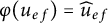 $\varphi (u_{ef}) = \widehat {u}_{ef}$
using the universal property of
$\varphi (u_{ef}) = \widehat {u}_{ef}$
using the universal property of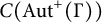 $C(\operatorname {\mathrm {Aut}}^+(\Gamma ))$
. Thus, we have to show that
$C(\operatorname {\mathrm {Aut}}^+(\Gamma ))$
. Thus, we have to show that $\widehat {u}_V$
and
$\widehat {u}_V$
and $\widehat {u}_E$
are magic unitaries that are intertwined by
$\widehat {u}_E$
are magic unitaries that are intertwined by $A_s = A_r$
. By Definition 2.27, the matrix
$A_s = A_r$
. By Definition 2.27, the matrix $\widehat {u}_V$
is a magic unitary and we can compute that
$\widehat {u}_V$
is a magic unitary and we can compute that
 $$ \begin{align*} \widehat{u}_{\{v_1, w_1\}, \{v_2, w_2\}}^* &= {(\widehat{u}_{v_1 v_2} \widehat{u}_{w_1 w_2})}^* + {(\widehat{u}_{v_1 w_2} \widehat{u}_{w_1 v_2})}^* = \widehat{u}_{w_1 w_2} \widehat{u}_{v_1 v_2} + \widehat{u}_{w_1 v_2} \widehat{u}_{v_1 w_2} \\ &= \widehat{u}_{v_1 v_2} \widehat{u}_{w_1 w_2} + \widehat{u}_{v_1 w_2} \widehat{u}_{w_1 v_2} = \widehat{u}_{\{v_1, w_1\}, \{v_2, w_2\}} \end{align*} $$
for all $\{v_1, w_1\}, \{v_2, w_2\} \in E$
. Similarly, we compute
$\{v_1, w_1\}, \{v_2, w_2\} \in E$
. Similarly, we compute
 $$ \begin{align*} \widehat{u}_{\{v_1, w_1\}\{v_2, w_2\}}^2 &= (\widehat{u}_{v_1 v_2} \widehat{u}_{w_1 w_2} + \widehat{u}_{v_1 w_2} \widehat{u}_{w_1 v_2}) (\widehat{u}_{v_1 v_2} \widehat{u}_{w_1 w_2} + \widehat{u}_{v_1 w_2} \widehat{u}_{w_1 v_2}) \\ &= \widehat{u}_{v_1 v_2} \widehat{u}_{w_1 w_2} \widehat{u}_{v_1 v_2} \widehat{u}_{w_1 w_2} + \widehat{u}_{v_1 w_2} \widehat{u}_{w_1 v_2} \widehat{u}_{v_1 w_2} \widehat{u}_{w_1 v_2} \\ &= \widehat{u}_{v_1 v_2}^2 \widehat{u}_{w_1 w_2}^2 + \widehat{u}_{v_1 w_2}^2 \widehat{u}_{w_1 v_2}^2 \\ &= \widehat{u}_{v_1 v_2} \widehat{u}_{w_1 w_2} + \widehat{u}_{v_1 w_2} \widehat{u}_{w_1 v_2} \\ &= \widehat{u}_{\{v_1, w_1\}\{v_2, w_2\}} \end{align*} $$
for all $\{v_1, w_1\}, \{v_2, w_2\} \in E$
, where we additionally used the fact that
$\{v_1, w_1\}, \{v_2, w_2\} \in E$
, where we additionally used the fact that $\widehat {u}_{w_1 w_2} \widehat {u}_{v_1 w_2} = 0$
and
$\widehat {u}_{w_1 w_2} \widehat {u}_{v_1 w_2} = 0$
and $\widehat {u}_{w_1 v_2} \widehat {u}_{v_1 v_2} = 0$
, since
$\widehat {u}_{w_1 v_2} \widehat {u}_{v_1 v_2} = 0$
, since $v_1 \neq w_1$
. Next, we want to show that the rows and columns of
$v_1 \neq w_1$
. Next, we want to show that the rows and columns of $\widehat {u}_E$
sum up to
$\widehat {u}_E$
sum up to $1$
. Observe that
$1$
. Observe that
 $$\begin{align*}\sum_{\{v_1, w_1\} \in E} \widehat{u}_{v_1 v_2} \widehat{u}_{w_1 w_2} = \frac{1}{2} \sum_{\substack{v_1, w_1 \in V \\ \{v_1, w_1\} \in V}} \widehat{u}_{v_1 v_2} \widehat{u}_{w_1 w_2} = \frac{1}{2} \quad \forall \{v_2, w_2\} \in E \end{align*}$$
by Proposition 2.29. Therefore,
 $$\begin{align*}\sum_{\{v_1, w_1\} \in E} \widehat{u}_{\{v_1, w_1\} \{v_2, w_2\}} = \sum_{\{v_1, w_1\} \in E} \widehat{u}_{v_1 v_2} \widehat{u}_{w_1 w_2} + \sum_{\{v_1, w_1\} \in E} \widehat{u}_{v_1 w_2} \widehat{u}_{w_1 v_2} = \frac{1}{2} + \frac{1}{2} = 1 \end{align*}$$
for all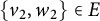 $\{v_2, w_2\} \in E$
. Similarly, we have
$\{v_2, w_2\} \in E$
. Similarly, we have
 $$\begin{align*}\sum_{\{v_2, w_2\} \in E} \widehat{u}_{\{v_1, w_1\} \{v_2, w_2\}} = \frac{1}{2} + \frac{1}{2} = 1 \end{align*}$$
for all $\{v_1, w_1\} \in E$
. Hence,
$\{v_1, w_1\} \in E$
. Hence, $\widehat {u}_E$
is a magic unitary. It remains to show that
$\widehat {u}_E$
is a magic unitary. It remains to show that $A_s \widehat {u}_E = \widehat {u}_V A_s$
. But this follows from Lemma 4.4 and
$A_s \widehat {u}_E = \widehat {u}_V A_s$
. But this follows from Lemma 4.4 and $A_{\Gamma } \widehat {u}_V = \widehat {u}_V A_{\Gamma }$
, because
$A_{\Gamma } \widehat {u}_V = \widehat {u}_V A_{\Gamma }$
, because
 $$ \begin{align*} \sum_{\substack{v_2 \in V \\ \{v_0, v_2\} \in E}} \widehat{u}_{\{v_0, v_2\}\{v_1, w_1\}} &= \sum_{\substack{v_2 \in V \\ \{v_0, v_2\} \in E}} \left( \widehat{u}_{v_0 v_1} \widehat{u}_{v_2 w_1} + \widehat{u}_{v_0 w_1} \widehat{u}_{v_2 v_1} \right) \\ &= \widehat{u}_{v_0 v_1} \sum_{\substack{v_2 \in V \\ \{v_0, v_2\} \in E}} \widehat{u}_{v_2 w_1} + \widehat{u}_{v_0 w_1} \sum_{\substack{v_2 \in V \\ \{v_0, v_2\} \in E}} \widehat{u}_{v_2 v_1} \\ &= \widehat{u}_{v_0 v_1} \sum_{v_2 \in V} {(A_{\Gamma})}_{v_0 v_2 } \widehat{u}_{v_2 w_1} + \widehat{u}_{v_0 w_1} \sum_{v_2 \in V} {(A_{\Gamma})}_{v_0 v_2} \widehat{u}_{v_2 v_1} \\ &= \widehat{u}_{v_0 v_1} \sum_{v_2 \in V} \widehat{u}_{v_0 v_2 } {(A_{\Gamma})}_{v_2 w_1} + \widehat{u}_{v_0 w_1} \sum_{v_2 \in V} \widehat{u}_{v_0 v_2} {(A_{\Gamma})}_{v_2 v_1} \\ &= \sum_{v_2 \in V} \underbrace{\widehat{u}_{v_0 v_1} \widehat{u}_{v_0 v_2 }}_{\delta_{v_1 v_2} \widehat{u}_{v_0 v_1}} {(A_{\Gamma})}_{v_2 w_1} + \sum_{v_2 \in V} \underbrace{\widehat{u}_{v_0 w_1} \widehat{u}_{v_0 v_2}}_{\delta_{w_1 v_2} \widehat{u}_{v_0 w_1}} {(A_{\Gamma})}_{v_2 v_1} \\ &= \widehat{u}_{v_0 v_1} + \widehat{u}_{v_0 w_1} \end{align*} $$
for all $v_0 \in V$
and
$v_0 \in V$
and $\{v_1, w_1\} \in E$
. Hence, the map
$\{v_1, w_1\} \in E$
. Hence, the map $\varphi $
exists.
$\varphi $
exists.
Next, we construct the inverse map $ \psi \colon C(\operatorname {\mathrm {Aut}}^+_{\operatorname {\mathrm {Bic}}}(\Gamma )) \to C(\operatorname {\mathrm {Aut}}^+(\Gamma ))$
given by
$ \psi \colon C(\operatorname {\mathrm {Aut}}^+_{\operatorname {\mathrm {Bic}}}(\Gamma )) \to C(\operatorname {\mathrm {Aut}}^+(\Gamma ))$
given by $\psi (\widehat {u}_{vw}) = u_{vw}$
using the universal property of
$\psi (\widehat {u}_{vw}) = u_{vw}$
using the universal property of $C(\operatorname {\mathrm {Aut}}^+_{\operatorname {\mathrm {Bic}}}(\Gamma ))$
. Hence, we have to show that
$C(\operatorname {\mathrm {Aut}}^+_{\operatorname {\mathrm {Bic}}}(\Gamma ))$
. Hence, we have to show that $u_V$
satisfies the relations from Definition 2.27. By Definition 3.4,
$u_V$
satisfies the relations from Definition 2.27. By Definition 3.4, $u_V$
is a magic unitary. To show that
$u_V$
is a magic unitary. To show that $A_{\Gamma } u_V = u_V A_{\Gamma }$
, observe that
$A_{\Gamma } u_V = u_V A_{\Gamma }$
, observe that
 $$\begin{align*}{(A_s A_s^*)}_{v w} = \sum_{e \in E} {(A_s)}_{v e} {(A_s)}_{w e} = \left\lvert\{ e \in E ~|~ v \in s(e) \ \land \ w \in s(e) \}\right\rvert \quad \forall v, w \in V. \end{align*}$$
Since $\Gamma $
is a simple graph, each
$\Gamma $
is a simple graph, each $e \in E$
contains exactly two elements so that
$e \in E$
contains exactly two elements so that
 $$\begin{align*}{(A_s A_s^*)}_{v w} = \begin{cases} 0 & \text{if } v \neq w, \{v, w\} \notin E, \\ 1 & \text{if } v \neq w, \{v, w\} \in E, \\ N_s(v) & \text{if } v = w, \\ \end{cases} \end{align*}$$
where $N_s(v) := \left \lvert \{ e \in E ~|~ v \in s(e) \}\right \rvert $
as in Proposition 4.6. Hence, we can write
$N_s(v) := \left \lvert \{ e \in E ~|~ v \in s(e) \}\right \rvert $
as in Proposition 4.6. Hence, we can write $A_s A_s^* = A_{\Gamma } + T$
with
$A_s A_s^* = A_{\Gamma } + T$
with $T \in \mathbb {C}^{V \times V}$
defined by
$T \in \mathbb {C}^{V \times V}$
defined by
 $$\begin{align*}T_{vw} := \begin{cases} 0 & \text{if }v \neq w, \\ N_s(v) & \text{if }v = w, \end{cases} \quad \forall v, w \in V. \end{align*}$$
Proposition 4.6 shows that $T u_V = u_V T$
, which implies
$T u_V = u_V T$
, which implies
 $$\begin{align*}A_{\Gamma} u_V = A_s A_s^* u_V - T u_V = A_s u_E A_s^* - u_V T = u_V A_s A_s^* - u_V T = u_V A_{\Gamma}. \end{align*}$$
Finally, we have to show that $u_{v_1 v_2} u_{w_1 w_2} = u_{w_1 w_2} u_{v_1 v_2}$
for all
$u_{v_1 v_2} u_{w_1 w_2} = u_{w_1 w_2} u_{v_1 v_2}$
for all $\{v_1, w_1\}, \{v_2, w_2\} \in E$
. But this follows directly from Lemma 4.5, since
$\{v_1, w_1\}, \{v_2, w_2\} \in E$
. But this follows directly from Lemma 4.5, since
 $$ \begin{align*} u_{v_1 v_2} u_{w_1 w_2} &= u_{\{v_1, w_1\}\{v_2,w_2\}} - u_{v_1 w_2} u_{w_1 v_2} = u_{\{w_1, v_1\}\{w_2,v_2\}} - u_{v_1 w_2} u_{w_1 v_2} \\ &= u_{w_1 w_2} u_{v_1 v_2} + u_{v_1 w_2} u_{w_1 v_2} - u_{v_1 w_2} u_{w_1 v_2} = u_{w_1 w_2} u_{v_1 v_2}. \end{align*} $$
Thus, the $*$
-homomorphism
$*$
-homomorphism $\psi $
exists. By the definitions of
$\psi $
exists. By the definitions of $\varphi $
and
$\varphi $
and $\psi $
, we have
$\psi $
, we have
 $$\begin{align*}u_{vw} \ \longleftrightarrow \ \widehat{u}_{vw}, \qquad u_{\{v_1, w_1\}\{v_2,w_2\}} \ \longleftrightarrow \ \widehat{u}_{v_1 v_2} \widehat{u}_{w_1 w_2} + \widehat{u}_{v_1 w_2} \widehat{u}_{w_1 v_2} \end{align*}$$
for all $v, w \in V$
and
$v, w \in V$
and $\{v_1, w_1\}, \{v_2, w_2\} \in E$
, which shows that both maps are indeed inverse. Further, one directly verifies that
$\{v_1, w_1\}, \{v_2, w_2\} \in E$
, which shows that both maps are indeed inverse. Further, one directly verifies that $\psi $
is a morphism of compact quantum groups. Hence,
$\psi $
is a morphism of compact quantum groups. Hence, $\psi $
is an isomorphism of compact quantum groups, which shows
$\psi $
is an isomorphism of compact quantum groups, which shows $\operatorname {\mathrm {Aut}}^+(\Gamma ) = \operatorname {\mathrm {Aut}}^+_{\operatorname {\mathrm {Bic}}}(\Gamma )$
.
$\operatorname {\mathrm {Aut}}^+(\Gamma ) = \operatorname {\mathrm {Aut}}^+_{\operatorname {\mathrm {Bic}}}(\Gamma )$
.
4.3 Multigraphs
Finally, we consider the case of multigraphs as in Definition 2.4. Recall from Definition 2.12 that we can identify a multigraph $\Gamma := (V, E)$
with the source map
$\Gamma := (V, E)$
with the source map $s' \colon E \to V$
and the range map
$s' \colon E \to V$
and the range map $r' \colon E \to V$
with a
$r' \colon E \to V$
with a $1$
-uniform hypergraphs by defining new source and range maps
$1$
-uniform hypergraphs by defining new source and range maps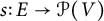 $s \colon E \to \mathcal {P}(V)$
and
$s \colon E \to \mathcal {P}(V)$
and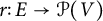 $r \colon E \to \mathcal {P}(V)$
given by
$r \colon E \to \mathcal {P}(V)$
given by $s(e) := \{ s'(e) \}$
and
$s(e) := \{ s'(e) \}$
and $r(e) := \{ r'(e) \}$
for all
$r(e) := \{ r'(e) \}$
for all $e \in E$
. Throughout the rest of this section, we will identify the maps
$e \in E$
. Throughout the rest of this section, we will identify the maps $s'$
and
$s'$
and $r'$
with the maps s and r. In particular, we will write
$r'$
with the maps s and r. In particular, we will write $u_{s(e) v}$
instead of
$u_{s(e) v}$
instead of $u_{s'(e) v}$
for an edge
$u_{s'(e) v}$
for an edge $e \in E$
and a vertex
$e \in E$
and a vertex $v \in V$
.
$v \in V$
.
The goal of this section is to show that our quantum automorphism group $\operatorname {\mathrm {Aut}}^+(\Gamma )$
agrees with the quantum automorphism group
$\operatorname {\mathrm {Aut}}^+(\Gamma )$
agrees with the quantum automorphism group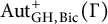 $\operatorname {\mathrm {Aut}}^+_{\operatorname {\mathrm {GH}},\operatorname {\mathrm {Bic}}}(\Gamma )$
of Goswami–Hossain for multigraphs without isolated vertices. We begin by reformulating the intertwiner relations
$\operatorname {\mathrm {Aut}}^+_{\operatorname {\mathrm {GH}},\operatorname {\mathrm {Bic}}}(\Gamma )$
of Goswami–Hossain for multigraphs without isolated vertices. We begin by reformulating the intertwiner relations $A_s u_E = u_V A_s$
and
$A_s u_E = u_V A_s$
and $A_r u_E = u_V A_r$
in the setting of multigraphs.
$A_r u_E = u_V A_r$
in the setting of multigraphs.
Lemma 4.8 Let $\Gamma := (V, E)$
be a multigraph and denote by u the fundamental representation of
$\Gamma := (V, E)$
be a multigraph and denote by u the fundamental representation of $\operatorname {\mathrm {Aut}}^+(\Gamma )$
. Then the relations
$\operatorname {\mathrm {Aut}}^+(\Gamma )$
. Then the relations $A_s u_E = u_V A_s$
and
$A_s u_E = u_V A_s$
and $A_r u_E = u_V A_r$
are equivalent to
$A_r u_E = u_V A_r$
are equivalent to
 $$\begin{align*}\sum_{\substack{f \in E \\ s(f) = v}} u_{e f} = u_{s(e) v}, \quad \sum_{\substack{f \in E \\ r(f) = v}} u_{e f} = u_{r(e) v} \qquad \forall v \in V, \, e \in E. \end{align*}$$
Proof First, consider the equation $A_s u_E = u_V A_s$
, which is equivalent to
$A_s u_E = u_V A_s$
, which is equivalent to $A_s^* u_V = u_E A_s^*$
by Proposition 2.24. A direct computation yields
$A_s^* u_V = u_E A_s^*$
by Proposition 2.24. A direct computation yields
 $$\begin{align*}{(u_E A^*_s)}_{ev} = \sum_{\substack{f \in E \\ s(f) = v}} u_{ef}, \quad {(A^*_s u_V)}_{ev} = \sum_{\substack{w \in V \\ s(e) = w}} u_{wv} = u_{s(e) v} \qquad \forall v \in V, \, e \in E, \end{align*}$$
such that $A_s^* u_V = u_E A_s^*$
is equivalent to
$A_s^* u_V = u_E A_s^*$
is equivalent to $\sum _{\substack {f \in E \\ s(f) = v}} u_{ef} = u_{s(e) v}$
. The statement for the range map r can be obtained by replacing s with r in the previous computation.
$\sum _{\substack {f \in E \\ s(f) = v}} u_{ef} = u_{s(e) v}$
. The statement for the range map r can be obtained by replacing s with r in the previous computation.
To show that our quantum automorphism group agrees with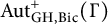 $\operatorname {\mathrm {Aut}}^+_{\operatorname {\mathrm {GH}},\operatorname {\mathrm {Bic}}}(\Gamma )$
, we will identify the magic unitary
$\operatorname {\mathrm {Aut}}^+_{\operatorname {\mathrm {GH}},\operatorname {\mathrm {Bic}}}(\Gamma )$
, we will identify the magic unitary $u_E$
with the fundamental representation of
$u_E$
with the fundamental representation of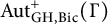 $\operatorname {\mathrm {Aut}}^+_{\operatorname {\mathrm {GH}},\operatorname {\mathrm {Bic}}}(\Gamma )$
. However, we need additional elements in
$\operatorname {\mathrm {Aut}}^+_{\operatorname {\mathrm {GH}},\operatorname {\mathrm {Bic}}}(\Gamma )$
. However, we need additional elements in $C(\operatorname {\mathrm {Aut}}^+_{\operatorname {\mathrm {GH}},\operatorname {\mathrm {Bic}}}(\Gamma ))$
that correspond to the magic unitary
$C(\operatorname {\mathrm {Aut}}^+_{\operatorname {\mathrm {GH}},\operatorname {\mathrm {Bic}}}(\Gamma ))$
that correspond to the magic unitary $u_V$
.
$u_V$
.
Definition 4.9 Let $\Gamma := (V, E)$
be a multigraph without isolated vertices and denote by u the fundamental representation of
$\Gamma := (V, E)$
be a multigraph without isolated vertices and denote by u the fundamental representation of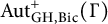 $\operatorname {\mathrm {Aut}}^+_{\operatorname {\mathrm {GH}},\operatorname {\mathrm {Bic}}}(\Gamma )$
. Define the elements
$\operatorname {\mathrm {Aut}}^+_{\operatorname {\mathrm {GH}},\operatorname {\mathrm {Bic}}}(\Gamma )$
. Define the elements
 $$\begin{align*}u_{vw} := \begin{cases} \sum_{\substack{f \in E \\ s(f) = w}} u_{e f} & \text{if there exists } e \in E \text{ with}\ s(e) = v, \\ \sum_{\substack{f \in E \\ r(f) = w}} u_{e f} & \text{if there exists } e \in E \text{ with } r(e) = v, \end{cases} \end{align*}$$
for all $v, w \in V$
.
$v, w \in V$
.
Next, we show that these elements $u_{vw}$
are well-defined and form a quantum permutation on the vertices.
$u_{vw}$
are well-defined and form a quantum permutation on the vertices.
Lemma 4.10 Let $\Gamma := (V, E)$
be a multigraph without isolated vertices. Then the elements
$\Gamma := (V, E)$
be a multigraph without isolated vertices. Then the elements $u_{vw}$
in Definition 4.9 are well-defined. Further, the matrix
$u_{vw}$
in Definition 4.9 are well-defined. Further, the matrix $u_V := {(u_{vw})}_{v,w \in V}$
is a magic unitary.
$u_V := {(u_{vw})}_{v,w \in V}$
is a magic unitary.
Proof First, note that at least one case in Definition 4.9 applies to each vertex v, since $\Gamma $
has no isolated vertices. Further, each case does not depend on the edge e by Relation 2 in Definition 2.30. To show that overlapping cases are well-defined, assume
$\Gamma $
has no isolated vertices. Further, each case does not depend on the edge e by Relation 2 in Definition 2.30. To show that overlapping cases are well-defined, assume $v, w \in V$
such that v is neither a source nor a sink. If w is neither a source nor a sink, then both cases agree by Relation 4. On the other hand, if w is a source or a sink, then both cases yield
$v, w \in V$
such that v is neither a source nor a sink. If w is neither a source nor a sink, then both cases agree by Relation 4. On the other hand, if w is a source or a sink, then both cases yield ${u}_{vw} = 0$
, since the sum is empty in one case, while each
${u}_{vw} = 0$
, since the sum is empty in one case, while each ${u}_{ef} = 0$
by Relation 3 in the other case. Thus, the elements
${u}_{ef} = 0$
by Relation 3 in the other case. Thus, the elements ${u}_{vw}$
are well-defined.
${u}_{vw}$
are well-defined.
Next, we show that the matrix $u_V := {(u_{vw})}_{v,w \in V}$
is a magic unitary. Let
$u_V := {(u_{vw})}_{v,w \in V}$
is a magic unitary. Let $v, w \in V$
and assume without loss of generality that there exists an edge
$v, w \in V$
and assume without loss of generality that there exists an edge $e \in E$
with
$e \in E$
with $v = s(e)$
. Using Lemma 4.8 and the fact that
$v = s(e)$
. Using Lemma 4.8 and the fact that ${(u_{ef})}_{e,f \in E}$
is a magic unitary, we compute
${(u_{ef})}_{e,f \in E}$
is a magic unitary, we compute
 $$ \begin{align*} u_{vw}^* &=\sum_{\substack{f \in E \\ s(f) = w}} u_{e f}^* =\sum_{\substack{f \in E \\ s(f) = w}} u_{e f} = u_{vw}, \\ u_{vw}^2 &= \sum_{\substack{f_1 \in E \\ s(f_1) = w}} \sum_{\substack{f_2 \in E \\ s(f_2) = w}} \underbrace{u_{e f_1} u_{e f_2}}_{\delta_{f_1 f_2} u_{e f_1}} = \sum_{\substack{f \in E \\ s(f) = w}} u_{e f} = u_{vw} \end{align*} $$
and
 $$\begin{align*}\sum_{w \in V} u_{vw} = \sum_{w \in V} \sum_{\substack{f \in E \\ s(f) = w}} u_{e f} = \sum_{f \in E} \underbrace{\sum_{\substack{w \in V \\ s(f) = w}} u_{e f}}_{u_{e f}} = \sum_{f \in E} u_{e f} = 1. \end{align*}$$
To show that the rows of $u_V$
sum to
$u_V$
sum to $1$
, we use an argument from the proof of [Reference Wang34, Theorem 3.1]. By our previous computation, we have
$1$
, we use an argument from the proof of [Reference Wang34, Theorem 3.1]. By our previous computation, we have
 $$\begin{align*}{(u_V u_V^*)}_{vw} = \sum_{x \in V} \underbrace{u_{vx} u_{wx}^*}_{\delta_{vw} u_{vx}} = \delta_{vw} \sum_{x \in V} u_{vx} = \delta_{vw} \quad \forall v, w \in V. \end{align*}$$
Hence, $u_V$
is right-invertible with
$u_V$
is right-invertible with $u_V u_V^* = 1$
. If we show that
$u_V u_V^* = 1$
. If we show that $u_V$
is a representation of
$u_V$
is a representation of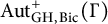 $\operatorname {\mathrm {Aut}}^+_{\operatorname {\mathrm {GH}},\operatorname {\mathrm {Bic}}}(\Gamma )$
, that is,
$\operatorname {\mathrm {Aut}}^+_{\operatorname {\mathrm {GH}},\operatorname {\mathrm {Bic}}}(\Gamma )$
, that is, $\Delta (u_{vw}) = \sum _{x \in V} u_{vx} \otimes u_{xw}$
, then [Reference Woronowicz36, Proposition 3.2] implies that
$\Delta (u_{vw}) = \sum _{x \in V} u_{vx} \otimes u_{xw}$
, then [Reference Woronowicz36, Proposition 3.2] implies that $u_V$
is also left-invertibe, that is,
$u_V$
is also left-invertibe, that is, $u_V^* u_V = 1$
. Thus,
$u_V^* u_V = 1$
. Thus,
 $$\begin{align*}1 = {(u_V^* u_V)}_{vv} = \sum_{w \in V} u_{wv}^* u_{wv} = \sum_{w \in V} u_{wv} \quad \forall v \in V. \end{align*}$$
Therefore, it remains to show that $u_V$
is a representation of
$u_V$
is a representation of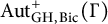 $\operatorname {\mathrm {Aut}}^+_{\operatorname {\mathrm {GH}},\operatorname {\mathrm {Bic}}}(\Gamma )$
. Again, let
$\operatorname {\mathrm {Aut}}^+_{\operatorname {\mathrm {GH}},\operatorname {\mathrm {Bic}}}(\Gamma )$
. Again, let $v, w \in V$
and assume without loss of generality that there exists an edge
$v, w \in V$
and assume without loss of generality that there exists an edge $e \in E$
with
$e \in E$
with $v = s(e)$
. Then
$v = s(e)$
. Then
 $$ \begin{align*} \Delta(u_{vw}) &= \sum_{\substack{f \in E \\ s(f) = w}} \Delta(u_{ef}) = \sum_{\substack{f \in E \\ s(f) = w}} \sum_{g \in E} u_{eg} \otimes u_{gf} = \sum_{g \in E} u_{eg} \otimes \bigg( \sum_{\substack{f \in E \\ s(f) = w}} u_{gf} \bigg) \\ &= \sum_{g \in E} u_{eg} \otimes u_{s(g) w,} \end{align*} $$
and on the other hand,
 $$ \begin{align*} \sum_{x \in V} u_{vx} \otimes u_{xw} = \sum_{x \in V} \sum_{\substack{f \in E \\ s(f) = x}} u_{e f} \otimes u_{xw} = \sum_{f \in E} \sum_{\substack{x \in V \\ s(f) = x}} u_{e f} \otimes u_{xw} = \sum_{\substack{f \in E}} u_{e f} \otimes u_{s(f) w}. \end{align*} $$
Thus, $\Delta (u_{vw}) = \sum _{x \in V} u_{vx} \otimes u_{xw}$
for all
$\Delta (u_{vw}) = \sum _{x \in V} u_{vx} \otimes u_{xw}$
for all $v, w \in V$
.
$v, w \in V$
.
Using the previous lemmas, we can now show that our quantum automorphism group agrees with the quantum automorphism group of Goswami–Hossain for multigraphs without isolated vertices.
Theorem 4.11 Let $\Gamma $
be a multigraph without isolated vertices. Then
$\Gamma $
be a multigraph without isolated vertices. Then $\operatorname {\mathrm {Aut}}^+(\Gamma ) = \operatorname {\mathrm {Aut}}^+_{\operatorname {\mathrm {GH}},\operatorname {\mathrm {Bic}}}(\Gamma )$
.
$\operatorname {\mathrm {Aut}}^+(\Gamma ) = \operatorname {\mathrm {Aut}}^+_{\operatorname {\mathrm {GH}},\operatorname {\mathrm {Bic}}}(\Gamma )$
.
Proof Let $\Gamma := (V, E)$
. Denote by u the fundamental representation of
$\Gamma := (V, E)$
. Denote by u the fundamental representation of $\operatorname {\mathrm {Aut}}^+(\Gamma )$
and by
$\operatorname {\mathrm {Aut}}^+(\Gamma )$
and by $\widehat {u}$
the fundamental representation of
$\widehat {u}$
the fundamental representation of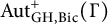 $\operatorname {\mathrm {Aut}}^+_{\operatorname {\mathrm {GH}},\operatorname {\mathrm {Bic}}}(\Gamma )$
. Further, define the elements
$\operatorname {\mathrm {Aut}}^+_{\operatorname {\mathrm {GH}},\operatorname {\mathrm {Bic}}}(\Gamma )$
. Further, define the elements
 $$\begin{align*}\widehat{u}_{vw} := \begin{cases} \sum_{\substack{f \in E \\ s(f) = w}} \widehat{u}_{e f} & \text{if there exists } e \in E\ \text{with } s(e) = v, \\ \sum_{\substack{f \in E \\ r(f) = w}} \widehat{u}_{e f} & \text{if there exists } e \in E\ \text{with } r(e) = v, \end{cases} \end{align*}$$
for all $v, w \in V$
as in Definition 4.9.
$v, w \in V$
as in Definition 4.9.
We begin by constructing the unital $*$
-homomorphism
$*$
-homomorphism $\varphi \colon C(\operatorname {\mathrm {Aut}}^+(\Gamma )) \to C(\operatorname {\mathrm {Aut}}^+_{\operatorname {\mathrm {GH}},\operatorname {\mathrm {Bic}}}(\Gamma ))$
given by
$\varphi \colon C(\operatorname {\mathrm {Aut}}^+(\Gamma )) \to C(\operatorname {\mathrm {Aut}}^+_{\operatorname {\mathrm {GH}},\operatorname {\mathrm {Bic}}}(\Gamma ))$
given by $\varphi (u_{vw}) = \widehat {u}_{vw}$
and
$\varphi (u_{vw}) = \widehat {u}_{vw}$
and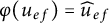 $\varphi (u_{ef}) = \widehat {u}_{ef}$
using the universal property of
$\varphi (u_{ef}) = \widehat {u}_{ef}$
using the universal property of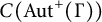 $C(\operatorname {\mathrm {Aut}}^+(\Gamma ))$
. Hence, we have to show that the matrices
$C(\operatorname {\mathrm {Aut}}^+(\Gamma ))$
. Hence, we have to show that the matrices $\widehat {u}_V := {(\widehat {u}_{vw})}_{v,w\in V}$
and
$\widehat {u}_V := {(\widehat {u}_{vw})}_{v,w\in V}$
and $\widehat {u}_E := {(\widehat {u}_{ef})}_{e,f\in E}$
satisfy the relations of Definition 3.4. The matrix
$\widehat {u}_E := {(\widehat {u}_{ef})}_{e,f\in E}$
satisfy the relations of Definition 3.4. The matrix $\widehat {u}_E$
is a magic unitary by Relation 1 of Definition 2.30 and
$\widehat {u}_E$
is a magic unitary by Relation 1 of Definition 2.30 and $\widehat {u}_V$
is a magic unitary by Lemma 4.10. Next, consider the relation
$\widehat {u}_V$
is a magic unitary by Lemma 4.10. Next, consider the relation $A_s \widehat {u}_E = \widehat {u}_V A_s$
, which is equivalent to
$A_s \widehat {u}_E = \widehat {u}_V A_s$
, which is equivalent to $A_s^* \widehat {u}_V = \widehat {u}_E A_s^*$
by Proposition 2.24. However, this relation follows directly, since
$A_s^* \widehat {u}_V = \widehat {u}_E A_s^*$
by Proposition 2.24. However, this relation follows directly, since
 $$\begin{align*}{(A_s^* \widehat{u}_V)}_{ev} = \sum_{w \in V} {(A_s^*)}_{ew} \widehat{u}_{wv} = \widehat{u}_{s(e) v} = \sum_{\substack{f \in E \\ s(f) = v}} \widehat{u}_{ef} = \sum_{f \in E} \widehat{u}_{ef} {(A_s^*)}_{fv} = {(\widehat{u}_E A^*_s)}_{ev} \end{align*}$$
for all $e \in E$
and
$e \in E$
and $v \in V$
. Similarly, one shows
$v \in V$
. Similarly, one shows $A_r \widehat {u}_E = \widehat {u}_V A_r$
, such that the
$A_r \widehat {u}_E = \widehat {u}_V A_r$
, such that the $*$
-homomorphism
$*$
-homomorphism $\varphi $
exists.
$\varphi $
exists.
Next, we construct the inverse $*$
-homomorphism
$*$
-homomorphism $\psi \colon C(\operatorname {\mathrm {Aut}}^+_{\operatorname {\mathrm {GH}},\operatorname {\mathrm {Bic}}}(\Gamma )) \to C(\operatorname {\mathrm {Aut}}^+(\Gamma ))$
given by
$\psi \colon C(\operatorname {\mathrm {Aut}}^+_{\operatorname {\mathrm {GH}},\operatorname {\mathrm {Bic}}}(\Gamma )) \to C(\operatorname {\mathrm {Aut}}^+(\Gamma ))$
given by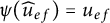 $\psi (\widehat {u}_{ef}) = u_{ef}$
using the universal property of
$\psi (\widehat {u}_{ef}) = u_{ef}$
using the universal property of $C(\operatorname {\mathrm {Aut}}^+_{\operatorname {\mathrm {GH}},\operatorname {\mathrm {Bic}}}(\Gamma ))$
. Thus, we have to show that the entries of
$C(\operatorname {\mathrm {Aut}}^+_{\operatorname {\mathrm {GH}},\operatorname {\mathrm {Bic}}}(\Gamma ))$
. Thus, we have to show that the entries of $u_E$
satisfy the relations in Definition 2.30. By Definition 3.4,
$u_E$
satisfy the relations in Definition 2.30. By Definition 3.4, $u_E$
is a magic unitary. Further, we can use Lemma 4.8 to compute
$u_E$
is a magic unitary. Further, we can use Lemma 4.8 to compute
 $$ \begin{align*} \sum_{\substack{f \in E \\ s(f) = v}} u_{e_1 f} &= u_{s(e_1) v} = u_{s(e_2) v} = \sum_{\substack{f \in E \\ s(f) = v}} u_{e_2 f}, \\ \sum_{\substack{f \in E \\ r(f) = v}} u_{e_1 f} &= u_{r(e_1) v} = u_{r(e_2) v} = \sum_{\substack{f \in E \\ r(f) = v}} u_{e_2 f} \end{align*} $$
for all $v \in V$
and
$v \in V$
and $e_1, e_2 \in E$
with
$e_1, e_2 \in E$
with $s(e_1) = s(e_2)$
or
$s(e_1) = s(e_2)$
or $r(e_1) = r(e_2),$
respectively. Thus, Relation 2 is satisfied. Next, consider Relation 3 and let
$r(e_1) = r(e_2),$
respectively. Thus, Relation 2 is satisfied. Next, consider Relation 3 and let $e, f \in E$
. If
$e, f \in E$
. If $s(e)$
is neither a source or sink and
$s(e)$
is neither a source or sink and $s(f)$
is a source, then
$s(f)$
is a source, then $N_{r}(s(e))> 0$
and
$N_{r}(s(e))> 0$
and $N_{r}(s(f)) = 0$
in the notation of Proposition 4.6. Therefore, Proposition 4.6 implies that
$N_{r}(s(f)) = 0$
in the notation of Proposition 4.6. Therefore, Proposition 4.6 implies that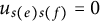 $u_{s(e)s(f)} = 0$
, such that
$u_{s(e)s(f)} = 0$
, such that
 $$\begin{align*}0 = u_{s(e)s(f)} u_{ef} = \sum_{\substack{ g \in E \\ s(g) = s(f)}} \underbrace{u_{eg} u_{ef}}_{\delta_{gf} u_{ef}} = u_{ef}. \end{align*}$$
Similarly, one shows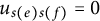 $u_{s(e)s(f)} = 0$
if
$u_{s(e)s(f)} = 0$
if $r(f)$
is a sink. Hence, Relation 3 is satisfied. Finally, Lemma 4.8 implies
$r(f)$
is a sink. Hence, Relation 3 is satisfied. Finally, Lemma 4.8 implies
 $$\begin{align*}\sum_{\substack{f \in E \\ s(f) = v}} u_{e_1 f} = u_{s(e_1) v} = u_{r(e_2) v} = \sum_{\substack{f \in E \\ r(f) = v}} u_{e_2 f} \end{align*}$$
for all $v \in V$
and
$v \in V$
and $e_1, e_2 \in E$
with
$e_1, e_2 \in E$
with $s(e_1) = r(e_2)$
. Thus, Relation 4 holds and the
$s(e_1) = r(e_2)$
. Thus, Relation 4 holds and the $*$
-homomorphism
$*$
-homomorphism $\varphi $
exist.
$\varphi $
exist.
The $*$
-homomorphisms
$*$
-homomorphisms $\varphi $
and
$\varphi $
and $\phi $
are indeed inverse, since
$\phi $
are indeed inverse, since
 $$\begin{align*}u_{ef} \ \longleftrightarrow \ \widehat{u}_{ef} \quad \forall e, f \in E, \qquad u_{vw} \ \longleftrightarrow \ \widehat{u}_{vw} \quad \forall v, w \in V \end{align*}$$
by Lemma 4.8 and Definition 4.9. Further, a direct computation shows that $\psi $
is a morphism of compact quantum groups. Hence,
$\psi $
is a morphism of compact quantum groups. Hence, $\operatorname {\mathrm {Aut}}^+(\Gamma ) = \operatorname {\mathrm {Aut}}^+_{\operatorname {\mathrm {GH}},\operatorname {\mathrm {Bic}}}(\Gamma )$
.
$\operatorname {\mathrm {Aut}}^+(\Gamma ) = \operatorname {\mathrm {Aut}}^+_{\operatorname {\mathrm {GH}},\operatorname {\mathrm {Bic}}}(\Gamma )$
.
5 Action on hypergraph
$C^*$
-algebras

In [Reference Schmidt and Weber30], Schmidt–Weber showed that the quantum automorphism group $\operatorname {\mathrm {Aut}}^+_{\operatorname {\mathrm {Ban}}}(\Gamma )$
of a directed graph
$\operatorname {\mathrm {Aut}}^+_{\operatorname {\mathrm {Ban}}}(\Gamma )$
of a directed graph $\Gamma $
acts maximally on the graph
$\Gamma $
acts maximally on the graph $C^*$
-algebra
$C^*$
-algebra $C^*(\Gamma )$
. In our notation, this action is given by
$C^*(\Gamma )$
. In our notation, this action is given by
 $$\begin{align*}\alpha(p_v) = \sum_{w \in V} p_w \otimes u_{wv}, \quad \alpha(s_{(v_1, w_1)}) = \sum_{(v_2, w_2) \in E} s_{(v_2, w_2)} \otimes u_{v_2 v_1} u_{w_2 w_1} \end{align*}$$
for all $v \in V$
and
$v \in V$
and $(v_1, w_1) \in E$
, where
$(v_1, w_1) \in E$
, where $\Gamma := (V, E)$
is a directed graph and we flipped both tensor legs to agree with the notation in [Reference Wang34].
$\Gamma := (V, E)$
is a directed graph and we flipped both tensor legs to agree with the notation in [Reference Wang34].
In the following, we generalize this result to hypergraphs by showing that our quantum automorphism group $\operatorname {\mathrm {Aut}}^+(\Gamma )$
of a hypergraph
$\operatorname {\mathrm {Aut}}^+(\Gamma )$
of a hypergraph $\Gamma $
acts faithfully on the hypergraph
$\Gamma $
acts faithfully on the hypergraph $C^*$
-algebra
$C^*$
-algebra $C^*(\Gamma )$
from Definition 2.33. Here, the action is given by
$C^*(\Gamma )$
from Definition 2.33. Here, the action is given by
 $$\begin{align*}\alpha(p_v) = \sum_{w \in V} p_w \otimes u_{wv} \quad \forall v \in V, \qquad \alpha(s_e) = \sum_{f \in E} s_f \otimes u_{fe} \quad \forall e \in E. \end{align*}$$
Further, we show that this action is maximal when we also consider the dual action
 $$\begin{align*}\alpha'(p_e) = \sum_{f \in E} p_f \otimes u_{fe} \quad \forall e \in E, \qquad \alpha'(s_v) = \sum_{w \in V} s_w \otimes u_{wv} \quad \forall v \in V \end{align*}$$
on $C^*(\Gamma ')$
, where
$C^*(\Gamma ')$
, where $\Gamma ' := {(\Gamma ^*)}^{\operatorname {\mathrm {op}}}$
is obtained by flipping the source and range maps in the dual hypergraph
$\Gamma ' := {(\Gamma ^*)}^{\operatorname {\mathrm {op}}}$
is obtained by flipping the source and range maps in the dual hypergraph $\Gamma ^*$
.
$\Gamma ^*$
.
5.1 Existence of the action
We begin by showing the existence of the action of $\operatorname {\mathrm {Aut}}^+(\Gamma )$
on the hypergraph
$\operatorname {\mathrm {Aut}}^+(\Gamma )$
on the hypergraph $C^*$
-algebra
$C^*$
-algebra $C^*(\Gamma )$
, where the main step will be the construction of the underlying
$C^*(\Gamma )$
, where the main step will be the construction of the underlying $*$
-homomorphism in the following lemma.
$*$
-homomorphism in the following lemma.
Lemma 5.1 Let $\Gamma := (V, E)$
be a hypergraph and denote by u the fundamental representation of
$\Gamma := (V, E)$
be a hypergraph and denote by u the fundamental representation of $\operatorname {\mathrm {Aut}}^+(\Gamma )$
. Then there exists a unital
$\operatorname {\mathrm {Aut}}^+(\Gamma )$
. Then there exists a unital $*$
-homomorphism
$*$
-homomorphism $\alpha \colon C^*(\Gamma ) \to C^*(\Gamma ) \otimes C(\operatorname {\mathrm {Aut}}^+(\Gamma ))$
defined by
$\alpha \colon C^*(\Gamma ) \to C^*(\Gamma ) \otimes C(\operatorname {\mathrm {Aut}}^+(\Gamma ))$
defined by
 $$\begin{align*}\alpha(p_v) = \sum_{w \in V} p_w \otimes u_{wv}, \quad \alpha(s_e) = \sum_{f \in E} s_f \otimes u_{fe} \qquad \forall v \in V,\, \forall e \in E. \end{align*}$$
Proof We use the universal property of $C^*(\Gamma )$
to construct the map
$C^*(\Gamma )$
to construct the map $\alpha $
from the statement. Thus, we have to show that
$\alpha $
from the statement. Thus, we have to show that $\alpha (p_v)$
are orthogonal projections,
$\alpha (p_v)$
are orthogonal projections, $\alpha (s_e)$
are partial isometries, and both satisfy the relations from Definition 2.33. Recall the magic unitary relations of
$\alpha (s_e)$
are partial isometries, and both satisfy the relations from Definition 2.33. Recall the magic unitary relations of $u_V$
and
$u_V$
and $u_E$
and the intertwiner relations of
$u_E$
and the intertwiner relations of $A_s$
and
$A_s$
and $A_r$
from Remark 3.6. Then, we can show that
$A_r$
from Remark 3.6. Then, we can show that $\alpha (p_v)$
are orthogonal projections by computing
$\alpha (p_v)$
are orthogonal projections by computing
 $$ \begin{align*} \alpha(p_{v_1}) \alpha(p_{v_2}) &= \sum_{w_1, w_2 \in V} \underbrace{p_{w_1} p_{w_2}}_{\delta_{w_1 w_2} p_{w_1}} \otimes u_{w_1 v_1} u_{w_2 v_2} \\ &= \sum_{w \in V} p_w \otimes \underbrace{u_{w v_1} u_{w v_2}}_{\delta_{v_1 v_2} u_{w v_1}} = \delta_{v_1 v_2} \sum_{w \in V} p_w \otimes u_{w v_1} = \delta_{v_1 v_2} \, \alpha(p_{v_1}) \end{align*} $$
for all $v_1, v_2 \in V$
and
$v_1, v_2 \in V$
and
 $$ \begin{align*} {\alpha(p_v)}^* = \sum_{w \in V} p_w^* \otimes u_{w v}^* = \sum_{w \in V} p_w \otimes u_{w v} = \alpha(p_v) \end{align*} $$
for all $v \in V$
. Similarly, we show that
$v \in V$
. Similarly, we show that $\alpha (s_e)$
are partial isometries by computing
$\alpha (s_e)$
are partial isometries by computing
 $$ \begin{align*} \alpha(s_e){\alpha(s_e)}^*\alpha(s_e) &= \sum_{f_1, f_2, f_3 \in E} s_{f_1} s_{f_2} s_{f_3} \otimes \underbrace{u_{f_1 e} u_{f_2 e}^* u_{f_3 e}}_{\delta_{f_1 f_2} \delta_{f_1 f_3} u_{f_1 e}} \\ &= \sum_{f \in E} \underbrace{s_f s_f^* s_f}_{s_f} \otimes u_{f e} = \sum_{f \in E} s_f \otimes u_{f e} = \alpha(s_e) \end{align*} $$
for all $e \in E$
. Next, consider Relation 1 from Definition 2.33, which states that
$e \in E$
. Next, consider Relation 1 from Definition 2.33, which states that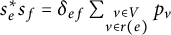 $s_e^* s_f = \delta _{ef} \sum _{\substack {v \in V \\ v \in r(e)}} p_v$
for all
$s_e^* s_f = \delta _{ef} \sum _{\substack {v \in V \\ v \in r(e)}} p_v$
for all $e,f \in E$
. When applying
$e,f \in E$
. When applying $\alpha $
to the left side, we obtain
$\alpha $
to the left side, we obtain
 $$ \begin{align*} {\alpha(s_e)}^* \alpha(s_f) &= \sum_{g_1, g_2 \in E} \underbrace{s_{g_1}^* s_{g_2}}_{\text{Rel. 1}} \otimes u_{g_1 e}^* u_{g_2 f} \\ &= \sum_{g \in E} \sum_{\substack{v \in V \\ v \in r(g)}} p_v \otimes \underbrace{u_{g e} u_{g f}}_{\delta_{e f} u_{g e}} = \delta_{ef} \sum_{v \in V} \sum_{\substack{g \in E \\ v \in r(g)}} p_v \otimes u_{g e}. \end{align*} $$
Using Remark 3.6, we have $\sum _{\substack {g \in E \\ v \in r(g)}} u_{ge} = \sum _{\substack {w \in V \\ w \in r(e)}} u_{vw}$
for all
$\sum _{\substack {g \in E \\ v \in r(g)}} u_{ge} = \sum _{\substack {w \in V \\ w \in r(e)}} u_{vw}$
for all $v \in V$
and
$v \in V$
and $e \in E$
, which can be used to further rewrite
$e \in E$
, which can be used to further rewrite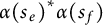 ${\alpha (s_e)}^* \alpha (s_f)$
to
${\alpha (s_e)}^* \alpha (s_f)$
to
 $$ \begin{align*} {\alpha(s_e)}^* \alpha(s_f) &= \delta_{e f} \sum_{v \in V} \sum_{\substack{w \in V \\ w \in r(e)}} p_v \otimes u_{v w} = \delta_{e f} \sum_{\substack{w \in V \\ w \in r(e)}} \sum_{v \in V} p_v \otimes u_{v w} \\ &= \delta_{e f} \sum_{\substack{w \in V \\ w \in r(e)}} \alpha(p_w). \end{align*} $$
Thus, Relation 1 is satisfied. Next, consider Relation 2, which is given by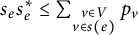 $s_e s_e^* \leq \sum _{\substack {v \in V \\ v \in s(e)}} p_v$
for all
$s_e s_e^* \leq \sum _{\substack {v \in V \\ v \in s(e)}} p_v$
for all $e \in E$
. As before, we apply
$e \in E$
. As before, we apply $\alpha $
to the left side and compute
$\alpha $
to the left side and compute
 $$\begin{align*}\alpha(s_e) {\alpha(s_e)}^* &= \sum_{f_1, f_2 \in E} s_{f_1} s_{f_2}^* \otimes \underbrace{u_{f_1 e} u_{f_2 e}^*}_{\delta_{f_1 f_2} u_{f_1 e}} = \sum_{f \in E} s_{f} s_{f}^* \otimes u_{f e}. \end{align*}$$
Since each $u_{fe} \geq 0$
, we can use Relation 2 to obtain
$u_{fe} \geq 0$
, we can use Relation 2 to obtain
 $$\begin{align*}\alpha(s_e) {\alpha(s_e)}^* \leq \sum_{f \in E} \bigg( \sum_{\substack{v \in V \\ v \in s(f)}} p_v \bigg) \otimes u_{f e} = \sum_{v \in V } \sum_{\substack{f \in E \\ v \in s(f)}} p_v \otimes u_{f e}. \end{align*}$$
By Remark 3.6, we have $\sum _{\substack {f \in E \\ v \in s(f)}} u_{f e} = \sum _{\substack {w \in V \\ w \in s(e)}} u_{w v}$
for all
$\sum _{\substack {f \in E \\ v \in s(f)}} u_{f e} = \sum _{\substack {w \in V \\ w \in s(e)}} u_{w v}$
for all $v \in V$
and
$v \in V$
and $e \in E$
, such that
$e \in E$
, such that
 $$\begin{align*}\alpha(s_e) {\alpha(s_e)}^* \leq \sum_{v \in V } \sum_{\substack{w \in V \\ w \in s(e)}} p_v \otimes u_{vw} = \sum_{\substack{w \in V \\ w \in s(e)}} \sum_{v \in V } p_v \otimes u_{vw} = \sum_{\substack{w \in V \\ w \in s(e)}} \alpha(p_w). \end{align*}$$
Hence, Relation 2 is satisfied. Finally, consider Relation 3, which states that $p_v \leq \sum _{\substack {e \in E \\ v \in s(e)}} s_e s_e^*$
for all
$p_v \leq \sum _{\substack {e \in E \\ v \in s(e)}} s_e s_e^*$
for all $v \in V$
that are not a sink. Let
$v \in V$
that are not a sink. Let $v \in V$
be a vertex that is not a sink. By Proposition 4.6, we have
$v \in V$
be a vertex that is not a sink. By Proposition 4.6, we have $u_{vw} = 0$
for all
$u_{vw} = 0$
for all $w \in V$
that are a sink, since
$w \in V$
that are a sink, since $N_s(v)> 0$
if v is not a sink and
$N_s(v)> 0$
if v is not a sink and $N_s(w) = 0$
if w is a sink. Therefore,
$N_s(w) = 0$
if w is a sink. Therefore,
 $$\begin{align*}\alpha(p_v) = \sum_{w \in V} p_w \otimes u_{w v} = \sum_{\substack{w \in V \\ w \neq \text{sink }}} p_w \otimes u_{w v}. \end{align*}$$
Since $u_{vw} \geq 0$
, Relation 3 yields
$u_{vw} \geq 0$
, Relation 3 yields
 $$\begin{align*}\alpha(p_v) \leq \sum_{\substack{w \in V \\ {w \neq sink}}} \bigg( \sum_{\substack{e \in E \\ w \in s(e)}} s_e s_e^* \bigg) \otimes u_{w v} = \sum_{e \in E} \sum_{\substack{w \in V \\ w \in s(e)}} s_e s_e^* \otimes u_{w v}, \end{align*}$$
where we used again the fact that $u_{v w} = 0$
if w is a sink. On the other hand, we have
$u_{v w} = 0$
if w is a sink. On the other hand, we have
 $$ \begin{align*} \sum_{\substack{f \in E \\ v \in s(f)}} \alpha(s_f) {\alpha(s_f)}^* = \sum_{e_1, e_2 \in E} \sum_{\substack{f \in E \\ v \in s(f)}} s_{e_1} s_{e_2}^* \otimes \underbrace{u_{e_1 f} u_{e_2 f}^*}_{\delta_{e_1 e_2} u_{e_1 f}} = \sum_{e \in E} \sum_{\substack{f \in E \\ v \in s(f)}} s_e s_e^* \otimes u_{e f}. \end{align*} $$
By Remark 3.6, we have $ \sum _{\substack {w \in V \\ w \in s(e)}} u_{w v} = \sum _{\substack {f \in E \\ v \in s(f)}} u_{e f} $
for all
$ \sum _{\substack {w \in V \\ w \in s(e)}} u_{w v} = \sum _{\substack {f \in E \\ v \in s(f)}} u_{e f} $
for all $v \in V$
and
$v \in V$
and $e \in E$
, which implies
$e \in E$
, which implies
 $$ \begin{align*} \alpha(p_v) \leq \sum_{e \in E} \sum_{\substack{w \in V \\ w \in s(e)}} s_e s_e^* \otimes u_{w v} = \sum_{e \in E} \sum_{\substack{f \in E \\ v \in s(f)}} s_e s_e^* \otimes u_{e f} = \sum_{\substack{f \in E \\ v \in s(f)}} \alpha(s_f) {\alpha(s_f)}^*. \end{align*} $$
Next, we show that the previous $*$
-homomorphism
$*$
-homomorphism $\alpha $
defines a faithful action in the sense of Definitions 2.19 and 2.20.
$\alpha $
defines a faithful action in the sense of Definitions 2.19 and 2.20.
Theorem 5.2 Let $\Gamma $
be a hypergraph. Then
$\Gamma $
be a hypergraph. Then $\operatorname {\mathrm {Aut}}^+(\Gamma )$
acts faithfully on
$\operatorname {\mathrm {Aut}}^+(\Gamma )$
acts faithfully on $C^*(\Gamma )$
via the map
$C^*(\Gamma )$
via the map $\alpha $
from Lemma 5.1.
$\alpha $
from Lemma 5.1.
Proof Let $\Gamma := (V, E)$
and define
$\Gamma := (V, E)$
and define $\mathcal {B} \subseteq C^*(\Gamma )$
as the
$\mathcal {B} \subseteq C^*(\Gamma )$
as the $*$
-subalgebra generated by
$*$
-subalgebra generated by $p_v$
for all
$p_v$
for all $v \in V$
and
$v \in V$
and $p_e$
for all
$p_e$
for all $e \in E$
. Then
$e \in E$
. Then $\mathcal {B}$
is dense in
$\mathcal {B}$
is dense in $C^*(\Gamma )$
and we have
$C^*(\Gamma )$
and we have $\alpha (\mathcal {B}) \subseteq \mathcal {B} \otimes \mathcal {O}(\operatorname {\mathrm {Aut}}^+(\Gamma ))$
by the definition of
$\alpha (\mathcal {B}) \subseteq \mathcal {B} \otimes \mathcal {O}(\operatorname {\mathrm {Aut}}^+(\Gamma ))$
by the definition of $\alpha $
. Next, let
$\alpha $
. Next, let $v \in V$
. Then
$v \in V$
. Then
 $$\begin{align*}\sum_{w \in V} \alpha(p_w) \otimes u_{wv} = \sum_{w_1, w_2 \in V} p_{w_2} \otimes u_{w_2 w_1} \otimes u_{w_1 v} = \sum_{w_2 \in V} p_{w_2} \otimes \Delta(u_{w_2 v}) \end{align*}$$
implies $(\alpha \otimes \operatorname {\mathrm {id}})(\alpha (p_v)) = (\operatorname {\mathrm {id}} \otimes \Delta )(\alpha (p_v))$
. Further, we compute
$(\alpha \otimes \operatorname {\mathrm {id}})(\alpha (p_v)) = (\operatorname {\mathrm {id}} \otimes \Delta )(\alpha (p_v))$
. Further, we compute
 $$\begin{align*}(\operatorname{\mathrm{id}} \otimes \varepsilon)(\alpha(p_v)) = (\operatorname{\mathrm{id}} \otimes \varepsilon)\bigg(\sum_{w \in V} p_{w} \otimes u_{wv} \bigg) = \sum_{w \in V} p_w \cdot \delta_{wv} = p_v. \end{align*}$$
The previous computations also show that $(\alpha \otimes \operatorname {\mathrm {id}})(\alpha (s_e)) = (\operatorname {\mathrm {id}} \otimes \Delta )(\alpha (s_e))$
and
$(\alpha \otimes \operatorname {\mathrm {id}})(\alpha (s_e)) = (\operatorname {\mathrm {id}} \otimes \Delta )(\alpha (s_e))$
and $(\operatorname {\mathrm {id}} \otimes \varepsilon )(\alpha (s_e)) = s_e$
for all
$(\operatorname {\mathrm {id}} \otimes \varepsilon )(\alpha (s_e)) = s_e$
for all $e \in E$
by replacing
$e \in E$
by replacing $p_v$
with
$p_v$
with $s_e$
. Hence,
$s_e$
. Hence, $(\operatorname {\mathrm {id}} \otimes \alpha ) \circ \alpha = (\Delta \otimes \operatorname {\mathrm {id}}) \circ \alpha $
and
$(\operatorname {\mathrm {id}} \otimes \alpha ) \circ \alpha = (\Delta \otimes \operatorname {\mathrm {id}}) \circ \alpha $
and $(\varepsilon \otimes \operatorname {\mathrm {id}}) \circ \alpha |_{\mathcal {B}} = \operatorname {\mathrm {id}}$
. Thus,
$(\varepsilon \otimes \operatorname {\mathrm {id}}) \circ \alpha |_{\mathcal {B}} = \operatorname {\mathrm {id}}$
. Thus, $\alpha $
defines an action of
$\alpha $
defines an action of $\operatorname {\mathrm {Aut}}^+(\Gamma )$
on
$\operatorname {\mathrm {Aut}}^+(\Gamma )$
on $C^*(\Gamma )$
. To show that
$C^*(\Gamma )$
. To show that $\alpha $
is faithful, assume that there exists a quotient G of
$\alpha $
is faithful, assume that there exists a quotient G of $\operatorname {\mathrm {Aut}}^+(\Gamma )$
such that
$\operatorname {\mathrm {Aut}}^+(\Gamma )$
such that $\alpha |_{C(G)}$
is also an action on
$\alpha |_{C(G)}$
is also an action on $C^*(\Gamma )$
. Then
$C^*(\Gamma )$
. Then
 $$ \begin{align*} \alpha|_{C(G)}(p_v) &= \sum_{w \in V} p_w \otimes u_{wv} \in C^*(\Gamma) \otimes C(G) \qquad \forall v \in V, \\ \alpha|_{C(G)}(s_e) &= \sum_{f \in E} s_f \otimes u_{fe} \in C^*(\Gamma) \otimes C(G) \qquad \forall e \in E. \end{align*} $$
The representation of $\alpha |_{C(G)}(p_v)$
with respect to
$\alpha |_{C(G)}(p_v)$
with respect to $p_v$
is unique since the
$p_v$
is unique since the $p_v$
are linearly independent as orthogonal projections. Thus,
$p_v$
are linearly independent as orthogonal projections. Thus, $u_{wv} \in C(G)$
for all
$u_{wv} \in C(G)$
for all $v, w \in V$
. Similarly,
$v, w \in V$
. Similarly, $u_{ef} \in C(G)$
for all
$u_{ef} \in C(G)$
for all $e, f \in E$
, since the
$e, f \in E$
, since the $s_e$
are linearly independent as partial isometries with orthogonal ranges. Hence,
$s_e$
are linearly independent as partial isometries with orthogonal ranges. Hence, $C(G) = C(\operatorname {\mathrm {Aut}}^+(\Gamma ))$
, which shows that
$C(G) = C(\operatorname {\mathrm {Aut}}^+(\Gamma ))$
, which shows that $\alpha $
is faithful.
$\alpha $
is faithful.
Although our action appears to be different from the action of Schmidt–Weber, the following remark shows that it reduces to the action of Schmidt–Weber in the case of classical directed graphs. In particular, it justifies the special form of the action retrospectively, since the action does not appear to be canonical from the point of view of classical directed graphs.
Remark 5.3 Let $\Gamma := (V, E)$
be a directed graph. By the proof of Theorem 4.3, we have
$\Gamma := (V, E)$
be a directed graph. By the proof of Theorem 4.3, we have $\operatorname {\mathrm {Aut}}^+(\Gamma ) = \operatorname {\mathrm {Aut}}^+_{\operatorname {\mathrm {Bic}}}(\Gamma )$
via
$\operatorname {\mathrm {Aut}}^+(\Gamma ) = \operatorname {\mathrm {Aut}}^+_{\operatorname {\mathrm {Bic}}}(\Gamma )$
via $u_{vw} = \widehat {u}_{vw}$
and
$u_{vw} = \widehat {u}_{vw}$
and $u_{(v_1, v_2)(w_1, w_2)} = \widehat {u}_{v_1 w_1} \widehat {u}_{v_2 w_2}$
, where u denotes the fundamental representation of
$u_{(v_1, v_2)(w_1, w_2)} = \widehat {u}_{v_1 w_1} \widehat {u}_{v_2 w_2}$
, where u denotes the fundamental representation of $\operatorname {\mathrm {Aut}}^+(\Gamma )$
and
$\operatorname {\mathrm {Aut}}^+(\Gamma )$
and $\widehat {u}$
denotes the fundamental representation of
$\widehat {u}$
denotes the fundamental representation of $\operatorname {\mathrm {Aut}}^+_{\operatorname {\mathrm {Bic}}}(\Gamma )$
. Under this isomorphism, the action
$\operatorname {\mathrm {Aut}}^+_{\operatorname {\mathrm {Bic}}}(\Gamma )$
. Under this isomorphism, the action $\alpha $
of Theorem 5.2 has the form
$\alpha $
of Theorem 5.2 has the form
 $$\begin{align*}\alpha(p_v) = \sum_{w \in V} p_w \otimes \widehat{u}_{wv}, \quad \alpha(s_{(v_1, w_1)}) = \sum_{(v_2, w_2) \in E} s_{(v_2, w_2)} \otimes \widehat{u}_{v_2 v_1} \widehat{u}_{w_2 w_1} \end{align*}$$
for all $v \in V$
and
$v \in V$
and $(v_1, w_1) \in E$
, which is the same form as in [Reference Schmidt and Weber30]. Hence, we obtain the action of Schmidt–Weber for
$(v_1, w_1) \in E$
, which is the same form as in [Reference Schmidt and Weber30]. Hence, we obtain the action of Schmidt–Weber for $\operatorname {\mathrm {Aut}}^+_{\operatorname {\mathrm {Bic}}}(\Gamma )$
as a special case. Note that it was already shown in [Reference Joardar and Mandal19] that
$\operatorname {\mathrm {Aut}}^+_{\operatorname {\mathrm {Bic}}}(\Gamma )$
as a special case. Note that it was already shown in [Reference Joardar and Mandal19] that $\operatorname {\mathrm {Aut}}^+_{\operatorname {\mathrm {Bic}}}(\Gamma )$
acts on
$\operatorname {\mathrm {Aut}}^+_{\operatorname {\mathrm {Bic}}}(\Gamma )$
acts on $C^*(\Gamma )$
via this action.
$C^*(\Gamma )$
via this action.
5.2 Maximality of the action
In [Reference Schmidt and Weber30], Schmidt–Weber showed that their action is maximal in the sense that $\operatorname {\mathrm {Aut}}^+_{\operatorname {\mathrm {Ban}}}(\Gamma )$
is the largest quantum group that acts on the graph
$\operatorname {\mathrm {Aut}}^+_{\operatorname {\mathrm {Ban}}}(\Gamma )$
is the largest quantum group that acts on the graph $C^*$
-algebra
$C^*$
-algebra $C^*(\Gamma )$
via the map
$C^*(\Gamma )$
via the map $\alpha $
described before. However, if
$\alpha $
described before. However, if $\Gamma $
is a classical directed graph, then our quantum automorphism group agrees with
$\Gamma $
is a classical directed graph, then our quantum automorphism group agrees with $\operatorname {\mathrm {Aut}}^+_{\operatorname {\mathrm {Bic}}}(\Gamma )$
by Theorem 4.3, and our action
$\operatorname {\mathrm {Aut}}^+_{\operatorname {\mathrm {Bic}}}(\Gamma )$
by Theorem 4.3, and our action $\alpha $
in Theorem 5.2 agrees with the action of Schmidt–Weber by Remark 5.3. Since
$\alpha $
in Theorem 5.2 agrees with the action of Schmidt–Weber by Remark 5.3. Since $\operatorname {\mathrm {Aut}}^+_{\operatorname {\mathrm {Bic}}}(\Gamma ) \neq \operatorname {\mathrm {Aut}}^+_{\operatorname {\mathrm {Ban}}}(\Gamma )$
for some direct graphs, our action on hypergraph
$\operatorname {\mathrm {Aut}}^+_{\operatorname {\mathrm {Bic}}}(\Gamma ) \neq \operatorname {\mathrm {Aut}}^+_{\operatorname {\mathrm {Ban}}}(\Gamma )$
for some direct graphs, our action on hypergraph $C^*$
-algebras is not maximal, even in the case of directed graphs.
$C^*$
-algebras is not maximal, even in the case of directed graphs.
In the following, we show that we can obtain maximality of our action by including an additional assumption. We begin by introducing some notation.
Definition 5.4 Let $\Gamma := (V, E)$
be a hypergraph. Then define
$\Gamma := (V, E)$
be a hypergraph. Then define $\Gamma ' := (E, V)$
with
$\Gamma ' := (E, V)$
with
 $$\begin{align*}s'(e) := \{ v \in V ~|~ v \in r(e) \}, \quad r'(e) := \{ v \in V ~|~ v \in s(e) \} \quad \forall e \in E. \end{align*}$$
Note that $\Gamma ' = {(\Gamma ^{\operatorname {\mathrm {op}}})}^* = {(\Gamma ^*)}^{\operatorname {\mathrm {op}}}$
, where
$\Gamma ' = {(\Gamma ^{\operatorname {\mathrm {op}}})}^* = {(\Gamma ^*)}^{\operatorname {\mathrm {op}}}$
, where $\Gamma ^{\operatorname {\mathrm {op}}}$
and
$\Gamma ^{\operatorname {\mathrm {op}}}$
and $\Gamma ^*$
are the opposite and dual hypergraph from Definitions 2.13 and 2.14.
$\Gamma ^*$
are the opposite and dual hypergraph from Definitions 2.13 and 2.14.
Using the results in Section 3.4, it follows directly that $\operatorname {\mathrm {Aut}}^+(\Gamma )$
not only acts on
$\operatorname {\mathrm {Aut}}^+(\Gamma )$
not only acts on $C^*(\Gamma )$
but also on
$C^*(\Gamma )$
but also on $C^*(\Gamma ')$
in a natural way.
$C^*(\Gamma ')$
in a natural way.
Proposition 5.5 Let $\Gamma := (V, E)$
be a hypergraph. Then
$\Gamma := (V, E)$
be a hypergraph. Then $\operatorname {\mathrm {Aut}}^+(\Gamma )$
acts faithfully on
$\operatorname {\mathrm {Aut}}^+(\Gamma )$
acts faithfully on $C^*(\Gamma ')$
via
$C^*(\Gamma ')$
via $\alpha \colon C^*(\Gamma ') \to C^*(\Gamma ') \otimes C(\operatorname {\mathrm {Aut}}^+(\Gamma ))$
defined by
$\alpha \colon C^*(\Gamma ') \to C^*(\Gamma ') \otimes C(\operatorname {\mathrm {Aut}}^+(\Gamma ))$
defined by
 $$\begin{align*}\alpha(p_e) = \sum_{f \in E} p_f \otimes u_{fe}, \quad \alpha(s_v) = \sum_{w \in V} s_w \otimes u_{wv} \qquad \forall e \in E,\, \forall v \in V. \end{align*}$$
Proof Denote by u the fundamental representation of $\operatorname {\mathrm {Aut}}^+(\Gamma )$
and by
$\operatorname {\mathrm {Aut}}^+(\Gamma )$
and by $\widehat {u}$
the fundamental representation of
$\widehat {u}$
the fundamental representation of $\operatorname {\mathrm {Aut}}^+(\Gamma ')$
. By Propositions 3.12 and 3.4, we have
$\operatorname {\mathrm {Aut}}^+(\Gamma ')$
. By Propositions 3.12 and 3.4, we have
 $$\begin{align*}\operatorname{\mathrm{Aut}}^+(\Gamma') = \operatorname{\mathrm{Aut}}^+\left({(\Gamma^*)}^{\operatorname{\mathrm{op}}}\right) = \operatorname{\mathrm{Aut}}^+(\Gamma^*) = \operatorname{\mathrm{Aut}}^+(\Gamma) \end{align*}$$
via the mapping $\widehat {u}_V \mapsto u_E$
and
$\widehat {u}_V \mapsto u_E$
and $\widehat {u}_E \mapsto u_V$
. The statement follows by applying this isomorphism to the action of
$\widehat {u}_E \mapsto u_V$
. The statement follows by applying this isomorphism to the action of $\operatorname {\mathrm {Aut}}^+(\Gamma ')$
on
$\operatorname {\mathrm {Aut}}^+(\Gamma ')$
on $C^*(\Gamma ')$
from Theorem 5.2.
$C^*(\Gamma ')$
from Theorem 5.2.
The main observation to prove maximality is the following lemma, which shows that at least some of the relations in Definition 3.4 can be recovered from the action on $C^*(\Gamma )$
.
$C^*(\Gamma )$
.
Lemma 5.6 Let $\Gamma := (V, E)$
be a hypergraph and G be a compact matrix quantum group that acts on
$\Gamma := (V, E)$
be a hypergraph and G be a compact matrix quantum group that acts on $C^*(\Gamma )$
via
$C^*(\Gamma )$
via $\alpha \colon C^*(\Gamma ) \to C^*(\Gamma ) \otimes C(G)$
with
$\alpha \colon C^*(\Gamma ) \to C^*(\Gamma ) \otimes C(G)$
with
 $$\begin{align*}\alpha(p_v) = \sum_{w \in V} p_w \otimes u_{wv} \quad \forall v \in V, \qquad \alpha(s_e) = \sum_{f \in E} s_f \otimes u_{fe} \quad \forall e \in E, \end{align*}$$
for some elements $u_{vw} \in C(G)$
for all
$u_{vw} \in C(G)$
for all $v, w\in V$
and
$v, w\in V$
and $u_{ef} \in C(G)$
for all
$u_{ef} \in C(G)$
for all $e, f \in E$
. Then
$e, f \in E$
. Then $u_V := {(u_{vw})}_{v,w \in V}$
is a magic unitary. If additionally
$u_V := {(u_{vw})}_{v,w \in V}$
is a magic unitary. If additionally $u_E := {(u_{ef})}_{e,f\in E}$
is a magic unitary, then
$u_E := {(u_{ef})}_{e,f\in E}$
is a magic unitary, then $A_r u_E = u_V A_r$
.
$A_r u_E = u_V A_r$
.
Proof The proof that $u_V$
is a magic unitary is contained in the proof of [Reference Wang34, Theorem 3.1], since the elements
$u_V$
is a magic unitary is contained in the proof of [Reference Wang34, Theorem 3.1], since the elements $p_v$
are orthogonal projections that sum up to
$p_v$
are orthogonal projections that sum up to $1$
. For the second part of the statement, assume that
$1$
. For the second part of the statement, assume that $u_E$
is also a magic unitary and consider the relation
$u_E$
is also a magic unitary and consider the relation $s_e^* s_e = \sum _{\substack {v \in V \\ v \in r(e)}} p_v$
from Definition 2.33. By applying
$s_e^* s_e = \sum _{\substack {v \in V \\ v \in r(e)}} p_v$
from Definition 2.33. By applying $\alpha $
to the left side and using the relation, we obtain
$\alpha $
to the left side and using the relation, we obtain
 $$\begin{align*}\alpha(s_e^* s_e) = \sum_{f_1, f_2 \in E} s_{f_1}^* s_{f_2} \otimes \underbrace{u_{f_1 e}^* u_{f_2 e}}_{\delta_{f_1 f_2} u_{f_1 e}} = \sum_{f \in E} s_f^* s_f \otimes u_{f e} = \sum_{f \in E} \sum_{\substack{v \in V \\ v \in r(f)}} p_v \otimes u_{f e}, \end{align*}$$
which can be rewritten as
 $$\begin{align*}\alpha(s_e^* s_e) = \sum_{v \in V} \sum_{f \in E} {(A_r)}_{vf} \, p_v \otimes u_{f e} = \sum_{v \in V} p_v \otimes \bigg(\sum_{f \in E} {(A_r)}_{v f} \, u_{f e} \bigg). \end{align*}$$
Similarly, by applying $\alpha $
to the right side of the original equation, we obtain
$\alpha $
to the right side of the original equation, we obtain
 $$ \begin{align*} \sum_{\substack{v \in V \\ v \in r(e)}} \alpha(p_v) &= \sum_{\substack{v \in V \\ v \in r(e)}} \sum_{w \in V} p_w \otimes u_{w v} \\ &= \sum_{v, w \in V} {(A_r)}_{v e} \, p_w \otimes u_{w v} = \sum_{w \in V} p_w \otimes \bigg( \sum_{v \in V} u_{w v} {(A_r)}_{v e} \bigg). \end{align*} $$
Thus,
 $$\begin{align*}{(A_r u_E)}_{v e} = \sum_{f \in E} {(A_r)}_{v f} \, u_{f e} = \sum_{w \in V} u_{w v} {(A_r)}_{v e} = {(A_r u_V)}_{v e} \quad \forall v \in V \end{align*}$$
by using the fact that the elements $p_v$
are linearly independent as orthogonal projections, so that we can compare the terms in the previous sums. This shows
$p_v$
are linearly independent as orthogonal projections, so that we can compare the terms in the previous sums. This shows $A_r u_E = u_V A_r$
.
$A_r u_E = u_V A_r$
.
By combining the previous lemma with the actions on $C^*(\Gamma )$
and
$C^*(\Gamma )$
and $C^*(\Gamma ')$
, we can now show that
$C^*(\Gamma ')$
, we can now show that $\operatorname {\mathrm {Aut}}^+(\Gamma )$
is the largest quantum group that acts both on
$\operatorname {\mathrm {Aut}}^+(\Gamma )$
is the largest quantum group that acts both on $C^*(\Gamma )$
and
$C^*(\Gamma )$
and $C^*(\Gamma ')$
in the sense of Theorem 5.2 and Lemma 5.5.
$C^*(\Gamma ')$
in the sense of Theorem 5.2 and Lemma 5.5.
Theorem 5.7 Let $\Gamma := (V, E)$
be a hypergraph and G be a compact matrix quantum group acting faithfully on
$\Gamma := (V, E)$
be a hypergraph and G be a compact matrix quantum group acting faithfully on $C^*(\Gamma )$
and
$C^*(\Gamma )$
and $C^*(\Gamma ')$
via maps
$C^*(\Gamma ')$
via maps
 $$\begin{align*}\alpha_1 \colon C^*(\Gamma) \to C^*(\Gamma) \otimes C(G), \quad \alpha_2 \colon C^*(\Gamma') \to C^*(\Gamma') \otimes C(G), \end{align*}$$
which satisfy
 $$ \begin{align*} \alpha_1(p_v) &= \sum_{w \in V} p_w \otimes u_{wv}, &\quad \alpha_1(s_e) &= \sum_{f \in E} s_f \otimes u_{fe} \qquad \forall v \in V, \, e \in E, \\ \alpha_2(p_e) &= \sum_{f \in E} p_f \otimes u_{fe}, &\quad \alpha_2(s_v) &= \sum_{w \in V} s_w \otimes u_{wv} \qquad \forall e \in E, \, v \in V \end{align*} $$
for some elements $u_{vw} \in C(G)$
and
$u_{vw} \in C(G)$
and $u_{ef} \in C(G)$
. Then
$u_{ef} \in C(G)$
. Then $G \subseteq \operatorname {\mathrm {Aut}}^+(\Gamma )$
.
$G \subseteq \operatorname {\mathrm {Aut}}^+(\Gamma )$
.
Proof By applying the first part of Lemma 5.6 to $\alpha _1$
and
$\alpha _1$
and $\alpha _2$
, we obtain that the matrices
$\alpha _2$
, we obtain that the matrices $u_V := {(u_{vw})}_{v,w \in V}$
and
$u_V := {(u_{vw})}_{v,w \in V}$
and $u_E := {(u_{ef})}_{e,f\in E}$
are magic unitaries. The second part of Lemma 5.6 then yields
$u_E := {(u_{ef})}_{e,f\in E}$
are magic unitaries. The second part of Lemma 5.6 then yields $A_r u_E = u_V A_r$
and
$A_r u_E = u_V A_r$
and $A_{r'} u_V = u_E A_{r'}$
. But
$A_{r'} u_V = u_E A_{r'}$
. But $A_{r'} = A_s^*$
, such that
$A_{r'} = A_s^*$
, such that $A_s^* u_V = u_E A_s^*$
, which implies
$A_s^* u_V = u_E A_s^*$
, which implies $A_s u_E = u_V A_s$
by Proposition 2.24. This shows that the elements
$A_s u_E = u_V A_s$
by Proposition 2.24. This shows that the elements $u_{vw}$
and
$u_{vw}$
and $u_{ef}$
satisfy the relations of Definition 3.4. Hence, by the universal property of
$u_{ef}$
satisfy the relations of Definition 3.4. Hence, by the universal property of $C(\operatorname {\mathrm {Aut}}^+(\Gamma ))$
, there exists a unital
$C(\operatorname {\mathrm {Aut}}^+(\Gamma ))$
, there exists a unital $*$
-homomorphism
$*$
-homomorphism $\varphi \colon C(\operatorname {\mathrm {Aut}}^+(\Gamma )) \to C(G)$
that maps the generators of
$\varphi \colon C(\operatorname {\mathrm {Aut}}^+(\Gamma )) \to C(G)$
that maps the generators of $C(\operatorname {\mathrm {Aut}}^+(\Gamma ))$
to the entries of
$C(\operatorname {\mathrm {Aut}}^+(\Gamma ))$
to the entries of $u_V$
and
$u_V$
and $u_E$
. Next, we show that
$u_E$
. Next, we show that $\varphi $
is a morphism of compact quantum groups. Let
$\varphi $
is a morphism of compact quantum groups. Let $w \in V$
and observe that
$w \in V$
and observe that
 $$ \begin{align*} (\alpha_1 \otimes \operatorname{\mathrm{id}})(\alpha_1(w)) &= \sum_{x \in V} \alpha_1(p_{x}) \otimes u_{x w} \\ &= \sum_{x \in V} \sum_{v \in V} p_{v} \otimes u_{v x} \otimes u_{x w} = \sum_{v \in V} p_{v} \otimes \bigg(\sum_{x \in V} u_{v x} \otimes u_{x w}\bigg), \end{align*} $$
which implies $(\operatorname {\mathrm {id}} \otimes \Delta )(\alpha _1(w)) = \sum _{v \in V} p_{v} \otimes \Delta (u_{v w})$
. Because
$(\operatorname {\mathrm {id}} \otimes \Delta )(\alpha _1(w)) = \sum _{v \in V} p_{v} \otimes \Delta (u_{v w})$
. Because $\alpha _1$
is an action, it satisfies
$\alpha _1$
is an action, it satisfies $(\alpha _1 \otimes \operatorname {\mathrm {id}}) \circ \alpha _1 = (\operatorname {\mathrm {id}} \otimes \Delta ) \circ \alpha _1$
. Further, all
$(\alpha _1 \otimes \operatorname {\mathrm {id}}) \circ \alpha _1 = (\operatorname {\mathrm {id}} \otimes \Delta ) \circ \alpha _1$
. Further, all $p_v$
are linearly independent as orthogonal projections, which implies
$p_v$
are linearly independent as orthogonal projections, which implies $\Delta (u_{vw}) = \sum _{w \in V} u_{v x} \otimes u_{x w}$
for all
$\Delta (u_{vw}) = \sum _{w \in V} u_{v x} \otimes u_{x w}$
for all $v, w \in V$
. Denote by
$v, w \in V$
. Denote by $\widehat {u}$
the fundamental representation of
$\widehat {u}$
the fundamental representation of $\operatorname {\mathrm {Aut}}^+(\Gamma )$
. Then the previous equation yields
$\operatorname {\mathrm {Aut}}^+(\Gamma )$
. Then the previous equation yields
 $$\begin{align*}\Delta(\varphi(\widehat{u}_{v w})) = \sum_{x \in V} u_{v x} \otimes u_{x w} = \sum_{x \in V} \varphi(\widehat{u}_{v x}) \otimes \varphi(\widehat{u}_{x w}), = (\varphi \otimes \varphi)(\Delta(\widehat{u}_{v w})) \end{align*}$$
for all $v, w \in V$
. Similarly, one shows that
$v, w \in V$
. Similarly, one shows that $\Delta (\varphi (\widehat {u}_{e f})) = (\varphi \otimes \varphi )(\Delta (\widehat {u}_{e f}))$
for all
$\Delta (\varphi (\widehat {u}_{e f})) = (\varphi \otimes \varphi )(\Delta (\widehat {u}_{e f}))$
for all $e, f \in E$
by using the action
$e, f \in E$
by using the action $\alpha _2$
. Thus,
$\alpha _2$
. Thus, $\varphi $
is a morphism of compact quantum groups. Further,
$\varphi $
is a morphism of compact quantum groups. Further, $\varphi $
is surjective because
$\varphi $
is surjective because $\alpha _1$
and
$\alpha _1$
and $\alpha _2$
are faithful. Otherwise, the image of
$\alpha _2$
are faithful. Otherwise, the image of $\varphi $
would define a proper quotient quantum group of G acting on
$\varphi $
would define a proper quotient quantum group of G acting on $C^*(\Gamma )$
and
$C^*(\Gamma )$
and $C^*(\Gamma ')$
in the same way, which is impossible. Therefore,
$C^*(\Gamma ')$
in the same way, which is impossible. Therefore,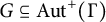 $G \subseteq \operatorname {\mathrm {Aut}}^+(\Gamma )$
.
$G \subseteq \operatorname {\mathrm {Aut}}^+(\Gamma )$
.
Note that if $\Gamma $
is an undirected hypergraph, then
$\Gamma $
is an undirected hypergraph, then $\Gamma ' = \Gamma ^*$
in Definition 5.4. In this case,
$\Gamma ' = \Gamma ^*$
in Definition 5.4. In this case, $\operatorname {\mathrm {Aut}}^+(\Gamma )$
is the maximal quantum group that acts faithfully on both
$\operatorname {\mathrm {Aut}}^+(\Gamma )$
is the maximal quantum group that acts faithfully on both $C^*(\Gamma )$
and
$C^*(\Gamma )$
and $C^*(\Gamma ^*)$
in a compatible way. Further, since
$C^*(\Gamma ^*)$
in a compatible way. Further, since $\operatorname {\mathrm {Aut}}^+(\Gamma )$
acts maximally, we can view
$\operatorname {\mathrm {Aut}}^+(\Gamma )$
acts maximally, we can view $\operatorname {\mathrm {Aut}}^+(\Gamma )$
as the quantum symmetry group of
$\operatorname {\mathrm {Aut}}^+(\Gamma )$
as the quantum symmetry group of $C^*(\Gamma )$
in the sense of Theorem 5.7.
$C^*(\Gamma )$
in the sense of Theorem 5.7.
6 Open questions
In this last section, we present some remaining open questions. First, it would be interesting to compute quantum automorphism groups of concrete hypergraphs such as the following example.
Question 6.1 What is the quantum automorphism group of the complete hypergraph $\Gamma := (V, \mathcal {P}(V) \times \mathcal {P}(V))$
with source map
$\Gamma := (V, \mathcal {P}(V) \times \mathcal {P}(V))$
with source map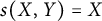 $s(X, Y) = X$
and range map
$s(X, Y) = X$
and range map $r(X, Y) = Y$
.
$r(X, Y) = Y$
.
Since $\Gamma $
has no multi-edges, we know that
$\Gamma $
has no multi-edges, we know that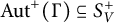 $\operatorname {\mathrm {Aut}}^+(\Gamma ) \subseteq S_V^+$
by Corollary 3.17. However, it remains open if this inclusion is proper or if
$\operatorname {\mathrm {Aut}}^+(\Gamma ) \subseteq S_V^+$
by Corollary 3.17. However, it remains open if this inclusion is proper or if $\operatorname {\mathrm {Aut}}^+(\Gamma ) = S_V^+$
holds.
$\operatorname {\mathrm {Aut}}^+(\Gamma ) = S_V^+$
holds.
Additionally, it remains open if we obtain a new class of quantum groups or if each quantum automorphism group of a hypergraph can be realized as the quantum automorphism group of a possibly larger classical graph.
Question 6.2 Let $\Gamma $
be a hypergraph. Can one construct a classical graph
$\Gamma $
be a hypergraph. Can one construct a classical graph $\Gamma '$
such that
$\Gamma '$
such that $\operatorname {\mathrm {Aut}}^+(\Gamma ) = \operatorname {\mathrm {Aut}}^+_{\operatorname {\mathrm {Bic}}}(\Gamma ')$
or
$\operatorname {\mathrm {Aut}}^+(\Gamma ) = \operatorname {\mathrm {Aut}}^+_{\operatorname {\mathrm {Bic}}}(\Gamma ')$
or $\operatorname {\mathrm {Aut}}^+(\Gamma ) = \operatorname {\mathrm {Aut}}^+_{\operatorname {\mathrm {Ban}}}(\Gamma ')$
?
$\operatorname {\mathrm {Aut}}^+(\Gamma ) = \operatorname {\mathrm {Aut}}^+_{\operatorname {\mathrm {Ban}}}(\Gamma ')$
?
It also remains open if there exists a Banica version for the quantum automorphism group of hypergraphs in the following sense.
Question 6.3 Is there an alternative definition of quantum automorphism groups of hypergraphs that reduces to $\operatorname {\mathrm {Aut}}^+_{\operatorname {\mathrm {Ban}}}(\Gamma )$
in the case of classical directed graphs and that acts on
$\operatorname {\mathrm {Aut}}^+_{\operatorname {\mathrm {Ban}}}(\Gamma )$
in the case of classical directed graphs and that acts on $C^*(\Gamma )$
in a natural way?
$C^*(\Gamma )$
in a natural way?
Finally, Hahn [Reference Hahn18] characterized hypergraphs for which the classical automorphism group of their product is given by the wreath product of their automorphism groups.
Question 6.4 Can the results of Hahn be generalized to the quantum setting using the free wreath product of Bichon [Reference Bichon5]?
Acknowledgements
The author thanks his supervisor Moritz Weber for many helpful comments and suggestions. This article is based on parts of the author’s Ph.D. thesis. This work is a contribution to the SFB-TRR 195.

 Open access

