

Introduction
Emergency medicine is a dynamic field with rapidly evolving practices. New evidence has greatly altered practice over the last 20 years. The specialty of emergency medicine may be an ideal specialty for studying many acute emergencies with a broad mix of patients and conditions to analyse. However, there are relatively few emergency physicians in Canada who dedicate substantial amounts of their career to conducting research. Furthermore, obtaining salary support for clinician scientists is increasingly difficult in Canada. Traditional sources, including the Canadian Institutes of Health Research and the Heart and Stroke Foundation of Canada, offer few salary awards, making these opportunities for funding extremely competitive. Research funding for operating grants is likewise competitive, with recent success rates around 20%. Given that emergency physicians are competing against clinician scientists from all fields of medicine, it is imperative that emergency medicine clinician scientists be optimally prepared to achieve success.
Writing grants, manuscripts, and presenting scientific findings are some of the critical skills required of clinician scientists. However, these traits are not intuitive, and they are not routinely taught to potential scientists. Further, it is not clear what skills and knowledge are essential for Canadian emergency medicine clinician scientists. There are essential stepping stones to success in research that have been defined in other specialties, which include mentorship, graduate training, salary support, and infrastructure.Reference Phillipson 1 , Reference Phillipson 2 Adding to the complexity of the current research training landscape are variations in training programs, degrees offered, and expertise available for mentorship.
Objectives
We sought to 1) identify recommended practices for training and mentoring clinician scientists, 2) characterize facilitators and barriers for Canadian emergency medicine scientists, and 3) develop pragmatic recommendations to improve and standardize emergency medicine clinician scientist training programs to promote growth and success in research within emergency medicine in Canada.
Methods
Design
We assembled an expert panel (six members) and advisory committee (four members), which included emergency physician representation from across Canada and the Society for Academic Emergency Medicine (SAEM) in the United States. We systematically reviewed the existing literature on research training and mentoring, conducted a national survey of emergency medicine researchers, and assessed other emergency medicine training programs. Using these data, we developed preliminary recommendations via a consensus process with experts in emergency medicine research. We refined our recommendations based on discussions at the national Academic Symposium held at the Canadian Association of Emergency Physicians (CAEP) 2014 National Conference, in Ottawa.Reference Stiell 3 , Reference Vaillancourt 4 , Reference Calder 5
Systematic literature review
We sought to answer the question, “How can emergency medicine programs enhance research training and mentoring to maximize the number of trained clinician scientists in emergency medicine?” We sought to find any articles, including emergency physician research fellows, trainees, junior faculty, or researchers who described research training, graduate training, or mentoring. The primary outcome of the included studies included a program evaluation or description. Secondary outcomes of interest were assessing productivity of clinical researchers. With the assistance of an information scientist, we developed a search strategy using a combination of predefined MeSH headings and free text words (Appendix 1). We searched MEDLINE and Embase using Ovid from 1946 to January 9, 2014, restricting language to English or French. All potentially relevant citations were independently reviewed by at least two authors (JP, CS or SS), and disagreements were resolved by a third vote. We hand-searched reference lists of the retrieved studies for additional relevant citations. We excluded editorials or letters to the editor. The resulting articles were assessed for relevance, and common themes were abstracted independently by two investigators (CS, SS).
Survey
Through an iterative process, we developed a 39-item online survey instrument designed to assess four broad categories from clinical researchers: 1) time and financial compensation; 2) satisfaction of each aspect of career; 3) facilitators to research success; and 4) barriers to conducting research. Prior to distribution, we piloted the survey among panel members for ease of use and understanding. The names and email addresses of Canadian emergency medicine clinician researchers were generated from an environmental scan of all 17 Canadian university emergency medicine training programs, including their respective teaching hospitals (median 3, ranging from 1-6 hospitals per university), conducted separately by the Academic Section of CAEP from August to December 2013. The email was sent to the department heads, resident directors, and research directors at each institution. Non-responders were contacted by telephone if they did not reply to repeated emails. Answers appearing to be incorrect or incomplete were questioned at the source. This environmental scan requested the names and contact information for clinician scientists in emergency medicine, and this generated a list of 93 possible clinician researchers. All sites provided responses. The names on this list were further assessed by our panel to identify any known missing researchers. No additional names were added. The final survey instrument was administered online using Fluid Surveys (Fluidware Corporation, Ottawa, ON). A pre-notification email was distributed 2 days before the survey instrument, which included assurances about privacy and restricted release of data in aggregate form. Respondents received up to three email reminders at 2-week intervals. We analysed the resulting data using descriptive statistics reporting means, medians, and proportions, as appropriate.
We sought to review the criteria of the SAEM research training certificate and determine whether these criteria fulfil the requirements identified on the systematic review, address issues in our survey, and are applicable to a Canadian setting.
Recommendation development
We derived the recommendations by group consensus in an iterative fashion after review and discussion of the existing literature, our survey data, and review of the SAEM research fellowship training guidelines. Once refined, we presented the draft recommendations for discussion at the Academic Symposium at the CAEP 2014 Annual Conference, which was attended by 80 individuals, including emergency medicine clinical researchers, educators, administrators, attending emergency physicians, and residents. The final recommendations were subsequently revised based on the feedback from the approach previously listed.
Results
Systematic literature review
Our search yielded 1,246 citations. After eliminating duplicate citations (n=379) and articles that did not meet eligibility criteria (n=830), 37 full-text articles were retrieved for complete review (Figure 1). Twenty-seven were subsequently excluded, leaving 10 articles included in the review. A summary of the included articles is listed in Table 1, with the results stratified by focus (emergency medical services, education, and general emergency medicine). All of the included articles were opinion pieces or summaries from consensus conferences, and data revolved around five themes: 1) creating training opportunities; 2) ensuring adequate protected time; 3) salary support; 4) infrastructure; and 5) mentorship.Reference Kaji, Lewis and Beavers-May 6 - Reference Lubavin, Langdorf and Blasko 15
Flow of article selection from systematic literature review of MEDLINE and Embase.

Results of a systematic Literature Review on the question: “How can emergency medicine programs enhance research training and mentoring to maximize the number of trained clinician scientists in emergency medicine?”

Survey
We achieved a 72% (67/93) response rate for our national survey. Respondents represented 8 of the 10 provinces and the Yukon Territory. Of the respondents, 42 (63%) self-identified themselves as clinical researchers. The others categorized themselves as educators, education researchers, clinicians (with research on the side), emergency medical service directors, or administrators. Table 2 describes the characteristics of the clinical researchers. Over two-thirds (n=29) of the clinical researchers were FRCPC-EM-trained (i.e., 5-year emergency medicine residency administered by the Royal College of Physicians and Surgeons of Canada) or had FRCPC-Pediatrics EM fellowship training (i.e., 4-year pediatrics residency with 2-3 years of pediatric emergency fellowship). About one-quarter (n=10) were CFPC-EM-trained (i.e., 2-year family medicine residency followed by 1-year of emergency medicine residency administered by the College of Family Physicians of Canada). Approximately two-thirds (n=29) stated that they have graduate research training. A master’s degree in epidemiology was the most common training (51%).
Characteristics of clinical researchers (n=42)
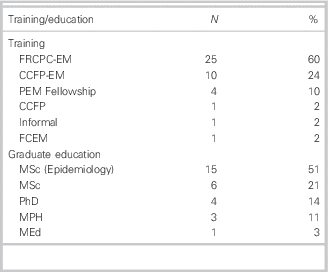
FRCPC-EM=5 year Royal College of Physicians and Surgeons of Canada Emergency trained
CCFP-EM=2 year Family Medicine Residency plus 1 year Emergency Medicine Training
PEM Fellowship= 4 years Pediatrics Residency plus 2 years Emergency Medicine Training
CCFP=2 years of Family Medicine Residency
FCEM=Fellow of the College of Emergency Medicine (United Kingdom)
MSc=Master’s in science
PhD=Doctorate
MPH=Master’s in public health
MEd=Master’s in education
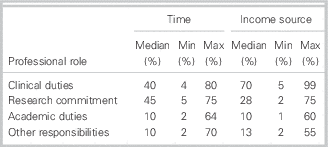
The median number of hours worked per week was 50, ranging from 40 to 80 hours for those who identified themselves as clinical researchers. Research accounted for the largest amount of time spent when compared to all work-related activities at 45% (range: 5%-75%). Clinical duties were approximately 40% (range: 4%-80%) with academic activities accounting for another 10% (range: 2%-64%). This contrasted sharply with income source where 70% (range: 5%-99%) of their income coming from clinical duties with just 28% (range: 2%-75%) for research (Table 3). Respondents indicated that they received support in the form of office space, administrative support, and methodology support. Eighty-six percent of respondents receive some salary support for research. Most researchers (81%) belonged to an affiliated research institute.
The median percent time commitment and median income percent of clinical researchers stratified by professional roles (n=42)
We assessed career satisfaction for clinical researchers (Table 4). We found that 83% were either satisfied or very satisfied with the research aspect of their career. This compared with 88% who were satisfied or very satisfied with the clinical aspect of their career and 63% who were satisfied or very satisfied with the education aspect (e.g., teaching medical students, residents, or fellows) of their career. In response to the question on work and life balance, over half (55%) were either satisfied or very satisfied; however, one-quarter of respondents were either dissatisfied or very dissatisfied. We found that 76% reported that they would probably or definitely conduct research within 5 years, and only 5% indicated that they would probably not be involved in research in 5 years. The single largest constraint to conducting research was lack of funding (e.g., salary support to grant funding), followed by the time required for clinical commitments. Factors felt to be positive contributors to having a clinical research career were salary support, research training (including an advanced graduate degree), mentorship, and infrastructure.
Career satisfaction among emergency medicine clinician researchers (n=42)

International emergency medicine research fellowship programs
The only structured emergency medicine research training program we identified was that of SAEM. The panel discussed this program with one of the leaders, Dr. Judd Hollander, who was also invited to participate on our expert panel. SAEM provides a certificate of training to research fellows who complete a 2-year program at an accredited SAEM training site. An advanced research degree is required plus additional emergency medicine research training to train emergency care researchers to conduct research using a broad range of study designs and analytical techniques. They must meet specific objectives covering 15 broad categories. Fellows are required to take an idea from conception through ethics approval, submit a manuscript related to their main emergency care research project, and write and submit a large grant to a national granting agency. 16 , 17
Academic Symposium
Several issues were brought forward and discussed at the symposium. Specifically, attendees stressed the importance of mentorship, project management, importance of a period of training after graduate training (i.e., a post-doctoral period) to consolidate knowledge and skills prior to obtaining a first academic appointment. This enables the young investigator the opportunity to develop an academic track record in publications, grants, awards, and abstracts, which ultimately will make them more competitive. Additional feedback from academic symposium attendees suggested that the CAEP Academic Section should be the body to endorse these training centres. It was felt that accreditation or more complex review of centres or individuals, similar to SAEM, would not be feasible. There was also considerable debate concerning the amount of grant funding we should suggest as a reasonable target to demonstrate success. It was recognized that some areas of research are considerably more difficult to obtain high dollar amounts of funding, and high levels of funding may not be required to complete impactful research (e.g., qualitative research and medical education research). As such, a specific funding target was removed from the panel recommendations. It was also recognized that smaller centres could formally link with other centres to ensure that their trainees obtained all elements for Phase I and Phase II training.
Discussion
Although very little data were available in the literature to inform recommendations to create formal standards for postgraduate emergency medicine research training programs, the existing information had a common theme of strong mentorship, protected time, graduate training, and infrastructure as being very important for clinician scientists. The SAEM fellowship training program attempts to standardize the training of clinician researchers to a high level of functionality.Reference Ling 13 , Reference Love, Coates and Santen 14 Although the SAEM program is very rigorous, this program does not provide for a period of consolidation following graduate degree completion. Strong mentorship has been encouraged in the literature during this transitional time period.Reference Phillipson 2
Results from our survey suggested that emergency medicine clinician scientists strongly believe that research training with a graduate degree, salary support, and mentorship are all strong factors providing a positive impact on a clinical research career. Conversely, obtaining grants was the single biggest constraint to conducting research, with clinical commitments a distant second. Without strong research training, including an advanced degree and ongoing mentorship, it is extremely difficult to obtain large grants to support research studies and build a research program. It is even more difficult to obtain one of the few available salary support awards.
Our recommendations consolidate the information from our systematic review, the survey, the SAEM research fellowship program, and feedback from the Academic Symposium at CAEP 2014. We believe that the SAEM research fellowship is comprehensive, and, as such, most of the learning topics within their list of mandatory learning requirements are applicable in Canada. Some aspects of the SAEM program need to be adapted for Canada. We believe that different training centres could formalize links in order to adequately cover all core learning topics, without requiring research trainees to relocate. We also believe that submission of at least one grant to any peer-reviewed provincial or national organization would be adequate, and we did not set a specific dollar amount to this application. Further, additional postgraduate training, at either the same or a different institution, is valuable and will help consolidate the theory learned in the first 2 years of research training. Salary support, protected time (i.e., reduced number of shifts, administrative, and teaching), and infrastructure are critical to the success of research trainees.
Recommendations
a. Two phases of research training
Our panel endorses the importance of a structured research training program. It was agreed that this optimally would consist of two phases: Phase I: Fellowship/graduate training in research (2 years) and Phase II: Research consolidation (1–3 years).
Phase I: Fellowship/graduate training will consist of formal research training, including an advanced research degree (e.g., master’s in epidemiology). In addition to the classroom education, practical knowledge needs to be acquired through mentorship and experience. A list of 15 learning topics for Phase I: Fellowship/graduate training in research is outlined in Figure 2. Protected time by ensuring limited clinical shifts, limited teaching and administrative responsibilities, and providing a research salary were felt to be essential for success. Workspace with appropriate infrastructure (e.g., computer, Internet access, software, information technology, reference software, statistical software, and access to information specialists) was also deemed to be very important. During this time, trainees would learn how to bring a clinical question from hypothesis generation, protocol development, through ethics review, implementation, analysis, presentation, and manuscript production.
Objectives for Phase I: research fellowship/graduate training.

Phase II: Research consolidation training will consist of intense mentoring to transition to independent research. This period will be for 1–3 years at the discretion of the individual and their mentor. It is important that the new clinician scientists be registered with their academic institutions as postdoctoral trainees during this period, such that their “academic clock” (i.e., the date used for determining eligibility for salary awards and academic promotion) is not activated until they are ready to be fully independent clinician researchers. Figure 3 lists the requirements for Phase II training, which focuses on grant writing, abstract presentations, manuscript production, building a network, national and international exposure, and consolidation of the 15 learning topics in Phase I training.
Objectives for Phase II: research consolidation training.

b. Create a Canadian Association of Emergency Physicians endorsement process
We recommend that CAEP initiate an endorsement process for institutions wishing to offer advanced research training. This would include a specific plan on how to ensure that clinical research trainees meet the objectives for Phase I and Phase II. This will allow for standardization of training, production of high quality researchers, and increase our academic productivity and our capacity in research.
Limitations
Although the literature search strategy we used was comprehensive, it is possible we could have missed relevant articles or articles from the grey literature. The survey was completed by Canadian emergency medicine clinician scientists who were identified by others as part of another survey. The strategy of having physicians self-identify as being a clinical researcher may introduce some bias. This could have resulted in some prolific researchers not identifying themselves as a clinician scientist. This could skew the results toward fewer hours spent on research and less financial support. However, this was mitigated by the experienced researchers on the panel assessing the list. We assessed the results of respondents not self-identifying as clinical researchers for time spent conducting research, which found a median of 10% of their time spent conducting research. Hence, it is very unlikely that we misclassified clinician researchers. It is also possible that some researchers were not identified by the environmental scan. This could result in some coverage error, where some of our target population did not have a chance to respond. We believe that the emergency medicine research community in Canada is sufficiently small that the members of our panel would have been able to identify most, if not all, prolific researchers not identified by the scan. Finally, our recommendations were developed based on the literature, survey data, and input from stakeholders; however, it is possible that key components not brought forward by those attending the academic symposium or by those from whom we sought feedback were missed.
Conclusions
Very sparse data are available regarding optimal training to become a clinician scientist in emergency medicine. Common themes to facilitate research training included 1) creating training opportunities; 2) ensuring adequate protected time; 3) salary support; 4) infrastructure; and 5) mentorship. Our survey identified obtaining a graduate research degree, salary support, and mentorship as strong factors that positively impact a clinical research career. We recommend that the CAEP Academic Section create a process to endorse research training programs. These programs should include two phases: 1) Fellowship/graduate training, including an advanced research university degree and 15 core learning areas; and 2) Research consolidation, including a further 1-3 years with an emphasis on mentorship and scholarship production. It is anticipated that clinician scientists completing Phase I and Phase II training at a CAEP Academic Section-endorsed site(s) will be independent researchers with a higher likelihood of securing external peer-reviewed funding and be able to have a meaningful external impact in emergency medicine research.
Acknowledgements
All of the recommendations from the CAEP 2015 Academic Symposium are published in the Executive Summary and articles from each panel.Reference Stiell 3 , Reference Vaillancourt 4 , Reference Calder 5 We are thankful to all of the physicians who took the time to complete our survey. We gratefully acknowledge the invaluable assistance of the following individuals: Dr. Stephen Freedman (Department of Epidemiology, University of Calgary, Calgary, Alberta); Dr. Robert Green (Department of Emergency Medicine, Dalhousie University, Halifax, Nova Scotia); Angela Marcantonio (Ottawa Hospital Research Institute, Ottawa, Ontario); and Catherine Clement (Ottawa Hospital Research Institute, Ottawa, Ontario).
Competing interests: None declared.
Supplementary material
To view supplementary material for this article, please visit http://dx.doi.org/10.1017/cem.2015.63



