


Even in the early course of psychosis, high expressed emotion (EE) is present, on average, in over half of the patient–carer relationships (Reference Patterson, Birchwood and CochranePatterson et al, 2000; Reference Bachmann, Bottmer and JacobBachmann et al, 2002; Reference Heikkila, Kartsson and TaiminenHeikkila et al, 2002). However, early high EE seems to predict relapse less reliably and with a smaller effect size than later on (Reference Butzlaff and HooleyButzlaff & Hooley, 1998). The few early-course EE-based intervention studies found disappointing results compared with interventions delivered later in the course (Reference Gleeson, Jackson, Stavely, McGorry and JacksonGleeson et al, 1999; Reference Pilling, Bebbington and KuipersPilling et al, 2002). Thus, it is argued that family interventions may need to be adapted to be effective at the first episode (Reference Gleeson, Jackson, Stavely, McGorry and JacksonGleeson et al, 1999). Studying EE at the first episode might therefore contribute to an understanding of its genesis and the requirements of interventions at this stage. There is growing evidence that a carer appraisal model (Reference Folkman and LazarusFolkman & Lazarus, 1985) is helpful in understanding how EE develops (Reference Scazufca and KuipersScazufca & Kuipers, 1996; Reference Barrowclough and ParleBarrowclough & Parle, 1997; Reference Patterson, Birchwood and CochranePatterson et al, 2000; Reference Barrowclough, Lobban and HattonBarrowclough et al, 2001; Reference Hooley and CampbellHooley & Campbell, 2002). Psychological appraisals are evaluative judgements about situations: primary appraisal involves an assessment of the event's relevance; secondary appraisal involves an evaluation of coping options. Among the range of options, emotion-focused strategies such as avoidant coping tend to be used when the primary appraisal of a stressor exceeds coping resources. Outcomes of appraisal then include negative emotional states such as distress and depression. High-EE behaviour (e.g. criticism and emotional overinvolvement) then may be an attempt to reduce the perceived stressfulness of the caring role. The present study set out to investigate some aspects of a carer appraisal model: in primary appraisal it was predicted that high-EE carers would perceive more social functioning deficits and think more frequently about subjective burden; in secondary appraisal it was predicted that high-EE carers would use more avoidant coping; with reference to the outcomes of appraisal it was predicted that high-EE carers would experience more distress and depression and that appraisal factors would be more powerful predictors of EE than illness characteristics.
METHOD
Participants
Patients were included if they had an ICD–10 diagnosis of psychosis as produced by the CATEGO program (World Health Organization, 1992), were aged 16–65 years, gave informed consent for interview and were English-speaking. Patients were excluded if they had gross organic disease or moderate to severe learning disability. Carers were included if they were living with or in close contact (at least once per week) with the patient for at least 3 months before interview, were the key carer (i.e. the person with highest amount of face-to-face contact), were English-speaking and gave informed consent for interview.
Assessments
Patients
A standard form was used to collect information on socio-demographic and illness-related characteristics from the patient. The data recorded included age, gender, ethnicity, age of onset and illness length. SCAN 1.1 (World Health Organization, 1992) was used to assess patient psychopathology. Illness onset was defined as the first emergence of delusions, hallucinations or formal thought disorder as defined by SCAN. Illness length was judged by interviewing the patient, cross-referencing with case notes and checking information with the carer. It was defined as the time since onset, that is, the interval between the first SCAN-defined positive psychotic symptom (delusion, hallucination or formal thought disorder) and the SCAN patient interview. The computer program CATEGO5 was used to process data entered from the SCAN schedules. The program provides diagnoses, a total score for psychopathology, scores for neurotic, depressive, manic and psychotic symptom dimensions and scores for 70 individual symptom groups.
Carers
A standard form was used to collect information on carers’ socio-demographic characteristics. The data recorded included age, gender, ethnicity, relationship to the patient, whether the carer lived with the patient and the number of hours in face-to-face contact. The Camberwell Family Interview (CFI; Reference Vaughn and LeffVaughn & Leff, 1976) was used to assess EE. Relatives were rated as high on EE if they made six or more critical comments, revealed any hostility or were rated 3 or more on emotional overinvolvement. D.R. was trained in the assessment of EE by Dr Christine Vaughn, reaching the acceptable reliability levels of critical comments, 0.92; hostility, 0.80; emotional overinvolvement, 1.00; overall EE, 0.82 (by the π coefficient).
The Experience of Caregiving Inventory (ECI; Reference Szmukler, Burgess and HerrmanSzmukler et al, 1996) is a 66-item instrument assessing the subjective experience of caregiving in eight areas covering difficult behaviour, negative symptoms, stigma, problems with services, effects on the family, need to back up, dependency and loss, and two areas of positive experiences of caring (positive personal experiences and good aspects of the relationship). The instrument measures how often carers have thought about each issue over the last month before interview, on a scale of 0=never, 1=rarely, 2=sometimes, 3=often, 4=nearly always.
The Cope instrument (Reference Carver, Scheir and WeintraubCarver et al, 1989; Reference Carver and ScheierCarver & Scheier, 1994) is a multidimensional inventory to assess the different ways in which people respond to stress in terms of different coping styles. The instrument was used to measure how often carers used each of the coping styles when they experienced stress and problems related to the patient, on a scale of 1 never, 2=rarely, 3=sometimes, 4=a lot. The total score for each scale is found by adding the items together. In the present study, the avoidant coping sub-scales used were behavioural disengagement, mental disengagement, alcohol/drug use and denial. The instrument can be used in a shorter form (Reference Carver and ScheierCarver & Scheier, 1994) and the present study used two questions per scale instead of four.
The Social Functioning Scale (SFS; Reference Birchwood, Smith and CochraneBirchwood et al, 1990) measures areas of functioning that are crucial for maintaining individuals with schizophrenia in the community. Seven areas are covered by the SFS; employment, social withdrawal, pro-social activities, recreation, interpersonal functioning, perceived independence competence and perceived independence performance. A total score is calculated by adding all the sub-scales.
The General Health Questionnaire (GHQ; Reference Goldberg and WilliamsGoldberg & Williams, 1988) 28-item version was scored in the current study as 0, 1, 2, 3; it was also scored as 0, 0, 1, 1 to provide the definition of a case of 5 or more. It has a total score and four subscales of somatic symptoms, anxiety and insomnia, social dysfunction and severe depression. The Beck Depression Inventory (BDI; Reference Beck and SteerBeck & Steer, 1987) is a 21-item self-report instrument designed to assess the severity of depression. It has a total score and four levels of severity (none, mild, moderate, severe).
Analysis
The main outcome variable was EE, dichotomised as described above. Univariate analysis involved the following tests: t-test, Mann–Whitney U, χ2 and Mantel–Haenszel. The CFI interrater reliability used the intraclass correlation coefficient for ordinal EE ratings and the κ statistic for the dichotomised classification. Multivariate analysis consisted of logistic regressions used in a forward stepwise manner. Explanatory variables were entered in blocks in a hierarchical manner to increase the simplicity and generalisability of the model. Total questionnaire scores were entered before sub-scale totals.
RESULTS
Patient characteristics
Forty-six patients participated and the mean age was 31.0 years (s.d.=11.5, median=28.1, range 1.75–64.1): 27 (59%) were male and 25 (55%) were White. The mean age of onset was 30.2 years (s.d.=11.3, median=27.3, range 17.5–62.3) and the mean length of illness from first positive symptoms was 43.4 weeks (median 18.0, range 1.3–322.9). Thirty-two (70%) patients were diagnosed with schizophrenia or schizoaffective disorder, six (13%) with bipolar disorder and eight (17%) with other psychoses. Twenty of 46 were in-patients when interviewed and the remaining 26 were seen shortly after discharge, at hospital, in a community team base or at home. Three (6%) of 49 patients who were in contact with a carer refused to participate in the study when approached. Two other patients refused to participate but gave permission for their carer to be assessed. Thus the patient refusal rate was 5/51 (10%) for the EE analysis, including patient symptom (SCAN) data. No details are available on the patients who refused.
Carer characteristics
Forty-six carers participated and their mean age was 47.2 years (s.d. 14.4, median=49.0, range 19.0–72.0): 33 (72%) were female and 26 (57%) were White. Twenty-eight (61%) were parents, nine (20%) were partners, two (4%) were siblings, four (9%) were other relatives and three (7%) were friends. Carers’ face-to-face contact with the patient lasted a mean of 27.5 h per week (s.d. 14.4). The EE interviews took place on average 1 week after the patient assessment. The median length of time between the first positive symptom and the EE assessment was 19 weeks (mean=44 weeks). The carers of three patients who had consented refused to take part themselves (refusal rate=6%). Carers who refused and consented were similar, except that the three carers who refused were all Black, compared with only a third of the consenting group.
Quality of the CFI
Interrater reliability between the first and second authors (D.R. and E.K.) was checked from nine randomly selected audiotaped interviews. High intraclass correlations were obtained for all three key EE scales tested as continuous variables: critical comments, 0.88; hostility, 0.79 (hostility coded as 0=0, 1=1, 2=1, 3=2); emotional overinvolvement, 0.74. Moderate κ scores were found for the dichotomised scales of overall EE (0.55).
Levels of EE
Nearly half (44%) of the carers were rated as high on EE, with one-third (33%) showing high critical comments, nearly one-third (30%) hostile and just over one-fifth (22%) displaying high emotional overinvolvement. The mean number of critical comments for the sample was 6.7 (s.d.=8.3, range 0–32), the mean hostility score was 0.6 (s.d.=1.1) and the mean emotional overinvolvement score was 1.7 (s.d.=1.2).
Expressed emotion and patient illness characteristics
There was no association of high EE with diagnosis, illness length, age of onset, total severity of symptoms or the severity of symptom dimensions (neurotic, depressive, manic and psychotic) or SCAN symptom type.
Expressed emotion and carer appraisal
Both total scores and sub-scales of carer predictor variables were tested for their association with EE, because research in the later course of psychosis has found that different facets of carer appraisal are differentially associated with EE (Reference Barrowclough and TarrierBarrowclough & Tarrier, 1990; Reference Smith, Birchwood and CochraneSmith et al, 1993).
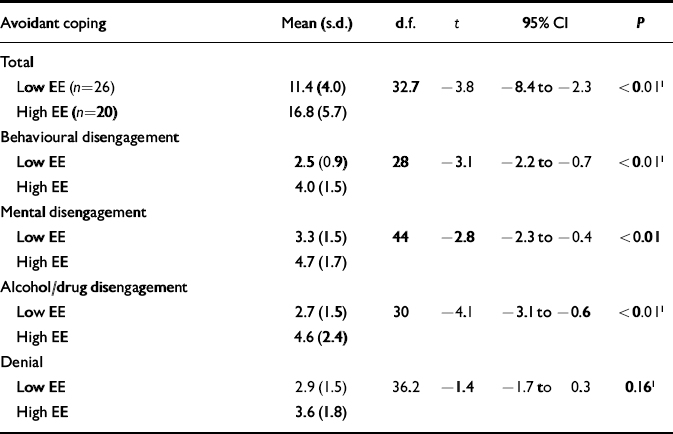
Avoidant coping. Table 1 shows that the avoidant coping total score and high EE were associated at the 1% level. Of the individual avoidant coping styles, all except denial were significantly associated.
Avoidant coping and expressed emotion (EE)
| Avoidant coping | Mean (s.d.) | d.f. | t | 95% CI | P |
|---|---|---|---|---|---|
| Total | |||||
| Low EE (n=26) | 11.4 (4.0) | 32.7 | -3.8 | -8.4 to -2.3 | <0.011 |
| High EE (n=20) | 16.8 (5.7) | ||||
| Behavioural disengagement | |||||
| Low EE | 2.5 (0.9) | 28 | -3.1 | -2.2 to -0.7 | <0.011 |
| High EE | 4.0 (1.5) | ||||
| Mental disengagement | |||||
| Low EE | 3.3 (1.5) | 44 | -2.8 | -2.3 to -0.4 | <0.01 |
| High EE | 4.7 (1.7) | ||||
| Alcohol/drug disengagement | |||||
| Low EE | 2.7 (1.5) | 30 | -4.1 | -3.1 to -0.6 | <0.011 |
| High EE | 4.6 (2.4) | ||||
| Denial | |||||
| Low EE | 2.9 (1.5) | 36.2 | -1.4 | -1.7 to 0.3 | 0.161 |
| High EE | 3.6 (1.8) |
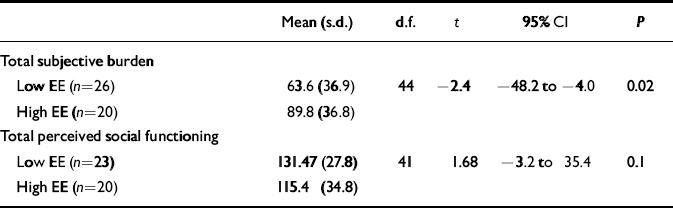
Subjective burden, perceived social functioning and EE. Table 2 shows that total subjective burden was significantly greater in the high EE group. Of the individual components of the burden measure, high EE was significantly associated with ‘difficult behaviour’ (P<0.01) and ‘loss’ (P<0.05); there was a trend towards associations with ‘dependence’ (P=0.07) and ‘problems with services’ (P=0.07), but no association with perceived ‘negative symptoms’, ‘stigma’, ‘effect on the family’, or ‘need to back up’.
Subjective burden, perceived social functioning and expressed emotion (EE)
| Mean (s.d.) | d.f. | t | 95% CI | P | |
|---|---|---|---|---|---|
| Total subjective burden | |||||
| Low EE (n=26) | 63.6 (36.9) | 44 | -2.4 | -48.2 to -4.0 | 0.02 |
| High EE (n=20) | 89.8 (36.8) | ||||
| Total perceived social functioning | |||||
| Low EE (n=23) | 131.47 (27.8) | 41 | 1.68 | -3.2 to 35.4 | 0.1 |
| High EE (n=20) | 115.4 (34.8) |
Overall, high EE was not associated with total patient social functioning as rated by the carer. However, each of the seven sub-scales of perceived social functioning was also tested against EE, given that some areas of social functioning have been found previously to be related to EE (Reference Barrowclough and TarrierBarrowclough & Tarrier, 1990; Reference Smith, Birchwood and CochraneSmith et al, 1993). Such information may also contribute to theoretical models of EE and guide clinical intervention. Areas of social functioning have not been examined previously in relation to EE at the first episode of psychosis. Six out of the seven sub-scales were in the expected direction, but only interpersonal functioning was significantly associated with high EE (P<0.01).
Expressed emotion and distress in carers. High EE was not associated with carers’ BDI total score, GHQ total score, GHQ case status or the four GHQ sub-scales.
Multivariate analysis
A logistic regression was carried out to establish the strongest predictor of high EE. Avoidant coping was the best independent predictor (odds ratio=1.2, likelihood ratio=10.9, P=0.005). The variables entered into the logistic regression were those that were significant at the 5% level in the univariate analysis, namely burden total, loss, difficult behaviour, interpersonal social functioning, avoidant coping total, behavioural disengagement, mental disengagement and alcohol/drug disengagement. In the stepwise forward regression, avoidant coping rendered the social functioning and the burden variables redundant in terms of predicting EE status (this was also the case when the variables were all entered as a post hoc check, with a non-stepwise method of entry).
DISCUSSION
The main aim of the present study was to investigate if some aspects of a carer appraisal model were valid at the first episode of psychosis, using variables that had not been looked at before in this phase of the illness but that have been found useful later in the course (Reference Barrowclough and TarrierBarrowclough & Tarrier, 1990; Reference Smith, Birchwood and CochraneSmith et al, 1993; Reference Scazufca and KuipersScazufca & Kuipers, 1996). The number of statistical tests used to evaluate the different aspects of the model was high, which means that the results should be interpreted with some caution and need replication. On the other hand, the results were all based on a priori hypotheses and the number of significant findings was considerably higher than chance would predict.
Are patient illness-related characteristics associated with EE at first-episode psychosis?
There was no association between EE and illness-related factors (symptom type and severity, age of onset, illness length and diagnosis). The absence of a link between EE and diagnosis agrees with a previous early-phase EE study (Reference Linszen, Dingemans and NugterLinszen et al, 1997). As noted by Heikkila et al (Reference Heikkila, Kartsson and Taiminen2002), links between EE and symptom attributes have received only occasional support in the literature.
Is avoidant coping in carers linked to EE in first-episode psychosis?
Our hypothesis that more avoidant coping would be reported by high-EE carers early in the course of psychosis was supported, just as in the later course of psychosis (Reference Scazufca and KuipersScazufca & Kuipers, 1999). Indeed, the multivariate analysis showed that avoidant coping was the strongest predictor of EE. The avoidant coping link with EE is consistent with the perception of high-EE carers that their situational stress exceeds their capacity to deal with it. This supports the view that maladaptive cognitive appraisals may maintain a high EE response (Reference Barrowclough and ParleBarrowclough & Parle, 1997), and perhaps even that it is has a role in causing it. It may also be a way of dealing with the loss (Reference Patterson, Birchwood and CochranePatterson et al, 2000).
Is the subjective burden of carers linked to EE at first-episode psychosis?
In line with our hypothesis, high-EE carers had significantly higher subjective burden scores, just as they do later in the course of psychosis (Reference Smith, Birchwood and CochraneSmith et al, 1993; Reference Scazufca and KuipersScazufca & Kuipers, 1996). High-EE behaviour may therefore be a way of coping with the burden from the start of caring.
Are carers’ perceptions of the patient's social functioning linked to EE at first-episode psychosis?
Our hypothesis that first-episode high-EE carers would perceive more overall social functioning deficits in patients was not supported. This differs from the associations seen later in the course of psychosis (Reference Barrowclough and TarrierBarrowclough & Tarrier, 1990; Reference Smith, Birchwood and CochraneSmith et al, 1993; Reference Scazufca and KuipersScazufca & Kuipers, 1996). However, a perception of impaired interpersonal functioning was clearly associated with high EE. Smith et al (Reference Smith, Birchwood and Cochrane1993) also found that the SFS scores were lower in their high EE group. The association between EE and social functioning may be stable across illness phases but the specific areas of associated social functioning may evolve over the course of the disorder.
Is EE at first-episode psychosis linked to increased levels of distress in carers?
Our hypothesis that first-episode high-EE carers would be more generally distressed than low-EE carers was not supported and neither was carer depression linked to EE status. These findings are in line with some other studies (Reference Barrowclough, Tarrier and JohnstonBarrowclough et al, 1996) but not all (Reference Shimodera, Mino and InoueShimodera et al, 2000). It is possible that distress has not had time to generalise in high-EE carers at this early stage.
Implications for a theoretical model of EE
High-EE carers appear to perceive their caring situation as more stressful than low-EE carers, although perhaps not their life as a whole. They typically experience considerable subjective burden, perceive social problems in the patient and try to avoid the perceived stressful situation that they are facing. Folkman & Lazarus (Reference Folkman and Lazarus1985) have distinguished between primary and secondary appraisal. The latter is essentially the process of coping. In these relatives, the core appraisal is the loss of goals, some of which may have been vicarious, and some personal. Nevertheless, the loss is made more poignant because it is incomplete: the person involved in the loss is still present and their problems demand to be coped with in ways that may exceed the capacity of the carer. Carer coping attempts may then escalate into high-EE behaviour: criticism, rejection (avoidance), overprotection, or all three. Given that the median illness length in the present study was only 19 weeks, the appraisals leading to high EE may develop quite quickly or perhaps even arise from responses to the patient's behaviour during the premorbid period (Reference Gleeson, Jackson, Stavely, McGorry and JacksonGleeson et al, 1999).
Different components of high EE are often present in the same carer at the same time, suggesting that a common core appraisal might drive high EE. This could be conceptualised as a catastrophic appraisal of the role of caring for the patient. The precise cognitive content of any core appraisal remains uncertain at this time. Barrowclough & Parle (Reference Barrowclough and Parle1997) favour threat as the basis of the appraisal, which in Folkman & Lazarus's model can denote future loss. Patterson et al (Reference Patterson, Birchwood and Cochrane2000), however, emphasise ‘loss’ that is perceived to have already taken place: high-EE behaviour is motivated by the high-EE carers’ increased need to cope with loss. Emotional overinvolvement might be an attempt to restore the patient, whereas criticism might function by devaluing what has been lost.
The present study had insufficient power to differentiate between these hypotheses, but did confirm that loss is linked to EE at the first episode. Our results also suggest that the classes of appraisal variable associated with EE (e.g. burden, coping and social functioning) may remain the same across illness phases. However, the specific components may change in time. Finally, because primary appraisals are dynamic, they may respond both to the social environment and to perceptions of coping options. Thus, an appraisal model is able to account for the well-established instability of EE at the first episode (Reference Patterson, Birchwood and CochranePatterson et al, 2000) but appraisal and EE levels may both change in response to the further experience of caring.
Our study shows that from the start of caring high-EE carers appraise their caring situation as more stressful than low-EE carers. Why this should be so is an important question. The greater use of avoidant coping implies that it might derive from inadequate coping skills (Reference Barrowclough, Tarrier and JohnstonBarrowclough et al, 1996; Reference Scazufca and KuipersScazufca & Kuipers, 1999). There are many hints in the literature about other factors likely to contribute to appraisal. At an individual carer level, these include a perception that patients’ unwanted behaviour is done on purpose (Reference Hooley and CampbellHooley & Campbell, 2002); a more negative carer self-concept (Reference Hooley and HillierHooley & Hillier, 2000); and less empathy (Reference Giron and Gomez-BeneytoGiron & Gomez-Beneyto, 1998). At a situational level, factors contributing to stressful appraisal might include being in a smaller family (Reference Leff, Wig and BediLeff et al, 1990) and gender role-based notions of caring (Reference Bentsen, Boye and MunkvoldBentsen et al, 1996). Some patient behaviours (e.g. negative symptoms) may also more easily lend themselves to misinterpretation by carers.
Potential for therapeutic intervention
The main clinical implication of the present study is the importance of targeting carers’ appraisal, particularly at the first episode. Our results confirm the importance of lowering burden, reducing avoidant coping and improving carers’ understanding of patients’ social behaviour. Further, the results identify particular areas of burden (especially difficult behaviours), social functioning (especially interpersonal functioning) and types of avoidant coping (especially behavioural disengagement) that may be particularly important in reducing early high EE. Individual cognitive–behavioural therapy, as is now commonly used successfully for a wide range of emotional disorders, might also be effective in reducing high EE in carers.
In first-episode services for psychosis, many patients may be in close contact with carers, some of whom will already be finding their caring role difficult. It would be helpful in the longer term if services were able to consider the impact of care in first episodes. Offering selected families appropriate support, even if difficult to implement in practice, would probably reduce both carer morbidity and patient relapse in the long term. As such, it may become an important component of early intervention services.
Clinical Implications and Limitations
CLINICAL IMPLICATIONS
-
▪ Even at the first episode of psychosis, 43% of carers had high levels of expressed emotion (EE) linked to high levels of burden, avoidant coping and perceived poor interpersonal functioning in patients.
-
▪ High EE was not related to patient illness factors, carer distress or depression.
-
▪ First-episode services should aim to take account of the fact that carers’ appraisal of their role is likely to affect the future course of any difficulties, and consider designing interventions to deal directly with it.
LIMITATIONS
-
▪ This was a cross-sectional study and hence is not able to look at outcomes.
-
▪ Only 20 people had high levels of EE, which limited the scope of the analysis.
-
▪ The sample was from one geographical area of south London (Croydon) and this may limit its generalisability to other populations.
Acknowledgements
Thanks are due to the 26 wards and community mental health teams of the. South London and Maudsley National Health Service Trust from which patients. and carers were recruited. D.R. was supported by a Medical Research Council. studentship.




eLetters
No eLetters have been published for this article.