


Introduction
A growing body of work indicates that employee voice is an important strategy individuals targeted with workplace interpersonal mistreatment (e.g., workplace bullying, incivility, and generalized workplace abuse; Lim & Cortina, Reference Lim and Cortina2005) use to cope with such negative experiences (Cortina & Magley, Reference Cortina and Magley2003; Zhong, Lian, Hershcovis & Robinson, Reference Zhong, Lian, Hershcovis and Robinson2023). In the context of workplace interpersonal mistreatment, employee voice is called remedial voice, which encompasses the various ways in which employees targeted with such harmful behaviors (henceforth targets) speak up/out to others about their experiences with the aim of resolving the situation (Cortina & Magley, Reference Cortina and Magley2003; Harlos, Reference Harlos2010; Olson-Buchanan & Boswell, Reference Olson-Buchanan and Boswell2002, Reference Olson-Buchanan and Boswell2008; Oyet & Withey, Reference Oyet and Withey2022; Zheng, Wu, Park, Yu & Yang, Reference Zheng, Wu, Park, Yu and Yang2023b). Remedial voice may take various forms including support-seeking voice (sharing one’s experiences of the interpersonal mistreatment with colleagues; Cortina & Magley, Reference Cortina and Magley2003), informal voice or confronting voice (voicing target’s dissatisfaction to the mistreatment perpetrator; Cortina & Magley, Reference Cortina and Magley2003; Olson-Buchanan & Boswell, Reference Olson-Buchanan and Boswell2002), or formal or whistleblowing voice (reporting the experience to an organizational member with formal organizational authority to engage in dispute resolution, including supervisors, human resource professionals, and/or union representatives; Cortina & Magley, Reference Cortina and Magley2003; Olson-Buchanan & Boswell, Reference Olson-Buchanan and Boswell2002). While these forms of remedial voice represent conceptually distinct ways of responding to mistreatment, the present study focuses specifically on formal or whistleblowing voice (hereafter referred to as remedial voice). Our review of extant research on remedial voice indicates a concentrated focus on individuals’ decisions to report experienced interpersonal mistreatment through formal organizational channels. Such formal remedial voice may occur through mechanisms including alternative dispute resolution systems, open–door policies, and formal grievance procedures (Harlos, Reference Harlos2010; Olson-Buchanan & Boswell, Reference Olson-Buchanan and Boswell2008). This study adopts a similar focus because formal or whistleblowing voice is the form of remedial voice most consistently theorized and examined in prior research, providing a strong foundation for theoretical extension. By building on this established body of work, the present study seeks to deepen and refine understanding of how individuals respond to interpersonal mistreatment when engaging formal organizational processes. Focusing on this well-developed form of remedial voice facilitates conceptual precision and cumulative knowledge development, while offering a grounded basis for extending and adapting these insights to other, less formal forms of remedial voice (e.g., support–seeking or confronting voice) in future research.
Research on remedial voice indicates that it presents implications for both the targets of workplace interpersonal mistreatment and their organizations. For instance, remedial voicing is posited to be an important way through which organizations obtain valuable information that can help in addressing the occurrence of workplace interpersonal mistreatment (Harlos, Reference Harlos2010). For targets, it is suggested that remedial voice can help cope with and/or mitigate the negative consequences of workplace interpersonal mistreatment (Hershcovis, Cameron, Gervais & Bozeman, Reference Hershcovis, Cameron, Gervais and Bozeman2018; Olson-Buchanan & Boswell, Reference Olson-Buchanan and Boswell2008; Zhong et al., Reference Zhong, Lian, Hershcovis and Robinson2023). However, it can be risky (Oyet & Withey, Reference Oyet and Withey2022), leading to outcomes such as low performance ratings (Klaas & DeNisi, Reference Klaas and DeNisi1989), the exacerbation of perceived mistreatment (Harlos, Reference Harlos2001), and reduced psychological well-being and family-related outcomes (e.g., rumination; Oyet & Chika-James, Reference Oyet and Chika-James2025). Some research has found that targets who engage in remedial voice also experience higher withdrawal rates compared to those who do not engage in remedial voice (Boswell & Olson-Buchanan, Reference Boswell and Olson-Buchanan2004).
As research on remedial voice continues to grow, further work is needed that broadens our understanding of this workplace phenomenon (Klaas, Olson-Buchanan & Ward, Reference Klaas, Olson-Buchanan and Ward2012; Olsen-Buchanan, Reference Olson-Buchanan, Finkelstein and De Bruin2025; Oyet & Chika-James, Reference Oyet and Chika-James2025). One area in need of continued attention is our understanding of the outcomes of remedial voice (Oyet & Chika-James, Reference Oyet and Chika-James2025). At present, much research attention has been paid to identifying the determinants of remedial voice (Cortina & Magley, Reference Cortina and Magley2003; Harlos, Reference Harlos2010; Klaas et al., Reference Klaas, Olson-Buchanan and Ward2012; Oyet & Withey, Reference Oyet and Withey2022; Zheng et al., Reference Zheng, Wu, Park, Yu and Yang2023b) with limited attention paid to its outcomes. Moreover, studies that have examined its outcomes have focused mostly on understanding the relationship between remedial voice and a limited number of direct outcomes, such as low performance ratings, exacerbation of the perceived mistreatment, and/or their work and job withdrawal (Boswell & Olson-Buchanan, Reference Boswell and Olson-Buchanan2004; Harlos, Reference Harlos2001; Klaas & DeNisi, Reference Klaas and DeNisi1989). Although these studies have helped extend our understanding of the outcomes of remedial voice, we argue that remedial voicing can present both direct/proximal and distal outcomes for targets, and that to broaden current knowledge and understanding of this workplace phenomenon, more work is needed that investigates this notion. Such research can help to shed light on the extent of its effects – both positive and negative. Indeed, recent research, which found that remedial voice in the workplace can present negative implications in the family context (Oyet & Chika-James, Reference Oyet and Chika-James2025), highlights the need to consider outcomes that extend beyond the proximal. Prior to this study, research on remedial voice had been limited to its direct outcomes, and primarily those that occur in the workplace. Furthermore, research had focused on consequences to targets with scarce attention paid to examining targets’ own actions and attitudes following remedial voice, and the factors that predict these outcomes.
In this study, we build on the abovementioned recent research by investigating targets’ subsequent workplace behaviors as a distal outcome of remedial voicing. We also explore their psychological well-being following remedial voice, as a proximal mechanism that links their remedial voicing to their workplace behaviors. Reporting interpersonal mistreatment plausibly implies an expectation that organizational representatives to whom the situation was reported will take appropriate action to address it (Harlos, Reference Harlos2010), and as such, potentially mitigate the need for targets to engage in subsequent negative workplace behaviors in response to their interpersonal mistreatment experience. Yet, research indicates that remedial voicing carries risk for the target (Oyet & Withey, Reference Oyet and Withey2022) and has the potential to prompt negative intrapersonal processes such as rumination (Oyet & Chika-James, Reference Oyet and Chika-James2025), which have been found in other studies to be associated with individuals’ negative workplace behaviors (Denson, Pedersen, Friese, Hahm & Roberts, Reference Denson, Pedersen, Friese, Hahm and Roberts2011). Scant research has examined whether remedial voicing is associated with targets’ subsequent workplace behaviors. Nevertheless, it has been theorized as a possibility (Klaas, Reference Klaas1989), with limited empirical research (Boswell & Olson-Buchanan, Reference Boswell and Olson-Buchanan2004). Furthermore, research has yet to examine the psychological pathways and processes linking targets’ remedial voice to their subsequent behaviors.
Our goal in this study is to address the above-noted research gaps by investigating whether remedial voice is associated with targets’ subsequent negative workplace behaviors and to explicate how this relationship may occur. Specifically, we investigate targets’ enacted workplace interpersonal deviance as a distal outcome of remedial voice and examine whether and how targets’ rumination related to remedial voicing serves as a negative intrapersonal process that underpins this relationship.
We focus on workplace interpersonal deviance given past research, which suggests that rumination can lead to individuals’ enacted interpersonal aggression (Bushman, Bonacci, Pedersen, Vasquez & Miller, Reference Bushman, Bonacci, Pedersen, Vasquez and Miller2005; Denson et al., Reference Denson, Pedersen, Friese, Hahm and Roberts2011; Denson, Pedersen & Miller, Reference Denson, Pedersen and Miller2006; Pedersen et al., Reference Pedersen, Denson, Goss, Vasquez, Kelley and Miller2011). We also investigate how the interaction of targets’ remedial voicing and their perceptions of the perpetrator’s power relates to their rumination, and consequently, to their enacted workplace interpersonal deviance. Our theoretical arguments draw from research on the social sharing of emotional experiences (Rimé, Noël & Philippot, Reference Rimé, Noël and Philippot1991; for a review, see Rimé, Philippot, Boca & Mesquita, Reference Rimé, Philippot, Boca, Mesquita, Stroebe and Hewstone1992) and are grounded on the goal progress theory (Martin & Tesser, Reference Martin, Tesser and Wyer1996) and ego depletion theory (Baumeister, Bratslavsky, Muraven & Tice, Reference Baumeister, Bratslavsky, Muraven and Tice1998; Muraven & Baumeister, Reference Muraven and Baumeister2000). We explicate the theoretical basis for our arguments subsequently.
This study adopts a process-based perspective in which proximal psychological responses and distal behavioral outcomes unfold as part of an ongoing reaction to interpersonal mistreatment. In doing so, it advances research on remedial voice in two main ways. First, it demonstrates empirically that remedial voice can be associated with distal outcomes (e.g., targets’ workplace interpersonal deviance) through its proximal outcomes (e.g., rumination). Specifically, we posit a positive relationship between targets’ remedial voice and their workplace interpersonal deviance with their rumination representing an underlying pathway linking these constructs.
Second, extending this line of research and, as such, the literature on remedial voice, this study further clarifies why remedial voicing may relate to targets’ workplace interpersonal deviance by identifying a boundary condition – perceived perpetrator power. We propose that this interaction between remedial voice and perceived perpetrator power strengthens the effect of targets’ rumination on their interpersonal deviance behaviors.
Overall, this study underscores the importance of examining both proximal and distal outcomes associated with remedial voice. We contend that doing so facilitates a deeper knowledge and understanding of targets’ remedial voice experiences.
Theoretical background and hypothesis development
To provide a coherent explanation of how remedial voice relates to both psychological and behavioral outcomes, we adopt a process-based framework that integrates complementary theoretical perspectives. Specifically, research on the social sharing of emotional experiences and goal progress theory explains the emergence of rumination as a proximal response, while ego depletion theory explains how sustained rumination translates into distal behavioral outcomes.
To explain how remedial voice is associated with targets’ rumination, we draw on research on the social sharing of an emotional experience and apply propositions from the goal progress theory (Martin & Tesser, Reference Martin, Tesser, Uleman and Bargh1989). Research on the social sharing of an emotional experience indicates that sharing about such experiences is associated with various negative intrapersonal processes, such as ruminating about the experience, which can present subsequent negative consequences for the individual (Rimé et al., Reference Rimé, Noël and Philippot1991; for a review, see Reference Rimé, Philippot, Boca, Mesquita, Stroebe and Hewstone1992). Research in the area theorizes that the social sharing of an emotional experience involves the re-evocation of the emotional experience (Pennebaker, Zech & Rimé, Reference Pennebaker, Zech, Rimé, Stroebe, Hansson, Stroebe and Schut2001). Furthermore, it is argued that because this re-evocation is associated with the activation of the mental images and physical and other feelings associated with the emotional experience, the individual will ruminate about the experience (Pennebaker et al., Reference Pennebaker, Zech, Rimé, Stroebe, Hansson, Stroebe and Schut2001; Rimé et al., Reference Rimé, Noël and Philippot1991). Experienced interpersonal mistreatment is described as a negative emotional experience (Baranik, Wang, Gong & Shi, Reference Baranik, Wang, Gong and Shi2017; Bunk & Magley, Reference Bunk and Magley2013; Yan et al., Reference Yan, Cheng, Xiao, Wang, Du, Li and Song2024), and as such, remedial voicing about such an experience can be conceptualized as the social sharing of a negative emotional workplace experience to an organizational representative who can intervene on behalf of the target (Oyet & Chika-James, Reference Oyet and Chika-James2025).
While theorizing from the literature on the social sharing of an emotional experience demonstrates the link to targets’ rumination following remedial voice, the goal progress theory (Martin & Tesser, Reference Martin, Tesser, Uleman and Bargh1989) provides further clarification on why targets may ruminate following remedial voicing. According to the goal progress theory, the failure to accomplish or make progress toward attaining an important goal is the main reason for individuals’ rumination (Martin & Tesser, Reference Martin, Tesser, Uleman and Bargh1989). Goal failure is posited to increase access to goal-related information, which, being readily activated, increases the likelihood that the individual will dwell on and will process the information associated with the unmet goal (i.e., rumination; Martin & Tesser, Reference Martin, Tesser, Sanna and Chang2006). Extant research suggests support for the argument that goal failure is associated with rumination (Deng et al., Reference Deng, Lam, Guan and Wang2021; Roberts et al., Reference Roberts, Watkins and Wills2013). For example, research has demonstrated that when individuals were prompted with an unresolved personal goal, they subsequently reported a heightened frequency of goal-related cognitions, reflecting increased rumination (Roberts et al., Reference Roberts, Watkins and Wills2013). Recent research argues that targets engage in remedial voice with the goal of reasserting control over the experienced interpersonal mistreatment situation (Oyet & Chika-James, Reference Oyet and Chika-James2025; Zhong et al., Reference Zhong, Lian, Hershcovis and Robinson2023). Furthermore, research (Oyet & Chika-James, Reference Oyet and Chika-James2025) posits that remedial voicing, by activating the negative mental images and physical and other feelings that targets experienced during the mistreatment, may trigger a sense of loss of control for them, consequently thwarting their goal of reasserting control over the situation and leading them to ruminate. Past research (Wu & Zhou, Reference Wu and Zhou2023) suggests that the sense of loss of control is associated with work-related rumination. In this study, we draw from research on the social sharing of an emotional experience and apply the goal progress theory to postulate that the sense of loss of control experienced by targets when they ruminate following remedial voicing may be perceived as goal failure (i.e., failure to reassert control over the interpersonal mistreatment situation). The perceived failure will increase access to goal-related information, thereby increasing the probability that targets will dwell on and process the information associated with the unmet goal (i.e., ruminate; Martin & Tesser, Reference Martin, Tesser, Sanna and Chang2006).
To explain the link between targets’ rumination and their workplace interpersonal deviance, we draw on ego depletion theory (Baumeister et al., Reference Baumeister, Bratslavsky, Muraven and Tice1998; Muraven & Baumeister, Reference Muraven and Baumeister2000). Ego depletion is described as ‘a temporary reduction in the capacity of the self or willingness to engage in volitional action caused by the prior exercise of volition’ (Baumeister et al., Reference Baumeister, Bratslavsky, Muraven and Tice1998, p. 1253). Ego depletion theory posits that following the experience of a stressor, individuals’ self-regulation resources could become depleted as they consume these resources in an effort to manage their stress-related emotions and thoughts (Zheng et al., Reference Zheng, Ni, Liu and Zhang2023a), resulting in negative outcomes including negative workplace behaviors (e.g., aggression; Denson et al., Reference Denson, Pedersen, Friese, Hahm and Roberts2011). Applying this theory, we posit that when targets fixate on and process the information related to the unmet goal of reasserting control of the mistreatment situation through remedial voicing (i.e., ruminate), they deplete the self-control resources they need to control their emotions, impulses, and behavior (Denson et al., Reference Denson, Pedersen, Friese, Hahm and Roberts2011), such that they will be unable to control themselves from engaging in enacted workplace interpersonal deviance.
Viewed together, these theoretical perspectives provide an integrated explanation of how remedial voice relates to both proximal psychological responses and distal behavioral outcomes, with each proposed relationship reflecting a specific stage in this broader process. Overall, the relationships proposed in this study reflect a theoretically directional, process–based model in which cognitive and behavioral responses to mistreatment unfold over time, rather than a sequence of discrete, temporally isolated events. Accordingly, rumination is conceptualized as a proximal psychological response, whereas workplace interpersonal deviance represents a more distal behavioral manifestation that emerges as part of this ongoing process.
Remedial voice
Research on remedial voice draws from Hirschman’s (1970) exit–voice–loyalty framework, which conceptualizes voice as a discretionary and constructive response to dissatisfaction and objectionable workplace conditions (Harlos, Reference Harlos2010; Morrison, Reference Morrison2011; Withey & Cooper, Reference Withey and Cooper1989). As noted earlier, within this broader voice domain, remedial voice refers to actions through which employees directly communicate experiences of mistreatment to resolve them (Olson-Buchanan & Boswell, Reference Olson-Buchanan and Boswell2008), though an estimated between 30 and 75% choose not to engage in such behavior (Harlos, Reference Harlos2010). This variability underscores a central insight in the voice literature: employees are frequently confronted with a decision to speak up or remain silent when they possess relevant information or concerns (Morrison, Reference Morrison2011, Reference Morrison2014), and this decision reflects a meaningful behavioral threshold shaped by perceived risks, efficacy, and contextual constraints (Morrison, Reference Morrison2011, Reference Morrison2023). Accordingly, voice has been conceptualized as a choice between enactment and silence rather than solely as a matter of frequency (Morrison, Reference Morrison2014). More recent work suggests that variation in voice frequency may also reflect differences in opportunity structures, access to information, and exposure to voice channels, rather than solely the decision to engage in voice (Morrison, Reference Morrison2023). Consistent with this perspective, the present study adopts a dichotomous conceptualization of remedial voice to capture whether individuals enact voice in response to mistreatment.
Remedial voicing and target’s rumination
Rumination is defined as ‘a negative, persistent and repetitive self-focused thought pattern that is fixated on the meaning, causes, and consequences of stressors encountered by the individual’ (Rosen & Hochwarter, Reference Rosen and Hochwarter2014, p. 179). In the context of remedial voice, past research has theorized that remedial voice may result in reduced rumination about experienced interpersonal mistreatment (Cortina & Magley, Reference Cortina and Magley2003). For instance, Cortina and Magley (Reference Cortina and Magley2003) theorized that the act of disclosing one’s thoughts and emotions about experienced workplace interpersonal mistreatment – a negative emotional experience – may alleviate the need to ruminate about the experience, leading to outcomes such as improved subjective well-being. While this perspective has been widely accepted, it remained largely untested. Furthermore, it does not fully account for alternative insights from related literatures on the outcomes of sharing about negative emotional experiences. For example, research by Pennebaker et al. (Reference Pennebaker, Zech, Rimé, Stroebe, Hansson, Stroebe and Schut2001) suggests that sharing about emotional experiences – such as workplace interpersonal mistreatment – may be associated with increased rumination. Building on this alternative perspective, more recent research has provided a contrasting view of the relationship between remedial voice and rumination. Specifically, Oyet and Chika-James (Reference Oyet and Chika-James2025), in their examination of the link between remedial voice and targets’ family–related outcomes, argued that remedial voice may be associated with increased, rather than reduced, rumination. Drawing on research on the social sharing of emotional experiences (Rimé et al., Reference Rimé, Noël and Philippot1991; for a review, see Reference Rimé, Philippot, Boca, Mesquita, Stroebe and Hewstone1992) and goal progress theory (Martin & Tesser, Reference Martin, Tesser and Wyer1996), the authors proposed that engaging in remedial voice can reactivate aspects of the mistreatment experience, including mental images, emotions, and physiological responses, and that this reactivation is associated with a sense of loss of control over the situation, representing a failure to achieve the goal of remedial voice – namely, regaining control over the situation (Zhong et al., Reference Zhong, Lian, Hershcovis and Robinson2023). As a result, remedial voicing may intensify, rather than alleviate, rumination. Consistent with these arguments, Oyet and Chika-James (Reference Oyet and Chika-James2025) found that remedial voice was positively associated with targets’ rumination, which in turn related to various family–related outcomes. Building on this theoretical and empirical work, the present study adopts this perspective in examining the link between remedial voice and rumination. Furthermore, we argue that the re-evocation of the aspects of the mistreatment experience is not limited to a single recall of the event; rather, it repeatedly activates the mental images, as well as the physical and affective states associated with the experience (Roberts et al., Reference Roberts, Watkins and Wills2013). Through this repeated activation, the experience remains cognitively accessible over time, thereby fostering a sustained pattern of rumination (Pennebaker et al., Reference Pennebaker, Zech, Rimé, Stroebe, Hansson, Stroebe and Schut2001; Rimé et al., Reference Rimé, Noël and Philippot1991). Taken together, research on the social sharing of emotional experiences and goal progress theory suggests that engaging in remedial voice may activate cognitive processing of the mistreatment experience. Under such conditions, targets are more likely to repeatedly think about and process the unresolved experience, thereby increasing rumination. We posit that although interpersonal mistreatment itself constitutes an episodic trigger, the processes set in motion through social sharing – namely, the repeated re-evocation and sustained cognitive activation of the experience – are inherently temporally extended. Thus, rumination in this context reflects an ongoing, recursive cognitive process rather than a discrete response confined to a single event. Therefore, we hypothesize that:
Hypothesis 1: Remedial voice will be associated with target’s rumination about experienced interpersonal mistreatment.
Remedial voicing and perpetrator’s power: An interaction effect on target’s rumination
Research indicates that perpetrator power plays a significant role in remedial voice (Cortina & Magley, Reference Cortina and Magley2003; Harlos, Reference Harlos2010). Studies that have examined the role of perpetrator power in this context have focused mainly on explicating how hierarchical (i.e., position) power relations between the perpetrator of interpersonal mistreatment and the target influence the target’s decision to remedial voice. Emerging theorizing and findings from past research in the area suggest that a target in a lower position relative to the perpetrator of the mistreatment may be less inclined to remedial voice about experienced mistreatment, usually due to a fear of reprisal for doing so (Cortina & Magley, Reference Cortina and Magley2003; Harlos, Reference Harlos2010). However, extant research has yet to explore what happens when targets choose to remedial voice and the perpetrator is of higher power than the target (i.e., an interaction effect), and how this interaction relates to targets’ intrapersonal processes and subsequent behaviors.
We extend the above line of research by addressing this research gap. Specifically, we examine whether target’s rumination, activated as argued previously during the process of remedial voicing, is heightened when targets engage in remedial voice following experienced interpersonal mistreatment from a perpetrator who wields power over the target.
Extant research on interpersonal mistreatment indicates that mistreatment experienced at the hands of someone wielding more power than targets can be associated with more severe outcomes for them, compared to outcomes experienced when targeted by peers (Cortina & Magley, Reference Cortina and Magley2009; Lim, Cortina & Magley, Reference Lim, Cortina and Magley2008; Reio, Reference Reio2011). Considering that relative power inhibits remedial voicing when the perpetrator is of higher power than the target due to fear of negative repercussions (Harlos, Reference Harlos2010), it makes sense to expect that when targets persist in remedial voicing and the perpetrator is of a higher relative power (i.e., an interaction effect), they may experience more severe outcomes, such as heightened rumination. We posit that this enhanced rumination may occur because the triggered loss of sense of control would be heightened for targets, given that a perpetrator of higher relative power can negatively impact their desired outcomes compared to those of lower relative power (Rupp & Cropanzano, Reference Rupp and Cropanzano2002). Indeed, findings from past research suggest that targets appraise workplace interpersonal mistreatment from powerful perpetrators more negatively (Cortina & Magley, Reference Cortina and Magley2009). These findings from these literatures suggest the reasonableness in expecting that remedial voicing about interpersonal mistreatment when the perpetrator wields more power than targets will be associated with targets’ enhanced rumination. As targets fixate on trying to make sense of the mistreatment, including how it made them feel, they will do so while cognizant that the perpetrator can affect their desired outcomes negatively, which altogether will heighten their loss of sense of self-control over the situation, consequently thwarting their goal of reaffirming their sense of control over the mistreatment situation. These arguments are consistent with the findings from research on the social sharing of an emotional experience and goal progress theory propositions, as well as recent research on remedial voice, all of which together suggest that targets may experience a sense of loss of control during remedial voicing as the mental images and the negative physiological reactions and emotions experienced during the mistreatment are re-evoked. As discussed earlier, the reduced sense of self-control may be perceived as goal failure by targets who engage in remedial voice as a way to reassert control over the mistreatment situation (Zhong et al., Reference Zhong, Lian, Hershcovis and Robinson2023). These intrapersonal processing of the situation will increase access to goal-related information, thereby increasing the probability that the target will dwell on and process the information associated with the unmet goal (i.e., ruminate; Martin & Tesser, Reference Martin, Tesser, Sanna and Chang2006). Taking the above discussion into consideration, we hypothesize that:
Hypothesis 2: Perceived perpetrator’s power will moderate the relationship between targets’ remedial voice and targets’ rumination such that the positive relationship between remedial voice and rumination will be stronger when perceived perpetrator power is high.
Remedial voicing, perceived perpetrator power, and target’s workplace interpersonal deviance: The mediating role of target’s rumination
Empirical evidence links rumination to a variety of negative outcomes (Jostmann, Karremans & Finkenauer, Reference Jostmann, Karremans and Finkenauer2011; Takano, Sakamoto & Tanno, Reference Takano, Sakamoto and Tanno2011). Rumination has been associated with the reduced ability and motivation to generate effective solutions to, and resolve interpersonal problems (Takano et al., Reference Takano, Sakamoto and Tanno2011), poor social problem-solving skills, and maladaptive interpersonal behaviors (Lyubomirsky & Nolen-Hoeksema, Reference Lyubomirsky and Nolen-Hoeksema1995; Lyubomirsky, Tucker, Caldwell & Berg, Reference Lyubomirsky, Tucker, Caldwell and Berg1999; Watkins & Baracaia, Reference Watkins and Baracaia2002). Of relevance to this study, research has linked rumination about interpersonal mistreatment to individuals’ aggressive behaviors (Bushman et al., Reference Bushman, Bonacci, Pedersen, Vasquez and Miller2005; Denson et al., Reference Denson, Pedersen, Friese, Hahm and Roberts2011, Reference Denson, Pedersen and Miller2006; Pedersen et al., Reference Pedersen, Denson, Goss, Vasquez, Kelley and Miller2011). Findings from this stream of research indicate that the link between mentally reflecting on a negative event and individuals’ subsequent aggressive behaviors may be explained by psychological processes such as aggressive cognitions, physiological arousal, and anger-related affect (Pedersen et al., Reference Pedersen, Denson, Goss, Vasquez, Kelley and Miller2011) and reduced self-regulation (Denson et al., Reference Denson, Pedersen, Friese, Hahm and Roberts2011). Regarding the ego-depletion process, Denson et al. (Reference Denson, Pedersen, Friese, Hahm and Roberts2011) theorized and found that rumination associated with anger-inducing provocation decreases self-control, consequently increasing individuals’ aggression.
Previously, we argued that when targets’ remedial voice and the perpetrator of the mistreatment are of high perceived power, the targets will experience high rumination. Extending this argument, we further posit that targets’ heightened rumination thus experienced will be strongly associated with targets’ workplace interpersonal deviance. We argue that as targets ruminate under condition of remedial voice and high perceived perpetrator power, they may expend much self-regulation resources as they make sense of the situation. This depletion may be associated with decreased self-control, making them more susceptible and/or less able to control impulsive behaviors, including engaging in negative workplace behaviors (Denson et al., Reference Denson, Pedersen, Friese, Hahm and Roberts2011), leading to maladaptive behaviors that represent more distal manifestations of this ongoing process. We argue that such negative workplace behaviors may take the form of workplace interpersonal deviance. In essence, targets’ rumination is proposed as a mediating process linking the interaction between remedial voicing and perceived perpetrator power to targets’ workplace interpersonal deviance. Why would targets engage in workplace interpersonal deviance given these conditions? We posit that targets, in their impaired self-regulatory capacity due to rumination (Denson et al., Reference Denson, Pedersen, Friese, Hahm and Roberts2011), may engage impulsively in workplace interpersonal deviance as a way to possibly achieve the goal of regaining some sense of control – given the perceived failure to do so through remedial voicing. We expect that they may seek a sense of control in two main ways. First, they may do so through displaced aggression. Past research indicates that individuals may engage in displaced aggression as a way to regain a sense of control, including when their goals are thwarted (Lagios, Restubog, Schilpzand, Kiazad & Aquino, Reference Lagios, Restubog, Schilpzand, Kiazad and Aquino2025; Leander & Chartrand, Reference Leander and Chartrand2017). Second, given research which indicates that individuals may retaliate as a way to regain a sense of personal control (Bies, Tripp & Kramer, Reference Bies, Tripp, Kramer, Giacalone and Greenberg1997; Jones, Reference Jones and Greenberg2010), we posit that targets may engage in interpersonal deviance against the perpetrator to achieve this goal. Although targets can retaliate directly and overtly against the perpetrator, we argue that while pursuing a sense of control over the mistreatment situation, targets may count the costs of engaging in actions that can be clearly considered retaliatory or revenge by the higher power perpetrator, and as such may choose less overt forms of interpersonal deviance. As noted earlier, perpetrators of perceived higher power are seen as having control over important outcomes desired by targets (Cortina and Magley, Reference Cortina and Magley2009; Lim et al., Reference Lim, Cortina and Magley2008; Reio, Reference Reio2011). Furthermore, they have the ability to counter-retaliate (Aquino, Tripp & Bies, Reference Aquino, Tripp and Bies2006; Bies & Tripp, Reference Bies, Tripp, Griffin, Collins and O’leary-kelly1998). Past research indicates that targets of mistreatment typically avoid overt retaliation against a higher power perpetrator given the risks involved in doing so (Bies & Tripp, Reference Bies, Tripp, Griffin, Collins and O’leary-kelly1998; Lian et al., Reference Lian, Brown, Ferris, Liang, Keeping and Morrison2014). Consequently, we expect targets to retaliate using less overt interpersonal deviance against the perpetrator, to facilitate the reduced risk of further harm or mistreatment from the perpetrator.
Our arguments are also grounded in the ego depletion theory (Baumeister et al., Reference Baumeister, Bratslavsky, Muraven and Tice1998; Muraven & Baumeister, Reference Muraven and Baumeister2000), which suggests that experiencing a workplace stressor and trying to manage the associated stress-related emotions, thoughts, and actions can cause individuals’ self-regulation resources to become depleted, leading to negative and impulsive workplace behaviors (e.g., aggression; Denson et al., Reference Denson, Pedersen, Friese, Hahm and Roberts2011). Therefore, drawing on ego depletion theory, we assert that when targets experience heightened rumination, they will expend self-regulation resources such that they become strongly susceptible to impulsive behaviors, including engaging in workplace interpersonal deviance (Denson et al., Reference Denson, Pedersen, Friese, Hahm and Roberts2011). And so, taking the theory and empirical research findings discussed above together, we hypothesize that:
Hypothesis 3: Perceived perpetrator power will moderate the relationship between targets’ remedial voice and targets’ rumination, such that this relationship is stronger when perceived perpetrator power is high, and targets’ rumination will, in turn, be positively related to workplace interpersonal deviance.
Method
Respondents and procedure
Prior to data collection, institutional research ethics approval was obtained. Respondents were recruited through Prolific Academic, an on-demand, self-service data collection platform that links researchers to individuals interested and willing to participate in research studies. Prolific was deemed appropriate for the present study because our theoretical model concerns workplace processes that require participants to be actively embedded in organizational contexts. The platform allows researchers to target respondents based on employment-related criteria, including full-time work status, thereby ensuring that participants have sufficient and ongoing exposure to workplace dynamics, interpersonal interactions, and opportunities to engage in voice behavior. Although the sample is not nationally representative of all workers in the United States and Canada, it is well suited for testing theory-driven hypotheses among full-time workers with relevant workplace experience. Prolific has increasingly been used in organizational research as a reliable source of working adult participants, with prior research suggesting that it provides comparatively high data quality relative to other online panels (Douglas, Ewell & Brauer, Reference Douglas, Ewell and Brauer2023; Peer, Rothschild, Gordon, Evernden & Damer, Reference Peer, Rothschild, Gordon, Evernden and Damer2022). At the same time, we acknowledge that the sample is geographically limited to North America and may not fully capture variations in cultural norms, labor market structures, and organizational practices present in other regions. Such differences may influence both the expression of voice behaviors and the experience of rumination. Therefore, caution is warranted in generalizing the findings beyond similar Western, full-time employment contexts.
Respondents were individuals over 18 years old, working full-time, and residing in the United States or Canada. This sampling frame is appropriate for the study’s objectives, as remedial voice and work-related rumination are phenomena that inherently require participants to be actively embedded in organizational contexts. Restricting the sample to full-time workers enhances construct validity by ensuring that respondents have sufficient exposure to workplace dynamics, interpersonal interactions, and opportunities to engage in voice behaviors. With a goal of implementing a temporal separation of focal variables of interest (Podsakoff, Podsakoff, Williams, Huang & Yang, Reference Podsakoff, Podsakoff, Williams, Huang and Yang2024), data were collected at two time points 1 week apart using online surveys hosted on Qualtrics (a web-based tool for conducting research surveys). Informed consent was obtained from respondents prior to completing each survey. Respondents’ survey at Time I was matched their survey at Time II using their Prolific Academic identification number. Targets’ remedial voice, rumination, perceived perpetrator power, and all control variables were measured at Time I, while targets’ enacted workplace interpersonal deviance was measured at Time II. Respondents were compensated $3.25US for each survey completed. A quality check of the data was conducted following each survey and involved assessing the data for patterned responses, percentage of survey completed, and missing responses on variables of interest. Following these procedures at Time I yielded an initial sample of 333 respondents (n = 375). Using the same data quality check procedures from Time I, deletion of cases unmatched to Time I survey, and accounting for respondent attrition rates at Time II provided a final matched (Time 1 matched to Time 2) sample of 275 respondents. Of this final sample, 143 (52%) identified as male, 127 (46.2%) identified as female, and 5 (1.8%) identified as other gender identity including agender and nonbinary. Respondents’ average age was 34.51 years (SD = 8.86). Regarding organizational position, 132 participants (48%) reported being in non-managerial roles, 41 (14.9%) in first-level supervisory positions, 66 (24%) in mid-level management, 26 (9.5%) in upper-level management, and 9 (3.3%) at the executive level; 1 respondent (0.4%) did not report their position. Respondents represented a wide variety of industries including information technology, retail, professional services, government, hospitality, education, healthcare, not-for-profit, legal/law enforcement, and manufacturing. We examined whether participants who reported engaging in remedial voice differed systematically from those who did not with respect to gender, age, organizational position, and industry. Results of these analyses are reported in Supplementary Table S1. As the results show, respondents who reported remedial voice are broadly comparable to those who did not across key characteristics. Age distributions are nearly identical (M = 34.38 vs. 34.54; SD = 8.40 vs. 8.96). In terms of organizational position, aggregating all roles above non-managerial level shows a slightly higher representation among remedial voice respondents (55.4% vs. 51.3%), consistent with prior research suggesting greater voice at higher hierarchical levels (Cortina & Magley, Reference Cortina and Magley2003; Harlos, Reference Harlos2010). Gender differences emerge, with a higher proportion of females among remedial voice respondents (55.7% vs. 34.0%), in line with prior findings (Harlos, Reference Harlos2010). Industry representation is broadly similar across groups, with only minor variations. Overall, the patterns suggest limited systematic differences, though some subgroup imbalances are present. Furthermore, although only a subset of respondents reported engaging in remedial voice (n = 47), this subgroup size is comparable to prior voice research (Harlos, Reference Harlos2010; Zheng et al., Reference Zheng, Wu, Park, Yu and Yang2023b) and sufficient for testing the proposed relationships.
Measures
Targets’ remedial voice
This was assessed using an adapted item from the Oyet and Withey (Reference Oyet and Withey2022) 3-item remedial voice scale (adapted from the Fitzgerald (Reference Fitzgerald1990) Coping with Harassment Questionnaire). Respondents were presented with a list of behaviors identified by past research as acts of workplace interpersonal mistreatment and were asked whether they had experienced such behaviors from their co-workers and/or supervisors in the previous 6 months. Next, they were asked to think about an experience of interpersonal mistreatment, given the list of behaviors, that made the greatest impression on them in the preceding 6 months and to consider this experience when answering the question related to their remedial voice behavior. Respondents were asked to respond, using a 2-answer option measure (1 = not at all descriptive, 2 = descriptive), whether the statement provided described their response to the interpersonal mistreatment they experienced. Further clarifying the question, respondents were told that if the response described was not relevant to their experience, they should select ‘Not at all descriptive’. The statement provided was: ‘I discussed/reported my experience with/to someone in my organization with authority to deal with the situation (e.g., a supervisor; or the human resources advisor/manager; or a union representative; or an organizational conflict resolution mediator).’ Remedial voice was coded as: 1 = not at all descriptive and 2 = descriptive. This approach aligns with the study’s focus on voice enactment as a meaningful behavioral threshold (Morrison, Reference Morrison2023). Consistent with this framing, we posit that whether individuals engage in remedial voice is conceptually distinct from how frequently they do so (Morrison, Reference Morrison2023) and/or the number or type of actions taken. A binary measure therefore isolates the decision to speak up, which is central to our theoretical argument. Indeed, past research (Cortina & Magley, Reference Cortina and Magley2003) has used a behavioral occurrence-based (binary) approach, consistent with our conceptualization of voice enactment, in the examination of diverse forms of remedial voice behavior (i.e., support-seeking voice, confronting voice, and whistleblowing voice). We acknowledge that frequency-based and multi-item measures can capture additional variability in the extent and forms of voice behavior; however, such variability reflects dimensions beyond the initial decision to enact voice.
Targets’ rumination
This was measured using an adapted version of the Wade, Vogel, Liao and Goldman (Reference Wade, Vogel, Liao and Goldman2008) 6-item Rumination about an interpersonal offense scale. Respondents were asked using a 5-point Likert scale (1 = strongly disagree, 5 = strongly agree) to indicate to what extent they thought about the act of workplace interpersonal mistreatment that made the greatest impression on them in the past 6 months. A sample item is, ‘I have a hard time getting thoughts of how I was mistreated out of my head.’ The reliability of this scale was acceptable with 0.94 Cronbach’s α.
Targets’ enacted workplace interpersonal deviance
This was measured using the Cortina, Kabat-farr, Leskinen, Huerta and Magley (Reference Cortina, Kabat-farr, Leskinen, Huerta and Magley2013) 12-item Workplace Incivility Scale. The items were worded to indicate the targets as enacting workplace incivility. Respondents were asked to indicate, using a 5-point response scale (1 = never, 5 = many times), how often they had engaged in uncivil behaviors against others in their workgroup in the previous 6 months. A workgroup was defined as a group that includes other employees in the same work division/branch/store/office/unit with whom the targets work and interact regularly in their organization including their co-workers, supervisors, and/or managers. A sample item is, ‘Make insulting or disrespectful remarks about others.’ The reliability of this scale was acceptable with 0.92 Cronbach’s α.
Perceived perpetrator power
This was measured by adapting six items from Swan’s (Reference Swan1997) 7-item Perpetrator Power Scale. Respondents used a 5-point Likert scale (1 = not at all, 5 = extremely) to indicate to what extent the perpetrator (who targeted them with the act of interpersonal mistreatment that made the greatest impression on them in the past 6 months) had the ability to affect different aspects of their work life. A sample item is, ‘To what extent did the person who targeted you with the above behaviors have the ability to affect the following aspects of your worklife: your chances of moving up?’ The reliability of this scale was good with 0.94 Cronbach’s α.
Control variables
These included demographic and individual differences variables – targets’ gender, trait negative affectivity, trait self-control, and trait anger – that have been found to relate to rumination and/or enacted interpersonal deviance. Gender was coded as 1 = male; 2 = female; 3 = other (respondents were asked to indicate their preferred gender identity). Targets’ trait negative affectivity was assessed using the 10-item negative affectivity subscale from the Watson, Clark and Tellegen (Reference Watson, Clark and Tellegen1988) Positive Affect and Negative Affect Scale. Respondents were asked to use a 5-point Likert scale (1 = very slightly or not at all, 5 = extremely) to indicate to what extent they feel certain feelings and emotions in general. A sample item is ‘distressed’. The reliability of this scale was good with 0.91 Cronbach’s α. Targets’ trait self-control was measured using the Tangney, Baumeister and Boone (Reference Tangney, Baumeister and Boone2004) 13-item brief Self-Control Scale. Respondents indicated using a 5-point Likert scale (1 = not at all, 5 = very much) how much each statement provided reflects how they typically are. Responses on some items were reverse-coded. A sample item is, ‘Sometimes I can’t stop myself from doing something, even if I know it is wrong.’ The reliability of this scale was good with 0.88 Cronbach’s α. Targets’ trait anger was assessed using the Buss and Perry (Reference Buss and Perry1992) 7-item trait anger scale. Respondents indicated using a 5-point Likert scale (1 = strongly disagree, 5 = strongly agree) their agreement or disagreement with each statement provided as each related to them. Response on one item was reverse-coded. A sample item is, ‘I have trouble controlling my temper.’ The reliability of this scale was good with 0.81 Cronbach’s α.
Data analysis
The direct (i.e., main effects) relationship between remedial voice and targets’ rumination was tested using hierarchical multiple regression in SPSS 29. Control variables were entered in step 1, and the predictor variable was entered in step 2. To test the hypothesized interaction effect of remedial voice and perceived perpetrator power on targets’ rumination, we used model 1 of the PROCESS (v4.2; Hayes, Reference Hayes2022) computational procedure in SPSS. To test the hypothesized moderated mediation relationship examined in the study, we used model 7 in PROCESS. Continuous variables included in the hypothesized moderation and moderated mediation relationships were mean-centered prior to testing for interactions (Aiken & West, Reference Aiken and West1991), and all analyses used 5,000 bootstrapped samples, with relevant covariates included. All statistically significant interaction effect results were plotted in SPSS using output generated by PROCESS.
Confirmatory factor analyses
A confirmatory factor analysis was conducted in R using the lavaan package (version 0.6–21; Rosseel, Jorgensen & De Wilde, Reference Rosseel, Jorgensen and De Wilde2025) to assess the measurement properties and distinctiveness of the study constructs. The hypothesized six-factor model was compared with alternative models, including two five-factor models (combining trait negative affectivity with rumination and combining trait anger with trait negative affectivity, respectively) and a one-factor model in which indicators for all items loaded onto a single latent factor. Following initial model estimation, modification indices indicated that correlating error terms between a small number of similarly worded items within constructs would improve model fit. Consistent with theoretical expectations (e.g., shared wording and conceptual overlap), these correlations were included. To maintain consistency, all comparison models were specified with the same correlated residuals. The hypothesized six-factor model demonstrated acceptable fit to the data, χ2(1356) = 2,400.50, CFI = 0.89, TLI = 0.88, RMSEA = 0.053 (90% CI [0.049, 0.056]), and SRMR = 0.07. As shown in Table 1, the hypothesized six-factor model demonstrated superior fit compared to alternative models in which key constructs were combined. These findings provide strong support for the distinctiveness of the study constructs.
Confirmatory factor analysis results

Table 1 Long description
The table reports confirmatory factor analysis fit statistics for four competing measurement models. The hypothesized six-factor model shows the strongest overall fit, with chi-square 2400.50 on 1356 degrees of freedom, CFI 0.89, TLI 0.88, RMSEA 0.05, and SRMR 0.07. Five-factor Model A fits worse than the six-factor model, with a chi-square increase of 341.18 over 5 degrees of freedom and lower CFI and TLI (0.85 and 0.84) plus higher RMSEA (0.06), while SRMR remains 0.07. Five-factor Model B performs worse still, with a chi-square increase of 977.08 over 5 degrees of freedom, CFI 0.78, TLI 0.77, RMSEA 0.07, and SRMR 0.12. The one-factor model fits poorest by a wide margin, with a chi-square increase of 4504.17 over 15 degrees of freedom, very low CFI and TLI (0.39 and 0.37), and higher RMSEA and SRMR (0.12 and 0.14). Overall, fit declines as factors are combined, supporting the six-factor structure among the tested options. Comparisons are based on the same sample and the same set of correlated residuals across models, so results reflect relative fit among these specified models rather than absolute proof of the structure.
N = 275. All models include the same theoretically justified correlated residuals. Δχ2 values are based on comparisons with the hypothesized six-factor model. In model A, trait anger and trait negative affectivity were combined into a single factor. In model B, trait negative affectivity and rumination were combined into a single factor.
Convergent validity was assessed using composite reliability and average variance extracted. Convergent validity was supported, with all standardized factor loadings significant (p < .001) and ranging from 0.43 to 0.95. Composite reliability values ranged from 0.81 to 0.94, and average variance extracted values ranged from 0.35 to 0.73. Although some average variance extracted values were below 0.50, the corresponding composite reliability values exceeded 0.70, supporting convergent validity (Fornell & Larcker, Reference Fornell and Larcker1981). Discriminant validity was also supported, as interconstruct correlations were below unity and significantly constrained models showed poorer fit relative to the unconstrained model. Full measurement results are reported in Supplementary Tables S2–S4.
As described earlier, data were collected 1 week apart yet referenced the same 6–month retrospective window, raising the possibility of common method bias (CMB). To assess for the influence of CMB, we employed a confirmatory factor analysis-based unmeasured latent variable technique – also referred to as an unmeasured latent method factor – which models method effects at the item level and is more straightforward for constructs measured with multiple indicators (Podsakoff, MacKenzie, Lee & Podsakoff, Reference Podsakoff, MacKenzie, Lee and Podsakoff2003; Podsakoff et al., Reference Podsakoff, Podsakoff, Williams, Huang and Yang2024). Because remedial voice was operationalized as a single dichotomous indicator, it was excluded from this analysis, as a single indicator does not provide sufficient information to estimate a conventional latent construct within a measurement model. In addition, the latent method factor approach is more straightforward with multiple continuous indicators; when applied to binary indicators or sparse indicator sets, estimation and identification problems (e.g., non-convergence or improper solutions) may arise (Kline, Reference Kline2016; Podsakoff et al., Reference Podsakoff, Podsakoff, Williams, Huang and Yang2024).
The unmeasured latent variable approach involves specifying a latent method factor that loads on all observed indicators (Podsakoff et al., Reference Podsakoff, MacKenzie, Lee and Podsakoff2003). The inclusion of the method factor did not meaningfully improve model fit relative to the baseline measurement model (χ2 = 2,467.96, df = 1,309 vs. χ2 = 2,400.50, df = 1,356; Δχ2 = 67.46, Δdf = 47). Additionally, although some method loadings were statistically significant, they varied in magnitude and direction, suggesting nonuniform item-level method effects. Together, these findings suggest that CMB is unlikely to be a substantial source of bias in the results. The results of the unmeasured latent variable analysis are reported in Supplementary Table S5.
Taken together, the results of the measurement model and CMB analyses provide support for the reliability and validity of the study constructs. Given the absence of substantial CMB and the acceptable fit of the measurement model, we proceeded with hypothesis testing using the proposed analytical approach.
Results
Table 2 outlines the means, standard deviations, reliabilities, and correlations among study variables. As shown in Table 2, remedial voice was positively associated with rumination (r = 0.19, p < .01), and rumination was positively associated with enacted workplace interpersonal deviance (r = 0.28, p < .01). This pattern is consistent with the hypothesized mediation process. Of the 275 respondents who indicated that they had experienced interpersonal mistreatment in the last 6 months, 47 (17.1%) indicated that they used remedial voice and 228 (82.9%) indicated that they had not done so.
Means, standard deviations, reliabilities, and correlations among study variables
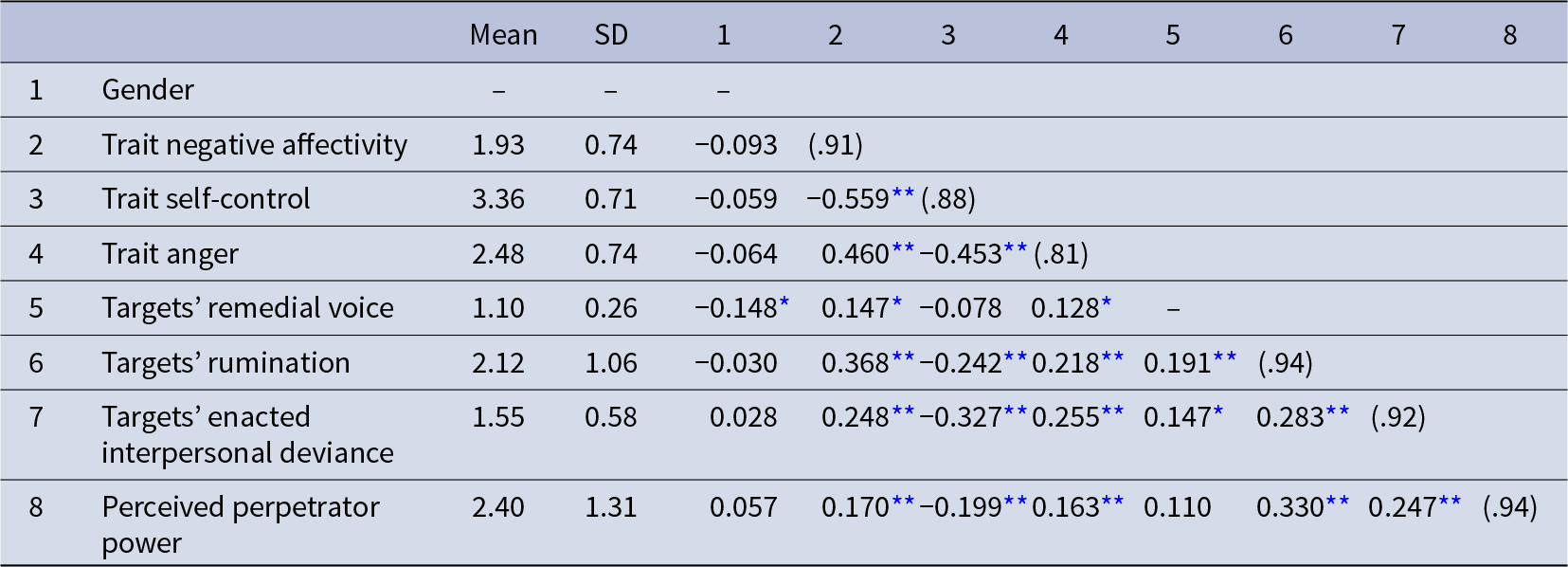
Table 2 Long description
The table reports averages, variability, reliability estimates, and pairwise correlations for eight study variables in a sample of 275 people. Trait negative affectivity averages about 1.93 and is strongly associated with lower trait self-control and moderately associated with higher trait anger. Trait self-control averages about 3.36 and is linked to less anger, less rumination, and less enacted interpersonal deviance. Trait anger averages about 2.48 and is related to more rumination and more enacted interpersonal deviance. Targets’ remedial voice is low on average at about 1.10 and shows small positive links with negative affectivity, anger, rumination, and enacted interpersonal deviance, and a small negative link with gender coding. Targets’ rumination averages about 2.12 and is positively related to enacted interpersonal deviance and perceived perpetrator power. Perceived perpetrator power averages about 2.40 and is positively related to rumination and enacted interpersonal deviance, and negatively related to self-control. Reliability values are high for the trait and outcome scales, while gender and remedial voice do not report reliability in the table; correlation significance is indicated by asterisks and should not be interpreted as causation.
Remedial voice: 1 = not at all descriptive, 2 = descriptive; Gender: 1 = male, 2 = female, 3 = other; N = 275; Cronbach’s α coefficients are reported on the diagonal in parentheses.
** Correlation is significant at the 0.01 level (two-tailed);
* Correlation is significant at the 0.05 level (two-tailed).
Table 3 shows the unstandardized regression coefficients and the results of the hierarchical regression analyses of the main effects of targets’ remedial voice on their rumination (Hypothesis 1). As shown in Table 3, remedial voice was positively associated with rumination (b = 0.395, p < .05), above and beyond the effects of trait-based controls. This effect reflects a meaningful increase in rumination, indicating that engaging in remedial voice is linked to targets’ rumination. Although the incremental variance explained was modest (ΔR 2 = 0.02, p < .01), the effect is theoretically meaningful, as it demonstrates that behavioral responses account for unique variance in rumination beyond stable individual differences. Thus, Hypothesis 1 is supported.
Hierarchical regression analysis predicting targets’ rumination
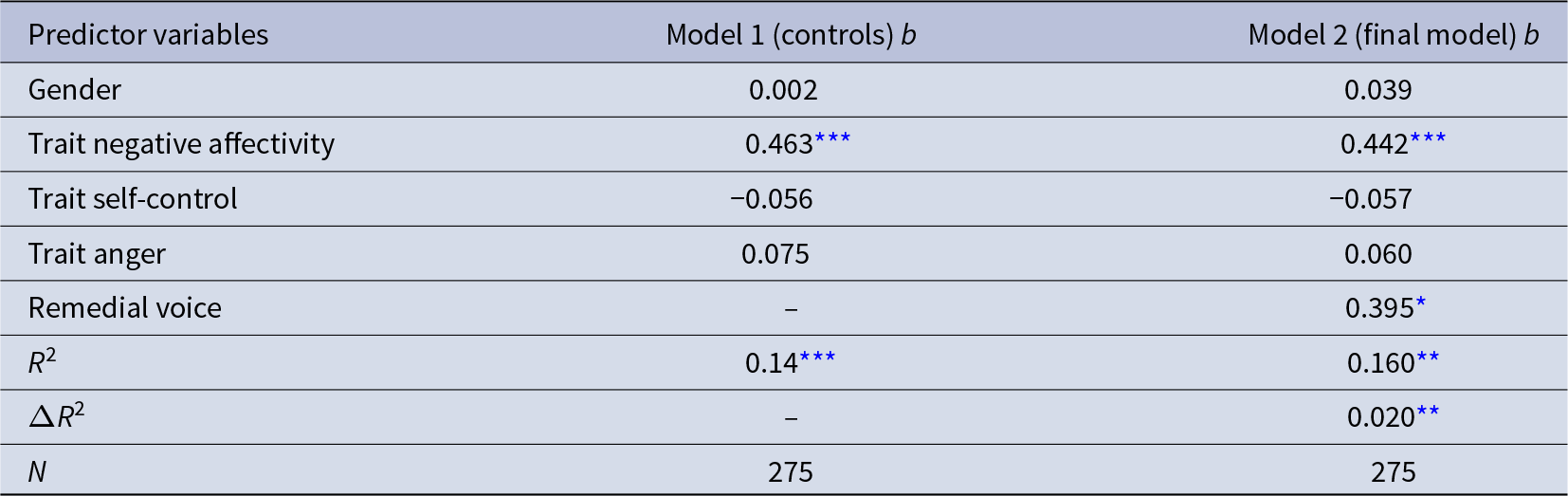
Table 3 Long description
Hierarchical regression results show how several traits and demographics relate to targets’ rumination across two models. In the controls-only model, trait negative affectivity has a positive, statistically significant association with rumination, while gender, self-control, and anger are not statistically significant. In the final model, negative affectivity remains a strong, significant positive predictor with a similar coefficient. Remedial voice is added only in the final model and shows a positive, statistically significant association with rumination. Model fit increases from about fourteen percent of variance explained in the first model to about sixteen percent in the final model, with a small but statistically significant improvement when remedial voice is added. The sample size is two hundred seventy-five in both models. Coefficients are unstandardized, so values reflect changes in the outcome per one-unit change in each predictor and should be interpreted in that scale.
Unstandardized coefficients (b) are reported. Model 1 includes control variables. Model 2 adds remedial voice. Gender: 1 = male, 2 = female, 3 = other gender.
* p < .05,
** p < .01,
*** p < .001.
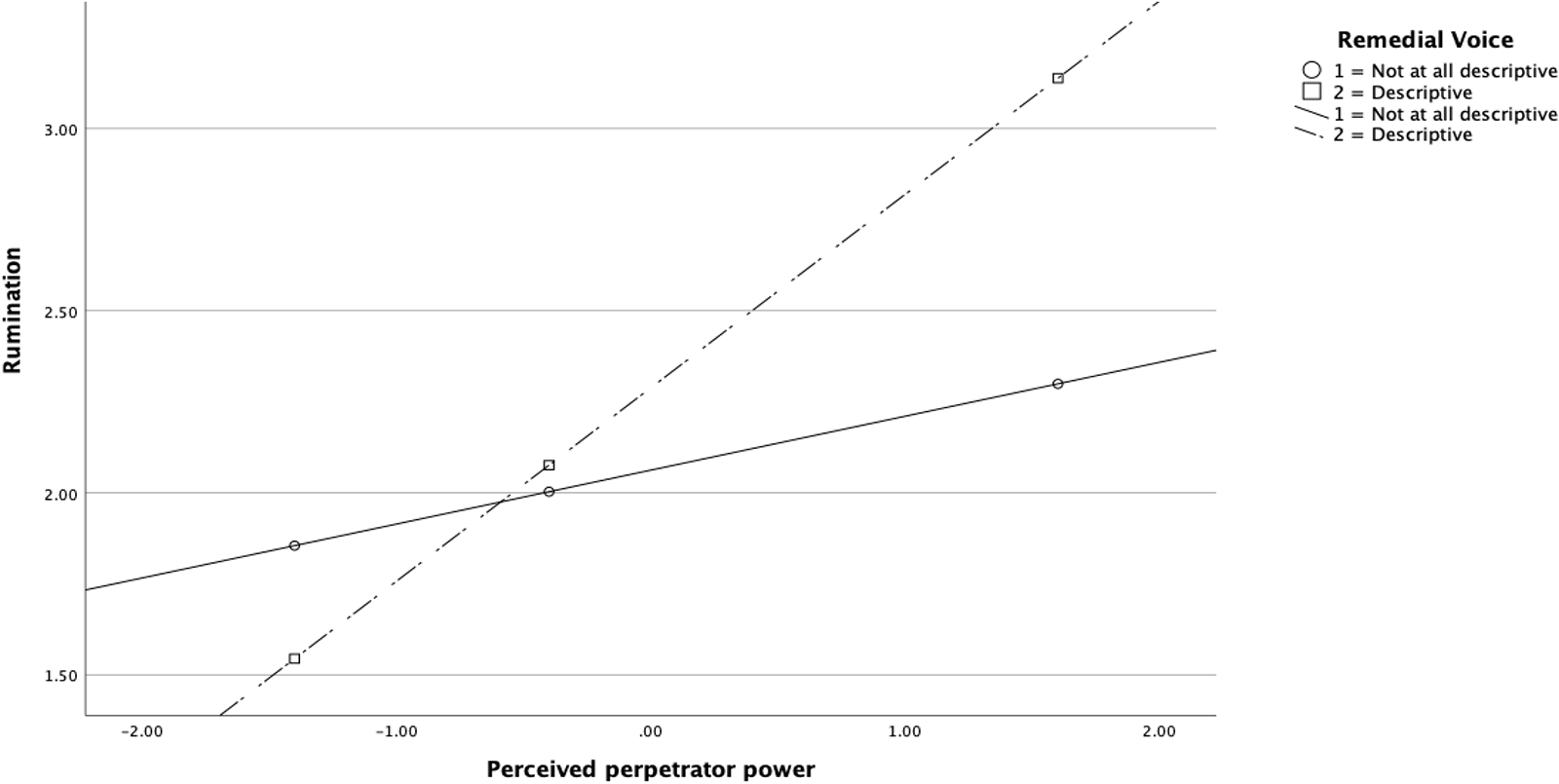
Hypothesis 2 argued that perceived perpetrator’s power will moderate the relationship between targets’ remedial voice and targets’ rumination such that the positive relationship between remedial voice and rumination will be stronger when perceived perpetrator power is high. As shown in Table 4, the interaction between remedial voice and perceived perpetrator power was positive and statistically significant (b = 0.38, p < .01), indicating that the relationship between remedial voice and rumination becomes stronger at higher levels of perceived perpetrator power. This interaction accounted for a small but meaningful increase in explained variance (ΔR 2 = 0.03), suggesting that contextual perceptions of perpetrator power shape the extent to which engaging in remedial voice is associated with targets’ rumination. Specifically, individuals who perceive greater perpetrator power appear more likely to engage in rumination following remedial voice. Following Aiken and West (Reference Aiken and West1991), a graph was prepared to aid in the interpretation of the significant interaction relationship (see Fig. 1). As depicted in the graph, when perceived perpetrator power is high, and targets remedial voiced, rumination is high. Thus, Hypothesis 2 is supported.
Two–way interaction effects of remedial voice and perceived perpetrator power on targets’ rumination.
Regression results for the interaction of remedial voice and perceived perpetrator power predicting targets’ rumination
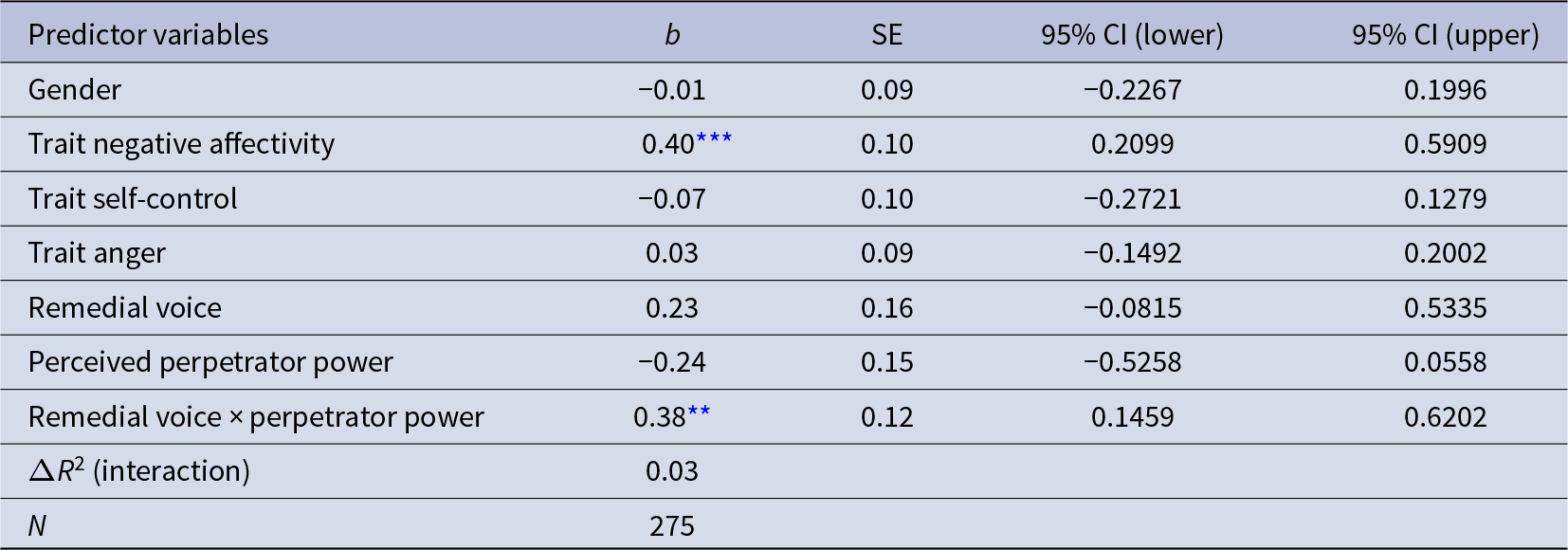
Table 4 Long description
The table reports unstandardized regression coefficients predicting targets’ rumination from gender, trait measures, remedial voice, perceived perpetrator power, and their interaction. Trait negative affectivity shows a positive association with rumination, with a coefficient of 0.40 and a confidence interval from about 0.21 to 0.59, indicating a reliable effect. The interaction between remedial voice and perceived perpetrator power is also positive, with a coefficient of 0.38 and a confidence interval from about 0.15 to 0.62, suggesting the link between remedial voice and rumination depends on perceived power. Gender, trait self-control, trait anger, remedial voice alone, and perceived perpetrator power alone have confidence intervals that include zero, so their unique effects are not clearly distinguishable from no effect in this model. The interaction adds about 0.03 in explained variance. Results are based on 275 participants and should be interpreted as associations rather than causal effects.
Unstandardized coefficients (b) are reported. Confidence intervals were estimated using 5,000 bootstrap resamples. Gender: 1 = male, 2 = female, 3 = other.
*p < .05,
** p < .01,
*** p < .001.
Hypothesis 3 argued that perceived perpetrator power will moderate the relationship between targets’ remedial voice and targets’ rumination, such that this relationship is stronger when perceived perpetrator power is high, and targets’ rumination will, in turn, be positively related to workplace interpersonal deviance. As shown in Table 5, rumination was positively associated with workplace interpersonal deviance (b = 0.105, p < .01), indicating that higher levels of rumination were linked to greater engagement in deviant behaviors. In contrast, the direct effect of remedial voice on workplace interpersonal deviance was not statistically significant (b = 0.132, 95% CI [−0.04, 0.31]), suggesting that the relationship may operate primarily through indirect mechanisms. Supporting the hypothesized moderated mediation model, the index of moderated mediation was significant (b = 0.04, 95% CI [0.0058, 0.0824]); the association between remedial voice and workplace interpersonal deviance through rumination varies as a function of perceived perpetrator power. Although the magnitude of this effect is modest, it provides evidence that contextual power dynamics can condition the extent to which targets’ remedial voice relates to their rumination and subsequent engagement in workplace interpersonal deviance. Thus, Hypothesis 3 is supported.
Regression and conditional process analysis results for the moderated mediation model predicting targets’ workplace interpersonal deviance
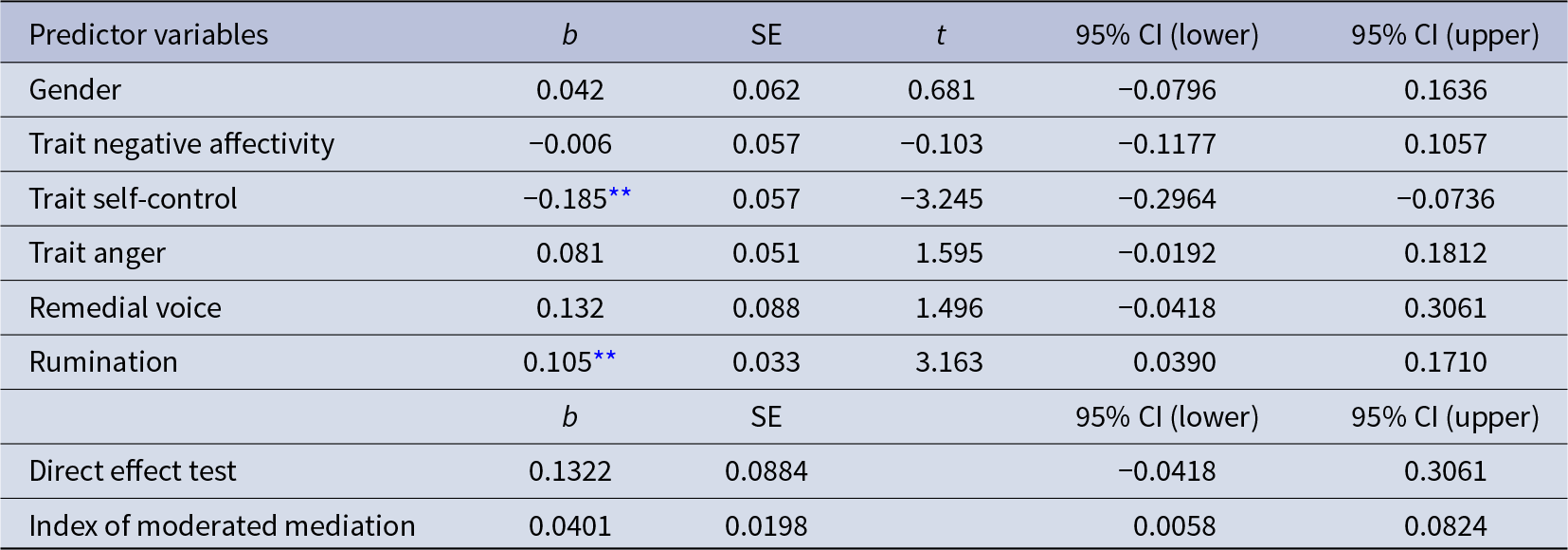
Table 5 Long description
The table reports unstandardized regression results predicting targets’ workplace interpersonal deviance from gender, trait negative affectivity, trait self-control, trait anger, remedial voice, and rumination, with standard errors, t values, and bootstrap confidence intervals. Trait self-control shows a negative association with deviance, with a coefficient of minus 0.185 and a confidence interval from minus 0.2964 to minus 0.0736, indicating a statistically reliable effect. Rumination shows a positive association with deviance, with a coefficient of 0.105 and a confidence interval from 0.0390 to 0.1710, also statistically reliable. Gender, trait negative affectivity, trait anger, and remedial voice have confidence intervals that include zero, suggesting their effects are not statistically reliable in this model. The direct effect test for remedial voice is 0.1322 with a confidence interval from minus 0.0418 to 0.3061, consistent with a non-significant direct effect. The index of moderated mediation is 0.0401 with a confidence interval from 0.0058 to 0.0824, indicating evidence that the indirect effect varies across levels of the moderator. Interpret results as associations from a regression model and note that coefficients are unstandardized and uncertainty is reflected in the confidence intervals.
Unstandardized coefficients (b) are reported. Confidence intervals were estimated using 5,000 bootstrap resamples. Gender: 1 = male, 2 = female, 3 = other. N = 275.
*p < .05,
** p < .01,
***p < .001.
Discussion
In this study, we argue that remedial voicing has both proximal and distal outcomes and examine relationships that reflect this proposition. Specifically, we hypothesized and found that remedial voice is associated with targets’ rumination about the experience, and that an interaction between perceived perpetrator power and remedial voice is associated with targets’ heightened rumination, which in turn is associated with their workplace interpersonal deviance. Overall, our results suggest that remedial voicing is related to distal consequences, with these relationships operating through proximal processes, particularly under conditions of varying perpetrator power. Next, we discuss the implications of the specific relationship tested.
Theoretical implications
This research presents theoretical implications for research on employee remedial voice. First, in line with past research (Milliken, Morrison & Hewlin, Reference Milliken, Morrison and Hewlin2003; Salin, Tenhiälä, Roberge & Berdahl, Reference Salin, Tenhiälä, Roberge and Berdahl2014; Zheng et al., Reference Zheng, Wu, Park, Yu and Yang2023b), we found that very few employees choose to engage in remedial voice. Past research suggests that even when they have a need to do so, as many as 30–75% of employees choose not to engage in remedial voice (cf. Harlos, Reference Harlos2010). In the present study, we found that 17.1% of the study’s respondents reported remedial voicing following experienced interpersonal mistreatment, an outcome comparable to prior remedial voice research (Harlos, Reference Harlos2010; Zheng et al., Reference Zheng, Wu, Park, Yu and Yang2023b).
Second, a central argument in this study is that remedial voice is associated with both proximal and more distal outcomes. The present findings are broadly consistent with this perspective and suggest one way in which proximal and distal outcomes may be connected. In particular, our results point to a pattern in which remedial voice is linked to an intrapersonal process – targets’ rumination – which is, in turn, associated with their workplace interpersonal deviance. Prior research on remedial voice has largely emphasized proximal outcomes, such as retaliation, negative responses from others, and targets’ turnover and job withdrawal behaviors (Boswell & Olson-Buchanan, Reference Boswell and Olson-Buchanan2004; Cortina & Magley, Reference Cortina and Magley2003; Harlos, Reference Harlos2001; Klaas & Denisi (Reference Klaas and DeNisi1989)). Moreover, this work has primarily focused on consequences experienced by targets, rather than on targets’ own subsequent behaviors. Emerging research has begun exploring distal outcomes of remedial voice and the proximal mechanisms through which these associations may unfold. For instance, recent research indicates that remedial voicing presents implications in the family context, and that these occur through targets’ rumination (Oyet & Chika-James, Reference Oyet and Chika-James2025). Building on this line of inquiry, the current study contributes to this literature by identifying targets’ rumination, an intrapersonal psychological process, as one proximal process through which remedial voice relates to their workplace interpersonal deviance behaviors. While the cross-sectional and self-report nature of the data preclude causal inference, these findings offer a preliminary step toward understanding how proximal intrapersonal responses to remedial voice may be associated with distal downstream behavioral patterns.
Third, the observed positive association between remedial voice and targets’ rumination is consistent with emerging research (Oyet & Chika-James, Reference Oyet and Chika-James2025) on the positive relationship between remedial voice and targets’ rumination. Past research theorizing suggests a contrary effect of remedial voice on targets’ rumination (Cortina & Magley, Reference Cortina and Magley2003). Although this idea is generally accepted in the literature, this study and that by Oyet and Chika-James (Reference Oyet and Chika-James2025) provide preliminary evidence that challenges this assumption by indicating that remedial voice may, under certain conditions, be positively related to rumination. These results contribute to a small but growing body of work that re-examines established assumptions about the consequences of remedial voice. In doing so, this study reinforces ongoing calls (Oyet & Chika-James, Reference Oyet and Chika-James2025) for additional research on the remedial voice–rumination relationship and, more broadly, for empirical scrutiny of widely held theoretical expectations within the remedial voice literature.
Fourth, on the basis of past research, we had hypothesized a significant interaction effect of remedial voicing and perceived perpetrator power on targets’ rumination such that when perceived perpetrator power is high and targets engage in remedial voice, rumination will be heightened. Past research has hitherto examined relative hierarchical power as a deterrent to remedial voice (Harlos, Reference Harlos2010). Extant research on the role of perpetrator power in the context of remedial voice had been limited to this effect. Building on this work, the present study examines perpetrator power in the context of continued remedial voicing. The findings indicate that, when targets persist in remedial voice, higher perpetrator power is associated with greater rumination. These results extend existing research in two ways. First, they highlight the value of considering perpetrator power beyond its role in shaping whether targets engage in remedial voice, suggesting that it may also be relevant for understanding their subsequent experiences. Second, our findings point to the potential benefit of revisiting other well-established antecedents of remedial voice – such as gender and image risk (Harlos, Reference Harlos2010; Oyet & Withey, Reference Oyet and Withey2022) – to examine whether they are similarly associated with targets’ experiences after voicing. Taken together, this line of inquiry may contribute to a more comprehensive understanding of targets’ remedial voice experience.
Fifth, the observed pattern in which remedial voicing in the context of high perpetrator power is associated with targets’ workplace interpersonal deviance via rumination is consistent with the broader view that remedial voice may relate to both proximal and more distal outcomes. Beyond this, the findings offer additional insight into how remedial voice functions in practice. For instance, although promoted as an effective tool for mitigating the outcomes of interpersonal mistreatment through organizational representatives’ intervention (Harlos, Reference Harlos2010), our results suggest that it may also be associated, albeit inadvertently, with less desirable outcomes such as targets’ workplace interpersonal deviance. This finding points to the possibility that remedial voice may not always necessarily result in the resolution of the situation but may also be associated with subsequent negative target outcomes. Indeed, some research findings, albeit limited, suggest the possibility that remedial voicing may not necessarily lead to this idealized outcome. For example, reporting on the outcomes of the use of open-door policies to report experienced workplace interpersonal mistreatment, Harlos (Reference Harlos2001) quoted a respondent as indicating that remedial voicing exacerbated her sense of mistreatment. This effect was due to how the organization responded to the complaint.
Sixth, and related to the previous point, our findings that remedial voice is associated with targets’ rumination and workplace interpersonal deviance suggest remedial voice as an antecedent to both outcomes, and in doing so advance research in these two areas. In relation to targets’ rumination, our findings are consistent with recent research reporting similar patterns (Oyet & Chika-James, Reference Oyet and Chika-James2025). With respect to targets’ workplace interpersonal deviance, to our knowledge, this is the first study to offer initial evidence of a relationship with remedial voice, thereby extending consideration of the range of behaviors with which remedial voice may be associated.
Taken together, the present study’s results contribute to ongoing efforts to better understand the broader implications of remedial voice by connecting it to both intrapersonal responses and interpersonal behavioral patterns.
Practical implications
This research presents practical implications for organizations and targets. First, for organizations, the finding that remedial voice is associated with target’s workplace interpersonal deviance through rumination brought on by revisiting the negative emotional experience suggests the need for organizations to ensure that employees’ psychological well-being is taken into consideration in the design and implementation of organizational remedial voice systems. Our findings suggest that it is not enough to simply take note of the information about the target’s experience; rather, organizations should ensure that resources are in place to facilitate target’s psychological well-being when availing of the remedial voice systems. This is especially important when targets report mistreatment from a high-power perpetrator. For instance, organization can provide employee counselling aimed at providing employees with tools to navigate remedial voicing and managing any induced rumination. Furthermore, they can seek ways to ensure that employees’ goal of reasserting control over the mistreatment situation is supported. For example, organizational representatives can be trained to respond with validation and empathy (e.g., ‘Thank you for coming forward’) and to avoid minimization or laying blame on the targets. Supportive responses can restore psychological safety, which can reinforce a sense of agency in and for targets (Simonet, Narayan & Nelson, Reference Simonet, Narayan and Nelson2015).
Second, the study’s findings suggesting that remedial voice is associated with target’s workplace interpersonal deviance show the need for organizations to take a holistic approach when designing and implementing a remedial voice system. In particular, the findings suggest the need for organizations to assess all possible (far-reaching) consequences that may be associated with their remedial voice systems to ensure that processes are put into place that can mitigate any negative outcomes. For instance, organizations can implement regularly scheduled check-ins with targets over a time period (e.g., first 6 months or year) to ensure they are navigating any outcomes or unexpected fallouts from their remedial voicing.
Third, taking a broader perspective of the study’s findings, the negative outcomes associated with remedial voicing reiterate the importance of organizational efforts aimed at eliminating or at least mitigating the occurrence of workplace interpersonal mistreatment in organizations. While remedial voice systems are presented as organizational tools useful for facilitating resolution of experienced interpersonal mistreatment (Harlos, Reference Harlos2010), our findings suggest that this is not necessarily always true. Obviously, eradicating interpersonal mistreatment in the workplace will facilitate the avoidance of these effects.
For targets, our findings, which shed light on the proximal and distal outcomes of remedial voice, indicate the need for targets to intentionally prepare before they engage in remedial voice. For example, targets may plan out the emotional and mental health resources they will need to avail of when they engage in remedial voice (e.g., seeking and/or scheduling Employee Assistance Program (EAP) counselling).
Study limitations and future research
Our study is not without its limitations. First, data were collected from a single source self-report data, a methodology which, as noted previously, is often associated with the threat CMB (Podsakoff et al., Reference Podsakoff, MacKenzie, Lee and Podsakoff2003, Reference Podsakoff, Podsakoff, Williams, Huang and Yang2024). To mitigate this, certain recommended (Podsakoff et al., Reference Podsakoff, Podsakoff, Williams, Huang and Yang2024) procedural remedies were used, including the separation of focal variables of interest, assuring participants’ anonymity, encouraging participants to answer questions as honestly as possible, and using research-validated measures of variables assessed. Furthermore, statistical tests were conducted to assess the potential impact of CMB. Confirmatory factor analyses indicated that the hypothesized multi-factor model demonstrated acceptable fit, supporting construct distinctiveness. Further, a confirmatory factor analysis-based unmeasured latent variable analysis showed that inclusion of a method factor did not result in a meaningful improvement in model fit relative to the baseline model. Although some method loadings were statistically significant, they were inconsistent in magnitude and direction, suggesting limited systematic method variance. Taken together, these findings suggest that CMB is unlikely to be a substantial source of bias, though it cannot be entirely ruled out. Future research may want to replicate this study using multiple sources of data.
Second, the temporal design limits conclusions regarding sequencing. Although data were collected at two time points, both the focal interpersonal mistreatment episode and workplace interpersonal deviance were assessed using 6-month retrospective reports, raising the possibility of temporal overlap between predictors and outcomes, which precludes conclusions regarding causality. Accordingly, the results are best interpreted as reflecting patterns consistent with a process-based model of ongoing responses to mistreatment, rather than clear temporal ordering. Future research using finer-grained longitudinal or diary methods would help to disentangle these dynamics.
Third, although the dichotomous operationalization aligns with the study’s focus on voice enactment, it does not capture variation in the frequency or forms of remedial voice. Although some research (Cortina & Magley, Reference Cortina and Magley2003) has used a behavioral occurrence-based (binary) approach, consistent with our conceptualization of voice enactment, in the examination of remedial voice behavior, prior research has often employed multi-item measures (Oyet & Chika-James, Reference Oyet and Chika-James2025), which may provide a more nuanced and reliable understanding of voice behavior by capturing variation in the forms or extent of voice enacted. Future research could build on the present findings by examining the occurrence, frequency, and extent of remedial voice to more fully capture its complexity.
Fourth, the study’s sample presents limitations related to representativeness. Although it comprises full-time workers in the United States and Canada and is suitable for testing theory-driven hypotheses, we acknowledge that it is not nationally representative of all workers and may not capture the full range of organizational contexts. While Prolific has been shown to provide relatively high-quality data compared to other online panels (Douglas et al., Reference Douglas, Ewell and Brauer2023; Peer et al., Reference Peer, Rothschild, Gordon, Evernden and Damer2022), reliance on an online convenience sample introduces potential biases in who chooses to participate. These features also have implications for generalizability. The findings may not extend to non-Western settings, where cultural norms, labor market structures, and organizational practices could shape both remedial voice and rumination. In addition, only a subset of respondents reported engaging in remedial voice, resulting in a relatively small focal subgroup. Although this subgroup is broadly comparable to non-voicers across several characteristics and consistent with prior research (Harlos, Reference Harlos2010; Zheng et al., Reference Zheng, Wu, Park, Yu and Yang2023b), some imbalances (e.g., gender representation) remain. Accordingly, caution is warranted in generalizing the results beyond similar Western, full-time employment contexts. Future research using more diverse and nationally representative samples would help determine whether these findings generalize across different populations and clarify the contexts in which they hold.
Fifth, an additional limitation concerns the absence of certain key event-level and contextual variables. Although the study includes several individual-level controls, it does not account for some characteristics of the mistreatment episode that prior research suggests can meaningfully shape both the likelihood that targets engage in remedial voice and their subsequent psychological and behavioral reactions (Harlos, Reference Harlos2001, Reference Harlos2010; Zheng et al., Reference Zheng, Wu, Park, Yu and Yang2023b), including mistreatment severity, frequency, or recency, the perpetrator’s organizational role (e.g., supervisor vs. coworker), and the organization’s response following reports of mistreatment. As such, these unmeasured variables represent plausible alternative explanations for the observed relationships. Future research would benefit from incorporating these features, as doing so would allow for a more fine-grained understanding of how situational and contextual conditions shape the dynamics of remedial voice, and targets’ rumination and subsequent behavioral responses.
Our study reveals other areas for further investigation. In developing our arguments, we discussed various intrapersonal processes that targets undergo as they ruminate and enact workplace interpersonal deviance. Based on goal progress theory (Martin & Tesser, Reference Martin, Tesser, Uleman and Bargh1989) and past research, we argued that a goal of remedial voicing is to reassert control over the mistreatment situation (Oyet & Chika-James, Reference Oyet and Chika-James2025; Zhong et al., Reference Zhong, Lian, Hershcovis and Robinson2023); however, we did not assess this in our study. We encourage future work that tests this proposition in the examination of the proximal and distal outcomes of remedial voice.
Future research can examine other moderating factors that may play a role in the relationship between remedial voice and targets’ subsequent behaviors. For instance, past research has found that gender and external job opportunities influence targets’ decisions to remedial voice (Harlos, Reference Harlos2010; Zheng et al., Reference Zheng, Wu, Park, Yu and Yang2023b). Future research can explore whether these factors play a role in predicting targets’ subsequent behaviors after remedial voicing.
Another area for future research is the investigation of possible positive proximal and distal outcomes of remedial voice. In our study, we focused on a proximal outcome of remedial voice that has been identified in the literature – targets’ rumination – and based on theory and empirical research, we explored a possible distal outcome in terms of targets’ workplace interpersonal deviance. It is likely that there are yet unexplored positive proximal outcomes of remedial voice that may lead to distal outcome, both positive and negative. For instance, future research may explore whether remedial voicing is associated with targets’ reconciliatory behaviors.
Supplementary material
The supplementary material for this article can be found at https://doi.org/10.1017/jmo.2026.10113.
Conflict of interest
The author(s) declare none.
Dr. Mercy C. Oyet is an Associate Professor of Organizational Behavior and Human Resource Management at the Faculty of Business, University of New Brunswick Saint John, New Brunswick. Her research interests include workplace interpersonal mistreatment, employee workplace voice, and workplace stress.
Dr. Theresa A. Chika-James is an Associate Professor of Management and Organizational Behavior and currently serves as Associate Dean at the MacEwan University School of Business, where she provides operational and tactical leadership for research programs and external engagement. Her research focuses on organizational change, management education, and organizational behavior. Her research on organizational behavior explores how individuals respond to interpersonal mistreatment in the workplace and through collaborative scholarship; she examines both individual and organizational outcomes associated with such experiences. Dr. Chika-James’s work has been published as business case studies and articles in several journals, including the Canadian Journal of Behavioural Science, SAGE Open, International Journal of Conflict Management, Higher Education Pedagogies, and Harvard Business Publishing.

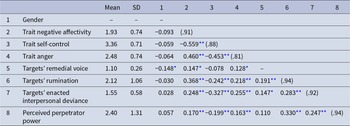
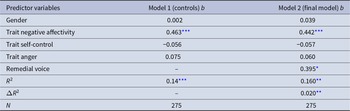
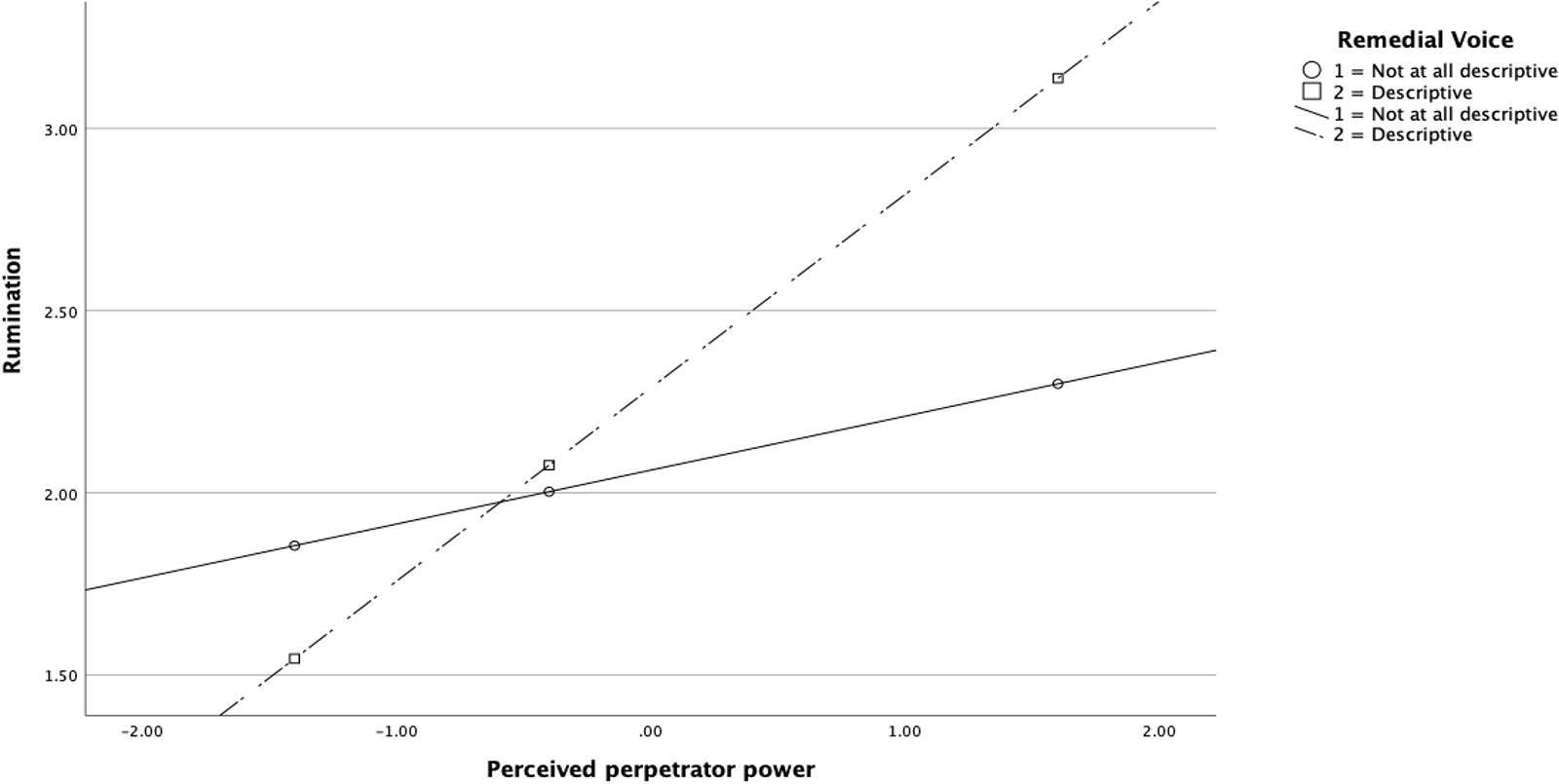
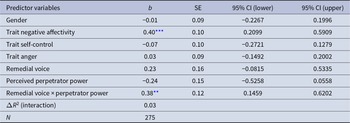
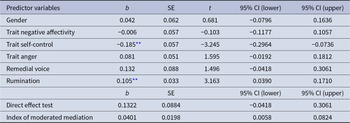


 Open access

