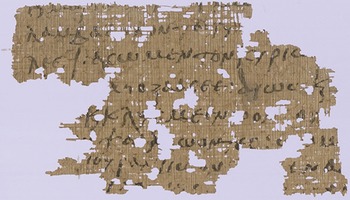
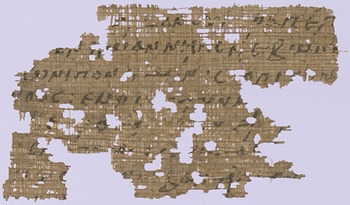
Introduction
Religion and Education in Late Antiquity
Understanding the principles and methods of late antique education in religious contexts is crucial to the understanding of the knowledge produced and the realities created by religious communities and society more broadly. Education generates and authorizes canons of knowledge, establishes the moral framework of orientation within these canons, and organizes their transmission. Religious education was a driving force in the formation of religious identity in Late Antiquity, and its products affected – in enriching or destabilizing ways – culture more broadly.Footnote 1 It involved the study of language and text, ritual and worship, but also the divine rules imposed on the community.Footnote 2 For historical purposes, “education” is most fruitfully used heuristically as an umbrella term that subsumes modern distinctions such as “‘informal’ vs. ‘formal’ learning, ‘implicit’ or ‘explicit’ education, or ‘andragogy’ ( … ) vs. ‘pedagogy’,” as well as sharp distinctions between a formal instruction that necessitates literacy and one that does not.Footnote 3 The study of ancient education is generally always lopsided in the latter regard, since its remnants are only textual. What can be learned about oral instruction through teachers or about the absorption of intellectual habits through socialization within a religious community is mediated by texts written by those trained in the principles of grammar and rhetoric.Footnote 4 Since our knowledge of nonliterate forms of education is often mediated by literate knowledge producers, the focus here will be on the methods of literate education through which “religious education” is communicated and that informs nonliterate forms of education. Through the inclusion of decorative imagery, drama, and song, this Element will gesture towards performative and sensual modes of communicating knowledge as much as possible.
The developments in the religious landscape since the first century CE put their own spin on education. Rather than in public schools and for distinct administrative purposes or court-oriented rhetoric, learning in religious communities was encouraged. This development created new and more diverse opportunities for accessing knowledge.Footnote 5 Through various ways, grammatical and rhetorical principles and strategies came to permeate every branch of society. Thus, understanding these methods is vital to understanding the organization and intellectual production of late antique religious communities and why they often resemble each other in form, if not content. Because we lack thorough accounts of the learning paths of ordinary people and how their knowledge was shaped through different stages and modes of learning, I have brought together some of the most telling examples from various Jewish and Christian communities (including the Manichaean one) in order to present a catalogue of methods that can serve to understand the rippling effects of their presence where they are not mentioned or acknowledged.Footnote 6
A very concise account of an educational process in Late Antiquity is the legendary rapid literary formation of the already forty-year-old Jew Akiva, who was to become one of the most renowned rabbinic scholars:
Rabbi Akiva took hold of one end of the tablet and his son of the other end of the tablet. [The teacher] wrote A and B for him, and he learned it. He wrote the [entire] alphabet, and he learned it. [He copied] Leviticus, and he learned it. He kept on learning [like this] until he had learned the entire [written] Torah. Then he went and sat before Rabbi Eliezer and Rabbi Yehoshua [to study the Oral Torah].
The episode summarizes the stages of education that can be found across late antique religious communities: alphabetization, the copying of authoritative texts as an exercise for writing, but also for memorization and, finally, interpretation. It further highlights some of the main differences between the modern and ancient realities of education. The class is heterogenous in age (although the age gap is, in this case, purposefully exaggerated), with an adult sitting next to a child, both apparently writing on the same wooden tablet. Moreover, hierarchies are physically accentuated, with students sitting in front of their elevated teachers.Footnote 8
The educational process outlined in this episode largely follows the structure of this Element. First, the introduction will contextualize the topic within the realities of Late Antiquity (the period from the fourth to seventh centuries CE). Then, we will “take hold of a tablet” and discuss the materials used in literate education, before following the students as they take their first steps into literacy. Arguably, discussing the material first is not an intuitive structure for modern readers because the method and content of education are usually considered more relevant than the material on which they take shape. However, foregrounding the material reality of reading and writing, as the rabbinic story does, explains many of the pedagogical methods and the (literal) shape of the texts they ultimately produced.
From the tablet, we will move on to the methods of alphabetization and the first content to be copied and read. As Rebecca Wollenberg observed, modern educators might not consider the book of Leviticus an obvious choice for a first reading, but it aligns with the ancient curricula’s preference for obscure names of people and objects.Footnote 9 At the same time, the story is initiated by Akiva’s purported lack of knowledge of natural processes: he does not know who hollowed out a particular stone. He is told that if he would study the Bible, he would know that Job 14:19 states that water wears away stone. The story’s reference to Leviticus is certainly meant to imply that the power of the divine law shapes the mind of men like water shapes stone, and is not necessarily a description of the actual curriculum.Footnote 10 Indeed, changing and expanding such short stories was a vital part of early education, training at the same time literacy and rhetorical skills.
The third section of this Element discusses how people learned as a religious community and how knowledge was transmitted through sermons, prayer, song, and fellowship. This aspect of education may have been deliberately omitted from the story of Rabbi Akiva’s learning process in order to connect him to the lineage of rabbinic study circles and their exclusive teacher–student relationships that fostered a distinct type of knowledge. The final section will pick up on similar idiosyncratic and independent learning and discuss examples of individuals who excelled in their ability to apply or repurpose their skills to create new texts or text-based artifacts.
Religion
Various developments led to an increased need for literacy and a greater appreciation of literary texts in the Hellenistic period, culminating in the concept of canonical and God-given Scriptures in Late Antiquity. The need for literate staff arose from the increase in administration required to govern Alexander the Great’s conquered territories and, subsequently, the Roman Empire. Literate communication notably increased during the Hellenistic period.Footnote 11 The quarreling heirs of Alexander defined their Greekness by amassing Greek literature and translations of “world literature” in large libraries, which elevated the status of writing and authorship.Footnote 12 The Romans adopted the Greek rhetorical curriculum to study the use of written and spoken language for purposes beyond the courthouse and the Senate. This development led to the so-called Second Sophistic, “the period c. 60–230 CE when declamation became the most prestigious literary activity in the Greek world.”Footnote 13 Public schools and libraries were established throughout the empire. They were managed at the local level and reached their zenith in the fourth century.Footnote 14 In this environment, texts became instrumental in shaping religious identities: “a bookish discourse on Roman cult” can be observed since the late Roman Republic, and the Christian idea of a canon emerges fairly quickly around the middle of the second century.Footnote 15 The church founded by Mani formed around his textual legacy, and in post-temple (and hence post-sacrifice) Judaism, the Torah obtained the status of a ritual object, and liturgical lectionaries formed around the biblical text.Footnote 16 Texts, whether as ritual artifact or object of study, obtained a new significance in the monotheistic religions that formed in Late Antiquity.Footnote 17
From early on, Christian leaders were challenged to consider which Greek or Latin texts members of their community should use to learn to read and write in order to engage meaningfully with the sacred text.Footnote 18 The established methods of alphabetization were thereby less of an issue than the initial texts used to practice reading that already served as rhetorical models.Footnote 19 Without model texts by a Christian or Jewish Homer or Hesiod, Horace or Virgil, it was difficult to teach proper oratory and other rhetorical strategies that were needed for serious and effective debate. Rhetorical model-texts first had to emerge and prove useful to a larger audience, an ongoing process throughout Late Antiquity that kept the great poets and orators of the pagan past in the curricular mix.Footnote 20 The absence of such models in Hebrew and Aramaic may explain the limited absorption of rhetoric into Jewish texts written in the respective languages, especially when compared to those written in Greek (e.g., by Philo and Josephus), the production of which declined drastically in Late Antiquity.Footnote 21
It is my contention in this Element that, in Late Antiquity, religious communities formed around texts and their interpretation of these texts, and that religious education entailed by necessity a process of study and learning, aimed at acquiring the ability to understand and memorize (mostly small portions of) texts representing divine will and order. This included ritual practices that made the text accessible to functionally illiterate people, such as singing hymns, but also touching the text as a scroll or codex or displaying the artifact in processions.Footnote 22 Of course, it is true that all these religious communities developed non-textualized ways of devotion. The cult of the saints is such an example, with its relics and other sacred objects that incorporated unscripted knowledge, and the ever more numerous, and increasingly alike oral stories that surrounded the saints and their shrines.Footnote 23 And yet, these shrines also participated in producing and disseminating texts and textual artifacts, such as oracular tickets, books of divination, spells, and martyrologies.Footnote 24 Similarly, the Manichaean picture books and Jewish synagogue imagery depicting and enhancing the Israelite past were not exactly without text insofar as, ultimately, both led the viewer to the text behind the images.Footnote 25
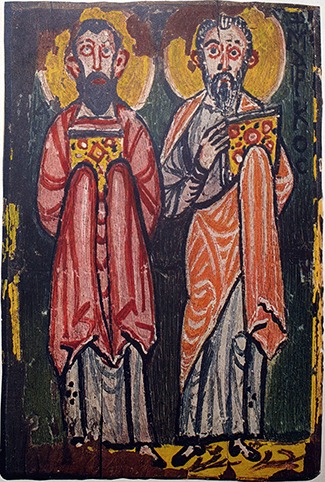
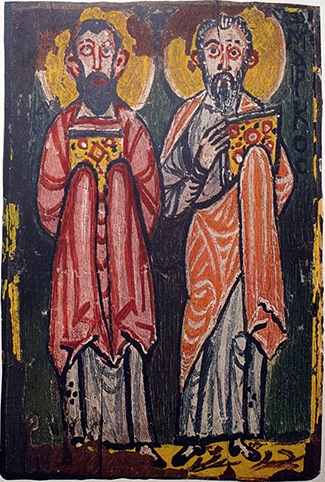
Religious texts were considered beneficial for the body and soul, both in their physical nature and their content. The content of Mani’s books, for example, is presented as a remedy for a range of ailments, while a book of psalms is literally sold as a “potion of life” in rabbinic literature.Footnote 26 The same efficacy was attributed to the mere physical presence of the sacred and canonized texts (see, e.g., the venerated codices held by the evangelists in Figure 1).Footnote 27 For Nicene Christians, this agency was particularly associated with the codex form. In 378, the emperor Gratian ordered a codex written by Bishop Ambrose of Milan, which was intended to serve as a talisman during his campaign against the Gothic tribes invading his territory.Footnote 28 Later, “At the Council of Ephesus in 431, the gospel codex was considered to stand in for Christ himself.”Footnote 29 In Antioch, the priest John Chrysostom is unhappy with the women of his congregation wearing miniature gospel codices around their necks for protection.Footnote 30 Indeed, the amulets of this time generally teem with biblical verses.Footnote 31 The Christian evidence also shows that there was a growing market for small codices with sacred texts, which could be held in one hand while the other was used for a ritual act. These codices were especially convenient for traveling, whether on a pilgrimage or for general travel.Footnote 32
Encaustic on wood, seventh century. Luke (on the left) and Mark do not touch the covers of the books they are holding with their bare hands out of reverence.
The shift from literary education as a vocational training – roughly speaking alphabetization and grammar for scribes, rhetoric for future lawyers and politicians – to a religious identity marker (sometimes by way of a distinct script) left an imprint on the material evidence.Footnote 33 Objects that were plain or decorated with symbols in Antiquity, like healing gems and amulets, now had inscriptions on them.Footnote 34 It becomes increasingly difficult to tell whether alphabets on walls are signs of devotion, a means of protection, an exercise or a mnemonic: Writing became an act of devotion, and the letters themselves and especially their order were seen as apotropaic.Footnote 35 While these were not entirely new phenomena, they became much more widespread in Late Antiquity, testifying to the importance of text, words, and letters as both signifier and signified.
Education
There is more to education than literacy, and yet, it is difficult to distinguish between literate and illiterate education, because literacy, once present, has an irreversible impact as a structuring element on a community. Literacy creates “new motives and formal modes of discursive verbal and logical thinking divorced from immediate practical experience.”Footnote 36 Studies in human cognition have demonstrated that literacy alters the way humans perceive language, including spoken language, and the ability to memorize. Literate people are attuned to the nuances of individual words and syllables, whereas for those lacking such skills, words tend to merge into one another.Footnote 37 In other words, a community that includes even some literate people will ask different questions than one that does not. This is all the more true if the community is led by literate people who are motivated to study an authoritative text in ways inspired by the type of Homeric grammar-focused commentary and exegesis that emerged in Alexandria in the Hellenistic period.Footnote 38 Literate education is the driving force behind efforts of knowledge production and transmission in late antique religious communities – efforts that are here lumped together heuristically under the umbrella term “education” – whether directly or indirectly.
A significant proportion of the historical data necessary to reconstruct educational processes in antiquity is missing. Scholars must therefore rely on a handful of programmatic preliminary rhetorical curricula (progymnasmata), treatises by rhetoricians, and sporadic references in letters and literary texts.Footnote 39 However, when the material remnants of schooling, such as exercises, classrooms, and textbooks, are added to the prescriptive and descriptive evidence, a fairly comprehensive picture of educational practices during the Imperial Period and Late Antiquity emerges.Footnote 40 For the present purpose, I will describe educational processes using the same range of materials, but also texts that are distinctly marked by rhetorical exercises and images that complement these processes. In order to depict education in religious contexts in all its facets, I will choose a telling example from a Christian, Jewish, or Manichaean community, and gesture to possible but less explicit cognates in others. This is not intended to obscure or simplify the doctrinal differences, diverse calendars, or varied liturgical practices between Jews and Christians or among Christians and Jews. Rather, my approach is intended to highlight the commonalities that are sometimes overlooked due to a focus on differences: didactic strategies, writing technology, the relatively simple and concise alphabets derived from Phoenician or Aramaic used in the Mediterranean area, or the effective rhetorical strategies devised and described by the Greeks. All these strategies and technologies are not inherently religious in nature. They are foremost fundamental to the larger economic and political organization of coexistence. Education, after all, lays the foundation of common logical tenets that enable the coexistence of individuals from disparate ideological and even linguistic backgrounds.Footnote 41 But there are also common religious practices, such as the exegesis of a sacred text, prayers, hymns, or the artistic interpretation of worship and tradition.
This Element does not address the late antique political discourse on education, that is, the texts on which it should be based, the identity of the teachers, or how religious education should position itself vis-à-vis Romanized Greek paideia (“education”) built around the classic texts such as the Homeric myth, Aesop’s fables, and the sentences of Menander.Footnote 42 Instead, it is the products of education that are of interest here, specifically the books, letters, and poems that were written, performed, and sung; the clever exegesis and the compiled commentaries; the riddles and gnostic texts; the cosmologies and chorographies (descriptions of geographic regions); but also paintings and mosaics. In the end, every cultural product is to some extent marked by and in conversation with the time’s literate education.Footnote 43 For example, the cognitive process of parsing a text to create a song or poem is very similar to parsing a story into images or an image into subunits to determine the necessary tesserae for a mosaic.
Late antique learning was somewhat stereotyped across religious traditions because they were all drawing from the same ancient set of methods. Yet, to the modern observer, ancient education appears rather messy. Christians, Manichaeans, and Jews learned through seasonal classes, from itinerant teachers, in their local churches and synagogues, from borrowing and lending books, from attending a certain school or study circle, and from staying with family and friends in other places. In lieu of diplomas, people could earn titles such as “rabbi,” “elder,” or “deacon.” Nevertheless, depending on the context, many may have had more than one occupation and defined themselves (or were defined by others) through other vocational activities. The head of the School of the Persians in Edessa, Narsai, had to direct the choir and act as a translator in addition to leading the school – and this was only after he had successfully negotiated dropping his other roles as elementary and intermediate instructor (“reader”).Footnote 44 Rabbinic teachers are sometimes “given cognomens which indicate their trades,” such as “the perfumer,” “the sandal-maker,” or “the baker.”Footnote 45 Since education took place in different settings, at different times and in various places, learning biographies were very idiosyncratic.
Literacy
I have asserted that religion in Late Antiquity had a distinct textual dimension, making a focus on literate religious education particularly important to understand religious communities, their reasoning and world-making. This emphasis on literacy may come as a surprise to readers who assume that most people in Late Antiquity were illiterate and that literacy was confined mainly to a small, highly educated elite. Yet, various forms of literacy permeated all social and cultural levels. Judging from the material remains, people seem to have written or etched blessings, curses, and divine names on basically every support and in whatever way, style, and grammar.Footnote 46 It is precisely this evidence of literacy, however, that was not taken into account by William Harris, whose influential monograph painted a rather pessimistic picture of literacy in Late Antiquity compared to the High Empire.Footnote 47 Harris’ monograph followed on a period of scholarship that had mapped more or less modern conditions onto ancient education. Confining literacy to the elites is also unhelpful from the point of view that being rich does not necessarily come with talent or the willpower to study. In Pompeii – admittedly not a late antique city, but the one with the best-preserved data – most of the graffiti were found in the vestibules and peristyles of the rich, where people of all social classes were made to wait or pass through for some business. Names of slaves and women have also been identified, with men outnumbering women.Footnote 48 As Sean Leatherbury observes, Harris did not take into account the many qualifications in sermons of the congregation’s wrong or right reading habits, such as those expressed in what Harris called the “acute logorrhea which afflicted a number of Christian writers, most conspicuously John Chrysostom and Augustine.”Footnote 49 Indeed, Chrysostom even announced the topic of his next homily “many days in advance” so that his congregation could borrow or “take up the book and review the passage.”Footnote 50 Pessimistic accounts of ancient literacy usually also neglect the secretaries and slaves who put this “logorrhea” into writing, and terminology like the Greek adjective agrammatos, “ungrammared,” is often interpreted as complete illiteracy, although it was used in a range of meanings, including the inability to articulate words (of animals) or the lack of culture.Footnote 51 In some cases, it has been shown that the adjective simply refers to the fact that a person could not write Greek simply because it was not their native language.Footnote 52
The location of knowledge among the wealthy elite is a long-standing trope that had been perpetuated by exactly this elite, which, it is true, had the money and leisure to invest in knowledge production.Footnote 53 More recently, scholars have turned to questions regarding the manpower and logistics required to produce works attributed to a single author. This has revealed hierarchical structures that involved students, laborers, and slaves.Footnote 54 The presence of educated and highly specialized slaves further complicates the question of the social dissemination of education and knowledge: The image of a literate elite and an illiterate lower class is not accurate. There is also evidence for donor networks in religious communities to sponsor the education of less wealthy members.Footnote 55
Literary education was not compulsory to manage everyday life. This led to very diverse learning biographies, and the distinction between literate and illiterate was gradual. Some people may have been only passively literate and could only read, or they were limited to a handful of the most common letters.Footnote 56 Leatherbury highlights the challenges involved in assessing literacy in the period of Late Antiquity, using the example of Bishop Paulinus of Nola, who calls the peasants illiterate (neque docta legendi) before explaining that the pictures in the church of St. Felix have labels so that the peasants could understand what they depicted.Footnote 57 Obviously, the bishop was not talking about complete illiteracy. The labels accompanying pictures were often rather simple, a title consisting of the names of the people involved, the activity, or the place. Gregory of Tours mentions a boy who taught himself how to read and write by copying such labels and then asking the clergy what they meant.Footnote 58 Due to repeated exposure to the decoration, some people may indeed have become familiar with the alphabet, the shape of certain words or entire biblical verses depicted in their church or synagogue.Footnote 59 Yet, good teachers knew that although looking at a picture of a saint could lead to revelation, a picture – or even a series of pictures – could not teach on its own.Footnote 60 For Basil (c. 330–379), homily and picture complemented each other: “What the sermon shows of the story through hearing, the silent picture puts before the eyes by imitation.”Footnote 61 But text was often also part of the “silent picture” or it was the image.
Texts are artifacts in antiquity, enabled by material carriers that shape and often restrict the text, and that make it possible for multiple authors to contribute to the same text over several generations. Above all, material carriers enabled texts – and, with them, knowledge – to be shared and disseminated, but also to be wiped out, scratched away, broken or burnt. In the next section, we turn to the material context of literate education.
The Stuff of Education
The institutionalized monotheistic religious communities that emerged in Late Antiquity formed around texts and their interpretation. Religious education was therefore as much concerned with basic literacy as it was with teaching worship and ritual. In those days, however, reading and writing were acts of (sometimes intense) physical engagement with the material objects that were or became the text, a fundamental fact that cannot be emphasized enough.Footnote 62 Suitable writing material could not always be chosen at will, and even when it could be chosen, there was no guarantee that the organic nature of the material would really comply with the will of the writer, their ink or pen. The combination of material constraints, cost, and the preference for a laconic style made short texts preferable. In this section, we will briefly survey the physical media of writing in Late Antiquity, paying particular attention to the impact of the material reality on the size of texts and, consequently, educational methods.
Wooden Tablets
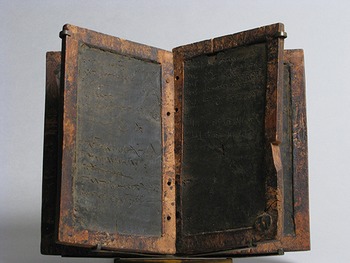
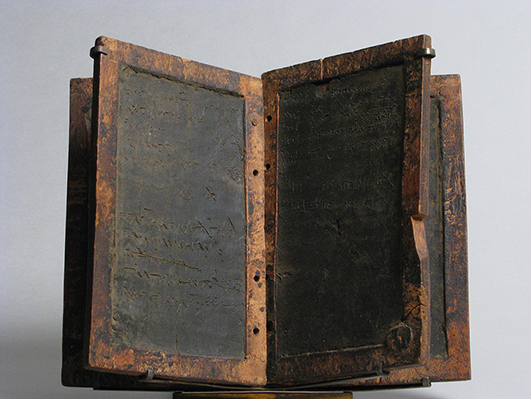
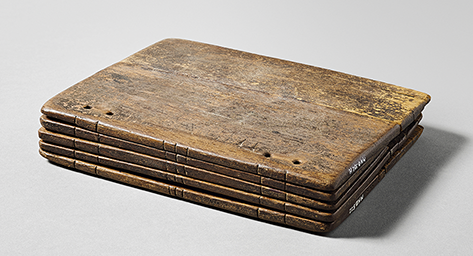
People mostly wrote against their knees while sitting, but there is also evidence for the use of low desks.Footnote 63 In class, pupils would sit on the floor, on benches, or perhaps on cushions, and write on wooden tablets with a frame that allowed for the inside to be filled with wax. This waxed surface was then incised with a stylus, a tool made of a hard material such as iron, bone, bronze, or even ivory, with a pointed end on one side and a sharp, blade-like end on the other. With this spatula, the wax, and thereby the incised writing, could be scraped off, leaving the tablet ready for the next exercise. Eventually, the tablet had to be rewaxed due to repeated scraping. The wax crumbs produced by the scraping must have been a welcome sensory distraction, especially for young students: The wax could be kneaded until it was soft and formed into animals and other figurines.Footnote 64 The simple wax tablets consisted of two tablets with their waxed sides facing each other, held together by strings to form a diptych. This protected the writing as well as the hands of the person carrying the dyptich (and provided a degree of secrecy). The structure could also be enlarged to form a polyptich, as in the following picture (Figure 2).
Polyptichon with Coptic inscription, Egypt (500–700 CE), The Metropolitan Museum of Art, public domain. Object number: 14.2.4a-d.
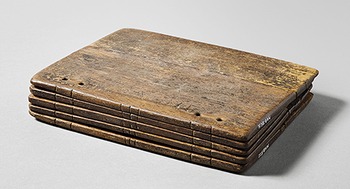
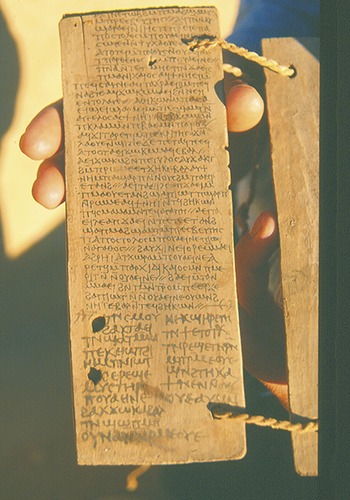
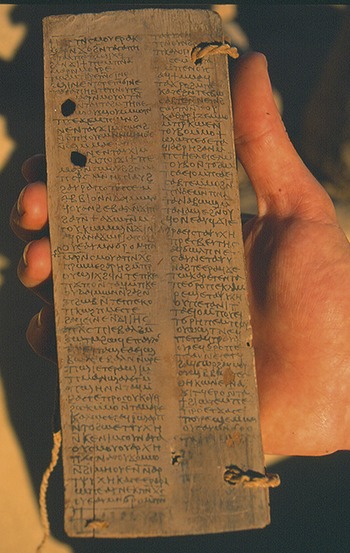
A similar type of notebook could also be made from unwaxed wooden tablets that were then written on with a hollow reed pen (kalamos/calamus) and ink, rather than being incised. These wooden notebooks were conceptual predecessors of the papyrus and parchment codex.Footnote 65 Ink was usually produced from soot of olive oil, water, and a little bit of gum Arabic.Footnote 66 Students would have reused the same erasable wax tablet, while wooden codices were used for accounting, personal notes, extracts from books or poems – texts that were not meant to be erased in the near future. The advantage of these wooden codices was that they could be easily untied, and the tablets could be removed, replaced or rearranged (see Figure 3). What began as random notes could end up in a sorted, encyclopedic structure.
The notebook of Papnoution, third/fourth century CE, Antinoe, Egypt (Greek).
For booklets made from papyrus, respective sheets were folded into quires, stacked onto each other or additionally sewn together in the middle fold. Although precise terms existed to indicate the materiality of a text, they were most often referred to with a generic term for “book” such as Greek biblion, Latin liber, or Hebrew sefer.Footnote 67 The Hebrew term sefer, for example, is often translated as “scroll,” although a scroll is more accurately a megillah, a term that implies the rolling aspect.Footnote 68 The etymology of the word sefer can, similar to Greek graphō, be traced back to “to scratch,” that is, to inscribe in the broadest sense, or to “send.”Footnote 69 While a sefer Torah most likely took the form of a scroll, sefer refers primarily to a literary unit without tying it to a specific material carrier.Footnote 70 Different texts could be considered part of the same literary unit if they were on the same scroll or codex, but a literary unit could also be created by strings that tied different pieces together or through a container like a clay pot, a basket, or a box.Footnote 71 Similarly, Manichaean sources seem to understand “book” to be “any portable medium, made from locally available materials and formats, to store records of thoughts or ideas.”Footnote 72 Whether these records were written or drawn had no effect on the terminology.
Ostraca
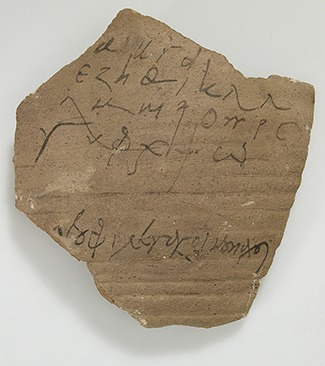
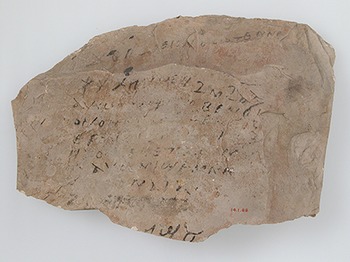
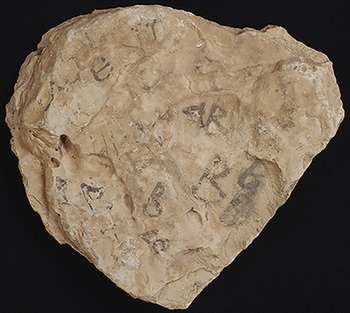
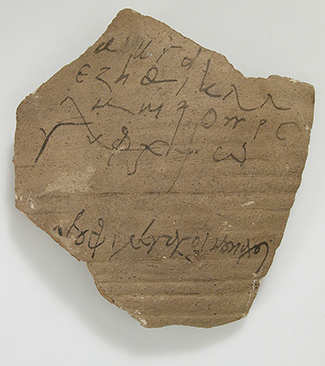
Another commonly used writing material was broken pottery, known as ostraca. It was a good material to begin writing with pen and ink because the surface was smooth, unlike fibrous papyrus or unwaxed wood. The ripples in the clay created when the original pot or plate was thrown on the potter’s wheel could be used as lines. The use of ostraca for educational purposes coincides with the Roman period and the increased investment in public schooling (see Figures 4 and 5).Footnote 73
Ostracon from the Monastery of Epiphanius, Thebes. Cursive Greek alphabet, followed by “monks most beloved of God,” seventh century CE.
Ostracon with Psalm 33:22 and 34:1, around 600 CE, from cell A of the Monastery of Epiphanius, Thebes. The Metropolitan Museum of Art, public domain, object number: 12.180.107.
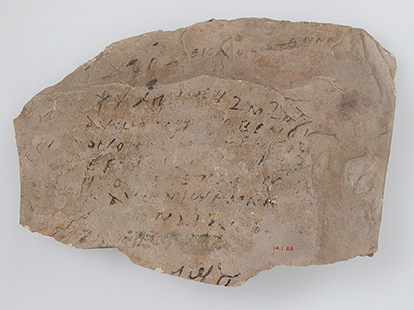
Most obviously, ostraca with syllabaries can be associated with a school context, followed by glossaries and word lists. But even the latter sometimes have apotropaic functions, as seems to be the case with the seven surviving ostraca bearing the names of the Forty Martyrs of Sebaste.Footnote 74 Indeed, the distinction between the purely pedagogical function of copying a text and its subsequent devotional or apotropaic use becomes increasingly difficult in the religious landscape of Late Antiquity. Apparently, this was not a distinction that existed at the time.Footnote 75
For a long time, ostraca had a reputation among modern scholars as a cheap material used only for notes that were not meant to last. Contrary to this assumption, which was formed under the influence of the fact that ostraca were essentially rubbish, recent research has highlighted the advantages of ostraca. (Interestingly, modern scholars have never considered clay cuneiform tablets to be inferior to other writing surfaces because they were not made from recycled material.)Footnote 76 In addition to its smooth surface, free and ubiquitous availability and convenient size, clay is also highly durable and resists the ravages of time, weather, and pests much better than wood. Possibly because they could not be sealed and exposed the message, some evidence suggests that ostraca were not considered suitable for serious correspondence.Footnote 77 But they were more than sufficient for quick notes such as “Be so kind, come!”Footnote 78 In fact, letters are the best-represented genre among the 415 ostraca found at the Monastery of Epiphanius in Thebes, most of which are such short messages.Footnote 79 Because of their durability, ostraca were often used for contracts and receipts. When used for archival purposes, the shards were sometimes shaped into a rectangular form, and ostraca whose text belonged together were marked with numbers or other signs to indicate their order.Footnote 80 At times, the shape of an ostracon may have inspired the layout and/or the very choice of the text that was inscribed on it.Footnote 81
Other materials used for everyday writing included palm leaves, bones, and stones. More important writing was done on cloth, precious and semiprecious stones, metal, leather, skin, ivory, and glass.Footnote 82 Papyrus and parchment scrolls could be of different lengths, depending on how many sheets were glued or sewn together, but they were also of different heights. Rotuli, vertical scrolls, usually made from the remnants of the material used for horizontal scrolls, consisted of a single sheet and were opened vertically. The late antique library should therefore not be thought of as a neat arrangement of papyrus scrolls and parchment codices, but as an organized archive of texts recorded on a wide variety of materials of different shapes and sizes.
Copying texts regularly was necessary to preserve them, own them, or compile convenient reader’s digests. Copying was also a means by which knowledge could be strategically disseminated. Religious learning was a shared and collective activity. In addition to creating content, economic networks were required to produce, disseminate, and appropriately store and manage texts and books. The content had to be short and compact. These qualities made the text easier to share physically and suitable for the limited space on tablets, ostraca, and small pieces of paper.
The often-limited writing space explains why short literary tropes and compositions such as the chreia, a literary form discussed in detail further below, dominated the literary landscape: they fit easily onto a tablet, ostracon, or scrap. Even the leaves of Codex P. Cotsen-Princeton 1, a monastic textbook that will guide us through the next section, measure only 11.5 x 9.5 cm and thereby qualify as a “one-hand book.”Footnote 83 Not only did this make the textbook portable, a veritable vade mecum (lit., “go with me”), but it also provided students with text layouts that could be copied one-to-one onto the writing surfaces available to them. Small formats could easily be passed from one friend to another and copied on whatever was available. In this way, literal or modified excerpts and maxims from classical poets such as Homer or Menander could find their way into religious settings and texts without the corresponding book being listed in the library inventory of the respective monastery, for example.Footnote 84 Maxims or short collections of maxims often circulated independently of their “mother texts.”
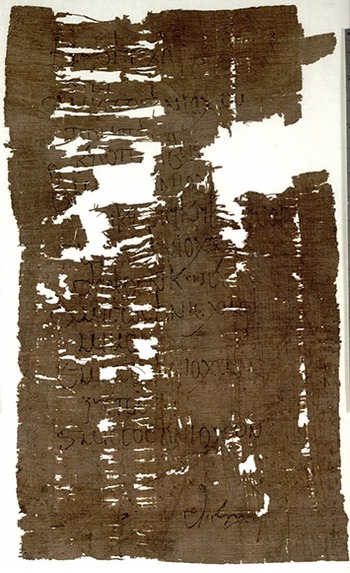
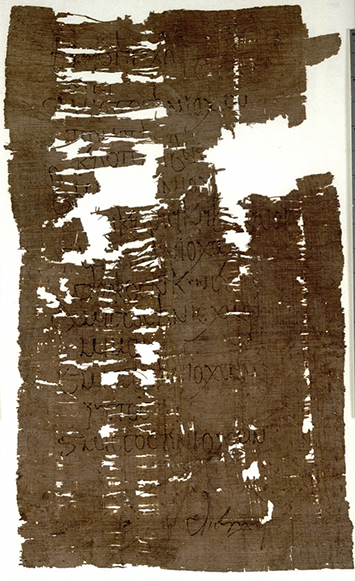
The material reality of writing literally shaped the size of the content. Other writing materials allowed reading as a community, such as inscriptions, graffiti, painted labels, or inscriptions in mosaics. In contrast to the small writing carriers that could be enclosed and hidden, the walls and floors demanded to be read in public, by everyone, perhaps together. The practice of using thick and large sheets of papyrus inscribed with large letters, which allowed several people to read the same thing at the same time, is known from circus programs (see Figure 6).Footnote 85 It is easy to imagine similar practices to guide people through liturgy. At least one large wooden board with a quotation from the Psalms suggesting such a practice was found.Footnote 86 The large size of some codices is an indication that they were intended for reading at a distance and by several people at the same time.Footnote 87 Most liturgical papyri were written on single sheets, a format that allowed for the sharing and displacement of content during the liturgy.Footnote 88
P.Oxy. 34 2707, circus program meant to be suspended or passed around, c. sixth century CE,
First Steps
Social and Spatial Dynamics of Learning
The social and spatial dynamics of learning in Late Antiquity are a fascinating subject and very different from those of today. Modern education aims to speed up, systematize, and harmonize the learning process by adding dimensions that people do not necessarily encounter in their daily activities. In recent years, the idea of such an artificial and condensed educational process as the most efficient way to turn people into productive and social beings has been questioned and schools are trying to implement informal learning methods that attend to the natural interests of students. In Late Antiquity, opportunities to acquire information and skills were many, diverse, and omnipresent. From an early age, children were involved in family trades and businesses. They could observe the butcher at work in his open shop, a house being built, or a mosaic being put together. The curious onlookers were called upon to help with simple tasks, to fetch this or that. The Babylonian Talmud recounts that when the great Rabbi Yehuda forgot the thirteen aspects of a certain rule during an illness, seven of them were recovered by one of his disciples, while the other six were recovered by the launderer who had been working in or near his house when he was studying the aspects in a loud voice. (b. Nedarim 41a). Although most likely fictional, it is interesting that the story assumes that people could learn things simply because learning spaces were mostly open and shared.Footnote 89
Another interesting difference between modern and ancient education is that modern education is usually associated with an advancement on the social ladder and with wealth. In contrast, slaves had served as educators in the Roman Empire since antiquity, when the Romans imported and enslaved Greek intellectuals as teachers and later increasingly also freedmen. “By the fourth century, the penetration of freeborn individuals into the teaching profession was deep enough that only few elementary teachers are attested as having been servile, and in the East even the pedagogue appears regularly to have been free.”Footnote 90 Nevertheless, education was not confined to the free-born. Shorthand writers, for example, were literate experts, but their knowledge and expertise were “culturally coded as non-elite practice,” as “manual labour … performed by house-slaves,” in the words of Libanius.Footnote 91 As Ella Kirsh observes, “although there are indications that some stenographers, particularly those who worked for bishops and judges in major metropolitan and imperial centres, saw their social status rise from the middle of the fifth century, stenography as a form of labour was steeped in older ideas of subjection.”Footnote 92 By contrast, the occasional mention of bishops who were unable to write, though they were not necessarily unable to read, shows that literacy was not a prerequisite for elite positions.Footnote 93 Rather than characterizing specific individuals as belonging to an intellectual elite in opposition to a broader, uneducated population, recent scholarship has proposed the concept of “impulse groups” to emphasize the diverse dynamics of intellectual life in the premodern era.Footnote 94
In any case, talent and interest are beyond our control and transcend social structures. Just as cognitive diversity does not respect social boundaries, children from the lower classes can be as untalented or highly talented as those from the upper classes. Knowledge is thus disseminated across the different social strata that form the late antique religious communities under investigation.
Picturing Literate Education in Late Antiquity
For nonliterates, pictures seem to be the perfect means of transmitting knowledge. The pedagogical function of pictures, especially those in communal meeting rooms, can be illustrated by the example of the synagogue at Dura Europos (third century CE), of which a quarter of the content of the wall paintings has been identified. Because of the size and content of these images and their strategic placement in the room, the synagogue imagery appears to have been a self-sufficient means for teaching, rather than just serving homilists as “props” or being decorative manifestations of ethnic identity. If the images had been intended solely as props, many people would not have been able to see them properly. Given the pedagogical benefits of the images, it is more likely that people gathered to look at a particular image and listened to a teacher.Footnote 95 The use of synagogues for teaching, including the basic literary instruction of children, is well attested and emphasizes the continuum between worship and knowledge that emerged in the Hellenistic period.Footnote 96
Sitting in front of a painting, or standing or crouching over a floor mosaic, discussing its various aspects and expanding one another’s knowledge regarding certain details would indeed fit the communal purpose of late antique religious education. Images not only follow exegesis but also inspire it. The images in the Dura-Europos synagogue, for example, included elements that are not part of the biblical narrative but can be found in the exegetical tradition.Footnote 97 Mani, whose works shaped the Manichaean community, not only wrote his teachings, but also had them illustrated.Footnote 98 This Book of Pictures supported the missionary teaching activities of his “elect” (those who followed Mani’s strict rules). More decisively than other leaders, Mani introduced and “established the systematic exposition of his complex doctrine in a set of images stored in a book format.”Footnote 99 Clearly, pictures offered something for everyone, for the novice as well as for the expert, and contributed to the notion of belonging of the individual and of the community; they were, in the truest sense of the word, representative of the common endeavor and knowledge. Religious imagery is a confrontation with the venerated text, but without the written text or, at least, without most of it.
Images cannot be assigned to a specific level of maturity. In ancient education, the classification of content runs along the lines of “simple vs. difficult (i.e., morally superior)” not along the modern moral distinctions between “child-appropriate,” “not suitable for children,” and “adult content.”Footnote 100 Although children were seen inferior to adults and childhood was divided into several stages (childhood up to the age of 12 (for girls), 13 or 14 (for boys), puberty until the age of 20 or even 25), childhood was not a legally and socially protected age, but one supposed “to be survived more than enjoyed.”Footnote 101 The concept of “childrens books” does therefore not exist in the time under consideration. Rather, there are texts better suited for less experienced students.
The Greek term scholē (σχολη) originally meant leisure.Footnote 102 Leisure designated the time when people were free from their daily obligations, or at least much less busy. These periods tended to fall during the seasons when the weather limited manual labor. The East Syrian Christian school in Nisibis, for example, gathered students in summer and winter terms.Footnote 103 By Late Antiquity, the term scholē referred not only to the timeframe, in which education took place, but also more generally “to the activity of learning and the milieu, in which the activity took place.”Footnote 104 Unlike the modern use of the word “school,” scholē did not refer to a corporate institution with a defined, uniform curriculum.Footnote 105
The fact that periods of slow agricultural work were used for education explains the age differences and social heterogeneity among students at all levels. Depending on their social background, students had different amounts of leisure. The sometimes long breaks between more intensive periods of study certainly caused a significant loss of knowledge and skills. On the other hand, such breaks also provided time to apply and consolidate learned skills and to enrich them with additional knowledge. Military service generally forced people to improve their writing skills.Footnote 106 Regular attendance of church and synagogue meetings and other religiously motivated study groups also provided opportunities to continue or maintain one’s education. Education was thus an intermittent rather than a continuous process that was never officially completed. These conditions left an impact on the archaeological remains of the period. Classifying texts as mere exercises or school texts based on the observation that they were written by an “immature hand,” for example, imports the modern bias of education as a linear process into the ancient material.Footnote 107
As a result of this way of organizing education, people were almost never on the same level. The Rules set out by Pachomius for the monks living in his monastery provide a glimpse into this uneven education. There are those who are already instructed and know the rules of the monastery and certain passages of the Bible, and then there are the illiterate. At the same time, the Rule also provides a short program of how primary instruction on different levels was organized and on what it focused:
Whoever enters the monastery uninstructed shall be taught first what he must observe; and when, so taught, he has consented to it all, they shall give him twenty psalms or two of the Apostle’s epistles, or some other part of the Scripture.
And if he is illiterate, he shall go at the first, third, and sixth hours to someone who can teach and has been appointed for him. He shall stand before him and learn very studiously and with gratitude. Then the fundamentals of a syllable, the verb, and nouns shall be written for him, and even if he does not want to, he shall be compelled to read. (Rules 139)Footnote 108
The last part sounds unnecessarily harsh “even if he does not want to …, ” but severe and even corporeal punishment was an accepted means for teachers to implement discipline and pressure. Augustine’s complaints about his own experience are well known:
So then I was dispatched to school to learn to read and write. As to the point of mastering this, I remained wretchedly ignorant. But if ever I was slow to learn, I was beaten. [ … ] my elders and even my own parents (who had no desire to see any harm befall me) laughed at the marks of my beatings. But to me they were a grim and weighty evil.
Yet, as already noted in the context of the scratched-off wax, these measures did not deter students from distracting each other during lessons or mocking their teachers. At the same time, the rigor of the teachers did not mean that they did not care about their young pupils and their learning outcomes. Nifty tricks like toy-letters from ivory, boxwood, or even cake were used to provide students with a literal first grasp of their shape.Footnote 110
Alphabetization and Grammar
A sixth- or seventh-century codex, most likely written in a monastic context in Egypt, will serve as an example of the program of late ancient literary education in a religious context. It testifies to educational processes which were, although not uniformly and officially implemented, far from arbitrary, spontaneous, or self-invented. Although the language, script, and content of school exercises varied, the procedure was generally the same in the areas adjacent to the Mediterranean, and was strongly influenced by the rhetorically tinged curriculum the Romans adopted from the Greeks.Footnote 111
P. Cotsen-Princeton I, the small (11.5 x 9.5 cm) Coptic codex in question, provides a nuanced picture of the beginnings of education over the course of fifty-two surviving parchment leaves.Footnote 112 Based on the pagination and quire signatures, most of the codex could be reconstructed, except for one folio.Footnote 113 The book is divided into eleven sections that reflect the stages of primary education known from Greco-Roman sources, but in a Christianized form. Although the classification as “school text” has sometimes been prematurely applied to all sorts of miscellanies, in this case, there is a colophon (a vignette by the author or copyist) containing a blessing for “everyone who will learn to write from this school book.”Footnote 114
The content of the booklet can be summarized as follows:
(1) a syllabary
(2) two alphabetic word lists
(3) the names of Coptic letters
(4) a list of nomina sacra and other words
(5) a list of mainly artificial words
(6) five lists that introduce basic catechism through names from Israelite history and the genealogy of Christ
(7) a portion of the Epistle to the Romans
(8) a brief monastic narrative
(9) a colophon invoking heavenly beings and one Apa Apollo
(10) sayings and anecdotes in the style of the Apophthegmata patrum
(11) two prayers (written by a different hand)
The codex is not the work of a student, but rather, it has been written flawlessly and in exemplary script. Its small format makes it easy to carry, suggesting that the teacher who used it may have been itinerant, even within a monastery. The size further suggests that the codex served as a template for copies made on wooden tablets. Students were able to adopt the size of the letters and the layout as well.
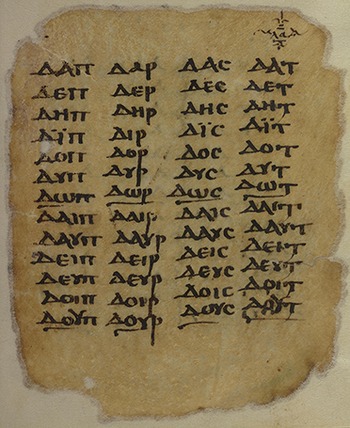
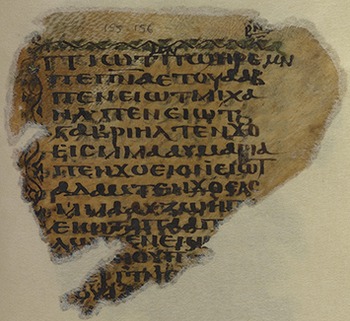
The codex begins with a painstakingly arranged syllabary (see Figure 7). The incomplete list of syllables extends over sixteen pages, each page containing four columns of alphabetically arranged syllables with regularly alternating vowels or diphthongs between two letters. This should not surprise, as syllables are the basis of reading and writing competences. Even today, although young students may learn the names of letters according to alphabetic order in song, they do not learn to write and read first A, then B, C, and so on, but start with the letters of the most frequently used syllables. Thereby, short words like MUM or DAD can soon be read and written and provide the pupil with early successes. Exercises in syllables train the eye to look for meaningful units rather than for individual signs, and ultimately enable fast reading. The importance of syllables for primary education was acknowledged by Greek and Roman orators and in monastic rules.Footnote 115 Even more widespread than literary testimonies to the importance of syllables are actual syllabaries.Footnote 116 Since Jewish Aramaic and Syriac do not visualize syllables because they lack vowels, exercises involving the permutation of vowels within syllables, as seen in Greek or Coptic, were not possible. Instead, the first steps in learning to read Hebrew, Aramaic, or Syriac likely involved reading short words aloud and memorizing their spelling. At the School of Nisibis, the teachers would quickly move on to reading the Psalms (in Syriac) with the pupils, which were then read aloud syllable by syllable.Footnote 117 A third-century papyrus fragment of the first psalm likely preserves a respective reading template: the words in the text written in scriptio plena (i.e., vowels are indicated by dots) are parsed into syllables by middle dots.Footnote 118 Learning how to spell and read syllables was thus not a quiet affair, and the Babylonian Talmud is quick to associate “the noise of children” mentioned in the Mishnah with the noise produced by schools (m. BB 2:3; b. BB 21a).
P. Cotsen Princeton (Sahidic Coptic Schoolbook manuscript, Manuscripts Q 40543, leaf 00000005),
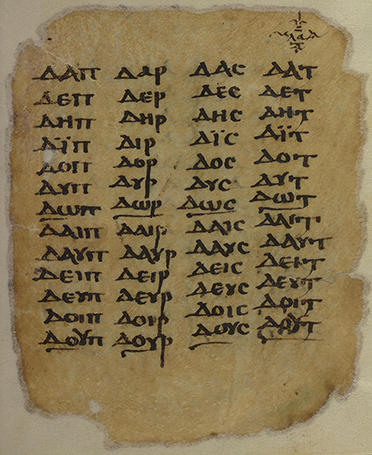
After the syllabary, P. Cotsen-Princeton I continues with two alphabetically ordered wordlists, neatly arranged in two sections. The first section contains words made of two syllables with the syllables divided by a small gap, the second section supplies the now slightly advanced reader with (mostly) four-syllable words parsed again syllable by syllable. Interestingly, some words are not in the nominative case; some are listed with their articles or have three syllables instead of two. They seem to have been used for direct application (and assignments such as “find this word in the text” or “find this word associated with an icon on the wall”) and vocabulary-building purposes in addition to grammatical exercises. Most of the words on the list are biblical nouns or verbs, important in the monastic or at least Christian liturgical context in which the acquired literacy would have been applied.Footnote 119
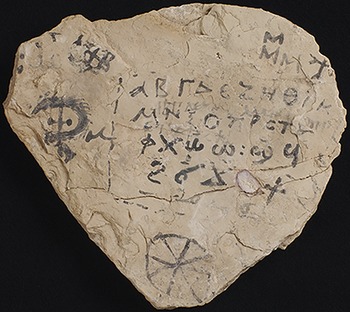
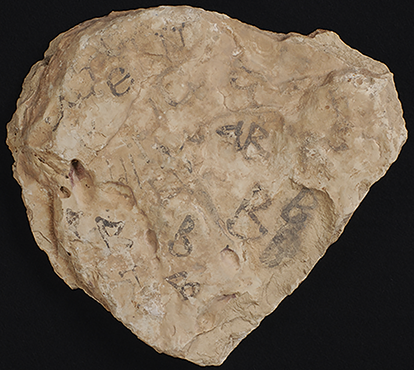
These wordlists illustrate the double ordering use of the alphabet. For one, the fixed order of the letters helps to retrieve individual words, while the sequence of the alphabet also imposes an order on the words. Throughout antiquity the alphabet is not often used for structuring and orientation purposes because letters also carried a numerical value: in Greek, Coptic, Aramaic, Hebrew, and Syriac letters represented numbers as well (see examples in Figures 8 and 9).Footnote 120 Ordering by alphabet thereby always implied the creation of a certain numerical hierarchy.
Front of ostracon with Coptic alphabet, a fraction circle, and some scribbles. The ostracon is a palimpsest; traces of earlier use are visible. O. Gurna Górecki 142 [C.O. 074],
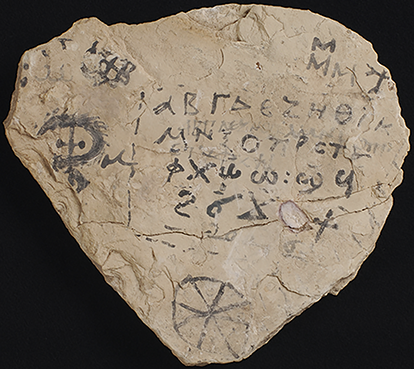
Back of O. Gurna Górecki 142 [C.O. 074] with scattered letters or numbers,
If it were not for the numerical value of letters, the ubiquitous fixed ABC order could not be explained or justified, and there would be many different ABC sequences. Interestingly, differently ordered alphabets exist. Three different “tongue-bridles” or “tongue-twisters,” (chalinoi, χαλινοί) appear repeatedly and in very different contexts. They are pangrams, sentences that contain each letter of the alphabet once. Although opaque in content, the chalinoi mimic the structure of Greek words and Greek syntax as closely as possible.Footnote 121
The most comprehensive source on the chalinoi is the theologian Clement of Alexandria. What Clement has to say about the chalinoi is a good example of the late antique distinction between difficulty levels (“beginners” and “advanced”), rather than by age and maturity. Although he refers to the chalinoi as exercises used in elementary education, Clement goes on to provide a complex exegesis of each pangram.Footnote 122 The most popular of these semi-intelligible alphabet verses translates (more or less) as follows: A splendid cloak wears the guardian who bends under the yoke the forehead of beasts (Ἁβροχίτων δ´ὁ φύλαξ θηροζυγοκαμψιμέτωπος).Footnote 123 It has been found in very different contexts, on a bookmark, a pottery fragment or as the basis of a cipher.Footnote 124 The hands that wrote the sentence are similarly diverse, ranging from a calligraphic style to biblical majuscule to “moderate.”Footnote 125 The variety of places where this alphabet verse was found, the different hands and, finally, the association of the “guardian” (φύλαξ) with Christ in Late Antiquity show that the verse was not only used for educational but also for amuletic purposes.Footnote 126
Names of Letters and Essence of Words
P. Cotsen-Princeton I continues with a list of the names of the letters of the Coptic alphabet. Although the names of the letters were certainly introduced at an earlier stage – Jerome suggested that the noblewoman Laeta teach her daughter Paula the names of the letters through a simple song (Letters 107.4) – the correct spelling of the names of letters, which will later be a valuable resource in exegetical activities, was not important at the time.Footnote 127 Language was considered to be anything but arbitrary, and this was all the more true for texts that were supposed to convey divine truths. In rabbinic tradition, the Torah was read as the blueprint God used when he created the world, an idea also found among Christians East and West, such as in Ephrem of Edessa or Augustine, who speak of the two books, which God authored: Scripture and the liber creaturae, the book of creation.Footnote 128 In this intellectual context, each word was believed to refer to more than its literal meaning. For example, since the Hebrew Bible uses seven different terms for “heaven/sky,” and seven different terms for “earth,” rabbinic tradition concluded that this indicated the existence of seven heavens, which, in turn, corresponded to seven earths.Footnote 129 Just as letters were thought to indicate the essence and characteristics of the thing they denoted, so the letters that formed the names of the letters were of primordial significance.
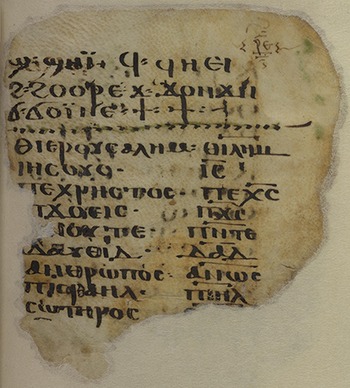
The Christian custom of marking certain sacred words by contracting them and adding an overline is closely related to the idea that letters are connected to the essence of the things they denote.Footnote 130 The overline serves as a visual sign of veneration and alerts the reader.Footnote 131 The next section in the textbook P. Cotsen-Princeton I introduces students to the visual and sacred dimension of certain words with a list of such nomina sacra (see Figure 10).
P. Cotsen Princeton (Sahidic Coptic Schoolbook manuscript Q 40543, leaf 00000043),
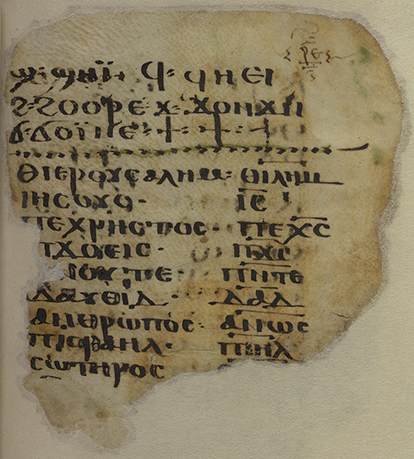
Nomina sacra are already present in the earliest Christian manuscripts, where they were used for divine names. Later, the category was enriched by other dogmatically important words. The vocabulary considered worthy of an overline thus reveals the idiosyncratic processes of negotiating relevance and meaning in different religious communities. The section further introduces two common monograms, one for “Christ” and one for “The Holy Mary” that are made of two interwoven letters.Footnote 132
Importance given to words through visual reverence can also be observed in the so-called Greek magical papyri, where the names of gods are replaced by symbols.Footnote 133 The Jewish custom of abbreviating the name of God in the Tetragrammaton is well known, but the name was not additionally marked. Visual peculiarities in the texts of early Bible manuscripts – unusual punctuation, larger or smaller letters, a glitch – were duly noted by Jewish communities, carefully transmitted, and thoughtfully interpreted.Footnote 134 Similarly, the purpose of the list of nomina sacra in Codex P. Cotsen-Princeton I was not only to familiarize students with these overlined contractions, but also to sensitize them to anomalies and “special words” more generally, as suggested by the rest of the section. It continues with an “interesting mixture of Greek and Coptic elements” only few of which can be associated with standard abbreviations, while the last part provides a “list of mainly nonsensical words.”Footnote 135 Although this list was used to practice the reading of nonintuitive words, the confrontation with such artificial words during the educational process (and with quite a number of them, as the list seems to have run over ten pages with two columns per page) left students with a certain familiarity with artificial words. This knowledge seems to have crystallized into incomprehensible voces magicae used for transmutation purposes, which were a distinct phenomenon of the time.Footnote 136 The notion that this exercise was intended to (or at least had the side-effect of) initiating the student into the time’s “word alchemy” is supported by the fact that someone filled a blank space between the subsequent “list of the peoples and kings defeated by the Israelites” and a list of the “Chiefs of Edom” with nonsensical word experiments, anagrams, and the six letters of Coptic alphabet borrowed from Demotic.Footnote 137 Some of these additions can be classified as scribal entertainment or pen exercises, while others may be an expression of devotion, or a wish for protection or change of some sort.Footnote 138 Possibly they all are a bit of both.
Since letters are also numbers in Coptic, it is difficult to say whether a jumble of letters is intended as an incomprehensible word or a string of numbers, and this may be the moment to reflect a bit on mathematical education. The “letters equal numbers”– system did not have the optical advantage of the decimal system with its “place value notation,” and basic arithmetic was more difficult.Footnote 139 One plus ten in the decimal system can be visualized as 10 + 1 = 11, while in the Hebrew alphabet used by the Jews of Late Antiquity it would read א + י = יא, which may seem comparable. But, as Alexander Jones noted for the Greek alphabet, “having learned that B [β] plus E [ε] equals Z [ζ] (2 + 5 = 7) does not make it immediately obvious that K [κ] plus N [ν] equals O [ο] (20 + 50 = 70).”Footnote 140 In Judeo-Aramaic, writing a number such as 451 meant carefully breaking it down into the numerical components that could be expressed by letter-numbers: 400 + 50 + 1 (א+נ+ת). A number such as 900 was thus already an arithmetic operation in itself: 400 + 400 + 100 (ק+ת+ת). The visualization of numbers with fingers, the use of abaci and tables to learn basic additions, multiplications, and fractions by heart was inevitable and especially the latter are well attested among papyri.Footnote 141 Augustine also records an elementary mathematical song: “one plus one is two; two plus two is four” (Confessions 1.13).Footnote 142 Most people would contend with the understanding of the basic units and fractions used in the marketplace, while others tried hard to learn some geometry.Footnote 143
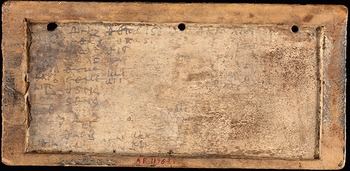
Wax tablet from Antinoe, Egypt, third/fourth century CE, with product or fraction tables.
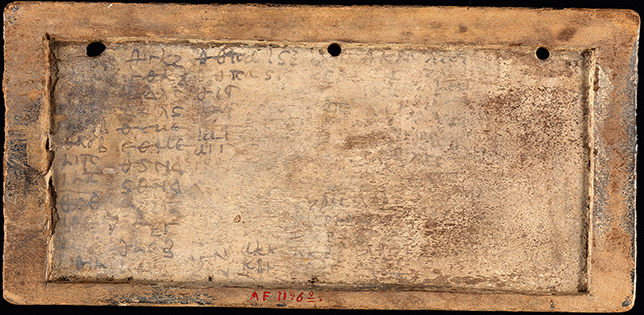
Figure 11 shows one of three wooden tablets (fifth/sixth century CE, Antinoe, Greek) with product or fraction tables (depending on whether they are read from left to right or right to left), covering 2 to 50 and 5,000 to 9,000. This is one of the rare cases in which we know who the tables belonged to: Aurelius Papnouthion son of Ibois.
| The first table reads: | The last table reads |
|---|---|
| 2 1 2 | 9,000 5 45,000 |
| 1 2 2 | 9,000 6 54,000 |
| 2 2 4 | 9,000 7 63,000 |
| 2 2 4 | 9,000 8 72,000 |
| 2 3 6 | 9,000 9 81,000 |
| 3 2 6 | 9,000 10 90,000Footnote 144 |
However, much of late antique mathematics relied on proportions and concrete measures, such as cups or fistfuls, rather than absolute numbers.Footnote 145
Because letters had a numerical value, words could be read – at any given time – as a sum. The sum of a word was used to further explore the range of a word’s meaning through the meaning given to the respective numbers or by connecting that word to other words with the same numerical value. The method is called isopsephy in Greek or gematria in Hebrew. The Greek term literally means “equal [amount of] pebbles” and thereby points to the very haptic way in which arithmetic skills were applied.
Names
In its next section, Codex P. Cotsen-Princeton I provides five lists that allowed the teacher to introduce basic catechetical knowledge along with the grammatically correct way of spelling it. The list format allows for easy copying and later retrieval by students and can serve as a mnemonic device. The arrangement of the lists highlights priorities: content from the Hebrew Bible is framed by fundamentals from the New Testament:
(1) a list of the virtues of the holy spirit
(2) a list of the cities of Judah by district
(3) a list of the people and kings defeated by the Israelites
(4) a list of the chiefs of Edom
(5) the genealogy of ChristFootnote 146
Nouns and especially names were generally the first words students would read and write after they mastered the syllables.Footnote 147 To prevent students from relying on guesswork, teachers chose words that were not too common, even obscure, thereby continuing the line of the previously introduced artificial syllable-words. These unfamiliar words trained careful reading and attentive copying. Similar practices, which appear to date back to antiquity, were adopted by Jewish educators who trained students in Hebrew and/or Aramaic.Footnote 148 In the case of P. Cotsen-Princeton I, the teacher found the unfamiliar words in pneumatology, the Hebrew Bible (which, in the case of Coptic, was translated from the Greek Septuagint), and the New Testament. The new vocabulary for students also gave teachers an opportunity to elaborate and explain. The fact that the lists are followed by a short excerpt from Romans 8:28–32 suggests that they were not only for reading, but also as a preparation for copying texts.Footnote 149 These first biblical passages, AnneMarie Luijendijk has pointed out, were not only chosen for their content (in the case of the passage from Romans an encouragement for the weary student: “And we know that in all things God works for the good of those who love him, who have been called according to his purpose … ”), but also to practice the already learned nomina sacra.Footnote 150 The “list of cities of Judah by district,” a copy of Joshua 15:21–62, not only challenged the students’ ability to read foreign place names, but also gave the teacher an opportunity to talk about the topography of the Holy Land.Footnote 151 The same accounts for the “list of peoples and kings defeated by the Israelites,” likewise a copy from the Book of Joshua (12:8–24), which, apart from being difficult to read, allowed the teacher to expand on the respective battles and victories, perhaps supplementing the biblical stories with some ethnographic lore. The same obviously applies to the chiefs of Edom (Genesis 36:15–30) or the genealogy of Jesus (Luke 3:23–38), which are the subject of the next two lists. Although such biblical lists may have been chosen for the alien character of the names they present, the marginal biblical figures they recall – or, rather, place front and center – shaped the biblical knowledge of the students in lasting ways. This practice may explain, for example, why so many marginal details have been absorbed into exegetical traditions, why a number of marginal characters have books attributed to them, or, in the case of the nations, have come to play apocalyotic roles.
We can see how the focus on genealogies in the curriculum affected the interpretation of the Bible across different religious communities. Only an intense study of personal names could reveal that the genealogy in Genesis 4 is abbreviated, mentioning only Adam, Seth, and Enosh. Since Enosh also means “person” in Hebrew, rabbinic scholars concluded that Enosh represented the end of the primordial men created in God’s image and likeness.Footnote 152 Another example is Eber, the son of Shem and grandson of Noah, who is known only from the “Table of Nations” in Genesis 10: 21,24–25, but is identified together with Shem by a rabbinic Bible commentary as the founders of the first study house (bet midrash).Footnote 153 Numbers 11:26–27 mentions the names of two elders, Eldad and Modad, who did not go with Moses and seventy other elders into the tabernacle. There, the seventy elders witnessed God’s presence when he was speaking to Moses, and everybody in the tent began to prophesy. Although they remained in the camp, Eldad and Modad prophesied. The Bible is silent on the content of their prophecies, or the subsequent whereabouts of the two, but The Shepard of Hermas, a widely read Christian apocalyptic work from the second century CE, quotes a line from a book attributed to Eldad and Modad.Footnote 154 Whether this book ever existed beyond this very quote is less interesting for the present discussion than the fact that the two marginal figures had a book attributed to them. It illustrates the ancient focus on the names of people, nations, and places, while modern readers, shaped by their own curriculum, focus on plot and action, that is, on verbs rather than nouns.
Names and nouns are also an ideal starting point to move on to nominal sentences. A Coptic limestone ostracon found in the Phoibammon Monastery in Deir el-Bahari (sixth/eighth century) contains a list of the names of the apostles of Christ, their occupations, and their places of origin:
The apostles Jacob, Simon, Matthew, and Judas are not on the list. Possibly their occupations and places of origin were copied on a second ostracon, when the space on this stone was exhausted.
The Chreia
At this point, our small papyrus textbook appears to become a little bit disorganized. In its remaining pages, it contains first a narrative, then a colophon, the sayings (chreiai) and short anecdotes (or action-chreiai), and then again two prayers. The impression of disorganization is foremost created by the colophon, which ends the book and the reprise with a few more sayings and two other prayers. Since these prayers are written in a different hand, the addition of sayings after the colophon is inconsistent with the overall program. As we will see, the saying (chreia) forms the basis of most late antique stories and usually precedes the study of the narrative due to its brevity. It is possible that the narrative served here merely as a reading exercise, which was then followed by the manipulation of sayings in writing. Unfortunately, some pages are missing from the narrative. According to Scott Bucking’s summary, the narrative contained stories of monks (“the brothers”) whose behavior was exemplary in certain situations. It touches on moral and spiritual precepts such as “ignoring slander, refraining from sloth, and triumphing over evil in combating weakness of the flesh and spiritual poverty.”Footnote 156
Personal names such as those studied and practiced in earlier exercises also formed the basis of the chreia, which is essentially a saying: a personal name plus a line attributed to that person. The chreia that stands at the beginning of a narrative in P. Cotsen Princeton I reads: “Apa Basilios said that it is appropriate for the monk to live a life of poverty.”Footnote 157 Some chreias also resemble an anecdote. Both translations, “saying” and “anecdote,” cover parts of what constitutes a chreia, but not all of it. Nicolaus the Sophist, a (possibly) Christian rhetor and author of a fifth-century treatise on “preliminary rhetorical exercises” (progymnasmata), explains in great detail the distinction between the three basic literary units, the chreia, the maxim (gnōmē), and the reminiscence (apomnēmoneuma).Footnote 158 His delineations show that late antique students learned to be very aware of the individual building blocks of texts, such as the speaker, actions, and maxims. Depending on how these items were combined, they formed a different unit, which influenced the content and had a different effect on the audience.
A chreia is a pointed and concise saying or action, attributed to some specific person, reported for the correction of some things in life. It is a ‘saying or action’ since it is found both in words and in deeds. It is ‘pointed’ since the strength of the chreia lies in its being well aimed. It is ‘concise’ as distinguished from reminiscences. It is attributed to a person to distinguish it from a maxim, for a maxim is not always attributed to a person. It is reported for the correction of some things in life, since for the most part some good advice is involved.Footnote 159
Rabbinic literature is teeming with chreias of rabbis, a feature which lends these texts their typical discursive (“oral”) character.Footnote 160 Here is an example of a simple chreia:
Rabbi Joshua said: an evil eye, the evil inclination, and hatred for humankind put a person out of the world.
More often than such “standalone chreias,” we find webs of chreias in rabbinic texts that create structures that feel like discourses or multi-episode narratives. Compilations such as the Sayings of the Desert Fathers (Apophthegmata Patrum), of which P. Cotsen I includes a passage, show that they were also a dominant form of monastic knowledge transmission. Even Mani’s revelation recorded in the Kephalaia (lit., chapters) are rendered in the form of short speeches, often briefly contextualized with an “action” that situates the larger-than-life teacher and enlightener Mani in real life: “Once again, the teachers questioned the enlightener … .”Footnote 162 Despite their sophisticated content, all of the three compositions mentioned (the Babylonian Talmud, the Sayings, and the Kephalaia) rely on this basic literary form, demonstrating once again the powerful influence that elementary education naturally has on people’s writing habits and conventions.
In the sample-chreia as previously stated, the attribution to rabbi Joshua is not relevant to the content of the maxim. The maxim itself could also be attributed to someone else or nobody at all. The attribution is, however, important for the reception of the maxim, since it lends authority to it.Footnote 163 The next example is a saying combined with an incident, a sort of a passive action-chreia:
Moreover he [Rabban Gamaliel the son of Rabbi Judah Hanasi] saw a skull floating on the face of the water. He said to it: because you drowned others, they drowned you. And in the end, those who drowned you will be drowned themselves.
The following is an action chreia that builds up to a mini-lesson on how to behave in the event of the death of one’s slave (at least according to Rabbi Eliezer – the visitors were obviously not accustomed to or willing to treat a slave like an animal):
It happened that Rabbi Eliezer’s maidservant died, and his students came to him for condolences, but he did not accept. He entered the courtyard; they followed him there. He entered the house; they followed him there. He told them: I was thinking that you would be burned by lukewarm water, but you are not burned even by boiling water [i.e., you do not understand that I do not want your company]. Did they [i.e., earlier rabbis] not say that one does not accept condolences for slaves because slaves are in this regard like animals? If one does not accept condolences for unrelated free persons, so much more for slaves. If one’s slave or animal dies, people say to him: The Omnipresent may replace your loss.
The saying, which is quite long in this case, can easily be separated from the action and used for new chereias, prompting the question: What did Rabbi Eliezer tell his students when they came to him for condolences after his maidservant died? Or, in what context did Rabbi Eliezer say: “I was thinking that you would be burned by lukewarm water, but you are not burned even by boiling water”? The chreia always seems to be the result of an assignment of that kind and the cause of the next one.
The structure of these more elaborate Talmudic action-chreias is identical to those found in the collection of the Sayings of the Desert Fathers, as the following random example shows:
There were two brothers who were neighbors to each other; one of them would hide whatever he might have (whether small change or crusts of bread) and thrust it among his neighbor’s things. Unaware of this, the other was amazed that his possessions were increasing. Then one day he suddenly came upon his neighbor doing this and took issue with him, saying: “By your carnal [gifts] you stripped me of the spiritual [ones].” He demanded the other’s word that he would not do that anymore and thus he forgave him.
The story builds up to the saying, which in turn takes on meaning through the context provided by the action. Then again, the action or the saying could be replaced to form a new chreia (Which situation warrants the saying “By your carnal [gifts] you stripped me of the spiritual [ones]”? Which saying fits the situation of two neighbors who try to live as ascetic as possible, but one of them would get rid of his belongings by secretly placing them among his neighbors things?). It is also a small step from these short units to the lengthy narrative, which usually retains a division into short scenes consisting of an action and a dialogue. The following example from the Babylonian Talmud illustrates this well:
Rabbi Yohanan said: All his life that righteous man was troubled by the verse from Scripture: When the Lord restored those who returned to Zion we were like dreamers (Ps. 125:1). He said, “How could they be in a dream for seventy years [i.e., the time the exiled spent in Babel]?”
One day he was walking along his way when he saw a certain man planting a carob tree. He said to him: “Now a carob tree does not bear [fruit] for seventy years. Are you sure that you will live seventy years to eat from it?” He said to him, “I found the world with carob trees. Just as my ancestors planted for me, so I plant for my offspring.” He sat down to eat his meal. Sleep came upon him. While he slept, a mound of earth encircled him, and he was concealed from sight. He slept for seventy years. When he awoke, he saw a man gathering carobs from that carob tree. He said to him: “Do you know who planted that carob tree?” He said to him: “My father’s father.” He said [to himself]: “Certainly seventy years [passed] in a dream!”
He went to his home. He said to them: “Does the son of Honi the Circle-Drawer yet live?” They said to him: “He is no more, but his grandson lives.” He said to them: “I am he!” They did not believe him. He went to the study house. He heard the sages saying: “Our traditions are as clear today as in the years of Honi the Circle-Drawer. For when he entered the study house, he solved every difficulty of the sages.” He said to them: “I am he!” They did not believe him, and they did not treat him with the honor that he deserved. He prayed for mercy and his soul departed. Rava said: “Thus people say, ‘Either fellowship or death.’”Footnote 167
Without paragraph breaks, the story can be read as a seamless composition that answers the question raised by an unnamed “righteous man” about how the exiled could have been dreamers for seventy years (per Ps. 125:1). The answer is given in the form of an episode from the life of the enigmatic miracle worker Honi the Circle-Drawer known from the Mishnah (m. Taanit 3:8). But the story essentially consists of two independent action-chreias which each cumulate in a maxim (“I found the world with carob trees. Just as my ancestors planted for me, so I plant for my offspring” and “Either fellowship or death”). In continuation of their basic education as outlined previously, late antique authors tend to “break a subject up into discrete compositional units. … the individual compositional unit [is elaborated] at the expense of the unit as a whole.”Footnote 168 These individual units are then connected by (new) thematic links such as chronology, characters, or themes.Footnote 169
Late antique literature more broadly has long suffered from the verdict that it is unoriginal compared to the written output of antiquity. This judgment has been criticized because it depends heavily on the definition of “originality.”Footnote 170 It becomes indeed obsolete when set against the didactic aims of Late Antiquity, which were not interested in originality or creativity. Instead, and still very much informed by the original legal purposes of rhetorical training, literary training aimed at persuasion, verisimilitude, and argumentative rigor, not originality or creativity. The writing assignments were not free in the sense of “Write about the last festival you attended,” but were tied to the modification of templates and the use of sayings. Students had to add a moral in the form of a saying or maxim (at the beginning or end) and change the content of the story accordingly. Or, more challenging, they had to find or rearrange a story to fit a given saying or maxim. Other exercises required the addition of a dialogue between the protagonists, or a full speech.Footnote 171 It was important that they stayed in character throughout these exercises to maintain the narrative’s convincing nature. Of course, this practice created a great deal of overlap between religious communities, as teachers, students, and writers were constantly in need of model actions and sayings. Not surprisingly, then, the story about Honi the Circle-Drawer quoted earlier is a modification of a template found in the Palestinian Talmud (p. Taanit 3:9), which, in turn, is based on other templates.Footnote 172
Problem Solving
In a next step, students learned how to solve problems, that is, to provide answers to difficult exegetical and dogmatic questions. This step is not explicitly recorded in P. Cotsen Princeton I, but it could have been practiced based on the material with which the students were already familiar. In religious contexts, this meant resolving inconsistencies in the biblical narrative, filling in information gaps, or explaining seemingly contradictory statements or verses within the biblical canon. We have already encountered such a question and its explanation earlier with the “dreamers from Babylon,” and rabbinic texts provide many more examples. A story in tractate Gittin (68a–b) answers the question, “How could Solomon build the temple without making noise?,” a fact briefly mentioned in 1 Kgs. 6:7. Tractate Shabbat 55a–56b contains three answers to an assignment that may be summarized as “Which biblical figure is wrongly accused of sin?”
Since the Babylonian Talmud, a sixth-century rabbinic compilation from Sassanid Persia, arranges its material associatively, exercises that may have been written based on the same assignment are often found in different places. In tractate Niddah 24b, however, the model story and two student (or scholar) versions seem to be collected in the same place. All three pieces begin with “Abbah Shaul said: I used to be a grave digger.” In the first piece, this Abbah Shaul recounts his observations of how a person’s eating and drinking habits during their lifetime affect their bones. In the following two pieces, Abbah Shaul discovers an enormous femur and is told that it belonged to Og, the giant king of Bashan (according to Deut 3:11). In a third story, Abbah Shaul falls into a gigantic eye socket and is told that it belonged to Absalom (characterized in the Hebrew Bible as vain and greedy). All three stories respond to the challenge to think of different types of bones that Abbah Shaul, the grave digger, might have found.
The monastic chreia collected in the alphabetical and anonymous Sayings of the Fathers only rarely quote the Bible. Of the 1,190 sayings in the Greek systematic collection, only 155 clearly reference the Bible.Footnote 173 And even in those, the monastic lifestyle and individual problems and challenges attached to it are made the topic of interest, not exegesis. They often begin with “[Abba (father)] what should I do?,” “Abba, give me a word,” “Abba asked him [a certain anchorite monk] about some impure thoughts,” or “If anyone is detected in a transgression and [then] returns, does God forgive him?”Footnote 174 Beyond mere intellectual exercise, Scripture- or monastic rule-based problem solving was, at least in the monastic milieu, an important way to confront daily challenges.
Rabbinic study circles were particularly interested in the legal usefulness of the exercises offered by the rhetorical curriculum, the resolution of potential or real cases raised by the Torah, the deduction of new laws, as well as the refutation and confirmation of laws. Since the extant Greek progymnasmata all place “law” at the end of their curriculum, an accomplished rabbinic scholar would have had to pass through the other stages first. The problem is that there is no evidence of a Christian or Jewish curriculum like the progymnasmata. Yet, the absence of a curriculum or textbook does not exclude its existence. By the sixth century, the spread of a Syriac translation of the progymnasmata, or at least the consistent use of similar exercises, can be felt “even amongst the lower end of the literacy spectrum” of Syriac-speaking students.Footnote 175 Late antique empires were not only multicultural; many people were also multilingual. In the beginning of the transmission process, teachers may have studied at a Greek school and continuously imported and adapted basic rhetorical exercises such as anaskeuē and kataskeuē (“refutation” and “confirmation” of arguments), enkōmion (“speech in praise of someone or something”), synkrisis (“comparison of persons or things”), ethopoiía (speech in character), or ekphrasis (“vivid description”) for other languages.Footnote 176
The students following the P. Cotsen Princeton I curriculum completed their elementary literate education after reading, and possibly adapting the narrative, expanding the sayings with actions, or solving problems raised by the biblical text. Some students may have moved on to rhetorical studies, while others continued reading and writing for personal or congregational needs. P. Cotsen Princeton I ends with a colophon – perhaps another model for teaching students how to complete a manuscript – a blessing for those who use the book and, after three more edifying and lengthy action-chreia, with prayers written by a different hand (see Figure 12).Footnote 177 The practice of reading and writing is, once again, marked as a spiritual act.
P. Cotsen Princeton (Sahidic Coptic Schoolbook manuscript, Manuscripts Q 40543, leaf 00000085),
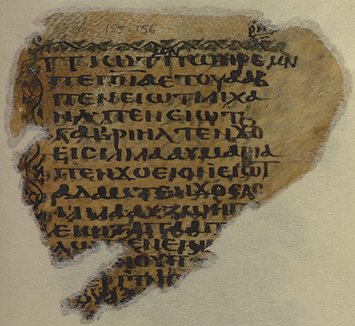
In addition, these prayers come full circle to the purpose of the educational journey undertaken, which is not only intended for personal growth but also to enable participation in the liturgical and exegetical efforts of the community. Prayer is both a communal and a personal activity, articulated orally and in writing. Many of the texts found in the Monastery of Epiphanius in Thebes, for example, were prayers written on ostraca.Footnote 178 Blessings were often worn as amulets, and both individuals and communities owned prayer books.Footnote 179
The next section discusses ways in which late antique religious communities learned and perpetuated knowledge together.
Learning as a Community
Education through Performance and Song
Synagogues, churches, and Manichaean communities educated people on various levels – cognitive, emotional, and spiritual – and by various, albeit similar means. A rapidly growing number of signifiers was supposed to clarify the “who is who” and “what is what” in an increasingly diverse array of foundation stories and teachings between classical myth, the Hebrew Bible, the New Testament, Mani’s prophecies, and the growing number of martyrs and saints.Footnote 180 The decoration of meeting halls, icons, relics and other sacred or venerated objects together with the ritual use of bread, wine, oil, and incense activated the senses, carried meaning, and literally incorporated knowledge.Footnote 181 In this world, “the discursive is shaped by material contexts even as it gives meaning to significant objects.”Footnote 182 Floor mosaics, a wide-spread art form in Late Antiquity, had the advantage over wall paintings of immersing people in canonical content by actually placing them into a certain salvation history.Footnote 183 In addition to these visual stimuli, the repeated burning of incense in these places left a distinct odor and distinguished them as altogether different topographies, even different times.Footnote 184 Bound up with content, these olfactory, visual, and tactile stimulations affected people’s emotions, mindfulness, and attention. Religious education was thus kinesthetic and affected the entire body, not just the brain.
The Mystagogical Catecheses of Cyril of Jerusalem show how the architecture of religious buildings, in this case a baptistery, and their decoration were designed for and part of distinct ritual practices. In the outer hall of the baptistery, the catechumens are supposed to turn to the west, the region of darkness (where the sun sets), the dominion of Satan. They should stretch out their arms and say, “I renounce you, Satan!” Upon this, they should look at Moses, who delivered the Israelites from their Egyptian oppressors, and then turn to Christ, the Lamb of God, the Savior from evil spirits. It must be assumed that images of Moses and Christ were painted on the western wall of the outer hall so that the catechumens would see them when they turned around. The eastern wall, to which the catechumens were to turn once they had completely renounced Satan, was likely decorated with an image of Paradise, which, as Cyril notes, “God had planted … in the east” (Gen 2:8).Footnote 185
Recent scholarship has amplified the performative nature of certain liturgical components such as poetry, provocative and interactive homilies, or antiphonies. In all of these and across different synagogue and church liturgies, Laura Lieber has identified at least occasional communal participation.Footnote 186 Many poems incorporate (parts of) daily prayers familiar to the audience, biblical verses and patterned language that allowed the audience to join in. Liturgical poems, such as the Jewish piyyutim, which are sometimes lengthy and sometimes rhythmically arranged, appear to have been enacted, danced, or sung.Footnote 187 These performances gave depth to the reading of the biblical text and provoked emotional sermons by highlighting controversial aspects of the biblical text. Unsurprisingly, given the focus on marginal figures in elementary education, they gave voice to such figures as Isaac, who wrestles with his fate on the altar in an acrostic poem:
This poem, written in Judeo-Palestinian Aramaic, imagines in 20 verses what Isaac may have said while tied to the altar as his father, Abraham, prepared to kill him. It is a moment in which the biblical text silences Isaac (Gen 22:9–12). While the acrostic is clearly an example of ethopoiía, a rhetorical exercise in speech in character, the poem ultimately accomplishes more. It explains for example, why God changed his mind about Isaac’s fate:
According to the poem, it was due to the intervention by the three men, here called angels, who had enjoyed Abraham’s hospitality (Gen 18:1–8) that Isaac’s life was spared. The poem thereby adds a new theological layer, while at the same time providing “an exegetical response to the prompt ‘What would Isaac say atop the altar?’”Footnote 190 Even those in the audience who had no formal training in ethopoiía were surely inspired by this poem to fill other gaps in the biblical text with similar monologues – though perhaps not in the form of an acrostic, never performed, and perhaps not even in writing. On the one hand, the content and form of this poem reflect the author’s education. On the other hand, it teaches the audience in the synagogue how to read and expand the biblical text.
Apart from enhancing a story with depth and adding an entertaining and lasting effect, ethopoiía unassumingly merged exegetical conventions with the biblical text. A Christian papyrus codex from Egypt preserves two poems, one which responds to a question “What did Cain say after he murdered Abel?,” and one that responds to the question “What did Abel say after he was murdered by Cain?” (technically speaking, the latter is an eidolopoiía, since the person delivering the speech is dead).Footnote 191 The speeches are clearly marked by a certain theological interpretation of the text: Cain realizes his mistake and sees his future in Tartaros, while the dead Abel is already in paradise and praises god. The speeches conform to rhetorical expectations and were certainly meant for public reading, even performance. In their emphasis on the fate of the two men (rather than, say, their actions), the poems reveal a similar reading of this text to the one suggested by John Chrysostom when he used the story of Cain and Abel to teach fathers how to tell their sons a biblical story. Yet, rather than on long-winded speeches, Chrysostom wants fathers to focus on the emotions, which the story should evoke in the child. Thus, the child should be amazed (thaumazei) at the fact that Abel’s soul was elevated into heaven, and in agony (agōniōn) over Cain’s fate who will continue to live “just as when you are standing in front of your teacher.”Footnote 192 Chrysostom was apparently aware of the fact that an emotional response to content facilitates memorization.
Singing played a significant role in the education of religious communities as well (Figure 13). The amount of content that people can memorize through the virtue of a melody is astonishing. The problem is that musical notation is rare, and without it, historians cannot distinguish lyrics from poetry. Although large portions of the liturgy may have been cantillated or sung, there appears to have been “no established system for noting melodies for approximately three hundred years,” that is, between the fourth and seventh centuries.Footnote 193
P. Oxy. 15 1786, third-century papyrus with Greek hymn to the Trinity appended with the Alypian musical notation system.

A simple way to indicate the melody was to double vowels to mark their prolongation. A double-sided papyrus fragment (opisthograph) from the sixth or seventh century contains two hymns notated in this way that may have accompanied baptisms. The recto contains the account of Jesus’ baptism in the Jordan according to the Gospel of John (Figure 14), while the verso contains a version of Miriam’s song of victory after the crossing of the Red Sea (Figure 15).Footnote 194
Ägyptisches Museum und Papyrussammlung, Staatliche Museen zu Berlin, Scan: Berliner Papyrusdatenbank, P 16595, recto.
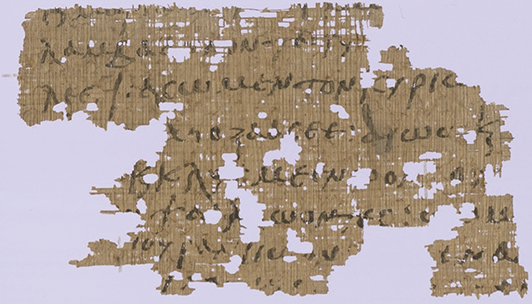
Ägyptisches Museum und Papyrussammlung, Staatliche Museen zu Berlin, Scan: Berliner Papyrusdatenbank, P 16595, verso.
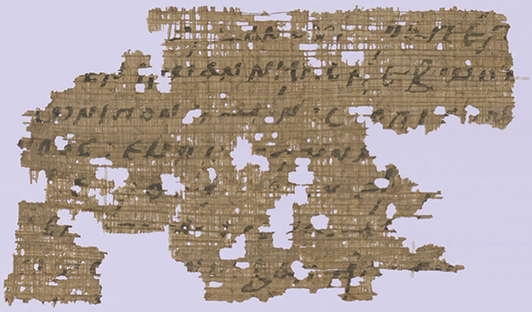
Without notation, hymns could only be learned with a teacher or in a group. Especially in the case of choirs, this instruction may have included explanation of the content as well.Footnote 195 Then again, hymns were well suited to simply “disseminate that education to the congregation in a public liturgical context.”Footnote 196 In Syriac liturgies, singers or choirs sang the verses while the congregation chanted the refrain. This type of poetry called madrashe appears to have been sung by female choirs, thereby imbuing these women with an extra level of mnemonic strategies and knowledge.Footnote 197
Romanos the Melodist, a sixth-century hymnographer and deacon from Constantinople developed an antiphonal hymnic genre, the kontakia.Footnote 198 Compared to the madrashe, they are less doxological and more narrative in content.Footnote 199 There was always a short refrain that had to be repeated by the congregation. It was short enough to be easily memorized without turning into a meaningless mantra, and just long enough to carry meaning even without context. For example, after “only Adam dances” the refrain changes to “so that Adam might dance” in the kontakion On the Passion of Christ.Footnote 200 In On the Nativity I, the refrain goes “a child now, God before all ages” and in The Sinful Woman it is “the filth of my deed.”Footnote 201 Romanos makes the congregation relive and be part of the salvation history, also with his recurring calls to “let us hurry,” “let us see,” “we have found joy.”Footnote 202 Singing was also seen as a means to maintain or restore order in the cosmos.Footnote 203
Through singing antiphonally, in a choir, or as a community, people learned their Scriptures. The most voluminous Manichaean books are those filled with Manichaean psalms, and Mani’s followers called themselves the “lovers of hymns” and “lovers of music.”Footnote 204 Singing was a central part of the Manichaean community, its formation and preservation, as the psalms had an instructive, disciplinary, emotional, empowering and grounding effect on the singers.Footnote 205 In the absence of a teacher, it was singing that held the community together in the village of Kellis; they sang anthologies of Manichaean psalms from wooden planks and papyrus sheets (see Figures 16 (a) and (b)).Footnote 206
Pictures of two folios from the wooden codex T. Kell. Copt. 2. The codex contains an anthology of six Manichaean psalms (abbreviated, “only the beginning of each strophe is given”) and an eschatological prayer (written by two different hands).
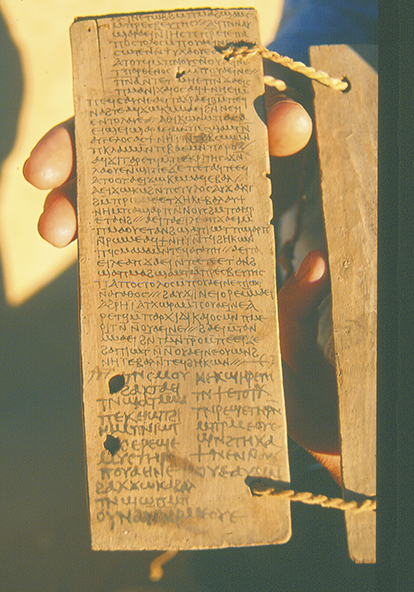
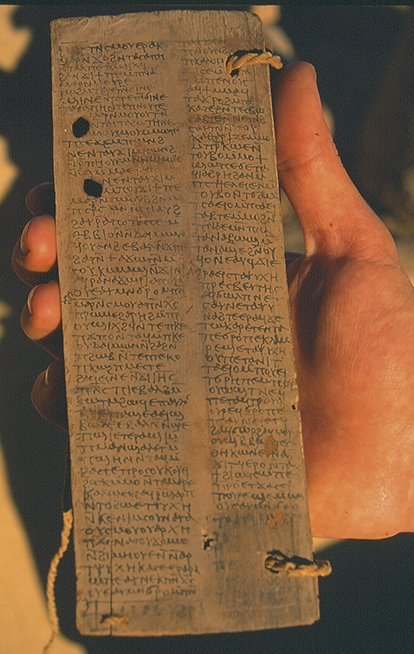
Bern, Burgerbibliothek, Cod. 212, f. 113 r – Composite manuscript: artes et carmina.
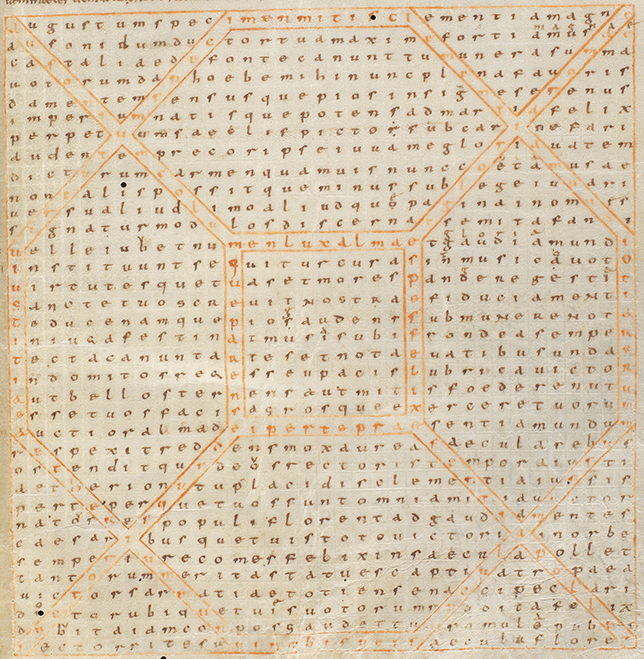
Against the evidence for singing in Christian and Manichaean communities stands the vacuum of information about Jewish singing in Late Antiquity. The problem is that we have to rely largely on rabbinic texts for the period, and the rabbinic scholars were not interested in discussing synagogal liturgy, although rabbinic texts seem to preserve occasional hymns.Footnote 207 However, there is evidence from the second century and later, from the ninth century, that Jews participated in the anthologizing of psalms in song by creating a sort of cento with psalm quotations (on the cento see the section “Female Excellence”).Footnote 208 Moreover, an inscription in the catacombs of Rome refers to a Jew as a psalmōdos, a psalm singer, which may be a reference to his duties in the synagogue.Footnote 209 The floor mosaics at Huqoq depict each biblical situation in which or because of which someone in the Bible is said to have sung: Moses’ and Miriam’s song (Exodus 15), Deborah’s song (Judges 5), Jonah’s song (Jonah 2). The Septuagint preserves a hymn of praise to creation sung by the three young men in the fiery furnace (Daniel LXX 3:51-90), who are likewise depicted in one of the panels. These images may point to the liturgical practices the floor was intended to support.
Education through Lectionaries and Homilies
Religious education is fostered, of course, in the sermon, and its impact is supported by the multisensory, immersive web created by the different components of a service. The sermon was supposed to instruct the mind, regulate the emotions, invigorate the spirit, and redeem the soul.Footnote 210 Together with the liturgy and the repeated reading of biblical and other authoritative texts it provided Jews, Manichaeans, and Christians with distinct “cultures of reference” that shaped their literary and aesthetic production.Footnote 211
Repetition played a crucial role in the formation of a common repertoire of references. In synagogues, the Torah was read on Mondays and Thursdays, while the main service was held on Shabbat morning. It consisted of a reading from the Torah (the five books of Moses) and additional readings from the other books of the Hebrew Bible. Some books were reserved for special occasions, such as the Book of Esther, which was read on the festival of Purim. The lecture was followed by a homily, a word of hope (nechemta), and a call for the reign of God (kaddish), although much of this seems to have been in flux until the ninth century CE.Footnote 212
The regular reading of the Torah was the cause and effect of the division of the text into parashiyyot, liturgical units. The units were designed according to the following criteria: appropriate performative length so that the Hebrew-to-Aramaic translators could keep up; content, such as closed narrative sequences; and physical concerns arising from the length of paragraphs, columns, and scrolls.Footnote 213 This fragmentation certainly had an impact on how participants perceived the logic of the text, much as Eusebius’ tables changed the way Christians read the Gospels.Footnote 214 But unlike Eusebius, who created a coherent text out of four separate books, Jews in Late Antiquity came to perceive the Torah as a collection of individual textual units. Generally, cyclical readings must also have created associations between biblical and personal events and seasonal changes, with smells and weather, joy and sorrow: “the year became biblicized.”Footnote 215
Christian lectionaries developed in the fourth century as a way of linking biblical texts to time and space. The development is clearly connected to imperial construction efforts in the Holy Land and spatial supersessionism.Footnote 216 Clerics began to read pertinent biblical texts at the appropriate time and in the geographically correct place to pilgrims. Outside of the Land of Israel, the actual biblical places had to be traded in for church space and respective decoration. The Christian focus on the enactment of time and space is also apparent in the cult of the martyrs. The illustrated codex calendar “Chronography of 354 CE,” for example, pairs the information about when certain martyrs were to be commemorated with the information regarding the place where they were buried.Footnote 217 These text (from the Bible or martyrology), time, and space correlations were the beginning of a new Christian topography that was no longer based on the heroic deeds or the Greek and Roman gods, but on “torture and superhuman endurance.”Footnote 218 Both the cyclical repetition of texts and their connection to space, often in combination with monuments and inscriptions, made the respective reading memorable, while at the same time showcasing local knowledge. The increasingly dense web of local and “global” (i.e., spanning the oikoumene) places that came to play eminent roles in sermons and commemorations also added to the geographical knowledge of religious communities. Depictions of maps, significant churches and places in the Holy Land, an increased production of travel tales of saints or lists that described biblical places (onomastica) testify to the growing geographic competences of late antique Christians.Footnote 219
As early as the fourth century, a stable liturgy can be observed in the Latin Church as well. Some liturgical units were repeated hourly, others weekly, and some yearly. They consisted of prayers, hymns, and litanies full of biblical verses and dogmatic formulas that became part of people’s body of knowledge and could be quoted in arguments, letters, amulets, or incantations.Footnote 220
Churches developed incentives for active study. For those who wished to become members, study in the form of catechesis was a required for baptism and for participating in the Eucharist. These incentives applied to both sexes, and there is even evidence for female teachers in catechetical instruction.Footnote 221 Through memorization, meditation, and accompanying explanation of credos and doctrines such as “there is one God almighty, who created all things through his Word,” catechumens should come to know and internalize the truth.Footnote 222 By the fourth century, Cyril of Jerusalem had developed a curriculum for the pre-baptismal catechesis of which twenty-three lectures have come down to us. Catechumens had to attend regularly, since there would be no repetition.Footnote 223 Furthermore, they were asked to keep what they had learnt a secret, because a proper introduction was needed to understand the complexity of the matter. This approach made the mystagogical teachers (often bishops) indispensable.Footnote 224
Now when the Catechizing has taken place, should a Catechumen be asked what the teachers have said, tell nothing to a stranger; for we deliver to you mystery, even the hope of the life to come: keep the mystery for Him who rewards you. Let no man say to you, “What harm if I also know it?” So the sick ask for wine; but it would be unreasonably given them! It occasions delirium, and two evils follow: the sick man dies, and the physician gets an ill name.
To become an “illuminated” Manichaean, one had to “listen to the Fundamental Epistle,” which may have entailed memorization and the ability to answer questions.Footnote 226 These catechumens, the “Hearers,” could become “Elect” by learning how to separate light from darkness. By substituting a spiritual baptism for the physical act of baptism, Mani challenged his followers intellectually even more than the bishops.Footnote 227 The Manichaeans in Kellis depended on the itinerant teachers who visited them sporadically, and sometimes community members accompanied the teachers on their travels.Footnote 228 These travels were also important to establish and maintain a sense of community that extended beyond the family or neighborhood community. Manichaeans generally gathered in private homes, thereby cultivating what scholars have called a “family religious group style.”Footnote 229
Since being Jewish was an ethnological given rather than a choice, the incentives to study took the form of a system of appointments by local fraternities with association-like structures that are commonly referred to as the rabbinic movement. An appointment (minnuy or semikhah) could confer the title sage (ḥakim), elder (zaqen), or custodian (parnas) and came with ritual functions and responsibilities that demanded a certain amount of expertise.Footnote 230 Differences in expertise also appear to have been expressed through clothing, particularly headgear.Footnote 231
In order to climb the hierarchical ladder within a religious community, people had to study. While many community buildings may have housed some form of archive or library, people were also eager to own the necessary reading materials themselves. Many letters ask for copies of books, parts of books, or the necessary material to make a copy of a book.Footnote 232 Some books also seem to have been part of reading and exchange networks that were, or had the potential to become, exclusive.Footnote 233 The higher one climbed in the religious network through study, the more teaching responsibilities were generally involved. The Manichaean movement, for example, was organized around twelve itinerant teachers who were subordinate to Mani’s successor, the archegos.Footnote 234 In the case of the Manichaeans, “climbing” is more than just a metaphor for hierarchical advancement, as the example of the Bema festival shows. It was probably celebrated at the end of a month of fasting, lasted for four days and was dedicated to commemorating the passion of Mani. The liturgy focused on a bema, “a five-step platform representing the judgment seat of Jesus, onto which Mani descended during the festival.”Footnote 235 According to the liturgical text Bema Psalm 222, it is “a chest filled with teaching, a ladder to the heights, a counting balance of your deeds.”Footnote 236 At the beginning of the Manichaean revelation and the ascent of the soul into the light, there is learning.
Late antique liturgies make both the community and common knowledge of credos, prayers, and doctrines a prerequisite. What Lawrence A. Hoffman said in summary about Jewish worship applies, in one form or another, to all religious groups of Late Antiquity: its “primary expression … is corporate. The Jew may pray privately any time, and with any words, gestures, or songs. But the Jew must pray with the community three times daily.”Footnote 237 A minimum of ten men (quorum/minyan) is required to validate this prayer.
Individual Excellence
Continuing Education
Education in religious contexts served several purposes, including, as we have seen, community-building and the formation of conventions, but also the hierarchical advancement within the community. The impact of learning on a member’s social standing is best documented for monasteries, but it can also easily be gleaned from evidence of hierarchical structures in the rabbinic movement or the Manichaean community, where the office of the Elect was linked to knowledge and expertise.Footnote 238 This hierarchy was expressed not only through these offices, but also among the students through the proximity to the teacher during class. Disgraced students had to leave the class.Footnote 239 Similar scenes are known from the rabbinical study house, where the hierarchy was organized by posture, distance, and proximity to the teacher. While the teacher sat in an elevated chair, the students sat on benches in hierarchically organized rows. Those with the lowest social and intellectual status who were not, or not yet, the students of a rabbi, stood in the back.Footnote 240 There is also evidence that scholarship was expressed through dress: accomplished rabbinic scholars would wear their turban (sudara) in a distinctive and culturally readable manner.Footnote 241
There were basically three ways in which people who had mastered the basic education outlined previously could continue their education: by attending church services and celebrations, by meeting in special study circles, or by reading individually. While church services mostly took place in architecturally distinctive buildings (the exception of the Manichaeans has been noted), study circles are more likely to have met in private homes.Footnote 242 Some study groups were modeled after the example of Roman guilds of craftsmen and funerary associations: men gathering around meals in a triclinium or related settings, discussing business, law, and Scripture.Footnote 243 Similar to ethnic or professional associations, religious communities and study circles were responsible for social cohesion, order, and welfare. Some people were members of both vocational and religious associations.Footnote 244 In this, late antique identities were no less complicated than contemporary ones, and could be even more diverse, especially professionally.Footnote 245 Depending on the season of the year, people often had different occupations, or they served in additional functions because of the versatility of their tools or specialized family knowledge.
For many people who belonged to a late antique religious community, the educational processes described earlier were sufficient in the sense that they were satisfied with the degree of knowledge about the community to which they belonged, its doctrine and liturgical practice, and with the pace at which that knowledge increased. Others were more restless and sought to actively expand their knowledge and to keep in conversation with current issues and questions, constantly searching for ways to continue their education. Some may have felt socially pressured to do so, while others followed their bliss. Autodidacts benefited from lectures turned into books, such as Clement of Alexandria’s Paedagogus or Didaskalos, written explicitly to educate interested readers.Footnote 246
The transcripts of the lessons by Didymus the Blind offer a rare glimpse into a class curriculum designed for the transition from basic alphabetization to exegesis in a school setting that was not catechetical but approved by the bishop.Footnote 247 In the extant transcripts, Didymus, who taught in fourth-century Alexandria, moves through the books of Psalms and Ecclesiastes, explaining verses word by word, more like a grammarian than an exegete, although some of Didymus answers to student questions venture deep into theology and philosophy.Footnote 248 Didymus is also known as having authored commentaries on Zechariah, Genesis, and Job, but he uses shorter lemmas when teaching.Footnote 249 His impromptu answers to student questions – sometimes very brief, sometimes digressive or “trailing off without wrapping up a sentence” – show that Didymus is speaking to a fairly consistent group and over a number of consecutive days. His lectures follow a premeditated curriculum, since he refers to things he said the day before and anticipates topics to come.Footnote 250 Obviously, the group, which should be imagined as heterogenous in terms of age, gender, and social standing took some days, even weeks off from their other commitments to attend Didymus’ classes.Footnote 251 The lessons were simultaneously written down in shorthand and later written out in longhand.Footnote 252 Rabbinic lessons may also have been recorded apo phonēs, “from the voice” of the teacher, though by using a system of abbreviations rather than actual shorthand.Footnote 253
Producing “Books”
Many moved on to producing, copying, arranging, and paraphrasing texts by themselves after their primary education – often to the dismay of the various “men of the cloth” who had initiated the interest in the written word in the first place. In a Homily Against Heretical Books, the late sixth-century bishop John of Paralos, for example, exclaims,
For truly, their blasphemies are greater than those of the Jews and the unclean, lawless pagans. For they have written books of every blasphemy as follows: that which they entitle, “The Appointment of Michael,” and “The Kerygma of John,” and “The Counsels of the Savior,” and all the discourses of blasphemy which they have written.Footnote 254
The fact that people continued to make use of the skills they acquired in their elementary literary education within religious contexts can be observed from different angles. Somewhat casually, Athanasius of Alexandria depicts Antony as telling the monks in his Vita to “write down their thoughts … as if reporting them to each other,”Footnote 255 and John Climacus describes the following observation made in a monastery in his sixth/seventh century Ladder of Divine Ascent:
I also paid special attention to the brother in charge of the refectory. I noticed that he had a small book hanging in his belt, and I learned that every day he noted down his thoughts in it and showed them to the shepherd. I found out that many of the brothers did this also as well as he, and I was told that this was on the instructions of the superior.
The idea behind this exercise is to share one’s otherwise private thoughts in writing with the superior (shepherd) and to let him decide what to do with them.Footnote 257 Because books were expensive, rare, and often had to be returned to their owners or left in the library, readers actively took notes as they read. In a letter to the Manichaean Theognostos, there is a postscript that reads
Send a well-proportioned and nicely executed ten-page notebook for your brother Ision.
For he has become a user of Greek and a Syriac reader.Footnote 258
The postscript is written in a different hand, perhaps by an overly motivated Ision himself.
Notes for (oral) teaching, reading, note-taking, and the production of new texts obviously merged in many ways, prompting each other, but not in any systematic order.
The acquisition of books often involved the organization of the copying process by oneself or by someone else, the procurement of the necessary materials, and, most importantly, the book itself. The private letters of the Manichaean community at Kellis provide a vivid picture of their efforts to assemble a library of entire books or at least of meaningful excerpts, in their case involving a range of “biblical, apocryphal, classical, and Manichaean texts.”Footnote 259 In a lengthy letter, the Manichaean Makarios details who should read and copy what, who was not yet finished copying, and instructs that
[I]f my mother Kouria will give the great (Book of) Epistles, bring it with you. If not, bring the small one, with the Prayer-book and the Judgement of Peter.Footnote 260
A now well-known note from Oxyrhynchus similarly reads:
To my dearest lady sister in the Lord, greetings. Lend the Ezra, since I lent you the Little Genesis [Jubilees]. Farewell from us in God.Footnote 261
What kind of books did such copying practices result in? A Coptic (Sahidic) parchment codex, may serve as an example here.Footnote 262 The small codex (approximately the size of DIN A5) contains Jeremiah 40:3-52:34, Lamentations, the Letter of Jeremiah, and Baruch 1:1-5:5. As is to be expected from a costly parchment codex, the text is neatly written and the composition reflects a careful selection of texts that provide a panoply of Jeremiah’s prophecies over the nations; his laments for the destructed Jerusalem (acknowledging the Hebrew acrostic by adding the Hebrew names of the letters at the beginning of every line); a noncanonical letter attributed to Jeremiah in which the prophet continues his diatribe against idolaters; and a text named after Baruch which relates the moment when the latter read Jeremiah’s words to the exiled in Babylon and their subsequent penitence.Footnote 263 Although working with excerpts, the composition is far from random and shows clear categorization principles. The arrangement follows the order of the Hebrew Bible, before adding the Letter of Jeremiah and the text from the Book of Baruch. The latter appear on Greek canon lists, but their status seems unclear in Latin accounts.Footnote 264 Similarly, the Syriac Book of Women contains the books Ruth and Esther in the biblical order, then the Septuagint’s stories of the Jewish women Susanna and Judith, and, finally, the Life of the pagan convert to Christ, Thecla. It has been suggested that the sequence is not only a reference to seniority and authority, but that the arrangement reflects a development in female piety and devotion that climaxes in Thecla’s life.Footnote 265 While some people may have copied entire works, one by one, many others copied only the texts that were most important to them, collating them into one book guided by an overarching theme.
The so-called Dishna library, a hoard of papyri that had been buried in the ground at some point in the fifth century CE, shows how people’s literary knowledge and their intellect were shaped by years, even centuries of both accidental and conscious collections of texts. The library includes texts as diverse as “works by Menander, Thucydides, and Cicero alongside the Gospels, Psalms, an apocryphal letter of Paul, excerpts from the Septuagint, and popular apocryphal texts like the Apocalypse of Elijah, the Shepherd of Hermas, the Acts of Paul in Greek, Song of Songs and the Lamentations of Jeremiah in Coptic, Ecclesiastes in Coptic and Greek.”Footnote 266 The range of texts is obviously a far cry from representing Athanasius of Alexandria’s authoritative list of Christian books issued in 367 CE. Like the other two codices discussed earlier, those from Dishna show that the purpose of a codex-format was meant to be a library in and of itself, and scholars were able to discern overarching themes even in the most miscellaneous codices.Footnote 267 Reading and excerpting different texts produced categories; reading along these categories, again, produced frameworks of reference along which readers continued their studies and compositions. The frameworks departed often starkly from the categories and paths of thought that would have followed upon canonical reading.Footnote 268
In fact, as the requests for books found in the letters and the inventory of book lists show, the stock of biblical books was also selective and dependent on availability. Complete collections of biblical books were only present in churches and synagogues, while individuals settled for certain books or even parts thereof.Footnote 269 The relatively high cost of books, particularly of professionally produced ones, prevented many from acquiring them. Even used books were still valuable enough to become an issue in divorce and estate settlements.Footnote 270
Some, of course, were wealthy enough to assemble libraries consisting of many codices and scrolls. The pride of Jerome’s library, for example, was the books copied by Pamphilius, a student of Eusebius of Caesarea.Footnote 271 Obtaining an “autograph,” a book copied by the author himself or even the original manuscript, or a manuscript with notes by the author or another prominent student, added significance to the reading experience, a feeling of direct communication with the author. Many manuscripts are replete with notes expressing agreement or disagreement, adding cross-references, suggesting alternate wording that would better suit the meter, or notes that resulted from the collation with other manuscripts of the same text. Readers were thereby taught by several teachers at the same time.
Reading and writing was no longer only the domain of the professional and administrative scribe, but also of the monotheistic household. Of course, these were never strictly separate fields, since every scribe is also a family member, a neighbor, a friend who could provide services. But writing and copying became family concerns that extended beyond the documentary realm.Footnote 272
Devising a New Theory of the Cosmos
But people did not only advance their knowledge through the copying of texts. Cosmas Indicopleustes is a good example of an at least partially self-taught sixth-century scholar whose work, the Christian Topography, shows how he literally created a whole new universe out of the knowledge to which he had access. “Cosmas, the one who sailed to India” is the telling epithet given to the anonymous author, a merchant (possibly of spices) from Alexandria, who had first-hand knowledge of the Sinai, Ethiopia, the Mediterranean, the Red Sea, and the Persian Gulf, and who travelled at least as far as Socotra (ancient Dioskourides), if not all the way to India and Sri Lanka.Footnote 273 The Christian Topography originally consisted of five books, to which Cosmas seems to have added five more at a later date. Respective references in the text suggest that Cosmas produced three editions of his work in response to criticism. The last edition is divided into “text” and “notes,” while book 6 only responds to criticism and book 10 contains citations from patristic literature that support his thesis.Footnote 274 This shows how engaged his readers were and how important, even essential, it was for authors to respond to their readers’ criticisms and questions.Footnote 275
The second book of the Topography contains the actual argument of the work. It sets out with a short captatio benevolentiae, intended to “capture the goodwill” of the book’s addressee, a certain Pamphilus, who apparently “pressured” Cosmas to write his theory down. Cosmas, referring to himself in the “modest plural” (pluralis modestia), the first-person plural, submits to his friend’s wish although
enfeebled though we were in body, afflicted with ophthalmia and costiveness of the bowls, and as the result suffering afterwards from constant attacks of illness; while besides we were deficient in the school-learning of the Pagans [lit. the outside/external curriculum, ἕξωθεν ἐγκυκλίου παιδεία], without any knowledge of the rhetorical art, ignorant how to compose a discourse in a fluent style, and were besides occupied with the complicated affairs of everyday life. Nevertheless, you ceased not pressuring us to compose a treatise about the Tabernacle prepared by Moses in the wilderness, which was a type of copy of the whole world ( … .).Footnote 276
Cosmas clearly wants the reader to feel both pity and admiration for him because, despite his miserable condition and limited education, he wrote an original work. Then again, the late antique reader was accustomed to this scheme and will not have believed this gross exaggeration of the circumstances in which Cosmas wrote: visually impaired, with bowel troubles, and untrained in style and rhetoric. That at least the latter was not entirely true is proven by this splendid captatio.
Cosmas goes on to attribute his knowledge to the East Syrian monk Patrikios and the holy Scriptures, although he is clearly very familiar with the classical (Greek) cosmographic tradition and expects a similar level of knowledge from his audience.Footnote 277 He does not, however, give the names of the pagan authors to whom he is indirectly referring.Footnote 278 Patrikios has been shown to be Mar Aba, who was a teacher at the famous East Syrian school of Nisibis. Like the itinerant Manichaean teachers, Patrikios went “on tour” with his student and translator of his lectures into Greek, Thomas of Edessa.Footnote 279 Cosmas may have met Mar Aba during the latter’s visit to Alexandria, but it is not clear what aspects of his thesis he actually learned from him. But it seems that for his part, Mar Aba returned to Nisibis with an interest in Neoplatonic philosophy, possibly even with respective texts.Footnote 280 This is a nice example of the give-and-take of teaching and learning.
To support his thesis that the cosmos is shaped like a tabernacle, Cosmas elegantly transitions from one biblical proof text to the next. This raises the question of how he accomplished this, since he is not paraphrasing the text, but uses actual quotes. Today we would assume that he used a Bible concordance to look up words like “earth,” “heaven,” or “vault,” but we have no evidence that such works existed in Late Antiquity. The body of references must indeed have grown over time, since Cosmas’ revisions show that the Topography was a constant work in progress.
Cosmas’ work aimed to prove that the Earth is not spherical, as many believed based on the shape of its shadow on the Moon during a lunar eclipse (Prologue 2:114), but rather flat, with the heavens forming a tabernacle-shaped universe around it. Cosmas mused that the north must be somewhat elevated because rivers tend to flow south. He thought that the land mass as a whole must form a large mountain with a rounded top, whose shadow is visible during an eclipse. This argument is not only very complex, but also very graphic and Cosmas illustrated his text, or had it illustrated.Footnote 281
Cosmas’ problem with the spherical world and with pagan thinkers was their position that “whatever is spherical and perpetually rotating must necessarily be eternal.”Footnote 282 Yet, according to the Christian salvation narrative, the created world is not eternal but will perish in favor of a heavenly eternity.Footnote 283 Although we may frown, even smile at Cosmas argument today, it is important to take his work seriously. Not only did Cosmas devote much time and other physical and financial resources to this project, but he also took a considerable risk. For example, his adversary, John Philoponos, linked the Christian Topography to Theodore of Mopsuestia, who had just recently been anathematized by Emperor Justinian in 543 CE. Although Philoponos did not mention the author of the Topography by name, he exposed him to the risk of excommunication, public hatred, and ignorance of his work.Footnote 284 It could be risky to write and publish one’s own opinion.
Counting the Dots (Math)
We can also observe the results of individual efforts to improve mathematical skills and to make them useful for exegetical purposes. Math is indeed most engaging and captivating when presented or used in the form of puzzles. A collection of arithmetic puzzles, mostly dealing with fractions, has come down to us through the Greek/Palatine Anthology. There we find puzzles like the following:
“Best of clocks, how much of the day is past?” There remain twice two-thirds of what is gone.
Solution: 5 1/7 hours are past and 6 6/7 remain.Footnote 285
It is very likely that similar problems were used in religious education, which, as previously noted, must have included some basic arithmetic because the letters are also numbers. Since scholars of ancient religious texts generally do not look for the remnants of such puzzles, they can easily escape scholarly attention.Footnote 286 For example, the Babylonian Talmud preserves the following riddle, which is so well integrated into the text that its riddling character is almost obliterated, especially because the solution is not given:
Rav Pappa and Rav Huna the son of Rav Joshua once dined together, and Rav Pappa ate 4 times as much as Rav Huna …. On another occasion Rav Huna and Ravina dined together, and Ravina ate 8 times as much as Rav Huna. Then, said Rav Huna: “I would rather dine with 100 people like R. Pappa than with one Ravina.”Footnote 287
If Rav Huna were dining with 100 guests who ate like Rav Pappa, he and the other guests would be charged for 401 portions. Because there are 101 guests (including Rav Huna), each one would have to pay for 401/101. When dining with Ravina, on the other hand, Rav Huna had to split costs with him 9/2.Footnote 288 Surely there are more such puzzles hidden in the collections of religious sayings from Late Antiquity that are overlooked because they make a moral statement at the same time, like in this Talmudic example.
Another example from the Babylonian Talmud may serve here to illustrate how people used their mathematical skills to construct complex arguments that answered pertinent questions arising from a close reading of the biblical text, in this case “How high did the manna fall on the Israelites?” Through the logic of mathematics – indeed, as is briefly indicated, the argument follows the Greek formal divisions of the mathematical proposition – the question can be answered through the biblical text itself.Footnote 289
Rabbi Tarfon [and Rabbi Yishmael] and the Elders were engaged with the section (parashah) of the manna and Rabbi Elazar HaModa’i sat before them.
(Protasis/Enunciation) Rabbi Elazar HaModa’i answered and said: The manna that fell on Israel was sixty cubits high.
Said Rabbi Tarfon: Moda’i, until when will you pile up [stuff] and bring it to us?
(Ekthesis/Setup) He said to him: I am [simply] interpreting Scripture: ‘The waters rose and covered the mountains to a depth of more than fifteen cubits’ (Gen 7:20).
(Diorismos/Specification) Is it really so that [the water rose] fifteen cubits above the valley, and fifteen cubits above the lowlands, and fifteen cubits above the mountain? Is it really so that the water rose up to different levels? How would the ark have moved? Rather: ‘all the springs of the great deep burst forth’ (Gen 7:11) until the water was equal with the mountains. Returning [to the first] biblical verse] it says ‘The waters rose and covered the mountains to a depth of more than fifteen cubits’ (Gen 7:20).
(Katasteuē/Construction) If one asks whether the measure of [divine] goodness is greater than that of evil dispensation, one must say that measure of [divine] goodness is larger than that of evil dispensation. Regarding the measure of evil dispensation, God said ‘and the windows of the heavens were opened’ (Gen 7:11); regarding the measure of [divine] goodness God said: ‘Yet he gave a command to the skies above and opened the doors of the heavens; he rained down manna for the people to eat, he gave them the grain of heaven’ (Ps 78:23-34).
(Apodeixis/Proof) How many windows are in a door? Four on four, that is eight.
(Superasma/Conclusion) The manna that fell down on Israel was sixty cubits high!Footnote 290
The arithmetic operation underlying this statement is that a daily amount of 60 (4 x 15) cubits of manna fell down on Israel in the desert, whereas the waters of the flood rose to 15 cubits above the mountains, proving that divine goodness is greater than the evil dispensation that was the flood. The process by which Rabbi Elazar HaModa’i (or whoever developed this mathematical piece of exegesis) built up to the actual mathematical problem is ingenious – especially because the numerical data is mixed with data from prose and theological principles. Accordingly, the proof (apodeixis) is not confirming the arithmetical accuracy (8 x 15 is 120 and thereby twice as much as the established amount of manna), but the theological premise that divine goodness is maximally greater than the evil dispensation.
Enlightening Games
There is something wonderful and fascinating, comforting and intriguing, about puns and word games like anagrams, palindromes, the aforementioned chalinoi or the letter-number correlation in isopsephy/gematria, or a text that can be brought into an acrostic or chiastic form. All of these and many more “dalliances” with language have their roots in antiquity.Footnote 291
As we have already seen, members of late antique monotheistic communities were not ignorant of this technopaignia, a term used by Ausonius to designate the mixture between art and craft (technē) and poetic game (paignion).Footnote 292 But their interaction with them went beyond mere enjoyment to reverence and serious contemplation. For example, the words of the famous Latin palindrome-square
SATOR
AREPO
TENET
OPERA
ROTAS
became the names of the five nails with which Christ was crucified in the Coptic and Ethiopian tradition. Like the original square, the palindrome-enigma was also used in incantations:Footnote 293
( … ) I adjure you (f.) today, O male scorpion,
[12] O female scorpion, in the name {the name} of
[13] the Father and the Son and the Holy Spirit!
[14] I adjure you (m.) ⟨by⟩ the five nails which pierced
[15] Christ – whose names are: Satōr, [16] Aretō, Tenēt, Ōtera, Rōtas …
[17] – that you (f.) pierce him like fire, [18] and you (m.) roast him ( … )Footnote 294
The use of technopaignia for revelatory purposes can be observed across different genres and religious orientations. The Christian Publilius Optatianus Porfyrius (fourth century) became known for his grid poems with versus intexti, inwoven verses. The connections to the craft of weaving are thereby already made explicit by the author, and it is likely that Optatian proceeded in a manner similar to that used by weavers when they devised new patterns when he designed a poem. The poems are characterized by two layers of text: a base text and a visual text layer. The ninth-century codex from which the image below is taken (Figure 17) recognizes the literary and mathematical skills involved in Optatian’s projects by pairing his carmina with “Cassiodorus’ remarks on grammar, rhetoric, dialectic, arithmetic, music, geometry and astronomy, supplemented with excerpts from Quintilian, Boethius, Augustine and others.”Footnote 295
Optatian uses a wide range of authors to spin his poems, similar to a cento, a poem constructed out of verses or half-verses from the text of a pagan literary authority such as Homer, Virgil, or Scripture.Footnote 296 The anthologizing cento style can also be observed in prayers, songs, and amulets.Footnote 297 In poems the technique is used, on the one hand, to amaze the reader (if they are familiar with the cited text and are able to appreciate the genius behind the rearrangement), and on the other, to show that all the different voices ultimately join together to say this one thing. If the verses and half-verses are taken from the Bible, it is a testimony to the unity of the text; if they are taken from pagan authors it is a testimony to the fact that these poets had already formulated the biblical truths, albeit in an incorrect order. This seems to be the general paradigm, with which the ancient technopaignia was approached in the religious communities under discussion.
Craft and Education
Innovation usually happens through the transfer of methods and concepts from one knowledge domain to another, such as Optatian’s application of weaving technology to texts. Art has already been discussed as a means of religious education. Here, I would like to take a closer look at the innovation and excellence of religious art.
An innovative work in this sense is the Madaba Map, a mosaic floor depicting a map of the Holy Land, now part of a church in Madaba, modern Jordan. The largest fragment of the mosaic measures 10.5 x 5 m, and it has been estimated that the original mosaic may have been 24 m long and 5–6 m wide. It may have depicted essentially the area of biblical Palestine with the Dead Sea and, right next to it, Madaba in the center.Footnote 298 The map, unique to our knowledge, is characterized by a high degree of textuality (150 inscriptions in the existing fragments alone), a strong focus on the Hebrew Bible (including a delineation of the land allotted to the twelve tribes), the marking of regional boundaries, and the complete absence of roads between cities. These features raise questions about the map’s relationship to earlier maps, the artists’ and their consultants’ body of knowledge, and the choices that drove them in developing both a (possibly) new genre and a new perspective on Madaba’s place within biblical geography.
The construction of the mosaic around the mid sixth century falls into a period when Palestine was firmly conceptualized as a sacred space. This was a development prompted by Helena, the mother of Emperor Constantine, and her prominent journey to the “Holy Land” in 327 CE and the emperor’s subsequent investment in the construction of churches.Footnote 299 At about the same time, Eusebius of Caesarea, building on earlier lists, composed the Onomasticon, a treatise that organizes the biblical places, their characteristics and their placement within the present landscape by following the biblical books and the Greek alphabet. Somewhat surprisingly for a Christian scholar, out of the 800 viable places (200 others are personal names mistaken for places and duplicates), only 23 places refer to the New Testament.Footnote 300 It is possible that Eusebius’ sources were originally Jewish lists of biblical places. The Onomasticon was later (around 390 CE) updated and translated into Latin by Jerome, who decisively annexed Palestine as the Christian Holy Land and defined Jerusalem as the new navel of the world.Footnote 301 Because the Madaba Map’s creators used Greek labels, they appear to have relied on Eusebius’ Greek treatise. They adopted his focus on the Hebrew Bible but emphasized with Jerome the Christian continuation of the tradition and its fulfillment. Thus, in “The Holy City Ierusa[lem],” the city with the largest vignette, the church of the Holy Sepulcher is strategically placed in the center (see Figure 18).Footnote 302
Detail of the Madaba mosaic map, with Jerusalem to the left and the Dead Sea in the back.
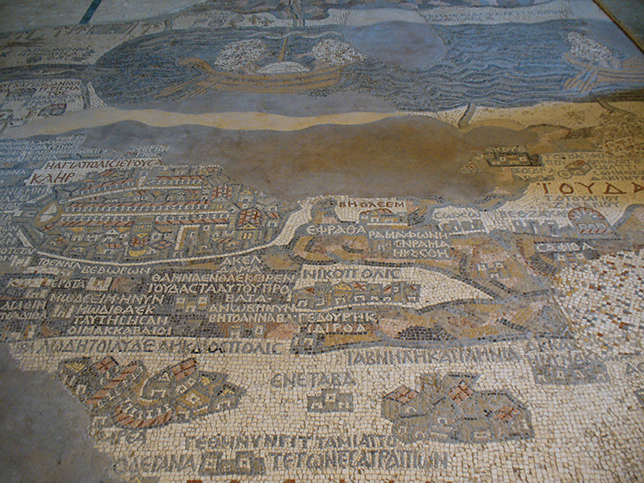
The Onomasticon or derivatives thereof were certainly among the sources for the map. But the creators supplemented Eusebius’ chorography with other, contemporary cities in and around Palestine, and may have used administrative lists of cities such as Hierocles’ Synekdemos (527–535 CE).Footnote 303 In addition, the spatial layout may have been derived from Roman road maps, as indicated by some references to milestones, yet the creators deliberately chose to leave the Roman roads out of the picture.Footnote 304 Prominence is clearly given to places, borders, and text at the expense of people and animals, which are almost completely absent except for some fish in a river, a rare lion chasing a deer, and four comparatively large men in boats on the Dead Sea.Footnote 305
The monumental map may have become a pilgrimage site in itself, another stop on the road to the tomb of Moses on Mount Nebo.Footnote 306 Indeed, the mosaic floor map enabled people to embark on a mini-pilgrimage, regardless of whether the original location of the mosaic was actually in a church.Footnote 307 The idea and its execution are truly innovative in that it brings together craftsmanship, spatial and textual literacy, and combines all three into something new.
Female Excellence
In a society in which slaves were stenographers, the question of whether women, the servile gender, were taught to read and write is somewhat moot. Rather than questioning whether it was appropriate for women to acquire basic training in these servile skills, men debated what the content of the studied texts should be, which method should be used, and which teachers would be appropriate.Footnote 308 In his already mentioned catechisms, for example, Cyril of Jerusalem gives instructions on how catechumens should wait for their exorcism while it was someone else’s turn. He does not distinguish between the reading ability of the waiting men and women, but he wants them to wait differently: the women should read or sing silently in order to keep the Pauline command “Women should remain silent in the churches” (1Cor 14:34). Men, on the other hand, should read to each other, pray, or speak edifyingly.Footnote 309
Of the letters from the Manichaean community in Kellis, more than forty percent “were either written by women, or addressed to them” and “the correspondences of [the Manichaean men] Makarios, Matthaios, and Piene reveal that ‘mother Maria’ in Kellis was kept in the loop for all daily accounts and expenses.”Footnote 310 Women have been implicated in all the stages of education, including excellence, yet female learning has already in Late Antiquity been cast in terms of consumption: women are generally depicted as consumers of the literary productions of men, they rely on male answers to their questions, male historiography, male biographies, male commentaries.Footnote 311 Even biographies of female Saints written from a female perspective, such as the Life of Helia or the Life of Thecla were written by men.Footnote 312 Quite vividly, Gerontius writes of Melania the Younger that she prepared for her pilgrimage to Egypt by reading “through the Lives of the fathers as if she were eating dessert.”Footnote 313 Jerome writes to Furia, “one of the many rich and noble ladies who gathered round Jerome while he was living in Rome,”Footnote 314 that
When you are eating, remember that immediately afterwards you will have to pray and read. Take a fixed number of lines from the Holy Scripture and show them up as your task to your Lord; and do not lie down to rest until you have filled your heart’s basket with this precious yarn. After the Holy Scriptures, read the treatises that have been written by learned men, provided, of course, that they are persons of known faith.Footnote 315
This remark on Furia’s spiritual food follows upon extensive advice about healthy eating. Of course, only Jerome’s letters survive, and we do not know to what extent Furia really “implored and beseechingly begged” (obsecras litteris et suppliciter deprecaris) him in her letter to tell her how to “keep the crown of widowhood in unsullied chastity” or if she merely raised the question.Footnote 316 Note that Jerome also draws a link between edification and another female task: spinning (“do not lie down to rest until you have filled your heart’s basket with this precious yarn”).
Women are generally mentioned as assisting in male book production as copyists, stenographers, fair copy makers, or calligraphers; they collect and lend books, write letters, and act as patrons for male authors.Footnote 317 But, apart from some “regurgitated” poems, it is difficult to attribute a book-length work to a woman. Their main genre seems to be the letter, even if they are collected and the work is classified as “itinerary,” as in the case of the letters sent by the pilgrim Egeria to her “sisters.”Footnote 318 Forced into the position of having to ask rather than to answer questions, we find that women were quite eager and challenging. The questions asked of Jerome by his female patrons and friends kept him busy on a daily basis, and most of the prefaces to his works are addressed to his female friends and patrons.Footnote 319 The surviving texts written by women in Late Antiquity are thus mostly letters, with the exception of an impressive poem by Faltonia Betitia Proba, a Christian woman living in fourth-century Rome.Footnote 320 She wrote a poem about the Christian story of salvation using the words of Virgil, the Vergilian Cento in Praise of Christ (Cento Vergilianus de laudibus Christi). As we have seen, a poem created from the text by another author is called a cento, a word derived from the Greek kentron, goad, or weaving needle, terminology that not only complies conceptually with Optatian’s use of weaving terminology but also with the stereotype of female craftsmanship.Footnote 321
Proba’s cento required a deep familiarity with the texts of Virgil (the Aenid, the Eclogues, and the Georgics) and with the biblical text, but it also required a solid knowledge of Latin grammar and a considerable amount of leisure time, which Proba’s wealthy family was able to provide.Footnote 322 The purpose of the project, as stated in the earliest manuscript, was to show that “truth” was already hidden in the writings of Virgil, the most revered Latin poet.Footnote 323 Proba’s poem was widely read, and the seventh-century scholar Isidore of Seville included her as the only woman in his treatise on illustrious men, praising her ingenuity.Footnote 324
Yet, even this ingenuity remains within the framework of regurgitating Virgil’s male scholarship. Like artistic weaving performed with a needle, it is an adornment, not something essential. In fact, Isidore adds to his entry on Proba, that her work had been classified as apocryphal, a fate otherwise reserved for anonymous texts.Footnote 325 Later, another woman followed in her footsteps, the Eastern Roman empress Eudocia (c. 401–460 CE), who, among other poems, rewrote and expanded a Homeric cento begun by a certain Patricius, a bishop.Footnote 326
A Perfect Mind
I would like to conclude this survey of religious education in monotheistic communities in Late Antiquity with a poem that, at least from a pedagogical point of view, takes as its theme the excellence in scholarship and language, and displays the erudition that goes with it. The poem has only survived in a single manuscript, the papyrus Codex VI found at Nag Hammadi. It is part of a collection of twelve fourth-century papyrus codices that appeared on the black market in the second half of the 1940s. Most, if not all, of the fifty-two texts contained in the codices seem to have been translated from Greek into Coptic.Footnote 327 Although we may only have the texts in their present form and only as single copies, they were texts that were considered worthy of translation and were likely widely read, at least in certain circles. Indeed, the texts are often difficult for noninitiates to penetrate because of the social and intellectual lingua franca from which they emerged and which they shaped in turn.
The poem in question, however, titled Thunder: Perfect Mind, was intended to be puzzling and was probably written as a riddle. Similar to the poem’s title, which juxtaposes the uncontrollable force of thunder with the ultimate human achievement through self-control, a perfect mind, the entire text continues as a series of antitheses, contrasts, and paradoxes.Footnote 328 This cloudy language is a hallmark – and this is another paradox – of the revelatory genre, which encompasses texts that are difficult to penetrate but reward those who understand with superior knowledge.Footnote 329 In this poem, “Thunder” may be a metaphor for the voice of God, and “perfect mind” a reference to one of the feminine principles of wisdom – but they may also refer to other principles.Footnote 330
Notwithstanding the remaining questions about the title, purpose, and origin of the poem, it is obviously a display of excellent language skills by someone (or several people) who have come a long way since learning about opposites in their primary education. Thunder: Perfect Mind is at once a tribute to and a praise of basic principles that grow into wisdom. This is underscored by the emphasis placed on the revealing and healing power of the divine word or reason (logos) throughout the entire codex to which the poem belongs.Footnote 331 The promotion of learning was widespread in Late Antiquity, but in its Gnostic and Thaumaturgic contexts it attained a force-of-nature-like importance and a sacral urgency for perfection.
Thunder : Perfect Mind
With the late antique ideal of what constitutes the all-knowing “perfect mind,” that is, from a merely educational perspective, someone who masters language to the extent that they can express the most disturbing and paradoxical paradoxes, we have reached the end of the process that started by “grabbing a tablet.” And yet, the early rhetorical exercises are still feasible in this superior poem as is the rhythm of hymns that mark late antique liturgy. No matter how far people went in their journey and how many scrolls and codices they filled with their thoughts, the tablet remained throughout Late Antiquity the proverbial metaphor for the mind and the accountability of one’s deeds.Footnote 333 Because of the lasting impact of the formative beginnings of literate education, its impact on the questions raised in monotheistic communities, and the effects of the entrenchment of liturgy through endless repetition on every aspect of life, from math to medicine, knowledge of the educational principles is an indispensable tool for the historian of Late Antiquity.
Andrew S. Jacobs
Harvard Divinity School
Andrew S. Jacobs is Senior Fellow at the Center for the Study of World Religions at Harvard Divinity School. He has taught at the University of California, Riverside, Scripps College, and Harvard Divinity School and is the author of Remains of the Jews: The Holy Land and Christian Empire in Late Antiquity; Christ Circumcised: A Study in Early Christian History and Difference; and Epiphanius of Cyprus: A Cultural Biography of Late Antiquity. He has co-edited Christianity in Late Antiquity, 300–450 C.E.: A Reader and Garb of Being: Embodiment and the Pursuit of Asceticism in Late Ancient Christianity.
Editorial Board
Krista Dalton, Kenyon College
Heidi Marx, University of Manitoba
Ellen Muehlberger, University of Michigan
Michael Pregill, Los Angeles, California
Kristina Sessa, Ohio State University
Stephen J. Shoemaker, University of Oregon
About the Series
This series brings a holistic and comparative approach to religious belief and practice from 100–800 C.E. throughout the Mediterranean and Near East. Volumes will explore the key themes that characterize religion in late antiquity and will often cross traditional disciplinary lines. The series will include contributions from classical studies, Early Christianity, Judaism, and Islam, among other fields.