


1 Introduction
On an early February morning in 2020, I had arranged to meet with Hema,Footnote 1 a migrant domestic worker from Sri Lanka who had been working in Singapore for the past thirty-two years, at Tekka market in Little India. The coronavirus had arrived in Singapore a few weeks earlier but people were still out and about. Hema was nonetheless visibly anxious by the situation when we met and arrived holding a bottle of water mixed with turmeric and ginger. She explained that she drinks a bottle a day to keep her immune system strong. Hema said that she had recently gone to see a doctor because her blood pressure had gone up suddenly and, as it turned out, she happened to visit the clinic on the same morning as someone who tested positive for COVID-19. After her visit, the health authorities called her daily for fourteen days to check on her symptoms. She explained, ‘they just want to know if I am well. Still they are calling two times a day. When the government calls … . I get very scared, why are they calling me? You know how it is here, I have to be healthy’. Hema had just turned sixty and was due to renew her work permit on an exceptional basis as she had reached the mandatory retirement age for migrant domestic workers. Her renewal was contingent on a ‘good health’ certification following a medical examination. Failing that, she would not be allowed to remain in Singapore to work and would have to return to Sri Lanka given her temporary work permit. Hema has been preparing for her eventual return to Sri Lanka, having built a house in her home village for which she continues to gather decorative items. However, she is not yet ready to return. She still has to save money for her retirement and wants to stay in Singapore, the place she now calls home, for as long as she can.
Hema is among the millions of migrant labourers who move across Asia and the Gulf states under contract labour migration regimes. Since the 1970s and 1980s, large-scale movements of low-wage migrant workers from countries such as the Philippines, India, Bangladesh, Sri Lanka, and Indonesia to higher-income countries have characterized migration flows within the wider region. Migrant workers are employed in a range of sectors that are typically shunned by nationals in receiving societies. They perform the manual labour in large construction and development projects, as well as the feminized, reproductive labour in domestic households (Abella Reference Abella2006; Kaur Reference Kaur2010; Piper Reference Piper2022). The focus of this Element is on migrant domestic workers who live and labour in private households, doing the everyday work of cooking, cleaning, gardening, childcare, and eldercare in Asian cities – specifically, Singapore and Hong Kong – which rely on the employment of migrant domestic workers under temporary migration schemes. There are nearly 250,000Footnote 2 migrant domestic workers from across South and Southeast Asia in Singapore and close to 400,000Footnote 3 in Hong Kong, who contribute to this sustenance and reproduction of households in these two global Asian cities. Under the state’s migration policy, domestic workers hold renewable two-year work permits, which place high restrictions on migrant women’s mobility and their entitlements to social protections: they are required to live in their employers’ homes, are denied the right to family reunification, and are excluded from many schemes such as the provident fund savings scheme for pensions.
States use the temporary nature of these visas to justify such exclusions, whereby migrants are seen as ‘transient sojourners whose place in host societies is to sell their labour but make no claims on the receiving nation state’ (Asis and Battistella Reference Asis, Battistella, Lai, Collins and Yeoh2012; Yeoh Reference Yeoh2021, p. 226). As such, there are no pathways to permanent residence or citizenship for low-waged migrant workers on restrictive work permits, regardless of the number of years migrants have worked in the country. Just as receiving societies benefit economically from ‘cheap’ migrant labour, migrants’ countries of origin similarly benefit from vast remittances that accompany such schemes, where contract labour migration has become a central part of national development strategies. The most explicit example of this is the Philippines and its ‘labour export policy’ since the 1970s; in 2023, the country received almost US$40 billion in remittances from its migrant workers.Footnote 4 These logics of labour-as-commodity and migration-as-development have given rise to a whole industry of intermediary brokers, agencies, and organizations facilitating and profiting from these movements of labour and its financial returns (Guevarra Reference Guevarra2009; Xiang and Lindquist Reference Xiang and Lindquist2014). Migrants and their kin echo this idea of temporariness: a common narrative is that one must endure the hardships of migration and the indignities of difficult working conditions temporarily until family livelihoods are secure.
It is not, however, uncommon for migrant women to renew their temporary contracts repeatedly. While a number of migrants may well have moved on to other countries, or returned to their countries of origin at a younger age, there are many who stay on for decades in conditions of long-term temporariness (Boersma Reference Boersma2019; Yeoh et al. Reference Yeoh, Lam, Somaiah and Acedera2023). They stay to support family expenses, children’s education, the building of a house, medical bills, and more generally to fulfil familial expectations of financial and material contributions from abroad. Migrant domestic workers may stay abroad to escape difficult relationships (e.g., an abusive marital relationship or separation from a spouse) (Parreñas Reference Parreñas2015), to maintain the communities they have invested in abroad, and to pursue their own aspirations. As with Hema, migrant domestic workers in Singapore are allowed to renew their contracts until the retirement age of sixty, after which it is mandatory for them to return to their countries of origin. In Hong Kong, retirement is marked by when insurance companies stop covering domestic workers at a certain age, or when employers or domestic workers themselves decide that they are ‘too old’.
These two impending dislocations – retirement and return migration – generate a range of financial and emotional insecurities among migrant women who have to confront questions around care, home, and livelihoods at this critical juncture in their lives. Temporary migration policies require migrant labour to remain eternally young, able-bodied, and even ageless. Both public debate and the scholarship on migrant domestic workers in Asian societies have largely focussed on their role in caring for older populations, rather than their own ageing experiences. While many countries in Asia rely heavily on migrants to strengthen their own social protection regimes – in caring for children, households, and ageing populations – they provide limited safety nets for migrants themselves (Levitt et al. Reference Levitt, Dobbs, Sun and Paul2023). Consequently, little is known about this generation of ageing migrant labour. Who cares for the ageing bodies of those who have long laboured for the well-being of others, at home and abroad?
This Element examines the experiences of late middle-aged migrant domestic workers who are approaching this juncture and the implications of long-term, low-waged, and precarious labour on their ageing futures. Based on ethnographic research, it tells the stories of migrant domestic workers who are anticipating retirement and return migration in contexts of limited savings and restricted social protections; the creative strategies they adopt to confront emotional and financial uncertainties about the future; and their actual experiences of returning to their countries of origin in later life.
1.1 Ageing Populations and Global Migration
The study of ageing temporary migrants in Asia is situated in a context where the world is moving towards significantly older populations. The number of older persons aged sixty-five years or older is projected to more than double, going from 761 million in 2021 up to 1.6 billion in 2050 globally. The highest and fastest growth will occur in South and Southeast Asia (accounting for 60 per cent of the global increase), alongside Central Asia and sub-Saharan Africa (UNDESA 2023). These regions are still often perceived as young, rather than as regions that are rapidly ageing in their own right.
Ageing populations and the increasing life expectancies that they reflect are called on the one hand, ‘a triumph of development’Footnote 5 by international organizations. On the other hand, they are framed in many debates as a policy problem or even a crisis, generating social and economic anxieties about a shrinking labour force and increasing strains on health and care services. The dominant focus on ageing as a social problem and the construction of older people as vulnerable, withdrawn, and unproductive, overlooks the fact that the category of ‘older people’ is a highly diverse and heterogeneous category encompassing vastly varied life trajectories and experiences (Hromadžić and Palmberger Reference Hromadžić and Palmberger2018; King et al. Reference King, Lulle, Sampaio and Vullnetari2017). Between the two poles that are typically associated with growing old – from romanticized imaginaries of living the later years of one’s life with dignity, to the isolation and inequalities that can accompany older-age – are ambivalent and complex negotiations of kinship, care, social relationships, home, and belonging. This is especially true for older migrants and diasporas who are ageing in a place that may be different from where they were born.
The realities of ageing in an increasingly interconnected world call for a more sustained focus on the intersections between ageing and migration and on understanding what it means to age and plan for older-age, in transnational and globalized contexts. Debates in demographic, gerontological, and policy spheres are largely premised on an understanding of ageing as a process that takes place in situ and within the bounded framework of nation-states. A prevalent policy focus on ‘ageing-in-place’ as an ideal, for instance, valorizes arrangements where older adults receive care in the places where they live. Such a perspective is not as relevant to mobile people who hold ties and networks across multiple places (Ho et al. Reference Ho, Chua and Feng2024). Examining the ageing-migration nexus thus enables a recognition of ageing as a process intricately tied to transnational living, moving beyond nation-centred narratives on ageing. At the same time, state-based policies, institutions, and borders continue to profoundly shape the experiences of older migrants with transnational lives, including their choices (or lack thereof) on where to age, how, and with whom.
Another relevant area of academic and policy debate is the migration-development nexus, where the focus – implicitly or explicitly – has predominantly been on the development potential of younger or working-age migrants and their future social and economic contributions to the societies in which they live and move (see e.g., KNOMAD/Samuel Hall 2022; Piper Reference Piper2009). There has been far less attention to how older migrants might continue to make socio-economic contributions to their communities (Bastia, Lulle, and King Reference Bastia, Lulle and King2022). A shift in focus towards ageing migrants thus redresses assumptions that older populations are the passive, ‘unproductive’ or ‘burdensome’ presences left behind. Many older migrants remain actively embedded in transnational networks, engaged in new forms of sociality, activism, and politics, and play an integral role in familial care practices not only as care receivers but as those who continue to financially support their families, and provide and exchange care across borders (Amrith, Sakti, and Sampaio Reference Amrith, Sakti and Sampaio2023; Sakti Reference Sakti2022).
A key body of literature that informs this Element is the interdisciplinary work on transnational ageing, which analyses transformations in care, kinship, social protection, and retirement arrangements as people grow older across borders (Baldassar Reference Baldassar2007; Ciobanu and Hunter Reference Ciobanu and Hunter2017; Dossa and Coe Reference Coe, Dossa and Coe2017; Näre, Walsh, and Baldassar Reference Näre, Walsh and Baldassar2017). Scholarship in this field has examined the experiences of ageing labour migrants and how they navigate transnational care arrangements, complex relationships to their homelands, and practical matters of welfare in the later stages of their lives (see e.g., Hunter Reference Hunter2018; Palmberger Reference Palmberger2019). These studies have largely focussed on migrants with settled status in Europe and who have the option to travel back and forth, weighing up the possibilities of ageing ‘here’ and/or ‘there’ (Kahveci et al. Reference Kahveci, Karacan and Kosnick2020). Another key study (Parreñas Reference Parreñas2015) is on ageing Filipino domestic workers in the US and their need to continue labouring well into their own older-age due to elusive retirement and social security protections for documented and undocumented workers.
This Element considers what is at stake for older labour migrants in other world regions, in this case Asia; a context where people work under temporary migration regimes which leave them no choice but to return to their countries of origin in later life, once their work permits expire. The literature on temporary labour migration has examined many important dimensions of migrant lives: remittances, transnational family life, labour exploitation and agency, exclusions of low-waged migrants in urban spaces, and more recently, projects of self-making through religion, love, and care (Constable Reference Constable2007, Reference Constable2014; Johnson and Werbner Reference Johnson and Werbner2010; Liebelt Reference Liebelt2011b; McKay Reference McKay2007; Parreñas 2021). While there has been growing acknowledgement of ‘serial migration’ patterns and living in conditions of long-term temporariness (Yeoh Reference Yeoh2021), age has rarely featured in the study of low-waged temporary migrant workers in Asia and the Gulf, with little known on how long-term migrants prepare for their futures in retirement.Footnote 6
In addition to recentring the focus on the social experiences of ageing migrants in and from cultural milieus that have been less visible in research and policy agendas, this Element moves beyond seeing the ‘Global South’ as merely a source of care and intimate labour for older populations in the ‘North’. These are world regions that are, and will be, confronting significant transformations as their populations age rapidly amidst unequal global interconnection and transnational migration (Bastia, Valenzuela, and Pozo Reference Bastia, Valenzuela and Pozo2021; Coe Reference Coe2023; Gamburd Reference Gamburd2020; Lamb Reference Lamb2009; Sampaio and Amrith Reference Sampaio and Amrith2023).
1.2 Temporary Migrants: Temporality and the Life Course
Given that temporary migrants are kept ‘eternally young’ and ‘ageless’ through the restrictive migration policies which govern their stays abroad, questions related to their ageing and their later life social protections have remained at the margins of both academic scholarship and policy discussions. While a few countries have developed transnational contributory social protection schemes (see Section 2), the payments are rarely enough to sustain migrant livelihoods through their retirement. Singapore and Hong Kong do not provide any long-term social protection to temporary migrant workers, whose later-life needs ‘post-migration’ are seen to be the concern of countries of origin and migrants’ kin. This lack of attention to migrants’ later life needs is further accentuated by the historical gendered devaluation of care labour and migrant care labour in particular (Buch Reference Buch2018).
Theories of time and temporality are central to understanding temporary migrants’ ageing experiences and futures. The ‘temporal turn’ in migration studies examines the long-term consequences of migration on people’s lives, relationships, and sense of place and belonging (Sun Reference Sun2021), and how migration journeys take on changing expressions over time and the life course (Coe Reference Coe2016; Cojocaru Reference Cojocaru2020; Mazzucato and Ogden Reference Mazzucato and Ogden2025; Robertson Reference Robertson2022; Yeoh et al. Reference Yeoh, Lam, Somaiah and Acedera2023; Akinci Reference Akınci2023). Time matters in different ways in migrant women’s lives: (i) as a tool of control and governance by the state under temporary migration regimes, (ii) as lived experience through shifting social and emotional relationships to people and places over the life course, and (iii) as an anticipatory presence in relation to unknown futures.
Under temporary migration regimes in Asian contexts, time serves as a tool of ‘hierarchic governance’ (Cohen Reference Cohen2018; Munn Reference Munn1992, p. 2), which states use to limit a migrant’s right to dwell in its territory. Migrant workers are expected to conform to social norms in the societies in which they work, yet without recourse to permanent settlement (Prasetyo Reference Prasetyo2025). This creates conditions of long-term temporariness in places such as Singapore and Hong Kong, where migrants are kept as perpetual outsiders and never seen by the states that ‘host’ them as truly belonging, even when migrants stay and make social and economic contributions for decades. This condition of long-term temporariness and serial migration, as a cycle of migration that continually gets reproduced (Boersma Reference Boersma2019; Constable Reference Constable2014; Yeoh et al. Reference Yeoh, Lam, Somaiah and Acedera2023), is distinctive to the Asian contexts in which migrant domestic workers reside.
Following the same neoliberal logic, which requires ‘healthy bodies’ to uphold the economy, when migrant bodies age or become sick, they are seen by states as no longer productive – and thus disposable. As such, migrants are required to leave the country when their bodies age or when they reach retirement age. Such policies operate on a linear and chronological notion of distinct life stages and an unambiguous break between ‘working-age’ and ‘retirement-age’. Among the migrant women I did my research with in Singapore, turning sixty is something they all refer to: it is the age when the likelihood of the Singapore government denying their contract renewals goes up significantly (with exceptions only made on a case-by-case basis, subject to medical clearance and employer support) and it thus serves as an institutionally defined temporal threshold between their lives abroad, and their mandatory returns to their countries of origin.
Migrants’ own subjective experience of ageing is not always synchronized with the state’s temporal governance frameworks, or its perceptions of their ageing bodies, reflecting what Catherine Allerton (Reference Allerton2023) has called ‘discordant temporalities’ of migration. They are discordant in three key ways. First, even as migrant women recognize themselves growing older – their backs hurt a little more when they bend down to clean, they notice more wrinkles on their faces and find themselves feeling more tired – their own understandings of older-age and life transitions are not always aligned with the rigid notions of chronological age on which the state bases its policies. Many of the women I encountered say that they want to work ‘until I still can’, that their workloads are lighter since the children they raised in their employers’ households have moved out, that they are used to their routines and do not yet feel ‘too old’.
Second, migrant women often have to keep working given the precarious futures that await them post-retirement, despite decades of earning and sending home remittances. Their statements that they are still fit to work are double-edged, considering that the validity of their work permits is contingent on ‘good health’. Migrant domestic workers might extend their contracts to stay in Singapore as far as they can, seeking exceptions to the age limit with their employers’ support for their ‘indispensability’. This is because, as they age, there is a narrowing of possible alternate trajectories and a heightened concern about how they will sustain their livelihoods, about who will care for them, about negotiating autonomy and dependency, and about how to spend their time meaningfully. The very category of ‘retirement’, as one that emerges from European welfare states and civil service systems, does not often hold significance for the migrant women who continue to plan activities once they stop working abroad – whether these are income-generating activities or the continuation of unpaid care work. It is worth noting, moreover, that the precarity which migrant women confront in later life is a result of ‘cumulative disadvantage’ and experiences of precarity and underpaid care labour over the life course (Melo et al. Reference Melo, Guedes, Mendes, Gu and Dupre2019; Silvey and Parreñas Reference Silvey and Parreñas2019).
Third, migration plans, forms of belonging and aspirations shift over time and the life course, illuminating the important social and emotional dimensions of time. Migrant women develop connections, a sense of belonging, and familiarity in the places they work and live, despite the state’s exclusionary policies towards temporary migrants. Similarly, place changes over time, leading migrants to feel ambivalently connected – through both longing and alienation – to their countries of origin. As such, many domestic workers, who come to see Singapore and Hong Kong as home, do not feel ready to return at the state cut-off age. Even if they achieve their initially stated migration goals (such as building a house, or seeing children through university) before retirement age, many of the migrant women I worked with were in the process of pursuing newly defined life projects and aspirations in their fifties and sixties. While they often fulfilled their roles as breadwinners, daughters, and mothers in the earlier stages of their migration journeys, their priorities turn inwards in the later stages of their migration journeys: learning new skills, pursuing personal desires, and planning for the future. Their social and kinship roles change over time. The vital new life projects that domestic workers develop as they grow older abroad sit in tension with static definitions of old-age and retirement, echoing Jennifer Johnson-Hanks’ (Reference Johnson-Hanks2002) important argument that ‘“life stages” emerge only as the result of institutional projects, their coherence should be an object, rather than an assumption, of ethnographic inquiry’. Even as the state sees migrant workers as disposable workers who must leave at a certain age when their bodies are no longer young or healthy, their social and cultural lives far transcend this characterization, and migrant women find ways to manoeuvre around the state’s temporal controls.
1.2.1 Futures
The focus on an older generation of domestic workers, particularly those in late-middle age, offers a distinctive vantage point on these shifting priorities and entanglements between past, present, and future lives (Lulle Reference Lulle2024; Lulle and King Reference Lulle and King2016). Bearing in mind these temporal entanglements, the future plays a particularly notable role as migrant women imagine, anticipate, and plan for their ‘ageing futures’ upon retirement and return migration. As Ho et al. (Reference Ho, Thang, Huang and Yeoh2022, p. 1820) argue, ‘ageing is often regarded as decline towards the end-of-life rather than a life stage where anticipation of or hopes for the future still matter’. However, the future remains important in the lives of older adults, including my interlocutors.
For migrant domestic workers approaching retirement, the future is relevant on many different levels – individually, in relation to kin, shaped by governance and policy imperatives, and taking on spiritual and emotional dimensions. Planning for later life involves confronting anxieties about care and livelihoods when social protection policies are lacking. It can mean cultivating aspirations for self-transformation and imagining meaningful ageing futures and visions of the ‘good life’ in older-age (Amrith, Sakti, and Sampaio Reference Sampaio and Amrith2023; Ho et al. Reference Ho, Thang, Huang and Yeoh2022; Kavedžija Reference Kavedžija2018). At the same time, the future as an unknown space generates existential anxieties as domestic workers approach retirement age, which leads some to find comfort in the present (Pauli Reference Pauli, Amrith, Sakti and Sampaio2023).
Attention to these specific cultural expressions of the future and future-making demonstrates, as Arjun Appadurai (Reference Appadurai2013, pp. 286–287) notes, that the future is not a singular, neutral, or objective reality that passively unfolds in people’s lives. There is agency and feeling in how people imagine and craft their futures through anticipation, imagination, and aspiration. The multi-dimensional futurity shaping migrant domestic workers’ lives as they plan for older-age is often at odds with policy makers’ constructions of the future: either as an uncontested space where migrants simply return to their kin and original homes; or in their apathy towards the future given the atemporal framings of migrant labour in terms of present economic productivity, overlooking migrants’ embeddedness in life courses and in time.
1.3 Research Context
The sections that follow in this Element draw on ethnographic field research and interviews conducted with fifty migrant domestic workers of different nationalities between 2018 and 2024. The migrant women whose stories I draw on come primarily from the Philippines, as well as Indonesia, India, and Sri Lanka. The domestic workers who participated in the study have been living and working in Singapore and Hong Kong for between eighteen and thirty-five years and span the middle to late-middle-aged range of forty-five to sixty-seven years old (see Table 1 in the Online Appendix).Footnote 7
I did most of my fieldwork with migrant domestic workers in Singapore. This started with fieldwork over a period of six months between 2018 and 2019, when I met my interlocutors and conducted extensive participant observation in the spaces where domestic workers of different nationalities socialize, such as shopping malls, religious spaces, a domestic workers’ clubhouse, at the decks of public housing blocks, parks, Sunday skills and financial education classes, and on online platforms such as Facebook. I occasionally met domestic workers within national group-oriented organizations for Filipino, Indonesian, and Indian domestic workers, respectively. The fieldwork was interrupted by the COVID-19 pandemic between 2020 and 2022. During this time, I maintained regular contact with key interlocutors through WhatsApp and followed online courses in which domestic workers participated and gathered material on how domestic workers represented their experience of the pandemic through vlogs on YouTube, Facebook posts, and live-streamed poetry readings. I then made periodic return visits to Singapore following the pandemic to follow-up with key interlocutors between 2022 and 2024.
This Element is also based on research conducted in Hong Kong between January and February 2020, where I interviewed domestic workers within financial education courses, in migrant advocacy groups, and in public spaces in Central (a key meeting spot for domestic workers on Sundays) through introductions from other domestic workers and organizations. In addition, I observed domestic workers’ protests and financial education trainings. The research in Hong Kong was cut short due to the COVID-19 pandemic, and while I was able to continue observing some of the courses online during this period, I did not have sufficient time in Hong Kong prior to the pandemic to sustain longer-term connections.
The final ethnographic section draws on my following the stories of migrant women who returned to their countries of origin, through a visit to Sri Lanka in January 2019 when invited by a key interlocutor, and through interviews with returnees to the Philippines (online) and India. In addition to spending time with domestic workers, I spoke with policy officers, co-operative, and NGO representatives working in the fields of migrant social protection and livelihoods in both Singapore and Hong Kong (see Table 2 in the Online Appendix). The Element further draws on analysis of policy documents on domestic workers’ rights, conditions of work, and social protection schemes in both origin and destination societies, and newspaper archives of domestic workers collected through the digital collections of Singapore’s National Library. Despite most of the fieldwork taking place in Singapore, I frame this work as being about the futures of domestic workers in ‘Asia’ more broadly to reflect the multiple fieldwork locations and their shared relevance to understanding this Element’s central question: who cares for the futures of migrant domestic workers who have long laboured under restrictive temporary migration regimes? Given the salience of transnational connections in migrant domestic workers’ lives, the broader framing of Asia further acknowledges how their expansive connections and imaginaries fundamentally shape their everyday lives.
1.4 Structure of the Element
Before going into the empirical material, the next section situates this particular case of ageing migrant domestic workers within a broader historical and comparative perspective on low-waged migrant labour. This includes a discussion of domestic workers (amahs) who moved within colonial labour regimes and how old-age was conceived of historically. Based on secondary sources, archival and policy documents, the section provides an overview of the political and economic structures and gendered constructions of labour that shape migrant workers’ presents and their ageing futures. This includes further insight into the contemporary temporary migration regimes in Asia and the Gulf, which depend on migrant workers as cheap labour to sustain economic growth, while expecting migrants to serve as development actors through their remittances, even upon retirement.
Section 3 then looks into questions of kinship, home, and belonging among an older generation of migrant domestic workers. It examines how migrant women establish a sense of home and belonging in Singapore and Hong Kong despite their restrictive conditions of work and mobility as temporary migrants. This sense of home is created through the close relations that they develop with their employers’ families, including the children that they help to raise over many years; in friendships with fellow migrants; and through the social and religious communities that they participate in. At the same time, they continue to live transnational family lives with their relationships to kin mediated through digital technologies and home visits. The prospect of mandatory return migration upon retirement generates profound emotional insecurities among migrant women as it threatens to disrupt this balance that migrant women have cultivated across their multiple homes. Looking to the future, migrant women feel uncertain about the extent to which they will be cared for by their kin in old-age, at the same time as they feel anxious about leaving behind their homes in Singapore and Hong Kong. This section examines these entanglements and ruptures of home, belonging, and place-making and contributes to an understanding of how migrants’ emotional connections shift over time.
In anticipation of retirement, migrant domestic workers engage in a range of planning initiatives for their future returns. Section 4 sheds light on how older domestic workers are taught to be innovative entrepreneurs when they return home at the end of their working lives abroad. They imagine and plan new businesses while investing in products of the global financial market. The section examines the introduction of financial actors into a landscape of future insecurity for domestic workers. It argues how these new financialized offerings, with their neoliberal focus on individual responsibility for one’s own future, reshape longer-standing expectations around dependence on kinship care in older-age.
The final ethnographic section tells the stories of migrant women who have returned to their countries of origin – the Philippines, Sri Lanka, and India – in retirement and sheds light on how hopes and anxieties about the future might play out in cases of actual return. The section focusses on sources of livelihood, kinship relations, and feelings of belonging among those who returned in later life. On a macro level, it examines the state-based initiatives, or lack thereof, which aim to support older returning migrants with ‘reintegration’ efforts. On a micro level, it provides an understanding of how migrants’ long-term journeys have translated into different forms of social mobility and the extent to which migrant women’s work abroad has transformed original circumstances of poverty and precarity. It further considers how their relationships to their homes have changed over time.
The final concluding section reflects on the key challenges facing older migrant domestic workers, as well as the opportunities they have for creatively shaping their futures amidst their restrictive socio-political circumstances. It offers recommendations for future research directions and policy-oriented considerations on the ageing futures of temporary migrant labour.
2 Ageing Migrant Labour: Past and Present
There are historical precursors to the temporary migration regimes in present-day Asia. Migrant labour has been central to the colonial history of the region, with labourers circulating across the region in many bonded and unfree forms. Indentured labourers were recruited under fixed contracts from across the region to work in plantations and in mining under British and French colonial regimes. Indenture, which operated between forced and waged-labour arrangements, became central to the functioning of these colonial economies. Much like present-day migrant workers, this labour was exploited, subjected to different forms of disciplining and control, involved unscrupulous recruitment ‘middle-men’ and functioned through a system of indebtedness (Allen Reference Allen2017; Amrith Reference Amrith2011; Carter and Torabully Reference Carter and Torabully2002; Tappe Reference Tappe, Damir-Geilsdorf, Lindner, Müller, Tappe and Zeuske2016). Though a large part of the scholarship has been on male labourers, women too were recruited as indentured plantation workers, experiencing forms of labour exploitation and sexual violence, while asserting forms of ‘fleeting agency’ through acts of resistance (Datta Reference Datta2021). The historical record has offered rich depictions and analyses of indentured labourers’ working conditions, their socio-economic lives, and their agency. There has been far less attention granted to the ageing experiences of formerly indentured workers. In one study on the afterlives of Indian plantation workers in Malaya (who continued to work in precarious conditions even after independence from British colonial rule), low-waged plantation labourers’ ageing bodies are likened to ‘sucked oranges’ (IAS 1989), left disenfranchised with low savings, persisting socio-economic marginalization, and an employee provident fund insufficient to support decent livelihoods upon retirement.
Another significant movement of workers preceding the contemporary migration of domestic workers were the movements of amahs and ayahs, domestic workers employed in private households in China, India, and Southeast Asia as nannies, cooks, and wet nurses, with many following their employers’ families across the British Empire (Amahs and Ayahs 2020-2023; Datta Reference Datta2023). As the online scholarly exhibition on Amahs and Ayahs: Transcolonial Servants in Australia and Britain 1780-1945 notes, ‘their cultural representations, as exotic emblems of empire, were as mobile as the workers themselves’.Footnote 8 Cantonese amahs (or ma cheh) from southern China, worked in places such as Singapore and Hong Kong between 1930s–1970s, prior to the arrival of domestic workers from other countries under contemporary temporary migration regimes. Like the domestic workers of today, many were motivated to move out of poverty and earn money to support their families in their homelands, with many going abroad at a young age (Low Reference Low2014). Oral history and photographic archives speak nostalgically about the amahs as ‘old faithfuls’ (Low Reference Low2014, p. 186) and ‘superior servants’ (Constable Reference Constable2007, p. 44) who wore trademark black and white uniforms and were seen as affectionate, loyal, and resilient (Straits Times 1989). The scholarship on amahs has presented a more complex picture of their agency, forms of activism (however limited), and networks in ‘coolie’ quarters which helped them secure work and seek advice and companionship from other women (Constable Reference Constable2007; Low Reference Low2014; Twomey Reference Twomey2023).
Themes of retirement and old-age are evident in both the scholarship on amahs and in newspaper, photography, and oral history archives. Unlike today’s domestic workers, amahs, for instance, had a safety net for retirement being eligible for the Singapore government’s Central Provident Fund, with employers making contributions to the fund. Amahs contributed too if they earned over $200 per month (Straits Times 1953; Twomey Reference Twomey2023). This fund could then be accessed as a lump sum after the age of fifty-five, or if workers were ‘permanently incapacitated’ (Twomey Reference Twomey2023). Twomey (Reference Twomey2023) recounts the story of one former amah, sixty-eight-year-old ‘Madame E’, who used her money to take a ‘trip to China, Hong Kong, and Taiwan, then deposited the remaining $9,000 of her entitlement with the benevolent trust of a Chinese temple. This entitled her to accommodation, food and clothing from the trust, and ultimately her cremation and funeral expenses’. But not all amahs knew of their entitlements to this fund, and not all were able to retire with savings.
One Sunday Times newspaper article in Singapore expressed pity for the amah’s predicament in old age, stating: ‘she nursed other people’s babies, she cooked other people’s meals, she washed other people’s clothes, she swept other people’s rooms. And now she is 62 years old – still poor, still alone. What is there to show for her life’s work?’ (Sunday Times 1975). While some amahs may have regretted either not having their own children to provide for them in old-age or saving for their futures, it is notable that amahs valued their singlehood and their sense of self-reliance, expressing that they did not want to rely on kin (Low Reference Low2014). While returning home to their provinces in China may have been an option for some, retirement was largely imagined in Singapore. Amahs made contributions and preparations over time to move into so-called ‘vegetarian houses’ for retired Chinese immigrant women. Such houses, formed around villages of origin, served as an informal and intergenerational system of old-age security and companionship (Gaw Reference Gaw1991, p. 144).
It is worth noting that ‘there was no such thing as a fixed “retirement age” for amahs’ and that most worked well into their seventies, retiring only when they felt ‘too tired’ or ‘too ill’ to work (Gaw Reference Gaw1991, p. 141). One of the women quoted in Gaw’s study noted that ‘rich people usually fall ill because they don’t exercise and never fully use their energy. Poor people worked all day, therefore they always exercised their muscles and bones. If you are hardworking, you will not often fall ill’ (Gaw Reference Gaw1991, p. 139). In this quotation, amahs connected good health, vitality, and continued bodily mobility to an ethic of dignified hard work. At the same time, it is worth remembering that ill health could have meant losing their jobs. Old-age meant not being a burden, dying a quick death, and staying healthy until that point (Gaw Reference Gaw1991, pp. 140–141; The Straits Times 1989). The narratives of amahs in Singapore comes with a sense of nostalgia in the nation’s social memory, and the positive framing of their presence sits in sharp contrast to the present-day narrative on low-waged migrant workers, which is one based on exclusion (Low Reference Low2014).
2.1 Temporary Migration Regimes: 1970s to the Present Day
Since the 1970s onwards, growing capitalist economies in Asia and the oil-rich Gulf sought ‘cheap’ low-waged labour, principally men, to work in construction industries and turned to international migrants to perform this manual labour. These movements of labour took place under contract labour migration schemes, where states receiving this labour set the terms of employment through highly restrictive temporary work permits predicated on keeping workers as transient presences. Meanwhile, sending states and intermediaries contributed to recruiting, training, and placing this labour into global capitalist circuits as a strategy for national development based on migrant worker remittances (valued at over US$350 billion to the Asia-Pacific region in 2023) (ABD, ILO, and OECD 2024). The Philippines offers the most explicit example of a highly institutionalized developmental state apparatus training and preparing its labour force for overseas work through its ‘labour export policy’, which has been in operation since the 1970s (Rodriguez Reference Rodriguez2010). State-based institutions operate alongside a large network of migration brokers and agents charging migrants large sums of money to organize their placements abroad, and creating a system wherein migrants begin their journeys in debt (Xiang and Lindquist Reference Xiang and Lindquist2014).
By the early 1980s, increased demand for domestic workers for childcare, cleaning, and cooking saw an increase in the number of female contract labour migrants (Piper Reference Piper2008). While the feminization of migration itself is not new (as the examples of amahs and ayahs demonstrate), the systematic organization of these labour movements under neoliberal temporary migration regimes is specific to international migration policy in Asia and the Gulf States over the past fifty years. The movements of migrant women from lower-income countries to higher-income countries has often been spoken of in the scholarship as ‘global care chains’ (Hochschild Reference Hochschild, W. Hutton and Giddens2000). Migrant women in turn depend on other women (either relatives or paid domestic workers in their countries of origin) to care for the children and kin who stay in the countries of origin.
The employment conditions for temporary migrant workers are highly restrictive.Footnote 9 In Singapore, migrant domestic workers arrive on renewable two-year ‘work permits’, which are not protected by national labour laws. They are required to live in their employers’ homes, which often entails occupying a small room at the back of employers’ apartments or houses. They are entitled to one statutory day off day per week (made mandatory only in 2013),Footnote 10 though in practice, some domestic workers get much less time off. Employers furthermore pay a ‘levy’ to the government for hiring a domestic worker, a sum that they will forfeit if the domestic worker goes missing, thereby giving employers more control over domestic workers’ mobilities (Koh et al. Reference Koh, Goh, Wee and Yeoh2017). Domestic workers are subjected to regular health checks, including compulsory pregnancy tests. A domestic worker who is pregnant will have her contract terminated, requiring her to return to her country of origin. Their families stay in their countries of origin, with no options for family reunification. In Hong Kong, domestic workers hold similar two-year, renewable contracts, with a live-in requirement (often in small, cramped spaces), and no option for permanent residency or family reunification. When domestic workers’ contracts are terminated, they have two weeks to leave Hong Kong (known as the ‘two-week rule’).Footnote 11 Different to Singapore, domestic workers’ contracts are covered by local labour laws, there is a ‘minimum allowable wage’ for migrant domestic workers (significantly lower than the statutory minimum wage for all workers), and maternity protections but in practice, there remain numerous reports of exploitation (Al Jazeera Reference Jazeera2023). Sending states of domestic workers have attempted through diplomatic means and bilateral agreements to negotiate better conditions of work for overseas workers. The Philippines, for instance, stipulates that domestic workers sign contracts with a minimum salary of at least US$400,Footnote 12 though salary deductions can still occur once the domestic worker has left the country.
These conditions must be situated in the broader context of restrictive immigration policies across several Asian societies, which offer limited pathways for migrants to secure permanent legal status or citizenship. The rationale behind these policies are multiple: some states, like Singapore, hold a cosmopolitan yet explicitly capitalist logic to bring in low-waged migrant workers to maximize economic gains, at the expense of labour rights, long-term residency and social protections; while other states, such as Japan, have sought to uphold the ethnonational boundaries of their populations by significantly restricting migration (until recently, where demographic and care needs have required opening up to migrants) (Hollifield and Sharpe Reference Hollfield and Sharpe2017; Lan Reference Lan2018). Migration regimes in East and Southeast Asia are different from those currently dominant in Europe, which are oriented to the often-contested process of ‘integrating’ migrant populations long-term through permanent residence and in some cases, citizenship (Adamson and Tsourapas Reference Adamson and Tsourapas2020), though even here, temporary migration schemes are once again gaining popularity (Bauböck and Ruhs Reference Bauböck and Ruhs2022).
In Singapore and Hong Kong, while low-waged migrants, like domestic workers, remain transient on paper, ‘highly-skilled’ migrants are given pathways to long-term residence (Yeoh Reference Yeoh2004). Domestic workers share the bottom-rung of temporary migration visas with other so-called ‘unskilled’ migrant workers, like the migrant men employed in the construction sector. Natasha Iskander (Reference Iskander2021), writing in the context of Qatar, with a similar migration regime, asks the pertinent question: ‘does skill make us human?’ She writes that ‘skill distinctions are used to limit freedom, narrow political rights, and even deny access to imagination and desire. Skill functions as a marker of social difference powerful enough to structure all aspects of social and economic life … [and that] skill categories adjudicate personhood’. In many respects, domestic workers under temporary labour migration regimes across Asia and the Gulf are the twenty-first century’s unfree labourers (Parreñas Reference Parreñas2021b).
The vast scholarship on migrant domestic work in Asia has illuminated both the structural conditions and forms of exploitation that characterize the sector, alongside migrant women’s agency. Scholars, for instance, have demonstrated how the contemporary migration industry, in conjunction with state agencies, train and produce ‘good’ workers: those who are docile, compliant, caring, and fit (see e.g., Guevarra Reference Guevarra2009; Killias Reference Killias2017; Rodriguez Reference Rodriguez2010). In the case of migrant women, we have come to understand through diverse ethnographies how processes of racialization and exploitation – by states, employers, and the wider society – keep migrants in situations of prolonged social exclusion, vulnerability, and precarity (Silvey and Parreñas Reference Silvey and Parreñas2019). These exclusions are produced through constant surveillance, processes of racial stereotyping, poor working and living conditions, or physical and mental abuse (see e.g., Constable Reference Constable2007; HOME and Liberty Shared 2019; Johnson et al. Reference Johnson, Lee, McCahill and Mesina2020; Parreñas Reference Parreñas2021b). As a counterpoint, the scholarship on migrant labour importantly demonstrates how migrant women respond with complex expressions of resistance, agency, and aspiration, as they make sense of their migrant journeys as moral and spiritual projects and cultivate meaningful relationships and communities. This side of the story is equally important to tell as it signals a richness to their lives and subjectivities beyond a narrative of victimization and exploitation (Chan Reference Chan2018; Constable Reference Constable2007; Johnson and Werbner Reference Johnson and Werbner2010; Paul Reference Paul2017). Agency and vulnerability often coexist in domestic workers’ lives.
2.2 Ageing Labour in the Contemporary Period
Even as domestic workers might renew their temporary contracts over many years, there are temporal limits to these renewals, marked by retirement age. ‘Retirement’ for domestic workers in Singapore is set at the age of sixty, though domestic workers’ contracts can still be renewed after this age subject to their clearing a health check-up and their employers making a case for their indispensability to the family. Even here, these renewals are not indefinite, and migrant domestic workers are eventually required to return to their countries of origin.
In the scholarship on contemporary contract migrant labour regimes in Asian and Middle Eastern contexts, there has been far less sustained attention to ageing migrant labour. In earlier debates on global ageing in international fora, expert discussions tended to focus more on the figure of the ageing, white, male worker (Sivaramakrishnan Reference Sivaramakrishnan2018), leaving little room for discussion on the ageing futures of labourers in the Global South, let alone female workers. Such debates nonetheless revealed varied approaches to how we might define ‘ageing’ in different socio-cultural and regional contexts. Is it to be defined in terms of chronological age and based on institutional definitions of old-age and retirement thresholds? Or rather a question of bodily incapacity and dependency? (Sivaramakrishnan Reference Sivaramakrishnan2014).
Comparative examples of ageing labourers in other contexts offer insightful perspectives. Sarah Horton (Reference Horton2016), in her ethnography on Latino farmworkers in California, for example, reminds us that a ‘farmworker’s life course does not follow the uniform trajectory of [ageing] assumed by the standard retirement age established by federal authorities’. She asserts that ‘a farmworker’s body “finishes” well before the official retirement age’ and that ‘physical disability often long precedes the federal government’s official certification of the condition’ (Reference Horton2016, pp. 79, 160). In this sense, receiving federal disability assistance rather than retirement payments ‘more frequently marks the end of a career in the fields’ and there are subtle yet consequential differences between the terms desabilitarse (to be deemed disabled), jubilarse (to retire), and pensionarse (to receive a pension) (Horton Reference Horton2016, p. 159). In another example, retired plantation workers in Kerala who laboured for forty years had their end of employment payouts deferred by plantation companies, leading to an extreme sense of injustice, alienation, and a loss of status among retirees who were waiting for death and unable to live a dignified old-age (Raj Reference Raj2020). Meanwhile, domestic workers in the US and Canada continue working well past official ‘retirement’ age to sustain their livelihoods (Ferrer Reference Ferrer2017; Parreñas Reference Parreñas2015). In Europe, John Berger and Jean Mohr (Reference Berger and Mohr1975, p. 68) noted that ‘migrant workers do not age; they do not get tired; they do not die. They have a single function: to work’, a statement reflecting how states perceived migrant labourers only in terms of their labour power and fitness to work. The Gastarbeiter (guest worker) schemes from the 1950s–1970s had intended to be temporary migration schemes, but as many workers stayed on, states shifted the focus to thorny questions around belonging, with many former guest workers still experiencing discrimination despite formal residence or citizenship. Most of them did indeed grow old in the countries in which they worked. Palmberger (Reference Palmberger2016), in her study of older Turkish-origin workers in Austria, observes that ‘age’ per se was less important than one’s life stage. Many of her informants had retired early due to physical injuries, and retirement reflected a new stage of life for trying out transnational living arrangements, to the extent possible given the limits imposed by Austrian welfare policies, where being outside of the country for long periods of time would mean risking retirement payments.
These comparative examples of ageing low-waged labourers in other precarious contexts demonstrate how institutionally defined categories (‘retirement’, for example) or linear conceptualizations of ageing do not always reflect embodied experiences of age, body, work, and life transitions (see also Coe Reference Coe2016; Johnson-Hanks Reference Johnson-Hanks2002; Lynch and Danely Reference Lynch and Danely2013). Some labourers are forced to defer retirement, while others finish work prematurely due to disability. In the case of domestic workers in Singapore, a worker’s worth comes from being youthful, ‘fit’, and ‘productive’. The ageing body strips away one’s economic value and worth. Yet, the institutionally defined retirement age does not always correspond with workers’ own sense of fitness or bodily ability and strength. Among the women in my study, there were mixed feelings about their own ageing bodies. Some said they were ready to rest after many years of hard work, while others said they still felt youthful and able to work. As Margie, a domestic worker in Singapore who is over sixty years old says affirmatively, ‘I still feel young! My health is better now. I can see that I never get any headaches anymore because I now know how to look after myself and to have a good heart’. Margie talks about how drinking a lot of water and getting good sleep is her secret for feeling young even as she gets older in chronological age. She sometimes uses an app to erase her wrinkles when sending photos to her family, echoing her desire to feel youthful. Margie wants to keep working in Singapore until her employers no longer need her. In Margie’s case, her work is important to her sense of self and identity, and she holds the conviction that remaining active is more important than being idle to slow down the ageing process. Sometimes this continued need to work is driven by an ongoing precarity and a lack of savings, and the need to feel young and healthy to prolong one’s employment and livelihood. Regardless of how migrant domestic workers feel, eventual retirement becomes synonymous with return migration, making questions around social protection in contexts of return migration pertinent.
2.3 Social Protections for Ageing Migrant Domestic Workers
While sending states provide a certain degree of social protection for migrant workers through pre-departure trainings, institutions for workers’ welfare needs, and protecting migrants from labour abuses (see e.g., Chang Reference Chang2021; Ireland Reference Ireland2018; Parreñas Reference Parreñas2021c), questions around ageing, social security, and retirement are far less visible in state social protection schemes.Footnote 13 In the countries where migrants work, retirement is implicitly understood as a matter for older migrant workers to deal with in their countries of origin, either privately through the care and support of kin or through state schemes. Domestic workers in Singapore, for instance, are not permitted to contribute to the Central Provident Fund or entitled to formal social security or post-employment payouts upon retirement. In Hong Kong, long-term domestic workers are entitled to a ‘long-service’ payment from their employer, which the employer pays when they finally terminate the worker’s contract or when the domestic worker resigns over the age of sixty-five or due to ill health. Domestic workers who terminate their contracts sooner are not automatically entitled to it, which sometimes leads to a situation of domestic workers continuing to work even when they are ready to stop and return home.Footnote 14 In broader public debates in Asia, there is recognition that women’s caring work is undervalued in social security frameworks, leading to gendered precarity in older-age (see e.g., Harding et al. Reference Harding, Baquero Geronimo and Bezbaruah2018). However, such debates do not include migrant women. Meanwhile, ‘active’, ‘successful’, and ‘healthy’ ageing campaigns in Singapore (where older people are encouraged to take responsibility for their own longevity) are targeted at Singapore citizens and permanent residents, with domestic workers’ role only acknowledged as caregivers for elderly Singaporeans. Their own ageing futures are seen as something to be dealt with elsewhere once their labour is no longer needed in the city-state, a reminder again of the neoliberal valuing of only ‘healthy’ bodies.
In terms of formal social protection in migrants’ countries of origin, the Philippines is unique with its formalized Social Security Scheme (SSS). This contributory scheme is open to migrants and was made mandatory in 2018.Footnote 15 The SSS covers sickness, maternity, and disability benefits, loans for housing (in partnership with PAG-IBIG, another state-organized housing loan entity, and PhilHealth, the state health insurance), as well as pensions. For the generation of workers retiring now, contributing to the SSS had been optional. The Philippine Embassy attaché responsible for this scheme at the time of my fieldwork in 2019 explained in an interview that only 5 per cent of overseas Filipinos, mostly domestic workers, were paying into it at the time. Workers have to pay into the scheme for a minimum of ten years but the more they put in, the more they get back once they are sixty years old or older. The officer explained, based on her experience abroad, that some domestic workers may only start paying into it at the age of 55, and therefore only accrue benefits at the age of sixty-five, while others forget to make regular payments and or fear that contributing will put them into debt.
Like the Philippine model, Sri Lanka announced the introduction of a new contributory pension scheme, ‘Manusavi’,Footnote 16 in 2022, for which migrant workers are eligible, in recognition of the need for social security in later life for returning migrants. However, this scheme had not been implemented in time for the current generation of ageing migrant women who participated in my study. In Indonesia, as my interlocutors mention, ‘pension’ is a term associated with civil servants or government employees, not one they associate with themselves as migrant domestic workers. Indonesian domestic workers can opt in to a voluntary government scheme, Badan Penyelenggara Jaminan Sosial (BPJS),Footnote 17 which provides a pension plan, but few domestic workers know about it. Meanwhile, in India, at a national level, there are no social security schemes specifically for transnational migrant returnees, with a voluntary pension scheme having been discontinued in 2017 (Burmeister-Rudolph Reference Burmeister-Rudolph2023). Those living under the poverty line may be eligible for payoutsFootnote 18 for older adults as a ‘vulnerable’ population, though the implementation and amounts vary from state to state. Migrant returnees are more likely to belong to the ‘missing middle’, those ‘who don’t fall under most government schemes and have meagre savings for their later years’ (The Hindu 2024), while unable to pay for privatized retirement options that wealthier citizens and diasporas can afford (Lamb Reference Lamb2024). In one notable exception, the state of Kerala, which has a large non-resident population (with many ‘temporary’ migrants in the Gulf states), is the first subnational state to institutionalize and recognize the importance of social protection, including pensions, for international and return migrants (Burmeister-Rudolph Reference Burmeister-Rudolph2023). This signals the potential new role of subnational actors in the social protection of migrant workers.Footnote 19
The few existing options are rarely enough for migrant domestic workers to sustain their livelihoods later in life, which has led to migrant women relying on a ‘patchwork’ of uncertain social protection measures combining formal schemes, kin-based care, faith-oriented, and peer-support networks (Levitt et al. Reference Levitt, Dobbs, Sun and Paul2023). Section 4 examines how uncertainty about the future prompts some domestic workers to enrol in business and financial education programmes to try and secure their future livelihoods through new income-generating schemes. Entrepreneurship is another key pillar in the relatively recent but expanding ‘return and reintegration’ programmes for migrant returnees (see Section 6).
Beyond questions of social protection in later life, there are significant emotional questions associated with long-term migration, which makes kinship care less straightforward an option than it might appear. I address these emotional and financial questions in the subsequent ethnographic sections, highlighting the significant challenges that migrant domestic workers face when approaching older-age, even as they express their agency and develop aspirations for meaningful futures. The stories ahead demonstrate that older-age may be a time of precarity and anxiety for low-waged workers, but not exclusively a story of passivity and decline.
3 Kinship, Home, and Belonging
The logic underlying temporary migration regimes is that migrants move away from their original homes temporarily. Migrants are expected to retain their citizenship and allegiances to their countries of origin, and, in not having recourse to long-term residence, citizenship, or family reunification rights in the countries of work, they remain apart from the national body. This logic overlooks two key considerations: first, that people can express myriad forms of belonging and membership in a community even without formal citizenship or residence (Isin and Nyers Reference Isin, Nyers, Isin and Nyers2014; Thelen and Coe Reference Coe, Dossa and Coe2017); and second, that there are important emotional connections that migrants develop to the places in which they live through their engagements with social and cultural life beyond their labour. These ‘nonlabouring’ or more-than-labouring lives (Sinha Reference Sinha2023, p. 3) flourish and matter, even in conditions of (long-term) temporariness and marginality.
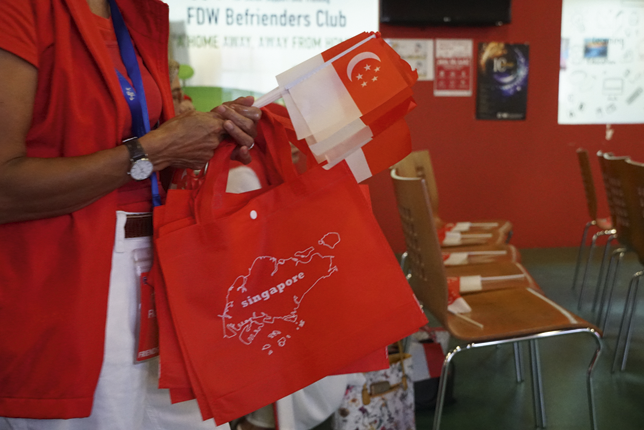
Migrant domestic workers’ movements are temporally and spatially circumscribed by the state. Domestic workers are required to live in their employers’ homes, their intimate relations with kin are lived transnationally in the absence of family reunification rights, and domestic work remains a largely unregulated sector. Despite attempts to keep migrant domestic workers apart from the local population, long-term domestic workers often establish a sense of home and belonging in Singapore over the years (see Figure 1). Establishing this sense of home is an active and dynamic process (Boccagni Reference Boccagni2022) and one that is ‘morally complex’ (Samanani and Lenhard Reference Samanani and Lenhard2019). Home is made, unmade, and remade as migrants ‘attempt to transform their everyday dwellings into meaningful places for living’ (Bonfanti and Perez Murica Reference Bonfanti and Perez Murcia2023, p. 1). Home for domestic workers in Singapore is created through the sometimes-close relationships that they develop with their employers’ families, including the children that they help to raise over many years; in forging enduring friendships with fellow migrants; nourishing their aspirations for later life; and through participation in civil society and religious spaces. Their social and cultural engagements often seek to transcend, even if only in partial or fleeting ways, the ‘migrant’ and ‘local’ boundary that is firmly embedded in institutional structures and popular imaginaries of migrant workers in Singapore as fundamentally ‘other’.
Singapore flags on display at a gathering of domestic workers to celebrate Singapore’s National Day (photo by author).
Mandatory return migration upon retirement threatens to disrupt this balance that migrant women have cultivated across their multiple homes. This section examines the complex reevaluations of home and belonging among migrant domestic workers as they approach retirement and how they seek to use their connections abroad in anticipation of their ageing futures in their original homes. It further illuminates the emotional consequences of long-term migration journeys under temporary contract labour regimes.
3.1 Domestic Work Over Time: Establishing Kinship
In accordance with the logic of temporary migration regimes, a number of migrant domestic workers echo that their stays abroad are temporary, that their separation from kin can be justified for a short period of time while they earn money to remit back for familial needs and futures. The early days of their migration journeys often confirm this perception, with many domestic workers experiencing homesickness and dealing with difficult employers who constrict or surveil their mobilities and limit the number of days off they have per month. Limited mobilities are further tied to the forms of debt that migrant domestic workers hold when arriving in Singapore due to high fees that are paid to intermediaries who broker their journeys. As Platt et al. (Reference Platt, Baey, Yeoh, Khoo and Lam2016) argue, more research on the role of debt in the lives of migrant workers is much needed, given that it characterizes their lives significantly and at different stages of their journeys. Marisol, a domestic worker who has been in Singapore for eighteen years, explained: ‘when I first arrived in Singapore, my off day was once a month but I didn’t go out because you need to pay 4 months’ salary deduction. That’s a very low salary, just $320 [per month] and I still had to buy my toiletries, soap, my personal things. So instead of going out, I stayed at home.’ Debt and the need to keep earning, plays a role in migrant women extending their temporary contracts repeatedly, as it takes time to even start sending remittances. A number of the women I interviewed often thought, as Ria put it, ‘maybe 5 years, that’s enough’ before realizing that their stays far exceeded their initial time frames for working abroad. The women I spoke with unanimously agreed that the early days required hard work and strength to ‘bear the pain’, to ‘patiently live through that’, and to ‘fight’.
Over time, domestic workers build networks with others in a similar situation and may move out of difficult employment situations by leaving exploitative employers and by looking for ‘good employers’. Given how much power employers hold over domestic workers’ conditions of life and work abroad, the difference between an accommodating or abusive employer can significantly shape domestic workers’ trajectories. It must be said that not all domestic workers are able to easily leave abusive employment situations. Their debt and isolation can prevent them from building networks of support (HOME and Liberty Shared 2019), and there is no standardized linear trajectory out of debt and abuse into positive employment situations. The stories that follow of long-term domestic workers do not represent all domestic workers’ experiences. Some remain in challenging employment situations, return earlier to their countries of origin, or move on to other destinations.
According to my interlocutors who do stay on and build supportive networks, a ‘good employer’ is one who treats them ‘like family’. Despite the demarcations in living space which keep domestic workers separate within the household, live-in domestic workers become deeply familiar with the lives of their employers’ families, spending at least six days a week in their homes, day and night. Domestic work, by its very nature, is intimate work: it requires living with others, touching bodies, feeding others, and caring for them. Establishing close relationships with employers’ families is a process that unfolds over time, in and through these everyday interactions.
Women with long-term employers who treat them as kin talk about how indispensable they are to the family, and of their mutual interdependence and affection for one another, challenging the state’s categorization of migrant temporary workers as ‘dispensable’. Through these intimacies, domestic workers find some recognition of their personhood. Equally, as much of the literature has examined, to treat domestic workers ‘like kin’ can be a strategy for further exploitation where employers might, for instance, emotionally coax a domestic worker to give up her day off, or holidays, to take care of the children or grandparents in the house. Domestic workers might leverage this sense of closeness themselves to make subtle claims on employers to financially support the building of a house for kin back home, for emergencies, or to contribute to paying for skills courses or their retirement fund. Building close relationships with their employers’ families is further bound up with domestic workers maintaining kin relationships in their countries of origin. A ‘good employer’ is one who recognizes the relationships and obligations that domestic workers have to their siblings, parents, and or/children, and being supportive of their multiple obligations. In these employment-kin relations, the dynamics might oscillate between care and control, and forms of reciprocity and inequality, as the stories of Rose, Kumari, and Jana, all long-term domestic workers, demonstrate.
3.2 Rose, Kumari, and Jana
Rose has been working for the same employer in Singapore for over thirty years. She raised the children in the family she has worked for since her early days in Singapore, children who are now adults and have moved away. Rose herself has been ageing in Singapore while taking care of her ageing employers. Rose spoke of her female employer as a sister with whom she could talk about anything, including her unfaithful husband and her separation from him, which brought her much pain and gave her little reason to go back to the Philippines to the judgement of extended kin. Despite being over sixty, the official retirement age, her employers managed to renew her work permit beyond this age. Rose would regularly accompany her employer, who had compounding health problems, to hospital appointments. They kept each other company, and Rose knew exactly what meals to cook for her. When her female employer passed away, Rose was distraught and told me in detail what had happened that day, feeling helpless about how it all unfolded. She is now alone with her male employer, who depends on Rose for his everyday sustenance. Though they occupy different spaces within the household, he and Rose share solitude and grief. The state, however, has already decided that she cannot stay in Singapore indefinitely as a domestic worker, while she too reflects on whether it is finally time to return to her original home. Rose has some land which is used to cultivate rice and generate a basic income, but she worries, as a now-single woman, whether her nieces and nephews will support her old-age care.
Rose’s story is not atypical, but one that I heard echoed in the narratives of other long-term domestic workers. Kumari, a Tamil domestic worker has been living in Singapore for thirty years, helped raise the three children in her employer’s household. The children lost their mother when they were young, and Kumari stepped in to help their father raise them. Kumari is particularly close to the boy who was born after she arrived; she reflects on how she used to pacify him as a baby, and she has shared a room with him since his mother died. Meanwhile, Kumari had fraught relationships and struggles with her kin in Tamil Nadu: her husband suffered from a disability caused by polio and eventually passed away, and she was cheated by her eldest daughter and son, who squandered the money she sent back to them and mishandled the house she built with her savings. Her employer (whom she calls ‘Anna’, or older brother in Tamil) and his extended family supported some of the expenses for her daughters’ weddings and family emergencies. Over these years, she balanced her commitment to her ‘Singapore family’, whom she knew intimately, at the same time as dealing with these family crises and events in India. When it was time for her to leave Singapore at close to sixty years of age and return to Chennai permanently, Kumari was deeply emotional about it. The only thing that would give her peace of mind, she proclaimed, was knowing that ‘this house is peaceful. I thought I would stay here until death’. With only a few months of her salary saved, along with some gold jewellery, she lamented, ‘I’ve given everything away, I have nothing’. Kumari’s plan was to return to Tamil Nadu to live with her youngest daughter (the only one she trusts) and to spend time with her grandchildren but she worries about her relationship with her other children and how she will be looked after upon her return.
A third example is Jana, drawn from the research conducted in Hong Kong, which has similar conditions of work as in Singapore. Jana is a former nurse in the Philippines who moved to work as a domestic worker in Hong Kong thirty-one years ago. Jana reflected that she had not expected to stay in Hong Kong for so long but as a single mother, she had to support her children through their school education and through college. Over the years, Jana noticed that she lacks a sense of intimacy in her relationship with her children ‘the love, the touch, the presence’. Jana explained, ‘I tell my friends, I don’t feel close to my children, what will I do if I go back? I am all alone there. They tell me, we are all experiencing this, we also feel apart from our children – you must prepare for yourself now, not later, not when you are too old’. Even as Jana’s children reassure her otherwise, she feels more at home in her ‘second home’, Hong Kong, and the relationships she has built there, particularly with the dogs she has been looking after in her previous and current employers’ homes. Jana said, ‘it is another very difficult thing to leave the dog’, talking fondly about how the dog used to sleep in her bed with her. She takes them to the dog park daily and up to the terrace when she eats her lunch. Her relationship with these animals as companions is part of what keeps her in Hong Kong. She wants to stay in Hong Kong with her new employers for as long as she can.
The cases of Rose, Kumari, and Jana remind us to take seriously the emotional ruptures that ageing domestic workers face after building long-term relationships with employers’ families when they have to return to their countries of origin. These intimacies are often fragile, something that becomes very clear at the end of employment relationships. As Cati Coe and I have argued (2022), the flexible registers of kinship that characterize care workers’ relationships with their employers revert, at the end of employment, to fixed notions of kinship. Essentialist understandings of kinship arise around inheritance and the worker’s care in older-age and in illness, enabling employers, states, and care agencies to avoid post-employment obligations to domestic workers. Some employers, like Kumari’s, continue to stay in touch and have promised to look out for her and support her, having visited her youngest daughter in Chennai before Kumari’s return to be sure that she would be okay. Other domestic workers’ relationships to employers might end more abruptly or entail betrayal, leading to an absence of support or communication when domestic workers return to their countries of origin. An example is of Cris, a domestic worker who spent years with a family raising their son with disabilities, only to have her contract terminated abruptly when she developed high blood pressure and related health concerns. Cris’ experience is reflective of a labour migration regime that is not set up to support workers with chronic health concerns given the limited coverage of health insurance and domestic workers’ non-resident and non-citizen status. Not all long-term domestic workers’ relationships are therefore harmonious; some remain difficult and may fluctuate between more positive relations and more conflictual periods where domestic workers end up in the position of being ‘neither family nor employee’ (AWARE & HOME 2020). Even close relationships depend on the fundamental inequalities that underpin the care work economy and the labour of low-waged migrant women. Kinship with employers cannot always stand in as long-term sources of social protection in their old age, with many domestic workers still expected to rely on their savings and their original kin for care and support.
3.3 Place-Making and Self-Transformations
3.3.1 Friendships and Solidarities
Beyond relationships in the household, migrant women engage in projects of solidarity, community, and self-transformation together with friends and strangers. ‘Home’ is not only where they grew up, the location of their original kin, or the household/home in which they live and work; it is the spaces around the city where they spend their days off, which generate new connections. On pavements and in parks, migrant women gather to picnic; they lay out cardboard boxes and blankets, where they rest, listen to music together, eat, and chat about their lives, desires, and dreams. Friendships, in particular female friendships, sustain migrant women’s lives abroad and give them opportunities to collectively reclaim their personhood on Sundays, their day off, as they meet, dress up, and support each other through the highs and lows of migrant life. Lena, a long-term domestic worker in Singapore, spoke of her close friendships with three other ladies from the Philippines. They had been there for each other since they arrived in Singapore, supporting each other in facing controlling and manipulative employers and in times of illness. Friendships, however, are not exclusively positive. They might involve gossip, betrayal, and drawing moral distinctions between those who are ‘good migrants’ and ‘good workers’ and those who are ‘trouble’ and give domestic workers’ a ‘bad reputation’ in the wider society. Negotiating these peer relationships is a part of the social lives of migrant domestic workers, and can contribute, in a fluid way, to migrants feeling a sense of belonging or non-belonging at different points in their journeys.
Solidarity is another key form of connection. Siti, a domestic worker from Indonesia said that if there is one thing she learned from being abroad, it is ‘solidarity with my fellow migrants … my friends are my family, my fellow Indonesians, the Bangladeshi, Chinese, all the people who help me’. Siti is a community leader for Indonesian migrant workers and is part of a migrant writers’ group that brings male and female migrant workers together to share poetry and prose with one another on the struggles and hopes of being a migrant in Singapore. During the COVID-19 pandemic, migrant writers’ groups organized Zoom poetry sessions where people expressed homesickness, anguish about loved ones, and uncertainties about their well-being. It led to new collaborations between migrant and local writers of different backgrounds; enabled migrant writers to feel part of a broader community of people who share similar experiences of work, longing, and displacement; and offered channels for creative forms of expression and imagination that, even if fleetingly, crossed the boundaries between migrants and locals. Similar kinds of connections are forged in other shared interest groups around caring for plants and cooking.
The story of Madhu speaks to similar transformations. Madhu left her village in Tamil Nadu to work in Singapore to escape the pressures of kin who took advantage of her money as a college graduate earning a decent income, while pressuring her to get married. After a difficult first employer in Singapore, Madhu found a new employer, a single woman in her sixties, who treats her well, chats with her as a friend, and encourages her to pursue her dreams. On Sundays, Madhu joins English classes organized by an NGO set up to empower Tamil migrant women. As part of this group, she put her difficult story down on paper for a mobile library project and became inspired to write poetry. Not long before I met her, she had spoken at a Tamil feminist conference (involving Tamil women of different nationalities – Singaporean, Malaysian, Indian, and Sri Lankan) and recalled how it was the first time she held a microphone: ‘I won’t ever forget this in my life’. She felt in that moment that people did not look upon her as a ‘maid’, as someone without skills, and this experience was important to Madhu’s sense of self and demonstrated the different possible lines along which solidarities can be forged. While these experiences do not shift local perceptions of migrant workers in any significant way or improve domestic workers’ social positions, they can make a difference on a micro-level, as it did for Madhu, to one’s sense of place and belonging. The stories of friendship and solidarity echo the ways in which migrants develop emotional attachments and forms of belonging to communities in Singapore and Hong Kong over time, even when they are kept as temporary ‘outsiders’ by state policy.
3.3.2 Faith and Service
Faith is another space offering support to migrant women in confronting the challenges over the course of their migrant journeys, contributing to their sense of home abroad, while preparing them for their unknown futures. The migrant women in my study belong to different faiths, including Buddhism, Islam, Hinduism, and different denominations of Christianity. Hema from Sri Lanka, for instance, finds solace and creative energy from Singapore’s multicultural religious landscape. She spends Sundays at the Sri Lankan Buddhist temple, praying under the bodhi tree, cooking, and serving fellow Sri Lankan migrants, as well as Chinese Buddhists in Singapore (see Figure 2).
Hema on one of her regular visits to the temple and its Bodhi tree (photo by author).
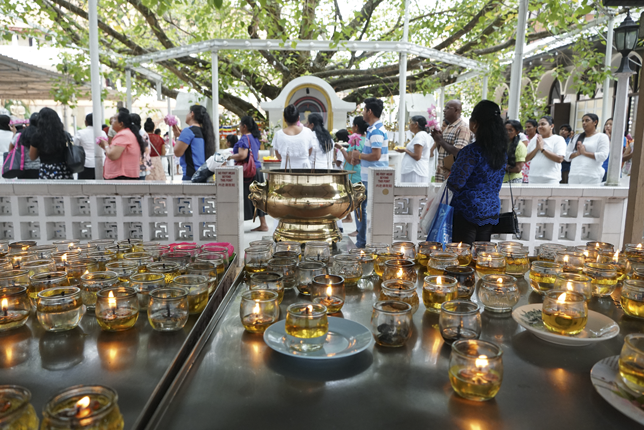
On Tuesdays and Fridays, on the way to the market, Hema stops off to pray to the Goddess Durga – a goddess representing female power – in a Hindu temple in the Singapore heartlands. Every week, Hema takes a photograph of the goddess to send to her WhatsApp contacts, as a gesture of care and connection. In the Hindu temple, she shares space with diverse others carrying out the rituals of prayer. As someone who holds multiple faiths, she is highly synchronized with the rituals of Singaporean and other migrant Hindus, even if these are fleeting interactions rather than enduring community relationships. The religious syncretism of Singapore is something that Hema has embraced in her decades of work in the country, and these moments of shared experience contribute to her sense of home. Carrying out her spiritual rituals fuels her imaginaries for a good future as she approaches retirement: being a good, virtuous person and praying to many different gods are what will support her in the time ahead. In addition to these temple visits, Hema volunteers regularly at a clubhouse for domestic workers on Sundays, where she has built friendships with both local and domestic worker volunteers of different nationalities.
Faith has been a pillar for Dasuni too, another domestic worker from Sri Lanka who has been in Singapore for the past twenty-five years. She came from Sri Lanka to earn money for her family and to support her daughter’s educational aspirations in medicine. Her time in Singapore has also been important to her personally as she underwent a spiritual transformation from being Buddhist to converting to Christianity. Dasuni explained that God ‘touched’ her and took away her burdens at a time when she was going through financial difficulties. She spends her Sundays going to a Church which offers a service in Sinhalese, preparing tea, ushering people into the service, and arranging the hall. She said that ‘before I became Christian, I was in the worldly way – just going out eating, going to the park, meeting my friends. But since 2009, I am in the Church. I go to Church from 8 am until 8 pm. I want to have more opportunities to serve the Lord’. Since her conversion, Dasuni feels at peace. Her family in Sri Lanka was initially sad when she told them of her religious conversion, but they now recognize that she still cares about them and sends money home to build a house. Even as Dasuni misses her family in Sri Lanka, she worries about going back. As she put it, ‘I am used to living this life. Here I am living a good life, I am earning money, everything is comfortable. I will miss Singapore, I will miss the Church, I will miss this family [her employer’s family], they are very good and take care of me’. Dasuni’s story illuminates how migrant domestic workers build a sense of home while abroad, and how faith can play a central role in this process of home-making. Despite being anxious about her future life back in Sri Lanka, she is certain that she will continue with her spiritual engagements and service to her faith, something which offers a potential bridge between her present and future.
Beyond faith, volunteering is a common activity among older migrant women. Lena and her friends, all domestic workers in Singapore for more than twenty years, have been active volunteers at a migrant NGO, helping women at the shelter who run away from their employers, and repaying the help they received from others when they were new to Singapore. With the support of this NGO, these women additionally spend their Sundays volunteering at local nursing homes and at the Singapore disability association, Lena saying how much they enjoy this work of helping others and making a difference. On her encounters with elder Singaporeans in the nursing home, Lena reflects: ‘of course we bond with them because they are our friends, we are there for each other, they are longing for their family, and so are we’. Much of this work gives them a sense of purpose, fosters connections and forms of companionship with Singaporeans of diverse backgrounds, while offering opportunities to gain new skills for their futures beyond domestic work.
3.4 Endings: Emotional Ruptures in Long-Term Migration Journeys
In response to the guest worker schemes in Europe of the 1960s, Swiss writer Max Frisch (cited in Lyon Reference Lyon2015) famously wrote: ‘We asked for workers. We got people instead’. In a similar vein, temporary migration regimes are based on the logic of attracting workers for economic gain, overlooking their embeddedness in social, cultural, and familial life, their everyday citizenship practices even in the absence of formal citizenship or long-term residency rights, and the meaningful relationships and connections they build with people across the country. As Nicole Constable (Reference Constable2014, p. 7) notes in the Hong Kong context, ‘migrant workers are never only workers’.
Time is central to shaping these social and emotional connections, which unfold slowly over years through repeated everyday encounters. As Singapore promotes a narrow vision of the nuclear family unit, which migrant care workers uphold through their caring labour, migrant women expand notions of kinship and establish connections through religious and organizational spaces, crossing boundaries and forming solidarities, even if in fleeting ways. These encounters provide small openings for reimagining their precarious positions in hierarchical social fields and restoring their sense of personhood, albeit unevenly and always in contexts of power differences. These encounters further shape domestic workers’ cultural knowledge and familiarity with the societies in which they live and work.
Time as a form of governance further limits continuities in these relationships. State policies that require domestic workers to return to their countries of origin upon retirement mean that these meaningful connections and forms of place-making unfold in this particular time and space of being in Singapore together, and rarely beyond. While domestic worker activism is curtailed in Singapore, there have been sporadic efforts among domestic workers in Hong Kong (where activism is more prominent) to make legal claims to long-term residence on the grounds of their long years of work, their contributions, and their sense of belonging. Ten years ago, a long-term domestic worker went to court (in the case Vallejos Evangeline Banao v Commissioner of Registration), arguing that she had the ‘Right to Abode’ (permanent residence) because she fulfilled the criteria of having resided in Hong Kong for seven years. The Court of Final Appeal ruled that domestic workers are not entitled to the Right of Abode as their stays in Hong Kong as temporary migrants do not qualify as ‘ordinary residence’. This attempt to stay and to counter the laws that exclude permanent residence pathways of temporary workers, therefore failed.
Following many years of work, domestic workers come to see places like Singapore or Hong Kong as home. While some domestic workers express happiness about the prospect of reconnecting with their original kin after many years of separation, others remain hesitant about these reunions. The inability to continue their transnational lives, due to the lack of possibilities to stay and retire abroad, generates profound anxieties about their future relationships and their sense of place and belonging when they return to their original homes, given that they have changed, and these places too have changed over time. Future-making for domestic workers is therefore a process of conflicting emotions and feelings. These emotions sit alongside the financial anxieties that migrant domestic workers hold in a context of limited savings and social protections. The next section explores how they make plans for retirement, imagine their future livelihoods, and experiment with new financialized ideas to assure future security in older-age.
4 Financial and Retirement Plans
‘In retirement, who will look after us? We have to save for ourselves, no one will look after us. I’m sorry but that is the truth. I would like it if they do, but I don’t know … we don’t know.’ These candid reflections were shared by a student in a financial education class for domestic workers, in which the students were asked to draw and reflect on their networks of kin, friends, and community. Every Sunday, migrant domestic workers of different nationalities gather on a school campus in Singapore to take courses on building confidence, managing their money, and setting up a business. These courses are run by a local NGO focussed on financial literacy for low-income women, and particularly, migrant domestic workers. One Sunday, when I went to sit in on the classes, the women were learning ‘how to say no’ to their networks of family and friends in the face of their never-ending demands on migrant women breadwinners to support them financially. One student reflected, ‘they think we are very rich and then if we say no, it’s like we don’t want to help our families and friends and we are being greedy. But they do not know how hard we are working for the money. Maybe we just have to learn to say no, no matter what they think’. The trainer (part of a crew of volunteer teachers, many of whom work in the financial sector) reaffirmed the student’s point by alluding to the ‘martyr complex’ and the unrealistic demands placed on migrant women. She explained how migrants are expected to sacrifice their own needs and futures to give in to the needs of others, being ‘there for other people, but not for yourself’. The students in the class nodded and murmured in agreement, recognizing people in their own networks who have been abroad for decades and return without any savings for themselves, because they ‘gave in’ too much.
Prioritizing a focus on one’s self and one’s own future is a common narrative that one hears in the increasing array of financial education course offerings developed for migrant domestic workers in Singapore and Hong Kong. The narrative marks a shift away from the default expectation that migrants are abroad to exclusively send remittances to their kin. While a number of NGOs were set up in the early 2000s to support the labour rights of migrant women (e.g., helping migrant women who run away from abusive employers, or mediating in the underpayment of salaries), organizations oriented towards financial education have only become visible in within the past decade. Courses are run and sponsored by a range of actors – from local NGOs, multinational corporations, intergovernmental organizations, co-operatives, and states – and are run with different motivations. Some non-profit organizations emerge out of a recognition that low-waged migrant women lack adequate social protections and face insecure futures. They are oriented towards empowering migrant women to be financially secure through modules on setting up a business, avoiding financial scams, the basics of saving and budgeting, alongside sessions on self-empowerment and well-being. Other organizations perceive migrant women as potential investors and actors in global financial and real estate markets and espouse a message of financial abundance, making one’s money grow through investments. Common to both approaches is a focus on ‘changing mindsets’. Migrant women find out about these courses through a variety of channels: through the direct outreach of financial organizations in migrants’ social spaces, through word-of-mouth recommendations from friends, or sometimes through employers who take an interest in migrant women’s financial futures. In these cases, employers might sponsor course fees or provide their own advice.
The increasing prevalence of financial education courses represents the next step in the widespread narrative among migrant-sending states and intergovernmental organizations that migrants are ‘agents of development’ (Faist Reference Faist2008). Beyond sending remittances, migrant workers are encouraged by sending states and financial institutions to remain productive, to continue to earn an income upon their return to their countries of origin, and to invest financially in their own futures (Anwar and Chan Reference Anwar and Chan2016; Spitzer Reference Spitzer2016).Footnote 20 Privately offered financial education courses are often endorsed and encouraged by state actors. While courses target migrants of all ages, I noticed in my observations in the courses that I attended in Singapore and Hong Kong that several of the women participating were middle-aged or older, approaching retirement, and realizing that they had little in the way of savings for themselves. Take the case of Jolie in Hong Kong, who admitted at the age of sixty-two, ‘it’s only two years ago that I stopped sending so much [remittances] since I’m getting old. I need to get my house and lot, insurance, invest … when we are young, we think we always have money. It’s a phase, everyone goes through it’. Jolie’s reflections signal a life course shift from providing for their kin as migrant breadwinners in the earlier stages of their migration journeys through remittances to turning towards themselves in the face of precarious futures in later life. Participation in such courses generates new financialized aspirations among migrant women, which revolve around a narrative of self-responsibility for success and security in later life.
Drawing on ethnographic research in financial education courses run by NGOs and corporations, this section sheds light on how older domestic workers are taught to be innovative entrepreneurs when they return home at the end of their working lives abroad. Some imagine and plan new businesses to run in their retirement – from convenience stores to tourist guest houses or restaurants – while others plan investments in stocks, mutual funds, insurances, and cooperatives. The section examines how financial actors come to play a role when classical forms of state-based and kinship-based forms of social protection are insufficient (as explained in Section 2, where formal state social security for retiring migrant domestic workers remains limited). It argues how these new financialized offerings espouse a neoliberal focus on individual responsibility for one’s own future. As demonstrated in Section 3, kin relations become strained after many years of working abroad, and domestic workers do not necessarily want to depend on kin, seeking to find ways to maintain their independence instead. The financialized narrative, however, does not resonate with all domestic workers. Some plan their futures through more ‘traditional’ economic practices, such as buying a plot of land and building a family house, or through moral and ethical projects as a source of present and future support.
4.1 Financial Basics and Business Plans
Some of the originally conceived financial education courses start with basic modules on saving and budgeting one’s weekly expenses, categorizing remittances according to ‘fixed monthly amounts’ and ‘emergencies’, providing lessons on how to open a savings account, how to avoid debt, and to be wary of unscrupulous money-lenders. The lessons emphasize evaluating needs and priorities with questions like: ‘Is a mobile phone a need or a want?’, with most responding that it is a need, an essential tool in transnational familial communication, followed by the question ‘is an iPhone a need or a want?’, with most agreeing it is a ‘want’. Some sessions focus on ‘being assertive’ and ‘confident communication’, with the goal to boost the self-confidence of domestic workers so that they can stand up to the demands of others, be it employers or kin. There is recognition of migrant women’s future precarity, and one goal of such institutions is to provide opportunities for women to build more secure futures through learning how to set up and manage a business. In the more advanced modules, domestic workers present their business plans to each other, discussing whether a beauty salon or catering business would make more sense in their home villages, saturated as they are with small businesses.
The women on these courses are at different stages of planning their future businesses. Some have exciting ideas without having thought about the nitty-gritty details of running a business – among them, a campsite getaway for city-dwellers in the Philippine countryside, a travel agency, a computer literacy centre, and a catering service. Others are well on their way to making concrete plans in collaboration with relatives and friends back home.
Carla, a student enrolled in a business management course, noted that ‘some [of her compatriots] go home with nothing. … they did not think about their future’. Carla is in her late 40s and still far away from ‘retirement’. But she is attending the business modules offered by a financial education NGO with the plan to set up a ‘Three Sisters International Cuisine’ restaurant when she returns to the Philippines, in partnership with her sisters as the restaurant name signifies. Carla explained:
this coming December, we are planning to get together, one sister in Australia will go home for Christmas time and also my sister in Hong Kong, so we are planning to talk about the restaurant. Together we had the idea of restaurant because we all know how to cook. I know how to cook Western food and Malaysian food, my sister in HK can cook Chinese food and my sister in Australia works in a café so she knows about bakery goods. So we do a bit of everything.
She says that they have the land and they are thinking about how to acquire the wood to build the furniture. There are still some details to work out – particularly the question of who is going to run this restaurant while they are all still abroad – but this is a vision she is actively working on.
Other students in the course, like Jiji, already have experience of running small businesses in their countries of origin. Jiji previously had a business selling fruits and vegetables, but because these were perishable products, there was significant wastage, which led her and her husband to close it down. Based on this prior experience, Jiji now has two further ideas: first, a pet food shop for cats, rabbits, and roosters, because pet food is ‘not so fast to spoil’ in case one does not make immediate sales. And second, a money changer business. Jiji reflects that ‘a lot of people in my hometown are working abroad, but the money changer is very far from my village’. She has not worked out the details of how to get a license from the government to operate such a business and how to come up with a large deposit to set it up, but she is taking the business modules in the financial education NGO to develop her ideas and plans. Jiji explains that pensions in Indonesia are only for civil servants: ‘Most other people have to keep working. And that’s why I tell my husband, because we have no pension in our old-age, we need to have enough savings for our future’. Her plan is to keep working in Singapore to save money for these business plans, knowing that this may still not be enough to support her family after she retires.
Scholars of migration have demonstrated that plans for small business ventures do not always succeed (Parreñas Reference Parreñas2021a; Spitzer Reference Spitzer2016), and livelihoods become unsustainable. This was echoed in the story of one of the students on the course that I met, Jenny, who recounted:
I tried to go home but I only stayed for one year and then had to go out again. Because people are spending all my money. I wanted to have a small shop but my customers keep borrowing and never pay back. All the money goes out. Finally, I said, I need to go out again and build my savings for a house, some land.
For younger migrants, going abroad again when things do not work out after an attempted return is a common feature in migrant domestic workers’ trajectories (Constable Reference Constable1999; Parreñas Reference Parreñas2021a). For older migrant women who are returning in retirement, the option to go abroad again is not available, making the stakes higher for business ventures to work out. The Philippine state, which has devised a number of schemes and competitions as part of their reintegration and entrepreneurship programme for returning migrants, has similarly recognized that many of these new businesses do not succeed. In response, in 2023, the Department of Migrant Workers and the Department of Trade and Industry launched a new business and training mentorship programme for returning migrants, the secretary of the programme calling this a ‘handholding’ scheme for migrants entering business (Abad Reference Abad2023). Such initiatives, however, do not consider the specific age-related challenges of setting up a new business in retirement, nor do they compensate migrants’ life-long contributions through remittances and social security contributions through livelihood-sustaining social protection schemes. Entrepreneurship initiatives reinforce the idea that migrants, including returning migrants in later life, ought to be productive contributors to the country’s development, placing the burden on returning migrants to find new, income-generating livelihoods upon retirement from work abroad.
4.2 Financialization and Shifting ‘Mindsets’
While business planning and financial education foundations are the focus of some financial literacy organizations, others take an approach that is more in line with global financialization processes: the increasing shift towards market logics, and the growing prevalence of financial products in people’s everyday lives, decisions, and perceptions of risk in contexts of social inequality (Nguyen et al. Reference Nguyen, Ryndstrom and Mao2024). As one trainer from a corporate financial organization said, ‘savings is not enough. We need more financial freedom’, explaining to domestic workers that the value of their money will go down if it stays in the bank account and that they should be ready to invest it and to take risks, even with small monthly contributions. The more corporate-oriented sessions seek to tap into the ‘financial potential’ of domestic workers as investors. In some regions of the world (e.g., Dubai), such initiatives target middle-class professionals more than domestic workers as they are thought to hold greater financial power (Banta and Pratt Reference Banta and Pratt2021). The organizations and initiatives I encountered in Singapore and Hong Kong do include domestic workers, who typically have lower wages but are increasingly receptive to investment opportunities given their precarious futures. The products in question here are insurances, investments into stocks, mutual funds, and property-as-investments (e.g., condominium units in the metropoles) in migrant women’s countries of origin. This investment-oriented financial education is particularly prominent among Filipino migrants, where private real-estate fairs, for instance, are organized in conjunction with state agencies offering housing loans.
One session that I attended was run by young professionals from a large multinational corporation in their offices in downtown Hong Kong (and in partnership with an NGO), using their Sundays for this ‘corporate social responsibility’ activity. Domestic workers spent four hours sitting in the comfortable air-conditioned offices of this corporation listening to PowerPoint presentations on ‘what is insurance?’, and how to choose the right insurance products based on one’s stage in life (see Figure 3). The participants were then sent into break-out sessions to brainstorm different risks and future scenarios with the ‘takeaway’ lesson being that insurance is worth investing in.
Domestic workers in Hong Kong attending a financial education course on insurance (photo by author).
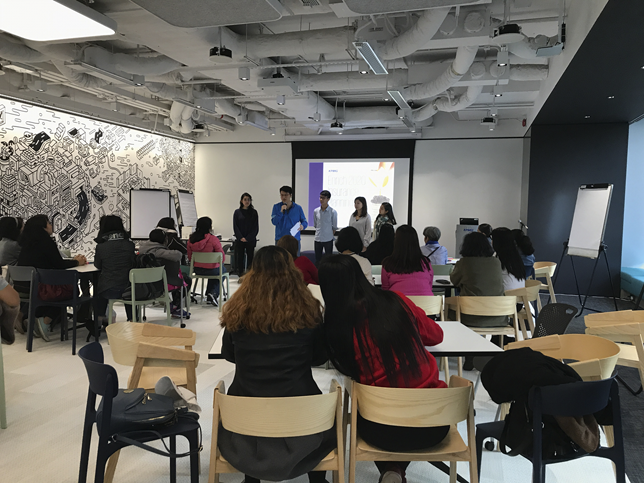
In addition to seminars like these on insurance, there are offerings for seminars on investments in real estate and stocks, with lessons on how to distinguish scams from legitimate financial products. One book that circulates among Filipino migrants is Vince Rapisura’s 2016 handbook ‘(L)earning Wealth Successful Strategies in Money Management’. The book is all about earning a ‘passive income’, where ‘you earn even if you do not work’. ‘Sir Vince’, as he is known, is a motivational speaker, and his finance guidebook outlines the different stages to ‘financial freedom’. The book offers guidelines on investing and goal-setting, and is peppered with motivational quotes specific to the Filipino migrant experience. He argues that the emotions that migrants hold – fear and guilt, for example, in not letting their families down – holds them back from the ‘self-mastery’ that financial freedom requires and that one is ultimately responsible for one’s own happiness and wealth. Older migrant domestic workers, some of whom take in these messages, have laboured abroad for most of their adult lives on precarious incomes and have sent their earnings as remittances to support their familial needs and futures in education, housing, and health. The advice suggesting that they have not been doing enough thus feels at odds with their labour.
These messages nevertheless resonate with some of my interlocutors who see retirement as a life phase of dependency on others (be it the state or kin) to be undesirable, and even shameful. Financial education is framed by some migrant women as an ethically transformative journey. This is echoed in the taglines of many of the programmes offered: ‘invest in yourself’, ‘investors and innovators’, and ‘dare to dream’. Lisa, who is now an ambassador for a financial education NGO in Hong Kong, spoke of her transformation as someone without a plan to someone with a goal. Lisa reflected that ‘you really need planning because if you don’t plan, you plan to fail … this is what they say. … I attended a lot of classes about self-improvement and then I realized what is missing is really the vision of when I’m going to finish [working in Hong Kong]’. Lisa now spends her time convincing her domestic worker compatriots that they need to enrol in these courses too. But she protests that many do not want to listen: ‘“I think about it later” – that’s what they always say, I still have a lot of expenses. But when are you going to think about it? Because you really have to’. Similar sentiments were shared during a group discussion I held with a group of Filipina domestic workers who had attended the aforementioned corporate training on insurances. One of the women in the group said: ‘We try to make our time productive. Now there are livelihood programmes, financial education classes. All this is new, we did not have this before’ and ‘we have to study and do research about all the financial products … we have to know which ones are good, or suitable for our needs, that’s why we come to these classes’. Together, they reflected that the ‘ideal retirement’ for them is ‘to be financially stable, to buy what we need, to be healthy, to travel, if that is God’s will. If we are financially stable, then we can be worry free. If we get a passive income, then we can just enjoy life’.
This group, as well as Lisa, distinguish themselves morally as those seeking to use their time wisely and productively from those who ‘just sit around’, referring to the women in downtown Hong Kong who sit on cardboard boxes. As one domestic worker at the insurance course said, ‘so many are still in Central just sitting, playing cards, going to parties. We have to think, how are they going to cope? How do we get them to join us?’ They shared that if they could offer advice to new arrivals of domestic workers to Hong Kong, it would be: ‘if you have a goal before leaving, you can plan, share with family, save and invest early. Here we are just getting older and older without a goal. Don’t wait until you are old to save, or until you need the money’. They shared stories of peers who returned with nothing and are now struggling to make ends meet without the monthly salary they were earning abroad.
Not all of these financialization initiatives are in the direct service of multinational corporations or global finance, even if the boundaries between these different approaches are sometimes challenging to ascertain. I encountered grassroots groups – led by domestic worker mentors themselves, for other domestic workers – which encourage investments into ‘social enterprises’ and co-operatives with social and environmental goals. In one group led by domestic workers, the leaders talked about how they collectively bought shares in a Philippine-based cacao farm co-operative for overseas migrants. They are now remotely managing a sustainable cacao farm with the support of peers and earning good interest, many of them articulating that they want to retain a sense of financial independence while investing in something meaningful for their home countries. This collective of domestic workers partners with social organizations in the Philippines, which receive funding from intergovernmental bodies such as the EU and the ILO to integrate financial education with modules on ‘return and reintegration’, tackling not only financial insecurities but also the emotional insecurities around future return and retirement.
In all of these cases, migrant women reflected on how they thought about their financial futures a little ‘too late’ in their migration journey. The shared narrative is of a life course shift from endless giving and cycles of debt, which characterized their younger migrant years, to being money-wise and forward-thinking as they matured. These new financialized aspirations among older migrants who participate in financial education courses emerge as ‘technologies of the self’ (Foucault Reference Foucault, Martin, Gutman and Hutton1988) based on the neoliberal idea that one has to constantly work on oneself to find ‘success’, stability, and even wealth. This narrative further echoes the financialized notion of development that relies on the continued productivity of migrant returnees and retirees, even those who have long-worked in low-waged and precarious sectors, the commodification of the migrant body continuing well into later life. In many ways, financialization depoliticizes (Weiss Reference Weiss2015) by individualizing responsibility for financial security instead of it being a collective question around social protection. The investments that migrant women are expected to make with their comparatively low wages are furthermore risky, dependent on the volatility of financial markets (Nguyen Reference Nguyen2021). In one case, Cris (mentioned in Section 3) had invested money in a condominium unit in Manila, confident that she would be able to pay off the mortgage through continued work in Singapore. However, when she developed health issues, her employers terminated her contract prematurely. Being in her fifties, she was ‘too old’ to be hired for work abroad again, leaving her in significant debt.
Equally, it would be too simple to analyse these developments as a top-down neoliberal intrusion of financial institutions into the lives of the vulnerable. Such a reading would diminish the agency of women who find a renewed and aspirational sense of purpose with these projects (McKay Reference McKay, Bastia and Skeldon2020). The migrant women I met taking such courses feel a sense of freedom from the constraints of kinship expectations, while building friendships, communities, and taking on leadership roles. It must be said, nonetheless, that financial plans and aspirations rarely override existing relationships but instead coexist with women’s relations with peers, kin, and the state; the transformative dimension more prominent in the narratives than in practice. Whether or not their financial education leads to greater financial security later in life, they value spending their days off nourishing aspirations that they had put aside and finding ways to hold on to a sense of independence. Participating in such programmes further enables the women to position themselves beyond the racialized ‘domestic worker’ label that places them on the margins of the societies in which they live and work.
4.3 Alternative Plans
Despite the growing presence of financial education courses, it is important to note that not all domestic workers participate in them and cultivate these financialized aspirations. There are differently articulated visions and strategies for the future. One set of strategies, for instance, relates to more traditional economic activities: such as buying a simple plot of land, as mentioned in the case of Rose, a domestic worker in Singapore, who bought a small plot for rice cultivation in her home village. Her siblings manage it to supplement the household income. Others might participate in village-based savings groups, known as paluwagan in Filipino, borrowing from peers in these lending circles for more immediate needs (e.g., finishing the construction of one’s house) or for emergencies, rather than future-oriented or long-term plans. Jolie, for instance, sits on the same spot of pavement with her friends every Sunday in Central in Hong Kong and participates in these grassroots lending circles. In addition, she is an informal moneylender and earns commission from her compatriots who borrow money from her. Jolie recognizes the need for ready cash and tries to supplement her savings, saying ‘what’s the point if I get nothing in return for lending this money?’ But she often runs into trust issues and has seen conflicts in her friendship circle, including cases of friends disappearing because they cannot repay the loans with interest. It creates insecurity for Jolie, while her peers contend with high interest rates when borrowing from acquaintances. In another example, Siti, an Indonesian domestic worker in Singapore uttered ‘I have no patience for business! For me, even without money, going home is freedom, happiness, family, country’, her comments an optimistic contrast to the more anxiety-oriented narratives that I had heard more frequently. These examples demonstrate the diverse ways through which migrant women relate to finances and livelihoods – with some having more immediate rather than future-oriented goals, and others engaging with more traditional strategies (savings clubs, land purchase) rather than neoliberal financial education courses.
Reflecting the common practice of migrants building ‘remittance houses’ (Boccagni and Bivand Erdal Reference Boccagni and Bivand Erdal2020), Hema, from Sri Lanka, has sent remittances to build a house for her retirement in her hometown in Sri Lanka, which her sister takes care of in her absence. The house is enclosed by high white walls and a tall gate; it has a bright sky-lit living and dining room, a wet and dry kitchen, three bedrooms with the beds regularly made even when unused, an array of plants hanging in the garden, and an altar which she furnishes with statues of Buddhist and Hindu deities. Hema is single and envisions her house to be the centre of the village when she returns to cook for others, including the monks in the nearby temples. She recently opened a savings account and put her money in fixed deposits as she realizes that she needs money upon her return. She talks vaguely about how she could use her house as an international guest house one day, even if it is set back from the main road and quite a distance from tourist attractions. The idea remains a distant vision, and Hema does not take any courses on business or financial education. Hema often uttered that she wants to be remembered not for the money she takes to her grave when she dies but for the good she does in the world (through her faith and volunteer work described in Section 3), pointing to a different stance towards the future and retirement compared to the visions articulated in the financialized approach.
In Hong Kong, migrant activist groups present a different vision of the future, one that is based on state accountability and responsibility. One domestic worker activist that I met in Hong Kong, Che, who is now in her fifties, suggested that it would be difficult to expect her compatriots to participate in financial education courses when they have little savings. She argued instead for the state to honour all the financial contributions of migrant workers through their remittances and taxes paid and to ‘give us a [non-contributory] social pension without these excessive fees’. In this view, the responsibility for future security lies with the state rather than the individual migrant worker. Such voices, however, are limited given that not all domestic workers participate in advocacy movements, particularly not in Singapore, where neither migrants nor citizens hold the right to public protest.
4.4 Conclusion
This section has offered insight into the retirement and financial plans of late middle-aged domestic workers. For migrant domestic workers who have been working abroad for most of their adult lives, a large portion of their earnings were sent to their families through remittances, with many not having saved for their own ageing futures. The question of how they will sustain their livelihoods once they return is one that generates significant anxiety, with few having the privilege, or desire, to imagine ‘retirement’ as a time of inactivity. Limited state-based social protections for migrant workers when they return after decades of labour abroad and a hesitance to rely on kin in older-age have opened up novel spaces for the financialization of migrant women’s futures.
The kinds of financial education offered to migrant domestic workers vary with different actors – corporate, non-profit, state-affiliated, co-operative, and grassroots networks – promoting a range of approaches to the role of finance in their lives. This privatization of future security, on the one hand, plays on the structural inequalities that put migrant women in precarious positions and requires them to take responsibility for their own futures. This is in a context where migrant women have already contributed enormous financial sums to their home communities through remittances, as well as caring for the lives and futures of others for much of their adult lives with little pay or recognition. The shift towards privatized self-responsibility for the future moves away from seeing social protection as a political and collective imperative, eroding the state’s responsibility to care for the workers whose migratory journeys it has facilitated through temporary migration regimes. On the other hand, the migrant women I met and interviewed at these courses narrate their self-transformations from being naïve breadwinners to being informed and equipped with financial wisdom as a form of agency, finding new purpose at this later stage of their migration journeys. Despite this transformational narrative present in migrant women’s accounts, the financialization of the future for migrant women does not tell a linear story of towards freedom or independence. Individualized aspirations remain deeply and unevenly connected to migrants’ kinship and peer networks of interdependence, and entangled with state interests.
5 Return Migration in Later Life
After many years of anticipating future retirement and return migration, this section turns to look at the stories of a few migrant women who actually returned: their sources of livelihood and their relationships upon return. It draws on specific cases of returnees in the Philippines, Sri Lanka, and India, whose narratives reveal diverse experiences of retirement and return migration in later life: from being cared for by kin, to settling into new roles as grandmothers, finding new yet elusive income-earning opportunities, or facing isolation after a lifetime of labour abroad.
Akin to what scholars have argued in relation to return migration, migrants at an earlier stage of the life course often foreground permanent returns with visits home, or with provisional returns (Carling and Erdal Reference Carling and Erdal2014; Killias Reference Killias2017; Pido Reference Pido2017). Repeated migration is a common feature of migrant domestic workers’ trajectories, resembling circular migration patterns, as migrant women go abroad repeatedly for both economic reasons and to fulfil particular moral projects (Constable Reference Constable2014; Yeoh et al. Reference Yeoh, Lam, Somaiah and Acedera2023). Even for those who returned involuntarily (e.g., during the COVID-19 pandemic), there is a sense of ‘active waiting’ as Karen Liao (Reference Liao2024) puts it, with many holding onto the hope of going abroad again after a temporary return. Once migrant workers reach a certain age, migrating again for work is no longer possible due to age-based restrictions. New permits for domestic workers in Singapore, for instance, are not granted to women over the age of fifty (they can only renew such permits while abroad beyond that age).Footnote 21 Given that migrant women do not hold permanent residence or citizenship in their countries of work, moving back and forth in retirement, as is sometimes the case for retirees in other regional contexts (see e.g., Kahveci et al. Reference Kahveci, Karacan and Kosnick2020), is rarely possible for ageing migrant domestic workers under temporary labour migration regimes in Asia and the Gulf States, where return at a certain age largely means returning and staying put.Footnote 22
State-based initiatives to support return migrants through ‘reintegration’ efforts vary from state to state in the Asian context. The Philippines, which has a highly elaborated infrastructure of migration-related institutions, does adopt an explicit focus on ‘return and reintegration’ through institutional programmes. These include, for instance, the Overseas Workers Welfare Association (OWWA) and the National Reintegration Center for OFWs. Most of them have an entrepreneurial slant, much like the programmes discussed in the previous section, where there is an expectation that migrants take out loans or use their savings to invest in capital for new business ventures. These programmes do not have an age-specific dimension and are targeted at returnees of different ages and returning for different reasons. At a ‘return and reintegration’ module that I attended for overseas migrant workers in Singapore (using materials prepared by a Philippine-based co-operative in partnership with OWWA), the ‘return in retirement’ option was received among the participants as the least desirable option. Instead, there was a preference expressed among the trainer and the participants in the seminar that returning for ‘innovation’, when one is younger, is a marker of a ‘successful’ migrant project, and that those who return in retirement failed to purposefully plan their journeys. At the same time, age is not seen as a limit to starting up new entrepreneurial efforts, with an implicit expectation that older returnees should still continue to financially contribute to the country’s economy rather than passively depend on the state or kin.
In Indonesia, the question of return migration has been integrated into pilot initiatives in specific localities. ‘Desmigratif’, for instance, the ‘Productive Migrant Village Program’ run by the Indonesian Ministry of Manpower aims at ‘providing information and migration services, developing productive businesses … and facilitating the formation and the development of cooperatives/financial institutions’ (Mindarti and Anggraeni Reference Mindarti and Anggraeni2020). Like in the Philippines, the focus is on entrepreneurship and developing businesses run by migrants, their families, and return migrants in what they call ‘migrant villages’ and again, it is not specific to older returnees.
In Sri Lanka and India, there are fewer institutional programmes to support return migrant domestic workers. In a report about the reintegration of Sri Lankan migrant workers in 2014, for instance, it was estimated that only 20.6 per cent of the interviewed returnees were able to improve their family economic situation, with only 6.3 per cent owning more productive assets compared to before migration (Jayaratne et al. Reference Jayaratne, Perera, Gunasekera and Arunatilake2014). Newer data on how long-term migration returnees fare is now needed, particularly considering the pandemic years.
The lack of policy attention to older return migrants means that particular age-related challenges are overlooked. For those who still feel fit and able to work, these challenges might include ageism in the labour market and the challenges of finding work above a certain age. This intersects with gender specificities: the care work that migrant women have done for most of their lives is rarely counted as work, which is why many try to return with certificates for other kinds of skills (in areas such as IT, beauty, and baking) that they have picked up. Others who return in later life with health issues or who feel the long years of their physical and emotional labour in their bodies do not have sufficient social protection mechanisms to sustain their livelihoods. An irony that many of my research participants comment on is that while they were paid to do care work abroad, they continue to do the same cooking, cleaning, and caring labour for their families without pay upon return. Retirement therefore only means the end of paid work abroad: returning migrants rarely have the privilege (or indeed, desire) to rest after their many years of work abroad.
Following return migration experiences in later life further offers an opportunity to gauge whether the promises of social mobility through migration have materialized. Have years of labour abroad transformed the precarious social and economic circumstances of migrant women, their families and communities, and at what cost? Do migrant women returning later in life feel a sense of belonging to their original homes, and how do they reconnect emotionally to their homes and to their kin? I contend that ‘home’ holds multiple and contested meanings in the lives of long-term migrant domestic workers: it denotes a sentimental if fraught relationship to their original homes and kin, a relationship which has changed over the years. ‘Home’ also refers to the sense of home they have built over many years working abroad (see Section 3). As Perez-Murcia and Boccagni note (Reference Boccagni2022, p. 500), ‘migrants’ ideas, emotions, and expected locations of home may change along with their imaginations and practices of return’, making return as a ‘homecoming’ a far more complicated process than it might appear. I consider these questions ethnographically, by drawing on the experiences of four women among who returned to their countries of origin after many years of working abroad, and who share ambivalent experiences of later life post-migration.
5.1 Experiences of Returned Migrant Domestic Workers
5.1.1 Lenasha: Contentment Upon Return
The road to Lenasha’s house is a few kilometres up a steep hill, which rises at one end of the busy and linear thoroughfare of a market town in central Sri Lanka. On my way to Lenasha’s house, I pass a bus station, a line of shops selling Singer sewing products, banks and Western Union agencies, gold pawn shops, and a few eateries before turning off to the right uphill past a white Buddha statue. Off the main road, a dirt path leads to four houses on a steep hill face, one of them being Lenasha’s (see Figure 4). Lenasha had returned to her hometown a few years prior to my visit, after a twenty-year stay abroad as a domestic worker. Her first stint was in Oman, where she spent three years, and subsequently Singapore, where she stayed for seventeen years with a number of different employers. During that time, her two children stayed in Sri Lanka and were raised by her husband, Mahesh, a school teacher in the school in the valley below her house. Mahesh used to take the two children to and from school on his motorbike, cooking their meals, and taking care of the household while his wife earned money abroad.
The exterior of Lenasha’s home in Sri Lanka. It was constructed with the remittances she sent from Singapore (photo by author).
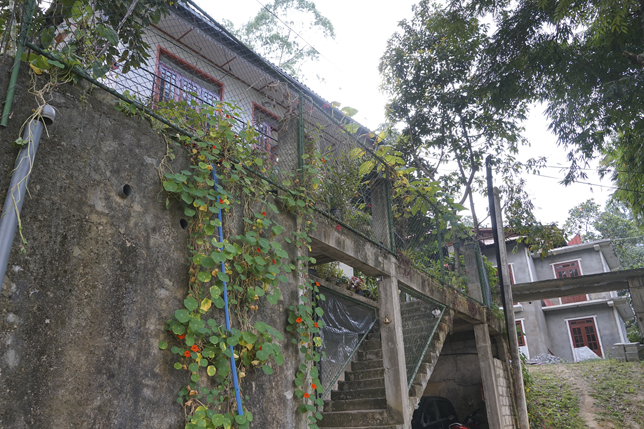
Lenasha had gotten used to life abroad and had been apprehensive about returning to Sri Lanka. As she got older, it became harder to find a new employer when her contracts ended, and she returned reluctantly, ready to have stayed on longer. Her life in Singapore gave her a sense of independence. She spent her Sundays as a key figure in the Sri Lankan temple, supporting migrant women in the community with her years of experience while writing Sinhalese prose and poetry regularly for their monthly community newspaper. She loved playing ‘4D’, a local lottery in Singapore, always finding new number combinations for her four-digit picks every week. Through this, she made small wins over the years to add to her earnings. Though she spoke at length about her children and their accomplishments and how much she missed them when in Singapore, she saw her stay abroad as compatible with being a good, caring motherFootnote 23 to them from a distance, while being able to maintain her independence. She worried that she would have nothing to do if she returned.
Her return home turned out much better than she had imagined. Lenasha, Mahesh, their grandchild, and Lenasha’s sister, Naya (herself a returnee from the Gulf), are at home on the day of my visit. Lenasha proudly gives me a tour of her home. The house has white walls and wooden-framed windows. Entering the living room, there is a blue sofa set, a white tiled floor, a glass coffee table, and several large framed photographs of Lenasha’s daughter’s wedding, her son’s and daughter’s graduations, alongside their framed educational certificates and achievements. All of these frames are material expressions of Lenasha’s decades of work abroad, which are proudly on display. Upstairs, there are the everyday objects and appliances the family acquired with her earnings – a big washing machine in the upstairs sitting room and all the toys she sent home to her children when they were growing up, which are now crammed into a cabinet. There are various photographs of Lenasha herself posing in front of different sites across Singapore, material expressions of this family’s transnational life over many years. Not everything with the building of her house went to plan while she was away. The staircases are still without railings, and she is disappointed that her kitchen is cramped, suggesting that her husband and relatives did not supervise the construction of the house with enough attention and care. Nevertheless, it is a comfortable home for the family, and Lenasha remarked that they were lucky to get the land at the time that they did. The balcony looks out over the green hills and the valley; the gentle breeze and sounds of nature and chants from the temple make it feel peaceful.
Lenasha’s children completed college and are now salaried bank employees. They live close to home, and their daughter married a wealthy owner of a tea estate. They demonstrate what a ‘successful’ migration project for intergenerational social mobility might look like and are happy to finally have Lenasha home. Lenasha reflects on her daily routines with her sister Naya, waking up early in the morning to prepare packed lunches for their children before they leave for work, and then focusing on taking care of her grandson. ‘I am very happy’, Lenasha said, with a glow on her face. The fact that she is ‘all day busy’ gives her a sense of purpose. Financially, Lenasha and her husband get by with the pension that her husband receives from his teaching career and from the support of her adult children who earn good salaries in the bank. In addition to caring for her family, Lenasha prepares food for the monks in the nearby temple as part of her spiritual practice and service, and occasionally helps Naya with the boarding house for female students, which Naya runs on the side. When possible, she travels within Sri Lanka and to neighbouring countries like India on pilgrimages to Buddhist sites, either on her own or with Mahesh, echoing Michele Gamburd’s (Reference Gamburd2020) observations on the importance of religion for older people in Sri Lanka. Lenasha’s story demonstrates how lifelong remittances – for her children’s education and the construction of her house – can generate familial social mobility, as well as a comfortable and fulfilling older-age, despite Lenasha’s apprehension about her own return. This is a story that reflects the more common narrative of migration as a practice for improving one’s family’s well-being and socio-economic status, and how the future may turn out better than one might have anticipated before returning.
5.1.2 Kumari and Priya: Tensions with Kin, Longings for Life Abroad
Not all returns in later life work out as straightforwardly as it did for Lenasha. The story of Kumari demonstrates a more ambivalent experience, particularly with regard to re-establishing relations with her kin. Her narrative, featured in Section 3, reflected how fearful she was before she left. I met her one year later on a holiday visit to her employer’s family in Singapore, after she had permanently returned to Tamil Nadu in India. Kumari reflected that she had been made to feel comfortable by her youngest daughter and son-in-law, contrary to her worst fears that they would abandon her. She gets all of her diabetic medicine and eats well. She looks after her two grandchildren (eight and two) in Chennai and cooks for everyone in the house. She has met others in the neighbourhood since she has to go out and fetch water every day, given the water shortages facing the city of Chennai. Their house is known as the ‘Singapore house’ and as such, many people still ask for money. Kumari said, ‘but I don’t have anything to give, I gave all what I had to my children and they divided it among themselves. I have no money of my own. I depend on others’. Kumari explains how her eldest daughter lives in the village but made bad financial decisions and got cheated. She says her son takes her money, and she does not talk to him. She still feels hurt by the hardships she went through earlier in life without the support of her children. Kumari still misses Singapore deeply, just as the family she helped raise misses her. Speaking about her employer’s family, she said, ‘I think about them all the time’. She says she might get some money as a senior citizen once she turns sixty and felt a sense of excitement when she voted in the recent election. But she still misses her independence: earning money in Singapore, she had more freedom because ‘money is power’, she said. ‘Now without money, just depending on others, I feel trapped sometimes’. She misses the comforts of Singapore too, recalling how when she stayed with her eldest daughter in the village, the mattress her daughter bought for her was eaten by rats. It made her cry to think of the comfortable life she had in Singapore. She hopes to keep visiting Singapore regularly with the support of her former employers, and in fact, she did manage to attend the wedding of the boy she looked after in Singapore, which was her dream. Her story echoes the challenges of return migration in older-age but Kumari’s ongoing relationship with her employer in Singapore means that her return is not an absolute rupture. Kumari’s case, however, is not typical for returning domestic workers who do not usually have that support from their former employers.
Kumari’s narrative was partly echoed by Priya, the twin sister of my key interlocutor Hema, who had to return to Sri Lanka earlier than she wanted to when her Indian employers in Singapore relocated back to New Delhi, and her work permit was subsequently cancelled. Priya explained: ‘I came back 3 years ago but I want to go back [to Singapore]. I had to come back because of my age. But I still can [referring to her bodily agility and nimbleness] so I want to go back. I like it there very much’. Priya left her four children to work abroad when they were young. While aboard, she supported her children’s education, her three daughters’ weddings, and sent money home to build a house. She then realized upon returning for a visit that there was no house – her husband had taken her money while having an affair with another woman, and left. She then had to start all over again and now has a three-storey house, but it is just her living in it because her children are married and living in different places across Sri Lanka. Priya reflected, ‘it’s just me here, what to do? I can still work, I would go back’ she smiled and shrugged her shoulders. She sometimes goes around to visit her children, a week here and a week there. She complains that her children are always demanding her time and that she is constantly arguing with them. Priya prefers to spend time helping her niece (another Singapore returnee) with her batik business, which is where I met her in a town on the outskirts of Colombo. Priya was sitting on a workbench with a pot of hot wax next to her, slowly and diligently dripping wax onto the cloth in different designs. She makes about twenty sarongs in a day, at least. ‘Here [in Sri Lanka], I am just sitting around. That’s why I do the batik, the mind doesn’t go everywhere, I can just focus on this’. Even if Priya has ticked all the boxes in getting her children educated and married, she feels lonely and lacks a sense of purpose. She yearns to return to Singapore, but this is an impossibility at her age. Priya’s story echoes the sentiments that have been documented in many studies of return migration, of feeling alienated from one’s own original home and the mixed emotions that come with being ‘neither here nor there’ (see e.g., Constable Reference Constable1999; Pérez Murcia and Boccagni Reference Boccagni2022; Striffler Reference Striffler2007; Zavella Reference Zavella2011). Priya’s narrative adds to this scholarship, the specific challenges – loneliness and immobility, in particular – that might accompany return journeys of migrant women in older-age (see also Coe Reference Coe, Dossa and Coe2017; Sun Reference Sun2021).
5.1.3 Lena: Bittersweet Acceptance
‘I can’t believe it’s already three years since I came back’, Lena reflected, as we chatted on a Facebook messenger video call: me connecting from a grey morning in Germany, and Lena in a 40-degree heatwave in the central Philippines’ Visayas region. She was sitting in the shady entrance hall of her thatched house, built with her savings from working in Singapore, with roosters cockatooing in the background. She stepped out quickly to show me her large yard and garden, but most of the plants and flowers had browned and died in the extreme heat.
Lena explained how her Dutch employer in Singapore made the decision during the pandemic to return to the Netherlands. Lena still had almost two years left on her renewed work permit, and she tried to transfer to a new employer. When it came to them signing a waiver to justify why Lena should continue to be employed in Singapore at her age (she was slightly over sixty at the time), the new employers were hesitant. Her Dutch employers then suggested that it was probably time for her to return to her family in the Philippines. For Lena, this was sudden, and she was not prepared. As it was during the pandemic, she barely had a chance to say farewell to her friends in Singapore or to process this big change in her life, which she had been expecting to take place a few years later. Lena then recounted her long journey home in extensive detail. It took six weeks from arriving in the Philippines until she could see her family due to the COVID-19 travel restrictions. From Manila, she had to board a flight that made three stops – first in Bacolod, then Mindanao, and then Iloilo, her stop. The policy at that time for migrant returnees was that the flights had to be full to transport people home. She then spent a further four weeks in quarantine. This ordeal no doubt accentuated what was already an abrupt and challenging return.
‘Life in the Philippines is very hard’, says Lena. ‘Actually I started a business a few years ago but it folded.’ She had a catering business, cooking and baking for events, but due to the pandemic, everything went online, and she had to bear all the expenses of delivering the food, and she did not have a car. These costs made it unviable, and she had to shut down her business. She now caters for events on an ad hoc basis. ‘I am still okay, I can still work, so I find ways to get by’ she explained, without having to entirely depend on her children. She says she does not like to ask them for money, but she accepts help from her sons, who take care of the basic household expenses and electricity bills. On weekdays, Lena’s grandchildren stay with her and attend the local school in her area; on weekends, they go to her in-laws. Both of Lena’s sons are nearby – one works in a tourist resort, and the other has gone back to study in a hospitality programme. Given that he already has a family to support, Lena worries how he will make ends meet while studying and wishes he had finished his studies while she was sending money back for his education. Lena’s daughter works in Singapore as a domestic worker (she and Lena overlapped there), but according to Lena, her remittances largely go to her own children, the next generation, rather than the older generation. Lena noted that this is to be expected and that it is only the children who are single who might be able to help more. Her days consist of housework, grandmothering, ad-hoc catering, and volunteering in the local elementary school as a substitute teacher. She got a small payment from Pag-IBIG (a national contributory savings programme) but is waiting until she is sixty-five to get her social security payments, to which she made contributions while she was abroad. ‘Life here is simple’ she reiterates, ‘it’s okay – but it’s not easy. I am still praying that I can make a bigger business’, she said, clearly concerned about how to sustain her income with the rising cost of living and the loss of the steady income she had in Singapore. Lena notes that ‘here I am also doing the housework everyday; but there I got paid for it! It was my job. Here I don’t get paid so of course that makes me sad. I miss my life there. Of course, it was hard but I had purpose. I was busy’. She recounted the central role she played in a local Singaporean NGO and her more active lifestyle as she used to walk on Sundays from Commonwealth, where she stayed, to Orchard, where she would meet her friends. In the Philippines, Lena says, ‘it’s much harder to walk because of the traffic’. Like we saw with Priya, there is a sense of emptiness that characterizes her days following return, even if Lena is happy to be with her family once again. She now spends a lot of her time on Facebook, sharing memories from her time in Singapore and following influencers who promise large financial returns and transformations to becoming overnight millionaires.
In addition to concerns about her livelihood, Lena further reflects on missing her long-term friends in Singapore. She tells me about her close friends in Singapore, with whom she wrote a cookbook consisting of the recipes they used to cook for their employers. Her friendships were her main source of support and solidarity over the years in the city. Two of them returned a year after she did, but both were hit by health challenges. Jolene, her closest friend, was diagnosed with stage 4 cervical cancer and has been undergoing chemotherapy. Lena lamented how all of Jolene’s life savings were gone following one round of treatment. Jolene’s children were all educated and are now working, one as a bank manager and the other in customs. Her son, who is single, supports Jolene. Lena reflects on how Jolene probably knew that something was not quite right with her health in Singapore but had been in denial. She wonders if their mandatory health check-ups would have picked up on these things. Jolene wanted to keep working in Singapore, and serious health concerns might have meant the termination of her contract and returning to the Philippines without sufficient insurance coverage to pay for the extensive medical costs (see also Turnbull et al. Reference Turnbull, Yu and Tay2024). The temporary migration system is one where job security is tied to being fit and healthy. The suppression of health challenges while abroad can see them resurface over time, making returns due to ill health painful to bear while taking away, in Jolene’s case, her enjoyment of grandmotherhood. Lena hopes to visit Jolene in her home in a different part of the Philippines if she can find the funds, as she attempts to hold onto continuities between her life in Singapore and her life in the Philippines.
Lena’s experience of return is mixed. She has accepted her reality, and it is clear she is making the most of being closer to her sons and grandchildren. Equally, she misses her social connections in Singapore, and faces challenges in making ends meet. Lena’s story reflects the emotional anxieties that many migrant women hold about their ageing futures before they return and the ongoing precarity that can accompany former domestic workers in their older-age.
5.2 Conclusion
Return migration later in life after years abroad working under temporary migration regimes poses a social challenge for economies and communities that have relied on migrant remittances over many years. There has been little preparedness among the states governing mass contract labour migration for the financial and emotional challenges that an ageing generation of migrant workers would face. While more ‘return and reintegration’ programmes have emerged over the past decade, there is little attention to the age-related challenges of returning later in life, and the entrepreneurial slant that most of these programmes adopt places the onus on migrants to secure their livelihoods. There is a further implicit expectation that migrants’ work abroad and their remittances over the years will lead to linear progress for their families and communities, and that these families will look after the needs of the ageing return migrant.
While the previous sections looked at how older migrant women anticipate their futures in retirement and old-age, this section has considered the mixed experiences of those who returned as insight into whether the scenarios that domestic workers anticipate about their futures play out. In many cases, there are material markers of ‘success’ and of social mobility through positive stories of intergenerational transformation through education, housing, and employment. Such stories fit the ‘textbook’ end-goal of migration-for-development narratives, and this is seen most clearly in Lenasha’s story of return to her husband and children. Her remittances supported the construction of the family home, her children’s education, and their secure employment; they in turn are now supporting Lenasha upon her return. Yet the stories of Kumari, Priya, and Lena (and her friend Jolene) tell a more ambivalent story, which reflect the fears domestic workers hold about their futures: of tensions with kin after many years apart, of isolation and longing for a sense of purpose which they have lost, and of struggles to secure and sustain one’s livelihood or healthcare expenses in times of illness. These narratives attest to the continuation of forms of socio-economic precarity and the unreliability (and indeed undesirability) of relying on children who may not themselves have secure employment or whose earnings are now prioritized to support the next generation. These experiences resonate with discussions on how class positionalities among migrants are dynamic and constantly shifting (see e.g., Coe and Pauli Reference Coe and Pauli2020) and that long-term migration does not guarantee a linear transition into a secure middle-class life.
Temporary migration regimes, moreover, create emotional dissonances among migrants upon return. The affective dimensions and emotional loose-ends of lives post-migration are not always captured in discussions of migrant remittances and social mobility. Being with kin once again is a real joy for some returnees after many years of geographical separation. But such reunions do not come without significant adjustments and renegotiations of (in)dependence as there is a recognition that their original ‘homes’ and relationships have changed. In the later stages of their lives, return migrants have to reconcile the moral, affective, and economic entanglements and differences between their migrant and non-migrant lives (Chan Reference Chan2018; Killias Reference Killias2017; Sampaio Reference Sampaio2025), between home ‘here’ and home ‘there’, between autonomy and dependence, and between creative experimentation and fitting normative expectations. Friendships, solidarities, and kinship bonds abroad tend to disperse and fade away over time once migrant women return to the precarious livelihoods they left behind, even if the women themselves are transformed by these encounters and experiences abroad. In this way, the ruptures between their lives abroad and their lives upon return are bridged through these self-transformations and transnational imaginaries.
As more migrant workers return in older-age, further research is still needed into their ageing experiences and how their relationships change over time, alongside newer survey data on how returned migrants are faring socially and economically. This can complement ethnographic narratives, which reveal the complex emotions that migrants hold when they return after long-term migration.
6 Conclusion
Drawing on ethnographic research with ageing migrant domestic workers, this Element has shed light on some of the key questions facing this generation of ageing migrant labour employed under temporary contract labour migration regimes. Older migrant domestic workers face both emotional and financial challenges as they approach retirement. They imagine and plan for their futures on multiple scales and registers. Emotionally, migrant domestic workers contend with leaving behind meaningful relationships and routines that they have cultivated over the years in Singapore and Hong Kong, places they have come to call home. At the same time, they anticipate reunions with their kin with both excitement and anxiety, uncertain about how they will readjust to relationships that have been lived transnationally over decades. In these ways, anticipating the future is tied to a range of conflicting emotions. Financially, domestic workers face uncertainties about how they will sustain their livelihoods in older-age once their migrant earnings cease upon retiring from work abroad. With little in the way of formal social protection, migrants’ ageing futures are shaped by governance and policy structures that do not account for their well-being after work abroad, in later life. Domestic workers then have to rely on minimal savings and intergenerational support from kin, which is not always comfortable or guaranteed for migrant women who have experienced autonomy. In anticipation of challenging futures ahead, migrant domestic workers use their remaining time abroad in late middle-age to engage in new projects – for example, learning new skills such as baking or caregiving, taking financial education courses to imagine and prepare for future business ventures or investments, and engaging in ethical and spiritual projects through religious service and volunteering roles. In all these ways, migrant women seek to craft their uncertain futures rather than to passively accept what is ahead, within the constraints of the structural conditions within which they live and work. Actual returns in later life present a varied picture with some women finding new forms of purpose in their roles as grandmothers and finding that reunions with kin are not as challenging as they might have anticipated; while others experience a sense of loss and disorientation, yearning for their lives abroad, struggling with health issues or with making ends meet in what Silvey and Parreñas (Reference Silvey and Parreñas2019) have called ‘the precarity of the future’.
Time as an analytical lens provides an understanding of how these precarious futures are tied to the temporal governance structures of states, which keep domestic workers in long-term temporary positions, limiting their prospects for ageing transnationally (which immigration regimes that allow permanent residence and social security provisions might otherwise enable). In tandem with the increasing centrality of temporal analyses in migration studies (Sun Reference Sun2021), a life-course perspective offers insight into how migrant domestic workers’ relationships and sense of place change over time, and how their aspirations shift. Going abroad as younger women, they often see their journeys as temporary: motivated by the need to earn money for their families for a short period of time or by wanting to escape particular relationships or pressures at home by going abroad to experience a different life. Rarely do migrant domestic workers imagine themselves to remain abroad for decades under conditions of long-term temporariness, with many of my interlocutors proclaiming, half-jokingly yet with some truth: ‘we always say “one more contract!”’ However, as migrant women anticipate mandatory retirement and returns in late middle-age, there is a shift towards thinking about their own futures. Midlife is a distinctive life phase (Lulle Reference Lulle2024), a phase when migrant domestic workers evaluate their past decisions and relationships, while anticipating and reorienting themselves to unknown futures when they are no longer migrants. While earlier aspirations might have been more oriented towards classical social mobility goals of migration, newer aspirations and life-projects are oriented towards self-transformation. Even the achievement of their migration goals through decades of sending remittances to their families is often not enough to assure a comfortable and fulfilling old-age. Many still feel the need to better prepare themselves for return, emotionally, socially, and financially, while continuing to find ways to make their time left abroad meaningful for themselves before the ruptures to their transnational livelihoods.
The requirement under temporary labour regimes for migrant bodies to be perpetually healthy, as those which ‘do not age’ or ‘do not die’ (Berger and Mohr Reference Berger and Mohr1975), means that debilitated, sick, or ageing bodies become disposable. There are thus strong continuities with earlier historical moments, be it Asian indentured labour under capitalist colonial economies, the amahs who also sought to stay healthy to be able to continue working, and the guestworker schemes in post-war Europe. The temporary labour migration regimes that took hold in Asia since the 1970s are still dominant in the region’s migration governance today, which means that rethinking safety nets for ageing migrant labourers can only be done within this political and economic framework. In the context of globally ageing populations today, the neoliberal obsession with perpetual good health features prominently in broader public discourses on ‘active’ and ‘successful ageing’ (Lamb Reference Lamb2017), placing responsibility on individuals for their health. This discourse in global ageing policy adds another layer of self-responsibility for migrant women, who already have to contend with this narrative in their employment conditions.
The ethnographic examples presented in this Element demonstrate how migrant women seek to contest their disposability as ageing bodies and non-citizen migrants, but there are limits to how far they can do so. After writing the first draft of this manuscript, Hema, whose story opened this Element, had a heart attack and required heart surgery in Singapore. In this health emergency, with limited insurance coverage, her employers refused to support the additional expenses of her care. While mobilizing the network of volunteers she worked with in a domestic worker’s association for support, her medical expenses are depleting her savings, and her work permit is unlikely to be renewed, given her health record and her employer’s lack of care in this grave health situation. Hema’s story is a reminder of the lack of accountability in the care for ageing migrant bodies by the many actors who have long benefitted from their labour.
6.1 The COVID-19 Pandemic and Its Impact
Continuing the theme of health, it is worth noting that the COVID-19 pandemic occurred precisely in the time period when I carried out my research with older migrant domestic workers. In many ways, the disruptions that domestic workers faced during the pandemic foreshadowed the ruptures to their transnational lives that many will experience upon retirement. The pandemic upended familiar routines and created uncertainties about the future. It accentuated domestic workers’ immobilities, as they were barred from leaving their employers’ homes and unable to travel to visit kin in countries of origin. Migrant domestic workers further lost their weekly day off, a time for connecting with others beyond the household and sending remittances to their families. Smartphones then became even more of a lifeline (as they were already crucial to staying connected to their families). Some of the Sunday activities in which domestic workers participated moved online. The older domestic workers that I knew started to attend skills and financial education courses on their phones during their lunch breaks, in the evenings, and on Sundays. In some cases, they borrowed laptops from their employers to be able to participate. Some used the time to make vlogs about the steps they were taking to prepare for the future, and others joined online poetry readings. It is worth noting that not all domestic workers had the time, space, or energy to participate in online courses during the pandemic, given their higher workloads in the household with their employers working or studying from home during the lockdowns. Many still missed the sensorial, embodied nature of being with others on Sundays, praying in a Church, sitting together to eat and chat, being in a space outside of their employment.
In some cases, the COVID-19 pandemic led to contract terminations when employers of domestic workers decided to relocate. For older domestic workers, it was difficult to find new employers at that stage, and returning to their countries of origin to retire would have been the only option, often earlier than they would have wanted to (as the story of Lena, in Section 5, elaborates). When I went to meet some of my key interlocutors in the ‘post-pandemic’ phase, I often brought up the preceding years and asked how they dealt with it. Most responded briefly, saying it was a terrible time which left them feeling very isolated, but quickly moved onto talking about their present and future concerns. It was a past they wanted to forget, focusing instead on more pressing concerns in their lives. This note on the pandemic serves as a reminder of this specific period in history during which this research took place, and offers a broader reflection on the multiple, unexpected crises that can intervene into the lives of those whose caring labour was made visibly ‘essential’ yet whose precarious circumstances made it difficult to withstand. In some ways, the pandemic accentuated already-existing immobilities – domestic workers’ permits limit their local and transnational mobilities – rather than introducing restrictions that were completely new. What was new, during and after the pandemic, was a stronger articulation of mental health and well-being for and among migrant domestic workers, with both state-produced brochures on mental health, as well as a greater interest in yoga, exercise, and meditation classes, some of which were incorporated into the ‘return and reintegration’ modules that migrant women enrolled in.
6.2 Future Research Agendas
There is still further research to be done on ageing migrant workers in different comparative contexts. While this Element has highlighted the gendered experiences of older migrant women in the domestic and care work sectors, a similar study on the ageing futures and experiences of migrant men is much needed. Men who go abroad to work under contract labour migration regimes in construction work and seafaring, for example, have to similarly contend with sustaining their livelihoods at the end of their working lives abroad. In fact, men may retire even earlier from manual labour when their bodies age, with fewer options to claim ‘indispensability’ in the ways that domestic workers can based on their caring responsibilities and affective bonds with their employers. There is little research on how returning men face questions relating to old-aged care, kin relations, livelihoods, social protection, and their gendered identities in later life.
This study has focussed on migrant women from the Philippines, Indonesia, India, and Sri Lanka. As domestic workers employed on temporary migration contracts, these women share a similar structural position in the landscape of migrant labour in Singapore and Hong Kong and thus confront similar challenges with regard to ageing, retirement, and return. While this Element offers some observations on how domestic workers of different nationalities relate differently to their ageing futures, further research might explore, in greater depth, the cultural specificities around ageing, retirement, and care in transnational contexts. Such research could furthermore usefully examine the micro-politics within particular national or ethnic groupings of migrants and their relations to local populations. Take, for instance, the relationship between low-waged domestic workers from Tamil Nadu and their wealthier Indian employers, and how caste, class, regional, and linguistic commonalities or differences shape domestic workers’ experiences and futures.
There is further comparative research to be done across different temporary migration regimes. This includes further research on ageing migrants within Asia and the Gulf states, as well as in other regional contexts given that temporary migration visas are becoming increasingly prevalent in contemporary migration management and policy-making in countries such as Australia, Canada, the UK, and Germany, to name just a few (see e.g., Pietsch Reference Pietsch2022; Triandafyllidou Reference Triandafyllidou2022; Withers and Hill Reference Withers and Hill2023). In all such cases, an understanding of the long-term implications of these legal categories on migrant experiences across the life course (including questions of care and social protection when they age and retire) is necessary and will provide a more complete picture of the challenges facing older migrants and their families within different socio-political and legal frameworks.
Finally, there is a need for further research into the intergenerational impacts of domestic workers’ long-term migration projects and how their journeys shape the work and migration aspirations of the next generation (Yeoh et al. Reference Yeoh, Lam, Somaiah and Acedera2023). It remains to be seen whether the same cycles of precarity and of transnational care (Liebelt Reference Liebelt2011a) continue from one generation to the next or whether the next generation finds greater security and agency in making decisions about work and care that do not rely exclusively on going abroad under precarious and temporary migration schemes. Such research will shift the focus beyond domestic workers’ own life courses to examining the transhistorical impacts of temporary migration on multiple generations.
6.3 Policy Implications
This Element raises important questions for policy at the intersection of ageing and migration. A transnational perspective demonstrates the limits of static nation- or place-based framings of ageing. Meanwhile, the lens of ageing enables consideration of the passage of time in migration journeys, reiterating that migration trajectories and aspirations are not fixed or linear and that they change over time. While temporary migration regimes presume short-term and transient stays, serial and long-term migration patterns within temporary migration regimes are more common than typically acknowledged. Migrants, moreover, are not exclusively young. A life course approach sheds light on how migrant women, as they grow older abroad, build relationships, communities, and friendships and contribute in myriad ways to the societies in which they have lived and worked over many years. These points shed light on some key policy-oriented observations:
(1) There are significant inequalities in ageing. Age intersects with other socially and historically constituted categories of difference, such as race, class, and gender. People who experience discrimination and exclusion over the course of life may find that these experiences can limit their access to care, housing, social protections, and secure livelihoods in the later stages of life. The politics of migration – what kinds of rights people hold when crossing borders – matter significantly in shaping networks and forms of support for later life. Groups with more privilege, who are able to move freely across borders, have the option to purchase particular lifestyles in retirement, while others struggle to find a decent quality of life. Policies around ageing, health, and well-being might be more inclusive of migrants, regardless of their residency or visa status.
(2) Care work is rarely regarded as work and therefore not protected under the same labour legislation as other forms of work. Recognition of the care work that migrant domestic workers do – in both their countries of origin, and the societies in which they work – can go a long way in providing better social protections for domestic workers’ own futures. This includes incorporating migrant domestic workers into pension schemes.
(3) Nation-state-based social policies relating to care, health, and social security do not always correspond with the realities of transnational living. A reimagination of social policies for old-age and care with a transnational lens can better support the needs of families and communities whose lives are spread across multiple places. Current forms of transnational social protection often include a hybrid of different forms of support (state, kin-based, faith-based, humanitarian) (Levitt et al. Reference Levitt, Dobbs, Sun and Paul2023), which are not always reliable. Given how much states organize and profit from mass temporary labour migration, their provision of further safety nets could go a long way to provide a secure foundation for migrant women’s retirement plans, their livelihoods, and their health and care needs in old-age.
(4) The notion of ‘ageing in place’,Footnote 24 which has gained currency over the past decade in ageing policy circles, tends to overlook cases where people age in challenging environments (Buffel and Phillipson Reference Buffel and Phillipson2023) and where people age across multiple places and ‘in networks’ (Gao et al. Reference Gao, Ho, Chua and Feng2024; Ho et al. Reference Ho, Chua and Feng2024), as a result of transnational living. Greater attention to the emotional dimensions of ageing across multiple places would better support the well-being of older migrant domestic workers and others in similar situations.
The COVID-19 pandemic has provided a further opportunity to policy-makers to rethink temporary migration schemes in ways to make them more resilient, sustainable, and equitable to ‘shocks’, as Brenda Yeoh (Reference Yeoh2022) has argued. Among the proposals Yeoh puts forward, which the findings of this research support, are (i) to offer visas and contracts of longer duration alongside pathways towards residency, (ii) to build stronger safety nets for migrants, and (iii) to move beyond a purely economic logic in temporary migration models to one that considers all dimensions of well-being – social, health, community, and familial.
As societies increasingly rely on domestic workers to care for their ageing populations, this study makes visible how carers themselves grapple with social, economic, and existential questions around their own well-being in later life. Supporting the needs, aspirations, and futures of those who labour to ensure the well-being of others would acknowledge the central role that care plays in sustaining households and economies, and the meaningful relationships and opportunities that emerge through this still-undervalued labour in Asia, and globally.
Acknowledgements
First and foremost, I am grateful to all the migrant domestic workers in Singapore and Hong Kong for generously sharing their time, stories, and perspectives with me, and without whom this work would not be possible. I thank the many individuals and organizations who facilitated this research, either by introducing me to some of my interlocutors or allowing me to observe their programmes and activities.
The anonymous peer reviewers offered very constructive and insightful comments on an earlier version of this manuscript. I thank the Elements team and the Editor of the Global Development Studies series, Peter Ho, for giving this work a space in this Elements series.
This research was generously funded by the Max Planck Society in the framework of my ‘Ageing in a Time of Mobility’ Research Group (2018–2024). Funding from the Max Planck Society further made it possible for this Element to be published open access, making the digital version freely available for anyone to read under a Creative Commons licence.
The ideas put forward in this Element took shape through intellectual exchanges and companionship with colleagues in the ‘Ageing in a Time of Mobility’ research group. Special thanks to Victoria Sakti, Dora Sampaio, Swetlana Torno, and Nele Wolter, who have seen the project evolve over the years and were always ready to provide helpful feedback and inspiring ideas. I am grateful to Steven Vertovec for giving our group a vibrant home at the Max Planck Institute for the Study of Religious and Ethnic Diversity, and thank colleagues from across all scientific and administrative departments for their invaluable support.
This project benefitted greatly from rich collaborations and conversations with scholars around the world working in the fields of ageing, migration, and care, who have commented on earlier drafts or given me the opportunity to present parts of it in the context of seminars and publication projects. My thanks particularly go to Loretta Baldassar, Janet Carsten, Cati Coe, Nicole Constable, Elaine Ho, Sarah Lamb, Aija Lulle, Susan McKinnon, Julia Pauli, and Paul Stoller.
Long research projects are sustained through the care of loved ones. My deepest gratitude goes to my family: Jairam and Shantha Amrith, Sunil Amrith, Ruth Coffey, Theodore and Lydia Amrith, Frank and Monika Werner, and Andreas Werner – each one of you in your own unique way, giving me much support, love, and joy. This research project coincided with the COVID-19 pandemic, a reminder to never take these transnational relationships for granted.
Peter Ho
Zhejiang University
Peter Ho is Distinguished Professor at Zhejiang University and high-level National Expert of China. He has held or holds the position of, amongst others, Research Professor at the London School of Economics and Political Science and the School of Oriental and African Studies, Full Professor at Leiden University and Director of the Modern East Asia Research Centre, Full Professor at Groningen University and Director of the Centre for Development Studies. Ho is well-cited and published in leading journals of development, planning and area studies. He published numerous books, including with Cambridge University Press, Oxford University Press, and Wiley-Blackwell. Ho achieved the William Kapp Prize, China Rural Development Award, and European Research Council Consolidator Grant. He chairs the International Conference on Agriculture and Rural Development (www.icardc.org) and sits on the boards of Land Use Policy, Conservation and Society, China Rural Economics, Journal of Peasant Studies, and other journals.
Servaas Storm
Delft University of Technology
Servaas Storm is a Dutch economist who has published widely on issues of macroeconomics, development, income distribution & economic growth, finance, and climate change. He is a Senior Lecturer at Delft University of Technology. He obtained a PhD in Economics (in 1992) from Erasmus University Rotterdam and worked as consultant for the ILO and UNCTAD. His latest book, co-authored with C.W.M. Naastepad, is Macroeconomics Beyond the NAIRU (Harvard University Press, 2012) and was awarded with the 2013 Myrdal Prize of the European Association for Evolutionary Political Economy. Servaas Storm is one of the editors of Development and Change (2006-now) and a member of the Institute for New Economic Thinking’s Working Group on the Political Economy of Distribution.
Advisory Board
Arun Agrawal, University of Michigan
Jun Borras, International Institute of Social Studies
Daniel Bromley, University of Wisconsin-Madison
Jane Carruthers, University of South Africa
You-tien Hsing, University of California, Berkeley
Tamara Jacka, Australian National University
About the Series
The Cambridge Elements on Global Development Studies publishes ground-breaking, novel works that move beyond existing theories and methodologies of development in order to consider social change in real times and real spaces.
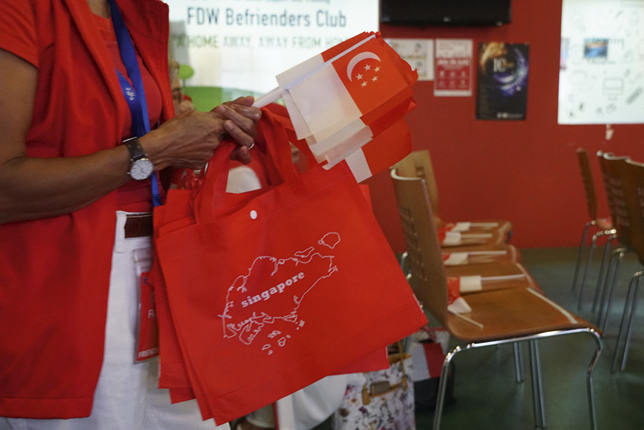
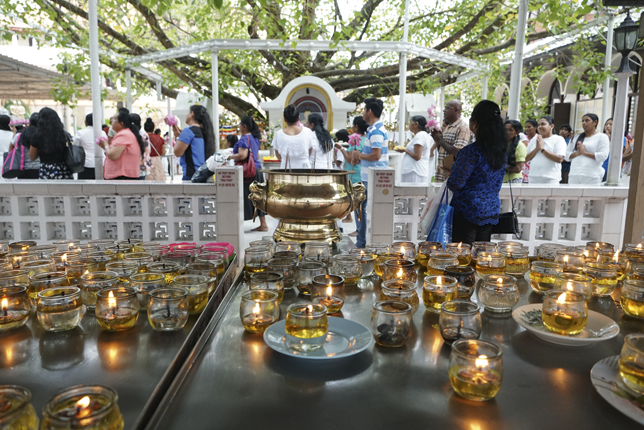
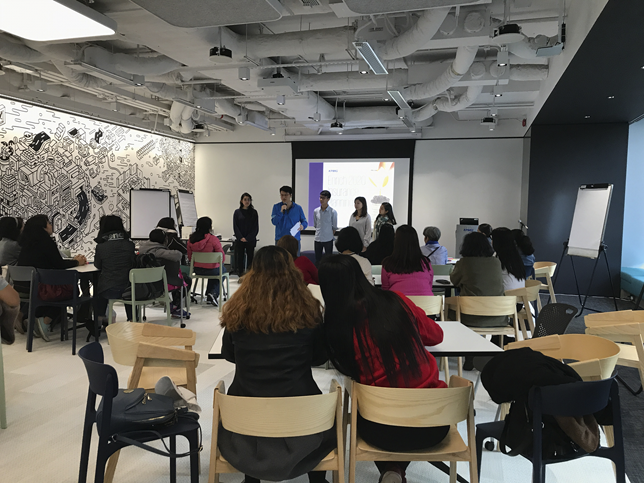
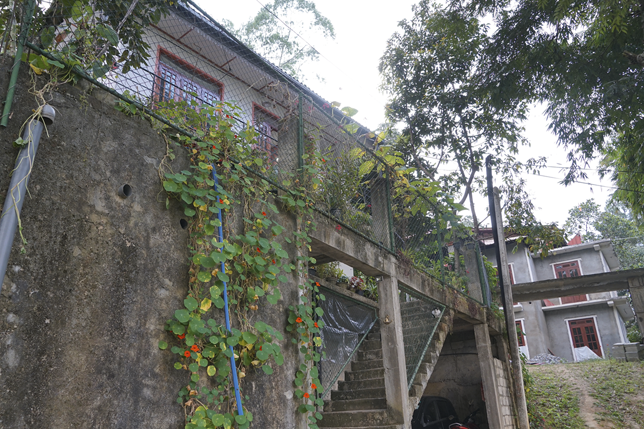

 Open access