


Considerable interest has been stimulated by reports of an increased incidence of schizophrenia in first- and second-generation Carribbean immigrants to the UK (Reference Harrison, Glazebrook and BrewinHarrison et al, 1997). Criticisms of these reports centred on the possibility that people of Caribbean origin are overrepresented in treated incidence studies, the issue of misdiagnosis, the reliability of census data and the lack of control for socio-economic status (Reference Dohrenwend, Gattaz and HäfnerDohrenwend, 1999). The reports were supported by a study of the Dutch psychiatric registry, which found evidence of an increased incidence in the Surinamese and Netherlands Antillean immigrants to The Netherlands (Reference Selten, Slaets and KahnSelten et al, 1997). Since the registry data could have been biased by misdiagnosis or a lower threshold for admission in the immigrant groups, we conducted a first-contact incidence study in The Hague. The aim of our study was to compare the risk of a first contact for psychotic disorders in immigrants with that in natives.
METHOD
Immigrants to The Netherlands
Migration from Turkey and Morocco started in the mid-1960s. The Turkish migrants came from all parts of the country, but the Moroccans in particular from the Rif mountains in the east. The Dutch colony of Surinam gained independence in 1975 and doubts about the future caused more than one-third of the Surinamese-born population to migrate to The Netherlands. The Surinamese population is ethnically diverse. A study in The Hague distinguished Hindustanis, whose ancestors emigrated in the 19th century from British India to Surinam (80%), Afro-Surinamese (10%) and others (Reference Martens and VerweijMartens & Verweij, 1997).
A recent survey provided evidence of a ‘tripartition’ of Dutch society. Educational levels and income were found to be lowest for Turkish and Moroccan immigrants. Surinamese and Antillean immigrants were found to take an intermediate position. In The Hague, the proportions of children growing up in single-parent families were lowest for Moroccans (5%) and Turks (10%) and highest for Hindustanis (28%), other Surinamese (38%) and Antilleans (47%). For ‘natives’ (see ‘Statistical analysis’) this figure was 18% (Reference MartensMartens, 1999).
Recruitment of patients
The criteria for inclusion and exclusion were similar to those used in the World Health Organization (WHO) Ten-Country Study (Reference Jablensky, Sartorius and ErnbergJablensky et al, 1992). Subjects whose residence in The Hague was shorter than 6 months or who stayed there illegally were excluded. Collaboration was established with local general practitioners (GPs) and psychiatrists. A team of researchers (N.V., W.F., J.D.B.) tried to interview all subjects aged 15-54 years who made first contact with a physician for a (suspected) psychotic disorder during the period 1 April 1997 to 1 April 1999. The physician responsible made contact between the patient and the team. The researchers asked for written informed consent for: (a) a diagnostic interview; (b) an interview with a key informant; and (c) access to the medical file. Some patients gave consent for only one or two parts of the study. When the patient refused contact with the team, the researchers asked the physician for detailed clinical information, but not the patient's name, date of birth or address. The study was approved by all relevant ethical committees.
Assessment
Residents in psychiatry (J.D.B./N.V.) interviewed patients using the Dutch translation of the Comprehensive Assessment of Symptoms and History (CASH) (Reference Andreasen, Flaum and ArndtAndreasen et al, 1992). They screened the medical file and asked patients from Surinam (first- and second-generation) to assign themselves to an ethnic group (African, Hindustani or other). A research nurse (W.F.) interviewed key informants (usually a spouse or a close relative), using the Instrument for the Retrospective Assessment of the Onset of Schizophrenia (IRAOS) (Reference Häfner, Riecher-Rössler and HambrechtHäfner et al, 1992). She also asked the key informants of first- and second-generation immigrants whether they considered the most prominent symptoms normal within the patient's culture. An official interpreter was asked to help in the administration of CASH or IRAOS, if necessary. The residents and the nurse were of Dutch origin. They compiled a narrative history of the patient's illness omitting any clue to the patient's ethnicity (e.g. sibship size). During a diagnostic meeting two psychiatrists (J.P.S. and D.S./J.O./W.C./M.V.), who remained blind to ethnicity, made a consensus DSM-IV diagnosis (American Psychiatric Association, 1994). They noted whether the presence of a psychotic disorder was possible, very likely or certain and determined the time of onset of psychosis. The latter was impossible in nine patients, because the information was of insufficient quality.
Study subjects
One hundred and ninety-seven subjects made first contact for a (suspected) psychotic disorder. Thirty-eight (19.3%) refused contact with the team, but their anonymised data could be assessed. The proportion of refusers among Surinamese (22.2%), Antillean (28.6%) and Turkish subjects (30.0%) was higher than among natives (18.3%), but the reverse was true for Moroccans (13.8%) and others (18.2%). Logistic regression analysis, controlling for gender and age, showed that the differences were not significant (two-tailed P for odds ratios > 0.25). Diagnostic interviews were conducted in 152 of 197 cases (77.2%) and interviews with key informants in 121 of 197 cases (61.4%). From the total of 197 patients, 12 were excluded on the basis of being diagnosed with a substance-induced psychotic disorder or a non-psychotic disorder. A further four patients were excluded because the presence of psychosis was dubious. The patients with a very likely (n=4) or certain (n=177) diagnosis of a psychotic disorder constituted the study sample.
Statistical analysis
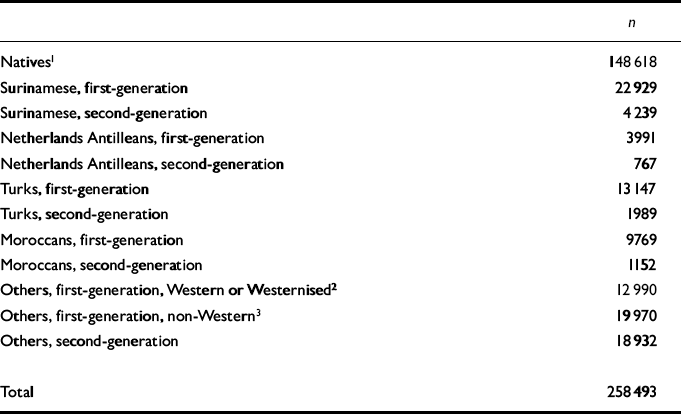
The municipality of The Hague classifies its citizens according to country of birth, not race or ethnicity. If a citizen was born abroad, he or she is assigned to the group of people born in the same country (e.g. Turkey, first-generation). The Hague divided people born in countries other than The Netherlands, Surinam, The Netherlands Antilles, Turkey or Morocco into a group of people born in Western or Westernised countries (western, northern and southern Europe (including the former Yugoslavia), the USA, Canada, Australia, New Zealand, Japan and Israel) and a group of people born in non-Western countries (all other countries, including the previously communist countries in Eastern Europe). A Dutch-born citizen is considered a second-generation immigrant if at least one parent was born abroad (e.g. Turkey, second-generation). If the parents were born in different foreign countries, the country of birth of the mother is decisive for assignment to a particular group. Natives are Dutch-born citizens whose parents were also born in The Netherlands (see Table 1).
Numbers of inhabitants of the Hague, aged 15-54 years, by population group; 1 January 1998
| n | |
|---|---|
| Natives1 | 148 618 |
| Surinamese, first-generation | 22 929 |
| Surinamese, second-generation | 4 239 |
| Netherlands Antilleans, first-generation | 3991 |
| Netherlands Antilleans, second-generation | 767 |
| Turks, first-generation | 13 147 |
| Turks, second-generation | 1989 |
| Moroccans, first-generation | 9769 |
| Moroccans, second-generation | 1152 |
| Others, first-generation, Western or Westernised2 | 12 990 |
| Others, first-generation, non-Western3 | 19 970 |
| Others, second-generation | 18 932 |
| Total | 258 493 |
The country of birth of the parents of 10 Dutch-born patients was uncertain, but since these latter conveyed the impression of being culturally Dutch, they were classified as natives. The municipality of The Hague provided population figures, divided according to the above criteria, 5-year age-group and gender, for 1 January 1997, 1998 and 1999. In order to derive person-years at risk for the period of the study (1 April 1997 to 1 April 1999) the population figures for 1997, 1998 and 1999 were multiplied by 0.75, 1.0 and 0.25, respectively, and then added together. First-contact rates were calculated by dividing the number of cases by the number of person-years. In order to compute 95% confidence intervals (95% CIs) for these rates a Poisson distribution was assumed (Reference MacMahon and TrichopoulosMacMahon & Trichopoulos, 1996). First-contact rates were computed for ‘all psychotic disorders’ (DSM-IV: schizophrenia, schizophreniform disorder, schizoaffective disorder, mood disorder with psychotic features, delusional disorder, brief psychotic disorder, shared psychotic disorder or psychotic disorder, not otherwise specified) and for ‘schizophrenic disorders’ (DSM-IV: schizophrenia, schizophreniform disorder, schizoaffective disorder). Standardised first-contact rates were derived by direct standardisation for age and gender to the total population of The Netherlands as at 1 January 1998. The risks for the following population groups were compared to the risks for natives:
-
(a) Surinamese, Netherlands Antillean, Turkish, Moroccan and other subjects (first- and second-generation combined);
-
(b) immigrants born in Surinam, The Netherlands Antilles, Turkey, Morocco, other non-Western countries and those born in Western or Westernised countries (first-generation only);
-
(c) Surinamese, Netherlands Antillean, Turkish, Moroccan and ‘other’ subjects of the second generation. Most immigrants arrived in the 1970s and 1980s and very few children born to immigrants have as yet reached the age of 30: this last analysis was consequently restricted to people aged 15-29.
Gender and (5-year) age-adjusted relative risks were calculated by Poisson regression analysis, using EGRET (Cytel Software, 1999).
Research into the inverse relationship between schizophrenia and socio-economic status has shown that social selection processes (downward mobility of the genetically predisposed) are more important than social causation processes (development of the disorder promoted by adversity and stress associated with low socio-economic status) (e.g. Reference Dohrenwend, Levav and ShroutDohrenwend et al, 1992). This means that a modest role for the social causation mechanism has not been ruled out.
Consequently, we made an attempt to adjust for possible confounding by socio-economic status. We had obtained the addresses of 142 patients (78%) with a psychotic disorder and of 89 (81%) with a schizophrenic disorder (not the addresses of those who refused contact with the research team). The 40 neighbourhoods of The Hague are divided into five socio-economic levels, based on disposable income, quality of housing and rates of long-term unemployment. The population figures in each neighbourhood for 1 January 1998, by 5-year age-group, gender and country of birth of citizen and parents, were made available by the city of The Hague. Using these data we calculated the gender- and (5-year) age-adjusted relative risks for the population groups described in (a). We then examined whether further adjustment for the socio-economic status of the neighbourhoods influenced the results.
RESULTS
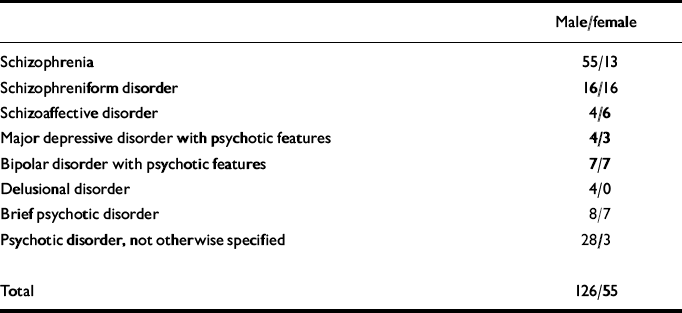
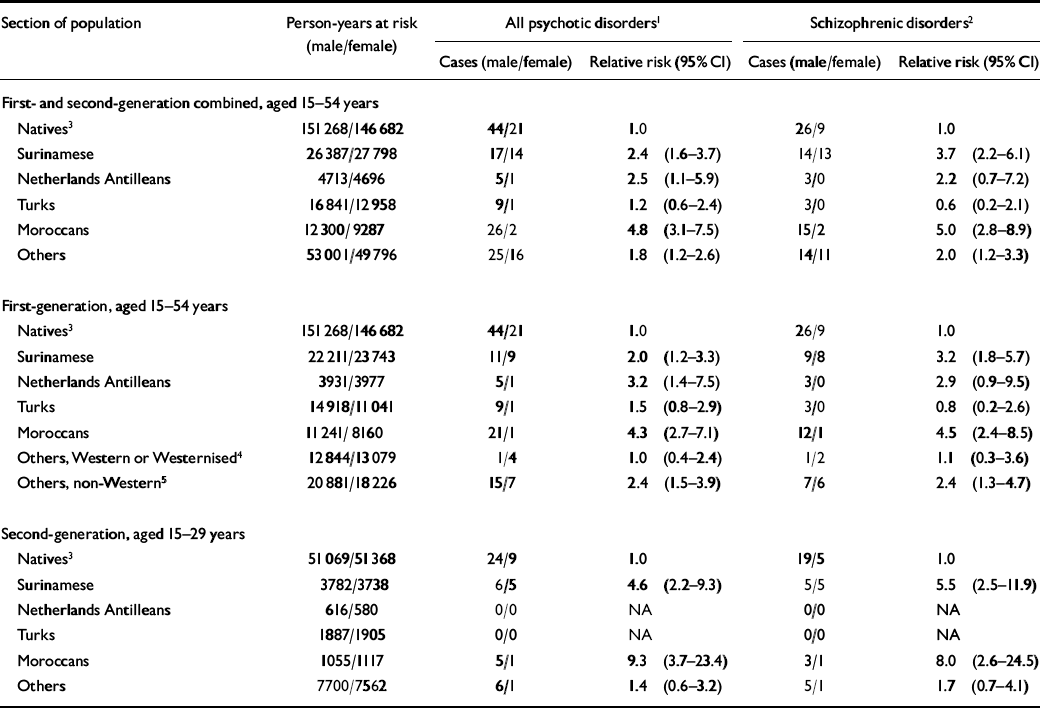
One hundred and eighty-one citizens of The Hague (126 men and 55 women) made first contact for a psychotic disorder in the 2-year study period. The mean age at first contact was 28.3 years (s.d.=9.2) for men and 32.0 years (s.d.=9.5) for women. Table 2 lists the frequencies of the DSM-IV diagnoses made. The first-contact rates for all psychotic disorders and for schizophrenic disorders were 3.5 (95% CI 3.0-4.0) and 2.1 (95% CI 1.7-2.5) per 10 000 population, respectively. For natives these figures were 2.2 (95% CI 1.7-2.7) and 1.2 (95% CI 0.8-1.6) per 10 000 population, respectively. The first-contact rate for schizophrenic disorders in first-generation immigrants from Surinam was 3.7 (95% CI 1.9-5.5) per 10 000. The differences between crude and standardised first-contact rates were minimal. Table 3 gives age- and gender-adjusted relative risks.
Frequency of DSM-IV diagnoses for citizens of The Hague who made first contact for a psychotic disorder in the period 1 April 1997-1 April 1999, by gender
| Male/female | |
|---|---|
| Schizophrenia | 55/13 |
| Schizophreniform disorder | 16/16 |
| Schizoaffective disorder | 4/6 |
| Major depressive disorder with psychotic features | 4/3 |
| Bipolar disorder with psychotic features | 7/7 |
| Delusional disorder | 4/0 |
| Brief psychotic disorder | 8/7 |
| Psychotic disorder, not otherwise specified | 28/3 |
| Total | 126/55 |
Age- and gender-adjusted relative risks of first contact for all psychotic disorders and for schizophrenic disorders for ethnic minorities in The Hague, 1 April 1997 to 1 April 1999
| Section of population | Person-years at risk (male/female) | All psychotic disorders1 | Schizophrenic disorders2 | ||
|---|---|---|---|---|---|
| Cases (male/female) | Relative risk (95% CI) | Cases (male/female) | Relative risk (95% CI) | ||
| First- and second-generation combined, aged 15-54 years | |||||
| Natives3 | 151268/146682 | 44/21 | 1.0 | 26/9 | 1.0 |
| Surinamese | 26387/27798 | 17/14 | 2.4 (1.6-3.7) | 14/13 | 3.7 (2.2-6.1) |
| Netherlands Antilleans | 4713/4696 | 5/1 | 2.5 (1.1-5.9) | 3/0 | 2.2 (0.7-7.2) |
| Turks | 16841/12958 | 9/1 | 1.2 (0.6-2.4) | 3/0 | 0.6 (0.2-2.1) |
| Moroccans | 12300/9287 | 26/2 | 4.8 (3.1-7.5) | 15/2 | 5.0 (2.8-8.9) |
| Others | 53001/49796 | 25/16 | 1.8 (1.2-2.6) | 14/11 | 2.0 (1.2-3.3) |
| First-generation, aged 15-54 years | |||||
| Natives3 | 151268/146682 | 44/21 | 1.0 | 26/9 | 1.0 |
| Surinamese | 22211/23743 | 11/9 | 2.0 (1.2-3.3) | 9/8 | 3.2 (1.8-5.7) |
| Netherlands Antilleans | 3931/3977 | 5/1 | 3.2 (1.4-7.5) | 3/0 | 2.9 (0.9-9.5) |
| Turks | 14918/11041 | 9/1 | 1.5 (0.8-2.9) | 3/0 | 0.8 (0.2-2.6) |
| Moroccans | 11241/8160 | 21/1 | 4.3 (2.7-7.1) | 12/1 | 4.5 (2.4-8.5) |
| Others, Western or Westernised4 | 12844/13079 | 1/4 | 1.0 (0.4-2.4) | 1/2 | 1.1 (0.3-3.6) |
| Others, non-Western5 | 20881/18226 | 15/7 | 2.4 (1.5-3.9) | 7/6 | 2.4 (1.3-4.7) |
| Second-generation, aged 15-29 years | |||||
| Natives3 | 51069/51368 | 24/9 | 1.0 | 19/5 | 1.0 |
| Surinamese | 3782/3738 | 6/5 | 4.6 (2.2-9.3) | 5/5 | 5.5 (2.5-11.9) |
| Netherlands Antilleans | 616/580 | 0/0 | NA | 0/0 | NA |
| Turks | 1887/1905 | 0/0 | NA | 0/0 | NA |
| Moroccans | 1055/1117 | 5/1 | 9.3 (3.7-23.4) | 3/1 | 8.0 (2.6-24.5) |
| Others | 7700/7562 | 6/1 | 1.4 (0.6-3.2) | 5/1 | 1.7 (0.7-4.1) |
First-generation
The risks of any psychotic disorder were significantly increased for immigrants from Surinam, The Netherlands Antilles, Morocco and other non-Western countries, but not for immigrants from Turkey, Western or Westernised countries. The same pattern emerged for the risks of a schizophrenic disorder (except for the non-significant elevation in the risk for Netherlands Antilleans). The high risk for Moroccan immigrants was due to a large number of cases among males, not females. The patients from non-Western countries had been born in Africa (n=13), Asia (n=5), Central or South America (n=2) or Eastern Europe (n=2).
Second-generation
There were no Turkish or Antillean subjects who made first contact, but the risks for Moroccans and Surinamese were greatly increased.
Socio-economic status of neighbourhood
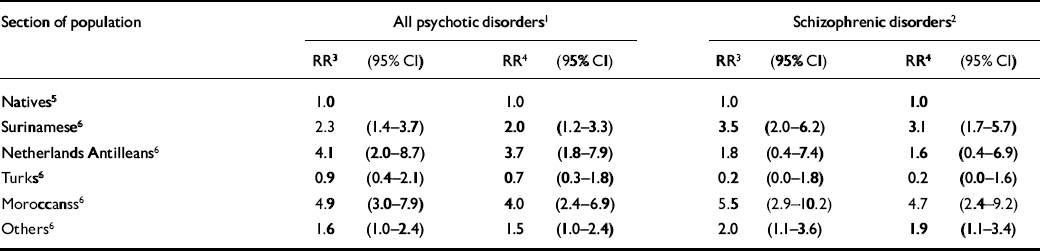
Adjustment for this variable had a minor effect (Table 4).
Relative risks (RRs) of first contact for all psychotic disorders and schizophrenic disorders in the period 1 April 1997 to 1 April 1999 for ethnic minorities in The Hague, based on cases with known addresses and on population data for 1 January 1998, adjusted for age and gender and adjusted for age, gender and socio-economic status of neighbourhood, respectively
| Section of population | All psychotic disorders1 | Schizophrenic disorders2 | ||||||
|---|---|---|---|---|---|---|---|---|
| RR3 | (95% CI) | RR4 | (95% CI) | RR3 | (95% CI) | RR4 | (95% CI) | |
| Natives5 | 1.0 | 1.0 | 1.0 | 1.0 | ||||
| Surinamese6 | 2.3 | (1.4-3.7) | 2.0 | (1.2-3.3) | 3.5 | (2.0-6.2) | 3.1 | (1.7-5.7) |
| Netherlands Antilleans6 | 4.1 | (2.0-8.7) | 3.7 | (1.8-7.9) | 1.8 | (0.4-7.4) | 1.6 | (0.4-6.9) |
| Turks6 | 0.9 | (0.4-2.1) | 0.7 | (0.3-1.8) | 0.2 | (0.0-1.8) | 0.2 | (0.0-1.6) |
| Moroccanss6 | 4.9 | (3.0-7.9) | 4.0 | (2.4-6.9) | 5.5 | (2.9-10.2) | 4.7 | (2.4-9.2) |
| Others6 | 1.6 | (1.0-2.4) | 1.5 | (1.0-2.4) | 2.0 | (1.1-3.6) | 1.9 | (1.1-3.4) |
Interval between psychosis onset and first contact with physician
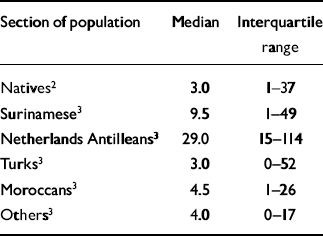
This interval was not shorter for the immigrant groups than for natives (Table 5).
Median and interquartile range for interval (in weeks) between onset of psychosis1 and first contact with physician in period 1 April 1997 to 1 April 1999, for citizens of The Hague, by section of population
| Section of population | Median | Interquartile range |
|---|---|---|
| Natives2 | 3.0 | 1-37 |
| Surinamese3 | 9.5 | 1-49 |
| Netherlands Antilleans3 | 29.0 | 15-114 |
| Turks3 | 3.0 | 0-52 |
| Moroccans3 | 4.5 | 1-26 |
| Others3 | 4.0 | 0-17 |
Additional analyses
At the time of referral to the research team only a minority of the patients were hospitalised: Surninamese 10% (3/31), Antilleans 33% (2/6), Moroccans 21% (6/28), Turks 40% (4/10), natives 29% (19/65) and others 34% (14/41).
Most immigrants had been brought to The Netherlands by their parents. For example, the median ages at arrival of the Surinamese and Moroccan patients diagnosed with a schizophrenic disorder were 9 years (interquartile range: 4-19) and 15 years (9-24), respectively. For people from other countries than Surinam, the Antilles, Turkey and Morocco the median age was 25 (9-33). The majority of key informants regarded the patients' most prominent symptoms as abnormal within his or her culture. In only one case were these symptoms considered normal. Most Surinamese patients were Hindustanis (23/31=74.2%).
DISCUSSION
Summary of findings
The risks of schizophrenia were found to be increased for immigrants from Morocco, Surinam, the Antilles and other non-Western countries. The risk for immigrants from Turkey and from Western or Westernised countries were not increased. As for young people of the second-generation, the risks were increased for Moroccan and Surinamese subjects.
Validity
The findings for the immigrant groups are not due to a low incidence in natives. The first-contact rate for schizophrenic disorders among natives in The Hague is ‘normal’ (e.g. Reference Jablensky, Sartorius and ErnbergJablensky et al, 1992). The absence of Antillean and Turkish patients of the second generation may be due to the small size of the population at risk. Lack of power could account for the normal risk for Turkish immigrants of the first generation, although, consistent with our findings, a low or normal risk for these people has also been found in Germany (e.g. Reference Weyerer and HäfnerWeyerer & Häfner, 1992).
There was no evidence of a shorter interval between psychosis onset and contact with medical services in the immigrant groups. The small proportion of patients admitted to hospital at the time of referral to the study excludes hospital bias as an explanation for the results. The excess of psychotic disorders in the immigrant groups was not explained by the socio-economic status of their neighbourhood.
Ideas that appear to be delusional in one culture (e.g. sorcery and witchcraft) may be commonly held in another — psychiatrists, when assessing symptoms of schizophrenia, should take these cultural differences into account (American Psychiatric Association, 1994). One could suggest, therefore, that psychiatrists who are blind to ethnicity are unable to make a diagnosis, but the large majority of key informants viewed the symptoms as clearly abnormal. Significantly, when the psychiatrists were informed of the patients' origins, they never considered a change of diagnosis.
The denominators of our study, which are derived from municipal registries, not from voluntary door-to-door surveys or interviews with heads of households, can be regarded as highly reliable. Registration with the municipal authorities is a compulsory requirement for legal residence in The Netherlands and a prerequisite for obtaining essential documents and possible aid (e.g. income support). In sum, this study confirms the results of both previous studies based on the Dutch registry (Reference Selten and SijbenSelten & Sijben, 1994; Reference Selten, Slaets and KahnSelten et al, 1997).
Interpretation
Some possible explanations are the following: (a) increased incidence of schizophrenia in country of origin; (b) selective migration of people who are genetically at risk; (c) environmental factors in Western Europe precipitate schizophrenia in those who are genetically at risk.
Although there have been no first-contact incidence studies in Surinam, The Netherlands Antilles, Turkey or Morocco, the first explanation is the least plausible. The WHO Ten-Country study found no significant differences in the incidence of schizophrenia, narrowly defined, and studies in the Caribbean found a ‘normal’ incidence (Reference Jablensky, Sartorius and ErnbergJablensky et al, 1992; Reference Mahy, Mallett and LeffMahy et al, 1999).
Although selective migration could explain many of the findings reported here, there are reasons to question this interpretation, particularly for immigrants from Surinam. First, migration from Surinam was on a very large scale. Second, there is no evidence that all subjects at risk for schizophrenia have left Surinam. A chart review found 56 first admissions for DSM-III-R schizophrenia (American Psychiatric Association, 1987) in the single psychiatric hospital in Surinam in 1992 and 1993. Consequently, the average annual first admission rate for people aged 15-54 years was 1.24 per 10 000 (M. Hanoeman, personal communication, 2000). Third, most immigrants recruited for this study were brought to The Netherlands by their parents and any selective mechanisms should have applied to the latter. A problem for an interpretation in terms of environmental factors is how to explain the increased risk in both first- and second-generation immigrants. One could speculate, for instance, that female immigrants have not been exposed to certain viruses in Europe and that these women, when pregnant, produce an abnormal immune response that damages the foetal brain. But this hypothesis does not explain the high incidence in first-generation immigrants. The stress of acculturation, which is highest for immigrants from developing countries, operates across both generations and one should consider the possibility that a process of rapid Westernisation precipitates schizophrenia in individuals who are genetically at risk. Subjects at risk perform worse on tests that measure the processing of complex information, problem-solving ability and mental flexibility (Reference Cannon, Zorrilla and ShtaselCannon et al, 1994) and probably do best when they live in a structured environment. However, since a process of Westernisation will often lead to a break-down of social bonds and previously consensual world views, many immigrants live in a highly unstructured environment. It is conceivable, therefore, that the interaction between a specific genetic make-up (e.g. reduced capacity to cope with contradictory information) and specific environmental factors (e.g. conflict between traditional and Western culture) leads to high rates of schizophrenia in some immigrant groups. The normal rates for Turkish people in The Netherlands and Asians in the UK could be due to a protective effect of their strong social and family networks. The Turkish community in The Netherlands is highly organised and has founded many bodies to assist its members (Reference LandmanLandman, 1992). Given the long history of conflict in the Rif mountains, it is not surprising that the Moroccan community is more divided and less organised (Reference van Gemertvan Gemert, 1998). The high proportion of Hindustani children growing up in single-parent families in The Netherlands suggests that the cohesion in this section of the population is not as strong as in the Asian communities in the UK. Evidence for a greater social stability in the Turkish community is also provided by the crime rates, which are significantly lower for Turkish people than for Moroccan, Antillean and Surinamese subjects in The Netherlands (Reference LeuwLeuw, 1997). A ‘stressful Westernisation hypothesis’, however, is not without its problems. There is a dearth of evidence that ‘psychosocial stress’ leads to schizophrenia (Reference Norman and MallaNorman & Malla, 1993) and it is possible that other factors associated with Westernisation explain the findings. Perhaps a parallel could be drawn with the putative rise in schizophrenia in 19th-century Europe (Reference HareHare, 1983) and the reports that schizophrenia was relatively uncommon in non-Western societies prior to contact with European-American civilisation (Reference TorreyTorrey, 1980).
Limitations
Three limitations are mentioned below, the most important of which concerns the small numbers of cases in some immigrant groups. The reliability of the assessment of the time of onset of psychosis was not examined. Finally, adjustment for socio-economic status of neighbourhood is a crude strategy to control for inequalities.
Clinical Implications and Limitations
CLINICAL IMPLICATIONS
-
▪ There is evidence of an increased incidence of schizophrenia in immigrants to The Netherlands from Morocco, Surinam, The Netherlands Antilles and other non-Western countries, except Turkey.
-
▪ There is also evidence of an increased incidence in second-generation Moroccans and Surinamese.
-
▪ It is unlikely that the increased incidence in immigrants from Surinam can be entirely explained by the selective migration mechanism.
LIMITATIONS
-
▪ Since the numbers of cases were small, particularly for second-generation immigrants, the results should be interpreted with caution.
-
▪ Diagnostic interviews were performed for 77.2% of the sample, not 100%.
-
▪ Since the researchers were not familiar with all the cultures, we cannot exclude the possibility that cultural differences between the patient and the researcher led to some misunderstandings.
ACKNOWLEDGEMENT
We thank Margaret Jones, Ruud-Jan Kloek, Jozef de Man and Emmy van Rooijen-Groenwold.




eLetters
No eLetters have been published for this article.