

Languages of European origin are morphophonemic in structure, meaning that words are constructed via a combination of phonological and morphological rules. Accordingly, a strong association has been found between the reading and spelling of English and both phonological awareness (PA; Melby-Lervag, Lyster, & Hulme, Reference Melby-Lervag, Lyster and Hulme2012) and morphological awareness (MA; Deacon & Kirby, Reference Deacon and Kirby2004). Despite the importance of these skills to literacy, relatively little is known about their antecedents in the early school years. Previous research has shown that phonological processing (PP) and language skills in early childhood are linked to the development of explicit PA and MA. However, the unique contribution of these two sets of skills to the prediction of PA and MA remains unclear. Furthermore, after these important skills have developed (typically after the first year of schooling), it is not yet known whether their influence on reading can be explained entirely by use of phonological and morphological rules to decode individual words or whether there is a broader direct effect of explicit linguistic awareness on general reading skills. The first aim of this research is to elucidate the link between early PP and language skills, and later PA and MA; the second is to investigate the concurrent links among PA, MA, phonological and morphological strategy use, and general reading skills.
EARLY PREDICTORS OF PA
PA refers to awareness of parts of speech (syllables, rhymes, and phonemes) that create meaning when combined together to make a word. It is generally accepted that implicit PA (global sensitivity to similarity between speech sounds) starts to develop before school age, whereas explicit PA (ability to consciously manipulate phonemes) develops during the early school years, stimulated by the process of learning to read (Gombert, Reference Gombert1992).
Given the developmental path of PA, it is not surprising that general PP skills would be a key predictor of explicit PA. PP is defined in the present paper as remembering, comparing, and learning the sound structures of words. This incorporates implicit PA (e.g., judging the similarity between words), phonological memory (e.g., repeating nonsense words), mispronunciation detection, and phonological learning (e.g., remembering nonsense names). Using structural equation modeling, Carroll, Snowling, Hulme, and Stevenson (Reference Carroll, Snowling, Hulme and Stevenson2003) showed that implicit awareness of syllables and rhymes at the end of preschool uniquely predicted explicit PA at the beginning of school. Further, Wagner et al. (Reference Wagner, Torgesen, Rashotte, Hecht, Barker and Burgess1997) report high concurrent correlations between measures of phonological memory (memory for sentences and digit span) and explicit phoneme deletion from kindergarten to fourth grade.
Other studies have suggested an additional role for broader, nonphonological language skills in the development of PA. Language is defined in the current paper as semantic and syntactic processing, including vocabulary, sentence comprehension, and correct use of morphology in context. Walley (Reference Walley1993) suggested that early vocabulary development led to gains in PA via a process of “lexical restructuring.” The theory is that children begin by representing words as wholes and subsequently develop a representation of the sounds within words. As their vocabularies grow, words must be represented in increasing detail to differentiate them from phonologically similar neighbors. For example, sleep may be represented in a crude form in the lexicon from an early age, but when the child acquires the word sleet, he/she must develop more detailed phonological representations of both words such that they are not confused. This theory is supported by research showing a unique association between early vocabulary and later PA (Wagner et al., Reference Wagner, Torgesen, Rashotte, Hecht, Barker and Burgess1997). For example, Snowling, Gallagher, and Frith (2003) showed that a language factor based on measures of expressive and receptive language at age 4 predicted a composite PA variable at age 6 in a sample including 56 children at family risk of dyslexia. Finally, Cooper, Roth, Speece and Schatschneider (Reference Cooper, Roth, Speece and Schatschneider2002) showed that an oral language factor (receptive and expressive semantics, syntax, and morphology) accounted for unique variance in PA (deletion and blending) from kindergarten to second grade. However, neither of the latter two studies controlled for baseline PA, leading to the possibility that the influence of language was mediated by early PP abilities.
EARLY PREDICTORS OF MA
MA refers to awareness of the smallest units of meaning. Morphologically complex words are spelled by combining a “base” word with an affix or inflection. For example, an inflection can be added to alter a word's grammatical status (e.g., play-ed), or an affix can be added to change a word's semantic status such as re-do (derivational change). Sometimes, the final word maintains phonological regularity (e.g., unhappy), and sometimes it does not (e.g., cooked or emotion). It has been argued that the bulk of deviations from the alphabetic principle in English reflect the principle of maintaining a consistent spelling for morphemes, hence the importance of MA to literacy (Nagy, Berninger, & Abbott, Reference Nagy, Berninger and Abbott2006). For example, –ed is spelled the same in watched, complained, and departed, despite different pronunciations of t/d/ed. Explicit MA (such as the ability to produce a derivational morpheme to complete a sentence) usually develops a little later than PA, around second grade, as children are exposed to more morphologically complex words in speech and writing (Anglin, Reference Anglin1993; Berko, Reference Berko1958).
Two broadly distinct theories have been put forward by the literature with regard to the early predictors of MA. One theory is that MA arises from a broad base of oral language skills. In the case of vocabulary, the more words children know the meaning of, the more likely they are to be able to make links between words that share morphemic units and therefore become aware of morphemes (e.g., –ness in happiness and sadness). Carlisle and Nomanbhoy (Reference Carlisle and Nomanbhoy1993) found that word knowledge in kindergarten predicted morphological skills in first grade. Other research shows a high concurrent correlation between vocabulary and MA (Kieffer & Lesaux, Reference Kieffer and Lesaux2012; McBride-Chang et al., Reference McBride-Chang, Cho, Liu, Wagner, Shu and Zhou2005; Nagy et al., Reference Nagy, Berninger and Abbott2006). McBride-Chang et al. (Reference McBride-Chang, Cho, Liu, Wagner, Shu and Zhou2005) showed that there was a reciprocal relationship between vocabulary and morphology in a large group of preschool children with gains in one leading to gains in the other. However, the relationship is not absolute; words can be learned as wholes, without reference to their morphemic structure.
An alternative view of the development of MA implicates early PP. Chiat (Reference Chiat2001) suggests that phonological skills underlie the development of syntactic and sematic aspects of language, both of which are represented in MA. She proposes a “phonological” theory of specific language impairment (in contrast to the more traditional “grammatical” theories; Van der Lely, Rosen, & Adlard, Reference Van der Lely, Rosen and Adlard2004) whereby difficulties with language stem from impaired PP and the consequent disruption of the “mapping” process between speech and meaning. The mapping process involves segmentation of a stream of speech within a “scene” into meaning-relevant chunks and segmentation of the scene into speech-chunk relevant meanings. For example, learning that the speech chunk –ed is usually accompanied by a temporal change in the “scene” results in acquisition of this past-tense morpheme. Therefore, children acquire language through the ability to recognize phonological information. Research findings provide support for this view: Carlisle and Nomanbhoy (Reference Carlisle and Nomanbhoy1993) found that PA in kindergarten (syllable and phoneme deletion) predicted variance in expressive MA during first grade after vocabulary had been taken into account. PA training has also been shown to improve morphological skills in children with speech impairment (Kirk & Gillon, Reference Kirk and Gillon2007) and typical kindergartners (Casalis & Cole, Reference Casalis and Cole2009; Lyster, Reference Lyster2002).
The different views of the development of PA and MA are not necessarily mutually exclusive. Both language and PP may act as predictors; however, it is important to test them together to determine the relative importance of the alternative routes. One way to do this is to test children with dissociated skill profiles in early childhood. For example, if early PP but not language led to MA, then children with average PP would develop better levels of MA than would children with poor PP, regardless of whether they had poor or average language. This is the approach adopted in the current study.
THE MEASUREMENT OF PA AND MA
The design of the current study necessitated testing groups of children with deficits in PP and language as well as those with average levels of skill in these two areas. Therefore, it was necessary to include measures of PA and MA that would be appropriate for a wide range of skills. Dynamic testing techniques are particularly useful for testing children with difficulties because they give an indication of a child's ability to learn given increasingly explicit prompts and therefore avoid the cycle of failure experienced by many in the case of a correct/incorrect marking system (Grigorenko & Sternberg, Reference Grigorenko and Sternberg1998). They also have the added psychometric advantage of producing a greater spread of scores, therefore avoiding floor and ceiling effects (Cunningham & Carroll, Reference Cunningham and Carroll2011). Research has shown that dynamic tests of PA are stronger predictors of subsequent reading than are static tests (Bridges, Catts, & Diane, Reference Bridges, Catts and Diane2011; Spector, Reference Spector1992) and that dynamic tests of morphology can effectively predict literacy (Larsen & Nippold, Reference Larsen and Nippold2007; Wolter, Barger, Pike, Atwood, & Martin, Reference Wolter, Barger, Pike, Atwood and Martin2011). For the current study, a dynamic test of phoneme deletion was designed, because phoneme deletion tasks have consistently been shown both to predict subsequent reading in young children better than detection or oddity tasks and to display higher reliability (Hulme et al., Reference Hulme, Hatcher, Nation, Brown, Adams and Stuart2002).
With regard to MA, the two most commonly used explicit measures are production (e.g., “Help. Father tells me that I am a good helper”) and decomposition tasks (e.g., “Driver. Children are too young to drive”; Berko, Reference Berko1958; Carlisle, Reference Carlisle2000; Carlisle & Nomanbhoy, Reference Carlisle and Nomanbhoy1993; Deacon & Kirby, Reference Deacon and Kirby2004; Kieffer & Lesaux, Reference Kieffer and Lesaux2012). In both cases, children must produce an explicit response that requires conscious awareness of the target morpheme. Both tasks have also been shown to predict reading and to have high reliability (Apel & Lawrence, Reference Apel and Lawrence2011). On the basis of this, a dynamic measure of morpheme production was designed for use in the present study.
THE LINKS AMONG PA, MA, AND READING
The link between PA and reading is well established. A large body of research shows that the ability to segment and blend phonological units by referral to grapheme–phoneme correspondences (the alphabetic principle) leads to, and is aided by, the ability to read and spell words (e.g., Melby-Lervag et al., Reference Melby-Lervag, Lyster and Hulme2012). By comparison, the link between MA and word reading is relatively underresearched. Morphological knowledge may contribute to word reading accuracy in at least two ways; first, by reducing the number of “units” that need to be processed (e.g., the –ful in forgetful can be read as one morpheme or three phonemes), and second, by leading to correct pronunciation of words that deviate from the alphabetic principle in order to conserve the spelling of morphemes (e.g., emotion is read as emo-shun, not emot-ion). Many studies have shown that MA contributes variance to word reading above and beyond PA (Berninger, Abbott, Nagy, & Carlisle, Reference Berninger, Abbott, Nagy and Carlisle2010; Nagy et al., Reference Nagy, Berninger and Abbott2006; Wolter, Wood, & D'Zatko, Reference Wolter, Wood and D'Zatko2009). In addition, a recent meta-analysis showed that training in morphology led to improved literacy skills, particularly for less able readers (Bowers, Kirby, & Deacon, Reference Bowers, Kirby and Deacon2010). However, some studies have shown an effect of MA on nonword reading but not on real-word reading (Casalis & Louis-Alexandre, Reference Casalis and Louis-Alexandre2000; Deacon & Kirby, Reference Deacon and Kirby2004; Mahony, Singson, & Mann, Reference Mahony, Singson and Mann2000), or no effect at all (Nagy, Berninger, Abbott, Vaughan, & Vermeulen, Reference Nagy, Berninger, Abbott, Vaughan and Vermeulen2003), so the relationship remains unclear.
Research on reading comprehension has yielded more consistent results. An awareness of morphemes helps children to understand the meaning of morphologically complex words (e.g., that happiness is a state of being happy), such that comprehension of sentences containing such words is improved (Carlisle, Reference Carlisle2000). MA also makes an additional contribution by helping children to understand the syntactic structure of sentences (e.g., that “Mike played in the park” is referring to an event in the past, with the action being “to play”). Several studies have shown that MA contributes to reading comprehension beyond vocabulary (Deacon & Kirby, Reference Deacon and Kirby2004; Nagy et al., Reference Nagy, Berninger, Abbott, Vaughan and Vermeulen2003). PA generally does not predict reading comprehension once word reading has been controlled (Muter, Hulme, Snowling, & Stevenson, Reference Muter, Hulme, Snowling and Stevenson2004).
THE RELATIONSHIPS AMONG PA, MA, AND PHONOLOGICAL AND MORPHOLOGICAL STRATEGY USE
Although children may be aware of phonemes and morphemes within words, this does not necessarily mean that they use this information to help them to read and spell. For example, a child may be able to segment the nonword guf into its composite phonemes (g-u-f) when presented with the word orally, but he may not apply this ability when presented with the word in print (thus leading to the wrong pronunciation, e.g., gaf). Similarly, a child may know of the morpheme dis and be able to identify it in speech, but he/she may still decode the nonword dishope as dish-ope. It may be that PA and MA implicate general reading only to the extent that phonological and morphological strategies are used at the word level.
In order to investigate this hypothesis, it was necessary to devise measures of strategy use. Nonwords were used in order to separate the influence of whole-word orthographic knowledge from that of PA or MA (e.g., thankful can be read if recognized as a whole, whereas to read trangful would require segmentation into trang and ful, and therefore call upon MA). One difficulty is that phonologically regular words such as trangful can also be read on the basis of phonological rules (the alphabetic principle) and therefore may not be tapping MA. This hypothesis is supported by the results of Nagy et al. (Reference Nagy, Berninger and Abbott2006), who tested a large group of fourth- to ninth-graders on five different measures of their ability to decode morphologically complex words. They found that a nonword reading measure (phonological decoding) predicted all five measures of morphological decoding over and above MA, implying that children were using phonological strategies to help decode morphemes. Nunes, Bryant, and Olsson (2003) addressed this issue by devising separate tests to tap use of phonological and morphological strategies to read and spell words. One set of words required the child to identify a morpheme in order to obtain the correct pronunciation (e.g., the un in universe and unhappy is pronounced differently because uni and un are different morphemes), whereas the other set of words required the child to have knowledge of a phonological rule (e.g., the split vowel-e digraph as in hope). The authors found that training in MA improved use of morphological strategies for spelling and performance on a standardized reading test.
The current study uses similar measures in order to investigate whether the link among MA, PA, and word reading/reading comprehension can be explained by the use of morphological and phonological strategies for nonword reading/spelling. We anticipate that phonological and morphological strategies for nonword reading will predict word reading accuracy, whereas PA and MA will make no unique contribution. Finally, we expect both morphological strategy use and MA to uniquely predict reading comprehension.
THE CURRENT STUDY
This research follows up with children initially recruited for a previous study comparing children at risk of reading difficulty with no-risk controls (Carroll & Myers, Reference Carroll and Myers2010). As such, it presented an ideal sample to access children with early PP and language deficits. In order to contrast the roles played by these correlated skills, four subgroups were selected based on measures of language and PP taken from the whole sample at Time 1 (kindergarten or first grade). Two composite variables were created based on four measures of PP (implicit PA, mispronunciation detection, phonological memory, and learning), and three measures of language (expressive vocabulary, sentence comprehension, and word structure). One group showed both low PP and low language (double deficit), a second showed low PP and average language (single PP deficit), a third showed low language and average PP (single language deficit), and a fourth group were average on both sets of measures (no deficit). These groups were tested again 3 years later (third to fourth grade) on dynamic tests of MA and PA, phonological and morphological strategy use for reading and spelling, text reading accuracy, and comprehension. Three main questions were addressed. Mean comparisons between groups and regressions were used to address the first question and regressions were used to address the second and third questions.
1. What is the predictive effect of early PP and language skills on later PA, MA, and morphological and phonological strategy use for reading and spelling?
2. Are PA and MA linked to phonological and morphological strategy use for literacy?
3. Is there a direct link among PA, MA, and reading accuracy and comprehension that cannot be explained by use of phonological or morphological strategies at the word level?
METHOD
Participants
Four subgroups were identified from 198 children initially tested during kindergarten or first grade (UK Reception or Year 1) when they were 4–6 years old (mean = 5 years, 6 months [5;6], range = 4;5–7;5). Eighty-two children were at risk of reading difficulties because they had a first-degree relative with dyslexia (n = 46) or involvement in speech and language therapy (n = 36), and 116 children had no known risk factors. On the basis of the Time 1 scores for PP (composite of four measures) and language (composite of three measures), 27 children were identified as having a double deficit (low PP and low language), 17 a single PP deficit (low PP and average language), 23 a single language deficit (average PP and low language), and 131 no deficit (average PP and average language). The 7 children who scored poorest for language (standard score < 60) were not tested at Time 2 because it was felt that they were too severely impaired to understand the instructions for the dynamic tasks. This left 20 children in the double deficit group and 191 children across all four subgroups. Because average scores for PP and language were higher in the no deficit group compared to the single deficit groups (e.g., 105.8 for language in the no deficit group vs. 98.0 for language in the single PP deficit group), a matched no deficit group of 24 children with scores for PP and language similar to the single deficit groups was selected.
Of the 191 children, 164 (85% of the original sample) were retested 3 years later during third or fourth grade (UK year 3 or 4) at age 7–9 years (mean = 8;6, range = 7;2–10;3). Nineteen children had moved school. Of these, 10 were unlocatable, 7 had emigrated, 1 had been taken into care, and 1 moved out of the area. A further 4 children were at a school that declined to participate, 2 parents did not return the consent form and could not be contacted, and 1 parent and 1 child refused consent. Comparison between the 164 recaptured and the 27 lost children revealed no significant difference in their Time 1 PP scores, t (189) = 0.04, p = .97; however, language scores were poorer in the lost children, t (187) = –2.55, p < .05. This is likely because parents of children with poor language were less likely to fill in and return the parental consent form.
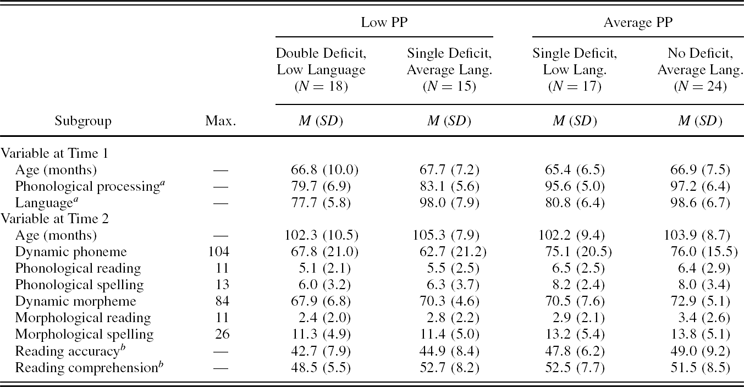
The final sample tested at Time 2 included 18 double deficit, 15 single PP deficit, 17 single language deficit, and 114 no deficit children (24 of whom were in the matched no deficit group). See Table 1 for mean scores in each subgroup. Due to time constraints, only the matched no deficit group were tested on the dynamic tasks. All 114 no deficit children were tested on the strategy-use and reading tasks. This resulted in a final sample of 74 children for the dynamic tasks. All children spoke English at home as their main language. The majority of children were attending one of 8 schools (n = 121), and the remaining 43 were distributed over a further 32 schools in the Midlands area of the United Kingdom. Schools represented a wide range of socioeconomic circumstances (Byrne, Reference Byrne1993).
Means and standard deviations for the subgroups

Note: All other scores are raw if not standard or Rasch based. Reading accuracy and reading comprehension are the York Assessment of Reading for Comprehension. PP, phonological processing.
aStandard score (original no-risk group M = 100, SD = 15).
bRasch-based ability score.
Calculation of subgroups
The “core language score” from the Clinical Evaluations of Language Fundamentals (Wiig, Secord, & Semel, Reference Wiig, Secord and Semel2006) was used as a measure of language. The score represented a composite of three measures: expressive vocabulary (naming pictures), sentence structure (a sentence comprehension task where children had to point to a picture that depicted a sentence), and word structure (an expressive morphological task where children had to correctly inflect a given word, e.g., Here is one girl. There are two girls). Correlations between the three measures were high (r = .49–.56). Because the standard scores varied by age in our sample, core language scores were residualized for age (age was entered into a regression predicting core language and the standard residual scores saved), then standardized against the original no-risk group (n = 116) such that this group had a mean score of 100 and a standard deviation of 15. A low language score was designated as approximately 1 SD below the control group mean (standard score ≤ 86.5). Fifty children fulfilled this criterion.Footnote 1 This is larger than the standard 16% of the sample because of the high numbers of high-risk children included in the sample.
A composite score was calculated based on four PP measures taken at Time 1: initial phoneme matching (matching words beginning with the same sound), nonword repetition (repeating nonwords), mispronunciation detection (saying whether a word was pronounced correctly or not), and nonword learning (learning phonologically similar names of animals). Correlations between measures were medium (r = .36–.47). Raw scores for each test were residualized for age then standardized against the original no-risk group such that this group had a mean score of 100 and a standard deviation of 15. A “factor” score was calculated by taking the mean standard score for the four tests. A low PP score was designated as approximately 1 SD below the control group mean (standard score = 89.6l; see Note 1). Forty-three children fulfilled this criterion. Further details of the Time 1 measures used are contained in Carroll and Myers (Reference Carroll and Myers2010).
Time 2 testing procedure
Children were tested in their homes (n = 35), at the university (n = 3), or in a quiet corner of their school (n = 126). Testing was split into two sessions of approximately 30 min. Dynamic tasks were administered in a third session lasting around 40 min. Nonword decoding, nonword spelling, and reading comprehension were administered either by the first author or by one of two trained research assistants. The first author administered all dynamic tasks.
Materials
Dynamic phoneme deletion
This task was designed based on the dynamic phoneme segmentation task presented in Cunningham and Carroll (Reference Cunningham and Carroll2011). Children were asked to delete a phoneme from 13 nonwords ranging in length from two to seven phonemes and involving a mix of initial, final, or medial phoneme deletion. Nonwords were chosen to minimize dependence on orthographic information (Castles, Holmes, Neath, & Kinoshita, Reference Castles, Holmes, Neath and Kinoshita2003). Six phonemes were deleted from consonant clusters (e.g., “l” from “flirmab”), and seven consonants were deleted from before or after vowels (e.g., “t” from “dreet”; see Appendix A). Children were given up to nine increasingly explicit prompts (negatively coded) to help them arrive at the correct answer (e.g., “What's the first sound in ‘flirmab’ to ‘put f and irmab’ together to make . . .”). The question was repeated after each prompt. Sample-specific reliability was high (Cronbach α = 0.87).
Dynamic morpheme production
This task was designed based on the Wug test devised by Berko (Reference Berko1958). Children were asked to complete 14 sentences by adding an inflection or affix to a nonword. Eight items required the addition of an inflection (e.g., “This man knows how to zib. He is zibbing.”), whereas six items required a derivational change through the addition of an affix (e.g., “This dog has quocks on him. He is a quocky dog.”) Children were given up to 6 increasingly explicit prompts (negatively coded) using a real-word example to help them achieve the correct response (e.g., “This dog has spots on him. He is a spotty dog.”). The question was repeated after each prompt. All words were phonologically transparent (the pronunciation of the base remained unchanged in the derived form), and each item was accompanied by two pictures, one to go with the nonword and one to go with the real word prompt (see Appendix A). Sample-specific reliability was medium-high (Cronbach α = 0.76).
Phonological and morphological strategy use for reading
This test was based on the pseudoword reading task presented in Nunes et al. (Reference Nunes, Bryant and Olsson2003). Children were asked to read aloud a list of 16 morphologically complex nonwords (10 included a derivational morpheme, 4 an inflection, and 2 were compound words) and 4 simple nonwords. Ten items were from the Nunes test, and 10 were new items (see Appendix A). The phonological score was based on the number of phonologically appropriate responses for the 4 simple words: bish, mive, amphal, and lave, and the 7 morphologically complex words where either the morphemic or the phonemic pronunciation was considered phonologically appropriate: unishaped (uni-shaped or un–i-shaped), cophant (cop-hant or cofant), lishing, kished, healthive, unimpute, and unirritate. The morphological score was based on the total number of responses sensitive to the morphological status of the item, where that affected pronunciation (adherence to phonological rules only would result in a different pronunciation): the iv of healthive (health-iv not health-ive), dancive, amazive; the h of mishope (mis-hope not mish-ope), mishammer, hophouse, and anthive; the uni of unishaped, unimatch, unisided; and the ive of anthive. Sample-specific reliabilities were medium-high (Cronbach α phonological reading = 0.77, morphological reading = 0.71).
Phonological and morphological strategy use for spelling
This test was based on the pseudoword spelling test presented in Nunes et al. (Reference Nunes, Bryant and Olsson2003). Children were presented with 13 sentences containing a nonword stem and a missing derived or inflected form of this stem. The experimenter read the complete sentence up to two times, and the child filled in the missing word accordingly (e.g., “We usually deave in the morning, but yesterday we deaved in the afternoon.”). For the morphological score, up to 2 points were available for each word (1 point for preservation of the stem and 1 for correct spelling of the morpheme). For the phonological score, any phonologically plausible spelling was awarded 1 point. Spellings were regarded as “phonologically plausible” if each phoneme was spelled in that way at least once in the Medical Research Council psycholinguistic database (Wilson, Reference Wilson1988). For example, for the word deaved, the spelling deaved would gain 2 morphological points for representing both the stem and the affix correctly. The spelling deavd would gain only 1 morphological point, for representing the stem correctly. Both would gain a phonological point for being phonologically plausible. Five sentences were taken from Nunes original test, and 8 new sentences were added. Seven target nonwords contained one or two derivational morphemes, and 6 contained an inflection. Sample-specific reliabilities were medium-high (Cronbach α phonological spelling = 0.79, morphological spelling = 0.82).
The York Assessment of Reading for Comprehension
For this assessment (Snowling et al., Reference Snowling, Stothard, Clarke, Bowyer-Crane, Harrington and Truelove2009), children were asked to read two passages of text. Passages of an appropriate level were selected based on the child's grade level. At the end of each passage, eight comprehension questions were asked. The number of reading errors (1 per mispronounced, substituted, or omitted word) and the number of correct answers on the comprehension questions were recorded, providing scores for reading accuracy and reading comprehension. In each case, raw scores were converted to Rasch-based ability scores and then averaged across the two passages to obtain a final score. Published reliabilities range from 0.75 to 0.94 for reading accuracy and 0.71 to 0.84 for reading comprehension, depending on the passages given.
RESULTS
All variables apart from dynamic morpheme showed approximately normal distributions; therefore, raw scores were used. Square root transformation of the negatively skewed dynamic morpheme variable led to a distribution that conformed to normality; therefore, transformed scores were used. Skew and kurtosis values were <1 for all variables, indicating appropriateness for parametric tests (Osborne, Reference Osborne2002). All variables conformed to the assumptions of regression (independent errors, no multicollinearity, normally distributed errors, homoscedasity, and linearity).
The effect of early PP and language deficits on later PA, MA, and phonological/ morphological strategy use for reading and spelling
Subgroup analyses
Table 1 shows means and standard deviations for the subgroups. Two-way ANOVAs were conducted with the PP group and the language group as orthogonal factors, and age at Time 2 as a covariate. Children from the matched control group were used, such that there were 33 children with low PP and 41 with average PP, then 35 with low language and 39 with average language. In the case of PA, the mean level was higher in the double deficit compared to the single PP deficit group. This is most likely because a large number of the double deficit group were receiving additional support in or outside school that included phonic work.
On the dynamic PA task, children with low PP at Time 1 had significantly poorer PA at Time 2, F (1, 69) = 4.7, p < .05, η2 = 0.06, regardless of language group, F (1, 69) = 0.24, p = .62, η2 < 0.01. There was no significant interaction between the PP group and the language group, F (1, 69) = 0.17, p = .68, η2 < .01, indicating that children in the double deficit groups displayed the level of performance that would be expected given their difficulties in each area.
For the dynamic morpheme task, children with poor PP at Time 1 had significantly poorer MA at Time 2, F (1, 69) = 4.60, p = .04, η2 = 0.06. Again, language group was not significant, F (1, 69) = 2.14, p = .15, η2 = 0.03, and there was no significant interaction, F (1, 69) < 0.01, p = .96, η2 < 0.01.
For phonological reading, the effect of PP group was near significant, F (1, 69) = 3.5, p = .06, η2 = 0.05, whereas the effect of language group was not, F (1, 69) = 0.03, p = .86, η2 < 0.01. There was no significant interaction, F (1, 69) = 0.24, p = .63, η2 < 0.01. For phonological spelling, the effect of PP group was significant, F (1, 69) = 6.6, p < .05, η2 = 0.09, whereas language group was not, F (1, 69) < .01, p = .95, η2 < 0.01. Again, there was no significant interaction, F (1, 69) = 0.14, p = .71, η2 < 0.01.
For morphological reading, the effect of neither PP group, F (1, 69) = 0.95, p = .33, η2 = 0.01, nor language group, F (1, 69) = 0.44, p = .51, η2 < 0.01, was significant. There was no significant interaction, F (1, 69) = 0.03, p = .87, η2 < 0.01. Finally, for morphological spelling, PP group had a near-significant effect, F (1, 69) = 3.7, p = .06, η2 = 0.05, whereas language group was non-significant, F (1, 69) < 0.01, p = .98, η2 < 0.01). Again, there was no significant interaction, F (1, 69) = 0.09, p = .76, η2 < 0.01.
Regression analyses
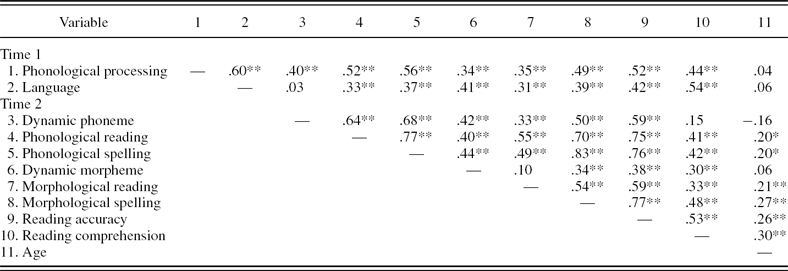
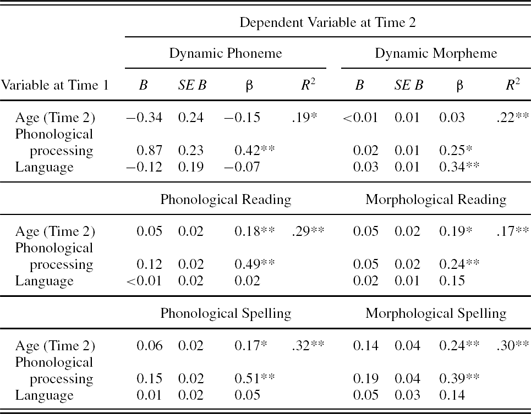
Table 2 shows correlations between measures. In order to utilize the extra information provided by continuous data for PP and language, regressions were performed across the whole sample predicting Time 2 PA, MA, nonword reading, and spelling strategies, from PP and language at Time 1. Due to the relatively large age range represented, age at Time 2 was partialed out. In order to maximize sample size, data from all 164 children was used for the nonword measures. Table 3 shows the results of the six simultaneous regressions. PP significantly predicted PA, MA, and phonological and morphological strategy use for nonword reading and spelling. Language made an additional contribution to MA only.
Correlations between measures at Time 1 and Time 2
Note: Correlations are bivariate (Pearson r). Dynamic phoneme and dynamic morpheme, n = 74. All other measures, n = 164.
*p < .05 (two tailed). **p < .01.
Regressions predicting phonological and morphological measures at Time 2 from phonological processing and language at Time 1
Note: Dynamic phoneme and dynamic morpheme, n = 74. Nonword reading and spelling measures, n = 164.
*p < .05. **p < .01.
The relationships among PA and MA and strategy use for reading/spelling
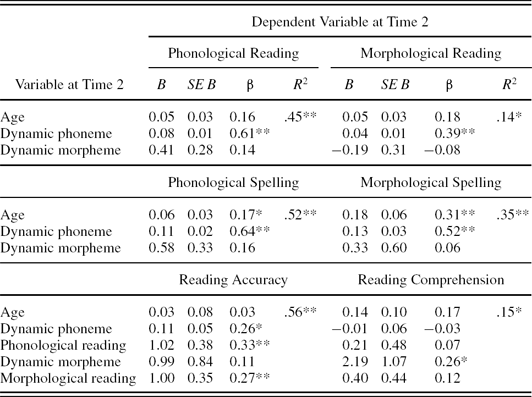
Table 4 shows the results of four simultaneous regressions predicting nonword reading and spelling strategy use from dynamic PA and MA. PA predicted all four nonword measures, but MA made no significant additional contribution.
Regressions predicting strategy use for nonword reading/spelling and reading accuracy and comprehension
Note: All measures, n = 74. Reading accuracy and reading comprehension is the York Assessment of Reading for Comprehension.
*p < .05. **p < .01.
Predicting reading accuracy and comprehension
Concurrent relationships across the sample were examined using regressions predicting Time 2 reading accuracy and comprehension from Time 2 PA, MA, and phonological and morphological reading. Because our interest was in the possible mediating role of strategy use for reading, the spelling measures were not entered. Table 4 shows the results of two simultaneous regressions with age at Time 2 partialed out. Dynamic PA, phonological reading, and morphological reading were unique predictors of reading accuracy, whereas MA was the only unique predictor of reading comprehension.
DISCUSSION
The first focus of this study was to contrast the contribution of early PP and language skills on later PA, MA, and strategy use at the word level. A combination of subgroup and regression analyses were used to show which groups were most at risk of developing difficulties, as well as to reveal broader predictive trends. The second focus was to elucidate the links among PA, MA, strategy use, and general reading skills. A series of regressions were performed to show which skills were most predictive of reading accuracy and comprehension; Figure 1 summarizes the significant effects found.
The effect of early PP and language skills on later PA, MA, and strategy use
The results clearly showed that the two groups of children with poor PP were consistently at risk for difficulties in both phonological and morphological areas. The effect applied to “pure” measures of PA and MA as well as the ability to apply this awareness to the reading and spelling of nonwords (with the exception of morphological reading). Although PP did not quite reach significance for phonological reading and morphological spelling, the trend for children with average PP to do better than their low PP peers was clear.
The subgroup analyses were supported by the results of the regressions, which revealed that PP at Time 1 predicted PA, MA, and all four measures of strategy use. These findings suggest that children with poor language but good phonology at the start of school have relatively good outcomes. Theoretically, the importance of early PP skill to later morphological knowledge supports Chiat's (2001) phonological mapping theory. As children learn a wider variety of complex words, good PP skill may allow them to detect and process morphological regularities and affixes.
Regression analyses showed that language made a unique contribution to explicit MA. Theoretically, it makes sense that language should predict MA because vocabulary and syntax are strongly related to the construction and understanding of morphologically complex words (McBride-Chang et al., Reference McBride-Chang, Cho, Liu, Wagner, Shu and Zhou2005). It is therefore surprising that language group did not reach significance in the subgroup analyses. A possible explanation may be that the difference in language scores between the low and the average language groups (~18 points) may not have been large enough to result in significant group differences for language.
More interesting is the finding that language did not contribute any unique variance to the prediction of explicit PA. This is contrary to the findings of Copper et al. (2002) and Snowling et al. (Reference Snowling, Gallagher and Frith2003). One explanation is that the influence of language on PA in the latter studies was mediated by early PP skills; therefore, when PP was controlled for in the current study, the effect of language disappeared. However, this does not explain the unique contribution found by Wagner et al. (Reference Wagner, Torgesen, Rashotte, Hecht, Barker and Burgess1997) and Carroll et al. (Reference Carroll, Snowling, Hulme and Stevenson2003), while controlling for an earlier measure of PA. However, in each case only one “construct” within PP was partialed out; syllable/rime awareness in Carroll et al. (Reference Carroll, Snowling, Hulme and Stevenson2003) and PA in Wagner et al. (Reference Wagner, Torgesen, Rashotte, Hecht, Barker and Burgess1997). It may be that broader PP skills, including phonological memory, mediate the link between language and PP. Finally, this finding does not support Walley's (Reference Walley1993) lexical restructuring hypothesis. One may argue that this hypothesis would not predict a unique contribution from language, because vocabulary and early PA (as represented by PP in the current study) are intimately linked and one may lead to the other. However, the very low correlation between language and dynamic PA (r = .03) would argue against this. It may be that language is implicated in the development of general PA but is not so important to explicit phoneme deletion.
With regard to the effect of PP, but not language on use of phonological and morphological strategies for reading and spelling, this underlines the importance of early phonological skills in later morphological knowledge. However, the effects were probably exacerbated by the use of nonwords in the tests. Decoding of nonwords is almost totally reliant on phonological skills. Use of real words may have revealed more reliance on general language because lexical–semantic routes may have been accessed to lead to the correct response (Coltheart, Rastle, Perry, Langdon, & Ziegler, Reference Coltheart, Rastle, Perry, Langdon and Ziegler2001).
The links among PA, MA, and phonological and morphological strategy use for literacy
Regressions showed that both phonological and morphological strategy use for nonword reading and spelling were predicted by PA and not MA. This is a surprising result, given that the purpose of the morphological reading/spelling measures was to tap the application of MA to literacy. One explanation is that the children in our sample were using phonological knowledge to decode morphologically complex words, for example, reading mis as three phonemes rather than one morpheme. In addition, as explained earlier, use of PA to help decode and spell at the word level would have been enhanced by the use of nonwords. The results are in line with the findings of Nagy et al. (Reference Nagy, Berninger and Abbott2006), who found that on a measure of decoding morphologically complex words that were phonologically transparent, MA did not predict unique variance over and above a phonological decoding task, suggesting that children were using phonological strategies to decode complex words. On the basis of these results, it may be suggested that children in third and fourth grades use their knowledge of phonology more so than morphology to help them read and spell. This fits in with the way in which reading is taught in the United Kingdom; children are explicitly taught how to use phonological strategies (e.g., segmentation into phonemes) to decode and spell words (Rose, Reference Rose2006), but tuition in morphological strategies is much less common (Nunes & Bryant, Reference Nunes and Bryant2006).
The influence of PA, MA, and phonological and morphological strategy use on reading accuracy and comprehension
PA and phonological and morphological reading made a unique contribution to the prediction of reading accuracy. The effect of PA on reading accuracy is in line with a large body of research in this area and reflects how an awareness of speech sounds is important for word reading (Melby-Levarg et al., Reference Melby-Lervag, Lyster and Hulme2012). The interesting finding is that this effect remained after phonological strategy use had been partialed out. Because the relationships tested were concurrent, it was not possible to show mediation; a three time point longitudinal study would be necessary for this (Baron & Kenny, Reference Baron and Kenny1986). However, the results do support the hypothesis that PA has a direct effect on reading accuracy beyond its effect on sounding out unknown words. It is possible that PA has captured variance attributable to partial decoding that was not picked up on in the nonword task. For example, a child may decode the beginning of a word, which then prompts access to its lexical representation, resulting in the correct pronunciation of the whole word. In addition, as others have argued (Ehri, Reference Ehri, Snowling and Hulme2008; Rack, Hulme, Snowling & Wightman, Reference Rack, Hulme, Snowling and Wightman1994), PA is likely to affect how easily and efficiently a child learns to recognize words through a “direct mapping” mechanism as well as explicit sounding out. In other words, having well specified phonological representations makes it easier to learn to link written words to these spoken words (whether they are regular or not).
The nonsignificant effect of MA on reading accuracy might suggest that the link between MA and word reading can be explained by the use of morphological strategies at the word level. However, that MA did not predict morphological strategy use means that there is no evidence of a link between MA and reading in the present study. This is in line with some studies that have shown no significant effect of MA on word reading once PA had been accounted for (Deacon & Kirby, Reference Deacon and Kirby2004; Mahony et al., Reference Mahony, Singson and Mann2000; Nagy et al., Reference Nagy, Berninger, Abbott, Vaughan and Vermeulen2003).
Regarding reading comprehension, MA had a direct effect on reading comprehension after the effect of PA and nonword decoding had been partialed out. It appears that general awareness of morphemes helps comprehension in a broader sense, above the word level, perhaps because it reflects a metalinguistic awareness of semantics and syntax that makes the meaning of sentences more transparent. The nonsignificant contribution of PA to reading comprehension is consistent with previous work (Muter et al., Reference Muter, Hulme, Snowling and Stevenson2004), although in the York Assessment of Reading for Comprehension, it is perhaps enhanced by the experimenter providing words that the child cannot decode, therefore reducing dependence on phonology for comprehension.
Possible limitations and further research
One limitation of the current research is that the subgroups were not perfectly matched in terms of the severity of their deficits. This implies that the finding that children with low language and average PP at school entry will not develop difficulties should be treated with caution, because these children also had a slightly milder language impairment than those with poor language and poor PP. The average groups were also generally poorer than the original no-risk group (standard scores < 100); therefore, the dissociation between skills in the single deficit groups (15 points) was perhaps not big enough to display potential interactions between PP and language. However, this is not unusual in studies of this nature (e.g., Nathan, Stackhouse, Goulandris, & Snowling, Reference Nathan, Stackhouse, Goulandris and Snowling2004) and demonstrates that the two skills are not completely independent. Finally, the results of the regression analyses to predict reading accuracy and comprehension should be treated with caution because of the small sample size and relatively high association between variables. Future researchers may wish to investigate these relationships in a larger sample of typically developing children to make the results more generalizable.
Conclusions
This study provides significant steps forward in understanding the early predictors of explicit PA and MA and the reasons behind their link with reading. First, it was shown that children with poor PP skills at the start of school went on to develop poorer PA and MA 3 years later. This finding has educational value because during early schooling, teachers may not have time to determine precise levels of skill, but they are likely to be able to dichotomize children in their class as either poor or average based on their own observations. Consequently, a clear group may be selected for additional support. Second, we found that children in middle childhood were for the most part using phonological strategies to read morphologically complex words. As a result, it may be beneficial for teachers to include more specific teaching of morphemes such that children learn to link morphology to the reading and spelling of new words. Third, it was shown that PA has a direct effect on reading accuracy and MA has a direct effect on reading comprehension independent from strategy use at the word level. This highlights the potential usefulness of teaching PA and MA as skills in their own right without having to consistently focus on orthography–phonology mappings.
APPENDIX A
Sentences in the phonological and morphological spelling test
We usually deave in the morning but yesterday we deaved in the afternoon.
A dinosaur with a knot in his tail is called a knotosaurus.
A person who soams is a soamer.
A saughty baby is full of saughtiness.
The boy was not fetted well, he was misfetted.
The cat was very gringy, it was the gringiest cat in the street.
A man who does lagic is a lagician.
I feep very well and yesterday I fept all day.
When a person protes something, they make a protement.
The lady trits a lot. She is terribly tritful.
When my Mum's friend asks her to pon her food again, she says “can you repon my food?”
There was a lonely crizz in a cage. When they bought another one, there were two crizzes in the cage.
The house was impossible to heng. It was unhengable.
ACKNOWLEDGMENTS
This study was carried out with support from two grants (RES-062-23-0195 and RES-000-22-3970) from the Economic and Social Research Council. Thanks to the children, families, and schools involved in data collection.


 Open access

