




Introduction
As a child of Eritrean immigrants in the late 1990s and early 2000s, I vividly recall my parents’ cassette and CD collections, often bought at festivals, as a way to stay connected to home – played during Sunday cleaning sessions or on road trips. Many cassettes they owned were produced initially in Eritrea during its thirty-year struggle for liberation from Ethiopian hegemony (1961–91). For members of the Eritrean diaspora like my family, music became a way for parents to expose their children to Eritrean culture. The global dispersion of Eritreans has created thriving communities where Eritrean music circulates and is consumed widely.
Scholars of Africa have extensively researched music and national identity across many different contexts (Askew Reference Askew2002; Martin Reference Martin2013; Moorman Reference Moorman2008; Plageman Reference Plageman2013; Skinner Reference Skinner2015). However, scholars of Eritrean studies have often overlooked Eritrean art histories, focusing primarily on the political and economic dimensions of the country’s history (Firebrace and Holland Reference Firebrace and Holland1985; Negash Reference Negash1997; Pool Reference Pool2001; Rena Reference Rena2010; Welde Giorgis Reference Welde Giorgis2014). While some scholars have laid the groundwork by producing important articles on performance and artistic practices (Kimberlin et al. Reference Kimberlin, Moisala, Diamond, Moisala and Diamond2000; Matzke Reference Matzke2002; Negash et al. Reference Negash, Gebremedhin, Tesfagiorgis and Gebremedhin2008; Plastow Reference Plastow1997), this article demonstrates how music circulation, recording and digitization were integral to the Eritrean People’s Liberation Front’s (EPLF’s) political project of national identity formation. By examining the material practices of music production during the liberation struggle – including the establishment of Dmtsi Hafash radio, the strategic deployment of travelling recording studios, and the painstaking archiving efforts that continued into post-independence digitization projects – this study reveals how cultural practices were inseparable from the political and military dimensions of Eritrea’s independence movement. This analysis contributes to our understanding of music digitization by illustrating how the technological mediation of cultural materials not only serves preservation purposes but also functions as a continuation of nation-building ideologies established during revolutionary struggle.
This article explores several important issues related to the role of music during Eritrea’s independence struggle. These include music recording practices, the physical circulation of recorded music, radio broadcasting of music, the support and contributions of the diaspora community, and evolving archival practices over time. It highlights the stories of two important contributors to this process, Yosief Kidanemariam and Daret Yosief Elyas, both of whom were members of the EPLF during the last two decades of the liberation struggle. Grounded in extensive oral histories conducted in Eritrea during 2022 and 2023, this article argues that the EPLF adeptly harnessed the power of music to propagate ideologies of Eritrean independence and nationalism both internationally and domestically within Eritrea itself. Moreover, the EPLF grasped the significance of preserving this musical legacy, maintaining meticulous archives despite the daunting challenges of war and political instability. The prioritizing of archiving by the EPLF resulted in a post-independence music digitization project, transitioning the archives developed during the war for independence from an analogue form to a digital form that continues to revitalize liberation ideology as foundational to the Eritrean identity.
My positionality as a first-generation Eritrean American historian who speaks Tigrinya and has maintained lifelong connections to Eritrea through frequent travel proved instrumental to this research methodology. This background provided me with an existing network within Eritrea that has expanded significantly since beginning my scholarly work, allowing me to employ a snowball sampling method to identify and connect with additional interlocutors. Through this network, I was introduced to both Yosief and Daret by other research participants. My extended conversation with Yosief took place over several hours in the Hotel Imperial lobby in Asmara, conducted in an informal setting over tea that encouraged open dialogue. Similarly, I met with Daret on multiple occasions at the Ministry of Information (MOI) library, although the material analysed here draws from our most substantive discussion. My interviewees consistently expressed both pride and surprise that an American-born Eritrean would demonstrate such deep investment in uncovering Eritrean histories, a reception that facilitated their eagerness to share their stories and experiences. This positioning – as both insider through heritage and language, and outsider through American birth and academic training – enabled access to narratives that might otherwise remain inaccessible to researchers while simultaneously highlighting the significance of diaspora scholars in preserving and analysing homeland histories.
The meticulous digitization process of Eritrean liberation songs post-independence represents a continuity of the recording and archiving processes undertaken by the EPLF during the struggle for independence. Archiving practices are not merely passive information repositories; they actively shape collective memory, identity construction and transmission. As theorists such as Jacques Derrida and Eric Prenowitz (Reference Derrida and Prenowitz1995), Michel Foucault (Reference Foucault1972) and Michel-Rolph Trouillot (Reference Trouillot1995) have argued, archives are not neutral spaces but sites of power and contestation, where the selection, organization and interpretation of materials reflect the ideological and political agendas of those who control the archival process. The EPLF’s efforts to record and archive these songs were an act of cultural preservation and a strategic means of promoting a particular narrative of the liberation struggle and fostering a sense of national identity among the Eritrean people. The EPLF promoted a specific vision of Eritrean national identity that aimed to unite the country’s nine ethnolinguistic groups and two major religions under one cohesive national framework – a vision that is still contested today. This study examines how the EPLF utilized music to advance its particular understanding of Eritrean unity, taking seriously its objectives while recognizing that this represents one among multiple possible conceptions of national identity.
Overall, this article constructs a historical narrative around Eritrean music production during the pivotal late 1970s and 1990s period, focusing on the music emanating directly from the studios and initiatives of the EPLF during the independence struggle. By examining the processes of music recording supported by the diaspora, the circulation of music via clandestine radio broadcasts, and the historical continuity of archiving practices before and after independence, the ensuing discussion illuminates how music served as a means of disseminating political ideologies, sharing news of the front lines, promoting a unified sense of national identity, and comprehensively documenting the realities of the liberation war itself. The music acted as a living archive of the struggle while simultaneously enabling the construction of an Eritrean identity that could be accepted by the diverse population within Eritrea. Furthermore, the article seeks to showcase the resourcefulness and innovation required for the processes of music making, which persisted despite the all-consuming circumstances of the revolutionary conflict. Lastly, by tracing the continuities between wartime archiving and post-independence digitization, this article demonstrates how music preservation functions as an active site of political memory making rather than as neutral cultural conservation. The Eritrean case illustrates that digitization projects serve to institutionalize and circulate particular narratives of nationhood – in this case, the EPLF’s vision of ethnic and religious unity – long after the original revolutionary moment. Overall, the analysis explores the ways in which music served as a medium for negotiating and articulating Eritrean identity, social bonds and historical narratives during the independence struggle, revealing patterns of cultural construction that persist in modern Eritrea.
A brief history of twentieth-century Eritrea
Eritrean historiography is politically charged, often overshadowed by ‘Greater Ethiopian Studies’, which marginalize its distinct path (De Lorenzi Reference De Lorenzi2015; Gebre-Medhin Reference Gebre-Medhin1989; Gottesman Reference Gottesman1998). Post-independence, both domestic and diaspora narratives remain contested, shaping which histories – especially of the armed struggle – are told. Eritrea faced multiple colonial experiences: Italian rule (1882–1941), British administration (1942–51), federation with Ethiopia (1952–61) and full Ethiopian annexation (1961–91). Ethiopian Emperor Haile Selassie systematically violated federation agreements that granted Eritrea autonomy, ultimately leading to the thirty-year armed struggle for independence initiated by the Eritrean Liberation Front (ELF) in 1961 (Connell Reference Connell2001; Iyob Reference Iyob1997; Machida Reference Machida1987; Pateman Reference Pateman1998). The 1970s marked a transition, when Haile Selassie’s regime collapsed and the Derg, led by Colonel Mengistu Haile Mariam, seized power in 1974, instituting a brutal Marxist-Leninist regime (Abbay Reference Abbay2017; Pool Reference Pool1993).
Internal factions within the liberation struggle led to a schism within the ELF and the creation of the EPLF. The ELF and EPLF fought for control until the EPLF achieved a decisive victory by 1981. The shift to EPLF leadership resulted in organizational changes focusing on music production and circulation. While the ELF also had cultural troupes, the EPLF systematized music production through the Beytmhrti Sewra or ‘Revolutionary School’, which it created in 1976, identifying and training musically talented fighters who would become post-independence icons (Connell Reference Connell2001).
Radio emerged as a powerful tool for liberation movements across Africa (Heinze Reference Heinze2019; Kushner Reference Kushner1974; Lekgoathi Reference Lekgoathi, Grant and Stone-Davis2013; Ndlovu Reference Ndlovu2017), and the EPLF recognized this potential. The founding of the EPLF radio station Dmtsi Hafash, or ‘Voice of the Masses’, in December 1978 allowed songs to be heard ‘within a 700-mile radius’ while simultaneously providing their neighbours with information about serious matters on the ground (Connell Reference Connell2003: 312). The first broadcast was said to have occurred on 1 January 1979 from a small tent in the Sahel (Weldemichael Reference Weldemichael2019). The radio broadcast news and information, educational programmes, drama/theatre programmes and music. However, covert and intricate processes of preserving and disseminating the music cassettes recorded, and often played on the radio station, were produced during this decade. The Eritrean liberation struggle was not acknowledged by the United Nations nor by the Organization of African Unity, rendering diasporic support vital to the success of Eritreans achieving their independence. By incorporating the diaspora into the liberation struggle, the EPLF could effectively utilize diaspora expertise and resources to continuously improve its music-making projects. The attention given to preserving the music produced during the liberation struggle by the EPLF continues to be important today, as exemplified by the extensive physical and digital music library archives established by the MOI.
Incorporating and utilizing Eritrean diaspora knowledge and resources
Diaspora involvement was crucial to the liberation struggle, financing, producing and distributing music that provided resources and reinforced national identity – yet this link remains understudied. The Eritrean diaspora played a direct role in creating Dmtsi Hafash, which provided the necessary recording equipment and technological capacity for music production and dissemination. Crucially, this was part of a larger system of circulation – of money, skills, instruments and media – without which these cultural and political projects could not have functioned.
While music has not always been central in these discussions, scholars have examined the Eritrean diaspora as a critical case study for broader diaspora studies, exploring transnationalism, citizenship, memory and movement (Bernal Reference Bernal2014; Hirt Reference Hirt2013; Hirt and Saleh Mohammad Reference Hirt and Saleh Mohammad2018a; Reference Hirt and Saleh Mohammad2018b; Müller and Belloni Reference Müller and Belloni2021). A historical lens, however, underscores how Eritreans abroad mobilized their experiences to transform conditions at home. Early Eritrean migrants in the nineteenth century – whether merchants, missionaries or environmental refugees – ‘served as conduit[s] for European knowledge and experiences’ (Kibreab Reference Kibreab and Dahre2007: 98). By the mid-twentieth century, foreign occupation and federation spurred new migratory waves, swelling the diaspora during the liberation struggle (Kibreab Reference Kibreab and Dahre2007; Bereketeab Reference Bereketeab and Dahre2007). This expanding population quickly organized infrastructures to circulate funds, resources and even themselves back to Eritrea to participate directly in the war for independence.
When the EPLF consolidated leadership of the nationalist struggle, diaspora contributions became more structured. The Eritrean Relief Association (ERA), established in 1975, coordinated grassroots projects with the EPLF’s infrastructure (Theunis Reference Theunis and Theunis2023). By 1978, the EPLF oversaw mass organizations – the Association of Eritrean Women, Association of Eritrean Students and Association of Eritrean Workers – that systematized diaspora fundraising and channelled resources into the movement (Kibreab Reference Kibreab and Dahre2007: 102). These organizations enabled the global circulation of money and equipment, while also organizing cultural and social life abroad.
Circulation extended beyond funds. Diasporans returned with professional and technical expertise in medicine, education, engineering and the arts. The EPLF’s highly organized sectors absorbed these skills into the struggle. Musicians and teachers, for example, trained young members of the Qeyahti Embaba (Red Flowers) cultural troupe, and diaspora chapters later replicated this cultural troupe abroad. Diaspora members also donated instruments and sound systems, ensuring that musical performances could be amplified and broadcast to wide audiences via Dmtsi Hafash.
The radio itself exemplified this infrastructure of circulation: diaspora fundraising purchased equipment, EPLF infrastructure made use of it, and, in turn, the station broadcast music, political education and war news back to Eritrea and the diaspora. As The Guardian put it in 1979, this marked the beginning of Eritrea’s quest for ‘radio liberation’ (Connell Reference Connell2003: 312). Initial fundraising by organizations such as the Association of Eritrean Students in North America (AESNA) and the Association of Eritrean Women in North America (AEWNA) secured the material equipment.Footnote 1 Although AESNA soon broke with the EPLF, Eritrean workers in Europe quickly filled the gap, securing the necessary technology. Before this, broadcasts had been sporadic and dependent on the hospitality of neighbours such as Sudan, Somalia and Iraq (Connell Reference Connell2003). With diaspora support, however, the EPLF launched a reliable three-hour nightly broadcast – which illustrates how the circulation of money, skills and technology through EPLF-controlled infrastructures enabled the reciprocal circulation of music, news and ideology across borders.
Recording in the battlefield: Yosief Kidanemariam and Dmtsi Hafash radio
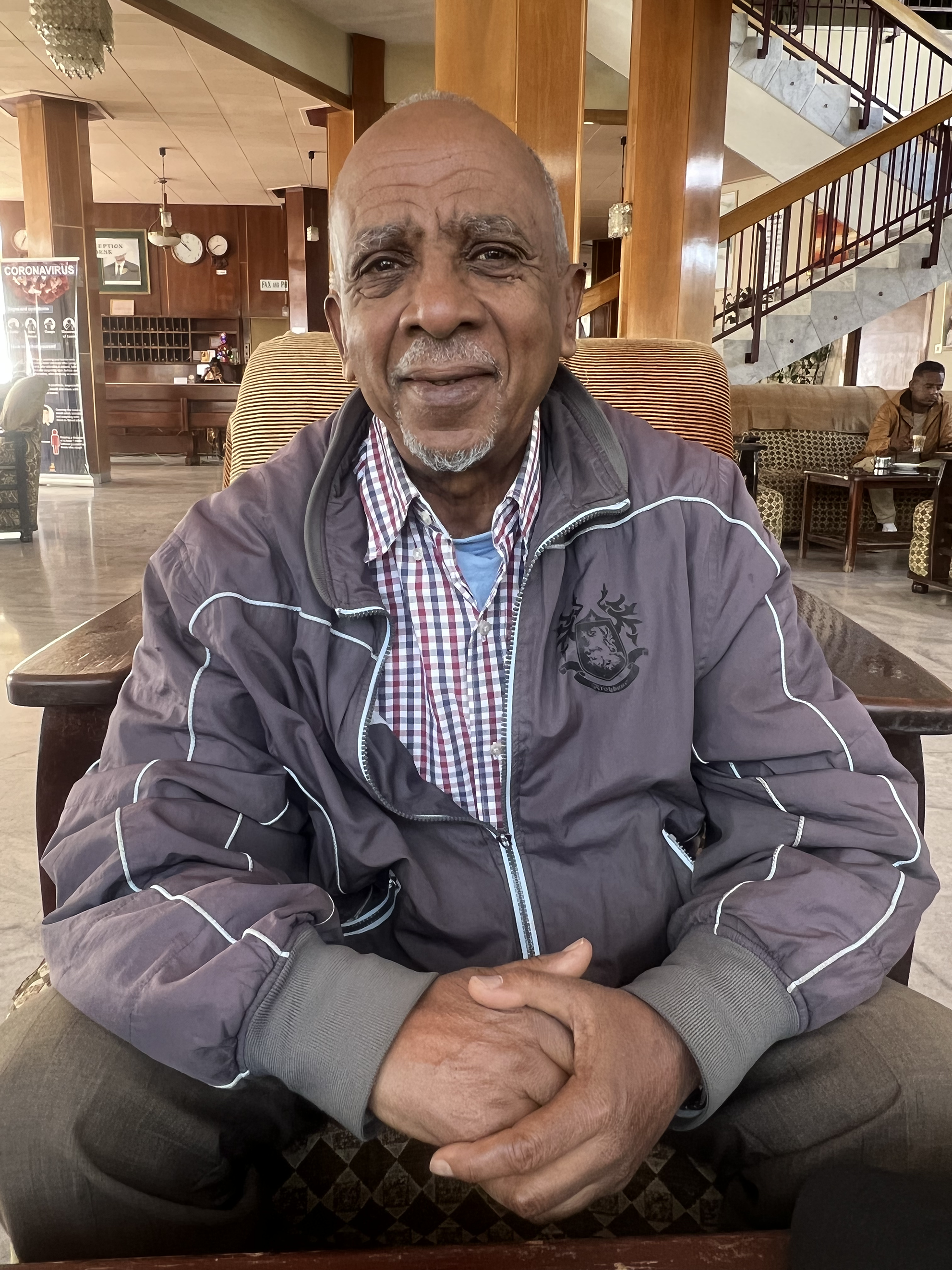
Music recording became central to the struggle, capturing both the spirit of the people and factual accounts through song lyrics that had a narrative quality. Within this context, Yosief Kidanemariam emerges as a central figure, tasked with managing the Dmtsi Hafash studio and overseeing music-making practices, particularly the recording aspects, during his tenure with the EPLF (Figure 1). This section, relying heavily on the narrative provided by Yosief, looks at the various tools and technologies that allowed the music-recording process to happen, enabling musical expression, cultural preservation and community resilience even amid struggles for liberation.
Yosief Kidanemariam.

Kidanemariam’s leadership underscores the technical innovation and creative ingenuity required to record music in challenging conditions, including limited recording materials and the rugged terrain of the mountainous landscape where the studio was situated. Furthermore, the necessity for movement and travel to various locations for recording sessions highlights the significance of adaptability and perseverance in the face of security concerns and logistical obstacles. Thus, recording music during the Eritrean liberation struggle served as a means of artistic expression and a powerful tool for mobilization, solidarity and resistance against Ethiopian occupation and oppression. As shown by diaspora efforts to fund the creation of Dmtsi Hafash and provide other material resources, recording music during the Eritrean liberation struggle was also a powerful tool for mobilization and solidarity across the diaspora. While cutting-edge recording technology advanced rapidly worldwide, the EPLF fighters had to resourcefully utilize whatever basic equipment was available for their vital audio preservation and broadcasting efforts.
Yosief Kidanemariam invested much of his time with the EPLF recording sound for the Dmtsi Hafash radio station, eventually becoming the head of the Dmtsi Hafash studio. Born on 20 May 1945, Yosief had the privilege of becoming a highly educated person, completing all the years of formative schooling, an uncommon feat for the average Eritrean during this time.Footnote 2 After receiving encouragement and support from a friend living in the USA, Yosief joined his friend and attended a university there, attaining a bachelor’s degree and participating in an Eritrean youth organization to support the liberation struggle. After finishing his degree, he wanted to join his comrades on the battlefields. He explained:
Forty members were in our organization in the city where I used to live. We organized various activities, but my favourite was physically distributing music cassettes to other local Eritreans. The income was donated to the armed struggle. Whenever our organization received educational and entertainment audio and video cassettes from the Eritrean armed struggle field, I duplicated and distributed them. I expressed an interest in joining the military, and, to that end, I was advised to undergo vocational training in fields assigned to me by the freedom fighters in Eritrea. Between the suggested courses, I picked to get trained in radio technology and study there for an additional two years using the American educational system. After completing the training, I could join the army with the specialized skills required by the field. When it was finally time to join the Eritrean People’s Liberation Front, I returned to Eritrea to join the armed struggle, having learned the skill I was asked to study. I could have studied more, but I had learned the basics.Footnote 3
Yosief’s experience making copies of cassette tapes gave him practical hands-on knowledge of using a tape recorder, an experience that would prove to be helpful in the long run.
When Yosief finally got the opportunity to return to Eritrea and formally join the liberation struggle on the ground, he was assigned to work for Inda Ziena, or the Information Department. He was advised to study and assess their recording studios. He learned how their audio and video material was recorded and distributed and took notes accordingly. With time, his assignment became more concrete, and he began working with recorded material and archiving it.Footnote 4
When Dmtsi Hafash launched in 1979, Yosief became studio manager and a man named Mihreteab was the transmitter manager, working to keep the station running despite scarce resources.Footnote 5 As part of the first steps in running the radio broadcast, the team agreed that they would record songs for the radio. Various suggestions were proposed to determine the method of recording. However, to prioritize audio quality, a novel approach was adopted: inviting comrades to the central studio to record their work. With branch mini stations established in multiple locations, both studio personnel and comrades from other units and the front line would convene at intermediate points. The inaugural recording session took place in Arag, followed by subsequent sessions in Anberbeb, all dedicated to capturing songs for radio broadcast.Footnote 6
Eritreans residing outside Eritrea had comparatively convenient access to the radio station’s broadcasts, unlike their counterparts living within the country who were policed and had to listen in secret. The Derg party perceived Dmtsi Hafash as a political threat, leading to the criminalization of radio listening and persistent attempts to disrupt its transmissions (MOI 2007). Despite these challenges, Dmtsi Hafash persevered by relocating frequently to evade interference and adjusting its broadcasting frequency as a technical countermeasure against jamming efforts (MOI 2021). Eritreans within the country, however, faced significant risks attempting to listen to the radio station. Despite these dangers, many Eritreans discreetly tuned in to Dmtsi Hafash, a covert act of defiance against what they believed was an oppressive regime that underscored the resilience and determination of the Eritrean people in their struggle for liberation.Footnote 7
Music recording and mobility
In 1982, preparations for the Derg’s Shadshay Werar, or Sixth Offensive, prompted the EPLF to relocate Dmtsi Hafash to Shabait in Mount Hager to continue broadcasting.Footnote 8 Mount Hager’s formidable terrain posed challenges for access, compounded by the imperative of maintaining secrecy amid war. To evade detection by Ethiopian soldiers, the radio and associated facilities of the liberation movement were concealed. Consequently, the practice of rendezvousing with comrades away from their units diminished as the risks of clandestinely traversing Mount Hager were deemed too great. In response, EPLF leaders and Dmtsi Hafash managers decided that members of the studio unit would embark on journeys to reach their comrades, transporting all necessary equipment, including amplifiers and tape recorders. Thus, the studio team commenced their travels to the designated locations, Yosief included.Footnote 9
Yosief’s team aimed to record music without noise disruption, sometimes in trenches or remote areas, choosing sites to minimize interference. For instance, in 1982, Yosief and a colleague named Mibraq Tewelde journeyed to a medical unit to document their creative endeavours, encompassing songs, poetry, essays and short stories. Before recording sessions, Yosief and Mibraq conducted careful site inspections to identify suitable locations in collaboration with the hosting unit, ensuring the optimal setup for capturing performances. With limited recording equipment, they strategically considered stage arrangement and performer placement. Part of the strategy involved positioning the lead singers and a mix of traditional and European instruments to maximize audio quality. Yosief described how recording in that hospital unit turned out to be quite effective:
As we were setting up, the injured patients in the hospital noticed what we were doing and wanted to watch. We agreed but asked them to be as quiet as possible while we recorded. They agreed, and we recorded an entire show with the comrades and patients of the hospital. They were a big help. By standing close to the performing band, the patients (thanks to the clothes they were wearing) blocked the sound from travelling far and hitting the mountains. They were like the backdrops of studio rooms; because of them, the sound did not echo but was absorbed, allowing us to achieve a very excellent quality for the broadcast.Footnote 10
Over time, the quality of the equipment being used improved. When Dmtsi Hafash was launched, Akai-branded tape reels were initially procured from Dekemhare, Eritrea.Footnote 11 The Akai tape reel was the most advanced tape recorder the EPLF had in its possession during the initial years. All that was available in the major cities was the simple handheld tape recorder.Footnote 12
Subsequently, the EPLF began importing tape cassettes from overseas and acquiring mixers from countries including Sudan, Somalia and Saudi Arabia. Contributors were eager to provide material for the broadcasts. For instance, contributors donated cassettes made by TK Audio from Kuwait that were received unfavourably and ceased to be utilized.Footnote 13 Yosief described the Tokyo Denki Kagaku (TDK) cassette tape brand, first manufactured in Japan in the 1950s, as his favourite. Tape recorders and four or five microphones were transported to the set during recordings. While studio recordings utilized more advanced reel-to-reel tape recorders, travelling for recordings necessitated leaving larger equipment at the main studio.Footnote 14
To record music using a simple handheld recorder also required having an amplifier, microphones and an abundance of patience, since it could sometimes take all night to record just one song. The singer would be placed in the front, close to the recorder, and musicians would be placed further back, so as not to overpower the singer’s voice. This was a delicate balance, and sometimes, after recording, they would notice that the drums were too loud or you could not hear the group of people clapping in the background at all, and they would be required to re-record it from the start. This was a very tedious and time-consuming process. Yosief described such limitations as the result of limited resources:
In the 1970s and 1980s, modern mixers with seven to eight channels became famous worldwide. They could record up to seven tracks, and if there were any issues with a particular instrument, such as the guitar, they could re-record it and add it to the master track. Unfortunately, we did not have access to this technology, so if we made a mistake while recording, we had to re-record the entire song. Fortunately, we acquired this technology in 1991 after gaining independence.Footnote 15
Despite the technical difficulties, Yosief and his colleagues utilized different strategies to improve the recording process.
The timing of when recordings would need to be completed was crucial to the clarity of the recording and their safety. According to Yosief, recording sessions were strategically scheduled at night to minimize the risk of detection by bomber aircraft and air raids. Throughout the daytime, recordings were reviewed to assess quality and identify errors requiring correction. Typically, the recording of a single song spanned between half an hour to an hour. However, some singers required additional time, especially during nighttime sessions. If a singer failed to synchronize with the rest of the performers after three attempts, they were granted a break to rehearse for the following day. Given the limited number of takes available, time was utilized judiciously in pursuit of perfection despite the inherently time-consuming nature of the process.
Recording and circulating music with purpose
The production of liberation songs in Eritrea was imbued with a forward-looking perspective, serving as a sonic archive of the independence struggle. This approach was likely influenced by Maoist concepts of cultural revolution, as several high-ranking members of the EPLF – including the current president of Eritrea, Isaias Afwerki – had received military and philosophical training in China. The EPLF’s commitment to documenting the struggle extended beyond music. They invited international journalists and scholars including Dan Connell in 1976 and Basil Davidson in 1988 to witness and report on their efforts. Additionally, they trained Eritrean photographers to chronicle the liberation movement, underscoring how the EPLF valued creating a comprehensive historical record of the fight for independence (Tewelde Reference Tewelde2015). Therefore, all methods of documentation were taken into consideration: journalistic writing, visual imagery and poetics, which included music.
Recording music served multiple purposes for Dmtsi Hafash. It provided a means to fill airtime if news broadcasts ended earlier than planned, offered a creative transition between broadcasting themes, and served as an engaging method to convey significant political messages, including themes of national unity, patriotism, EPLF ideology and the importance of support from the Eritrean people. This initial endeavour eventually evolved into recording fully fledged cassette tapes for international distribution. When the tapes were smuggled out to the diaspora for sale, they were considered highly sensitive and valuable. Only the most trusted people were given this task, and they then passed on the tapes to a specific person in a given country because they were sometimes the master copies. This method was the only way in which the EPLF leadership would approve sending master copies of tapes out of the country. Yosief described this process of exporting the cassettes:
We had designated individuals who would transport merchandise in and out of the field. For our content, we had a set pattern where someone would pick up our cassettes, and a chain of people would then receive and pass them along from Sudan to the world. We were not afraid of people copying and selling our content for their gain because it was impossible. Our comrades had connections everywhere, including Sudan, where we were closely tied to the leadership that helped with transportation.Footnote 16
The expectation was that the designated country or location would make copies of the master cassette tapes and return the originals. The EPLF deemed these tapes invaluable and essential to keep.
Often, the first destination outside the African continent for the cassette masters was Bologna, Italy. The diasporic branches of the EPLF established annual Eritrean festivals in Bologna from 1974 onwards, where they mobilized social, economic and political resources in support of the liberation struggle (MOI 2014).Footnote 17 Bologna’s left-wing political environment enabled immigrant groups like Eritreans to organize such events during their independence struggle (Vieira and Zannoni Reference Vieira and Zannoni2012). These festivals provided platforms for the exiled community to gather while serving as crucial fundraising venues for Eritrea’s liberation from Ethiopia (Arnone Reference Arnone2014). Cultural merchandise, particularly music cassettes, was sold during the festivals to generate revenue – a tradition that continued with CDs after independence (Kifleyesus Reference Kifleyesus2007). This annual festival eventually expanded globally, spreading to the USA, Australia, Sudan, Sweden and other countries.Footnote 18
Due to the widespread audience of Dmtsi Hafash and the recorded music tapes, the content of its broadcasts and the music underwent significant consideration and planning. The radio was chosen as a tool to communicate missions and visions, not solely through spoken words but also through music. Most of the songs in the collection were politically themed; however, the primary focus was always on the song’s message. When the songs were intended to uplift spirits, attention was directed towards that goal. During the recording process, emphasis was placed on ensuring that the lyrics were clear and easily understandable to convey the messages effectively. These songs were more than just entertainment; they were crucial political education and communication tools. As Yosief explained, ‘Our message to our people was one of hope and bravery, reminding them that we were close to achieving our dream.’Footnote 19
Another important message that this music conveyed was the unity of Eritrea’s diverse population. With nine ethnolinguistic groups and two major religions, creating a sense of nationality among them all was indispensable to the success of an independent Eritrea.Footnote 20 A committee took responsibility for selecting songs on the cassette tapes for distribution. One of the committee’s guiding principles was to ensure the representation of songs from all ethnic groups on each album, reflecting respective ethnic groups’ linguistic diversity and their unique indigenous musical features.Footnote 21 The committee looked for lyrics that could be considered divisive or harmful to the creation of an Eritrean identity and required them to be rewritten or the song would be pulled entirely.Footnote 22
While the committee operated without formally codified selection criteria, their deliberative process reveals the careful consideration given to each song’s potential impact on the project to help forge national unity. According to Yosief, the committee functioned through collective discussion rather than rigid guidelines, with members contributing diverse perspectives on lyrical content, musical quality and potential reception among different ethnic and religious communities. This collaborative approach allowed for nuanced evaluation of songs that might inadvertently exclude or alienate certain groups within Eritrea’s diverse population. The committee’s discussions often centred on whether lyrics effectively conveyed messages of unity without privileging one ethnolinguistic group over another, and whether the musical arrangements would resonate across Eritrea’s cultural spectrum. This often meant, in their perspective, prioritizing more traditional genres of music. Although this process may appear informal compared with systematic archival practices, it represents a deliberate effort to create an inclusive musical canon that could serve the EPLF’s vision of unified national identity.Footnote 23
Producing music from the battlefields during a liberation struggle allowed artists to be direct with their political messaging in a way that artists in major cities such as Asmara, the present-day capital of Eritrea, could not be. Yosief discussed how artists and musicians in Asmara might have had access to plentiful resources such as high-quality recording technologies and newer instruments, but they were heavily censored:
[Artists in Asmara] had technical liberty, not the liberty of expression … We had limitations with access to instruments and a more significant responsibility because we were mandated to use our music to carry vital messages. That is why we were highly focused on the lyrics.Footnote 24
Yosief gave examples of occasions when the committee had to decide on lyrics for a song to be recorded on a cassette tape. During one committee meeting, while reviewing song selections for broadcasting, a committee member named Zeray Abubeker identified a word with dual meanings in a Tigrinya song played back. Subsequently, it was found that the word had a third unintended meaning. Therefore, the committee decided not to broadcast the song. Consequently, the lyrics were revised, and the entire song was re-recorded to ensure clarity and alignment with the intended message.Footnote 25
The lyrics of songs provided documentation of the nationalist sentiments felt by the freedom fighters and memorialized essential events and battles, feelings of hopefulness, and a determination to accomplish their goals. A song that Yosief recalled as being of great importance and popularity was one sung by an artist named Estifanos ‘Wedi Zemach’ Zemach, entitled ‘Bdho’, which loosely translates as ‘to overcome’. Recorded initially some time in the mid-1980s, Wedi Zemach describes the trauma and violence that the freedom fighters lived through daily:

The song ‘Bdho’ captures the realities of war while also showcasing the strength and resilience of the fighters involved in the fight for freedom. The song progresses from impersonal sensory descriptions of war to the emergence of the narrator’s ‘I’, then to their personal resolve, and finally to a collective ‘we’ that shifts from describing the enemy (‘they’) to embracing an entire people beyond the battlefield. This movement from sound to subjectivity to collectivity serves as a rhetorical device that draws listeners into the front line and aligns them with the struggle. The lyrics stand as a tribute to the bravery and strength of those participating in the liberation movement, instilling optimism and unity among listeners as they confront war obstacles and work towards a better future.Footnote 27
The revolutionary songs emerging from Eritrea’s protracted liberation war were powerful oral narratives expressing the struggle’s history while also evidencing Eritreans’ lived experiences. The lyrics gave voice to the experiences of fighters and civilians alike, vividly depicting the realities they faced through rich evocation. Verses celebrating hard-fought victories memorialized heroic battlefield triumphs. At the same time, other songs spoke of the immense suffering and egregious losses endured, ensuring that the memories of martyrs were forever etched into the national consciousness. These songs transcribed Eritrea’s determination to achieve and archive independence into a profound musical record, from tales of overcoming overwhelming odds to sombre lamentations mourning devastated communities. This genre of music comprised a diverse songbook that comprehensively chronicled the joys, pains, tactics and ideological underpinnings of the liberation struggle, expressing the era’s history.
The famous revolutionary song ‘Salina’ by the legendary Eritrean artist Wedi Tukul pays tribute to one of the fiercest battles of the liberation struggle. The song’s lyrics vividly depict the intense fighting in 1977 in the Salina River delta area near Massawa, known for its salt production:Footnote 28

Despite the EPLF fighters’ immense sacrifices, with many martyred and injured in the battle of Salina, they ultimately could not defeat the Soviet-backed Ethiopian forces there (Woldemariam Reference Woldemariam2018). Although it came at a heavy cost, the EPLF had to withdraw from Salina, known to Eritreans as the ‘strategic withdrawal’. In this passage, the rhetoric differs from what can be seen in ‘Bdho’: the fighters are framed as ‘they’, the narrator speaks from a collective standpoint as a witness, and the scene unfolds in the past tense with minimal sensory detail. Through its words, the song memorializes this brutal conflict and enshrines the memories of those who perished, ensuring that their sacrifices will never be forgotten (Ketema Reference Ketema2025).
In another example, singer and soldier Uqbagabr Gebretensae tells the story of the liberation of Nakfa, the location of the EPLF headquarters in the Sahel region of Eritrea. Best known for his poetic lyrics and smooth voice, Uqbagabr’s songs reveal a strong sense of patriotism and pride. Born to a sergeant father, his close friends remember him for his intelligence in school, his joyful energy and his determined spirit. Despite his success as an artist and invitations to join larger cultural troupes, he refused these opportunities and chose to remain literally and metaphorically singing from the front lines, where he was eventually killed in battle (Ketema Reference Ketema2018). In the upbeat song titled ‘Filmawit Ade’, he sings:

The lyrics reveal that ‘you’ refers not to a person but to a town, later personified as a ‘she’ and a ‘mother’, inviting both narrator and listeners into an attitude of contemplation and admiration. This song represents the liberation of Nakfa, a city laden with profound symbolic meaning for the Eritrean independence struggle. As the de facto capital of Eritrea’s revolution and the first major city to be liberated by the EPLF, Nakfa became emblematic of resistance and triumph against Ethiopian occupation. Even during the EPLF’s ‘strategic withdrawal’ in 1978, when liberation forces were forced to retreat from other positions, Ethiopian soldiers were unable to penetrate or maintain control over Nakfa, demonstrating the city’s strategic importance and the fierce determination of its defenders. The enduring significance of Nakfa to Eritrean national identity is perhaps best exemplified by the decision to name the country’s post-independence currency the nakfa, ensuring that this symbol of liberation circulates daily in the hands of every Eritrean citizen as a tangible reminder of their hard-won freedom.
The music of the EPLF conveyed not only information and sentiments regarding historical events but also deeply personal experiences of loss and separation. In a song by Elsa Kidane recorded in the 1980s titled ‘Weledi’ (which translates to ‘Parents’), Elsa describes the pain of being separated from her parents while reminiscing about her childhood experiences. The separation of families – particularly parents from their children as young people left their homes to join the liberation struggle – was incredibly common during this period. Songs such as ‘Weledi’ thus serve as sonic archives of the emotional toll of liberation warfare, documenting experiences of family fragmentation that might otherwise remain absent from official war histories. The song carries a melancholic tone, with the acoustic Eritrean instrument, the krar, serving as the primary accompaniment as Elsa sings in a slow, soulful manner. Through her lyrics, she demonstrates the depth of her longing for her parents:

The EPLF strategically utilized music to promote a specific vision of Eritrean nationality and identity among Eritreans locally and abroad. Through careful curation – as evidenced by the committee’s lyrical review process and insistence on multilingual representation – the EPLF emphasized shared experiences and dreams of independence bolstered by unity across Eritrea’s nine ethnolinguistic groups and two major religions. However, this unifying project was simultaneously exclusionary: songs deemed potentially divisive were rewritten or removed entirely, and the committee’s preference for ‘traditional genres’ reflected particular aesthetic and political judgements about what constituted authentic Eritrean culture. The goal of preserving the memories of those who sacrificed their lives during liberation was inseparable from constructing a particular narrative of that sacrifice – one that centred EPLF ideology and marginalized alternative visions of Eritrean identity, including those promoted by the rival ELF. Nevertheless, the material evidence demonstrates music’s effectiveness as a mobilization tool: diaspora financial support enabled recording infrastructure, clandestine radio listening in Derg-controlled cities such as Asmara created networks of resistance, and cassette circulation connected Eritreans across generations and geographies. Music functioned as a powerful bond that linked community members to a specific political project rather than to an uncontested or singular Eritrean identity.
Preserving and archiving the music of the liberation struggle
The EPLF’s intention was to use music as a tool for nation building, an artistic way of explaining its long-term vision for its future country and all of the obstacles that had to be overcome to achieve that vision. Due to this, the organization set up an archival committee to ensure the protection and longevity of the cassettes they made. They hoped to ensure that the artists’ voices and messages would remain relevant for generations yet to be born through the preservation of this musical heritage. The sacrifices made by participants of the struggle and the documentation of the day-to-day lived realities of warfare through music lyrics were of vital importance at the time; yet, the EPLF had enough foresight to preserve these songs and their messages to continue to instil a sense of appreciation about being an Eritrean among subsequent generations. Many of the values of the EPLF continued to be central to the post-independence government as its leaders became the new governing officials. The EPLF is now known as the People’s Front for Democracy and Justice (PFDJ).
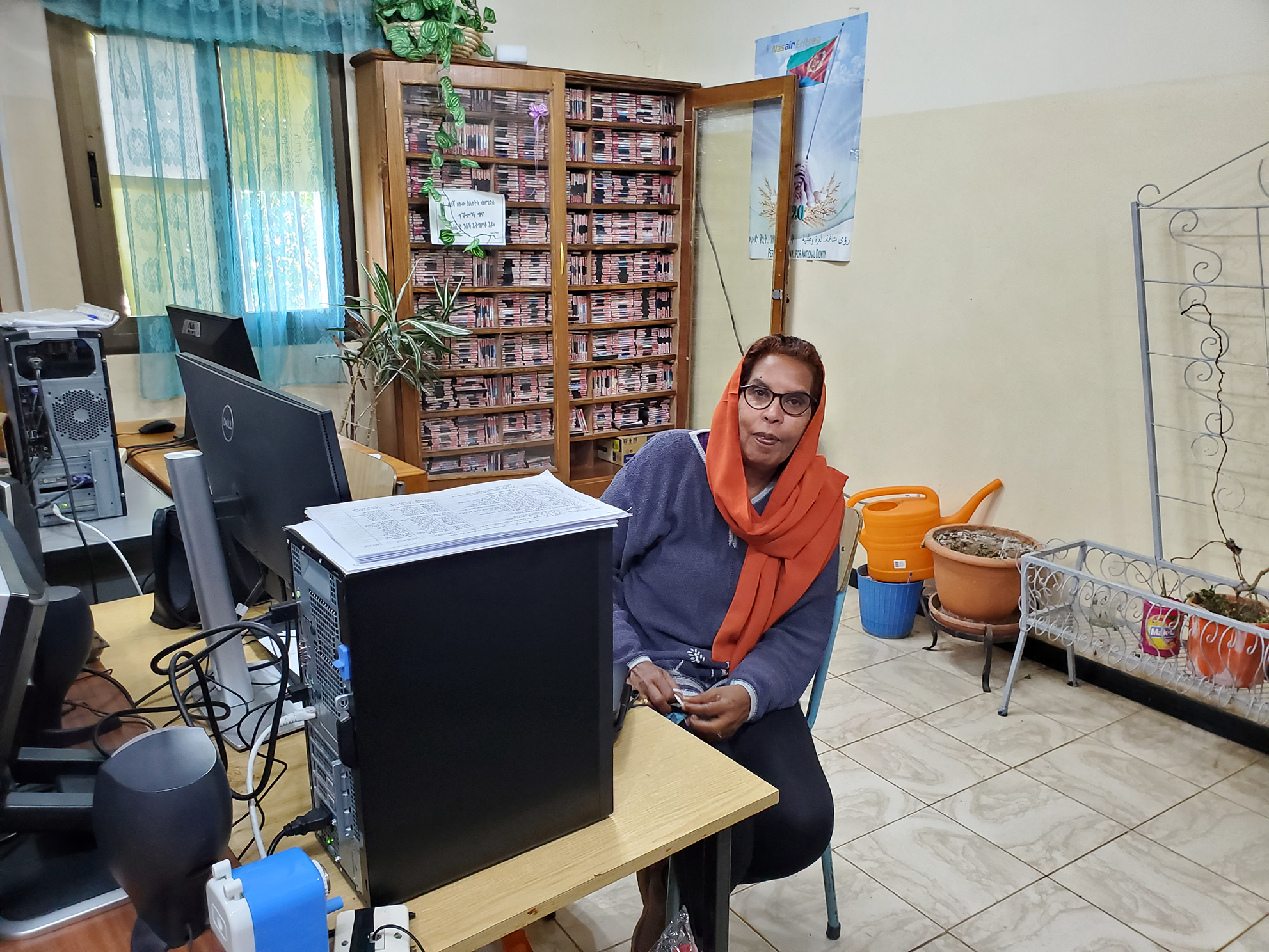
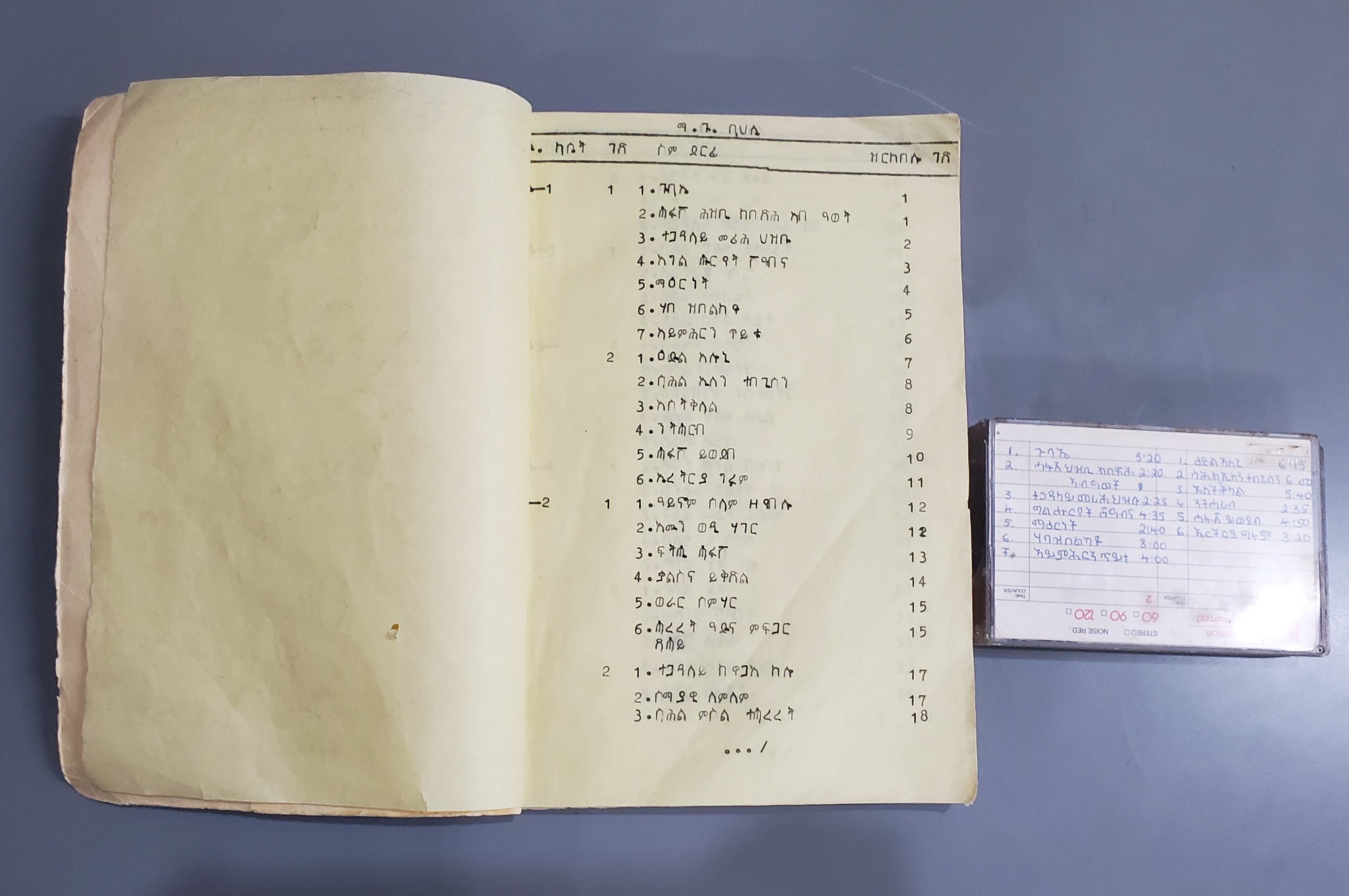
Daret Yosief Elyas worked as an archivist at Dmtsi Hafash starting in 1984, about five years after its creation (Figure 2). She described how they would take the time to dust the tapes, play and rewind them to ensure their longevity, and strategically organize them. They were a small group of two but eventually grew; two more committee members were added in 1987. Each cassette was specially numbered based on what brigade or cultural troupe the singers on the tape were from and according to when they were recorded. They even took the time to neatly transcribe all of the lyrics of the songs using typewriters (Figure 3). This careful, systematic archiving process was deemed critical to the overarching goal of documenting the liberation struggle. Daret said:
We would care for the master cassettes like a mother would care for their child. Even if you make 1,000 copies, none will ever be like the original. When it comes to expressing our nationality, it is the master cassettes that hold the honest truth. It was made during that time, written during that time, and recorded during that time. So we treated them with great care.Footnote 31
Daret Yosief Elyas.

The first cassette and lyric book produced by the recording and archiving team of the EPLF.

Her description underscores that the cassette was not merely a vessel for sound but integral to the meaning of what it carried. The ‘original’ was valued not only for its fidelity but for its embeddedness in time, place and struggle. In her view, the material form held the ‘honest truth’ of the liberation – containing within it the voices, ideas and commitments of the moment of recording. This perspective moves beyond concerns of technological transfer or sound quality and instead emphasizes how medium and message were inseparable. It also echoes this special issue’s argument about the file-ization of performance: just as digital files can bind together legal, political and ideological components, the cassette format bound together the cultural, material and political dimensions of Eritrean music.
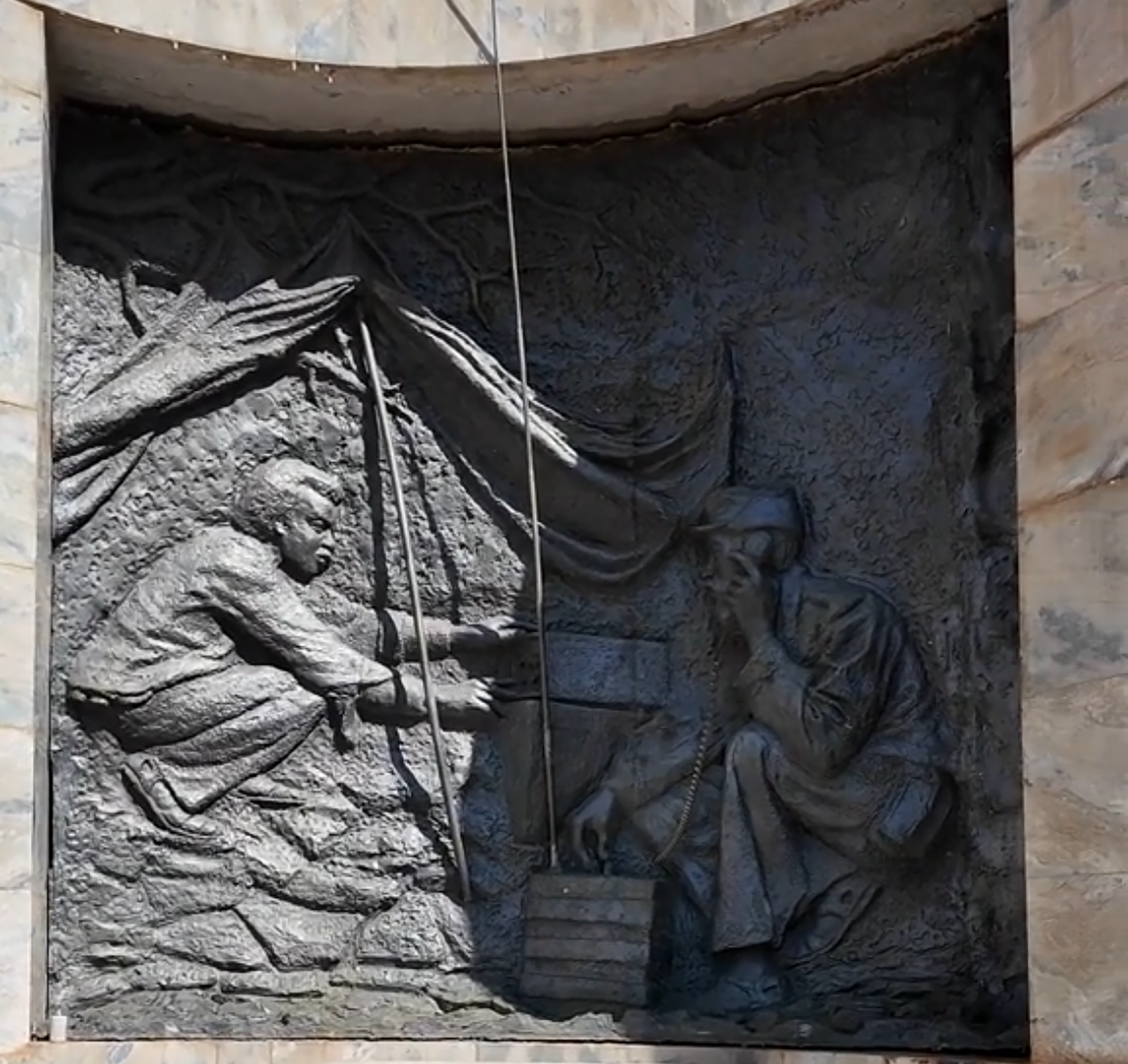
Today, the MOI in Eritrea still possesses the original cassettes and has also maintained the same organizational style that it did in the Dmtsi Hafash headquarters during the liberation struggle. It continued preserving, archiving and organizing music after independence, when CDs became the newest technology and began to replace cassettes. Now, the MOI has its central headquarters in Asmara, located at the top of a steep hill. A beautiful stone engraved memorial of two men using a transmitter representing the origins of Dmtsi Hafash is located outside the facilities, a constant reminder of the start of official Eritrean information dissemination with the help of technology (Figure 4). The radio station Dmtsi Hafash is still broadcasting in the present day.
Engraved memorial stone for Dmtsi Hafash at the Ministry of Information headquarters.

The MOI has an expansive music library that houses the cassette archives and accompanying lyric books. Daret and her team have undertaken the arduous task of digitizing the collection of cassette tapes, using a meticulous process reminiscent of the original organizational strategy used while on the archiving committee, which was adapted for digital preservation on a computer. Through her efforts, a computer now serves as the repository for the digitized versions of these cassette tapes. During a demonstration, Daret played a song from its original master cassette on a boombox, followed by its digitized counterpart. Despite the painstaking efforts to replicate the audio, Daret expressed dissatisfaction with the digitized sound quality, noting that it does not match the richness and authenticity of the original cassette recordings.Footnote 32
Digitizing the songs of Eritrea’s liberation struggle is a continuation of the archival process started in analogue form during the liberation struggle, ensuring that these cultural artefacts are preserved and made accessible to future generations. However, it also raises questions about the politics of digital archives and how technological mediation shapes our understanding of the past. The process of digitization involves decisions about which materials to include, how to organize and present them, and what metadata and contextual information to provide, all of which can influence the interpretation and meaning of these cultural artefacts.
In an article on digitizing archives in Africa, Fabienne Chamelot et al. (Reference Chamelot, Hiribarren and Rodet2020) explain how the digitization of African archives, whether public or private, has seen a notable increase due to advancements in information technology. This trend has sparked discussions among researchers and archivists regarding intellectual property, sovereignty and governance. In a country such as Eritrea, where access to technological resources is an ongoing issue, the digitizing of songs of the liberation struggle indicates the importance of these songs not only to the creation of an Eritrean national identity but also to its maintenance and sustainability.
While the full scope of public accessibility to the digitized materials remains uncertain, the MOI’s project to digitize its extensive archive of Eritrean revolutionary songs represents a significant step by the former EPLF to safeguard histories methodically documented during the liberation struggle years. What is preserved here is not only the story of the struggle itself, but also the stories of the recordings – the places where performances took place, and the skills and ingenuity required to capture them on tape under wartime conditions. By prioritizing these audio archives for digitization, the EPLF demonstrated foresight in ensuring that Eritrea’s revolutionary histories – both the events and their material traces – are preserved for future generations. Although much work lies ahead to exhaustively uncover, preserve and document Eritrea’s rich historical narratives, this music digitization project holds great potential to evolve into a pioneering and expansive African-owned and -led archival initiative of national cultural materials. As it grows, this archive could become an increasingly robust repository for Eritreans to engage not only with the music of the struggle but also with the histories of its making.
Conclusion: the politics of music preservation
The role of music in shaping and reinforcing Eritrean identity cannot be overstated. During the years of the EPLF, music played a crucial role in promoting a unified Eritrean identity that embraced all ethnic groups and religions. This inclusive approach was a deliberate strategy by the EPLF to foster a cohesive national identity. The importance placed on music preservation, as evidenced by extensive archiving efforts and later digital archiving initiatives, underscores a recognition of the performative nature of national identity-building practices through music (Askew Reference Askew2002). In the case of the former EPLF, now PFDJ, the role of the liberation struggle, and consequently the music produced during that time period, is central to this national identity.
Throughout Eritrea’s history, the diaspora has been an integral part of the nation’s musical landscape. From supporting the struggle for independence to contributing to contemporary music production, Eritreans abroad have consistently played a vital role in sustaining and evolving Eritrean music. This continuous thread of diaspora involvement has significantly supported the existence and cultural vibrancy of Eritrea.
Raymok Ketema obtained her PhD from the Department of History at the University of California, Santa Barbara.

 Open access

