




Introduction
Information sharing and the cancer journey
Information can be defined as the awareness an individual has of the patterns of reality, including the structures placed upon reality by humans (Dervin et al. Reference Dervin, Zweizig and Hall1977; Freimuth et al. Reference Freimuth, Stein and Kean1989; Rogers and Kincaid Reference Rogers and Kincaid1981). People seek information to reduce the uncertainty they have about the nature of their reality, including how to meet their goals both in the short and long term (Wilson Reference Wilson1997). Uncertainty is an important source of stress, as stress occurs when individuals perceive that the challenges they are facing may exceed the resources they have (Lazarus Reference Lazarus1993; Lazarus and Folkman Reference Lazarus and Folkman1984). In situations of uncertainty, stress may occur for a few reasons including because an individual perceives that they do not have the resources to manage the challenge they are facing, or the situation has used more resources than expected, resulting in fewer resources being available for the other challenges occurring simultaneously in their life. The cancer journey is one where individuals face many new and unfamiliar challenges, often simultaneously (Thiessen et al. Reference Thiessen, Harris and Tang2022). This makes information a key supportive care need because of its ability to decrease uncertainty and support the effective management of personal resources such as time, energy, and finances (Rutten et al. Reference Rutten, Arora and Bakos2005; Thiessen et al. Reference Thiessen, Sinclair and Tang2020).
Health-care providers play an important role in the provision of information for both patients and their care partners. Health-care providers are consistently identified in survey research as one of, if not the most, important informational resources for patients with cancer and their informal caregivers (Chua et al. Reference Chua, Ng and Tan2020, Reference Chua, Tan and Gandhi2018). The information that comes from health-care providers is generally described as high-quality (Thiessen et al. Reference Thiessen, Sinclair and Tang2020), in that it is usually found to be both credible and applicable by the health-care recipients receiving it. However, credibility and applicability alone do not necessarily guarantee the information that health-care providers share will be useful or that it will address all of an individual’s information needs. Accessibility and how the information is framed, in terms of providing hope and empowerment, are also important features of high-quality information that may be lacking from information shared by health-care providers (Thiessen et al. Reference Thiessen, Sinclair and Tang2020). Additionally, the information health-care providers identify as important to share may be affected by the provider’s scope of practice, personal biases, or their potentially limited perceptions of the patient’s and informal caregiver’s informational needs.
Information sharing in cancer care: A critical lens
Critical education theory explores how power and politics in educational settings impact the well-being of individuals and societies (Mellor Reference Mellor2013). Importantly, it provides valuable perspective for understanding the impact of unmet information needs on the lives of those living with cancer. In his work, Paulo Freire, who is considered a foundational figure in the early evolution of critical education theory, explored how the education system in Brazil reinforced classism and propagated poverty for Brazil’s poorest citizens (Elias Reference Elias1975). Freire described that the traditional Brazilian education system viewed students as empty vessels, and it was the educators’ job to deposit the knowledge into the pupils that would ultimately lead to their value in society and as human beings (Freire and Ramos Reference Freire and Ramos2014). This is the banking concept of education – where educators, and the system they operate in, determine what is important for the learners to know, disregarding the challenges the learners are trying to overcome in their own lives and communities. As part of his work to teach literacy, Freire developed the problem-based education approach. This approach involved first engaging with communities to understand the issues that were important to them, and then developing a literacy curriculum that encouraged dialogue around these issues (Freire and Ramos Reference Freire and Ramos2014). Notably, the results that Freire achieved were impressive, with some reports identifying that in 1 community his methods resulted in 300 adults learning to read and write in 45 days (Elias Reference Elias1975).
Freire’s work raises important questions about what is known about the information needs of those living with cancer and whether what is considered to be important by health-care professionals (i.e., normative informational needs) reflects the actual information needs of those living with cancer (i.e., expressed informational needs) (Elias Reference Elias1975). This is not a small issue given the reported prevalence of unmet information needs, cited between 50% and 100% for patients and informal caregivers, in both the curative and non-curative contexts (Christophe et al. Reference Christophe, Anota and Vanlemmens2022; Fletcher et al. Reference Fletcher, Flight and Chapman2017; Halbach et al. Reference Halbach, Ernstmann and Kowalski2016; Matsuyama et al. Reference Matsuyama, Kuhn and Molisani2013; Moghaddam et al. Reference Moghaddam, Coxon and Nabarro2016; Park and Hwang Reference Park and Hwang2012; Puts et al. Reference Puts, Papoutsis and Springall2012; Rutten et al. Reference Rutten, Arora and Bakos2005; Wang et al. Reference Wang, Molassiotis and Chung2018). These high rates of unmet need highlight an urgency for tools that accurately assess informational needs to guide the development and implementation of effective evidence-based informational interventions (Craig et al. Reference Craig, Dieppe and Macintyre2013). Additionally, Freire’s work raises questions about whether existing tools truly assess the informational priorities of those living with cancer.
A gap in the literature and research objectives
Little is known about the tools that exist for assessing information needs in the cancer context, or how those with lived cancer experience participated in their development. While 1 systemic review summarized existing information needs assessment tools, this review was not specific to the cancer context, and did not explore the role of patients and informal caregivers in the tool development process (Christalle et al. Reference Christalle, Zill and Frerichs2019). To characterize the tools that are available for assessing the information needs of those living with cancer, this literature review was undertaken. The scoping review methodology (Arksey and O’Malley Reference Arksey and O’Malley2005; Peters et al. Reference Peters, Godfrey, McInerney, Aromataris and Munn2020) was used for this review, as it provides a rigorous approach to systematically reviewing the literature, and yet provides flexibility in terms of the types of research objectives that can be achieved (Munn et al. Reference Munn, Peters and Stern2018). This is in contrast to systematic reviews (Aromataris and Pearson Reference Aromataris and Pearson2014) which may be better suited for exploring the literature related to a specific clinical question requiring systematic and unbiased review of clinical experimental reports.
This review was guided by the objectives of (a) identifying existing information needs assessment tools developed for the cancer context and (b) summarizing how they were developed, including how patients and informal caregivers influenced the information needs being assessed. The specific research questions that informed data collection and analysis were as follows:
1. What questionnaires have been created for evaluating the information needs of people living with cancer?
a. What is the stated purpose of each questionnaire?
b. What cancer contexts (i.e., cancer type, treatment intent, and population) have these tools been developed for?
2. How were the questionnaires developed?
a. How were the questionnaire items initially identified and finalized?
b. How were patients, informal caregivers, and health-care professionals involved in item identification, and finalizing the questionnaires?
c. How were the questionnaires validated?
d. What guided assessments of validity and reliability of the questionnaires?
Methods
Protocol and registration
Before conducting this review, a protocol, including search strategy, was developed based on guidance for scoping reviews from the Joanna Briggs Institute (Peters et al. Reference Peters, Godfrey, McInerney, Aromataris and Munn2020), published in a peer-reviewed journal (Thiessen et al. Reference Thiessen, Harris and Tang2022), and the review was registered (PRR1-10.2196/35639). The PRISMA-ScR reporting checklist is found in Supplement 1.
Eligibility criteria
To be included in this review, papers needed to report on the development or initial testing of questionnaires for assessing the information needs of adult patients with cancer and/or their care partners – at any point after initial diagnosis. Only peer-reviewed articles published in English that were available in full-text were included. Articles reporting on the development or use of questionnaires in the pediatric population and in the cancer screening context were excluded. Articles reporting on multidimensional tools that assessed multiple supportive care need domains, in addition to information needs, were also excluded.
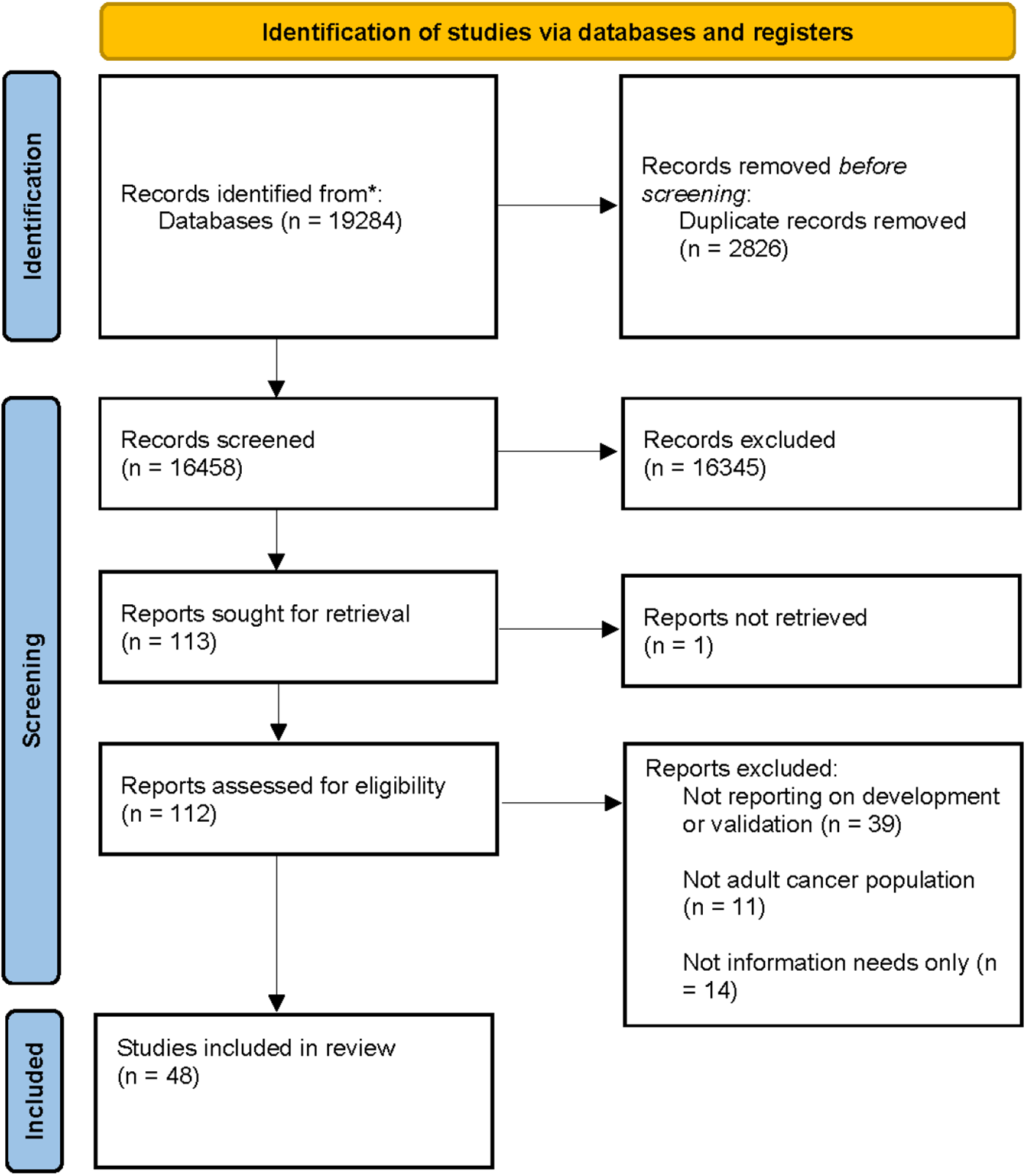
PRISMA flowchart of study selection process.

Information sources
To identify as many relevant articles as possible, articles published at any date up to the date of search initiation (i.e., January 1, 2022) were included. Databases searched included MEDLINE (OVID), EMBASE (OVID), CINAHL, Scopus, Web of Science, the Cochrane Database of Systematic Reviews, and PsycInfo. The search strategy was developed by M.T., with guidance from a health science librarian, based on a preliminary limited search of MEDLINE (OVID) and CINAHL Plus. The search strategy is published with the study protocol (Thiessen et al. Reference Thiessen, Harris and Tang2022).
Selection of sources of evidence
The database search results were exported to COVIDENCE (www.covidence.org) to facilitate article screening and data extraction. After duplicates were removed, initial title and abstract screening was performed by M.T.. Next, full-text versions of the articles were uploaded into COVIDENCE and screened independently by M.T. and D.H. Data extraction was subsequently performed, again independently by M.T. and D.H. All disagreements in terms of screening decisions and data extraction were resolved through discussion. Data extraction used the template previously generated as part of protocol development. As expected, the template evolved from the protocol version (Thiessen et al. Reference Thiessen, Harris and Tang2022) in the initial phases of data extraction to ensure the extracted data was suitable for answering the study questions. The data extraction sheet, in its final form, is reported in Supplement 2.
Synthesis of results
Following completion of data extraction, the extracted data were exported into an excel spreadsheet to facilitate synthesis of results. Tables were then generated summarizing the data relevant for answering each of the guiding research questions.
Results
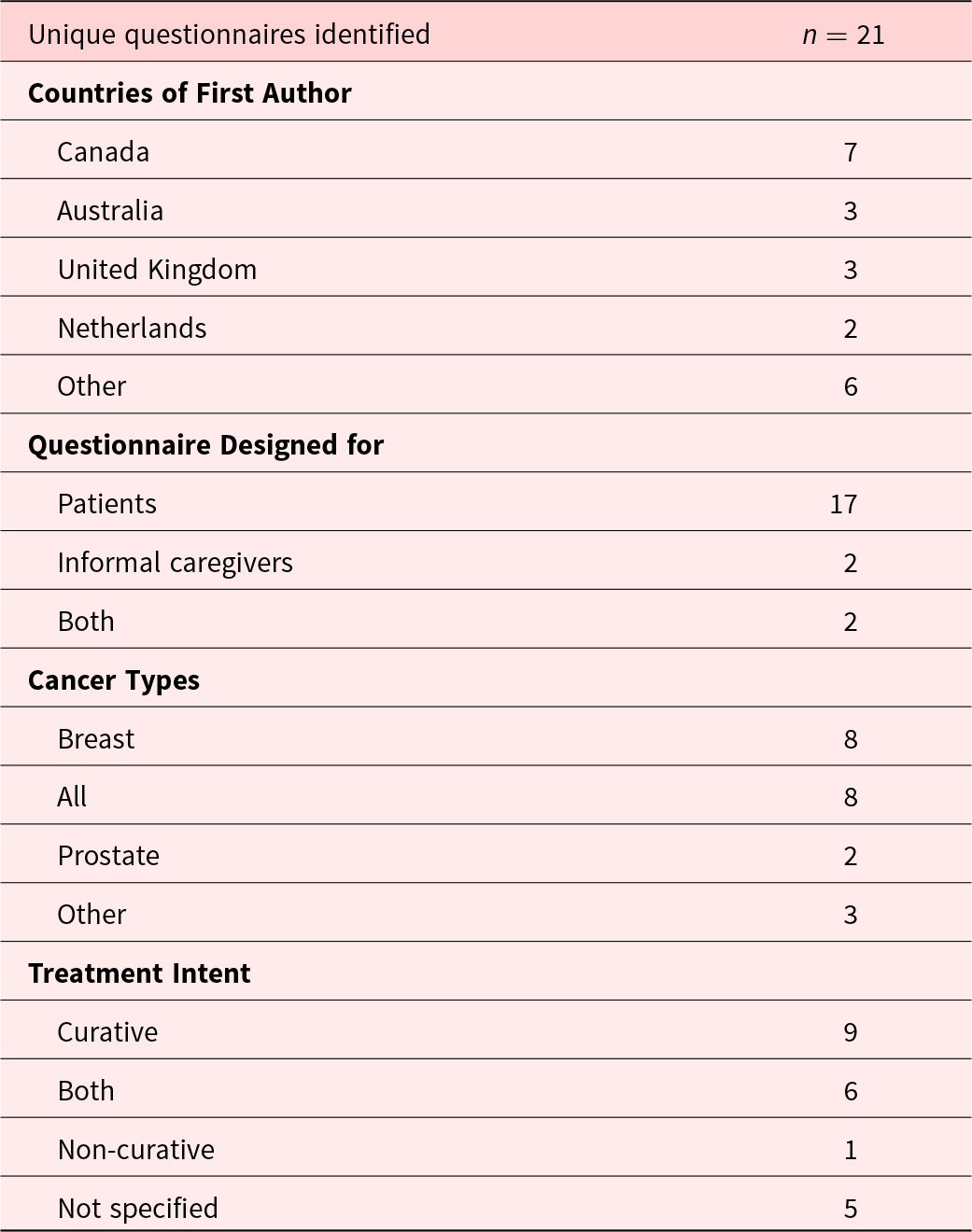
Forty-eight articles describing the development and use of 21 questionnaires were identified in the literature. The PRISMA flowchart summarizing the article selection process is presented in Fig. 1. Articles were published between 1990 and 2020. Based on country of first author, Canadian teams (n = 7) were responsible for developing the most instruments. Most tools were designed to assess the information needs of patients, not informal caregivers, and were developed to be applicable either specifically in the breast cancer context or were cancer type nonspecific. Table 1 summarizes the countries of article’s first authors reporting on the development of the questionnaires as well as the cancer contexts the questionnaires were developed for.
Summary of identified information needs questionnaires

What questionnaires have been created for evaluating the information needs of those living with cancer?
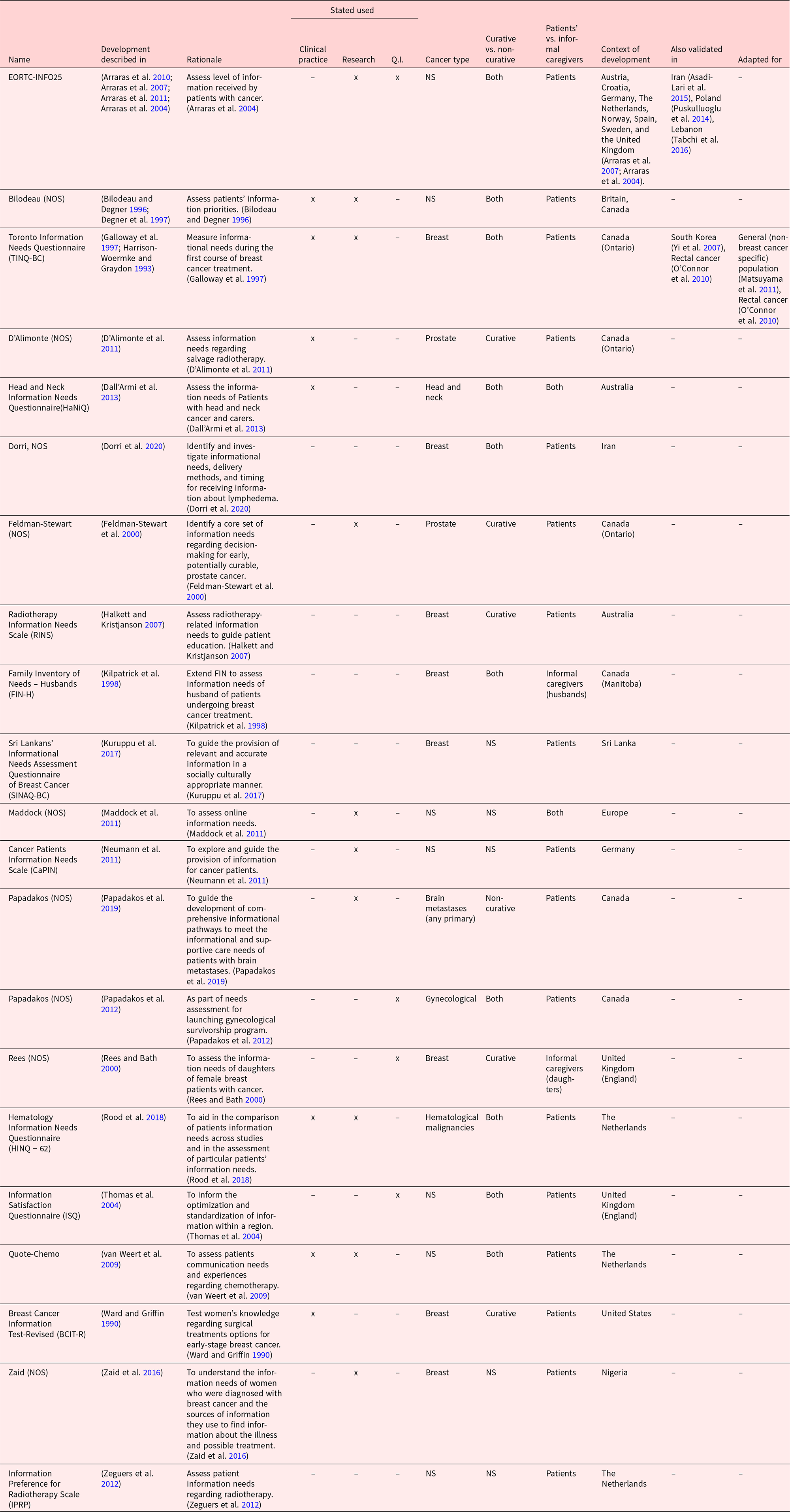
Each questionnaire, including the purpose and cancer context it was developed for, is listed in Table 2. Information needs questionnaires that were either not specific to a type of cancer (n = 8) or were focused on the breast cancer experience (n = 8) were the most common. In terms of non-type-specific questionnaires, 4 were global assessments of information needs as opposed to focusing on any specific aspect of the cancer journey. Of these global assessments, 1 of these was designed specifically to identify the information priorities of patients to guide information sharing. The remaining tools were designed to assess information regarding specific challenges that patients face including related to brain metastases (Papadakos et al. Reference Papadakos, Agarwal and Charow2019), chemotherapy (van Weert et al. Reference van Weert, Jansen and de Bruijn2009), radiotherapy (Halkett and Kristjanson Reference Halkett and Kristjanson2007; Zeguers et al. Reference Zeguers, de Haes and Zandbelt2012), and online information needs (Maddock et al. Reference Maddock, Lewis and Ahmad2011).
Summary of information needs measures including reason for development, intended use, cancer context, and country/context of development

NS = not stated, Q.I. = quality improvement.
In terms of breast cancer–specific information questionnaires (n = 8), 4 of these were designed to be used in the curative context, 2 in both the curative and non-curative context, and for the remaining 2 it was not specified which context it should be used in. Two of the measures were designed to assess global information needs of patients while the remaining were designed to assess information needs regarding specific aspects of the breast cancer journey including those related to those arising during the first course of treatment (Galloway et al. Reference Galloway, Graydon and Harrison1997; Graydon et al. Reference Graydon, Galloway and Palmer-Wickham1997), lymphedema (Dorri et al. Reference Dorri, Olfatbakhsh and Asadi2020), radiotherapy (Halkett and Kristjanson Reference Halkett and Kristjanson2007), and surgical options for managing early breast cancer (Ward and Griffin Reference Ward and Griffin1990). Notably, the only 2 questionnaires intended to assess the information needs of informal caregivers identified in this review were developed in the breast cancer context, with one being designed to assess the information needs of husbands whose wives were undergoing breast cancer surgery (Kilpatrick et al. Reference Kilpatrick, Kristjanson and Tataryn1998), and the other assessing the information needs of daughters of patients with breast cancer (Rees and Bath Reference Rees and Bath2000).
Two questionnaires were identified in this review that had been developed to assess the information needs of those living with prostate cancer. These were developed to assess information needs related to treatment decision-making in the curative intent context, including regarding salvage radiotherapy post-prostatectomy. Questionnaires were also designed for patients with gynecological (Papadakos et al. Reference Papadakos, Bussiere-Cote and Abdelmutti2012), hematological (Graydon et al. Reference Graydon, Galloway and Palmer-Wickham1997), and head and neck cancer (Dall’Armi et al. Reference Dall’Armi, Simpson and Forstner2013), with each providing a global assessments of patient’s information needs. Most questionnaires were designed for use outside of the front-line care setting as either research tools (n = 14) or as part of quality of improvement work (n = 2). Notably, 4 instruments were developed with the intention of being able to be incorporated into clinical practice to guide tailoring information to meet the needs of the patient who completed the questionnaire.
How have information needs assessment questionnaires been developed and validated?
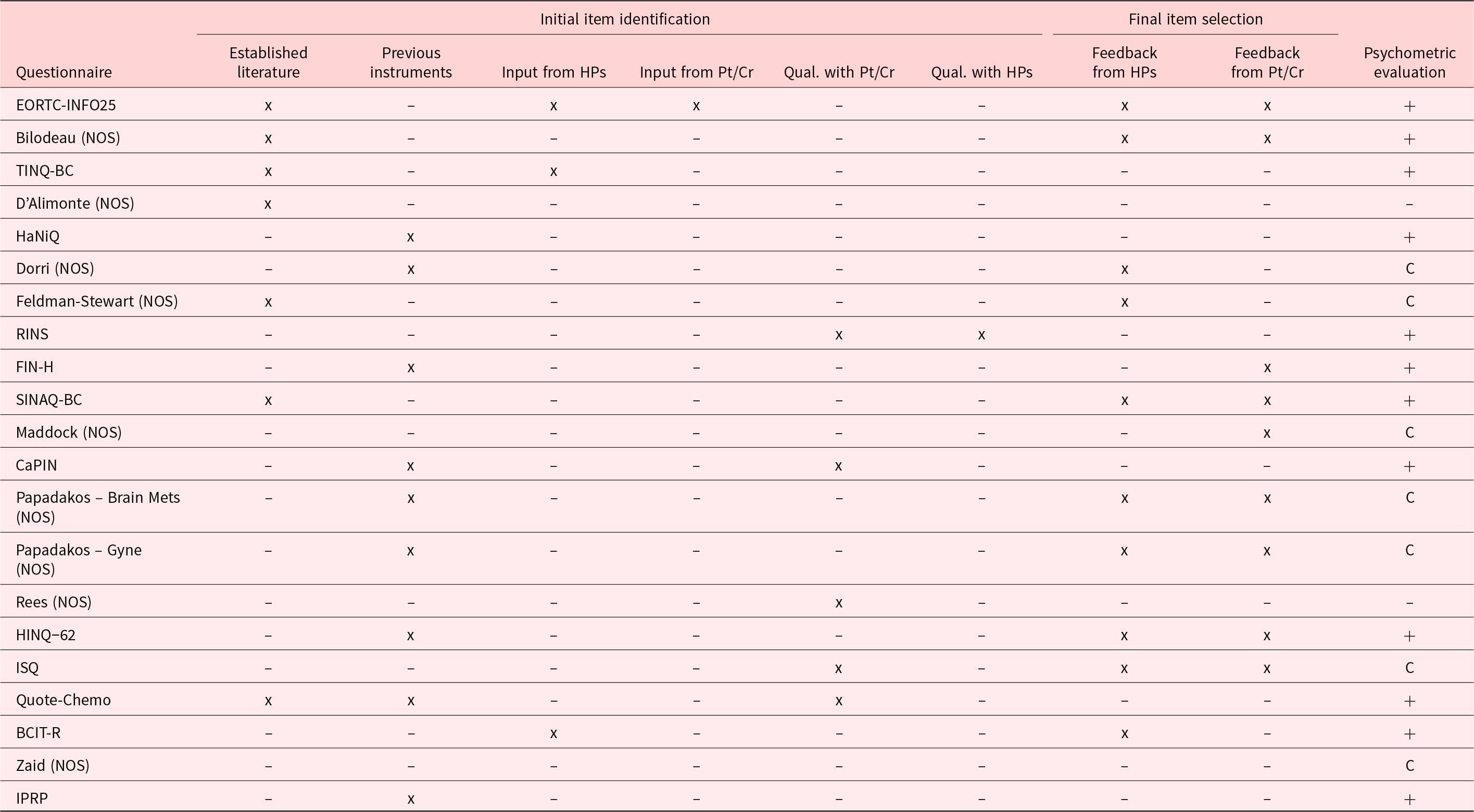
A summary of the steps taken for instrument development, as identified in the literature, from item identification to psychometric evaluation is found in Table 3. The development of the information needs assessment questionnaires, before psychometric testing, typically involved 2 steps. First, initial item selection occurred. This process was accomplished using some combination of 6 approaches including (1) adapting items from previously developed questionnaires, (2) creating items based on a review of the literature, (3) obtaining direct input from health-care professionals, and/or (4) patients and/or informal caregivers, and (5) conducting formal qualitative research with patients/informal caregivers, and/or (6) health-care professionals. Adapting previously developed questionnaires was the most common method incorporated (n = 9), followed by using a literature review (n = 7), with 1 questionnaire being developed using both approaches.
Item identification, selection, and psychometric evaluation of information needs questionnaires

Qual. = qualitative research, Pt/Cr = patients and/or carers, HPs = health-care professionals, + = quantitative evaluation of psychometric properties, C = content validity assessment, including through review by HPs or Pt/Cr as part of item finalization.
In terms of generating questionnaire items using input from health-care professionals, patients, and informal caregivers, 2 approaches were used. These included either obtaining direct feedback, including through panel discussions, on items that should be included or conducting formal qualitative research to identify information needs. None of the questionnaires were developed using both direct input and formal qualitative research. One questionnaire was developed based on direct input from both patients and health-care professionals (Arraras et al. Reference Arraras, Wright and Greimel2004) and 2 incorporated direct input from health-care professionals. No questionnaires were identified to have initial item selection based on only input from patients or informal caregivers. Initial item selection using qualitative research methods, including interviews and focus groups, were described in the development of 5 questionnaires. This research involved both patients and health-care providers for 1 questionnaire (Halkett et al. Reference Halkett, Kristjanson and Lobb2012). The development of 3 questionnaires involved only patients, and 1 included only informal caregivers (Rees and Bath Reference Rees and Bath2000). Notably, the development of 1 questionnaire involved patients completing an open-ended writing assignment to identify information needs instead of participating in formal interviews or focus groups (Thomas et al. Reference Thomas, Kaminski and Stanton2004). Importantly, the initial item selection of questionnaire items was based on either direct input from patients/informal caregivers or qualitative research involving people with lived cancer experience in 6 of the 21 identified questionnaires.
After initial item selection, the second step generally involved developing a draft of the questionnaire and forwarding it to health-care professionals and/or patients/caregivers for additional feedback regarding clarity of items and the identification of any missing items. Patient and health-care provider feedback was obtained at this stage in 7 cases, health-care professional feedback only was obtained in 3 cases, patient feedback only in 1 case, and informal carer feedback only in 1 case.
Most instruments had undergone some aspects of psychometric testing. It was identified that quantitative testing of psychometric properties such as content validity, internal consistency, and reliability, in addition to an assessment of content validity, had been performed on 12 of the questionnaires. Assessment of content validity, which, at a minimum, included evidence of review of the questionnaire by health-care providers or those with lived cancer experience, was found for 7 of the questionnaires. For 2 questionnaires, no evidence of validity testing was identified in the articles reviewed. Of the questionnaires identified, only the EORTC-INFO25 (Arraras et al. Reference Arraras, Greimel and Sezer2010, Reference Arraras, Wright and Greimel2004) was identified to have had psychometric property testing guided by established guidelines, as the testing was done in accordance with procedures previously established by the EORTC (Sprangers et al. Reference Sprangers, Cull and Bjordal1993).
Discussion
This review identified and described the development of 21 information needs assessments questionnaires developed for patients with cancer and their informal caregivers. The majority of questionnaires were designed to be used in the research setting or quality improvement setting and intended to be applicable to all cancers or specific to the patient population with breast cancer. Very few questionnaires were designed to assess information needs at a specific point in the cancer journey (D’Alimonte et al. Reference D’Alimonte, Hahn and Makhani2011; Feldman-Stewart et al. Reference Feldman-Stewart, Brundage and Hayter2000; Galloway et al. Reference Galloway, Graydon and Harrison1997; Ward and Griffin Reference Ward and Griffin1990), and only 2 were designed to specifically assess the information needs of informal carers (Kilpatrick et al. Reference Kilpatrick, Kristjanson and Tataryn1998; Rees and Bath Reference Rees and Bath2000). Importantly, input from patients and/or health-care professionals was obtained in the minority of cases for initial questionnaire item identification, and in only 12 of the 21 questionnaires as part of finalizing questionnaire items. These findings suggest that existing needs assessment questionnaires may be limited in their ability to accurately assess what is most important to those living with cancer for a number of reasons.
First, very few questionnaires were identified that are suitable for assessing information needs regarding specific cancer challenges (Thiessen et al. Reference Thiessen, Raffin Bouchal and Tang2023). Of the 21 questionnaires, only 7 focused on specific challenges arising during the cancer journey such as curative intent treatment decision-making in prostate cancer (D’Alimonte et al. Reference D’Alimonte, Hahn and Makhani2011; Feldman‐stewart et al. Reference Feldman‐stewart, Brundage and Nickel2001) or lymphedema in the breast cancer context (Dorri et al. Reference Dorri, Olfatbakhsh and Asadi2020). Of these, only 5 were identified to have undergone some form of rigorous psychometric evaluation. The remainder were global assessments designed to assess information needs for multiple informational topics at once. These findings are important because they identify that a number of tools are currently available that may be of utility for studying the information needs of individuals navigating certain cancers (e.g., breast cancer or prostate cancer), or specific aspects of the cancer journey (e.g., lymphedema related to breast cancer). However, they also draw attention to the need for more tools to adequately assess information needs at many points in the cancer journey, especially in the non-breast cancer setting. A better understanding of the barriers to developing and implementing informational needs assessments, including why there is a predominance of breast cancer specific tools and a relative lack of tools for assessing the informational needs of informal caregivers, is important to address in future work.
Second, this review suggests that the expressed information needs of those living with cancer may not necessarily be reflected in existing questionnaires. Initial item selection commonly relied on review of the pre-existing literature, previously developed instruments, and, presumably, the expertise of the research teams. Patients and carers were only identified to be involved in this process in 6 cases (Arraras et al. Reference Arraras, Wright and Greimel2004; Halkett and Kristjanson Reference Halkett and Kristjanson2007; Neumann et al. Reference Neumann, Wirtz and Ernstmann2011; Rees and Bath Reference Rees and Bath2000; Thomas et al. Reference Thomas, Kaminski and Stanton2004; van Weert et al. Reference van Weert, Jansen and de Bruijn2009). More commonly, patients and carers, along with health-care care professionals, were involved at the stage of reviewing a version of the questionnaire that was previously created by the team of researchers developing the questionnaire to help finalize it. In 8 instances, patients or carers were not identified as having been involved in any aspect of questionnaire development.
The expertise of health-care providers and the value of the peer-reviewed literature should not be discounted. However, the risks associated with not including patients and informal caregivers in developing questionnaires that are intended to assess their informational needs are important as discrepancies between what those receiving health care want to know and what those providing it feel is important to share are known to exist (Thiessen et al. Reference Thiessen, Raffin Bouchal and Tang2023). Data collected from these questionnaires may inform research conclusions and ultimately the evolution of clinical practice. Using the lens of Freire’s critical education philosophy (Freire and Ramos Reference Freire and Ramos2014), approaches for developing tools for identifying informational needs that do not rigorously engage with patients and informal caregivers to identify the issues to be addressed risk the promotion of health-care systems that are limited in terms of how they empower the individuals they claim to serve – and the person-centeredness of the care provided. Moving forward, teams developing information needs assessment questionnaires are encouraged to carefully consider not only how to ensure that the items included in their tools authentically reflect the informational needs and priorities of those living with cancer but also how to actively and meaningfully engage those living with illness in the development process (Sinclair et al. Reference Sinclair, Jaggi and Hack2020).
Clinical implications
Routine capturing of patient-reported measures is increasingly becoming a standard in contemporary cancer care (Minvielle et al. Reference Minvielle, Fierobe and Fourcade2023). Given the prevalence of unmet information needs, and the powerful impact that information can have on those living with cancer, it makes sense that incorporation of information needs assessment as part of routine care be a priority, alongside capturing patient reported data related to distress (Ownby Reference Ownby2019), and other aspects of physical and emotional well-being. Routine implementation of tools to capture data related to these concepts is critical for guiding clinical care, including through the identification of service delivery process that are working well, that require revision, and for identifying individual patients that may benefit from individual interventions from health-care providers.
From a health system and front-line clinician perspective, this review is helpful because it characterizes which tools may be helpful to incorporate into clinical practice. In particular, the EORTC-INFO25 (Arraras et al. Reference Arraras, Wright and Greimel2004) was found to be well validated and rigorously developed, including through the involvement of patient partners at early stages of development. Incorporating this tool into routine clinical practice may support front line clinicians by helping to identify patients that will benefit from additional informational support. On a health systems level, aggregate data from such a tool would be helpful for guiding the delivery of routine informational support by aiding in the identification of which patient groups experience the most unmet informational needs.
However, the relative lack of sophisticated tools tailored to identify information needs related to specific challenges occurring during the cancer journey remains problematic. While several tools may be helpful for guiding information delivery related to specific challenges, such as the tool for assessing information needs related to lymphedema by Dorri et al. (Reference Dorri, Olfatbakhsh and Asadi2020), the number of such tools is limited. Until more tools are available for assessing the informational needs related to each of the many challenges individuals face along the cancer journey, including the expressed needs of those with lived cancer experience, clinicians are encouraged to consider that, despite best efforts, many informational needs will go unrecognized and unaddressed in the front-line clinical context. As such, clinicians are encouraged to support patients and informal caregivers in accessing specialized cancer informational resources such as nurse educators and reputable online content (Thiessen et al. Reference Thiessen, Raffin Bouchal and Tang2023). Perhaps most importantly, clinicians are encouraged to work with those in their care to understand how the issues they are navigating in their lives while receiving cancer treatment can be mitigated through information sharing and education, both on an individual and systemic level.
Study limitations
This review was limited to cancer-specific tools with domains directly related to information needs. As a result, tools possibly useful for assessing the information needs of those living with cancer, but not specifically developed for the cancer context, were not included in this review. Researchers and clinicians working to identify measures for assessing the information needs of those living with cancer to use in their work, are encouraged to review previously published literature reviews not specific to the cancer context (Christalle et al. Reference Christalle, Zill and Frerichs2019) that review informational needs tools to identify addition tools to the ones presented here. However, when selecting tools not originally grounded in the cancer context, taking additional steps to validate that the content and constructs assessed are relevant to the cancer population is an important step.
This scoping review sought to specifically characterize the development of informational tools developed specifically for the cancer context. Recent literature reviews (Fletcher et al. Reference Fletcher, Flight and Chapman2017; Rutten et al. Reference Rutten, Arora and Bakos2005) support that many different types of tools and approaches to assess information needs in the cancer context have been used, including information-nonspecific tools and tools developed outside of the cancer context. However, a rigorous review of the development of existing tools used in the cancer context, including those nonspecific to informational needs and those developed outside of the cancer context is not believed to have been performed. This is an important endeavor, as a better understanding of how the information needs of those living with cancer have been characterized in the literature, including how those with lived cancer experience influenced the methods that were used, will likely provide important insights into the strengths and limitations of the current scientific understanding of information needs in the cancer context.
Lastly, this review did not explore how relative involvement of patients and informal caregivers ultimately influenced final item selection. Overall, the process of item selection appeared to progress through the stages of initial item identification, item revision, and then – if conducted – psychometric testing. Theoretically, based on Freire’s educational philosophy (Freire and Ramos Reference Freire and Ramos2014), if patients and informal caregivers are engaged from the early stage of item identification, the items identified included in the final questionnaire will be different than if they are only engaged at the later stages or at all. Formally testing this hypothesis is an important future direction, which may further inform understanding of the importance of involving patients and informal caregivers in questionnaire development. This scoping review, by providing a summary of the development of existing tools, will likely aid in exploring this hypothesis in future work.
Conclusions
The information needs of those living with cancer often go unmet, resulting in negative consequences such as increased anxiety and decrease quality of life (Husson et al. Reference Husson, Mols and van de Poll-franse2011; Mesters et al. Reference Mesters, van den Borne and De Boer2001; Mollaoglu and Erdogan Reference Mollaoglu and Erdogan2014; Thiessen et al. Reference Thiessen, Hack and Pitz2018, Reference Thiessen, Sinclair and Tang2020; Wang et al. Reference Wang, Molassiotis and Chung2018). Tools available for quantitatively assessing whether information needs in the cancer context are being met are limited. While several tools exist for globally assessing information needs, few tools exist for assessing information needs at specific parts of the cancer journey (Dorri et al. Reference Dorri, Olfatbakhsh and Asadi2020; Galloway et al. Reference Galloway, Graydon and Harrison1997; Graydon et al. Reference Graydon, Galloway and Palmer-Wickham1997; Halkett and Kristjanson Reference Halkett and Kristjanson2007; Ward and Griffin Reference Ward and Griffin1990) where targeted informational educational interventions could be developed. Additionally, only a few tools exist for assessing the unique informational needs of informal carers, who are important, often unacknowledged partners in patients’ cancer journey (Kilpatrick et al. Reference Kilpatrick, Kristjanson and Tataryn1998; Rees and Bath Reference Rees and Bath2000). More research is needed develop tools that can be confidently used to assess the information needs of those living with cancer, including to assist with the development of informational interventions (Craig et al. Reference Craig, Dieppe and Macintyre2013). In order to ensure that this work is in line with the priorities and needs of those living with cancer, effective engagement with patients and informal caregivers should be a priority at all stages of measure development (Merker et al. Reference Merker, Hyde and Herbst2022).
Supplementary material
The supplementary material for this article can be found at https://doi.org/10.1017/S1478951523001232.
Data availability statement
Raw extracted data can be made available upon reasonable request to the corresponding author.
Acknowledgments
The authors would like to acknowledge Dr. Alix Hayden, health sciences librarian at the University of Calgary for assisting with initial development of the search strategy. Additionally, scholarships awarded to M.T. including the Harry and Laura Jacques Graduate Scholarship, and the University of Calgary Department of Graduate Studies Scholarship, provided financial support for this work.
Author contributions
Conceptualization, M.T. and S.S.; methodology, M.T. and S.S.; data extraction, M.T. and D.H.; data analysis, M.T.; writing-original draft preparation, M.T.; writing-review, S.S., P.T., and S.R.B.; supervision, S.R.B., P.T., and S.S.
Funding
The research received no external funding.
Competing interests
The authors declare no conflict of interest.


 Open access

