

In this article I present an exploratory study that investigated the impact of the processes of alteration and fragmentation of stone on the carving traces of the set of stone sculptures known as the tenon heads of Chavín de Huántar, Peru. This study is part of a larger investigation that studied the production and use of these stone sculptures (González-Ramírez Reference González-Ramírez2014).Footnote 1 Here I present a subset of that research.
Specifically, I have two main objectives:
1. To characterize how different alterations of the stone may affect, individually or together, the visibility of carving traces.
2. To determine whether there are patterns of data loss of carving traces as a function of the fragmentation tendencies of parts of the sculptures.
The first objective is related to the modifications that alterations of the stone can generate in the appearance of carving traces and thus in our ability to recognize and record them. The second objective refers to knowledge of the structure of the data lost, identifying those areas that have less information loss and thus offer better resolution for recording the diversity of carving traces of a stone sculpture (González-Ramírez Reference González-Ramírez2014). Thus this is a preliminary objective of a study of the traces of use, since it recognizes carving traces based on observations of archaeological materials, not on experimental exercises.
A carving trace is understood as a mark left on the surface of a stone by sculpting it. It defines an action that results only from a force (agent) that modified the material by applying energy. As in other carving work, this is a subtractive energy (that removes material), which in many cases may cause the disappearance of previous stages. Its systematic study allows an understanding of the techniques employed, the forces applied, and the means or instruments used, which together make it possible to establish the work models that formed part of the production process (González-Ramírez Reference González-Ramírez2014). The variability of the traces of carving may change as a function of the sculpture work. In this case a set of traces has been defined based on a hypothetical model of the processes of sculpture production based on multifacial direct carving, which is specified in the “Material and Methods” section. As a preliminary method of recognition of the textural properties of the carving process, this is a preliminary exercise with less precision than a functional analysis. However, it may be employed in circumstances in which the materials are not permanently accessible and when the only possibility of observation is macroscopic.
The study of stone sculpture carving traces is usually circumscribed by postproduction phenomena of alteration and fragmentation, derived especially from the history of weathering. Thus, it may be that macroscopic observation is unable to discern between marks that correspond to alteration and those that are carving traces (Lavigne Reference Lavigne2006), because they were erased or overlap (Newman Reference Newman2005).
Since one of the central objectives of the research from which this study derived was the study of sculpture production, it is necessary to understand how the processes of wear (alterations and fragmentation) distort the appearance of indicators of production. As they are ornamental sculptures,Footnote 2 the tenon heads were subject to the permanent effects of weathering from the moment they were originally inserted. These effects vary as a function of environmental factors such as humidity, exposure to the sun or environmental contamination, geomorphological factors such as earthquakes and mudslides, and human factors such as actions of mitigation or deterioration that intervene in the advance, stagnation, or reversal of processes of alteration from initial use to the present. In contrast to approaches that establish an arbitrary division between systemic or archaeological processes and/or postdeposition processes, I understand that these factors form a complex life history that is able to be understood using the concept of wear (Risch Reference Risch, Clemente, Risch and Gibaja Bao2002), whose systematic study should lead to a functional analysis of production and use-wear.
However, in circumstances where microscopic observation and experimentation are not possible, it seems logical to develop an alternative methodology that recovers information on the macroscopic textural appearance that carving traces may present in certain materials and how these might be affected by the processes of alteration described in the literature and recognizable to the naked eye. Making this systematic could function as a guide for the later planning of a functional analysis, as well as for the formulation of hypotheses that reveal the degree of integrity of carving traces. Thus the conclusions reached in this study should not be considered as definitive explanations but, rather, as exploratory explanations.
Although there are a few studies of the carving traces of stone sculpture (Bessac Reference Bessac1986, Reference Bessac and Ferdiere1999), there are no systematic methods available in the specialized literature that help to relate their appearance to marks of production and alteration or quantify their prevalence, association, and formal distance. The terminology of the sciences of conservation and some of its applications prove to be adequate instruments for the description of the appearance of certain textures that interacted with carving traces. Thus this study used terminological and observational instruments developed in the context of conservation, applied to archaeological objectives, discussing the scope and limitations detected.Footnote 3
It must be noted that this article presents the observed results on the relations existing between alterations and carving traces; thus it is not a complete study of the processes of alteration as proposed in conservation (e.g., Fitzner Reference Fitzner2002). On the contrary, the purpose of the study was to discern the alterations in order to understand how they influence the observation of carving traces, not to plan conservation measures.
MATERIAL AND METHODS
Study Material: The Tenon Heads of Chavín de Huántar
The archaeological background of the study of the tenon heads includes a register of part of the currently known set (Diessl Reference Diessl2004; Tello Reference Tello1960), its incorporation in certain stylistic proposals (Lumbreras Reference Lumbreras1977, Reference Lumbreras2007), and hypotheses referring to the consumption of entheogens as the main stimulus of the representation (Burger Reference Burger2011). The research behind this study recovers mostly unpublished information, recognizing a total of 143 tenon heads, whose production dates between 1200 and 800/750 cal BC (González-Ramírez Reference González-Ramírez2014:678–717; Kembel Reference Kembel2001; Rick et al. Reference Rick, Mesia, Contreras, Kembel, Rick, Sayre and Wolf2009).
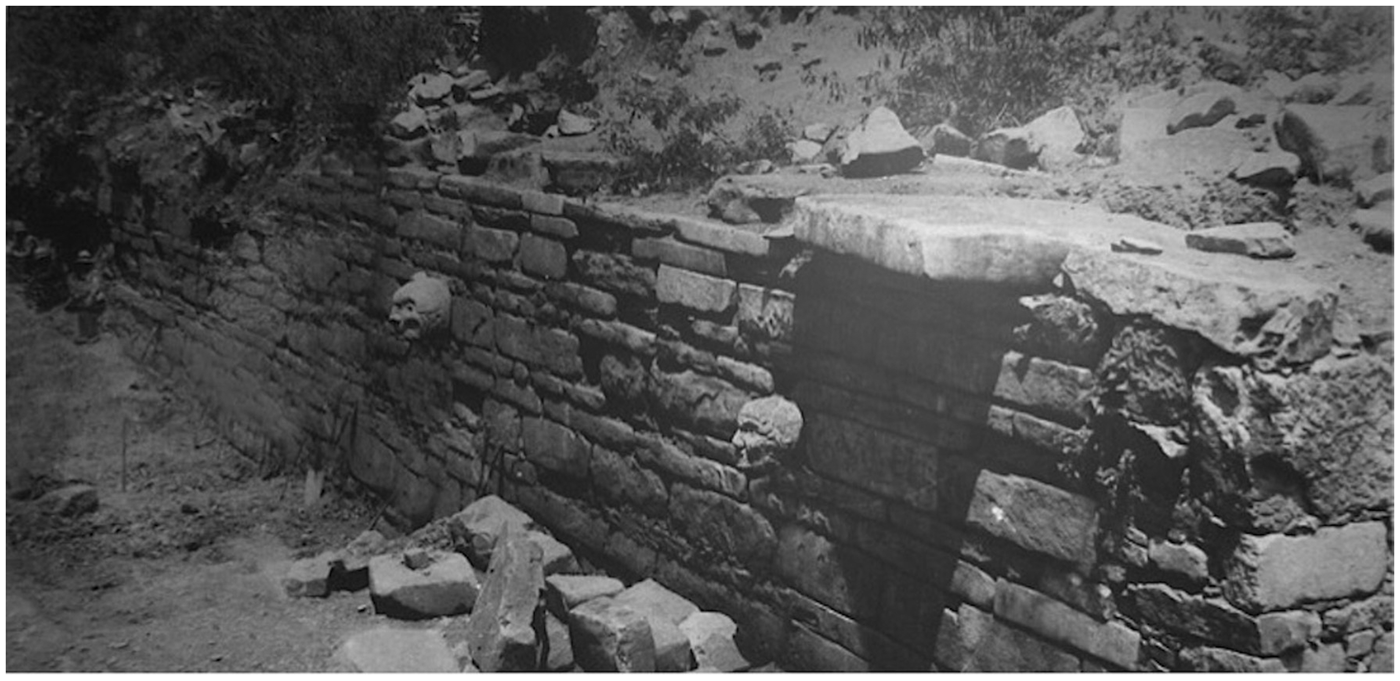
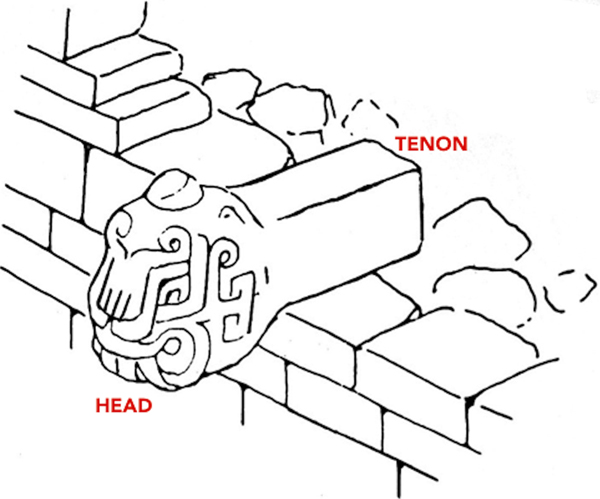
In traditional classifications, the tenon heads are a set of sculptures in round bulk with a quadrangular portion that served for their insertion in the upper third of walls with megalithic masonry (Figures 1 and 2). Two dichotomous groups of representation have been identified, one exclusively anthropomorphic and the other zoomorphic with three subgroups: feline/ursid, hybrid, and ornithomorphic (González-Ramírez Reference González-Ramírez2014:500–549). It has been proposed that these differences are not stylistic but thematic, since there is spatial and stratigraphic evidence that suggests a thematic characterization of the built spaces (González-Ramírez Reference González-Ramírez2014:678–717). Three types of raw material were recognized: volcanic tuff (81%), sandstone (15%), and limestone (ca. 4%).Footnote 4
Tenon heads of the southwest corner of Building A, before a mudslide in 1945 removed the one on the right. The head on the left is still in situ (photograph from the Tello Archive, Museo nacional de Arqueología, Antropología e Historia del Perú).
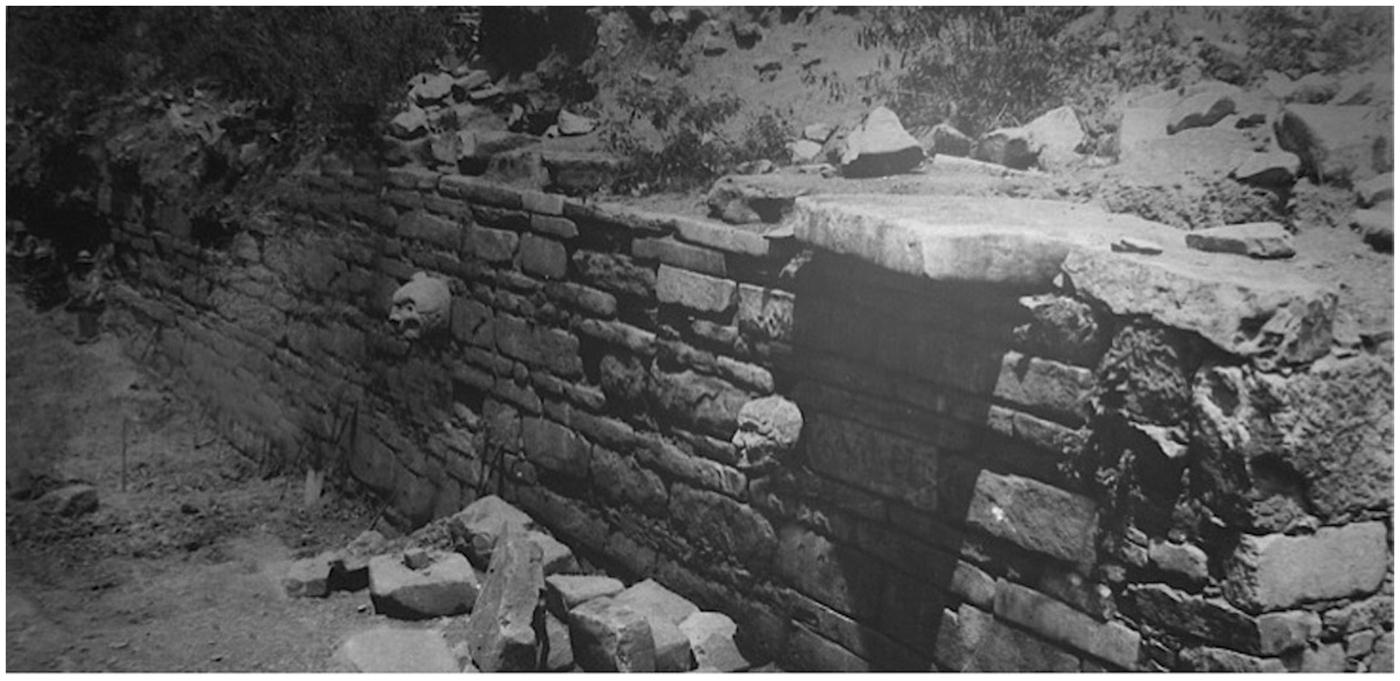
Illustration of the architectural insertion of a tenon head (drawing by W. Diessl, taken from Kauffmann Reference Kauffmann1993:Figure 30).
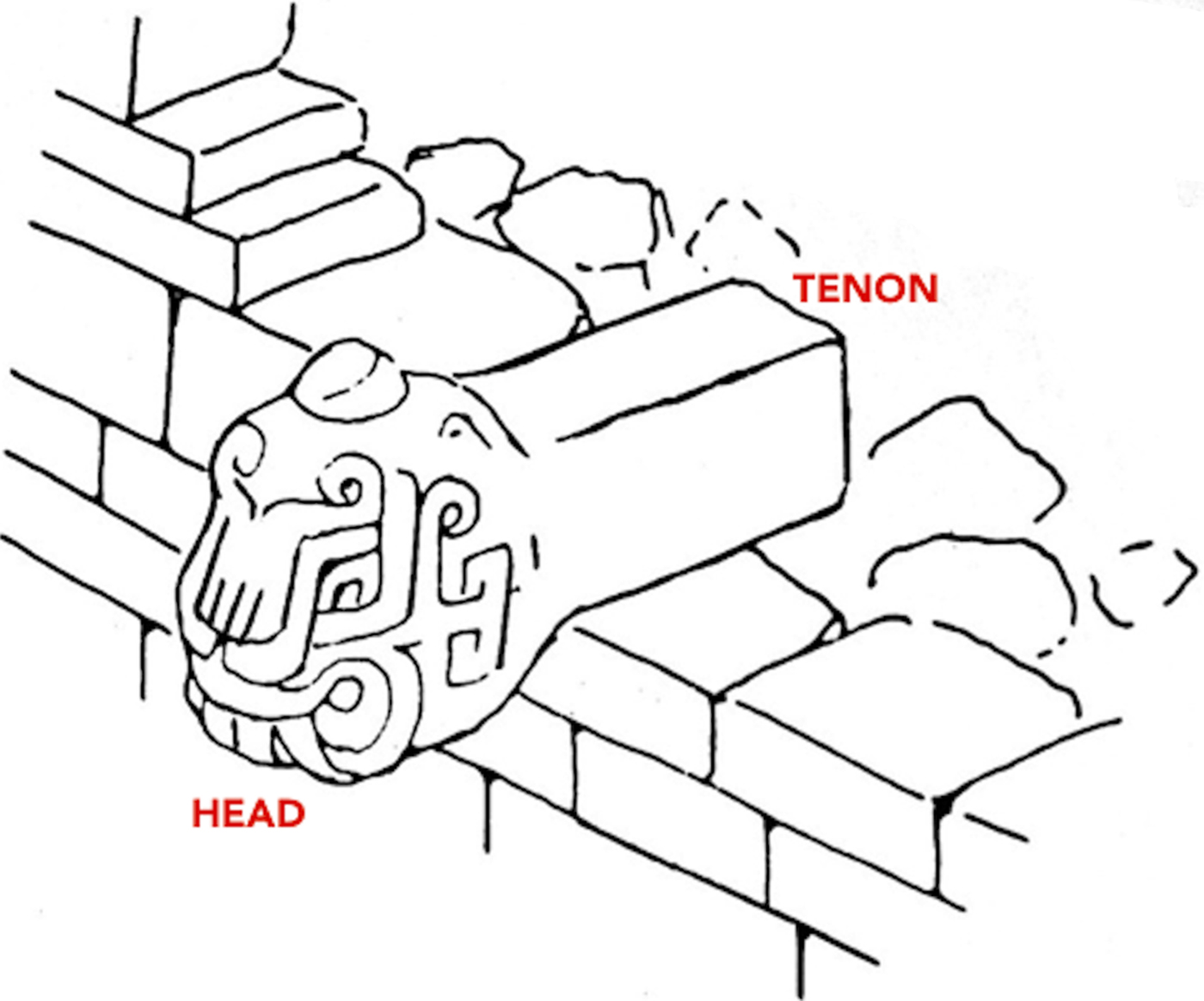
The tenon heads are different from another large sculpture set also used in monumental architecture, which involves pieces carved mostly on flat faces with low relief that served as cornices, slabs, stelae, columns, and stairs. The tenon heads represent a technical difference because getting a round bulk requires work that must handle figures dimensionally through what is called multiface direct carving (Wittkower Reference Wittkower1984).
Multifacial direct carving is a subtractive sculptural technique that, from an initial block of matter (stone or wood), develops the figure from all its flanks, which is why it tends to produce static figures. It is a technique that was used mainly in monumental and/or architectural sculpture. The Tula atlantes, the Egyptian effigies, extant Archaic Greek sculpture, and the Olmec colossal heads are examples of this technique (González-Ramírez Reference González-Ramírez2011, Reference González-Ramírez2014; Mills Reference Mills1990; Rockwell Reference Rockwell and Bracci1989).Footnote 5 Overcoming the immobility of the figure was sought in classical Greece through the development of frontal direct carving, which develops the figure by sculpting from front to back. The loss of Mediterranean sculptural knowledge during the Middle Ages forced a return to direct multifacial technique in Romanesque sculpture. Finally, in the Renaissance, the indirect sculptural technique was developed, which consists in the transfer through points from a scale model to the final model in stone or metal. Unlike direct carving techniques, the indirect method previously designs a model, avoids failures, and allows replication.
The sample used in this study includes all the available pieces and fragments of the Chavín collection (n = 107), which is 49.7% of the total estimated universe and 74.8% of the total known (n = 143).Footnote 6 The other pieces were lost in 1945 after a violent mudslide; however, those pieces are known from drawings, photographs, and some molds left by J. C. Tello (Reference Tello1960). When the register of this study was made (2009) almost all the collection was stored in the appendant of the Monumento Arqueológico Chavín de Huántar (MACH), with a smaller number (n = 16) in the Museo Nacional de Chavín. Both the register of carving traces and the recognition of alterations were performed with the naked eye or a hand lens, later complemented with high-resolution digital images.
The Analysis of Stone Sculpture Wear
Wear is the set of physical indicators that describe the current state of an object in relation to the uses, abandonment, and conditions that have occurred during its lifetime. In the study of stone monuments or stone sculptures, some of these physical indicators may correspond to what is called alteration in conservation.
In contrast to other objects that are used in new production cycles, those of this case study were worn out due to their external architectural use. It is this original condition that explains much of the biography of wear. Wear involves all the postproduction events and agents that affected the body of the sculpture, from its first architectural insertion to its resinification in its current museum use, including its recycling in post-Chavín archaeological contexts, discarding, and dragging in postdeposition events. As a consequence, the analysis of wear must consider the physical results of the postproduction life of the tenon heads. Their description is the first step toward estimating the possibility of accessing the observation and recording of the previous traces of their production.
The main characteristics of the marks of wear have been defined as
the signals of physical wear and/or chemical alteration produced by the use and consumption of any social materiality apart from labors of generation of other goods. … The materials that only have marks of wear are final products, that is, objects and subjects that did not participate in the direct transformation of new materials such as instruments and force of labor [Risch Reference Risch, Clemente, Risch and Gibaja Bao2002:28; my translation].
The analysis of wear utilized the following methodology:
a. Observation and recording of the indicators of wear: state of fragmentation and attributes of textural and superficial alteration.
b. Multivariate statistical analysis to explore the main relations among the indicators of wear, to evaluate their impact in the observation and conservation of the carving traces.
The indicators of wear related to the state of fragmentation describe the pattern of loss of material due to fractures; the attributes of alteration describe the marks in the surface and structure of the rock, generally caused by postdepositional events that acted on its resistance, the architectural orientation of the sculpture, and the type of surface treatment developed. The former considers elements of the portion conserved with respect to the original sculpture volume, while the latter evaluates the state of the surface.
Fragmentation State Diagnosis
Fragmentation state diagnosis (FSD) is the evaluation of the frequency of the pattern of loss of portions of a sculpture. Given that the set of stone tenon heads is structured homogeneously around two different portions, tenon versus head, the resistance against factors of alteration and fragmentation is different in each of them. Thus the FSD describes the distribution of loss of portions, formalized in the information available for the estimation of morphometric quantification, morpho-figurative observations, and carving traces.
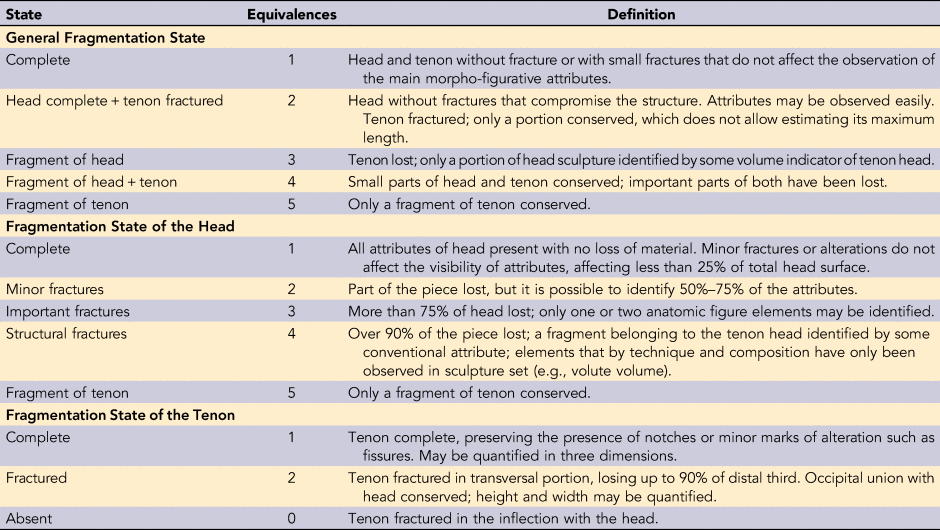
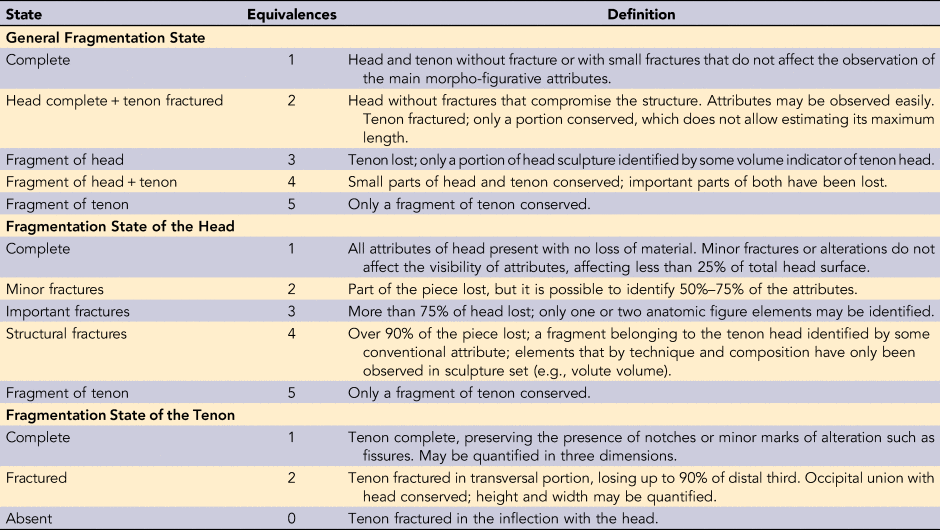
Consequently, the stable portion of the tenon heads permits evaluating FSD using three variables. The first describes the general fragmentation state (GFS) of the piece and seeks to understand the behavior of the tenon head as unitary sculptural identity. The second, the fragmentation state of the head (FSH), looks to recover information lost in the pieces without tenon. The third, the fragmentation state of the tenon (FST), provides information on the standardization of the architectural insertion, allowing the recovery of data in the absence of the head. Table 1 provides the categories of state with which each variable of fragmentation may be described.
Fragmentation State Diagnosis Categories and Definitions for Tenon Heads from the Chavín Collection.
Diagnosis of the Traces of Alteration
The traces of alteration are the set of modifications of the stone surface observable macroscopically and microscopically, whose systematic recording allows formalizing, analyzing, and interpreting the factors and processes of such modification. The International Scientific Committee for Stone of the International Council on Monuments and Sites proposes the use of the term alteration as a generic descriptor for all modification of the “material that does not necessary imply a worsening of its characteristics from the point of view of conservation. For instance, a reversible coating applied on a stone may be considered as an alteration” (Verges-Belmin Reference Verges-Belmin2008:8). Unlike the concept of conservation, it does not suppose a therapeutic action that mitigates the loss of scientific or heritage information (Fitzner Reference Fitzner2002, Reference Fitzner2004; Fitzner and Heinrichs Reference Fitzner and Heinrichs2001).
The diagnosis of alterations of stones was developed in the field of conservation and restoration as a first instance that provides knowledge for planning therapeutic interventions that prevent, stop, and repair the detected effects. However, it was the work of Bernd Fitzner (Fitzner et al. Reference Fitzner, Heinrichs, La Bouchardiere, Siegesmund, Weiss and Vollbrecht2002a, Reference Fitzner, Heinrichs and La Bouchardiere2003) of the working group Natural Stones and Weathering of Germany and of Jean-Claude Bessac (Reference Bessac1986, Reference Bessac and Ferdiere1999) of the Institut français du Proche-Orient (Centre national de la recherche scientifique) that revealed the archaeological need for analysis of all alterations that erase the conserved marks of tools and other traces of the fabrication or architectural use of stone sculpture.
Labels that characterize the physical features of the surface of the sculptures describe the traces of alteration. As in all descriptive activity, the result is qualitative data. The Illustrated Glossary on Stone Deterioration Patterns (Verges-Belmin Reference Verges-Belmin2008) was used as the reference instrument;Footnote 7 it offers a catalog of visual descriptors. The observation records were digitalized in a database that allowed statistical analysis. Specific aspects of given technology were consulted in the complementary bibliography (Alonso et al. Reference Alonso, Esbert Alemany, Ordaz and Vázquez2006; Carta et al. Reference Carta, Calcaterra, Cappelletti, Langella and Gennaro2005; Casarino and Pittaluga Reference Casarino and Pittaluga2001; De la Puente Crespo and Rodríguez Reference De la Puente Crespo and Rodríguez2004; Esbert Reference Esbert Alemany2007; Esbert et al. Reference Esbert, Ordaz, Javier A. and Montoto1997; Esbert et al. Reference Esbert, Javier A. and Ordaz2008; Favero-Longo et al. Reference Favero-Longo, Castelli, Salvadori, Belluso and Piervittori2005; Fernandez Reference Fernandez2008; Fitzner Reference Fitzner2002, Reference Fitzner2004; Fitzner and Heinrichs Reference Fitzner and Heinrichs2001; Fitzner et al. Reference Fitzner, Heinrichs, La Bouchardiere, Siegesmund, Weiss and Vollbrecht2002a, Reference Fitzner, Heinrichs and La Bouchardiere2002b, Reference Fitzner, Heinrichs and La Bouchardiere2003; Hu et al. Reference Hu, Ding, Katayama, Kusumi, Li, De Vries, Wang, Yu and Gu2013; Kumar and Kumar Reference Kumar and Kumar1999; Lisci et al. Reference Lisci, Monte and Pacini2003; Veniale et al. Reference Veniale, Setti and Lodola2008; Warscheid and Braams Reference Warscheid and Braams2000).
It must be emphasized that the descriptors of alteration are defined by the Illustrated Glossary on Stone Deterioration Patterns as “deterioration patterns visible to the naked eye” (Verges-Belmin Reference Verges-Belmin2008:6)—that is, they do not necessarily describe the factor that produced them or the process that occurred. They are, rather, characteristics that may be perceived, recorded, and later systematized but whose genesis and projection in time must be explained with systematic samples of the stone surface. Some alterations favor the development of others, many of which may lead to pathologies that deteriorate the chemical composition or physical structure of the rock partially or completely, erasing all marks of the work processes and eventually affecting the integrity of the piece.
Stone Sculpture Carving Traces (or Work Traces)
In the introduction I put forward a definition of what are understood here as carving traces. A complete analysis of their incidence in the tenon heads of Chavín de Huántar, a discussion on the stages that may be visible in a finished sculpture, and the overlaying of different carving events, among other identified problems, may be found in the reference study (González-Ramírez Reference González-Ramírez2014:638–675). In this article the relationship between alterations and traces of carving globally, that is, observed general relations, were established regarding the visibility and conservation of these brands. A quantification of the degree of impact of changes on the traces of sculptural production would only be possible using methods that map the sculptural surface, assigning measurements and textural variations previously defined in the reference standards.
Three sources on stone sculptures were used to define carving traces: (a) the basic stages of multifacial direct carving (Wittkower Reference Wittkower1984), (b) the proposals in Elementary Means of Action on Material (Leroi-Gourhan Reference Leroi-Gourhan1988:57), and (c) the results of other similar studies (e.g., Lavigne Reference Lavigne2006). The carving traces were grouped as a function of the stage of the sculpture from which they derived:Footnote 8
a. Toughing traces: This set includes marks produced by the violent and moderate extraction of the sculpture block. They are part of the first stages of work, which approximate the expected size and form by removing large and medium portions of material. They include marks of primary and secondary roughing and roughing by crushing.
b. Traces of sculpturing details: This set includes the marks of fine and precise extraction of material that will give form to the reliefs and depths that define the sculpture attributes. They include incisions, grooves in “V” sections, grooves in “U” sections, and orifices.
c. Surface finishes: This set includes those actions that regularize the aspect of the texture of the sculpture, such as pecking or smoothing/polishing.
Associations among Indications of Wear
The fragmentation diagnosis was performed using nominal qualitative observations (Table 1), whose prevalence was measured using absolute and relative frequencies, which were sufficient to determine which portions of the sculptures are less fragmented and thus retain more information on the work of sculpting. This responds to objective 2 of the study.
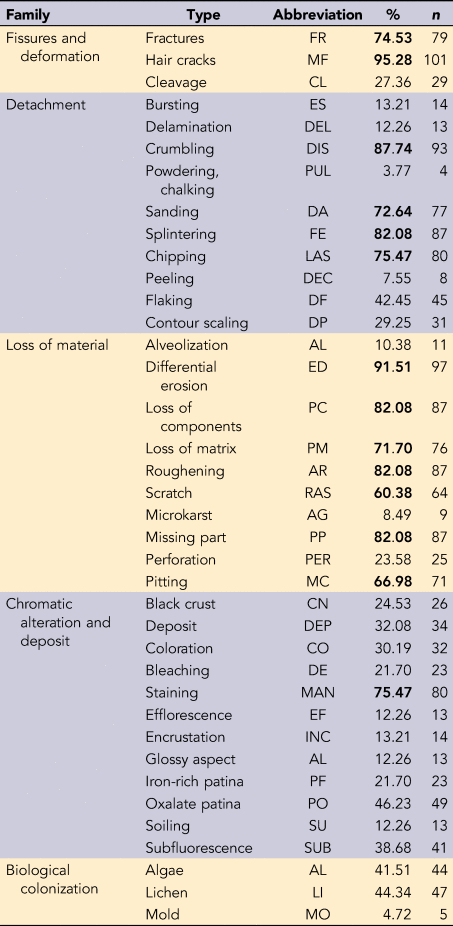
The diagnosis of alterations was performed using dichotomous observations (presence/absence; Table 2) of the entire surface of the sculpture. In the Illustrated Glossary on Stone Deterioration Patterns, these observations are grouped into families that describe material phenomena of the same type or origin. In order to respond to the second objective of this work, the structuring of variation in these observations was studied jointly, which is why multiple correspondence analysis (MCA; SPSS 20) was selected, since it is a multivariate statistical tool that allows exploring the associations between categories of nominal variables.
Family, Type, and Abbreviation of Stone Alterations Used in This Work, as well as Relative and Absolute Frequencies Observed in the Tenon Heads of Chavín de Huántar.

Note: Percentages greater than 50% are shown in bold. The abbreviations refer to the terms in Spanish (for more details, see González-Ramírez Reference González-Ramírez2014:Anexo 9).
MCA, also known as analysis of homogeneity or dual scaling, is a qualitative analogue of principal components analysis, which synthesizes variability in a few dimensions using the associations among characters and describes the relations between the categories of each variable (Meulman and Heiser Reference Meulman and Heiser2011:1). In graphs of these synthetic variables, the distances between the categories of the original variables reflect their relations. The projection of the points of a variable on the vector from the origin to the category point of another variable describes the relations between them.
MCA overcomes the irreducibility of variability produced by a categorical multivariate data matrix. As in any exploratory analysis it indicates a variation structure that can then be subject to confirmatory and explicative analysis. However, a large number of variables, such as those recorded in this study, generates graphs of joint categories and descriptions of variation that seem unintelligible at first glance. In order to select those spurious variables that are effectively relevant to variability, two methods were applied. First, the “family” grouping was used as the analytical segment to observe with greater precision the weight of variables of the same class. Subsequently, an arbitrary cutoff point was established to distinguish between those variables that are not very relevant for variability and those that could be more important, that is, that would contribute with greater “weight” in the explanation of variance (Pérez Reference Pérez2004:266).
RESULTS
Fragmentation State Diagnosis
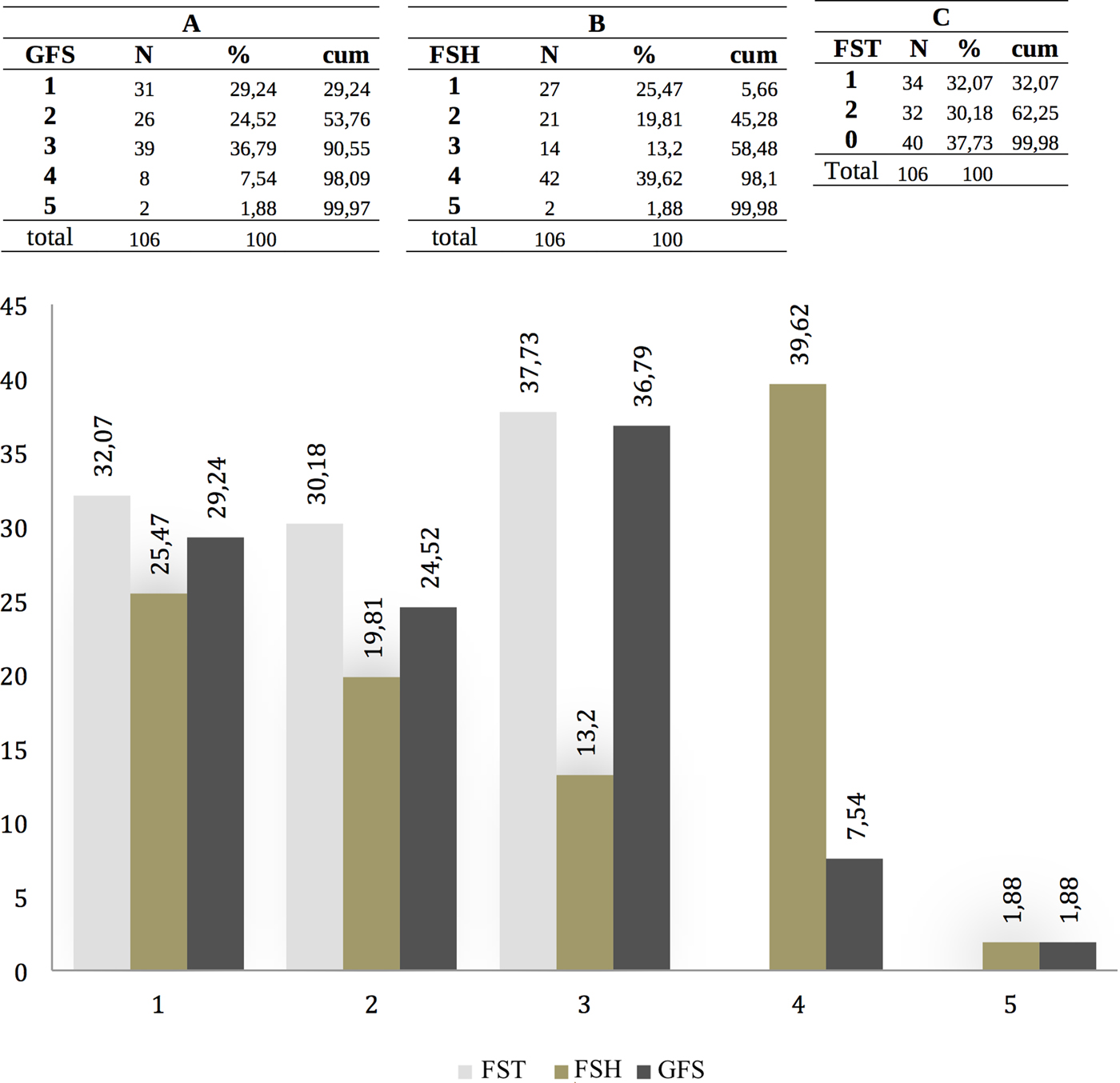
Completeness states were relatively similar in the different parts of the sculpture (ca. 30%; Figure 3). GFS is especially important, since it indicates that one-third of the series analyzed is complete.
Relative frequencies in the fragmentation state diagnosis of the Chavín collection tenon heads. GSF: general state of fragmentation; FSH: fragmentation state of the head; FST: fragmentation state of the tenon.
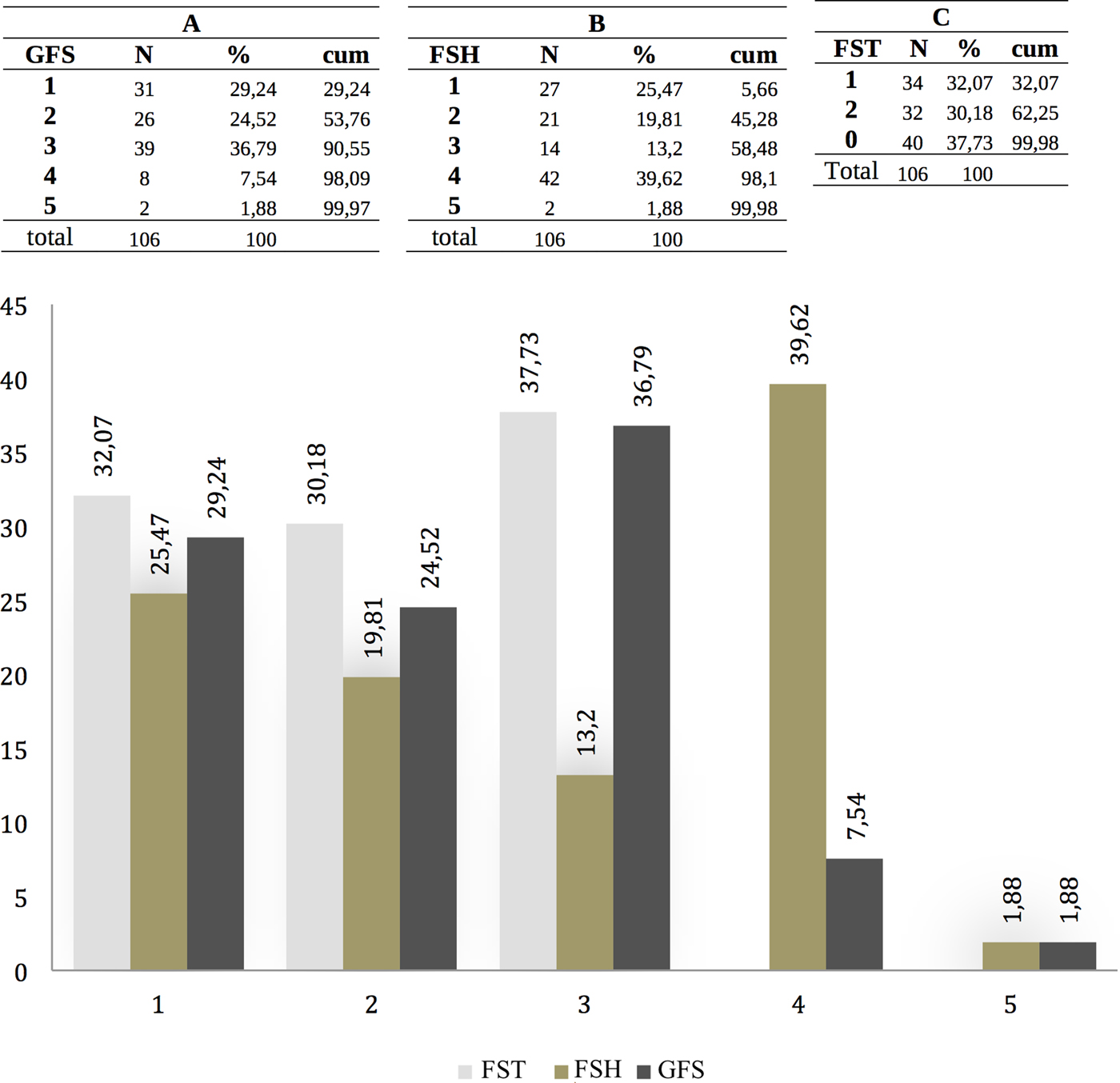
Nearly 55% of the sample conserves the head intact (FSH + GFS), which guarantees a sample size important for morpho-figurative and technical observations. The sum of the complete tenons (GFS + FST) allowed recovery of more than 61% of the tenons of the complete series, which provided reliable observations to understand the diversity of the structural sustaining element. However, 67% of the sculptures suffered transverse fractures that caused the loss of 50%–100% of this portion.
The above is valid for sculptures that conserve the head or have transverse fractures, but a considerable number with this type of fracture may have experienced further deterioration by being dragged or by weathering in a cycle of Erosion→hair cracks→biocolonization→fracture, which may have stimulated the deformation of the outline and the loss of sculpture details. An example of these cycles is shown in the GFS and FSH with the value 4 (Table 1; Figure 3).
Diagnosis of Macroscopic Alterations
The results were structured according to the families of alterations proposed in the literature (Fitzner and Heinrichs Reference Fitzner and Heinrichs2001; Verges-Belmin Reference Verges-Belmin2008), showing their relation to the carving traces (Table 2).
Fissures and Deformation
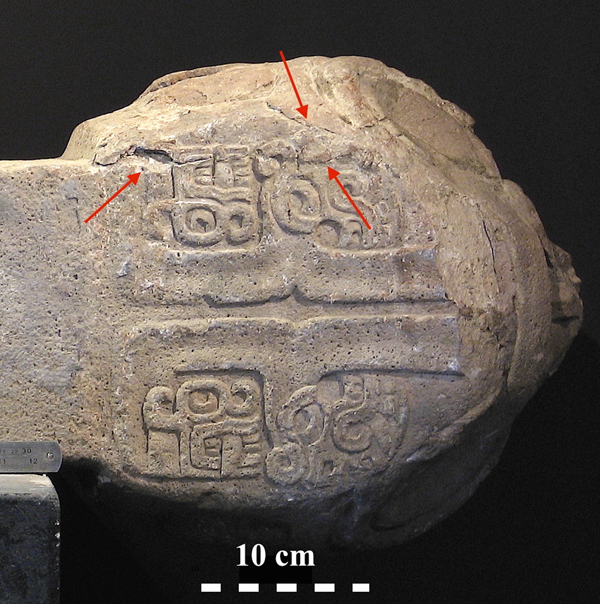
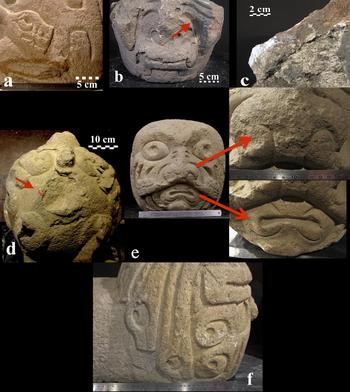
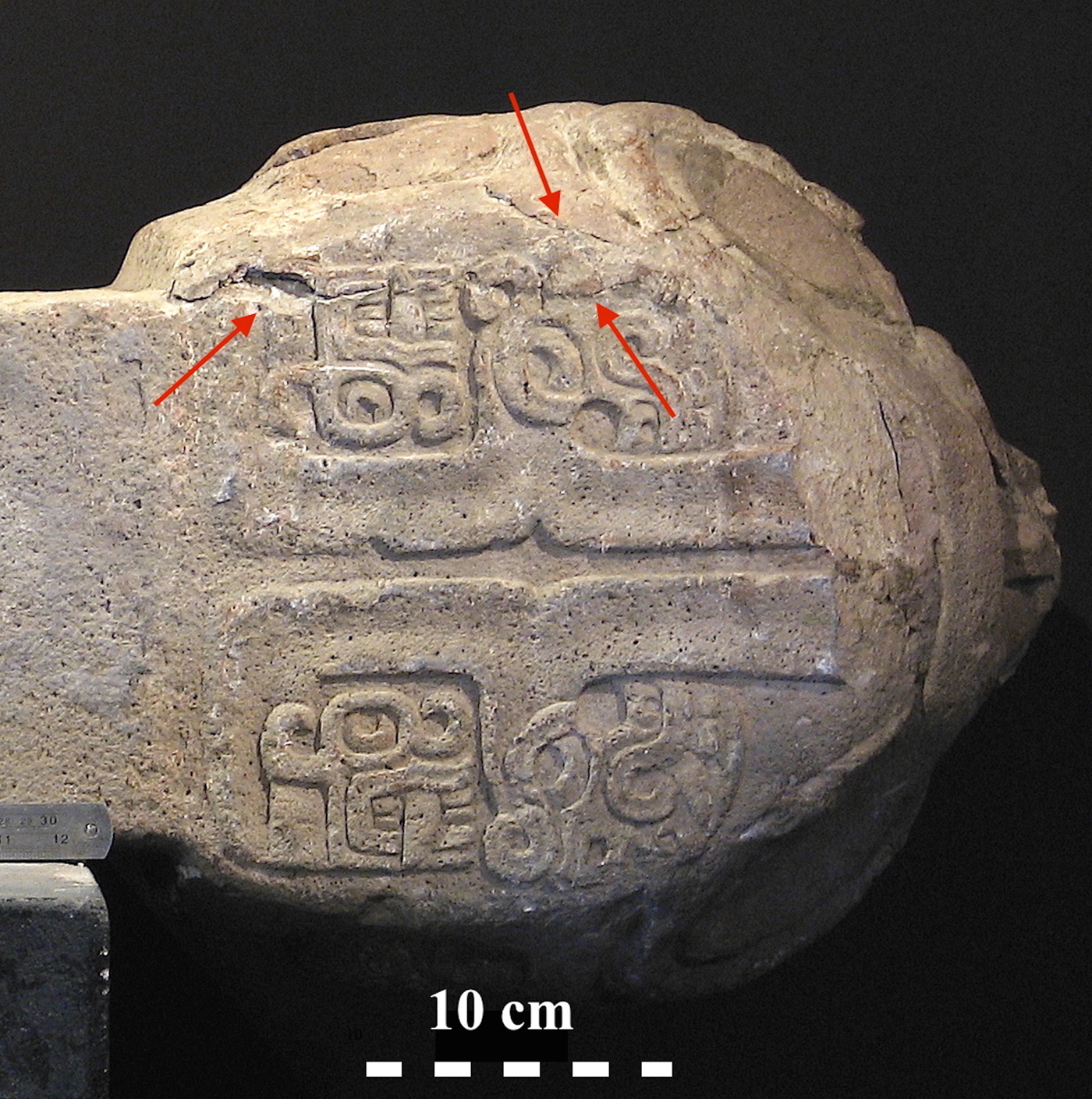
Three types of fissures were detected, usually located in the polished surfaces, with a frequency of hair cracks of 95%. This alteration was only observed in the heads, since the tenons showed a characteristic pecking (like a bush hammer trace) that apparently minimized their proliferation. Other factors must have acted on them that could modify the carving traces (i.e., fractures, crumbling, biological colonization), thus the presence of alterations does not guarantee that work traces will become invisible (Figure 4).Footnote 9 Seventy-four percent of the sample showed some type of fracture, from the loss of a sculptural detail to the structural destruction of one or both portions. This obviously generated the total loss of any carving traces. A third of the sample showed splitting. This involves a weakened plane that favors the detachment of material at a right angle. Depending on the area involved, it has the same consequences as a fracture.
Hair cracks and cracks in ID16. It can be seen how the hair cracks (right to left) produce the detachment of polished cortex.
Detachment
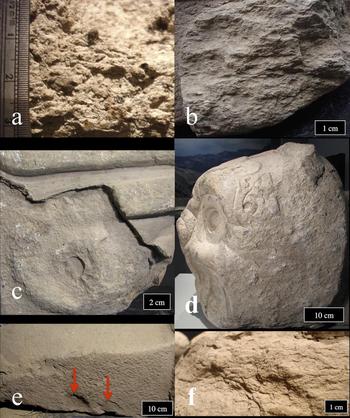
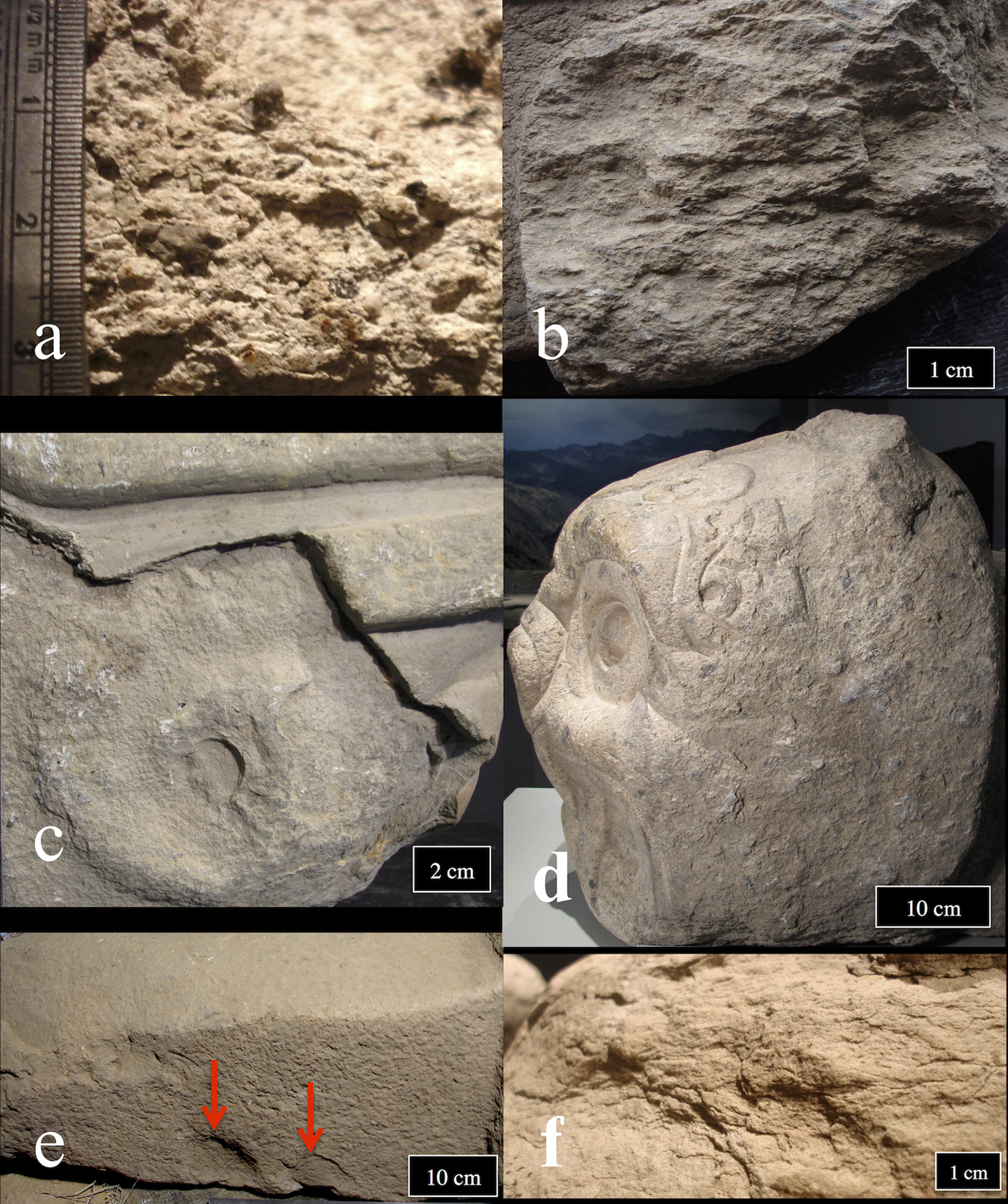
“Detachment” describes alterations on the surface but not in depth (<2 mm). It may produce the partial loss of surface finishes and shallow carved grooves. It does not commonly involve the complete surface of the sculpture (Figure 5). The types of detachment with the highest frequencies were crumbling (87.7%), splintering (82.1%), chipping (75.5%), and sanding (72.6%). The other alterations of this family occurred in less than 40% of the pieces and appear to be related to the type of stone. Thus flaking was only seen on sandstone pieces (Figure 5f), while contour scaling was only found on limestone tenon heads (Figure 5c).
Alterations in the detachment family: (a) crumbling (87.7%), ID02; (b) splintering (82.0%), ID62; (c) contour scaling (29.2%), ID31; (d) sanding (72.6%), ID05; (e) chipping (29.2%), ID31; (f) flaking (42.4%), ID11.
Loss of Material
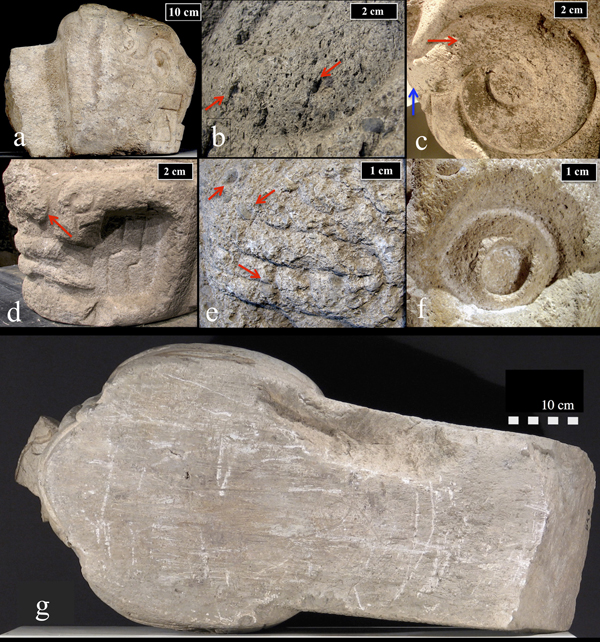
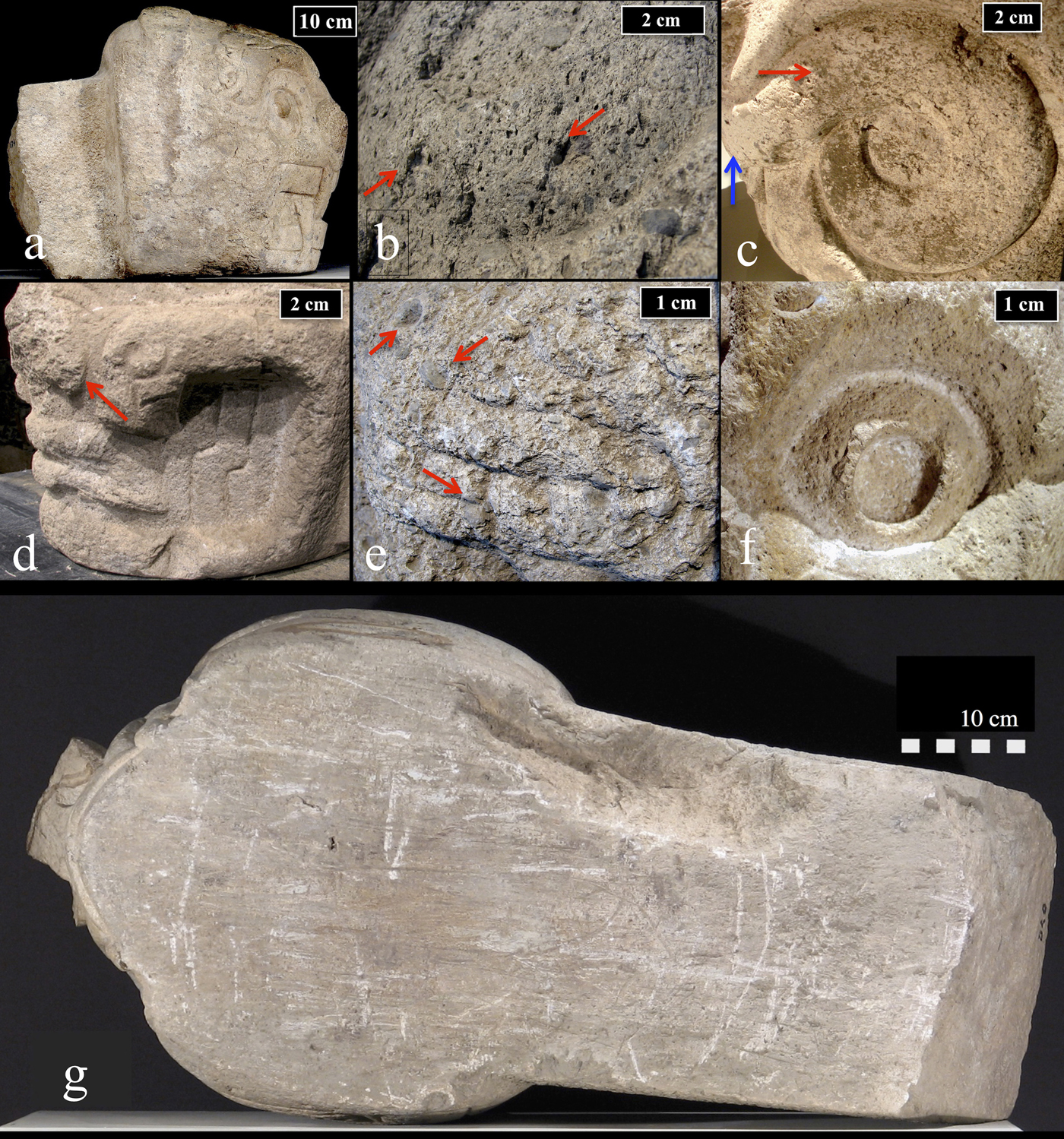
The most frequent occurrence of loss of material was caused by differential erosion (91.5%; Figure 6a), which describes the unequal effects of weather agents. Loss of components, roughening, and loss of parts were found in 82.1% of the pieces (Figure 6b–d). The first describes the tendency for the loss of grains of matrix; the second, an increase in the texturizing of the polished surface; and the third, the loss of sculptural details such as noses or upper ears. Other important factors were loss of matrix (71.7%), pitting (67.0%), and scratches (60.4%; Figure 6e–g). The first is the loss of coherence in the cement of the rocks that exposes the grains and favors crumbling; the second is the proliferation of millimeter or submillimeter orifices, eventually with vermiculation; the third, observed in the base of a sculpture, is the result of transport actions. Some of these appear old, since the irregular grooves have attained the coloration and texture of the rest of the pieces, while others present “fresh” scratches attributable to recent (ca. 1919) transfers.
Illustration of characteristics produced by loss of material: (a) differential erosion (91.5%), ID05. (b) loss of components (82.1%), ID93—arrows indicate loss of microliths, which are components of the tuff; (c) roughening (82.1%), ID02—blue arrow indicates polished surface finish, red indicates increase in roughness; (d) loss of parts (82.1%), ID27—nose and left part of the mouth; (e) loss of matrix (71.7%), ID36—arrows indicate exposure of microliths due to the detachment of matrix; (f) pitting (67.0%), ID06; (g) scratches (60.4%), ID03—note the fresh marks and longitudinal grooves on the sculpture, revealing directionality (dragging).
Discoloration and Deposits
Discoloration and deposits are modifications of the surface due to environmental chemical reactions or adherences. The most frequent are blotches of various origins (75.5%) that do not necessarily affect the integrity of the finish (Figure 7a), followed by oxalate patinas (46.2%), a fine orange to maroon layer produced by an enrichment of calcium oxalates (Figure 7b). Subfluorescences (37.8%) were detected under hair cracks and appear inactive. These are salt crystals caused by water evaporation that transfers salts from the porous structure of the rock to subsurface sectors such as hair cracks or flaked areas (Figure 7c). Deposits (32.1%) were manifested in recent paint splashes and adhered dust (Figure 7d). Coloration (32.2%), black crust (24.5%), and bleaching (21.7%) were observed as chromatic modifications that altered one or several parameters of the surface color (tone, luminosity, and saturation); coloration alters the tone, bleaching increases the luminosity (probably due to a chemical alteration of the surface minerals), and black crusts are easily confused with the patinas of cyanobacteria (Figure 7b–c, f).
Examples of discoloration and deposits: (a) staining (75.5%), ID03—unknown origin; (b) oxalate patina (46.2%), ID76—red arrow indicates the presence of black crust; (c) iron-rich patina (21.7%), subfluorescences (38.7%), and black crust (24.5%), ID76; (d) deposit (32.1%) of red paint splash, ID16; (e) glossy aspect, ID79—alteration produced in the polished surface as on the previous crumbling of the nose; (f) coloration (30.2%), ID10—piece shows a modification of the tonal parameters on the right side of the face, yellower than the original ash conserved in the tenon.
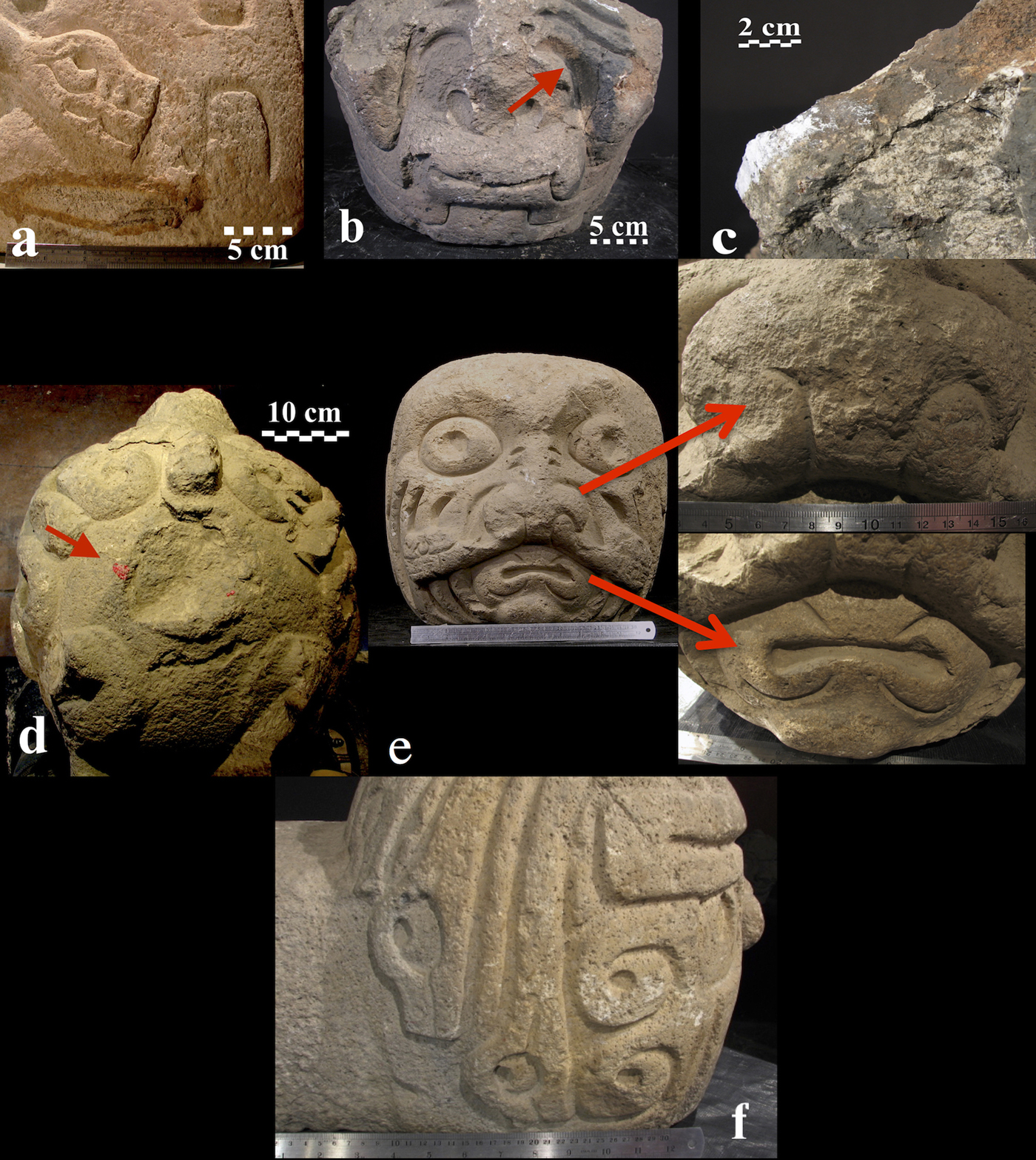
Glossy aspect (12.3%) deserves special attention; this is an alteration that gives a brilliant appearance to the surface and may be erroneously identified as surface finish (Rodríguez Pomares Reference Rodríguez Pomares2011). Its presence on alterations from bursting or loss of material (such as splintering, crumbling, or loss of components or matrix) indicates that it is due to wear and not to a production action (Figure 7e). In the case of the tenon heads the glossy aspect could have been produced by the deposit of human skin oils on the surface of the rock, which is well described for structures and sculptures in museums without perimeter guards (Esbert et al. Reference Esbert, Ordaz, Javier A. and Montoto1997; Verges-Belmin Reference Verges-Belmin2008). Its location on the frontal and upper parts of the tenon heads reinforces the idea of an effect produced within the museum.
Biological Colonization
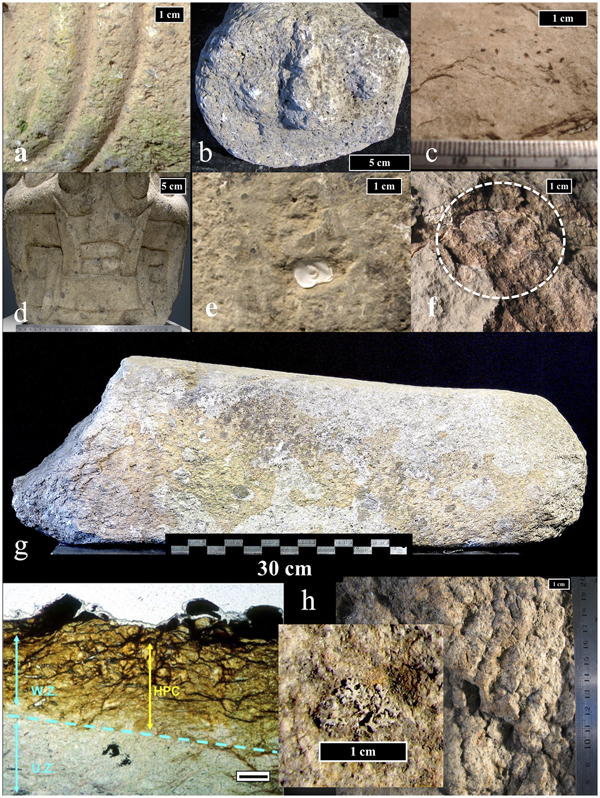
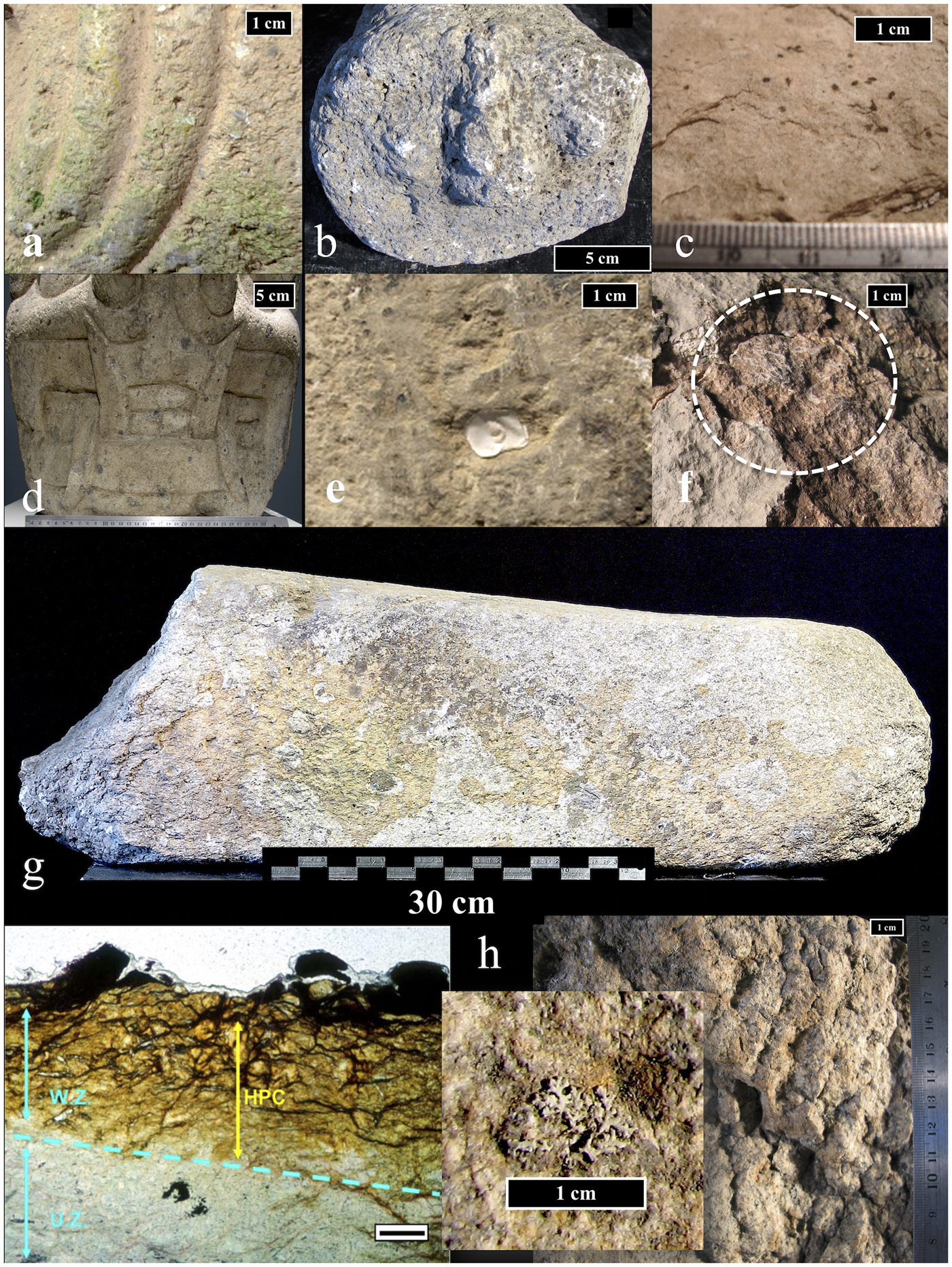
The series showed an important incidence of biological colonization, represented by algae (41.5%), lichens (44.3%), and biofilm (Hu et al. Reference Hu, Ding, Katayama, Kusumi, Li, De Vries, Wang, Yu and Gu2013; Figure 8). The management of the collection in more stable conditions during its time in museums (González-Ramírez Reference González-Ramírez2014; Lumbreras and Gonzales Reference Lumbreras and Gonzales2012) may have stopped most of the biological colonization. Cleaning may have removed some biological remains, which are symptomatic in possibly biogenic alterations (Figure 8h). Due to this, the observed biocolonization may underestimate its real importance.
Illustration of different forms of biological colonization: (a) green algae, ID23; (b) patches of cyanobacteria (blue-green algae), ID55; (c) structures of black lichens, genus Porina or Celothelium, ID11; (d) black patches of cyanobacteria, ID05; (e) conserved structure of white lichen (44.3%), ID27; (f) root remains, possibly lichens, ID18; (g) polychromy produced by biofilm, ID88 (this tenon was in the open air south of Building F until 2004); (h) biodeterioration of lichen origin—left: longitudinal cut of thin section of serpentine, in the inferior portion of the original structure of the rock (U.Z. = unweathered zone); top: area affected (HPC) by roots of the lichen Lecideaatro brunnea (W.Z. = weathered zone; from Favero-Longo et al. Reference Favero-Longo, Castelli, Salvadori, Belluso and Piervittori2005:Figure 8); right: super-macro of ID89 with increasing agent, possibly a lichen of the genus Heterodermia.
Although this alteration did not erase work traces directly, its intensity and duration may have stimulated new processes or increased previous alterations. For example, it is probable that crumbling is the final result of lichen colonization that took advantage of mineral deposits and extracellular remains in the pores and hair cracks. Their roots may have widened previously existing hair cracks, triggering ruptures between the cortex and the interior of the rock; once dead they were the bases for the colonization of new individuals. Also, chemical reactions due to the minerals of the rock in combination with environmental conditions and chemical interactions among biocolonizing agents may have degraded the matrix, accelerating the loss of coherence between the cement and the grains. Similar processes are produced by the interaction of algae, bacteria, and fungi, many of which may be responsible for the presence of pitting. Furthermore, surface finishes (Rodríguez Pomares Reference Rodríguez Pomares2011) may have impeded the deposit of the elements necessary for biocolonization, since orifices, pecking, and grooves are appropriate places for the proliferation of biological agents, while polishing generates a smoother surface that is thus less vulnerable to the deposit and later settlement of biocolonization.
Main Associations among the Alterations
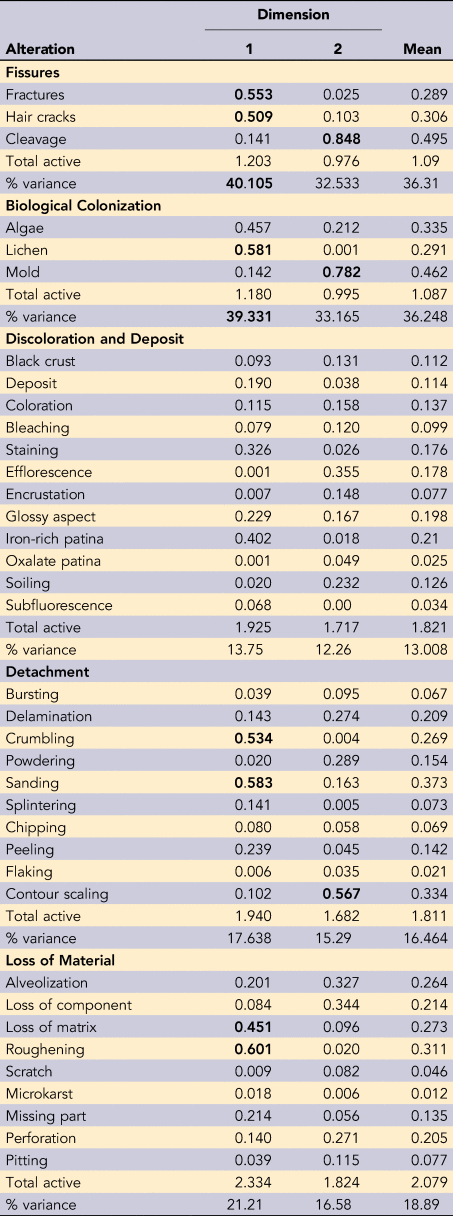
Considering the need to filter those variables with more weight in the structuring of the variance and discard the spurious ones, I performed an MCA by alteration family and selected those variables with weights >0.5 (Table 3; Meulman and Heiser Reference Meulman and Heiser2011:1). Only fissures and biological colonization showed variances near 40% and 20% greater than the next family (Table 3). This seems coherent with the greater occurrence of discriminating measures above the cutoff point and the lower presence of variables with high weight in families that explained little of the variation, such as chromatic alteration and deposits (13%).
Discriminant Measures and Percentage of Variance Explained by Multiple Correspondence Analysis of Tenon Head Alterations Organized by Alteration Family in the First and Second Dimensions.
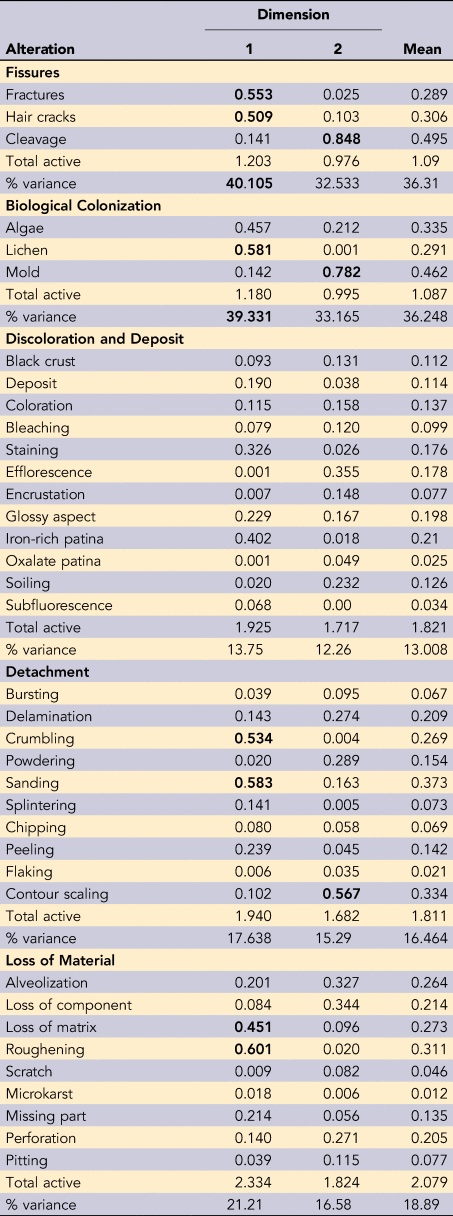
Note: The scores highlighted in bold are above the cutoff limit (0.5), representing those changes that have more weight in structuring variability.
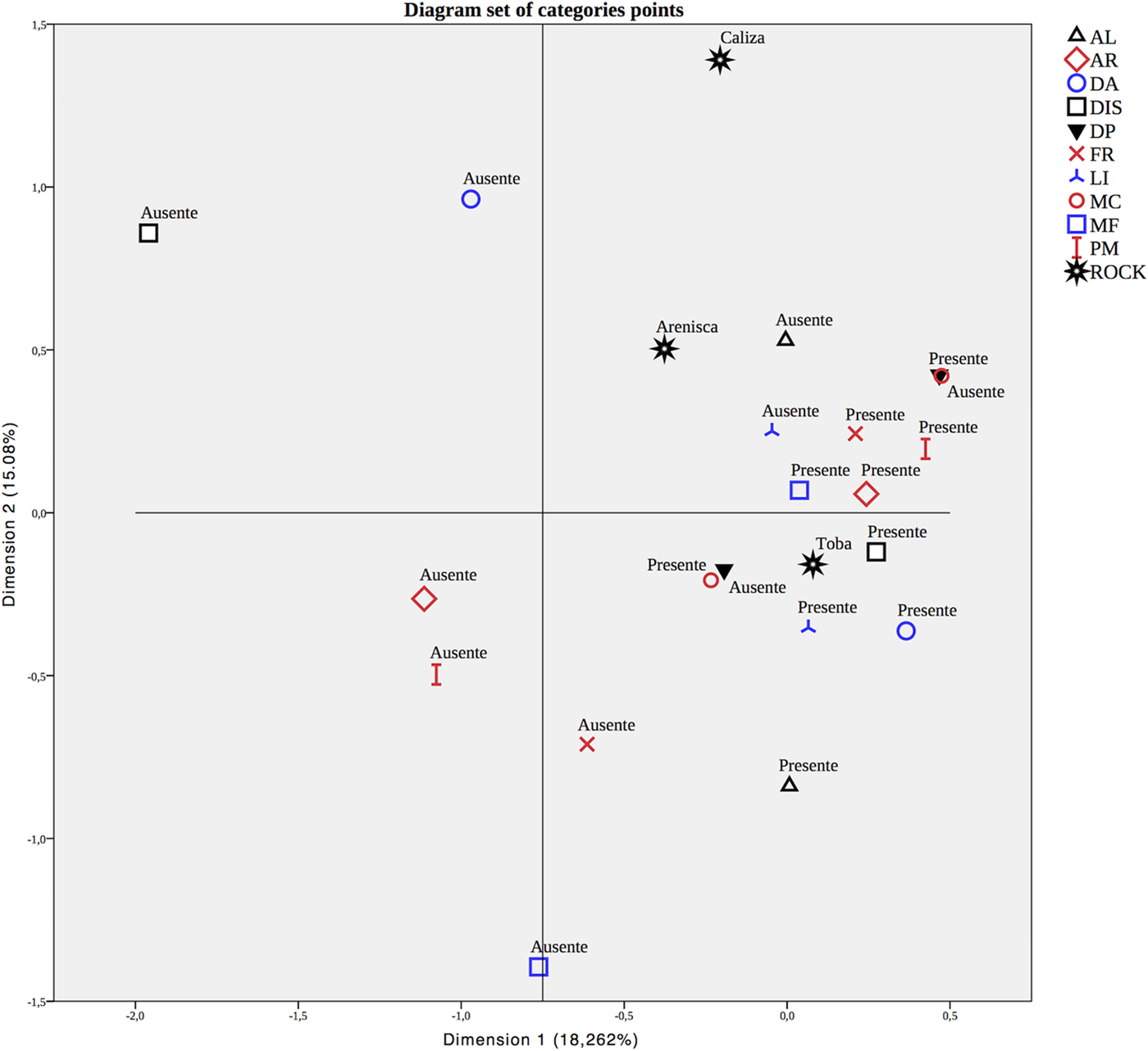
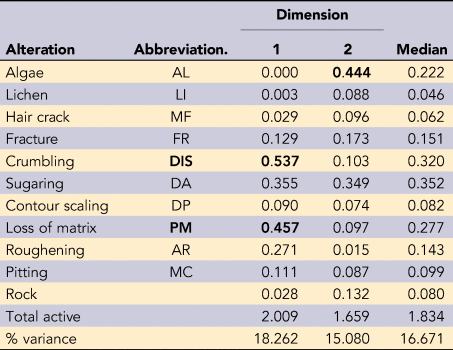
The variables with weights greater than the cutoff value were submitted to a new MCA, which allowed better resolution of the distances among the selected variables and their categories (Table 4). Although the variance explained decreased to 20% for the first dimension and 16% for the second, the analysis identified the variables most relevant in the structuring of the variation. The small difference between the percentages of variance explained by the first two dimensions allows the diagram set of category points in Figure 9 to be read, assigning relatively equal importance to the two dimensions in the organization of the variation. In the first dimension of Figure 9 there is a near dichotomy between absent and present. Thus absent has mostly negative values (although a few are positive), while present has positive values. In the second dimension the values for absent tend to be located in the extremes, while present values are around the center. The combination of the two dimensions indicates that present shows low positive values, while absent shows high and negative values. This indicates a greater association for present characters than for absent ones and suggests that there is a set of alterations that occurred together, which is a good indicator to suggest that there are multiple alterations in some conditions (i.e., environmental, type of rock, etc.) or that one type favors the occurrence of another. By contrast, the dispersion of values for absent alterations in the second dimension suggests unspecific associations, except for the association between the absence of loss of matrix and roughening, whose occurrence together may be interpreted as a function of their absence on surfaces with fine finishes.
Diagram set of category points of alterations with the highest discrimination scores in the multiple correspondence analysis (SPSS 20), including the variable “rock” (arenisca = sandstone; toba = tuff; caliza = limestone). The scatter plot represents the score obtained for each category of variable (present/absent) in the two main dimensions of optimal scaling. The first two dimensions in the analysis represent the first and most important solutions for reducing variability, but not the only ones, hence the sum of both dimensions is not 100%. To read the graph it must be considered that the distance expresses relations of association between the categories of the variables. The abbreviations can be found in Table 4. Ausente = absent; presente = present.

Discriminant Measures of Multiple Correspondence Analysis of the Most Relevant Variables according to a Cut Score of >0.5 (see Table 3) and Percentage of Explanation of the Variance in the First Two Dimensions.

Note: The scores highlighted in bold are above the cutoff limit (0.5), representing those changes that have more weight in structuring variability.
The association of inverse categories is interesting, that is, between absences and presences. Although they are few, they are very strong since they are identical or nearly identical; when one occurs the other almost never occurs. The strongest is the overlap between the presence of contour scaling and the absence of pitting (Figure 9). The inverse expression of the presence of pitting and the absence of contour scaling suggests a connection with the type of rock, since contour scaling always occurred on limestone pieces, whose lesser porosity compared with tuff makes them less vulnerable to biological colonization and its subsequent alterations. In contrast, pieces with pitting are usually made of tuff, which did not show contour scaling.
Finally the group of alterations present associated with tuff is interesting: fracture, hair cracks, roughening, loss of matrix, sanding, crumbling, and pitting all tend to appear together. The closeness of biocolonizing agents such as lichen and algae with sanding, crumbling, and pitting may suggest a digenetic relation.
DISCUSSION
Fragmentation Diagnosis
The loss of portions of the tenon heads is strongly manifested in the fracture of the tenon, which appears to be conditioned by the geometry and architectural use (Figure 2). This pattern of loss was the reason the evaluation of the degree of wear and the analysis of production were performed on the head and tenon separately, with the objective of increasing the sample size (González-Ramírez Reference González-Ramírez2014).
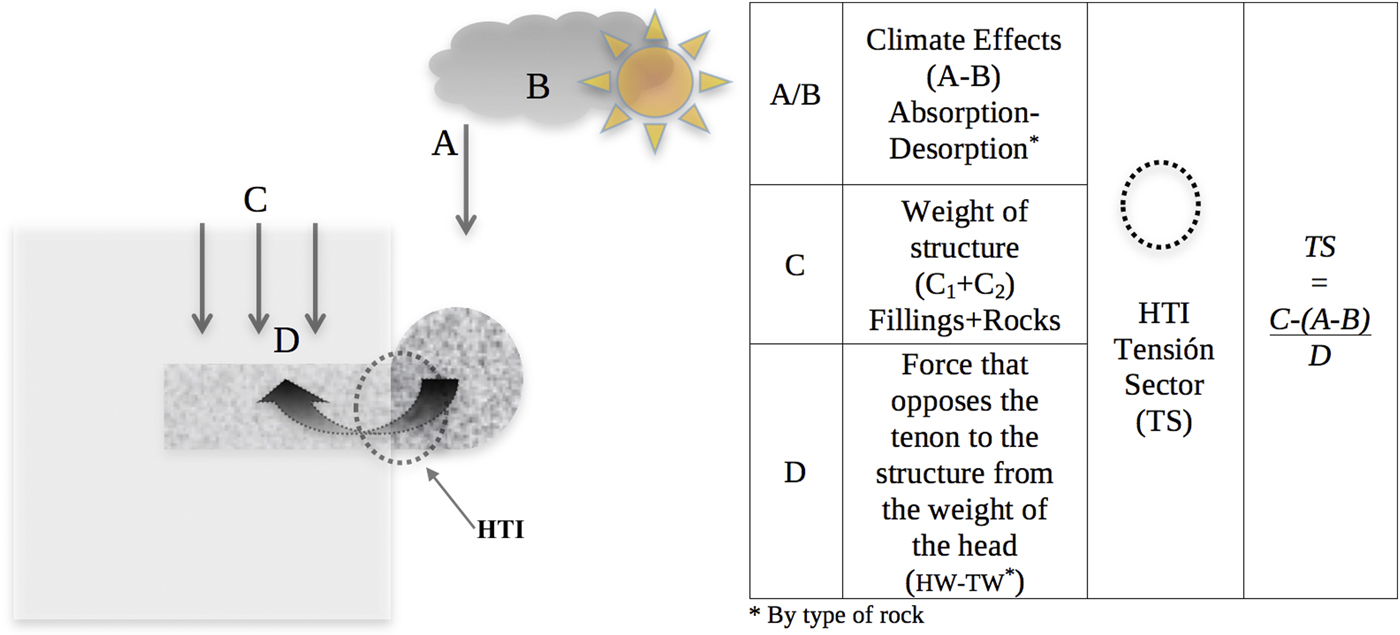
Figure 10 proposes the main agents that could participate as concurrent factors in the observed pattern of loss, in order to graph the effect that the geometry of these stone sculptures exerts on a specific zone. This is a hypothetical elemental model of the mechanics implied that should be tested with specialized resistance tests (e.g., Siegesmund and Dürrast Reference Siegesmund, Dürrast, Siegfred and Rolf2011). In this model, the head is the portion exposed to the agents of climatic weathering that cycles of absorption-desorption activate; absorption dilates the internal structure of the rock, increasing its weight, while desorption contracts it during exposure to nocturnal cold and the dry season. The rocks and the masonry filling secure the tenon, acting as counterweight to the head, while the weight of the head, by transmitting its force through the tenon, acts like a lever under the rocks and against the filling of the structure that lies over the tenon. This relation develops a sector of tension, which is the zone in which the opposing forces converge (head-tenon inflection). It is over these sectors of tension that hair cracks, striations, fissures, and eventually material collapse develop (Alonso et al. Reference Alonso, Esbert Alemany, Ordaz and Vázquez2006; Esbert et al. Reference Esbert, Ordaz, Javier A. and Montoto1997; Esbert et al. Reference Esbert, Javier A. and Ordaz2008).
Scheme of the main factors involved in the tension sector of the tenon heads and an equation of the potential relation among them. HW = head weight; TW = tenon weight; HTI = head-tenon inflection. For a definition of absorption-desorption cycles, see Siegesmund and Dürrast Reference Siegesmund, Dürrast, Siegfred and Rolf2011.

Material collapse, or transverse fracture of a tenon, occurs after a long period of tension of forces, enhanced by a violent event (Siegesmund and Dürrast Reference Siegesmund, Dürrast, Siegfred and Rolf2011). A long, robust tenon will provide a good counterweight to the head, postponing material collapse and helping it to resist events. A tenon that is slender or too short will tend to produce sectors of tension with greater susceptibility to fissures and hair cracks, making it more vulnerable to external forces.
This model does not consider the quality and mass of the structure and its construction materials. However, it is worth keeping these in mind in future studies as elements that could influence loss patterns. At any rate, it is reasonable to suggest that sculptures that retain the complete tenon come from wall collapses or because the wall was dismantled. Both of these have been recorded in Chavín de Huántar (Lumbreras Reference Lumbreras1989; Lumbreras and Gonzales Reference Lumbreras and Gonzales2012).
Alterations Diagnosis
The value of multivariate analysis is evident in the scope offered by observations based only on relative frequencies, since higher occurrences do not necessarily imply an influence on the trends of joint variation. For example, although the highest frequency was observed for crumbling (Table 2), it was second to sanding as a discriminatory measure, while roughening had a greater measure of discrimination than differential erosion, which had a higher frequency (Table 3).
Indeed, the detection of associations between alterations makes it possible to characterize with greater certainty the influence they exert on the visibility and conservation of certain carving traces, especially if cycles are considered in which certain alterations stimulate the proliferation or stagnation of the next (Alonso et al. Reference Alonso, Esbert Alemany, Ordaz and Vázquez2006; Esbert et al. Reference Esbert, Ordaz, Javier A. and Montoto1997; Esbert et al. Reference Esbert, Javier A. and Ordaz2008). Based on the results obtained, a characterization of the impact of these associations on the appearance of the generic carving traces considered in this work is offered.
Sculptural Portions
Differential erosion is one of the most important alterations; its presence may be diagnostic of the processes that occurred in the context of use (or a reuse identical to the original), that is, while the sculpture was embedded in the wall. It indicates that the pieces were affected unequally by erosion, which is consistent with the variation in weathering that their geometry generated. Thus the most affected sectors of the tenon heads are on the upper and lateral parts of the head; the frontal and inferior views retain more information with respect to the grooves of sculptural details, surface finishes, and the morphology of iconographic attributes.
Alterations and Surface Finishes
The association among crumbling, loss of matrix, loss of components, and roughening is the main factor responsible for the deterioration and disappearance of surface finishing by polishing or pecking. These alterations increase the surface texturing, producing a rough and irregular aspect. It is probable that agents such as rain or biocolonizers have acted on the pores existing in the original finish, altering the homogeneity of the surface of the cortex, which is achieved by applying abrasives during the final stage of sculpture production. However, the extent of these alterations is usually not complete; there is normally a sector that conserves the cortex with the original polishing. In the case of finishing by pecking, such as done on the tenons, the traces of the regular small pits may be texturized, altering the regularity of their distribution. Alterations such as flaking, contour scaling, delamination, or peeling may also affect the cortex of the finishing, removing it completely. However, as in other alterations that affect surface finishing, they rarely affect the complete head, thus it is usually possible to find portions that still conserve the actions of regularization of the surface texture.
Alterations and Groove of the Sculpture Details
Carving grooves are the main indicators of the marks of tools and may be classified according to the force applied and the active surface of the tool employed, whose interaction generates diverse sizes and morphology (González-Ramírez Reference González-Ramírez2014). Because of their greater depth they were less vulnerable to the effects of weathering. Even so, they were not exempt from deterioration; the main alteration is hair cracks, which opened new spaces for chemical actions, biocolonization, and crumbling. In an advanced state, crumbling generates a blurred aspect to the groove, erasing the form of the section and the possibility of inferring the active surface of the tool (percussion, cut, or scrape) used in its elaboration. This may generate an underrepresentation of the diversity of tools and techniques recorded in the analysis of stone sculpture production.
Loss of Sculptural Portions
The fractures that resulted from previous hair cracks or fissures produced the recurrent loss of sculpture details such as noses and ears in high relief, underrepresenting the production techniques for these types of attributes. In this case the alteration does not produce a new aspect to the attribute—it eliminates it.
CONCLUSIONS
The analysis of the state of fragmentation and alterations of the tenon heads showed some structuring in its variability, in both the patterns of loss of parts and the behavior of the surface and its impact on sculpture carving traces. Although determining the triggers was not the objective of this study, the results suggest that there are some intrinsic factors—such as the geometry of the sculpture, the composition of the stone (the heterogeneity of the rock structure due to its genetic or diagenetic formation), and the surface finishes—that in combination with the characteristic weathering agents of a high-altitude tropical climate and exposure time may be mainly responsible for the observed structure of the variability. Determining the importance of each of these factors requires tests and efforts that are beyond the objectives and resources of this study.
The identification of this structuring allowed for the selection of the best-conserved sculpture parts to be analyzed for carving traces and morphometric and morpho-figurative aspects; the frontal and inferior planes retained more information. Although all tenon heads showed some association among alterations, even in those most fractured and with the greatest loss of parts, valuable information could be recovered about the surface finish and carving grooves.
This study may be viewed as an alternative preliminary method to a functional analysis of stone sculpture, when only macroscopic observations of the stone surface are available. It begins by recognizing the need first to define a biography of the disuse that may deform and erase the residues of carving traces, and even indicate mistakes and production tendencies, and then to record the traces of sculpture production. The reference catalogues of the conservation sciences proved to be useful for preliminary nomination and recognition. However, future studies to refine these methods for application in archaeology should consider how to overcome certain limitations and remember that the analyses reported here are still hypotheses, which should be tested with functional analyses.
The most important limitation of the method is probably that the analysis of the surface aspect of the alterations was done with the naked eye, with criteria that may have considerable intra- and interobserver variation. This is a habitual problem in descriptions and “qualifications” (Bunge Reference Bunge1989), thus it is necessary to develop mechanisms to standardize descriptors, formalize the cause-appearance relation (quantify), and control the variation produced by the observer/observers, that is, implement a theory of archaeological observation of stone sculpture wear.
It is also necessary to apply methods to quantify the areal distribution of alterations, commonly known as a surface map (Newman Reference Newman2005). Some of these have been applied to stone monuments using a laser or scanner, but these instruments are expensive and hard to use in a conventional study. Mapping allows a real characterization of the occurrence of alterations, introducing a three-dimensional resolution to the record that is superior to the description of presence/absence. A less expensive solution may be formalizing a visual language of pixel variation in a scale of gray or red/green/blue using photogrammetry (Pijoan Reference Pijoan2007). It is necessary to test a standard that allows qualifying and/or quantifying the intensity of an alteration. Up to now they have the same weight in variability, that is, an alteration in the initial state and one in an advanced state, in the incidence of the visibility or conservation of work traces. I suspect that the quantification of intensity may be a good predictor of the state of conservation of a trace and, thus, in the possibility of its recording and informative capacity.
Finally, a taxonomic study would allow characterizing the main colonizing agents and understanding their relation with the textural aspects of certain alterations. This type of characterization could be a reference for a region with important prehistoric stone sculpture production.
Acknowledgments
I thank Roberto Risch of the Universitat Autónoma de Barcelona (UAB) for orientation in archaeological observation of macrolithics, Joan Anton Barceló of the Laboratori d'Arqueología Cuantitativa of the UAB for reviewing the statistical method, and Pedro Castro Martínez of the UAB for general observations. I offer special thanks to Gloria Ramírez Hernández for the laborious work of recording alterations and Arturo Sáez Sepúlveda of the Departament de Biología Animal of the Universitat de Barcelona for invaluable statistical commentary. All errors or omissions are my responsibility. This study was part of my doctoral thesis, thanks to the financing of the Presidente de la República fellowship for doctoral studies abroad of the Gobierno de Chile–CONICYT and the MAEC-AECID fellowship for doctoral studies for foreigners of the Agencia Española de Cooperación Internacional.
Data Availability Statement
For material on exhibition and in storage, see the Chavín Collection in National Museum of Chavín, Chavín de Huántar, Departmento de Ancash, Peru. See also http://www.tesisenred.net/handle/10803/285377.
Author ORCIDs
Andrea González-Ramírez http://orcid.org/0000-0002-8319-0078