


Introduction
Personality disorder
Some people experience ongoing emotional distress in their daily lives linked to problems in maintaining stable relationships with other people, in regulating their emotions, and in maintaining a stable sense of who they are. Their problems are often longstanding, in many cases beginning in childhood, and pervasive to many different areas of their life including their work, social life and family relationships. This group of people may have received a diagnosis of a ‘personality disorder’, which refers to longstanding problems in the way people relate to self and others (World Health Organization, 2022). Others may not have received a diagnosis but present with similar difficulties. The prevalence of people with traits of personality disorder is estimated to be 14.9% in the general population (Morris et al., Reference Morris, Hill, Brugha and McManus2025).
ICD-11
The diagnosis of ‘personality disorder’ is subject to ongoing debate. Whilst diagnosis is often needed for funding and access to evidence-based treatment, it can leave individuals feeling invalidated, stigmatised and perceived as untreatable (Lamb et al., Reference Lamb, Sibbald and Stirzacker2018). It has been argued that classification manuals, such as the ICD-10 and DSM-IV, have exacerbated the problem by proposing systems that are overly complex and lack a coherent underlying model or theory, contributing to the perception of the condition as being untreatable (Tyrer et al., Reference Tyrer, Mulder, Kim and Crawford2019). Moreover, personality disorder has been framed as a dichotomy between normal versus disordered functioning, implying that individuals with the diagnosis have personalities that are fundamentally different from other people.
The ICD-11 has attempted to provide a more compassionate and clinically useful framework by using psychological theory to conceptualise personality disorder. A dimensional approach is used to determine the severity of an individual’s difficulties and personality traits, which are related to psychological theory (The Big Five model of personality; Eysenck, Reference Eysenck1997). Using the ICD-11, clinicians diagnose personality disorder by following three steps. Firstly, a clinician assesses whether an individual is experiencing persistent and pervasive difficulties in interpersonal relationships and their self-functioning (self-identity, self-worth). Secondly, the severity of an individual’s difficulties is evaluated against a continuum ranging from no personality disorder through to personality difficulties, and mild, moderate, or severe personality disorder. Finally, trait domains are used to explain the type of difficulties an individual is experiencing, including negative affectivity (difficulties regulating intense emotions), detachment (avoiding intimacy and others), dissociality (lack of empathy and hostility), disinhibition (risk taking and irresponsibility) and anankastia (rigidity and perfectionism). Despite concerns that borderline personality disorder (BPD) is a heterogenous diagnosis which lacks specificity, a borderline qualifier was included as an additional trait domain due to its use in research, funding and access to treatment (Tyrer et al., Reference Tyrer, Mulder, Kim and Crawford2019). The ICD-11’s dimensional approach moves away from ‘them and us’ thinking and suggests that personality disorder may have developed as a coping strategy to earlier trauma or adversity (Swales, Reference Swales2022).
Evidence-based treatment for personality disorder
NICE guidelines (National Institute for Health and Care Excellence, 2015) for personality disorder (borderline) recommend psychological therapies for managing and treating individuals with the diagnosis. Evidence-based therapies include cognitive behaviour therapy (CBT; Davidson, Reference Davidson2008), psychodynamic therapies (Fonagy, Reference Fonagy2015), mentalisation based therapy (MBT; Bateman and Fonagy, Reference Bateman and Fonagy2016) and dialectical behaviour therapy (DBT; Linehan, Reference Linehan2015). A Cochrane review (Storebø et al., Reference Storebø, Stoffers-Winterling, Völlm, Kongerslev, Mattivi, Jørgensen, Faltinsen, Todorovac, Sales, Callesen, Lieb and Simonsen2020) highlighted that in general psychological therapy appears to be more effective than usual treatment, with the best evidence for DBT and MBT. DBT was found to be more effective than usual treatment in reducing the symptoms of BPD, reducing self-harm and improving psychosocial functioning. DBT has subsequently been shown to be effective in a variety of different settings (Hernandez-Bustamante et al., Reference Hernandez-Bustamante, Cjuno, Hernandez and Ponce-Meza2024).
Dialectical behaviour therapy
DBT appears to help individuals engage in meaningful and life-improving behaviour even when intense emotions are present (Lynch et al., Reference Lynch, Chapman, Rosenthal, Kuo and Lineham2006). One proposed mechanism of change outlines that individuals receiving DBT may improve their self-control and ability to regulate emotions through forming strong therapeutic alliances with the facilitators, being invested in their treatment and practising skills taught on the programme (Rudge et al., Reference Rudge, Feigenbaum and Fonagy2020). Standard programme DBT has multiple components and involves individuals receiving weekly individual therapy, weekly group skills training, telephone consultations as needed, and a weekly supervision group for the practitioners (DBT consultation team). Individuals receive therapy for 1 year. The curriculum lasts 6 months and is then repeated to give people the best opportunity to learn the skills. Whilst standard DBT has a strong evidence base, it is resource intensive and costly, leading clinicians and researchers to explore the effectiveness of DBT skills training (DBT-ST). DBT-ST consists of weekly skills training supported by practitioners receiving weekly supervision (DBT consultation team). Some programmes also include telephone consultations, but individual therapy is not included.
Dialectical behaviour therapy skills training
A review of the DBT-ST literature suggests that skills training may be effective in reducing symptoms of low mood, anxiety and other common mental health problems, but less effective in reducing symptoms of personality disorder, self-harm or suicidality. However, the review included DBT-ST programmes that varied in content and were delivered to different clinical populations, making it hard to draw any firm conclusions (Valentine et al., Reference Valentine, Bankoff, Poulin, Reidler and Pantalone2015). Subsequently, Linehan et al. (Reference Linehan, Korslund, Harned, Gallop, Lungu, Neacsiu, McDavid, Comtois and Murray-Gregory2015) have conducted a component analysis of DBT which involved participants being assigned to 1 year of standard DBT, skills-only DBT plus case management, or individual DBT sessions only plus an activity group. Conditions that included skills training led to greater reduction in suicidal and self-injurious behaviour. However, it is important to note the individuals in the skills group still received regular contact through case management. A further study found that a 20-week DBT-ST led to greater reductions in self-harm and improvements in anger, distress tolerance and emotion regulation compared with a waiting list (McMain et al., Reference McMain, Guimond, Barnhart, Habinski and Streiner2017). A real-world comparison of 6 months of DBT-ST with a DBT full programme, found that the treatments appeared to be equivalent in reducing borderline symptoms, general psychopathology and suicidal ideation, although participants in each group did not have equivalent presentations (Lyng et al., Reference Lyng, Swales, Hastings, Millar, Duffy and Booth2020). Kells et al. (Reference Kells, Joyce, Flynn, Spillane and Hayes2020) also examined the effectiveness of DBT skills for individuals with a diagnosis of BPD (or traits) who were not actively self-harming, finding that 6 months of DBT skills groups may have a beneficial impact in reducing emotion dysregulation and dysfunctional coping, and increasing skills use.
Accessibility and the H.O.P.E Team
Whilst there is an emerging evidence base for the effectiveness of DBT-ST, accessibility remains a problem. Evidence-based therapies are typically only available in secondary care mental health services who prioritise those with the most complex needs. As a result, individuals often face barriers to accessing the help they need, including restrictive eligibility criteria (typically based on diagnosis) and long waiting lists (Foye et al., Reference Foye, Stuart, Trevillion, Oram, Allen, Broeckelmann, Jeffreys, Jeynes, Crawford, Moran, McNicholas, Billings, Dale, Simpson and Johnson2022). Moreover, the ICD-11 is not routinely embedded in clinical practice. Clinicians frequently diagnose emotionally unstable personality disorder (ICD-10) and BPD (DSM-5), which are based on criteria related to impulsivity, risk, and dissociation, and associated with moderate to severe presentations (Mulder et al., Reference Mulder, Horwood and Tyrer2020). Mild personality disorder, characterised by sensitivity and conflict in many relationships but not all, and personality traits that cause difficulties but do not always prevent individuals from engaging in important work, family and social roles, often goes unrecognised (Tyrer, Reference Tyrer2018).
Personality disorder is associated with reduced quality of life (Cramer et al., Reference Cramer, Torgersen and Kringlen2006). Although traits associated with personality disorder may develop in childhood, they continue to change across the lifespan (Newton-Howes et al., Reference Newton-Howes, Clark and Chanen2015). Consequently, intervention for personality disorder can result in positive longer-term outcomes at any age (Beck et al., Reference Beck, Bo, Sedoc Jørgensen, Gondan, Poulsen, Storebø, Andersen, Folmo, Sharp, Pedersen and Simonsen2020; Temes and Zanarini, Reference Temes and Zanarini2018). In line with this evidence, the NHS Long Term Plan (NHS England, 2019) emphasises the need to improve access to psychological therapy for personality disorders. In response to drivers described above, The H.O.P.E (Help to Overcome Personal and Emotional Difficulties) team was set up in Northumberland in 2022.
The H.O.P.E team aims to provide individuals with symptoms of mild personality disorder with evidence-based treatment. The team uses ICD-11 criteria to identify individuals who may benefit from treatment, although a formal diagnosis is not required. Individuals are offered DBT-ST through face-to-face or online appointments. Whilst the team has received encouraging feedback (Bowness Clarke et al., Reference Bowness Clarke, Barton, Bojor, Green and Tse2026), the team’s approach is not underpinned by an established evidence base. The DBT-ST literature primarily focuses on people with complex presentations (symptoms or a diagnosis of BPD) recruited from secondary care mental health or in-patient settings. To our knowledge, there is no evidence examining the effectiveness of DBT-ST for people in primary care settings with symptoms of mild personality disorder. In addition, there is little research exploring the differences in DBT-ST when it is delivered through online versus face-to-face appointments. Therefore, the present service evaluation aims to explore the outcomes for individuals with symptoms of mild personality disorder after receiving a 6-month DBT-ST intervention.
The first research question will examine whether participants score lower on measures of personality disorder symptoms and emotion dysregulation, and feel closer to achieving meaningful idiosyncratic goals, after completing 6 months of DBT-ST.
The second research question will examine whether participants who complete 6 months of online versus face-to-face DBT-ST differ on pre and post measures of personality disorder symptoms and emotion dysregulation, further to scores on an idiosyncratic goal measure.
Method
Study design
A quantitative mixed design with repeated measures was used. To address the first research question, participants completed measures assessing symptoms of personality disorder, emotion dysregulation and perceived progress towards idiosyncratic goals at baseline, the end of module 1 (8 weeks), the end of module 2 (16 weeks), the end of treatment (24 weeks) and at 3 months post-treatment. To address the second research question, the outcomes for participants engaging in online skills groups were compared with those attending face-to-face skills groups.
Participants
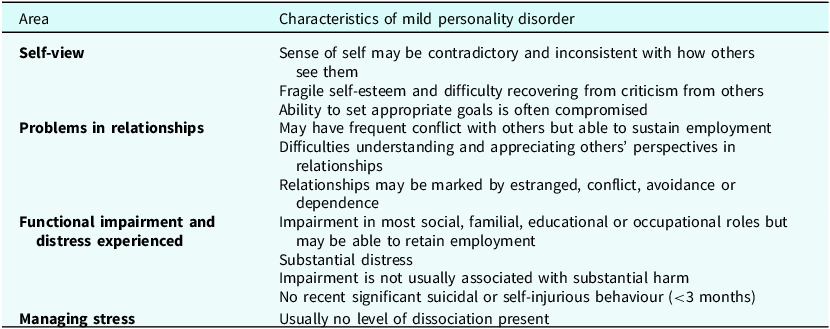
The sample for this service evaluation were adults who had been referred to the H.O.P.E team in Northumberland from April 2024 to January 2025. Referrals were received from mental health practitioners based in GP surgeries, community secondary mental healthcare teams or Talking Therapies for Anxiety and Depression (National Collaborating Centre for Mental Health, 2024). Inclusion criteria included: adults aged 18 or older who presented with symptoms consistent with the ICD-11 definition of mild personality disorder (World Health Organisation, 2022) and were motivated to engage in a 24-week DBT-ST intervention. Referrers all received training in using the ICD-11 to assess suitability (Table 1). Exclusion criteria included: cognitive difficulties that would prevent the retention of information from week to week; an active psychosis; and people whose problems would be better explained by another mental health condition. The team did not have the capacity to offer one-to-one assessment after incidents of serious self-harm (as recommended by NICE; National Institute for Health and Care Excellence, 2022), and therefore individuals who had engaged in serious self-harm within 3 months of their referral were excluded. Referrals were triaged by clinicians in the team before being accepted.
Abbreviated referral criteria for the H.O.P.E Team

Table 1. Long description
A table with two columns and four rows. The columns are labeled Area and Characteristics of mild personality disorder. The rows are as follows: Row 1: Area, Self-view; Characteristics of mild personality disorder, Sense of self may be contradictory and inconsistent with how others see them, Fragile self-esteem and difficulty recovering from criticism from others, Ability to set appropriate goals is often compromised. Row 2: Area, Problems in relationships; Characteristics of mild personality disorder, May have frequent conflict with others but able to sustain employment, Difficulties understanding and appreciating others’ perspectives in relationships, Relationships may be marked by estranged, conflict, avoidance or dependence. Row 3: Area, Functional impairment and distress experienced; Characteristics of mild personality disorder, Impairment in most social, familial, educational or occupational roles but may be able to retain employment, Substantial distress, Impairment is not usually associated with substantial harm, No recent significant suicidal or self-injurious behaviour (<3 months). Row 4: Area, Managing stress; Characteristics of mild personality disorder, Usually no level of dissociation present.
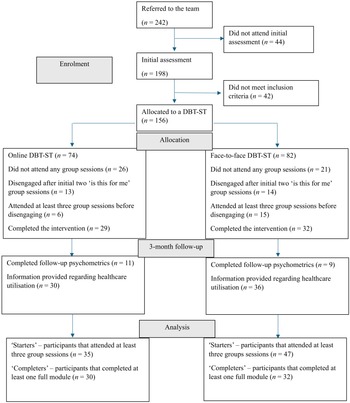
Over a 7-month period a total of 242 people were referred to the team. Forty-four (18%) did not attend their assessment and 42 (17%) did not meet inclusion criteria. Excluded participants included individuals that did not want to engage in group interventions, individuals whose difficulties were better explained by an alternative mental health diagnosis, or those with symptoms of severe personality disorder requiring more intensive treatment from secondary care services. Out of the remaining 156 participants, 47 (30%) disengaged after their assessment appointment, and 27 (17%) attended an initial group session before deciding the intervention was not for them, leaving a sample of 82 (53%) participants (see Fig. 1).
CONSORT diagram of participants referred to the H.O.P.E Team.

Intervention
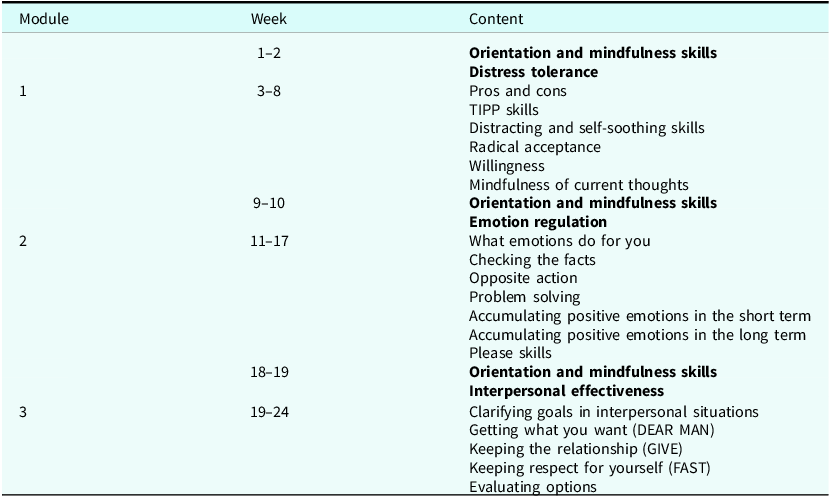
The intervention delivered was a 24-week group DBT skills training (DBT-ST) (see Table 2) that was adapted from the standard model. The programme replicated the standard adult DBT skills training schedule recommended by Linehan (Reference Linehan2015), although the modules were delivered once and not repeated. Sessions were 2 hours in duration and delivered once a week by a DBT therapist and a co-facilitator without formal DBT training. Each session followed the same structure, consisting of 10 minutes of mindfulness practice, 40 minutes homework review, a short break, 50 minutes dedicated to presenting a new skill, and finally 10 minutes to summarise the session and assign homework for the following week. For each session, the DBT facilitator led on presenting the skills, while the co-facilitator focused on helping to support people to attend and stay in the group. The co-facilitator contacted participants who did not attend via telephone to support them to join, and sent reminder letters with details of their next appointment. There were four DBT therapists providing the intervention; three had received a one-year intensive training with British Isles DBT, while the fourth had completed a diploma in DBT provided by Bangor University and was an accredited practitioner. Five groups were delivered online, whilst five groups were delivered face-to-face; group membership varied between four and 12 people. Group membership was rolling, with new members joining at the start of each module (orientation and mindfulness). Although participants were not asked to formally commit to therapy, the orientation and mindfulness sessions provided an opportunity for new participants to reflect on whether DBT-ST would be helpful and inform the team if they did not choose to proceed. After the initial two mindfulness sessions, the group was then closed to new members for the remainder of the module. Telephone coaching was provided as needed from nine o clock to five o clock Monday to Friday by the DBT therapists, and the team attended a weekly 1-hour supervision group consisting of the full DBT consultation team. Participants were discharged after missing three consecutive group sessions if they had not contacted the team. In standard DBT, to give participants the best chance of engaging, they are not asked to reflect on the initial mindfulness sessions to consider whether treatment is for them and can miss four consecutive sessions before being discharged (Lineham, Reference Linehan2015). However, the drawbacks of following standard DBT strategies to promote engagement were balanced against the team’s aim of ensuring there was capacity to provide accessible treatment to a large population of people in primary care settings. There is evidence that most individuals with symptoms of personality disorder are managed in primary care (Moran et al., Reference Moran, Jenkins, Tylee, Blizard and Mann2000), and across all settings, up to two-thirds of those with symptoms are not receiving any form of treatment (Morris et al., Reference Morris, Hill, Brugha and McManus2025), Therefore, it was agreed that the team’s use of a three miss rule, and asking participants to reflect on initial mindfulness sessions to decide if they wanted to continue treatment, represented a sensible trade-off between promoting engagement and managing the high demand for therapy in primary care without the use of waiting lists or delays to treatment.
Module content of the Dialectical Behaviour Therapy-Skills Training programme
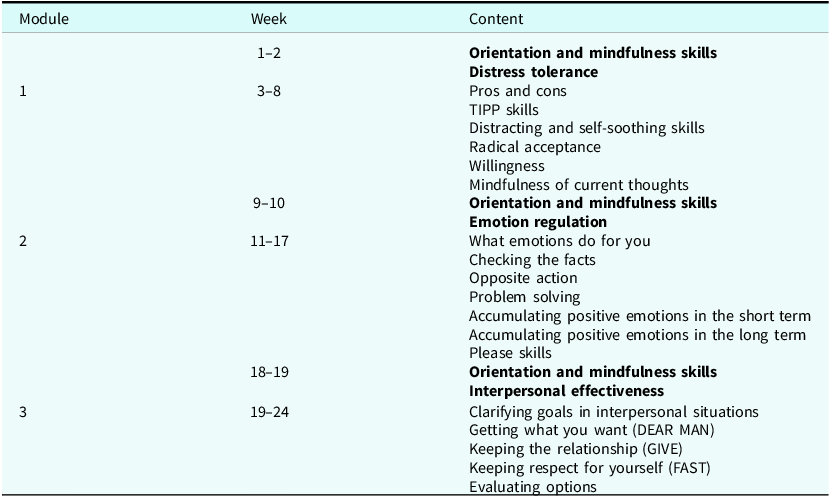
Table 2. Long description
The table has three columns labeled Module, Week, and Content. It contains information about the structure and content of a 24-week Dialectical Behaviour Therapy-Skills Training programme. The table is divided into three modules, each spanning specific weeks and detailing the content covered. Row 1: Module, Week, Content. Row 2: 1-2, Orientation and mindfulness skills, Distress tolerance. Row 3: 3-8, Pros and cons, T I P P skills, Distracting and self-soothing skills, Radical acceptance, Willingness, Mindfulness of current thoughts. Row 4: 9-10, Orientation and mindfulness skills, Emotion regulation. Row 5: 11-17, What emotions do for you, Checking the facts, Opposite action, Problem solving, Accumulating positive emotions in the short term, Accumulating positive emotions in the long term, Please skills. Row 6: 18-19, Orientation and mindfulness skills, Interpersonal effectiveness. Row 7: 19-24, Clarifying goals in interpersonal situations, Getting what you want (D E A R M A N), Keeping the relationship (G I V E), Keeping respect for yourself (F A S T), Evaluating options.
Measures
The following measures were completed at each time point, as follows.
The Level of Personality Functioning Scale-Brief Form 2.0 (LPFS-BF) is a self-report measure that assesses the severity of personality pathology. It includes 12 questions which are rated from 1 (very false) to 4 (very true), giving a minimum score of 12 and a maximum score of 48. Higher scores indicate higher severity. The LPFS has been found to have a two-factor structure (self and interpersonal functioning), a high internal consistency (α= 0.82) and high test–re-test reliability (Weekers et al., Reference Weekers, Hutsebaut and Kamphuis2019). Data collected by Weekers et al. (Reference Weekers, Sellbom, Hutsebaut, Simonsen and Bäck2022) in a normative sample suggests using 36 as a cut-off point for symptoms of severe personality disorder. This methodology is consistent with ‘criterion b’ proposed by Jacobson and Truax (Reference Jacobson and Truax1991) for establishing thresholds for clinically significant change. Therefore, participants who scored 36 or above were determined to be displaying clinical levels of personality disorder symptoms.
The Difficulties in Emotion Regulation Scale 16-item version (DERS-16) is a self-report measure that assesses difficulties in emotion regulation across five subscales. Each item is rated on a 5-point Likert scale ranging from 1 (almost never) to 5 (almost always), giving a minimum score of 16 and a maximum score of 80. Higher scores indicate greater difficulties with emotion regulation. It has been found to have high internal consistency (α=0.92) and good test–re-test reliability (Bjureberg et al., Reference Bjureberg, Ljótsson, Tull, Hedman, Sahlin, Lundh, Bjärehed, DiLillo, Messman-Moore, Gumpert and Gratz2016). Using ‘criterion b’ proposed by Jacobson and Traux (Reference Jacobson and Truax1991), data collected from a normative sample were used to suggest that a score of 50 or above (two standard deviations above the mean) may represent a level of functioning that falls outside of the normal population (Burton et al., Reference Burton, Brown and Abbott2022).
An idiosyncratic goal attainment measure was used. People were asked to identify a SMART goal and rate how close they were to achieving it on a scale of 0 (not close at all) to 10 (achieved). Higher scores indicate greater confidence in goal attainment.
Healthcare utilisation
Participants’ use of other health care services was assessed by reviewing their electronic mental health care records at the time of assessment and 3 months after leaving the team. The electronic care records captured contact with the crisis team, psychiatry liaison, street triage or in-patient admissions. The study did not review primary care records and could not capture whether participants had disclosed any incidents of self-harm to their GP or other primary care healthcare professionals.
Procedure
Participants completed measures at five time points, including baseline, at the end of each module (approximately 8, 16 and 24 weeks dependent on the order they completed the modules), and at 3 months follow-up. Approval had been given by the hosting NHS trust research and audit service, and participants consented to their information being used for service evaluation purposes.
Analysis
Individuals who attended at least three sessions were included in the analysis (n=82) and defined as a ‘starters’. Seventeen (21%) participants did not continue treatment after attending between one and eight sessions, leaving a sample of 65 (79%) people that attended at least one full module (8 weeks) and were defined as ‘completers’. Sixty-two (74%) participants completed the full 24-week intervention, two (2%) completed 8 weeks of treatment,and one (1%) attended 16 weeks of treatment. Six participants (17%) did not complete online DBT-ST, compared with 15 individuals (32%) in face-to-face DBT-ST.
Twenty participants (24%) provided data at 3-month follow-up. The 20 participants who completed follow-up measures had no missing data. Out of all the remaining possible data 65.2% were captured (see Table 3). Twenty-nine participants had missing data. Of these, 17 participants (58%) provided baseline scores only and did not complete more than 8 weeks of the intervention. Six (21%) provided baseline and outcome (end of module 3, 24 weeks) data but did not report outcomes at the end of module 1 (8 weeks) or module 2 (16 weeks). The remaining six participants (21%) had completed the intervention but had missing outcome measures (24 weeks). To determine the nature of missing data, Little’s MCAR test was conducted on the whole dataset. The results indicated that data (χ2 (14)=7.318, p=0.922) were consistent with missing completely at random. Based on these findings, expectation maximisation was used to impute missing data in the main analyses and additional sensitivity analyses were conducted to assess the robustness of the results using last observation carried forwards (LOCF) and complete case analyses.
Percentage of available data at each time point

Table 3. Long description
A table with two rows and six columns. The first row is labeled ‘Data collected (%)’ and the second row is labeled ‘n missing data’. The columns are labeled ‘Baseline’, ‘End of module 1 (8 weeks)’, ‘End of module 2 (16 weeks)’, ‘End of module 3 (24 weeks)’, ‘3-month follow up (36 weeks)’, and ‘Overall - excluding follow-up’. Row 1: Data collected (percent), 100; 75.6; 69.5; 72; 24.1; 65.2. Row 2: n missing data, 0; 20; 25; 23; 53; 68.
For each outcome measure paired t-tests were used to establish any differences between participants who attended versus those that did not complete treatment.
Two-way repeated measures ANOVA analyses were conducted on all outcome measures using a four time-point analysis. Group (face-to-face versus online appointments) was entered to test for differences between the two groups. There was not a specific hypothesis. A further ANOVA was conducted to compare starters scores before (baseline) and after treatment (24 weeks). Effect sizes for each effect are reported using Cohen’s d and interpreted according to convention (small = 0.2, medium = 0.5, large = 0.8; Cohen, Reference Cohen1988).
A second analysis was used to assess whether participants achieved individual change on the LPFS-BF using Jacobson and Truax’s (Reference Jacobson and Truax1991) reliable change index. Participants were categorised as ‘no change’, ‘deteriorated’, reliable improvement’ and ‘reliable recovery’. The categories were calculated by analysing whether changes on a participant’s baseline and follow-up scores exceeded 1.96 standard deviations from the normative mean score adjusted for measurement error. Change observed that was less than 1.96 was labelled as ‘no change’, whilst scores greater than 1.96 were labelled either ‘deteriorated’ or ‘reliable improvement’ depending on the direction of change. ‘Reliable recovery’ was defined as the presence of positive reliable change plus a post-treatment score below the clinical threshold defined for the study (LPFS = 36, DERS = 50). The normative mean was established using data collected in comparable samples (LPFS: Weekers et al., Reference Weekers, Hutsebaut and Kamphuis2019; DERS: Burton et al., Reference Burton, Brown and Abbott2022). LOCF was used to deal with missing data in this analysis. This approach was deemed to be the most conservative as it assumed that participants who did not complete treatment did not experience any further improvement, thereby reducing the risk of over-estimating estimates of reliable clinical change.
A series of chi-square tests were carried out to compare the proportion of treatment starters who achieved ‘reliable improvement’ or ‘reliable recovery’ in online versus face-to-face groups. The proportion of treatment completers who achieved ‘reliable improvement’ or ‘reliable recovery’ was also calculated.
Participants’ use of health care services was established by reviewing their electronic mental health records and represented using descriptive statistics.
Data were analysed using SPSS version 31.0.1.0 for Windows.
Results
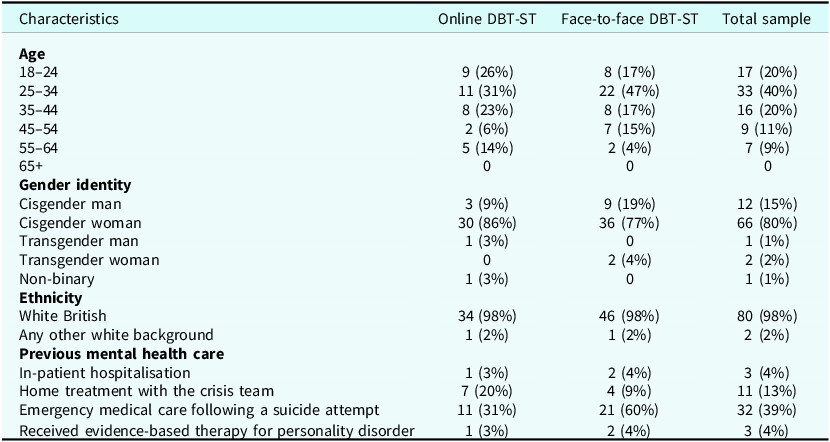
Baseline characteristics of the sample are shown in Table 4. Northumberland is largely rural and predominantly White (Northumberland County Census, 2021), which should be considered when generalising the present study’s findings to other populations.
Demographics and characteristics of participants who started the intervention (‘starters’)

Table 4. Long description
A table comparing demographics and characteristics of participants in online and face-to-face interventions. The table has 14 rows and 4 columns. The columns are labeled Characteristics, Online DBT-ST, Face-to-face DBT-ST, and Total sample. The rows are labeled with different characteristics such as Age, Gender identity, Ethnicity, and Previous mental health care. Each row provides specific data points for each characteristic. For example, under Age, the data points include age groups 18-24, 25-34, 35-44, 45-54, 55-64, and 65+. Under Gender identity, the data points include Cisgender man, Cisgender woman, Transgender man, Transgender woman, and Non-binary. Under Ethnicity, the data points include White British and Any other white background. Under Previous mental health care, the data points include In-patient hospitalisation, Home treatment with the crisis team, Emergency medical care following a suicide attempt, and Received evidence-based therapy for personality disorder. The table provides a detailed comparison of the characteristics of participants in both online and face-to-face interventions.
Non-completers
Non-completion was not significantly associated with treatment condition (χ2 (1)=3.381, p>.05).
Paired t-tests revealed that the only significant difference between participants who decided not to continue with treatment after two sessions of mindfulness and participants who started the intervention (‘starters’), related to the self-subscale of the Level of Personality Function Scale-Brief Form (LPFS-BF) (t=2.48, d.f.=25, p<.05). Participants who decided not to continue with treatment had higher average scores on the self-subscale of the LPFS-BF.
‘Starters’ analysis
A repeated measure ANOVA was conducted for each measure.
Level of Personality Functioning Scale-Brief Form 2.0 (LPFS-BF)
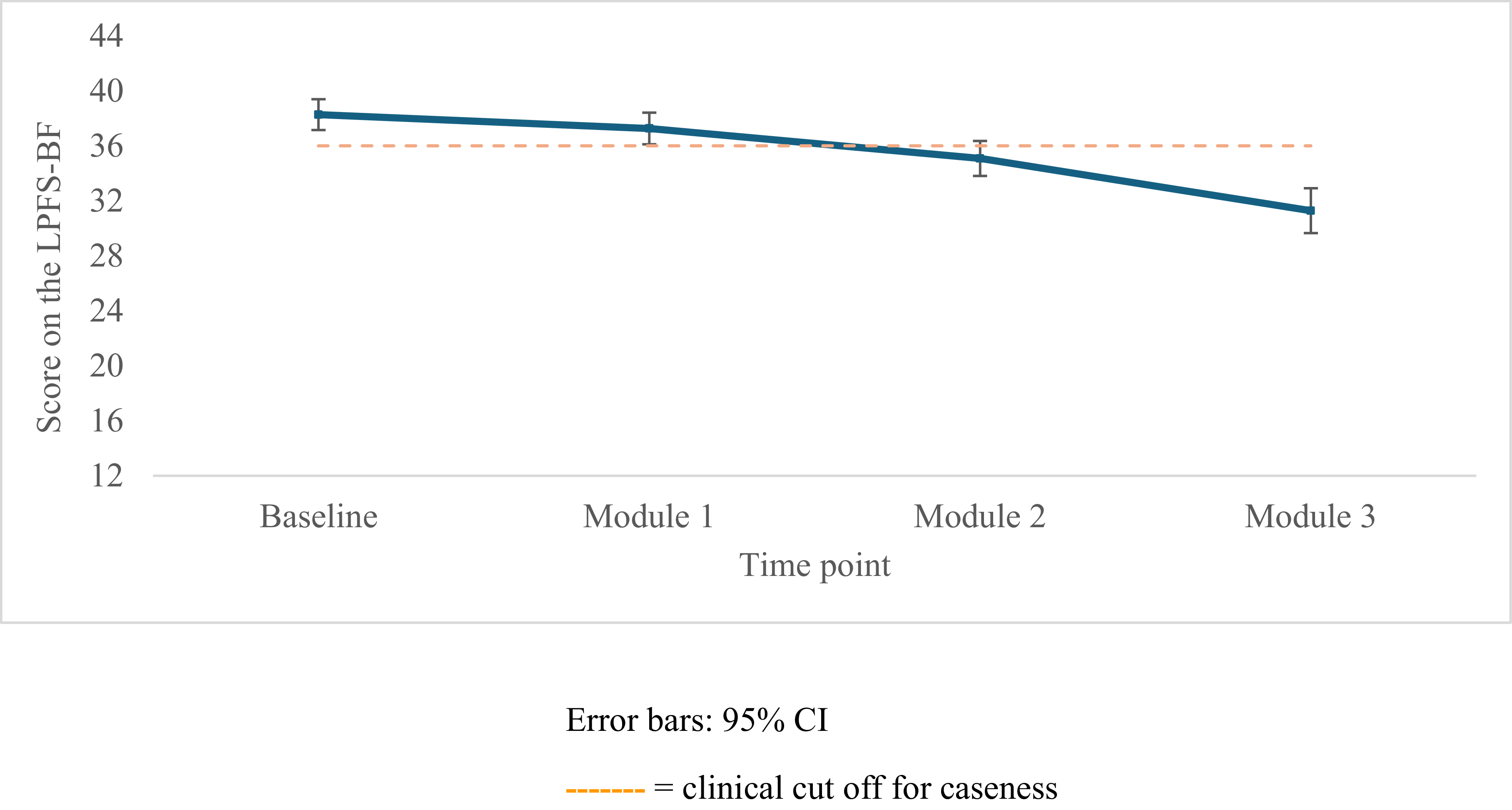
A repeated measures ANOVA indicated that Mauchly’s test was significant for the main time effect (p<.05). Therefore, the assumption of sphericity was not met and Greenhouse-Geisser corrected values were used. There was a significant time effect (F=66.588, d.f.=2.539, p<.001). There was no significant interaction between time and method of delivery (F=0.711, d.f.=2.539, p=.524) and no significant effect of method of group delivery (F=0.079, d.f.=1, p=.780)
The within-subject contrasts between scores at baseline and the end of module 3 (24 weeks) indicated that there was a significant time effect (F=121.350, d.f.=1, p<.01). As can be seen in Fig. 2 average scores on the LPFS-BF decreased over the course of treatment.
Estimated marginal means of Level of Personality Functioning Scale-Brief Form 2.0 (LPFS-BF).

Difficulties in Emotion Regulation Scale-16 (DERS-16)
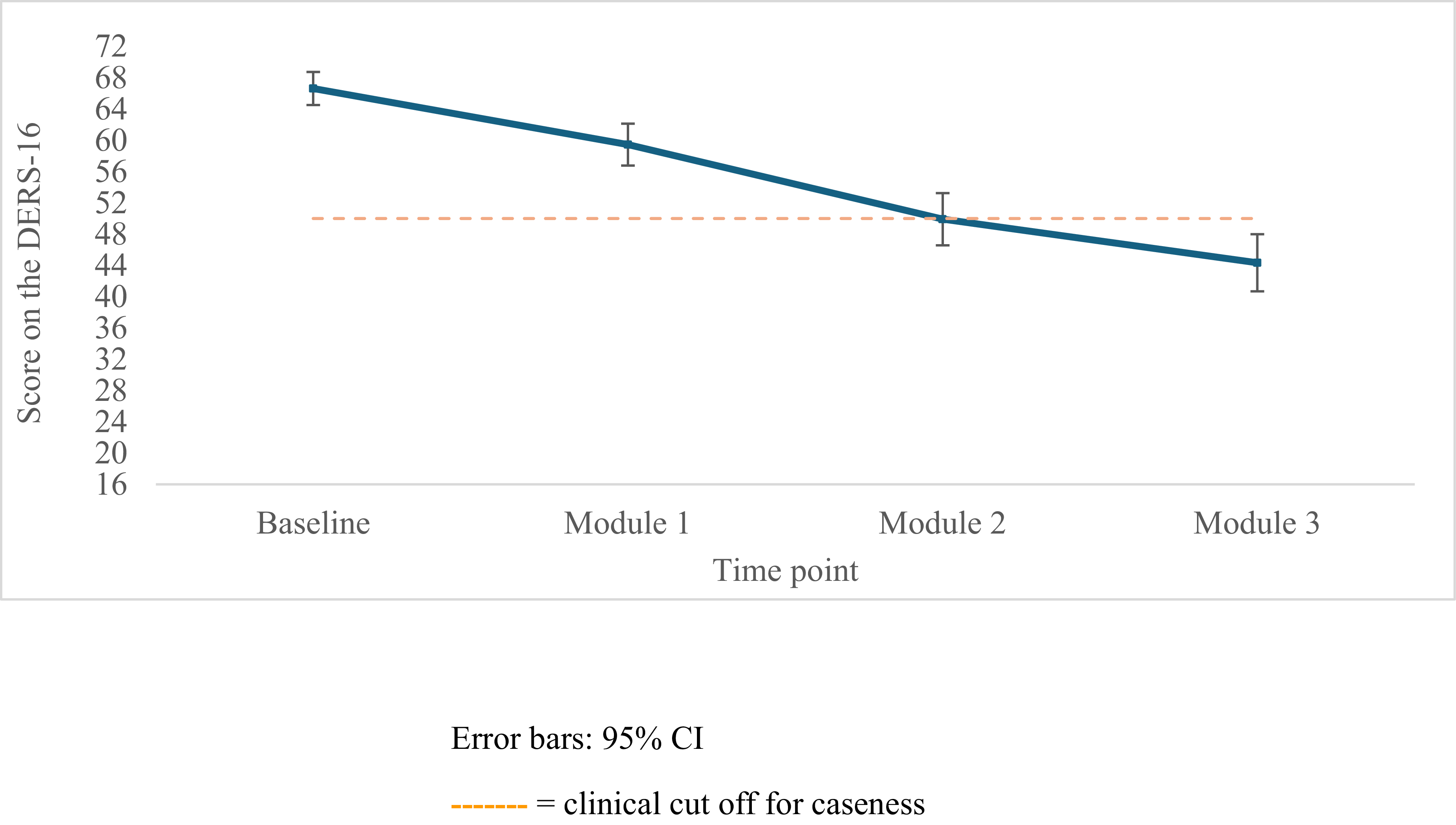
A repeated measures ANOVA indicated that Mauchly’s test was significant for the main time effect (p<.05). Therefore, the assumption of sphericity was not met and Greenhouse-Geisser corrected values were used. There was a significant time effect (F=131.673, d.f.=2.218, p<.001). There was no significant interaction between time and method of delivery (F=62.722, d.f.=2.218, p=.481) and no significant effect of method of group delivery (F=0.006, d.f.=1, p=.939).
Within subjects contrast between scores at baseline and the end of module 3 (24 weeks) indicated that there was a significant time effect (F=196.321, d.f.=1, p<.001). As can be seen in Fig. 3, average scores on the DERS-16 decreased over the course of treatment.
Estimated marginal means of Difficulties in Emotion Regulation Scale-16 (DERS-16).

Goal Attainment Scale
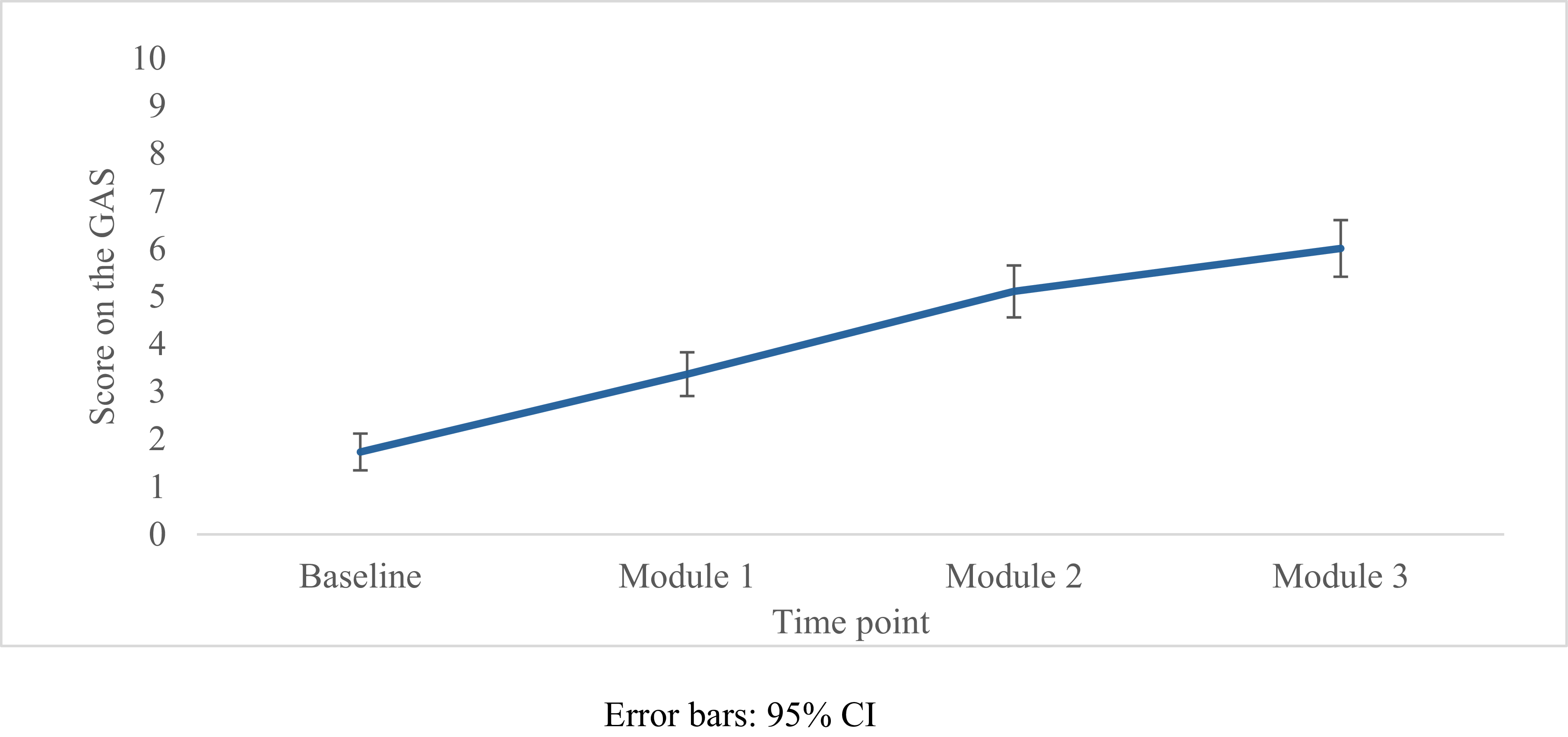
A repeated measures ANOVA indicated that Mauchly’s test was significant for the main time effect (p<.05). Therefore, the assumption of sphericity was not met and Greenhouse-Geisser corrected values were used. There was a significant time effect (F=101.436, d.f.=2.179, p<.001). There was no significant interaction between time and method of delivery (F=0.140, d.f.=2.179, p=.885) and no significant effect of method of group delivery (F=1.370, d.f.=1, p=.245).
Within subjects contrast between scores at baseline and end of module 3 (24 weeks) indicated that there was a significant time effect (F=168.190, d.f.=1, p<.001). As can be seen in Fig. 4 average scores on the goal attainment scale increased over the course of treatment.
Estimated marginal means of the Goal Attainment Scale (GAS).

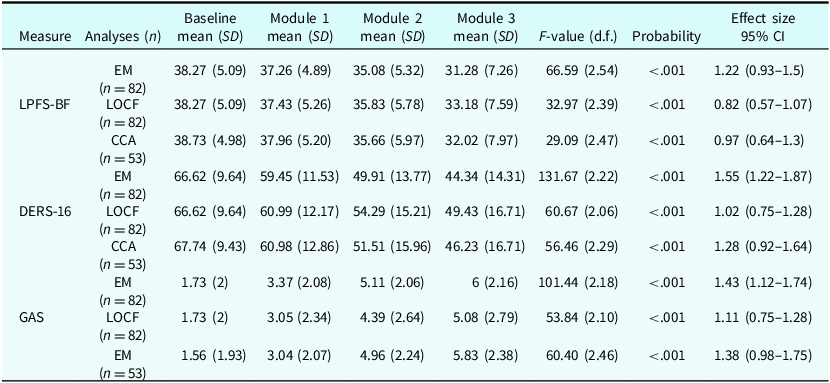
The results of the primary analyses were consistent with both the LOCF analyses (n=82) and the complete case analyses (n=53), suggesting the findings are robust to the handling of missing data (Table 5). Across all analyses, effect sizes for LPFS-BF, DERS-16 and GAS were large.
Data from the primary and sensitivity analyses

Table 5. Long description
A table comparing mean values across different modules and analyses. The table has 12 rows and 9 columns. The columns are labeled Measure, Analyses (n), Baseline mean (SD), Module 1 mean (SD), Module 2 mean (SD), Module 3 mean (SD), F-value (d.f.), Probability, and Effect size 95% CI. The rows are labeled with different measures: LPFS-BF, DERS-16, and GAS. Each measure has multiple analyses: EM, LOCF, and CCA. The table provides mean values and standard deviations for baseline and three modules, along with F-values, probabilities, and effect sizes with 95% confidence intervals. Row 1: LPFS-BF, EM (n=82), Baseline mean (SD) 38.27 (5.09), Module 1 mean (SD) 37.26 (4.89), Module 2 mean (SD) 35.08 (5.32), Module 3 mean (SD) 31.28 (7.26), F-value (d.f.) 66.59 (2.54), Probability <.001, Effect size 95% CI 1.22 (0.93-1.5). Row 2: LPFS-BF, LOCF (n=82), Baseline mean (SD) 38.27 (5.09), Module 1 mean (SD) 37.43 (5.26), Module 2 mean (SD) 35.83 (5.78), Module 3 mean (SD) 33.18 (7.59), F-value (d.f.) 32.97 (2.39), Probability <.001, Effect size 95% CI 0.82 (0.57-1.07). Row 3: LPFS-BF, CCA (n=53), Baseline mean (SD) 38.73 (4.98), Module 1 mean (SD) 37.96 (5.20), Module 2 mean (SD) 35.66 (5.97), Module 3 mean (SD) 32.02 (7.97), F-value (d.f.) 29.09 (2.47), Probability <.001, Effect size 95% CI 0.97 (0.64-1.3). Row 4: DERS-16, EM (n=82), Baseline mean (SD) 66.62 (9.64), Module 1 mean (SD) 59.45 (11.53), Module 2 mean (SD) 49.91 (13.77), Module 3 mean (SD) 44.34 (14.31), F-value (d.f.) 131.67 (2.22), Probability <.001, Effect size 95% CI 1.55 (1.22-1.87). Row 5: DERS-16, LOCF (n=82), Baseline mean (SD) 66.62 (9.64), Module 1 mean (SD) 60.99 (12.17), Module 2 mean (SD) 54.29 (15.21), Module 3 mean (SD) 49.43 (16.71), F-value (d.f.) 60.67 (2.06), Probability <.001, Effect size 95% CI 1.02 (0.75-1.28). Row 6: DERS-16, CCA (n=53), Baseline mean (SD) 67.74 (9.43), Module 1 mean (SD) 60.98 (12.86), Module 2 mean (SD) 51.51 (15.96), Module 3 mean (SD) 46.23 (16.71), F-value (d.f.) 56.46 (2.29), Probability <.001, Effect size 95% CI 1.28 (0.92-1.64). Row 7: GAS, EM (n=82), Baseline mean (SD) 1.73 (2), Module 1 mean (SD) 3.37 (2.08), Module 2 mean (SD) 5.11 (2.06), Module 3 mean (SD) 6 (2.16), F-value (d.f.) 101.44 (2.18), Probability <.001, Effect size 95% CI 1.43 (1.12-1.74). Row 8: GAS, LOCF (n=82), Baseline mean (SD) 1.73 (2), Module 1 mean (SD) 3.05 (2.34), Module 2 mean (SD) 4.39 (2.64), Module 3 mean (SD) 5.08 (2.79), F-value (d.f.) 53.84 (2.10), Probability <.001, Effect size 95% CI 1.11 (0.75-1.28). Row 9: GAS, CCA (n=53), Baseline mean (SD) 1.56 (1.93), Module 1 mean (SD) 3.04 (2.07), Module 2 mean (SD) 4.96 (2.24), Module 3 mean (SD) 5.83 (2.38), F-value (d.f.) 60.40 (2.46), Probability <.001, Effect size 95% CI 1.38 (0.98-1.75).
LPFS-BF, Level of Personality Functioning Scale-Brief Form; DERS-16, Difficulties in Emotional Regulation Scale-16 items; GAS, Goal Attainment Scale; EM, expectation-maximisation; LOCF, last observation carried forward; CCA, complete case analysis.
Clinically significant change
LPFS-BF
Overall, 54% (n=44) of participants reported changes in scores from baseline to the end of module 3 (24 weeks) that indicated ‘reliable improvement’, including 28% (n=23) whose scores indicated ‘reliable recovery’. In the online DBT-ST group, 54% (n=19) of participants scores indicated ‘reliable improvement’, including 28% (n=10) who indicated ‘reliable recovery’, compared with 51% (n=24) and 28% (n=13) respectively in the face-to-face DBT-ST group. Chi-square test results indicated that whether participants received the DBT-ST via online or face-to-face appointments did not appear to impact the odds of achieving reliable improvement (χ2 (1)=.281, p>.05) or reliable recovery (χ2 (1)=0.008, p>.05).
DERS-16
Overall, 60% (n=42) of participants reported changes in scores from baseline to the end of module 3 (24 weeks) that indicated ‘reliable improvement’, including 30% (n=21) whose scores indicated ‘reliable recovery’. In the online DBT-ST group, 65% (n=19) of participants scores indicated ‘reliable improvement’, including 34% (n=10) who indicated ‘reliable recovery’, compared with 57% (n=24) and 26% (n=11) respectively in the face-to-face DBT-ST group. A chi-square test indicated that receiving DBT-ST via online versus face-to-face appointments did not significantly impact the likelihood of achieving reliable improvement (χ2 (1)=0.024, p>.05) or reliable recovery (χ2 (1)=0.281, p>.05).
Healthcare utilisation
At 3 months post-discharge, data regarding participants’ health care utilisation was available for 80% (n=66) of the sample. At this point one person (1%) had required an in-patient admission, whilst no one had received home treatment from the crisis team, or input from secondary mental health care services.
‘Completers’ analysis
Clinically significant change
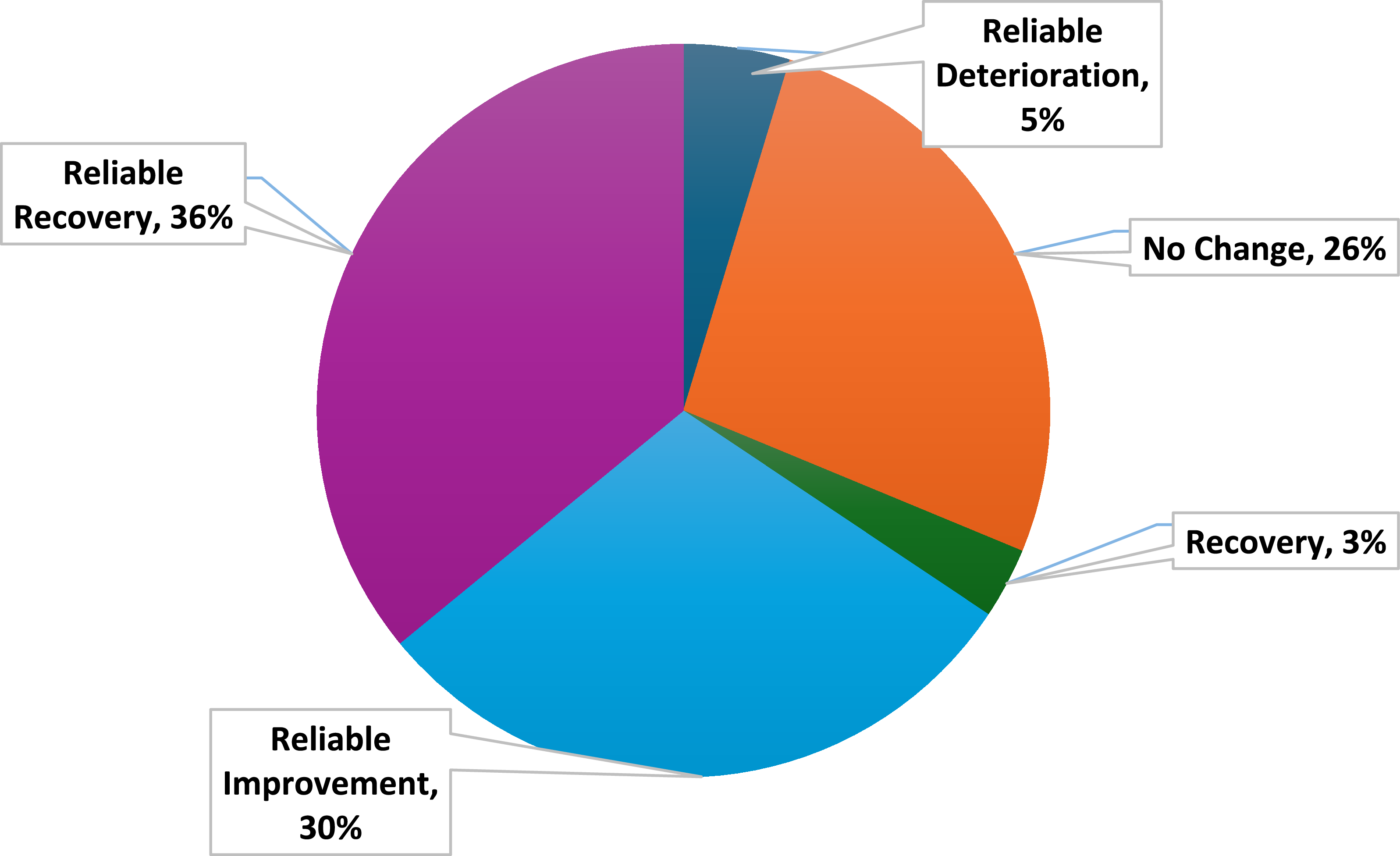
A second analysis focusing on individuals that completed at least one full module (completers), indicated that 66% (n=42) of participants reported reliable improvement, including 36% (n=23) whose improvement could be classified as recovery (see Fig. 5).
A pie chart representing rates of recovery for completers on the Level of Personality Functioning Scale-Brief Form 2.0.

3-month follow-up data
Analyses of the 20 participants that provided data at 3 months follow-up, indicated that there continued to be a main effect of time for the LPFS-BF (F=17.904, d.f.=4, p<.001), the DERS-16 (F=27.650, d.f.=4, p<.001) and the goal attainment measure (F=21.678, d.f.=4, p<.001). Consistent with the main analyses, there was no significant interaction between time and method of delivery, and no significant effect of method of group delivery for any measure.
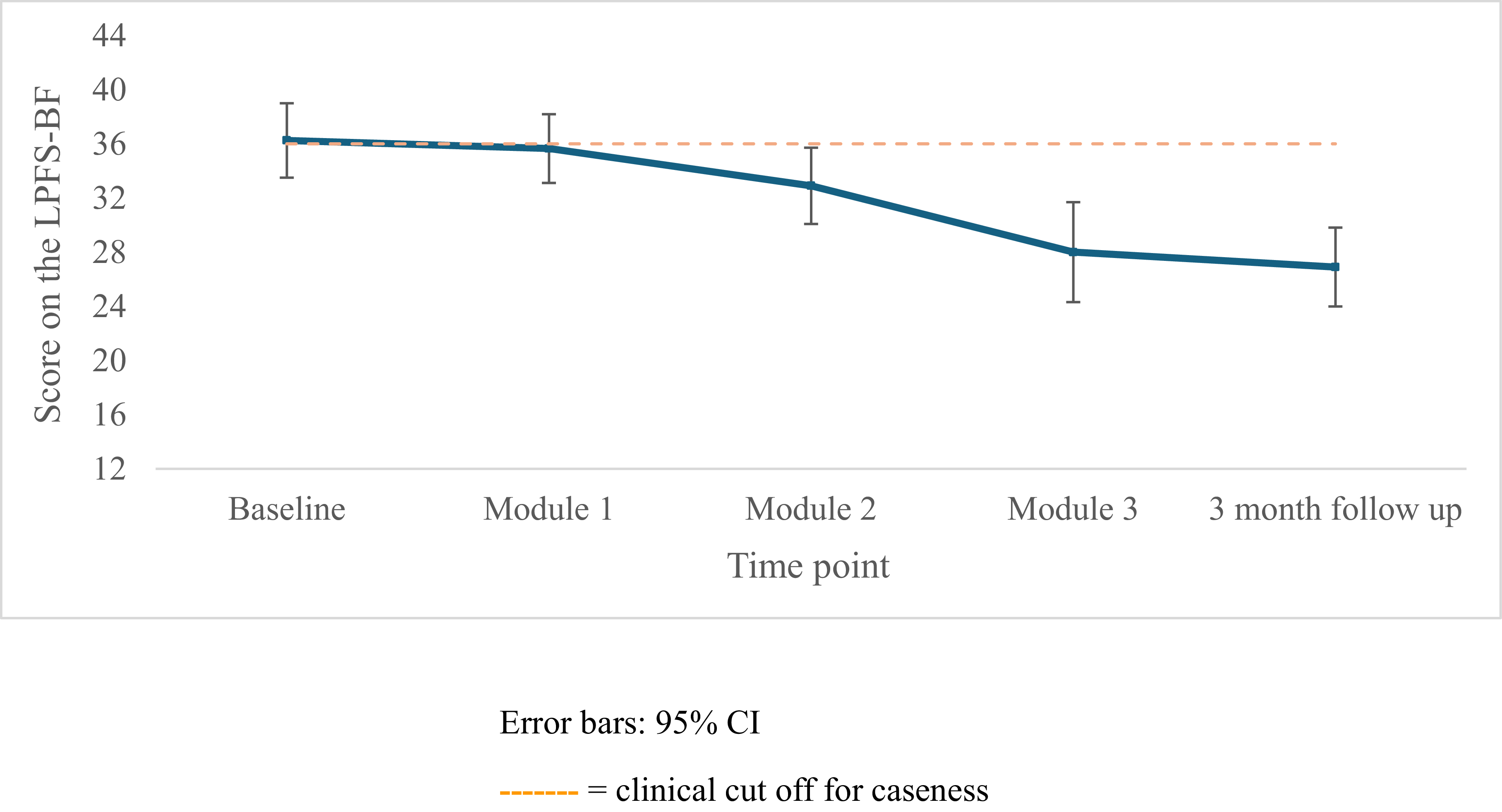
The within subject contrasts between scores at baseline and 3-month follow-up indicated that there was a significant time effect on the LPFS-BF (F=38.780, d.f.=1, p<.001), DERS-16 (F=71.063, d.f.=1, p<.001) and the goal attainment measure (F=69.532, d.f.=1, p<.001). Average scores improved over the course of treatment as seen in Fig. 6 for the LPFS-BF.
Estimated marginal means on the Level of Personality Functioning Scale-Brief Form (LPFS-BF) for 20 participants that completed full datasets including follow-up at 3 months.

Discussion
Main finding
The results of this service evaluation suggest that a 24-week dialectical behaviour therapy skills training (DBT-ST) intervention may be beneficial for people with symptoms of mild personality disorder (World Health Organization, 2022). Participants reported a reduction in symptoms of personality disorder and emotion dysregulation and felt closer to achieving important life goals on pre and post measures. However, due to the design of the service evaluation, caution should be taken when interpreting the findings.
Participants’ average scores on the LPFS-BF were below the cut-off for clinical symptoms post-intervention, and a large effect size was reported. Lower scores on the LPFS-BF have been associated with more positive social and occupational functioning, as well as greater satisfaction with quality of life (Christensen et al., Reference Christensen, Eikenaes, Hummelen, Pedersen, Nysaeter, Bender, Skodol and Selvik2020; Weekers et al., Reference Weekers, Sellbom, Hutsebaut, Simonsen and Bäck2022). After completing treatment participants also reported lower levels of emotion dysregulation on the DERS-16, with average scores below the cut-off for clinical symptoms. Higher scores of emotion dysregulation have been associated positively with several psychiatric conditions (Aldao et al., Reference Aldao, Gee, De Los Reyes and Seager2016) and negatively with psychological health and well-being (Solbakken et al., Reference Solbakken, Maeland, Fadnes, Bjerrum, Nordhus and Flo-Groeneboom2023). Participants reported feeling closer to achieving important goals in their family, social or work lives. In summary, post-intervention, participants reported having a better quality of life and fewer clinical symptoms.
A smaller sample of participants reported that improvements in their symptoms, emotion regulation and progress towards important goals in their lives were maintained 3 months after completing treatment. However, firm conclusions from these data cannot be established due to the study failing to capture follow-up data for three-quarters of participants.
Service utilisation
After completing treatment, participants’ subsequent use of services was reviewed. At 3-month follow-up, service utilisation data were available for 80% of the treatment ‘starters’ (n=66), indicating that one person (1%) accessed in-patient service, whilst no-one had required crisis or community secondary mental healthcare services during that period. It is important to acknowledge that the team did not accept referrals for individuals who had engaged in serious self-harm 3 months prior to the referral. Therefore, participants had already demonstrated a level of stability.
Individuals with personality disorder often require long-term intervention from secondary mental health care services and can engage in self-harm that requires input from crisis or in-patient services (Beckwith et al., Reference Beckwith, Moran and Reilly2014). These services have limited resources, are expensive, and do not always reduce the risk of future incidents of self-harm (Ward-Ciesielski and Rizvi, Reference Ward-Ciesielski and Rizvi2021). Providing treatment at the correct time may prevent an individual’s mental health deteriorating, reducing the need for more intensive services in the future; supported by the finding that the DBT is likely to be cost-effective in community settings compared with treatment as usual (Botham et al., Reference Botham, Clark, Steare, Stuart, Oram, Lloyd-Evans, Jeynes, Broecklemann, Crawford, Johnson, Simpson and McCrone2021).
Whilst firm conclusions cannot be drawn from the current findings, it is encouraging that only 1% of the sample required more intensive services 3 months after completing treatment. While further research is needed, delivering DBT-ST in primary care settings may be a cost-effective intervention.
Treatment duration
Evidence-based approaches for personality disorder are intensive and normally last between 1 and 2 years (Binks et al., Reference Binks, Fenton, McCarthy, Lee, Adams and Duggan2012). This time scale presents a challenge in primary care settings, where there are limited resources and demand is high. Whilst clinicians have attempted to meet the demand for treatment by providing abbreviated interventions for individuals with personality disorder, treatment that is too short may be ineffective (McMurran et al., Reference McMurran, Crawford, Reilly, Delport, McCrone, Whitham, Tan, Duggan, Montgomery, Williams, Adams, Jun, Lewis and Day2016) or increase patients’ longer term care costs (Tyrer et al., Reference Tyrer, Tom, Byford, Schmidt, Jones, Davidson and Catalan2004).
In the present service evaluation, line graphs were used to track participants’ progress through therapy. Visual inspection of the data suggests that, on average, symptoms reduced to non-clinical levels from 16 to 24 weeks of treatment. There was not enough follow-up data to establish whether these improvements were maintained for everyone. Nevertheless, these findings provide some encouragement that a 24-week DBT-ST intervention may be beneficial whilst using fewer resources than standard DBT.
The service evaluation’s findings are in line with other research on DBT-ST, which has found that 20-week (McMain et al., Reference McMain, Guimond, Barnhart, Habinski and Streiner2017) and 24-week interventions (Kells et al., Reference Kells, Joyce, Flynn, Spillane and Hayes2020; Lyng et al., Reference Lyng, Swales, Hastings, Millar, Duffy and Booth2020), that present skills once (standard DBT presents skills twice), may be effective. While Soler et al. (Reference Soler, Pascual, Tiana, Cebrià, Barrachina, Campins, Gich, Álvarez and Pérez2009) also reported encouraging outcomes for a 13-week intervention, participants did not improve on some symptoms of personality disorder. It is possible that shorter interventions (around 12 weeks) may help with broader clinical symptoms, whilst longer interventions (20 weeks or more) may be needed to reduce symptoms of personality disorder. We hypothesise that people with personality disorder may benefit from having enough time to learn the skills that are presented. Moreover, group interventions provide people with support, connection, hope and shared learning (Dahlenburg et al., Reference Dahlenburg, Bartsch, Giles, Koehne and O’Sullivan2023), further to the opportunity to learn how to tolerate differences of opinions, appreciate other’s perspectives and relate to other people. We recommend that future clinicians and researchers give careful consideration to the length of interventions offered to individuals with personality disorder.
Non-completers
A large number of participants did not complete the intervention. After attending an initial mindfulness session, 25% of participants decided they did not want to commit to the full programme, whilst a further 26% of people did not complete treatment. This is comparable to other studies providing DBT-ST (49%; Kells et al., Reference Kells, Joyce, Flynn, Spillane and Hayes2020) but higher than programmes which offer group and individual therapy (24%), or group therapy and case management (39%) (Linehan et al., Reference Linehan, Korslund, Harned, Gallop, Lungu, Neacsiu, McDavid, Comtois and Murray-Gregory2015).
Participants who scored higher on the LPFS-BF self-subscale were less likely to complete treatment. The subscale reflects problems with sense of self and low self-esteem, which may indicate this group of people may have found it more challenging to participate in a group setting. Higher completion may be observed in standard DBT due to clinicians having the opportunity to problem solve barriers to attending individual sessions, and individuals being able to miss up to four sessions before being discharged (Comtois et al., Reference Comtois, Koons, Kim, Manning, Bellows, Dimeff, Dimeff and Koerner2007). Moreover, regardless of the type of therapy, individuals with personality disorder are generally less likely to complete group-based interventions. This may be due to groups being less personalised, and difficulties trusting and tolerating others in group settings (Arntz et al., Reference Arntz, Mensink, Cox, van den Berg, Hafkenscheid, van Dijke and de Jongh2023).
A review of the DBT literature indicates that factors associated with higher non-completion rates include younger age, heightened emotional dysregulation, difficulties tolerating distress, and changes in therapists. Higher completion rates have been associated with a strong therapeutic alliance, frequent use of DBT skills, and engagement in telephone coaching (De Salve et al., Reference De Salve, Rossi, Gioacchini, Messina and Oasi2025). Disengagement often occurs early on in treatment (Cooper et al., Reference Cooper, Kline, Baier and Feeny2023), is more common in primary care settings, and higher for mild to moderate, compared with severe presentations (Fernández et al., Reference Fernández, Vigo, Sampson, Hwang, Aguilar-Gaxiola, Al-Hamzawi, Alonso, Andrade, Bromet, de Girolamo, de Jonge, Florescu, Gureje, Hinkov, Hu, Karam, Karam, Kawakami, Kiejna, Kovess-Masfety, Medina-Mora, Navarro-Mateu, Ojagbemi, O’Neill, Piazza, Posada-Villa, Rapsey, Williams, Xavier, Ziv, Kessler and Haro2021). As a result, we recommend that clinicians prioritise building strong relationships with clients, promoting skills practice and advocating telephone coaching in the initial stages of treatment. When individual therapy is not available, services should focus on providing extra support to individuals who may struggle to tolerate group-based interventions.
Online versus face-to-face
A higher number of participants completed DBT-ST when it was delivered via online appointments (17% non-completion rate) compared with face-to-face appointments (32% non-completion rate). However, this finding was not statistically significant. Verbal feedback to the team highlighted that some people preferred online appointments to avoid long journeys or to accommodate work or childcare commitments, whilst others preferred face-to-face appointments if they were not comfortable with technology or preferred to interact with others in person. No further differences in the outcome measure measures were noted. On the LPFS-BF, 54% of people that received online therapy achieved reliable improvement compared with 51% of people that received face-to-face therapy. The findings are consistent with qualitative feedback suggesting people can feel connected and benefit from DBT when it is delivered online (Bock et al., Reference Bock, Graf, Woeber, Kothgassner, Buerger and Plener2022).
Services aiming to create emotionally and physically safe environments often follow the principles of trauma-informed care, which emphasises providing individuals choice in the type of treatment they receive (Goldstein et al., Reference Goldstein, Chokshi, Melendez-Torres, Rios, Jelley and Lewis-O’Connor2024). Online appointments may be helpful for services working in large geographical areas, rural locations, or areas with poor transport links, while face-to-face appointments may be helpful for individuals who are uncomfortable using technology or do not have access to it. In summary, we found that treatment delivered via online appointments appears to be a viable alternative to face-to-face delivery.
Strengths
The service evaluation has several strengths. Firstly, to our knowledge, previous research has not explored DBT-ST in primary care settings or compared interventions delivered through face-to-face and online appointments. These findings have implications for other services aiming to work in a preventative manner by providing accessible, evidence-based treatment to a large group of people with limited resources.
A second strength of the service evaluation relates to outcome measures being collected at multiple time points. While standard DBT lasts for a year, there is not a consensus around the best duration for adapted DBT interventions. The present service evaluation observed that individuals’ symptoms began to fall below clinical thresholds from 16 weeks (after finishing the module 2) to 24 weeks (end of treatment). While future research is needed, clinicians and researchers should carefully consider the length of treatment for people with personality disorders.
A third strength of the service evaluation is the use of both health care utilisation and patient-reported outcome measures (PROMs). Patients’ presentation and wellbeing were captured by PROMs, while healthcare utilisation focused on the use of in-patient, crisis and secondary care services. The breadth of outcome measures helped the study explore whether DBT-ST interventions may be beneficial in the longer term.
Finally, the service evaluation used intention-to-treat analysis. This approach helped to reduce the probability of over-estimating how many people benefited from the DBT-ST intervention.
Limitations
There are limitations associated with the present service evaluation. Firstly, there was no control group. Consequently, we cannot infer that recovery was a direct result of the DBT-ST intervention. The service evaluation also did not include a measure of skill acquisition. While we were keen to ensure that participants were not burdened by assessment measures, we could not establish whether participants learnt skills over the course of treatment. Taken together, these limitations make it unclear whether individuals benefited from the DBT-ST intervention and the skills presented, the experience of being in a group, or other external factors.
Secondly, follow-up data collected 3 months after completing the intervention was poor (24%) and these data were therefore excluded from the main analysis. Many participants could not be contacted once they had left the service. As a result, it is unclear whether the observed recovery rates were maintained and whether the intervention had long term benefits.
Finally, the service evaluation did not use a measure of DBT fidelity to review therapists’ adherence to the model. Additionally, the co-facilitators were peer supporters who were not trained in DBT. Peer supporters were included so they could use their own lived experience to help people engage in the groups by offering empathy, guidance and hope. While there are advantages to using co-facilitators with lived rather than professional experience, the intervention could have been more adherent to DBT by using co-facilitators trained in DBT.
Recommendation
We recommend that randomised control trial designs (RCT) are used to establish the efficacy of DBT-ST for this population. This research would indicate whether DBT-ST is an effective and cost-effective treatment that should be provided more widely in primary care settings. RCTs would help answer important questions regarding adaptions to standard DBT around the optimum length of treatment and method of delivery.
Future research should include a measure of skills acquisition and prioritise capturing follow-up data. This would help to explore which components of treatment are associated with recovery and whether observed clinical changes are maintained over a longer period.
Conclusion
The present service evaluation reviewed a DBT-ST intervention for individuals with symptoms of mild personality disorder. The findings suggest that services may consider proactively providing DBT-ST in primary care settings, which may improve individuals’ symptoms and reduce their use of more expensive services in the future. Services may consider online appointments and 24-week interventions to balance the demand for treatment and limited resources in primary care. Whilst the present service evaluation’s findings are limited by the absence of a control group, they contribute to the broader literature of encouraging evidence for DBT-ST interventions. Future research may consider building on these findings through the use of RCTs.
Key practice points
-
(1) A 24-week DBT-ST intervention may be beneficial for people with symptoms of mild personality disorder in primary care settings.
-
(2) DBT-ST appears to lead to similar recovery rates when delivered via online compared with face-to-face appointments.
-
(3) Providing DBT-ST proactively in primary care settings may form part of a broader stepped-care model, in which more intensive, longer term interventions are delivered by secondary and tertiary services. This approach aims to provide treatment for individuals with symptoms of mild personality disorder before their mental health deteriorates and they require more intensive treatment, although further research with longer term outcomes is needed.
-
(4) Future researchers should consider RCT designs, more sensitive outcome measures, and comparison groups to establish the effectiveness of treatment.
-
(5) Future research may explore why a high number of people do not complete DBT-ST in primary care settings.
Data availability statement
The data that support the findings of this study are available from the corresponding author, JBC, upon reasonable request.
Acknowledgements
The H.O.P.E team would like to thank colleagues in CNTW who have supported the development of this initiative.
Author contributions
James Bowness Clarke: Conceptualization-Lead, Formal analysis-Lead, Methodology-Lead, Writing - original draft-Lead, Writing - review & editing-Lead; Natalia Bojor: Data curation-Supporting.
Financial support
None.
Competing interests
The authors declare none.
Ethical standards
The authors have abided by the Ethical Principles of Psychologists and Code of Conduct as set out by the BABCP and the BPS. The service evaluation was registered with the local NHS research and evaluation department. Standard local NHS governance arrangements were in place to manage data. Participants consented to their data being used for service evaluation purposes, including publication of findings.


 Open access


Comments
No Comments have been published for this article.