





Management Implications
Managing Phragmites australis (common reed) invasions with herbicides in wetlands poses significant challenges due to the presence of closely surrounding native vegetation and constraints in treating patches that are physically challenging to access on foot or with ground spray equipment. This study highlights the potential of remotely piloted aircraft systems (RPASs) as a precision tool for herbicide application, offering a solution for targeting invasive species in difficult to access areas with reduced off-target impacts. RPAS technology affords smaller swath widths compared with helicopter spraying, reducing potential for herbicide drift and collateral damage to native vegetation, which is especially valuable in ecologically sensitive wetlands. The >99% reduction in live P. australis stems observed with RPAS-based herbicide application demonstrates its capacity to effectively suppress the target species with values as high or higher than any imazapyr-based P. australis suppression study reported in the literature. As the first study to employ RPAS-based herbicide application to P. australis in Canada, this research demonstrates the potential for improved precision in aerial herbicide applications to P. australis in wetlands. Future research should focus on long-term native vegetation recovery and quantify the accuracy of RPAS-based herbicide applications to minimize off-target damage to native vegetation in wetlands.
Introduction
Non-native common reed [Phragmites australis (Cav.) Trin. ex Steud. ssp. australis] has invaded an estimated 13,000 ha of Great Lakes coastal wetland in Ontario alone (Bourgeau-Chavez et al. Reference Bourgeau-Chavez, Kowalski, Carlson Mazur, Scarbrough, Powell, Brooks, Huberty, Jenkins, Banda, Galbraith, Laubach and Riordan2013, Reference Bourgeau-Chavez, Endres, Battaglia, Miller, Banda, Laubach, Higman, Chow-Fraser and Marcaccio2015). Despite extensive wetland management efforts (e.g., mowing, burning, grazing, and flooding of P. australis stems, as well as others summarized by Hazelton et al. [Reference Hazelton, Mozdzer, Burdick, Kettenring and Whigham2014] and Martin and Blossey [Reference Martin and Blossey2013]), long-term eradication of P. australis in many wetlands has not been achieved (Lombard et al. Reference Lombard, Tomassi and Ebersole2012; Martin and Blossey Reference Martin and Blossey2013). As P. australis can rapidly colonize when left uncontrolled and can recolonize controlled areas when left unmanaged (Farnsworth and Meyerson Reference Farnsworth and Meyerson1999), efforts to suppress invasions have required the integration of nocuous approaches, such as the use of herbicides.
Broad-spectrum, systemic herbicides (e.g., glyphosate- and imazapyr-based herbicides) are the most widely used chemicals in P. australis control (Hazelton et al. Reference Hazelton, Mozdzer, Burdick, Kettenring and Whigham2014) and have achieved high P. australis suppression efficacy (>90% reduction in live biomass) across a range of application times (vegetative, flowering, and seed filling stages; Knezevic et al. Reference Knezevic, Rapp, Datta and Irmak2013). While glyphosate- and imazapyr-based herbicides (e.g., Roundup® and Arsenal®) are the top herbicide choices for wetland managers, there are differences in their efficacy on P. australis (Back and Holomuzki Reference Back and Holomuzki2008; Derr Reference Derr2008; Kay Reference Kay1995; Mozdzer et al. Reference Mozdzer, Hutto, Clarke and Field2008). For example, when a pressurized backpack sprayer was used in 1-m2 plots, imazapyr was 16% more effective (at reducing stem density, canopy height, and percent cover of P. australis) than glyphosate after 1 and 2 yr of follow-up monitoring (Mozdzer et al. Reference Mozdzer, Hutto, Clarke and Field2008). Similarly, a reduction in P. australis stem density was 11% greater using an imazapyr-based herbicide when treated in June, and 8% greater when treated in September, compared with a glyphosate-based herbicide in field trials using spray-to-wet application with a pressurized backpack sprayer (Derr Reference Derr2008). When a wipe-on application method was used, imazapyr reduced live stems by 75% compared with 33% with the same concentration of glyphosate (Kay Reference Kay1995).
Although imazapyr may be more effective, it is a more costly product and has greater persistence in soils than glyphosate (Breckels and Kilgour Reference Breckels and Kilgour2018). In Canada, the differences in efficacy and persistence between imazapyr and glyphosate are moot where P. australis grows in standing water, as only imazapyr is approved for use over open water on invasive P. australis in the formula Habitat® Aqua (240 g ai L−1, BASF Canada; Pesticide Registration Number 32374; Proposed Registration Decision PRD2020-17). While differences in efficacy between glyphosate- and imazapyr-based herbicides have been reported, variations in efficacy based on application method are less studied but provide important context to support wetland management goals (Lombard et al. Reference Lombard, Tomassi and Ebersole2012).
Herbicide use to suppress P. australis presents considerable challenges in conservation efforts, particularly in wetland environments, where physical access can be severely limited or extensive coverage is required. For example, herbicide backpack spraying can be highly precise, but this labor-intensive approach is not always feasible when P. australis invasions are difficult to access and extensive. Similarly, heavy ground-application equipment may be damaging to wetland herptiles. Overcoming the spatial constraints and accessibility issues of in-person manual application, helicopter-based herbicide application can be used (e.g., MNRF 2017); however, the boom and swath widths used can result in collateral damage to surrounding native plants (Hogg Reference Hogg2018; unpublished data). Currently, the Canadian Pest Management and Regulatory Agency has not approved a herbicide application method that makes it feasible to treat inaccessible, expansive invasions of P. australis without extensive off-target effects, rendering long-term suppression of P. australis in many wetlands challenging.
Remotely piloted aircraft systems (RPASs) have emerged as a promising tool for pesticide application in the precision agriculture sector, showcasing significant advancements in crop management practices. Studies of RPAS-based pesticide applications have displayed higher efficacy of harvest aid in cotton (Gossypium hirsutum L.) plants (characterized by defoliation rate, boll opening rate, and final yield) than ground-based applications (Cavalaris et al. Reference Cavalaris, Karamoutis and Markinos2022) and of insecticides on alfalfa (Medicago sativa L.) (characterized by control of pests) than fixed-wing, pilot-on-board aerial applications (Li et al. Reference Li, Giles, Andaloro, Long, Lang, Watson and Qandah2021). However, the existing literature predominantly focuses on RPAS use in agricultural fields, where crops present a near uniform height, density, and plant morphology. Little information is available on how this technology performs in natural settings such as wetlands (but see Takekawa et al. Reference Takekawa, Hagani, Edmunds, Collins, Chappell and Reynolds2023), where the spatial distribution of the target species resides in a complex mosaic comprising vegetation of different heights (e.g., trees, grasses), native species, and open water. It is unclear whether RPAS-based herbicide application would provide adequate plant coverage and canopy penetration to suppress P. australis in a field setting. Further, it is not well-understood to what extent off-target effects on native plants growing interspersed within P. australis or immediately adjacent to it will occur with RPAS application.
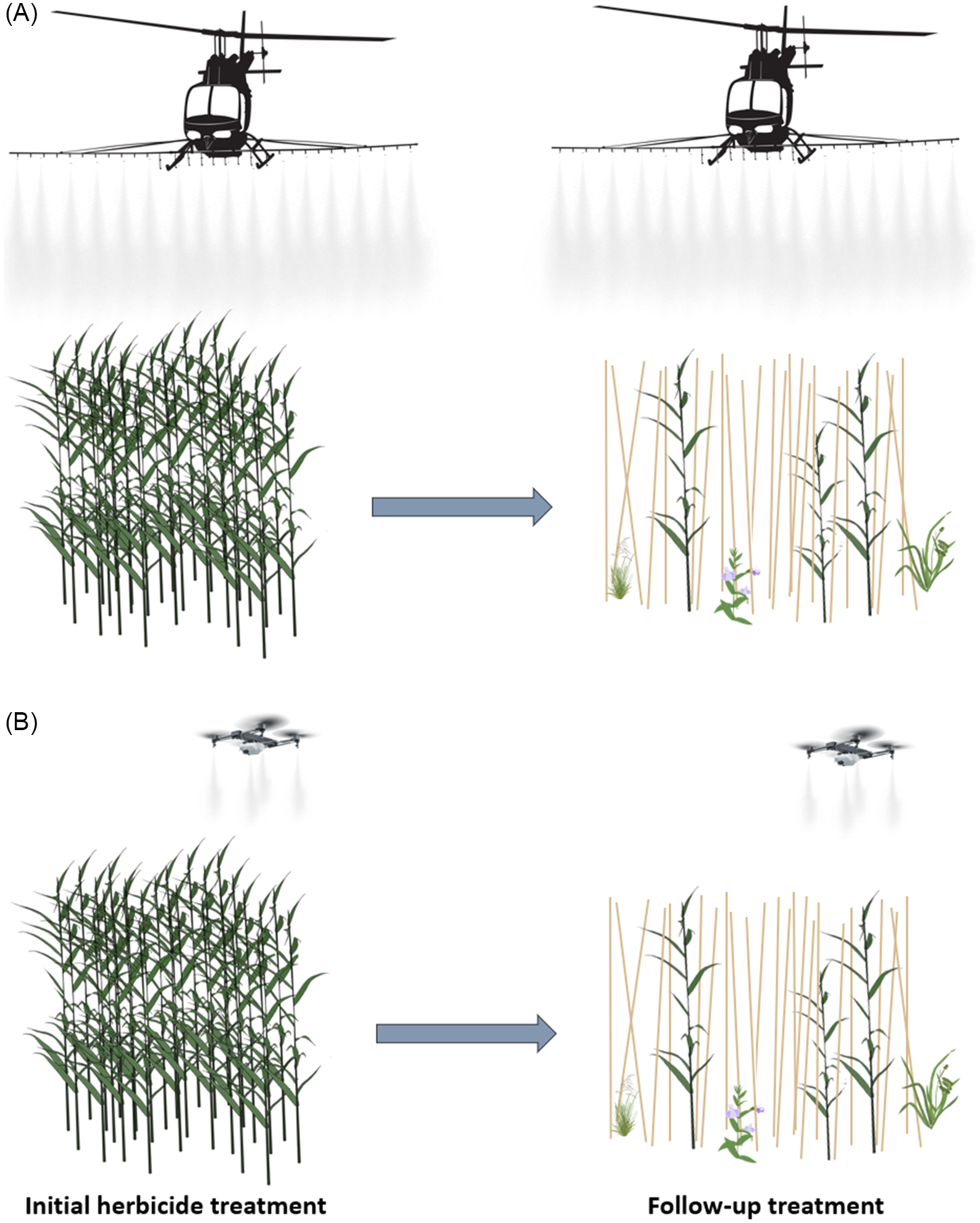
Achieving high herbicide efficacy is crucial to minimize regrowth of P. australis in the following growing seasons. Sublethal dosing of herbicide during treatment not only risks reestablishment of P. australis networks (Elsey-Quirk and Leck Reference Elsey-Quirk and Leck2021) but may also lead to herbicide resistance (Government of Ontario 2001), further increasing the difficulty of long-term suppression efforts. Even when herbicide treatments achieve high levels of suppression (>90% reduction in live biomass) in the initial treatment, follow-up treatments are typically required (e.g., Kettenring and Adams Reference Kettenring and Adams2011; Knezevic et al. Reference Knezevic, Rapp, Datta and Irmak2013; Lombard et al. Reference Lombard, Tomassi and Ebersole2012; Quirion et al. Reference Quirion, Simek, Dávalos and Blossey2018; Zimmerman et al. Reference Zimmerman, Shirer and Corbin2018). Follow-up treatments are often complex, as surviving P. australis patches need to be targeted. However, as native vegetation grows back, broadly re-treating the original P. australis area can lead to unnecessary non-target vegetation damage (Figure 1). Because the cumulative effects of repeated herbicide applications on wetlands are not well understood (Crowe et al. Reference Crowe, Leclerc, Struger and Brown2011), evaluating herbicide and application method efficacy is valuable to minimize the number of reapplications and the amount of herbicide applied. For example, glyphosate has been shown to accumulate in soils (Robichaud and Rooney Reference Robichaud and Rooney2021b), biofilm (Beecraft and Rooney Reference Beecraft and Rooney2021), litter (Sesin et al. Reference Sesin, Freeland, Gilbert, Stevens and Davy2022), and groundwater (Crowe et al. Reference Crowe, Leclerc, Struger and Brown2011). The potential of imazapyr-based herbicides to accumulate in the environment is not as well studied, but cumulative effects from repeated applications present an equivalent risk (Breckels and Kilgour Reference Breckels and Kilgour2018).
Graphic of complexities associated with Phragmites australis follow-up treatments after the initial herbicide treatment. The initial herbicide treatment shows a dense monoculture P. australis stand that can be effectively treated by either helicopter (A) or remotely piloted aircraft system (RPAS)-based (B) herbicide applications. The follow-up treatment shows standing dead biomass as a result of the herbicide treatment, with remnant P. australis ramets and native vegetation in close proximity.
To assess the P. australis suppression efficacy of RPAS-based herbicide application in provincially significant wetlands in southern Ontario, we conducted the first herbicide application of this kind to control invasive P. australis in Canada. Our objectives were: (1) to evaluate the suppression efficacy of RPAS-based herbicide application, quantified as the difference in live P. australis stem density and canopy height between treated and adjoining untreated P. australis patches; and (2) to characterize the extent of native plant community succession 1 yr after herbicide treatment, comparing native plant diversity and community composition in the treated and untreated P. australis patches.
Materials and Methods
Study Area
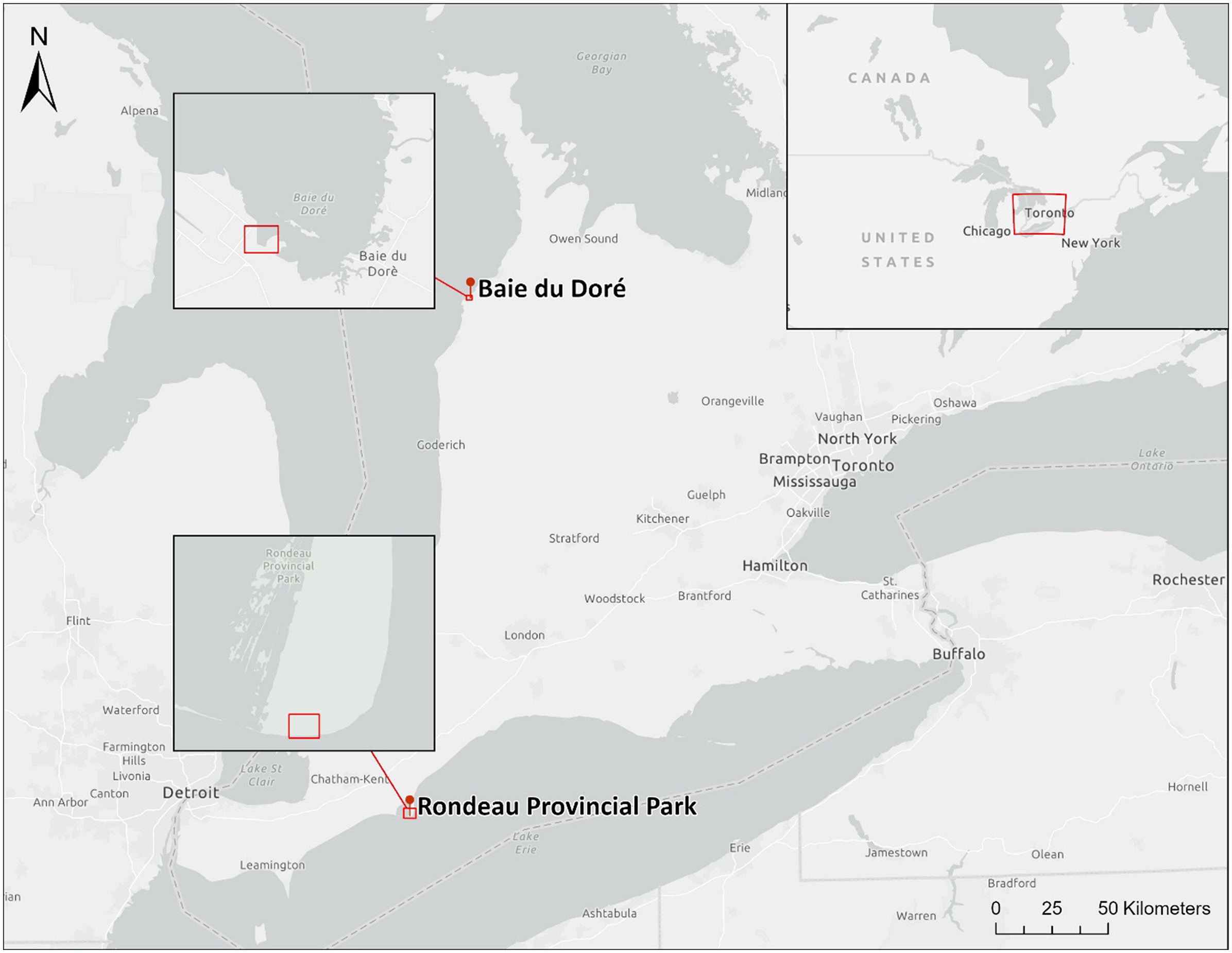
Baie du Doré and Rondeau Provincial Park wetlands (Figure 2) are listed as Provincially Significant Coastal Wetlands with ecological values that are designated as Areas of Natural and Scientific Interest (ANSIs) and Environmentally Sensitive Policy Areas (EPSAs). ANSIs are regions that have significant features containing value worthy of protection, scientific study, or education (Government of Ontario 2014). ESPAs are designated to protect regions with rare species and valuable ecological functions from nearby development (ECCC 2007).
Map of Provincially Significant Wetlands used for on-the-ground vegetation surveys for evaluation of remotely piloted aircraft system (RPAS)-based applications of Habitat® Aqua to invasive Phragmites australis.
Baie du Doré (44.34°N, 81.54°W) is a coastal fen situated on the eastern shore of Lake Huron, adjacent to the Bruce Power nuclear power plant owned by Ontario Power Generation. This wetland supports significant biodiversity (Ball et al. Reference Ball, Jalava, King, Maynard, Potter and Pulfer2003). The P. australis invasion at Baie du Doré is characterized by extremely high stem density (>70 live stems m−2) distributed around at least 15 ha of the fen’s coastline. While management of P. australis along Lake Huron’s shoreline was proposed in 2013 by the Municipality of Kincardine, Baie du Doré warrants special consideration for RPAS-based herbicide application due to the presence of at-risk turtles (Ball et al. Reference Ball, Jalava, King, Maynard, Potter and Pulfer2003). In this wetland, at-risk turtles could be injured or killed by heavy machinery or boats and have their habitat degraded.
The Rondeau Provincial Park wetland (42.26°N, 81.86°W) is part of an extensive swamp–marsh complex located at the southern end of Rondeau Provincial Park in Morpeth, ON. The wetland complex supports provincially rare vegetation and serves as critical habitat for migratory marsh birds and a diverse array of species at risk (MNRF 2015). Additionally, it is a popular tourism destination for outdoor recreation, adding considerable economic value to the region (MNRF 2015). The specific study area within Rondeau Provincial Park targeted for testing RPAS-based herbicide application is a small swamp slough (∼50 ha), surrounded by old-growth Carolinian forest. These trees prevent access by amphibious vehicles, and the many downed trees and shrubs impede access by backpack sprayers. Furthermore, the narrow width (∼50 m) of the slough and the risk of drift and overspray affecting the adjacent trees makes it unsuitable for treatment by large aircraft such as helicopters or planes.
Field Methods
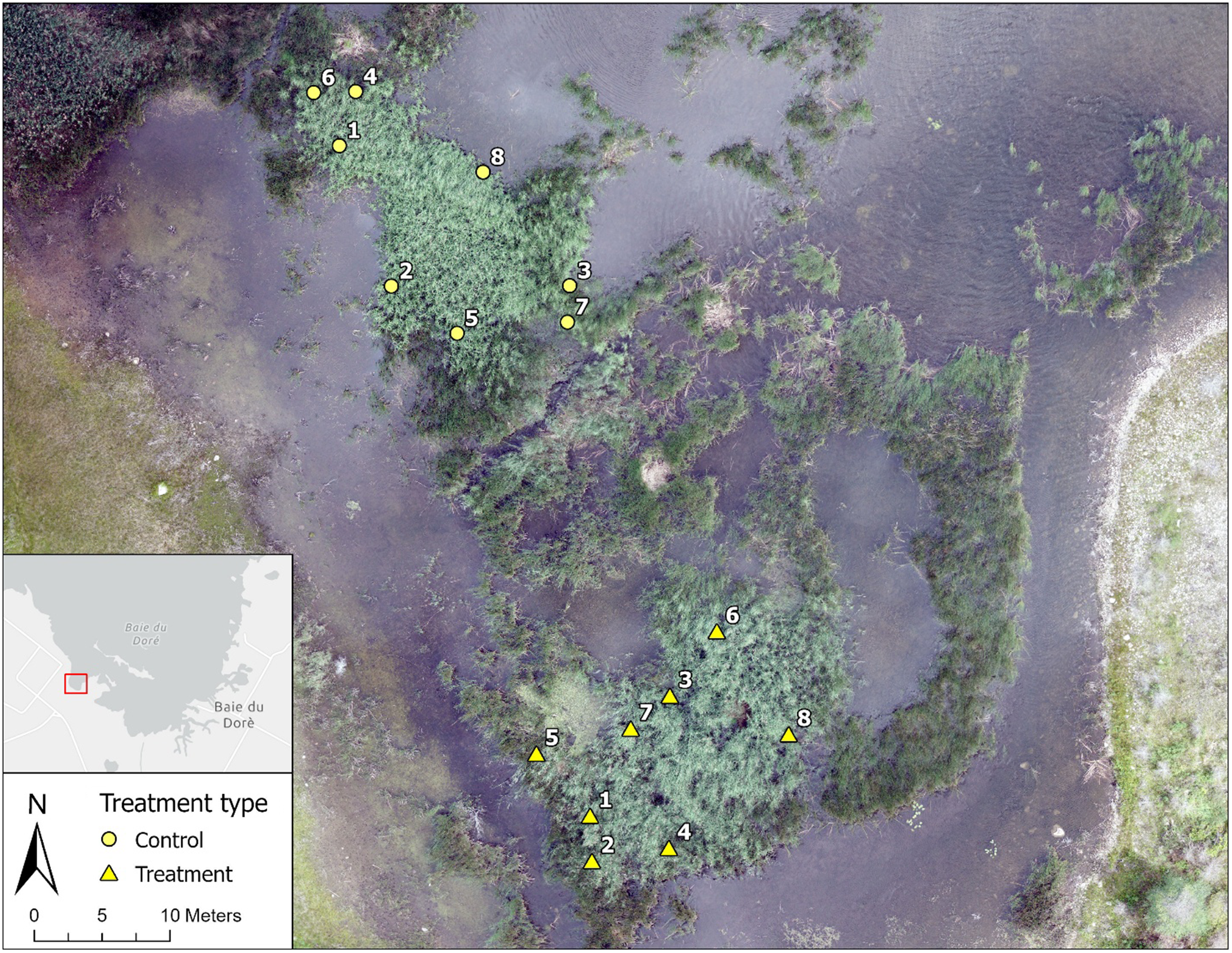
In August 2022, we conducted baseline vegetation surveys at Baie du Doré and Rondeau Provincial Park wetlands before the herbicide application. These surveys aimed to assess the initial state of the P. australis invasions and determine overall species composition within the sites. We divided each site into control and treatment areas in a manner optimizing the comparability of control and treatment areas given the specific distribution of P. australis in each wetland. At Baie du Doré, we selected two P. australis patches of comparable size (∼0.03 ha) and live stem density (∼75 live stems m−2) at similar water depths for surveying, because the P. australis was distributed in smaller patches interspersing the open water (Figure 3). At Rondeau Provincial Park, where the P. australis grew in a swamp-marsh complex, we targeted an ∼4-ha linear slough where P. australis live stem density was ∼35 live stems m−2. We divided the slough medially from northeast to southwest (Figure 4). Which area was designated for treatment and which for control was decided randomly.
Locations of experimental control (n = 8) and treatment (n = 8) plots for remotely piloted aircraft system (RPAS)-based herbicide treatment in Baie du Doré wetland. The northern patch was left as the control (untreated) and the southern patch was designated as the treatment side to be sprayed with Habitat® Aqua by an RPAS. Numbers represent pairing by water depth between the treatment and control plots. Base map imagery was collected by Ontario Power Generation’s Advanced Inspection and Maintenance team in 2022.
Locations of experimental control (n = 10) and treatment (n = 10) plots for remotely piloted aircraft system (RPAS)-based herbicide treatment in Rondeau Provincial Park wetland. The east side of the slough was left as the control (untreated) side, and the west side of the slough was designated as the treatment side to be sprayed with Habitat® Aqua by an RPAS. Numbers represent pairing by water depth between the treatment and control plots. Base map imagery was collected by Ontario Power Generation’s Advanced Inspection and Maintenance team in 2022.
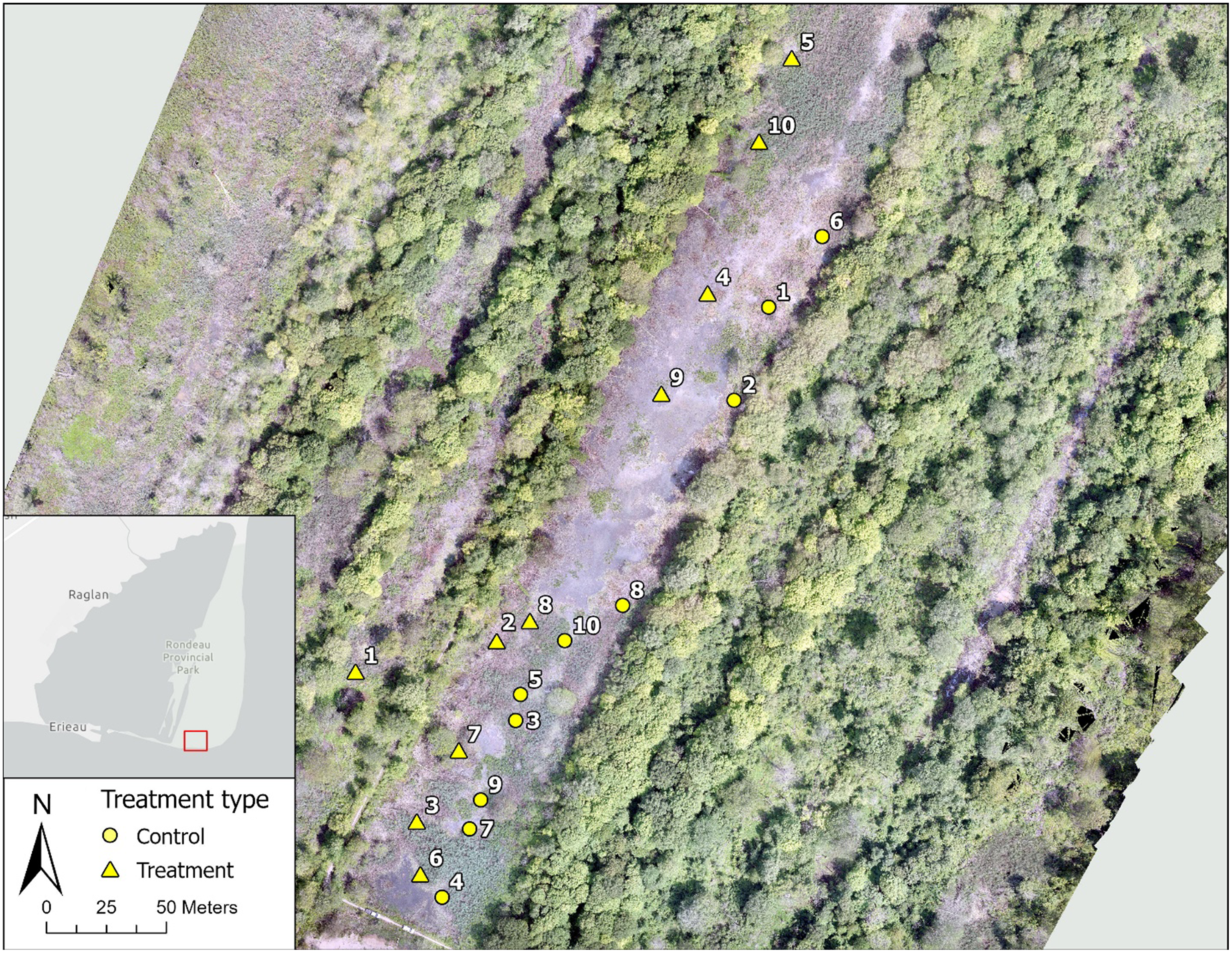
The summer before herbicide application, we completed quadrat surveys (1 m2) (n = 16 at Baie du Doré [Figure 3]; n = 20 at Rondeau Park [Figure 4]) within the selected control and treatment areas. Plots were deployed in a semirandom manner with half established in the control areas and the other half in the treatment areas, such that they were paired by water depth to ensure that control and treatment plots spanned a similar range of water depths (0 to 43 cm) and plots were spread across each area (Figures 3 and 4). By comparing control and treatment plots, both before and after herbicide treatment, we accounted for year over year variation in vegetation communities that is not attributable to the herbicide treatment.
During the pre- and posttreatment vegetation surveys of each plot, we measured water depth, density of live and dead P. australis stems, and plant-canopy height. Vascular plants in the plots were identified to species, wherever possible, following the Field Manual of Michigan Flora (Voss and Reznicek Reference Voss and Reznicek2013), and the relative cover of each plant was estimated to document the current vegetation community present in each plot. Additionally, we recorded GPS coordinates with submeter accuracy (SXPro GNSS, Geneq, Montreal, QC, Canada) at the center of each plot and placed bamboo stakes with flagged labels at the four corners of each plot to facilitate identifying plot location and orientation the following year. In August 2023, we conducted follow-up vegetation surveys at both wetlands following the same sampling methods to assess the posttreatment state of the plots.
RPAS-based Herbicide Application
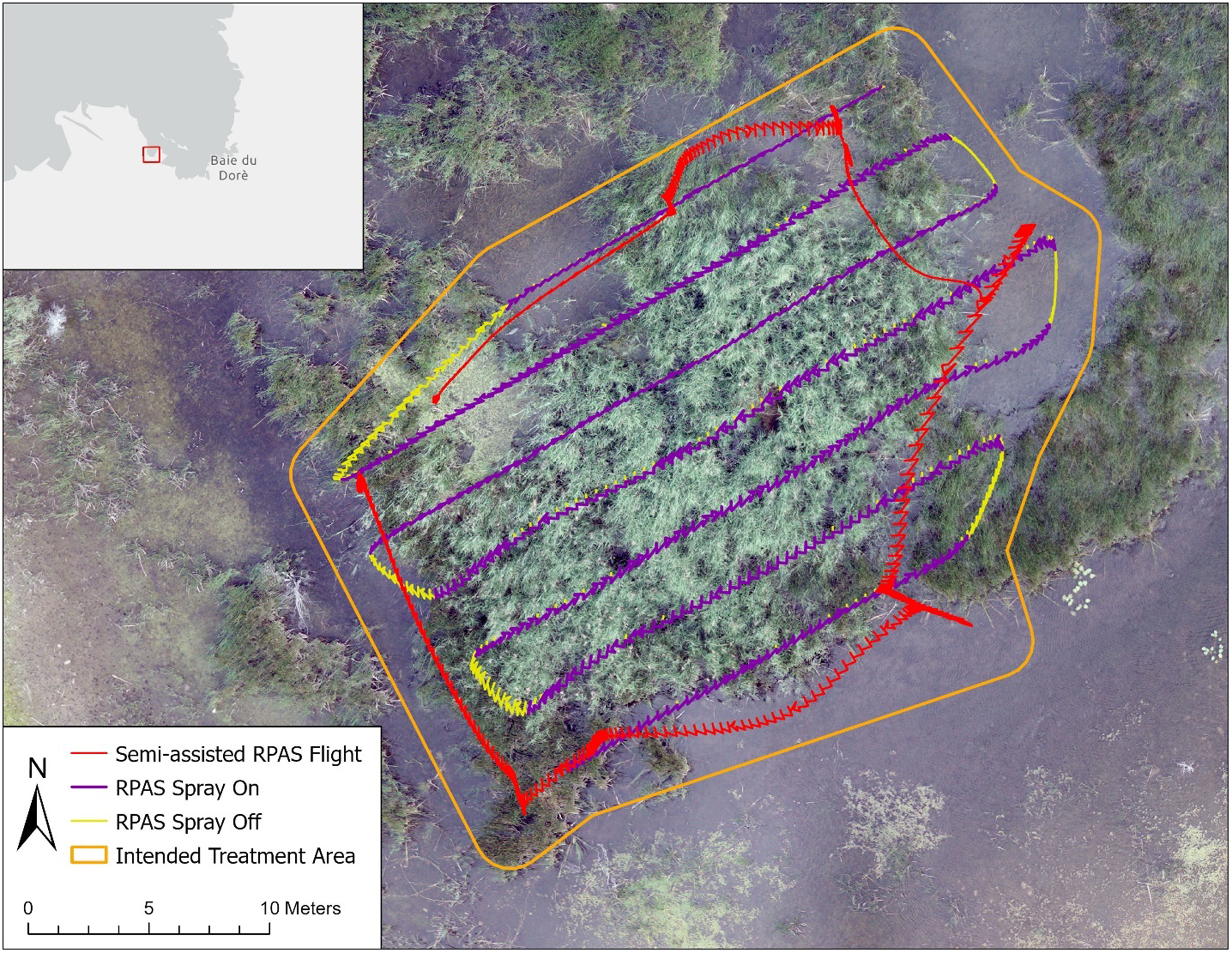
In September 2022, imazapyr as an isopropylamine salt (Anonymous YYYY; Habitat® Aqua, 240 g ai L−1, BASF Canada, Mississauga, ON, Canada; Pesticide Registration Number 32374; Proposed Registration Decision PRD2020-17) was applied to the designated treatment areas by an RPAS under the Research Authorization 0009-RA-22. The herbicide was applied at a rate of 4.68L ha−1 and total spray volume of 100 L ha−1 (includes 0.25% v/v Aquasurf® non-ionic spray adjuvant, Norac Concepts, Guelph, ON, Canada, Pesticide Registration Number 32152) by a licensed drone pilot and pesticide applicator (Adrian Rivard, Drone Spray Canada, L-208-8129866762). The RPA used for application was a Hylio AG-110 multi-rotor (Hylio, Richmond, TX, USA) carrying 9.5 L (2.5 gal) of herbicide. The AG-110 was equipped with eight AIXR110015 spray nozzles (two per rotor) and sprayed with a medium droplet size (236 to 340 µm; ASABE n.d.). The RPA was flown at an average height of 3.0 m above ground level at plot locations with an average speed of 1.7 m s−1. Each flight was composed of an automated pattern of parallel flight lines with an average distance of 3 m between each flight line followed by a semi-assisted manually piloted flight around the perimeter of the application area (e.g., Figure 5). In both automated and semi-assisted flight modes, sprayers were turned off when the RPA was turning or stopped to minimize collateral damage.
Semi-assisted flight lines (red; spraying herbicide along the ferry lines), automated flight lines (purple; spraying herbicide), and ferry lines (yellow; not spraying herbicide), used in the remotely piloted aircraft system (RPAS)-based Habitat® Aqua application to the intended treatment area (orange polygon). Base map imagery was collected by Ontario Power Generation’s Advanced Inspection and Maintenance team in 2022.
RPAS herbicide application procedures adhered to the maximum wind speed constraint provided by the Pest Management and Regulatory Agency permit of 8 km h−1, Habitat® Aqua’s label recommendations for reducing spray drift, and weed-specific instructions for P. australis (BASF Canada). In the field, treatment areas were delineated either using the RPA camera in first person–view mode and establishing waypoints around the P. australis patch perimeter or through a combination of the first person–view approach and ground observations of the aircraft position. Ground observations were made by walking out into the wetland in waders and using radio communication with the pilot to identify and confirm perimeter waypoints for flight plans. Following the treatment, visual observations in the field showed no evidence of spray drift due to wind gusts, as the rotors of the RPAS primarily pushed the herbicide droplets downward and wind speed was very low (Supplementary Table S1). We observed P. australis leaves to be dry within minutes of the herbicide application. Secondary treatment such as burning, rolling, or cutting of standing dead biomass was not undertaken after herbicide application.
Statistical Methods
To address objective 1 and measure the efficacy of the RPAS-based herbicide application in suppressing invasive P. australis, we used a Kruskal-Wallis test (Kruskal and Wallis Reference Kruskal and Wallis1952) with an alpha = 0.05, looking for a significant difference in live P. australis stem density, total P. australis stem density, and canopy height. We used this test because the response variables violated the assumptions of a one- or two-way ANOVA (normality of the residuals that could not be corrected by transformation and homogeneity of variance of the residuals); we therefore opted for the nonparametric equivalent that does not hold the same assumptions about the distribution of residuals. If the null hypothesis was rejected by the Kruskal-Wallis test, we used a Dunn’s test for multiple planned comparisons of median differences (Dunn Reference Dunn1964) with a Bonferroni correction to adjust the P-value in accordance with the number of pairwise comparisons. All statistical analyses were conducted in R v. 4.3.2 (R Core Team 2023). We used the same test for the same reasons to address objective 2 and characterize differences in plant community diversity and floristic quality in the year following P. australis suppression, including species richness (S), Shannon-Weiner diversity (H′), Simpson’s reciprocal diversity index (1/D), Pielou’s evenness (J), and mean coefficient of conservatism (mean CC s ) (Supplementary Table S2). The Shannon-Weiner diversity and Simpson’s reciprocal diversity indices were calculated with the R package vegan (Oksanen et al. Reference Oksanen, Blanchet, Kindt, Legendre, Minchin, O’Hara, Simpson, Solymos, Stevens and Wagner2013).
Coefficients of conservatism are values assigned to plant species by expert botanists and range from 0 to 10. These values represent the likelihood of a given plant species occurring in the assessed region as well as its ability to tolerate disturbance. Low values represent species that can withstand greater environmental and anthropogenic disturbances, while high values represent plant species of high conservation value that have lower tolerance to disturbance; non-native species are given a value of zero. Coefficients of conservatism for each identified plant species were obtained from Floristic Quality Assessment System for Southern Ontario (Oldham et al. Reference Oldham, Bakowsky and Sutherland1995). Mean coefficients of conservatism were calculated following the recommended equation for CC s by Kutcher and Forrester (Reference Kutcher and Forrester2018).
Results and Discussion
Phragmites australis Suppression Efficacy
We assessed the efficacy of RPAS-based herbicide application on P. australis in wetlands through response variables, including live P. australis stem density and canopy height. Live P. australis stem density and canopy height were reduced dramatically 1 yr after the herbicide treatment with Habitat® Aqua using the RPAS (Figure 6). Specifically, live P. australis stem density in the herbicide-treated plots decreased by >99% across both sites (Kruskal-Wallis: H 3 = 40.6, P < 0.001), with only one of the 18 treatment plots surveyed after the RPAS-based herbicide treatment having live P. australis stems. Total P. australis stem density (including standing dead stems) did not change significantly after the herbicide treatment (Kruskal-Wallis: H 3 = 0.44, P = 0.931).
Jitter plot comparison of live Phragmites australis stem density (A), total P. australis stem density (B), and canopy height (C) between control and remotely piloted aircraft system (RPAS)-based herbicide-treated plots pretreatment (2022) and posttreatment (2023). Note that total stem density includes both live and dead stems of P. australis. Gray circles represent control sites, and green triangles represent treated sites. Black symbols represent the median value, and error bars represent SD. Created with ggplot2 (Wickham Reference Wickham2016).
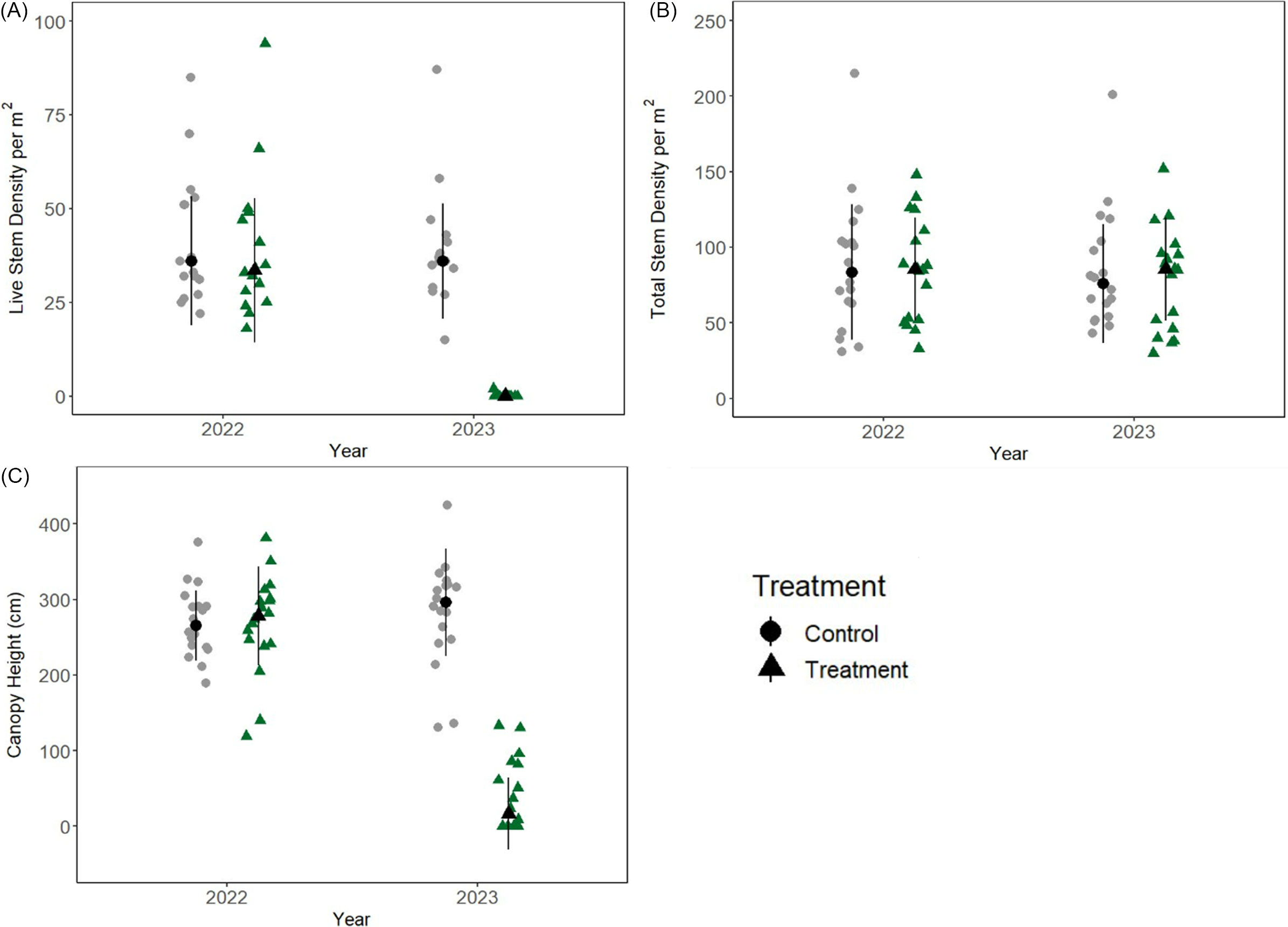
Median canopy height did not differ among 2022 control, 2022 treatment, and 2023 control plots, but did decrease significantly by ∼94% in the herbicide-treated plots (Kruskal-Wallis: H 3 = 40.4, P < 0.001). We used a Dunn’s post hoc test for planned comparisons to support our interpretation of the Kruskal-Wallis results. These planned comparisons first contrast the 2022 (pre-)treatment and control plots to evaluate the pretreatment similarity between treatment and controls; second, contrast the control plots in 2022 and 2023 to assess any interannual differences; and third, contrast the 2023 (post-)control plots and RPAS-treated plots, as well as the 2022 (pre-)treatment plots and RPAS-treated plots to understand the nature of any significant effect of treatment. Our results (Table 1) corroborate other reports that backpack spraying with imazapyr reduced live P. australis stem density by 100% (using a rate of 560 g ai ha−1; Knezevic et al. Reference Knezevic, Rapp, Datta and Irmak2013) and 95% (5% concentration in 10-m2 macro-plots; Mozdzer et al. Reference Mozdzer, Hutto, Clarke and Field2008). When Habitat® Aqua was applied by helicopter with a 7% solution, P. australis abundance was reduced by ∼90% (Whyte et al. Reference Whyte, Holomuzki and Klarer2009). Our results demonstrate that RPAS-based herbicide application is an equally effective application method for initial suppression of P. australis in wetlands.
Dunn’s test results of planned comparisons among control and remotely piloted aircraft system (RPAS)-based herbicide-treated plots pretreatment (2022) and post-treatment (2023) for live Phragmites australis stem density and canopy height. a

a Each comparison group had a sample size of 18 plots.
b Adjusted P-value is based on the Bonferroni correction method for multiple planned comparisons.
Plant Diversity following Phragmites australis Suppression
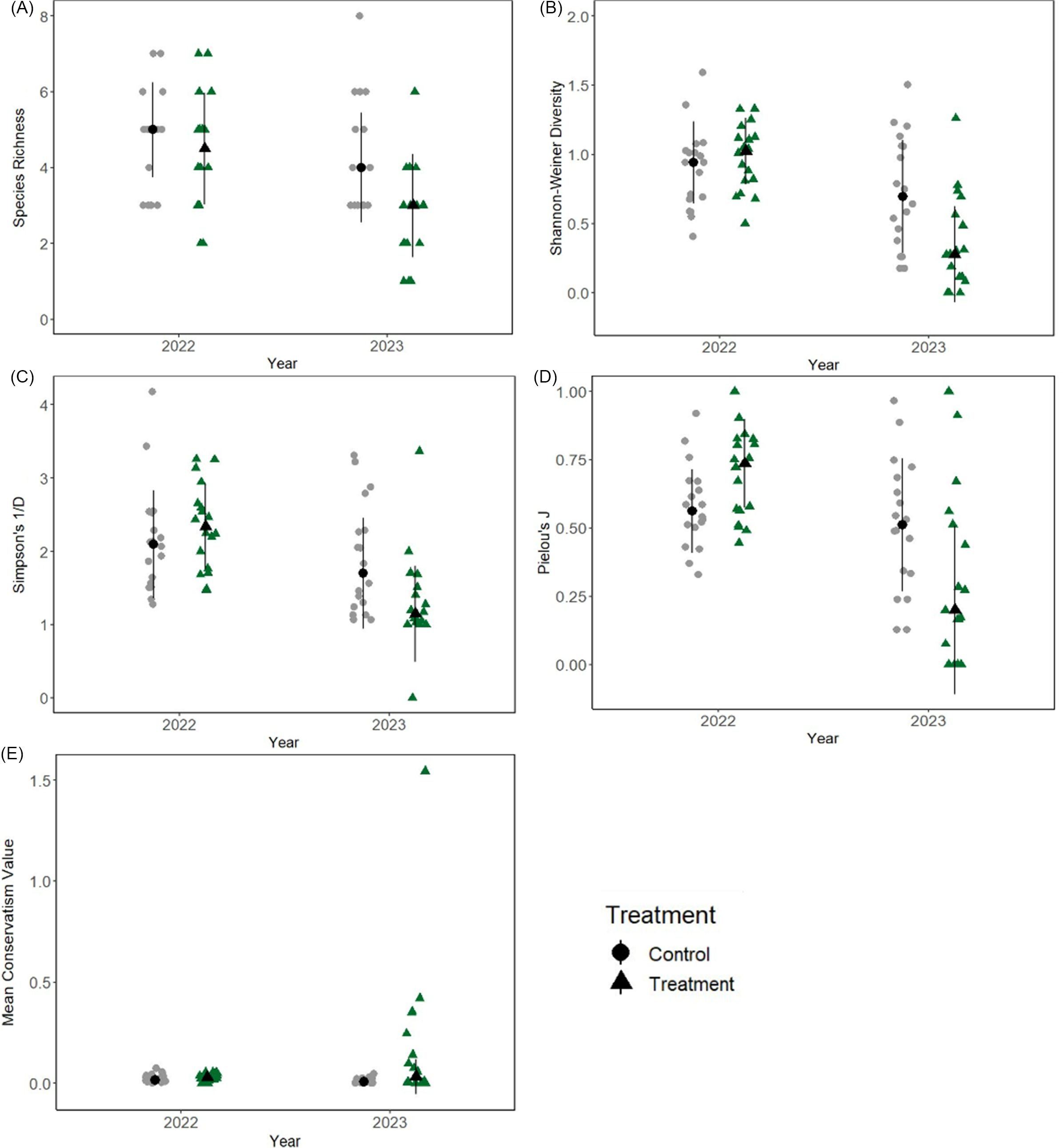
In addition to the impact on P. australis abundance, there was also an anticipated significant reduction on plant diversity at 1 yr after the herbicide application (Figure 7). Biodiversity was not different across the nontreated plots (2022 control, 2022 treatment, and 2023 control plots) as represented by all plant diversity metrics (Table 2). However, the median value for all plant diversity metrics was significantly reduced following the RPAS-based herbicide treatment (Table 2). Species richness decreased by approximately 33% (Kruskal-Wallis: H 3 = 18.8, P < 0.001), the Shannon-Weiner diversity index decreased by nearly 73% (Kruskal-Wallis: H 3 = 23.7, P < 0.001), the Simpson’s reciprocal diversity index decreased by 50% (Kruskal-Wallis: H 3 = 23.1, P < 0.001), and Pielou’s evenness decreased by 73% in herbicide-treated plots (Kruskal-Wallis: H 3 = 18.3, P < 0.001). The Kruskal-Wallis test revealed a significant difference among the control and treatment groups (H 3 = 8.73, P = 0.033) for the mean coefficient of conservatism. However, based on the post hoc Dunn’s test, no significant differences were observed among control and treatment groups due to the strictness of the Bonferroni correction used for planned comparisons.
Jitter plot comparison of (A) species richness (S), (B) Shannon-Weiner diversity (H′), (C) Simpson’s reciprocal diversity index (1/D), (D) Pielou’s evenness (J), and (E) mean coefficient of conservatism value (CC s ) between control and remotely piloted aircraft system (RPAS)-based herbicide-treated plots pretreatment (2022) and posttreatment (2023). Gray circles represent control sites, and green triangles represent treated sites. Black symbols represent the median value, and error bars represent SD. Created with ggplot2 (Wickham Reference Wickham2016).
Dunn’s test results of planned comparisons among control and remotely piloted aircraft system (RPAS)-based herbicide-treated plots pretreatment (2022) and posttreatment (2023) for species richness (S), Shannon-Weiner diversity (H′), Simpson’s reciprocal diversity index (1/D), Pielou’s evenness (J), mean coefficient of conservatism value (CC s ) a
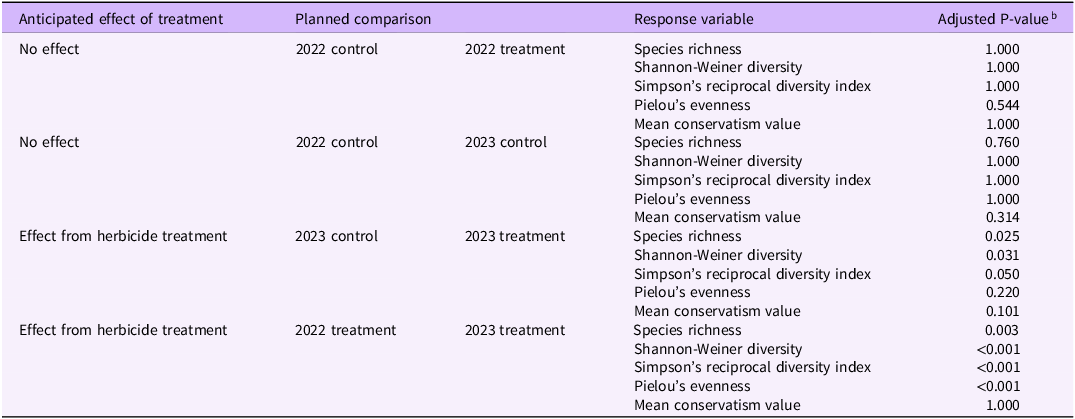
a Each comparison group had a sample size of 18 plots.
b Adjusted P-value is based on the Bonferroni correction method for multiple planned comparisons.
An initial reduction of these response variables has been reported by others (e.g., Jordan Reference Jordan2022; Robichaud and Rooney Reference Robichaud and Rooney2021a; Zimmerman et al. Reference Zimmerman, Shirer and Corbin2018). In similar study areas (Long Point and Rondeau Provincial Parks in Ontario, Canada), helicopter glyphosate treatments showed a 33% reduction in species richness, 69% reduction in Shannon-Weiner diversity, 9% reduction in Simpson’s reciprocal diversity index, and 63% reduction in Pielou’s evenness 1 yr after the initial herbicide treatment (Robichaud and Rooney Reference Robichaud and Rooney2021a), exhibiting values similar to our plots that had reductions of 33%, 73%, 50%, and 73%, respectively. It has been shown in similarly biodiverse areas that it takes a minimum of 3 yr after initial treatment before the plant community will begin to transition to predominantly native vegetation (Jordan Reference Jordan2022). Consequently, these declines in plant community diversity are likely not permanent, but reflect the early stages of community succession following the removal of the dominant invasive P. australis. These early stages of succession are important to report on, however, as priority effects are recognized as important in plant community outcomes of wetland restoration (e.g., Tarsa et al. Reference Tarsa, Holdaway and Kettenring2022).
The level of hydrologic disturbance and health of the seedbank will largely dictate whether native plants will reestablish after herbicide suppression of P. australis (Rohal et al. Reference Rohal, Cranney, Hazelton and Kettenring2019), and the plots surveyed in our studies represent biodiverse coastal wetlands, likely representing a best-case scenario for plant community recovery from a strong seedbank. While we expect the response variables in our plots to follow a similar plant recovery trajectory, continuous monitoring of the herbicide-managed wetlands is needed to document the short- and long-term plant community composition changes (Bonello and Judd Reference Bonello and Judd2020; Kettenring and Adams Reference Kettenring and Adams2011; Robichaud and Rooney Reference Robichaud and Rooney2021a). The presence of standing dead biomass in the first year after treatment likely increased shading in the surveyed plots and may have hindered germination of species from the seedbank that rely on high light interception through the canopy (Minchinton et al. Reference Minchinton, Simpson and Bertness2006). However, standing dead biomass and light penetration of areas that did not undergo secondary treatment reached levels similar to those in areas that underwent burning, rolling, or cutting within a 2-yr time frame (Robichaud and Rooney Reference Robichaud and Rooney2021a), suggesting that the standing dead biomass may not limit species richness, evenness, and diversity in the treated marsh permanently. Additionally, inclusion of secondary treatment can offset the benefits of RPAS-based herbicide application, as heavy machinery is needed to mechanically knock down the standing dead biomass and risks crushing sensitive species such as snakes and turtles in its path (Angoh et al. Reference Angoh, Freeland, Paterson, Rupasinghe and Davy2021).
Plant Community Composition Changes in Herbicide-treated Plots
At Baie du Doré, a total of eight species were identified in the pretreatment plots, while nine species were identified in the plots posttreatment. At Rondeau Provincial Park, 15 species were identified in the pretreatment plots, and 17 species were identified in the plots posttreatment (Supplementary Table S3). At Baie du Doré, only two plant species present in the plots before treatment with herbicide persisted in the herbicide-treated plots (common duckweed (Lemna minor L.) and P. australis) the following year. After the RPAS-based herbicide treatment, five species, including hybrid cattail (Typha glauca Godr. (pro sp.)), were excluded from the herbicide-treated plots, and seven species that were not found in the baseline vegetation surveys appeared in the herbicide-treated plots, including the native plant spotted jewelweed (Impatiens capensis Meerb.). At Rondeau Provincial Park, four plant species present before the herbicide treatment persisted in the herbicide-treated plots the following year (three-lobed beggartick (Bidens tripartita L.), bulblet-bearing water hemlock (Cicuta bulbifera L.), European frog-bit (Hydrocharis morsus-ranae L.), and L. minor). After the RPAS-based herbicide treatment, six species, including P. australis, were excluded from the herbicide-treated plots, and three species that were not found in the baseline vegetation surveys appeared in the herbicide-treated plots, including the native wildrice (Zizania aquaticaL.). At Baie du Doré the native plant cover decreased by 15% in the control plots, while increasing by 20% in the herbicide-treated plots. At Rondeau Provincial Park, native plant cover decreased by 16% in the control plots and by 65% in the herbicide-treated plots. In contrast, the non-native plant cover at Baie du Doré increased by 50% in the control plots and decreased by 100% in the herbicide-treated plots. At Rondeau Provincial Park, non-native plant cover similarly increased by 55% in control plots and decreased by 25% in the herbicide-treated plots.
Although the mean coefficient of conservatism (CC s ) remained relatively low, with the highest observed mean CC s value being 1.5 of a possible 10, the increase in value from the control plots reflects that P. australis (CC s = 0) is no longer the dominant species in the plots. After the herbicide treatment, H. morsus-ranae (CC s = 0) became the dominant species in the treated plots at Rondeau Provincial Park. Secondary invasions by species like H. morsus-ranae have been documented previously (e.g., Bonello and Judd Reference Bonello and Judd2020; Robichaud and Rooney Reference Robichaud and Rooney2021a), as the suppression of P. australis without active planting or reseeding creates an open niche within which secondary invaders can establish (Kettenring and Tarsa Reference Kettenring and Tarsa2020). For example, during monitoring of the effects of glyphosate treatment in Rondeau Provincial Park, a secondary invasion by H. morsus-ranae was also observed in the first years after P. australis suppression (Robichaud and Rooney Reference Robichaud and Rooney2021a). However, at Baie du Doré, a secondary invasive species did not establish in the plots; instead, the annual I. capensis (CC s = 4) became most abundant. The observed difference between the two sites may be due to the pretreatment plant community composition (Pearson et al. Reference Pearson, Ortega, Runyon and Butler2016). For example, H. morsus-ranae was observed in nearly all pretreatment plots at Rondeau Provincial Park but not in the plots from Baie du Doré. This suggests that pretreatment surveys may help predict where secondary invasions are likely to occur following P. australis suppression and could be useful in generating guidance on where seeding or planting could be most valuable to facilitate native plant community recovery. Additionally, the increase in water depths at Rondeau Provincial Park between 2022 (19 cm; std. 13 cm) and 2023 (32 cm; std. 11 cm) was likely a contributing factor. Because H. morsus-ranae is a floating macrophyte, these deeper water conditions likely favored its establishment in the absence of P. australis. Unlike Rondeau Provincial Park, water depths at Baie du Doré decreased between 2022 (23 cm; std. 10 cm) and 2023 (13 cm; std. 9 cm), resulting in moist conditions that could favor germination of annuals like I. capensis. Interestingly, I. capensis was not present in the 2022 pretreatment plots at Baie du Doré, although we would not expect it to coexist with the dense P. australis targeted for treatment. Instead, I. capensis likely either dispersed into the treated area following herbicide application (e.g., its seeds can travel up to 2 m through ballistic dispersal; Hayashi et al. Reference Hayashi, Feilich and Ellerby2009). Alternatively, it may have been waiting in the seedbank for suitable conditions to arise, as I. capensis seeds can remain viable in the seedbank for up to 3 yr (Perglová et al. Reference Perglová, Pergl, Skálová, Moravcová, Jarošík and Pyšek2009).
While our main goal was to evaluate the initial suppression efficacy of RPAS-based herbicide application to P. australis in wetlands, long-term monitoring is necessary to assess the outcome of P. australis suppression for the vegetation community (Jordan Reference Jordan2022); although notably, a review found that 40% of studies on P. australis management lasted only 1 yr (Hazelton et al. Reference Hazelton, Mozdzer, Burdick, Kettenring and Whigham2014; Kettenring and Adams Reference Kettenring and Adams2011). Based on existing P. australis management literature using systemic herbicides (Derr Reference Derr2008; Knezevic et al. Reference Knezevic, Rapp, Datta and Irmak2013; Mozdzer et al. Reference Mozdzer, Hutto, Clarke and Field2008) and the reported trajectory of vegetation recovery (Bonello and Judd Reference Bonello and Judd2020; Robichaud and Rooney Reference Robichaud and Rooney2021a), we anticipate that the RPAS-treated sites will follow a similar succession, provided adequate follow-up treatments and monitoring take place (Lombard et al. Reference Lombard, Tomassi and Ebersole2012). However, while the dominance of H. morsus-ranae at Rondeau Provincial Park and I. capensis at Baie du Doré may be due to hydrologic disturbance, the health of the seedbank, or sources of native plant propagules (Rohal et al. Reference Rohal, Cranney, Hazelton and Kettenring2019), the differences in these biodiverse coastal wetlands in the first year after herbicide treatment highlight the need for further examination of the complex factors involved in plant recovery following P. australis suppression in dynamic wetland environments. Further research is needed to evaluate the broader implications of RPAS-based herbicide applications at a larger extent than was feasible under our Research Authorization (limited to 2 ha of intended treatment area per site), and continued monitoring should be implemented to assess native plant recovery. Additionally, research in lower-density P. australis patches (<20 live stems m−2) or systematically assessing the effects of fragmentation and interspersion (e.g., Robinson et al. Reference Robinson, Brown and Currie2009) on the herbicide efficacy could increase the generalizability of our results, which were collected from relatively contiguous patches with higher live P. australis stem density (minimum of 20 live stems m−2).
Our results have important implications for wetland management and conservation efforts, particularly in the context of invasive species control and habitat restoration. The substantial reduction in P. australis live stem density and canopy height following RPAS-based herbicide application represents successful initial P. australis suppression, but the widely reported need for follow-up treatments to maintain long-term suppression of P. australis (e.g., those summarized by Kettenring and Adams [Reference Kettenring and Adams2011] and Lombard et al. [Reference Lombard, Tomassi and Ebersole2012]) could also be reduced with RPAS-based herbicide applications. The few surviving ramets observed in our study will mean that the area requiring follow-up treatment is reduced compared with helicopter application methods. Further, RPAS technology has valuable potential for follow-up spot spraying of remnant P. australis ramets after initial herbicide treatments. Minimizing repeated herbicide applications is crucial to reduce the total amount of herbicide entering wetlands for P. australis management and to lower the risks of P. australis evolving herbicide resistance and the threat of herbicides accumulating in the environment.
RPAS technology is acknowledged for its ability to be used in association with dull, dirty, or dangerous activities on-demand without jeopardizing the safety of pilots, which in the case of P. australis management can include the health of those taking part in herbicide applications or bystanders. Given the success of this first application of RPAS-based herbicide application to P. australis in Canada (>99% reduction in live stem density 1 yr after treatment), RPASs have the potential to play a critical role in invasive species mapping and management (Takekawa et al. Reference Takekawa, Hagani, Edmunds, Collins, Chappell and Reynolds2023). While our focus was on the efficacy of RPAS-based imazapyr applications, there is a need to quantify the off-treatment effects on adjacent vegetation based on herbicide (e.g., droplet size) and flight (e.g., height) parameters to better inform land managers of the impacts of these combined technologies on the broader ecosystem.
Supplementary material
To view supplementary material for this article, please visit https://doi.org/10.1017/inp.2025.8
Acknowledgments
The authors would like to thank Adrian Rivard from Drone Spray Canada who conducted the herbicide application as well as Christopher Budd and Bradley Hayhoe from BASF who provided herbicides used in the trials. Thank you to the technicians who supported data collection: Adrienne Mason and Megan Jordan.
Funding statement
This work was supported by an NSERC Discovery Grant RGPIN-2023-03662 to RCR and by an NSERC CGS-M award to GKL-K.
Competing interests
The authors declare no conflicts of interest.


 Open access

