





Impact statement
This scoping review maps and examines the current research evidence on the role of law enforcement in suicide prevention. It traces the development of their engagement from a narrow, legalistic frame of suicide to an increasing recognition of law enforcement as an important partner of multisectoral, collaborative responses to this public health problem. The review also points to major geographical inequalities in the published research, calling for efforts to build community-focused and integrated contributions of the law enforcement agencies in low- and middle-income countries (LMICs), where the heavy burden of suicide, large treatment gaps and intricate determinants of suicide require their crucial engagement.
Introduction
World Health Organisation’s (WHO) Comprehensive Mental Health Action Plan focuses on enhancing responses to self-harm and suicide by engaging and training non-health sectors, such as law enforcement, in assessment, support provision and follow-up of individuals at risk of suicide (World Health Organisation, 2013). Law enforcement agency (LEA) is a term conventionally used to describe police and related authorities involved in upholding and enforcing the law as well as maintaining public safety. These are uniquely situated to support this cause within the global agenda to reduce increasing suicide rates, viewing suicide as a public health issue. In sustainable development goals (SDGs), SDG-3 (good health and well-being) and SDG-16 (peace, justice and strong institutions) emphasise LEAs’ responsibilities in engaging with individuals in crisis, safeguarding communities and playing roles in prevention and postvention efforts. SDG-3 target 3.4.2 aims to reduce suicide mortality by one-third by 2030, while targets 16.1, 16.2 and 16.3 of SDG-16 specify the need for accountable and transparent policing that enforces equitable protection and access to justice for marginalised and vulnerable groups (United Nations, 2015a, 2015b). Although they play a pivotal role, the evidence base for LEAs in preventing suicide is scarce and limited.
Much of the previous research in this field concentrated narrowly on the investigative functions or custodial responsibilities (Best et al., Reference Best, Havis, Payne-James and Stark2006), within prisons or other such institutional settings. Although the contribution of LEA in safeguarding vulnerable groups in this context is instrumental, it presents only a fraction of their possible contribution. Their wider participation within community settings for various interventions targeted at early detection, promotion and prevention is underexplored (Oyama and Sakashita, Reference Oyama and Sakashita2017; Khorasheh et al., Reference Khorasheh, Naraine, Watson, Wright, Kallio and Strike2019; Spagnolo and Lal, Reference Spagnolo and Lal2021; Morgan et al., Reference Morgan, Roberts, Mackinnon and Reifels2022). Most of the earlier studies highlighted specific functions of the LEA such as crisis intervention (Khorasheh et al., Reference Khorasheh, Naraine, Watson, Wright, Kallio and Strike2019; Spagnolo and Lal, Reference Spagnolo and Lal2021), first response (Canada et al., Reference Canada, Angell and Watson2010; Burnette et al., Reference Burnette, Ramchand and Ayer2015; Arensman et al., Reference Arensman, Coffey, Griffin, Van Audenhove, Scheerder, Gusmao, Costa, Larkin, Koburger, Maxwell, Harris, Postuvan and Hegerl2016; Oyama and Sakashita, Reference Oyama and Sakashita2017; Chidgey et al., Reference Chidgey, Procter, Baker and Grech2019; Morgan et al., Reference Morgan, Roberts, Mackinnon and Reifels2022), (National Institute for Health and Care Excellence, 2018), gatekeeping (Canada et al., Reference Canada, Angell and Watson2010; Burnette et al., Reference Burnette, Ramchand and Ayer2015; Arensman et al., Reference Arensman, Coffey, Griffin, Van Audenhove, Scheerder, Gusmao, Costa, Larkin, Koburger, Maxwell, Harris, Postuvan and Hegerl2016; Oyama and Sakashita, Reference Oyama and Sakashita2017; Chidgey et al., Reference Chidgey, Procter, Baker and Grech2019; Morgan et al., Reference Morgan, Roberts, Mackinnon and Reifels2022) and handling suicide notifications (Department of Health, 2019; Thorne and O’Reilly, Reference Thorne and O’Reilly2022). Other functions included patrolling high-risk locations like bridges or public transport hubs and collecting data (Pirkis et al., Reference Pirkis, Too, Spittal, Krysinska, Robinson and Cheung2015; Public Health England, 2015; National Institute for Health and Care Excellence, 2018), such as real-time suicide surveillance (Baran et al., Reference Baran, Gerstner, Ueda and Gmitrowicz2021; Krishnamoorthy et al., Reference Krishnamoorthy, Mathieu, Armstrong, Ross, Francis, Reifels and Kõlves2023) or on institutional risks and support programmes for LEA themselves (Pirkis et al., Reference Pirkis, Too, Spittal, Krysinska, Robinson and Cheung2015; Public Health England, 2015; National Institute for Health and Care Excellence, 2018; Struszczyk et al., Reference Struszczyk, Galdas and Tiffin2019; Johnson et al., Reference Johnson, Dalton-Locke, Baker, Hanlon, Salisbury, Fossey, Newbigging, Carr, Hensel, Carrà, Hepp, Caneo, Needle and Lloyd-Evans2022). In other cases, their contribution is conceptualised in a very limited scope as a partner with other societal institutions or organisations (Matheson et al., Reference Matheson, Creatore, Gozdyra, Moineddin, Rourke and Glazier2005; Chidgey et al., Reference Chidgey, Procter, Baker and Grech2019). However, these roles are often defined in the context of being situational and not systematic. Moreover, there remains a significant gap in evidence concerning LEA-led or supported wider preventive or promotive community-based programmes (Norris and Cooke, Reference Norris and Cooke2000; Arensman et al., Reference Arensman, Coffey, Griffin, Van Audenhove, Scheerder, Gusmao, Costa, Larkin, Koburger, Maxwell, Harris, Postuvan and Hegerl2016; londoño et al., Reference londoño, Moreno Méndez and Rozo2020; Krishnamoorthy et al., Reference Krishnamoorthy, Mathieu, Armstrong, Ross, Francis, Reifels and Kõlves2023, Reference Krishnamoorthy, Mathieu, Armstrong, Ross, Francis, Reifels and Kõlves2025).
Although sporadic evidence is available across custodial, investigative, crisis response and self-care approaches, the evidence base is fragmented. It draws attention to an important gap, particularly in understanding how LEA can be strategically included within national and international suicide prevention strategies and other policy-driven initiatives. This review aims to fill the gap through the following objectives: 1) to map and examine existing literature on suicide prevention interventions involving LEA and 2) to systematically scope existing policies, guidelines and strategies that address suicide prevention approaches involving LEA.
Methods
The review follows the Preferred Reporting Items for Systematic Reviews and Meta-Analyses Extension for Scoping Reviews (PRISMA-ScR) guidelines (Tricco et al., Reference Tricco, Lillie, Zarin, O’Brien, Colquhoun, Levac, Moher, Peters, Horsley, Weeks, Hempel, Akl, Chang, McGowan, Stewart, Hartling, Aldcroft, Wilson, Garritty, Lewin, Godfrey, Macdonald, Langlois, Soares-Weiser, Moriarty, Clifford, Tunçalp and Straus2018).
Search strategy and selection criteria
A search strategy was created using the following key research concepts: (1) law enforcement personnel or police officers (population and context) and (2) suicide prevention (concept and outcome) (refer to detailed search strategy in the Supplementary Material). The reviewers (AD and NR) searched seven electronic databases, Embase, PubMed, PsycINFO, Web of Science, CINAHL and Scopus, using the search terms “law enforcement personnel*” AND “(suicide OR attempted suicide)” to identify studies on the role of LEA in suicide prevention. The search terms for each concept were combined using Boolean operators. The search was run between July 2024 and December 2025. Database searches were supplemented by a search of grey and unpublished literature and were explored using keywords and phrases from published material (AD and NR). The same keywords were used for searches on Google and Google Scholar, and the first 1,000 results were reviewed, respectively, as recommended in various reviews (Godin et al., Reference Godin, Stapleton, Kirkpatrick, Hanning and Leatherdale2015; Handerer et al., Reference Handerer, Kinderman, Shafti and Tai2022). The sources of grey literature were limited to documents that were publicly accessible and part of the search results on Google and Google Scholar. Reference lists of past reviews were also explored (by AD and NR) to find other studies that were included based on the inclusion criteria, as proposed in some reviews, to ensure the search was exhaustive and expansive (Godin et al., Reference Godin, Stapleton, Kirkpatrick, Hanning and Leatherdale2015; londoño et al., Reference londoño, Moreno Méndez and Rozo2020; Handerer et al., Reference Handerer, Kinderman, Shafti and Tai2022).
The research incorporated peer-reviewed articles, reports and guidelines/policy documents written in English that suggested, depicted, assessed or analysed interventions, laid out policies or practices initiated by LEA for suicide prevention. For inclusion, research had to be centred on LEA participation in suicide prevention, either as a main topic or a significant part. There were no geographical limitations, and studies from any country or region could be included. Both peer-reviewed papers and grey literature, i.e., government reports, organisational policies and policy documents, were eligible. Studies were not considered if they were not published in English (due to practical limitations), examined suicide prevention strategies targeted at LEA, strictly confined to the prison environment, or where LEA’s role was incidental or undefined. No date restrictions were applied, as the aim was to map evidence from all available years. Systematic reviews and meta-analyses were also excluded to focus on primary studies with detailed evidence on the role of law enforcement in suicide prevention pathways that are not accessible through aggregated syntheses.
Screening and selection
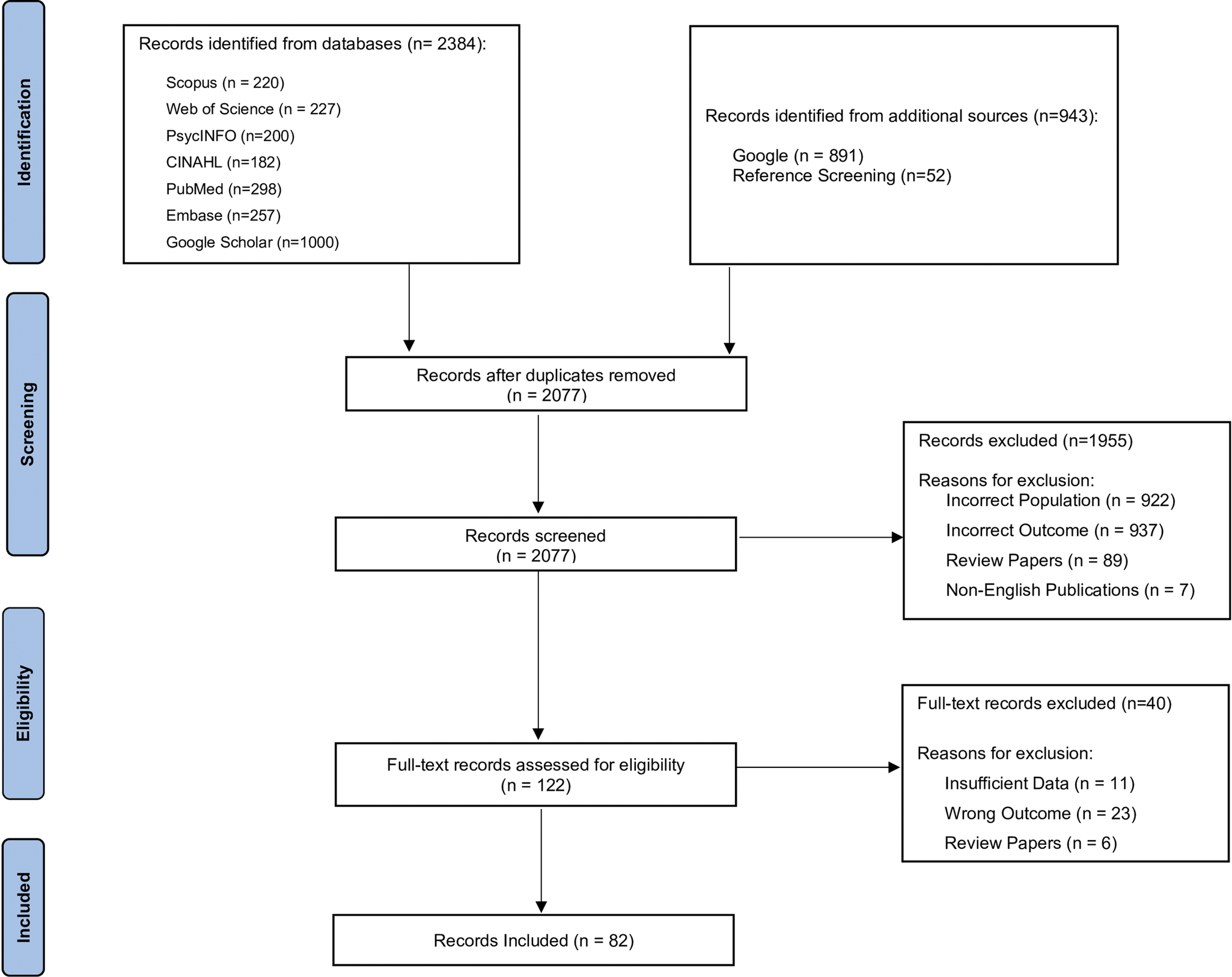
The search results from each database were imported into Rayyan (Ouzzani et al., Reference Ouzzani, Hammady, Fedorowicz and Elmagarmid2016), for the screening and de-duplication of the publications (by AD and NR). Two independent researchers (AD and NR) screened all identified articles by title and abstract to exclude papers that did not meet the inclusion criteria. De-duplication and initial screening were conducted in Rayyan, with Group 1 (AD, IL) and Group 2 (NR, NJ) screening independently. Any discrepancies within groups were resolved through discussion to reach consensus. If consensus could not be reached within a group, the issue was escalated to a cross-group discussion. Persistent disagreements were resolved by involving a third reviewer (SP) to make the final decision on study inclusion. The screening process and reasons for exclusion and inclusion are presented in the PRISMA chart as Figure 1.
PRISMA Chart.

Data extraction
The following data were extracted into an MS Excel (Microsoft Cooperation, 2024) spreadsheet (by AD and NR): title, authors, country, year of publication, type of literary resource, objective, study design, sample description, outcomes and recommended role of law enforcement agencies. For resources describing or evaluating an intervention, additional data were extracted on intervention description, duration, mode of delivery and outcome measurement tool. Data extracted from grey literature included title, year, country, region, author, geographical scope, scope or objective and key roles and responsibilities of LEAs described in the document, ensuring consistency in narrative synthesis and comparability across evidence types.
Data analysis
A narrative synthesis summarised the findings, mapped the scope and nature of included studies and identified patterns in LEA involvement in suicide prevention (Godin et al., Reference Godin, Stapleton, Kirkpatrick, Hanning and Leatherdale2015; Handerer et al., Reference Handerer, Kinderman, Shafti and Tai2022). Literary resources were classified as peer-reviewed sources and grey literature. Peer-reviewed sources focusing on the implementation or evaluation of LEA interventions or describing existing mechanisms and processes without reporting intervention results, were included in the study. Grey literature included international guidance outlining overarching aims, national and state policies articulating country or state-specific visions and action plans and country-specific guidance documents recommending practice approaches to suicide prevention.
Results
The study identified 3,327 resources through selected databases and grey literature searches, and an additional 54 through reference screening of the identified resources. After de-duplication, 2077 resources were included for further screening. We excluded 922 resources that did not focus on LEA, 937 that did not address suicide prevention specifically, 89 systematic or scoping reviews and 7 non-English publications, leaving 122 for full-text review. During full-text screening, we excluded 6 review papers, 11 resources with insufficient data and 23 resources that examined suicides within LEA and other outcomes outside the scope of this study. At last, a total of 82 resources were included in this review, describing intervention-based trials targeted at capacity-building and training of law enforcement agencies and community suicide prevention models, interdepartmental collaboration and other strategies adopted by or recommended for suicide prevention targeted at law enforcement.
Evidence characteristics of the identified resources
The evidence literature comprised peer-reviewed studies (n = 51) and grey literature (n = 31). The scope of the resources varied widely, addressing critical areas such as identifying the role of law enforcement agencies in suicide prevention (McGeechan et al., Reference McGeechan, Richardson, Weir, Wilson, O’Neill and Newbury-Birch2017; White and Hussain, Reference White, Hussain and Omar2020), training and intervention strategies involving LEAs for suicide prevention (World Health, 2012; Norton, Reference Norton2017; White and Hussain, Reference White, Hussain and Omar2020); the effectiveness of suicide prevention interventions involving LEAs (Lee et al., Reference Lee, Thomas, Doulis, Bowles, Henderson, Keppich-Arnold, Perez and Stafrace2015; Brooks-Russell et al., Reference Brooks-Russell, Runyan, Betz, Tung, Brandspigel and Novins2019) and the importance of LEAs in postvention efforts (Ko et al., Reference Ko, Youn, Lee, Lee, Lee and Kim2021).
Chronological mapping of the literature
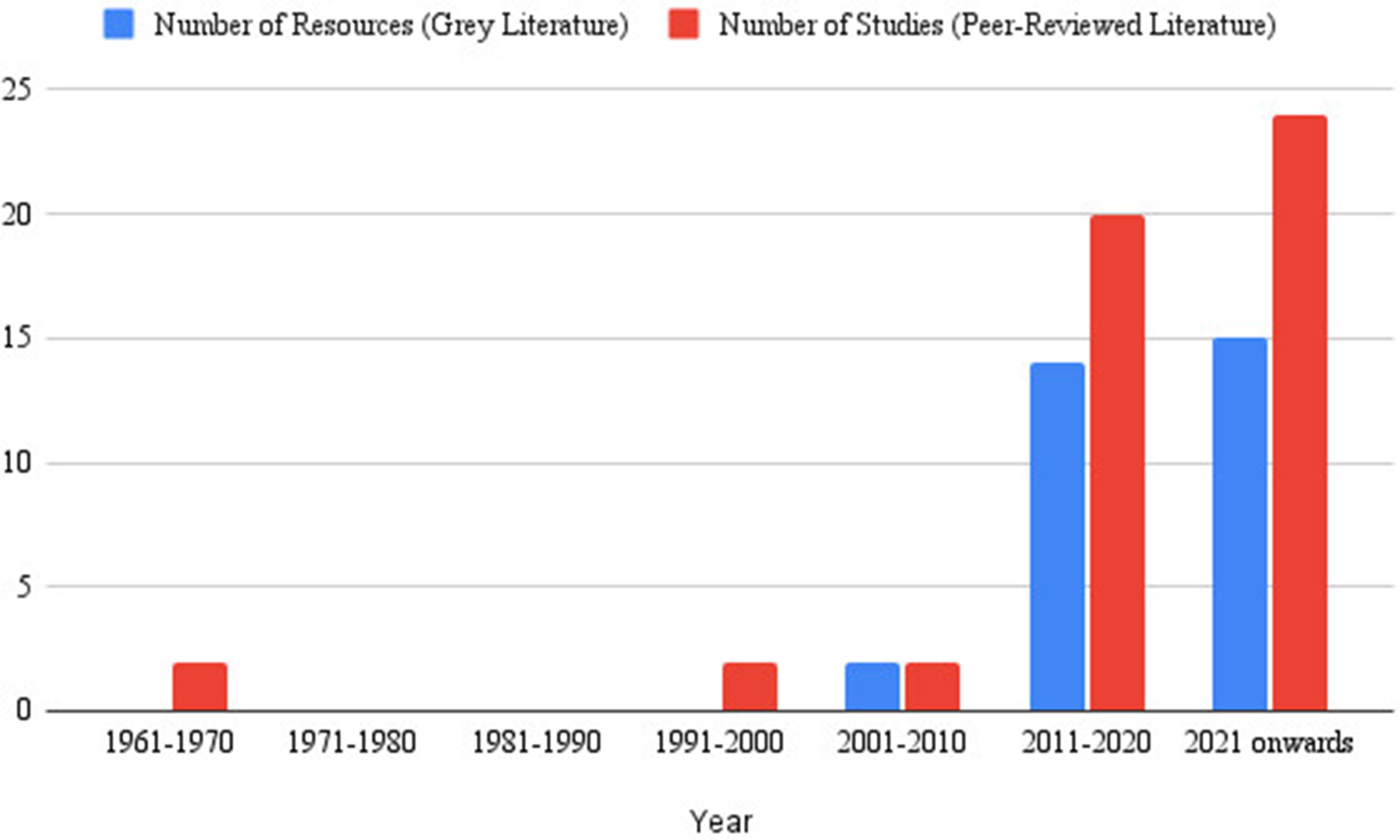
From 1961 to 1970, and 1991–2000, four peer-reviewed studies formed the evidence base, while between 2001and 2010, two peer-reviewed studies explored LEA contact with individuals before suicide, and two sources of grey literature related to LEAs’ role within the suicide prevention space formed the evidence base from that period.
Further, between 2011 and 2020, 34 sources were published, comprising 21 peer-reviewed literature and 13 grey literature. Additionally, 39 publications were included from 2021 onwards, comprising 24 peer-reviewed and 15 grey literature, mostly evaluation studies of LEA training programmes, joint LEA–mental health initiatives and other multi-sectoral strategies (Figure 2).
Chronological Development of Resources.

Regional distribution of the literature
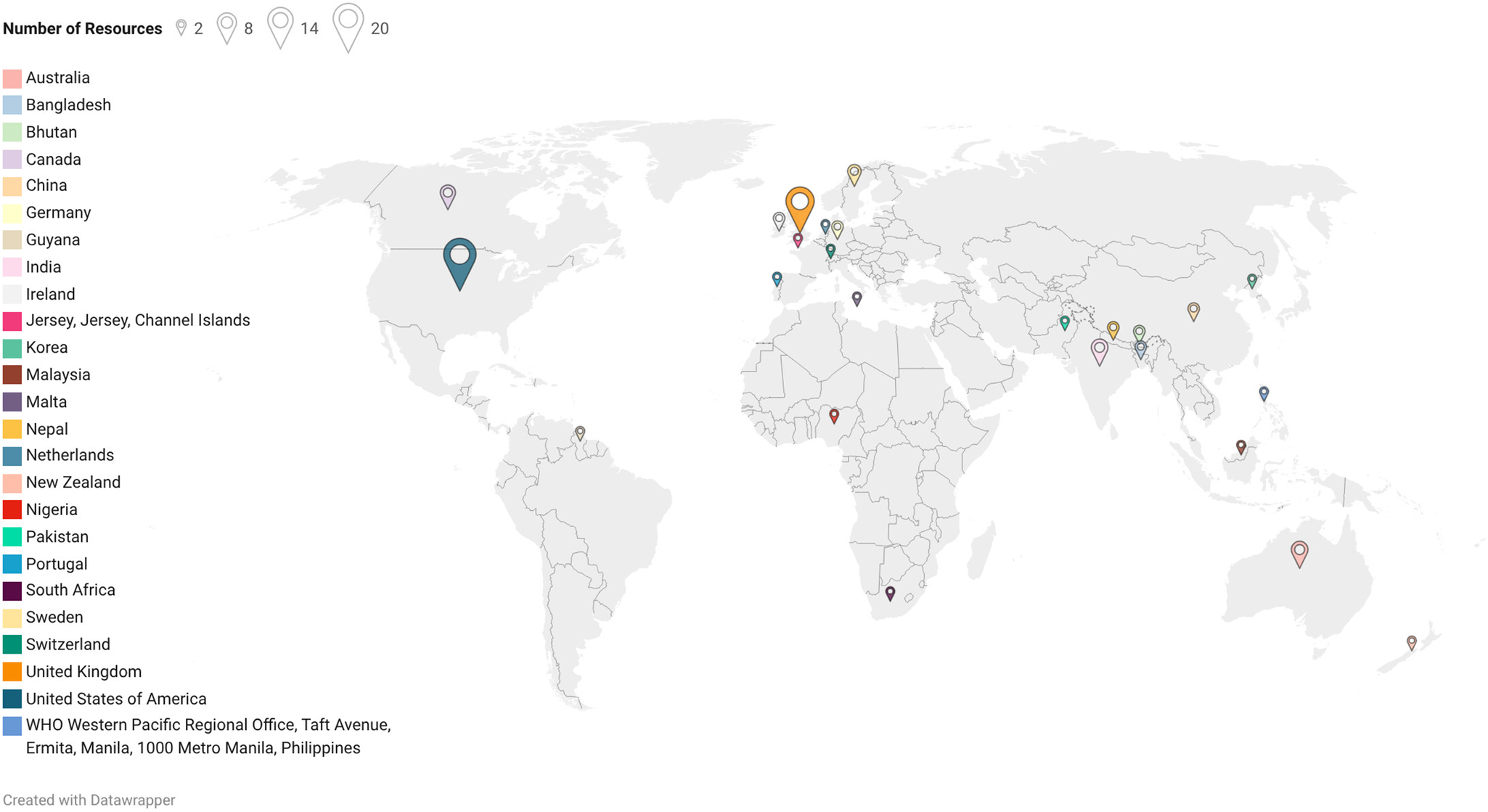
The review identified a diverse range of resources concerning suicide prevention, spanning various regions and income groups, as per the World Bank Classification for the 2025 fiscal year. Of the 82 studies included, a significant portion originated from high-income countries (n = 57), including the United States, the United Kingdom, Australia, the Netherlands, Ireland, Portugal, Germany, South Korea, Sweden, Guyana, New Zealand and Canada (refer to Figure 3). Additionally, resources from upper-middle-income countries (n = 3), such as Malaysia, South Africa and China and low- and middle-income countries (n = 19), such as India, Pakistan, Bhutan, Nepal and Nigeria were also included. The review also included three global-level resources (n = 3) that were not specific to any single country (refer to Figure 3).
Geographical Distribution of Resources.

Functional domain of law enforcement engagement in suicide prevention
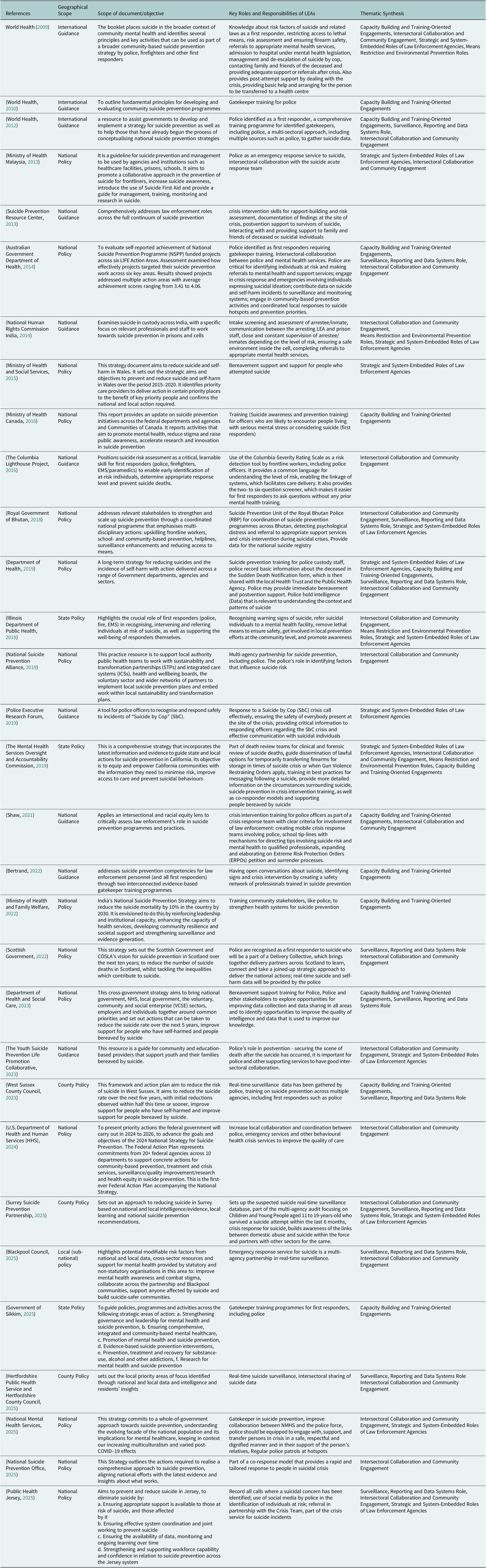
This section maps how the literature conceptualises the roles and responsibilities of law enforcement agencies in suicide prevention, drawing on global institutional, state or national level policies, strategies and guidance documents and empirical studies (Refer to Table 1, Table 2, and Table 3).
Evidence characteristics of peer-reviewed literature

Evidence characteristics of peer-reviewed literature (Intervention-based)

Evidence characteristics of grey literature consisting of policy and guidance documents

Strategic and system-embedded roles of law enforcement agencies
This section synthesises evidence from 37 sources (20 grey literature and 17 peer-reviewed studies) examining the strategic and system-embedded roles of law enforcement agencies within suicide prevention frameworks.
Included sources describe LEAs as system-embedded actors in suicide prevention, with roles defined through constitutional mandates, statutory provisions and human rights–based obligations. Across jurisdictions, legal frameworks establish a duty of care requiring LEAs to take mandatory preventive measures to protect individuals at risk of suicide, while they are in custody (National Human Rights Commission India, 2014; Department of Health, 2019). These duties apply to both acts and omissions and is framed as a foreseeable and preventable harm.
Most of the national and sub-national suicide prevention strategies position LEAs as frontline responders to suicide. Stipulated roles include early identification of suicide risk, scene safety management, restriction of access to lethal means, preliminary risk assessment and facilitation of referral or transfer to mental health services. They are primarily framed as protective and facilitative agents (World Health Organization, 2009; Shrestha et al., Reference Shrestha, Lama and Nepal2021; Hill et al., Reference Hill, Walker, Andriessen, Bouras, Tan, Amaratia, Woolard, Strauss, Perry and Lin2022). LEAs are delegated functionally limited authority to detain, to enable emergency mental health evaluation, with explicit guidance, in most policy and guidance documents, to avoid undue criminalisation or investigative framing of suicidal behaviour (Bouveng et al., Reference Bouveng, Bengtsson and Carlborg2017; Royal Government of Bhutan, 2018; Shaw, Reference Shaw2021). Across the identified resources, intersectoral coordination was framed as a facilitative function of LEAs, enabling coordination between emergency, health, justice and community-based services rather than exercising directive control.
Some of the identified resources used suicide prevention frameworks to divide functional roles of LEAs across prevention (population level), intervention (acute crisis response) and postvention (post suicide or attempt mitigation) as per the temporal risk continuum of suicidal behaviour (Hadlaczky et al., Reference Hadlaczky, Wasserman and Hoven2016; Sher, Reference Sher2016; Norton, Reference Norton2017; The Youth Suicide Prevention Life Promotion Collaborative, 2023). These include participation in community prevention activities, emergency response to suicidal crises, coordination with health and social welfare systems, support to bereaved families and contribution to suicide surveillance, review and monitoring processes.
Out of the 17 peer-reviewed studies describing LEA integration within broader suicide prevention, crisis response and public health systems, most used quantitative or mixed-methods analysis focused on role conceptualisation, system positioning and cross-sector alignment. Indicators were predominantly organisational and system-level, including establishment of specialised units, integration of police functions within national or regional strategies, formalised crisis response and postvention roles and alignment with health and emergency service protocols. Strategic functions such as early detection, coordination during high-risk incidents, crisis negotiation and facilitation of access to care were commonly described, while effectiveness was inferred mainly from descriptive accounts or stakeholder perspectives rather than comparative or longitudinal analyses.
Capacity building and training-oriented engagements
Out of the 30 identified resources describing capacity building and training, oriented engagements, 24 were peer-reviewed publications and 11 were grey literature sources. Across the included studies, the gatekeeper framework (n = 28) positioned LEAs in a non-clinical role within suicide prevention systems, emphasising their function as first responders responsible for recognising warning signs, assessing risk level and facilitating referral to appropriate professional services.
Ten sources explicitly used the term gatekeeper training, while 14 sources described similar ingredients that could build their capacity as gatekeepers.
Of the 24 resources addressing gatekeeper approaches, 18 described LEA capacity building at a universal level, situating gatekeeper training within broader health system strengthening efforts, while 6 focused on capacity building to respond to specific populations or contexts, including youth, individuals with frequent LEA contact and inter-agency first responder collaborations. Gatekeeper training models varied substantially in format and intensity, ranging from brief sessions (approximately 90 min) to multi-hour curricula incorporating skills rehearsal and applied learning components (Arensman et al., Reference Arensman, Coffey, Griffin, Van Audenhove, Scheerder, Gusmao, Costa, Larkin, Koburger, Maxwell, Harris, Postuvan and Hegerl2016; Osteen et al., Reference Osteen, Ohme, Morris, Arciniegas, Frey, Woods and Forsman2021). Across studies, training was associated with improvements in suicide-related knowledge, attitudes and self-reported confidence in responding to suicidal crises among LEA (Arensman et al., Reference Arensman, Coffey, Griffin, Van Audenhove, Scheerder, Gusmao, Costa, Larkin, Koburger, Maxwell, Harris, Postuvan and Hegerl2016; Marzano et al., Reference Marzano, Smith, Long, Kisby and Hawton2016; Ko et al., Reference Ko, Youn, Lee, Lee, Lee and Kim2021).
Out of 30, three resources described, mental health sensitisation training, which further defined LEAs’ responsibilities in suicide prevention (Blais and Brisebois, Reference Blais and Brisebois2021; Yeung et al., Reference Yeung, Morgan, Lai, Wong and Yip2022; Roos and Fjellfeldt, Reference Roos and Fjellfeldt2023). Training included legal mandates governing LEA intervention, procedures for engaging mental health specialists in suicide risk assessment and referral and criteria for involuntary hospital transport (Yeung et al., Reference Yeung, Morgan, Lai, Wong and Yip2022). Some programmes framed suicide awareness training within a broad, multi-level prevention approach, positioning law enforcement personnel as actors across individual-, subgroup- and population-level prevention activities (Roos and Fjellfeldt, Reference Roos and Fjellfeldt2023). In contrast, other training initiatives adopted a narrower focus, emphasising awareness of the consequences of not involving mental health specialists when responding to suicide-related behaviours and prioritising timely referral over wider preventive responsibilities (Blais and Brisebois Reference Blais and Brisebois2021).
Across two studies, Crisis Intervention Training (CIT) was reported as the main framework guiding LEAs’ responses to acute suicidal crises (Stokoe and Sikveland, Reference Stokoe and Sikveland2019; Young et al., Reference Young, Pierpoint and Perez2022). The CIT framework provides LEAs with structured mechanisms to recognise imminent suicide risk during emergency responses and engage individuals threatening, attempting or demonstrating imminent risk of suicide (Stokoe and Sikveland, Reference Stokoe and Sikveland2019; Young et al., Reference Young, Pierpoint and Perez2022). LEA’s role through CIT is defined as identifying suicide risk indicators, establishing communication for de-escalation and distinguishing between ambivalent suicidal crises and suicide-by-cop situations (Stokoe and Sikveland, Reference Stokoe and Sikveland2019) and facilitating referral to mental health emergency services rather than arrest or lethal force (Young et al., Reference Young, Pierpoint and Perez2022).
De-escalation approaches described in the literature included the use of communication techniques, tactical positioning and psychological strategies to reduce threat while enabling life-saving intervention without lethal force (Stokoe and Sikveland, Reference Stokoe and Sikveland2019), as well as specialised negotiation units employing team-based approaches in which primary negotiators engaged individuals in crisis through sustained dialogue, supported by secondary negotiators providing tactical guidance (Young et al., Reference Young, Pierpoint and Perez2022). The literature additionally described bereavement support training that positioned law enforcement personnel as first points of contact following suicide deaths, with responsibilities for providing immediate, compassionate support and referral to bereavement services (Department of Health and Social Care, 2023).
Capacity-building and training-oriented engagement was the most frequently represented domain in peer-reviewed literature (n = 28), with studies largely employing quantitative, intervention-focused designs. Reported outcomes were primarily process indicators, including numbers trained, completion rates, programme duration and intensity and training infrastructure development. Individual-level outcomes (e.g., changes in knowledge, attitudes, confidence or preparedness) were less frequently reported, while organisational indicators (e.g., standard operating procedures, train-the-trainer models or formal linkages with mental health services) and population-level outcomes (e.g., identification and referral of suicidal individuals or crisis resolution trends) were rarely measured using standardised approaches. Effectiveness was typically inferred from self-reported or short-term pre–post findings from pilot or feasibility studies.
Training evaluations consistently showed uneven coverage but cognitive and attitudinal gains. Only 47.7% of officers in South Korea (Ko et al., Reference Ko, Youn, Lee, Lee, Lee and Kim2021), 64% in the US Mountain West (Osteen et al., Reference Osteen, Oehme, Woods, Forsman, Morris and Frey2020) and between ~10% and ~ 74% across OSPI-Europe regions had received suicide prevention training (Arensman et al., Reference Arensman, Coffey, Griffin, Van Audenhove, Scheerder, Gusmao, Costa, Larkin, Koburger, Maxwell, Harris, Postuvan and Hegerl2016), despite 82% reporting workplace exposure to suicidal individuals and 65% perceiving such encounters as likely. Training was associated with significant improvements in attitudes, including rejection of maladaptive beliefs in South Korea (p ≤ 0.035), reductions in negative attitudes in the US Mountain West study (25.36 → 22.14; p = 0.002) and changes in stigma-related scores in OSPI-Europe (32.99 → 35.18; p < 0.001). Knowledge gains were robust across studies (e.g., UK: 6/10 → 8/10; p < 0.0001, OSPI-Europe: 3.88 → 4.35; p < 0.001, US Mountain West (Osteen et al., Reference Osteen, Ohme, Morris, Arciniegas, Frey, Woods and Forsman2021): 5.10 → 5.79; p < 0.001, COPS (Hofmann et al., Reference Hofmann, Glaesmer, Przyrembel and Wagner2021): 22.44 → 26.49; p < 0.001), though objective knowledge did not improve in Nigeria (5.5 → 5.5; p = 0.8). In another scenario-based study, 76.2% of scenarios were terminated by instructors, 32.1% ended with firearm removal and 27.8% resulted in the subject being shot (Young et al., Reference Young, Pierpoint and Perez2022).
Surveillance, reporting and data systems role
A total of 30 literary sources described the role of LEA in suicide surveillance and the use of this surveillance data in suicide prevention. Out of the 22 included sources, 16 were peer-reviewed literature.
Across the literature, law enforcement agencies were positioned as central actors in suicide surveillance due to their statutory responsibility to attend sudden and unexpected deaths. This role placed them as primary custodians of suicide-related data, contributing to early detection, prevention and postvention within national suicide prevention systems.
LEA-led surveillance was described as involving the systematic recording of suspected suicide deaths at or near the time of occurrence, capturing demographic characteristics, circumstances of death, methods used and contextual information, enabling near real-time monitoring of suicide trends.
The literature also described the use of surveillance data to identify high-risk locations, informing targeted, location-based prevention efforts and to facilitate postvention through referral of bereaved individuals to support services following consent at the scene. In addition, law enforcement agencies were reported to control the initial flow of suicide-related information, including classification of suspected suicides, custody of investigative documentation and transmission of information to health systems and policymakers, with sole authority to declare suicide as a cause of death in several settings (Hagaman et al., Reference Hagaman, Maharjan and Kohrt2016; Ullah et al., Reference Ullah, Shah, Khan, Ahmad, Scholz, Ullah, Shah, Khan, Ahmad and Scholz2021).
Evidence for surveillance, reporting and data systems roles was drawn from a smaller body of studies (n = 16) describing LEA-led or LEA-involved early alert, real-time reporting and data-linkage initiatives. These studies emphasised system development and implementation processes, with indicators focused on reporting mechanisms, interagency data linkage, timeliness of identification and information flow to prevention or postvention actors. Organisational indicators such as governance arrangements, data-sharing protocols and role operationalisation were commonly noted, while effectiveness was inferred from perceived improvements in situational awareness or coordination rather than from controlled or longitudinal evaluations.
In the UK, a police-led suicide surveillance strategy captured 78.8% of suspected suicides via police notification of death (NoD) forms, compared with 94.2% captured through coroner reports (McGeechan et al., Reference McGeechan, Richardson, Weir, Wilson, O’Neill and Newbury-Birch2017), while a similar study elsewhere showed 98% population coverage, with ~98% data completeness, enabling identification of clusters and high-risk locations (Marzano et al., Reference Marzano, Norman, Sohal, Hawton and Mann2023). Among NoD cases, 88% increase in referrals compared with the previous year, with approximately 75% of referrals originating from police NoD forms.
Intersectoral collaboration and community engagement
This section synthesises findings from 38 sources examining LEA roles in intersectoral collaboration and community engagement for suicide prevention, comprising 17 peer-reviewed studies and 21 grey literature sources.
Across the literature, law enforcement agencies were consistently positioned as key partners in intersectoral suicide prevention efforts, reflecting their role as first responders and their access to population- and situation-level data at local, regional and national levels. Their involvement was described as spanning information sharing, participation in real-time suicide surveillance systems and coordination of early response and postvention activities, including timely communication of suspected suicides to public health and community partners to support identification of clusters, locations of concern and emerging risks. A few studies reported fragmented collaboration and constraints on prevention planning, where suicide data held by law enforcement were not effectively shared with health systems, (Dawson et al., Reference Dawson, Wainwright, Shaw, Senior, Fazel, Perry, Walker and Pratt2021).
The literature also described collaborative service delivery models, including co-response arrangements in which law enforcement worked alongside mental health professionals to manage suicide-related crises and facilitate diversion to appropriate care pathways. Beyond health sector collaboration, law enforcement engagement extended to coordination with transport authorities, housing, education and social services to support means restriction initiatives, targeted prevention at high-risk locations and secondary prevention activities.
In addition, law enforcement agencies were reported to engage in community-facing prevention, including participation in suicide prevention campaigns, dissemination of information on support services and collaboration with community organisations to reduce stigma and promote help-seeking (Decker et al., Reference Decker, Wilcox, Holliday, Webster, Decker, Wilcox, Holliday and Webster2018; Jager-Hyman et al., Reference Jager-Hyman, Benjamin Wolk, Ahmedani, Zeber, Fein, Brown, Byeon, Listerud, Gregor, Lieberman and Beidas2019; Bland et al., Reference Bland, Calder, Fyfe, Anderson, Mitchell and Reid2021; Ullah et al., Reference Ullah, Shah, Khan, Ahmad, Scholz, Ullah, Shah, Khan, Ahmad and Scholz2021). Across several sources, law enforcement personnel were positioned as intermediaries linking individuals, families and communities to suicide prevention and bereavement support resources.
Intersectoral collaboration and community engagement were examined in 17 studies describing coordination between LEAs, health services, community organisations and policy actors. Indicators centred on formal linkage agreements, joint or co-responder models, referral pathways, shared protocols and information exchange, alongside community outreach and stakeholder participation. Effectiveness was rarely assessed directly and was instead inferred from stakeholder-reported benefits, improved coordination or descriptive changes in service engagement within community-based programmes.
Joint police–mental health mobile response unit recorded 296 crisis contacts; one in three encounters addressed suicide risk (Lee et al., Reference Lee, Thomas, Doulis, Bowles, Henderson, Keppich-Arnold, Perez and Stafrace2015). The Swedish Psychiatric Emergency Response Team (PAM) handled 1,580 service requests, with 80% resulting in attended cases; multi-agency involvement was common, with ambulance services engaged in 55%, police in 49% and rescue services in 7% of cases and only 24% managed by PAM alone (Bouveng et al., Reference Bouveng, Bengtsson and Carlborg2017). Canadian co-response police–mental health programme demonstrated statistically significant system-level improvements, including reductions in use of force (ATE = −0.077; p ≤ 0.05) and hospital transports (ATE = −0.773; p ≤ 0.01), alongside increases in community referrals (ATE = 0.285; p ≤ 0.01) and management through social networks (ATE = 0.530; p ≤ 0.01) (Blais and Brisebois, Reference Blais and Brisebois2021).
Means restriction and environmental prevention roles
This section synthesises findings from seven included sources, three peer-reviewed and four grey literature documents, examining the role of LEA in implementing means restriction as a suicide prevention strategy.
Across included sources, means restriction was consistently identified as an effective suicide prevention strategy, with LEA positioned as key operational actors due to their legal authority, first-responder role and presence across community, custodial and environmental contexts. Their involvement was most frequently reported in relation to firearm access restriction, particularly through temporary, voluntary firearm storage during periods of elevated suicide risk (Runyan et al., Reference Runyan, Brooks-Russell, Brandspigel, Betz, Tung, Novins and Agans2017; Brooks-Russell et al., Reference Brooks-Russell, Runyan, Betz, Tung, Brandspigel and Novins2019; Illinois Department of Public Health, 2019; The Mental Health Services Oversight and Accountability Commission, 2019). LEA also routinely advised removal of firearms from homes during crises and promoted secure storage practices, including locked safes, trigger locks and separate ammunition storage. Reported barriers included limited storage capacity, liability concerns and legal uncertainty, with variation across jurisdictions reflecting differences in firearm legislation (Runyan et al., Reference Runyan, Brooks-Russell, Brandspigel, Betz, Tung, Novins and Agans2017; Brooks-Russell et al., Reference Brooks-Russell, Runyan, Betz, Tung, Brandspigel and Novins2019).
The reviewed resources also documented the role of LEAs in means restriction at identified suicide hotspots, where they supported environmental interventions, such as barriers, fencing and controlled access, alongside routine and targeted patrolling, active surveillance and rapid response protocols to enable timely intervention. (Brooks-Russell et al., Reference Brooks-Russell, Runyan, Betz, Tung, Brandspigel and Novins2019). In domestic and acute crisis contexts, they facilitated the temporary removal of lethal means, particularly firearms, using discretionary powers or legal mechanisms such as protection orders. Within custodial settings, means restriction was operationalised through environmental design and supervision practices aimed at reducing access to ligature points and hazardous materials (National Human Rights Commission India, 2014).
Means restriction and environmental prevention roles were least represented, with only three peer-reviewed literature examining LEA involvement in hotspot interventions and temporary firearm storage initiatives. Indicators were predominantly process-oriented, including environmental modifications, partnership development and availability or uptake of storage options. Individual- and population-level outcomes, such as changes in safe storage behaviours or suicide attempts at hotspots, were infrequently reported and lacked standardised measurement. Population-level outcomes were observed in Australia at a jumping site, where female suicides showed a significant upward trend pre-intervention (APC = 16.64%, p < 0.001), followed by a significant post-intervention decline (APC = −21.27%, p = 0.01), while male suicides showed a non-significant upward trend (APC = 6.23%, p = 0.06) (Ross et al., Reference Ross, Koo and Kõlves2020).
Discussion
This scoping review systematically mapped and examined the global evidence on LEAs and suicide prevention. It also synthesised the temporal, geographical and structural variation of suggested functional roles and responsibilities across the extracted evidence. The findings of the review demonstrate increasing recognition of LEAs as an important stakeholder in suicide prevention in the high-income countries (Marzano et al., Reference Marzano, Smith, Long, Kisby and Hawton2016; Florida Department of Children and Families, 2023; Garratt et al., Reference Garratt, Baker, Kennedy and Rowland2023; Roos and Fjellfeldt, Reference Roos and Fjellfeldt2023), where their roles have moved beyond the classical policing towards preventive and supportive functions over time. Conversely, in LMICs, the evidence (Arya, Reference Arya2024; Ministry of Health and Family Welfare 2022; Ministry of Health Malaysia, 2013; National Human Rights Commission India, 2014; Olibamoyo, Reference Olibamoyo2023; Royal Government of Bhutan, 2018) is still evolving and limited.
Structural and institutional constraints shaping law enforcement roles in suicide prevention
The evidence base on the role of LEAs in suicide prevention has evolved unevenly over time. Early literature from the 1960s to the 1990s was limited and largely descriptive, framing suicide primarily as a law-and-order issue and positioning LEA as investigators or custodians of legal process (McGee, Reference McGee1968; Olivero and Hansen, Reference Olivero and Hansen1994; Linsley et al., Reference Linsley, Johnson and Martin2007). A gradual shift emerged with the development of global mental health and suicide prevention frameworks, including the WHO’s Comprehensive Mental Health Action Plan and the Sustainable Development Goals, the LIVE LIFE implementation guide, which reframed suicide as a public health concern and recognised the need for multisectoral engagement (World Health Organization, 2009; United Nations, 2015a, 2015b). This shift, reinforced by policing reforms in many HICs, was accompanied by an expansion of LEA roles in policy and practice and a growing body of empirical research examining police involvement in suicide prevention. However, this evolution has been geographically uneven. While evidence from HICs has expanded, contributions from LMICs remain sporadic (Williamson, Reference Williamson2008).
This pattern reflects deeper inequities in research priorities, including limited domain specialisation, weaker systemic research support and constrained funding availability in many LMICs. Suicide research in these settings has remained disproportionately focused on health system strengthening (Vijayakumar and Phillips, Reference Vijayakumar, Phillips and Pirkis2016; Jacob, Reference Jacob2017), in contrast to high-income countries. As a result, the role of non-health system actors, particularly LEAs have received limited and inconsistent attention. These research gaps are closely intertwined with the historical criminalisation of suicide across many LMICs. For decades, colonial-era legal frameworks constructed suicide as a violation of law, positioning LEAs primarily as agents of investigation (Ochuku et al., Reference Ochuku, Johnson, Osborn, Wasanga and Ndetei2022; Palit, Reference Palit2024). Although suicide has now been formally decriminalised in most LMICs, this transition has been gradual and uneven. Crucially, legal reform has not been matched by commensurate changes in field-level implementation, institutional mandates, or behavioural norms within policing systems (Gupta, Reference Gupta2024). Standard operating procedures, training curricula and accountability mechanisms have often remained unchanged, allowing legacy interpretations of suicide to persist in practice. As a result, law enforcement engagement with suicide in many LMICs continues to be largely reactive and procedural, focused on documentation, examination and reporting rather than prevention, early intervention, or facilitation or support for care. This institutional positioning is reinforced by enforcement-oriented policing models that leave limited space for community-based or preventive roles. Unlike HICs, where sustained reforms have institutionalised community policing, trauma-informed training and partnerships with health and social services, comparable transformations within LMIC law enforcement systems remain limited (Bott et al., Reference Bott, Morrison and Ellsberg2005; Arya et al., Reference Arya, Page, Mayer, Vijayakumar, Shin, Pirkis and Armstrong2023).
Within this context, the role of law enforcement in suicide prevention has remained poorly conceptualised and inconsistently examined. The scarcity of locally generated evidence has produced a self-reinforcing cycle: in the absence of structured frameworks and empirical evaluation, preventive and facilitative functions remain ambiguous; this ambiguity limits inclusion of LEAs in formal suicide prevention strategies, reduces recognition of their public-facing and first-contact role and constrains investment in generating evidence on what works, under what conditions and to what extent. Consequently, the lack of evidence both reflects and perpetuates the marginalisation of intersectoral actors in suicide prevention.
From legal reform to preventive practice: emerging opportunities and persistent gaps
Recent legal and policy developments nevertheless create openings for reconfiguration. Various emerging global policy frameworks increasingly emphasise rights-based, trauma-sensitive and empathetic responses to individuals at risk of suicide and other vulnerable populations. Similarly, the Mental health reforms that are happening across various LMICs increasingly frame suicide as a public health issue and promote multisectoral collaboration (Vijayakumar and Phillips, Reference Vijayakumar, Phillips and Pirkis2016). These principles are particularly salient in LMIC contexts, where LEAs are often the first and sometimes the only institutional actors to engage with individuals during acute mental health and suicide crises (van der Feltz-Cornelis et al., Reference van der Feltz-Cornelis, Sarchiapone, Postuvan, Volker, Roskar, Grum, Carli, McDaid, O’Connor, Maxwell, Ibelshäuser, Van Audenhove, Scheerder, Sisask, Gusmão and Hegerl2011). Such encounters raise significant ethical and operational dilemmas, including risks of escalation, excessive use of force and phenomena such as “suicide by cop,” underscoring the importance of de-escalation and harm minimisation (Lamb et al., Reference Lamb, Weinberger and DeCuir2002; Police Executive Research Forum, 2019).
However, legal reform alone is insufficient without corresponding changes in institutional capacity-building training, practice, institutional incentives and evidence generation (Lamb et al., Reference Lamb, Weinberger and DeCuir2002). Task sharing must be supported through sustained training, organisational reform and cultural change within policing institutions and structured integration of law enforcement into community-based suicide prevention systems (Dorji et al., Reference Dorji, Choki, Jamphel, Wangdi, Chogyel, Dorji and Nirola2017). When grounded in local socio-legal and cultural realities, such approaches offer the potential to shift policing from a reactive, event-driven orientation towards preventive and collaborative engagement.
Strength and limitations
The findings of this scoping review should be seen considering some methodological limitations. We specifically examined selected databases and limited search across search engines, however, there remains the possibility that this review did not capture the full range of literature available in this intersection, particularly non-English publications and grey literature not available in open domain. Due to time and resource constraints, the websites of individual governmental and non-governmental organisations could not be accessed to retrieve relevant policy or guidance documents, among others. The review process did not aim to assess their methodological quality, as it was outside the scope and the heterogeneous nature of the available literature, and therefore, the strength of the evidence cannot be established. Nonetheless, to the best of our knowledge, this is the first scoping review that systematically examines the role of LEA in suicide prevention, providing an initial foundation for understanding how this sector has been positioned within the broader public health discourse and highlighting directions for future, nuanced research for various sub-domains.
Future research
Future research should aim to a focus on transferable practices and models (strategies, directives and interventions employed or suggested for LEA) from other settings. Further research should also test evidence-based practices such as gatekeeper training, community policing partnerships and social service linkages involving LEA engagement within a systematic, multisectoral context. Most importantly, such research studies must examine the structural, legal and cultural factors that shape LEAs’ roles, as these are likely to either enable or hinder their effectiveness. More rigorous designs, such as randomised controlled trials, longitudinal studies and mixed-method designs, are required to assess both proximal effects (e.g., knowledge, attitude, support provision, stigma and referral behaviour) and distal effects (e.g., suicide attempts, deaths). Strengthening the evidence base will not only guide policy but also inform the adaptation of global best practices to the realities of LMIC settings beyond the conventional law enforcement function towards more comprehensive, community-based public health functions.
Conclusion
This scoping review synthesises the developing body of literature on the role of LEA in preventing suicide to fill an essential knowledge gap in scholarly research and policy discussion. The review highlights substantial heterogeneity and sparse evidence from LMICs and a dearth of evidence-based, structured, scalable models that aim to prevent suicide. This highlights the pressing necessity for context-informed, cross-sectoral models informed by experience, evidence-based and integrated into national suicide prevention strategies in low-resource settings with high suicide burden.
Open peer review
To view the open peer review materials for this article, please visit http://doi.org/10.1017/gmh.2026.10186.
Supplementary material
The supplementary material for this article can be found at http://doi.org/10.1017/gmh.2026.10186.
Data availability statement
The authors confirm that the data supporting the findings of this study are available within the article and its supplementary material.
Author contribution
Nikhil Jain and Isha Lohumi conceptualised the research and developed the search strategy. Nikhil Jain, Isha Lohumi and Aratrika Datta ran the search strategy. Nikhil Jain, Isha Lohumi, Aratrika Datta and Niranjana Regimon conducted de-duplication and screening, while Isha Lohumi and Niranjana Regimon carried out data extraction. Nikhil Jain, Isha Lohumi, Niranjana Regimon and Aratrika Datta prepared the first draft of the manuscript. All authors contributed to manuscript editing and revisions, and all authors reviewed and approved the final version of the manuscript.
Financial support
The study is a part of the STRIDE action research project, funded by the Mariwala Health Initiative (India) and implemented by the Indian Law Society, Pune.
Competing interests
The authors declare none.




 Open access


Comments
The Editor
Cambridge Prisms: Global Mental Health
Dear Editor,
I am pleased to submit our manuscript titled “Role of Law Enforcement Personnel in Suicide Prevention: A Scoping Review” for consideration in the special issue on Self-Harm and Suicide: A Global Priority in Cambridge Prisms: Global Mental Health.
Suicide prevention is a pressing public health priority in India. Global goals and agendas such as the World Health Organization’s Comprehensive Mental Health Action Plan 2013–2030 and the Sustainable Development Goals (SDGs) have highlighted the importance of non-health sectors such as law enforcement in preventing suicides. Despite the need to recognise the scope of responsibilities of law enforcement personnel (LEPs) in suicide prevention, existing research disproportionately focuses on the custodial and investigative functions of LEPs. Our study charts and classifies the existing academic and grey literature including policies, guidelines, strategies, interventions and programs used or implemented by law enforcement agencies to prevent suicide.
This work contributes to the growing evidence on strengthening the role of the law enforcement sector as an important stakeholder in suicide prevention, addressing the critical gap in involving LEPs in national and international suicide prevention strategies and interventions. We believe our findings will be of particular interest to the readership of this special issue, given their direct implications for policy, practice, and health system strengthening in suicide prevention globally.
We confirm that this manuscript is original, has not been published elsewhere, and is not under consideration with another journal. All authors have approved the submission. We have also adhered to ethical guidelines and obtained the necessary approvals for this study.
Thank you for considering our manuscript for publication. We hope it will make a valuable contribution to the global discourse on a multisectoral approach towards suicide prevention that involves non-health sectors such as law enforcement.
Sincerely,
Dr Nikhil Jain
On behalf of all co-authors