


Introduction
On 14 June 2017, a fire broke out in Grenfell Tower in London. The blaze was the worst residential fire in the UK since World War II, resulting in 72 deaths; 231 survivors escaped the tower. The community witnessed the disaster as it unfolded. Photographic images and live video clips were circulated globally via news and social media.
After exposure to a disaster, some people will develop post-traumatic stress disorder (PTSD). PTSD symptoms usually occur within three months of the traumatic event and to meet diagnostic criteria must persist for longer than one month. Estimates of the prevalence of PTSD in disaster survivor studies vary, ranging between 20 and 40% (Bromet et al., Reference Bromet, Atwoli, Kawakami, Navarro-Mateu, Piotrowski, King, Aguilar-Gaxiola, Alonso, Bunting and Florescu2017). The Diagnostic and Statistical Manual of Mental Disorders (5th edn; American Psychiatric Association, 2013) states that PTSD can arise following direct experience, witnessing trauma, or learning that a relative or close friend was exposed to trauma. It can also arise through indirect exposure to aversive details of a trauma, such as in the course of professional duties.
Trauma-focused cognitive behaviour therapies are a first-line treatment for PTSD as recommended by NICE (National Institute for Health and Care Excellence, 2018). Ehlers and Clark (Reference Ehlers and Clark2000) developed a widely used and evidence-based (Ehlers et al., Reference Ehlers, Clark, Hackmann, McManus and Fennell2005) model and treatment protocol for PTSD, known as cognitive therapy for PTSD (CT-PTSD). Treatment includes therapists supporting clients to ‘relive’ the trauma in their mind’s eye, to identify moments of peak distress, known as ‘hotspots’. Underlying cognitions linked to these hotspots are targeted to develop more adaptive appraisals, reduce distress, and facilitate memory processing. Hotspots generating a variety of distressing emotions are linked to the re-experiencing symptoms of PTSD and are considered an essential treatment target (Holmes et al., Reference Holmes, Grey and Young2005), with the content of approximately 80% of intrusive trauma memories matching a hotspot from the traumatic experience (Grey and Holmes, Reference Grey and Holmes2008). Furthermore, explicit focus on identification and modification of hotspots has been linked to improved outcomes in PTSD treatment (Nijdam et al., Reference Nijdam, Baas, Olff and Gersons2013). To date, the hotspot literature has focused primarily on peri-traumatic mental images of recreations of the event as they were directly perceived with the senses, and verbal appraisals giving rise to distress during the trauma. However, a peak in distress during a traumatic experience could arise from mental images that are imagined ‘in the mind’s eye’ at that time of the trauma (rather than being directly perceived); for example, imagining the Grenfell Tower collapsing. This did not occur but is a mental image reported by some who witnessed the tragedy.
A mental image can involve any sensory modality: ‘seeing’ in the mind’s eye, ‘smelling’ with the mind’s nose, and so on (Kosslyn et al., Reference Kosslyn, Ganis and Thompson2001). It is important to explore the role of mental imagery in trauma hotspots because mental imagery is held to (i) have a more powerful impact on emotion when compared with verbal cognition (Holmes and Mathews, Reference Holmes and Mathews2005); and (ii) have a perceptual equivalence to real life experience (Kosslyn et al., Reference Kosslyn, Ganis and Thompson2001). Indeed, mental imagery has been linked to the development and maintenance of distress in a range of psychological disorders, including social anxiety disorder (Hackmann et al., Reference Hackmann, Clark and McManus2000), obsessive compulsive disorder (Speckens et al., Reference Speckens, Ehlers, Hackmann, Ruths and Clark2007), and depression (Brewin et al., Reference Brewin, Wheatley, Patel, Fearon, Hackmann, Wells, Fisher and Myers2009). In many of these disorders intrusive imagery is not veridical or a direct replay of an experience but an imagined representation, such as a flashforward to a suicidal act (Hales et al., Reference Hales, Deeprose, Goodwin and Holmes2011) or imagining oneself coming across as red and sweaty (Hackman et al., Reference Hackmann, Clark and McManus2000) even though in reality one does not appear this way.
Mental imagery has been linked to PTSD in several ways including in the Ehlers and Clark (Reference Ehlers and Clark2000) model of PTSD treatment. Primarily, the mental replay of traumatic images is a core symptom of PTSD (Iyadurai et al., Reference Iyadurai, Visser, Lau-Zhu, Porcheret, Horsch, Holmes and James2019), and recent evidence indicates that re-living of the hotspots shortly after a trauma often includes recall of the sensory experiences related to time, space and motion of the event, akin to mental images (Hoppe et al., Reference Hoppe, Walldén, Kanstrup, Singh, Agren, Holmes and Moulds2022). There has also been some discussion of trauma survivors reporting that mental images from previous traumatic events entered their mind during subsequent traumas (Holmes et al., Reference Holmes, Grey and Young2005; Çili and Stopa, Reference Çili and Stopa2015). There is also literature regarding imagination-based imagery in PTSD. In Holmes and colleagues’ (Reference Holmes, Grey and Young2005) sample of people with PTSD, a small proportion of cases (3 out of 132) reported re-experiencing symptoms related to ‘objects or people not being present at the time of the trauma’, p. 9).Trauma survivors have reported a higher frequency of flashback qualities to intrusive trauma memories when their recollection was an exaggerated version of the event (i.e. the recollection had an imagination-based mental imagery component) (Merckelbach et al., Reference Merckelbach, Muris, Horselenberg and Rassin1998). That is, when intrusive recollection was of an exaggerated imagination-based mental image of the event (i.e. ‘worst case scenario’) it was more likely to be uncontrollable, easily triggered and accompanied by strong, negative affect and bodily sensations. Grey (Reference Grey and Stopa2009) made a distinction between ‘veridical’ flashbacks (to things that happened in reality) and ‘non-veridical’ flashbacks (to things that did not happen in reality, such as out-of-body experiences or worst case scenarios). Grey and Holmes (Reference Grey and Holmes2008) offer a case example of this phenomenon: a road traffic accident survivor reported a hotspot in which he imagined the windscreen smashing and himself being decapitated. The person had re-experiencing symptoms of both the windscreen smashing and of the imagination-based mental image of being decapitated (despite this not actually occurring).
On the whole, however, literature descriptions of PTSD have tended to be more focused on re-experiencing of the reality of a trauma, and less focused on imagination-based mental imagery. To further explore this phenomenon, an audit of ‘hotspot’ charts of service users from the Grenfell Health and Wellbeing Service (GHWS) receiving CT-PTSD was carried out. The aim was to inform clinical practice by establishing the prevalence and nature of peri-traumatic hotspots in this sample, including those which may be imagination-based.
Method
Service context
GHWS was established as a ‘screen and treat’ program to identify and support the mental health needs of the North Kensington community after the Grenfell fire. North Kensington is a diverse community, over a third of the population from a Global Majority background. Grenfell Tower itself was part of a large social housing complex. GHWS worked to identify all affected individuals, screen them for psychiatric disorders (including PTSD) using validated measures and deliver evidence-based psychological treatment.
Clinicians (cognitive behavioural therapists and practitioner psychologists) at GHWS were trained and supervised in the Ehlers and Clark (Reference Ehlers and Clark2000) model of PTSD, and in offering CT-PTSD by Kerry Young and Sameena Akbar, senior clinical psychologists who lead a specialist trauma service.
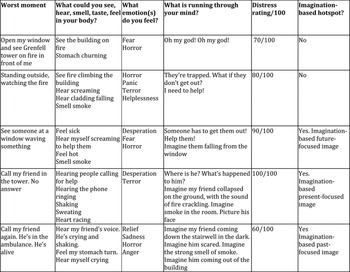
Clinicians were trained to identify and record ‘hotspots’ (defined as moments of peak emotional arousal during a traumatic experience) during the course of CT-PTSD. This was done by undertaking a ‘reliving’ session in which the fire survivor or witness narrates a full sensory account of their experience. The clinician helped the survivor or witness to identify hotspots in the following way: (1) asking for distress level ratings during the reliving; (2) asking the client to identify the worst moments; (3) observing moments of affective arousal or dissociation; and (4) asking for detail of the specific content of the re-experiencing symptoms. Clinicians were trained to collaboratively elicit the underlying cognitions linked to the hotspot. They were encouraged to specifically enquire about mental images when identifying hotspots. Within GHWS, clinicians recorded hotspots using standardised charts in which the clinician and individual labelled each of the ‘worst moments’ (the hotspots) of their traumatic experiences (see Fig. 2 for a completed anonymised example of common cognitions and emotions). The chart prompted clinicians to record the associated sensory, affective, and cognitive information in relation to each hotspot. It consisted of columns labelled: (1) Worst moment; (2) What could you see, hear, smell, taste, feel in your body?; (3) What emotion(s) do you feel?; (4) What is running through your mind?; (5) Rating/100 (i.e. a rating of the level of distressing emotion). During routine clinical supervision it became apparent that clients were reporting hotspots based on vivid mental images of scenarios they had not in reality seen (we called these ‘imagination-based hotspots’). With ethical approval we undertook an audit of the prevalence and nature of these imagination-based hotspots in a sub-section of GHWS population.
Procedure
Clinicians using CT-PTSD at GHWS (including those involved in the audit) were informed of a clinical audit into imagination-based hotspots in the service and asked to submit hotspot charts with all identifying information removed. An audit coordinator checked and ensured all charts were fully anonymised before use.
Maintaining anonymity was vital due to the small, high-profile community involved. This anonymity precluded collection of any further information about the individuals whose hotspot charts were audited, such as demographic information. Hotspot charts from 26 individuals were voluntarily submitted by clinicians over a one-month period in 2018, one year after the fire. The collection was closed as saturation had been reached during this time frame when all clinicians had been prompted to participate and reported they had submitted hotspot charts for their CT-PTSD clients. Clinicians were using CT-PTSD with only a sub-section of their clients. Information was not gathered about the proportion of clients each clinician was using hotspot charts with. No submitted hotspots charts were excluded. The charts related to different individuals (n=26) seen at GHWS since its establishment following the fire in 2017. Clinicians involved in the audit submitted 12 of the 26 charts.
To guide raters, we developed a full definition of an ‘imagination-based hotspot’, along with examples. Instructions on identifying imagination-based hotspots were: ‘a mental image can occur in one or more sensory modes – it may include imagined appearance, feel, smell, sound or taste. That is, a “mental image” of something “seen” in the mind’s eye, “heard” in the mind’s ear, “tasted” in the mind’s mouth, “smelled” in the mind’s nose, and “felt” in the mind’s touch. Mental imagery may be static or moving, fleeting or lengthy and can contain positive, negative or neutral content. The imagery can be produced voluntarily, or it may appear involuntarily’. A hotspot is a peak of emotion during a traumatic event; for example, someone seeing a car moving towards them and thinking ‘it’s going to hit me’ and feeling intense fear. An ‘imagination-based hotspot’ is a peak of emotion during a traumatic event that is related to something imagined ‘in the mind’s eye’ as opposed to directly perceived with the senses (eyes, ears, tongue, fingers, nose). ‘Imagination-based’ (versus ‘real’) hotspots are a novel creation of the mind – the fact they did not actually happen, but were imagined happening, is key (since one can have imagery of things that did actually occur too). The definition further explained that an imagined hotspot may be: (1) a ‘present focused image’ of something imagined to be occurring in the here and now but which the person cannot in reality see/hear/smell, etc. (for example, a hotspot in which a person, watching the tower from the outside, was imagining bodies lying in a smoke-filled stairwell), or a ‘future focused image’ of an imagined future (for example, a hotspot in which a person who was in the tower and thought that they were going to die, saw an image of their mother crying at their future funeral).
Ratings procedure
Two accredited CBT therapists involved in the audit independently rated the hotspot charts for the presence or absence of imagination-based hotspots and their time context. They were provided with anonymised hotspot charts and instructions including the imagination-based hotspot definition. They rated each individual hotspot in relation to: (1) the presence or absence of an imagination-based hotspot component; and (2) whether the imagination-based hotspot was an image of an imagined future, an imagined present, or if the time context was unclear. A trial rating of five charts ensured raters understood the task and were comfortable identifying imagination-based hotspots. It was important to clarify the difference between something that was directly registered with the senses and an image in the mind’s eye that was a novel creation of the mind. The raters then independently rated the full set of n=26 charts (which contained 159 individual hotpots between them), including re-rating the trial five. The results were collated by a mediator (CBT therapist) who highlighted discrepancies in ratings. There was total agreement between the raters regarding whether or not each hotspot was imagination-based. There were 27 (of 159) minor discrepancies with regard to rating the time context of the image (representing 17.0% of the hotspots) which were resolved via mediated discussion. The two auditors also reviewed the imagination-based hotspots to collaboratively develop a list of themes recurring, and then independently rated each imagination-based hotspot with regard to its theme. There was 100% inter-rater reliability.
Results
Prevalence of imagination-based hotspots
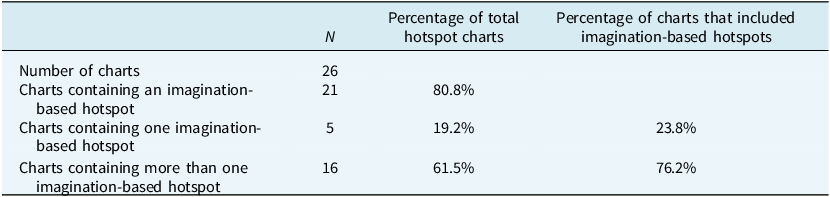
Five of the 26 charts (19.2%) appeared to relate to people who had been inside the tower, and 21 charts (80.8%) appeared to relate to people who had observed the fire from outside the tower. The 26 charts recorded a total of 159 hotspots. The mean number of hotspots per chart was 6.1 (SD=3.00, minimum=3, maximum=17). Of the 26 charts, 80.8% (n=21) contained at least one hotspot with an imagination-based component. Of these 21 hotspot charts, five charts contained only one hotspot with an imagination-based mental image (23.8%) and 16 contained two or more hotspots containing mental images (76.2%) (Table 1). Of the total 159 hotspots in the 26 charts, 38.4% (61 hotspots) contained an imagination-based component.
Prevalence of imagination-based hotspots in the GHWS sample

Types of imagination-based hotspots
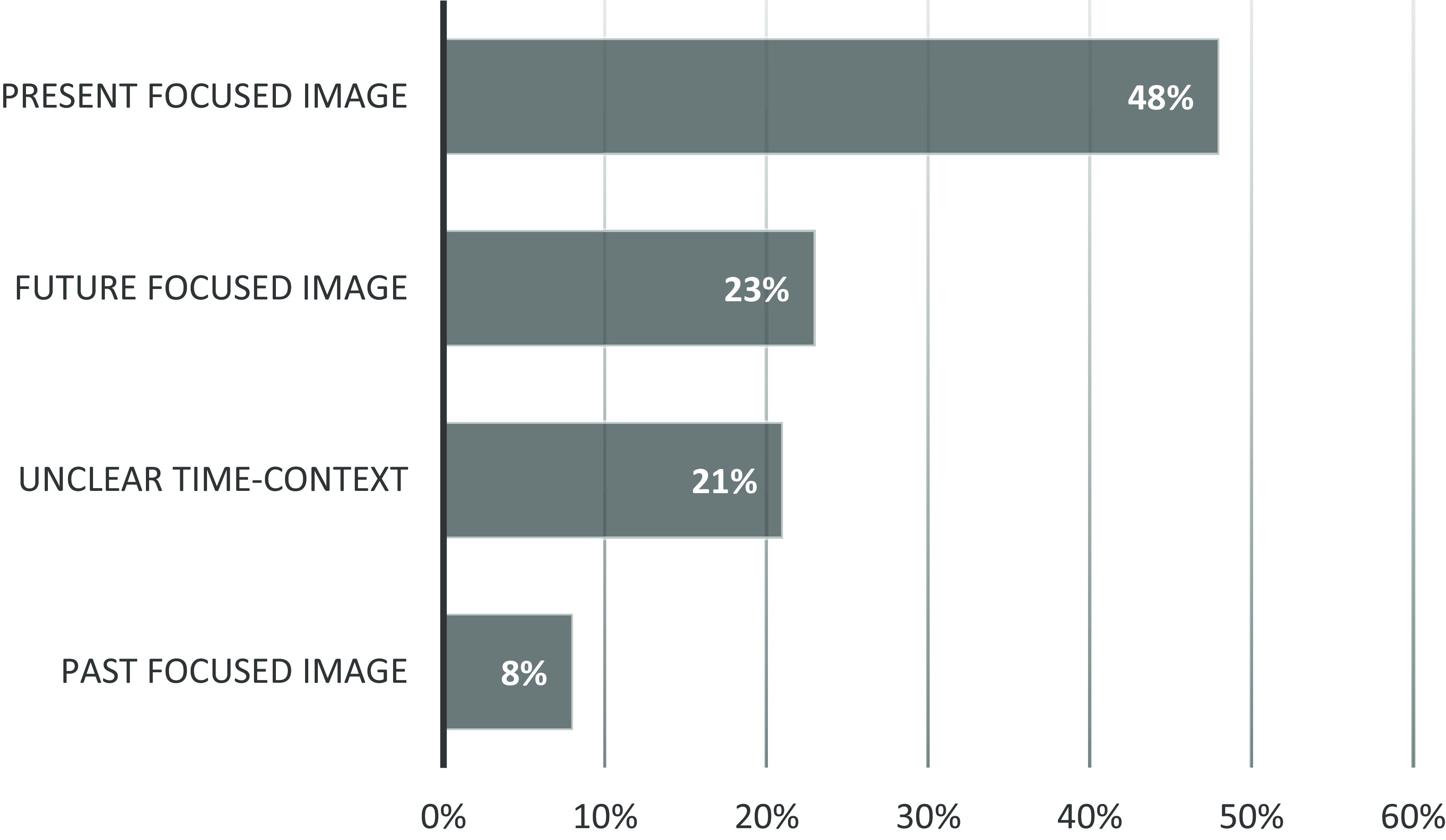
Of the 61 imagination-based hotspots, 29 (representing 47.5%) were of an imagined present, 14 (representing 23.0%) were of an imagined future and for 13 (representing 21.3%) the time context of the image was unclear. An unpredicted finding was the presence of five hotspots containing an imagination-based image of the past (representing 8.2% of the total number of imagination-based hotspots). These five hotspots included a mental image of something from the past that had not been perceived with the senses (Fig. 1).
Types of imagination-based hotspots: proportion of hotspots that were of present focused image, future focused image, an unclear time-context and a past focused image.

A representative example of an imagination-based ‘present-focused image’ (adjusted and not taken from any one hotspot chart) could be a person standing outside the tower and seeing someone trapped at a window, then imagining themselves in the place of that person. They might have an image of themselves looking down at the crowd and hearing the crowd yelling up at them. A representative example of an imagination-based ‘future-focused image’ could be a person imagining themselves collapsing (while they are, in fact, still standing), or (while they watch a person standing at a window) imagining that person jumping out of the window. A representative example of an imagination-based ‘past-focused image’ could be a person standing with a loved one who escaped and experiencing a mental image of their loved one having been in the stairwell and imagining the scene and heat that they faced. See Fig. 2 for a table representing an example (anonymised) hotspot chart.
Example anonymised Hotspot Chart including ratings of the presence/absence of imagination-based hotspots and type of imagination-based hotspot.

Themes of imagination-based hotspots
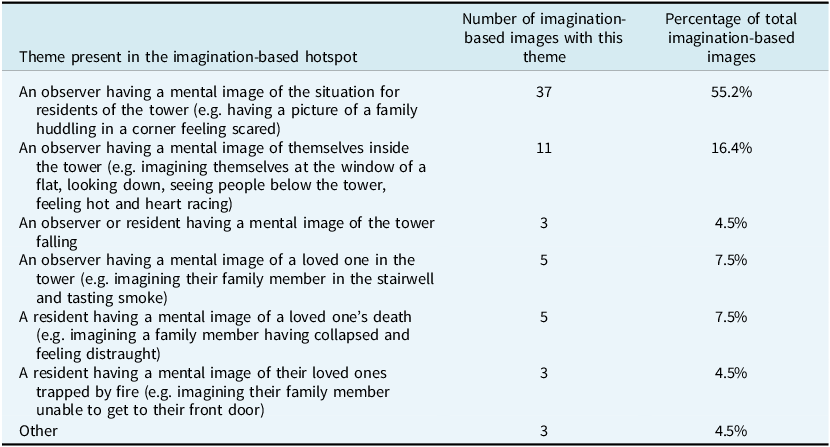
The content of the 61 imagination-based hotspots were reviewed by two of the auditors. A total of 67 unique mental images were identified within the 61 imagination-based hotspots; 56 of the hotspots contained one imagination-based mental image, four of the hotspots incorporated two imagination-based mental images and one of the hotspots incorporated three images. The themes of these images are outlined in Table 2 with representative examples. In those who observed the fire from the outside the most common image within an imagination-based hotspot was the person imagining details of the situation inside the tower; for example, a person imagining the scene inside a flat, or imagining the emotional experience of someone inside the tower. The next most common scenario for an observer was imagining themselves inside the tower, often including a full sensory experience. For example, the person might have experienced a mental image of the sight, sound and heat of the fire and the emotional experience of this terrifying situation. The person might have also experienced a mental image of a loved one in this same scenario. A number of observers also reported having a mental image of the tower collapsing. For those inside the tower the distressing mental images consisted of imagining their loved ones trapped or imagining their own death.
Thematic content of imagination-based hotspots in the GHWS sample undertaking CT-PTSD

Discussion
Key findings
A key component of CT-PTSD is identification of the most distressing moments of a trauma, known as ‘hotspots’. We conducted a clinical audit investigating the presence of ‘imagination-based hotspots’ (in contrast to those that had been directly perceived) in a sample of service users from GHWS. These were defined as hotspots containing a peri-traumatic mental image of something constructed ‘in the mind’s eye’ but not actually happening in reality. As well as investigating their prevalence we also explored the time context of the mental images – whether they were based on images of the present, future or past. Some recurrent themes in the content of the images were identified.
We found a very high proportion of individuals (81%) experienced at least one imagination-based hotspot from the traumatic event; 38% of the total hotspots contained a component of distressing mental imagery of something that had not occurred in reality (e.g. of being in the fire when one was actually witnessing it). The charts of the majority of individuals (61.5%) recorded numerous imagination-based hotspots related to their experience of the fire, and for those who did experience imagination-based hotspots, three-quarters (76%) described mental imagery components in multiple hotspots.
Approximately half of the imagination-based hotspots were an ‘imagined present’ in which the person imagined distressing scenes that they did not in fact fully perceive at the time. Most often the image represented a multi-sensory experience in which the observer placed themselves ‘in the shoes’ of someone in the tower. A further quarter of the imagination-based hotspots were an ‘imagined future’, in which the person imagined a distressing future, such as a loved one dying, or the tower collapsing. An unexpected finding was the presence of imagination-based hotspots in which the survivor experienced a mental image of a past they did not experience in reality; for example, a person speaking to their friend after the fire and experiencing in their mind’s eye an image of their friend inside the tower earlier on. The images incorporated a full range of senses, imagining sights, smells, sounds, tastes, and physical sensations, although not all of these were experienced. The imagination-based hotspots also incorporated a distressing sense of the emotional experience of what they were imagining.
Interestingly, the number of hotspots found in this study was high compared with similar studies; the mean in our study was 6.5 (range 3–17), which is twice the mean reported in other studies (e.g. 3, range 1–5 in Hoppe et al., Reference Hoppe, Walldén, Kanstrup, Singh, Agren, Holmes and Moulds2022; 3.7, range 1–7 in Grey and Holmes, Reference Grey and Holmes2008; and 3.2). The reason for this is unclear; however, it is of note that clinicians were having regular specialist CT-PTSD supervision, and that the trauma was prolonged in nature as the tower burned for 24 hours. Another possible explanation is the method used to identify hotspots: the cited studies followed a specific clinical manual, whereas this study used clinician-led judgement.
Limitations
The generalisability of these novel data is limited by being drawn from those involved in the same index trauma. It is also possible that the prolonged nature of the fire (and the observer role for many) allowed more time for mental imagery to arise compared with briefer traumatic events. The community presence at the fire and sharing of information rapidly via conversation and social media may have increased the likelihood of mental images. The generalisability of the data is also limited by the self-selection of clinicians submitting hotspot charts for audit, and by the fact that some clients undertaking CT-PTSD may not have had full hotspot charts to submit for clinical reasons such as complexity. The generalisability is hampered by lack of demographic information and uncertainty about whether the experience of individuals using the service was the same as those who had not sought trauma therapy at that point or who were having a different type of trauma therapy. Generalisability is also limited by the fact that hotspots were identified within a single month, less than 18 months post-trauma. It is possible that clients may report imagination-based hotspots differently over time.
Replication with larger samples, including a variety of traumatic experiences, across different time periods is required to establish the extent of this phenomenon. Despite these limitations, it is clear that imagination-based hotspots were experienced by many survivors in this population, and we can have confidence that the prevalence was not over-inflated by clinician expectations as they were not aware of the audit at the time of completing hotspot charts. Survivors were able to give detailed examples of distressing multi-sensory mental images occurring during their experience of the fire. This suggests that whatever the proportion of imagination-based hotspots in the wider trauma survivor population, this phenomenon requires attention in clinical work and warrants further investigation.
Clinical implications
The strong presence of mental imagery underpinning ‘hotspots’ in PTSD has important implications for understanding the development and treatment of PTSD. Mental imagery of scenarios that have not in reality been experienced are associated with psychopathology, including anxiety disorders (Hirsch and Holmes, Reference Hirsch and Holmes2007) and suicidality (Holmes et al., Reference Holmes, Crane, Fennell and Williams2007). Vivid visual imagery ability is also linked to flashback and nightmare frequency in PTSD (Bryant and Harvey, Reference Bryant and Harvey1996; Morina et al., Reference Morina, Leibold and Ehring2013). However, in the PTSD literature, ‘mental imagery’ has been considered primarily in relation to unwanted re-experiencing of images of events the survivor registered with their senses. The link between PTSD symptoms and imagery ability has been hypothesised to be related to a trauma survivor’s ability to more readily and vividly re-experience imagery of the trauma (Morina et al., Reference Morina, Leibold and Ehring2013). Our study suggests that peri-traumatic vivid mental imagery is also contributing to PTSD via spikes in distress (‘hotspots’) which may result in a survivor being unable to fully process the trauma memory. This is consistent with research that indicates that vivid mental imagery has an equivalent impact on brain activity (Kosslyn et al., Reference Kosslyn, Ganis and Thompson2001) and emotion (Li et al., Reference Li, Heyes, MacLeod and Holmes2016) to actual perceptual experience, feeling ‘like the real thing’ (Mathews et al., Reference Mathews, Ridgeway and Holmes2013). The survivor would then be likely to re-experience (as nightmares and flashbacks) these imagined hotspots. The clinical implication is that in addition to actual traumatic perceptual experiences, peri-traumatic imagination-based mental images also contribute to the development of PTSD and the maintenance of re-experiencing symptoms. It is therefore important that clinicians enquire about the presence of mental imagery during trauma-focused therapy, particularly when identifying ‘hotspots’. When GHWS clinicians asked, ‘Did you have an image of that in your mind?’ during the ‘hotspot’ identification component of CT-PTSD, they encountered a range of vivid, distressing mental images. Clinicians undertaking CT-PTSD must enquire about imagination-based mental images in the same way as they enquire about verbal cognitions when elaborating hotspots. This is particularly important given that evidence suggests mental imagery may have a more powerful impact on emotion (and therefore distress) than verbal cognition (Holmes and Matthews, Reference Holmes and Mathews2010). Education including normalisation for survivors regarding the experience of imagination-based hotspots may be a powerful intervention in reducing the common sense one is going ‘crazy’ after a trauma.
In our clinical experience, re-experiencing symptoms of PTSD may remain until all distressing aspects of the hotspot are attended to. It is vital therefore that if an imagined scenario is part of the traumatic experience, this is attended to during treatment. It is possible that the presence of unidentified, ‘imagined’ hotspots may contribute to unsuccessful psychological treatment for some. During CT-PTSD ‘hotspots’ are identified so that the cause of distress in that moment can be considered and an appropriate intervention made. Typically, ‘hotspots’ have been linked in the literature to distressing thoughts such as ‘I am going to die’ or ‘I’m dirty’. These cognitions are then restructured (Grey et al., Reference Grey, Young and Holmes2002). Therapy focuses on re-activating the memory to make it ‘malleable’ or open to being reconsolidated in a slightly different form (as described by Visser et al., Reference Visser, Lau-Zhu, Henson and Holmes2018) and then incorporating the updated information. This study builds on the established role of mental imagery in PTSD and its treatment. In addition it highlights that the content of some ‘hotspots’ may not just be a mental image of what happened but one that is imagination-based. Given that mental imagery is distinct neurologically from verbal cognition (Kosslyn et al., Reference Kosslyn, Ganis and Thompson2001), our clinical prediction, in line with other examples of using imagery in cognitive therapy (Holmes et al., Reference Holmes, Hales, Young and Di Simplicio2019), is that distressing imagination-based hotspots might respond best to imagery-based updates (rather than verbal ones). As with updates of verbal cognitions an imagery update would be collaboratively developed to ameliorate distress. A verbal cognition of ‘I am going to die’ might be updated by a verbal cognition ‘I survived’ with beneficial effect. In comparison, the verbal cognition ‘I am going to die’ accompanied by a mental image of the moment of death might require an additional imagery update. For example, during the updating process the survivor may bring to mind a vivid image of themselves alive with family supporting them.
Future research
The clear identification of this rate of imagination-based hotspots opens up numerous possible lines of future research – critical both to deepening our understanding of the phenomenology of post-traumatic disorders; and of how the mind reacts during traumatic events.
Kosslyn (Reference Kosslyn2005) hypothesized that pre-trauma visual imagery ability may be a risk factor for PTSD by vivid post-traumatic images causing higher physiological arousal. Morina et al. (Reference Morina, Leibold and Ehring2013) undertook an experimental study using a traumatic film and found that pre-stressor ability to experience vivid mental imagery was associated with post-stressor intrusive image vividness and distress. Dibbets and Schulte-Ostermann (Reference Dibbets and Schulte-Ostermann2015) conducted an experimental study using virtual reality and found that pre-trauma visual imagery ability was linked to more frequent intrusions. It would therefore be useful in future imagination-based hotspot research to include a measure of mental imagery capacity, to explore whether pre-trauma visual imagery ability may in part be linked to PTSD development due to vivid peri-traumatic imagery.
Clinical research is needed to move beyond observational data to systematically explore and test the hypothesis that most trauma survivors report (at least some) imagination-based hotspots, as well as having hotspots that have been directly perceived peri-traumatically. It would be useful to know the level of distress that occurs during an imagination-based hotspot compared with a veridical hotspot. It would also be useful to explore the extent of re-experiencing associated with imagination-based hotspots, for example by combining hotspot charts with intrusive memory diaries, as well as mapping out the emotions and meanings they contain in more detail.
Future research might explore the impact of observation of trauma. First, whether imagination-based hotspots occur at a different rate in observers of trauma as opposed to direct survivors. Due to the media publicity around high profile events we also need to understand more about the impact of media exposure on re-experiencing symptoms and on imagination-based hotspots in particular. We know that extensive media exposure, for example of the Boston Marathon bombings, can lead to similar symptoms to those who were present at the event (Holman et al., Reference Holman, Garfin and Silver2014; Thompson et al., Reference Thompson, Jones, Holman and Silver2019). Media consumption may contribute to imagination-based hotspots by enhancing the ability of a person to vividly ‘imagine’ a scenario and ramping up how vivid their mental image is. Imagination-based hotspots may help us understand why symptoms arise after viewing media with traumatic content, such as if the viewer imagines their self or loved ones involved (Çili and Stopa, Reference Çili and Stopa2015).
Treatment research could further elucidate what interventions work for imagination-based hotspots; for example, when using mental imagery interventions (Holmes et al., Reference Holmes, Hales, Young and Di Simplicio2019), clarifying whether an imagination-based imagery rescript is particularly helpful for an imagination-based hotspot. Research will undoubtedly be aided by the by perspectives of people with lived experience of imagination-based hotspots and their treatment.
Data availability statement
The quantitative data that support the findings of this study are available on request from the corresponding author, C.G. The original data (anonymised ‘hotspot’ charts) are not publicly available due to their sensitive and confidential nature.
Acknowledgements
The authors thank the Grenfell Health and Wellbeing Service clients, clinicians and management for their support in undertaking this study. We thank Professor Emily Holmes for her knowledge on mental imagery and her guidance on this research. Finally, the authors thank Turufat Yilma for her role in reviewing this paper as a Service User Consultant and a Grenfell survivor.
Author contributions
Amy Chisholm: Conceptualization (equal), Formal analysis (equal), Writing - original draft (lead), Writing - review & editing (lead); Claire Gibson: Formal analysis (equal), Investigation (equal), Writing - original draft (supporting), Writing - review & editing (supporting); Che Moore: Data curation (equal), Formal analysis (equal), Investigation (equal); Sameena Akbar: Conceptualization (supporting); Cathryn Skerry: Writing - review & editing (supporting); Badri Bechlem: Writing - review & editing (supporting); James Griffin: Writing - review & editing (supporting); Turufat Yilma: Writing - review & editing (supporting); Kerry Young: Conceptualization (equal).
Financial support
This research received no specific grant from any funding agency, commercial or not-for-profit sectors.
Competing interests
K.Y. receives royalties from books; occasional fees for workshops and invited addresses; and occasional consultancy fees from UK governmental and health services. The other authors have no competing interests with respect to this publication.
Ethical standards
Authors have abided by the Ethical Principles of Psychologists and Code of Conduct as set out by the BABCP and BPS. Client confidentiality was strictly maintained and any information which could potentially identify the patient has been removed. IRAS Approval was granted for this staff study by the research and ethics committee of Central and Northwest London NHS Foundation Trust, with NOCLOR as sponsor. Ethical approval for this data-only study (IRAS: 334322) was granted by the Health Research Authority (HRA), ref. 23/HRA/4136.

 Open access


Comments
No Comments have been published for this article.