

Introduction
Mineral Cup (often abbreviated to MinCup or simply ‘the Cup’) is a volunteer-run popularity contest for minerals where an annual champion is determined through open voting on a 32-mineral single-elimination bracket. The competition begins on 1 September of each year with the champion determined via winning the most votes during each knockout match for five progressively smaller rounds (round of 32, round of 16, round of 8/quarterfinals, round of 4/semifinals, round of 2/final). One match occurs each day, with 24 hour voting periods allowing for participants across the globe to vote.
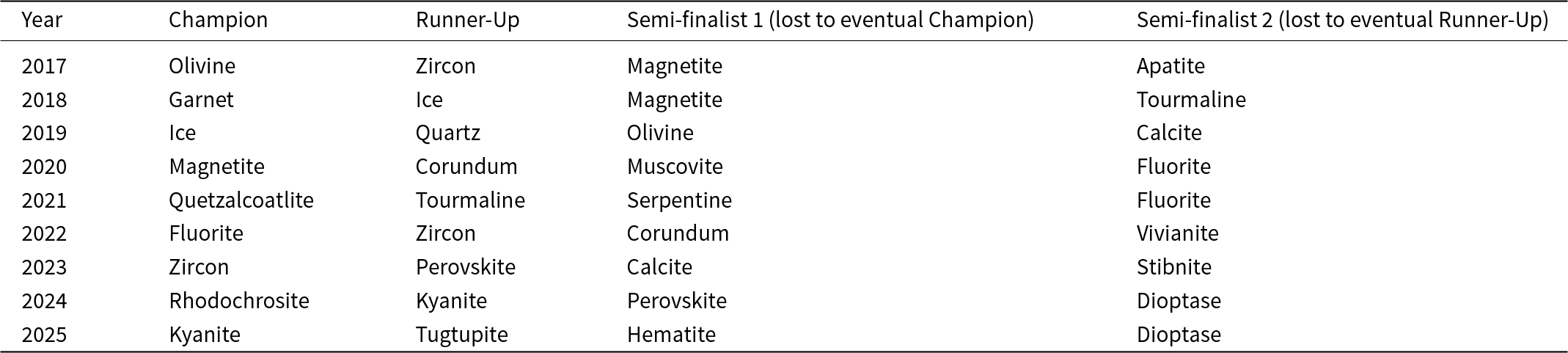
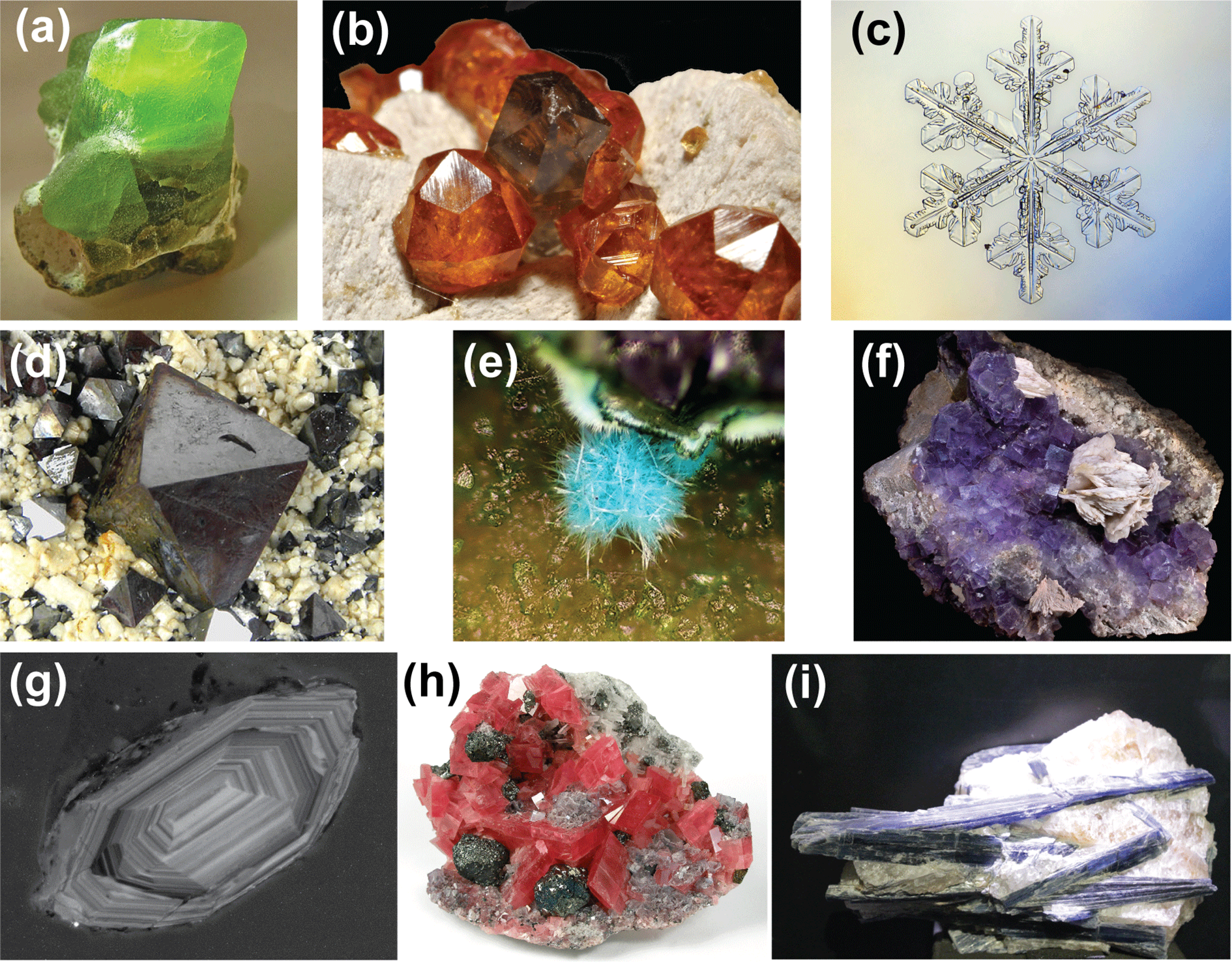
Mineral Cup has now run for 9 years (2017–2025) and has helped to bring mineralogy to a wide social media audience, including people who would otherwise have little or no day-to-day interaction with geoscience (Harrison, Reference Harrison2022). Over these 9 years, 146 minerals or mineral groups have competed at least once (subsequently referred to as ‘contenders’) and received 527,728 votes from participants (i.e. users voting online, with the assumption that one vote corresponds to one individual participant). Nine distinct minerals have been crowned champion in this time (Table 1; Fig. 1). Fan campaigning is a key part of Mineral Cup, as social media sites provide the means for users to make posts in favour of their favourites (or less commonly, posts against less favoured minerals). Here we describe some of the factors which influence voting, discuss the education and outreach aspects of Mineral Cup, and provide a blueprint for future directions, including relevance for related competitions.
Mineral Cup champion, runner-up and semi-finalists from 2017–2025
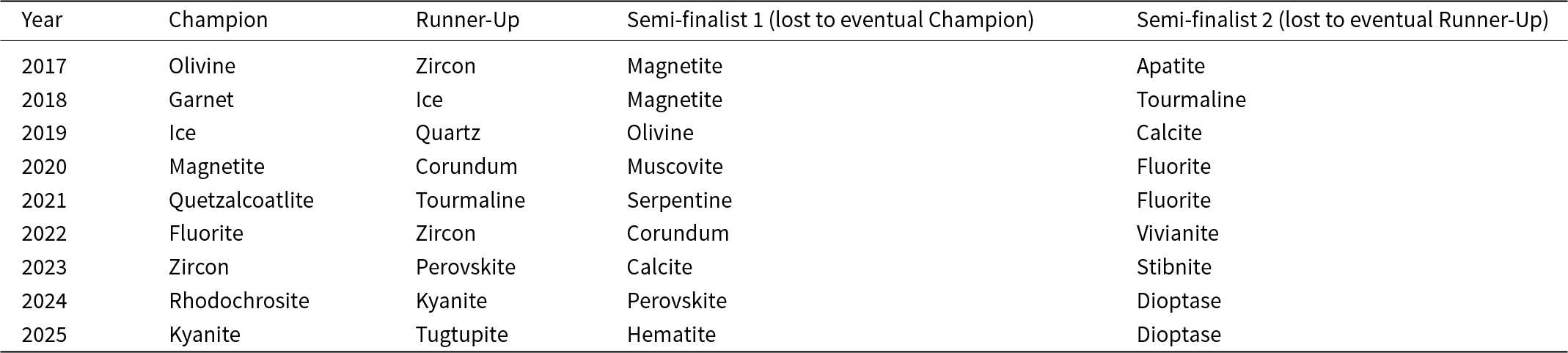
Table 1 Long description
The table lists the Mineral Cup champions, runners-up, and semi-finalists from 2017 to 2025. olivine, garnet, ice, magnetite, quetzalcoatlite, fluorite, zircon, rhodochrosite, and kyanite each won the championship in different years. Magnetite and fluorite frequently reached the semi-finals, indicating consistent performance. Zircon was a runner-up twice, in 2017 and 2022, and won in 2023. The data shows a variety of minerals reaching the finals, with no single mineral dominating the competition over the years.
Images of the nine Mineral Cup champions from 2017–2025. (a) Olivine (species: forsterite); (b) garnet (species: spessartine); (c) ice (as a snowflake); (d) magnetite; (e) quetzalcoatlite; (f) fluorite; (g) zircon (cathodoluminescence image); (h) rhodochrosite; and (i) kyanite. All minerals are found on a matrix of at least one other mineral, except for ice and zircon (embedded within, rather than grown on, another phase). Image licencing details: (a) by Rob Lavinsky, iRocks.com – CC-BY-SA-3.0, CC BY-SA 3.0, https://commons.wikimedia.org/w/index.php?curid=10147170; (b) by Géry PARENT – own work, Public Domain, https://commons.wikimedia.org/w/index.php?curid=9109109; (c) by Janek Lass – own work, CC BY 4.0, https://commons.wikimedia.org/w/index.php?curid=145499964; (d) by Rob Lavinsky, iRocks.com – CC-BY-SA-3.0, CC BY-SA 3.0, https://commons.wikimedia.org/w/index.php?curid=10171894; (e) by Christian Rewitzer – CC BY-SA 3.0, https://commons.wikimedia.org/w/index.php?curid=14865511; (f) by Didier Descouens – own work, CC BY-SA 4.0, https://commons.wikimedia.org/w/index.php?curid=7525113; (g) by Emmanuel Roquette – Own work, CC BY-SA 4.0, https://commons.wikimedia.org/w/index.php?curid=76849116; (h) by Rob Lavinsky, iRocks.com – CC-BY-SA-3.0, CC BY-SA 3.0, https://commons.wikimedia.org/w/index.php?curid=10474612; (i) by Stephencdickson – Own work, CC BY-SA 4.0, https://commons.wikimedia.org/w/index.php?curid=75389898.

Figure 1 Long description
The image shows nine distinct minerals, each representing a Mineral Cup champion from 2017 to 2025. (a) Olivine, variety forsterite, is displayed on a matrix. (b) Garnet, variety spessartine, is shown with multiple crystals. (c) Ice is depicted as a snowflake. (d) Magnetite is presented with an octahedral shape. (e) Quetzalcoatlite features a fluffy texture with very fine needles. (f) Fluorite is shown with a rough surface made of small cubes. (g) Zircon is captured in a cathodoluminescence image, revealing its internal zoned structure. (h) Rhodochrosite displays vibrant, shiny crystals. (i) Kyanite is shown with large, needle-like crystals. Each mineral is distinct, with ice and zircon embedded within another phase rather than grown on a matrix.
Brief history of mineral cup
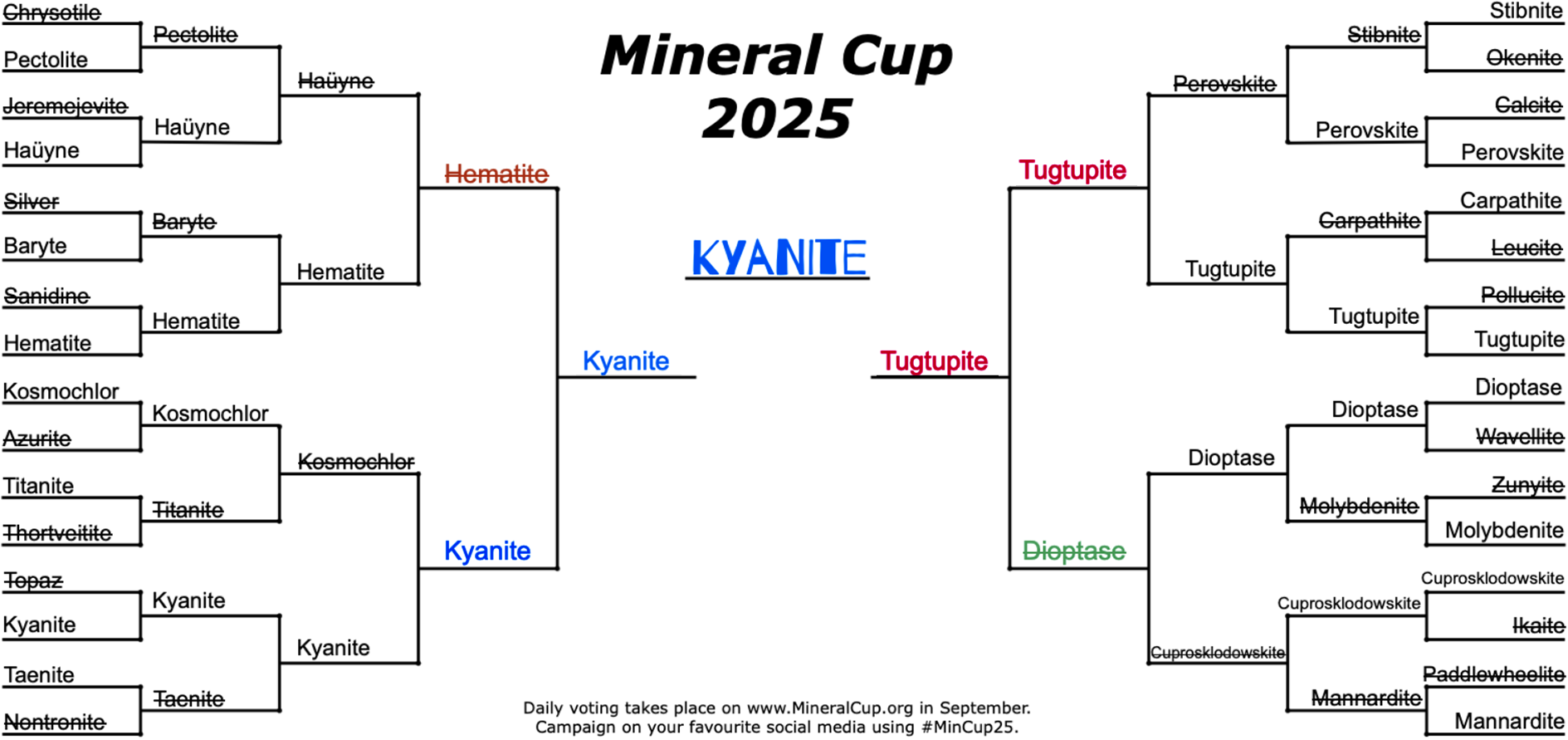
Mineral Cup started after years of friendly debates over which mineral was the best (Dempsey, Reference Dempsey2017). Economic geologist Richard Shaw at the British Geological Survey posted a photo on Twitter of highly-strained ribbon quartz in an outcrop within the Leth-Chreige crush belt near Gairloch in the Northwest Highlands of Scotland (Sherlock et al., Reference Sherlock, Jones and Park2008; Scottish Geology Trust, 2025). Author Eddie Dempsey teased that it was a perfect example of why quartz is the greatest of all minerals. Other geoscientists immediately jumped in, counter-proposing garnet, and Dempsey retorted that he was starting Mineral Cup to settle the argument. He decided on a sports-inspired 32-contender single-elimination bracket (Fig. 2) to span a month of debate, selected the initial contenders, and launched the first Mineral Cup on his personal Twitter account the following morning.
Example of a filled bracket (Mineral Cup 2025, in which kyanite emerged victorious).
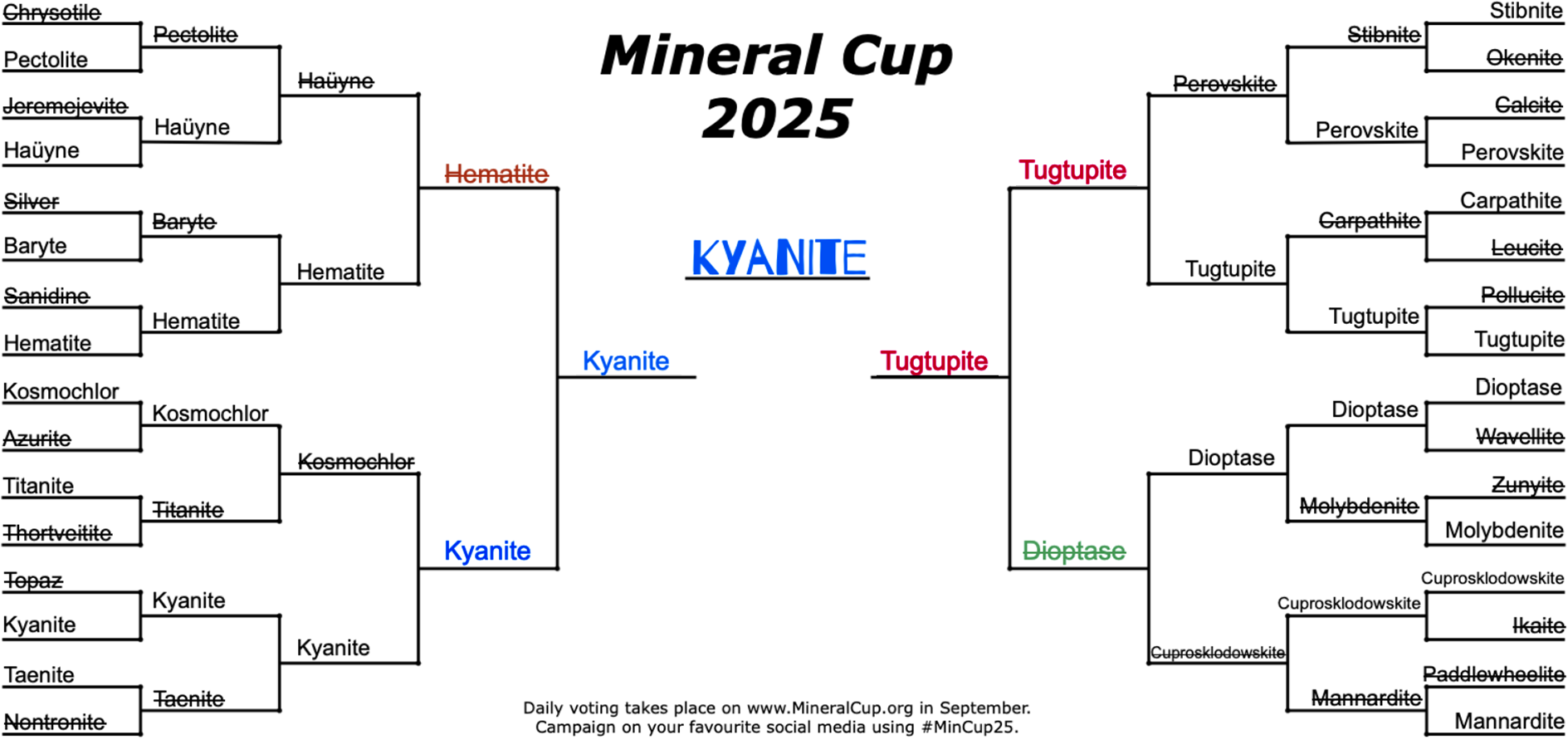
Figure 2 Long description
The bracket displays the Mineral Cup 2025 competition results. The left side shows minerals like prehnite, hematite and kyanite advancing through rounds. Hematite and kyanite reached the semifinals, with kyanite winning. The right side features minerals such as tugtupite, diopside and perovskite. Tugtupite reached the semifinals but lost to kyanite in the final. The text at the bottom mentions daily voting on a weblink in September and encourages sharing on social media using hashtag MinCup25.
The quarterfinals of the first Mineral Cup saw the Cup’s first of many one-vote margins, and the addition of ‘poetrology’ (a portmanteau of ‘petrological poetry’) to the campaigns. By the end of the first final crowning olivine champion over zircon, Mineral Cup had recorded nearly 17,000 total votes and the core voting tweets had 1.6 million impressions (not counting additional views of the #MinCup hashtag, or spread outside of Twitter).
Polls for the first 2 years (2017–2018) of Mineral Cup were conducted on the personal Twitter (now X) profile of author Eddie Dempsey using the Twitter polling feature. In 2019, Dempsey gathered a volunteer team and the polls moved to a dedicated Twitter handle (@MineralCup) where the polls ran for the next 4 years (2019–2022), first under Dempsey’s leadership then under that of author Mika McKinnon (2020 onwards). During its final year exclusively on Twitter, Mineral Cup had 3.7 million impressions on the #MinCup2022 hashtag.
Following the change of Twitter ownership in 2022, renaming to X in 2023 with the subsequent departure of many users from X, Mineral Cup voting moved to a dedicated website (https://www.mineralcup.org/) where voting has been conducted since 2023 with McKinnon continuing to lead the volunteer organising team. Voting turnout saw a dip after the migration to a stand-alone platform from approximately 100,000 votes per year to 40,000 votes per year. Approximately 45% of current players initially started participating in Mineral Cup when it was hosted on Twitter. Since moving to the stand-alone website, the organising committee has written brief descriptions of each match to provide reliable introductions to the minerals and provide keywords to inspire further learning.
At the same time as moving to its own website, Mineral Cup expanded its social media presence with volunteer-run accounts across eight different sites (X, Bluesky, Mastodon, Instagram, Facebook, Threads, LinkedIn and Spoutible), as well as posting daily match information on Mindat.org chat forums, and additional sporadic fan-run campaigns, unmoderated by the organising committee, on Tumblr, Discord, Reddit and Pillowfort.
Fan campaigning in Mineral Cup takes place on social media using annual hashtags, with anyone free to participate. This creates opportunities for professional mineralogists and geoscientists to engage with an actively curious and receptive public, bringing mineralogy to a wide audience. While fan campaigns supporting their minerals can range wildly from academic posts to rowdy trash-talk, the core Mineral Cup social media presence is maintained at a level appropriate for classroom use.
The rules of Mineral Cup have evolved over time, particularly with respect to which minerals can compete (see Mineral Eligibility Criteria below) and the turnover rate of how many minerals are eliminated and replaced between years. While initially a 25% turnover, participant feedback cites a desire to learn and teach about new minerals, and to not get locked in the same repeating arguments year after year. The 2025 Mineral Cup featured eight returning minerals from 2024, two returning minerals eliminated sometime in 2017–2023, and 22 new contenders for a 75% turnover rate. With >6000 minerals described (6200 in the Internation Mineralogical Association (IMA) list as at January 2026; Pasero, Reference Pasero2026), there is no shortage of new contenders from which to choose. Starting in 2021, participants have been able to nominate new contender minerals at any time via a Google form (https://www.mineralcup.org/nominations), with a dedicated solicitation for nominations made in August. The organising committee whittles this large list (growing by over 100 minerals per year) to a shortlist, then the year’s contenders are selected by prioritising educational potential, diversity of crystal structure and composition, notable characteristics, popular culture familiarity and campaign potential.
Once the minerals are determined, the bracket is selected by random draw. This was done by drawing slips of paper from a hat in 2017, a ranked seed from the prior year blended with paper slips in 2018 and 2019, physical dice in 2020, and a random number generator since 2021. The randomised bracket is adjusted to minimise repeating matches from prior years.
Mineral eligibility criteria
Initially, Dempsey determined that all contenders must be a natural geological material (no artificially created minerals) and must have a natural specimen on display somewhere in the world. This loosened in 2018 with the inclusion of ice, which is unstable at room temperature and pressure. Starting in 2020, Mineral Cup fully outsourced the ‘what, exactly, is a mineral?’ debate to the International Mineralogical Association (IMA) by requiring all contenders be present on the IMA official list of minerals in 2020. This includes minerals with Q (‘Questionable’) status such as opal (no known crystal structure or definite chemical composition) and mercury (liquid at room temperature), defined as minerals for historical reasons.
Early years of Mineral Cup oscillated between allowing groups and supergroups (e.g. amphibole, tourmaline, apatite) in 2017–2019 and 2021 as contenders in their own right, while 2020 and all years since 2022 used the stricter definition of species as contenders (e.g. elbaite, fluorapatite). Ineligible contenders include solid solutions of minerals with unofficial names (e.g. oligoclase, zinnwaldite), varietal names including gemstones (e.g. amethyst, sapphire), discredited minerals (e.g. ‘cuproadamite’ (Burke, Reference Burke2006), ‘partzite’ (Mills et al. Reference Mills, Christy, Rumsey and Spratt2016)) and self-evidently, rock types (e.g. granite, gneiss, sandstone, which all competed in Rock Cup in November 2017). It is worth noting that some solid solutions do have official names, e.g. omphacite.
Winning minerals (Table 1; Fig. 1) have featured four silicates (olivine, 2017, garnet, 2018, zircon, 2023, and kyanite, 2025), two oxides (ice, 2019 and magnetite, 2020) – although ice has claims to being a covalent compound, one oxysalt (quetzalcoatlite, 2021), one halide (fluorite, 2022), and one carbonate (rhodochrosite, 2024).
Zircon is the only mineral to have finished runner-up more than once (2017 and 2022) before winning a Mineral Cup final at its third attempt in 2023. Several minerals have competed in two semi-finals: magnetite (2017 and 2018), fluorite (2020 and 2021), calcite (2019 and 2023), and dioptase (2024 and 2025), of which half have subsequently been crowned champion. Olivine is the only mineral to make it at least as far as the semi-finals (in 2019) after winning (in 2017), a result which will not be repeated after rule changes made champions ineligible for future competitions. Olivine and garnet are the only mineral groups to be champion, results which will not be repeated after the rules stabilised to require exclusively IMA-approved mineral species. Calcite is the most hapless contender, competing in every Mineral Cup and only ever making it as far as the semi-finals, although quartz also has a claim to this title as Mineral Cup was formed to ‘prove’ quartz is the greatest mineral, but it has never yet won and did not compete in 2025. Aside from calcite, kyanite has also competed in every Mineral Cup, but that streak will come to an end after it won in 2025.
Minerals and chemical diversity
Minerals on Earth are dominated by silicates due to the abundance of Si and O in the Earth’s crust. Early lists of minerals in Mineral Cup reflected this, with a high proportion of silicates, 59.4% (19 of 32) amongst the contenders. This is less than the 74.3% Si+O by volume in Earth’s crust (Si:O molar ratio in the crust is 1:1.6, not 1:2) but greater than the 27.0% (1675 of 6200) of described minerals being silicates (1666) or SiO2 polymorphs (nine minerals) (Pasero, Reference Pasero2026).
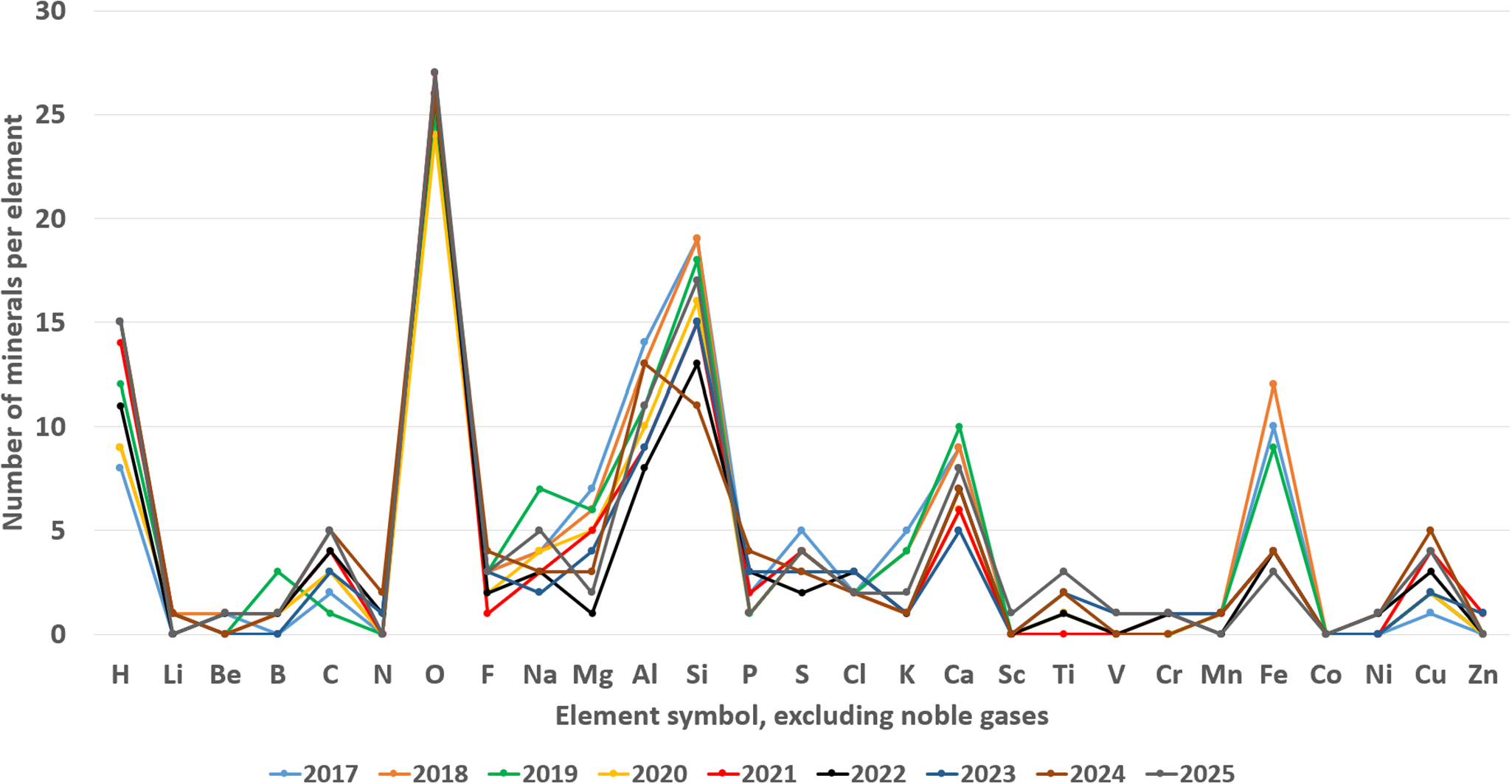
In response to author Owen Missen’s public tweet commenting on the relatively sparse element diversity in 2020, recent editions of Mineral Cup have steadily increased the overall chemical diversity of contenders. Seventy two of the first 92 elements (i.e. up to U, atomic number Z = 92) are essential to at least one defined mineral species (Ralph et al., Reference Ralph, Von Bargen, Martynov, Zhang, Que, Prabhu, Morrison, Li, Chen and Ma2025). Hafnium is found in just hafnon (HfSiO4). The exceptions are the noble gases (He, Ne, Ar, Kr, Xe, Rn – also radioactive), some rare-earth elements (REEs) that only substitute for more common REEs in minerals (namely Eu, Tb, Dy, Ho, Er and Tm) and elements with only highly radioactive isotopes (Tc, Pm – also a REE, Po, At, Fr, Ra, Ac and Pa). As of 2025, 45 of the possible 72 elements (62.5%) have been represented in the nine instances of Mineral Cup held to date. Of the uncommon minerals, the Ag-Pb-Cu-Zn-Te-bearing quetzalcoatlite was undoubtedly the most successful, winning the competition in 2021. All elements with Z up to 26 have been represented at least once, with cobalt (Co, Z = 27) the lowest atomic number element (excluding noble gases) yet to have a representative (Fig. 3).
Chemical diversity of minerals in Mineral Cup (yearly variation) for elements with atomic number Z of 1–30, excluding noble gases He, Ne and Ar.
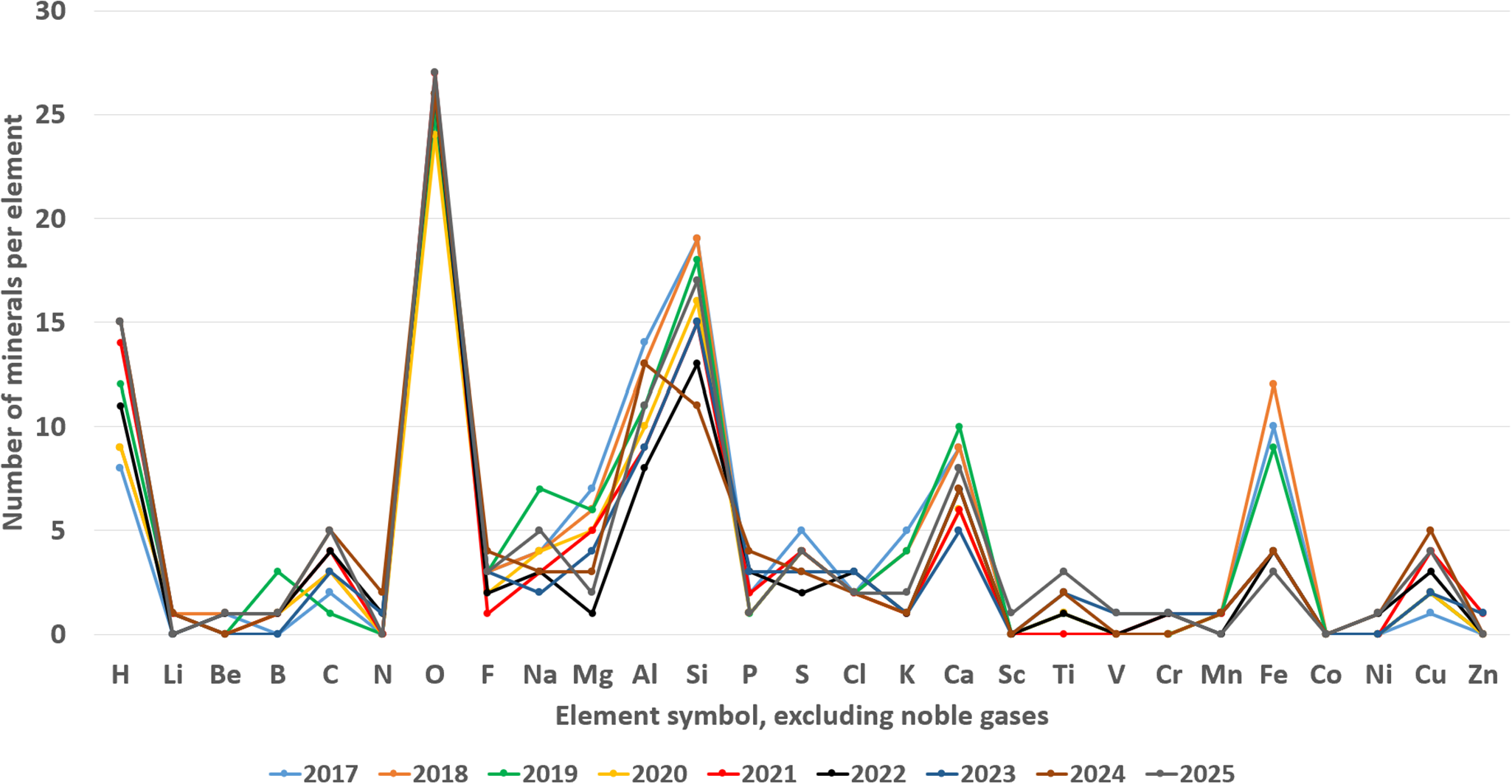
Figure 3 Long description
The graph shows the number of minerals per element from 2017 to 2025, excluding noble gases. The x-axis is labelled 'Element symbol, excluding noble gases' and includes elements from hydrogen to zinc. The y-axis is labelled 'Number of minerals per element' with values ranging from 0 to 30. Multiple lines represent different years: 2017, 2018, 2019, 2020, 2021, 2022, 2023, 2024 and 2025. Peaks are visible for carbon and silicon, indicating higher numbers of minerals associated with these elements. Variations are observed across the years for each element, with some elements showing consistent trends and others fluctuating significantly.
Voting data collection and treatment
Twitter polls record a total number of votes and display the percentage result in a binary poll. Subsequently (from 2019–2022), these results were transcribed and the number of votes per match recorded in a spreadsheet. For the dedicated website, votes are recorded on forms linked to a Google sheets document, tabulated (with time-filter to the appropriate 24-hour window), and displayed as a chart elsewhere on the website.
Twitter polls had the advantage that individual accounts can only vote once. After a vote is recorded, viewing the poll will show current results but provide no option to vote again. Although there was a small risk of users creating multiple Twitter accounts to unfairly influence voting, only rarely were any problems noted with this kind of interference.
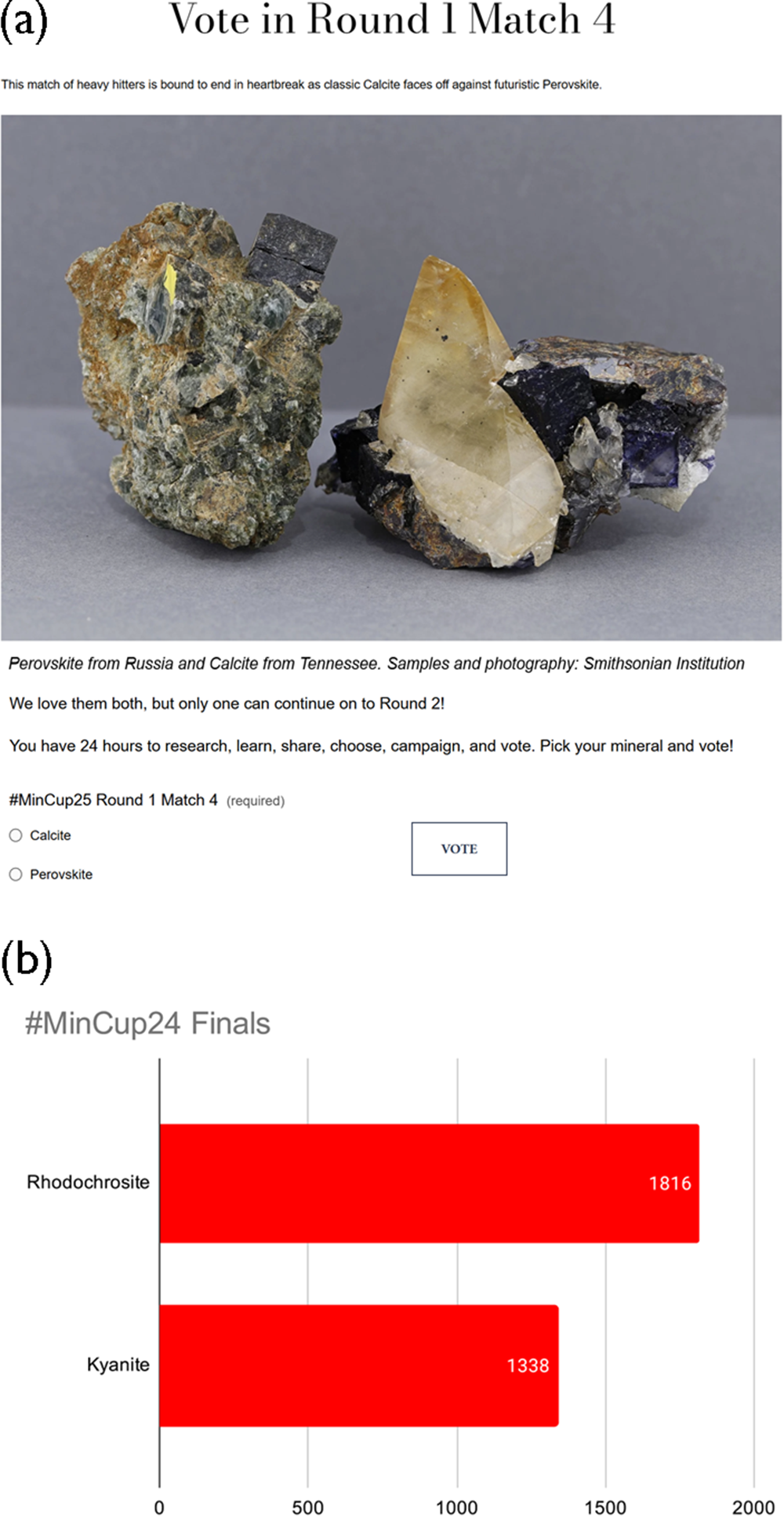
On the dedicated website, no barrier is imposed to voting, with the organising committee requesting players “not spoil their own fun” in a competition with no true stakes beyond enjoyment. Each match has its own webpage with a unique link, featuring images of the minerals, a blurb for each and a voting interface (Fig. 4; blurb removed from screenshot). During data processing of votes, occasional close matches have seen sudden rushes of large numbers of duplicate votes all coming from an identical device, browser and IP address. These rushes occur with votes seconds apart, making it unlikely to be another voter(s) using the same device. They also occur for only occasional matches with no repetition indicative of groups such as students voting on classroom devices. These anomalous votes are flagged as suspicious and investigated manually by the organising committee, with any ‘ballot stuffing’ removed from the vote tallies. The impact is thus far small (∼1% of over 41,000 votes cast during 2025, with <0.5% of respondents self-reporting deliberate duplicate-voting in post-game surveys), leading the organising committee to continue prioritising frictionless participation with unrestricted voting at this time.
Screenshot of: (a) a match voting page with specimen photos and voting poll (Mineral Cup 2025 initial round match between calcite and perovskite shown; mineral descriptions removed so the figure is not too large) and (b) a sample results graph (2024 final shown, with rhodochrosite defeating kyanite by 1816 votes to 1338). The specimen image in (a) is copyright of the Smithsonian Institution.
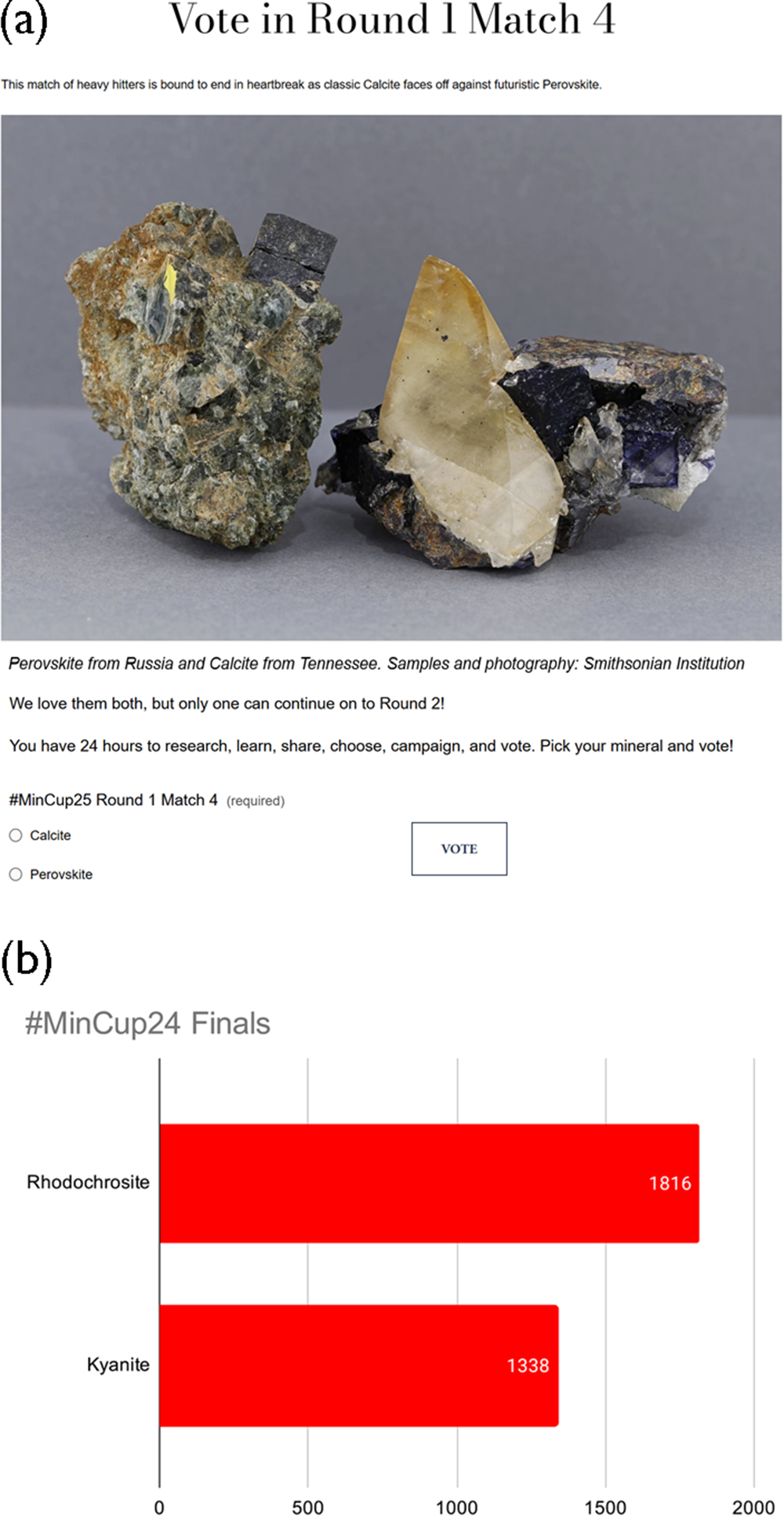
Figure 4 Long description
Image A shows a voting page titled 'Vote in Round 1 Match 4' for the Mineral Cup 2025. It features specimen photos of perovskite from Russia and calcite from Tennessee, with a voting poll below. The text at the top shows a typical statement of the type used in the competition: “This match of heavy hitters is bound to end in heartbreak as classic Calcite faces off against futuristic Perovskite” Participants can choose between calcite and perovskite and click 'Vote'. The text encourages players to research and vote, with a hashtag MinCup25. Image B displays a bar graph titled '#MinCup24 Finals', showing the 2024 final results. Rhodochrosite received 1816 votes, while kyanite received 1338 votes, indicating rhodochrosite's victory. The x-axis represents the number of votes, ranging from 0 to 2000 and the y-axis lists the minerals rhodochrosite and kyanite.
On Twitter, polls are displayed as a live percentage, with players required to multiply percentages by vote totals to estimate exact votes and margins. This loss of this feature was lamented by voters when moving to the stand-alone website, resulting in rapid development of embedded live-updated charts during the first few matches on the site (Fig. 4b). During contentious matches, the charts are marked as preliminary until any suspicious voting can be validated.
Player demographics and behaviour
Post-game player surveys started in 2022, with participants describing themselves as: primarily interested in rocks without formal geoscience affiliation (35.1%); having or working towards a geoscience degree (28.7%); and working in a geoscience field (28.4%), with only a scattering of participants having taken a geoscience course at some point in their past (7.8%) without continuing in the field. The reach of Mineral Cup has expanded over time, with the most recent post-game survey in 2025 reporting that that the largest single segment of players (41%) have an interest in rocks without formal academic or professional geoscience affiliation. In unstructured comments, players regularly note that Mineral Cup is sparking a resurgence of a long-forgotten affection for geoscience, with a handful every year inspired to seek out or rebuild forgotten childhood rock collections. Many comments in recent years specifically cite the mineral descriptions and use of mineralogy jargon during matches as supporting their extended learning beyond the materials provided, and even beyond the competition itself.
The majority of players first encounter Mineral Cup through organic social media activity (∼70%), followed by direct peer-to-peer recruitment by an existing player (10%), and exposure in a classroom or workplace (5%). In an overlapping survey where multiple responses can be selected, the majority of players indicate their motivation to participate is to have fun (>90%), to learn (60%), to socialise with others about geoscience (20%), and to teach (10%).
While Twitter provided basic analytical data on projected demographics of participants, access was restricted with the changeover to X (formerly Twitter) and was subsequently lost without being consistently recorded. Post-game surveys have not included questions on demographic information like age, gender or socioeconomic status.
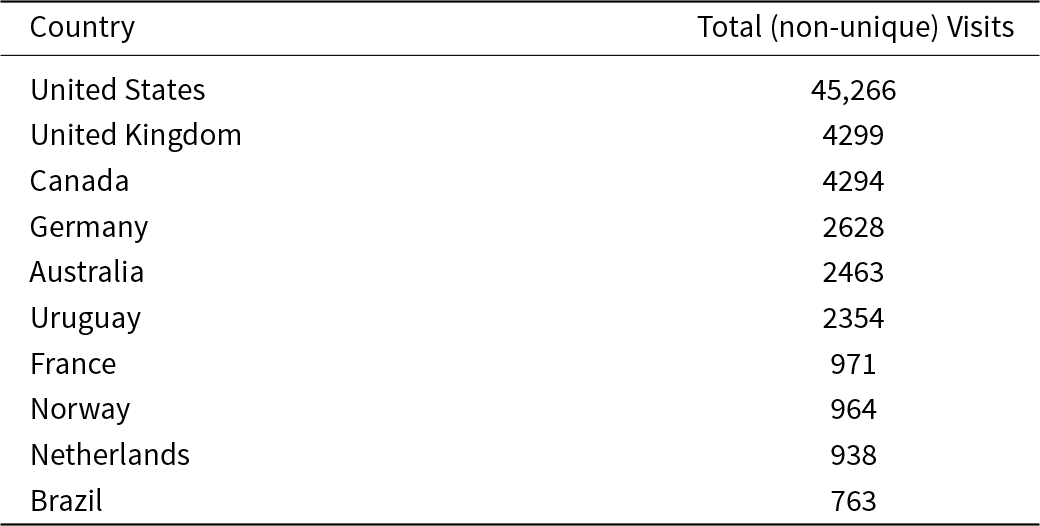
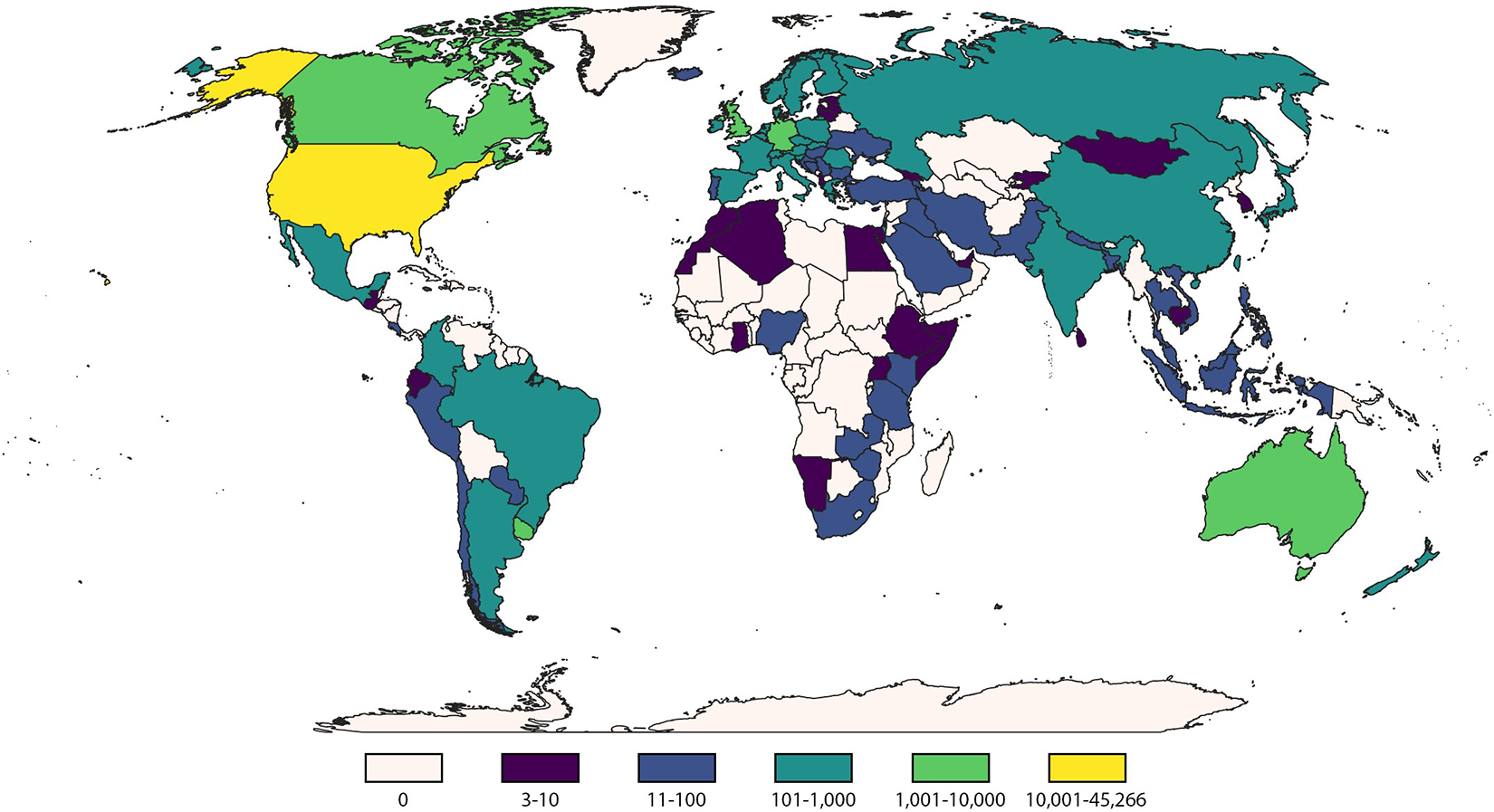
We can tell, from a mixture of Twitter analytics, post-game surveys, and geolocating by IP addresses, that Mineral Cup has a global participation, from >100 countries per year, with the bulk in North America and Europe (Table 2; Fig. 5).
Top ten countries of origin for site visits in September 2025 as determined by SquareSpace (a website construction tool) geolocating of IP addresses showing geographic diversity of participants in 2025
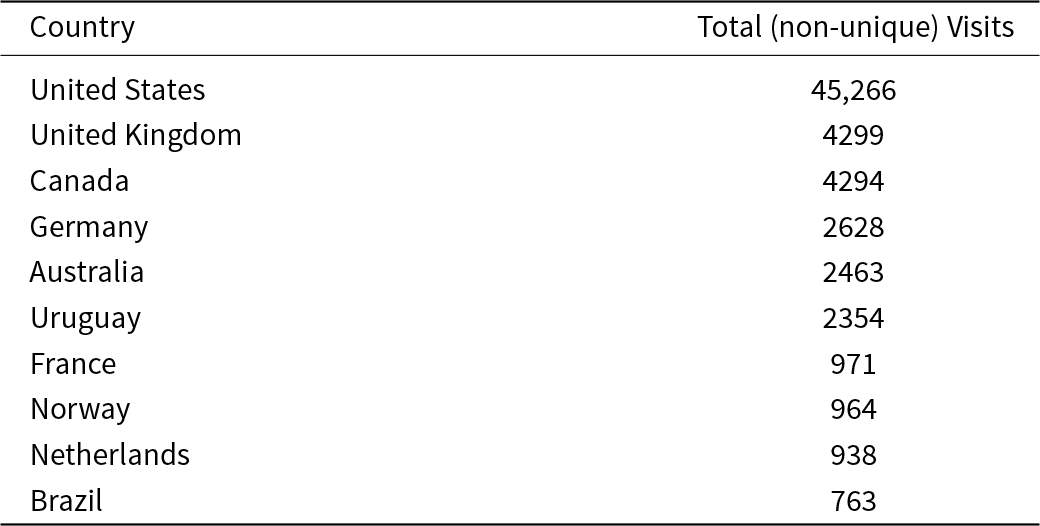
Table 2 Long description
The table measures the total number of non-unique site visits from the top ten countries in September 2025. The United States had the highest number of visits at 45,266, significantly more than the second-ranked United Kingdom and Canada, which had 4,299 and 4,294 visits respectively. Germany and Australia also contributed notable traffic with over 2,400 visits each. Uruguay, France, Norway, Netherlands, and Brazil complete the list, with Brazil having 763. The data highlights the geographic diversity of site visitors, with a strong presence from North America and Europe, and some representation from South America and Oceania. The figures reflect non-unique visits, meaning repeat visits from the same users are included.
Particular matches have disproportionately large participation from certain geographic localities, e.g. a large turnout from Uruguay when perovskite is competing due to a particularly enthusiastic campaigner in the region, or campaigners harnessing patriotism for minerals with a strong cultural presence such as Inca rose (a varietal name of rhodochrosite) in Chile.
Geographic distribution of non-unique visitors to mineralcup.org for the duration of Mineral Cup 2025 (1 September to 3 October 2025) geolocated by SquareSpace and mapped on QGIS.
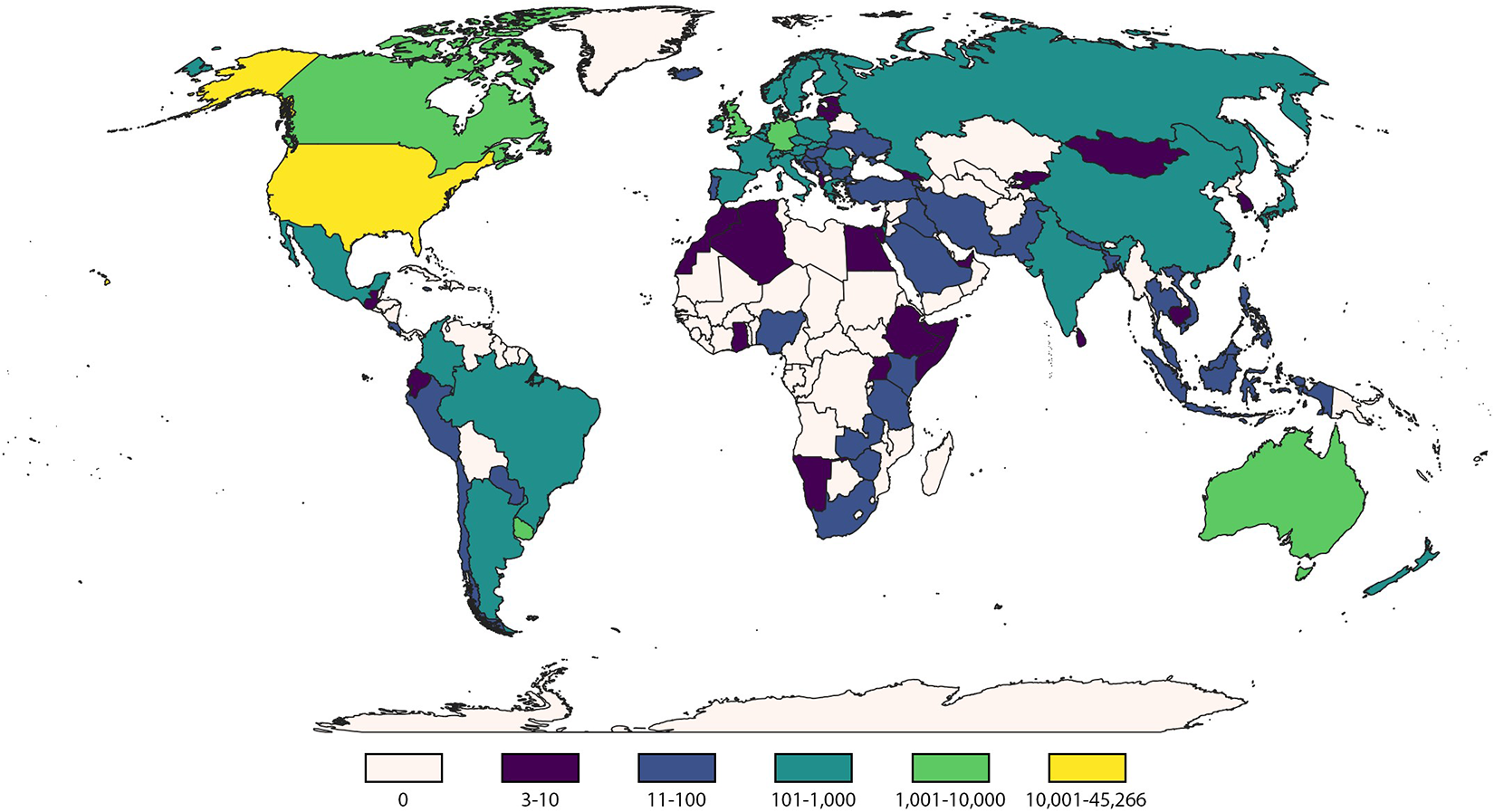
Figure 5 Long description
The map illustrates the geographic distribution of site visits across the world. Countries are shaded to represent the number of visits, with darker shades indicating higher numbers. The United States is prominently highlighted with 45,266 visits, indicating a significant concentration of site activity. No other country is in the highest bracket of 10,000-45,266. 1000-10,000 includes Canada, Australia and some of Europe, with Uruguay in South America. Other countries are shaded in varying degrees, reflecting their respective visit counts. There are far fewer counts (10 to zero) from countries in Africa and the Middle East. The map includes a scale at the bottom left, ranging from 0 to 45,266, to provide context for the shading intensity.
Although Mineral Cup is conducted in English, posts in languages other than English are commonly viewed across social media. Dedicated campaigning in languages other than English also results in greater participation in communities where that language is spoken, such as the spike of votes from Norway supporting thortveitite after its discovery story and local folklore was discussed in several Norwegian-language threads on Bluesky.
It is unclear if the correlation between disproportionately high representation of players in countries where organising committee members are located is a result of the organizing committee motivating their extended networks to participate, or if greater participation leads to people in that community being more likely to volunteer for the organising committee.
What factors influence voting?
Mineral Cup’s rules explicitly instruct participants to vote for minerals for any reason they wish, using their own personal criteria to determine which mineral they think should be champion each year. The social media nature of the competition means that the players who regularly post about Mineral Cup (‘campaign’ for their chosen minerals) may act to influence votes of other participants. Some of the commonly mentioned factors influencing voting are the mineral’s name, colour, striking appearance, utility, unusual characteristics, cultural impact, and fun facts.
Name or nickname: Unique or unusual names tend to result in greater popularity. Quetzalcoatlite (named after the feathered serpent god in Aztec mythology) and tugtupite (named after reindeer blood) are two such examples. As well as their official IMA names, some minerals have developed nicknames during Mineral Cup. For instance, olivine (‘Green Monster’ for its distinctive appearance) and zircon (‘Time Lord’ for its resilience and use in geochronology) acquired their monikers within their first few matches in 2017, the sparkling green of dioptase gave it the descriptive nickname ‘Emerald Queen’ and ‘Desert Emerald’ to pay homage, yet distinguish it from the true emerald beryl, and rhodochrosite was a forgettable contender during its earlier competitions until it was described by the phrase ‘Meat Rock’, which became a repeated campaign chant propelling it to victory in 2024.
Colour: Coloured minerals tend to perform strongly, in part due to catching the eye when ‘scrolling’ social media. Brightly coloured mineral images stand out more than duller coloured minerals, which is probably one reason why clay minerals have tended to struggle to progress beyond their initial successful match. Many voters often describe themselves as being on a colour team (most often ‘Team Green’ or ‘Team Blue’) to determine their votes, jokingly bemoaning when a match is between two contenders of their chosen colour.
Striking appearance: In a somewhat similar vein to ‘colour’, minerals with a striking appearance such as vibrant sprays of crystals stand out. Minerals that have such images readily available (e.g. on platforms such as Mindat.org) to embed and share in posts can be used by campaigners in effectively promoting these minerals. Posts with images tend to receive more engagement and lead to more votes than posts with text only (Li and Xie, Reference Li and Xie2020).
Utility: Many minerals have fundamental uses as ores, building materials or in other heavy industries. Others are key geological or petrogenetic indicators, while others have high aesthetic value as gems or collectible specimens. Beyond the name and appearance of the mineral, voters are often interested in what the mineral is used for. Despite the general under-performance of clay minerals compared to other mineral classifications, kaolinite regularly avoided elimination by appealing to its utility in ceramics, paper whitening, and cat litter (thus supplementing underwhelming mineral photographs with cat pictures!). Campaigners for the mineral perovskite often lean on the technological potential of minerals with similar crystal structure in advanced solar cells (Noman et al., Reference Noman, Khan and Jan2024), solid electrolytes for batteries (Yan et al., Reference Yan, Yim, Pankov, Bauer, Baranova, Weck, Merati and Abu-Lebdeh2021), or in oxygen- or proton-conductive membranes for fuel cells (Jun et al., Reference Jun, Kim, Shin and Kim2016).
Unusual characteristics: Particularly unusual characteristics e.g. radioactivity of uranium minerals; toxicity of lead or arsenic minerals; taste, e.g. halite or sylvite; optical effects, e.g. the UV-induced fluorescence and tenebrescence of sodalite or tugtupite; reactivity, e.g. calcite’s effervescence in response to acid; distinct smells, e.g. sulfur; or notable tenacity, e.g. flexible molybdenite and mica can all drive votes. Sometimes, voting blocks will form with monikers like Team Poison backing any mineral that appears more hazardous than its competition.
Cultural impact: The human relationships with rocks, folklore or mythology about particular minerals, its symbolism in ancient or modern cultures, and ways in which a mineral influences popular culture are all potential motivations. Examples include the appeal of quetzalcoatlite as the namesake of the Aztec and Toltec god of the sea Quetzalcoatl, the origin of tugtupite as the childbirth-blood of an Inuit reindeer goddess, or the history of cinnabar in Chinese artwork. Links to popular culture and science fiction, such as aesthetic samples of perovskite bearing a similar resemblance to the Borg Cube of Star Trek, can also influence voting.
Fun facts: Mineralogy is full of titbits around names, discoveries, strange storage locations of type specimens, unusual occurrences and so on. All such information may be shared to influence voting for a particular mineral. Some of these titbits emerge year after year for returning minerals, e.g. calcite forming the lenses in trilobite eyes.
Matchups with controversial minerals or an interesting juxtaposition often feature greater participant turnout. The 2019 matchups involving ice (crystalline hexagonal form of H2O) all followed this trend, with many ‘hard-rock’ mineralogists and geologists voting for any mineral other than ice, which had gained a popular following amongst such groups as Antarctic and oceanographic enthusiasts. Mineral Cup 2020 featured a first-round super-match of forsterite vs quartz vs zircon, three favourites competing in one match as zircon has been inadvertently left out of the initial bracket, resulting in busier than usual social media engagement. One of the highlights of Mineral Cup 2023 was the matchup between yellow-grey, radioactive, hazardous arsenuranospathite and pink, decorative rhodochrosite. This match became known as the ‘Barbenheimer showdown’ due to the coincidental concurrent release of two very different films, Barbie (2023) and Oppenheimer (2023), resulting in the popular culture ‘Barbenheimer’ portmanteau being repurposed for the Mineral Cup match.
Utility and cultural impact frequently become jumping-off points for experts in disciplines unrelated to geosciences to campaign in favour of a mineral. The potential of perovskite-structure minerals in green energy draws supporters from chemistry, physics and material sciences. After ice lost in the semi-finals in 2018, it won the championship in 2019 in large part due to the additional enthusiastic support of figure skating fans who had never previously participated in Mineral Cup.
Along with specimen and artwork photographs, players also create custom media to support their minerals. These can be gifs and memes, but also more time-consuming explainer videos or specimen sketches. During the inaugural Mineral Cup, Hazel Gibson produced a charity calendar (Gibson, Reference Gibson2017; Roberts-Artal, Reference Roberts-Artal2017) of mineral contenders she had drawn throughout the competition.
Though a single appealing characteristic may be enough for a mineral to win its first match, to have staying power a mineral needs to have multifaceted appeal to voters. Minerals that are used for pigments often hit several of these points: saturated colours, utility as a pigment, cultural impact in historical works of art or makeup, and commonly a heavy metal associated with other unusual properties. Examples include red pigments like cinnabar and hematite (Domingo et al., Reference Domingo, García-Borja and Roldán2012; LeCroy Reference LeCroy2022) and dark grey stibnite (Hardy et al., Reference Hardy, Walton, Vaishnay, Myers, Power and Pirrie2006), which are ore minerals for the extraction of mercury, iron and antimony, respectively.
Mineral cup as geoscience outreach
Enrolment in academic courses for geology and related disciplines is in long-term decline. (Geological Society of London/ University Geoscience UK, 2019; American Institute of Professional Geologists, 2021; Australian Geosciences Council, 2022; Council of Chairs of Canadian Earth Science Departments, 2022). Many university courses have been closed or are under threat of closure (Nature Reviews Editorial Board, 2021; Moss et al., Reference Moss, Guida, Zhou, Cooper, Harris, Hill, Benford, Spears, Solem and Young2025). A wide range of reasons for this decline has been proposed, including a lack of exposure to the subject within school curricula (Holbrook,Reference Holbrook1997; Nature Reviews Editorial Board, 2021; Williams et al., Reference Williams, Anderson, Davies-Vollum, Loza Espejel, Fishwick, Healy, Koor, McLeod, Owen, Raji and Rowley2024). There is commonly a misunderstanding of what geoscience is and a perception of the subject as ‘boring’ (Rogers et al., Reference Rogers, Giles, Dowey, Greene, Bhatia, Van Landeghem and King2024). There are also negative associations of geoscience with the extractive industries and destruction of the environment (Rogers et al., Reference Rogers, Giles, Dowey, Greene, Bhatia, Van Landeghem and King2024; Stewart, Reference Stewart, Capello, Mouri, Kombada and Raji2023; Williams et al., Reference Williams, Anderson, Davies-Vollum, Loza Espejel, Fishwick, Healy, Koor, McLeod, Owen, Raji and Rowley2024). Barriers to diversity and inclusivity have also been cited as a factor in this decline and have been explored by Dowey et al. (Reference Dowey, Barclay, Fernando, Giles, Houghton, Jackson, Khatwa, Lawrence, Mills, Newton, Rogers and Williams2021) and Fox et al. (Reference Fox, Din, Davidson, Trowler, Ayodeji, Rockey and Patel-Nair2024). The geosciences have been identified as having less diversity in terms of those studying/working in the area than most other STEM subjects (Fox et al., Reference Fox, Din, Davidson, Trowler, Ayodeji, Rockey and Patel-Nair2024). This decrease in geoscience graduates is occurring at a time when expertise in the field is becoming more vital in terms of tackling climate change, developing green technologies, and ensuring resource security (Gonzales and Keane, Reference Gonzales and Keane2009; Nature Reviews Editorial Board, 2021; Rogers et al., Reference Rogers, Giles, Dowey, Greene, Bhatia, Van Landeghem and King2024; Moss et al., Reference Moss, Guida, Zhou, Cooper, Harris, Hill, Benford, Spears, Solem and Young2025).
Mineral Cup is appealing to teachers as a structured way to bring geoscience into classroom activities at all levels from primary school to university. Geoscience is often minimally taught in primary and secondary schools in places like the United Kingdom (Gonzales and Keane, Reference Gonzales and Keane2009; Nature Reviews Editorial Board, 2021; Rogers et al., Reference Rogers, Giles, Dowey, Greene, Bhatia, Van Landeghem and King2024; Williams et al., Reference Williams, Anderson, Davies-Vollum, Loza Espejel, Fishwick, Healy, Koor, McLeod, Owen, Raji and Rowley2024), so participating in Mineral Cup provides an opportunity for students to learn about the discipline and through their interactions with other participants, increase awareness of geoscience careers prior to determining their post-secondary plans. During post-game surveys, teachers often describe how they use Mineral Cup to spark classroom discussions. At higher academic levels, professors may require students to participate in campaigning either within their classrooms or using dedicated hashtags on their preferred social media platform. In 2017, the geology department at Greenhead College in Huddersfield, UK set students the task of researching contenders during the inaugural Mineral Cup, then took it upon themselves to run a Rock Cup in November 2017. Since 2022, Erik Klemetti has been using a live action variation of Mineral Cup as part of teaching at Denison University, Ohio, USA, with students writing research papers before performing spirited presentations to garner votes for their mineral (Reed, Reference Reed2025). Mineral Cup is also inspiring student clubs at universities that lack a dedicated geoscience department, with students reaching out requesting guidance to help run their own local Mineral Cup.
Mineral Cup is also used in ongoing informal education, particularly within family groups. During the unstructured section of the post-game survey, players report that they often gather as a family to review, research and debate the merits of each contender before each family member selects a mineral. This happens both clustered around the same device for families with younger children living at home, and in group chats for families of adults living in different locations.
The competition encourages interaction across different disciplines. Mineral Cup players often highlight a mineral’s biological and chemical significance, its role in technological development and sustainability, as well as its relevance to the green transition. Other players may focus on a mineral’s historical or archaeological significance, while some emphasise its artistic use. Even scientists specialising in minerals often learn new things about familiar minerals or learn of new-to-them minerals over the course of the competition (Jollands, Reference Jollands2021).
These discussions illustrate the interdisciplinary nature of mineralogy and the vital role it plays in many fields. They also help to dispel the common public misconception that mineralogy and geoscience are mainly linked to extractive industries and have a negative effect on the environment (Nature Reviews Editorial Board, 2021; Stewart, Reference Stewart, Capello, Mouri, Kombada and Raji2023; Rogers et al., Reference Rogers, Giles, Dowey, Greene, Bhatia, Van Landeghem and King2024; Williams et al., Reference Williams, Anderson, Davies-Vollum, Loza Espejel, Fishwick, Healy, Koor, McLeod, Owen, Raji and Rowley2024). This playful side of Mineral Cup makes mineralogy more accessible to people with little background in the subject. Seeing those regarded as ‘experts’ champion minerals for humorous or seemingly trivial reasons helps to make academics seem more approachable and demystifies the subject. It encourages non-experts to participate without feeling that they need specialist knowledge or being too intimidated to ask follow-up questions. Social media comments and post-game surveys regularly include comments about people feeling welcomed into the community despite their lack of geoscience knowledge. A similar sentiment is expressed when regular players spontaneously invite others to join them in participating in Mineral Cup, describing it as a joyful way to learn new things.
This playfulness also allows geoscience experts to shake off burnout by engaging in their work through a less-serious lens than disasters, dwindling resources, contaminated sites, climate change, and other grimmer aspects of geoscience.
Mineral Cup showcases the diversity of people with an interest in mineralogy and geoscience at both the professional and non-professional level. Players’ social media profiles are public and academics and professionals commonly provide details of their background, heritage, and identity. This can challenge the stereotype of geoscience only being for a narrow demographic. Being a part of the Mineral Cup community creates a sense of belonging. Allowing underrepresented individuals to forge links and network with others can counter the isolation that some feel (Marín-Spiotta et al., Reference Marín-Spiotta, Barnes, Berhe, Hastings, Mattheis, Schneider and Williams2020). Seeing people from a similar background, heritage, or identity within STEM has been found to encourage people from underrepresented groups to embark and continue with a STEM degree (Asai, Reference Asai2020).
The future of mineral cup
Mineral Cup’s stand-alone site has frustrating technological limitations rooted in its content management system with SquareSpace having e-commerce as its main focus. Exploring other backend systems and porting the site to a more suitable framework could reduce the workload required to populate new matches each year, and may provide more tools for moderating the few instances of ballot-stuffing without resorting to the need for player log in. It may also provide a much-requested feature of allowing players to tell at a glance if they’ve previously voted in a match, preventing unintentional duplicate votes.
The format of Mineral Cup is far from unique, with similar single-elimination brackets used for everything from sporting events to Katmai National Park’s Fat Bear Week (Donnelly, Reference Donnelly2022; Compton, Reference Compton2023), with voting conducted at https://explore.org/fat-bear-week. During the early years of Mineral Cup, similar polls ran on Twitter to select the best rock, river, exoplanet, and even foraminifera. With a technological backend and process in place, and with sufficient volunteer hours, it would be feasible for Mineral Cup to run related smaller events throughout the year on other aspects of geoscience.
In November 2025, Mineral Cup collaborated with the International Mineralogical Association (IMA) to run Ore Cup. An additional eight minerals (four that had not previously run in Mineral Cup, one of which was a mineral subgroup ineligible under current rules) competed in a week-long elimination bracket. Over three rounds (equivalent to quarter finals onwards), 3582 votes crowned native copper the IMA’s Ore Mineral of the Year. Similar collaborations are feasible, with potential competitions exploring clay minerals, coal macerals, gems, or any other mineralogical or petrological subdivision.
In an era where geosciences student numbers are down but geosciences jobs remain essential for the future across a wide range of fields, the value of Mineral Cup as an educational tool could be expanded. Sharing lesson plans and assignments targeted at different grade levels could support educators in utilising Mineral Cup to engage their students. This would be particularly useful for interested educators who do not have a strong geoscience background.
Mineral Cup engagement greatly benefits from eye-catching photographs of specimens. These are mostly by photographers who have licensed their images for educational use, but occasionally, Greg Polley at the Smithsonian Institution has been able to provide match-specific photographs that greatly enhance staging each match as a showdown between minerals. Time and specimen availability have been the greatest limiting factors in enabling this for every match. More extensive collaborations with museum and university geology collections and potentially grants to fund photographer time may enable this feature to extend to a greater proportion of matches.
Cultural aspects of minerals such as mythology, folklore, and historic use resonate strongly with players, particularly when the stories are from cultures outside Eurocentric histories that dominate American primary and secondary education. However, the current organising committee lacks deep expert knowledge or access to resources to provide more than a superficial introduction, particularly when the primary source material is in non-English languages. Recruiting more volunteers with a humanities background and from a greater range of cultural heritages would help fill this knowledge gap and deepen this aspect of mineral celebration.
The most common requests during post-game surveys are limited primarily by available volunteer hours. Some of these requests include classroom resources, video features, cross-references to learn more about similar minerals, glossaries, dedicated forums (which would require moderators), or more frequent smaller thematic events. An increase in volunteers, or grant funding to provide dedicated support staff hours, could dramatically increase the capacity of Mineral Cup to expand its resources and events.
Acknowledgements
The authors thank two reviewers (one anonymous and Sergey Aksenov) for their comments. Mineral Cup is only possible because of a large team of volunteers, and the authors would like to thank everyone who has been involved in organising Mineral Cup, and of course everyone who has participated by voting, interacting on social media, talking with friends and family, etc. over the years.
Funding statement
OPM acknowledges support from the project “Building Capacity in Regional Australia to Enhance Australia’s Economy through Research, Training, and Environmentally Sustainable Production of Critical Metals”, a Regional Research Collaboration (RRC) initiative funded by the Australian Government Department of Education.
Competing interests
The authors declare none.

 Open access

