

In the late-18th century, Rudolph Erich Raspe wrote of a German cavalry officer Baron Karl von Munchausen (Reference RaspeRaspe, 1785). The character was based on Baron von Münchhausen, the real-life military hero of the time, who was infamous for his ability to expand outrageously on the truth concerning his military exploits. The Baron's name was adopted by Reference AsherAsher in 1951 to describe chronic factitious disorder characterised by dramatic presentations, histories and recurrent admissions (Reference AsherAsher, 1951). Since this coining, patients with Munchausen's (the usual English spelling) syndrome have been variously referred to as ‘hospital hoppers’, ‘hospital hoboes’ (Reference Clarke and MelnickClarke & Melnick, 1958) and ‘peregrinating problem patients’ (Reference ChapmanChapman, 1957).
In DSM–IV (American Psychiatric Association, 2002) ‘factitious disorder’ is categorised into physical and psychological subtypes – dependent on the origin of the prevailing symptoms. In general usage the Baron's name is given to the most chronic and severe form of the latter, described as a triad of dramatic physical complaints, pseudologia fantastica (pathological lying) and pathological wandering or ‘peregrination’. ICD–10 (World Health Organization, 1992) does not include this differentiation into subtypes.
Asher initially described three types of ‘somatic’ presentation: acute abdominal (laparotomophilia migrans), haemorrhagic (haemorrhagia histrionica) and neurological (neuropathica diabolica). Reference ChapmanChapman (1957) subsequently added a cutaneous type, and there have since been numerous case reports of varying presentations of Munchausen's syndrome (Box 1).
Some of the reported presentationsFootnote 1 of Munchausen's syndrome
-
• Abscesses
-
• Alcohol misuse
-
• Amnesia
-
• Ataxia
-
• Back pain
-
• Bacteraemia
-
• Cessation of menstruation
-
• Depression
-
• Dysarthria
-
• Fainting
-
• Fever
-
• Haemoptysis
-
• Hemiparesis
-
• Hypotension and baroreflex failure
-
• Medical disorder mimicking Munchausen's syndrome
-
• Meningoencephalitis
-
• Open wounds
-
• Panniculitis
-
• Post-traumatic stress disorder
-
• Seizures
-
• Shoulder instability
-
• Surgical emphysema
-
• Thought disorder
-
• Torsion dystonia
-
• Tremor
-
• Unstable angina
-
• Urinary retention
As an illustration, we present here a vignette based on a case of a previously unreported variant of the neurological category involving Guillain-Barré syndrome. To uphold the patient's right to anonymity we have altered factual and medical details of this case, but we have attempted to preserve its extremely complex nature.
Case study
A 24-year-old man came under the care of the neurology team at a tertiary referral centre. His history was complicated and often inconsistent. Initially he had been admitted to a surgical ward, following a fall in which he dislocated his left shoulder. An open reduction had been performed and an incidental history of increasing weakness and tingling in both lower limbs, with gradually reducing volume of speech and difficulty in swallowing, was obtained. He described in precise medical detail experiencing an upper respiratory infection 2 weeks before the onset of these symptoms. Guillain–Barré syndrome was suspected and he was transferred for a neurological review. He gave no history of prior hospital admissions, said that his mother was dead and he had lost contact with his father, and was vague about the location of his remaining family. He reported no association, personally or through his family, with the medical or paramedical professions.
On examination his power was reduced moderately in all four limbs, and on ankle plantar and dorsiflexion power was absent bilaterally. He would not allow assessment of his left shoulder because of postoperative pain. He reported some bilateral facial weakness and was apparently unable to raise his head from the pillow. His cough impulse was reduced but there were normal palatal movements and a gag reflex was present. However, ward staff observed his moving his head and neck freely and pressing down firmly against the foot of the bed with his feet while having blood taken. Sensation to light touch was reduced bilaterally to the level of the upper thigh and there was a ‘regimental badge’ pattern of axillary nerve sensory loss over his left deltoid. Deep tendon reflexes were preserved and normal.
He was initially treated for Guillain–Barré syndrome with intravenous immunoglobulin. A computed tomography (CT) scan revealed no abnormality and cerebrospinal fluid (CSF) analysis was normal. The speech and language therapy team found no abnormality in his swallow or speech and the physiotherapy team found that their objective assessment of disability conflicted significantly with his description of weakness. A member of the orthopaedic team reviewing the case recognised the patient from another hospital where he had been admitted with precisely the same complaints. Confronted with this, a history of recurrent admissions emerged for repeat subluxation of the same shoulder, and a plausible reason was provided for neglecting to mention these previously. The orthopaedic team corroborated the physiotherapists' opinion with regard to disability and suggested that the pain of which he was complaining was disproportionate to the procedure that had been performed. The pain team reviewed his medication and suggested that he might cut down on his requests for opiates for pain relief. He agreed to this, but his requests continued. An electromyelogram (EMG) showed weak objective signs consistent with a diagnosis of Guillain–Barré syndrome, although all other investigations were normal. In the presence of the neurology team he continued to deny prior admissions for any similar presentations. Meanwhile administrative staff had encountered a problem in obtaining copies of prior notes and information from his general practitioner (GP): the GP address and phone number given were incorrect, he could not remember his post code, his date of birth differed from that provided on admission. He informed us that he was staying with friends in a nearby town, but in spite of this, he received no visitors during the course of an admission that exceeded 1 month. The patient began to complain variously to the consultant about the attitude of the rest of the team in their absence, and to the rest of the team about the consultant in his. Out of hours he frequently requested additional analgesia, which he would subsequently decline if he discovered that a member of his team was the on-call doctor.
A set of notes was traced to a distant hospital, showing that he had been admitted with exactly the same clinical picture and recording identical lumbar punture, EMG and radiographic findings. Confronted with this information he developed a severe and hitherto undiscovered stammer. This abated but reappeared whenever he was confronted with conflicting information. The possibility of Munchausen's syndrome was discussed by the team and with the consultant. When it was tentatively suggested to the patient that his symptoms might be factitious, he became hostile.
At this time the nursing staff reported observing the patient surreptitiously pulling at his shoulder wound. When asked about this he denied it vehemently and with offence, again developing a stammer. He continued to actively separate the wound, which became infected.
Power was still absent in his ankle movements, but he was able to walk with minimal knee flexion and only on the balls of his feet. He was congratulated and reassured of his excellent progress. He still deferred in providing an accurate address and became increasingly hostile when asked about it in order to arrange appropriate follow-up on discharge.
The case notes that had been obtained allowed us the opportunity for further investigation, revealing a total of 12 confirmed admissions over the previous 5 years. More subsequently came to light, but details were unavailable at the time.
As a child he had received orthopaedic management for an unstable shoulder, with multiple hospital admissions. At school he was reported as being a loner and it was known that he voluntarily dislocated his shoulder. The surgeon caring for him began to question the motives involved when he dislocated his shoulder before and during clinic appointments. At this point his numerous hospital admissions were brought to the attention of his surgeon and the possibility of Munchausen's syndrome was raised in medical correspondence. His medical history then remained uneventful until his late-teens, when his rate of erratic admissions in various parts of the country, all for similar complaints, rose exponentially. At 19 he left the family home, leaving no forwarding address.
On previous admissions he had falsified his address, date of birth and occupation. According to one discharge summary he had a place at a school of nursing. It is unknown whether he did in fact attend; certainly for someone that denied any contact with medical training, his knowledge of medical jargon and descriptions of clinical signs was more than might be expected from a lay-person. It seemed likely that he had suffered from Guillain–Barré syndrome at sometime in the past, as this would explain the weak neurophysiological signs found on both previous admissions for this complaint. However, no evidence of this diagnosis in the absence of factitious behaviour was available.
He continued to digitally manipulate the wound causing serious infection and complications. He was referred to the orthopaedic and vascular surgeons. Before these teams had a chance to review him, he had frequently demanded that the nursing staff on night duty tell the doctor on call to ‘page the vascular surgical specialist registrar immediately’. The ward staff began to find him increasingly hostile, demanding and intimidating.
The infection was treated successfully and he was discharged with an urgent orthopaedic clinic appointment 10 days later, which he failed to attend. An accurate address was never provided.
Epidemiology
Factitious disorders are considered uncommon, affecting women more frequently than men. The more severe Munchausen's syndrome is thought even less common but with a greater propensity for affecting men (Reference Ireland, Sapira and TempletonIreland et al, 1967), although Reference BhugraBhugra (1988) suggests there is nothing to confirm a difference in the gender ratio. People with Munchausen's syndrome have been described as typically being ‘wandering sociopathic males’ (Reference Ireland, Sapira and TempletonIreland et al, 1967; Reference CarneyCarney, 1980), less stable and more aggressive individuals; most factitious disorders are seen in females, the ‘non-wanderers’ with less psychopathic traits (Reference CarneyCarney, 1980).
It has been noted that Munchausen's syndrome is likely to appear to be more common than other factitious disorders because of relative overreporting in the literature, which may be an artefact of the attitudes it induces in doctors and psychiatrists (Reference BurstenBursten, 1965), reducing the referral and reporting rate (Reference BlackwellBlackwell, 1968). Reference Krahn, Li and O'ConnorKrahn et al (2003) report that the highest clinical suspicion of ‘simple factitious disorder’ involves female health workers in their 30s. Nearly three-quarters of the patients in one study were working in occupations associated with the medical profession. Reference Feldman, Ford and ReinholdFeldman et al (1994) corroborate this, adding that being an unmarried male, socially isolated and having antisocial personality traits are indicators of the more severe Munchausen's syndrome.
Ultimately, any attempt to determine the precise incidence is thwarted by the syndrome's very nature, involving the use of aliases, pseudologia fantastica, wandering and sudden self-discharge from hospital (Reference Bock and OverkampBock & Overkamp, 1986).
Munchausen's syndrome has the potential to affect any age group, owing to its chronic nature, but typically onset occurs before 30 years of age (Reference Sutherland and RodinSutherland & Rodin, 1990).
Concealment
Patients with Munchausen's syndrome have been reported as being untruthful, often being involved in petty theft, with only brief, intermittent and unskilled manual employment (Reference Powell and BoastPowell & Boast, 1993). They are often socially isolated (Reference Huffman and SternHuffman & Stern, 2003) and the illness is ultimately incompatible with steady employment, family ties or interpersonal relationships. As in our case, they typically receive no visitors and this has been proposed as a useful indicator for diagnosis (Reference Shah, Forman and FriedmanShah et al, 1982). Families are seldom aware of the problem, are hard to locate (Reference O'Shea, McGennis and LoweO'Shea et al, 1982) and in instances where they are traced, often describe only ever hearing of their relative from hospital personnel attempting to establish the patient's identity and past (Reference Powell and BoastPowell & Boast, 1993).
As Reference BurstenBursten (1965) points out in his description of a patient with a self-induced urethral stricture, the intent to deceive is absolute and often the patient will arouse suspicion by exhibiting distress only in the presence of others. Rather than give up the pretence, patients maintain their deception even in the face of invasive investigations and surgical procedures (Reference Shah, Forman and FriedmanShah et al, 1982). One patient underwent a prefrontal leucotomy (Reference Clarke and MelnickClarke & Melnick, 1958), and others have undergone repeated and increasingly proximal limb amputations (Reference Hunter and KennardHunter & Kennard, 1982). Should investigations be exhausted, with no diagnosis discovered, other complaints often arise suddenly (Reference Bauer and BoegnerBauer & Boegner, 1996). This tolerance to investigations does not always persist and may reduce during the admission, with a paralleled rise in irritability and a reduction in cooperation (Reference ChapmanChapman, 1957). To maintain their deception between different hospitals, patients will use aliases (Reference Bauer and BoegnerBauer & Boegner, 1996; Reference Huffman and SternHuffman & Stern, 2003) and falsified dates of birth (Reference Lawrie, Goodwin and MastertonLawrie et al, 1993). Even if these subterfuges are overcome, patients will often obstruct efforts to obtain details of previous admissions (Reference Huffman and SternHuffman & Stern, 2003). However, the untruths they tell do not always appear to be as far-reaching as pseudologia fantastica (Reference BhugraBhugra, 1988), although a competent lie may only ever be identified as a truth.
Aetiology and comorbidity
Munchausen's syndrome may present in the first instance as substance misuse, especially of controlled analgesics, and complaints of pain and requests for analgesia are common. Care should be taken in instances where this is the mainstay of the patient's problem, since it also suggests some personal gain from admission other than a primary wish to fulfil the sick role.
Addiction is a common theme. Reference BurstenBursten (1965) suggests that Munchausen's syndrome may be reliant on narcotics addiction, and the earliest description of a syndrome similar to Asher's was entitled ‘Poly-surgery and polysurgical addiction’ (Reference MeningerMeninger, 1934). Reference BhugraBhugra (1988) suggested ‘apothecary addiction syndrome’ as a more suitable name. It would seem more plausible that it is a disorder multifactorial in its aetiology, involving more than just one of the recurring themes in the literature (Box 2) and that a combination of biological, psychological and social factors play a role (Reference SharpeSharpe, 2002). Interestingly, it has been proposed that a health service ‘free at the point of demand’, such as that which exists in the UK, acts as a perpetuating factor (Reference Clarke and MelnickClarke & Melnick, 1958; Reference O'Shea, McGennis, Cahill and FalveyO'Shea et al, 1984). If this were true, there would surely be a reduced incidence or indeed an absence of the syndrome in countries where healthcare is not free, but this does not appear to be the case (Reference BhugraBhugra, 1988).
Suggested aetiological themes and predisposing factorsFootnote 1
-
• Parental neglect/abuse
-
• Early preoccupations with health
-
• Separation anxiety
-
• Early experience of protracted illness/admissions
-
• Previous occupation associated with the medical profession
-
• Organic brain disorder
-
• Psychological predisposition or psychiatric illness
-
• Sociopathic personality traits and personality disorders
-
• Medical disorder mimicking Munchausen's syndrome
Treatment
Unfortunately, the character of the syndrome and the countertransference it commands are often major obstacles to the recognition and successful treatment of the disorder (Reference Huffman and SternHuffman & Stern, 2003). Two alternative methods of management are described in the literature and both tend towards a psychological rather than a pharmacological approach.
Confrontation
Confrontational strategies (Reference Reich and GottfriedReich & Gottfried, 1983) involve presenting the patient with evidence refuting their fabrications, such as blood or other investigation results. It has been suggested (Reference Huffman and SternHuffman & Stern, 2003) that it is advisable to have a psychiatrist present to observe the proceedings and their effects. Although confrontational in nature, this approach is designed to be supportive and non-punitive, with an emphasis on persuading the patient that they are sick and both need and will benefit from treatment (Reference Reich and GottfriedReich & Gottfried, 1983). In one review, one-third of the patients approached in this fashion admitted that their symptoms were factitious, one-eighth became asymptomatic and although most reacted in a hostile or aggressive fashion, none became suicidal or discharged themselves from hospital against medical advice (Reference Reich and GottfriedReich & Gottfried, 1983). It has been suggested that this method is likely to be successful only in less severe cases (Reference Huffman and SternHuffman & Stern, 2003), but it may be the only choice in the face of iatrogenic injury (Reference Krahn, Li and O'ConnorKrahn et al, 2003). Others consider it to be the foundation of effective management (Reference Reich and GottfriedReich & Gottfried, 1983).
‘Face-saving’
An alternative, non-confrontational approach (Reference Eisendrath and FederEisendrath & Feder, 1996) is less concerned with aetiology and more directly addresses the disorder's outcome and further management. It aims to provide the patient with the opportunity to explain a recovery without being forced to describe the initial presentation as factitious. To the best of our knowledge, the outcomes and efficacy of this approach are yet to be reviewed. The disadvantage of this approach is that although not confrontational, and so presumably side-stepping the problem of potential self-discharge, it can result in longer hospital stays (Reference BurstenBursten, 1965), which does not necessarily constitute treatment. However, some suggest that a prolonged hospital stay does indeed lead to an improved prognosis (Reference O'Shea, McGennis, Cahill and FalveyO'Shea et al, 1984).
Longer-term treatment
Longer-term treatment and management for those willing to accept it is necessarily more individual in its formulation. Psychotherapy is potentially useful, but since the psychodynamic issues in each case vary, as indeed do the issues relevant to the aetiology of individual cases, so will the outcome (Reference Feldman, Ford and ReinholdFeldman et al, 1994). The aim of this approach should not necessarily be to stop the factitious behaviour but rather to provide an alternative forum for the acting out of the ‘illnesses’. It has been suggested that a reduction in the frequency of admissions by 50% is a mark of a successful psychotherapeutic outcome (Reference Feldman, Ford and ReinholdFeldman et al, 1994). Comorbid psychiatric disorders and their treatment should not be ignored, especially when dismantling what amounts to a defence mechanism, which may in itself precipitate depression, anxiety or other disorders. The propensity for drug misuse should also not be forgotten.
The psychiatrist's role
The involvement of a psychiatrist at early stages is important not only for reasons of assessment and decisions on further management but also in relation to the countertransference reactions that may arise. These may be unrecognised by members of the hospital team, both ward staff and the admitting clinicians alike, as may be the deleterious effects that it can have on patient management. These feelings are often at their strongest at the recognition of Munchausen's syndrome and may result from a sense of having been ‘fooled’ or of having had one's time wasted – a complicated case that was initially challenging and cerebrally taxing suddenly becomes a fraudulent nuisance taking up an acute admission bed. The capacity for the team to recognise these feelings and to keep them in check is important in terms of beneficial management of the patient, and members of a psychiatric liaison team may choose to discuss this with the admitting team as part of the global management of the case.
Prevention
Perhaps the best-known preventive approach is the use of a register of known patients with Munchausen's syndrome. Such registers have been variously (and not entirely constructively) referred to as blacklists and rogues' galleries. This is a strategy advocated by many, including Reference AsherAsher (1951), although considered ill-conceived by others (Reference Feldman, Ford and ReinholdFeldman et al, 1994). It presents a number of dilemmas. First, these lists have no more than a retrospective benefit, being referred to only after the patient has been recognised. They do not usually prevent unnecessary admissions, and once the diagnosis of Munchausen's syndrome is suggested, would serve only as punitive evidence. Second, early recognition of a patient from the register may prevent necessary treatment for a serious medical or surgical condition (Reference KassKass, 1985). Kass suggests that a way around this potentially dangerous circumstance would be to add patients to an ‘exposing’ list only if the syndrome puts them at risk of serious physical harm. One could equally argue that allowing the disorder to continue, with no potential for early recognition, poses just that threat in itself. A third hindrance is the ethical consideration of breaching confidentiality. Practical aspects further thwart the strategy – patients' use of aliases and alternative dates of birth would greatly hinder compilation of an accurate list. Patients with Munchausen's syndrome often peregrinate, yet lists are usually only trust-wide and a national database would surely be complicated and unwieldy. It has been suggested that these lists are best used judiciously and that the ‘less virulent forms [of the syndrome] warrant less vigorous identification efforts’ (Reference KassKass, 1985).
The Mental Health Act
Even with the perceived benefit of a ‘blacklist’, it is not always possible to recognise patients with Munchausen's syndrome, and it is often on recognition that they peregrinate. A potential way of preventing such ‘wandering’ and further facilitate treatment would be to detain them. It has been pointed out (Reference Powell and BoastPowell & Boast, 1993) that these patients fall within the remit of detention under the Mental Health Act and should be afforded the same degree of care and medical management as patients with other psychiatric disorders. Compulsory detention in hospital may be deemed appropriate on the basis that individuals with the syndrome are vulnerable individuals with a mental disorder and are at risk of causing themselves significant harm. Some advocate this as necessary for the management of the disorder (Reference O'Shea, McGennis, Cahill and FalveyO'Shea et al, 1984). Others have gone further, suggesting the use of medium secure facilities to treat these individuals (Reference Powell and BoastPowell & Boast, 1993). This would enable a more complete psychiatric assessment in addition to the potential for the development of a more trusting relationship, without the threat of absconding and further peregrination.
It should be understood that detention would be a last resort when other efforts to establish a trusting and therapeutic relationship have failed. Furthermore, thought should be given to how the syndrome would be treated under such circumstances. Since treatment is generally psychological, as discussed above, it would require voluntary engagement in the first instance and this may not be best facilitated under the Mental Health Act. Detention is nevertheless a useful means of ensuring adequate assessment rather than out-patient follow-up that is seldom attended. However, detention obviously has the potential to furnish the patient with precisely their intended objective and that rather than breaking the cycle, it would merely perpetuate it. Thought should also be given to the detrimental effect this route of management is likely to have on the therapeutic relationship with the patient and whether this is in turn may further obstruct adequate management of the case.
Prognosis
Factitious disorders may be limited to one or more brief episodes, but in the chronic disease the pattern of repeated admissions is invariably lifelong. Wandering from one locality to another presents a problem in maintaining contact with these individuals, assuming they accept the offer of follow-up (in one study (Reference Sutherland and RodinSutherland & Rodin, 1990), only one out of nine patients did), further complicated by the falsification of addresses and other personal details. Since people with factitious disorders who have out-patient psychiatric follow-up have a better prognosis (Reference Reich and GottfriedReich & Gottfried, 1983; Reference Huffman and SternHuffman & Stern, 2003), this is an important obstacle to be overcome for successful management.
Munchausen's syndrome is an uncommon disorder. However, by its nature it demands admission and in-patient care from multiple trusts for a single individual. Some 15 years ago, Reference Powell and BoastPowell & Boast (1993) estimated that a single patient with the syndrome cost the UK National Health Service £450 900 over a period of 11 years (covering 261 admissions over 354 days and 556 days in prison). The overall cost of the syndrome each year can only be guessed at.
It is a disorder that has the potential to cause injury and even death. Despite the number of reports available from the literature, a cohesive framework for the management of chronic factitious disorder does not exist. We would propose the institution of such guidelines on an intercollegiate and multidisciplinary basis, with efforts directed towards establishing an accessible confidential clinical database of patients with the disorder, categorised by their known chosen presentations. Without this effort, people suffering from this disorder will continue to put themselves at risk.
Declaration of interest
None.
MCQs
-
1 Concerning the diagnosis of factitious disorder:
-
a DSM–IV describes three broad subtypes
-
b ICD–10 describes two subtypes
-
c ICD–10 describes one type
-
d DSM–IV describes one broad subtype
-
e the diagnosis is found in DSM–IV but not in ICD–10.
-
-
2 In ICD–10:
-
a the diagnosis of Munchausen's syndrome and malingering are equivocal
-
b the diagnosis of factitious disorder and malingering are equivocal
-
c Munchausen's syndrome is a subtype of dissociative disorder
-
d hospital hopper syndrome is included with Munchausen's syndrome under factitious disorder
-
e Munchausen's syndrome is often motivated by financial reward.
-
-
3 The following are thought to be of no aetiological importance in Munchausen's syndrome:
-
a parental neglect
-
b early experience of hospital admissions
-
c sociopathic personality traits
-
d addiction to controlled drugs and analgesics
-
e a desire to avoid the demands of one's social role.
-
-
4 The prognosis for Munchausen's syndrome:
-
a is generally good
-
b is easily improved
-
c is seldom chronic
-
d is never lifelong
-
e is often poor.
-
-
5 The treatment of Munchausen's syndrome:
-
a is primarily psychopharmacological
-
b has a broad evidence base
-
c should involve psychiatric teams
-
d is always best when confrontational
-
e is unobstructed by peregrination.
-
MCQ answers
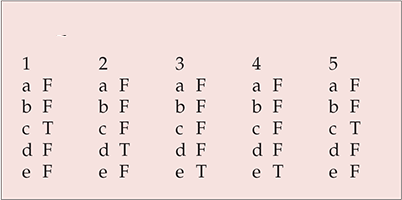
| 1 | 2 | 3 | 4 | 5 | |||||
|---|---|---|---|---|---|---|---|---|---|
| a | F | a | F | a | F | a | F | a | F |
| b | F | b | F | b | F | b | F | b | F |
| c | T | c | F | c | F | c | F | c | T |
| d | F | d | T | d | F | d | F | d | F |
| e | F | e | F | e | T | e | T | e | F |
Acknowledgements
We are grateful to Dr N. J. Bass for his critical reading of this manuscript.




eLetters
No eLetters have been published for this article.