

In recent years, great attention has been placed on conservation systems for agricultural production. The Soil Science Society of America (SSSA 2012) defines conservation tillage as a sequence of tillage operations that leaves at least 30 percent of crop residue on the soil surface, with the objective of diminishing soil and water loss. Conservation tillage practices such as no-tillage (NT), strip-tillage (ST) and other tillage systems have proven to be beneficial for the soil. Some of the benefits linked to conservation tillage systems are an increase in soil organic carbon, soil microbial biomass, reduction of wind and water erosion, and enhancement of nutrient cycling (Lal Reference Lal1999, Paustian et al. Reference Paustian, Six, Elliott and Hunt2000, Campbell et al. Reference Campbell, Selles, Lafond and Zentner2001, Kladivko Reference Kladivko2001, Kushwaha, Tripathi, and Singh Reference Kushwaha, Tripathi and Singh2001, Zibilske, Bradford, and Smart Reference Zibilske, Bradford and Smart2002, Blanco-Canqui et al. Reference Blanco-Canqui, Stone, Schlegel, Lyon, Vigil, Mikha, Stahlman and Rice2009, Wang et al. Reference Wang, Tu, Cheng, Li, Gentry, Hoyt, Zhang and Hu2011). Another advantage associated with conservation tillage is the preservation of soil moisture (Blevins et al. Reference Blevins, Cook, Phillips and Phillips1971, Daniel et al. Reference Daniel, Abaye, Alley, Adcock and Maitland1999), which may allow farmers to increase production intensity in dryer areas. Overall, conservation tillage practices have been demonstrated to provide a good method of enhancing soil health (West and Marland Reference West and Marland2002, West and Post Reference West and Post2002). NT systems can also provide economic benefits. Kaval (Reference Kaval2004) compared the profitability and production costs of 198 NT and conventional tillage (CT) systems in the literature and found that NT production is the least costly system.
Notwithstanding the positive aspects associated with conservation tillage, some negative effects have also been reported in the literature. In some regions, retention of moisture by crop residue left on the surface could increase the incidence of diseases (Anaele and Bishnoi Reference Anaele and Bishnoi1992, Bockus and Shroyer Reference Bockus and Shroyer1998) and result in lower yields (Heer and Krenzer Reference Heer and Krenzer1989). The need to control weeds chemically and the potential for an increase in diseases could result in higher chemical costs that in some cases may offset savings in labor and machinery costs from NT and ST adoption (Williams, Roth, and Claassen Reference Williams, Roth and Claassen2000, Williams et al. Reference Williams, Pachta, Roozeboom, Llewelyn, Claassen and Bergtold2012).
Although conservation tillage may be more beneficial to the environment, conventional tillage still remains the prevailing tillage system for some crops in Kansas. A 2010 survey of tillage practices in 23 Kansas counties showed that conventional tillage was the predominant tillage practice in wheat production, being used on approximately 63 percent of land planted to wheat. Only 21 percent of the land was under conservation tillage practices and 16 percent under reduced tillage (RT), which consisted of tillage practices that leave 15–30 percent crop residue after planting. Conversely, 54 percent of the corn land was under conservation tillage, while 24 percent was under conventional tillage. Soybean land was largely planted using conservation tillage practices (61 percent), while 25 percent of the land remained under conventional tillage (Kansas State University Research & Extension, Farm Services Agency 2010).
NT farms in central Kansas were found to be generally larger and more profitable because they produced less wheat and more feed grains and had lower machinery and labor costs than farms with other tillage systems (Langemeier Reference Langemeier2010). The adoption of conservation tillage practices has changed the dynamics of crop production. According to Gaspar and Langemeier (Reference Gaspar and Langemeier2010), corn and soybean production has increased due in part to the adoption of conservation tillage practices, which has allowed soils to maintain more moisture in the dryer climate across Kansas. NT practices can facilitate double cropping and increase crop rotation flexibility (Sandretto Reference Sandretto2001). Langemeier (Reference Langemeier2010) suggested that using NT improved farms’ flexibility by allowing them to include feed grains and oilseeds into their crop rotations. As previously mentioned, conservation tillage practices may result in some drawbacks, as well. Hence, the choice of tillage practice is a critical decision for any farm enterprise.
The objective of this paper is to identify factors such as profitability considerations, risk attitudes, and crop rotation, as well as operator and farm characteristics that affect the choice of NT, ST, and RCT for dryland corn, wheat, and soybean production in Kansas. This study of tillage choice will be beneficial, given its potential policy implications. Schneider et al. (Reference Schneider, Steiger, Ledermann, Fry and Rist2010) suggested that farmers may not adopt NT practices in spite of the benefits, because they may see the change in technology as too radical. Knowing the factors affecting the adoption of tillage practices at the crop level may facilitate the diffusion of needed information through extension education to farmers to increase adoption of conservation tillage methods. To date, the literature has predominantly focused on studying the adoption of conservation tillage at the farm level (Shortle and Miranowski Reference Shortle and Miranowski1986, Belknap and Saupe Reference Belknap and Saupe1988, Gould, Saupe, and Klemme Reference Gould, Saupe and Klemme1989, Davey and Furtan Reference Davey and Furtan2008, D'Emden, Llewellyn, and Burton Reference D'Emden, Llewellyn and Burton2008, Vitale et al. Reference Vitale, Godsey, Edwards and Taylor2011).Footnote 1 However, identifying behavioral differences in the selection of tillage practices for a particular crop can be of great importance for designing programs such as the Environmental Quality Incentives Program (EQIP) or the Conservation Stewardship Program (CSP), which target adoption of conservation tillage. For example, in Kansas some farm operators may use NT for most of their crops except wheat. Hence, the results of this study will provide policy makers with insights about factors that explain what motivates farmers or makes them more likely to use a particular tillage practice for one crop but not for another.
This study used data from a survey of farmers in Kansas designed to collect specific information about their farm characteristics, including cropping systems, tillage systems, and crop rotations. Dryland corn, wheat, and soybeans were analyzed in this study due to their economic importance in the agricultural sector of the region. A multinomial logit model was used to study farmers’ choice of tillage practice for their cropping operations.
Literature Review
Ervin and Ervin (Reference Ervin and Ervin1982) found studies looking at the factors influencing the adoption of soil conservation practices dating back to the 1950s. To date, numerous studies have looked at factors affecting the adoption of different tillage systems, in particular conservation tillage, using different methodologies and sets of explanatory variables. Commonly, models used in the literature to examine farmers’ adoption of tillage systems have included logit, probit, ordinary least squares, and multinomial logit models.
Most frequently, studies have looked at the adoption of a particular tillage technology as a binary response using logit or probit models. Belknap and Saupe (Reference Belknap and Saupe1988) looked at the adoption of no-plow tillage practices among farmers in Wisconsin. Their findings suggest that the decision to adopt no-plow tillage was positively influenced by farm size and percentage of land owned, but negatively affected by the level of risk aversion. In their study, the risk aversion score was estimated from attitudinal questions regarding risk aversion. Soule, Tegene, and Wiebe (Reference Soule, Tegene and Wiebe2000) studied the adoption of conservation tillage as affected by the type of lease arrangement. In a base model where no differentiation was made between types of renter, land ownership had no statistical significance in the model. However, when a distinction was made between cash renters and share renters, findings suggest that cash renters are less likely to adopt conservation tillage. Rahm and Huffman (Reference Rahm and Huffman1984) studied adoption and adoption efficiency of RT among corn farms in Iowa. They modeled the efficiency of adoption as the difference between the actual farm adoption decision and the predicted probability of adoption, which represents the utility maximizing decision. They found that characteristics of the cropping systems affect the decision to adopt RT, while human capital decisions affect the efficiency of the decision of tillage technology adoption. Using data collected in Iowa for the National Resource Inventory on farming practices, Pautsch et al. (Reference Pautsch, Kurkalova, Babcock and Kling2001) estimated a model on the adoption of conservation tillage and the potential for carbon sequestration. Their results suggest that some climate variables may affect the decision to adopt conservation tillage. Davey and Furtan (Reference Davey and Furtan2008) investigated the adoption of conservation tillage by prairie farmers in Canada using data from an agricultural census. Variables found to explain the adoption of conservation tillage were farm size as well as soil and weather variables. D'Emden, Llewellyn, and Burton (Reference D'Emden, Llewellyn and Burton2008) also looked at the adoption of NT in Australia and found that perception of erosion reduction associated with NT practices did not explain adoption. However, other crop production benefits associated with NT practices and extension information increase the likelihood of adoption. Banerjee et al. (Reference Banerjee, Martin, Roberts, Larson, Hogan, Johnson, Paxton and Reeves2009) studied the adoption of conservation tillage practices and herbicide resistance cotton using a logit model. Their findings did not find evidence of the use of herbicide resistance seed as a factor affecting the adoption of conservation practices.
Other studies have looked at the adoption of multiple tillage practices using multinomial logit models. Fuglie (Reference Fuglie1999) conducted a study looking at factors affecting the selection of CT, NT, and other conservation tillage practices (mulch or ridge till) in corn production, in the Cornbelt region, using data from a survey conducted by the USDA. In their study, conservation compliance was found to be a significant factor in determining the selection of NT. Their findings also suggest that farm size was a significant variable affecting the choice of tillage system, while college education and operator experience were not significant factors in the adoption of NT. Pereira de Herrera and Sain (Reference Pereira de Herrera and Sain1999) studied the adoption of CT, NT and RT by corn producers in Panama. Their results varied among the studied regions. The proportion of land under livestock and the acreage of corn had a positive effect on the decision to adopt NT and RT for some regions and had a negative effect in other regions. Land ownership was not significant in explaining the decision to adopt a particular tillage system.
Conservation tillage adoption and adoption intensity have also been studied using two-stage models where the probability of adoption is assessed in the first stage and intensity of adoption in the second stage. Uri (Reference Uri1997) assessed the adoption of conservation tillage in corn production using variables related to the farm and farmland characteristics and other variables related to agricultural input use from a survey conducted by USDA-NASS. In their study, cash grain farmers were found to be more likely to adopt NT practices. A slightly different approach was used by Gould, Saupe, and Klemme (Reference Gould, Saupe and Klemme1989) and Traoré, Landry, and Amara (Reference Traoré, Landry and Amara1998). In their two-stage model, a farmer's perception or awareness of an environmental degradation was assessed in the first stage, and in the second stage they modeled the adoption of conservation tillage as affected by the farmer's perception of an environmental problem.
Additionally, some research has been conducted looking at the adoption of conservation tillage as part of a bundle of multiple practices. Wu and Babcock (Reference Wu and Babcock1998) conducted a joint analysis of the choice to adopt conservation tillage, rotation and soil testing in Central Nebraska. Other studies looking at the choice of conservation tillage in a joint framework are Cooper (Reference Cooper2003), who used a multinomial probit model to estimate the use and nonuse of different practices including conservation tillage; and Bergtold and Molnar (Reference Bergtold and Molnar2010), who examined factors affecting the adoption of conservation tillage and other practices in the Southeast using a multinomial logit approach.
Most of these studies have included farmers and farm household characteristics, farm management characteristics and attitudinal variables. Additionally, other studies have included farm biophysical and climatic data. Pautsch et al. (Reference Pautsch, Kurkalova, Babcock and Kling2001) used a logit model on the adoption of conservation tillage, including climatic and land characteristic but not farm characteristic or attitudinal factors. Nonetheless, attitudinal factors and farm structure are important determinants in the decision to adopt environmentally friendly practices (Welsh and Rivers Reference Welsh and Rivers2011).
Past studies on the adoption of NT or ST examined the choice of tillage when practices were not widely embraced by producers. These practices have now been more widely adopted, and it is likely that changes in perception have occurred as NT or ST are not as novel or unfamiliar in practice to producers as they were in the past. The adoption of conservation tillage practices, especially NT, has expanded with the dissemination of knowledge (i.e., due to new research findings, farmers’ experiences, interaction of adopters and nonadopters, and improvement of NT equipment) (Coughenour Reference Coughenour2003). Hence, it is possible that there may be some changes in the way farm household and farm management characteristics affect the choice of tillage practices for crop production today.
This study contributes to the body of literature by modeling the adoption of different tillage practices at the crop level for dryland corn, wheat and soybean production. An empirical model that accounts for economic and financial factors as well as farms’ and farmers’ characteristics was used. Economic factors included historical crop yields from adopting a tillage practice and controlling for whether or not the farmer was a low-cost producer. Financial factors evaluated consisted of farmers’ risk attitudes and crop insurance effect on the adoption of tillage practices. In addition, the effect of crop rotation decisions on tillage practice adoption was studied. Including crop rotation decisions provided a mechanism to capture the interconnectedness of production decisions. This study found new insights into how risk-averse farmers’ attitudes towards conservation tillage practice adoption have changed as compared to previous findings in the literature.
Material and Methods
This study focused on examining the choice of NT, ST, and RCT practices by farmers in Kansas. An empirical model based on utility maximization was applied to examine farmers’ decision to adopt a particular tillage practice. The results allowed the identification of factors affecting the adoption of tillage practices at the crop level.
Model
Based on random utility theory, farmers choose to adopt a tillage system that provides them with the highest utility as a function of expected profit and other explanatory factors (Louviere, Hensher, and Swait Reference Louviere, Hensher and Swait2000). Let y ij be the i th farmer's expected yield from using the j th tillage system and C ij be the cost associated with using that particular practice. Then let the i th farmer's expected profit from adopting tillage practice j be denoted as E[πij(y ij,Cij)]. Now let the i th farmer's utility (U ij) from the adoption of tillage practice j be a function of expected profit (to account for farmers’ economic motivations) and other socioeconomic, attitudinal, and farm management characteristics (Γi) affecting utility. That is, let U ij = V ij {E[πij(y ij,Cij)], Γi} + εij, where V ij represents the systematic component of utility, explained by observed factors, and εij is the random component containing unobserved factors affecting the utility, which is unknown to the researcher. Farmers compare the utility derived from each tillage practice available from their choice set (j = 0, 1,…,J) and choose the practice that maximizes their utility, i.e., U ij = max(U i0,…,U iJ) (Louviere, Hensher, and Swait Reference Louviere, Hensher and Swait2000).
Because the researcher only observes a farmer's choice of tillage practice, the decision to adopt a tillage practice can be modeled using a probability framework. Let the probability that a farmer will choose a tillage practice be equal to the probability that the utility of tillage practice q is greater than the utility associated with tillage practice j, i.e., P(U iq {E[πiq(y iq,Ciq)], Γi, εiq} ≥ U ij {E[πij(y ij,Cij)], Γi, εij}). Following Hensher, Rose, and Greene (Reference Hensher, Rose and Greene2005), the probability of adopting tillage practice q can then be written as P(V iq + εiq ≥ V ij + εij) = P(εij − εiq ≤ V iq − V ij) = P(−Δεi ≤ ΔV i) ∀ j = 0, 1,…,J; j ≠ q. While V ij and V iq are not separably identifiable, the difference between the two utilities (ΔV i) is. The difference in utilities can be expressed as ΔV i = f(E[πiq(y iq,Ciq)] − E[πij(y ij,Cij)], Γi; b), where b is the vector of parameters of the utility function to be estimated. If we assume that the random component of the utility is distributed extreme value type I, and assuming linearity of the utility function, the choice model becomes (McFadden Reference McFadden1973):
 $${\bf P}\lpar T_i = j \vert {\bf x}_i\rpar = \displaystyle{{\exp [ {\bf x}_i{\rm ^{\prime}}{\bf \beta} _j ] } \over {1 + \sum\nolimits_{m = 1}^J {\exp [ {\bf x}_i{\rm ^{\prime}}{\bf \beta} _m ] }}}\comma \; \quad {\rm for}\; j = 0\comma \; 1\comma \; ...\comma \; J$$
where T i is a polychotomous index denoting the choice of tillage practice by the i th farmer, xi=(y ij,Cij,Γi) is a (K × 1) vector containing the observed explanatory variables for the i th individual, and bj is a vector of parameters for the tillage practice j.
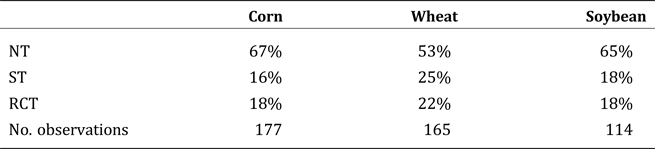
The approach used to estimate the parameters of the multinomial logit model given by equation 1 is the method of maximum likelihood. The parameter estimates, though, are not readily interpreted. Thus, to determine the effect of each predictor variable on the probability of choosing a specific alternative, the marginal effects given by the first derivative of the probability of choosing a tillage practice with respect to a change in an explanatory variable are commonly used. The standard errors for the marginal effects were computed using the delta method (Greene Reference Greene2003). In the multinomial logit, only the parameters of J alternatives out of J + 1 can be estimated. In this study, the RCT group in the corn, wheat, and soybean models were used as the base choice when estimating the models. A summary of tillage practice use by crop is reported in Table 1.
Adoption Percentage of Tillage Practices by Crop in Kansas
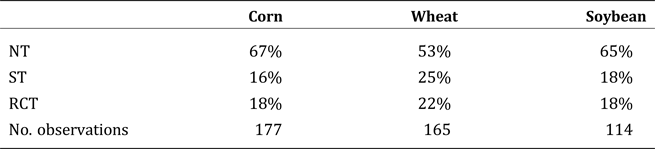
NT, no tillage; ST, strip tillage; RCT, conventional and reduced tillage.
Data Description
A survey was administered by Kansas State University, the USDA, and the NASS in northeastern, south central, and western Kansas. Farmers with over 260 acres in size and $50,000 in gross farm sales were randomly selected to take the survey. The survey was conducted face to face by USDA-NASS enumerators. A total of 485 farmers were initially contacted, of which 290 completed the survey and 38 could not be located, resulting in a response rate of 65 percent. Respondents were interviewed regarding their crop acreage, agronomic practices, farm management, and background information. For this study, dryland corn, wheat, and soybean were selected due to the economic importance of these crops in the state of Kansas.
For the crops included in this study, respondents provided information on the acreage planted, yields, and tillage practices used for each crop. Farmers reported their crop acreage and crop yields as the average values from the past three years. While no questions were asked regarding farmers’ production costs, farmers provided information on whether they considered themselves low-cost producers, using a Likert scale. To elicit farmers’ risk behavior, respondents were asked how their neighbors would describe the interviewed farmer's risk-taking behavior with respect to their farm operation. The respondents were presented with eight options to this risk-taking behavior question. Farmers who considered being perceived by their neighbors as an “extreme risk avoider” or “cautious” were classified as risk avoiders. Farmers who considered they were perceived as “a real gambler,” “enjoy taking risks,” “not concerned about risk” or “willing to take risk after adequate research” were denoted as risk takers. In addition to the risk perception question, farmers were also asked whether they had purchased federal or private crop insurance for their operation.
Respondents were also asked questions relevant to the agronomic practices for each particular crop, including their predominant crop rotation patterns, and if they graze or bale their crop residue. An additional set of farm management questions was included to determine the percentage of household income from farming operations; total acreage of land owned and rented from others; and total acreage devoted to growing crops, forage, pasture, or CRP. To determine employment off the farm, respondents were asked if they or any immediate family member living in the household were employed off the farm; if so, they provided information on the number of members working off the farm and the number of hours worked per week.
Data on farmers’ demographics collected included age, education, gender, and race. Farmers’ promptness in adopting new technology and whether or not maximizing farm profits was more important than environmental stewardship were elicited using a Likert scale. In addition, interviewed farmers were asked if they had a conservation plan on their farms.
Information regarding the tillage practices performed by farmers on their planted fields was added to form three distinct categories for the analysis here. The NT and ST category consisted of farmers who exclusively responded that they used no-till or strip-till on their fields. Tillage practices that were more conventional in nature and reduced tillage practices were grouped into one category called RCT.Footnote 2 The RCT category comprised reduced tillage, harrow, and the combinations of ST-harrow, and harrow-chisel as well as moldboard plow, disc, cultivator, ripper, and practices where these tillage operations were done in different combinations.
Of the sampled individuals growing dryland corn, 18 percent used RCT, 16 percent used ST, and 67 percent used NT. Twenty-two percent of the farmers used RCT in wheat production, while 25 percent used ST, and 53 percent used NT. For dryland soybean production, 18 percent of the sampled individuals had their land under RCT, 18 percent under ST, and 65 percent under NT (Table 1). The distribution of tillage practices was contrary to that expected, considering the results of the 2010 survey of tillage practice in Kansas previously referenced in this paper, in which a larger percentage of conventional tillage was observed. Differences in the distribution may arise because the Kansas tillage practice survey covers 23 counties located mainly in the central and northeast regions of the state and is based on the number of acres under each particular practice as opposed to the number of farmers using that particular practice. The distribution of acres under each practice may vary across farms. In addition, there may be differences in the size of the farms surveyed.
Explanatory Variables used in the Analysis
Adoption of tillage practices was studied using a random utility framework where a number of factors affect the utility a farmer derives from adopting a particular practice. The variables affecting a farmer's decision were grouped into four categories: economic and financial factors, farmers’ attitudes, farm management, and farm operator characteristics. These have been factors commonly identified in the literature as important determinants in conservation practice adoption (see Prokopy et al. Reference Prokopy, Floress, Klotthor-Weinkauf and Baumgart-Getz2008, Baumgart-Getz, Prokopy, and Floress Reference Baumgart-Getz, Prokopy and Floress2012). Variable descriptions and their descriptive statistics are reported in Table 2.
Definition of Variables and Summary Statistics of the Observations for Farmers in Each Crop Category
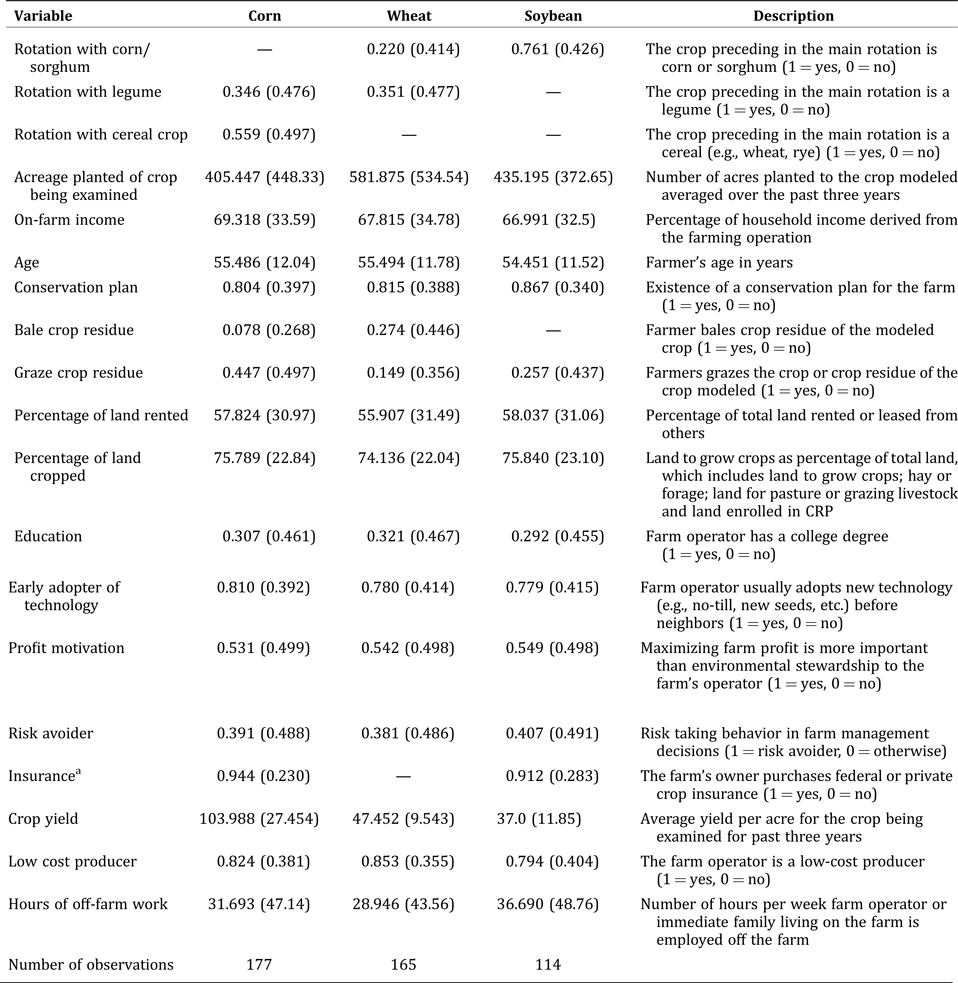
Numbers in parenthesis represent the standard deviations of the estimates. The standard deviation of binary variables was calculated as:  $\sqrt {{\rm \rho} \lpar 1 - {\rm \rho} \rpar } $, where ρ is mean value of the binary variable.
a The variable indicating whether or not farmers purchase insurance was not included in the model of tillage use in wheat production due to limited data points to estimate its effect.
Economic and financial factors consisted of factors associated with profitability (i.e., yields and costs) and risk. Yields and costs are major factors farmers need to consider when making decisions regarding which practices to adopt on their farm (Sijtsma et al. Reference Sijtsma, Campbell, McLaughlin and Carter1998, Lichtenberg Reference Lichtenberg2004). It was hypothesized that higher expected crop yields (crop productivity) would increase the probability of adopting less invasive tillage practices. To examine the effect of cost on the adoption of a particular tillage practice, ideally the cost associated with each tillage practice would be included in the model. However, due to lack of data, this study included a proxy to measure the effect of cost as a dummy variable, which takes on a value of 1 if the farmer considered himself a low-cost producer and 0 otherwise. Low-cost producers have a greater incentive to adopt cost-saving practices. Conservation tillage practices result in lower labor and fuel costs but may also result in higher herbicide costs (Mueller, Klemme, and Daniel Reference Mueller, Klemme and Daniel1985, Williams et al. Reference Williams, Pachta, Roozeboom, Llewelyn, Claassen and Bergtold2012). Production cost advantages then depend on input allocation and prices (Rahm and Huffman Reference Rahm and Huffman1984), but ultimately a farmer's decision to adopt is affected by their perception of how costly the practice is.
A dummy variable was used to denote a farmer as a risk avoider. NT practice adoption may require new machinery, knowledge, and management skills which, which when coupled with potential yield variability, may increase risk (Larson et al. Reference Larson, Jaenicke, Roberts and Tyler2001). In the past, when NT or ST practices were not widespread, it was possible that risk-averse farm operators were less likely to adopt ST or NT practices. As conservation tillage practices have become more popular and farmers know more about their benefits, farmers’ perceptions of the risk-mitigating characteristics of conservation tillage practices may have changed.
A variable indicating whether or not farmers had purchased federal or private crop insurance for their operations was also included. Farmers who purchase crop insurance may be more risk averse (Fuglie and Bosch Reference Fuglie and Bosch1995) and thus may be inclined to avoid risky situations such as the use of field practices that increase any type of risk (e.g., yield reductions or variability). However, if the farmer knows he will be indemnified for potential losses, then he may not see the need to adopt practices that may reduce risk (i.e., moral hazard). An example would be practices that can reduce risk due to adverse weather events (e.g., droughts), such as conservation tillage that can help conserve soil moisture, reducing drought stress (Ding, Schoengold, and Tadesse Reference Ding, Schoengold and Tadesse2009).
Dummy variables were used to denote if the farmer was an early adopter of technology, if profit maximization was more important than stewardship to the farmer, and if the farmer had a conservation plan.Footnote 3 Farmers with these characteristics were expected to have a better attitude towards conservation (or the adoption of new practices) and to be more likely to use conservation tillage practices (NT and ST).
Farmer characteristics included in the model were age and education. Education was denoted by a dummy variable taking a value of 1 if the farmer had a college degree and 0 otherwise. Farmers with a college degree were expected to be more likely to adopt conservation practices because of a higher exposure to and use of information. Age was expected to be positively related to the use of practices more conventional in nature. Younger farmers might be more eager to try newer technologies (D'Souza, Cyphers, and Phipps Reference D'Souza, Cyphers and Phipps1993).Footnote 4
Farm management variables included were acreage planted to the crop being examined, percentage of land cropped, crop rotation, baling or grazing crop residue of the modeled crop, percentage of land rented, hours of off-farm work, and on-farm income (percentage of household income from the farming operation). The acreage of the crop planted and the percentage of cropped land were expected to have a positive effect on the adoption of NT because of the potential efficiency gains (Prokopy et al. Reference Prokopy, Floress, Klotthor-Weinkauf and Baumgart-Getz2008, Langemeier Reference Langemeier2010). The percentage of land rented was hypothesized to have a negative impact on the adoption of NT practices because of tenants’ shorter planning horizon and a lower interest in the long-term productivity of the rented land (Soule, Tegene, and Wiebe Reference Soule, Tegene and Wiebe2000).
On-farm income was hypothesized to positively affect the adoption of less-intense tillage practices because farmers who depend more heavily on farm income may be more interested in conservation practices to maintain and enhance the productivity or their land. There was not a prior expectation with respect to the effect of hours of off-farm work. Farmers who work more off the farm could be more time constrained to research and undertake conservation practices (Norris and Batie Reference Norris and Batie1987). However, these farmers could also have an incentive to adopt labor saving practices such as NT (Gould, Saupe, and Klemme Reference Gould, Saupe and Klemme1989).
Farmers who graze or bale their crops were expected to be less likely to adopt NT practices because of soil compaction problems that may arise due to grazing, and crop residue removal (Hamza and Anderson Reference Hamza and Anderson2005, Vitale et al. Reference Vitale, Godsey, Edwards and Taylor2011). Crop rotation variables were included in the model, as crop rotation and tillage decisions may be interdependent. Crops in the rotation were grouped into three crop categories: corn/sorghum, legumes, and cereals. Dummy variables were used to indicate the crop type preceding the crop of interest using the same crop type as the base scenario (i.e., in the corn model, the corn/sorghum category was the base scenario). When fallow was preceding the crop, the crop planted before the land was left as fallow was used. Farmers who rotated their crops were expected to be more likely to adopt conservation tillage than farmers in a monoculture (farmers who planted the same crop in the previous periods) (Vitale et al. Reference Vitale, Godsey, Edwards and Taylor2011). As suggested by Vitale et al. (Reference Vitale, Godsey, Edwards and Taylor2011), farmers who rotate might be more willing to adopt new practices. It was also hypothesized that crop rotations including corn/sorghum and soybean would result in a higher likelihood of using NT practices because of these crops’ sensitivity to moisture stress and NT potential to enhance soil moisture retention (Norwood Reference Norwood1999, Baumhardt and Jones Reference Baumhardt and Jones2002). As a whole, a significant effect for crop rotation variables was expected if farmers take a systems approach where all the elements in the production systems are considered when deciding which practices to adopt.
Results
Parameter estimates and statistical measures from the multinomial logit model of tillage adoption in dryland corn, wheat, and soybean production are reported in Table 3. Marginal effects representing the change on the probability of choosing a particular tillage practice given a unit change in an explanatory variable are reported in Table 4. The models of tillage use in corn and soybean performed better than the model of tillage choice in wheat. The percentage of correct predictions of the choice of tillage use in corn was 74 percent and 79 percent for soybean, while 56 percent of the choices were correctly predicted for wheat. For the three models, the decision to use NT had the highest rate of correct predictions, with 94 percent for corn, 88 percent for wheat, and 91 percent for soybeans. The McFadden pseudo R-squared for the corn, wheat, and soybean models were 0.22, 0.08, and 0.45 respectively. Models with a pseudo R-squared value between 0.2–0.4 are usually considered to have a better fit (Louviere, Hensher, and Swait Reference Louviere, Hensher and Swait2000).
Parameter Estimates for the Choice of Tillage System in Dryland Corn, Soybean, and Wheat

Note: ***, ** and * indicate the estimated coefficients are significantly different from zero at the 1 percent, 5 percent and 10 percent level of significance. Numbers in parenthesis represent the standard deviations of the estimates. NT, no tillage; ST, strip tillage; RCT, conventional and reduced tillage.
a The variable indicating whether or not farmers purchase insurance was not included in the model of tillage use in wheat production due to limited data points to estimate its effect.
Marginal Effects for the Choice of Tillage System in Dryland Corn, Soybean and Wheat
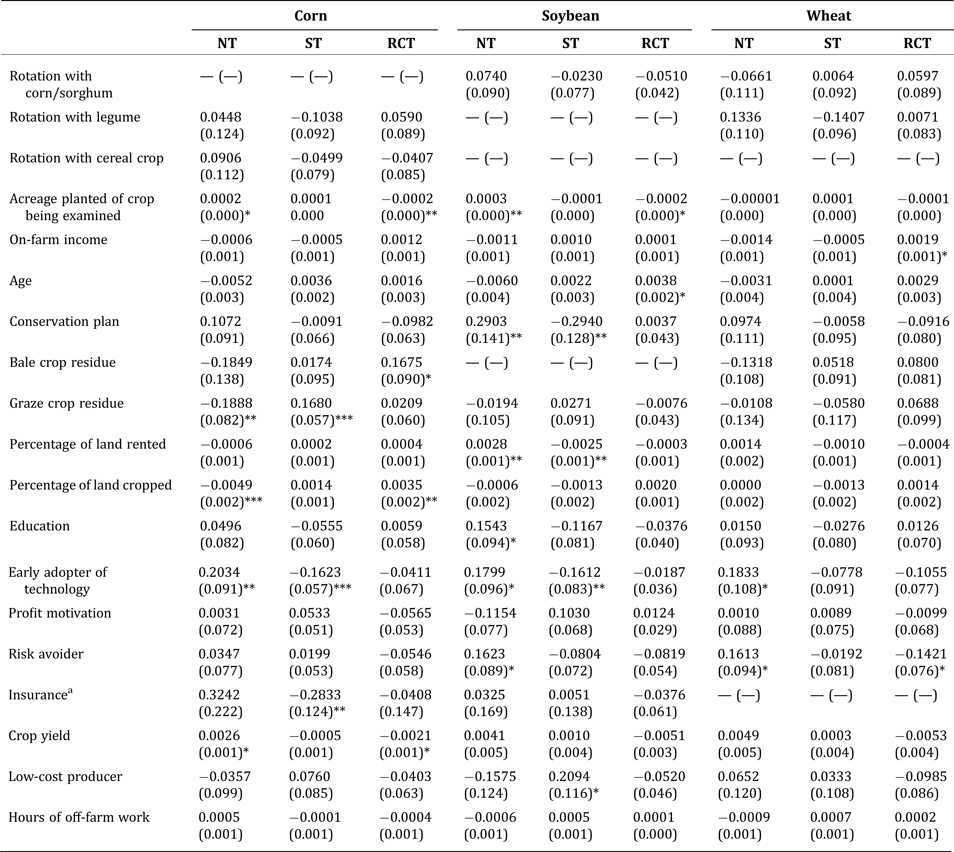
Note: ***, ** and * indicate the estimated coefficients are significantly different from zero at the 1 percent, 5 percent and 10 percent level of significance. Numbers in parenthesis represent the standard deviations of the estimates. NT, no tillage; ST, strip tillage; RCT, conventional and reduced tillage.
a The variable indicating whether or not farmers purchase insurance was not included in the model of tillage use in wheat due to limited data points to estimate its effect.
Farmers’ perceptions about the profitability of any agricultural practice plays an important role in the decision to incorporate them into their systems (Cary and Wilkinson Reference Cary and Wilkinson1997). Crop yields represent one of the major indicators to measure the productivity and profitability of a production system. Results from tillage experiments across the United States have suggested that crop yields behave differently for different tillage systems under different environmental conditions (Toliver et al. Reference Toliver, Larsona, Robertsa, English, De La Torre Ugartea and West2012). In this study, the effect of expected yields had a positive effect on the likelihood of adopting NT in dryland corn and a negative effect on the likelihood of adopting RCT. While it is possible that lower crop yield could be obtained with NT corn (Toliver et al. Reference Toliver, Larsona, Robertsa, English, De La Torre Ugartea and West2012), the expectation of higher yields seems to be a factor that encourages the adoption of NT practices.
Results with respect to low-cost producers suggested that these farmers were 21 percent more likely to use ST in soybean production. The major difference in costs between tillage systems arise from the intensity of the primary tillage practice and the number of tillage passes (Karlen et al. Reference Karlen, Kovar, Cambardella and Colvin2013). Thus, farm operators may see ST as a lower-cost practice when compared to conventional tillage systems (labor and fuel savings). ST has been recommended as a good alternative to NT practices because of its economic returns and conservation benefits, especially in soils with drainage and compaction issues (Archer and Reicosky Reference Archer and Reicosky2009).
Risk aversion was found to be a significant factor in explaining the decision of tillage practice use in dryland soybean and wheat production. Risk-averse individuals were 16 percent more likely to use NT practices in dryland soybean production. Similarly, risk averse farmers were 16 percent more likely to use NT practices and 14 percent less likely to use RCT practices in wheat production. A previous study by Belknap and Saupe (Reference Belknap and Saupe1988) found that more risk-averse farmers were less likely to adopt no-plow tillage. Adjustment costs and risk aversion have been identified as factors that could delay adoption of NT practices (Krause and Black Reference Krause and Black1995). Evidence in the literature with respect to which tillage system may be preferred by risk-averse farmers is mixed. A more recent study of the profitability of tillage strategies for dryland wheat in the Central Great Plains suggested that NT practices may be preferred by moderately risk-averse farmers while CT may be preferred by less risk-averse producers (Williams, Roth, and Claassen Reference Williams, Roth and Claassen2000). Similarly, a study by Ribera, Hons, and Richardson (Reference Ribera, Hons and Richardson2004) comparing costs, yields, and net income risk for grain sorghum, wheat, and soybean suggested that risk-averse farmers would choose NT over CT. In contrast, Larson et al. (Reference Larson, Jaenicke, Roberts and Tyler2001) suggested that risk-neutral producers or risk avoiders might not be prompted to adopt NT practices, given the risk of yield variability. Varner, Epplin, and Strickland (Reference Varner, Epplin and Strickland2011) found that while net returns for dryland wheat with NT were greater, larger variability in yields under NT makes CT a more attractive option for risk-averse farmers.
While NT could increase risk in the short term, due to the purchasing of new equipment (or modifications), and variability of yields (Epplin and Tice Reference Epplin and Tice1986), farmers are becoming more familiar with this practice and its long-term soil productivity benefits. Because farmers who perceive risk in adopting conservation practices are less likely to adopt them (Shortle and Miranowski Reference Shortle and Miranowski1986), a higher likelihood of NT adoption by risk avoiders suggested a change of perceptions. Farmers are now more aware of both the potential for soil erosion in row crops with limited biomass cover and the risk-reducing benefits of NT (Alberts, Wendt, and Burwell Reference Alberts, Wendt and Burwell1985). The increase in adoption of conservation tillage practices and the change of perceptions among farmers may be the result of positive experiences of early adopters and the flow of information about these conservation practices from farmer to farmer over time (Krause and Black Reference Krause and Black1995, Sundermeier et al. Reference Sundermeier, Fallon, Schmalzried and Sundermeier2009). Introduction of herbicide-resistant crop varieties and herbicide options as alternatives to manage weed pressure mechanically have been important factors in NT practice adoption (Givens et al. Reference Givens, Shaw, Kruger, Johnson, Weller, Young, Wilson, Owen and Jordan2009), playing an important role in reducing the risk farmers may associate with NT practice adoption. In fact, the results herein suggest that NT practices may be seen by farmers as a risk-reducing factor in dryland production.
Farmers who purchased crop insurance were 28 percent less likely to use ST in corn production. A similar finding by Ding, Schoengold, and Tadesse (Reference Ding, Schoengold and Tadesse2009) indicated that the percentage of insured cropland had a negative effect on the adoption of NT practices. They suggested that the loss protection provided by crop insurance might reduce farmers’ incentive to adopt preventive measures such as conservation tillage. If farmers acknowledged ST practices as risk reducing and yet did not adopt them, the results of this study could suggest the presence of moral hazard, where insured farmers had no incentive to engage in practices to reduce risk. However, it is also possible that insured farmers do not perceive ST as a risk-reducing practice.
Farmers who considered themselves early adopters of technology were 20 percent more likely to adopt NT practices and 16 percent less likely to use ST practices in corn production. For soybean production, early adopters of technology were 18 percent more likely to use NT and 16 percent less likely to adopt ST practices. Similarly, early adopters of technology are 18 percent more likely to use NT technologies in wheat production. Korsching et al. (Reference Korsching, Stofferahn, Nowak and Wagener1983) suggested that there is similarity between farmers who adopt innovative technologies and farmers who adopt conservation practices, because these are both preventive innovations. They also suggested that the adoption of soil conservation practices follows a similar pattern to the adoption of other practices, explaining why farmers who adopt new technologies (e.g., seed varieties, GPS, etc.) before other farmers may be more likely to adopt NT technologies.
Compliance with a conservation plan through farm programs gave rise to an increase in the adoption of NT practices since 1990 (Sandretto Reference Sandretto2001). In this study, farmers with a conservation plan were 29 percent more likely to use NT and 29 percent less likely to use ST practices in soybean. Conservation plans could have been part of conservation programs that encourage the adoption of conservation tillage practices.
In several past studies, education was found to be a positive factor in the decision to adopt conservation tillage practices (Shortle and Miranowski Reference Shortle and Miranowski1986, Traoré, Landry, and Amara Reference Traoré, Landry and Amara1998, Wu and Babcock Reference Wu and Babcock1998) and was found to negatively affect adoption in others (Bergtold and Molnar Reference Bergtold and Molnar2010). Fuglie (Reference Fuglie1999) did not find education to be a significant factor in the decision to adopt NT but found education to significantly affect the adoption of other conservation tillage practices. Similarly, Vitale et al. (Reference Vitale, Godsey, Edwards and Taylor2011) found that education positively affected the adoption of RT but not the decision to use CT. In this study, college education was not a significant factor in explaining tillage choice in corn or wheat production. Confirming a prior expectation for dryland soybean production, farmers with a college degree were 15 percent more likely to use NT practices. While the effect of human capital variables (education and experience) on the choice of tillage practices have been assessed in many studies, Rahm and Huffman (Reference Rahm and Huffman1984) suggested that human capital factors may not affect the decision to adopt a technology, but the efficiency of the decision, which they measured as the difference between farmers’ decision and their optimal utility maximization decision. Their results suggested that human capital variables improve the efficiency of the adoption of RT technologies.
A one-year increase in age was found to increase the likelihood of RCT use in soybean production by less than 1 percent, in agreement with a prior expectation that older farmers may be prone to use practices that are more conventional in nature. Mixed results have been found in the literature with respect to the effect of age on the adoption of conservation practices (Warriner and Moul Reference Warriner and Moul1992, Okoye Reference Okoye1998, Soule, Tegene, and Wiebe Reference Soule, Tegene and Wiebe2000, Vitale et al. Reference Vitale, Godsey, Edwards and Taylor2011).
Crop acreage for modeled crops was a significant factor in the models of tillage choice in corn and soybeans. Crop acreage was found to reduce the likelihood of using RCT practices and increase the likelihood of adopting NT. RCT practices comprise several passes across fields with tillage equipment, resulting in a higher use of machinery, fuel, labor, and time. NT practices are less labor and machinery intensive than conventional practices, reducing production costs and the opportunity cost of time (Harman et al. Reference Harman, Davis, Morrison and Potter1996, Pendell et al Reference Pendell, Williams, Boyles, Rice and Nelson2007). Opting for this time-saving alternative may allow farmers to cultivate more acres (Williams et al. Reference Williams, Pachta, Roozeboom, Llewelyn, Claassen and Bergtold2012). Langemeier (Reference Langemeier2010) found that NT farms in central Kansas are generally larger than farms adopting other types of tillage practices. However, the effect of acreage on NT adoption may vary across regions (Pereira de Herrera and Sain Reference Pereira de Herrera and Sain1999).
Land cropped as a percentage of total farm land was a significant but small factor in the decision of tillage practice on dryland corn. A 1-percent increase in cropped land reduced the probability of using NT by approximately 1 percent, while the probability of using RCT increased by less than 1 percent. This result was contrary to the expectation that heavily cropped farms were more likely to use NT practices because of labor savings that could allow them to manage more land. It is possible that the acreage for each crop influences the decision of tillage practice at the crop level and not how much land is being cropped. In addition, it has been suggested that this variable could measure the effect of heavily cropped farms as opposed to farms with livestock. However, the effect of livestock was controlled for using the variable representing grazing of the crop or crop residue.
Land tenure was not found to significantly affect tillage practice choice in corn or wheat production. Results from the soybean model suggested that a 1 percent increase in the proportion of rented land increased the likelihood of using NT and reduced the likelihood of using ST by less than 1 percent. While this result was contrary to what was expected a priori, the magnitude of the effect is very small. A study by Lee and Stewart (Reference Lee and Stewart1983) found that the adoption of minimum tillage was lowest among operators with full land ownership. They suggested that rented land posed no constraint on adoption of minimum tillage because of the independence of tenant decisions under common leasing arrangements and because this practice could be adopted by renters with the objective to reduce costs. Other studies did not find evidence of land tenure effects in the decision about tillage practice (Rahm and Huffman Reference Rahm and Huffman1984, Shortle and Miranowski Reference Shortle and Miranowski1986, Wu and Babcock Reference Wu and Babcock1998).
A 1 percent increase in on-farm income was found to increase the likelihood of adopting RCT in wheat by less than 1 percent. While this effect was statistically significant, the effect was rather small. Hours of off-farm work was not a statistically significant factor in explaining the adoption of tillage practices. While more hours of off-farm work could reduce the likelihood of adopting conservation tillage practices because of limited time availability to invest in learning and adopting conservation practices, these practices could also be an attractive alternative for time-constrained farmers because of potential labor savings. These contrasting effects could make the influence of off-farm work unclear.
Producers who graze their crop or crop residue were 19 percent less likely to use NT in their corn fields, but 17 percent more likely to use ST. A similar result by Vitale et al. (Reference Vitale, Godsey, Edwards and Taylor2011) found that operators who graze cattle or whose main income source was from livestock were less likely to use conservation tillage. While its impact could be minimal, a potential problem for grazed fields is soil compaction. In cases where compaction could be a problem, the use of tillage to break the soil surface may be more desirable for farm operators (Clark et al. Reference Clark, Russell, Karlen, Singleton, Busby and Peterson2004, Hamza and Anderson Reference Hamza and Anderson2005). Thus, it seems plausible that NT practices are less likely to be adopted in those fields with higher compaction potential due to grazing.
Farmers who bale their crop residue were 17 percent more likely to use RCT in corn production. Crop residue is usually harvested and baled either for livestock feed or bedding.Footnote 5 If the main use for the crop residue is for livestock production, as Vitale et al. (Reference Vitale, Godsey, Edwards and Taylor2011) suggests, farmers may be less likely to adopt conservation tillage practices. Additionally, conservation practices (NT and ST) require at least 30 percent of crop residue remaining on the soil surface, which could allow for the possibility of harvesting some residue, depending on the level of crop biomass produced. However, in some cases, if crop biomass residue is limited, harvesting small volumes of crop residue can be difficult due to equipment limitations (Perlack et al. Reference Perlack, Wright, Turhollow, Graham, Stokes and Erbach2005). Using CT imposes no constraints on the amount of crop residue that can be harvested and baled; this may explain why farmers who bale their crops are more likely to use RCT.
While production practices including baling and gazing were found to be significant factors in explaining the adoption of tillage practices, neither of the crop rotation variables was significant. This result could suggest that the decision to adopt practices does not follow a systems approach. It is possible that farmers make decisions about the adoption of certain practices without full consideration of the entire cropping system dynamics. Previous research in the literature suggests that practices may be adopted by farmers independently and in a stepwise form (Byerlee and Hesse de Polanco Reference Byerlee and Hesse de Polanco1986, Bergtold and Molnar Reference Bergtold and Molnar2010). It is important for farmers to learn how practices can be interrelated and how synergistic effects can be accomplished by managing the farm as an integrated system (Ikerd Reference Ikerd1993). Extension education programs need to transmit scientific results, not only regarding the benefits of conservation tillage practices, but also the synergies from adopting other conservation practices. The adoption of NT is an intense learning process, and information must be transmitted to farmers in a way that is easily understood (D'Emden, Llewellyn, and Burton Reference D'Emden, Llewellyn and Burton2008, Sundermeier et al. Reference Sundermeier, Fallon, Schmalzried and Sundermeier2009).
Conclusions
The decision of tillage practice was evaluated at the crop enterprise level for dryland corn, wheat, and soybeans in Kansas. The effects of profitability factors, risk attitudes, crop rotation, as well as other farmer and farm characteristics were evaluated. The results in this study are important because they provide needed information about factors affecting adoption and areas that need to be reinforced in farmers’ education programs concerning conservation tillage. In addition, results in this study could be useful for policy makers to consider when identifying the target population and designing incentives for the adoption of conservation tillage systems. The key findings of this study are summarized as follows:
• Not all crops are the same. The decision of which practice to adopt and the factors affecting that decision seem to be crop specific. Information provided to farmers could be targeted at the crop level.
• Increases in crop acreage increases the likelihood of adopting NT practices. The adoption of NT practices could be promoted among farmers who want to expand their production land under corn or wheat. Information on labor and time savings might be useful for these farmers.
• Higher expected yields are an important determinant in the adoption of NT practices in corn production.
• Producers who are low cost are more likely to use ST in soybean production. Providing research-based information on cost differences between practices might induce these farmers to adopt cost-reducing conservation tillage practices.
• Risk-averse farmers were more likely to adopt NT, which suggests a change in perception regarding the riskiness of NT practices. Increasing farmers’ awareness on how NT practices could reduce risk in the long term could be an important component of conservation programs.
• Crop insurance may discourage farmers from adopting risk-reducing conservation tillage practices. The potential for moral hazard needs further consideration by policy makers.
• Grazing of crop residue seems to exert a negative effect on the adoption of conservation tillage practices. Programs could target and engage livestock producers by providing them with soil conservation methods that would eliminate or alleviate the constraints they faced (e.g., combinations of conservation tillage with other practices to solve soil compaction problems).
• Adoption of tillage practice decisions appear to be independent in some cases, without full consideration of the entire production system. The joint adoption of complementary practices (e.g., crop rotation, cover crops) could be encouraged to provide farmers, for example, with weed management alternatives to mechanical weed control to reduce their reliance on more conventional tillage systems.


 Open access

