


Selective serotonin reuptake inhibitors (SSRIs) such as sertraline, and cognitive–behavioural therapies such as prolonged exposure, are effective treatments for post-traumatic stress disorder (PTSD).Reference Watts, Schnurr, Mayo, Young-Xu, Weeks and Friedman1, Reference Cusack, Jonas, Forneris, Wines, Sonis and Middleton2 Early response may provide an initial signal for a better prognosis in PTSD treatments as it is associated with better outcomes in psychotherapyReference Lewis, Simons and Kim3 and pharmacotherapy for depression,Reference Szegedi, Jansen, van Willigenburg, van der Meulen, Stassen and Thase4 although definitions of early response vary in terms of timing,Reference Tadić, Helmreich, Mergl, Hautzinger, Kohnen and Henkel5–Reference Hayes, Feldman, Beevers, Laurenceau, Cardaciotto and Lewis-Smith7 speedReference Haas, Hill, Lambert and Morrell8 and levelReference Lewis, Simons and Kim3, Reference Tadić, Helmreich, Mergl, Hautzinger, Kohnen and Henkel5, Reference Taylor, Freemantle, Bhagwagar and Geddes6 of symptom reduction. For clinicians, understanding predictors of early response may inform resource allocation and treatment planning;Reference Whipple, Lambert, Vermeersch, Smart, Nielsen and Hawkins9 and from a theoretical perspective, comparing early response between treatments may elucidate mechanisms of change.Reference Tang and DeRubeis10 Therefore, identifying features of patients who respond early is critical. Pre-treatment characteristics (e.g. demographics and severity) are inconsistent predictors of early response,Reference Lewis, Simons and Kim3, Reference Nordberg, Castonguay, Fisher, Boswell and Kraus11 suggesting that alternative metrics warrant attention. More favourable attitudes about treatment are associated with early response to psychotherapy for PTSDReference Westra HA and Marcus12 and may explain some placebo effects in depression.Reference Snyder and Ingram13 Therefore, investigating expectancy of PTSD treatment outcome alongside early response is worthwhile.
Early response to prolonged exposure or sertraline for chronic PTSD was examined. Primary aims were to characterise early response across treatments and examine whether early response predicted better outcome and good end-state functioning, with good end-state functioning defined as non-clinical levels of PTSD, depression and anxiety. Our secondary aim, to help identify clinical markers of early response, was to examine whether pre-treatment symptom severity, demographic characteristics and treatment expectancy predicted early response. We hypothesised that early responders would be more likely to reach good end-state functioning, with gains maintained through follow-up, and that higher treatment expectancy would predict a greater likelihood of achieving early response.
Method
Participants
Men and women with PTSD participated in a multi-site randomised trial at University of Washington (Seattle, Washington) and Case Western Reserve University (Cleveland, Ohio) comparing prolonged exposure and sertraline. Of 200 patients who enrolled in the trial, the final sample was 134 patients who completed treatment, defined as completing seven or more prolonged exposure sessions (allowing for a minimally adequate dose of at least three sessions of exposure to the trauma memory) or at least 7 weeks on sertraline to achieve the target dose. Eligible participants had chronic DSM-IV–defined14 PTSD and were aged between 18 and 65 years.
Exclusion criteria, identified by clinical assessment, included current medically unstable bipolar disorder, depression requiring immediate admission to hospital or with psychotic features, severe self-injurious or suicidal attempt within the past 3 months, current schizophrenia or delusional disorder diagnosis, current alcohol or substance dependence diagnosis within the past 3 months, ongoing intimate relationship with perpetrator in cases of assault, unwillingness to discontinue trauma-focused psychotherapy or antidepressant medication (depending on treatment condition), failed trial of prolonged exposure (eight sessions or more) or sertraline (150 mg/day for at least 8 weeks) and medical contraindication for sertraline. For sample characteristics, see Table 1. Pre-treatment characteristics did not differ between treatments or between treatment completers and the full intent-to-treat sample.
Pre-treatment patient characteristics by treatment condition
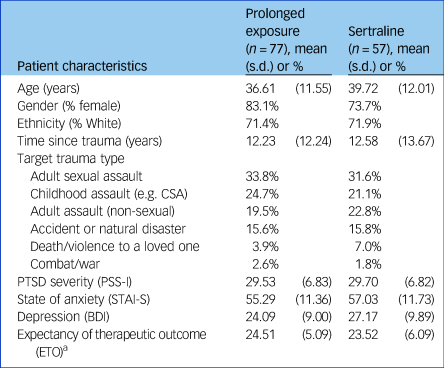
a. n = 126.
BDI, Beck Depression Inventory; CSA, childhood sexual assault; ETO, Expectancy of Therapeutic Outcome; PSS-I, PTSD Symptom Scale – Interview; PTSD, post-traumatic stress disorder; STAI-S, State-Trait Anxiety Inventory – State.
Treatments
Sertraline
Ten weekly sessions (up to 30 min, initial session of 45 min) were provided by board-certified psychiatrists. The first session included the standard trauma interview and rationale for sertraline for PTSD, using a standardised manual and titration algorithm.Reference Marshall, Beebe, Oldham and Zaninelli15 Subsequent visits included general support and ongoing assessment of symptoms and medication side-effects. Dose was titrated from 25 mg/day to a target dose of 200 mg/day by week 5. Dose was adjusted based on side-effect profile and clinical response, with options of reducing or maintaining previous dose. In this case, one more attempt was made to increase the dose, in line with standard clinical practice. The average final dosage across patients was 153.93 mg/day (s.d. 57.04), with adherence monitored by pill counts and medication diaries. Medication for responders was provided through follow-up free of charge, if desired. For approximately 10% of the sample, an outside rater rated fidelity. Sertraline providers completed 96% of essential components with no protocol violations.
Prolonged exposure
Ten weekly sessions (90–120 min) were delivered by masters- or PhD-level clinicians trained in prolonged exposure.Reference Foa, Hembree and Rothbaum16 Components included psychoeducation, in vivo exposure (beginning after the second session), imaginal exposure (beginning in the third session), processing of the imaginal exposure and homework. For approximately 10% of the sample, an outside rater rated fidelity. Prolonged exposure providers completed 90% of essential components with no protocol violations. Therapist competence was rated very good (mean 2.73, s.d. 0.32) on a scale from 1 (inadequate) to 3 (adequate or better).
Measures
Interview measures
The PTSD Symptom Scale – Interview (PSS-I)Reference Foa, Riggs, Dancu and Rothbaum17 is a 17-item semi-structured interview assessing PTSD diagnosis and symptom severity. The PSS-I demonstrates good internal consistency, inter-rater reliability and test-retest reliability (0.85, 0.97 and 0.80, respectively). Over 10% of cases were independently re-rated, and inter-rater reliability was high for PTSD symptom severity (Intraclass Correlation Coefficient = 0.95) and diagnosis (κ = 1.00).
The Structured Clinical Interview for DSM-IV (SCID-IV)Reference First, Spitzer, Gibbon and Williams18 assessed inclusion and exclusion criteria. The SCID-IV has good inter-rater reliability.Reference Lobbestael, Leurgans and Arntz19 Over 10% of SCID-IVs were re-rated, and inter-rater reliability was acceptable (κ = 0.80).
Self-report measures
The PTSD Symptom Scale – Self-Report (PSS-SR)Reference Foa, Riggs, Dancu and Rothbaum17 is a 17-item measure of PTSD symptoms on a four-point scale from 0 (not at all) to 3 (five or more times per week/very much), with higher scores reflecting higher PTSD symptoms. The PSS-SR shows good internal consistency and test-retest reliability (0.91 and 0.74, respectively). During acute treatment, this measure rated PTSD symptoms for the previous week and was used to identify early response.
The Beck Depression Inventory (BDI)Reference Beck, Ward and Mendelsohn20 is a 21-item measure of depressive symptoms for the past 2 weeks on a four-point scale, with higher scores reflecting greater depression. The BDI correlated well with interview measures of depression (r = 0.74) in psychiatric samples.Reference Beck, Epstein, Brown and Steer21
The Spielberger State-Trait Anxiety Inventory – State version (STAI-S)Reference Spielberger, Gorsuch, Lushene, Vagg and Jacobs22 is a 20-item measure of current anxiety symptoms for the past 2 weeks on a four-point scale from 1 (not at all) to 4 (very much so), with higher scores reflecting greater anxiety. The STAI-S has good test-retest reliability (r = 0.70).
The Expectancy of Therapeutic Outcome (ETO)Reference Foa, Rothbaum, Riggs and Murdock23 is a four-item measure (e.g. ‘How successful do you think this treatment will be in reducing your trauma-related symptoms?’) on a nine-point scale from 0 (not at all) to 8 (extremely), with higher scores reflecting higher treatment expectations and credibility. Although there are no specific psychometrics, this measure has been used in multiple clinical trials.Reference Foa, Rothbaum, Riggs and Murdock23, Reference Resick, Nishith, Weaver, Astin and Feuer24
Early response definition
Adapting the established definition used by Tadić et al,Reference Tadić, Helmreich, Mergl, Hautzinger, Kohnen and Henkel5 early response was defined as 20% or greater reduction in PTSD symptoms (PSS-SR) from pre-treatment to session 2. Calculating early response as a percentage change from pre-treatment severity rather than as a function of outcome makes it a candidate for being a pragmatic clinical indicator.
Good end-state functioning definition
Good end-state functioning was defined as experiencing subclinical symptoms across PTSD (PSS-I score ≤ 20), depression (BDI score ≤ 10) and state of anxiety (STAI-S score ≤ 40). This captures a more comprehensive clinical picture than PTSD symptoms alone and is consistent with PTSD treatment literatureReference Feeny, Zoellner, Mavissakalian and Roy-Byrne25, Reference Foa, Dancu, Hembree, Jaycox, Meadows and Street26 Good end-state functioning was calculated at post-treatment and final follow-up.
Procedure
Patients were recruited by community advertising and clinical referrals. After potentially eligible patients reviewed study information and provided written informed consent, they completed interviews (using the PSS-I and SCID-IV) with independent evaluators blind to eventual treatment condition. Patients also completed self-report measures (PSS-SR, BDI and STAI-S), a physical examination, urine drug screen and pregnancy test, if female. Treatment was allocated by computer-generated urn randomisation sequence stratified by PTSD severity and current antidepressant use. Participants rated expectancy of therapeutic outcome (ETO) after the first session, with the provider being blind to the patients' responses, and completed self-report measure of PTSD symptom severity (PSS-SR) before each session. Independent raters conducted interview measures (e.g. PSS-I), and patients completed self-report measures (PSS-SR, BDI and STAI-S) at post-treatment and at 3, 6, 12 and 24 months’ follow-up. On average, the last available follow-up assessment was at 21.21 months (s.d. 6.18). Patients were compensated for assessments. Ethical approvals were received from Institutional Review Boards at University of Washington (04-0541-D) and Case Western Reserve University/University Hospitals of Cleveland (08-03-47). This paper evaluates a combination of primary and secondary outcomes from a registered clinical trial that were assessed as planned, with no changes to follow-up periods or protocol (Clinicaltrials.gov identifier NCT00127673).
Statistical analyses
Analyses were conducted in SPSS version 22 for Windows. Predictors of early response were evaluated by chi-squared analyses and logistic regressions. Moderators were explored with SPSS regression path analysis modelling tools ModProbe and PROCESS,Reference Beck, Epstein, Brown and Steer21 which are widely used in health sciences for estimating direct and indirect effects, and interactions.
Results
Characterising early response
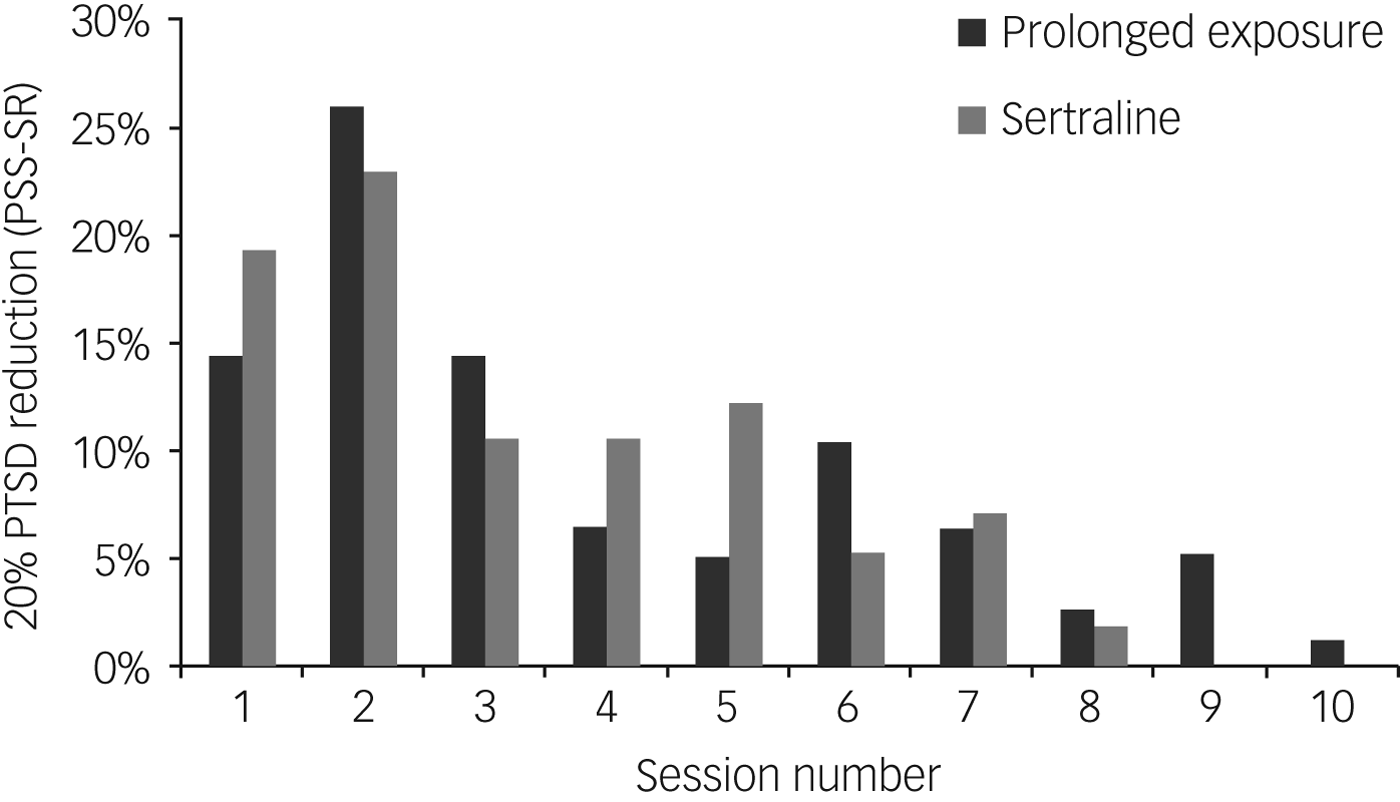
The overwhelming majority of patients achieved at least 20% reduction from pre-treatment PTSD symptoms (PSS-SR) at some time during treatment with sertraline (89.5%) and prolonged exposure (92.2%). As shown in Fig. 1, 20% reduction in symptoms was most commonly met by the second session in both sertraline (42.1%) and prolonged exposure (40.3%).
Session at which PTSD symptom severity (PSS-SR) reduces by 20%. Session refers to first occurrence of 20% symptom reduction from pre-treatment. PSS-SR, PTSD Symptom Scale – Self-Report; PTSD, post-traumatic stress disorder.
Early response predicts good end-state functioning
Post-treatment good end-state functioning
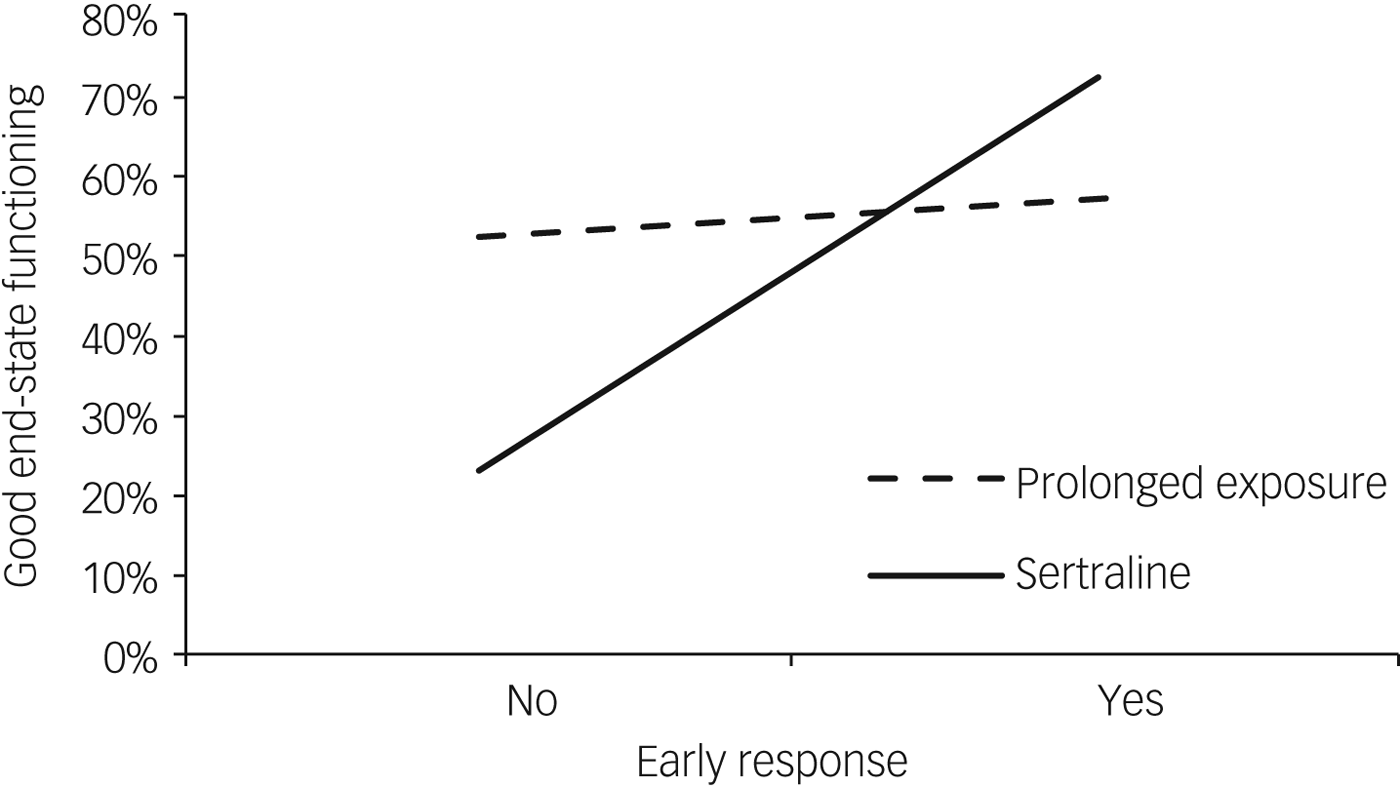
As illustrated in Fig. 2, using moderation analysis in ModProbeReference Hayes and Matthes27 to examine the relationship among treatment modality, early response and good end-state functioning, there was a significant interaction between treatment type and early response (B = 2.18, t = 7.19, P = 0.01), such that early response predicted good end-state functioning at post-treatment in sertraline only (B = 2.55, t = 14.88, P < 0.001, 95% CI 1.26–3.85). For those receiving sertraline, the proportion achieving good end-state functioning at post-treatment was higher for early responders (78.3%) compared with non-early responders (21.9%; Number Needed to Treat = 1.8, 95% CI 1.28–3.00). Of note, there was no difference in final sertraline dose (in milligrams) between early responders (mean 155.71, s.d. 60.84) and non-early responders (mean 152.64, s.d. 55.04), or between those who achieved good end-state functioning (mean 147.00, s.d. 65.07) and those who did not (mean 156.67, s.d. 50.83). In prolonged exposure, the likelihood of achieving good end-state functioning did not differ for early responders compared with non-early responders.
Early response predicts good end-state functioning in sertraline only. Early response was defined as 20% reduction in PTSD symptoms from baseline by session 2. Good end-state functioning was defined by sub-clinical symptoms across PTSD (PSS-I ≤ 20), depression (BDI ≤ 10) and state of anxiety (STAI-S ≤ 40). For prolonged exposure, B = 0.37, t = 0.62, P (not significant), 95% CI −0.55 to 1.30; for sertraline, B = 2.55, t = 14.88, P < 0.001, 95% CI 1.26–3.85. BDI, Beck Depression Inventory; PSS-I, PTSD Symptom Scale – Interview; PTSD, post-traumatic stress disorder; STAI-S, State-Trait Anxiety Inventory – State.
Long-term follow-up good end-state functioning
Early response only predicted good end-state functioning at final follow-up in sertraline (B = 1.39, t = 4.86, P = 0.03, 95% CI 0.15–2.62), but not in prolonged exposure (values were not significant). Similar to post-treatment, for those receiving sertraline, the likelihood of achieving good end-state functioning at final follow-up was higher for those who responded early (72.7%) compared with those who did not (40.0%; Number Needed to Treat = 3.1, 95% CI 1.68–16.71). Again, sertraline dose at final follow-up did not differ between those who achieved good end-state functioning at final follow-up and those who did not, and early response did not predict good end-state functioning at follow-up in prolonged exposure.
Predictors of early response
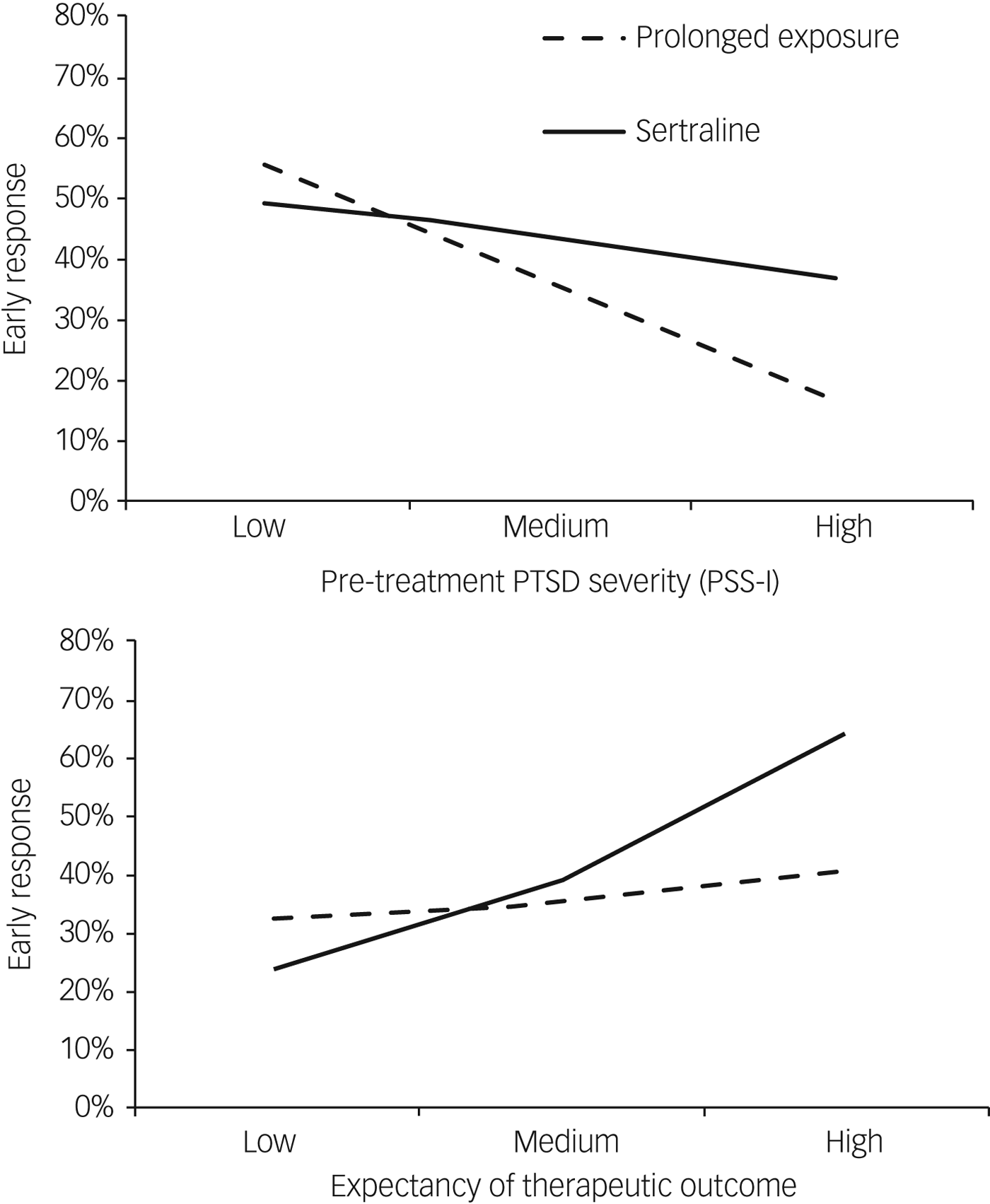
Possible pre-treatment predictors of early response were evaluated, including gender (male, 0; female, 1), trauma type (adult sexual assault, adult assault (non-sexual), child physical or sexual assault, accident or natural disaster, death/violence to a loved one or combat/war), age, time since trauma, pre-treatment state of anxiety (STAI-S), depression severity (BDI), PTSD severity (PSS-I) and expectancy of therapeutic outcome. Only two variables were significantly associated with early response: higher expectancy of positive treatment outcome (β = 0.12, t(1) = 6.94, P = 0.008, 95% CI 1.03–1.22) and lower PTSD severity (PSS-I) (β = −0.12, t(1) = 9.32, P = 0.002, 95% CI 0.83–0.96).
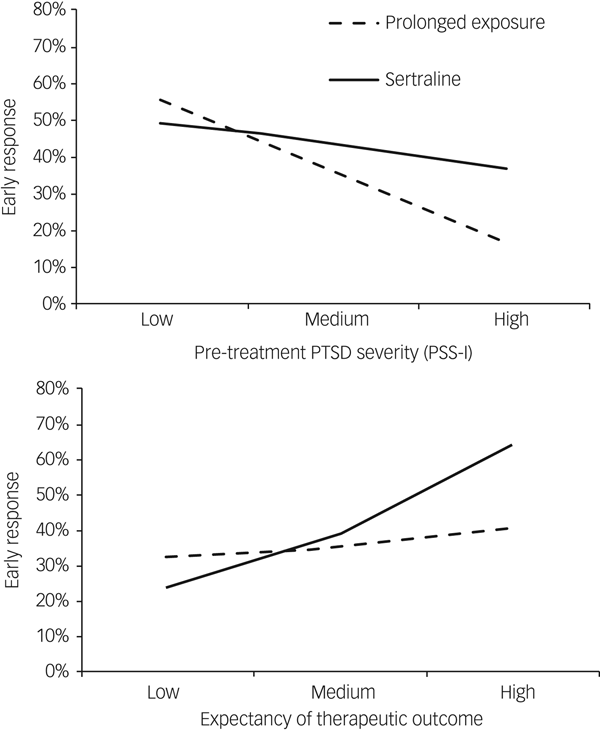
To examine whether these effects were moderated by treatment type, we used moderation analyses in PROCESS.Reference Hayes28 As shown in Fig. 3, higher pre-treatment PTSD severity predicted moderately lower likelihood of early response in prolonged exposure (B = −1.11, P < 0.001, 95% CI −1.72 to −0.49) but not in sertraline (values were not significant). Conversely, Fig. 3 also shows that higher expectancy of therapeutic outcome predicted higher likelihood of early response in sertraline (B = 1.35, P = 0.01, 95% CI 0.35–2.36) but in not prolonged exposure (values were not significant).
Pre-treatment PTSD severity and expectancy predicting early response by treatment condition. Higher pre-treatment PTSD severity predicted early response in prolonged exposure but not sertraline. Higher expectancy predicted early response in sertraline but not prolonged exposure. Values represent estimated likelihood of early response for patients with low (25th percentile), medium (50th percentile) and high (75th percentile) pre-treatment PTSD severity or expectancy, separated by treatment type. For pre-treatment PTSD severity: in prolonged exposure, B = −1.11, P < 0.001, 95% CI −1.72 to −0.49; in sertraline, B = −0.31, P (not significant), 95% CI −0.88 to −0.26. For expectancy of therapeutic outcome: in prolonged exposure, B = 0.26, P (not significant), 95% CI −0.29 to 0.81; in sertraline, B = 1.35, P = 0.01, 95% CI 0.35–2.36. PSS-I, PTSD Symptom Scale – Interview; PTSD, post-traumatic stress disorder.
Given that higher expectancy predicted a greater likelihood to achieve early response in sertraline, and early response predicted greater likelihood of good end-state functioning at post-treatment, we used PROCESSReference Hayes28 to examine whether the relationship between expectancy and good end-state was mediated by early response in sertraline. Indeed, the relationship between higher expectancy ratings and higher likelihood of achieving good end-state functioning was mediated by early response in sertraline (P = 0.004, 95% CI 0.68–3.68), thus arguing that patients' expectancies about sertraline being helpful may influence good end-state functioning by driving early response.
Discussion
Patients with chronic PTSD who responded early to sertraline were approximately four times more likely to achieve and maintain non-clinical levels of PTSD, depression and anxiety. Further, this study indicates that higher expectancy of better treatment outcome at the very first session, even before the first pill has been taken, may set the stage for a later cascade of neurobiological effects and behavioural changes, being associated with early symptom reduction that was further associated with better outcomes through long-term follow-up. Despite similar rates of early response in prolonged exposure and sertraline, the beneficial effect of early response was observed in sertraline only.
Early response to sertraline was strongly associated with higher odds of achieving and maintaining good end-state functioning. Consensus is lacking regarding whether early response to pharmacotherapy for depression and anxiety disorders reflects true psychotropicReference Szegedi, Jansen, van Willigenburg, van der Meulen, Stassen and Thase4, Reference Machado-Vieira, Salvadore, Luckenbaugh, Manji and Zarate29 or placebo effectsReference Quitkin, Rabkin, Ross and McGrath30 and regarding specific mechanisms through which placebo effects occur.Reference Peciña and Zubieta31 Although the current study did not include a placebo comparison to disentangle pharmacological effects from placebo effects, the findings suggest that early PTSD response to sertraline is an important clinical signal for later prognosis. Pre-treatment severity or patient demographic characteristics did not reliably predict early response in sertraline, arguing against the utility of these indices to early response; however, patients with high expectations of improving from sertraline were more likely to achieve early response than those with lower expectations. Importantly, early response explained some of the association between expectancy and outcome, suggesting early response may be a pathway by which expectancies enhance likelihood of achieving strong positive outcomes. However, it is possible that early responders with higher expectancies were likely to be less severe and show more emotional responsiveness, and thus respond better to sertraline. Consistent with expectancy mediating placebo response in depression,Reference Rutherford, Wall, Brown, Choo, Wager and Peterson32 pre-treatment expectancy of potential helpfulness may play a meaningful role in its long-term effectiveness for PTSD alongside active serotonergic effects.
One plausible explanation is a cascade-like effect, such that higher expectancy of sertraline coupled with early response creates optimal conditions for overall symptom reduction. It may be that immediate confirmation of positive expectancy in the form of early symptom reduction propels good outcomes, rather than expectancy in isolation, and may trigger neurobiological processes to induce physiological change.Reference Peciña and Zubieta31 Belief that treatment will work may lead to improvements in mood and mood regulation, or increase behavioural activation. Although expectancy may also influence psychotherapy processes, treatment beliefs may be less critical in prolonged exposure where expectancy asserts a less powerful effect, such that even sceptical clients are likely to improve over time. The specific pathway between expectancy and early response is not clear. Clinically, treatment expectations can easily be assessed via a few brief questions after the first session after the therapeutic rationale has been presented, and session-by-session PTSD severity can be easily monitored through a brief self-report questionnaire, and therefore feasibly included into routine clinical practice. However, it should be noted that although early response in sertraline is an important signal of overall better prognosis, the absence of early response in sertraline does not necessarily justify changing the course of treatment as symptom reduction occurred in later sessions for the vast majority of patients receiving sertraline (see also Foa et al Reference Foa, Dancu, Hembree, Jaycox, Meadows and Street26).
Although rates of early response were similar in prolonged exposure and sertraline, the association with better outcome was seen in sertraline only. This is in contrast to a comparison of cognitive–behavioural therapy and sertraline for depression, where this effect was observed in both treatments.Reference Tadić, Helmreich, Mergl, Hautzinger, Kohnen and Henkel5 It is possible that the overall higher rates of remission in prolonged exposure for PTSDReference Powers, Halpern, Ferenschak, Gillihan and Foa33 mean that early and later responders alike are able to benefit from treatment. Alternatively, the exposure and processing components of prolonged exposure that theoretically underpin therapeutic changeReference Foa, Dancu, Hembree, Jaycox, Meadows and Street26 are introduced after the second session; and it may be that patients' expectations for change are more concretely linked to the start of these components. Patients with more severe PTSD in prolonged exposure, but not sertraline, were less likely to experience early response. Clinically, similar to sertraline and perhaps more so, a lack of early response is not a marker for later treatment failure and should not be interpreted as a cause for altering prolonged exposure treatment.
In this study, patients received key components of prolonged exposure and followed a standard titration algorithm for sertraline to systematically examine the role of early response on later treatment outcome. Generalisation to less structured interventions was not evaluated, nor were alternative effective psychotherapies for PTSD.Reference Cusack, Jonas, Forneris, Wines, Sonis and Middleton2 There was also no placebo control; nevertheless, the therapeutic effect of sertraline and prolonged exposure above waitlist and placebo is well established,Reference Watts, Schnurr, Mayo, Young-Xu, Weeks and Friedman1 arguing against expectations or time solely accounting for observed effects.
Responding early to sertraline for PTSD meaningfully increased patients' likelihood of recovery. This effect was particularly strong when patients held higher expectations that sertraline would work for them. As such, clinicians ought to assess expectancy before starting sertraline and be cognisant of a potential beneficial cascade effect between expectancy and early response when treating patients with sertraline for PTSD. For patients with lower expectancy, early and repeated discussions about why and how SSRIs work and carefully addressing patients’ concerns may be particularly important. Future research should further examine the conditions that fuel higher expectancy and early symptom reduction for those receiving SSRIs for PTSD, as they offer an important combined signal of recovery.
Acknowledgements
The authors would like to thank University of Washington's Helen R. Whiteley Center at Friday Harbor Laboratories for the use of their facilities during the initial conceptualisation of this paper.





eLetters
No eLetters have been published for this article.