


Introduction
Volunteering is an activity spontaneously performed by people without any remuneration in which time is devoted to the benefit of other people, groups, or causes (Wilson, Reference Wilson2000). The absence of a monetary reward decreases the options of management to retain volunteers, which is crucial for organizations. Indeed, volunteers meaningfully contribute to organizations’ work by reducing personnel costs and facilitating a more effective division of labor, as they allow the staff to focus on more critical activities. This implies that volunteer turnover can be a relevant issue in monetary and time terms (Newton et al., Reference Newton, Becker and Bell2014). Therefore, it is critical to understand how to retain volunteers and decrease their turnover. Recent studies have indicated a notable trend: between 2018 and 2021, 44% of the global volunteer workforce ceased volunteering (Forner et al., Reference Forner, Holtrop, Bozeman, Slemp, Kotek, Kragt, Askovic and Johnson2023). One of the main contributing factors was work–home interference (WHI),Footnote 1 a type of inter-role conflict proven to have severe adverse effects on employees and crisis line volunteers (Bernuzzi et al., Reference Bernuzzi, Sommovigo and Setti2022).
This study aims to elucidate the connection between WHI and intentions to leave by examining the distinct mediating roles of burnout components. The World Health Organization recognizes burnout as an occupational phenomenon that can impact all occupations, with frontline workers being particularly vulnerable (World Health Organization, 2019). Burnout is a prevalent form of work-related strain characterized by states of emotional exhaustion and cynicism (Maslach & Leiter, Reference Maslach, Leiter, Cooper and Quick2017). While exhaustion is seen as the core dimension of burnout, cynicism also plays a crucial role due to its impact on service quality (Loerbroks et al., Reference Loerbroks, Glaser, Vu-Eickmann and Angerer2017; Montgomery & Maslach, Reference Montgomery, Maslach, Ayers, Baum, McManus, Newman, Wallston, Weinman and West2019). Previous research has predominantly focused on the detrimental effects of exhaustion alone or explored the combined effects of both symptoms (Huynh et al., Reference Huynh, Xanthopoulou and Winefield2014; Setti et al., Reference Setti, Zito, Colombo, Cortese, Ghislieri and Argentero2018). Therefore, by analyzing these two key burnout components separately, our study deepens our understanding of their unique effects on intentions to leave. Additionally, existing research has often studied WHI along with other demands within a combined construct (Huynh et al., Reference Huynh, Xanthopoulou and Winefield2014) or as a direct antecedent of marital problems, intentions to stay, and volunteer satisfaction (Cowlishaw et al., Reference Cowlishaw, Evans and McLennan2010a, Reference Cowlishaw, Evans and McLennan2010b). However, the literature lacks investigations into why, how, and when WHI leads to volunteer leaving intentions. Our study addresses this issue by examining the mediators and moderators associated with the impact of WHI on volunteers’ intentions to leave.
To investigate the relationship between WHI and volunteer turnover, we rely on the job demands–resources (JD-R) theory (Bakker et al., Reference Bakker, Demerouti and Sanz-Vergel2023), a theoretical framework developed for the paid work context that has been widely applied in the volunteer context. The theory suggests a dual process: (1) a health-impairment process in which specific job demands lead to health-related issues and consequently to adverse organizational outcomes; here, job resources are proposed to buffer the negative impact of job demands; and (2) a motivational process in which job resources have a motivational effect that leads to positive organizational outcomes. In this work, we focus on the health-impairment process to examine how interactions between WHI and organizational resources affect burnout and intentions to leave of volunteers.
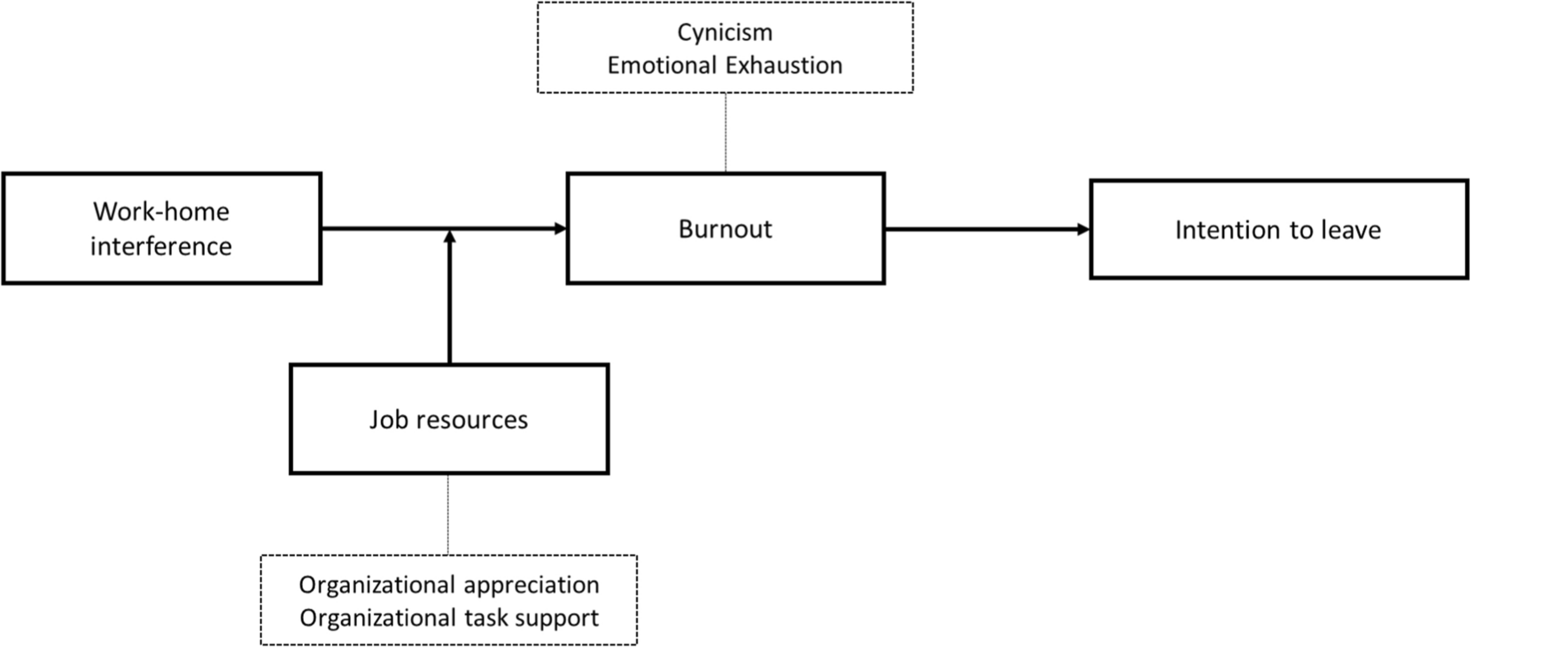
The proposed conceptual model (see Fig. 1) was tested on 220 volunteers mainly involved in educational or cultural organizations. This study highlights WHI as a critical job demand, whereas job resources entail organizational appreciation and organizational task support. Burnout is captured by its two core dimensions: emotional exhaustion and cynicism (Demerouti et al., Reference Demerouti, Mostert and Bakker2010).
Theoretical model (Bakker et al., Reference Bakker, Demerouti and Sanz-Vergel2023)

This study extends the literature on volunteering by revealing the role of WHI as a relevant job demand for volunteers of any sector and the pivotal role of organizations in diminishing its adverse effects. We hope to pave the way to new research aimed at understanding why volunteers suffer from their work despite it being without contractual obligation and we offer novel practical insights into how to mitigate these adverse effects to decrease their turnover.
Theory and Hypotheses
Job Demands–Resources Theory
Any occupation carries several work-related factors that influence employee functioning. JD-R theory is a leading theoretical framework that categorizes job-related factors into two main categories: job demands and job resources (Demerouti et al., Reference Demerouti, Bakker, Nachreiner and Schaufeli2001). Job demands are all those work-related physical, psychological, and social activities that, at high levels, cause job strain. Such demands include work-family conflict (Bakker et al., Reference Bakker, Demerouti and Sanz-Vergel2023). Inadequate management of job activities and constant demands may cause exhaustion and health problems. Job demands are not necessarily a negative aspect of the job and can sometimes act as a stimulus to improve one’s knowledge and skills or activate the motivational role of job resources (Bakker et al., Reference Bakker, van Veldhoven and Xanthopoulou2010). They become harmful when there is no balance with job resources; the organization does not reciprocate the effort invested in work, and the high job demands result in chronic job strain (Bakker & Demerouti, Reference Bakker and Demerouti2007). Job resources are the work-related physical, psychological, and social factors that stimulate personal growth (Demerouti et al., Reference Demerouti, Bakker, Nachreiner and Schaufeli2001). Job resources suit the double purpose of facilitating work goals and reducing the psychological costs associated with job demands. The higher the level and importance of job resources in a working environment, along with a moderate level of job demands, the higher the motivational potential in achieving goals and decreasing job strain (Bakker & Demerouti, Reference Bakker and Demerouti2007). Job resources satisfy basic psychological needs and, as such, foster volunteers’ motivation (Bakker et al., Reference Bakker, Demerouti and Sanz-Vergel2023).
The JD-R theory, which has been traditionally applied to understand employees motivational and health-impairment processes, also applies to volunteers. JD-R principles extend beyond traditional paid work settings, which suggests that this theory is a valuable tool for understanding volunteers’ intentions and well-being (Huynh et al., Reference Huynh, Xanthopoulou and Windsor2023; Lewig et al., Reference Lewig, Xanthopoulou, Bakker, Dollard and Metzer2007). Accordingly, in recent decades, JD-R theory has been applied to volunteerism, focusing on volunteers working in the emergency sector, such as HIV volunteers (Cox et al., Reference Cox, Pakenham and Cole2010), hospice palliative care volunteers (Huynh et al., Reference Huynh, Winefield, Xanthopoulou and Metzer2012), and emergency service volunteers (Huynh et al., Reference Huynh, Xanthopoulou and Winefield2014).
Based on JD-R theory, we will therefore test a moderated mediation model focusing on two core principles: (1) the health impairment process, in which job demands lead to an increasing intention to leave via burnout; (2) the interaction effect, in which job resources buffer the negative effect of job demands on leaving intentions via burnout. In the sections below, we discuss our rationale underlying the hypothesized indirect main effects of WHI (i.e., the health-impairing process) and the buffering effects of job resources.
Work–Home Interference and the Health Impairment Process
WHI is a form of inter-role conflict in which the demands from the work and family domains are mutually incompatible, such that participation in one domain makes participation in the other difficult (Greenhaus & Beutell, Reference Greenhaus and Beutell1985). In the paid work context, extensive research has identified the different types of WHI—time-based, strain-based, and behavior-based—(Greenhaus & Beutell, Reference Greenhaus and Beutell1985), as well as the causes, placing them under the umbrella of family role pressures. The issue of WHI has been addressed in the context of volunteer work, focusing exclusively on crisis line volunteers. For instance, for firefighting volunteers, WHI is related to burnout (Cowlishaw et al., Reference Cowlishaw, Evans and McLennan2010a), lower volunteer satisfaction, and intention to remain (Cowlishaw et al., Reference Cowlishaw, Birch, McLennan and Hayes2014). In the family domain, it has been shown to lead to partner overload and withdrawn behavior (Cowlishaw et al., Reference Cowlishaw, Evans and McLennan2010b). Parasuraman and Simmers (Reference Parasuraman and Simmers2001) took distance from the view that family role pressures lead to WHI to a lesser extent for self-employed workers than employed workers due to their higher autonomy and schedule flexibility. Indeed, they found that self-employed suffer more from WHI due to their high involvement in the job, suggesting that WHI might be a function of the emotional investment in the work. We believe that a similar argument applies to the volunteer context, given that the emotional investment of volunteers is a driving factor for their attitude toward volunteering (Ainsworth, Reference Ainsworth2020). Most studies dealing with this topic have focused on a sample of volunteers working in the emergency sector, overlooking the importance this issue may have on the volunteer world in a broader sense. Moreover, the current literature has neglected to study in depth the role that organizations play in mitigating the negative effect of WHI, paying more attention to its role as an antecedent of family-related outcomes (Cowlishaw et al., Reference Cowlishaw, Evans and McLennan2010a). Although its effect on the health and turnover of volunteers has been demonstrated, this variable has been studied in conjunction with other job demands using a single latent construct (Huynh et al., Reference Huynh, Xanthopoulou and Winefield2014), and this approach may lead to a substantial loss of information. Consequently, a lack of knowledge of the effects directly attributable to work–home interference may lead to the development of ineffective interventions. Hence, more research is needed to thoroughly understand the peculiar effects of WHI on volunteer turnover.
According to JD-R theory, job demands may negatively impact work outcomes via a health-impairment process. Burnout, a common form of work-related strain, is characterized by emotional exhaustion, cynicism, and job-related difficulties. This study focuses on the two core dimensions of burnout: exhaustion and cynicism. Exhaustion involves feeling emotionally and physically drained, while cynicism refers to a distant attitude toward one’s job, which can compromise service quality (Demerouti et al., Reference Demerouti, Mostert and Bakker2010; Montgomery & Maslach, Reference Montgomery, Maslach, Ayers, Baum, McManus, Newman, Wallston, Weinman and West2019). JD-R theory proposes that excessive job demands can deplete physical, emotional, and cognitive resources, leading to burnout (Bakker et al., Reference Bakker, Demerouti and Sanz-Vergel2023). Although there are substantial differences between paid work and volunteering, volunteers are at risk of burnout. Indeed, the principles of JD-R theory similarly apply to volunteers, as prior studies have demonstrated. These studies have shown that exhaustion mediates the relationship between job demands and depression among HIV volunteers (Cox et al., Reference Cox, Pakenham and Cole2010), hospice palliative care volunteers (Huynh et al., Reference Huynh, Winefield, Xanthopoulou and Metzer2012), and emergency service volunteers (Huynh et al., Reference Huynh, Xanthopoulou and Winefield2014).
Demerouti et al. (Reference Demerouti, Bakker and Bulters2004) showed in a longitudinal study that WHI causes exhaustion, and later studies have found this job demand to lead to the development of both exhaustion and cynicism (Derks & Bakker, Reference Derks and Bakker2014; Recuero & Segovia, Reference Recuero and Segovia2021).
In turn, job strain in the form of burnout is expected to increase intentions to leave. Consistent with JD-R theory (Bakker et al., Reference Bakker, Demerouti and Sanz-Vergel2023), the depletion of resources caused by these job demands can result in maladaptive organizational outcomes (Ogungbamila et al., Reference Ogungbamila, Balogun, Ogungbamila and Oladele2014). Among these, one of the most problematic is the intention to leave the job. Several studies have shown a positive relationship between burnout and leaving intentions (Blanco-Donoso et al., Reference Blanco-Donoso, Moreno-Jiménez, Hernández-Hurtado, Cifri-Gavela, Jacobs and Garrosa2021; Srivastava & Agrawal, Reference Srivastava and Agrawal2020). Moreover, consistent with JD-R theory, prior research investigating the role of WHI has shown that burnout mediated the impact of this demanding condition on impaired work outcomes (Bakker & Demerouti, Reference Bakker and Demerouti2007). Nonetheless, there is a lack of research examining the mediation of the two distinct dimensions of burnout in the relationship between WHI and the intention to leave the volunteering sector. Accordingly, we hypothesize that:
Hypothesis 1
Burnout symptoms (Hp1a: exhaustion, Hp1b: cynicism) mediate the positive relationship between WHI and intentions to leave.
The Buffering Role of Job Resources
JD-R theory introduces a buffering hypothesis whereby various job resources can attenuate the health-impairing impact of job demands, depending on the type of job characteristics and the function of the specific job demands and resources (Bakker et al., Reference Bakker, Demerouti and Euwema2005). The job resources included in the present investigation are organizational appreciation and task support. Organizational appreciation refers to volunteers’ perception of the extent to which different actors of their organization (association, supervisors, staff) recognize their activity (Lo Presti, Reference Lo Presti2013). Research studying the impact of recognition on volunteers’ intention to stay has shown that appreciating their contribution with awards, such as positive feedback or words of gratitude, increases their retention (Walk et al., Reference Walk, Zhang and Littlepage2019). Organizational recognition is a relevant job resource because it satisfies volunteers’ need to be gratified and feel competent, acting as an intrinsic motivator that increases their satisfaction and commitment (Walk et al., Reference Walk, Zhang and Littlepage2019). Likewise, organizational task support is a relevant job resource, which refers to concrete forms of assistance helpful to volunteers to overcome problems (e.g., cognitive guidance; Clary, Reference Clary1987). Thus, volunteers who feel supported in their tasks are more likely to feel confident about performing them, showing higher commitment levels (Alfes et al., Reference Alfes, Antunes and Shantz2017). Considering these factors, feeling appreciated and supported by the organization and supervisors may protect against WHI impairing effects on volunteer burnout. Past studies consistently link both resources to volunteers’ intention to stay (Lo Presti, Reference Lo Presti2013).
JD-R theory proposes that job resources may offset the health impairment process by buffering the negative impact of job demands on burnout (Bakker & Demerouti, Reference Bakker and Demerouti2007). Several studies have supported these predictions (e.g., Hakanen et al., Reference Hakanen, Bakker and Demerouti2005; Xanthopoulou et al., Reference Xanthopoulou, Bakker, Dollard, Demerouti, Schaufeli, Taris and Schreurs2007). Organizational task support and organizational appreciation are expected to play a key role in mitigating the negative impact of WHI on volunteer intention to leave through burnout complaints. Specifically, job appreciation acts as a form of non-monetary compensation volunteers receive for their work, allowing them to counterbalance the cognitive and emotional efforts required by WHI (Walk et al., Reference Walk, Zhang and Littlepage2019). Thus, we expect that at high levels of appreciation, the negative impact of WHI on burnout dimensions and, ultimately, turnover is attenuated because feelings of appreciation will foster satisfaction for the work done and increase commitment to the job (Lo Presti, Reference Lo Presti2013). Similarly, task support is expected to reduce the workload causing WHI (Bennett & Barkensjo, Reference Bennett and Barkensjo2005). Accordingly, we propose:
Hypothesis 2
Organizational appreciation moderates the indirect positive relationship between WHI and intention to leave through burnout symptoms (Hp2a: exhaustion, Hp2b: cynicism), such that this relationship will be weaker when job resources are higher.
Hypothesis 3
Organizational task support moderates the indirect positive relationship between WHI and intention to leave through burnout symptoms (Hp3a: exhaustion, Hp3b: cynicism), such that this relationship will be weaker when job resources are higher.
Method
Participants and Procedure
We conducted a cross-sectional study by administering a self-report questionnaire to a sample of 315 volunteers in Italy from January to March 2021. Recruitment for the study involved using social networks, mailing lists, direct telephone contact sourced from organization websites, and a snowballing sampling method—i.e., participants invited acquaintances to join. Participants received an email containing a direct link to an online questionnaire hosted on the Qualtrics survey platform. Prior to completing the questionnaire, participants were informed about the anonymity and confidentiality of their answers, and they were assured of their right to discontinue participation at any time without providing any explanation. The associations that participated in the study operated in the following sectors: cultural (43.2%), first aid/assistance (30.9%), religious (6.4%), environmental (4.1%), recreational (5%), and territory promotion (10.5%). The measures referring to the paid-work context were adapted to the volunteering context. After deleting incomplete responses, the final sample comprised 241 observations (response rate = 76.51%). Respondents were 38 years old on average (SD = 17.16); 51.5% were female, 45.2% were workers, and 33.6% were students. Moreover, 46.4% held an undergraduate level of education or higher, and 45.6% performed volunteering activities every week.
Measures
All study measures were assessed with validated scales, with an answer format of a five-point Likert scale ranging from 1 (“totally disagree”) to 5 (“totally agree”).
Work–home interference The four-item scale developed by Geurts et al. (Reference Geurts, Taris, Kompier, Dikkers, Van Hooff and Kinnunen2005) was used to assess volunteer WHI. The scale captures the extent to which volunteering activities are perceived as an impediment to feeling relaxed at home, spending time with the family, or indulging in hobbies (e.g., “because of my job as a volunteer, I do not have the energy to engage in leisure activities with my spouse/family/friends”; α = 0.86).
Job resources Lo Presti’s (Reference Lo Presti2013) scales were used to assess job resources. Organizational appreciation was measured with three items assessing the extent to which volunteers perceive that the association, its employees, and supervisors appreciate their work (e.g., “I receive appreciation recognition for my volunteering work from my association”; α = 0.87). Organizational task support includes four items examining the extent to which volunteers are prepared for performing their tasks considering the training and support received (e.g., “In advance, I was well instructed for my volunteering”; α = 0.82).
Burnout Two three-item scales from the Burnout Assessment Tool (BAT; Schaufeli et al., Reference Schaufeli, Desart and De Witte2020) were used to measure: (1) exhaustion, which captures the degree to which volunteers feel emotionally drained by their activities (“When I do volunteering, I feel mentally exhausted”; α = 0.81); and (2) cynicism, which assesses the mental distance a volunteer might feel while performing their tasks (e.g., “I feel a strong aversion toward my job as a volunteer”; α = 0.65).
Intention to leave Using a three-item measure from the work of Huynh et al. (Reference Huynh, Xanthopoulou and Winefield2014), respondents indicated how much they agreed with each statement concerning the intention to abandon volunteering work (e.g., “I often think about quitting my volunteer job”; α = 0.68).
Control variables We controlled for volunteers’ age (in years), education (0 = lower than a bachelor’s degree, 1 = higher or equal to a bachelor’s degree), and occupation (0 = non-employed, 1 = employed). Previous studies found a significant negative correlation between burnout and age (Brewer & Shapard, Reference Brewer and Shapard2004). Moreover, education was found to influence involvement in volunteering activities (Ramos et al., Reference Ramos, Güntert, Brauchli, Bauer, Wehner and Hämmig2016). Finally, concerning occupation, past research revealed that being employed increases the probability of volunteering (Wilson, Reference Wilson2000).
Results
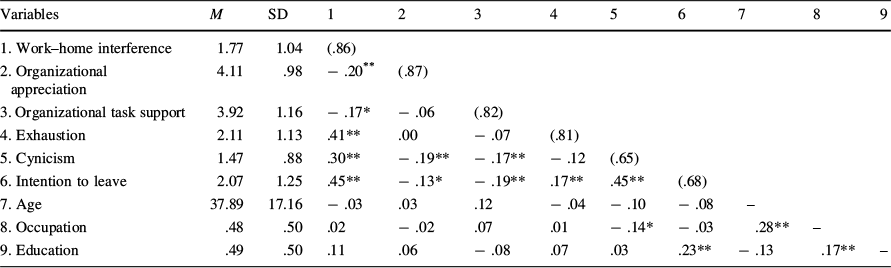
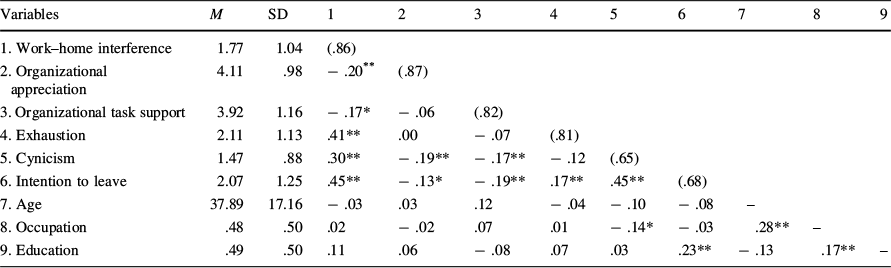
Table 1 provides the descriptive statistics, correlations, and Cronbach’s alpha measures for the study variables which were computed with the software SPSS. First, a confirmatory factor analysis (CFA) with the lavaan (Rosseel, Reference Rosseel2012) and psych (Revelle, Reference Revelle2022) packages in R was performed to ascertain the distinctiveness of the study variables and assess the corresponding model fit. First, fit indices for the hypothesized six-factor model fell within an acceptable range (χ 2(155) = 269.83, p < .01; CFI = .95; TLI = .93; RMSEA = .06; SRMR = .06). Moreover, the six-factor model outperformed alternative five-factor models combining the two job resources (Δχ 2[5] = 154.89 p < .01), or the two burnout dimensions (Δχ 2[5] = 134.41, p < .01). These results indicate that the study variables could be empirically distinguished. The supplementary material provides additional reliability, convergent, and discriminant validity analyses for our model.
Descriptive statistics and correlations
Variables |
M |
SD |
1 |
2 |
3 |
4 |
5 |
6 |
7 |
8 |
9 |
|---|---|---|---|---|---|---|---|---|---|---|---|
1. Work–home interference |
1.77 |
1.04 |
(.86) |
||||||||
2. Organizational appreciation |
4.11 |
.98 |
− .20** |
(.87) |
|||||||
3. Organizational task support |
3.92 |
1.16 |
− .17* |
− .06 |
(.82) |
||||||
4. Exhaustion |
2.11 |
1.13 |
.41** |
.00 |
− .07 |
(.81) |
|||||
5. Cynicism |
1.47 |
.88 |
.30** |
− .19** |
− .17** |
− .12 |
(.65) |
||||
6. Intention to leave |
2.07 |
1.25 |
.45** |
− .13* |
− .19** |
.17** |
.45** |
(.68) |
|||
7. Age |
37.89 |
17.16 |
− .03 |
.03 |
.12 |
− .04 |
− .10 |
− .08 |
– |
||
8. Occupation |
.48 |
.50 |
.02 |
− .02 |
.07 |
.01 |
− .14* |
− .03 |
.28** |
– |
|
9. Education |
.49 |
.50 |
.11 |
.06 |
− .08 |
.07 |
.03 |
.23** |
− .13 |
.17** |
– |
N = 241 volunteers. Cronbach’s alphas appear along the diagonal, in parentheses. Mean and standard deviation are calculated from questionnaire items since Bartlett’s factor scores have mean equal to zero. Education: 0 = lower than bachelor degree, 1 = higher or equal than bachelor degree. Occupation: 0 = non−employed, 1 = employed
* p < .05; ** p < .01
We used the unmeasured latent method factor technique to evaluate the potential impact of common method bias due to the cross-sectional nature of our self-report study (Podsakoff et al., Reference Podsakoff, MacKenzie and Podsakoff2012). This involved integrating an unmeasured latent method factor in the expected six-factor CFA model, allowing indicators to load on their respective latent constructs and the method factor (Podsakoff et al., Reference Podsakoff, MacKenzie and Podsakoff2012). The expected six-factor model showed a better fit to the data after the inclusion of the method factor (χ 2(92) = 135.83, p < .01; CFI = .98; TLI = .96; RMSEA = .04; SRMR = .03; Δχ 2[45] = 79.92, p < .01). The method factor, however, explained 23% of the total variance in the items, which is lower than the average amount of method variance (i.e., 25%) reported in self-report studies (Podsakoff et al., Reference Podsakoff, MacKenzie and Podsakoff2012). These findings suggest that common method bias is unlikely to impact the results of this study substantially. Factor scores were extracted using Bartlett’s method (Bartlett, Reference Bartlett1937), which provides unbiased estimates of the true factor scores with a mean of 0 and highly correlated to their corresponding factor (DiStefano et al., Reference DiStefano, Zhu and Mindrila2009).
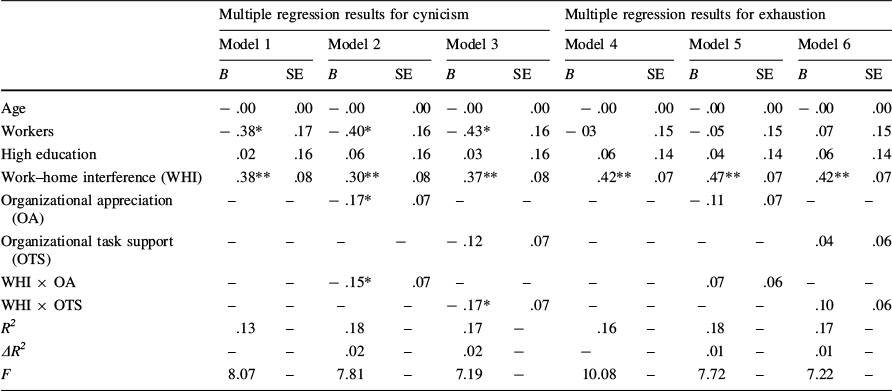
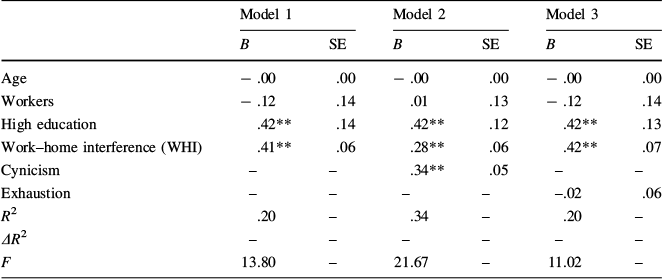
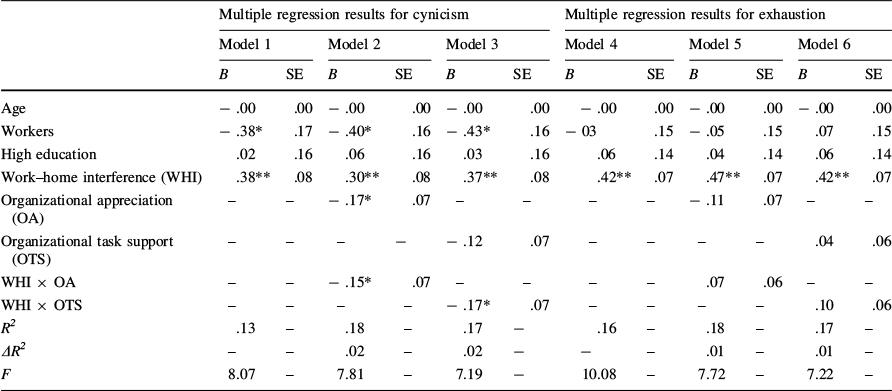
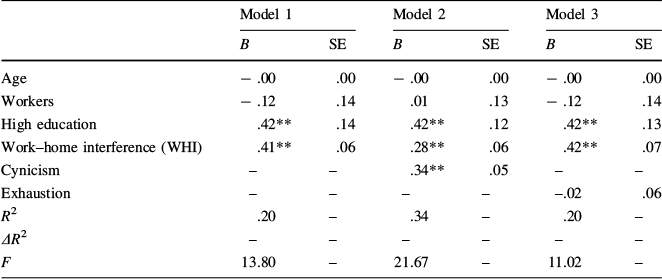
Hypotheses were tested by estimating mediation and moderated mediation models using the Process macro in SPSS (Moon & Hong, Reference Moon and Hong2021). The models are estimated on a sample of 220 individuals due to the presence of missing values in the control variables. The significance of the mediation and moderation effects was assessed through 95% bias-corrected confidence intervals obtained from 5000 bootstrap replications. Mediation models were tested with Model 4 of the Process macro in SPSS. Table 2 reports multiple regression results for burnout symptoms, and Table 3 reports multiple regression results for turnover intentions. Our results did not support the mediating role of exhaustion. Thus, H1a was rejected. Conversely, WHI was positively related to cynicism (B = .38, p < .05), which, in turn, was positively associated with leaving intentions (B = .34, p < .05). Bootstrap analyses additionally showed that cynicism significantly mediated the relationship between WHI and leaving intentions (indirect effect = .13, 95% CI [.06, .22]), supporting H1b.
Multiple regression results for burnout measures
Multiple regression results for cynicism |
Multiple regression results for exhaustion |
|||||||||||
|---|---|---|---|---|---|---|---|---|---|---|---|---|
Model 1 |
Model 2 |
Model 3 |
Model 4 |
Model 5 |
Model 6 |
|||||||
B |
SE |
B |
SE |
B |
SE |
B |
SE |
B |
SE |
B |
SE |
|
Age |
− .00 |
.00 |
− .00 |
.00 |
− .00 |
.00 |
− .00 |
.00 |
− .00 |
.00 |
− .00 |
.00 |
Workers |
− .38* |
.17 |
− .40* |
.16 |
− .43* |
.16 |
− 03 |
.15 |
− .05 |
.15 |
.07 |
.15 |
High education |
.02 |
.16 |
.06 |
.16 |
.03 |
.16 |
.06 |
.14 |
.04 |
.14 |
.06 |
.14 |
Work–home interference (WHI) |
.38** |
.08 |
.30** |
.08 |
.37** |
.08 |
.42** |
.07 |
.47** |
.07 |
.42** |
.07 |
Organizational appreciation (OA) |
– |
– |
− .17* |
.07 |
– |
– |
– |
– |
− .11 |
.07 |
– |
– |
Organizational task support (OTS) |
– |
– |
– |
− |
− .12 |
.07 |
– |
– |
– |
– |
.04 |
.06 |
WHI × OA |
– |
– |
− .15* |
.07 |
– |
– |
– |
– |
.07 |
.06 |
– |
– |
WHI × OTS |
– |
– |
– |
– |
− .17* |
.07 |
– |
– |
– |
– |
.10 |
.06 |
R 2 |
.13 |
– |
.18 |
– |
.17 |
− |
.16 |
– |
.18 |
– |
.17 |
– |
ΔR 2 |
– |
– |
.02 |
– |
.02 |
− |
− |
– |
.01 |
– |
.01 |
– |
F |
8.07 |
– |
7.81 |
– |
7.19 |
− |
10.08 |
– |
7.72 |
– |
7.22 |
– |
N = 220 volunteers
* p < .05; ** p < .01
Multiple regression results for intention to leave
Model 1 |
Model 2 |
Model 3 |
||||
|---|---|---|---|---|---|---|
B |
SE |
B |
SE |
B |
SE |
|
Age |
− .00 |
.00 |
− .00 |
.00 |
− .00 |
.00 |
Workers |
− .12 |
.14 |
.01 |
.13 |
− .12 |
.14 |
High education |
.42** |
.14 |
.42** |
.12 |
.42** |
.13 |
Work–home interference (WHI) |
.41** |
.06 |
.28** |
.06 |
.42** |
.07 |
Cynicism |
– |
– |
.34** |
.05 |
– |
– |
Exhaustion |
– |
– |
– |
– |
–.02 |
.06 |
R 2 |
.20 |
– |
.34 |
– |
.20 |
– |
ΔR 2 |
– |
– |
– |
– |
– |
– |
F |
13.80 |
– |
21.67 |
– |
11.02 |
– |
N = 220 volunteers
* p < .05; ** p < .01
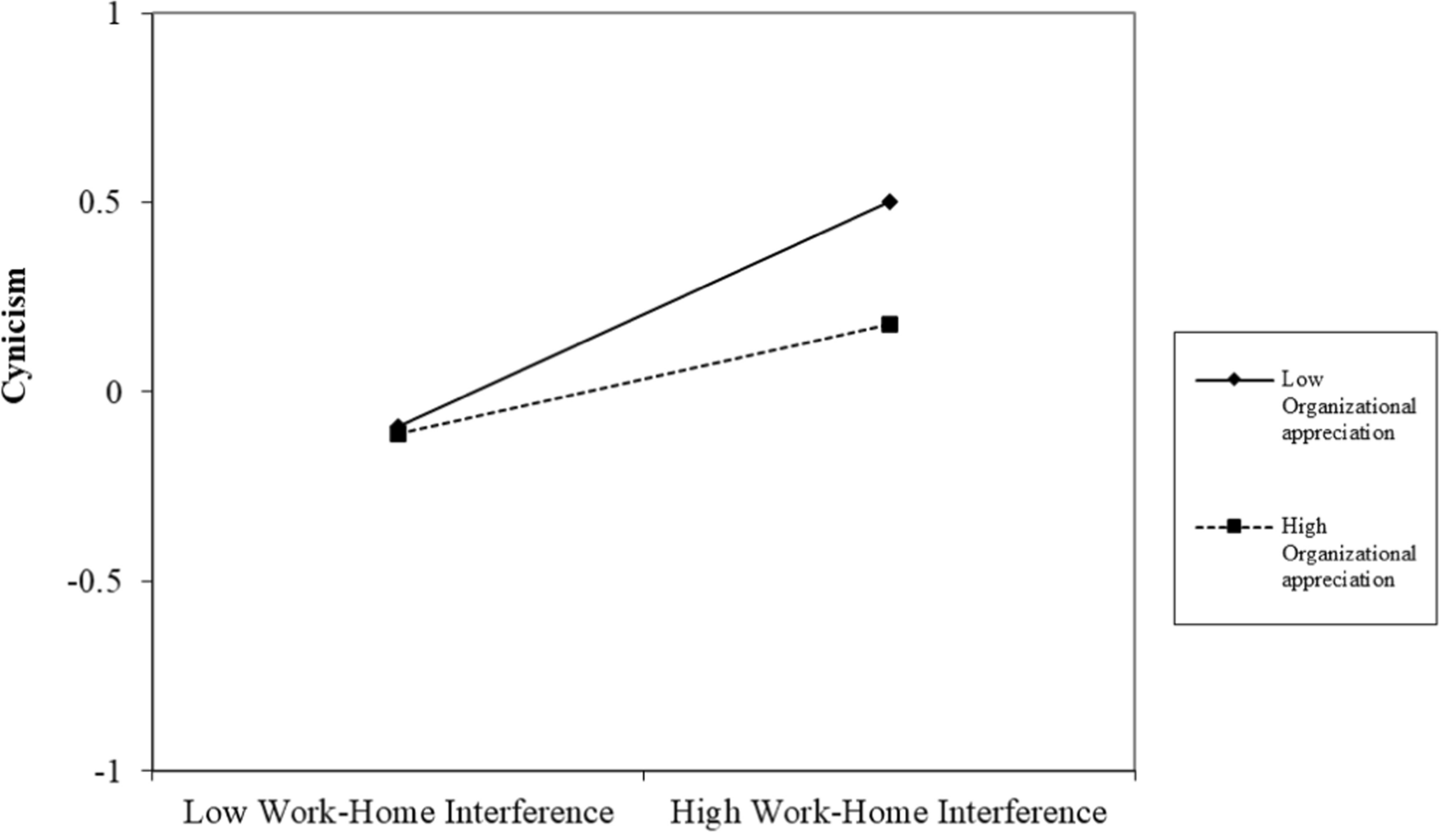
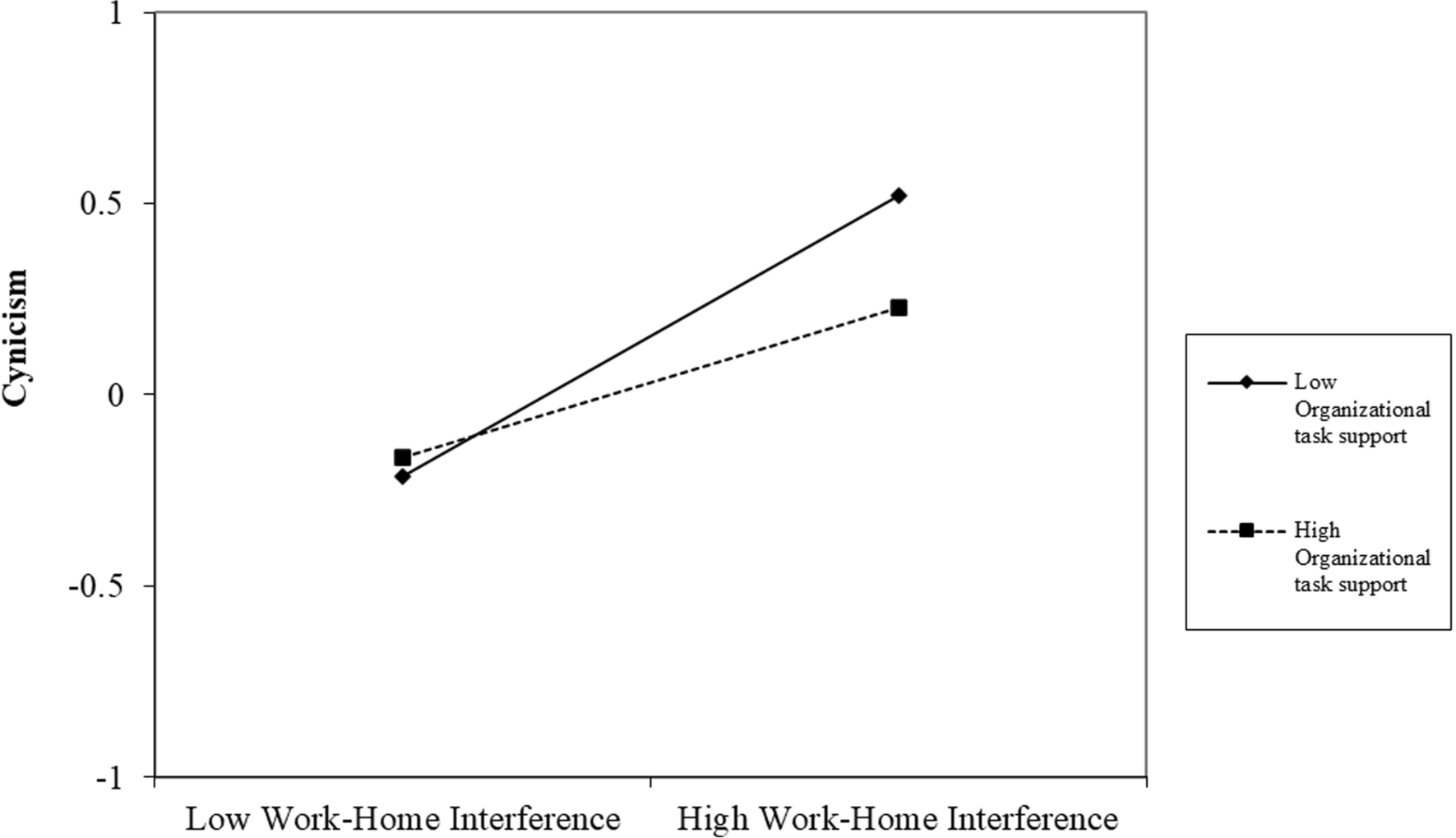
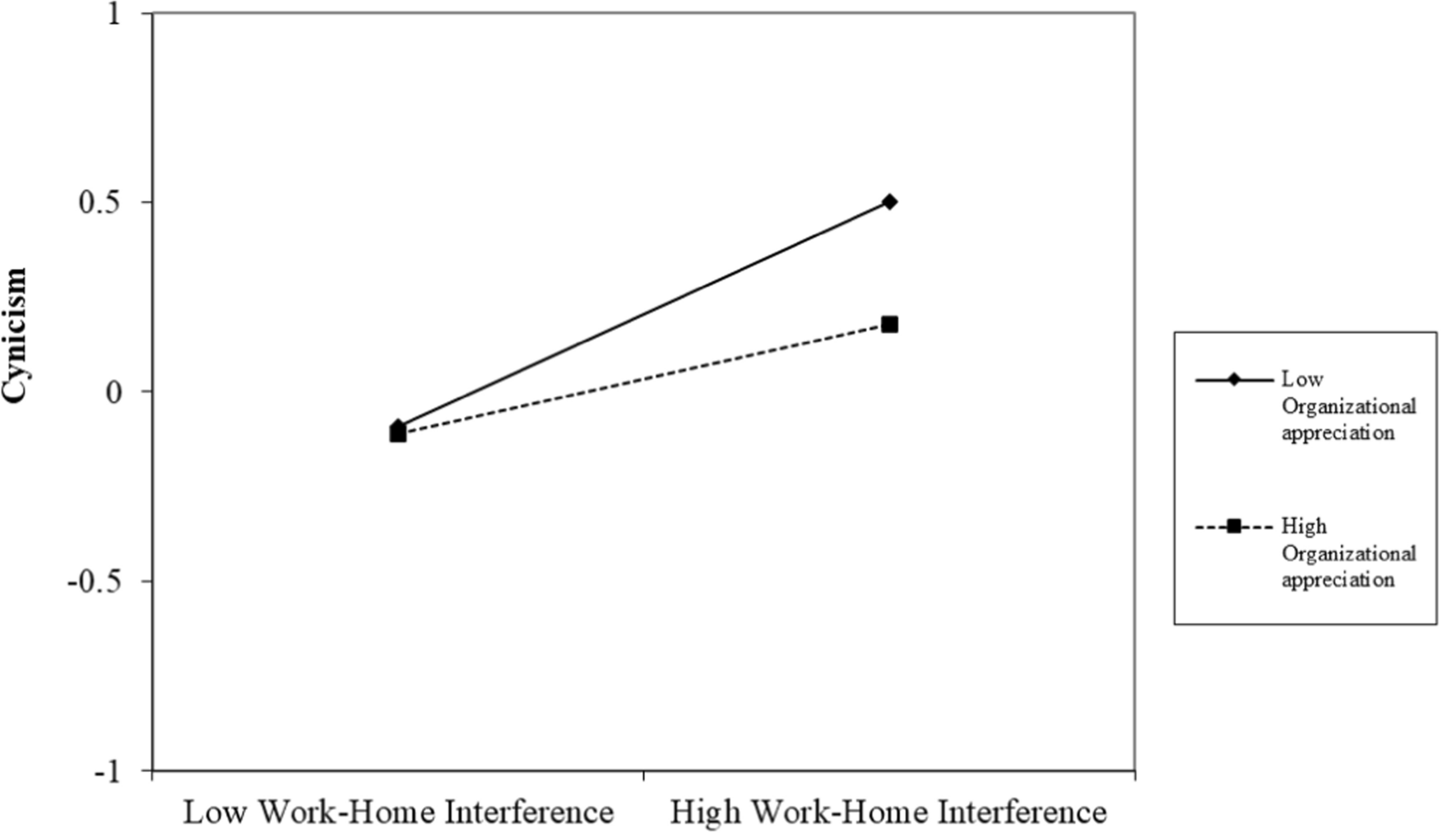
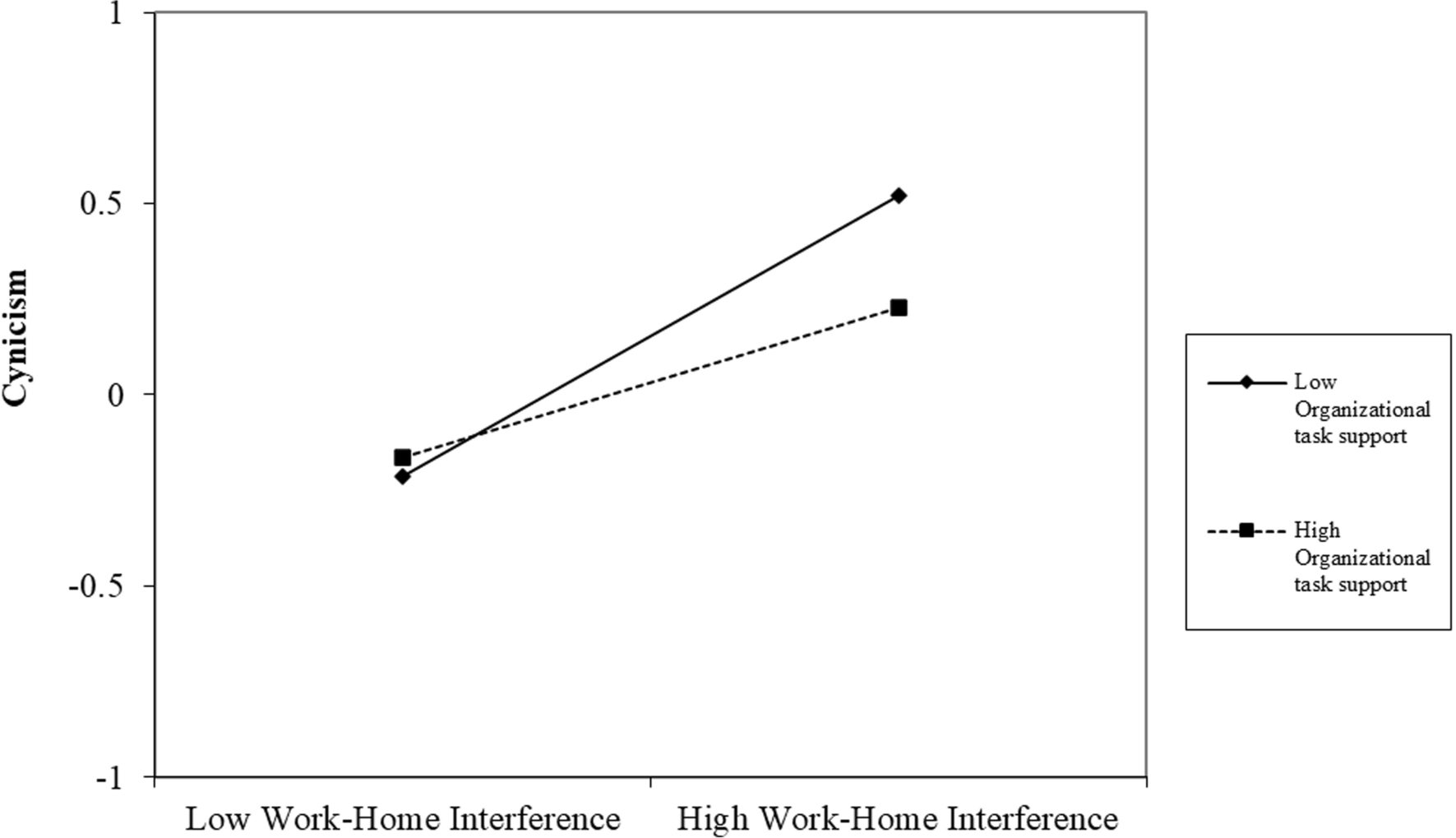
To test the buffering role of job resources, we first considered the simple moderating effects of the job resources on the job demands-burnout relationships using Model 1 of the Process macro in SPSS. Moderation was assessed considering the impact of the predictor on the dependent variables at one standard deviation above and below the mean of the moderator. WHI significantly and negatively interacted with organizational appreciation (B = − .15, p < .05) and organizational task support (B = − .17, p < .05), suggesting that these job resources buffered the relationship between WHI and cynicism. Results from simple slope tests indicated that WHI was significantly and positively associated with cynicism when organizational appreciation was low (B = .47, p < .05) but was unrelated to it when it was high (B = .13, ns; see Figs. 2 and 3). Similarly, the relationship between WHI and cynicism was positive and significant at low levels of organizational task support (B = .57, p < .05) but non-significant at high levels of organizational task support (B = .17, ns).
Interaction effect between work–home interference and organizational appreciation on cynicism
Interaction effect between work–home interference and organizational task support on cynicism
To test H2 and H3, which predicted moderated mediation effects, we used Model 7 of the Process macro in SPSS to examine the conditional indirect effects of job demands on turnover intentions via burnout. Then, H2a and H3a could not be supported due to the non-significant mediation of exhaustion. The conditional indirect effect of WHI on turnover intention via cynicism was positive and significant when organizational appreciation was low (indirect effect = .16, 95% CI .05, .28) but was not significant when organizational appreciation was high (indirect effect = .04, 95% CI—.03, .12), supporting H2b. Similarly, the conditional indirect effect of WHI on turnover intention via cynicism was positive and significant when task support was low (indirect effect = .20, 95% CI .09, .32) and not significant when it was high (indirect effect = .06, 95% CI—.02, .16), supporting Hypothesis H3b.
Discussion
This work aimed to extend our limited understanding of the factors that can prevent volunteer leaving intentions by deepening the current knowledge of the health-related mechanisms implied in JD-R theory. We have highlighted the critical role of WHI and broadened our knowledge of the differences between paid work and volunteering. To this end, we integrated JD-R theory to propose that: (1) WHI is related to an increasing intention to leave via burnout; (2) organizational resources buffer the positive relationship between WHI and burnout. Our results revealed that several exceptions emerged even if the assumptions of the JD-R theory were empirically supported. Results showed that both exhaustion and cynicism significantly predicted quitting intentions; however, cynicism (but not exhaustion) mediated the relationship between WHI and intention to leave.
Similarly, the meta-analysis by Swider and Zimmerman (Reference Swider and Zimmerman2010) found exhaustion to be the closest predictor of absenteeism and cynicism of turnover. The author explained that individuals high in cynicism may view turnover as the only way to permanently distance themselves from their work (Swider & Zimmerman, Reference Swider and Zimmerman2010). This is in line with what was found by previous studies showing that employees may search for a more extreme form of disengagement from job tasks, which may lead them to consider voluntary turnover an attractive option (Riolli & Savicki, Reference Riolli and Savicki2006). Other research on volunteerism (Cox et al., Reference Cox, Pakenham and Cole2010; Huynh et al., Reference Huynh, Winefield, Xanthopoulou and Metzer2012, Reference Huynh, Xanthopoulou and Winefield2014; Lewig et al., Reference Lewig, Xanthopoulou, Bakker, Dollard and Metzer2007), on the other hand, has found that exhaustion is a highly significant variable; however, these studies used a sample of volunteers working exclusively in the emergency sector, which is more emotionally demanding (Huynh et al., Reference Huynh, Winefield, Xanthopoulou and Metzer2012). In our case, the choice to have a sample of volunteers working in different sectors leads to a lower significance of emotional variables. If we consider people who volunteer for cultural, educational, and recreational associations with relatively few responsibilities, stress-related outcomes, such as burnout symptoms, are less likely to occur because volunteers perform their activities spontaneously, without contractual obligations, and can withdraw anytime. Less emotional and more practical reasons may cause the desire to withdraw.
Drawing on this concept, WHI can be expected to increase intentions to leave through cynicism and not via exhaustion. Volunteers perform their activities during their free time (Einolf & Chambré, Reference Einolf and Chambré2011), thus neglecting time that could be spent with their families and friends (Wallrodt & Thieme, Reference Wallrodt and Thieme2022).
An intrusion into the private sphere of volunteers would explain a cynical attitude toward what was previously done out of sheer spontaneity. Additionally, volunteers facing high family role pressures might begin to distance themselves from their volunteer activity as they might appraise it as a burden that is not understood by family members (Bolino et al., Reference Bolino, Kelemen and Bisel2023) and ignore its engaging aspect to decrease their detrimental responses (Riolli & Savicki, Reference Riolli and Savicki2006), which can increase their turnover intentions.
Moreover, job resources significantly buffered the effect of WHI on cynicism. Precisely, when volunteers received recognition for the work done by the association, the association’s employees, and supervisors or obtained support, instruction, and training to carry out their volunteering tasks, they reported decreased feelings of cynicism and, ultimately, reduced quitting intentions in response to WHI. Thus, these results suggest that appreciation and task support can counterbalance the pressures caused by WHI, leading to lower distress.
Theoretical Implications
The present study extends current knowledge of the JD-R theory and the voluntary sector in several ways. First, contrarily to previous research on paid workers (Bakker & Demerouti, Reference Bakker and Demerouti2017; Demerouti et al., Reference Demerouti, Bakker, Nachreiner and Schaufeli2001) or emergency volunteering (Cox et al., Reference Cox, Pakenham and Cole2010; Huynh et al., Reference Huynh, Winefield, Xanthopoulou and Metzer2012, Reference Huynh, Xanthopoulou and Winefield2014; Lewig et al., Reference Lewig, Xanthopoulou, Bakker, Dollard and Metzer2007), exhaustion and cynicism have not been proven equally effective in explaining the health-impairing impact of job demands. Indeed, our study found that only cynicism was a significant mediator. Our results highlight the importance of examining the diverse dimensions of burnout separately, as combining them might result in a significant loss of information. This approach may lead to a more nuanced understanding of the health impairment effects predicted by the JD-R theory. Similarly, by gaining a more precise knowledge of the differences among burnout dimensions, we can identify which antecedents (job demands) and consequences are uniquely related to cynicism or exhaustion. For instance, exhaustion combined with emotionally demanding aspects, particularly in sectors with high emotional demands, is instrumental in predicting health-related problems (Nichol et al., Reference Nichol, Wilson, Rodrigues and Haighton2023).
Indeed, according to the triple match principle (de Jonge & Dormann, Reference de Jonge, Dormann, Dollard, Winefield and Winefield2003), strong interaction effects can be observed when stressors, resources, and demands are based on qualitatively identical dimensions. Consistently, by demonstrating the significant effects of organization-related variables and the non-significant effect of emotion-related variables, this work also leads to an extension of this principle.
Second, our study contributes to the literature on work-family conflict in the volunteering sector. The literature has not delved into the underlying processes between WHI and job-related outcomes and has not considered the mitigating role of associations in reducing the negative effects of the health impairment process. Moreover, in the context of JD-R theory, WHI has been studied in conjunction with other variables in a latent construct. Therefore, with our study, we expanded the knowledge of this variable in the volunteering context. In addition, this study empirically supports that WHI is not solely an issue for crisis volunteers but has comparable effects on all sorts of volunteers, even those who participate in volunteering activities more sporadically or can flexibly arrange their schedules. Indeed, recent work has highlighted that WHI is a relevant cost for volunteers; volunteering activities should be structured compatibly with family and other leisure activities (Wallrodt & Thieme, Reference Wallrodt and Thieme2022).
Finally, a noteworthy result concerns the type of variables used as resources. Although limited by the volitional nature of volunteering, organizations influence volunteer well-being (Studer & von Schnurbein, Reference Studer and von Schnurbein2013). We have shown that organizational support and recognition can have stress-reducing functions that decrease quitting intentions. Other research highlighted the importance of volunteer management practices for volunteer retention (de-Miguel-Molina et al., Reference de-Miguel-Molina, Boix-Domènech, Martínez-Villanueva and de-Miguel-Molina2023). Therefore, our research highlights associations’ role in these processes and is intended to motivate future research to focus on their role in reducing volunteer turnover rates.
Managerial Implications
The results of this study provide voluntary organizations with new practical insights on how to retain volunteers. In our model, organizational variables are key job resources that decrease cynicism in the face of WHI. Organizations should offer volunteers sufficient training and mentorship sessions to improve task support. To increase organizational appreciation, organizations should provide volunteers with leadership opportunities (e.g., opportunities to train new volunteers and supervise specific shifts at an event) or other growth opportunities (e.g., training). Moreover, coordinators and supervisors should set moments over the day to express gratitude to volunteers, asking for their input on new volunteer projects. Organizations could use volunteer management software to store volunteers’ information, sending personalized birthday messages and a year-end appreciation letter to show recognition for their service. Organizations could host volunteer appreciation events, establish a “Volunteer of the Month” award through a point system based on activities (e.g., serving at events), and feature a dedicated volunteer page on the company’s website to value their contribution.
Moreover, given the positive association of WHI with turnover intentions via cynicism, our study highlights the importance of balancing the amount of work to be done by volunteers with their possibilities. To this end, associations should recruit new volunteers for more efficient workload distribution, minimizing wok-home imbalance. Informal supervisor support and guidance from volunteer managers can help prioritize family needs, addressing volunteer work-family conflict. Finally, associations should also provide their volunteers with training on coping skills to set life domain boundaries, reach a sustainable balance among volunteering, paid work, and family roles, and take time to recover.
Limitations and Directions for Future Research
In addition to the abovementioned theoretical and practical contributions, our study has limitations that need to be considered. First, given our study’s cross-sectional and self-reported nature, we could not infer cause-effect relationships. Future research should adopt a longitudinal design to test possible causality and investigate whether a change in the intention level translated into actual quitting. For instance, a research design involving a diary study could shed light on the possible fluctuations of volunteers’ perceptions over time. Future replications should integrate self-report measures with other ratings. Furthermore, we acknowledge the possibility of selection bias stemming from the voluntary participation in our research. Specifically, our data might be biased by the “healthy worker effect”, whereby volunteers who completed the questionnaire were healthy enough to volunteer and therefore overrepresented in our sample (Sommovigo et al., Reference Sommovigo, Bernuzzi and Setti2022). Conversely, burned-out volunteers may have been under-represented as they may have discontinued volunteering activities due to their poor condition. To minimize this bias in future studies, it may be beneficial to offer participation incentives as a means of encouraging broader participation. Additionally, our results may be limited by the snowballing sampling method. However, since face-to-face data collection was not feasible during the COVID-19 pandemic, this was considered a cost-effective method.
Second, given that the data collection occurred during the COVID-19 pandemic, this event may have influenced our results. A limitation of our study is the absence of controlled measures for potential pandemic-related factors. We recommend that future studies conducted in similar contexts incorporate controls for pandemic-related stressors (e.g., anxiety about the pandemic). Third, another limitation regards the internal consistency of the cynicism and intention to leave measures. Since Cronbach’s alpha is sensitive to the number of items from which the construct is composed, future studies should consider using scales with a higher number of items that have demonstrated greater internal consistency and reliability. Third, although we collected a considerable number of valid responses, we did not achieve a balance of participants across sectors. It would be helpful to reach a reasonable number of participants per sector so that a cluster analysis could be carried out to explore whether our assumptions regarding the matching principles exist within the JD-R theory. Given our preliminary result on the non-significance of exhaustion, future investigations should examine whether different job demands, resources, and burnout dimensions differ across sectors and lead to differences in the health-impairment process of the JD-R theory.
Our conceptual model could be enriched by considering different organizational outcomes to assess the significance of important variables such as exhaustion. Indeed, we found that this variable did not predict turnover in our model, but, as other researchers have shown, exhaustion may be more apt in predicting outcomes involving the emotional and psychological spheres, such as depression or deviant behaviors. Hence, future research should carefully consider the variables to be used in testing the health-impairment process of the JD-R theory, in terms of both antecedents and outcomes, consistently with the idea of thematic correspondence (Ilies et al., Reference Ilies, Nahrgang and Morgeson2007). Future research could expand upon existing models by incorporating additional job demands and resources to test more complex moderated mediation models, providing a deeper understanding of volunteers’ intentions to leave. For instance, future studies could include factors such as the overall extent of volunteering, time spent volunteering, or other parameters that reflect volunteers’ level of commitment or involvement. To address limitations observed in our study, future research could integrate individual control variables with cross-organizational factors, such as the sector of activity.
Finally, although we empirically tested the health impairment processes and the buffering hypothesis proposed by the JD-R theory, future research should additionally test the motivational process and boost hypothesis (Bakker et al., Reference Bakker, Demerouti and Sanz-Vergel2023), and replications should be conducted to examine gain and loss cycles that prevent or fuel volunteers’ turnover intentions, in addition to examine their personal resources and proactive behaviors. One relevant, proactive behavior that has received limited attention in the volunteering sector is job crafting, which captures physical and cognitive changes people make in their task, relational, or cognitive boundaries of their work, or in their job demands and resources (Bakker et al., Reference Bakker, Tims and Derks2012; Wrzesniewski & Dutton, Reference Wrzesniewski and Dutton2001). More research is needed to identify the personal motives and volunteer management practices that could prompt volunteers to optimize their own job demands and resources. Job crafting, indeed, increases volunteer satisfaction and organizational identification (Walk & Peterson, Reference Walk and Peterson2023). Future studies could also investigate to what degree specific forms of job crafting are related to volunteer turnover and retention.
Conclusions
Drawing on JD-R theory, this study examined whether burnout symptoms would explain how WHI could be linked to turnover intentions. Our results showed that WHI led to the intention to leave through cynicism. However, this relationship was attenuated by high organizational appreciation or, alternatively, high task support. These findings help broaden our understanding of how and when WHI and job resources affect volunteers’ intention to leave, supporting the applicability of the JD-R theory in explaining volunteer turnover. We hope that volunteering organizations will use these insights to attract and retain motivated volunteers in Italy and elsewhere so that volunteers can effectively support them in providing vital services to groups and individuals within the community.
Funding
Open access funding provided by Alma Mater Studiorum - Università di Bologna within the CRUI-CARE Agreement.
Data Availability
The data used for the analysis are available at the following link via Open Science Framework: https://osf.io/nzdc9/?viewonly=9c5fe0d26a4646ce9261bc06ccc9d821
Declarations
Conflict of interest
The authors declare that they have no conflict of interest.


 Open access

