





Introduction
End-of-life (EoL) processes are a complex socio-normative and ethical phenomenon. Terminally ill patients, their caregivers, and the medical teams treating them face a multitude of related issues, including willingness to be exposed to and accept the truth about the medical condition of the dying patient, the level of involvement of the medical team in the final stages of life, the legitimacy of death-inducing procedures, etc. (Carmel Reference Carmel2002; Skene Reference Skene2016; Velan et al. Reference Velan, Ziv and Kaplan2019; Wilkinson et al. Reference Wilkinson, Truog and Savulescu2016).
The public discourse surrounding EoL processes has been expanding in Israel recently. A national plan for palliative care was established in 2015 at the request of the Ministry of Health; however, its implementation is still lacking (Shvartzman Reference Shvartzman2022). Despite some improvements (Bentur and Sternberg Reference Bentur and Sternberg2019), the extent of palliative services offered in Israel is considered far from meeting the population’s needs (Fisher-Reif et al. Reference Fisher-Reif, Bentor and Laxer2016; Shvartzman et al. Reference Shvartzman, Reuven and Halperin2015). Moreover, the current legal framework in Israel concerning the medical treatment of terminally ill patients, rooted in the Patient’s Rights Act (1996) and the Dying Patient Act (2005), is not fully compatible with public opinion drifts concerning EoL processes (Bodas et al. Reference Bodas, Velan and Kaplan2020; Steinberg and Sprung Reference Steinberg and Sprung2007).
Whether a person is in favor or opposed to an autonomous approach to EoL processes is dependent on a multitude of sociodemographic factors (Cohen et al. Reference Cohen, Van Landeghem and Carpentier2014), including gender-based differences (Carmel Reference Carmel2001), differences based on religiosity (Bülow et al. Reference Bülow, Sprung and Baras2012; Cohen et al. Reference Cohen, Van Landeghem and Carpentier2014; Terkamo-Moisio et al. Reference Terkamo-Moisio, Kvist and Laitila2017; Torke et al. Reference Torke, Fitchett and Maiko2020; Verbakel and Jaspers Reference Verbakel and Jaspers2010), and religion (Bodas et al. Reference Bodas, Velan and Kaplan2020). Specifically, in Israel, Bodas et al. concluded that an older, highly educated, well-earning, secular Jew is most likely to support medical assistance in dying in the context of EoL processes (Bodas et al. Reference Bodas, Velan and Kaplan2020).
Other factors may contribute to people’s opinions concerning EoL processes, including past experiences accompanying a close relative to their death from a terminal illness (Cooper‐Kazaz et al. Reference Cooper‐Kazaz, Friedlander and Steinberg1999). In fact, family members’ caregiving for a terminally ill patient can have an emotional and even physical toll on caregivers, including depression and anxiety (Chi et al. Reference Chi, Demiris and Lewis2016; Low et al. Reference Low, Smith and Burns2008; Schulz et al. Reference Schulz, Mendelsohn and Haley2003). Consequently, scholars and clinicians have been calling for patient-focused yet, at the same time, family-centered EoL care (Teno et al. Reference Teno, Casey and Welch2001; Warner et al. Reference Warner, Baird and McCormack2021). In the scientific literature and practice, this is referred to as relational autonomy, i.e., the reconceptualization of a patient’s autonomy as a broader term encompassing the family caregivers (Gómez-Vírseda et al. Reference Gómez-Vírseda, De Maeseneer and Gastmans2019).
Despite the apparent drift in public opinion toward a more autonomous approach to EoL decisions and processes, much remains to be understood about public attitudes concerning these aspects. This study aimed to generate a database of public opinion in Israel concerning EoL processes and decisions and to identify differences in attitudes across subgroups in the population. We hypothesized that (a) a wide disagreement across studied issues would be found, reflecting the variety of opinions of the Israeli multicultural society, (b) perception of EoL decisions will vary depending on the framing as a socio-normative or personal attitude, and (c) differences will be observed between the opinions of those who accompanied a loved one to their death and those who did not.
Methods
Study type and design
This cross-sectional study was performed in late March 2022. The study utilized an online polling service called iPanel. Since 2006, iPanel has provided an online platform for various information collection services, including polls and public opinion surveys. The panel adheres to the stringent standards of the World Association for Market, Social, and Opinion Researchers (the European Society for Opinion and Marketing Research, ESOMAR). Panelists of iPanel are preregistered to the service and complete surveys for nominal compensations that build up as they participate in more surveys. Recruitment of panelists is done from a pool of 130,000 panelists representing different sectors of Israeli society. It is carried out according to predefined quotas to ensure the representation of the target population.
Population and sampling
The study population included adults aged 50 years or more in Israel’s representative sample of this age group. This age group was chosen to increase the proportion of people who will report accompanying a relative suffering from a terminal illness to their death. According to the Central Bureau of Statistics of Israel, this group includes roughly 30% of the population (∼2.8 million) (CBS 2019). The minimum sample size for a representative sample of this age group, with a 95% level of confidence, a marginal error of a maximum of 5%, and an expected frequency of the target opinion (70% support of truth-telling (Bodas et al. Reference Bodas, Velan and Kaplan2020)) is 323, according to OpenEpi Sample Size Calculator (Sullivan et al. Reference Sullivan, Dean and Soe2009). Random sampling was performed from a pool of more than 150,000 iPanel panelists with quotas for gender, age (50 years and above), religion (Jewish/other), and geographical distribution. The sample was also varied for other sociodemographic variables, including the level of education, household income, and religiosity. The final sample included 605 participants. Of this sample, 297 respondents reported accompanying a relative suffering from a terminal illness who passed away during the last 3 years.
Variables and tools
Participants were requested to provide their opinions and attitudes on several aspects of EoL decisions, including truth-telling, medically assisted dying, EoL procedures (e.g., artificial respiration/feeding and treatment with analgesics), pre-death actions (e.g., advance health-care directive), and family caregivers engagement (e.g., family involvement in EoL decisions, death at home, and informing caregivers of approaching death).
Participants were filtered based on their report of accompanying a terminally ill loved one/relative over the past 3 years. Participants who responded “yes” to this filtering question were prompted to provide additional responses pertaining to actual experiences.
Most items on the 64-item questionnaire were assessed with 4-point Likert scales, including the categories “Not at all,” “Somewhat,” “Much,” and “Very much.” Other items were assessed mainly using binary responses (yes/no), with alternative options of “do not remember,” “cannot decide,” or “irrelevant”. Items pertaining to similar aspects of EoL decisions, for example, concerning the treatment of the terminally ill patient by the medical staff, were tested for validity using the Cronbach’s alpha test. The lowest alpha value scored was 0.71. The tool can be made available upon reasonable request to the authors.
Statistical analysis
Descriptive statistics regarding categorical demographic and background parameters (i.e., gender, place of birth, religion and religiosity, family status, household income, education, profession, political stand, and accompanied a terminally ill relative to their death in the past 3 years) are presented as number and percentiles. Continuous variables (i.e., age and number of members in the household) are also described as mean and standard deviation.
All questions of interest were compared between age groups, religious affiliation, political orientation, gender, marital status, and level of education using the chi-square test. The chi-square test was also employed to compare attitudes concerning EoL between subjects who accompanied a terminally ill relative and subjects who did not.
Multiple logistic regression analyses were performed to predict different EoL socio-normative attitudes. Variables were introduced into the different analyses based on association in the bivariate analysis (at a p value level of p ≤ 0.2). Variables were removed from the model if they were found to be insignificant predictors (p > 0.05) by a backward elimination method. For the variable “level of income,” there were 74 missing values, and these cases were excluded from the analysis.
Ethical considerations
This study was approved by the Institutional Review Board of the Sheba Medical Center (Approval No. SMC-7384-20 dated 10 March 2021). All participants completed and signed an online version of the informed consent form. All data were collected anonymously. All methods were carried out in accordance with the ethical standards as laid down in the 1964 Declaration of Helsinki and its later amendments or comparable ethical standards.
Results
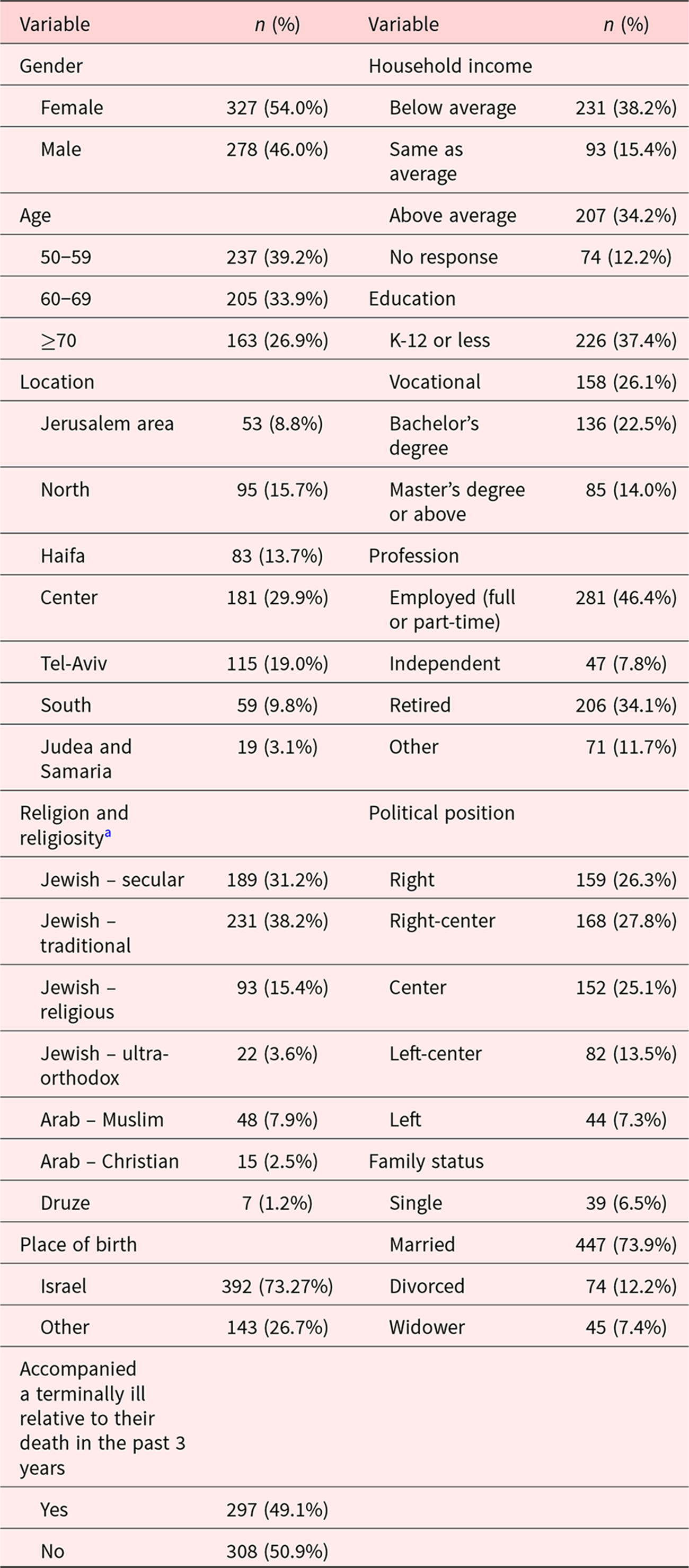
Table 1 provides the summary of the sociodemographic breakdown of the studied sample. The mean age of participants in the final sample was 62.8 (±8.5 SD), with a minimum of 50 and a maximum of 83. On average, participants had 3 members in their household (±1.6 SD), with a minimum of one and a maximum of 9.
Sociodemographic breakdown of study sample (N = 605)

a According to the Central Bureau of Statistics of the State of Israel (cbs.gov.il), in 2020 (latest available data), 74% of the population are Jewish, 18% Muslim, 2% Christians, and ∼2% Druze. In addition, 45% of Israeli identify as secular, 33% traditional, ∼12% religious, and 10% ultra-orthodox.
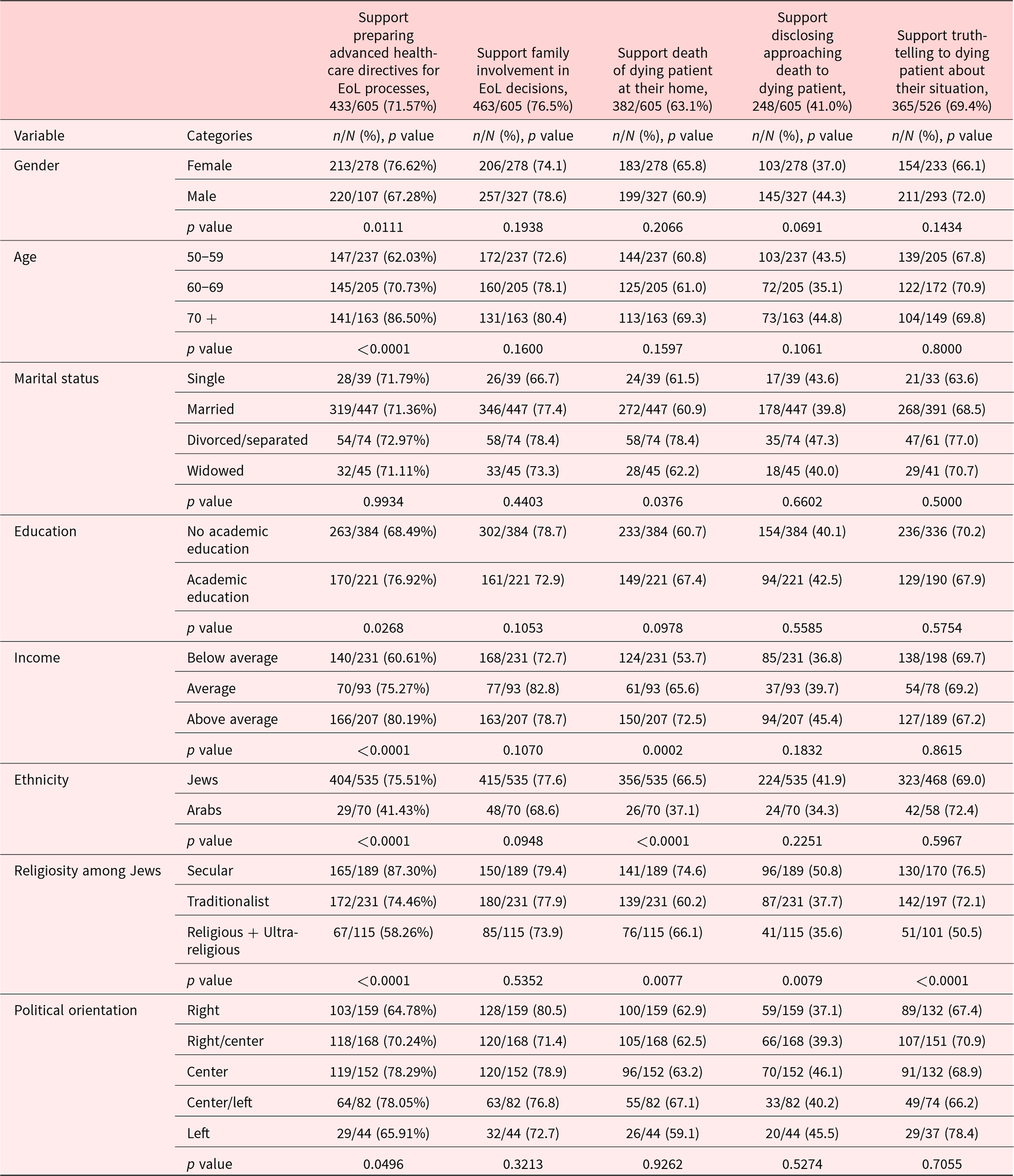
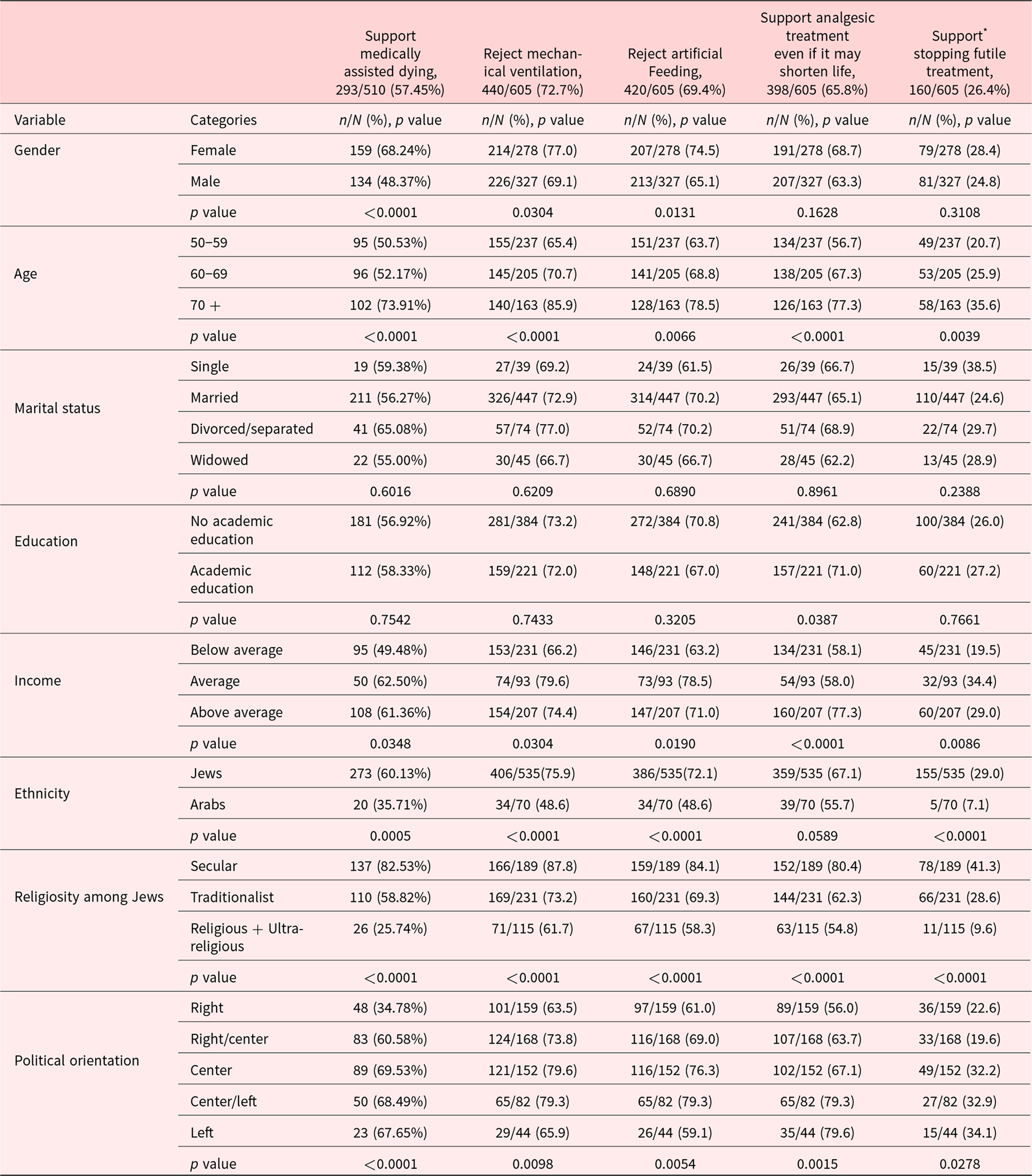
Some of the attitudes examined in this study relate to manipulating the lifespan of a terminal patient. They relate to life termination, life sustainment, and palliative treatment. For example, nearly 60% of participants agreed that doctors should assist a patient in ending their life if that is what they wish and if the law had permitted this. Accordingly, nearly 55% of all participants agreed that the State of Israel should allow institutionalized euthanasia, compared with 30% who opposed it (the remainder 15% were unsure). Moreover, approximately 50% of all participants indicated that they would like to receive assistance in dying. Additional results are provided in Tables 2 and 3 (see column titles).
Distribution of attitudes toward EoL processes and decisions related to EoL ambiance according to sociodemographic variables (N = 605)

Note 1: only opinionated participants are represented in this table (maximum missing per item = 16%).
Note 2: “Support” includes respondents who opted for “much” or “very much” agree.
Distribution of attitudes toward EoL processes and decisions related to clinical EoL practices according to sociodemographic variables (N = 605)

Note 1. “Support” includes respondents who opted for “much” or “very much” agree; “Reject” includes respondents who opted for “not at all” or “somewhat” agree.
When asked about themselves, a majority (∼72%) of all participants agree or fully agree to be personally treated with analgesic treatment, even at the risk of shortening their lives. Only 6% indicated they would refuse such treatment. Only about 20% of participants indicated that they would much or very much agree to be connected to mechanical ventilation or artificial feeding. Only 32% would agree to stop futile treatments for themselves personally if and when they succumb to a terminal illness.
Other attitudes examined in the study relate to the support that should be provided at the EoL. These relate to the place of death, the family’s involvement in the EoL decision-making processes, and awareness of the approaching death. Tables 2 and 3 summarize these EoL-related attitudes broken down according to sociodemographic variables.
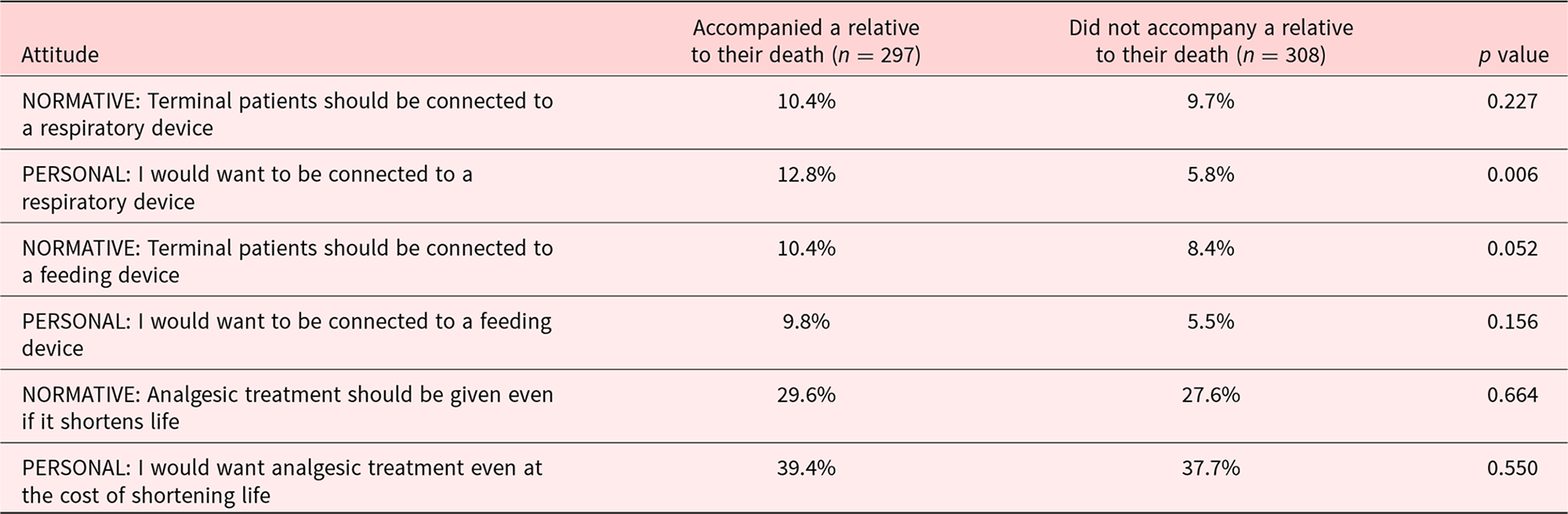
There was no difference in attitudes between those who accompanied a terminally ill relative to their death and those who did not, including (a) whether doctors should tell the patient the whole truth about their condition (57.9% versus 62.7% “yes” responses, respectively; p = 0.046, (b) whether doctors should stop futile treatment (36.4% versus 37.7% did not agree that a doctor can decide to stop futile treatment; p = 0.872), and (c) whether analgesic treatment should be given even at the risk of shortening life (29.6% versus 27.6% “fully agree” response; p = 0.664).
In addition, no differences were found concerning attitudes over the way the medical staff should relate to the family, including (a) disclosing upcoming death to the family (55.6% versus 54.2% “fully agree” responses, p = 0.903), (b) telling the family and caregivers about the process of dying (45.1% versus 48.1%; p = 0.701), and (c) family should be involved in medical decisions (38.7% versus 34.1%; p = 0.336).
However, there was a significant difference in opinion between those who accompanied a terminally ill relative to their death and those who did not do so regarding whether upcoming death should be disclosed to the dying patient. While 46.4% of those who did not accompany a patient agreed or fully agreed with this, only 35.4% of those who accompanied a patient agreed or fully agreed (p = 0.009). More results are provided in Table 4.
Frequency (%) of agreement (top option only – “very much agree”) with EoL attitudes according to framing (socio-normative versus personal)

Sociodemographic and political orientation effect on EoL attitudes
Support or rejection of EoL-related attitudes was broken down according to different sociodemographic variables (Tables 2 and 3). Various attitudes were affected by several sociodemographic characteristics of the responders, yet the main 3 to emerge were the respondent’s age, the degree of their religiosity, and their political orientation.
Multiple logistic regression analyses were performed to assess the sociodemographic factors’ predictive power on socio-normative attitudes related to EoL processes. The analyses suggest that despite the outcomes of bivariate analyses, age is not a significant predictor of support of any socio-normative attitude (e.g., truth-telling, assisted death, and artificial feeding/respiration). In contrast, religiosity is a significant predictor of EoL-related socio-normative attitudes. For example, adjusted to age and gender, secular participants were 4.24 (95% CI: 2.32, 7.76), 11.77 (95% CI: 6.09, 22.76), and 50.64 (95% CI: 21.22, 120.89) times more likely to support truth-telling to dying patients, medically assisted dying, and state institutionalized euthanasia, respectively (p < 0.0001 in both). The data show a strong association between political orientation and religiosity. Among secular individuals, 35% identify as left-wing, 31% as center, and 34% as right-wing. In contrast, among religious individuals, no one identifies as left-wing, 11% as center, and 89% as right-wing (χ 2 = 299.07, df = 12, p < 0.0001). Therefore, the multiple logistic regression was followed using religiosity only.
Since religiosity proved to be a substantial factor in predicting EoL attitudes, a secondary analysis among only secular participants was performed. This analysis reveals that very few other sociodemographic variables predict EoL attitudes. For example, adjusted to age, males were 2.67 times (95% CI: 1.16, 6.14) more likely to support medically assisted dying than females (p = 0.020) but 0.50 times (95% CI: 0.28, 0.90) more likely to support disclosing approaching death to the patient, compared with females (p = 0.021). In addition, adjusted to age and gender, academics were 3.53 times (95% CI: 1.07, 11.63) more likely to support analgesic treatment, even at the risk of shortening the patient’s life, compared with non-academics (p = 0.038). Similarly, individuals with above-average income were 5.28 times (95% CI: 1.50, 18.57) more likely to support such treatment than those with average income (p = 0.010).
Discussion
This study highlights some significant outcomes. First, the findings suggest that the first hypothesis was largely supported. The findings suggest that the Israelis’ attitudes are polarized when it comes to applying measures that may affect the lifespan of terminal patients. This polarization can be explained by the legal and ethical standards existing in Israel, in particular with the Jewish religious approach, which forbids the hastening of death and views euthanasia unfavorably but does not forbid (and in some cases even endorse) avoiding life sustainment measures that can cause suffering (Choudry et al. Reference Choudry, Latif and Warburton2018; Shack et al. Reference Shack, Fried and Siedner-Weintraub2023).
The sociodemographic findings resonate with many previous studies that reported the robust association between affiliation to religion and rejection of artificial life termination in Israel (Bodas et al. Reference Bodas, Velan and Kaplan2020) and elsewhere (Borovecki et al. Reference Borovecki, Curkovic and Nikodem2022; Brinkman‐Stoppelenburg et al. Reference Brinkman‐Stoppelenburg, Evenblij and Pasman2020; Bülow et al. Reference Bülow, Sprung and Baras2012; Cohen et al. Reference Cohen, Van Landeghem and Carpentier2014; Terkamo-Moisio et al. Reference Terkamo-Moisio, Kvist and Laitila2017; Torke et al. Reference Torke, Fitchett and Maiko2020; Verbakel and Jaspers Reference Verbakel and Jaspers2010). In particular, the findings are similar to those reported in a recent study in Japan, showing a lower general public preference for artificial feeding and resuscitation among older individuals over age 65 years (Hamano et al. Reference Hamano, Hanari and Tamiya2020).
This study’s results align with those reported in the literature for other public perceptions and attitudes concerning EoL processes. For example, a 2019 study in Australia reported that ∼44% of families asked to withhold information from dying patients (Cardona et al. Reference Cardona, Lewis and Shanmugam2019). Similarly, the Australian study reported that many family caregivers (∼90%) wanted to be involved in treatment decisions (Cardona et al. Reference Cardona, Lewis and Shanmugam2019). Nevertheless, some differences exist between the current study’s findings and those previously published. For example, only 24% of participants in a similar study conducted in Wales reported preferring the home for EoL care (Islam et al. Reference Islam, Byrne and Nelson2018).
The results of the current study add up to the existing body of literature on public perceptions and attitudes toward EoL processes. While we cannot generalize the findings beyond the Israeli population, the similarities and differences observed between the Israeli population and others suggest that some EoL aspects are shared across many cultures, such as the perception of the importance of family involvement in EoL. Nevertheless, the differences reported between the Israeli results and others suggest that a closer look into local contexts is warranted before implementing widespread educational programs for the public about EoL (Riva et al. Reference Riva, Caratozzolo and Zanetti2012).
The findings also support the second hypothesis, as studies have shown that religiosity in Israel is strongly associated with conservative views, right-wing ideology, and even ancestry, namely being a Sephardi/Mizrahi Jew originating in one of the Arab states, as opposed to being an Ashkenazi (European) Jew (Peri et al. Reference Peri, Hermann and Fischer2012).
In contradiction to our third hypothesis, the majority of the findings of this study show little to no difference in the perception of the death experience and opinions toward accessibility to EoL as a caregiver between those who accompanied a loved one to their death and those who did not. These findings contradict those reported in the literature in other settings. For example, a study comparing the cancer-related caregiving burden in Europe concluded that caregivers for patients with cancer reported significantly (p < 0.05) more impairment across all health outcomes (mental health, health utilities, work impairment, and anxiety) compared with non-caregivers (Goren et al. Reference Goren, Gilloteau and Lees2014). Nevertheless, the current study’s findings align with a recent Japanese study that reported no significant relationship between reporting a close person’s death in recent years and EoL care preferences (Hamano et al. Reference Hamano, Hanari and Tamiya2020).
Moreover, a study in Italy that assessed the influence of caregiving experience on knowledge of Alzheimer’s Disease found that although in general caregivers provided more correct responses, among the older respondents the level of answer correctness was statistically non-different (Riva et al. Reference Riva, Caratozzolo and Zanetti2012). The current study might be showing similar patterns, since the sample included in this study was limited to people aged 50 and above. Another possible explanation may be rooted in people’s beliefs and value systems, which may be more decisive in shaping one’s consciousness than the actual experience of accompanying a loved one to their death.
An exception to the abovementioned is the finding that people who did not accompany a terminally ill relative to their death are more in favor of euthanasia than those who did. The death process may be perceived differently between these 2 groups. While the former may view the dying process as a distinct construct and may hold a more gruesome picture of it, the latter group is experienced with the actuality of dying, which has some moments of grace. Moreover, when the death construct is distinct and relates to an unknown hypothetical individual, it is probably easier to “let them go” as opposed to an actual relative or loved one passing away.
Taken together, the findings of this study may suggest a form of “conviction” by Israelis (at least among those aged 50 and above). Namely, EoL attitudes are affected more by principles and core beliefs rather than the practicality of EoL events. An exception to this might be seen in the finding suggesting that age is a factor in shaping EoL attitudes. While not significant in the multivariate analyses, the findings show that the older a person is, the more they “want to go peacefully” and retain their autonomy. A certain tension between these 2 trends might exist, calling for further investigation.
This study provides important insights into Israeli public opinion concerning EoL processes and decisions. Medical practitioners should be aware of the variety of opinions on EoL processes in Israeli society as well as the strong consensus on the critical role of the family in EoL processes. Nevertheless, more research is warranted to understand the interplay between public opinions and actual practices fully. Future research could focus, among others, on the concept of relational autonomy, the relationship between care providers (medical staff) and non-formal caregivers (family).
Limitations
This study has several limitations. First, using an online panel to collect data may limit the conclusions to people with high digital literacy. Nevertheless, given the majority of internet users in Israel and the need to administer a multitude of questions to a large sample on a wide geographical distribution, the choice of online sampling was deemed appropriate. Second, this study utilized a sample of participants aged 50 and above; therefore, the conclusions cannot be generalized beyond this age group. The choice to include individuals aged 50 and above was in favor of obtaining a large enough sample of people who accompanied a loved one to their death from a terminal illness. Third, given the choice to perform this study online, the representation of ultra-orthodox Jews and non-Jewish in the study is limited. Conclusions with regard to these sections of Israeli society should be made with caution. Lastly, as is the case with all cross-sectional studies, this study is true to its time. Sampling in future dates may yield other patterns in public attitudes. Therefore, following up on this study and assessing public opinion in a longitudinal study is important.
Conclusions
The implications of this study on understanding public perceptions of EoL processes and EoL care should be reviewed by decision-makers and policy planners. The results of this study suggest that the Israeli public is relatively polarized on several issues about EoL processes, specifically patient autonomy and medically assisted dying. This division is substantially rooted in religious affiliation, with seculars tending more toward the autonomist approach and religious toward the conservative approach. Yet, at the same time, there is a consensus among the Israeli public about certain EoL elements, particularly the importance of family caregivers in the EoL decision-making process. Medical practitioners should be aware of the variety of opinions on EoL processes in Israeli society as well as the strong consensus on the critical role of the family in EoL processes.
Competing interests
The authors declare no conflict of interest.

 Open access

